

Critical Correlation of Predictors for an Efficient Risk Prediction Framework of ICU Patient Using Correlation and Transformation of MIMIC-III Dataset
Open accessThe DOI matches its Crossref record; 24 of the 25 references it cites were found in a registry or an index.
Abstract
Various predictive frameworks have evolved over the last decade to facilitate the efficient diagnosis of critical diseases in the healthcare sector. Some have been commercialized, while others are still in the research and development stage. An effective early predictive principle must provide more accurate outcomes in complex clinical data and various challenging environments. The open-source database system medical information mart for intensive care (MIMIC) simplifies all of the attributes required in predictive analysis in this regard. This database contains clinical and non-clinical information on a patient’s stay at a healthcare facility, gathered during their duration of stay. Regardless of the number of focused research attempts employing the MIMIC III database, a simplified and cost-effective computational technique for developing the early analysis of critical problems has not yet been found. As a result, the proposed study provides a novel and cost-effective machine learning framework that evolves into a novel feature engineering methodology using the MIMIC III dataset. The core idea is to forecast the risk associated with a patient’s clinical outcome. The proposed study focused on the diagnosis and clinical procedures and found distinct variants of independent predictors from the MIMIC III database and ICD-9 code. The proposed logic is scripted in Python, and the outcomes of three common machine learning schemes, namely Artificial Neural Networks, K-Nearest Neighbors, and Logistic Regression, have been evaluated. Artificial Neural Networks outperform alternative machine learning techniques when accuracy is taken into account as the primary performance parameter over the MIMIC III dataset.
Overview
The claims and statistics of this paper haven’t been checked yet.
Free: it reads the open-access text and checks the first 5 claims that cite a source we can check. Create a free account to check every claim.
Integrity signals
Registry
Cites
Statistics
Figures
Verification
Claims the paper makes
The claims and statistics of this paper haven’t been checked yet.
Free: it reads the open-access text and checks the first 5 claims that cite a source we can check. Create a free account to check every claim.
Self-check
Percentages, sums and reported differences re-computed from the paper’s own numbers.
The self-check needs the paper’s full text.
Citations
Cites
Key challenges for delivering clinical impact with artificial intelligence
Kelly, C. J., Karthikesalingam, A., Suleyman, M., Corrado, G., & King, D. (2019) · BMC Medicine · doi:10.1186/s12916-019-1426-2 · Cited by 3,136 · cited 1×
“It is because of the trade-off between explainability and performance [11] Although deep learning approaches suit well for more extensive data (i.”
Background$\mathtt {Deepr}$: A Convolutional Net for Medical Records
Nguyen, P., Tran, T., Wickramasinghe, N., & Venkatesh, S. (2017) · IEEE Journal of Biomedical and Health Informatics · doi:10.1109/jbhi.2016.2633963 · Cited by 352
Early Prediction of Sepsis in the ICU Using Machine Learning: A Systematic Review
Moor, M., Rieck, B., Horn, M., Jutzeler, C. R., & Borgwardt, K. (2021) · Frontiers in Medicine · doi:10.3389/fmed.2021.607952 · Cited by 231 · cited 1×
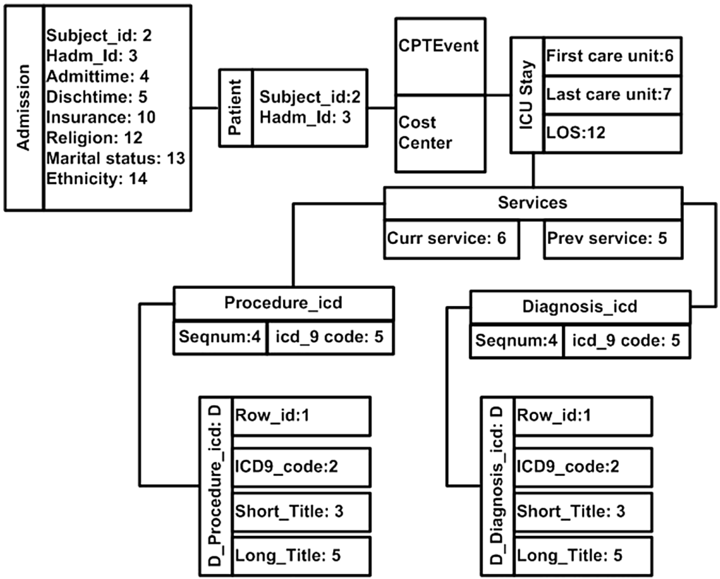
“The meta-data structure of the source data (S) for the predictive learning model(PLM) is defined as a set: α : [2,3,4,5,10,12,13,14], β :[4], γ :[6,7,12], δ :[5,6], θ :[3,4], ϑ :[4,5], ρ :[4,5].”
BackgroundMIMIC-Extract: a data extraction, preprocessing, and representation pipeline for MIMIC-III
Wang, S., McDermott, M. B. A., Chauhan, G., Ghassemi, M., Hughes, M. C., & Naumann, T. (2020) · Proceedings of the ACM Conference on Health, Inference, and Learning · doi:10.1145/3368555.3384469 · Cited by 147
De Georgia, M. A., Kaffashi, F., Jacono, F. J., & Loparo, K. A. (2015) · The Scientific World Journal · doi:10.1155/2015/727694 · Cited by 131
Intensive Care Unit Mortality Prediction: An Improved Patient-Specific Stacking Ensemble Model
El-Rashidy, N., El-Sappagh, S., Abuhmed, T., Abdelrazek, S., & El-Bakry, H. M. (2020) · IEEE Access · doi:10.1109/access.2020.3010556 · Cited by 116 · cited 2×
“[4] indicated that; using a stacking ensemble approach where a predictive model could be developed to predict mortality rates.”
BackgroundMethodProspective Medicine: The Next Health Care Transformation
Snyderman, R., & Sanders Williams, R. (2003) · Academic Medicine · doi:10.1097/00001888-200311000-00002 · Cited by 107 · cited 1×
“The PHCM is a probabilistic model to predict the possibilities of future medical conditions in advance so that - an optimal healthcare plan can be perceived from both the patient and the hospital management perspectives [19].”
BackgroundCDSS-RM: a clinical decision support system reference model
Zikos, D., & DeLellis, N. (2018) · BMC Medical Research Methodology · doi:10.1186/s12874-018-0587-6 · Cited by 78 · cited 1×
“Concurrently, research interests are growing exponentially to build efficient prediction models to provide an automatic decision support system to be beneficial for both patients and caretaking personnel [23, 24, 29].”
BackgroundMonitoring ICU Mortality Risk with A Long Short-Term Memory Recurrent Neural Network
Yu, K., Zhang, M., Cui, T., & Hauskrecht, M. (2019) · Pacific Symposium on Biocomputing (PSB) · doi:10.1142/9789811215636_0010 · Cited by 60 · cited 1×
“Yu et al.’s [27] publication used a recurrent neural network for mortality risk prediction.”
BackgroundPredicting Medical Provider Specialties to Detect Anomalous Insurance Claims
Bauder, R. A., Khoshgoftaar, T. M., Richter, A. N., & Herland, M. (2016) · IEEE International Conference on Tools with Artificial Intelligence (ICTAI) · doi:10.1109/ictai.2016.0123 · Cited by 58 · cited 2×
“There is a growing trend in data processing and artificial intelligence to build reporting and billing applications in the healthcare industry using these data [2, 26].”
BackgroundMethodGardner, R. M., Clemmer, T. P., Evans, R. S., & Mark, R. G. (2013) · Springer eBooks · doi:10.1007/978-1-4471-4474-8_19 · Cited by 49
INSMA: An integrated system for multimodal data acquisition and analysis in the intensive care unit
Sun, Y., Guo, F., Kaffashi, F., Jacono, F. J., DeGeorgia, M. A., & Loparo, K. A. (2020) · Journal of Biomedical Informatics · doi:10.1016/j.jbi.2020.103434 · Cited by 45 · cited 1×
“Advanced healthcare data acquisition technologies acquire various formats of data from multiple dynamic sources over a timeline [3, 7, 20] and a distributed file system-oriented data-mod-els support the intrinsic characteristics like heterogeneity, uncertainty, and high dimensionality of these data…”
A framework for feature extraction from hospital medical data with applications in risk prediction
Tran, T., Luo, W., Phung, D., Gupta, S., Rana, S., Kennedy, R. L., Larkins, A., & Venkatesh, S. (2014) · BMC Bioinformatics · doi:10.1186/s12859-014-0425-8 · Cited by 43 · cited 1×
“The major obstacle to building an effective predictive sys-tem on the MIMIC-III dataset is complex feature engineering challenges [21].”
BackgroundAl-Shwaheen, T. I., Hau, Y. W., Ass'Ad, N., & AbuAlSamen, M. M. (2020) · IEEE Access · doi:10.1109/access.2020.3047186 · Cited by 32 · cited 1×
“[1] utilized recurrent neural networks.”
Ergüzen, A., & Ünver, M. (2018) · Applied Sciences · doi:10.3390/app8060913 · Cited by 28 · cited 4×
“…healthcare data acquisition technologies acquire various formats of data from multiple dynamic sources over a timeline [3, 7, 20] and a distributed file system-oriented data-mod-els support the intrinsic characteristics like heterogeneity, uncertainty, and high dimensionality of these data [5, 9].”
BackgroundInfluentialMachine Learning-based Prediction of ICU Patient Mortality at Time of Admission
Veith, N., & Steele, R. J. (2018) · International Conference on Information System and Data Mining (ICISDM) · doi:10.1145/3206098.3206116 · Cited by 24 · cited 1×
“Veith and Steele [22] used machine learning to develop a predictive model for analyzing mortality rates in their study.”
MethodA Distributed Storage Model for EHR Based on HBase
Yang, J., De-yu, T., & Zhou, Y. X. (2011) · International Conference on Information Management, Innovation Management and Industrial Engineering (ICIII) · doi:10.1109/iciii.2011.234 · Cited by 23 · cited 1×
“…healthcare data acquisition technologies acquire various formats of data from multiple dynamic sources over a timeline [3, 7, 20] and a distributed file system-oriented data-mod-els support the intrinsic characteristics like heterogeneity, uncertainty, and high dimensionality of these data [5, 9].”
BackgroundSingh, A. K., Guntu, M., Bhimireddy, A. R., Gichoya, J. W., & Purkayastha, S. (2020) · arXiv (Cornell University) · doi:10.48550/arxiv.2003.07507 · Cited by 22 · cited 1×
“The explicit benefit of feature engineering overcomes the limitations of the labour-intensive and naïve extraction process, which usually overlooks outliers’ dependencies and irregularities [18].”
BackgroundEarly Prediction of Sepsis in the ICU using Machine Learning: A Systematic ReviewPreprint
Moor, M., Rieck, B., Horn, M., et al. (2020) · medRxiv · doi:10.1101/2020.08.31.20185207 · Cited by 20
Mark, R. G. (2016) · Springer eBooks · doi:10.1007/978-3-319-43742-2_5 · Cited by 15 · cited 2×
“1, has established a project under NIBIB to collect comprehensive data of intensive care unit (ICU) and produces as MIMIC-dataset [13].”
BackgroundKrishnan, G. S., & Kamath, S. S. (2019) · International Conference on Distributed Computing and Networking (ICDCN) · doi:10.1145/3288599.3297118 · Cited by 12 · cited 4×
“The work carried out by Alshwaheen et al. [1] utilized recurrent neural networks.”
BackgroundMethodInfluentialYamasaki, K., & Hosoya, R. (2018) · Portland International Conference on Management of Engineering and Technology (PICMET) · doi:10.23919/picmet.2018.8481824 · Cited by 10 · cited 1×
“There is a growing trend in data processing and artificial intelligence to build reporting and billing applications in the healthcare industry using these data [2, 26].”
MethodIDDSAM: An Integrated Disease Diagnosis and Severity Assessment Model for Intensive Care Units
Shi, Z., Zuo, W., Liang, S., Zuo, X., Yue, L., & Li, X. (2020) · IEEE Access · doi:10.1109/access.2020.2967417 · Cited by 10 · cited 1×
“Adoption of the MIMIC III dataset has also been analyzed by Shi et al. [17]where a predictive scheme for diagnosis is discussed.”
MethodArtificial Intelligence and Tomorrow’s Health
Villani, C., & Rondepierre, B. (2020) · Springer eBooks · doi:10.1007/978-3-030-32161-1_1 · Cited by 3 · cited 1×
“Concurrently, research interests are growing exponentially to build efficient prediction models to provide an automatic decision support system to be beneficial for both patients and caretaking personnel [23, 24, 29].”
BackgroundWalczak, S. (2019) · IGI Global eBooks · doi:10.4018/978-1-7998-1754-3.ch008 · Cited by 2
Research works printed but not linked: 2
- 10. Johnson AE, Pollard TJ, Mark RG (2017) Reproducibility in criti- cal care: a mortality prediction case study. In: Machine Learning for Healthcare Conference, pp. 361-376. PMLR
- 28. Zeng X, Feng Y, Moosavinasab S, Lin D, Lin S, Liu C (2020) Multilevel self-attention model and its use on medical risk predic- tion. In: Pac Symp Biocomput. World Scientific
Cited by
Tabular data synthesis with generative adversarial networks: design space and optimizations
Liu, T., Fan, J., Li, G., Tang, N., & Du, X. (2023) · The VLDB journal · doi:10.1007/s00778-023-00807-y · Cited by 43
Diagnostic Codes in AI Prediction Models and Label Leakage of Same-Admission Clinical Outcomes
Ramadan, B., Liu, M.-C., Burkhart, M. C., Parker, W. F., & Beaulieu‐Jones, B. K. (2025) · JAMA Network Open · doi:10.1001/jamanetworkopen.2025.50454 · Cited by 35
Taşkın, Z. İ., Yıldırak, K., & Aladağ, Ç. H. (2023) · Journal Of Big Data · doi:10.1186/s40537-023-00720-9 · Cited by 18
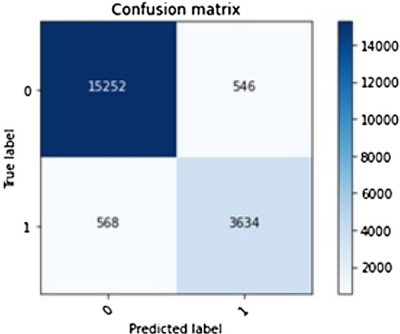
“The efficiency of the resulting models is measured via AUC and a value of AUC is reached 0.819 with RF. Khope and Elias [28] examine the MIMIC-III data set over KNN, LR and ANN and compare the results obtained with the confusion matrix on accuracy.”
ResultInfluentialHeart Disease Prediction using Clustered Genetic Optimization Algorithm
Vijaya, J. (2023) · International Conference on Intelligent and Innovative Technologies in Computing, Electrical and Electronics (IITCEE) · doi:10.1109/iitcee57236.2023.10091050 · Cited by 11
Enhanced deep learning and quantum variational classifier for large-scale data analysis
Sudha, D. N., Anju, A., & Ezhilarasi, K. (2025) · Knowledge-Based Systems · doi:10.1016/j.knosys.2025.114611 · Cited by 9
Metadata
- Authors
- Khope, S. R., & Elias, S.
- Affiliations
- Vellore Institute of Technology University (IN)
- Corresponding author
- Elias, Susan
- Venue
- Data Science and Engineering
- Published
- 2022-02-08
- Volume
- 7
- Issue
- 1
- Pages
- 71-86
- ISSN
- 2364-1185 (ISSN-L)
- 2364-1541
- OpenAlex
- W4210858885
- Cited by
- 17
- References
- 25
- Citations by year
- 2025: 5 · 2024: 3 · 2023: 6 · 2022: 3
- FWCI
- 1.40
- Type
- journal article
- Language
- en
- Open access
- gold
- doi.org
- Licence
- cc-by
- creativecommons.org/licenses/by/4.0 (tdm)
- creativecommons.org/licenses/by/4.0 (vor)
- Locations
- Data Science and Engineering (publishedVersion, cc-by)
- Greater South Information System
- Topics
- Physical Sciences › Computer Science › Artificial Intelligence › Machine Learning in Healthcare
- Health Sciences › Health Professions › Health Information Management › Artificial Intelligence in Healthcare
- Health Sciences › Medicine › Critical Care and Intensive Care Medicine › Sepsis Diagnosis and Treatment
- Keywords
- feature engineering, clinical outcome prediction, ICD-9 codes, artificial neural networks, k-nearest neighbors, logistic regression, intensive care unit, clinical data
About these checks
Registry, retraction, Cites and statistics results are computed, not judged, with one exception: a printed reference that no index lists is read once by a model before it counts as a citation error. Claims are extracted by a model and kept only when their quote appears verbatim in the text; each cited source is then checked, with a model’s help, for whether it says what the claim relies on. Those verdicts can be wrong — read the claim’s quote and the cited source before relying on one.
Statistics and arithmetic are recomputed, not judged.
Confidence bands are shown only for fields calibrated on our annotated test set. None is calibrated yet, so no band is shown.
What counts as a claim ›How we measure confidence ›How we check this ›
Are you an author, or do you see a problem with this page? Request a review
Data sources
Bibliographic data: Semantic Scholar, OpenAlex, Crossref.
Contains information from the Semantic Scholar Academic Graph Datasets, made available under the ODC Attribution License (ODC-BY 1.0).
Semantic Scholar’s data is described in: Kinney, R., et al. (2023). The Semantic Scholar Open Data Platform. arXiv:2301.10140.
