

The DOI matches its Crossref record; 56 of the 56 references it cites were found in a registry or an index.
Optimising Insider Threat Prediction: Exploring BiLSTM Networks and Sequential Features
Open accessAbstract
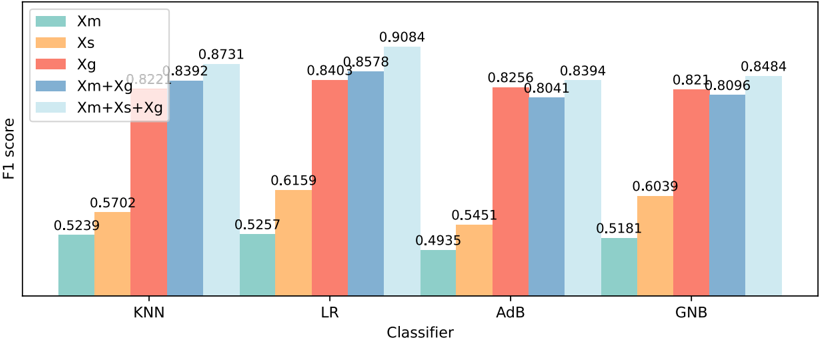
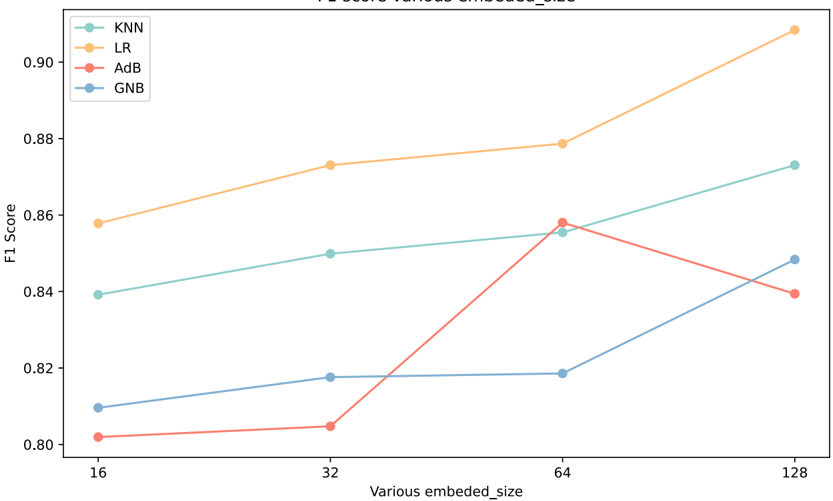
Abstract Insider threats pose a critical risk to organisations, impacting their data, processes, resources, and overall security. Such significant risks arise from individuals with authorised access and familiarity with internal systems, emphasising the potential for insider threats to compromise the integrity of organisations. Previous research has addressed the challenge by pinpointing malicious actions that have already occurred but provided limited assistance in preventing those risks. In this research, we introduce a novel approach based on bidirectional long short-term memory (BiLSTM) networks that effectively captures and analyses the patterns of individual actions and their sequential dependencies. The focus is on predicting whether an individual would be a malicious insider in a future day based on their daily behavioural records over the previous several days. We analyse the performance of the four supervised learning algorithms on manual features, sequential features, and the ground truth of the day with different combinations. In addition, we investigate the performance of different RNN models, such as RNN, LSTM, and BiLSTM, in incorporating these features. Moreover, we explore the performance of different predictive lengths on the ground truth of the day and different embedded lengths for the sequential features. All the experiments are conducted on the CERT r4.2 dataset. Experiment results show that BiLSTM has the highest performance in combining these features.
Overview
The claims and statistics of this paper haven’t been checked yet.
Free: it reads the open-access text and checks the first 5 claims that cite a source we can check. Create a free account to check every claim.
Integrity signals
Registry
Cites
Statistics
Figures



Verification
Claims the paper makes
The claims and statistics of this paper haven’t been checked yet.
Free: it reads the open-access text and checks the first 5 claims that cite a source we can check. Create a free account to check every claim.
Claims other papers make about this one
Each is checked against this paper’s own text: does it say what the citing paper says it does?
The cited source doesn’t support the claim as written.
In the citing paper
“However, most of these evaluations relied on ROC-AUC or accuracy rather than precision-recall metrics, which limits their operational relevance in imbalanced insider datasets.”
From A SIEM-Integrated Cybersecurity Prototype for Insider Threat Anomaly Detection Using Enterprise Logs and Behavioural Biometrics (2025) · cites this paper as [8]
Checked by a reasoning model — may be wrong.
Experimental — accuracy not yet measuredThe check wasn’t confident either way, so it gives no verdict — never disputed.
In the citing paper
“Likewise, calibrated scoring and threshold control are often omitted, even though analysts require stable, interpretable alert probabilities to manage false positives.”
From A SIEM-Integrated Cybersecurity Prototype for Insider Threat Anomaly Detection Using Enterprise Logs and Behavioural Biometrics (2025) · cites this paper as [8]
Experimental — accuracy not yet measuredThe check wasn’t confident either way, so it gives no verdict — never disputed.
In the citing paper
“Most research reports only ROC-AUC or accuracy using random splits, which exaggerates performance and hides class imbalance effects [1,10,11,23].”
From A SIEM-Integrated Cybersecurity Prototype for Insider Threat Anomaly Detection Using Enterprise Logs and Behavioural Biometrics (2025) · cites this paper as [8]
Experimental — accuracy not yet measured
Self-check
Percentages, sums and reported differences re-computed from the paper’s own numbers.
The self-check needs the paper’s full text.
Citations
Cites
Bidirectional recurrent neural networks
Schuster, M., & Paliwal, K. K. (1997) · IEEE Transactions on Signal Processing · doi:10.1109/78.650093 · Cited by 10,172 · cited 2×
“Bidirectional Long Short-Term Memory (BiLSTM) networks are a powerful refinement of the LSTM architecture, excelling at capturing long-range dependencies within sequential data [63].”
On the Properties of Neural Machine Translation: Encoder–Decoder Approaches
Cho, K., van Merrienboer, B., Bahdanau, D., & Bengio, Y. (2014) · Proceedings of SSST-8, Eighth Workshop on Syntax, Semantics and Structure in Statistical Translation · doi:10.3115/v1/w14-4012 · Cited by 7,099 · cited 1×
“This dual-directional approach allows the model to make more informed predictions by leveraging information from both past and future time steps [65].”
Framewise phoneme classification with bidirectional LSTM and other neural network architectures
Graves, A., & Schmidhuber, J. (2005) · Neural Networks · doi:10.1016/j.neunet.2005.06.042 · Cited by 5,839 · cited 2×
“Additionally, we explore the impact of various embedding sizes (16, 32, 64, and 128) on a BiLSTM architecture with a fixed sequence predictive length (e.g., 5).”
Learning to forget: Continual prediction with LSTM
Gers, F. A., Schmidhuber, J., & Cummins, F. (2000) · Neural Computation · doi:10.1162/089976600300015015 · Cited by 4,823 · cited 1×
“This refined memory empowers LSTMs in various tasks, such as speech recognition and time series forecasting [62].”
An Introduction to Logistic Regression Analysis and Reporting
Peng, C.-Y. J., Lee, K. L., & Ingersoll, G. M. (2002) · The Journal of Educational Research · doi:10.1080/00220670209598786 · Cited by 2,671 · cited 1×
“…employed in various fields, including medical research, economics, and social sciences, LR is particularly valuable when the outcome of interest is dichotomous (having two possible categories), such as the presence/absence of a disease, success/failure of a treatment, or yes/no responses [53, 54].”
Peterson, L. (2009) · Scholarpedia · doi:10.4249/scholarpedia.1883 · Cited by 2,433
Hastie, T., Rosset, S., Zhu, J., & Zou, H. (2009) · Statistics and Its Interface · doi:10.4310/sii.2009.v2.n3.a8 · Cited by 1,875 · cited 1×
“This ensures that strong learners have a greater influence on the overall outcome [55, 56].”
Logistic Regression: A Brief Primer
Stoltzfus, J. C. (2011) · Academic Emergency Medicine · doi:10.1111/j.1553-2712.2011.01185.x · Cited by 1,290 · cited 1×
“…employed in various fields, including medical research, economics, and social sciences, LR is particularly valuable when the outcome of interest is dichotomous (having two possible categories), such as the presence/absence of a disease, success/failure of a treatment, or yes/no responses [53, 54].”
Schapire, R. E. (2013) · Empirical Inference · doi:10.1007/978-3-642-41136-6_5 · Cited by 1,013
Software Vulnerability Detection Using Deep Neural Networks: A Survey
Lin, G., Wen, S., Han, Q.-L., Zhang, J., & Xiang, Y. (2020) · Proceedings of the IEEE · doi:10.1109/jproc.2020.2993293 · Cited by 457
Research works printed but not linked: 6
- Sun X, Li M, Wang H, Plank A (2008) An efficient hash-based algorithm for minimal k-anonymity. In: Conferences in research and practice in information technology (CRPIT), vol 74, Australian Computer Society Inc, pp 101–107
- Huang T, Gong Y, Kwong S, Wang H, Zhang J (2019) A niching memetic algorithm for multi-solution traveling salesman problem. IEEE Trans Evol Comput 24(3):508–522
- Brackney RC, Anderson RH (2004) Understanding the insider threat. Proceedings of a march 2004 workshop. Technical report, RAND CORP SANTA MONICA CA
- Tuor A, Kaplan S, Hutchinson B, Nichols N, Robinson S (2017) Deep learning for unsupervised insider threat detection in structured cybersecurity data streams. arXiv preprint arXiv:1710.00811(2017) · arXiv
- Medsker LR, Jain L et al (2001) Recurrent neural networks. Des Appl 5(64–67):2
- Pascanu R Mikolov T, Bengio Y (2013) On the difficulty of training recurrent neural networks. In: International conference on machine learning, Pmlr, pp 1310–1318
Cited by
Ngo, T., Yin, J., Ge, Y.-F., & Wang, H. (2025) · Information · doi:10.3390/info16060499 · Cited by 37
Self-citationInsider Threat Detection Using GCN and Bi-LSTM With Explicit and Implicit Graph Representations
Yumlembam, R., Issac, B., Jacob, S. M., Yang, L., & Krishnan, D. (2025) · IEEE Transactions on Artificial Intelligence · doi:10.1109/tai.2025.3647418 · Cited by 12
“Building on these advancements, RNN architectures have also been employed by Manoharan et al. [16] to model sequential dependencies in insider activities.”
Transformer-Enhanced Adaptive Graph Convolutional Network for Traffic Flow Prediction
Huang, E., Zhao, Z., Yin, J., Cao, J., & Wang, H. (2025) · ACM Transactions on Intelligent Systems and Technology · doi:10.1145/3729244 · Cited by 10
“Among these, Long Short-Term Memory (LSTM) [11, 18] is a special type of Recurrent Neural Network (RNN) designed to address the issues of vanishing and exploding gradients that occur when processing long sequence data [19].”
Self-citationZhao, X., Zhao, Z., Cui, X., Yin, J., Cao, J., & Wang, H. (2025) · Journal of Vibration Engineering & Technologies · doi:10.1007/s42417-025-01874-x · Cited by 9
“For instance, the effectiveness of Bidirectional Long Short-Term Memory (BiLSTM) networks for insider threat prediction has been demonstrated, highlighting the significant role of sequential features in enhancing model performance [41].”
Self-citationDPI-ITD: A Dual-Perspective Information-Driven Framework for Insider Threat Detection in IoT Systems
Kong, K., Jin, X., Liu, D., Xu, S., Liu, Z., & Geng, G. (2025) · IEEE Internet of Things Journal · doi:10.1109/jiot.2025.3589636 · Cited by 7
“In this section, we evaluate DPI-ITD against five representative baselines: 1) DeepLog [56]; 2) DITD [13]; 3) ITDBERT [35]; 4) OITP [57]; and 5) CATE [30].”
Metadata
- Authors
- Manoharan, P., Hong, W., Yin, J., Wang, H., Zhang, Y., & Ye, W.
- Affiliations
- Victoria University (AU)
- La Trobe University (AU)
- Zhejiang Normal University (CN)
- Corresponding author
- Yin, Jiao
- Venue
- Data Science and Engineering
- Published
- 2024-11-21
- Volume
- 9
- Issue
- 4
- Pages
- 393-408
- ISSN
- 2364-1185 (ISSN-L)
- 2364-1541
- OpenAlex
- W4404606174
- Cited by
- 22
- References
- 56
- Citations by year
- 2026: 17 · 2025: 5
- FWCI
- 8.27
- Type
- journal article
- Language
- en
- Open access
- gold
- doi.org
- Licence
- cc-by
- creativecommons.org/licenses/by/4.0 (tdm)
- creativecommons.org/licenses/by/4.0 (vor)
- Locations
- Data Science and Engineering (publishedVersion, cc-by)
- DOAJ (DOAJ: Directory of Open Access Journals) (submittedVersion, cc-by-sa)
- Topics
- Physical Sciences › Computer Science › Information Systems › Information and Cyber Security
- Physical Sciences › Computer Science › Computer Networks and Communications › Network Security and Intrusion Detection
- Physical Sciences › Computer Science › Artificial Intelligence › Privacy-Preserving Technologies in Data
- Keywords
- bidirectional LSTM, user behavior analysis, recurrent neural networks, supervised learning, insider threat prevention
About these checks
Registry, retraction, Cites and statistics results are computed, not judged, with one exception: a printed reference that no index lists is read once by a model before it counts as a citation error. Claims are extracted by a model and kept only when their quote appears verbatim in the text; each cited source is then checked, with a model’s help, for whether it says what the claim relies on. Those verdicts can be wrong — read the claim’s quote and the cited source before relying on one.
Statistics and arithmetic are recomputed, not judged.
Confidence bands are shown only for fields calibrated on our annotated test set. None is calibrated yet, so no band is shown.
What counts as a claim ›How we measure confidence ›How we check this ›
Are you an author, or do you see a problem with this page? Request a review
How to cite
Cite CoChat for the checks on this page, and the paper for its own findings.
- This page
- CoChat. (2026). Citation check: Optimising Insider Threat Prediction: Exploring BiLSTM Networks and Sequential Features. https://app.cochat.ai/papers/10.1007/s41019-024-00260-z
- The paper
- Manoharan, P., Hong, W., Yin, J., Wang, H., Zhang, Y., & Ye, W. (2024). Optimising Insider Threat Prediction: Exploring BiLSTM Networks and Sequential Features. Data Science and Engineering. https://doi.org/10.1007/s41019-024-00260-z
Data sources
Bibliographic data: Semantic Scholar, OpenAlex, Crossref.
Contains information from the Semantic Scholar Academic Graph Datasets, made available under the ODC Attribution License (ODC-BY 1.0).
Semantic Scholar’s data is described in: Kinney, R., et al. (2023). The Semantic Scholar Open Data Platform. arXiv:2301.10140.
