

Optimising Insider Threat Prediction: Exploring BiLSTM Networks and Sequential Features
Open accessThe DOI matches its Crossref record; 56 of the 56 references it cites were found in a registry or an index.
Abstract
Abstract Insider threats pose a critical risk to organisations, impacting their data, processes, resources, and overall security. Such significant risks arise from individuals with authorised access and familiarity with internal systems, emphasising the potential for insider threats to compromise the integrity of organisations. Previous research has addressed the challenge by pinpointing malicious actions that have already occurred but provided limited assistance in preventing those risks. In this research, we introduce a novel approach based on bidirectional long short-term memory (BiLSTM) networks that effectively captures and analyses the patterns of individual actions and their sequential dependencies. The focus is on predicting whether an individual would be a malicious insider in a future day based on their daily behavioural records over the previous several days. We analyse the performance of the four supervised learning algorithms on manual features, sequential features, and the ground truth of the day with different combinations. In addition, we investigate the performance of different RNN models, such as RNN, LSTM, and BiLSTM, in incorporating these features. Moreover, we explore the performance of different predictive lengths on the ground truth of the day and different embedded lengths for the sequential features. All the experiments are conducted on the CERT r4.2 dataset. Experiment results show that BiLSTM has the highest performance in combining these features.
Overview
The claims and statistics of this paper haven’t been checked yet.
Free: it reads the open-access text and checks the first 5 claims that cite a source we can check. Create a free account to check every claim.
Integrity signals
Registry
Cites
Statistics
Figures



Verification
Claims the paper makes
The claims and statistics of this paper haven’t been checked yet.
Free: it reads the open-access text and checks the first 5 claims that cite a source we can check. Create a free account to check every claim.
Claims other papers make about this one
Each is checked against this paper’s own text: does it say what the citing paper says it does?
The cited source doesn’t support the claim as written.
In the citing paper
“However, most of these evaluations relied on ROC-AUC or accuracy rather than precision-recall metrics, which limits their operational relevance in imbalanced insider datasets.”
From A SIEM-Integrated Cybersecurity Prototype for Insider Threat Anomaly Detection Using Enterprise Logs and Behavioural Biometrics (2025) · cites this paper as [8]
Checked by a reasoning model — may be wrong.
Experimental — accuracy not yet measuredThe check wasn’t confident either way, so it gives no verdict — never disputed.
In the citing paper
“Likewise, calibrated scoring and threshold control are often omitted, even though analysts require stable, interpretable alert probabilities to manage false positives.”
From A SIEM-Integrated Cybersecurity Prototype for Insider Threat Anomaly Detection Using Enterprise Logs and Behavioural Biometrics (2025) · cites this paper as [8]
Experimental — accuracy not yet measuredThe check wasn’t confident either way, so it gives no verdict — never disputed.
In the citing paper
“Most research reports only ROC-AUC or accuracy using random splits, which exaggerates performance and hides class imbalance effects [1,10,11,23].”
From A SIEM-Integrated Cybersecurity Prototype for Insider Threat Anomaly Detection Using Enterprise Logs and Behavioural Biometrics (2025) · cites this paper as [8]
Experimental — accuracy not yet measured
Self-check
Percentages, sums and reported differences re-computed from the paper’s own numbers.
The self-check needs the paper’s full text.
Citations
Cites
Bidirectional recurrent neural networks
Schuster, M., & Paliwal, K. K. (1997) · IEEE Transactions on Signal Processing · doi:10.1109/78.650093 · Cited by 10,172 · cited 2×
“Bidirectional Long Short-Term Memory (BiLSTM) networks are a powerful refinement of the LSTM architecture, excelling at capturing long-range dependencies within sequential data [63].”
On the Properties of Neural Machine Translation: Encoder–Decoder Approaches
Cho, K., van Merrienboer, B., Bahdanau, D., & Bengio, Y. (2014) · Proceedings of SSST-8, Eighth Workshop on Syntax, Semantics and Structure in Statistical Translation · doi:10.3115/v1/w14-4012 · Cited by 7,099 · cited 1×
“This dual-directional approach allows the model to make more informed predictions by leveraging information from both past and future time steps [65].”
Framewise phoneme classification with bidirectional LSTM and other neural network architectures
Graves, A., & Schmidhuber, J. (2005) · Neural Networks · doi:10.1016/j.neunet.2005.06.042 · Cited by 5,839 · cited 2×
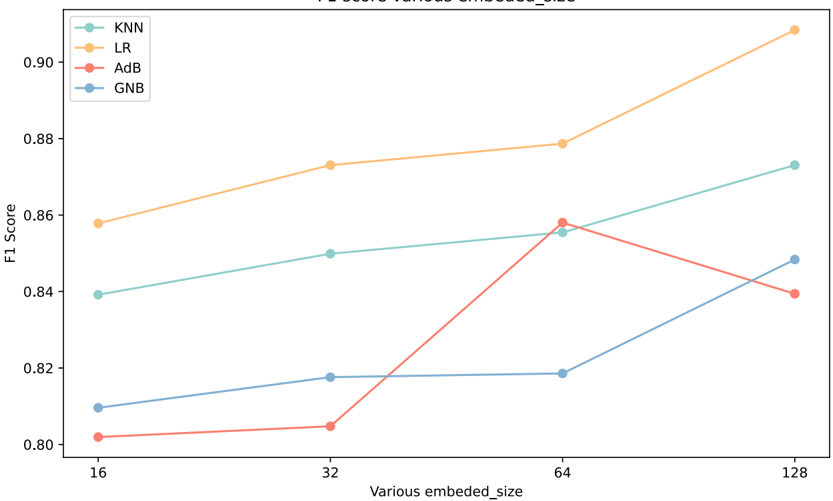
“Additionally, we explore the impact of various embedding sizes (16, 32, 64, and 128) on a BiLSTM architecture with a fixed sequence predictive length (e.g., 5).”
Learning to forget: Continual prediction with LSTM
Gers, F. A., Schmidhuber, J., & Cummins, F. (2000) · Neural Computation · doi:10.1162/089976600300015015 · Cited by 4,823 · cited 1×
“This refined memory empowers LSTMs in various tasks, such as speech recognition and time series forecasting [62].”
An Introduction to Logistic Regression Analysis and Reporting
Peng, C.-Y. J., Lee, K. L., & Ingersoll, G. M. (2002) · The Journal of Educational Research · doi:10.1080/00220670209598786 · Cited by 2,671 · cited 1×
“…employed in various fields, including medical research, economics, and social sciences, LR is particularly valuable when the outcome of interest is dichotomous (having two possible categories), such as the presence/absence of a disease, success/failure of a treatment, or yes/no responses [53, 54].”
Peterson, L. (2009) · Scholarpedia · doi:10.4249/scholarpedia.1883 · Cited by 2,433
Hastie, T., Rosset, S., Zhu, J., & Zou, H. (2009) · Statistics and Its Interface · doi:10.4310/sii.2009.v2.n3.a8 · Cited by 1,875 · cited 1×
“This ensures that strong learners have a greater influence on the overall outcome [55, 56].”
Logistic Regression: A Brief Primer
Stoltzfus, J. C. (2011) · Academic Emergency Medicine · doi:10.1111/j.1553-2712.2011.01185.x · Cited by 1,290 · cited 1×
“…employed in various fields, including medical research, economics, and social sciences, LR is particularly valuable when the outcome of interest is dichotomous (having two possible categories), such as the presence/absence of a disease, success/failure of a treatment, or yes/no responses [53, 54].”
Schapire, R. E. (2013) · Empirical Inference · doi:10.1007/978-3-642-41136-6_5 · Cited by 1,013
Software Vulnerability Detection Using Deep Neural Networks: A Survey
Lin, G., Wen, S., Han, Q.-L., Zhang, J., & Xiang, Y. (2020) · Proceedings of the IEEE · doi:10.1109/jproc.2020.2993293 · Cited by 457
Deep Learning Based Attack Detection for Cyber-Physical System Cybersecurity: A Survey
Zhang, J., Pan, L., Han, Q.-L., Chen, C., Wen, S., & Xiang, Y. (2022) · IEEE/CAA Journal of Automatica Sinica · doi:10.1109/jas.2021.1004261 · Cited by 432
Detecting and Preventing Cyber Insider Threats: A Survey
Liu, L., De Vel, O., Han, Q.-L., Zhang, J., & Xiang, Y. (2018) · IEEE Communications Surveys & Tutorials · doi:10.1109/comst.2018.2800740 · Cited by 385 · cited 1×
“In [24–27], machine learning-based insider threat detection techniques have been proposed to identify insider threats.”
Android HIV: A Study of Repackaging Malware for Evading Machine-Learning Detection
Chen, X., Li, C., Wang, D., Wen, S., Zhang, J., Nepal, S., Xiang, Y., & Ren, K. (2020) · IEEE Transactions on Information Forensics and Security · doi:10.1109/tifs.2019.2932228 · Cited by 328
Data-Driven Cybersecurity Incident Prediction: A Survey
Sun, N., Zhang, J., Rimba, P., Gao, S., Zhang, L. Y., & Xiang, Y. (2019) · IEEE Communications Surveys & Tutorials · doi:10.1109/comst.2018.2885561 · Cited by 323 · cited 1×
“In recent years, significant research efforts have been directed towards comprehending insider behaviour and devising techniques for detecting insider threats [5–8].”
Homoliak, I., Toffalini, F., Guarnizo, J., Elovici, Y., & Ochoa, M. (2020) · ACM Computing Surveys · doi:10.1145/3303771 · Cited by 255 · cited 1×
“Insider threats, a significant concern for organisations across various industries [41], refer to the potential risks and harm arising from the actions of authorised individuals accessing organisational systems, networks, or sensitive information.”
Detecting Vulnerability on IoT Device Firmware: A Survey
Feng, X., Zhu, X., Han, Q.-L., Zhou, W., Wen, S., & Xiang, Y. (2023) · IEEE/CAA Journal of Automatica Sinica · doi:10.1109/jas.2022.105860 · Cited by 185
Fast Gaussian Naïve Bayes for searchlight classification analysis
Ontivero-Ortega, M., Lage-Castellanos, A., Valente, G., Goebel, R., & Valdes-Sosa, M. (2017) · NeuroImage · doi:10.1016/j.neuroimage.2017.09.001 · Cited by 172 · cited 1×
“This makes it particularly well-suited for situations where the attributes follow a Gaussian (normal) distribution [57].”
Privacy-Preserving Task Recommendation Services for Crowdsourcing
Shu, J., Jia, X., YANG, K., & Wang, H. (2019) · IEEE Transactions on Services Computing · doi:10.1109/tsc.2018.2791601 · Cited by 172 · cited 1×
“Conventionally, access control methods were considered fundamental technology for safeguarding sensitive data from insider threats [11–14].”
Self-citationInsider Threat Detection with Deep Neural Network
Yuan, F., Cao, Y., Shang, Y., Liu, Y., Tan, J., & Fang, B. (2018) · Lecture Notes in Computer Science · doi:10.1007/978-3-319-93698-7_4 · Cited by 168 · cited 3×
“Yuan et al. [28] introduced a sequential deep learning approach for insider threat detection based on user behaviour.”
A flexible payment scheme and its role-based access control
Wang, H., Cao, J., & Zhang, Y. (2005) · IEEE Transactions on Knowledge and Data Engineering · doi:10.1109/tkde.2005.35 · Cited by 167
Self-citationDistributed Differential Evolution With Adaptive Resource Allocation
Li, J.-Y., Du, K.-J., Zhan, Z.-H., Wang, H., & Zhang, J. (2022) · IEEE Transactions on Cybernetics · doi:10.1109/tcyb.2022.3153964 · Cited by 160 · cited 1×
“However, traditional security measures cannot effectively block out insider threats even with authorised access [21–23].”
Self-citationA New Take on Detecting Insider Threats: Exploring the Use of Hidden Markov Models
Rashid, T., Agrafiotis, I., & Nurse, J. R. C. (2016) · Proceedings of the 8th ACM CCS International Workshop on Managing Insider Security Threats · doi:10.1145/2995959.2995964 · Cited by 152
Alvi, A. M., Siuly, S., & Wang, H. (2022) · IEEE Transactions on Emerging Topics in Computational Intelligence · doi:10.1109/tetci.2022.3186180 · Cited by 139 · cited 1×
“This means information from distant elements in the sequence can either fade away (vanishing) or become excessively large (exploding), making it challenging to learn long-term dependencies [37, 60, 61].”
Self-citationScenario-Based Insider Threat Detection From Cyber Activities
Chattopadhyay, P., Wang, L., & Tan, Y.-P. (2018) · IEEE Transactions on Computational Social Systems · doi:10.1109/tcss.2018.2857473 · Cited by 115
Yin, J., Tang, M., Cao, J., You, M., Wang, H., & Alazab, M. (2022) · IEEE Transactions on Industrial Informatics · doi:10.1109/tii.2022.3192027 · Cited by 109
Self-citationAutomatic and Efficient Framework for Identifying Multiple Neurological Disorders From EEG Signals
Tawhid, M. N. A., Siuly, S., Wang, K., & Wang, H. (2023) · IEEE Transactions on Technology and Society · doi:10.1109/tts.2023.3239526 · Cited by 98 · cited 1×
“This means information from distant elements in the sequence can either fade away (vanishing) or become excessively large (exploding), making it challenging to learn long-term dependencies [37, 60, 61].”
Self-citationLiu, F., Zhou, X., Cao, J., Wang, Z., Wang, T., Wang, H., & Zhang, Y. (2020) · IEEE Transactions on Knowledge and Data Engineering · doi:10.1109/tkde.2020.3014806 · Cited by 96 · cited 1×
“K-Nearest Neighbours (KNN) is a simple yet powerful machine-learning algorithm for classification and regression tasks [38, 51].”
Self-citationA knowledge graph empowered online learning framework for access control decision-making
You, M., Yin, J., Wang, H., Cao, J., Wang, K., Miao, Y., & Bertino, E. (2022) · World Wide Web · doi:10.1007/s11280-022-01076-5 · Cited by 96 · cited 1×
“Additionally, we explore the impact of various embedding sizes (16, 32, 64, and 128) on a BiLSTM architecture with a fixed sequence predictive length (e.g., 5).”
Self-citationInsiders Behaving Badly: Addressing Bad Actors and Their Actions
Pfleeger, S. L., Predd, J. B., Hunker, J., & Bulford, C. (2010) · IEEE Transactions on Information Forensics and Security · doi:10.1109/tifs.2009.2039591 · Cited by 91 · cited 1×
“According to Pfleeger et al., [42], an insider threat is "an insider’s action that puts at risk an organisation’s data, processes, or resources in a disruptive or unwelcome way".”
Effective Collaboration with Information Sharing in Virtual Universities
Wang, H., Zhang, Y., & Cao, J. (2009) · IEEE Transactions on Knowledge and Data Engineering · doi:10.1109/tkde.2008.132 · Cited by 85
Self-citationSecure k-NN Query on Encrypted Cloud Data with Multiple Keys
Cheng, K., Wang, L., Shen, Y., Wang, H., Wang, Y., Jiang, X., & Zhong, H. (2017) · IEEE Transactions on Big Data · doi:10.1109/tbdata.2017.2707552 · Cited by 77
Self-citationParameter-Free Voronoi Neighborhood for Evolutionary Multimodal Optimization
Zhang, Y., Gong, Y., Gao, Y., Wang, H., & Zhang, J. (2019) · IEEE Transactions on Evolutionary Computation · doi:10.1109/tevc.2019.2921830 · Cited by 77 · cited 1×
“However, relying on traditional access control methods, which primarily focus on detecting threats after they occur, may result in delays in response, especially for large or critical organisations [31–34].”
Self-citationBi-Directional Feature Fixation-Based Particle Swarm Optimization for Large-Scale Feature Selection
Yang, J.-Q., Yang, Q.-T., Du, K.-J., Chen, C., Wang, H., Jeon, S.-W., Zhang, J., & Zhan, Z. (2022) · IEEE Transactions on Big Data · doi:10.1109/tbdata.2022.3232761 · Cited by 75
Self-citationMicroaggregation Sorting Framework for K-Anonymity Statistical Disclosure Control in Cloud Computing
Kabir, E., Mahmood, A. N., Wang, H., & Mustafa, A. K. (2015) · IEEE Transactions on Cloud Computing · doi:10.1109/tcc.2015.2469649 · Cited by 74 · cited 1×
“These methods constitute fundamental technology for ensuring both data protection and privacy [15–17].”
Self-citationMDDE: multitasking distributed differential evolution for privacy-preserving database fragmentation
Ge, Y.-F., Orłowska, M. E., Cao, J., Wang, H., & Zhang, Y. (2022) · The VLDB Journal · doi:10.1007/s00778-021-00718-w · Cited by 69 · cited 1×
“These methods constitute fundamental technology for ensuring both data protection and privacy [15–17].”
Self-citationAchieving secure and flexible M-services through tickets
Wang, H., Zhang, Y., Cao, J., & Varadharajan, V. (2003) · IEEE Transactions on Systems Man and Cybernetics - Part A Systems and Humans · doi:10.1109/tsmca.2003.819917 · Cited by 64 · cited 1×
“Conventionally, access control methods were considered fundamental technology for safeguarding sensitive data from insider threats [11–14].”
Self-citationAn Integrated Imbalanced Learning and Deep Neural Network Model for Insider Threat Detection
Al-Mhiqani, M. N., Ahmed, R., Zainal, Z., & Isnin, S. N. (2021) · International Journal of Advanced Computer Science and Applications · doi:10.14569/ijacsa.2021.0120166 · Cited by 63 · cited 1×
“Similarly, [28–30] proposed user behaviour-based insider threat detection techniques.”
Exploring Rhythms and Channels-Based EEG Biomarkers for Early Detection of Alzheimer's Disease
Siuly, S., Alçin, Ö. F., Wang, H., Li, Y., & Wen, P. P. (2024) · IEEE Transactions on Emerging Topics in Computational Intelligence · doi:10.1109/tetci.2024.3353610 · Cited by 63
Self-citationGraph Based Framework for Malicious Insider Threat Detection
Gamachchi, A., Sun, L., & Boztas, S. (2017) · Proceedings of the Annual Hawaii International Conference on System Sciences · doi:10.24251/hicss.2017.319 · Cited by 59
MtMR: Ensuring MapReduce Computation Integrity with Merkle Tree-Based Verifications
Wang, Y., Shen, Y., Wang, H., Cao, J., & Jiang, X. (2016) · IEEE Transactions on Big Data · doi:10.1109/tbdata.2016.2599928 · Cited by 57
Self-citationA Novel Evolutionary Algorithm With Column and Sub-Block Local Search for Sudoku Puzzles
Wang, C., Sun, B., Du, K.-J., Li, J.-Y., Zhan, Z., Jeon, S.-W., Wang, H., & Zhang, J. (2023) · IEEE Transactions on Games · doi:10.1109/tg.2023.3236490 · Cited by 53 · cited 2×
“This reactive approach poses significant risks [35–38].”
Self-citationTemporal feature aggregation with attention for insider threat detection from activity logs
Pal, P., Chattopadhyay, P., & Swarnkar, M. (2023) · Expert Systems with Applications · doi:10.1016/j.eswa.2023.119925 · Cited by 52 · cited 1×
“In [48] proposed a novel method using stacked LSTMs (long short-term memory networks) and GRUs (gated recurrent units) with attention mechanisms for insider threat detection based on daily activity logs.”
Evolutionary Dynamic Database Partitioning Optimization for Privacy and Utility
Ge, Y.-F., Wang, H., Bertino, E., Zhan, Z., Cao, J., Zhang, Y., & Zhang, J. (2023) · IEEE Transactions on Dependable and Secure Computing · doi:10.1109/tdsc.2023.3302284 · Cited by 49 · cited 1×
“However, traditional security measures cannot effectively block out insider threats even with authorised access [21–23].”
Self-citationXiao, H., Zhu, Y. H., Zhang, B., Lü, Z., Du, D., & Liu, Y. (2023) · Computers & Security · doi:10.1016/j.cose.2023.103665 · Cited by 46 · cited 1×
“Xiao et al. [44] proposed a comprehensive real-time insider threat detection framework combining statistical and sequential user behaviour analysis.”
Mining Event-Oriented Topics in Microblog Stream with Unsupervised Multi-View Hierarchical Embedding
Peng, M., Zhu, J., Wang, H., Li, X., Zhang, Y., Zhang, X., & Tian, G. (2018) · ACM Transactions on Knowledge Discovery from Data · doi:10.1145/3173044 · Cited by 45
Self-citationBRITD: behavior rhythm insider threat detection with time awareness and user adaptation
Song, S., Gao, N., Zhang, Y., & Ma, C. (2024) · Cybersecurity · doi:10.1186/s42400-023-00190-9 · Cited by 45 · cited 1×
“Song et al. [45] introduced BRITD (behavior rhythm insider threat detection), a novel approach that prioritises time awareness and user adaptation.”
Self-citationGraph Intelligence Enhanced Bi-Channel Insider Threat Detection
Hong, W., Yin, J., You, M., Wang, H., Cao, J., Li, J., & Liu, M. (2022) · Lecture notes in computer science · doi:10.1007/978-3-031-23020-2_5 · Cited by 41
Self-citationDistributed Cooperative Coevolution of Data Publishing Privacy and Transparency
Ge, Y.-F., Bertino, E., Wang, H., Cao, J., & Zhang, Y. (2023) · ACM Transactions on Knowledge Discovery from Data · doi:10.1145/3613962 · Cited by 41 · cited 1×
“This reactive approach poses significant risks [35–38].”
Self-citationInsider Threat Detection Through Attributed Graph Clustering
Gamachchi, A., & Boztas, S. (2017) · 2017 IEEE Trustcom/BigDataSE/ICESS · doi:10.1109/trustcom/bigdatase/icess.2017.227 · Cited by 35 · cited 1×
“In [24–27], machine learning-based insider threat detection techniques have been proposed to identify insider threats.”
DANTE: Predicting Insider Threat using LSTM on system logs
Ma, Q., & Rastogi, N. (2020) · 2020 IEEE 19th International Conference on Trust, Security and Privacy in Computing and Communications (TrustCom) · doi:10.1109/trustcom50675.2020.00153 · Cited by 30 · cited 1×
“Ma et al. proposed an LSTM-based system for detecting insider threats, modeling system logs as user activity sequences similar to natural language [47].”
A Coevolutionary Estimation of Distribution Algorithm for Group Insurance Portfolio
Shi, W., Chen, W., Kwong, S., Zhang, J., Wang, H., Gu, T., Yuan, H., & Zhang, J. (2021) · IEEE Transactions on Systems Man and Cybernetics Systems · doi:10.1109/tsmc.2021.3096013 · Cited by 24 · cited 1×
“• Information technology (IT) sabotage : The intentional disruption, manipulation, or destruction of an organisation’s IT infrastructure or data characterises IT sabotage [43].”
Self-citationLAC: LSTM AUTOENCODER with Community for Insider Threat Detection
Paul, S., & Mishra, S. (2020) · 2020 the 4th International Conference on Big Data Research (ICBDR'20) · doi:10.1145/3445945.3445958 · Cited by 23
Yin, J., Chen, G., Hong, W., Wang, H., Cao, J., & Miao, Y. (2023) · Lecture notes in computer science · doi:10.1007/978-981-99-7254-8_23 · Cited by 20 · cited 1×
“However, relying on traditional access control methods, which primarily focus on detecting threats after they occur, may result in delays in response, especially for large or critical organisations [31–34].”
Self-citationSet-Based Adaptive Distributed Differential Evolution for Anonymity-Driven Database Fragmentation
Ge, Y.-F., Cao, J., Wang, H., Chen, Z., & Zhang, Y. (2021) · Data Science and Engineering · doi:10.1007/s41019-021-00170-4 · Cited by 15 · cited 1×
“Access control mechanisms can be applied in various industries, including data publications, healthcare systems, government agencies, and financial institutions [18–20].”
Self-citationManoharan, P., Hong, W., Yin, J., Zhang, Y., Ye, W., & Ma, J. (2023) · Lecture notes in computer science · doi:10.1007/978-981-99-7254-8_14 · Cited by 14
Self-citationA Study on Historical Behaviour Enabled Insider Threat Prediction
Xiao, F., Hong, W., Yin, J., Wang, H., Cao, J., & Zhang, Y. (2024) · Lecture notes in computer science · doi:10.1007/978-981-97-2387-4_31 · Cited by 4 · cited 2×
“This section compares our proposed method to the work of Xiao et al. [66].”
Self-citation
Research works printed but not linked: 6
- Sun X, Li M, Wang H, Plank A (2008) An efficient hash-based algorithm for minimal k-anonymity. In: Conferences in research and practice in information technology (CRPIT), vol 74, Austral- ian Computer Society Inc, pp 101-107
- Huang T, Gong Y, Kwong S, Wang H, Zhang J (2019) A niching memetic algorithm for multi-solution traveling salesman problem. IEEE Trans Evol Comput 24(3):508-522
- Brackney RC, Anderson RH (2004) Understanding the insider threat. Proceedings of a march 2004 workshop. Technical report, RAND CORP SANTA MONICA CA 40. Lütkebohle I (2023) Cybersecurity and infrastructure security agency(CISA). https:// www. cisa. gov/ defin ing-insid er-threa ts. Accessed 20 Ju 2023
- Tuor A, Kaplan S, Hutchinson B, Nichols N, Robinson S (2017) Deep learning for unsupervised insider threat detection in struc- tured cybersecurity data streams. arXiv preprint arXiv: 1710. 00811 (2017)
- Medsker LR, Jain L et al (2001) Recurrent neural networks. Des Appl 5(64-67):2
- Pascanu R Mikolov T, Bengio Y (2013) On the difficulty of train- ing recurrent neural networks. In: International conference on machine learning, Pmlr, pp 1310-1318
Cited by
Ngo, T., Yin, J., Ge, Y.-F., & Wang, H. (2025) · Information · doi:10.3390/info16060499 · Cited by 37
Self-citationInsider Threat Detection Using GCN and Bi-LSTM With Explicit and Implicit Graph Representations
Yumlembam, R., Issac, B., Jacob, S. M., Yang, L., & Krishnan, D. (2025) · IEEE Transactions on Artificial Intelligence · doi:10.1109/tai.2025.3647418 · Cited by 12
“Building on these advancements, RNN architectures have also been employed by Manoharan et al. [16] to model sequential dependencies in insider activities.”
Transformer-Enhanced Adaptive Graph Convolutional Network for Traffic Flow Prediction
Huang, E., Zhao, Z., Yin, J., Cao, J., & Wang, H. (2025) · ACM Transactions on Intelligent Systems and Technology · doi:10.1145/3729244 · Cited by 10
“Among these, Long Short-Term Memory (LSTM) [11, 18] is a special type of Recurrent Neural Network (RNN) designed to address the issues of vanishing and exploding gradients that occur when processing long sequence data [19].”
Self-citationZhao, X., Zhao, Z., Cui, X., Yin, J., Cao, J., & Wang, H. (2025) · Journal of Vibration Engineering & Technologies · doi:10.1007/s42417-025-01874-x · Cited by 9
“For instance, the effectiveness of Bidirectional Long Short-Term Memory (BiLSTM) networks for insider threat prediction has been demonstrated, highlighting the significant role of sequential features in enhancing model performance [41].”
Self-citationDPI-ITD: A Dual-Perspective Information-Driven Framework for Insider Threat Detection in IoT Systems
Kong, K., Jin, X., Liu, D., Xu, S., Liu, Z., & Geng, G. (2025) · IEEE Internet of Things Journal · doi:10.1109/jiot.2025.3589636 · Cited by 7
“In this section, we evaluate DPI-ITD against five representative baselines: 1) DeepLog [56]; 2) DITD [13]; 3) ITDBERT [35]; 4) OITP [57]; and 5) CATE [30].”
Metadata
- Authors
- Manoharan, P., Hong, W., Yin, J., Wang, H., Zhang, Y., & Ye, W.
- Affiliations
- Victoria University (AU)
- La Trobe University (AU)
- Zhejiang Normal University (CN)
- Corresponding author
- Yin, Jiao
- Venue
- Data Science and Engineering
- Published
- 2024-11-21
- Volume
- 9
- Issue
- 4
- Pages
- 393-408
- ISSN
- 2364-1185 (ISSN-L)
- 2364-1541
- OpenAlex
- W4404606174
- Cited by
- 22
- References
- 56
- Citations by year
- 2026: 17 · 2025: 5
- FWCI
- 8.27
- Type
- journal article
- Language
- en
- Open access
- gold
- doi.org
- Licence
- cc-by
- creativecommons.org/licenses/by/4.0 (tdm)
- creativecommons.org/licenses/by/4.0 (vor)
- Locations
- Data Science and Engineering (publishedVersion, cc-by)
- DOAJ (DOAJ: Directory of Open Access Journals) (submittedVersion, cc-by-sa)
- Topics
- Physical Sciences › Computer Science › Information Systems › Information and Cyber Security
- Physical Sciences › Computer Science › Computer Networks and Communications › Network Security and Intrusion Detection
- Physical Sciences › Computer Science › Artificial Intelligence › Privacy-Preserving Technologies in Data
- Keywords
- bidirectional LSTM, user behavior analysis, recurrent neural networks, supervised learning, insider threat prevention
About these checks
Registry, retraction, Cites and statistics results are computed, not judged, with one exception: a printed reference that no index lists is read once by a model before it counts as a citation error. Claims are extracted by a model and kept only when their quote appears verbatim in the text; each cited source is then checked, with a model’s help, for whether it says what the claim relies on. Those verdicts can be wrong — read the claim’s quote and the cited source before relying on one.
Statistics and arithmetic are recomputed, not judged.
Confidence bands are shown only for fields calibrated on our annotated test set. None is calibrated yet, so no band is shown.
What counts as a claim ›How we measure confidence ›How we check this ›
Are you an author, or do you see a problem with this page? Request a review
Data sources
Bibliographic data: Semantic Scholar, OpenAlex, Crossref.
Contains information from the Semantic Scholar Academic Graph Datasets, made available under the ODC Attribution License (ODC-BY 1.0).
Semantic Scholar’s data is described in: Kinney, R., et al. (2023). The Semantic Scholar Open Data Platform. arXiv:2301.10140.
