

Creating a Digital Health Smartphone App and Digital Phenotyping Platform for Mental Health and Diverse Healthcare Needs: an Interdisciplinary and Collaborative Approach
Open accessThe DOI matches its Crossref record; 46 of the 46 references it cites were found in a registry or an index.
Abstract
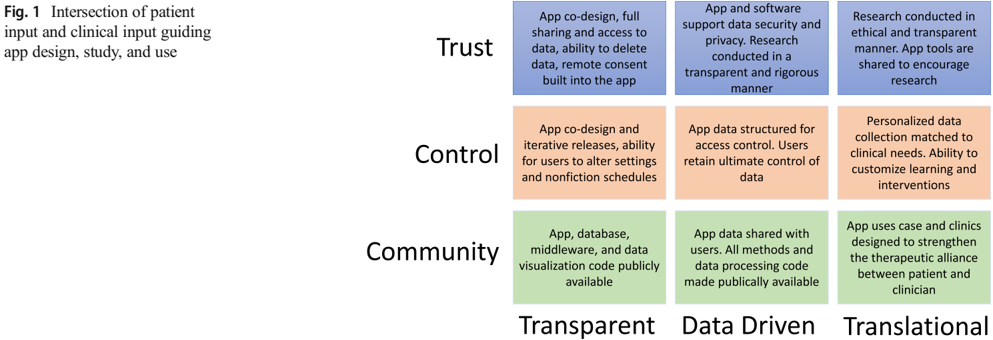
As the potential of smartphone apps and sensors for healthcare and clinical research continues to expand, there is a concomitant need for open, accessible, and scalable digital tools. While many current app platforms offer useful solutions for either clinicians or patients, fewer seek to serve both and support the therapeutic relationship between them. Thus, we aimed to create a novel smartphone platform at the intersection of patient demands for trust, control, and community and clinician demands for transparent, data driven, and translational tools. The resulting LAMP platform has evolved through numerous iterations and with much feedback from patients, designers, sociologists, advocates, clinicians, researchers, app developers, and philanthropists. As an open and free tool, the LAMP platform continues to evolve as reflected in its current diverse use cases across research and clinical care in psychiatry, neurology, anesthesia, and psychology. In this paper, we explore the motivation, features, current progress, and next steps to pair the platform for use in a new digital psychiatry clinic, to advance digital interventions for youth mental health, and to bridge gaps in available mental health care for underserved patient groups. The code for the LAMP platform is freely shared with this paper to encourage others to adapt and improve on our team’s efforts.
Overview
The claims and statistics of this paper haven’t been checked yet.
Free: it reads the open-access text and checks the first 5 claims that cite a source we can check. Create a free account to check every claim.
Integrity signals
Registry
Cites
Statistics
Figures

Verification
Claims the paper makes
The claims and statistics of this paper haven’t been checked yet.
Free: it reads the open-access text and checks the first 5 claims that cite a source we can check. Create a free account to check every claim.
Claims other papers make about this one
Each is checked against this paper’s own text: does it say what the citing paper says it does?
The source backs part of the claim, not all of it — or backs it for a different population, condition or comparison.
In the citing paper
“There is currently somewhere between 10,000 and 20,000 mental health apps [23,24], but it is estimated that only about 3% to 4% are actually evidence based.”
From Mobile Apps for Mental Health Issues: Meta-Review of Meta-Analyses (2020) · cites this paper as [23]
Experimental — accuracy not yet measuredThe source backs part of the claim, not all of it — or backs it for a different population, condition or comparison.
In the citing paper
“Cocreated with patients and clinicians, mindLAMP is designed not to drive care decisions or protocolize treatment but, rather, to serve as a flexible tool to be deployed in a personalized manner to customize care for each person.”
From Technology enabled clinical care (TECC): Protocol for a prospective longitudinal cohort study of smartphone-augmented mental health treatment (2021) · cites this paper as [24]
Experimental — accuracy not yet measuredThe check wasn’t confident either way, so it gives no verdict — never disputed.
In the citing paper
“Given that most people access social media via mobile devices, digital phenotyping and social media are closely related (Torous et al., 2019).”
From Social Media and Mental Health: Benefits, Risks, and Opportunities for Research and Practice (2020) · cites this paper as Torous et al., 2019
Experimental — accuracy not yet measuredIn the citing paper
“There is currently somewhere between 10,000 and 20,000 mental health apps [23,24], but it is estimated that only about 3% to 4% are actually evidence based.”
From Mobile Apps for Mental Health Issues: Meta-Review of Meta-Analyses (2020) · cites this paper as [23]
Self-check
Percentages, sums and reported differences re-computed from the paper’s own numbers.
The self-check needs the paper’s full text.
Citations
Cites
Kessler, R. C., Berglund, P., Demler, O., Jin, R., Merikangas, K. R., & Walters, E. E. (2005) · Archives of General Psychiatry · doi:10.1001/archpsyc.62.6.593 · Cited by 20,391 · cited 1×
“With the onset of nearly three quarters of mental disorders occurring before age 24 (Kessler et al. 2005), there may be unique opportunities to leverage this increasing use of digital technology for detecting risk factors for mental illness, facilitating referral, and delivering targeted digital…”
BackgroundThe Journal of the American Academy of Psychiatry and the Law.
(2021) · PubMed · doi:10.29158/jaapl.210028-20 · Cited by 3,823
The Lancet Commission on global mental health and sustainable development
Patel, V., Saxena, S., Lund, C., Thornicroft, G., Baingana, F., Bolton, P., Chisholm, D., Collins, P. Y., Cooper, J. L., Eaton, J., et al. (2018) · The Lancet · doi:10.1016/s0140-6736(18)31612-x · Cited by 3,692
(2003) · Manual for Research Ethics Committees · doi:10.1017/cbo9780511550089.028 · Cited by 3,413
Cognition and Depression: Current Status and Future Directions
Gotlib, I. H., & Joormann, J. (2010) · Annual Review of Clinical Psychology · doi:10.1146/annurev.clinpsy.121208.131305 · Cited by 2,420 · cited 1×
“For illnesses like schizophrenia, where impaired cognition is a primary source of disability (Tandon et al. 2010), and others like depression, where cognitive deficits are often present but overlooked (Gotlib and Joormann 2010), the potential of monitoring cognition via digital device is appealing.”
BackgroundFirth, J., Torous, J., Nicholas, J., Carney, R., Pratap, A., Rosenbaum, S., & Sarris, J. (2017) · World Psychiatry · doi:10.1002/wps.20472 · Cited by 1,097
Self-citationPersonal Sensing: Understanding Mental Health Using Ubiquitous Sensors and Machine Learning
Mohr, D. C., Zhang, M., & Schueller, S. M. (2017) · Annual Review of Clinical Psychology · doi:10.1146/annurev-clinpsy-032816-044949 · Cited by 802 · cited 1×
“…(e.g., GPS, call/text logs), sometimes collectively referred to as digital phenotyping (Torous et al. 2016), can help track patient progress over time, identify triggers for relapse, and help quantify functional outcomes like sleep, physical activity, and social engagement (Mohr et al. 2017).”
BackgroundTorous, J., Nicholas, J., Larsen, M. E., Firth, J., & Christensen, H. (2018) · Evidence Based Mental Health · doi:10.1136/eb-2018-102891 · Cited by 790 · cited 2×
“Using guided survey research (Torous et al. 2018), focus groups, structured inter-views, and clinical experience with apps in the mental health care settings, we sought early and continuous input from patients on the platform.”
BackgroundSelf-citationTorous, J., Kiang, M. V., Lorme, J., & Onnela, J.-P. (2016) · JMIR Mental Health · doi:10.2196/mental.5165 · Cited by 758 · cited 1×
“…capture of environmental context with smartphone sensors (e.g., GPS, call/text logs), sometimes collectively referred to as digital phenotyping (Torous et al. 2016), can help track patient progress over time, identify triggers for relapse, and help quantify functional outcomes like sleep,…”
BackgroundSelf-citationFirth, J., Torous, J., Nicholas, J., Carney, R., Rosenbaum, S., & Sarris, J. (2017) · Journal of Affective Disorders · doi:10.1016/j.jad.2017.04.046 · Cited by 675 · cited 1×
“Numerous review papers continue to raise caution about consumer apps offering interventions for depression (Firth et al. 2017a), bipolar disorder (Nicholas et al. 2015), anxiety disorders (Firth et al. 2017b), and more.”
BackgroundSelf-citation
Research works printed but not linked: 1
- Ben-Zeev, D., Drake, R., & Marsch, L. (2015). Clinical technology spe- cialists. BMJ: British Medical Journal (Online), 350.
Cited by
Items 101–200 of 202
Bennett, C. B., Toevs, E. K., Angus, A., Krawczak, R. A., Trentacosta, C. J., Jagadeesh, D., Tomlinson, C. S., & Lindhiem, O. J. (2025) · Clinical Psychology Review · doi:10.1016/j.cpr.2025.102644 · Cited by 12
Koh, Z., Serbetci, D., Skues, J., & Murray, G. (2025) · JMIR Mental Health · doi:10.2196/59351 · Cited by 4
“Remarkably, it is estimated that more than 10,000 mobile apps are available in the digital mental health market [23,24], and common mental illnesses such as anxiety and depression are measured in numerous associated apps [25-28].”
Linardon, J., Torous, J. B., Messer, M., Liu, C., Bell, I., Nicholas, J. A., & Goldberg, S. B. (2025) · Psychiatry Research · doi:10.1016/j.psychres.2025.116864 · Cited by 11
“The primary differences tend to relate to native functionality, such as push notifications, offline access, and integration with smartphone sensors, which can influence both engagement opportunities and how engagement is measured (Torous et al., 2019).”
Self-citationBright, A., & Doody, O. (2023) · Journal of Psychiatric and Mental Health Nursing · doi:10.1111/jpm.12943 · Cited by 12
Mobile Gesundheitstechnologien für eine gerechte Versorgung bei psychischen Erkrankungen
Machleid, F., Jansky, B., Wild, V., Wiegmann, C., Kaminski, J. A., & Schreiter, S. (2024) · Nervenheilkunde · doi:10.1055/a-2415-8433 · Cited by 9
Dynamic Consent for Sensor-Driven Research
Lee, H., & Lee, U. (2021) · International Conference on Mobile Computing and Ubiquitous Network (ICMU) · doi:10.23919/icmu50196.2021.9638790 · Cited by 11
Noori, S., Khasnavis, S., DeCroce-Movson, E., Blay-Tofey, M., & Vitiello, E. M. (2024) · JMIR Formative Research · doi:10.2196/41573 · Cited by 7
“The growth of digital health technologies, in particular, provides a way to better allocate mental health resources [6].”
BackgroundOleribe, O. O. (2025) · Healthcare · doi:10.3390/healthcare13151898 · Cited by 9
“When available 24/7, these systems will promote treatment adherence, enhance parental confidence, and deliver psychoeducation, which are core components in reducing caregiver stress and burnout [63].”
Laiti, J., Donnelly, J. C., Byrne, E., & Dunne, P. J. (2025) · Frontiers in Digital Health · doi:10.3389/fdgth.2025.1560541 · Cited by 10
Zhang, X., Lewis, S. W., Carter, L., Chen, X., Zhou, J., Wang, X., & Bucci, S. (2024) · Digital Health · doi:10.1177/20552076231222097 · Cited by 10
“14,15 Additionally, a recent randomised controlled trial (RCT) study has shown that active self-monitoring of symptoms can reduce positive psychotic symptoms in people with early psychosis in the UK.”
BackgroundBilal, A.-M., Pagoni, K., Iliadis, S. I., Papadopoulos, F. C., Skalkidou, A., & Öster, C. (2024) · JMIR Formative Research · doi:10.2196/53508 · Cited by 11
“App-based digital phenotyping is a rapidly growing method in health care research with little to no studies evaluating user experience and the barriers and facilitators of user engagement [37].”
MethodIncreasing the Value of Digital Phenotyping Through Reducing Missingness: A Retrospective AnalysisPreprint
Currey, D., & Torous, J. B. (2022) · medRxiv · doi:10.1101/2022.05.17.22275182 · Cited by 6
“As this digital phenotyping research continues to expand, calls have emerged for a new focus on the resolution and psychometrics 6 of these new digital measurements.”
BackgroundSelf-citationLINC: a framework for maintaining high-quality passive data in digital phenotyping studies
Calvert, E., Lane, E., Flathers, M., & Torous, J. B. (2026) · Scientific Reports · doi:10.1038/s41598-026-41435-0 · Cited by 5
“Passive data were captured by the mindLAMP app 27 and included GPS, accelerometer, and screen state.”
Self-citationFang, S., & Chen, S.-H. (2026) · BMC Psychiatry · doi:10.1186/s12888-026-08157-z · Cited by 9
“Pilot studies using smartphones to monitor bipolar disorder symptoms have demonstrated feasibility [46], and dedicated digital phenotyping platforms have been developed to standardize data collection across diverse healthcare settings [47].”
Exploring the Efficacy of Mental Health Care Chatbots: A Comprehensive Review
Nazareth, P., Nikhil, G. B., Chirag, G., Prathik, N. R., & Pratham, P. (2024) · International Conference on Computing, Communication and Networking Technologies (ICCCNT) · doi:10.1109/icccnt61001.2024.10725176 · Cited by 6
“Privacy and data security are also critical considerations in emotion analysis integration, as the analysis of users emotional states may involve the processing of sensitive personal data [10], [11].”
BackgroundRaje, A., Rozatkar, A. R., Mehta, U. M., Shrivastava, R., Bondre, A. P., Ahmad, M. A., Malviya, A., Sen, Y., Tugnawat, D. K., Bhan, A., et al. (2025) · Schizophrenia Research Cognition · doi:10.1016/j.scog.2025.100347 · Cited by 5
Self-citationJung, Y., Law, H. Y., Lee, H. S., Lee, J., Lee, B., & Lee, U. (2025) · CHI Conference on Human Factors in Computing Systems · doi:10.1145/3706598.3713314 · Cited by 5
Scalable real-time health data sensing and analysis enabling collaborative care delivery
Dimitriadis, I., Mavroudopoulos, I., Kyrama, S., Toliopoulos, T., Gounaris, A., Vakali, A. I., Billis, A. S., & Bamidis, P. D. (2022) · Social Network Analysis and Mining · doi:10.1007/s13278-022-00891-y · Cited by 6
“Examples of such available platforms include MiningMinds (Banos et al. 2016), AWARE (Ferreira et al. 2015), mCerebrum (Hossain et al. 2017), RADAR-base (Ranjan et al. 2019) and other solutions like Beiwe (Torous et al. 2016), Sensus (Xiong et al. 2016) and LAMP (Torous et al. 2019).”
MethodYang, X. W., Knights, J., Bangieva, V., & Kambhampati, V. (2023) · JMIR Formative Research · doi:10.2196/42935 · Cited by 10
“There are other platforms and software that aim to conduct behavioral sensing or digital phenotyping studies, such as the Beiwe system [31], LAMP [32], Effortless Assessment of Risk States system (EARS) [33], and BiAffect app [21].”
MethodWeis, J., Wolf, L., Boerries, M., Kassahn, D., Boeker, M., & Dresch, C. (2023) · JMIR Cancer · doi:10.2196/40891 · Cited by 6
“Consistent with existing studies, patients want control over who has access to their personal health information [47,48].”
BackgroundAsgari-Targhi, A., Yao, B., Brown, L., Garcia, S., Nagendra, A., Chin, K., Billah, T., Penzel, N., John, O., Prunier, N., et al. (2025) · Schizophrenia · doi:10.1038/s41537-025-00572-7 · Cited by 5
“For example, the mindLAMP 15 digital assessment platform used in AMP ® SCZ was developed over fi ve years with over 200 updates 16,17 based largely on stakeholder input.”
The Current State/ Trends in Digital Phenotyping for Mental Health Research and Care
Chen, K., Torous, J. B., & Cheong, J. (2025) · Psychiatric Clinics of North America · doi:10.1016/j.psc.2025.08.019 · Cited by 12
Self-citationMobile cognitive remote assessment of schizophrenia: a global multi-site pilot study
Castillo, J., Cheong, J., Choudhary, S., Bondre, A. P., Rozatkar, A. R., Mehta, U. M., Shrivastava, R., Ahmad, M. A., Malviya, A., Sen, Y., et al. (2025) · Schizophrenia · doi:10.1038/s41537-025-00660-8 · Cited by 4
“…offers a robust and extensible framework for integrating cognitive assessments and smartphone sensor data while also supporting care delivery 22,28,29 . mindLAMP cognitive assessments have been studied in schizophrenia 9,30,31 , Parkinson ’ s Disease 32 , mild/moderate cognitive impairment, and…”
Self-citationBardram, J. E. (2022) · Sensors · doi:10.3390/s22072813 · Cited by 5
“Contemporary examples of this approach include Purple Robot [12], Sensus [13], the AWARE Framework [14], the Beiwe Research Platform [15], mCerebrum [16], RADAR-base [17] and LAMP [18], which all are quite elaborate and mature platforms.”
MethodJohnson, D. J., Emerson, M. R., Dinkel, D. M., Thomas, R., Watanabe‐Galloway, S., Mickles, M. S., & Culjat, C. (2025) · Journal of Technology in Behavioral Science · doi:10.1007/s41347-024-00476-w · Cited by 4
Feasibility trial of a self-help digital intervention for functional cognitive disorder
Cabreira, V., Frostholm, L., Stone, J., & Carson, A. J. (2025) · Brain Communications · doi:10.1093/braincomms/fcaf248 · Cited by 4
“20-24 Mobile apps have the potential to minimize human contact variables (higher fidelity), 25 enable integration of different therapeutic approaches and adjustment of the treatment dosage to their tolerance and facilitate the application of therapeutic strategies in daily life, enhancing…”
Das, N., Choudhary, S., Nagendra, S., Dutt, S., Reddy, P. H., Naslund, J. A., Torous, J. B., & Mehta, U. M. (2025) · Schizophrenia Research · doi:10.1016/j.schres.2025.07.009 · Cited by 4
Self-citationColombo, P., Ceccarelli, S. B., Pacchiarini, S., Cribellati, S., & Molteni, M. (2022) · JMIR Formative Research · doi:10.2196/36757 · Cited by 4
“Through the app, patients can input data in an active way (survey, symptom registration, etc) or in a passive way (information collected in the background even if the user is not using the app), and they can receive some advice and mindfulness resources [11].”
BackgroundCalder, S., Andreotta, M., Morris, T., & Atee, M. (2022) · Journal of Health Care Chaplaincy · doi:10.1080/08854726.2022.2091837 · Cited by 4
“The development of the PCAT accords with a proliferation of apps and other digital devices in the healthcare space (Shaw et al., 2021), where there is a need for open, accessible, and scalable digital tools (Torous et al., 2019).”
MethodAn Automated Machine Learning Pipeline for Monitoring and Forecasting Mobile Health Data
Bonaquist, A., Grehan, M., Haines, O., Keogh, J., Mullick, T., Singh, N., Shaaban, S., Radović, A., & Doryab, A. (2021) · Systems and Information Engineering Design Symposium · doi:10.1109/sieds52267.2021.9483755 · Cited by 6
Baldwin, P. A., Black, M., Newby, J. M., Brown, L., Scott, N., Shrestha, T., Cockayne, N. L., Tennant, J., Harvey, S. B., & Christensen, H. M. (2022) · BMJ Innovations · doi:10.1136/bmjinnov-2021-000807 · Cited by 4
Lee, S., Hwang, H.-H., Kim, S., Hwang, J., Park, J., & Park, S. (2023) · Clinical Psychopharmacology and Neuroscience · doi:10.9758/cpn.23.1062 · Cited by 4
(En) coding care into digital urbanism: Vignettes of collective practices
Vadiati, N., Chiappini, L., & Bangratz, M. (2025) · Digital Geography and Society · doi:10.1016/j.diggeo.2025.100120 · Cited by 5
Zhang, X., Eisner, E., Basilio, D. D., Richardson, C., Firth, J., & Bucci, S. (2025) · BMJ Digital Health & AI · doi:10.1136/bmjdhai-2025-000005 · Cited by 3
A Mobile-Based Multimodal Framework for Pervasive Health Monitoring
Mastoras, R.-E., Triantafyllidis, A. K., Giakoumis, D., Kordonias, R.-K., Papaprodromou, A., Nalbadis, F., Segkouli, S., Lithoxoidou, E. E., Georgiadis, C., Paliokas, I., et al. (2021) · IEEE International Conference on Pervasive Computing and Communications Workshops (PerCom Workshops) · doi:10.1109/percomworkshops51409.2021.9430967 · Cited by 4
“Torous et al. [12], developed a platform designed specifically for psychiatry, mainly through the collection of surveys, location and accelerometer data.”
BackgroundDigital Mental Health Interventions: A Comprehensive Systematic Review
7450 Summit Cir, D., & Alnaher, S. (2023) · Journal of Sociology Psychology & Religious Studies · doi:10.53819/81018102t4236 · Cited by 3
Digitale Phänotypisierung: Segen oder Fluch?
Steinert, T., & Thoma, S. (2021) · Psychiatrische Praxis · doi:10.1055/a-1347-3349 · Cited by 3
“In der „Digitalen Psychiatrischen Klinik“ in Boston gibt es auch tatsächlich bereits ein neues Teammitglied: den „digitalen Navigator“ [9, 11].”
BackgroundmSexHealth: An Overview of Mobile Sexual Health Applications
Jurin, T., Šoštarić, M., Jokić‐Begić, N., & Korajlija, A. L. (2022) · Journal of Sex & Marital Therapy · doi:10.1080/0092623x.2022.2079576 · Cited by 3
“It is estimated that there are currently between 10,000 and 20,000 mental health applications (Torous et al., 2019) with great potential because they take into account different groups of individuals, their specific needs, different situations, as well as different health outcomes (Berrouiguet,…”
BackgroundLangholm, C., Alon, N., Perret, S., & Torous, J. B. (2023) · Journal of Behavioral and Cognitive Therapy · doi:10.1016/j.jbct.2023.05.004 · Cited by 3
Self-citationMustafa, S. A.-H., von Wrede, R. D., & Helmstaedter, C. (2025) · Epilepsy & Behavior · doi:10.1016/j.yebeh.2025.110586 · Cited by 2
Risks of digitalization in mental health care
Volpe, U., Ramalho, R., & Gäebel, W. (2025) · Neuropsychiatrie · doi:10.1007/s40211-025-00551-5 · Cited by 2
Sethi, M. I. S., Manickam, T., Chakraborty, T., & Math, S. B. (2025) · JMIR Formative Research · doi:10.2196/75616 · Cited by 4
“This participatory approach mirrors the findings by Torous et al [24], who advocated for user-driven design to enhance engagement in digital mental health tools.”
Kurilla, A., Čavojská, N., Ikegwuonu, T., Nemcikova, M., Schulte‐Strathaus, J. C. C., Uyttebroek, L., Beames, J. R., Breznoščáková, D., Dančík, D., Hajdúk, M., et al. (2026) · JMIR Formative Research · doi:10.2196/79510 · Cited by 2
“Tools are more likely to be adopted when they are personally relevant and can be seamlessly integrated into users’daily routines [27].”
Lim, K., Bodner, R., Ledley, K. T., Wang, S., Scheuer, L., & Torous, J. B. (2026) · Journal of Participatory Medicine · doi:10.2196/90255 · Cited by 2
“Regarding data governance and privacy, the mindLAMP platform is open-source and designed with privacy pro-tections in mind [26].”
Self-citationZhang, X., Lewis, S. W., Carter, L., & Bucci, S. (2023) · JMIR Research Protocols · doi:10.2196/45170 · Cited by 2
“By combining active and passive monitoring, smartphone-based monitoring has the potential to provide a more dynamic, personal, and valid representation of a person’s emotional and behavioral state [16,37].”
Yang, Y., Law, M. A., & Vaghri, Z. (2024) · PLoS ONE · doi:10.1371/journal.pone.0301008 · Cited by 4
Harnessing digital strategies to manage emotional health among students of Gen Z
Song, C., Xia, Y., Zhang, Z., & Liu, R. (2024) · Metaverse · doi:10.54517/m.v5i1.2707 · Cited by 10
“Interpreting these results within the broader context of digital mental health research suggests that well-designed digital tools are effective as therapeutic interventions and preventive measures [37].”
BackgroundThe Design of a Gamified App for Supporting Undergraduates' Resilience
Nicolaidou, I. A., & Aristeidis, L. (2022) · European Conference on Games Based Learning · doi:10.34190/ecgbl.16.1.708 · Cited by 2
“As the potential of smartphone apps and sensors for healthcare continues to expand, there is a concomitant need for open, accessible, and scalable digital tools, as are smartphone mental health apps (Torous et al., 2019; Nicolaidou et al., 2019).”
BackgroundAWARE-TEXT: An Android Package for Mobile Phone Based Text Collection and On-Device Processing
Giorgi, S., Sherman, G. T., Bellew, D., Guntuku, S. C., Ungar, L., & Curtis, B. L. (2023) · Workshop for NLP Open Source Software (NLP-OSS) · doi:10.18653/v1/2023.nlposs-1.12 · Cited by 2
“✓ ✓ m-Path (Mestdagh et al., 2023) ✓ mindLAMP (Torous et al., 2019) ✓ ✓”
A Cloud-Native Knowledge Management Framework for Patient-Generated Health Data
Majdalawieh, M., Bani-Hani, A. I., Sabbah, H. A., Adedugbe, O., & Benkhelifa, E. (2023) · International Conference on Social Networks Analysis, Management and Security (SNAMS) · doi:10.1109/snams60348.2023.10375469 · Cited by 3
“The updated research [23] included a revised mobile app architecture design that includes a frontend, backend, and analysis components towards supporting PGHD, with a patient-focused development and clinician-focused approach.”
MethodWu, L., John, A., & Simoes, J. P. (2025) · medRxiv · doi:10.1101/2025.04.26.25326492 · Cited by 3
“This integration of objective, unobtrusive physiological data via digital phenotyping offer transformative potential for psychological research, enabling objective measurement of subjective states such as emotional experiences, personality characteristics, and cognitive capacities [4].”
Oba, T., Takano, K., Sugawara, D., & Kimura, K. (2025) · JMIR Formative Research · doi:10.2196/69556 · Cited by 1
“Stakeholders appear to see mobile implementations as one of the most promising directions, given the number of apps available in the market and the huge amount of investment in recent years [3].”
Why Is It Essential to Address Digital Public Health in an Interdisciplinary Way?
Maaß, L., Dassow, H.-H., Diethei, D., Freye, M., Niess, J., & Do, S. (2025) · Springer series on epidemiology and public health · doi:10.1007/978-3-031-90154-6_1 · Cited by 3
Eisner, E., Ball, H., Ainsworth, J. D., Cella, M., Drake, R., Elton, D., Faulkner, S., Greenwood, K., Gumley, A. I., Haddock, G., et al. (2026) · Journal of Medical Internet Research · doi:10.2196/86753 · Cited by 2
“It mirrors previous patient and clinician participants’ priorities regarding transparency of data processing within digital health systems [57].”
Machine learning approaches in predicting circadian rhythm sleep-wake disorders: A review
Sengupta, T., Gaur, A., & Varatharajan, S. (2026) · Chronobiology International · doi:10.1080/07420528.2026.2667404 · Cited by 1
“The use of high-resolution, longitudinal data from wearables and genomic clock-gene sequencing introduces risks of patient re-identification and unauthorized use of sensitive biometric information (Torous et al. 2019).”
Service Users’ Views on Digital Remote Monitoring for Psychosis: Survey Study
Zhang, X., Eisner, E., Basilio, D. D., Richardson, C., Firth, J., & Bucci, S. (2026) · JMIR Human Factors · doi:10.2196/86152 · Cited by 4
“It includes active symptom monitoring ([ASM]; self-reported data) and passive sensing ([PS]; sensor-derived data), enabling continuous, low-burden monitoring and the opportunity for timely, personalized interventions [3,6,7].”
Mental health app crisis support assessment framework: development and pilot testing
Knysh, A., & Pohrebniak, T. (2026) · Frontiers in Digital Health · doi:10.3389/fdgth.2026.1814547 · Cited by 1
“Concretely, it examines whether users can find crisis resources when they need them and whether those resources meet established standards – an evaluation approach that several guidelines for digital mental health tools have called for (1, 18, 30).”
Le phénotypage digital pour une pratique clinique en santé mentale mieux informée
Bougeard, A., Hottin, R. G., Houde, V., Jean, T., Piront, T., Potvin, S., Bernard, P., Tourjman, V., Benedictis, L. D., & Orban, P. (2021) · Santé mentale au Québec · doi:10.7202/1081513ar · Cited by 1
Covid-19 Epidemic Spread Countermeasures: Malaysian Authorities Experience
Al-Shami, M. K., Aborujilah, A., & Abdulghafor, R. A. A. (2022) · International Visualization, Informatics and Technology Conference (IVIT) · doi:10.1109/ivit55443.2022.10033416 · Cited by 1
iCareLoop: Data Management System for Monitoring Gerontological Social Isolation and Loneliness
Ji, X., Yuh, A., Choi, H., Erdélyi, V., Mizumoto, T., Harrison, S. L., Weimer, J. E., Demiris, G., Nakagawa, T., Suehiro, T., et al. (2023) · International Conference on Mobile Computing and Ubiquitous Network (ICMU) · doi:10.23919/icmu58504.2023.10412232 · Cited by 4
“The LAMP platform [20], a smartphone platform for mental health monitoring, caters to patient demands for trust, control, and community and clinician requirements for transparency in design.”
MethodNuraeni, A., & Rosana, D. (2023) · Journal of Environment and Sustainability Education · doi:10.62672/joease.v1i2.17 · Cited by 3
“Furthermore, mobile phones also facilitate distance learning (Silva, 2021), online collaboration (Torous, 2019), and various interactive learning applications (Sari, 2019).”
BackgroundImproving Health Equity Through Digital Healthcare
Dhar, B., Sharma, P., Chakraborty, R., Khanna, T., & Ali, S. H. (2024) · Advances in healthcare information systems and administration book series · doi:10.4018/979-8-3693-0928-5.ch003 · Cited by 1
Gardea‐Resendez, M., Breitinger, S. A., Walker, A., Harper, L., Xiong, A. E., Stoppel, C. J., Volety, R., Raman, J., Byun, J. S., Langholm, C., et al. (2024) · Journal of Psychiatric Practice · doi:10.1097/pra.0000000000000820 · Cited by 4
“…to routine psychiatric care for their mood disorders, participants were enrolled in a 12-week study that involved: (1) downloading the MindLAMP app 19 and wearing a smartwatch to collect active and passive data, (2) completing a monthly study visit for mood-related assessments, and (3)…”
Self-citationDesign Patterns in an ERP Environment
Zahid, A., Akhtar, S., & Basit, W. (2022) · Lecture notes in computer science · doi:10.1007/978-3-031-14135-5_21 · Cited by 1
Digital Technology Interventions for Preventing and Treating Youth Depression
Lira, D., & Martínez, V. (2022) · Depression and personality · doi:10.1007/978-3-031-13029-8_4 · Cited by 2
COVID-19 Tracking Applications Acceptance among General Populace: An Overview in Malaysia
Al-Shami, M. K., Abdulghafor, R. A. A., Aborujilah, A., Omer, A. Y. I., Turaev, S., & Ali, M. A. H. (2023) · Sustainability · doi:10.3390/su15054060 · Cited by 1
Nguyen, B., Torres, A., Sim, W., Kenny, D. J., Campbell, D. M., Beavers, L., Lou, W. Y. W., Kapralos, B., Peter, E. H., Dubrowski, A., et al. (2022) · doi:10.32920/21428748 · Cited by 1
Deeney, C., Sonig, A., Hurley, M. E., Tunç, B., Storch, E. A., Herrington, J. D., Blumenthal‐Barby, J., & Kostick, K. M. (2025) · doi:10.2196/preprints.78788 · Cited by 1
Li, W., Bidargaddi, N. P., Fouyaxis, J., & Thorpe, D. (2022) · Concurrency and Computation Practice and Experience · doi:10.1002/cpe.7322
“PROBLEM ANALYSIS Data-driven scientific studies are becoming the trend in the field of health [10-12] as well as many other scientific fields.”
Thorpe, D., Fouyaxis, J., Lipschitz, J. M., Nielson, A., Li, W., Murphy, S. A., & Bidargaddi, N. P. (2022) · JMIR Formative Research · doi:10.2196/29988
“Open-sourcing projects claims to address these concerns in many respects, namely through literal transparency by sharing the bare bones of software for all to scrutinize [18].”
BackgroundValidation of Smartphone-Based Cognitive Assessments for Individuals with Major Depressive Disorder
Thérond, A. (2021) · Carleton University's Institutional Repository (MacOdrum Library, Carleton University) · doi:10.22215/etd/2021-14740
Nguyen, B., Torres, A., Sim, W., Kenny, D. J., Campbell, D. M., Beavers, L., Lou, W. Y. W., Kapralos, B., Peter, E. H., Dubrowski, A., et al. (2022) · doi:10.32920/21428748.v1
Digitale Phänotypisierung und künstliche Intelligenz
Harrer, M., Terhorst, Y., Baumeister, H., & Ebert, D. D. (2023) · Springer eBooks · doi:10.1007/978-3-662-65816-1_27
Das, S., Lomax, S., & Gerk, A. (2023) · Elsevier eBooks · doi:10.1016/b978-0-323-90531-2.00004-7 · Cited by 1
The impact of smartphone use on childhood depression: A pediatric perspective
Portal, P. V. R., & González‐Argote, J. (2023) · Salud Ciencia y Tecnología - Serie de Conferencias · doi:10.56294/sctconf2023335
Jain, F. A., Banerjee, S., Gutierrez‐Ramirez, P., Gomez, L. A. R., Pedrelli, P., Origlio, J., & Onnela, J.-P. “. (2024) · doi:10.2196/preprints.56802
Odihe, J. A. (2024) · Open Access Research Journal of Science and Technology · doi:10.53022/oarjst.2024.10.1.0024
Visual Characterization of Gathered Data for Digital Phenotyping
Ceja, J. M. O., Arenas, A. G., Romero, C. D. G., Rodríguez, S. R., & Luna, G. L. M. (2024) · Lecture notes in networks and systems · doi:10.1007/978-3-031-54235-0_19
Stefanyoli, C., Ribeiro, D. J. T., Praça, M., Rocha, P., & Jerónimo, P. (2024) · Seven Editora eBooks · doi:10.56238/sevened2024.012-031 · Cited by 1
Accessing and Acting Upon Patient-Generated Health Data
Chao, E. C. (2024) · Elsevier eBooks · doi:10.1016/b978-0-443-13244-5.00014-6
Behavioural health technologies and telehealth
Torous, J. B., & Carpenter-Song, E. A. (2025) · Oxford University Press eBooks · doi:10.1093/med/9780198898818.003.0025
Self-citationJacoba, G. L. B., & Ferrer, B. P. (2025) · AIP conference proceedings · doi:10.1063/5.0262217
Strudwick, G., Kassam, I., Torous, J. B., & Patenaude, S. (2025) · doi:10.2196/preprints.78791
Self-citationShrivastava, A., Datta, M., Sousa, A. D., Nayak, O., Gupta, M., Srivastava, D. K., Shukla, N., Mange, H., Limbachia, J., Jagtap, S. G., et al. (2025) · Open Journal of Psychiatry · doi:10.4236/ojpsych.2025.154021
Rethinking Ethics for an Era of Trusted Computational Tools
Kostick, K. M., Hurley, M. E., Herrington, J. D., & Storch, E. A. (2025) · Psychiatric Clinics of North America · doi:10.1016/j.psc.2025.08.016 · Cited by 2
Clare, A., Mukumba, R., Mclaren, M., Dalal, N., Murray, J., Wayal, S., & Hollowell, J. (2025) · Mental Health Science · doi:10.1002/mhs2.70035
Additional file 1 of Digital tools to support mental health: a survey study in psychosis
Eisner, E., Berry, N., & Bucci, S. (2024) · Figshare · doi:10.6084/m9.figshare.26624164
Zhang, X., Lewis, S., Chen, X., Zhou, J., Wang, X., & Bucci, S. (2024) · Figshare · doi:10.6084/m9.figshare.25572496
ClearFace: Facial Acne Detection and Classification System Using YOLOv11 and EfficientNet-B0
Viana, T. A. D. S., Gonçalves, I. H., de Paula, I. S., Silva, F. H. D. S., & Filho, P. P. R. (2025) · SIBGRAPI Conference on Graphics, Patterns and Images (SIBGRAPI) · doi:10.5753/sibgrapi.est.2025.38285 · Cited by 1
“This technology seeks to accelerate diagnostic processes and mitigate these impacts [18], [19].”
The CARP Mobile Sensing Framework – Demonstration
Bardram, J. E., & Grech, N. S. (2025) · ACM International Joint Conference on Pervasive and Ubiquitous Computing (UbiComp) · doi:10.1145/3714394.3754442
Al-Ghailani, A., & Simon, M. (2026) · Journal of College Student Mental Health · doi:10.1080/28367138.2026.2637866
McKenna, M., Torous, J. B., Rozenblit, E., Flathers, M., Ryan, S., Byun, A. J. S., & Lim, C. (2026) · JMIR Research Protocols · doi:10.2196/93259
“SMART-A extends the open-source mindLAMP app developed by the Division of Digital Psychiatry at Beth Israel Deaconess Medical Center (BIDMC) [30].”
Self-citationPerceived Sensitivity of Sensor-Based Digital Health Data: Qualitative Interview Study
Deeney, C., Sonig, A., Hurley, M. E., Tunç, B., Storch, E. A., Herrington, J. D., Blumenthal‐Barby, J., & Kostick, K. M. (2026) · JMIR mhealth and uhealth · doi:10.2196/78788 · Cited by 2
Responsibly adopting workplace mental well-being platforms
Gentry, E., Vallejos, E. P., Greenhalgh, C., Dowthwaite, L., & Bryce, V. (2026) · Journal of Responsible Technology · doi:10.1016/j.jrt.2026.100168
An Application-Oriented Survey of Digital Solutions in Mental Healthcare
Kertész, G., Pintér, Á., Bringye, Z., Gáspár, B., Egres, K., van Elst, L. T., Pirker, J., & Möller, K. (2026) · IEEE International Conference on Computational Cybernetics (ICCC) · doi:10.1109/iccc68994.2026.11511591
“Parallel literature on system architectures and Internet of Things (IoT) enabled healthcare has described [16], [17], while ethical and legal analyses have emphasized unresolved challenges related to privacy, governance, and [20].”
Large Language Models in Mental Health Research and Treatment
Mesquiti, S., & Nook, E. C. (2026) · Annual Review of Biomedical Data Science · doi:10.1146/annurev-biodatasci-092524-113527 · Cited by 2
Thomasson, M., Cardinal, M., Beaulieu‐Bonneau, S., Boubetana, E. M., Wittich, W., Kehayia, E., Choukou, M.-A., & Poncet, F. (2026) · Disability and Rehabilitation Assistive Technology · doi:10.1080/17483107.2026.2678545
Synergistic and Scalable: A Review of Integrated Digital and Biological Interventions
Eken, H. N., & Price, R. B. (2026) · FOCUS The Journal of Lifelong Learning in Psychiatry · doi:10.1176/appi.focus.20250048
User experience and ethical design for AI-driven behavioral health technologies
Armstrong, C. M., Luxton, D. D., & June, J. D. (2026) · Elsevier eBooks · doi:10.1016/b978-0-443-33151-0.00006-x
Stojanović, A., Stanković, M., & Ristić, A. (2026) · Healthcare · doi:10.3390/healthcare14152334
“…to structured scales, AI systems increasingly incorporate digital phenotyping, which refers to the use of data generated through smartphone use, device interactions, movement patterns, communication behavior, sleep-related signals, or linguistic features to infer changes in mental state [23].”
Metadata
- Authors
- Torous, J., Wisniewski, H., Bird, B., Carpenter, E., David, G., Elejalde, E., Fulford, D., Guimond, S., Hays, R., Henson, P., Hoffman, L., Lim, C., Menon, M., Noel, V., Pearson, J., Peterson, R., Susheela, A., Troy, H., Vaidyam, A., Weizenbaum, E., Naslund, J. A., & Keshavan, M.
- Affiliations
- Beth Israel Deaconess Medical Center (US)
- Dartmouth College (US)
- Bentley University (US)
- University of Ottawa (CA)
- Boston University (US)
- Harvard University (US)
- Corresponding author
- Torous, John
- ORCID
- Venue
- Journal of Technology in Behavioral Science
- Published
- 2019-04-27
- Volume
- 4
- Issue
- 2
- Pages
- 73-85
- ISSN
- 2366-5963 (ISSN-L)
- OpenAlex
- W2941525596
- Cited by
- 202
- References
- 46
- Citations by year
- 2026: 19 · 2025: 39 · 2024: 24 · 2023: 31 · 2022: 36 · 2021: 28 · 2020: 22 · 2019: 3
- FWCI
- 25.20
- Type
- journal article
- Language
- en
- Open access
- hybrid
- doi.org
- Licence
- cc-by
- creativecommons.org/licenses/by/4.0 (tdm)
- creativecommons.org/licenses/by/4.0 (vor)
- Locations
- Journal of Technology in Behavioral Science (publishedVersion, cc-by)
- Funders
- National Institute of Mental Health (1K23MH116130-0)
- Topics
- Social Sciences › Psychology › Applied Psychology › Digital Mental Health Interventions
- Health Sciences › Health Professions › General Health Professions › Mobile Health and mHealth Applications
- Social Sciences › Psychology › Experimental and Cognitive Psychology › Mental Health Research Topics
- Keywords
- mobile application, digital phenotyping, digital psychiatry, youth mental health, access to mental health care, underserved populations, clinician-patient relationship, open source software, interdisciplinary collaboration, digital interventions
About these checks
Registry, retraction, Cites and statistics results are computed, not judged, with one exception: a printed reference that no index lists is read once by a model before it counts as a citation error. Claims are extracted by a model and kept only when their quote appears verbatim in the text; each cited source is then checked, with a model’s help, for whether it says what the claim relies on. Those verdicts can be wrong — read the claim’s quote and the cited source before relying on one.
Statistics and arithmetic are recomputed, not judged.
Confidence bands are shown only for fields calibrated on our annotated test set. None is calibrated yet, so no band is shown.
What counts as a claim ›How we measure confidence ›How we check this ›
Are you an author, or do you see a problem with this page? Request a review
Data sources
Bibliographic data: Semantic Scholar, OpenAlex, Crossref.
Contains information from the Semantic Scholar Academic Graph Datasets, made available under the ODC Attribution License (ODC-BY 1.0).
Semantic Scholar’s data is described in: Kinney, R., et al. (2023). The Semantic Scholar Open Data Platform. arXiv:2301.10140.
