

National Healthcare Economic Evaluation Guidelines: A Cross-Country Comparison
Open accessThe DOI matches its Crossref record; 42 of the 42 references it cites were found in a registry or an index.
Abstract
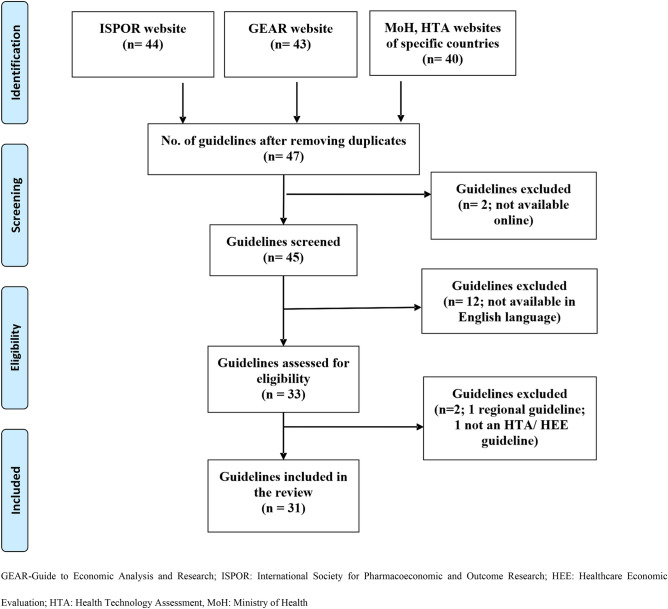
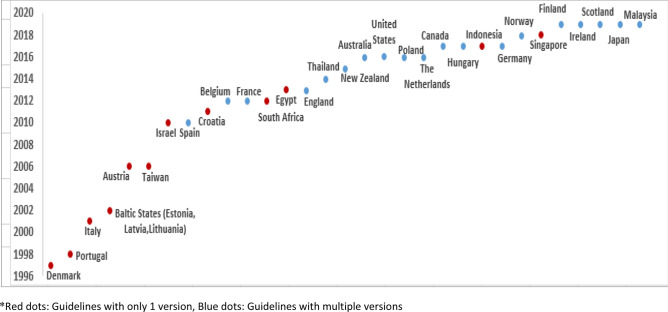
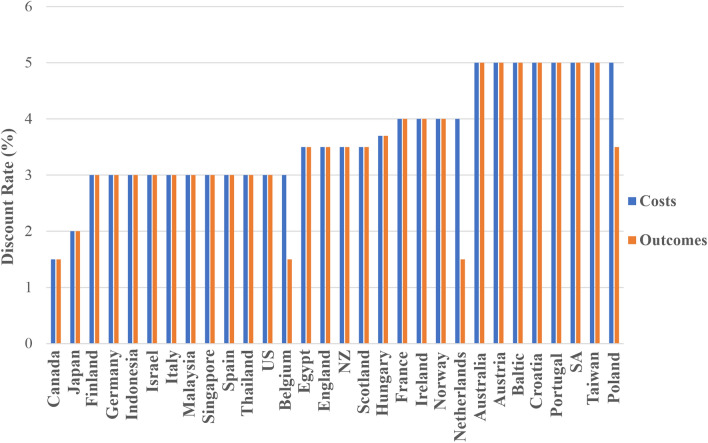
BACKGROUND AND OBJECTIVES: Globally, a number of countries have developed guidelines that describe the design and conduct of economic evaluations as part of health technology assessment (HTA) or pharmacoeconomic analysis for decision making. The current scoping review was undertaken with an objective to summarize the recommendations made on methods of economic evaluation by the national healthcare economic evaluation (HEE) guidelines. METHODOLOGY: A comprehensive search was undertaken in the website repositories of the International Society for Pharmacoeconomic and Outcomes Research (ISPOR) and Guide to Economic Analysis and Research (GEAR), and websites of national HTA agencies and ministries of health of individual countries. All guidelines in the English language were included in this review. Data were extracted with respect to general and methodological characteristics, and a descriptive analysis of recommendations made across the countries was undertaken. RESULTS: Overall, our review included 31 national HEE guidelines, published between 1997 and August 2020. Nearly half (45%) of the guidelines targeted the evaluation of pharmaceuticals. The nature of the guidelines was either mandatory (31%), recommendatory (42%), or voluntary (16%). There was a substantial consensus among the guidelines on several key principles, including type of economic evaluation (cost-utility analysis), time horizon of the analysis (long enough), health outcome measure (quality-adjusted life-years) and use of sensitivity analyses. The recommendations on study perspective, comparator, discount rate and type of costs to be included (particularly the inclusion of indirect costs) varied widely. CONCLUSION: Despite similarity in the overall processes, variation in several recommendations given by various national HEE guidelines was observed. This is perhaps unsurprising given the differences in the health systems and financing mechanisms, capacity of local researchers, and data availability. This review offers important lessons and a starting point for countries that are planning to develop their own HEE guidelines.
Overview
The claims and statistics of this paper haven’t been checked yet.
Free: it reads the open-access text and checks the first 5 claims that cite a source we can check. Create a free account to check every claim.
Integrity signals
Registry
Cites
Statistics
Figures
Verification
Claims the paper makes
The claims and statistics of this paper haven’t been checked yet.
Free: it reads the open-access text and checks the first 5 claims that cite a source we can check. Create a free account to check every claim.
Claims other papers make about this one
Each is checked against this paper’s own text: does it say what the citing paper says it does?
The cited source says what the claim attributes to it.
In the citing paper
“Current national guidelines on the design for economic evaluations vary and few recommend taking a societal perspective and including indirect costs [79]”
From The economic impact of retinal diseases for which gene therapy is emerging: a systematic literature review (2025) · cites this paper as [79]
Self-check
Percentages, sums and reported differences re-computed from the paper’s own numbers.
The self-check needs the paper’s full text.
Citations
Cites
Methods for the Economic Evaluation of Health Care Programmes
Drummond, M. E., Sculpher, M. J., Torrance, G. W., O’Brien, B. J., & Stoddart, G. L. (2005) · doi:10.1093/oso/9780198529446.001.0001 · Cited by 13,648
Methods for the economic evaluation of health care programmes
Wilson, S. H. (1987) · Journal of Epidemiology and Community Health · doi:10.1136/jech.41.4.355-a · Cited by 4,275
Consolidated Health Economic Evaluation Reporting Standards (CHEERS) statement
Husereau, D., Drummond, M., Petrou, S., Carswell, C., Moher, D., Greenberg, D., Augustovski, F., Briggs, A. H., Mauskopf, J., Loder, E., et al. (2013) · BMJ · doi:10.1136/bmj.f1049 · Cited by 1,776
Making choices in health: who guide to cost-effectiveness analysis
(2004) · Revista Española de Salud Pública · doi:10.1590/s1135-57272004000300012 · Cited by 1,259
Consolidated Health Economic Evaluation Reporting Standards (CHEERS) statement
Husereau, D., Drummond, M., Petrou, S., Carswell, C., Moher, D., Greenberg, D., Augustovski, F., Briggs, A. H., Mauskopf, J., & Loder, E. (2013) · International Journal of Technology Assessment in Health Care · doi:10.1017/s0266462313000160 · Cited by 573
Chang, A. Y., Cowling, K., Micah, A. E., Chapin, A., Chen, C. S., Ikilezi, G., Sadat, N., Tsakalos, G., Wu, J., Younker, T., et al. (2019) · The Lancet · doi:10.1016/s0140-6736(19)30841-4 · Cited by 520
Drummond, M. F., Schwartz, J. S., Jönsson, B., Luce, B. R., Neumann, P. J., Siebert, U., & Sullivan, S. D. (2008) · International Journal of Technology Assessment in Health Care · doi:10.1017/s0266462308080343 · Cited by 487 · cited 1×
“In order for policy decisions based on HTA evidence to be applied fairly, it is important that a uniform and transparent process is in place to ensure that all HTA evaluations are carried out according to rigorous standards of best practices [9].”
BackgroundThe Oxford Handbook of Health Economics
(2011) · Oxford University Press eBooks · doi:10.1093/oxfordhb/9780199238828.001.0001 · Cited by 463
Wilkinson, T., Sculpher, M. J., Claxton, K., Revill, P., Briggs, A., Cairns, J. A., Teerawattananon, Y., Asfaw, E., Lopert, R., Culyer, A. J., et al. (2016) · Value in Health · doi:10.1016/j.jval.2016.04.015 · Cited by 327 · cited 3×
“In the past two decades, we have witnessed a steady increase in the conduct of economic evaluations to inform health policy decisions [15]; however, fair policy decisions based on economic evidence require analysts to adhere to a uniform and transparent standard of practice [20].”
BackgroundHealth Economic Guidelines—Similarities, Differences and Some Implications
Hjelmgren, J., Berggren, F., & Andersson, F. (2001) · Value in Health · doi:10.1046/j.1524-4733.2001.43040.x · Cited by 322 · cited 1×
“With growing interest internationally in the use of HTA, new guidelines have been developed in Asian and African nations that have not been captured in earlier reviews [23, 24].”
Background
Research works printed but not linked: 5
- Kobelt G Health economics: an introduction to economic evaluation 2013 3 London Office of Health Economics
- Austria Walter E Zehetmayr S Guidelines on health economic evaluation, consensus paper 2006 Vienna Institute for Pharmacoeconomic Research
- Cleemput I, Neyt M, Van de Sande S, Thiry N. Belgian guidelines for economic evaluations and budget impact analyses: second edition. Brussels: Belgian Health Care Knowledge Centre (KCE); 2012. KCE Reports 183C.
- Canadian Agency for Drugs and Technologies in Health. Guidelines for the economic evaluation of health technologies: Canada. 4th ed. Ottawa: Canadian Agency for Drugs and Technologies in Health. 2017. https://www.cadth.ca/dv/guidelines-economic-evaluation-health-technologies-canada-4th-edition. Accessed 30 Dec 2020.
- National Institute for Health and Care Excellence [NICE]. Guide to the methods of technology appraisal 2013. London: NICE; 2013. https://www.nice.org.uk/process/pmg9/resources/guide-to-the-methods-of-technology-appraisal-2013-pdf-2007975843781. Accessed 9 July 2020. 27905712
Cited by
An overview of the perspectives used in health economic evaluations
Sittimart, M., Rattanavipapong, W., Mirelman, A. J., Hung, T. M., Dabak, S. V., Downey, L. E., Jit, M., Teerawattananon, Y., & Turner, H. C. (2024) · Cost Effectiveness and Resource Allocation · doi:10.1186/s12962-024-00552-1 · Cited by 192
“These are derived from a review of key texts [8, 12, 13], and recommendations from multiple international and national economic evaluation guidelines listed in the International Society for Pharmaco-economics and Outcomes Research (ISPOR) and Guide to Economic Analysis and Research (GEAR) websites…”
BackgroundMethodInfluentialSelf-citationShelmerdine, S. C., Arthurs, O. J., Denniston, A., & Sebire, N. J. (2021) · BMJ Health & Care Informatics · doi:10.1136/bmjhci-2021-100385 · Cited by 66
Sharma, D., Prinja, S., Aggarwal, A. K., Rajsekar, K., & Bahuguna, P. (2023) · The Lancet Regional Health - Southeast Asia · doi:10.1016/j.lansea.2023.100241 · Cited by 55
Self-citationValue Set for the EQ-5D-Y-3L in Hungary
Rencz, F., Ruzsa, G., Bató, A., Yang, Z., Finch, A. P., & Brodszky, V. (2022) · PharmacoEconomics · doi:10.1007/s40273-022-01190-2 · Cited by 42
Economic evaluation guidelines in low- and middle-income countries: a systematic review
Daccache, C., Rizk, R., Dahham, J., Evers, S., Hiligsmann, M., & Karam, R. (2021) · International Journal of Technology Assessment in Health Care · doi:10.1017/s0266462321000659 · Cited by 37
“failed to include Bhutan, Brazil, China, Colombia, Cuba, Mexico, and Russian Federation, in addition to Mercosur (18).”
Turner, H. C., Hori, Y., Revill, P. A., Rattanavipapong, W., Arai, K., Nonvignon, J., Jit, M., & Teerawattananon, Y. (2023) · BMJ Global Health · doi:10.1136/bmjgh-2023-012798 · Cited by 51
“33 A related factor was the variation regarding what the ‘purpose’ of the ROI analysis was (including if they were considering technical efficiency vs allocative efficiency) and the corresponding targeted audience they were seeking to inform.”
Leech, A. A., Lin, P., D’Cruz, B. N., Parsons, S. K., & Lavelle, T. A. (2022) · Applied Health Economics and Health Policy · doi:10.1007/s40258-022-00755-8 · Cited by 31
“Globally, guidelines to adopt a societal perspective in economic evaluations differ widely [28], and it remains uncommon to incorporate family spillover effects into government health technology assessment appraisals [29].”
BackgroundAvşar, T. S., Yang, X., & Lorgelly, P. K. (2022) · PharmacoEconomics · doi:10.1007/s40273-022-01221-y · Cited by 25
“Nevertheless, the implementation of FCA has been limited as reliable data on country-specific periods of friction are insufficient [11].”
BackgroundThe global economic burden of health anxiety/hypochondriasis- a systematic review
Hannah, K., Marie, K., Horstick, O., Stephan, B., Deckert, A., Michael, L. W., Bärnighausen, T., & Peter, D. (2023) · BMC Public Health · doi:10.1186/s12889-023-17159-5 · Cited by 35
“A systematic review conducted in 2021 compared various guidelines for health economic evaluations and revealed a substantial overall variability in determining which costs should be included [29].”
BackgroundBotwright, S., Sittimart, M., Chavarina, K. K., Bayani, D. B., Merlin, T., Surgey, G., Suharlim, C., Espinoza, M., Culyer, A. J., Oortwijn, W., et al. (2024) · International Journal of Technology Assessment in Health Care · doi:10.1017/s0266462324004719 · Cited by 27
Alban, A., Chick, S. E., & Förster, M. (2022) · Management Science · doi:10.1287/mnsc.2022.4540 · Cited by 17
Botwright, S., Sittimart, M., Chavarina, K. K., Bayani, D. B., Merlin, T., Surgey, G., Suharlim, C., Espinoza, M., Culyer, A. J., Oortwijn, W., et al. (2025) · Value in Health · doi:10.1016/j.jval.2024.09.001 · Cited by 25
Chavarina, K. K., Faradiba, D., Sari, E. N., Wang, Y., & Teerawattananon, Y. (2022) · The Lancet Regional Health - Southeast Asia · doi:10.1016/j.lansea.2023.100184 · Cited by 16
Strand, G. C., Johansson, N., Jakobsson, N., Bonander, C., & Svensson, M. (2023) · Clinical Drug Investigation · doi:10.1007/s40261-023-01285-4 · Cited by 17
“While intermediate outcomes such as progression-free survival are relevant for clinicians’ recommendations for a patient, improvements in OS and QoL are the main relevant endpoints for health policymakers considering what treatments should be available or not [14, 64].”
BackgroundEquity in national healthcare economic evaluation guidelines: Essential or extraneous?
Avşar, T. S., Yang, X., & Lorgelly, P. K. (2024) · Social Science & Medicine · doi:10.1016/j.socscimed.2024.117220 · Cited by 14
Costing methodologies in European economic evaluation guidelines: commonalities and divergences
García‐Mochón, L., Špacírová, Z., & Espín, J. (2021) · The European Journal of Health Economics · doi:10.1007/s10198-021-01414-w · Cited by 14
“[54] analyses similarities and divergences in many aspects of economic evaluation.”
BackgroundFischer, C., Mayer, S., Perić, N., & Simon, J. (2022) · Health Economics Review · doi:10.1186/s13561-022-00390-y · Cited by 15
“[79, 80]), but they cover different aspects (e.”
Audhya, I. F., Szabo, S. M., Bever, A., O’Sullivan, F., Malone, D. C., Feeny, D. H., Neumann, P. J., Iannaccone, S. T., Jayasinghe, P., & Gooch, K. L. (2023) · Journal of Patient-Reported Outcomes · doi:10.1186/s41687-023-00671-y · Cited by 12
“Utility values are required inputs into many quality-adjusted life-year (QALY)-based economic models, and guidelines for health economic evaluations recommend they be derived from generic instruments such as the Health Utilities Index (HUI) or EuroQoL’s EQ-5D survey [11–13].”
MethodSevilla, J. P. (2022) · Current Opinion in Immunology · doi:10.1016/j.coi.2022.102243 · Cited by 12
Chapdelaine, A., Vasiliadis, H., Provencher, M. D., Norton, P. J., & Roberge, P. (2023) · Psychological Medicine · doi:10.1017/s0033291722003920 · Cited by 12
“The reference case for this evaluation followed Canadian economic evaluation guidelines (Canadian Agency for Drugs and Technologies in Health, 2017), which are also congruent with other countries (Sharma, Aggarwal, Downey, & Prinja, 2021).”
MethodWolff, H. B., Qendri, V., Kunst, N., Alarid‐Escudero, F., & Coupé, V. M. H. (2022) · Medical Decision Making · doi:10.1177/0272989x221100112 · Cited by 11
Cubí‐Mollá, P., Mott, D. J., Henderson, N., Zamora, B., Grobler, M. P., & Garau, M. (2023) · Cost Effectiveness and Resource Allocation · doi:10.1186/s12962-023-00500-5 · Cited by 10
Mao, Z., Li, X., Jit, M., & Beutels, P. (2024) · Quality of Life Research · doi:10.1007/s11136-023-03584-x · Cited by 9
“According to many country-specific (standard) health economic evaluation guidelines, a utility instrument which combines changes to life expectancy and quality of life of affected patients, for example, quality-adjusted life-year (QALY), is recommended as the health outcome [6].”
Considering patient perspectives in economic evaluations of health interventions
Fu, R., Ng, V., Liu, M., Wells, D., Yurga, E., & Nauenberg, E. (2023) · Frontiers in Public Health · doi:10.3389/fpubh.2023.1212583 · Cited by 11
Galekop, M. M. J., Groot, C. U.-D., & Redekop, K. (2023) · PharmacoEconomics - Open · doi:10.1007/s41669-023-00461-8 · Cited by 9
“All utilities were discounted at 4% per year [43, 44, 64].”
InfluentialThiboonboon, K., Lourenço, R. D. A., Cronin, P., Khoo, T., & Goodall, S. (2024) · Health Policy · doi:10.1016/j.healthpol.2024.105076 · Cited by 11
Elvidge, J., & Dawoud, D. (2021) · PharmacoEconomics · doi:10.1007/s40273-021-01097-4 · Cited by 8
Thakkar, K. B., Spinardi, J., Kyaw, M. H., Yang, J., Mendoza, C. F., Ozbilgili, E., Dodd, J., Yarnoff, B., & Punrin, S. (2023) · Expert Review of Vaccines · doi:10.1080/14760584.2023.2265460 · Cited by 7
“A 3% annual discount was applied to all outcomes based on a previous cost-effectiveness study conducted in Thailand [54] and economic evaluation guidelines [55].”
MethodHitch, J., Denee, T. R., Brassel, S., Lee, J., Michaelides, M., Petersen, J. S., Alulis, S., & Steuten, L. (2024) · Value in Health · doi:10.1016/j.jval.2024.08.009 · Cited by 6
Incorporating healthcare access and equity in economic evaluations: a scoping review of guidelines
Dawkins, B., Shinkins, B., Ensor, T., Jayne, D. G., & Meads, D. M. (2024) · International Journal of Technology Assessment in Health Care · doi:10.1017/s0266462324000618 · Cited by 12
Bondzi‐Simpson, A., Gupta, V., Ribeiro, T., Ko, M., Lin, S. H., Coburn, N. G., Hallet, J. I., & Kidane, B. (2026) · JAMA Surgery · doi:10.1001/jamasurg.2025.5890 · Cited by 6
Sinha, S., Laskar, S. G., Wadasadawala, T., Krishnatry, R., Lievens, Y. N., & Agarwal, J. P. (2022) · JCO Global Oncology · doi:10.1200/go.21.00374 · Cited by 6
“A review of the methodology used in various countries for HEE was published recently by Sharma et al.16 Here, the authors bring out the similarities in the fundamental principles (type of economic evaluation, time horizon, and measure of health outcomes) and differences (study perspective, discount rate, comparator, a…”
MethodThe Lebanese health economic evaluation guideline
Daccache, C., Rizk, R., Hiligsmann, M., Evers, S., & Karam, R. (2025) · Expert Review of Pharmacoeconomics & Outcomes Research · doi:10.1080/14737167.2025.2450322 · Cited by 10
“Numerous countries have developed Economic Evaluation Guidelines (EEGs) [13–15] that serve as a valuable tool to assist appraisers in making consistent and transparent recommendations [16].”
Ho, V. H., Giguère, Y., & Reinharz, D. (2023) · Journal of Inborn Errors of Metabolism and Screening · doi:10.1590/2326-4594-jiems-2022-0011 · Cited by 6
“…this objective, the field of EE has become increasingly institutionalized with the development and adoption of national methodological guidelines and the creation of health technology assessment (HTA) agencies around the world, whose process lies mainly on a standardized conception of EE [9–10].”
BackgroundKrol, M., Hosseinnia, N., Brouwer, W. B. F., & Roijen, L. H. (2023) · PharmacoEconomics · doi:10.1007/s40273-023-01304-4 · Cited by 6
“The exact operationalization of CUA varies across jurisdictions and typically strongly depends on national guidelines for health economic evaluations [6].”
BackgroundEconomic studies in medical research: ‘Importance, targets, outcome evaluation’
Yee, C., Axelrod, D. E., Rubinger, L., & Bhandari, M. (2022) · Injury · doi:10.1016/j.injury.2022.04.014 · Cited by 6
The indirect costs of five cancers in Egypt: years of life lost and productivity costs
Wahab, K. A., Hassan, A., Morsi, A., Amritlal, S., Meiwald, A., Hughes, R., Fox, A., Benčina, G., & Poellinger, B. (2024) · Journal of Medical Economics · doi:10.1080/13696998.2024.2435750 · Cited by 5
Murphy, P. J., Griffin, S., Walker, S., Vallejo‐Torres, L., Espinosa, O., Gloria, M. A. J., & Ochalek, J. (2026) · Health Economics Policy and Law · doi:10.1017/s1744133126100395 · Cited by 7
“Mapping policy thresholds to estimates of k has revealed an increasing number of countries have an explicit policy threshold recommended in HTA guidelines when compared to a similar review (Sharma et al. , 2021).”
Izumi, S., Hagiwara, Y., Matsuyama, Y., Shiroiwa, T., Taira, N., Kawahara, T., Konomura, K., Noto, S., Fukuda, T., & Shimozuma, K. (2023) · Health and Quality of Life Outcomes · doi:10.1186/s12955-022-02085-8 · Cited by 6
“Introduction Since the results of a cost-effectiveness analysis help to properly allocate limited medical resources, many countries utilize it for decision-making regarding healthcare systems [1, 2].”
BackgroundBondzi‐Simpson, A., Ribeiro, T., Grant, A., Ko, M., Coburn, N. G., Hallet, J. I., Kulkarni, G. S., & Kidane, B. (2024) · Journal of Thoracic and Cardiovascular Surgery · doi:10.1016/j.jtcvs.2024.04.020 · Cited by 7
Economic evaluations of interventions against viral pandemics: a scoping review
Rasmussen, M. K., Kronborg, C., Fasterholdt, I., & Kidholm, K. (2022) · Public Health · doi:10.1016/j.puhe.2022.05.001 · Cited by 7
Bakker, L., Thielen, F. W. F., Redekop, K., Groot, C. U., & Blommestein, H. M. (2023) · BMC Medical Research Methodology · doi:10.1186/s12874-023-01952-2 · Cited by 5
“RCTs often have limited follow-up times and thus increased censoring at market approval while a lifetime horizon is usually recommended in best-practice guidelines for economic evaluations [1, 2].”
BackgroundGalekop, M. M. J., Calder, P. C., Baker, E. J., Góralska, J., Raźny, U., Malczewska-Malec, M., Groot, C. A. U., & Redekop, K. (2025) · Journal of Human Nutrition and Dietetics · doi:10.1111/jhn.70071 · Cited by 4
Botwright, S., Hadisoemarto, P. F., Chavarina, K. K., Myint, A. N., Chua, B. W. B., Chareonrungrueangchai, K., Suwanpanich, C., Supapol, P., Edoka, I., Luyckx, V. A., et al. (2025) · Nature Reviews Nephrology · doi:10.1038/s41581-025-01000-w · Cited by 4
Development of a competency framework for health technology assessment in India
Dixon, S., Tyagi, K., Singh, M., Kar, S. S., Bagepally, B. S., Prinja, S., Booth, A., Carroll, C., Sohail, A., & Mehndiratta, A. (2024) · BMJ Evidence-Based Medicine · doi:10.1136/bmjebm-2023-112488 · Cited by 4
“It should also be recognised that the English, Welsh and Scottish processes are not outliers, with other countries having developed similar processes and methods, 20 21 with these being implicitly endorsed by international organisations that support their key features.”
Self-citationDetermining the Cost-Effectiveness of Home Care: A Scoping Review
Gousia, K., Teo, H., Rand, S. E., & Vãdean, F. P. (2024) · Journal of Long-Term Care · doi:10.31389/jltc.314 · Cited by 4
“As the decisions about cost and outcome perspectives are still likely to differ between countries due to institutional and financing differences (Sharma et al. , 2021), future evaluation studies would benefit from explaining clearly the decisions made about the measurement of effectiveness and…”
Zhang, Y., Wang, L., Liang, Y., Thakumar, A. V., Hu, H., Li, Y., Ma, A., Li, H., & Wang, L. (2025) · Value in Health · doi:10.1016/j.jval.2025.10.014 · Cited by 6
Gambhir, M., Subash, V., Alexander, D., Hughes, R., Fox, A., & Gokhale, S. (2026) · Journal of Medical Economics · doi:10.1080/13696998.2026.2635297 · Cited by 3
Informing evidence-based medicine for opioid use disorder using pharmacoeconomic studies
Jalali, A. (2024) · Expert Review of Pharmacoeconomics & Outcomes Research · doi:10.1080/14737167.2024.2350561 · Cited by 5
“…across countries, the complexities of healthcare systems, their financing structure, payer and healthcare system revealed preferences’ of value (i.e. willingness-to-pay) [153], including variation in national pharmacoeconomic evaluation guidelines [154], make synthesis relatively impractical.”
BackgroundOllendorf, D. A., Rand, L. Z., Blonda, A. M., Mooney, H., Phillips, M., & Basu, A. (2025) · Health Affairs · doi:10.1377/hlthaff.2025.00174 · Cited by 3
Wu, C., Ku, L. E., Lin, C., Chung, T.-J., Liu, H.-J., Chao, T., & Yang, S. (2023) · BMJ Open · doi:10.1136/bmjopen-2022-070647 · Cited by 3
COVID-19 vaccines should be evaluated from the societal perspective
Sevilla, J. P. (2023) · Journal of Medical Economics · doi:10.1080/13696998.2023.2287935 · Cited by 3
“HPP is the dominant perspective worldwide, constituting the majority choice among NITAG economic evaluation guidelines that mandate some perspective 58 , as well as the perspective most often used in peer-reviewed vaccine evaluations 59 .”
Mohiuddin, S., Ward, M., Hollingworth, W., Watson, J., Whiting, P. F., & Thom, H. H. Z. (2024) · PharmacoEconomics - Open · doi:10.1007/s41669-024-00473-y · Cited by 5
Zhao, T., Tew, M., Feenstra, T., van Baal, P. H. M., Willis, M. S., Valentine, W. J., Clarke, P., Hunt, B., Altunkaya, J., Tran‐Duy, A., et al. (2024) · Applied Health Economics and Health Policy · doi:10.1007/s40258-024-00914-z · Cited by 3
Pant, A., Thangavel, G., Mathew, S., & Nath, A. (2025) · Journal of Cancer Policy · doi:10.1016/j.jcpo.2025.100642 · Cited by 2
Cost-Effectiveness of Cardioverter-Defibrillator Implantation in Kazakhstan
Begisbayev, T., Kosherbayeva, L., Gaitova, K., & Brimzhanova, M. (2022) · Vascular Health and Risk Management · doi:10.2147/vhrm.s369953 · Cited by 2
“5% was applied to both costs and benefits based on the National Institute for Health and Care Excellence (UK).(17)”
MethodDiaz-Obregón, D. Z., Coila-Paricahua, E. J., Soto-Becerra, P., Rojas, C. A. O., & Carrasco, A. G. M. (2025) · Healthcare · doi:10.3390/healthcare13050514 · Cited by 2
“In our country, these evaluations focus on the effectiveness and safety of technologies, with little emphasis on cost–benefit and cost-utility analyses, potentially leading to partial decisions and risks of institutional underfunding [11–13].”
Obrenovic, S., Folić, M., Folic, N. D., & Јаnkovic, S. (2025) · British Journal of Clinical Pharmacology · doi:10.1002/bcp.70172 · Cited by 2
Enami, M., Yuasa, A., & Ikeda, S. (2025) · Journal of health economics and outcomes research · doi:10.36469/001c.147469 · Cited by 2
Sustainability: The Need to Transform Oral Health Systems
Duane, B. G., Coughlan, J., Quintonez, C., Johnston, B. M., Fisher, J., Pasdeki-Clewer, E., & Ashley, P. F. (2022) · BDJ clinician's guides · doi:10.1007/978-3-031-07999-3_12 · Cited by 5
Health Services Research in Brachytherapy: Current Understanding and Future Challenges
Defourny, N., Mackenzie, P., & Spencer, K. L. (2023) · Clinical Oncology · doi:10.1016/j.clon.2023.03.001 · Cited by 2
Palmer, A. J., Zhao, T., Taylor, B. V., van der Mei, I. A. F., & Campbell, J. A. (2023) · Journal of Neurology Neurosurgery & Psychiatry · doi:10.1136/jnnp-2023-332161 · Cited by 2
“44 Second, our estimated costs and efficacy of the future EBV vaccination were based on conservative and robust set of assumptions, which made our results and model conclusions also conservative.”
ResultValuing quality of life for economic evaluations in cancer: navigating multiple methods
Ng, C., Lourenço, R. D. A., Viney, R. C., Norman, R., King, M. T., Kim, N. V., & Mulhern, B. J. (2024) · Expert Review of Pharmacoeconomics & Outcomes Research · doi:10.1080/14737167.2024.2393332 · Cited by 2
“Other frequently cited PBMs in HTA guidelines are the HUI and SF-6D [19,20].”
Wang, Y., Tolley, K. H., Francois, C., & Toumi, M. (2025) · Journal of Epidemiology and Population Health · doi:10.1016/j.jeph.2024.202802 · Cited by 2
Maphanga, B., Matlala, M., Vagiri, R. V., Godman, B., & Makhele, L. (2025) · BMC Health Services Research · doi:10.1186/s12913-025-12533-y · Cited by 2
“Costs were subsequently discounted using a 5% discount rate [57].”
Cross-country comparison and ranking: a scoping review of economic similarity indexes
Fgaier, M., & Zrubka, Z. (2023) · IEEE International Symposium on Computational Intelligence and Informatics (CINTI) · doi:10.1109/cinti59972.2023.10382121 · Cited by 2
Pesonen, M., Jylhä, V., & Kankaanpää, E. (2024) · JBI Evidence Synthesis · doi:10.11124/jbies-23-00511 · Cited by 2
Pharmacoeconomic Analysis Methods
Tonin, F. S., Leonart, L. P., & Casas, C. (2023) · Springer eBooks · doi:10.1007/978-3-030-64477-2_130 · Cited by 3
Sharma, D., Aggarwal, A. K., Bahuguna, P., & Prinja, S. (2024) · Indian Journal of Public Health · doi:10.4103/ijph.ijph_315_23 · Cited by 1
Self-citationMaraiki, F., Elhassan, T. A. M., Bazarbashi, S. N., Scuffham, P., & Tuffaha, H. (2025) · Health Policy and Technology · doi:10.1016/j.hlpt.2025.101042 · Cited by 1
García‐Pérez, L., Alessón, I. A., & Negrín, M. Á. (2025) · PharmacoEconomics · doi:10.1007/s40273-025-01541-9 · Cited by 1
Vandenplas, Y., Dobbelaere, J., Tsoumani, E., Oidtman, R. J., Lang, J., Meleleo, G., & Sharomi, O. (2026) · Human Vaccines & Immunotherapeutics · doi:10.1080/21645515.2026.2649059 · Cited by 1
“23,24 An age-structured dynamic transmission model was previously developed to estimate the population-level impacts of pneumococcal vaccination on the transmission and carriage of S. pneumoniae infections caused by different bacterial serotypes, as well as the incidence and numbers of cases of…”
Perry, S., Arelingaiah, M., Prabhu, S. G., Palmer, A., Hugh‐Jones, S., Navaneetham, J., & Al‐Janabi, H. (2026) · Journal of Patient-Reported Outcomes · doi:10.1186/s41687-026-01028-x · Cited by 1
“It is in the recommended guidelines for many countries to present the results of these economic evaluations using quality-adjusted life years (QALYs) [1].”
Health Economic Evaluation of Cognitive Control Training for Depression: Key Considerations
de Mévergnies, C. N., Verhaeghe, N., Koster, E. H. W., Baeken, C., Zwalmen, Y. V., & Hoorelbeke, K. (2023) · JMIR Mental Health · doi:10.2196/44679 · Cited by 3
“For instance, Sharma et al [90] identified 31 national HEE guidelines, published between 1997 and August 2020.”
BackgroundPhilipson, A., Hagberg, L., Hermansson, L., Karlsson, J., Ohlsson‐Nevo, E., & Ryen, L. (2023) · PharmacoEconomics - Open · doi:10.1007/s41669-023-00425-y · Cited by 2
“Governmental agencies in many countries suggest or require the use of such instruments when evaluating the cost-effectiveness of new treatments [7].”
BackgroundHow much resources are reasonable to spend on radiological protection?
Engström, A., Isaksson, M., Javid, R., Larsson, P.-A., Lundh, C., Wikström, J., & Båth, M. (2024) · Journal of Radiological Protection · doi:10.1088/1361-6498/ad9f73 · Cited by 2
“In the present study, (pragmatically) the comparability approach was the chosen alternative and it was decided to use (and simulate) the DRs given by 30 national healthcare economic evaluation guidelines published in a review by Sharma et al [73].”
Guillemin, F., Casey, R., Epstein, J., Foucher, Y., Laplaud, D. A., Achit, H., Rollot, F., Leray, E., & Vukusic, S. (2025) · BMJ Open · doi:10.1136/bmjopen-2024-094688 · Cited by 3
Willmington, C., Kirby, A., & Murphy, A. (2025) · Health Economics Review · doi:10.1186/s13561-025-00707-7
“Current national guidelines on the design for economic evaluations vary and few recommend taking a societal perspective and including indirect costs [79], which could underestimate the economic value of the therapy and hinder or delay their provision.”
Pharmacoeconomic Analysis Methods
Tonin, F. S., Leonart, L. P., & Casas, C. (2022) · Springer eBooks · doi:10.1007/978-3-030-50247-8_130-1
Psenkova, M., Hlavinkova, L., Višňanský, M., Grega, D., & Ondrušová, M. (2023) · Value in Health Regional Issues · doi:10.1016/j.vhri.2023.09.003 · Cited by 1
Public deliberation on health gain measures
Lin, C.-H., Lavelle, T. A., Phillips, M., Riley, A. G., & Ollendorf, D. A. (2024) · Health Affairs Scholar · doi:10.1093/haschl/qxae111
“25 The most discussed theme in our analysis was “Patient input is important for deriving values in population-based health gain measures.””
BackgroundZechmeister‐Koss, I., Goetz, G., Fabian, D., & Wild, C. (2024) · International Journal of Technology Assessment in Health Care · doi:10.1017/s0266462324000503
“Most country-specific guidelines on economic methods within HTA recommend CUA as the main type of analysis to perform an economic evaluation and specify QALYs as the preferred outcome indicator (19 – 21).”
Cost-effectiveness of mechanical circulatory supports
Wilcox, K., Nghiem, S. H., & Higgins, A. M. (2024) · Elsevier eBooks · doi:10.1016/b978-0-443-22148-4.00027-7
Tanrıverdi, Ö., Ozdemir, M., Hafızoğlu, E., Kantar, T. G., Almurodova, E., Kitaplı, S., Bosna, İ. Ç., Canbek, T. D., Oflazoğlu, U., Alkan, A., et al. (2025) · Expert Review of Pharmacoeconomics & Outcomes Research · doi:10.1080/14737167.2025.2462238
“National guidelines, by addressing country-specific regulatory and economic considerations, can offer a more realistic framework for clinical decision-making compared to global alternatives [30].”
Ghouch, Y. A., Mendoza-Jiménez, M. J., & van Exel, J. N. A. (2025) · Value in Health Regional Issues · doi:10.1016/j.vhri.2025.101101 · Cited by 1
Daccache, C. (2025) · Research Publications (Maastricht University) · doi:10.26481/dis.20250519cd
van der Zanden, M., van Cranenburgh, S., Mouter, N., van der Linden, C., & van der Linden, N. (2025) · SSRN Electronic Journal · doi:10.2139/ssrn.5351032
Understanding and Applying Economic Evaluation and Other Analytic Tools
Brownson, R. C., Deshpande, A. D., Gillespie, K. N., & Mazzucca-Ragan, S. (2025) · Oxford University Press eBooks · doi:10.1093/oso/9780197779637.003.0004
Daccache, C., Hiligsmann, M., Evers, S., Rizk, R., & Karam, R. (2025) · Expert Review of Pharmacoeconomics & Outcomes Research · doi:10.1080/14737167.2025.2559092
“EEGs aim to increase standardization, decrease uncertainty, and improve the quality of EE studies [5,9–11].”
Yüzbaşıoğlu, M. A. (2025) · Prospects in Pharmaceutical Sciences · doi:10.56782/pps.544 · Cited by 2
Thakkar, K. B., Kyaw, M. H., Surendran, S., Chirila, I., Mendoza, C. F., Husin, M., Tok, P. S. K., Jayaraj, V. J., Sivasampu, S., Dodd, J., et al. (2025) · Pulmonary Therapy · doi:10.1007/s41030-025-00329-8
“A 3% discount was applied to all outcomes, following guidelines for economic evaluation and based on a previous cost-effectiveness study conducted in Malaysia [31].”
Matthews, S. R., Edney, L. C., & Nixon, R. D. V. (2025) · PharmacoEconomics · doi:10.1007/s40273-025-01548-2
Pharmacoeconomics Education in Pharmacy Faculties: Status in Türkiye and Other Countries
Kızılay, H. (2025) · Turkish Journal of Pharmaceutical Sciences · doi:10.4274/tjps.galenos.2025.35559
Fischer, C., Mayer, S., Perić, N., & Simon, J. (2022) · Figshare · doi:10.6084/m9.figshare.20430698
Audhya, I. F., Szabo, S. M., Bever, A., O’Sullivan, F., Malone, D. C., Feeny, D., Neumann, P., Iannaccone, S. T., Jayasinghe, P., & Gooch, K. L. (2024) · Figshare · doi:10.6084/m9.figshare.26654455
Izumi, S., Hagiwara, Y., Matsuyama, Y., Shiroiwa, T., Taira, N., Kawahara, T., Konomura, K., Noto, S., Fukuda, T., & Shimozuma, K. (2024) · Figshare · doi:10.6084/m9.figshare.26561920
Thakkar, K., Kyaw, M. H., Chirila, I., Mendoza, C. F., Dodd, J., & Yarnoff, B. (2026) · Pulmonary Therapy · doi:10.1007/s41030-025-00340-z
“As such, a 3% discount was applied to these lifetime productivity costs based on a previous cost-effectiveness study in Singapore [27] and guidelines for economic evaluation [28].”
Cost-effectiveness study: design, measures, and classic example
Vangsness, K. L., Sam, A.-P., & Carré, A. L. (2026) · Elsevier eBooks · doi:10.1016/b978-0-323-91168-9.00091-0
Zhdanov, K. V., Rudakova, A. V., Vasilev, V., & Rogozina, N. V. (2025) · Russian Family Doctor · doi:10.17816/rfd691536
Almazrou, S. H., Alshahrani, H. T., Alshahrani, W. A., AlAujan, S. S., & Almalki, Z. S. (2026) · Journal of Global Health Economics and Policy · doi:10.7189/001c.157941
Metadata
- Authors
- Sharma, D., Aggarwal, A. K., Downey, L. E., & Prinja, S.
- Affiliations
- Post Graduate Institute of Medical Education and Research (IN)
- Imperial College London (GB)
- Corresponding author
- Prinja, Shankar
- Venue
- PharmacoEconomics - Open
- Published
- 2021-01-10
- Volume
- 5
- Issue
- 3
- Pages
- 349-364
- ISSN
- 2509-4254 (ISSN-L)
- 2509-4262
- PMC
- PMC8333164
- OpenAlex
- W3118599774
- Cited by
- 114
- References
- 42
- Citations by year
- 2026: 21 · 2025: 27 · 2024: 23 · 2023: 24 · 2022: 15 · 2021: 4
- FWCI
- 3.23
- Type
- journal article
- Language
- en
- Open access
- gold
- doi.org
- Licence
- cc-by-nc
- creativecommons.org/licenses/by-nc/4.0 (tdm)
- creativecommons.org/licenses/by-nc/4.0 (vor)
- Locations
- PharmacoEconomics - Open (publishedVersion, cc-by-nc)
- PubMed Central (publishedVersion, cc-by-nc)
- PubMed (publishedVersion)
- RePEc: Research Papers in Economics (submittedVersion)
- Spiral (Imperial College London) (submittedVersion, cc-by-nc)
- Funders
- Indian Council of Medical Research
- Topics
- Social Sciences › Economics, Econometrics and Finance › Economics and Econometrics › Health Systems, Economic Evaluations, Quality of Life
- Social Sciences › Economics, Econometrics and Finance › Economics and Econometrics › Pharmaceutical Economics and Policy
- Social Sciences › Sociology and Political Science › Delphi Technique in Research
- Keywords
- economic evaluation guidelines, health technology assessment, pharmacoeconomic evaluation, national guidelines, cross-national comparison, cost-utility analysis, quality-adjusted life years, discount rate, indirect costs, sensitivity analysis, drug evaluation
About these checks
Registry, retraction, Cites and statistics results are computed, not judged, with one exception: a printed reference that no index lists is read once by a model before it counts as a citation error. Claims are extracted by a model and kept only when their quote appears verbatim in the text; each cited source is then checked, with a model’s help, for whether it says what the claim relies on. Those verdicts can be wrong — read the claim’s quote and the cited source before relying on one.
Statistics and arithmetic are recomputed, not judged.
Confidence bands are shown only for fields calibrated on our annotated test set. None is calibrated yet, so no band is shown.
What counts as a claim ›How we measure confidence ›How we check this ›
Are you an author, or do you see a problem with this page? Request a review
Data sources
Bibliographic data: Semantic Scholar, OpenAlex, Crossref.
Contains information from the Semantic Scholar Academic Graph Datasets, made available under the ODC Attribution License (ODC-BY 1.0).
Semantic Scholar’s data is described in: Kinney, R., et al. (2023). The Semantic Scholar Open Data Platform. arXiv:2301.10140.
