

National Healthcare Economic Evaluation Guidelines: A Cross-Country Comparison
Open accessThe DOI matches its Crossref record; 42 of the 42 references it cites were found in a registry or an index.
Abstract
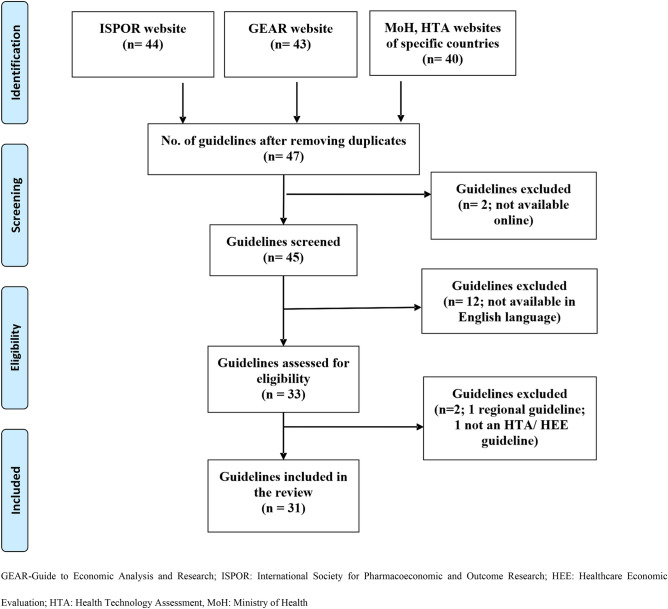
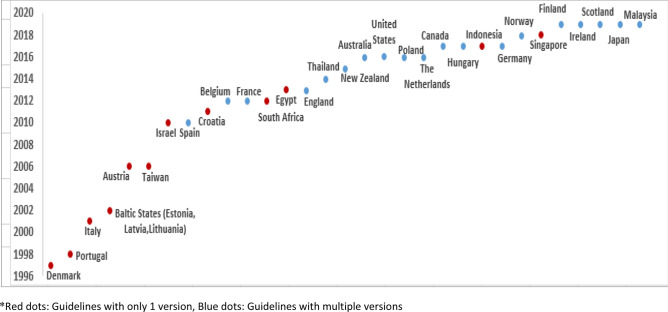
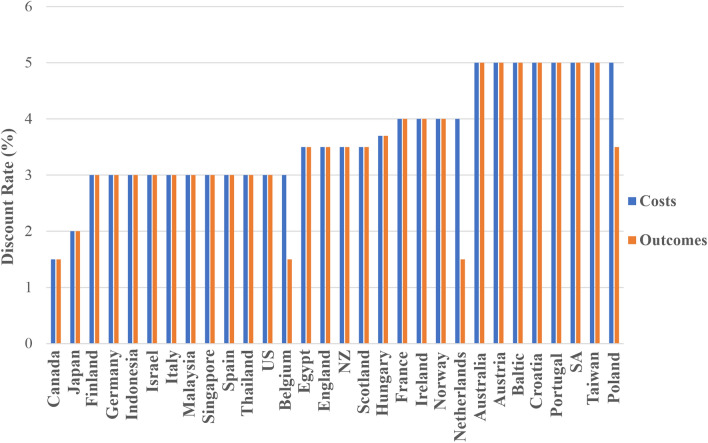
BACKGROUND AND OBJECTIVES: Globally, a number of countries have developed guidelines that describe the design and conduct of economic evaluations as part of health technology assessment (HTA) or pharmacoeconomic analysis for decision making. The current scoping review was undertaken with an objective to summarize the recommendations made on methods of economic evaluation by the national healthcare economic evaluation (HEE) guidelines. METHODOLOGY: A comprehensive search was undertaken in the website repositories of the International Society for Pharmacoeconomic and Outcomes Research (ISPOR) and Guide to Economic Analysis and Research (GEAR), and websites of national HTA agencies and ministries of health of individual countries. All guidelines in the English language were included in this review. Data were extracted with respect to general and methodological characteristics, and a descriptive analysis of recommendations made across the countries was undertaken. RESULTS: Overall, our review included 31 national HEE guidelines, published between 1997 and August 2020. Nearly half (45%) of the guidelines targeted the evaluation of pharmaceuticals. The nature of the guidelines was either mandatory (31%), recommendatory (42%), or voluntary (16%). There was a substantial consensus among the guidelines on several key principles, including type of economic evaluation (cost-utility analysis), time horizon of the analysis (long enough), health outcome measure (quality-adjusted life-years) and use of sensitivity analyses. The recommendations on study perspective, comparator, discount rate and type of costs to be included (particularly the inclusion of indirect costs) varied widely. CONCLUSION: Despite similarity in the overall processes, variation in several recommendations given by various national HEE guidelines was observed. This is perhaps unsurprising given the differences in the health systems and financing mechanisms, capacity of local researchers, and data availability. This review offers important lessons and a starting point for countries that are planning to develop their own HEE guidelines.
Overview
The claims and statistics of this paper haven’t been checked yet.
Free: it reads the open-access text and checks the first 5 claims that cite a source we can check. Create a free account to check every claim.
Integrity signals
Registry
Cites
Statistics
Figures
Verification
Claims the paper makes
The claims and statistics of this paper haven’t been checked yet.
Free: it reads the open-access text and checks the first 5 claims that cite a source we can check. Create a free account to check every claim.
Claims other papers make about this one
Each is checked against this paper’s own text: does it say what the citing paper says it does?
The cited source says what the claim attributes to it.
In the citing paper
“Current national guidelines on the design for economic evaluations vary and few recommend taking a societal perspective and including indirect costs [79]”
From The economic impact of retinal diseases for which gene therapy is emerging: a systematic literature review (2025) · cites this paper as [79]
Self-check
Percentages, sums and reported differences re-computed from the paper’s own numbers.
The self-check needs the paper’s full text.
Citations
Cites
Methods for the Economic Evaluation of Health Care Programmes
Drummond, M. E., Sculpher, M. J., Torrance, G. W., O’Brien, B. J., & Stoddart, G. L. (2005) · doi:10.1093/oso/9780198529446.001.0001 · Cited by 13,648
Methods for the economic evaluation of health care programmes
Wilson, S. H. (1987) · Journal of Epidemiology and Community Health · doi:10.1136/jech.41.4.355-a · Cited by 4,275
Consolidated Health Economic Evaluation Reporting Standards (CHEERS) statement
Husereau, D., Drummond, M., Petrou, S., Carswell, C., Moher, D., Greenberg, D., Augustovski, F., Briggs, A. H., Mauskopf, J., Loder, E., et al. (2013) · BMJ · doi:10.1136/bmj.f1049 · Cited by 1,776
Making choices in health: who guide to cost-effectiveness analysis
(2004) · Revista Española de Salud Pública · doi:10.1590/s1135-57272004000300012 · Cited by 1,259
Consolidated Health Economic Evaluation Reporting Standards (CHEERS) statement
Husereau, D., Drummond, M., Petrou, S., Carswell, C., Moher, D., Greenberg, D., Augustovski, F., Briggs, A. H., Mauskopf, J., & Loder, E. (2013) · International Journal of Technology Assessment in Health Care · doi:10.1017/s0266462313000160 · Cited by 573
Chang, A. Y., Cowling, K., Micah, A. E., Chapin, A., Chen, C. S., Ikilezi, G., Sadat, N., Tsakalos, G., Wu, J., Younker, T., et al. (2019) · The Lancet · doi:10.1016/s0140-6736(19)30841-4 · Cited by 520
Drummond, M. F., Schwartz, J. S., Jönsson, B., Luce, B. R., Neumann, P. J., Siebert, U., & Sullivan, S. D. (2008) · International Journal of Technology Assessment in Health Care · doi:10.1017/s0266462308080343 · Cited by 487 · cited 1×
“In order for policy decisions based on HTA evidence to be applied fairly, it is important that a uniform and transparent process is in place to ensure that all HTA evaluations are carried out according to rigorous standards of best practices [9].”
BackgroundThe Oxford Handbook of Health Economics
(2011) · Oxford University Press eBooks · doi:10.1093/oxfordhb/9780199238828.001.0001 · Cited by 463
Wilkinson, T., Sculpher, M. J., Claxton, K., Revill, P., Briggs, A., Cairns, J. A., Teerawattananon, Y., Asfaw, E., Lopert, R., Culyer, A. J., et al. (2016) · Value in Health · doi:10.1016/j.jval.2016.04.015 · Cited by 327 · cited 3×
“In the past two decades, we have witnessed a steady increase in the conduct of economic evaluations to inform health policy decisions [15]; however, fair policy decisions based on economic evidence require analysts to adhere to a uniform and transparent standard of practice [20].”
BackgroundHealth Economic Guidelines—Similarities, Differences and Some Implications
Hjelmgren, J., Berggren, F., & Andersson, F. (2001) · Value in Health · doi:10.1046/j.1524-4733.2001.43040.x · Cited by 322 · cited 1×
“With growing interest internationally in the use of HTA, new guidelines have been developed in Asian and African nations that have not been captured in earlier reviews [23, 24].”
Background
Research works printed but not linked: 5
- Kobelt G Health economics: an introduction to economic evaluation 2013 3 London Office of Health Economics
- Austria Walter E Zehetmayr S Guidelines on health economic evaluation, consensus paper 2006 Vienna Institute for Pharmacoeconomic Research
- Cleemput I, Neyt M, Van de Sande S, Thiry N. Belgian guidelines for economic evaluations and budget impact analyses: second edition. Brussels: Belgian Health Care Knowledge Centre (KCE); 2012. KCE Reports 183C.
- Canadian Agency for Drugs and Technologies in Health. Guidelines for the economic evaluation of health technologies: Canada. 4th ed. Ottawa: Canadian Agency for Drugs and Technologies in Health. 2017. https://www.cadth.ca/dv/guidelines-economic-evaluation-health-technologies-canada-4th-edition. Accessed 30 Dec 2020.
- National Institute for Health and Care Excellence [NICE]. Guide to the methods of technology appraisal 2013. London: NICE; 2013. https://www.nice.org.uk/process/pmg9/resources/guide-to-the-methods-of-technology-appraisal-2013-pdf-2007975843781. Accessed 9 July 2020. 27905712
Cited by
Items 101–114 of 114
Brandtmuller, A., Meiwald, A., Toth, P. P., Perera, C., & Fox, A. (2026) · Journal of Medical Economics · doi:10.1080/13696998.2026.2633013
Health Economic Evaluations Alongside Adaptive Platform Trials: A Systematic Review
Lee, K. J. Y., Huang, L., Whitehead, C. L., Manley, B. J., Dalziel, K., & Hua, X. (2026) · Value in Health · doi:10.1016/j.jval.2026.03.001
Thakkar, K., Thamaree, R., Kyaw, M. H., Chirila, I., Mendoza, C. F., Dodd, J., Yarnoff, B., & Kiertiburanakul, S. (2026) · Pulmonary Therapy · doi:10.1007/s41030-026-00358-x
“In alignment with Thailand’s economic evaluation guidelines [26] and prior local cost-effectiveness research [27], a 3% annual discount rate was applied to these lifetime productivity losses.”
Zhu, Y., Qu, Y., Ding, K., & Chen, R. (2026) · Discover Oncology · doi:10.1007/s12672-026-04954-w · Cited by 1
“Although the base-case analysis adopted a 5% annual discount rate as recommended by the Chinese Phar-macoeconomic Guidelines (2020), this rate is higher than those commonly applied in international economic evaluations (typically 1.5-3%), as summarized in cross-country guideline comparisons [27].”
InfluentialWatts, K., Garay, O. U., di Ruffano, L. F., Kittel, P. A., Gregg, E., Heller, V., Watkins, D., Allen, A. J., Shinkins, B., Mallett, S., et al. (2026) · Health Services and Outcomes Research Methodology · doi:10.1007/s10742-026-00382-z
A guide to critical reading of influenza vaccine cost-effectiveness analyses
de Lejarazu, R. O., Margüello, E. R., de Miguel, Á. G., Martinón‐Torres, F., Díez‐Domingo, J., Claver, J. L. L.-B., Diaz-Aguiló, A., Avellà, J. M. F., Jiménez, P. I. P., & Perpiñán, J. M. A. (2026) · Global & Regional Health Technology Assessment · doi:10.33393/grhta.2026.3619
Gambhir, M., Siddiqui, A. H., Meiwald, A., Perera, C., Fox, A., & Gokhale, S. (2026) · Journal of Medical Economics · doi:10.1080/13696998.2026.2663840
Chen, S., Banstola, A., Junghans, C., Harris, M. J., & Anokye, N. (2026) · BMJ Global Health · doi:10.1136/bmjgh-2025-023076
“17 33 63 75 Furthermore, simplified model specifications some-times omit key non-clinical components of CHW interventions, such as the valuation of their labour.”
Michaels, J. A. (2026) · Journal of Health Services Research & Policy · doi:10.1177/13558196261470627
Review and guidance for presenting cost-utility analysis with small QALY gains
Xie, X., Gajic‐Veljanoski, O., Wang, M., Tu, H. A., & Li, C. (2026) · Expert Review of Pharmacoeconomics & Outcomes Research · doi:10.1080/14737167.2026.2715980
Lamu, A. N., Kjerstad, E., Kilian, R., & Mueller‐Stierlin, A. S. (2026) · Medical Decision Making · doi:10.1177/0272989x261473639
Global Mapping of National Health Economic Evaluation Guidelines: Evidence from 40 Countries
Do, T. A., & Hoang, T. (2026) · Pharmaceutical Medicine · doi:10.1007/s40290-026-00618-w
“Compared with previous reviews by Sharma et al. [4] and Daccache et al. [5], 27 countries had either newly issued or updated their national HEE guidelines, including Austria, Singapore, Portugal, France, Italy, USA, Denmark, Norway, Japan, Germany, Scotland, Spain, Finland, Estonia, Netherlands,…”
Botwright, S., Megiddo, I., Teerawattananon, Y., Chuanchaiyakul, T., Quigley, J. M., & Colson, A. R. (2026) · Social Science & Medicine · doi:10.1016/j.socscimed.2026.119883
Metadata
- Authors
- Sharma, D., Aggarwal, A. K., Downey, L. E., & Prinja, S.
- Affiliations
- Post Graduate Institute of Medical Education and Research (IN)
- Imperial College London (GB)
- Corresponding author
- Prinja, Shankar
- Venue
- PharmacoEconomics - Open
- Published
- 2021-01-10
- Volume
- 5
- Issue
- 3
- Pages
- 349-364
- ISSN
- 2509-4254 (ISSN-L)
- 2509-4262
- PMC
- PMC8333164
- OpenAlex
- W3118599774
- Cited by
- 114
- References
- 42
- Citations by year
- 2026: 21 · 2025: 27 · 2024: 23 · 2023: 24 · 2022: 15 · 2021: 4
- FWCI
- 3.23
- Type
- journal article
- Language
- en
- Open access
- gold
- doi.org
- Licence
- cc-by-nc
- creativecommons.org/licenses/by-nc/4.0 (tdm)
- creativecommons.org/licenses/by-nc/4.0 (vor)
- Locations
- PharmacoEconomics - Open (publishedVersion, cc-by-nc)
- PubMed Central (publishedVersion, cc-by-nc)
- PubMed (publishedVersion)
- RePEc: Research Papers in Economics (submittedVersion)
- Spiral (Imperial College London) (submittedVersion, cc-by-nc)
- Funders
- Indian Council of Medical Research
- Topics
- Social Sciences › Economics, Econometrics and Finance › Economics and Econometrics › Health Systems, Economic Evaluations, Quality of Life
- Social Sciences › Economics, Econometrics and Finance › Economics and Econometrics › Pharmaceutical Economics and Policy
- Social Sciences › Sociology and Political Science › Delphi Technique in Research
- Keywords
- economic evaluation guidelines, health technology assessment, pharmacoeconomic evaluation, national guidelines, cross-national comparison, cost-utility analysis, quality-adjusted life years, discount rate, indirect costs, sensitivity analysis, drug evaluation
About these checks
Registry, retraction, Cites and statistics results are computed, not judged, with one exception: a printed reference that no index lists is read once by a model before it counts as a citation error. Claims are extracted by a model and kept only when their quote appears verbatim in the text; each cited source is then checked, with a model’s help, for whether it says what the claim relies on. Those verdicts can be wrong — read the claim’s quote and the cited source before relying on one.
Statistics and arithmetic are recomputed, not judged.
Confidence bands are shown only for fields calibrated on our annotated test set. None is calibrated yet, so no band is shown.
What counts as a claim ›How we measure confidence ›How we check this ›
Are you an author, or do you see a problem with this page? Request a review
Data sources
Bibliographic data: Semantic Scholar, OpenAlex, Crossref.
Contains information from the Semantic Scholar Academic Graph Datasets, made available under the ODC Attribution License (ODC-BY 1.0).
Semantic Scholar’s data is described in: Kinney, R., et al. (2023). The Semantic Scholar Open Data Platform. arXiv:2301.10140.
