

STOPP/START criteria for potentially inappropriate prescribing in older people: version 3
Open accessThe DOI matches its Crossref record; 19 of the 20 references it cites were found in a registry or an index.
Abstract
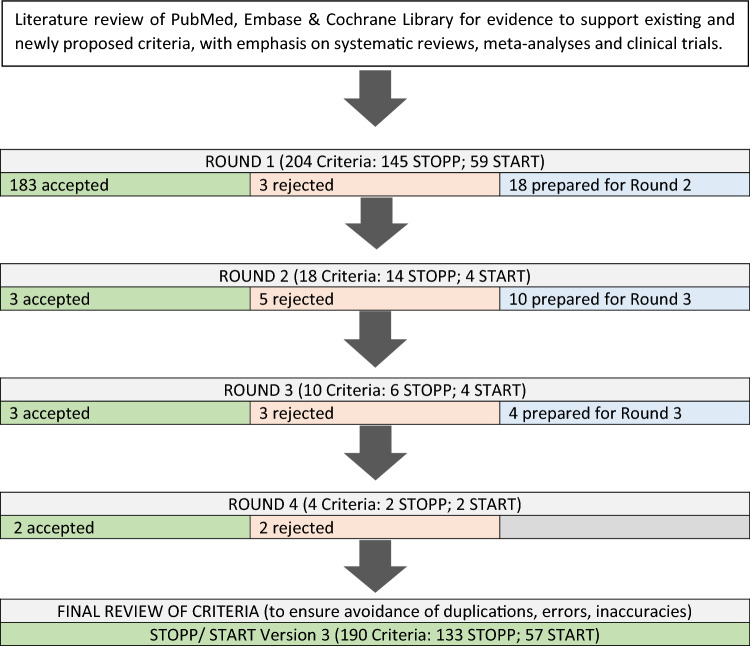
PURPOSE: STOPP/START is a physiological systems-based explicit set of criteria that attempts to define the clinically important prescribing problems relating to potentially inappropriate medications (PIMs-STOPP criteria) and potential prescribing omissions (PPOs-START criteria). The previous two versions of STOPP/START criteria were published in 2008 and 2015. The present study describes the revised and updated third version of the criteria. METHODS: A detailed system-by-system review of the published literature from April 2014 to March 2022 was undertaken with the aim of including clinically important new explicit PIM and PPO criteria and removing any criteria considered to be no longer correct or outdated. A panel of 11 academic physicians with recognized expertise in geriatric pharmacotherapy from 8 European countries participated in a Delphi panel with the task of validating the draft criteria. The panel was presented with the draft new criteria using the SurveyMonkey® on-line platform in which panelists were asked to indicate their level of agreement on a five-point Likert scale. RESULTS: Two hundred and four evidence-based draft criteria (one hundred and forty-five STOPP criteria, fifty-nine START criteria) were presented to panelists for assessment using the Delphi validation method. Over the course of four rounds of Delphi validation, the panel achieved consensus on 133 STOPP criteria and 57 START criteria, i.e., 190 STOPP/START criteria in total representing a 66.7% increase in the number of criteria compared to STOPP/START version 2 published in 2015. CONCLUSION: A fully revised and updated version of STOPP/START criteria has been validated by a European expert panel using the Delphi consensus process.
Overview
The claims and statistics of this paper haven’t been checked yet.
Free: it reads the open-access text and checks the first 5 claims that cite a source we can check. Create a free account to check every claim.
Integrity signals
Registry
Cites
Statistics
Figures
Verification
Claims the paper makes
The claims and statistics of this paper haven’t been checked yet.
Free: it reads the open-access text and checks the first 5 claims that cite a source we can check. Create a free account to check every claim.
Claims other papers make about this one
Each is checked against this paper’s own text: does it say what the citing paper says it does?
The cited source says what the claim attributes to it.
In the citing paper
“General medication use guidelines such as STOPP-START or the Beers criteria in geriatrics were also not used due to their lack of specificity on BZD/BZRA use.176,177”
Self-check
Percentages, sums and reported differences re-computed from the paper’s own numbers.
The self-check needs the paper’s full text.
Citations
Cites
By the 2019 American Geriatrics Society Beers Criteria® Update Expert Panel (2019) · Journal of the American Geriatrics Society · doi:10.1111/jgs.15767 · Cited by 3,163
STOPP/START criteria for potentially inappropriate prescribing in older people: version 2
O'Mahony, D., O'Sullivan, D., Byrne, S., O'Connor, M. N., Ryan, C., & Gallagher, P. (2014) · Age and Ageing · doi:10.1093/ageing/afu145 · Cited by 2,397
Gallagher, P., Ryan, C., Byrne, S., Kennedy, J., & OMahony, D. (2008) · Int. Journal of Clinical Pharmacology and Therapeutics · doi:10.5414/cpp46072 · Cited by 1,506 · cited 2×
“The first version of STOPP/ START in 2008 included 65 STOPP and 22 START criteria [3].”
BackgroundMethodExplicit Criteria for Determining Inappropriate Medication Use in Nursing Home Residents
Beers, M. H. (1991) · Archives of Internal Medicine · doi:10.1001/archinte.1991.00400090107019 · Cited by 1,201 · cited 1×
“Explicit criteria for potentially inappropriate prescribing (PIP) in older people have gained considerable attention and influence since the first publication of Beers criteria in 1991 [2].”
BackgroundTurner, G., & Clegg, A. (2014) · Age and Ageing · doi:10.1093/ageing/afu138 · Cited by 678
PCNE definition of medication review: reaching agreement
Griese-Mammen, N., Hersberger, K. E., Messerli, M., Leikola, S., Horvat, N., van Mil, J. W. F., & Kos, M. (2018) · International Journal of Clinical Pharmacy · doi:10.1007/s11096-018-0696-7 · Cited by 259 · cited 1×
“In 2018, the Pharmaceutical Care Network of Europe defined medication review as “a structured evaluation of a patient’s medicines with the aim of optimizing medicines use and improving health outcomes [which] entails detecting drug-related problems and recommending interventions” [1].”
BackgroundBlum, M. R., Sallevelt, B. T. G. M., Spinewine, A., O’Mahony, D., Moutzouri, E., Feller, M., Baumgartner, C., Roumet, M., Jungo, K. T., Schwab, N., et al. (2021) · BMJ · doi:10.1136/bmj.n1585 · Cited by 218
O’Connor, M., O’Sullivan, D., Gallagher, P., Eustace, J. A., Byrne, S., & O’Mahony, D. (2016) · Journal of the American Geriatrics Society · doi:10.1111/jgs.14312 · Cited by 164 · cited 1×
“The findings of one previous single-center, single-blinded clinical trial examining the effect of non-electronic application of STOPP/START version 1 criteria on incident ADRs during acute hospital admission in multimorbid older patients are noteworthy [20].”
BackgroundO'Mahony, D., Gudmundsson, A., Soiza, R. L., Petrovic, M., Cruz-Jentoft, A. J., Cherubini, A., Fordham, R., Byrne, S., Dahly, D., Gallagher, P., et al. (2020) · Age and Ageing · doi:10.1093/ageing/afaa072 · Cited by 148 · cited 2×
“…the number of criteria could inhibit their use in routine clinical Previous multicentre clinical trials using STOPP/START criteria as an intervention, most notably the SENATOR and OPERAM trials [13, 14] have relied on bespoke electronic applications for deployment of STOPP/START version 2 criteria.”
MethodHe, J., Morales, D. R., & Guthrie, B. (2020) · Trials · doi:10.1186/s13063-020-4139-0 · Cited by 147 · cited 2×
“Nevertheless, there is no clear evidence that the rate of exclusion of older people from clinical trials in recent years has diminished compared to previous years [22].”
MethodResult
Cited by
Items 601–699 of 699
Николаевна, А. О., Osipova, I. V., & Викторовна, П. Н. (2026) · The Russian Archives of Internal Medicine · doi:10.20514/2226-6704-2026-16-1-5-11 · Cited by 1
КЛИНИКО-ФУНКЦИОНАЛЬНАЯ МОДЕЛЬ ДОЛГОВРЕМЕННОГО УХОДА ЗА ЛИЦАМИ СТАРШИХ ВОЗРАСТНЫХ ГРУПП
Борисович, М. С., Медведев, Д. С., Kozlov, K. L., Игоревич, Г. Г., & Полякова, В. О. (2026) · Успехи геронтологии · doi:10.34922/ae.2025.38.5.012
Маркова, А. С., Bogova, O. T., Мирзаев, К. Б., Puzin, S. S., Потапов, В. Н., & Сычев, Д. А. (2026) · Успехи геронтологии · doi:10.34922/ae.2025.38.5.015
Geriatric syndromes in elderly hospitalized patients in China: a cross-sectional study
Huang, X., Cai, W., Ren, H., Sun, J., & Pang, X. (2026) · Frontiers in Medicine · doi:10.3389/fmed.2026.1734756
“…(20); fall risk, assessed using the Morse Fall Scale (21); urinary incontinence (22); polypharmacy, assessed using the STOPP/START criteria (23); nutritional risk, assessed using the Nutritional Risk Screening (NRS-2002) (24); and cognitive function, assessed using the Mini-Mental State…”
Reducing anticholinergic burden in older adults
Mendes, A. (2026) · Journal of Prescribing Practice · doi:10.12968/jprp.2026.0019
Redefining polypharmacy: Shifting from drug counts to patient-centered clinical appropriateness
Bharatsinh, R. T., Mehta, A. A., Gandhi, T., & Shah, A. H. (2026) · Perspectives in Clinical Research · doi:10.4103/picr.picr_196_25
“[11,12] Furthermore, inappropriate polypharmacy is associated with a higher risk of potentially inappropriate medications (PIMs) – drugs that may be unsafe or ineffective in older adults.”
Merenda, T., Waroux, M., Vanderbist, F., & Patris, S. (2026) · Journal of Patient Safety · doi:10.1097/pts.0000000000001487
Polypharmazie in der Gefäßchirurgie: Strategien für das Medikationsmanagement
Morath, B., Chiriac, U., & Meisenbacher, K. (2026) · Gefässchirurgie · doi:10.1007/s00772-026-01319-z
Yazie, T. S., Alemu, M. A., Zewdu, W. S., Emiru, Z. A., Tarekegn, G. Y., Meharie, B. G., Belete, A. M., & Demsie, D. G. (2026) · BMJ Open · doi:10.1136/bmjopen-2025-103495
López‐López, R., Vidal, V. Á., Lorenzo-López, L., Cibeira, N., Millán-Calentí, J. C., & Maseda, A. (2026) · Discover Public Health · doi:10.1186/s12982-026-01436-w
Drug prescription before and after dialysis initiation in older patients: a nationwide study
Faure, L., Noïze, P., Couchoud, C., Hucteau, E., Berdougo, J., Guerville, F., Harambat, J., Combe, C., Levassort, H., Moranne, O. P., et al. (2026) · BMC Geriatrics · doi:10.1186/s12877-026-07113-6
“We also described the trend over the study period (2010–2019) in the use of four drug classes that received specific recommendations for the older population (PPIs, analgesics and psychotropic drugs) [7–9] or the CKD population (calcium supplementation) [7–9 ,”
Liu, Y., Su, Q., Wu, D., Li, X., & Wang, X. (2026) · Medicine · doi:10.1097/md.0000000000047871
“[10] The 2024 Chinese criteria drew on the development method of the Beers criteria, comprehensively referenced 6 international PIM judgment criteria.”
Olazarán, J., Perea, L., Rigueira, A., López‐Álvarez, J., & Múñiz, R. (2026) · Journal of the American Medical Directors Association · doi:10.1016/j.jamda.2025.106093
Medicación potencialente inapropiada en adultos mayores de un hospital de tercer nivel
Salas, R. D. L., Bustamante-Ahumada, A., Rincon-Dominguez, V., la Ossa, L. D., Diaz-Merlano, M. P., & Villamizar-Fragozo, B. (2025) · Revista Colombiana de Ciencias Químico Farmacéuticas · doi:10.15446/rcciquifa.v54n1.113336
Kring, S. J., Dolin, T. G., Buus, L. T., Bhatia, L. S., & Lund, C. M. (2026) · BMC Geriatrics · doi:10.1186/s12877-025-06897-3 · Cited by 1
“The CGA consisted of a one-hour appointment with the nurse, followed by a one-hour appointment with the geriatrician, and included assessment of the following domains: Medication review was performed based on STOPP START criteria [25] and Danish national list of medication for deprescribing [26].”
Management strategies in older adults with diabetes mellitus and polypharmacy; a narrative review
Seyithanoğlu, D., Erdoğan, T., & Bahat, G. (2026) · HORMONES · doi:10.1007/s42000-026-00775-2
Implementation of an ambulatory care–based pharmacist in the emergency department
Rinkevich, M., Mitsko, S., Kerestes, J. L., Longyhore, D. S., & Wright, E. A. (2026) · American Journal of Health-System Pharmacy · doi:10.1093/ajhp/zxag093
Jun, K., Lee, H.-J., & Ah, Y.-M. (2026) · Drug Targets and Therapeutics · doi:10.58502/dtt.26.0004
Alemán-Fernández, E., Siverio-Mota, D., & Muro, L. V. (2026) · Research Square · doi:10.21203/rs.3.rs-8879598/v1
Der geriatrische Tumorpatient im Fokus des pflegerischen Delir-Managements
Schmidt, F. (2026) · HNO · doi:10.1007/s00106-026-01753-1
Doherty, I., Seoighe, A., Cadogan, C. A., & McAuliffe, C. (2026) · International Journal of Pharmacy Practice · doi:10.1093/ijpp/riag043
General practitioners' opinion on antihypertensive drugs deprescribing
Николаевна, А. О., Osipova, I. V., Молчанова, А. А., & Медведева, К. А. (2026) · Arterial’naya Gipertenziya (Arterial Hypertension) · doi:10.18705/1607-419x-2026-2570
Gardner, A., Cooper, M., Okeowo, D. A., Kingston, A., Husband, A., & Todd, A. (2026) · Research Connections · doi:10.1093/rescon/vmag045
Review of Safety Management and Nursing Strategies for Polypharmacy in Older Adults
Lu, H., & Gao, X. (2026) · Journal of Biosciences and Medicines · doi:10.4236/jbm.2026.144009
Bates, C., Efstathiou, N., Sutton, C., Hamed, N., & Maidment, I. (2026) · BMC Geriatrics · doi:10.1186/s12877-026-07480-0
“The STOPP/START (Screening Tool of Older Per-sons’ Prescriptions and Screening Tool to Alert to Right Treatment) criteria [58] provides guidance for depre-scribing potentially inappropriate medicines to people over the age of 65.”
Implementation and evaluation of postoperative pain management protocols in older adults
Tabesse, A., Nicolle, C., Fiant, A., Guillaumé, C., Pape, K., Lafont, C., Bourderont, A., Villain, C., Baudon-Lecame, M., Hamon, M., et al. (2026) · Geriatric Nursing · doi:10.1016/j.gerinurse.2026.104063 · Cited by 1
Ferguson, D. J. (2026) · medRxiv · doi:10.64898/2026.04.19.26351188
Anfinogenova, Y., Stepanov, V. A., Kuznetsova, A. D., Chesalov, N. P., Popov, S. V., & Repin, A. N. (2026) · Personalized Medicine · doi:10.1080/17410541.2026.2659007
Gotzamanis, J., Schwab, C., Dechartres, A., Hindlet, P., & Fernandez, C. (2026) · BMC Geriatrics · doi:10.1186/s12877-026-07491-x
“Consequently, hospitalization of an elderly patient is an opportunity to reassess prescriptions, with particular focus on medication appropriateness [4].”
Avcı, S., Gundogan, A., DİNAR, A. B. K., Erol, A., Yazıcı, M., Mert, C. B., Alpay, K. C., Avlagi, G. K., ÇELİK, M. M. Ö., Erdinçler, U. D., et al. (2026) · Journal of Clinical Medicine · doi:10.3390/jcm15093222
“These two domains constitute the core components of so-called “inappropriate prescribing” [1].”
Aljaizani, R. A., Althumairi, A., Alamer, K. A., & Ahmad, S. (2026) · Pharmacy · doi:10.3390/pharmacy14030065 · Cited by 2
Fujita, K., Matheson, M., Valecha, B., & Hilmer, S. N. (2026) · medRxiv · doi:10.64898/2026.04.29.26352010
Kajino, M., Miyawaki, A., Okada, A., & Yasunaga, H. (2026) · International Journal of Pharmacy Practice · doi:10.1093/ijpp/riag042
Leiva, A., Gallardo-Alfaro, L., Bejarano‐Romero, F., Sempere, E., Soler, A., Huguet, A. I., Llarena, M., Lekue, I., Prats, C. C., Salom-Garrigues, C., et al. (2026) · BMJ Open · doi:10.1136/bmjopen-2025-104877
Alavidze, N., Javakhia, M. S., Abuladze, N. B., Gabunia, K. U., Sulashvili, N., & Chubinidze, N. Z. (2026) · Georgian Medical Journal · doi:10.66636/gmj.v1.i2.a41 · Cited by 1
Restelli, A., Crippa, C., Nobili, A., Mannucci, P. M., Pasina, L., REPOSI Investigators, Nobili, A., Montano, N., Sesti, G., Pietrangelo, A., et al. (2026) · Internal and Emergency Medicine · doi:10.1007/s11739-026-04338-6
“To support prescribers in medical practice many tools have been developed over the years to improve appropriate prescribing in older adults, such as the Beers criteria [7] and START/STOPP criteria [8].”
Elsorady, K. E., Hassan, R. M., Nouh, A. H., El-Mohsen, M. A., & Mahmoud, W. A. (2026) · Electronic Journal of General Medicine · doi:10.29333/ejgm/18585
“Additionally, serum electrolytes imbalance including altered serum potassium and sodium quantities could warn against prescribing angiotensin-converting enzyme inhibitors/angiotensin receptor blockers and selective serotonin reuptake inhibitors, respectively [12, 20].”
InfluentialChuang, K.-C., Lin, H., & Lin, H.-M. (2026) · medRxiv · doi:10.64898/2026.05.23.26353939
Wang, Y., Gong, Y., Zhong, X., Li, C., Yin, H., He, W., Hong, H., Yuan, G., & Yan, K. (2026) · Journal of the American Pharmacists Association · doi:10.1016/j.japh.2026.103150
da Silva, A. M. P., Tudella, G. C. N., Gonçalves, O. R., Ribeiro, F. V., Pereira, M. A. O. M., do Nascimento, M. D. V. S., Nogueira, B. V., Santos, D. H., Porto, F. H. D. G., Høilund-Carlsen, P. F., et al. (2026) · Drugs · doi:10.1007/s40265-026-02335-9
Proyecto FASEa-C: FArmacéuticos Sumando al Equipo en el SEguimiento asistencial de Crónicos
Esteban, M. I. M., Bueno, M. L. A., Salas, D. G., Fuentes, S. S., Justicia, S. T., & Monedero, F. G. (2026) · Atención Primaria · doi:10.1016/j.aprim.2026.103488
Zaychenko, G. V., Kozak, N. D., Doroshenko, A. I., & Козак, Д. О. (2026) · Farmatsevtychnyi zhurnal · doi:10.32352/0367-3057.2.26.08
Bidarolli, M., Das, B., Rawat, V. S., Gupta, M., Agnihotri, A., Bhairumali, M., & Manocha, S. (2026) · Research Square · doi:10.21203/rs.3.rs-9700728/v1
Drug-related problems in geriatric cardiovascular patients–a hospital setting
Szmicsekova, K., Porubcová, S., Slezakova, V., Lajtmanová, K., Tomka, J., Lehocká, Ľ., Koblišková, Z., Masaryková, L., & Tesar, T. (2026) · Bratislavské lekárske listy/Bratislava medical journal · doi:10.1007/s44411-026-00628-9
Clinical Pharmacy Considerations in Special Population: Drug Dose Adjustment in Hepatic Impairment
Malaeb, D. N., Marzuuk, N. M., Mohamed, M. G., Rabbani, S. A., & Hallit, S. R. (2026) · Elsevier eBooks · doi:10.1016/b978-0-443-26472-6.00065-6
Deprescribing in Clinical Practice: Evidence, Implementation, and the Role of Pharmacists
Liau, S. J., Falconer, N., Liu, B. M., Scott, I. A., Hilmer, S. N., & Reeve, E. (2026) · Elsevier eBooks · doi:10.1016/b978-0-443-26472-6.00008-5 · Cited by 1
Prescribing quality indicators applicable to register data: A scoping review
Aaltonen, K., fathy, F., Laukkonen, M.-L., Rannanheimo, P. K., Rasmussen, L., Rättö, H., Saastamoinen, L., Samuelsen, P., Wettermark, B., & Sporrong, S. K. (2026) · Research in Social and Administrative Pharmacy · doi:10.1016/j.sapharm.2026.06.003
Szoszkiewicz, M., Szafarkiewicz, Z., Szkudelski, F., Grabowski, S., Deskur-Śmielecka, E., Neumann‐Podczaska, A., & Wieczorowska–Tobis, K. (2026) · Frontiers in Pharmacology · doi:10.3389/fphar.2026.1814603
“Antipsychotics, one of the anticholinergic subgroups, are high-risk medications in older patients for many reasons; they decrease cognitive status, cause mood changes, but also increase risk of falls and cardiovascular incidents (O’Mahony et al., 2023).”
The Role of the Clinical Pharmacist in Geriatric Patient Care
Torun, B., & Apikoğlu, Ş. (2026) · Elsevier eBooks · doi:10.1016/b978-0-443-26472-6.00028-0
Development and Validation of Prescribing Appropriateness Criteria (PAC) for Sri Lankan Older Adults
Arachchige, M. P. G., Moles, R. J., Lekamwasam, S., Jordan, M., Basger, B., Zawahir, S., & Chen, T. F. (2026) · Drugs & Aging · doi:10.1007/s40266-026-01305-w
“[14, 23, 24].”
Balli, F., Kara, E., Şahiner, Z., Balci, C., Sönmezer, M. Ç., İnkaya, A. Ç., Halil, M. G., Ünal, S., & Demirkan, K. (2026) · Open Forum Infectious Diseases · doi:10.1093/ofid/ofag378
“The STOPP criteria have been recently updated, and most of the criteria used to identify PIM in our study have remained unchanged in the revised version [28].”
Clinical Pharmacy Considerations in Special Populations: Geriatrics
Trenaman, S. C., & Isenor, J. E. (2026) · Elsevier eBooks · doi:10.1016/b978-0-443-26472-6.00009-7
小島, 太. (2026) · Nippon Ronen Igakkai Zasshi Japanese Journal of Geriatrics · doi:10.3143/geriatrics.63.79
Basu, S., Patel, S., Sheth, P., Morgan, J., & Batniji, R. (2026) · Research Square · doi:10.21203/rs.3.rs-10153003/v1
Lauretani, F., Testa, C., Salvi, M., Zucchini, I., Merolla, A., Rovere, P. Q., & Maggio, M. (2026) · International Journal of Environmental Research and Public Health · doi:10.3390/ijerph23070849 · Cited by 1
Trajectories of Medication Use Prior to Death in US Nursing Home Residents With Dementia
Bochanis, A., Rumbut, J., Alcusky, M. J., & Tjia, J. (2026) · Journal of the American Medical Directors Association · doi:10.1016/j.jamda.2026.106330
Filosa, E., Schönenberger, N., Essien, U. R., Gagnon, C. L., Gnjidic, D., O’Donnell, L. K., Manias, E., McCarthy, L. M., Moriarty, F., Nguyen‐Soenen, J., et al. (2026) · JMIR Research Protocols · doi:10.2196/92082
Pasha, E. Y. M., Az-Zahro, L., Saidah, S., & Fatin, M. N. A. (2026) · Sciences of Pharmacy · doi:10.58920/sciphar0502527
Polypharmacy and Drug Interactions in Older Patients
Eng, C. C., VanMeter, E., & Heavner, M. S. (2026) · Respiratory medicine · doi:10.1007/978-3-032-29861-4_5
Castellano, J., Caporlingua, M., & Ciurleo, R. (2026) · European Journal of Clinical Pharmacology · doi:10.1007/s00228-026-04144-1 · Cited by 1
Heck, J., Stichtenoth, D. O., Herbarth, L., Schröder, C., Sabau, R., Pape, T., Schröder, S., Krichevsky, B., Westhoff, M. S., Klietz, M., et al. (2026) · Naunyn-Schmiedeberg s Archives of Pharmacology · doi:10.1007/s00210-026-05741-8
“The median number of 4 recommendations per medication review in our study may appear relatively low, and application of Beers criteria (American Geriatrics Society Beers Criteria® Update Expert Panel 2023) or STOPP/START criteria (O’Mahony et al. 2023) instead of the PRISCUS list might potentially have yielded further…”
InfluentialSafe psychopharmacotherapy in older age: a practical approach to polypharmacy and drug interactions
Franková, V. (2026) · Psychiatrie pro praxi · doi:10.36290/psy.2026.013
The Need for Better Stewardship of Medication Use in Older Adults
Levy, H. B. (2026) · Annals of Pharmacotherapy · doi:10.1177/10600280261466647
Carballo, A. (2026) · Research Connections · doi:10.1093/rescon/vmag090
Naughton, M., Molokhia, M., Redmond, P., Douglas, I., & Mathur, R. (2026) · BMJ Open · doi:10.1136/bmjopen-2025-115606
Schofield, P., Spicer, S. G., Byng, R., Payne, R., Maidment, I., Myint, P. K., McNamee, P., Stewart, C., Horowitz, M. A., & Abbott-Fleming, V. (2026) · NIHR Open Research · doi:10.3310/nihropenres.14177.1 · Cited by 1
Ryan, I., McCarron, M., McCallion, P., Burke, E. A., Mulryan, N., O’Dwyer, M., Ryan, C. A., & O’Connell, J. (2026) · HRB Open Research · doi:10.12688/hrbopenres.14510.1
“In the general population, prescribing tools for the identification of PIP such as Beer ’ s Criteria for potentially inappropriate medication use in older adults, 32 the Screening Tool of Older Person ’ s Prescriptions (STOPP), and the Screening Tool to Alert doctors to Right Treatment (START) 33 have been shown to pr…”
Pharmaceutical Interventions During Inpatient Care in a French Geriatric Hospital
Lopez-Leret, D., & Schlatter, J. (2026) · Die Pharmazie · doi:10.31083/pharmazie53161
Guerin, C., Bouglé, C., Villain, C., Descatoire, P., Saint‐Lorant, G., & Meurant, A. (2026) · Le Pharmacien Clinicien · doi:10.1016/j.phacli.2026.07.016
Qualitative and Quantitative Assessment of Pharmacotherapy in a Medical Organization: A Pilot Study
Kolesnik, T., Адыгамовна, Г. Л., Павликова, Е. П., & Krasnova, T. N. (2026) · Safety and Risk of Pharmacotherapy · doi:10.30895/2312-7821-2026-561
Rodríguez-Salas, F. D. B., Merchán-Cruz, M. A., Ocaña‐Riola, R., Díez-de-Baldeón-Chicón, P. M., Lara, J. P., & Blanco‐Reina, E. (2026) · Frontiers in Pharmacology · doi:10.3389/fphar.2026.1886899 · Cited by 2
Canaza-Chambi, G. Y., & Arce‐Huamani, M. A. (2026) · Healthcare · doi:10.3390/healthcare14152314
“STOPP/START was applied using the peer-reviewed Spanish version of version 3 published by Delgado-Silveira et al., which was derived from the original 2023 international consensus criteria [5,21].”
InfluentialIatrogénie médicamenteuse –révision d'uneordonnance
Jean-Baptiste, B., & Boussuge, A. (2026) · Elsevier eBooks · doi:10.1016/b978-2-294-78624-2.00026-6
Deprescribing in older patients: concept and tools
Ганцгорн, Е. В., Maksimov, M. L., Papakhchyan, A. N., & Akhilgov, I. T. (2026) · Glavvrač (Chief Medical Officer) · doi:10.33920/med-03-2607-06
Appropriateness over Numbers: Pharmacological Burden and Scalable Medication Review in Older Adults
Pstrągowski, M., Hachlica, D., & Izbicki, Ł. (2026) · Geriatrics · doi:10.3390/geriatrics11040100
“…Organisation Criteria developed for older adults with multimorbidity rather than for one disease, covering undertreatment as well as overtreatment [45], graded by indication [46], or narrowed to advanced frailty and limited life expectancy [48] No list is definitive, and the realistic standard is…”
InfluentialManaging Polypharmacy in Older Adults: A Practical Deprescribing Approach for Nurse Practitioners
Wade, M., Drew, C., & Efre, A. (2026) · The Journal for Nurse Practitioners · doi:10.1016/j.nurpra.2026.105964
Multimedikation bei älteren Gefäßpatientinnen und -patienten
Thiem, U. (2026) · Springer eBooks · doi:10.1007/978-3-662-71191-0_5
Potentially Inappropriate Medication Use in Older Outpatients From Geriatric Departments in China
Zhou, F., 万学华, Zhang, Y., Chen, Z., & Tian, F. (2026) · Journal of the American Medical Directors Association · doi:10.1016/j.jamda.2026.106423
Idrissi, F. E., Bennani, S., Benali, Y., & Ali, A. B. (2026) · Archives of Pharmacy Practice · doi:10.51847/sz1zvpqgaj
Falls in Older Adults: The Role of the Nurse Practitioner
Hussein, M. T. E., Kazimiro, D., & Osuji, E. (2026) · The Journal for Nurse Practitioners · doi:10.1016/j.nurpra.2026.105959
Das, S. (2026) · Global Health Action · doi:10.1080/16549716.2026.2713867
“Potentially inappropriate medications were identified using STOPP-START criteria, and anticholinergic burden was scored for each medicine and summed to produce a cumulative burden [4,14,24].”
Kersten, H., Vaksvik, T. M. B., Romskaug, R., Wyller, T. B., Jaioun, K., Botteri, E., & Selbæk, G. (2026) · PLoS ONE · doi:10.1371/journal.pone.0356275
“…used prescription tools in geriatric medicine, CNS-depressants such as benzodiazepines (BZDs), BZD-related drugs, certain antipsychotics, and drugs with strong anticholinergic effects are considered potentially inappropriate medications for individuals with cognitive disorders (PIMcog) [14,15].”
Salis, F., Soler-Blanco, N., Molist‐Brunet, N., Gual, N., Ribera, A., Cherubini, A., Inzitari, M., & de Andrés-Lázaro, A. M. (2026) · Frontiers in Medicine · doi:10.3389/fmed.2026.1857969
“…of which are explicit, that is lists of medications that should not be prescribed in older people because of an unfavorable benefit–risk profile (14), and, for some of them, lists of medication that should be prescribed because of a valid indication, such as the STOPP and START criteria (6).”
Kharaghani, M. A., Kianipour, R., Ataei, S. M.-N., Ebrahimpour, S., Shahali, Z., Golestani, A., & Tabatabaei‐Malazy, O. (2026) · BMJ Open · doi:10.1136/bmjopen-2026-120795
Goldiș, F.-D., Ardelean, S. M., & Udrescu, L. (2026) · Frontiers in Psychiatry · doi:10.3389/fpsyt.2026.1915707 · Cited by 1
“PIM frameworks such as the Beers criteria, STOPP/START, and PRISCUS were developed speci fi cally because older patients are vulnerable not only to single high-risk drugs, but also to cumulative prescribing hazards across classes and mechanisms O ’ Mahony et al. (5)American Geriatrics Society (31)Thürmann et al. (32).”
Díaz, C. I. E., & Espinoza, M. E. B. (2026) · Revista Española de Geriatría y Gerontología · doi:10.1016/j.regg.2026.101835
Behaviours that Challenge in acute care: Rethinking psychological support and the use of sedatives
Rowley, C., Dow, B., & Jones, E. (2026) · FPOP Bulletin Psychology of Older People · doi:10.53841/bpsfpop.2026.1.175.92
Bai, Y., Wang, J., Li, G., & Zhou, Z. (2026) · Journal of Clinical Pharmacy and Therapeutics · doi:10.1155/jcpt/7149111
Prudzic, P., Winiarska, W., Bełcikowska-Skowron, W. R., Siegmund, A., Chrapczyńska, M., Filarecka, A., Przybyszewski, P., Przybyszewska, E., Sienicka, M., & Gatniejewska, J. (2026) · International Journal of Innovative Technologies in Social Science · doi:10.31435/ijitss.3(51).2026.6037
Cárdenas‐Valladolid, J., Cura, O. A.-D., Beneito-Dura, M., Somolinos-Simón, F. J., Mostaza, J., Lahoz, C., Andrés-Rebollo, F. J. S., Vich-Pérez, P., González‐González, A. I., & Salinero-Fort, M. Á. (2026) · medRxiv · doi:10.64898/2026.08.21.26361002
Use of analgesics in older individuals with special emphasis on organ failures: pitfalls and caveats
Ucar, A., Ünaldı, M., Kaytuoğlu, N., ERDEM, B., Özkaya, B., Bozkurt, S., Vargun, P., Şahin, Ş., Girgin, M. C., Çiftçi, T., et al. (2026) · The Egyptian Journal of Internal Medicine · doi:10.1186/s43162-026-00716-w
Flamand-Villeneuve, J., Boisvert, J., Blais‐Lecours, P., Denis, C., Denis, C., & Méthot, J. (2026) · Canadian Pharmacists Journal / Revue des Pharmaciens du Canada · doi:10.3138/cpj-25-0124
Levati, E., Zazzara, M. B., Giuli, D., Marzetti, E., Picca, A., Calvani, R., Tosato, M., Landi, F., Bernabei, R., & Onder, G. (2026) · Age and Ageing · doi:10.1093/ageing/afag257
“…medications, including the American Geriatrics Society Beers Criteria [ 6] and the European Geriatric Medicine Society STOPP Criteria [ 7], advise against benzodiazepine use for generalised anxiety disorder and insomnia in older adults, and placed benzodiazepines on the list of…”
Sustainable pharmacy for training and education of pharmacy professionals
la Nogal-Fernández, B. D., Akhrimeko, V., Maeso, L., Zarate, J., Ayerbe, M., Unanue-Arza, S., Martínez‐Cengotitabengoa, M., Burgos‐Alonso, N., Paolone, G., Guamán, L. P., et al. (2026) · International Journal of Pharmaceutics · doi:10.1016/j.ijpharm.2026.127345
Chen, J., & Tao, L. (2026) · Frontiers in Public Health · doi:10.3389/fpubh.2026.1921129 · Cited by 1
“During hospital stays, transitional care, and long-term disease management, a patients’ medicinal regimens change continuously which alters the risk related to medication (67).”
Jiang, H., Zhou, X., Feng, P., Xia, Z., Yang, W., Han, B., Zhang, M., & Zhao, Q. (2026) · Frontiers in Psychiatry · doi:10.3389/fpsyt.2026.1915277
Fujita, K., Matheson, M., Valecha, B., & Hilmer, S. N. (2026) · Drug Safety · doi:10.1007/s40264-026-01716-z · Cited by 3
Liu, L., Lu, Y., Nie, L., Wang, C., Wang, L., Chen, B., Guo, Z., Zhang, Y., & Zhang, Z. (2026) · Healthcare · doi:10.3390/healthcare14172856
“Future research should evaluate how explicit medication appropriateness criteria, including the AGS Beers Criteria and STOPP/START criteria, can be incorporated into structured medication-review pathways for long-term BZRA users [8,9].”
Age-related risk factors for leftover drugs: a lifespan analysis in community pharmacies
Hirai, T., Hanaoka, S., Terakado, Y., Seki, T., Hayashi, H., & Watanabe, F. (2026) · Journal of Pharmacy & Pharmaceutical Sciences · doi:10.3389/jpps.2026.16879
“Published by Frontiers Canadian Society for Pharmaceutical Sciences 13 regimens through deprescribing [25], guided by tools, such as the Beers Criteria [26], STOPP/START criteria [27], and Guidelines for Medical Treatment and Safety in the Elderly in Japan [28], is considered highly effective.”
Metadata
- Authors
- O’Mahony, D., Cherubini, A., Guiteras, A. R., Denkinger, M., Beuscart, J.-B., Onder, G., Gudmundsson, A., Cruz-Jentoft, A. J., Knol, W., Bahat, G., van der Velde, N., Petrovic, M., & Curtin, D.
- Affiliations
- University College Cork (IE)
- Istituto Nazionale di Riposo e Cura per Anziani (IT)
- Parc de Salut (ES)
- Universität Ulm (DE)
- Université de Lille (FR)
- Università Cattolica del Sacro Cuore (IT)
- Instituto Ramón y Cajal de Investigación Sanitaria (ES)
- Utrecht University (NL)
- Istanbul University (TR)
- Cork University Hospital (IE)
- Corresponding author
- O’Mahony, Denis
- ORCID
- Venue
- European Geriatric Medicine
- Published
- 2023-05-31
- Volume
- 14
- Issue
- 4
- Pages
- 625-632
- ISSN
- 1878-7649 (ISSN-L)
- 1878-7657
- PMC
- PMC10447584
- OpenAlex
- W4378783027
- Semantic Scholar
- 8980a3cd1cf08c8c154492276cad6fe5d29c644e
- Cited by
- 703
- References
- 20
- Citations by year
- 2026: 147 · 2025: 208 · 2024: 154 · 2023: 46
- FWCI
- 82.87
- Type
- journal article
- Language
- en
- Update notices
- correction (2023-06-16)
- Open access
- hybrid
- doi.org
- Licence
- cc-by
- creativecommons.org/licenses/by/4.0 (tdm)
- creativecommons.org/licenses/by/4.0 (vor)
- Locations
- European Geriatric Medicine (publishedVersion, cc-by)
- PubMed Central (publishedVersion, cc-by)
- PubMed (publishedVersion)
- HAL (submittedVersion, cc-by)
- Ghent University Academic Bibliography (Ghent University) (submittedVersion, cc-by)
- Opin vísindi (Opin vísindi) (submittedVersion, other-oa)
- Pure Amsterdam UMC (submittedVersion, cc-by)
- Data Archiving and Networked Services (DANS) (submittedVersion, other-oa)
- Università Politecnica delle Marche (Università Politecnica delle Marche) (submittedVersion, cc-by)
- Lenus, The Irish Health Repository (Dr Steevens Hospital Library) (submittedVersion, cc-by)
- Funders
- University College Cork
- Topics
- Health Sciences › Medicine › Geriatrics and Gerontology › Pharmaceutical Practices and Patient Outcomes
- Health Sciences › Medicine › Pediatrics, Perinatology and Child Health › Pharmaceutical studies and practices
- Health Sciences › Health Professions › Pharmacy › Pharmacy and Medical Practices
- Keywords
- potentially inappropriate prescribing, older adults, STOPP criteria, START criteria, prescribing omissions, geriatric pharmacotherapy, medication review, expert consensus, Delphi validation
- MeSH terms
- Potentially Inappropriate Medication List, Aged, Europe, Humans, Practice Patterns, Physicians', Drug Prescriptions, Inappropriate Prescribing
About these checks
Registry, retraction, Cites and statistics results are computed, not judged, with one exception: a printed reference that no index lists is read once by a model before it counts as a citation error. Claims are extracted by a model and kept only when their quote appears verbatim in the text; each cited source is then checked, with a model’s help, for whether it says what the claim relies on. Those verdicts can be wrong — read the claim’s quote and the cited source before relying on one.
Statistics and arithmetic are recomputed, not judged.
Confidence bands are shown only for fields calibrated on our annotated test set. None is calibrated yet, so no band is shown.
What counts as a claim ›How we measure confidence ›How we check this ›
Are you an author, or do you see a problem with this page? Request a review
Data sources
Bibliographic data: Semantic Scholar, OpenAlex, Crossref.
Contains information from the Semantic Scholar Academic Graph Datasets, made available under the ODC Attribution License (ODC-BY 1.0).
Semantic Scholar’s data is described in: Kinney, R., et al. (2023). The Semantic Scholar Open Data Platform. arXiv:2301.10140.
