

Energy Harvesting Floor Tile Using Piezoelectric Patches for Low-Power Applications
Open accessThe DOI matches its Crossref record; 21 of the 21 references it cites were found in a registry or an index; 6 of the 13 sources its claims cite were checked for support.
Abstract
A floor tile excited by human footsteps was demonstrated to generate usable electrical power for low-power applications.
Overview
CoChat Summary
TL;DR
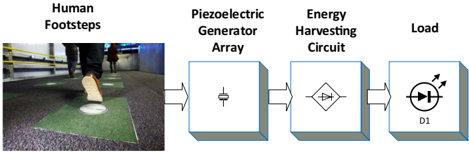
The paper presents a low-cost piezoelectric floor tile that harvests energy from human footsteps using 14 commercial piezoelectric patches and simple rectifier or voltage-doubler circuits. It reports successful illumination of two LEDs and a maximum useful harvested power of 246 mW in the abstract, with Table 3 listing 249.6 mW for the voltage doubler at a tile cost of about $10.2.
Key findings
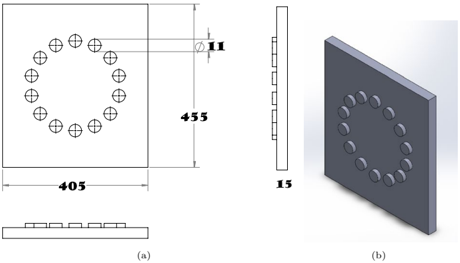
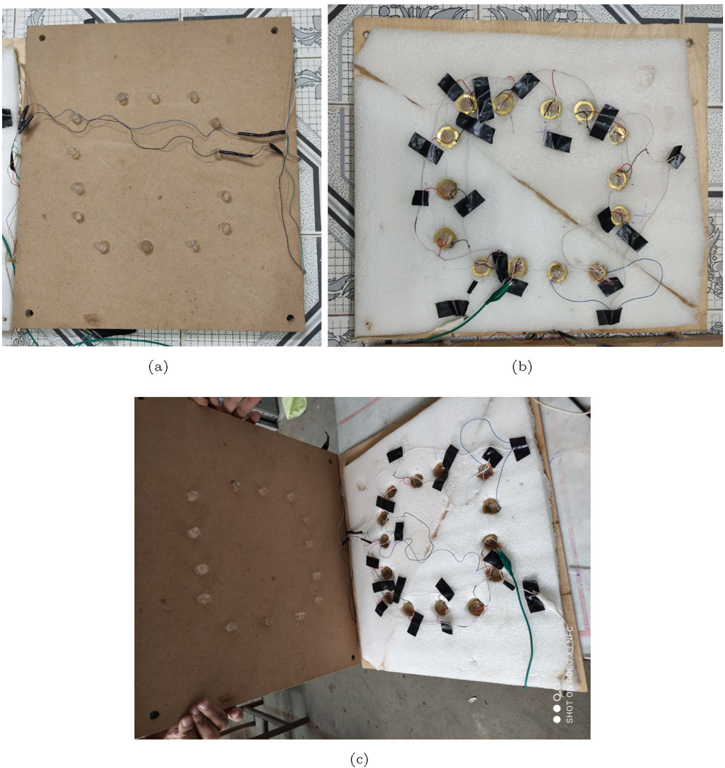
- The prototype tile measured 455 mm × 405 mm and used 14 circular piezoelectric patches of 35 mm diameter; it successfully lit two LEDs as an actual load.
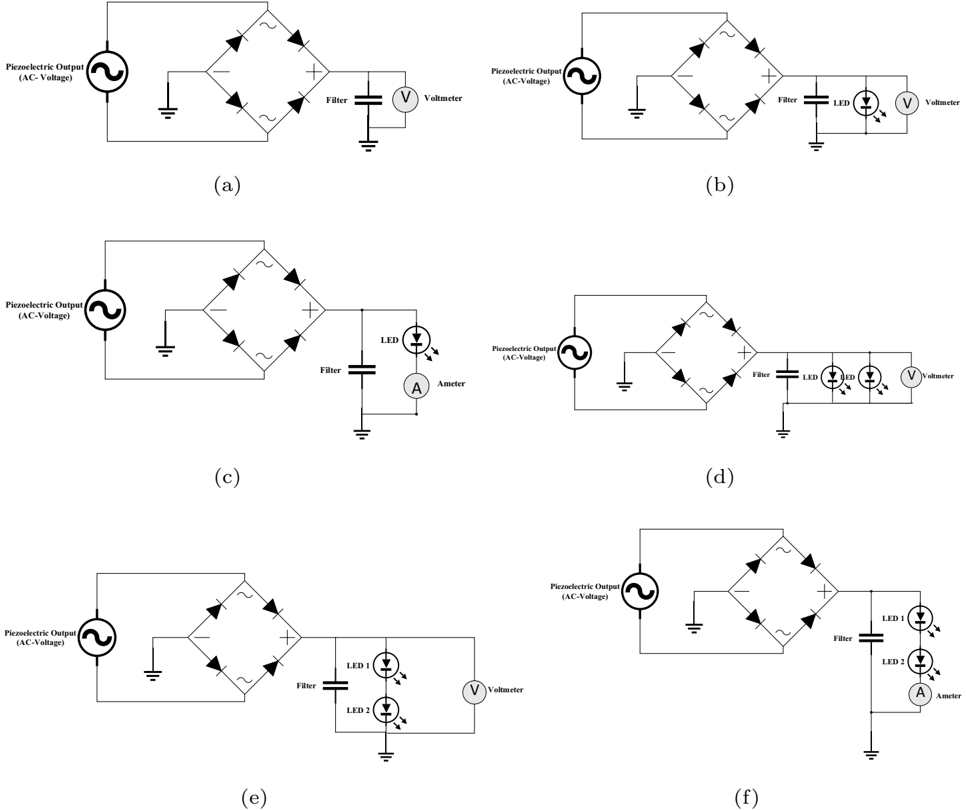
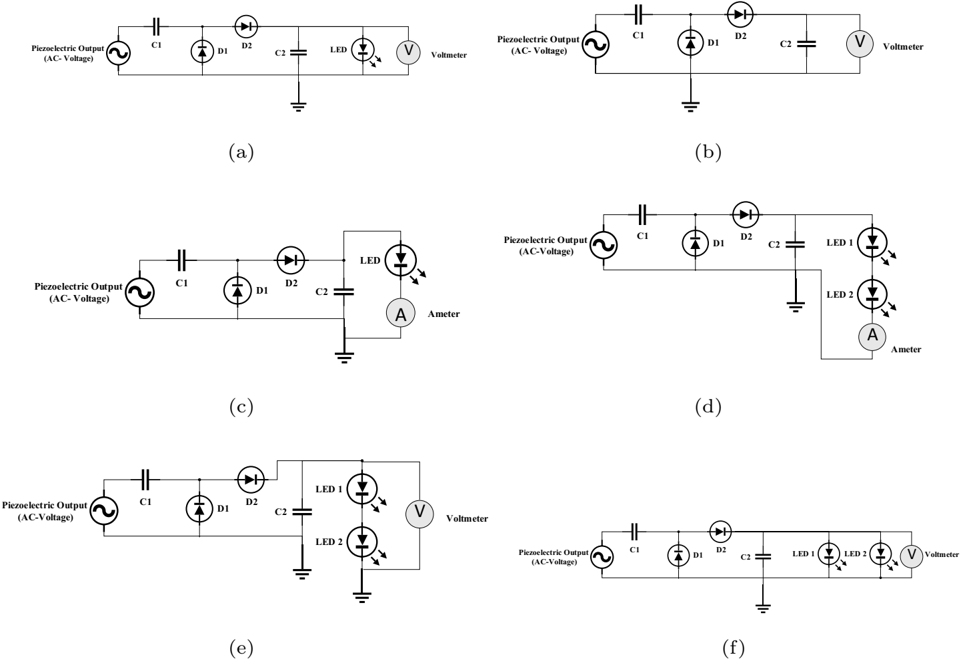
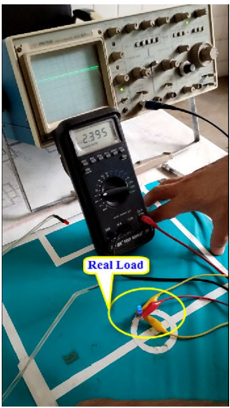
- The bridge rectifier produced a maximum open-loop output voltage of 33.7 V, while the voltage doubler produced 31.8 V; with one LED as load, the bridge rectifier gave 2.4 V and 0.079 A, and the doubler gave 2.4 V and 0.066 A.
- Table 3 reports harvested power of 189.6 mW for the bridge rectifier plus filter capacitor and 249.6 mW for the voltage doubler, both with two series LEDs as load; the abstract states a maximum useful power of 246 mW.
- The adopted energy harvesting system cost around $10.2 for one tile, and the paper claims fewer piezoelectric patches with higher harvested power compared with prior studies such as 36 patches at 3.626 mW and 44 patches at 35 mW.
Methods
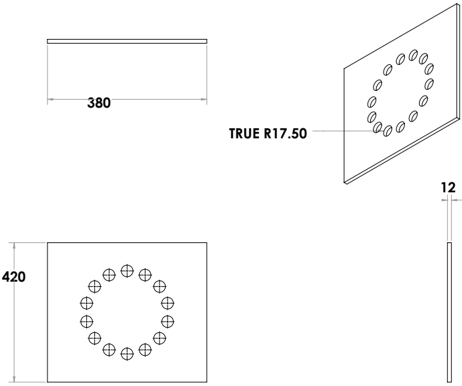
- A sandwich-structured floor tile was built from wood plates, a foam plate, hot melt glue sticks, and 14 commercially available piezoelectric patches; the patches were placed in 14 holes drilled in the foam plate and evenly spaced on a 300-mm disc.
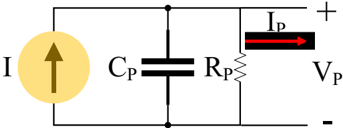
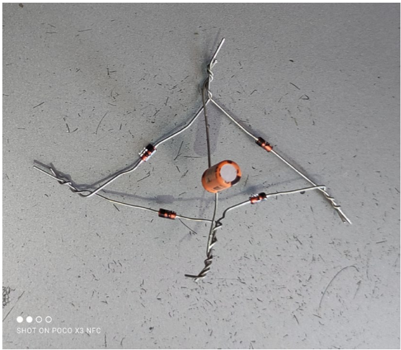
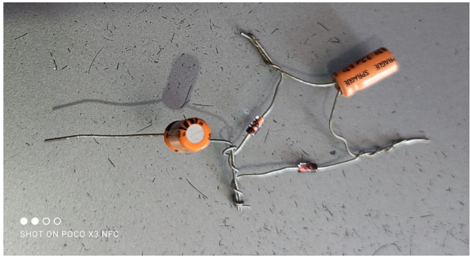
- Two electrical circuits were tested: a bridge rectifier with four 1N60P Schottky diodes and a 2.2 µF filter capacitor, and a voltage doubler with two 1N60P Schottky diodes and two 2.2 µF capacitors.
- Testing used one pedestrian pressing the wooden plate at a rate of 85 times per minute; voltage and current were recorded under open-loop, single-LED, two-series-LED, and two-parallel-LED conditions.
Limitations
- The paper states that several variables were not studied due to time limits, including geometric distribution of piezoelectric patches, inserting springs into the mechanical structure, number of piezoelectric patches, circuit topology, and testing in a real environment.
- The paper states that the obtained results are primary results and that future work should study arrays of tiles covering broad areas and the number of pedestrians in real environments such as railway stations, subways, streets, or wedding festival halls.
- Evident from the text: the experimental validation used only one pedestrian at a fixed rate of 85 presses per minute, and the prototype was made from available cheap materials rather than optimized commercial materials.
Model-written summary. Check it against the paper before relying on it.
Integrity signals
Registry
Cites
Statistics
Figures

Verification
Claims the paper makes
4 Valid · 0 Not valid · 3 Not checked · 24 Own results and interpretations
The cited sources support only part of this claim — read each source’s verdict below.
In the paper
“Referring to [18, 20, 21] as illustrated in Table 3, it can be noticed that the occupied floor area by such studies is similar to the floor area of this study; however, the harvested power of the proposed floor area is significantly higher.”
What the sources say
- Partly supportedcites [18] 18. Pham TH, Bui TD, Dao TT (2023) A high-reliability piezoelectric tile transducer for converting bridge vibration to electrical energy for smart transportation. Micromachines 14(5):1058 sourceExperimental — accuracy not yet measured
Section 3 (page unavailable) reports that this paper’s tile measures 400 mm × 400 mm × 70 mm, establishing its floor footprint. Our copy does not give the citing study’s floor area or establish that the two areas are similar, so the comparison cannot be verified from this source alone. (LLM, conf=0.82)
- Could not verifycites [20] 20. Gothwal P, Kumar A, Rathore D, Mukherji R, Vetriselvi T, Anandan S (2023) Response surface methodology analysis of energy harvesting system over pathway tiles. Materials 16(3):1146 sourceExperimental — accuracy not yet measured
The Materials and Methods section describes the source paper’s pathway tiles, but gives no floor-area measurement. Searches for tile dimensions, occupied floor area, and an area comparison found no passage establishing that its footprint is similar to the citing study’s. (LLM, conf=0.72)
- Not checked — no full text of the sourcecites [21] 21. Yingyong P, Thainiramit P, Jayasvasti S, Thanach-Issarasak N, Isarakorn D (2021) Evaluation of harvesting energy from pedestrians using piezoelectric floor tile energy harvester. Sens Actuators, A 331:113035 <!-- image --> Publisher's Note Springer Nature remains neutral with regard to jurisdictional claims in published maps and institutional affiliations. source
plain- Asserted: passes — The authors put it forward as true.
- Checkable: passes — It can be checked against evidence.
- Load-bearing: passes — The paper’s conclusions depend on it.
- Based: passes — The paper gives a reason why it holds.
- Partly supported
The cited sources support only part of this claim — read each source’s verdict below.
In the paper
“Referring to [18, 20, 21] as illustrated in Table 3, it can be noticed that the occupied floor area by such studies is similar to the floor area of this study; however, the harvested power of the proposed floor area is significantly higher.”
What the sources say
- Partly supportedcites [18] 18. Pham TH, Bui TD, Dao TT (2023) A high-reliability piezoelectric tile transducer for converting bridge vibration to electrical energy for smart transportation. Micromachines 14(5):1058 sourceExperimental — accuracy not yet measured
Section 3 gives the cited tile’s dimensions as 400 × 400 mm, and Section 4 reports a maximum output power of 4.8 mW. Those figures provide a basis for comparison, but this source does not establish the proposed device’s floor area or power, so it cannot substantiate the claim that the areas are similar and the proposed device’s power is significantly higher. No page numbers were available in our copy. (LLM, conf=0.83)
- Supportedcites [20] 20. Gothwal P, Kumar A, Rathore D, Mukherji R, Vetriselvi T, Anandan S (2023) Response surface methodology analysis of energy harvesting system over pathway tiles. Materials 16(3):1146 source
Gothwal et al. is one of the comparison studies: Experimental Details describes a 300 × 300 mm² tile, and §4.3 reports its maximum measured output of 3.626 mW. The citation supplies those comparator measurements; the conclusion that the citing authors’ own floor produces more power is their comparison, not a finding attributed to Gothwal et al. (LLM, conf=0.84)
- Not checked — no full text of the sourcecites [21] 21. Yingyong P, Thainiramit P, Jayasvasti S, Thanach-Issarasak N, Isarakorn D (2021) Evaluation of harvesting energy from pedestrians using piezoelectric floor tile energy harvester. Sens Actuators, A 331:113035 <!-- image --> Publisher's Note Springer Nature remains neutral with regard to jurisdictional claims in published maps and institutional affiliations. source
plain- Asserted: passes — The authors put it forward as true.
- Checkable: passes — It can be checked against evidence.
- Load-bearing: passes — The paper’s conclusions depend on it.
- Based: passes — The paper gives a reason why it holds.
- Partly supported
A result the paper reports from its own data — it cites no other source for it, so there is none to check. The quote shows it is in the paper.
In the paper
“Moreover, the voltage measured across the two series LEDs was 4.8 V, which agrees with the series connection role regarding the voltage.”
plainSingle case- Asserted: passes — The authors put it forward as true.
- Checkable: passes — It can be checked against evidence.
- Load-bearing: unclear — It is unclear whether the paper’s conclusions depend on it.
- Based: passes — The paper gives a reason why it holds.
A result the paper reports from its own data — it cites no other source for it, so there is none to check. The quote shows it is in the paper.
In the paper
“Two LEDs were effectively illuminated as an actual load using electrical energy collected from human footsteps.”
- Also stated in: § Conclusions · p. 9 · plain
“Two LEDs were effectively lit by the proposed prototype, which has a length of 455 mm and a width of 405 mm.”
plainstates a causeSingle case- Asserted: passes — The authors put it forward as true.
- Checkable: passes — It can be checked against evidence.
- Load-bearing: passes — The paper’s conclusions depend on it.
- Based: passes — The paper gives a reason why it holds.
- Also stated in: § Conclusions · p. 9 · plain
A result the paper reports from its own data — it cites no other source for it, so there is none to check. The quote shows it is in the paper.
In the paper
“when the LED was used as a real load, whether with one LED (a single load) or two LEDs (two series loads or two parallel loads), the generated voltage that showed on the load's terminals was equivalent to the LED's operating voltage”
plain- Asserted: passes — The authors put it forward as true.
- Checkable: passes — It can be checked against evidence.
- Load-bearing: passes — The paper’s conclusions depend on it.
- Based: passes — The paper gives a reason why it holds.
19 more claims
Create a free account to see all 31 claims and every source verdict.
- It may state two separate claims as one. 4
- Probably not a substantial claim. 2
- The quote only partly states this claim. 1
Self-check
Percentages, sums and reported differences re-computed from the paper’s own numbers.
Each contradiction between two passages listed here was confirmed by an independent check.
Rated minor: it would not touch a result — a value no result rests on, a p-value that stays on the same side of the significance level, or a conflict that is clerical, resolved elsewhere in the paper, or outside its own findings.
In the paper
§ Abstract · p. 1
“The maximum useful power that could be harvested successfully via the proposed floor tile (one tile) was 246 mW, with an approximate cost of $10.2.”
§ Electrical System Design · p. 8
“| This work | 35 mm circular diameter | 455 m × 405 m | 14 | Voltage Doubler | 2 series LEDs | 249.6mW and 31.8V | $10.2 |”
Rated minor: it would not touch a result — a value no result rests on, a p-value that stays on the same side of the significance level, or a conflict that is clerical, resolved elsewhere in the paper, or outside its own findings.
In the paper
§ Electrical System Design · p. 8
“| This work | 35 mm circular diameter | 455 m × 405 m | 14 | Bridge+Filter Capacitor | 2 series LEDs | 189.6mW and 33.7V | $10.2 |”
§ Mechanical System Design · p. 3
“Plate No. 1 represents the front plate, with dimensions 455 mm × 405 mm × 15 mm, as shown in Fig. 2.”
Rated minor: it would not touch a result — a value no result rests on, a p-value that stays on the same side of the significance level, or a conflict that is clerical, resolved elsewhere in the paper, or outside its own findings.
In the paper
§ Electrical System Design · p. 8
“hence, the total output voltage is given by (14), as follows:”
§ Electrical System Design · p. 8
“Finally, the harvested power via the voltage doubler circuit can be obtained by (14).”
Citations
Cites
High-Performance Piezoelectric Energy Harvesters and Their Applications
Yang, Z., Zhou, S., Zu, J., & Inman, D. (2018) · Joule · doi:10.1016/j.joule.2018.03.011 · Cited by 1,264 · cited 1×
“The most prevalent techniques for kinetic energy harvesting are piezoelectric energy harvesters [2, 3], Hossam M. Yehia and Demyana A. Saleeb contributed equally to this work. electromagnetic energy harvesters [4, 5], electrostatic energy harvesters [6, 7], and inertial energy harvesters [8, 9].”
Micro electrostatic energy harvester with both broad bandwidth and high normalized power density
Zhang, Y., Wang, T., Luo, A., Hu, Y., Li, X., & Wang, F. (2018) · Applied Energy · doi:10.1016/j.apenergy.2017.12.053 · Cited by 423 · cited 1×
“The most prevalent techniques for kinetic energy harvesting are piezoelectric energy harvesters [2, 3], Hossam M. Yehia and Demyana A. Saleeb contributed equally to this work. electromagnetic energy harvesters [4, 5], electrostatic energy harvesters [6, 7], and inertial energy harvesters [8, 9].”
RF energy harvesting systems: An overview and design issues
Divakaran, S. K., Krishna, D. D., & Nasimuddin (2019) · International Journal of RF and Microwave Computer-Aided Engineering · doi:10.1002/mmce.21633 · Cited by 179
Guo, X., Zhang, Y., Fan, K., Lee, C., & Wang, F. (2019) · Energy Conversion and Management · doi:10.1016/j.enconman.2019.112264 · Cited by 153 · cited 1×
“The most prevalent techniques for kinetic energy harvesting are piezoelectric energy harvesters [2, 3], Hossam M. Yehia and Demyana A. Saleeb contributed equally to this work. electromagnetic energy harvesters [4, 5], electrostatic energy harvesters [6, 7], and inertial energy harvesters [8, 9].”
Luo, A., Zhang, Y., Dai, X., Wang, Y., Xu, W., Lu, Y., Wang, M., Fan, K., & Wang, F. (2020) · Applied Energy · doi:10.1016/j.apenergy.2020.115762 · Cited by 140 · cited 1×
“The most prevalent techniques for kinetic energy harvesting are piezoelectric energy harvesters [2, 3], Hossam M. Yehia and Demyana A. Saleeb contributed equally to this work. electromagnetic energy harvesters [4, 5], electrostatic energy harvesters [6, 7], and inertial energy harvesters [8, 9].”
A Comprehensive Review of Metasurface Structures Suitable for RF Energy Harvesting
Amer, A. A. G., Sapuan, S. Z., Nasimuddin, N., Alphones, A., & Zinal, N. B. (2020) · IEEE Access · doi:10.1109/access.2020.2989516 · Cited by 123 · cited 1×
“The most prevalent techniques for kinetic energy harvesting are piezoelectric energy harvesters [2, 3], Hossam M. Yehia and Demyana A. Saleeb contributed equally to this work. electromagnetic energy harvesters [4, 5], electrostatic energy harvesters [6, 7], and inertial energy harvesters [8, 9].”
Panthongsy, P., Isarakorn, D., Janphuang, P., & Hamamoto, K. (2018) · Sensors and Actuators A: Physical · doi:10.1016/j.sna.2018.06.035 · Cited by 63 · cited 1×
“A floor tile that harvests energy using unimorph PZT piezoelectric cantilevers was introduced in [17].”
Design of Kinetic-Energy Harvesting Floors
Jintanawan, T., Phanomchoeng, G., Suwankawin, S., Kreepoke, P., Chetchatree, P., & U-viengchai, C. (2020) · Energies · doi:10.3390/en13205419 · Cited by 59 · cited 1×
“It has been proposed to create power from human footsteps using an energy-harvesting floor that employs a rotating electromagnetic approach [11].”
Xue, T., Yeo, H. G., Trolier-McKinstry, S. E., & Roundy, S. (2018) · Smart Materials and Structures · doi:10.1088/1361-665x/aad037 · Cited by 51 · cited 1×
“The most prevalent techniques for kinetic energy harvesting are piezoelectric energy harvesters [2, 3], Hossam M. Yehia and Demyana A. Saleeb contributed equally to this work. electromagnetic energy harvesters [4, 5], electrostatic energy harvesters [6, 7], and inertial energy harvesters [8, 9].”
Evaluation of harvesting energy from pedestrians using piezoelectric floor tile energy harvester
Yingyong, P., Thainiramit, P., Jayasvasti, S., Thanach-Issarasak, N., & Isarakorn, D. (2021) · Sensors and Actuators A: Physical · doi:10.1016/j.sna.2021.113035 · Cited by 43 · cited 4×
“[ 20] employed 36 patches and recorded a harvested power of 3.626 mW, whereas [21] used 44 patches and recorded a harvested power of 35 mW. Referring to [18, 20, 21] as illustrated in Table 3, it can be noticed that the occupied floor area by such studies is similar to the floor area of this study;…”
InfluentialA nonlinear interface integrated lever mechanism for piezoelectric footstep energy harvesting
Hua, R., Liu, H., Yang, H., et al. (2018) · Applied Physics Letters · doi:10.1063/1.5041259 · Cited by 29 · cited 1×
“Moreover, as described in [16], a heel charger employs a multilayered levered piezoelectric system coupled with a nonlinear mechanically synchronized switching on the inductor interface.”
Design simulation of a novel fluid based footstep energy harvesting system
Chand, A. A., Arefin, A. S. M. S., Islam, F. R., Prasad, K. A., Singh, S., Cirrincione, M., & Mamun, K. A. (2020) · Sustainable Energy Technologies and Assessments · doi:10.1016/j.seta.2020.100708 · Cited by 28
Design and Evaluation of Double-Stage Energy Harvesting Floor Tile
Isarakorn, D., Jayasvasti, S., Panthongsy, P., Janphuang, P., & Hamamoto, K. (2019) · Sustainability · doi:10.3390/su11205582 · Cited by 27 · cited 3×
“In this regard, many piezoelectric-based solutions were shown by [15–20] to produce power from human footsteps.”
Selim, K. K., Haggag, A., Yehia, H. M., Amer, F. Z., & El-Garhy, A. M. (2016) · 2016 Eighteenth International Middle East Power Systems Conference (MEPCON) · doi:10.1109/mepcon.2016.7836998 · Cited by 16 · cited 1×
“Hence, an unlimited energy source might be provided by using the special piezoelectric material features [13, 14].”
Self-citationPham, T. H., Bui, T. D., & Dao, T. T. (2023) · Micromachines · doi:10.3390/mi14051058 · Cited by 12 · cited 3×
“In [18], a piezoelectric-based-tile was fabricated and utilized based on the PVDF polymer nano-fibers and PZT composites to construct the energy harvester.”
InfluentialAnalyses of Energy Harvesting Methods and Devices for Use in Transport Noise Harvesting
Gieva, E. E., Nedelchev, K. I., Kralov, I. M., et al. (2019) · doi:10.1109/electronica.2019.8825649 · Cited by 10 · cited 1×
“These technologies can support solutions like powering a vast array of wireless health monitoring devices or optimizing the energy consumption of various innovative city applications [1].”
Modeling and parametric analysis for performance improvement in piezoelectric energy harvesting tile
Adhikari, J., Kumar, R., & Jain, S. C. (2021) · Ferroelectrics · doi:10.1080/00150193.2021.1890477 · Cited by 10 · cited 1×
“In [19] a tile consists of an upper plate that had to be footstepped, a piezo-installed layer containing piezoelectric units attached to the upper plate.”
Response Surface Methodology Analysis of Energy Harvesting System over Pathway Tiles
Gothwal, P., Kumar, A., Rathore, D., Mukherji, R., Vetriselvi, T., & Anandan, S. (2023) · Materials · doi:10.3390/ma16031146 · Cited by 9 · cited 5×
“…36 patches and recorded a harvested power of 3.626 mW, whereas [21] used 44 patches and recorded a harvested power of 35 mW. Referring to [18, 20, 21] as illustrated in Table 3, it can be noticed that the occupied floor area by such studies is similar to the floor area of this study;…”
InfluentialA proposed technique for power extraction from acoustic energy scavenging
Selim, K. K., Haggag, A., Amer, F. Z., Rady, W. A., & El-Garhy, A. M. (2018) · International Journal of Electronics · doi:10.1080/00207217.2018.1440425 · Cited by 8 · cited 1×
“The most prevalent techniques for kinetic energy harvesting are piezoelectric energy harvesters [2, 3], Hossam M. Yehia and Demyana A. Saleeb contributed equally to this work. electromagnetic energy harvesters [4, 5], electrostatic energy harvesters [6, 7], and inertial energy harvesters [8, 9].”
Self-citationEnergy Harvesting from Machineries for Industries: Vibration as a source of energy
C., E. P., G., A. F., & G., R. (2020) · 2020 International Conference on System, Computation, Automation and Networking (ICSCAN) · doi:10.1109/icscan49426.2020.9262291 · Cited by 7 · cited 1×
“Hence, an unlimited energy source might be provided by using the special piezoelectric material features [13, 14].”
Pressure Simulation for Footstep Energy Harvesting Paver
Chand, A. A., Prasad, K. A., Singh, S., Islam, F. R., Cirrincione, M., Mamun, K. A., & Narayan, S. (2019) · 2019 IEEE International Conference on Sensors and Nanotechnology · doi:10.1109/sensorsnano44414.2019.8940093 · Cited by 7 · cited 1×
“Since they include energy in both kinetic and potential modes, human footsteps can generate electrical energy [10].”
Cited by
Development Trend of Nonlinear Piezoelectric Energy Harvesters
Li, Q., Wang, C., Liu, C., Li, Z., liu, X., & He, L. (2024) · Journal of Electronic Materials · doi:10.1007/s11664-024-11575-y · Cited by 23
Dastgir, N., Ansari, R., Hassanzadeh‐Aghdam, M. K., & Sahmani, S. (2025) · Journal of Vibration Engineering & Technologies · doi:10.1007/s42417-025-01839-0 · Cited by 7
Zhang, J., Zhi, Y., Qi, L., Zhao, W., Hu, N., & Wang, B. (2026) · Mechanical Systems and Signal Processing · doi:10.1016/j.ymssp.2026.113894 · Cited by 6
Miao, Z., Yang, Y., Fang, X., Wang, M., Zhou, Z., & He, L. (2026) · Sustainable Energy Technologies and Assessments · doi:10.1016/j.seta.2026.104852 · Cited by 4
Experimental Investigation of Energy Harvesting from Human Walking on the Piezoelectric Flooring
Khajevand-Dalasmi, M., & Jafari‐Talookolaei, R. (2025) · Journal of Vibration Engineering & Technologies · doi:10.1007/s42417-025-02104-0 · Cited by 2
Metadata
- Authors
- Selim, K. K., Yehia, H. M., & Saleeb, D. A.
- Affiliations
- Helwan University (EG)
- Kafrelsheikh University (EG)
- Corresponding author
- Selim, Kyrillos K.
- Venue
- Journal of Vibration Engineering & Technologies
- Published
- 2024-04-24
- Volume
- 12
- Issue
- 7
- Pages
- 8613-8622
- ISSN
- 2321-3558 (ISSN-L)
- 2523-3920
- 2523-3939
- OpenAlex
- W4395117644
- Cited by
- 15
- References
- 20
- Citations by year
- 2026: 9 · 2025: 5 · 2024: 1
- FWCI
- 2.02
- Type
- journal article
- Language
- en
- Open access
- hybrid
- doi.org
- Licence
- cc-by
- creativecommons.org/licenses/by/4.0 (tdm)
- creativecommons.org/licenses/by/4.0 (vor)
- Locations
- Journal of Vibration Engineering & Technologies (publishedVersion, cc-by)
- Funders
- Helwan University
- Topics
- Physical Sciences › Engineering › Mechanical Engineering › Innovative Energy Harvesting Technologies
- Physical Sciences › Engineering › Biomedical Engineering › Advanced Sensor and Energy Harvesting Materials
- Physical Sciences › Energy › Nuclear Energy and Engineering › Advanced Energy Technologies and Civil Engineering Innovations
- Keywords
- piezoelectric patches, human footsteps, kinetic energy harvesting, low power applications, voltage multiplier, rectifier, LED lighting, hot melt adhesives
About these checks
Registry, retraction, Cites and statistics results are computed, not judged, with one exception: a printed reference that no index lists is read once by a model before it counts as a citation error. Claims are extracted by a model and kept only when their quote appears verbatim in the text; each cited source is then checked, with a model’s help, for whether it says what the claim relies on. Those verdicts can be wrong — read the claim’s quote and the cited source before relying on one.
The claim verdicts this report counts are experimental: their accuracy is not yet measured.
A language model drew the claims from the paper on 2026-10-10, under version 3 of the claim definition (model deepseek-v4.1-flash, prompt extract-v3).
A second model labelled each claim on 2026-10-10 (model jev-1.13-20260917, definition revision gold-guideline-v0.2).
Cited sources are checked with a language model’s help (gpt-6-sol).
Statistics and arithmetic are recomputed, not judged.
Confidence bands are shown only for fields calibrated on our annotated test set. None is calibrated yet, so no band is shown.
What counts as a claim ›How we measure confidence ›How we check this ›
Are you an author, or do you see a problem with this page? Request a review
Data sources
Bibliographic data: Semantic Scholar, OpenAlex, Crossref.
Contains information from the Semantic Scholar Academic Graph Datasets, made available under the ODC Attribution License (ODC-BY 1.0).
Semantic Scholar’s data is described in: Kinney, R., et al. (2023). The Semantic Scholar Open Data Platform. arXiv:2301.10140.
