

The DOI matches its Crossref record; 238 of the 238 references it cites were found in a registry or an index.
The importance of nutrition in pregnancy and lactation: lifelong consequences
Open accessAbstract
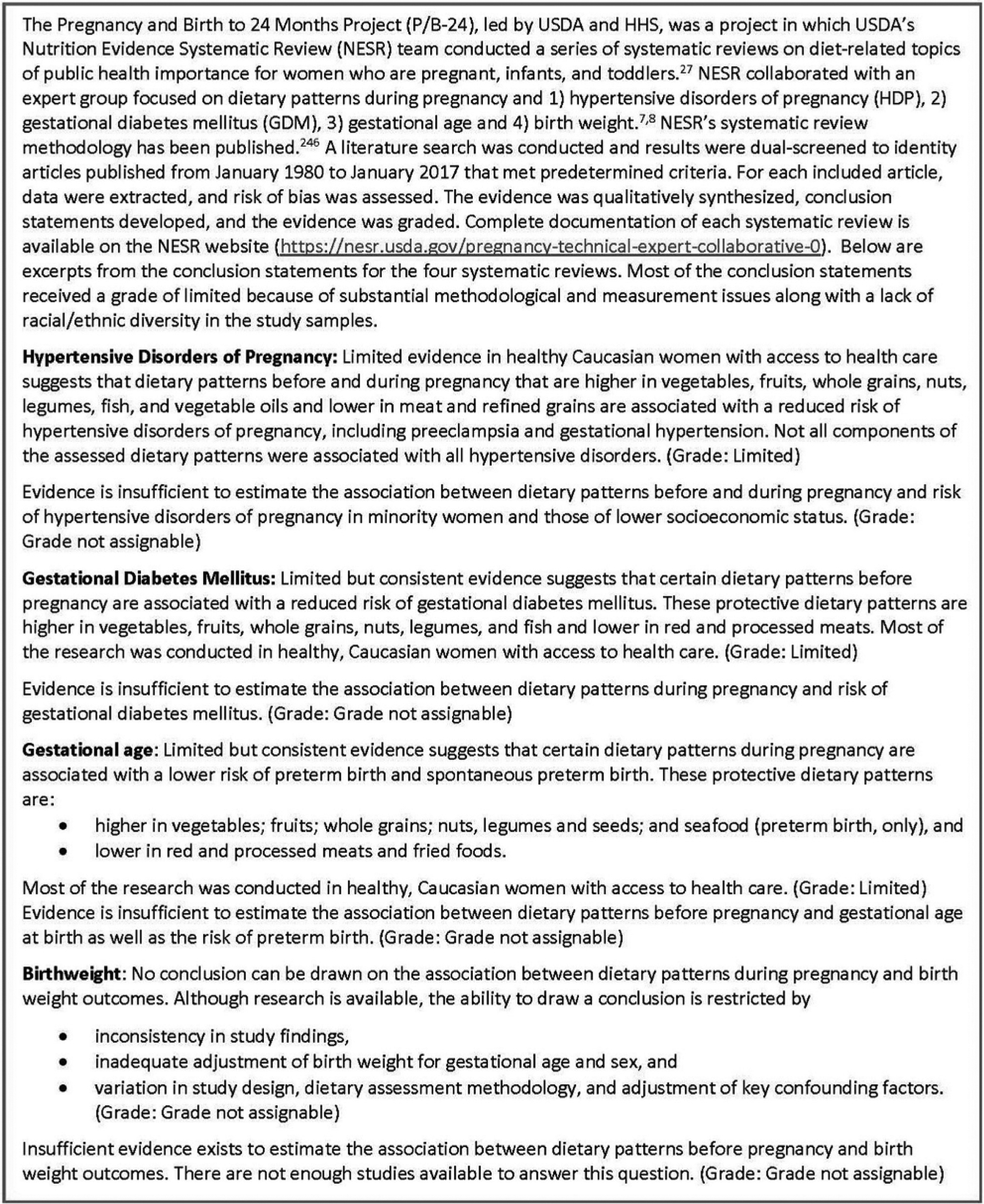
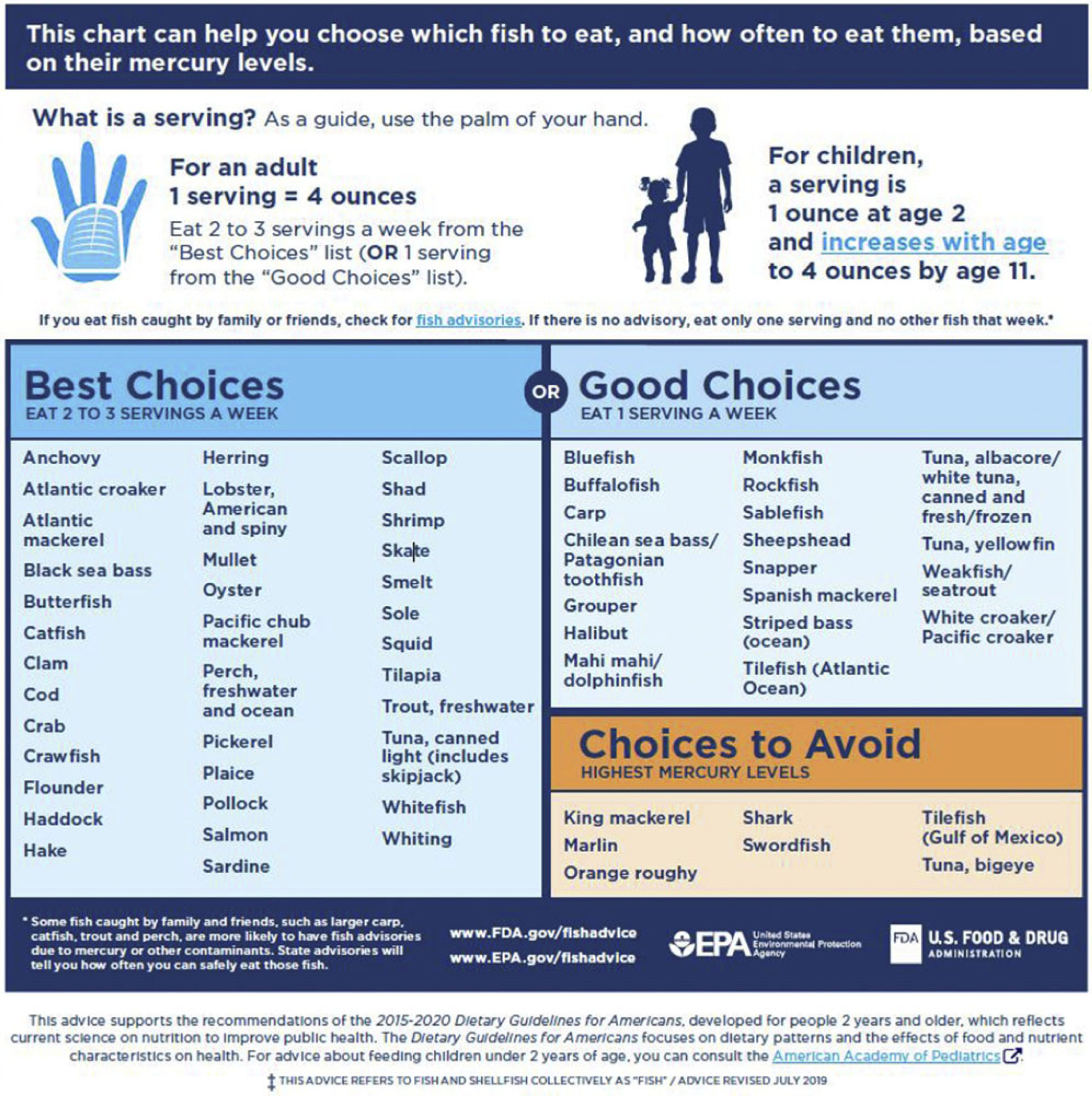
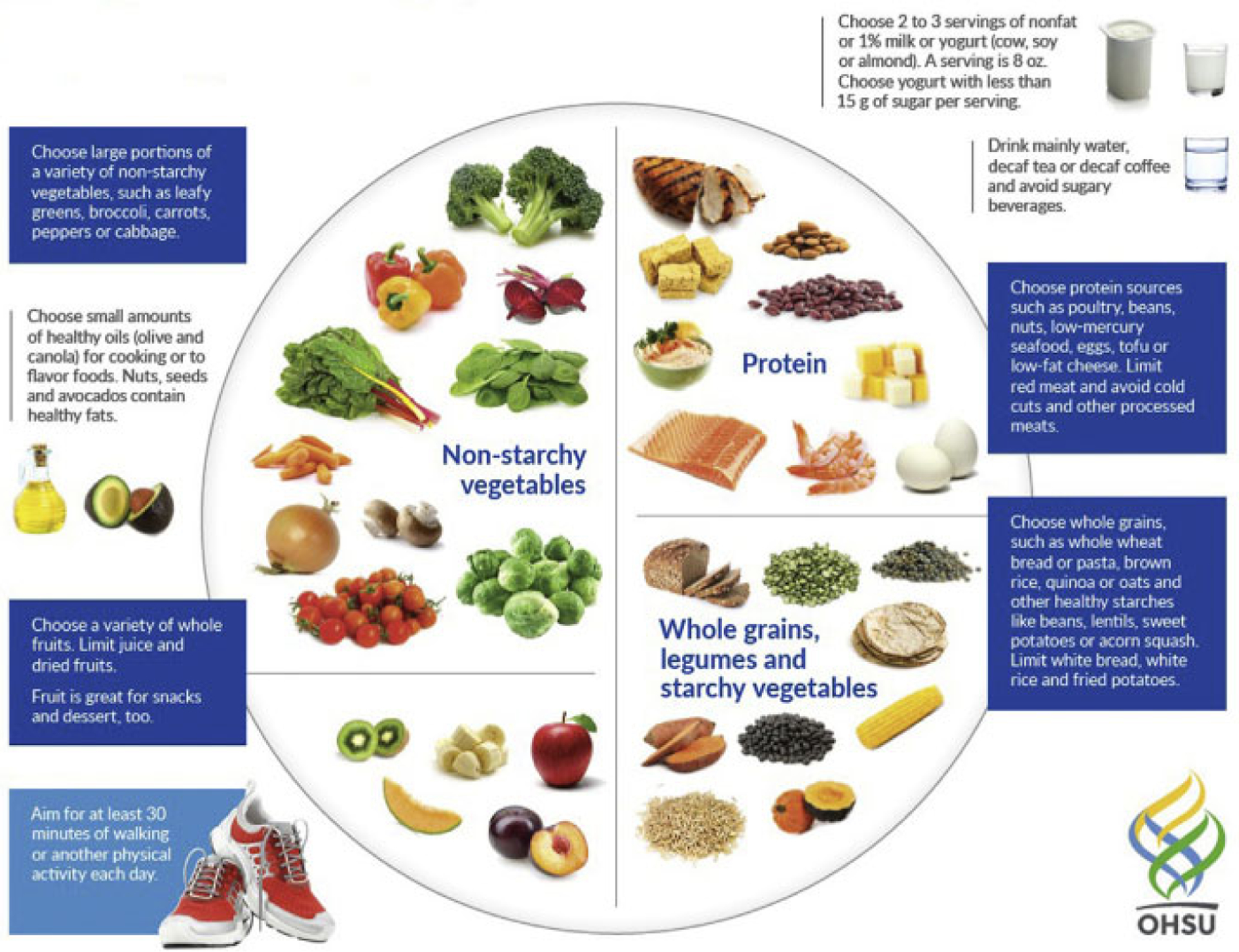
Most women in the United States do not meet the recommendations for healthful nutrition and weight before and during pregnancy. Women and providers often ask what a healthy diet for a pregnant woman should look like. The message should be "eat better, not more." This can be achieved by basing diet on a variety of nutrient-dense, whole foods, including fruits, vegetables, legumes, whole grains, healthy fats with omega-3 fatty acids that include nuts and seeds, and fish, in place of poorer quality highly processed foods. Such a diet embodies nutritional density and is less likely to be accompanied by excessive energy intake than the standard American diet consisting of increased intakes of processed foods, fatty red meat, and sweetened foods and beverages. Women who report "prudent" or "health-conscious" eating patterns before and/or during pregnancy may have fewer pregnancy complications and adverse child health outcomes. Comprehensive nutritional supplementation (multiple micronutrients plus balanced protein energy) among women with inadequate nutrition has been associated with improved birth outcomes, including decreased rates of low birthweight. A diet that severely restricts any macronutrient class should be avoided, specifically the ketogenic diet that lacks carbohydrates, the Paleo diet because of dairy restriction, and any diet characterized by excess saturated fats. User-friendly tools to facilitate a quick evaluation of dietary patterns with clear guidance on how to address dietary inadequacies and embedded support from trained healthcare providers are urgently needed. Recent evidence has shown that although excessive gestational weight gain predicts adverse perinatal outcomes among women with normal weight, the degree of prepregnancy obesity predicts adverse perinatal outcomes to a greater degree than gestational weight gain among women with obesity. Furthermore, low body mass index and insufficient gestational weight gain are associated with poor perinatal outcomes. Observational data have shown that first-trimester gain is the strongest predictor of adverse outcomes. Interventions beginning in early pregnancy or preconception are needed to prevent downstream complications for mothers and their children. For neonates, human milk provides personalized nutrition and is associated with short- and long-term health benefits for infants and mothers. Eating a healthy diet is a way for lactating mothers to support optimal health for themselves and their infants.
Overview
The claims and statistics of this paper haven’t been checked yet.
Run the check — free, no account needed. It reads the open-access text and checks the sources it cites.
Integrity signals
Registry
Cites
Statistics
Figures
Verification
Claims the paper makes
The claims and statistics of this paper haven’t been checked yet.
Run the check — free, no account needed. It reads the open-access text and checks the sources it cites.
Claims other papers make about this one
Each is checked against this paper’s own text: does it say what the citing paper says it does?
In the citing paper
“As DOHaD data demonstrate, parents’ psycho-social experiences are embedded in the future child’s neurobiology. Parents affect children’s neurodevelopment before birth.”
From The transition to parenthood in obstetrics: enhancing prenatal care for 2-generation impact (2022) · cites this paper as [15]
In the citing paper
“The fetal brain is shaped, in part, by adaptation to biological cues related to the pregnant parent’s well-being, lifestyle, nutritional status, social factors, and mental health (each of which a co-parent can affect).11-15”
From The transition to parenthood in obstetrics: enhancing prenatal care for 2-generation impact (2022) · cites this paper as [15]
Self-check
Percentages, sums and reported differences re-computed from the paper’s own numbers.
The self-check needs the paper’s full text.
Citations
Cites
Afshin, A., Sur, P. J., Fay, K. A., Cornaby, L., Ferrara, G., Salama, J. S., Mullany, E. C., Abate, K. H., Abbafati, C., Abebe, Z., et al. (2019) · The Lancet · doi:10.1016/s0140-6736(19)30041-8 · Cited by 5,811
Breastfeeding and the Use of Human Milk
Breastfeeding, S. O. (2005) · PEDIATRICS · doi:10.1542/peds.2004-2491 · Cited by 5,357
Breastfeeding and the use of human milk
BREASTFEEDING, S. O., Eidelman, A. I., Schanler, R. J., Johnston, M., Landers, S., Noble, L., Szucs, K., & Viehmann, L. (2012) · Pediatrics · doi:10.1542/peds.2011-3552 · Cited by 4,357
Our future: a Lancet commission on adolescent health and wellbeing
Patton, G. C., Sawyer, S. M., Santelli, J. S., Ross, D. A., Afifi, R., Allen, N. B., Arora, M., Azzopardi, P., Baldwin, W., Bonell, C., et al. (2016) · The Lancet · doi:10.1016/s0140-6736(16)00579-1 · Cited by 3,785
Stagnaro-Green, A., Abalovich, M., Alexander, E., Azizi, F., Mestman, J., Negro, R., Nixon, A., Pearce, E. N., Soldin, O. P., Sullivan, S., et al. (2011) · Thyroid · doi:10.1089/thy.2011.0087 · Cited by 2,942
Trends in Obesity Among Adults in the United States, 2005 to 2014
Flegal, K. M., Kruszon-Moran, D., Carroll, M. D., Fryar, C. D., & Ogden, C. L. (2016) · JAMA · doi:10.1001/jama.2016.6458 · Cited by 2,803
Alexander, E. K., Pearce, E. N., Brent, G. A., Brown, R. S., Chen, H., Dosiou, C., Grobman, W. A., Laurberg, P., Lazarus, J. H., Mandel, S. J., et al. (2017) · Thyroid® · doi:10.1089/thy.2016.0457 · Cited by 2,731
Obesity and Kidney Disease: Hidden Consequences of the Epidemic
Kovesdy, C. P., Furth, S. L., & Zoccali, C. (2017) · American Journal of Nephrology · doi:10.1159/000458467 · Cited by 2,239
Update of the Healthy Eating Index: HEI‐2015
Krebs-Smith, S. M., Pannucci, T. E., Subar, A. F., Kirkpatrick, S. I., Lerman, J. L., Tooze, J. A., Wilson, M. M., & Reedy, J. (2018) · Journal of the Academy of Nutrition and Dietetics · doi:10.1016/j.jand.2018.05.021 · Cited by 2,198
Stevens, G. A., Finucane, M. M., De‐Regil, L. M., Paciorek, C., Flaxman, S. R., Branca, F., Peña‐Rosas, J. P., Bhutta, Z. A., & Ezzati, M. (2013) · The Lancet Global Health · doi:10.1016/s2214-109x(13)70001-9 · Cited by 1,977
Research works printed but not linked: 2
- Barbour LA, Hernandez TL, Friedman JE. Metabolic changes during normal, obese, and GDM pregnancies. In Reece A, Coustan D, ed. Diabetes and obesity in women. Philadelphia, PA: Wolters Kluwer. https://www.amazon.com/diabetes-obesity-women-albert-reece/dp/1496390547. Accessed September 26, 2018. · DOI
- Rodel, 2019, Human milk composition in type 2 diabetes imparts higher insulin exposure, Diabetes, 68
Cited by
Sorted by citations
15. Management of Diabetes in Pregnancy: Standards of Care in Diabetes—2025
American Diabetes Association Professional Practice Committee, ElSayed, N. A., McCoy, R. G., Aleppo, G., Balapattabi, K., Beverly, E. A., Briggs Early, K., Bruemmer, D., Echouffo-Tcheugui, J. B., Ekhlaspour, L., et al. (2025) · Diabetes Care · doi:10.2337/dc25-s015 · Cited by 252
15. Management of Diabetes in Pregnancy: Standards of Care in Diabetes—2024
American Diabetes Association Professional Practice Committee, ElSayed, N. A., Aleppo, G., Bannuru, R. R., Bruemmer, D., Collins, B. S., Ekhlaspour, L., Hilliard, M. E., Johnson, E. L., Khunti, K., et al. (2024) · Diabetes Care · doi:10.2337/dc24-s015 · Cited by 232
Sustainable and Health-Protecting Food Ingredients from Bioprocessed Food by-Products and Wastes
Minervini, F., Comitini, F., De Boni, A., Fiorino, G. M., Rodrigues, F., Tlais, A. Z. A., Carafa, I., & De Angelis, M. (2022) · Sustainability · doi:10.3390/su142215283 · Cited by 31
The transition to parenthood in obstetrics: enhancing prenatal care for 2-generation impact
Monk, C., Dimidjian, S., Galinsky, E., Gregory, K. D., Hoffman, M. C., Howell, E. A., Miller, E. S., Osborne, C., Rogers, C. E., Saxbe, D. E., et al. (2022) · American Journal of Obstetrics & Gynecology MFM · doi:10.1016/j.ajogmf.2022.100678 · Cited by 19
Shen, H., Chen, D., Wang, S., Jin, Y., & Cheng, W. (2024) · Food & Function · doi:10.1039/d3fo05120j · Cited by 8
Metadata
- Authors
- Marshall, N. E., Abrams, B., Barbour, L. A., Catalano, P., Christian, P., Friedman, J. E., Hay, W. W., Hernandez, T. L., Krebs, N. F., Oken, E., Purnell, J. Q., Roberts, J. M., Soltani, H., Wallace, J., & Thornburg, K. L.
- Affiliations
- Oregon Health & Science University (US)
- University of California, Berkeley (US)
- University of Colorado Anschutz (US)
- Tufts University (US)
- Johns Hopkins University (US)
- University of Oklahoma Health Sciences Center (US)
- University of Colorado Denver (US)
- Harvard University (US)
- University of Pittsburgh (US)
- Sheffield Hallam University (GB)
- University of Aberdeen (GB)
- ORCID
- Venue
- American Journal of Obstetrics and Gynecology
- Publisher
- Elsevier BV
- Published
- 2022-05
- Volume
- 226
- Issue
- 5
- Pages
- 607-632
- ISSN
- 0002-9378 (ISSN-L)
- PMC
- PMC9182711
- OpenAlex
- W4200045503
- Cited by
- 709
- References
- 238
- Citations by year
- 2026: 146 · 2025: 218 · 2024: 201 · 2023: 112 · 2022: 31
- FWCI
- 15.36
- Type
- journal article
- Language
- en
- Open access
- hybrid
- doi.org
- Licence
- Locations
- American Journal of Obstetrics and Gynecology (publishedVersion, cc-by-nc-nd)
- PubMed (publishedVersion)
- PubMed Central (acceptedVersion, cc-by-nc-nd)
- SHURA (Sheffield Hallam University Research Archive) (Sheffield Hallam University) (acceptedVersion)
- Aberdeen University Research Archive (Aberdeen University) (submittedVersion)
- Funders
- Academy of Nutrition and Dietetics
- National Institutes of Health
- University of Michigan
- Eunice Kennedy Shriver National Institute of Child Health and Human Development
- Topics
- Health Sciences › Medicine › Public Health, Environmental and Occupational Health › Nutritional Studies and Diet
- Health Sciences › Medicine › Pediatrics, Perinatology and Child Health › Birth, Development, and Health
- Health Sciences › Medicine › Pediatrics, Perinatology and Child Health › Maternal and Neonatal Healthcare
- Keywords
- maternal nutrition, pregnancy, lactation, gestational weight gain, pre-pregnancy obesity, low body mass index, ketogenic diet, paleodiet, dietary habits, omega-3 fatty acids, processed foods, prenatal micronutrient supplementation, low birth weight, perinatal outcomes, breast milk, preconception care
- MeSH terms
- Gestational Weight Gain, Diet, Female, Humans, Lactation, Male, Nutritional Status, Obesity, Pregnancy, Vegetables, Weight Gain
About these checks
Registry, retraction, Cites and statistics results are computed, not judged, with one exception: a printed reference that no index lists is read once by a model before it counts as a citation error. Claims are extracted by a model and kept only when their quote appears verbatim in the text; each cited source is then checked, with a model’s help, for whether it says what the claim relies on. Those verdicts can be wrong — read the claim’s quote and the cited source before relying on one.
Statistics and arithmetic are recomputed, not judged.
Confidence bands are shown only for fields calibrated on our annotated test set. None is calibrated yet, so no band is shown.
What counts as a claim ›How we measure confidence ›How we check this ›
Are you an author, or do you see a problem with this page? Request a review
