

The DOI matches its Crossref record; 47 of the 48 references it cites were found in a registry or an index.
Dissecting the multifaceted impact of statin use on fatty liver disease: a multidimensional study
Open accessAbstract
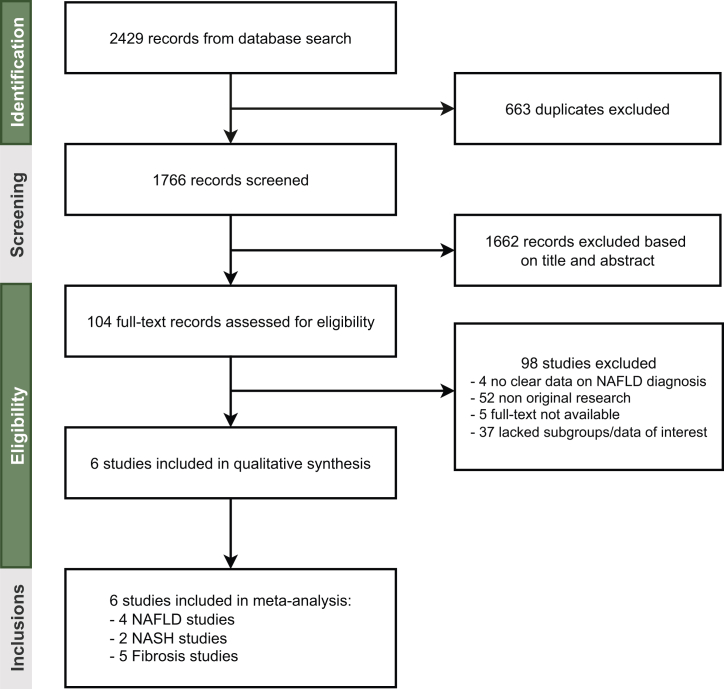
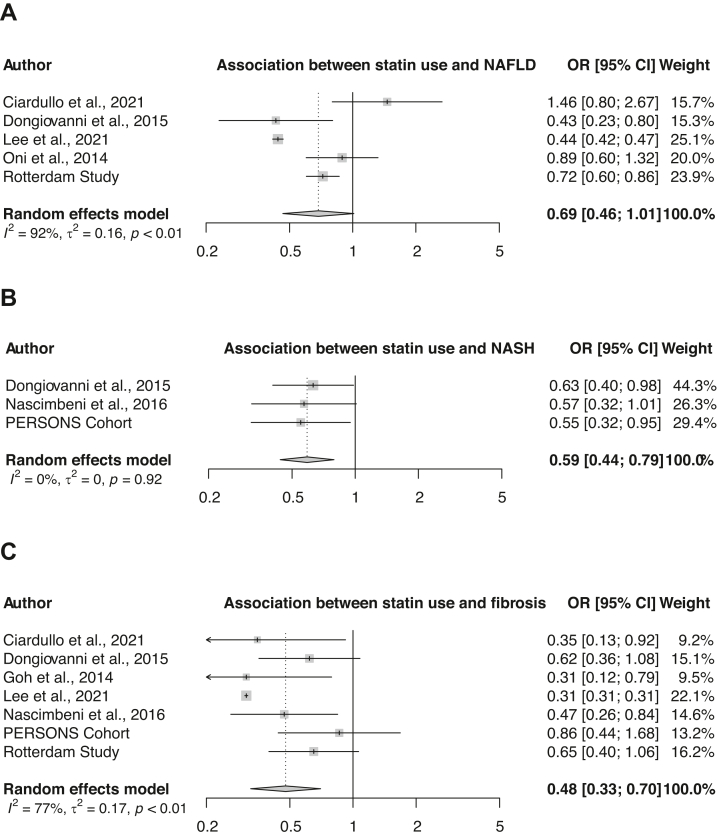
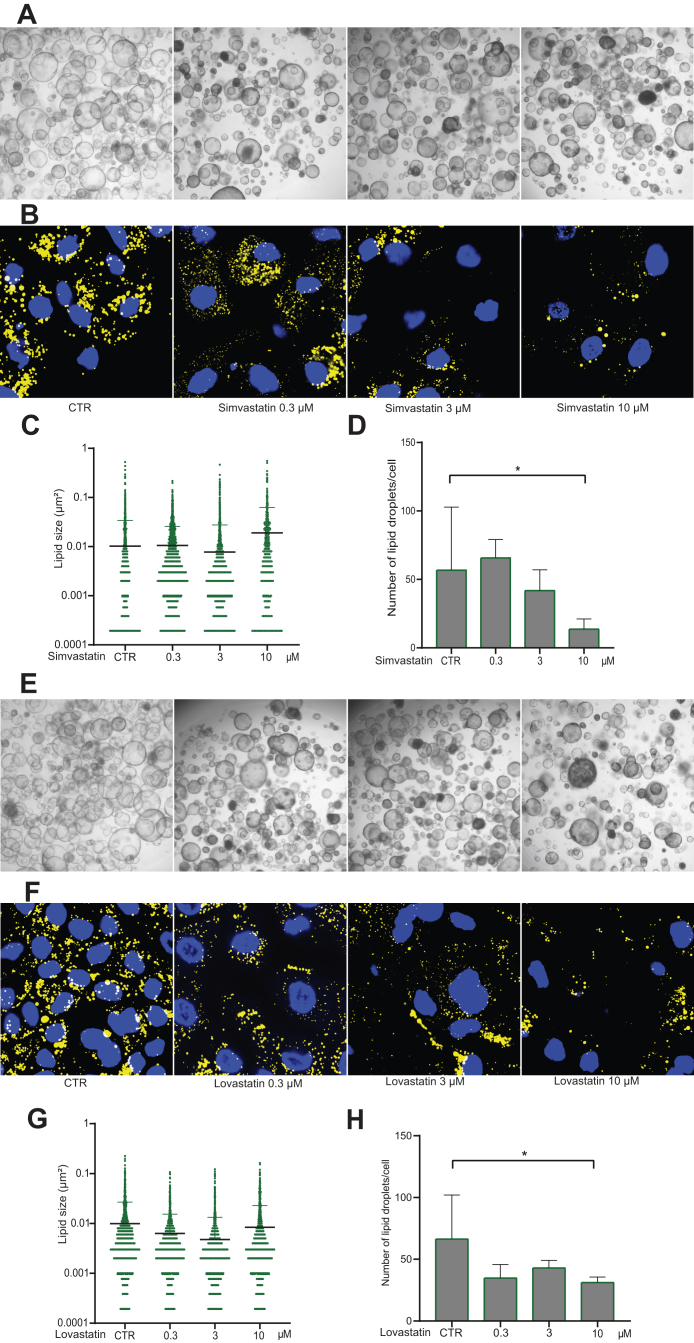
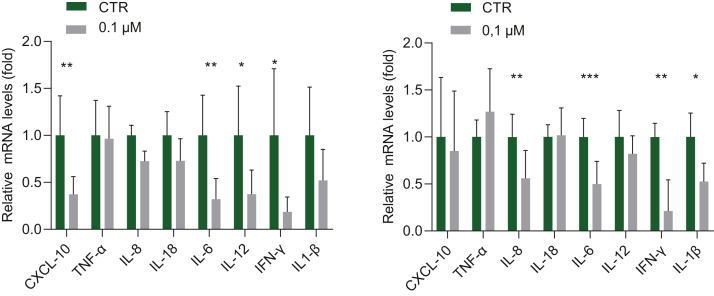
BACKGROUND: Statin use could benefit patients with non-alcoholic fatty liver disease (NAFLD), but the evidence is segmented and inconclusive. This multidimensional study comprehensively investigated the potential benefits and mechanism-of-action of statins in NAFLD. METHODS: A cross-sectional investigation was performed within the Rotterdam Study (general population; n = 4.576) and the PERSONS cohort (biopsy-proven NAFLD patients; n = 569). Exclusion criteria were secondary causes for steatosis and insufficient data on alcohol, dyslipidemia or statin use. Associations of statin use with NAFLD (among entire general population), fibrosis and NASH (among NAFLD individuals and patients) were quantified. These results were pooled with available literature in meta-analysis. Last, we assessed statins' anti-lipid and anti-inflammatory effects in 3D cultured human liver organoids and THP-1 macrophages, respectively. FINDINGS: Statin use was inversely associated with NAFLD in the Rotterdam study compared to participants with untreated dyslipidemia. In the PERSONS cohort, statin use was inversely associated with NASH, but not with fibrosis. The meta-analysis included 7 studies and indicated a not significant inverse association for statin use with NAFLD (pooled-Odds Ratio: 0.69, 95% Confidence Interval: 0.46-1.01) and significant inverse associations with NASH (pooled-OR: 0.59, 95% CI: 0.44-0.79) and fibrosis (pooled-OR: 0.48, 95% CI: 0.33-0.70). In vitro, statins significantly reduced lipid droplet accumulation in human liver organoids and downregulated expression of pro-inflammatory cytokines in macrophages. INTERPRETATION: Pooled results demonstrated that statin use was associated with a lower prevalence of NASH and fibrosis and might prevent NAFLD. This may be partially attributed to the anti-lipid and anti-inflammatory characteristics of statins. Given their under-prescription, adequate prescription of statins may limit the disease burden of NAFLD. FUNDING: ZonMw, KWF, NWO, SLO, DGXII, RIDE, National and regional government, Erasmus MC and Erasmus University.
Overview
The claims and statistics of this paper haven’t been checked yet.
Run the check — free, no account needed. It reads the open-access text and checks the sources it cites.
Integrity signals
Registry
Cites
Statistics
Figures
Verification
Claims the paper makes
The claims and statistics of this paper haven’t been checked yet.
Run the check — free, no account needed. It reads the open-access text and checks the sources it cites.
Claims other papers make about this one
Each is checked against this paper’s own text: does it say what the citing paper says it does?
The source backs part of the claim, not all of it — or backs it for a different population, condition or comparison.
In the citing paper
“Casecontrol studies have shown that statin intake is associated with a reduced risk of MASLD, MASH and liver fi brosis, 393 as well as a reduction in the risk of hepatic decompensation, mortality and HCC in individuals with cirrhosis.”
From EASL-EASD-EASO Clinical Practice Guidelines on the management of metabolic dysfunction-associated steatotic liver disease (MASLD). (2024) · cites this paper as [393]
Experimental — accuracy not yet measured
Self-check
Percentages, sums and reported differences re-computed from the paper’s own numbers.
The self-check needs the paper’s full text.
Citations
Cites
Design and validation of a histological scoring system for nonalcoholic fatty liver disease†
Kleiner, D. E., Brunt, E. M., Van Natta, M., Behling, C., Contos, M. J., Cummings, O. W., Ferrell, L. D., Liu, Y., Torbenson, M. S., Unalp‐Arida, A., et al. (2005) · Hepatology · doi:10.1002/hep.20701 · Cited by 10,791
Younossi, Z. M., Koenig, A. B., Abdelatif, D., Fazel, Y., Henry, L., & Wymer, M. (2016) · Hepatology · doi:10.1002/hep.28431 · Cited by 10,781
Arnett, D. K., Blumenthal, R. S., Albert, M. A., Buroker, A. B., Goldberger, Z. D., Hahn, E. J., Himmelfarb, C. D., Khera, A., Lloyd-Jones, D., McEvoy, J. W., et al. (2019) · Circulation · doi:10.1161/cir.0000000000000678 · Cited by 4,536
Nonalcoholic Steatohepatitis: A Proposal for Grading and Staging The Histological Lesions
Brunt, E. M., Janney, C. G., Di Bisceglie, A. M., Neuschwander-Tetri, B. A., & Bacon, B. R. (1999) · American Journal of Gastroenterology · doi:10.1111/j.1572-0241.1999.01377.x · Cited by 3,907
MAFLD: a consensus-driven proposed nomenclature for metabolic associated fatty liver disease
Eslam, M., Sanyal, A. J., George, J., Sanyal, A., Neuschwander-Tetri, B., Tiribelli, C., Kleiner, D. E., Brunt, E., Bugianesi, E., Yki-Järvinen, H., et al. (2020) · Gastroenterology · doi:10.1053/j.gastro.2019.11.312 · Cited by 3,286
Singh, S., Allen, A. M., Wang, Z., Prokop, L. J., Murad, M. H., & Loomba, R. (2015) · Clinical Gastroenterology and Hepatology · doi:10.1016/j.cgh.2014.04.014 · Cited by 1,748
The role of macrophages in nonalcoholic fatty liver disease and nonalcoholic steatohepatitis
Kazankov, K., Jørgensen, S. M. D., Thomsen, K. L., Møller, H. J., Vilstrup, H., George, J., Schuppan, D., & Grønbæk, H. (2019) · Nature Reviews Gastroenterology & Hepatology · doi:10.1038/s41575-018-0082-x · Cited by 941
Athyros, V. G., Tziomalos, K., Gossios, T. D., Griva, T., Anagnostis, P., Kargiotis, K., Pagourelias, E. D., Theocharidou, E., Karagiannis, A., & Mikhailidis, D. P. (2010) · The Lancet · doi:10.1016/s0140-6736(10)61272-x · Cited by 685
Lorenzo, C., Williams, K., Hunt, K. J., & Haffner, S. M. (2006) · Diabetes Care · doi:10.2337/dc06-1414 · Cited by 669
Determination of reliability criteria for liver stiffness evaluation by transient elastography
Boursier, J., Zarski, J.-P., de Ledinghen, V., Rousselet, M.-C., Sturm, N., Lebail, B., Fouchard-Hubert, I., Gallois, Y., Oberti, F., Bertrais, S., et al. (2013) · Hepatology · doi:10.1002/hep.25993 · Cited by 662
Cited by
Sorted by citations
Items 101–117 of 117
A Gastroenterologist’s Approach to Improving Metabolic Health in MASLD
Razzak, I. A., Razzak, I. A., Noureddin, M., & Trivedi, H. D. (2025) · Journal of Clinical Gastroenterology · doi:10.1097/mcg.0000000000002210 · Cited by 1
Non-alcoholic fatty liver disease and chronic kidney disease
Туркина, С. В., Андреевна, Т. И., & Титаренко, М. Н. (2024) · Экспериментальная и клиническая гастроэнтерология · doi:10.31146/1682-8658-ecg-230-10-49-61 · Cited by 1
Saviano, A., & Serfaty, L. (2025) · EMC - Hépatologie · doi:10.1016/s1155-1976(25)46793-x
Kuruppu, A. I., Liyanage, U. P., Chamika, A., Paranagama, P. A., & Hettigoda, L. (2025) · Journal of Ayurveda and Integrative Medicine · doi:10.1016/j.jaim.2025.101196
“In the present study, Liv-Pro was found to effectively lower lipid profiles, thereby mitigating the risk of cardiovascular disease [42].”
Metabolisch assoziierte Fettlebererkrankung (MASLD)
Kreimeyer, H., Gerken, G., & Canbay, A. E. (2025) · Elsevier eBooks · doi:10.1016/b978-3-437-21164-5.00027-1
Lee, J.-H., Kim, J., Kim, J. O., & Kwon, Y.-J. (2024) · Figshare · doi:10.6084/m9.figshare.26601907
Bagenda, C. N., Nantongo, C., Ssemwanga, E., Mugisa, M. J., Wafwoyo, J. A., Nzaramba, D., Kalyetsi, R., John, E. A., Tumusiime, J., Ainebyoona, B., et al. (2026) · BMC Research Notes · doi:10.1186/s13104-026-07707-8
“In addition, a recent multidimensional study demonstrated that statin therapy is associated with a reduced prevalence of NASH and liver fibrosis, mediated through reductions in both serum LDL-C and non-HDL-C [34].”
Richelle, D., Heyens, L. J. M., Robaeys, G., & Koek, G. H. (2026) · Liver International · doi:10.1111/liv.70589
“We wonder whether correcting for anti-lipid therapy and acetylsalicylic acid would affect the independent predictors of MASLD, given prior evidence of protective hepatic effects [2].”
Liou, W. L., Pei, Y., Teh, K. K., Cheah, M. C. C., Leow, W. Q., Lim, T. K., & Goh, G. B. (2026) · Digestive Diseases and Sciences · doi:10.1007/s10620-026-09870-1 · Cited by 1
“[ 41] A smaller proportion of our study cohorts was already on statin at the time of liver biopsy, which allowed us to examine its effect on the liver based on the histopathology.”
Nouvelles stratégies thérapeutiques dans le traitement du gliome infiltrant du tronc cérébral
Herrault, G. (2024) · theses.fr (ABES) · doi:10.70675/539ee639z4f77z47b3z903ez909ec614384d
Yau, S. T. Y., Hung, C. T., Leung, E. Y. M., Lee, A., & Yeoh, E. (2026) · Cancer Epidemiology Biomarkers & Prevention · doi:10.1158/1055-9965.epi-25-1912
Al‐Khinji, A., Malouche, D., Al-Thani, N., Mustafa, A., Abdulmajeed, J., & Al‐Kuwari, M. G. (2026) · Frontiers in Medicine · doi:10.3389/fmed.2026.1773499
Targeting hepatic cholesterol sensing to tackle metabolic dysfunction–associated steatohepatitis
Zang, M., & Li, Y. (2026) · Journal of Clinical Investigation · doi:10.1172/jci206628
“Similarly, statins — which are indirect activators of SREBP2 — improve MASH outcomes in humans (22, 23).”
王, 昕. (2026) · Advances in Clinical Medicine · doi:10.12677/acm.2026.1672629
Deng, S., Freed, J., Lee, G. Y., Askin, G., Cao, Z., Cakici, Ö., Yuan, B., Hui, S. T., Inouye, K., Graupera, I., et al. (2026) · Journal of Clinical Investigation · doi:10.1172/jci197094
“Similarly, statins, which indirectly activate SREBP2, improve MASH outcomes in humans (32, 33), mirroring our observation that NFE2L1-driven SREBP activation alleviated liver disease.”
Pharmacotherapy for MASLD: current evidence and challenges in clinical practice
Pages, L., Rojo, D., Jiménez-Masip, A., Tricarico, E., Mas‐Carrió, E., Aguilar, A., Gómez, N., Molinero, L., & Pericas, J. M. (2026) · Annals of Hepatology · doi:10.1016/j.aohep.2026.102477
Statins and the Lifetime Outcomes of MASLD: From Evidence Asymmetry to Outcome Convergence
Crespo, J., Alonso‐Peña, M., Jiménez-González, C., Cayon, L., & Iruzubieta, P. (2026) · International Journal of Molecular Sciences · doi:10.3390/ijms27219407
Metadata
- Authors
- Ayada, I., van Kleef, L. A., Zhang, H., Liu, K., Li, P., Abozaid, Y. J., Lavrijsen, M., Janssen, H. L. A., van der Laan, L. J. W., Ghanbari, M., Peppelenbosch, M. P., Zheng, M.-H., de Knegt, R. J., & Pan, Q.
- Affiliations
- Erasmus MC (NL)
- First Affiliated Hospital of Wenzhou Medical University (CN)
- University of Toronto (CA)
- Wenzhou Medical University (CN)
- Corresponding author
- Zheng, Ming-Hua
- Pan, Qiuwei
- ORCID
- Venue
- EBioMedicine
- Publisher
- Elsevier BV
- Published
- 2023-01
- Volume
- 87
- Pages
- 104392
- ISSN
- 2352-3964 (ISSN-L)
- PMC
- PMC9758527
- OpenAlex
- W4310847620
- Cited by
- 117
- References
- 48
- Citations by year
- 2026: 26 · 2025: 40 · 2024: 43 · 2023: 8
- FWCI
- 3.62
- Type
- journal article
- Language
- en
- Open access
- gold
- doi.org
- Licence
- Locations
- EBioMedicine (publishedVersion, cc-by)
- PubMed Central (publishedVersion, cc-by)
- PubMed (publishedVersion)
- EUR Research Repository (Erasmus University Rotterdam) (publishedVersion, cc-by)
- EUR Research Repository (Erasmus University Rotterdam) (submittedVersion, other-oa)
- DOAJ (DOAJ: Directory of Open Access Journals) (submittedVersion, cc-by-sa)
- Funders
- Ministerie van Onderwijs, Cultuur en Wetenschap
- Nederlandse Organisatie voor Wetenschappelijk Onderzoek (91719300, 10140)
- ZonMw
- European Commission
- Ministerie van Volksgezondheid, Welzijn en Sport
- KWF Kankerbestrijding
- Erasmus Medisch Centrum
- Topics
- Health Sciences › Medicine › Hepatology › Liver Disease Diagnosis and Treatment
- Health Sciences › Medicine › Cardiology and Cardiovascular Medicine › Lipoproteins and Cardiovascular Health
- Life Sciences › Biochemistry, Genetics and Molecular Biology › Cancer Research › Cancer, Lipids, and Metabolism
- Keywords
- statins, non-alcoholic fatty liver disease, nonalcoholic steatohepatitis, liver fibrosis, dyslipidemia, anti-inflammatory activity, lipid droplet accumulation, liver organoids, macrophages, inflammatory cytokines, statin prescribing
- MeSH terms
- Cross-Sectional Studies, Fibrosis, Humans, Liver, Hydroxymethylglutaryl-CoA Reductase Inhibitors, Dyslipidemias, Non-alcoholic Fatty Liver Disease
About these checks
Registry, retraction, Cites and statistics results are computed, not judged, with one exception: a printed reference that no index lists is read once by a model before it counts as a citation error. Claims are extracted by a model and kept only when their quote appears verbatim in the text; each cited source is then checked, with a model’s help, for whether it says what the claim relies on. Those verdicts can be wrong — read the claim’s quote and the cited source before relying on one.
Statistics and arithmetic are recomputed, not judged.
Confidence bands are shown only for fields calibrated on our annotated test set. None is calibrated yet, so no band is shown.
What counts as a claim ›How we measure confidence ›How we check this ›
Are you an author, or do you see a problem with this page? Request a review
