

The DOI matches its Crossref record.
Non-farm entrepreneurship in rural sub-Saharan Africa: New empirical evidence
Open accessAbstract
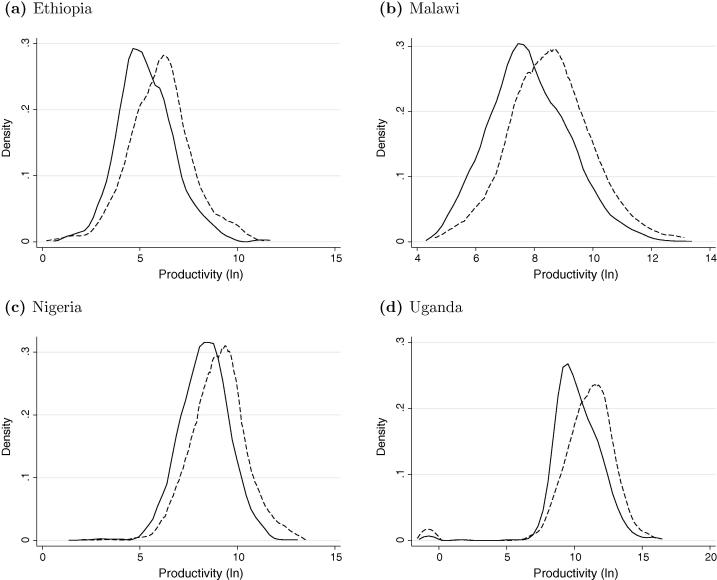
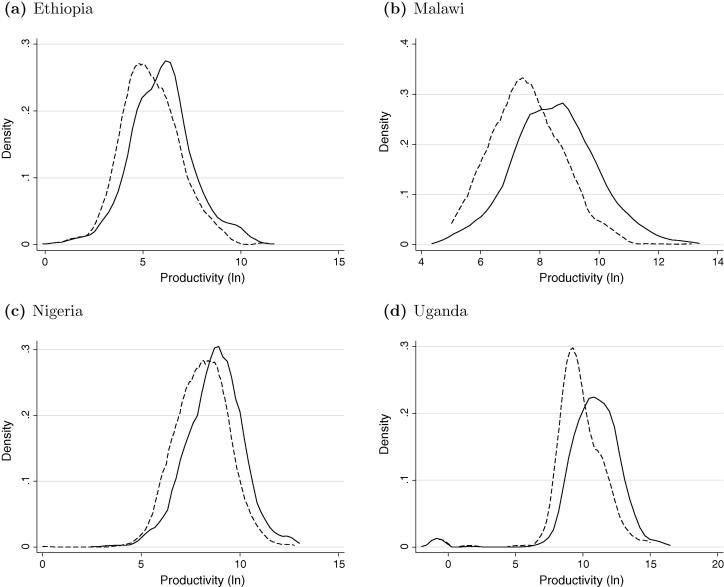
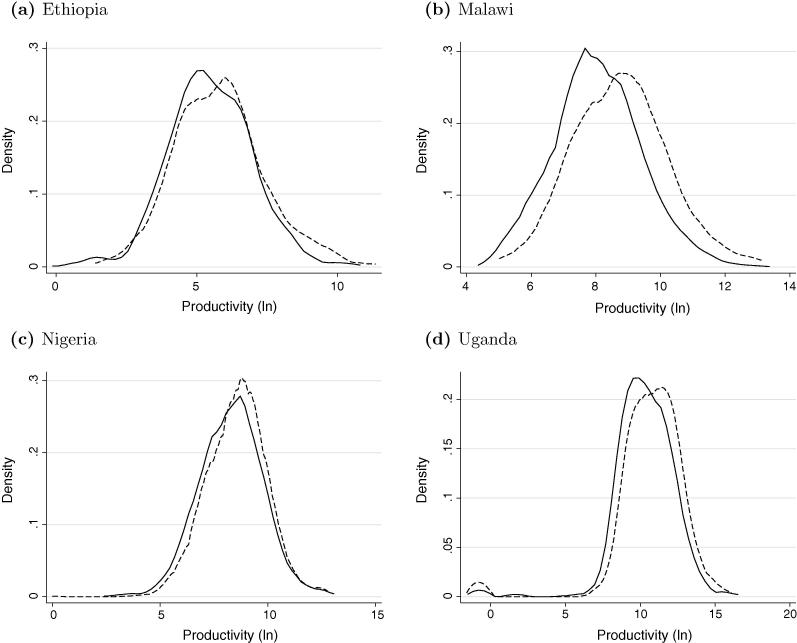
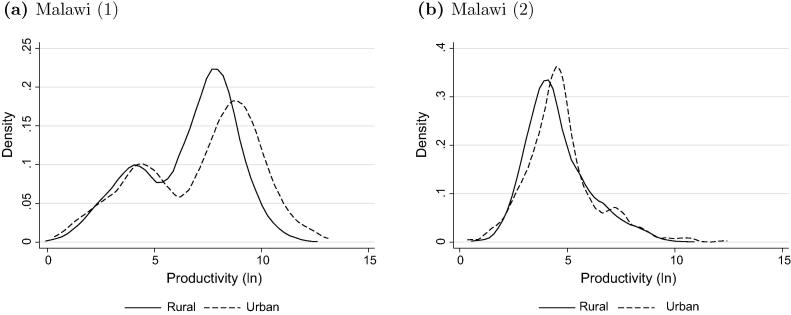
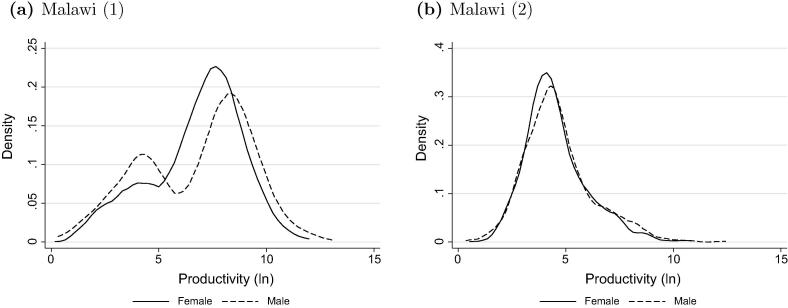
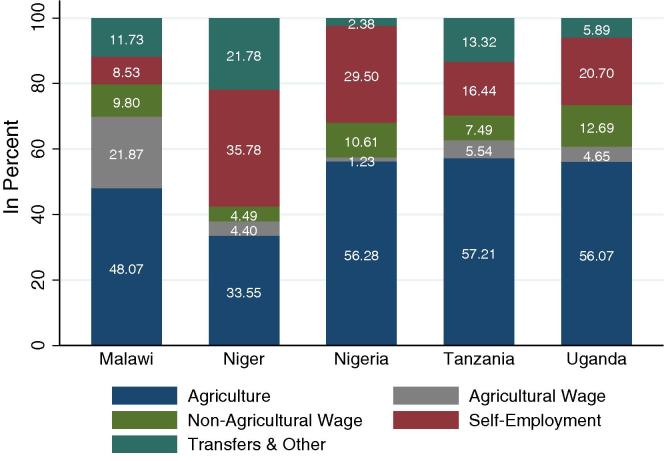
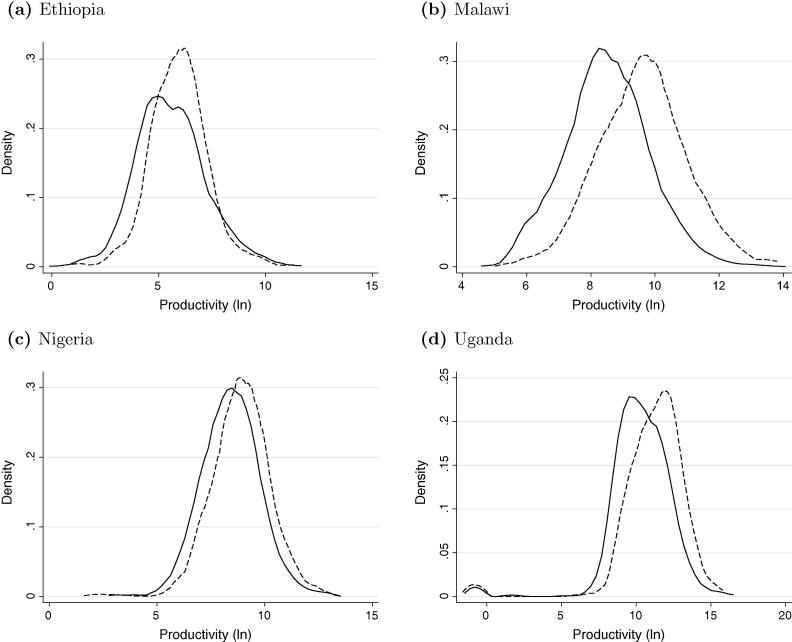
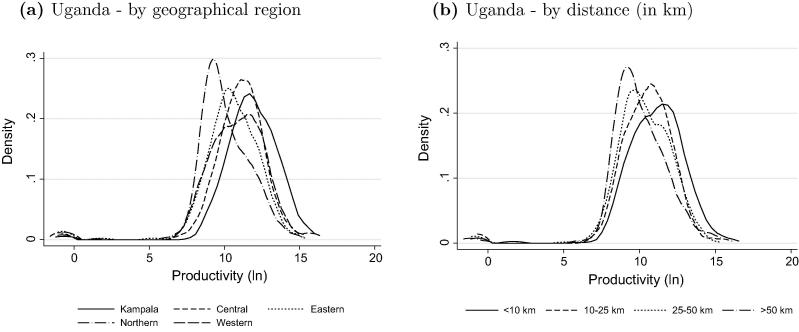
We report on the prevalence and patterns of non-farm enterprises in six sub-Saharan African countries, and study their performance in terms of labor productivity, survival and exit, using the World Bank's Living Standards Measurement Study - Integrated Surveys on Agriculture (LSMS-ISA). Rural households operate enterprises due to both push and pull factors and tend to do so predominantly in easy-to-enter activities, such as sales and trade, rather than in activities that require higher starting costs, such as transport services, or educational investment, such as professional services. Labor productivity differs widely: rural and female-headed enterprises, those located further away from population centers, and businesses that operate intermittently have lower levels of labor productivity compared to urban and male-owned enterprises, or enterprises that operate throughout the year. Finally, rural enterprises exit the market primarily due to a lack of profitability or finance, and due to idiosyncratic shocks.
Overview
The claims and statistics of this paper haven’t been checked yet.
Run the check — free, no account needed. It reads the open-access text and checks the sources it cites.
Integrity signals
Registry
Cites
Statistics
Figures
Verification
Claims the paper makes
The claims and statistics of this paper haven’t been checked yet.
Run the check — free, no account needed. It reads the open-access text and checks the sources it cites.
Claims other papers make about this one
Each is checked against this paper’s own text: does it say what the citing paper says it does?
The source backs part of the claim, not all of it — or backs it for a different population, condition or comparison.
In the citing paper
“In analyses of entrepreneurial ventures in Africa, rural nonfarm entrepreneurship has been depicted as a risk diversifying factor, though transitory and subject to country-specific policies (Nagler & Naudé, 2017).”
From The effects of uppercase vs. lowercase letters on consumers’ perceptions and brand attitudes (2021) · cites this paper as Nagler & Naudé, 2017
Experimental — accuracy not yet measuredThe source backs part of the claim, not all of it — or backs it for a different population, condition or comparison.
In the citing paper
“However, evidence on the importance of such an effect has been mixed, which has led many to question the efficacy of broad-based, one-size-fits-all entrepreneurial policy initiatives (Nagler & Naudé, 2017).”
From The effects of uppercase vs. lowercase letters on consumers’ perceptions and brand attitudes (2021) · cites this paper as Nagler & Naudé, 2017
Experimental — accuracy not yet measuredThe cited source says what the claim attributes to it.
In the citing paper
“Their findings suggest that rural households run enterprises mostly in low-starting cost activities, such as sales and trade, but they are more successful when located closer to urban centers.”
From The effects of uppercase vs. lowercase letters on consumers’ perceptions and brand attitudes (2021) · cites this paper as Nagler & Naudé (2017)
The cited source says what the claim attributes to it.
In the citing paper
“Nevertheless, a lack of profitability, finance, and idiosyncratic shocks result in high failure rates.”
From The effects of uppercase vs. lowercase letters on consumers’ perceptions and brand attitudes (2021) · cites this paper as Nagler & Naudé (2017)
The check wasn’t confident either way, so it gives no verdict — never disputed.
In the citing paper
“A major structural change in Uganda is the transition from subsistence farming to agribusiness in rural areas accompanied by an increase in NFE in urban areas (Nagler & Naudé, 2017).”
From The effects of uppercase vs. lowercase letters on consumers’ perceptions and brand attitudes (2021) · cites this paper as Nagler & Naudé, 2017
Experimental — accuracy not yet measured
Self-check
Percentages, sums and reported differences re-computed from the paper’s own numbers.
The self-check needs the paper’s full text.
Citations
Cites
No references could be resolved yet.
Research works printed but not linked: 51
- Ackah, 2013, Non-farm employment and income in rural ghana, J. Int. Develop., 25, 325, 10.1002/jid.1846 · DOI
- Ali, 2011, Value added of cluster membership for micro enterprises of the handloom sector in Ethiopia, World Develop., 39, 363, 10.1016/j.worlddev.2010.07.002 · DOI
- Babatunde, 2010, Impact of off-farm income on food security and nutrition in Nigeria, Food Policy, 35, 303, 10.1016/j.foodpol.2010.01.006 · DOI
- Banerjee, 1993, Occupational choice and the process of development, J. Polit. Econ., 101, 274, 10.1086/261876 · DOI
- Barrett, 2001, Non-farm income diversification and household livelihood strategies in rural Africa: concepts, issues, and policy implications, Food Policy, 26, 315, 10.1016/S0306-9192(01)00014-8 · DOI
- Bekele, 2008, Factors that affect the long-term survival of micro, small and medium enterprises in Ethiopia, South African J. Econ., 7, 548, 10.1111/j.1813-6982.2008.00207.x · DOI
- Blattmann, 2014, Generating skilled self-employment in developing countries: experimental evidence from Uganda, Quart. J. Econ., 129, 697, 10.1093/qje/qjt057 · DOI · Paper page
- Bloom, 2013, Identifying technology spillovers and product market rivalry, Econometrica, 81, 1347, 10.3982/ECTA9466 · DOI
- Bloom, 2010, Why do management practices differ across firms and countries?, J. Econ. Perspect., 24, 203, 10.1257/jep.24.1.203 · DOI
- Brueck, 2013, Business under fire: entrepreneurship and violent conflict in developing countries, J. Conflict Resol., 57, 3, 10.1177/0022002712464846 · DOI
- Bryceson, 1996, Deagrarianization and rural employment in sub-Saharan Africa: a sectoral perspective, World Develop., 24, 97, 10.1016/0305-750X(95)00119-W · DOI
- Canagarajah, 2001, Non-farm income, gender, and inequality: evidence from rural Ghana and Uganda, Food Policy, 26, 405, 10.1016/S0306-9192(01)00011-2 · DOI
- Chiappori, 1992, Collective labor supply and welfare, J. Polit. Econ., 100, 437, 10.1086/261825 · DOI
- Christiaensen, 2013, Urbanization and poverty reduction: the role of rural diversification and secondary towns, Agric. Econ., 44, 435, 10.1111/agec.12028 · DOI
- Davis, B., DiGuiseppe, S., Zezza, A., 2014. Income Diversification Patterns in Rural Sub-Saharan Africa. Reassessing the Evidence. Policy Research Working Paper No. 7108. · DOI
- Davis, 2010, A cross-country comparison of rural income generating activities, World Develop., 38, 48, 10.1016/j.worlddev.2009.01.003 · DOI · Paper page
- Dercon, 2009, Rural poverty: old challenges in new contexts, World Bank Res. Observer., 24, 1, 10.1093/wbro/lkp003 · DOI
- Escobal, 2001, The determinants of non-farm income diversification in rural Peru, World Develop., 29, 497, 10.1016/S0305-750X(00)00104-2 · DOI
- Evans, 1989, An estimated model of entrepreneurial choice under liquidity constraints, J. Polit. Econ., 97, 808, 10.1086/261629 · DOI · Paper page
- Fafchamps, 2003, The spatial division of labour in Nepal, J. Develop. Stud., 39, 23, 10.1080/00220380312331293577 · DOI
- Foster, 2008, Reallocation, firm turnover, and efficiency: selection on productivity and profitability?, Am. Econ. Rev., 98, 394, 10.1257/aer.98.1.394 · DOI · Paper page
- Fox, L., Pimhidzai, O., 2013. Household Non-Farm Enterprises and Structural Transformation: Evidence from Uganda. Paper presented at the UNU-WIDER Conference on Inclusive Growth in Africa, Helsinki.
- Frazer, 2005, Which firms die? A look at manufacturing firm exit in Ghana, Econ. Develop. Cultural Change, 53, 585, 10.1086/427246 · DOI
- Haggblade, 1989, Farm-non-farm linkages in rural sub-Saharan Africa, World Develop., 17, 1173, 10.1016/0305-750X(89)90232-5 · DOI
- Haggblade, 2010, The rural non-farm economy: prospects for growth and poverty reduction, World Develop., 38, 1429, 10.1016/j.worlddev.2009.06.008 · DOI · Paper page
- Hurst, 2004, Liquidity constraints, household wealth and entrepreneurship, J. Polit. Econ., 112, 319, 10.1086/381478 · DOI · Paper page
- Janvry, 2001, Income strategies among rural households in Mexico: the role of off-farm activities, World Develop., 29, 467, 10.1016/S0305-750X(00)00113-3 · DOI
- Kinda, 2011, Firm productivity and investment climate in developing countries: how does the Middle East and North Africa perform?, Develop. Econ., 49, 429, 10.1111/j.1746-1049.2011.00146.x · DOI
- Klapper, 2011, Patterns of business creation, survival and growth: evidence from Africa, Labour Econ., 18, S32, 10.1016/j.labeco.2011.09.004 · DOI
- Lanjouw, 2001, The rural non-farm sector: issues and evidence from developing countries, Agric. Econ., 26, 1, 10.1111/j.1574-0862.2001.tb00051.x · DOI
- Lucas, 1978, On the size distribution of business firms, Bell J. Econ., 9, 508, 10.2307/3003596 · DOI · Paper page
- Manser, 1980, Marriage and household decision-making: a bargaining analysis, Int. Econ. Rev., 21, 31, 10.2307/2526238 · DOI
- Martin, 2011, Spatial concentration and plant-level productivity in France, J. Urban Econ., 69, 182, 10.1016/j.jue.2010.09.002 · DOI
- McPherson, 1995, The hazards of small firms in Southern Africa, J. Develop. Stud., 32, 31, 10.1080/00220389508422400 · DOI
- Minniti, 2010, What do we know about the patterns and determinants of female entrepreneurship across countries?, Eur. J. Develop., 22, 272
- Moretti, 2004, Workers’ education, spillovers, and productivity: evidence from plant-level production functions, Am. Econ. Rev., 94, 656, 10.1257/0002828041464623 · DOI
- Murphy, 1991, The allocation of talent: implications for growth, Quart. J. Econ., 106, 503, 10.2307/2937945 · DOI
- Nagler, P., Naudé, W., 2014. Non-Farm Entrepreneurship in Rural Africa: Patterns and Determinants. IZA Discussion Paper No. 8008. · DOI
- Nichter, 2009, Small firm growth in developing countries, World Develop., 37, 1435, 10.1016/j.worlddev.2009.01.013 · DOI
- Owoo, 2016, Spatial proximity and firm performance: evidence from non-farm rural enterprises in Ethiopia and Nigeria, Regional Stud.
- Reardon, 1997, Using evidence of household income diversification to inform study of the rural non-farm labor market in Africa, World Develop., 25, 735, 10.1016/S0305-750X(96)00137-4 · DOI
- Rijkers, 2012, Gender and rural non-farm entrepreneurship, World Develop., 40, 2411, 10.1016/j.worlddev.2012.05.017 · DOI
- Rijkers, 2010, A rural-urban comparison of manufacturing enterprise performance in Ethiopia, World Develop., 38, 1278, 10.1016/j.worlddev.2010.02.010 · DOI
- Serra, R., 2009. Gender and Occupational Choice in Africa: The Role of Time Poverty and Associated Risks. Paper Presented at the FAO-IFAD-ILO Workshop on Gaps, Trends and Current Research in Gender Dimensions of Agricultural and Rural Employment, Rome, 31 March–2 April.
- Shi, 2007, Choices between different off-farm employment sub-categories: an empirical analysis for Jiangxi Province, China, China Econ. Rev., 18, 438, 10.1016/j.chieco.2006.08.001 · DOI
- Shiferaw, 2009, Survival of private sector manufacturing establishments in Africa: the role of productivity and ownership, World Develop., 37, 572, 10.1016/j.worlddev.2008.08.004 · DOI
- Sonobe, T., Higuchi, Y., Otsuka, K., 2012. Productivity Growth and Job Creation in the Development Process of Industrial Clusters. GRIPS Discussion Paper No. 11-22. · DOI
- Start, 2001, The rise and fall of the rural non-farm economy: poverty impacts and policy options, Develop. Policy Rev., 19, 491, 10.1111/1467-7679.00147 · DOI
- van Biesebroeck, 2005, Exporting raises productivity in sub-Saharan manufacturing firms, J. Int. Econ., 67, 373, 10.1016/j.jinteco.2004.12.002 · DOI · Paper page
- Wiggens, 2000, Interpreting changes from the 1970s to the 1990s in African agriculture through village studies, World Develop., 28, 631, 10.1016/S0305-750X(99)00153-9 · DOI
- Zezza, 2011, Rural household access to assets and markets: a cross-country comparison, Eur. J. Develop. Res., 23, 569, 10.1057/ejdr.2011.15 · DOI
Cited by
Sorted by citations
Teng, L., Xie, C., Liu, T., Wang, F., & Foti, L. (2021) · Journal of Business Research · doi:10.1016/j.jbusres.2021.07.037 · Cited by 42
Metadata
- Authors
- Nagler, P., & Naudé, W.
- Affiliations
- United Nations University – Maastricht Economic and Social Research Institute on Innovation and Technology (NL)
- IZA - Institute of Labor Economics (DE)
- Corresponding author
- Nagler, Paula
- Venue
- Food Policy
- Publisher
- Elsevier BV
- Published
- 2017-02
- Volume
- 67
- Pages
- 175-191
- ISSN
- 0306-9192 (ISSN-L)
- PMC
- PMC5384454
- OpenAlex
- W2534141963
- Cited by
- 221
- References
- 0
- Citations by year
- 2026: 17 · 2025: 23 · 2024: 23 · 2023: 32 · 2022: 24 · 2021: 24 · 2020: 23 · 2019: 24 · 2018: 20 · 2017: 8
- FWCI
- 59.84
- Type
- journal article
- Language
- en
- Open access
- hybrid
- doi.org
- Locations
- Food Policy (publishedVersion, cc-by)
- PubMed Central (publishedVersion, cc-by)
- PubMed (publishedVersion)
- Research Publications (Maastricht University) (publishedVersion, cc-by)
- RePEc: Research Papers in Economics (submittedVersion)
- Research Publications (Maastricht University) (submittedVersion, other-oa)
- Topics
- Life Sciences › Agricultural and Biological Sciences › General Agricultural and Biological Sciences › Agricultural Innovations and Practices
- Social Sciences › Business, Management and Accounting › Management of Technology and Innovation › Entrepreneurship Studies and Influences
- Life Sciences › Agricultural and Biological Sciences › General Agricultural and Biological Sciences › Agricultural Development and Management
- Keywords
- non-farm enterprises, rural entrepreneurship, sub-Saharan Africa, labor productivity, business survival, firm exit, urban-rural differences, push and pull factors, idiosyncratic shocks, household livelihoods
About these checks
Registry, retraction, Cites and statistics results are computed, not judged, with one exception: a printed reference that no index lists is read once by a model before it counts as a citation error. Claims are extracted by a model and kept only when their quote appears verbatim in the text; each cited source is then checked, with a model’s help, for whether it says what the claim relies on. Those verdicts can be wrong — read the claim’s quote and the cited source before relying on one.
Statistics and arithmetic are recomputed, not judged.
Confidence bands are shown only for fields calibrated on our annotated test set. None is calibrated yet, so no band is shown.
What counts as a claim ›How we measure confidence ›How we check this ›
Are you an author, or do you see a problem with this page? Request a review
