

The DOI matches its Crossref record; 39 of the 43 references it cites were found in a registry or an index.
Resilience effects in food consumption behaviour at the time of Covid-19: perspectives from Italy
Open accessAbstract
The Covid-19 pandemic lead Italy to undertake a severe lockdown for almost two months. All of a sudden, the lives of Italians were forced to shift in accordance with the regulations issued by government. This change in the lives of Italians can be mirrored by an adjustment in food consumer behaviour that, consequently, brought about a transition in the whole supply chain. This paper gives an overview of the recent changes in consumption patterns that occurred due to the Italian lockdown, and how evolutions in behaviour are intertwined with the evolution of the main food supply chains. Many of the events here depicted are likely to last far beyond the crisis and affect the subsequent evolution of food consumption in Italy. The Italian retail supply chain successfully adapted to the big shift in consumption. Despite purchases for essential items having increased, no stockout harmed the food security of Italians. Out-of-home consumption moved inside houses giving space to home meal preparation and comfort food. Home delivery has been the most important element in this context, as it boomed during this period, helping laggard consumers fill the digital divide, as it was mostly mediated by e-commerce platforms and instant messaging. It was also the leverage that allowed small retailers and small producers regain their space. This crisis calls for a more sustainable food system that will be increasingly oriented to moving goods rather than people, which will also have relevance in the coming years.
Overview
The claims and statistics of this paper haven’t been checked yet.
Run the check — free, no account needed. It reads the open-access text and checks the sources it cites.
Integrity signals
Registry
Cites
Statistics
Figures

Verification
Claims the paper makes
The claims and statistics of this paper haven’t been checked yet.
Run the check — free, no account needed. It reads the open-access text and checks the sources it cites.
Claims other papers make about this one
Each is checked against this paper’s own text: does it say what the citing paper says it does?
The check wasn’t confident either way, so it gives no verdict — never disputed.
In the citing paper
“Self-identity emerges as a significant predictor of healthy food purchase intention, maintaining its influence even when controlling for other psychological and social factors within the theory of the planned behavior framework [37,81,102].”
From Psychological Determinants of Healthy Food Purchase Intention: An Integrative Model Based on Health Consciousness (2025) · cites this paper as [102]
Experimental — accuracy not yet measured
Self-check
Percentages, sums and reported differences re-computed from the paper’s own numbers.
The self-check needs the paper’s full text.
Citations
Cites
RESILIENCE: THE EMERGENCE OF A PERSPECTIVE FOR SOCIAL-ECOLOGICAL SYSTEMS ANALYSES
Folke, C. (2006) · Global Environmental Change · doi:10.1016/j.gloenvcha.2006.04.002 · Cited by 7,749 · cited 1×
“…in daily purchasing behaviours can be interpreted as a result of socio-ecological resilience, which is related to the opportunities that a disturbance opens in terms of the reorganizing of structures and processes, the renewal of the system and the emergence of new trajectories (Folke, 2006).”
Work and/or Fun: Measuring Hedonic and Utilitarian Shopping Value
Babin, B. J., Darden, W. R., & Griffin, M. (1994) · Journal of Consumer Research · doi:10.1086/209376 · Cited by 6,020 · cited 6×
“Utilitarian motivations result from some type of conscious pursuit of an intended consequence and are directed toward satisfying a functional need (Babin et al., 1994).”
InfluentialEating habits and lifestyle changes during COVID-19 lockdown: an Italian survey.
Di Renzo, L., Gualtieri, P., Pivari, F., Soldati, L., Attinà, A., Cinelli, G., Leggeri, C., Caparello, G., Barrea, L., Scerbo, F., et al. (2020) · Journal of Translational Medicine · doi:10.1186/s12967-020-02399-5 · Cited by 2,234
Food supply chains during the COVID‐19 pandemic
Hobbs, J. E. (2020) · Canadian Journal of Agricultural Economics/Revue canadienne d'agroeconomie · doi:10.1111/cjag.12237 · Cited by 1,313 · cited 3×
“Since barriers to online shopping were broken down for a substantial part of consumers, also the most resistance to change, the adoption curve for e-commerce has been accelerated by the crisis and it can be presumed that this evolution will last long after the Covid-19 crisis (Hobbs, 2020).”
Béné, C. (2020) · Food Security · doi:10.1007/s12571-020-01076-1 · Cited by 1,069
COVID‐19–Related School Closings and Risk of Weight Gain Among Children
Rundle, A., Park, Y., Herbstman, J. B., Kinsey, E. W., & Wang, Y. C. (2020) · Obesity · doi:10.1002/oby.22813 · Cited by 828 · cited 1×
“But also other events put at risk consumers' health, for example the shut-down of school catering exposed children to unhealthy food, especially for lower income consumers (Rundle et al., 2020).”
Exploring comfort food preferences across age and gender1
Wansink, B. C., Cheney, M. M., & Chan, N. (2003) · Physiology & Behavior · doi:10.1016/s0031-9384(03)00203-8 · Cited by 540 · cited 1×
“This tendency is aimed at particular kinds of foods whose consumption evokes a psychologically comfortable and pleasurable state for a person, as the category of comfort foods (Wansink et al., 2003).”
Kirk, C. P., & Rifkin, L. (2020) · Journal of business research · doi:10.1016/j.jbusres.2020.05.028 · Cited by 537 · cited 1×
“…in the US there has been a rush in stockpiling essentials that emptied groceries of several products (such as milk, meat, and toilet paper) (Kirk and Rifkin, 2020), to the point that the American President was asked to reassure the population about the future availability of products…”
Zwanka, R. J., & Buff, C. L. (2020) · Journal of International Consumer Marketing · doi:10.1080/08961530.2020.1771646 · Cited by 496 · cited 1×
“This tendency is due also to a changed opportunity costs of time for most of the consumers, who rebuilt their daily routine (Cran fi eld, 2020; Zwanka and Buff, 2020).”
Lobb, A. E., Mazzocchi, M., & Traill, B. W. (2006) · Food Quality and Preference · doi:10.1016/j.foodqual.2006.04.004 · Cited by 446 · cited 1×
“Thus, it is possible to suppose that the behaviours changed according more to the perception of risk than the risk itself (Lobb et al., 2007).”
Research works printed but not linked: 4
- 2020, Emergenza COVID–19 2° Rapporto sulla domanda e l’offerta dei prodotti alimentari nell’emergenza Covid-19, Vol. 2
- 2020, Emergenza COVID–19 3° Rapporto sulla domanda e l’offerta dei prodotti alimentari nell’emergenza Covid-19, Vol. 3
- 2020, Emergenza COVID–19 Rapporto sulla domanda e l’offerta dei prodotti alimentari nelle prime settimane di diffusione del virus, Vol. 1
- Nouh, 2020, Corona virus: the paradox between food insecurity and weight gain, EAS Journal of Nutr. Food Sci., 2, 39
Cited by
Sorted by citations
Mónaco, S., & Sacchi, G. (2023) · Sustainability · doi:10.3390/su15043348 · Cited by 198
Self-citationKhan, S. A. R., Ponce, P., Tanveer, M., Padilla, N. I. A., Mahmood, H., & Shah, S. A. A. (2021) · Sustainability · doi:10.3390/su13158479 · Cited by 113
“Thus, the increase in sales of Italian retail firms during the pandemic is because these offered their products through the online market [78].”
BackgroundResultDeterminants of intention to continue usage of online shopping under a pandemic: COVID-19
Al‐Hattami, H. M. (2021) · Cogent Business & Management · doi:10.1080/23311975.2021.1936368 · Cited by 111
“In response to the crisis, governments in many countries have taken a series of procedures aimed at reducing the effects of the epidemic such as lockdown and social distancing (Cavallo et al., 2020; Perdana et al., 2020; Verma et al., 2020).”
BackgroundMarinković, V., & Lazarević, J. (2021) · British Food Journal · doi:10.1108/bfj-11-2020-1072 · Cited by 78
Zollet, S., Colombo, L., Meo, P. D., Marino, D., McGreevy, S. R., McKeon, N., & Tarra, S. (2021) · Sustainability · doi:10.3390/su13052425 · Cited by 74
“Worth noting, however, is the relative stability of small independent shops— typically neighbourhood grocery stores and greengrocers’; these shops saw an overall increase in sales during the lockdown, as people could not (or did not want to) shop at large retailers [74].”
BackgroundNo lockdown in the kitchen: How the COVID-19 pandemic has affected food-related behaviours
Grunert, K. G., Bauw, M. D., Dean, M., Lähteenmäki, L., Maison, D. A., Pennanen, K., Sandell, M. A., Stasiuk, K., Stickel, L., Tárrega, A., et al. (2021) · Food Research International · doi:10.1016/j.foodres.2021.110752 · Cited by 66
Brzustewicz, P., & Singh, A. (2021) · Energies · doi:10.3390/en14185787 · Cited by 66
A Bibliometric Analysis and Systematic Review on E-Marketplaces, Open Innovation, and Sustainability
Cano, J. A., Pineda, A. A. L., Arbeláez, M. F. C., Paz, H. B., Rodas, C., & Arias, T. (2022) · Sustainability · doi:10.3390/su14095456 · Cited by 71
The influences of the COVID-19 pandemic on sustainable consumption: an international study
Filho, W. L., Salvia, A. L., Paço, A. M. F. D., Dinis, M. A. P., Vidal, D. G., da Cunha, D. A., de Vasconcelos, C. R. P., Baumgartner, R. J., Rampasso, I. S., Anholon, R., et al. (2022) · Environmental Sciences Europe · doi:10.1186/s12302-022-00626-y · Cited by 52
“[27] carried out a survey with Italian citizens on consumption habits during the COVID-19 pandemic.”
BackgroundHoang, H., & Tan, T. L. (2023) · Heliyon · doi:10.1016/j.heliyon.2023.e19719 · Cited by 62
“To adapt to this shift, SMEs in catering providers’ services have transitioned to online-to-offline services, allowing for easier access to food and beverage services during travel restrictions and lockdowns [12,13].”
BackgroundNekmahmud, M. (2022) · Journal of Foodservice Business Research · doi:10.1080/15378020.2022.2090802 · Cited by 55
“Food scarcity, food unsafety, food quality, food price increasing, and food insecurity rise to consumer food stress, ultimate impacting consumer consumption behavior (Cavallo et al., 2020).”
BackgroundInfluentialA review of supply chain quality management practices in sustainable food networks
Burgess, P., Sunmola, F. T., & Wertheim‐Heck, S. (2023) · Heliyon · doi:10.1016/j.heliyon.2023.e21179 · Cited by 72
“More current application of digital technologies in AFNs is the use of e-commerce platforms to facilitate transactions directly between consumers and producers [187].”
BackgroundFood consumption and the Covid-19 pandemic: The role of sustainability in purchasing choices
Timpanaro, G., & Cascone, G. (2022) · Journal of Agriculture and Food Research · doi:10.1016/j.jafr.2022.100385 · Cited by 49
“Thus, from a ’convulsive’ consumer buying attitude, there has been a shift to a ’reflexive’ buying attitude, with an affirmation of moderate spending and no assault on the shelves [5,6].”
Children and Adolescents Dietary Habits and Lifestyle Changes during COVID-19 Lockdown in Italy
Farello, G., D’Andrea, M., Quarta, A., Grossi, A., Pompili, D., Altobelli, E., Stagi, S., & Balsano, C. (2022) · Nutrients · doi:10.3390/nu14102135 · Cited by 48
“Interestingly, Italy has ranked first in Europe for the rediscovery of home cooking with an increase in the so-called “MasterChef effect” [40,41].”
BackgroundKristia, K., Kovács, S., Bács, Z., & Rabbi, M. F. (2023) · Sustainability · doi:10.3390/su15118998 · Cited by 47
Factors influencing healthy product consumer behavior: an integrated model of purchase intention
Pérez, J. M., Acevedo-Duque, Á., García-Salirrosas, E. E., Escobar‐Farfán, M., Esponda-Pérez, J. A., Vargas, E. C., Becerra, R. M. Á., & de Fortoul, S. A. (2025) · Frontiers in Public Health · doi:10.3389/fpubh.2025.1576427 · Cited by 52
Escobar-Farfán, M., García-Salirrosas, E. E., Guerra-Velásquez, M., Veas-González, I., Gómez-Bayona, L., & Gallardo-Canales, R. (2025) · Nutrients · doi:10.3390/nu17071140 · Cited by 36
“Self-identity emerges as a significant predictor of healthy food purchase intention, maintaining its influence even when controlling for other psychological and social factors within the theory of the planned behavior framework [37,81,102].”
Agritourism and Farms Diversification in Italy: What Have We Learnt from COVID-19?
Zanetti, B., Verrascina, M., Licciardo, F., & Gargano, G. (2022) · Land · doi:10.3390/land11081215 · Cited by 36
Causal Impacts of Epidemics and Pandemics on Food Supply Chains: A Systematic Review
CARDOSO, B. D. F. O., Cunha, L. R. A., Leiras, A., Gonçalves, P., Yoshizaki, H. T. Y., de Brito, I., & Pedroso, F. F. F. (2021) · Sustainability · doi:10.3390/su13179799 · Cited by 32
“Online infrastructures E-delivery services; online platforms [8,72,80,92,95,110,114,135]”
BackgroundInfluentialExploring the Impact of COVID-19 Pandemic on Food Choice Motives: A Systematic Review
Skalkos, D. C., & Kalyva, Z. C. (2023) · Sustainability · doi:10.3390/su15021606 · Cited by 36
Gârdan, D. A., Epuran, G., Paștiu, C. A., Gârdan, I. P., Jiroveanu, D. C., Tecău, A. S., & Prihoanca, D. (2021) · Journal of theoretical and applied electronic commerce research · doi:10.3390/jtaer16070157 · Cited by 37
“Thus, food preparation becomes a way to overcome the negative emotions generated by isolation, as well as to prevent them within a family [2,3].”
BackgroundKhan, S. A. R., & Ponce, P. (2021) · International Journal of Logistics Management · doi:10.1108/ijlm-12-2020-0496 · Cited by 27
Carfora, V., & Catellani, P. (2023) · Frontiers in Nutrition · doi:10.3389/fnut.2023.1204732 · Cited by 30
“These events raise concerns about the resilience of supply chain systems to shocks, i.e., their ability to continuously change and adapt in response to stressors and societal challenges (2).”
BackgroundSelf-citationThe Effect of Persuasive Messages in Promoting Home-Based Physical Activity During COVID-19 Pandemic
Carfora, V., & Catellani, P. (2021) · Frontiers in Psychology · doi:10.3389/fpsyg.2021.644050 · Cited by 21
“Although these measures have proven to be the best option to reduce the rapid spread of infections, this has produced collateral effects on other dimensions, determining a radical change in the lifestyle of the Italian population (Cancello et al., 2020; Cavallo et al., 2020; Odone et al., 2020).”
BackgroundSelf-citationArcese, G., Elmo, G., Fortuna, F., Pasca, M. G., & Risso, M. (2023) · British Food Journal · doi:10.1108/bfj-10-2022-0841 · Cited by 19
Vita, G. A. D., Cavallo, C., Giudice, T. D., Pergamo, R., Cicia, G., & D’Amico, M. (2021) · British Food Journal · doi:10.1108/bfj-07-2020-0597 · Cited by 21
Self-citationYuan, X., Li, C., Zhao, K., & Xu, X. (2021) · International Journal of Environmental Research and Public Health · doi:10.3390/ijerph18052447 · Cited by 23
“[45] believed that an embodiment of consumer’s purchase resilience plays a larger role even a consumer’s lifestyle is temporally affected by a lockdown policy.”
BackgroundGeneration Z, tourism and hospitality: the legacy of COVID-19
Morrone, D., Tarulli, A., Silvestri, R., & Santovito, S. (2023) · British Food Journal · doi:10.1108/bfj-11-2022-0972 · Cited by 20
Traditional Italian Agri-Food Products: A Unique Tool with Untapped Potential
Didonna, A., Renna, M., & Santamaria, P. (2023) · Agriculture · doi:10.3390/agriculture13071313 · Cited by 20
Half a decade in two years: household freight after COVID-19
Beckers, J., & Cant, J. (2023) · Transport Reviews · doi:10.1080/01441647.2023.2266859 · Cited by 20
“Also in Italy a transition from prevention to hedonic shopping motives for e-groceries was observed (Cavallo et al., 2020).”
BackgroundInfluentialThe Role of Urban–Rural Connections in Building Food System Resilience
Berkhout, E., Sovová, L., & Sonneveld, A. (2023) · Sustainability · doi:10.3390/su15031818 · Cited by 21
The Effects of the COVID-19 Pandemic on the Mass Market Retailing of Wine in Italy
Gerini, F., Dominici, A., & Casini, L. (2021) · Foods · doi:10.3390/foods10112674 · Cited by 18
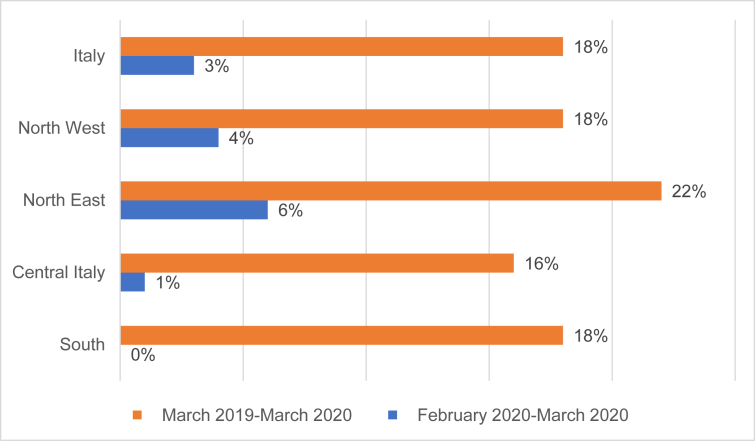
“[15] presented an overview of the main changes in food habits during the lockdown, analyzing purchases of different food products compared to 2019.”
BackgroundInfluentialCOVID-19 and sustainability in textile, apparel and fashion use: An assessment of trends
Filho, W. L., Dinis, M. A. P., Paço, A. M. F. D., Herédia-Colaço, V., Ávila, L. V., Dennis, K., Tyler, D., Neiva, S. D. S., & Liakh, O. (2022) · Textile Research Journal · doi:10.1177/00405175221114167 · Cited by 17
“In Italy, for example, it was estimated that in a population where approximately 60% had dinner in restaurants at least once a week, and 10% ate breakfast every day outside, this reality was altered during COVID-19, causing the population to increase purchases made in supermarkets.(8) According to Rodrigues et al.”
BackgroundGarola, G., Siragusa, C., Seghezzi, A., & Mangiaracina, R. (2023) · The International Journal of Logistics Management · doi:10.1108/ijlm-03-2022-0114 · Cited by 16
Understanding retail supply chain during COVID-19: a systematic review
Jum’a, L., Abushaikha, I., Towers, N. S., & Al-Masa'fah, W. (2023) · International Journal of Retail & Distribution Management · doi:10.1108/ijrdm-09-2022-0345 · Cited by 16
Being a Farmer in Austria during COVID-19—A Qualitative Study on Challenges and Opportunities
Meixner, O., Quehl, H. E., Pöchträger, S., & Haas, R. (2022) · Agronomy · doi:10.3390/agronomy12051240 · Cited by 16
Music, J., & Charlebois, S. (2022) · Cogent Social Sciences · doi:10.1080/23311886.2022.2072556 · Cited by 19
“As the pandemic is still ongoing, many articles contain preliminary observations on diverse aspects of the Canadian agriculture and food system, including food supply chains (Hobbs, 2020), and consumer food retail (Cavallo et al., 2020) and food service habits (Haas et al., 2020).”
BackgroundCOVID-19, social identity, and socially responsible food consumption between generations
Leyva-Hernández, S., Terán-Bustamante, A., & Martínez-Velasco, A. (2023) · Frontiers in Psychology · doi:10.3389/fpsyg.2023.1080097 · Cited by 12
“For this reason, electronic commerce has significantly increased (Cavallo et al., 2020), since people keep their purchases without compromising their health.”
BackgroundHealthy Lifestyle Motivators of Willingness to Consume Healthy Food Brands: An Integrative Model
García-Salirrosas, E. E., Escobar‐Farfán, M., Esponda-Pérez, J. A., Villar-Guevara, M., Rondon-Eusebio, R. F., Zavaleta, G. A. E., Urraca-Vergara, E. M., & Guerra-Velásquez, M. (2025) · Foods · doi:10.3390/foods14010125 · Cited by 15
“The demand for healthy food consumption increased considerably after COVID-19 [1].”
Household mobility in food purchasing during COVID-19 lockdown: Evidence from Torino, Italy
Braut, B., Migheli, M., & Truant, E. (2022) · Cities · doi:10.1016/j.cities.2021.103554 · Cited by 15
“In Italy, online food purchases tripled compared to the pre COVID-19 period (Cavallo et al., 2020; ISMEA, 2020), while in Spain, the increase was greater than 200% (Villa & Monzón, 2021).”
Inoue, Y., & Hashimoto, M. (2022) · Heliyon · doi:10.1016/j.heliyon.2022.e08867 · Cited by 14
“Notably, the coronavirus disease 2019 (COVID-19) pandemic forced people to stay at home, highlighting the signi fi cance and usefulness of EC platforms (Cavallo et al., 2020).”
BackgroundThe Impact of COVID-19 on Municipal Food Markets: Resilience or Innovative Attitude?
Fava, N., Laganà, V. R., & Nicolosi, A. (2022) · Journal of Open Innovation Technology Market and Complexity · doi:10.3390/joitmc8020087 · Cited by 15
Bahn, R. A., Fort, F., Saucède, F., & Abebe, G. K. (2024) · Journal of Retailing and Consumer Services · doi:10.1016/j.jretconser.2024.104064 · Cited by 13
A review of psychological resilience: paving the path for sustainable consumption
Azam, H., Muhamad, N., & Talib, M. S. A. (2024) · Cogent Business & Management · doi:10.1080/23311975.2024.2408436 · Cited by 19
“…psychological resilience will ultimately lead to wide-spread behavioural changes (Y. Deng et al., 2023); that can harvest sustainable consumption (cavallo et al., 2020). although it is clear that consumer psychological resilience-induced sustainable consumption will have a substantial impact,…”
Piochi, M., Buonocore, F., Spampani, F., & Torri, L. (2021) · Food Quality and Preference · doi:10.1016/j.foodqual.2021.104488 · Cited by 13
Agenda 2030 and COVID-19: A Young Consumer’s Perception of Sustainable Consumption
Renzi, M. F., Ungaro, V., Pietro, L. D., Mugion, R. G., & Pasca, M. G. (2022) · Sustainability · doi:10.3390/su142315627 · Cited by 13
Occurrence of perfluoroalkyl substances in canned tuna and their impact on food safety
Nobile, M., Chiesa, L. M., Villa, R. E., Danesi, L., Arioli, F., & Panseri, S. (2024) · Food Control · doi:10.1016/j.foodcont.2024.110301 · Cited by 11
Beyond Bottles: Exploring Consumer Perceptions and Preferences for Bag‐in‐Box Wine Packaging
Scozzafava, G., Dominici, A., Canuti, V., Casini, L., & Boncinelli, F. (2024) · Australian Journal of Grape and Wine Research · doi:10.1155/ajgw/9946341 · Cited by 10
Consumers under pandemic anxiety: Suppressors, intensifiers, and resilients
Mittal, B. (2022) · International Journal of Consumer Studies · doi:10.1111/ijcs.12851 · Cited by 12
Extending the Frontiers of Electronic Commerce Knowledge through Cybersecurity
Vuță, D. R., Nichifor, E., Țierean, O. M., Zamfirache, A., Chițu, I. B., Foriş, T., & Brătucu, G. (2022) · Electronics · doi:10.3390/electronics11142223 · Cited by 10
Wallnoefer, L. M., & Riefler, P. (2022) · Agronomy · doi:10.3390/agronomy12081940 · Cited by 10
Şahin, G. A., & Gül, F. H. (2022) · British Food Journal · doi:10.1108/bfj-01-2022-0092 · Cited by 10
Chinyanga, E., Britwum, K., Gustafson, C. R., & Bernard, J. C. (2024) · Appetite · doi:10.1016/j.appet.2024.107574 · Cited by 9
The effects of COVID-19 crisis on small family farms: Empirical evidence from Visegrad countries
Blažková, I., Svatošová, V., Chmelíková, G., Tamáš, V., Svobodová, E., Grega, L., Miškolci, S., Piecuch, J., Ujj, A., Hupková, D., et al. (2023) · Agricultural Economics (Zemědělská ekonomika) · doi:10.17221/217/2023-agricecon · Cited by 14
Grandi, S., MacDonald, S., & Tankibayeva, A. (2022) · GeoJournal of Tourism and Geosites · doi:10.30892/gtg.41229-863 · Cited by 9
“…demand for food supplies, and the possibility of local production and consumption circuits can make localities more resilient, the trade-off between rurality as a place for recreation for production sites can entail questions of sustainability (Cavallo et al., 2020; Mastronardi et al., 2020).”
BackgroundLi, M., Deng, R., & Bin, G. (2024) · Journal of the Knowledge Economy · doi:10.1007/s13132-024-02146-x · Cited by 7
“…by Hua et al. (2022) underscores the intricate interplay of psychological, socio-cultural, and economic factors in shaping consumer behavior, providing valuable insights that complement the observations of Cavallo et al. (2020) on the evolving consumption patterns during the lockdown period.”
Meta-synthesis of COVID-19 lessons: charting sustainable management of future pandemics
Bafarasat, A. Z. (2021) · International Journal of Urban Sciences · doi:10.1080/12265934.2021.1936136 · Cited by 7
Borsellino, V., Pecoraro, N., & Schimmenti, E. (2022) · International Journal of Dairy Technology · doi:10.1111/1471-0307.12933 · Cited by 7
Kettele, M., Lechner, G., Baumgartner, R. J., & Füllsack, M. (2024) · Journal of Simulation · doi:10.1080/17477778.2024.2399076 · Cited by 6
“Studies show effects of up to four weeks during the first lockdown (Cavallo et al., 2020; Perrin & Martin, 2021).”
Greek Semi-Hard and Hard Cheese Consumers’ Perception in the New Global Era
Skalkos, D. C., Bamicha, K., Kosma, I. S., & Samara, E. T. (2023) · Sustainability · doi:10.3390/su15075825 · Cited by 6
Tugnolo, A., Oliveira, H. M., Giovenzana, V., Fontes, N., Silva, S., Fernandes, C., Graça, A., Pampuri, A., Casson, A., Piteira, J., et al. (2025) · Computers and Electronics in Agriculture · doi:10.1016/j.compag.2024.109856 · Cited by 6
Sobika, K. A., & Raj, S. N. V. (2021) · International Conference on Computing and Communications Technologies (ICCCT) · doi:10.1109/iccct53315.2021.9711904 · Cited by 6
Fanelli, R. M. (2025) · Sustainability · doi:10.3390/su17051831 · Cited by 5
Amazonian natural products used as functional food and medicine
Santos, I. L., Amante, E. R., Rodrigues, A. M. D. C., & da Silva, L. H. M. (2025) · Food Chemistry · doi:10.1016/j.foodchem.2025.143656 · Cited by 5
Galluzzo, F. G., Cammilleri, G., Cicero, A., Pantano, L., Pulvirenti, A., Macaluso, A., Cicero, N., Calabrese, V., & Ferrantelli, V. (2021) · Food Quality and Safety · doi:10.1093/fqsafe/fyab031 · Cited by 5
Rombach, M., Dean, D., & Baird, T. (2021) · Horticulturae · doi:10.3390/horticulturae7120575 · Cited by 5
Ji, Y., Lee, W. S., & Moon, J. (2023) · International Journal of Environmental Research and Public Health · doi:10.3390/ijerph20032625 · Cited by 7
“The 2019 coronavirus disease (COVID-19) pandemic caused a substantial enhancement of consumer interest in food safety [18,19].”
BackgroundOnline Food Shopping: Determinants and Profile of Portuguese Buyers in the Pandemic Context
Gomes, S., Lopes, J. M., & Oliveira, J. (2022) · Innovar · doi:10.15446/innovar.v33n87.105507 · Cited by 5
Arif, I., Shourove, J. H., Sarker, T., Rahman, M., & Islam, G. M. R. (2024) · BMC Public Health · doi:10.1186/s12889-024-19982-w · Cited by 4
“Thus, individuals spent more time cooking at home and reported lower food waste [33].”
BackgroundStrengthening food supply resilience: Lean and Lean Six Sigma strategies for disruptions
Costa, L. B. M., Filho, M. G., Ganga, G. M. D., Mota, R. D. O., Negrão, L. L. L., & Tavares, T. M. (2024) · Supply Chain Forum an International Journal · doi:10.1080/16258312.2024.2426446 · Cited by 4
“This need for agility and adapt-ability extends to any significant disruption in the food supply chain (Cavallo, Sacchi, and Carfora 2020; H. B. Sharma et al. 2020).”
Resilience of Milk Supply Chains during and after the COVID-19 Crisis in Latvia
Pilvere, I., Upīte, I., Muška, A., Zdanovskis, K., Nipers, A., & Janmere, L. (2021) · Rural Sustainability Research · doi:10.2478/plua-2021-0007 · Cited by 4
Sestino, A., Giraldi, L., Cedrola, E., & Guido, G. (2022) · Studies in computational intelligence · doi:10.1007/978-3-031-14748-7_9 · Cited by 4
Investigating the Consumption Patterns of Japanese Seafood during the COVID-19 Pandemic
Aruga, K., & Wakamatsu, H. (2024) · Commodities · doi:10.3390/commodities3020012 · Cited by 4
Maceín, J. L. C., González-Azcárate, M., Hewitt, R. J., Hernández-Jiménez, V., & Bardají, I. (2024) · Heliyon · doi:10.1016/j.heliyon.2024.e40565 · Cited by 4
“For instance, public authorities like regional and local governments can contribute by playing an important role in reducing the discrepancy between consumers who already make use of SFSCs consumers and consumers who are interested in doing so but have not yet “ made the leap ” [62].”
Heutte, K., Daurès, F., Lucas, S., Girard, S., Alban, F., & Floch, P. L. (2023) · Aquatic Living Resources · doi:10.1051/alr/2023004 · Cited by 4
“…Denmark, Poland, Austria, United Kingdom, Germany, and Slovenia, the shopping frequency was reduced together with an increase of long shelf life product consumption as well as more processed products (Cavallo et al., 2020; Janssen et al., 2021; Martins et al., 2022; Skotnicka et al., 2021).”
BackgroundChanges in Production Efficiency During the COVID-19 Pandemic
Klimecka-Tatar, D., & Ulewicz, R. (2021) · Multidisciplinary Aspects of Production Engineering · doi:10.2478/mape-2021-0023 · Cited by 4
“…everyday life (fresh vegetables, meat, bread, dairy products), pharmaceuticals (Baryshnikova, Kiriliuk, and Klimecka-Tatar, 2020; Blenkinsop, 2020; Cavallo, Sacchi, and Carfora, 2020; Dziuba and Ulewicz, 2021; Klimecka-Tatar, Kiriliuk, and Baryshnikova, 2021; Nakat and Bou-Mitri, 2021; O'Hara and…”
Díaz‐Pichardo, R., Vota, V., & Tettamanzi, P. (2026) · British Food Journal · doi:10.1108/bfj-04-2025-0548 · Cited by 4
Catellani, P., & Carfora, V. (2023) · Springer eBooks · doi:10.1007/978-3-031-35070-2_2 · Cited by 3
Self-citationMol, S., Geyik, S. K., & Süren, Y. (2024) · AQUATIC RESEARCH · doi:10.3153/ar24003 · Cited by 3
da Rocha, T. C., Olegário, L. S., de Carvalho, L. M., Pereira, D. A., González‐Mohíno, A., Ventanas, S., Estévez, M., & Madruga, M. S. (2022) · International Journal of Food Science & Technology · doi:10.1111/ijfs.15892 · Cited by 3
Leyva-Hernández, S. N., Arango-Ramírez, P. M., Rosales, V. M. G., & Mendoza, Ó. G. (2022) · Estudios Sociales Revista de Alimentación Contemporánea y Desarrollo Regional · doi:10.24836/es.v32i60.1237 · Cited by 3
Post-lockdown changes in diet in Italy and the USA: Return to old habits or structural changes?
Scozzafava, G., Contini, C., Gerini, F., & Casini, L. (2022) · Agricultural and Food Economics · doi:10.1186/s40100-022-00234-7 · Cited by 3
Rapa, M., Giannetti, V., Mariani, M. B., Francesco, F. D., & Porpiglia, A. (2023) · Journal of theoretical and applied electronic commerce research · doi:10.3390/jtaer18040085 · Cited by 3
Klimecka-Tatar, D., Kiriliuk, O. M., & Baryshnikova, N. A. (2021) · System Safety Human - Technical Facility - Environment · doi:10.2478/czoto-2021-0010 · Cited by 3
Supply chains and COVID-19: impact on Jordan’s, countermeasures and post-COVID-19 era
Alkasasbeh, O. M. A., & Al-kasasbeh, S. M. (2022) · Journal of Social Sciences and Management Studies · doi:10.56556/jssms.v1i1.39 · Cited by 4
Consumers' Orientation towards E-Commerce during Disruptive Times: Entrepreneurship Implications
Grosu, R. M., Starosta, K., Pleșea, D., & Chița, S. D. (2024) · Central European Business Review · doi:10.18267/j.cebr.380 · Cited by 2
EU Wine Exporters Competing in Changing International Markets
Henke, R., & Carbone, A. (2025) · World · doi:10.3390/world6020077 · Cited by 2
Mandolesi, S., Saidi, A., Giudice, T. D., Naspetti, S., Zanoli, R., & Cavallo, C. (2025) · Sustainability · doi:10.3390/su17156912 · Cited by 2
Self-citationANTESEDEN PERILAKU KONSUMTIF DI MASA PANDEMI COVID-19
Fitriani, D., Setyono, H., & Solehatin, S. (2023) · Jurnal Fokus Manajemen Bisnis · doi:10.12928/fokus.v13i1.7686 · Cited by 2
Glogovețan, A.-I., Dabija, D., & Pocol, C. B. (2023) · Bulletin of University of Agricultural Sciences and Veterinary Medicine Cluj-Napoca Food Science and Technology · doi:10.15835/buasvmcn-fst:2023.0009 · Cited by 3
“So, a detailed and methodical approach was adopted to collect and analyse data – using this powerful tool (Cavallo et The data used in this study spanned a five-year period, from January 1, 2018, to March 15th, 2023, providing a comprehensive view of trends and changes in consumer interest over…”
MethodImpacts of the SARS-CoV-2 pandemic on the dietary practices of university students in Germany
Dreyer, J., Brandt, A. C., Lichtenstein, S., Sina, C., & Smollich, M. (2024) · Frontiers in Nutrition · doi:10.3389/fnut.2024.1302308 · Cited by 2
What does it take to build resilience against droughts in food value chains?
Monastyrnaya, E., Joerin, J., Six, J., & Krütli, P. (2024) · Ecology and Society · doi:10.5751/es-15071-290317 · Cited by 2
Fakhreddine, L. B., Sánchez, M., & Pindado, E. (2025) · Agribusiness · doi:10.1002/agr.22024 · Cited by 2
Food Delivery Platforms During the COVID-19 Pandemic
Amicarelli, V., Lagioia, G., Pamfilie, R., Grosu, R. M., & Bux, C. (2021) · Proceeding Papers · doi:10.24818/basiq/2021/07/020 · Cited by 2
FACTORS OF CONSUMER BEHAVIOR IN THE PURCHASE PROCESS OF PERUVIAN BODEGAS IN THE CONTEXT OF COVID-19
Palacios, P., Rosado, H., Tolentino, L., & Vicente-Ramos, W. (2022) · Verslas teorija ir praktika · doi:10.3846/btp.2022.16351 · Cited by 2
Guidani, B., Accorsi, R., Manzini, R., & Ronzoni, M. (2022) · Transportation research procedia · doi:10.1016/j.trpro.2022.12.034 · Cited by 2
Food Choice Motives Changes Caused by the Coronavirus Pandemic
Skalkos, D. C. (2022) · Modern Concepts & Developments in Agronomy · doi:10.31031/mcda.2022.11.000763 · Cited by 2
Emerging Trends in Retailing and Consumption Patterns
Arrigo, E., & Pellicelli, A. C. (2022) · Springer proceedings in business and economics · doi:10.1007/978-3-031-06581-1_20 · Cited by 2
Beyond a Health Crisis: What Has Changed in Food Consumption Behaviour? A DEMATEL Method Application
Paksoy, S., & Seçer, A. (2023) · Alanya Akademik Bakış · doi:10.29023/alanyaakademik.1129278 · Cited by 1
Forliano, C., Bernardi, P. D., & Panero, M. (2024) · Lecture notes in information systems and organisation · doi:10.1007/978-3-031-75586-6_3 · Cited by 1
Metadata
- Authors
- Cavallo, C., Sacchi, G., & Carfora, V.
- Affiliations
- University of Naples Federico II (IT)
- Free University of Bozen-Bolzano (IT)
- Università Cattolica del Sacro Cuore (IT)
- Corresponding author
- Sacchi, Giovanna
- Venue
- Heliyon
- Publisher
- Elsevier BV
- Published
- 2020-12
- Volume
- 6
- Issue
- 12
- Pages
- e05676
- ISSN
- 2405-8440 (ISSN-L)
- PMC
- PMC7722488
- OpenAlex
- W3113250690
- Cited by
- 133
- References
- 43
- Citations by year
- 2026: 7 · 2025: 15 · 2024: 23 · 2023: 26 · 2022: 36 · 2021: 26
- FWCI
- 18.71
- Type
- journal article
- Language
- en
- Open access
- gold
- doi.org
- Licence
- Locations
- Heliyon (publishedVersion, cc-by)
- PubMed Central (publishedVersion, cc-by)
- PubMed (publishedVersion)
- Institutional Research Information System University of Turin (University of Turin) (submittedVersion, cc-by)
- DOAJ (DOAJ: Directory of Open Access Journals) (submittedVersion, cc-by-sa)
- PubliCatt (Università Cattolica del Sacro Cuore) (submittedVersion, cc-by)
- Open Research (University of Surrey) (submittedVersion, other-oa)
- Funders
- Libera Università di Bolzano
- Topics
- Social Sciences › Economics, Econometrics and Finance › Economics and Econometrics › COVID-19 Pandemic Impacts
- Social Sciences › Economics, Econometrics and Finance › Economics and Econometrics › Economics of Agriculture and Food Markets
- Social Sciences › Business, Management and Accounting › Strategy and Management › Supply Chain Resilience and Risk Management
- Keywords
- COVID-19 pandemic, lockdown, food consumption behaviour, food supply chain, food retail, food security, home cooking, comfort food, home delivery, e-commerce, digital divide, small retailers, sustainable food systems, Italy
About these checks
Registry, retraction, Cites and statistics results are computed, not judged, with one exception: a printed reference that no index lists is read once by a model before it counts as a citation error. Claims are extracted by a model and kept only when their quote appears verbatim in the text; each cited source is then checked, with a model’s help, for whether it says what the claim relies on. Those verdicts can be wrong — read the claim’s quote and the cited source before relying on one.
Statistics and arithmetic are recomputed, not judged.
Confidence bands are shown only for fields calibrated on our annotated test set. None is calibrated yet, so no band is shown.
What counts as a claim ›How we measure confidence ›How we check this ›
Are you an author, or do you see a problem with this page? Request a review
