

The DOI matches its Crossref record; 68 of the 68 references it cites were found in a registry or an index.
Perceived satisfaction of university students with the use of chatbots as a tool for self-regulated learning
Open accessAbstract
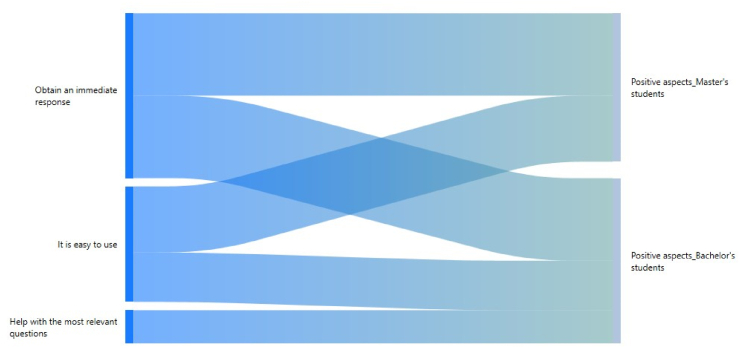
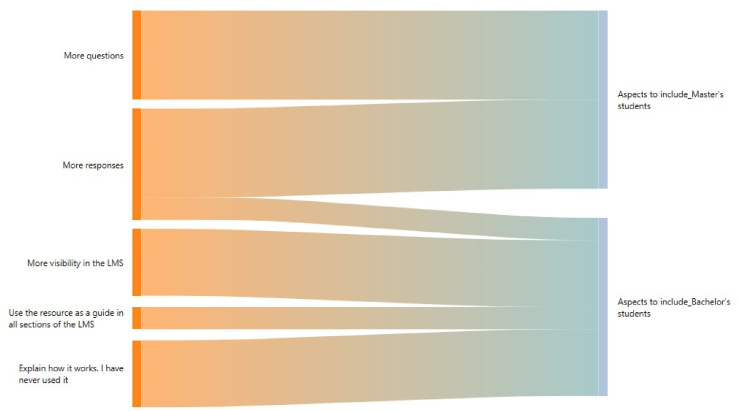
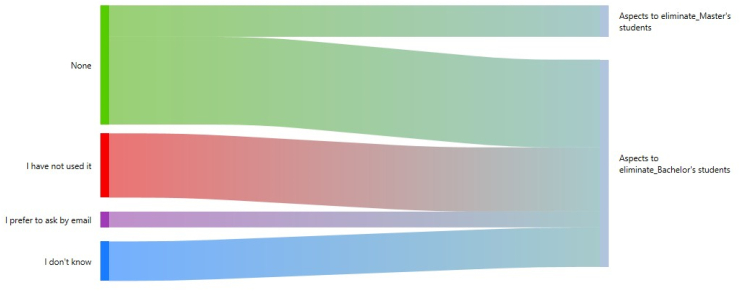
Chatbots are a promising resource for giving students feedback and helping them deploy metacognitive strategies in their learning processes. In this study we worked with a sample of 57 university students, 42 undergraduate and 15 Master's degree students in Health Sciences. A mixed research methodology was applied. The quantitative study analysed the influence of the variables educational level (undergraduate vs. master's degree) and level of prior knowledge on the frequency of chatbot use (low vs. average), learning outcomes, and satisfaction with the chatbot's usefulness. In addition, we examined whether the frequency of chatbot use depended on students' metacognitive strategies. The qualitative study analysed the students' suggestions for improvement to the chatbot and the type of questions it used. The results indicated that the level of degree being studied influenced the frequency of chatbot use and learning outcomes, with Master's students exhibiting higher levels of both, but levels of prior knowledge only influenced learning outcomes. Significant differences were also found in students' perceived satisfaction with the use of the chatbot, with Master's students scoring higher, but not with respect to the level of prior knowledge. No conclusive results were found regarding frequency of chatbot use and the levels of students' metacognitive strategies. Further studies are needed to guide this research based on the students' suggestions for improvement.
Overview
The claims and statistics of this paper haven’t been checked yet.
Run the check — free, no account needed. It reads the open-access text and checks the sources it cites.
Integrity signals
Registry
Cites
Statistics
Figures
Verification
Claims the paper makes
The claims and statistics of this paper haven’t been checked yet.
Run the check — free, no account needed. It reads the open-access text and checks the sources it cites.
Claims other papers make about this one
Each is checked against this paper’s own text: does it say what the citing paper says it does?
The source backs part of the claim, not all of it — or backs it for a different population, condition or comparison.
In the citing paper
“The study found that master’s students demonstrated higher learning gains and used the chatbot more frequently than bachelor’s students.”
From Digital affordances of AI chatbots in nursing education: a systematic review of learning gains and gaps in the evidence (2026) · cites this paper as [28]
Experimental — accuracy not yet measuredThe source backs part of the claim, not all of it — or backs it for a different population, condition or comparison.
In the citing paper
“Personalization (n = 4) by AI chatbots, through timely feedback, have shown a significant impact on students’ diagnostic skills, engagement, and frequency of chatbot use (19, 28, 44).”
From Digital affordances of AI chatbots in nursing education: a systematic review of learning gains and gaps in the evidence (2026) · cites this paper as [28]
Experimental — accuracy not yet measuredThe source backs part of the claim, not all of it — or backs it for a different population, condition or comparison.
In the citing paper
“Similarly, personalization (n = 3) by AI chatbots was found to significantly enhance nursing students’ prior knowledge and academic performance (25, 28).”
From Digital affordances of AI chatbots in nursing education: a systematic review of learning gains and gaps in the evidence (2026) · cites this paper as [28]
Experimental — accuracy not yet measuredThe cited source says what the claim attributes to it.
In the citing paper
“Sáiz-Manzanares et al. (28), employing a mixed-methods approach, found that students with moderate prior knowledge and those pursuing master’s degrees showed superior learning gains.”
From Digital affordances of AI chatbots in nursing education: a systematic review of learning gains and gaps in the evidence (2026) · cites this paper as [28]
The check wasn’t confident either way, so it gives no verdict — never disputed.
In the citing paper
“Additionally, with the rapid advancements in nursing research and the advent of new diseases and medications, nursing professionals are challenged to quickly adapt to evolving medical knowledge, make accurate decisions in real-case scenarios, and master complex nursing skills (1, 17, 26–28).”
From Digital affordances of AI chatbots in nursing education: a systematic review of learning gains and gaps in the evidence (2026) · cites this paper as [28]
Experimental — accuracy not yet measured
Self-check
Percentages, sums and reported differences re-computed from the paper’s own numbers.
The self-check needs the paper’s full text.
Citations
Cites
- STATISTICAL PACKAGE FOR SOCIAL SCIENCES
Reddy, M. V. (2014) · Apple Academic Press eBooks · doi:10.1201/b17560-26 · Cited by 12,121
I.—COMPUTING MACHINERY AND INTELLIGENCE
TURING, A. M. (1950) · Mind · doi:10.1093/mind/lix.236.433 · Cited by 10,290 · cited 1×
“The design of chatbots can be traced back to the work of Weizenbaum [51] which was developed from Turing’s [52] emulation and which was applied to the context of patient-therapist interaction [53].”
MethodDesigning Qualitative Research
Flick, U. (2008) · SAGE Publications Ltd eBooks · doi:10.4135/9781849208826 · Cited by 9,067
Cohen, J. (1992) · Current Directions in Psychological Science · doi:10.1111/1467-8721.ep10768783 · Cited by 5,870
ELIZA—a computer program for the study of natural language communication between man and machine
Weizenbaum, J. (1966) · Communications of the ACM · doi:10.1145/365153.365168 · Cited by 4,452
Handbook of Self-Regulation of Learning and Performance
Schunk, D. H. (2011) · Routledge eBooks · doi:10.4324/9780203839010 · Cited by 2,191
Metacognition and learning: conceptual and methodological considerations
Veenman, M. V. J., Van Hout-Wolters, B. H. A. M., & Afflerbach, P. (2006) · Metacognition and Learning · doi:10.1007/s11409-006-6893-0 · Cited by 2,023
Designing qualitative research
Fu, Y. (2011) · Organization Management Journal · doi:10.1057/omj.2011.23 · Cited by 1,140
Handbook of Research on Learning and Instruction
Mayer, R. E., & Alexander, P. A. (2011) · Routledge eBooks · doi:10.4324/9780203839089 · Cited by 969
Chatbots for learning: A review of educational chatbots for the Facebook Messenger
Smutny, P., & Schreiberova, P. (2020) · Computers & Education · doi:10.1016/j.compedu.2020.103862 · Cited by 770
Research works printed but not linked: 2
- Reoyo, 2017, Characteristics of teaching effectiveness from the perspectives of teachers and future secondary school teachers, Rev. Educ., 376, 62
- Gupta, 2019, vol. 213
Cited by
Sorted by citations
Items 101–111 of 111
From Digital Assistants to Cognitive Crutches
Irfan, M. (2026) · Advances in computational intelligence and robotics book series · doi:10.4018/979-8-3373-7097-2.ch006
Yousefi, M., Kareshki, H., & Abrishami, S. (2026) · Research Square · doi:10.21203/rs.3.rs-9879795/v1
Azhar, S., Mahmood, M. S., & Iftikhar, A. (2026) · doi:10.3390/proceedings2026142010
DeepSRL: A DeepSeek-R1 Based LLM for Generating Personalized Self-Regulated Learning Prompts
Mourabit, I. E., Andaloussi, S. J., Ouchetto, O., & Miyara, M. (2026) · Lecture notes in networks and systems · doi:10.1007/978-3-032-23844-3_18
Moryossef, I. G., & Emmanouil, C. (2026) · Discover Education · doi:10.1007/s44217-026-01970-4
Askeptbot: A Machine-Learning Chatbot Companion for Disseminating English Placement Test Information
Rashid, M. H. A., Mohamad, H. A., Rahman, A. L. A., Hassan, H. R., Akhir, N. M., Zolkapli, R. B. M., & Karolina, V. (2026) · International Journal of Research and Innovation in Social Science · doi:10.47772/ijriss.2026.100700577
Mentari, L. N., Nabarian, T., Santoso, S., & Sutrysno, D. (2026) · Jurnal Teknoinfo · doi:10.33365/teknoinfo.v20i1.1211
Inteligencia artificial, chat GPT y estudiantes hispanos: una revisión sistemática entre 2023-2025
Tartagia, Z., & Cevasco, J. (2026) · Ajayu Órgano de Difusión Científica del Departamento de Psicología UCBSP · doi:10.35319/ajayu.242384
Apeanti, W. O., & Barnor, E. N. (2026) · International Journal on Engineering Science and Technology · doi:10.46328/ijonest.8045
(2026) · Issues in Information Systems · doi:10.48009/2_iis_2026_151
Kızılay, F. E., & Çelik, M. (2026) · WMU Journal of Maritime Affairs · doi:10.1007/s13437-026-00440-w
Metadata
- Authors
- Sáiz-Manzanares, M. C., Marticorena-Sánchez, R., Martín-Antón, L. J., González Díez, I., & Almeida, L.
- Affiliations
- University of Minho (PT)
- ORCID
- Venue
- Heliyon
- Publisher
- Elsevier BV
- Published
- 2023-01
- Volume
- 9
- Issue
- 1
- Pages
- e12843
- ISSN
- 2405-8440 (ISSN-L)
- PMC
- PMC9871218
- OpenAlex
- W4318264071
- Cited by
- 96
- References
- 65
- Citations by year
- 2026: 13 · 2025: 30 · 2024: 29 · 2023: 24
- FWCI
- 22.53
- Type
- journal article
- Language
- en
- Open access
- gold
- doi.org
- Licence
- Locations
- Heliyon (publishedVersion, cc-by-nc-nd)
- PubMed Central (publishedVersion, cc-by-nc-nd)
- PubMed (publishedVersion)
- Repositorio Institucional de la Universidad de Burgos (University of Burgos) (submittedVersion, cc-by-nc-nd)
- DOAJ (DOAJ: Directory of Open Access Journals) (submittedVersion, cc-by-sa)
- Funders
- Gobierno de España Ministerio de Ciencia e Innovación (PID2020-117111RB-I00)
- Ministerio de Ciencia e Innovación
- Topics
- Social Sciences › Education › Artificial Intelligence in Education
- Physical Sciences › Computer Science › Artificial Intelligence › Intelligent Tutoring Systems and Adaptive Learning
- Social Sciences › Business, Management and Accounting › Marketing › AI in Service Interactions
- Keywords
- chatbots, student self-regulation, student satisfaction, metacognitive strategies, learning outcomes, prior knowledge, educational attainment, health sciences students
About these checks
Registry, retraction, Cites and statistics results are computed, not judged, with one exception: a printed reference that no index lists is read once by a model before it counts as a citation error. Claims are extracted by a model and kept only when their quote appears verbatim in the text; each cited source is then checked, with a model’s help, for whether it says what the claim relies on. Those verdicts can be wrong — read the claim’s quote and the cited source before relying on one.
Statistics and arithmetic are recomputed, not judged.
Confidence bands are shown only for fields calibrated on our annotated test set. None is calibrated yet, so no band is shown.
What counts as a claim ›How we measure confidence ›How we check this ›
Are you an author, or do you see a problem with this page? Request a review
