

The DOI matches its Crossref record; 68 of the 68 references it cites were found in a registry or an index.
Perceived satisfaction of university students with the use of chatbots as a tool for self-regulated learning
Open accessAbstract
Chatbots are a promising resource for giving students feedback and helping them deploy metacognitive strategies in their learning processes. In this study we worked with a sample of 57 university students, 42 undergraduate and 15 Master's degree students in Health Sciences. A mixed research methodology was applied. The quantitative study analysed the influence of the variables educational level (undergraduate vs. master's degree) and level of prior knowledge on the frequency of chatbot use (low vs. average), learning outcomes, and satisfaction with the chatbot's usefulness. In addition, we examined whether the frequency of chatbot use depended on students' metacognitive strategies. The qualitative study analysed the students' suggestions for improvement to the chatbot and the type of questions it used. The results indicated that the level of degree being studied influenced the frequency of chatbot use and learning outcomes, with Master's students exhibiting higher levels of both, but levels of prior knowledge only influenced learning outcomes. Significant differences were also found in students' perceived satisfaction with the use of the chatbot, with Master's students scoring higher, but not with respect to the level of prior knowledge. No conclusive results were found regarding frequency of chatbot use and the levels of students' metacognitive strategies. Further studies are needed to guide this research based on the students' suggestions for improvement.
Overview
The claims and statistics of this paper haven’t been checked yet.
Run the check — free, no account needed. It reads the open-access text and checks the sources it cites.
Integrity signals
Registry
Cites
Statistics
Figures
Verification
Claims the paper makes
The claims and statistics of this paper haven’t been checked yet.
Run the check — free, no account needed. It reads the open-access text and checks the sources it cites.
Claims other papers make about this one
Each is checked against this paper’s own text: does it say what the citing paper says it does?
The source backs part of the claim, not all of it — or backs it for a different population, condition or comparison.
In the citing paper
“The study found that master’s students demonstrated higher learning gains and used the chatbot more frequently than bachelor’s students.”
From Digital affordances of AI chatbots in nursing education: a systematic review of learning gains and gaps in the evidence (2026) · cites this paper as [28]
Experimental — accuracy not yet measuredThe source backs part of the claim, not all of it — or backs it for a different population, condition or comparison.
In the citing paper
“Personalization (n = 4) by AI chatbots, through timely feedback, have shown a significant impact on students’ diagnostic skills, engagement, and frequency of chatbot use (19, 28, 44).”
From Digital affordances of AI chatbots in nursing education: a systematic review of learning gains and gaps in the evidence (2026) · cites this paper as [28]
Experimental — accuracy not yet measuredThe source backs part of the claim, not all of it — or backs it for a different population, condition or comparison.
In the citing paper
“Similarly, personalization (n = 3) by AI chatbots was found to significantly enhance nursing students’ prior knowledge and academic performance (25, 28).”
From Digital affordances of AI chatbots in nursing education: a systematic review of learning gains and gaps in the evidence (2026) · cites this paper as [28]
Experimental — accuracy not yet measuredThe cited source says what the claim attributes to it.
In the citing paper
“Sáiz-Manzanares et al. (28), employing a mixed-methods approach, found that students with moderate prior knowledge and those pursuing master’s degrees showed superior learning gains.”
From Digital affordances of AI chatbots in nursing education: a systematic review of learning gains and gaps in the evidence (2026) · cites this paper as [28]
The check wasn’t confident either way, so it gives no verdict — never disputed.
In the citing paper
“Additionally, with the rapid advancements in nursing research and the advent of new diseases and medications, nursing professionals are challenged to quickly adapt to evolving medical knowledge, make accurate decisions in real-case scenarios, and master complex nursing skills (1, 17, 26–28).”
From Digital affordances of AI chatbots in nursing education: a systematic review of learning gains and gaps in the evidence (2026) · cites this paper as [28]
Experimental — accuracy not yet measured
Self-check
Percentages, sums and reported differences re-computed from the paper’s own numbers.
The self-check needs the paper’s full text.
Citations
Cites
- STATISTICAL PACKAGE FOR SOCIAL SCIENCES
Reddy, M. V. (2014) · Apple Academic Press eBooks · doi:10.1201/b17560-26 · Cited by 12,121
I.—COMPUTING MACHINERY AND INTELLIGENCE
TURING, A. M. (1950) · Mind · doi:10.1093/mind/lix.236.433 · Cited by 10,290 · cited 1×
“The design of chatbots can be traced back to the work of Weizenbaum [51] which was developed from Turing’s [52] emulation and which was applied to the context of patient-therapist interaction [53].”
MethodDesigning Qualitative Research
Flick, U. (2008) · SAGE Publications Ltd eBooks · doi:10.4135/9781849208826 · Cited by 9,067
Cohen, J. (1992) · Current Directions in Psychological Science · doi:10.1111/1467-8721.ep10768783 · Cited by 5,870
ELIZA—a computer program for the study of natural language communication between man and machine
Weizenbaum, J. (1966) · Communications of the ACM · doi:10.1145/365153.365168 · Cited by 4,452
Handbook of Self-Regulation of Learning and Performance
Schunk, D. H. (2011) · Routledge eBooks · doi:10.4324/9780203839010 · Cited by 2,191
Metacognition and learning: conceptual and methodological considerations
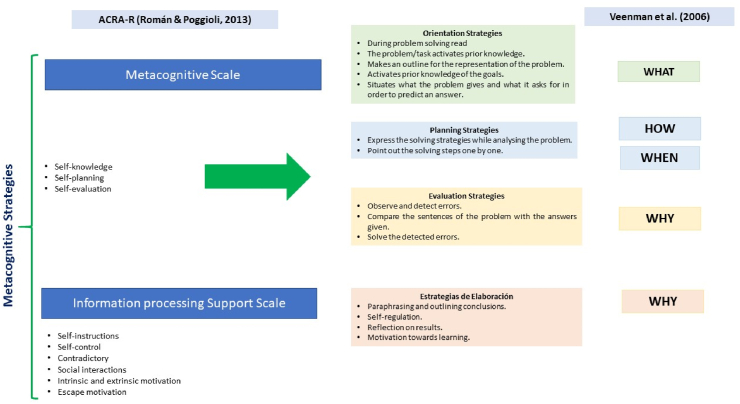
Veenman, M. V. J., Van Hout-Wolters, B. H. A. M., & Afflerbach, P. (2006) · Metacognition and Learning · doi:10.1007/s11409-006-6893-0 · Cited by 2,023
Designing qualitative research
Fu, Y. (2011) · Organization Management Journal · doi:10.1057/omj.2011.23 · Cited by 1,140
Handbook of Research on Learning and Instruction
Mayer, R. E., & Alexander, P. A. (2011) · Routledge eBooks · doi:10.4324/9780203839089 · Cited by 969
Chatbots for learning: A review of educational chatbots for the Facebook Messenger
Smutny, P., & Schreiberova, P. (2020) · Computers & Education · doi:10.1016/j.compedu.2020.103862 · Cited by 770
Research works printed but not linked: 2
- Reoyo, 2017, Characteristics of teaching effectiveness from the perspectives of teachers and future secondary school teachers, Rev. Educ., 376, 62
- Gupta, 2019, vol. 213
Cited by
Sorted by citations
Exploring Students’ Perceptions of ChatGPT: Thematic Analysis and Follow-Up Survey
Shoufan, A. (2023) · IEEE Access · doi:10.1109/access.2023.3268224 · Cited by 499
“They have been used to support learning [6], [7], increase students’ engagement [8], [9], assess students [10], [11], and perform various administrative functions [12], [13].”
BackgroundEffects of Generative Chatbots in Higher Education
Ilieva, G., Yankova, T., Klisarova-Belcheva, S., Dimitrov, A., Bratkov, M., & Angelov, D. (2023) · Information · doi:10.3390/info14090492 · Cited by 258
Pan, M., Lai, C., & Guo, K. (2024) · The Internet and Higher Education · doi:10.1016/j.iheduc.2024.100991 · Cited by 145
Exploring chatbot trust: Antecedents and behavioural outcomes
Alagarsamy, S., & Mehrolia, S. (2023) · Heliyon · doi:10.1016/j.heliyon.2023.e16074 · Cited by 142
Debets, T., Banihashem, S. K., Brinke, D. J.-T., Vos, T. E. J., Wenniger, G. M. D. B., & Camp, G. (2025) · Computers & Education · doi:10.1016/j.compedu.2025.105323 · Cited by 124
Pergantis, P., Bamicha, V., Skianis, C., & Drigas, A. S. (2025) · Brain Sciences · doi:10.3390/brainsci15010047 · Cited by 122
Students’ Experiences of Using ChatGPT in an Undergraduate Programming Course
Haindl, P., & Weinberger, G. (2024) · IEEE Access · doi:10.1109/access.2024.3380909 · Cited by 108
Mejeh, M., & Rehm, M. (2024) · Educational Technology Research and Development · doi:10.1007/s11423-024-10345-1 · Cited by 104
Adams, D., Chuah, K.-M., Devadason, E., & Azzis, M. S. A. (2023) · Education and Information Technologies · doi:10.1007/s10639-023-12427-8 · Cited by 101
Chauncey, S. A., & McKenna, H. P. (2023) · Computers and Education: Artificial Intelligence · doi:10.1016/j.caeai.2023.100182 · Cited by 91
Banihashem, S. K., Bond, M., Bergdahl, N., Khosravi, H., & Noroozi, O. (2025) · International Journal of Educational Technology in Higher Education · doi:10.1186/s41239-025-00548-8 · Cited by 82
Ba, S., Yang, L., Yan, Z., Looi, C. K., & Gašević, D. (2025) · Computers and Education Open · doi:10.1016/j.caeo.2025.100284 · Cited by 91
The effect of chatbots on learning: a meta-analysis of empirical research
Alemdağ, E. (2023) · Journal of Research on Technology in Education · doi:10.1080/15391523.2023.2255698 · Cited by 87
Liu, X., Guo, B., He, W., & Hu, X. (2025) · Journal of Educational Computing Research · doi:10.1177/07356331251329185 · Cited by 88
Here's to the future: Conversational agents in higher education- a scoping review
Pereira, D. S. M., Falcão, F., Costa, L., Lunn, B. S., Pêgo, J. M., & Costa, P. (2023) · International Journal of Educational Research · doi:10.1016/j.ijer.2023.102233 · Cited by 82
Lin, M. P.-C., & Chang, D. (2023) · Computers and Education: Artificial Intelligence · doi:10.1016/j.caeai.2023.100167 · Cited by 69
Xia, Q., Liu, Q., Tlili, A., & Chiu, T. K. F. (2025) · Computers & Education · doi:10.1016/j.compedu.2025.105465 · Cited by 77
A Comprehensive Systematic Review of AI-Driven Approaches to Self-Directed Learning
Younas, M., Abdel Salam El-Dakhs, D., & Jiang, Y. (2025) · IEEE Access · doi:10.1109/access.2025.3546319 · Cited by 63
Can Students without Prior Knowledge Use ChatGPT to Answer Test Questions? An Empirical Study
Shoufan, A. (2023) · ACM Transactions on Computing Education · doi:10.1145/3628162 · Cited by 59
Ngo, T. T. A., Tran, T. T., An, G. K., & Nguyen, P. T. (2024) · IEEE Transactions on Learning Technologies · doi:10.1109/tlt.2024.3383773 · Cited by 56
Exploring factors influencing educators’ adoption of ChatGPT: a mixed method approach
Hidayat-ur-Rehman, I., & Ibrahim, Y. (2023) · Interactive Technology and Smart Education · doi:10.1108/itse-07-2023-0127 · Cited by 59
Ramandanis, D., & Xinogalos, S. (2023) · Multimodal Technologies and Interaction · doi:10.3390/mti7110103 · Cited by 60
A longitudinal study of interplay between student engagement and self-regulation
Heikkinen, S., Saqr, M., Malmberg, J., & Tedre, M. (2025) · International Journal of Educational Technology in Higher Education · doi:10.1186/s41239-025-00523-3 · Cited by 55
Exploring the Potential of ChatGPT as a Substitute Teacher: A Case Study
Ghazali, S. A. (2024) · International Journal of Information and Education Technology · doi:10.18178/ijiet.2024.14.2.2048 · Cited by 41
Sallam, M., Al‐Salahat, K., Eid, H., Egger, J., & Puladi, B. (2024) · Advances in Medical Education and Practice · doi:10.2147/amep.s479801 · Cited by 39
Designing a Chatbot for Contemporary Education: A Systematic Literature Review
Ramandanis, D., & Xinogalos, S. (2023) · Information · doi:10.3390/info14090503 · Cited by 44
Kong, S. C., & Lin, T. J. (2023) · Heliyon · doi:10.1016/j.heliyon.2023.e22115 · Cited by 32
Chamorro-Atalaya, O., Olivares-Zegarra, S., Chunga, L. S., Carranza, V. R. G., Vargas-Díaz, A., Huarcaya-Godoy, M., Rovegno, J. R. R., Suarez-Bazalar, R., García, J. L. P., & Cruz-Telada, Y. (2023) · International Journal of Learning Teaching and Educational Research · doi:10.26803/ijlter.22.7.15 · Cited by 31
Chatbots in higher education: a systematic review
Lambebo, E. A., & Chen, H. (2024) · Interactive Learning Environments · doi:10.1080/10494820.2024.2436931 · Cited by 29
Critical minds: enhancing education with ChatGPT
Costa, A. R., Lima, N., Viegas, C., & Caldeira, A. (2024) · Cogent Education · doi:10.1080/2331186x.2024.2415286 · Cited by 28
Optimizing Student Support. A Review of the Use of AI Chatbots in Higher Education
Segovia-García, N. (2024) · European Public & Social Innovation Review · doi:10.31637/epsir-2024-324 · Cited by 34
Mzwri, K., & Turcsányi-Szabó, M. (2025) · Journal of Computers in Education · doi:10.1007/s40692-025-00367-w · Cited by 27
Arpacı, İ., & Kuşci, İ. (2025) · Technology Knowledge and Learning · doi:10.1007/s10758-025-09817-x · Cited by 23
Investigating AI Chatbots’ Role in Online Learning and Digital Agency Development
Engeness, I., Nohr, M., & Fossland, T. (2025) · Education Sciences · doi:10.3390/educsci15060674 · Cited by 22
Exploring the Potential of Generative AI in English Language Teaching
Ironsi, C. S. (2023) · Advances in higher education and professional development book series · doi:10.4018/979-8-3693-0487-7.ch007 · Cited by 24
Verma, S. R., Kashive, N., & Gupta, A. K. (2025) · Benchmarking An International Journal · doi:10.1108/bij-07-2024-0564 · Cited by 21
Analysing Conversation Pathways with a Chatbot Tutor to Enhance Self-Regulation in Higher Education
Martins, L., Fernández-Ferrer, M., & Puertas, E. (2024) · Education Sciences · doi:10.3390/educsci14060590 · Cited by 21
Uso de ChatGPT por estudiantes universitarios: un análisis relacional
Vera, V. D. G. (2024) · Formación universitaria · doi:10.4067/s0718-50062024000400129 · Cited by 25
Sharab, L., Butul, B., & Guha, U. (2024) · The Saudi Dental Journal · doi:10.1016/j.sdentj.2024.11.004 · Cited by 21
Student satisfaction with artificial intelligence chatbots in Ethiopian academia
Subaveerapandiyan, A., Radhakrishnan, S., Tiwary, N., & Guangul, S. M. (2024) · IFLA Journal · doi:10.1177/03400352241252974 · Cited by 18
Chatbots in Education: A Systematic Literature Review
Bekkar, H.-A., & Chtouki, Y. (2024) · International Conference on Smart Computing and Communications (ICSCC) · doi:10.1109/icscc62041.2024.10690334 · Cited by 19
Reyes-Moreno, E. R., Londoño-Gallego, J. A., Andrade-Martelo, I. C., Villar-Vega, H. F., & Maldonado, J. J. C. (2023) · Aibi revista de investigación administración e ingeniería · doi:10.15649/2346030x.3245 · Cited by 17
Alharbi, N., Din, F. U., Paúl, D., & Sadgrove, E. (2025) · Journal of Open Innovation Technology Market and Complexity · doi:10.1016/j.joitmc.2025.100590 · Cited by 17
Yu, Y., Wei, W., & Chen, Z. (2025) · The Interpreter and Translator Trainer · doi:10.1080/1750399x.2025.2533069 · Cited by 15
Kathole, A. B., Patil, S. N., Jadhav, D. B., Pathak, H. V., & Mirge, A. S. (2025) · MethodsX · doi:10.1016/j.mex.2025.103542 · Cited by 14
Bashraheel, M., & Ghinea, G. (2026) · Computer Science Review · doi:10.1016/j.cosrev.2026.100929 · Cited by 14
Chatbot de IA para prevenir el abandono de la educación superior: una revisión de la literatura
Segovia-García, N., & García, L. S. (2024) · Education in the Knowledge Society (EKS) · doi:10.14201/eks.31416 · Cited by 13
Sallam, M., Al‐Salahat, K., Eid, H., Egger, J., & Puladi, B. (2024) · medRxiv · doi:10.1101/2024.01.08.24300995 · Cited by 14
ChatGPT Review: A Sophisticated Chatbot Models in Medical & Health-related Teaching and Learning
Razak, N. I. A., Yusoff, M. F. M., & Rahmat, R. W. O. K. (2023) · Malaysian Journal of Medicine and Health Sciences · doi:10.47836/mjmhs.19.s12.12 · Cited by 13
Ajlouni, A. O., Abu‐Shawish, R. K., Silim, D. M., & Ibrahim, A. H. (2024) · International Journal of Engineering Pedagogy (iJEP) · doi:10.3991/ijep.v14i8.50339 · Cited by 9
Enhancing Collaborative Learning Practices via Chatbots: Insights from an EFL context
Kılıçkaya, F., & Kic-Drgas, J. (2025) · SAGE Open · doi:10.1177/21582440251369189 · Cited by 9
Wu, S., & Luo, M. (2025) · IEEE Access · doi:10.1109/access.2025.3530413 · Cited by 9
UBUMonitor: Desktop application for visual e-learning student clustering with Moodle
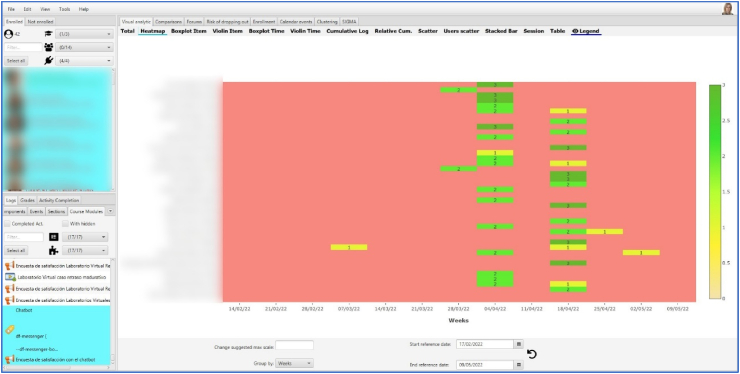
Sánchez, R. M., Nozal, C. L., Serrano-Mamolar, A., & Olivares‐Gil, A. (2024) · SoftwareX · doi:10.1016/j.softx.2024.101727 · Cited by 9
Luo, W., & Tang, T. (2025) · European Journal of Education · doi:10.1111/ejed.70377 · Cited by 8
Sagita, M., Sagita, E. S., & Syafari, N. (2025) · Journal of Pedagogy and Education Science · doi:10.56741/iistr.jpes.001082 · Cited by 9
Ganapathy, A., & Kaushal, P. (2025) · Medical Science Educator · doi:10.1007/s40670-025-02303-0 · Cited by 7
Student’s Perception of Chat GPT
Singh, P., Phutela, N., Grover, P., Sinha, D., & Sinha, S. (2023) · International Conference on Electrical, Communication, and Computer Engineering (ICECCE) · doi:10.1109/icecce61019.2023.10442033 · Cited by 8
AI Chatbots for Educators: Transforming Online Learning in Higher Education
Engeness, I., Nohr, M., & Fossland, T. (2025) · Lecture notes in computer science · doi:10.1007/978-3-032-00056-9_18 · Cited by 6
Exploring AI Chatbot Development for Gen-Z: A Study on First-Time and Experienced Voters in Pemilu
Tjahyana, L. J. (2024) · Jurnal Ilmu Komunikasi dan Bisnis · doi:10.36914/1q9cb862 · Cited by 6
Kaplan, O. (2024) · Adıyaman Üniversitesi Eğitim Bilimleri Dergisi · doi:10.17984/adyuebd.1463794 · Cited by 6
The Inception of Ideas: How Students Use ChatGPT for Academic Writing
Dewi, F. (2024) · Jurnal Sosioteknologi · doi:10.5614/sostek.itbj.2024.23.2.10 · Cited by 5
Gen AI Adoption Among Tech Savvy: Examining Moderated Mediated Model of Knowledge Sharing
Zamrudi, Z., Wicaksono, T., Mardiana, M., Khuzaini, K., & Lihu, D. C. K. (2025) · Manajemen dan Bisnis · doi:10.24123/mabis.v24i1.862 · Cited by 5
Nayyar, A., & Maqsood, A. (2026) · Qlantic Journal of Social Sciences and Humanities · doi:10.55737/qjssh.vii-i.26463 · Cited by 4
الخولی, س. س. ع. م. (2024) · Education and Information Technologies · doi:10.1007/s10639-024-12810-z · Cited by 4
Cheng, S.-F., Cheng, C.-W., Hung, C.-Y., & Chang, P.-H. (2024) · Social Work Education · doi:10.1080/02615479.2024.2310586 · Cited by 3
The use of ChatGPT in the study of economics: a SWOT analysis
Pittner, D., Romih, D., & Polančič, G. (2023) · International Scientific Conference on Economics, Management and Information Technologies (ICEMIT) · doi:10.46793/icemit23.157p · Cited by 3
Goal-setting and problem-solving in the tech-enhanced classroom a teaching and learning reboot
Marlina, R. (2023) · Interactive Learning Environments · doi:10.1080/10494820.2023.2211629 · Cited by 3
Wei, S., Wei, W., & Zou, G. (2026) · Frontiers in Medicine · doi:10.3389/fmed.2026.1832598 · Cited by 2
“Similarly, personalization ( n = 3) by AI chatbots was found to significantly enhance nursing students’ prior knowledge and academic performance (25, 28).”
InfluentialKumar, D. A., Sharif, S. M., & Aravind, T. (2024) · Global Conference on Communications and Information Technologies (GCCIT) · doi:10.1109/gccit63234.2024.10862776 · Cited by 2
Enhancing Self-regulated Learning Through an Emotional Chatbot: A Conceptual Framework
Mourabit, I. E., Andaloussi, S. J., Ouchetto, O., & Miyara, M. (2025) · Lecture notes in networks and systems · doi:10.1007/978-3-031-88653-9_50 · Cited by 2
An Analysis of Factors Influencing Chatbots on College Students’ Programming Self-learning Ability
Ran, X., Li, Z., & Yang, Y. (2025) · SAGE Open · doi:10.1177/21582440251375649 · Cited by 2
Marketing digital y posicionamiento en un centro de estudios de Lima-Perú
Marcos, U. N. M. D. S., SALAS, Y. L. B., Vega-Gonzales, E. O., & Marcos, U. N. M. D. S. (2025) · ESPACIOS · doi:10.48082/espacios-a25v46n05p30 · Cited by 2
Arteaga, I. A. P. (2026) · Postdigital Science and Education · doi:10.1007/s42438-025-00618-0 · Cited by 2
Integrating Chatbots into E-Learning Platforms: A Systematic Review
Sevillano-Vega, V., Chavez-Perez, J., Torres-Ceclén, C., & Iparraguirre-Villanueva, O. (2025) · International Journal of Advanced Computer Science and Applications · doi:10.14569/ijacsa.2025.0160826 · Cited by 2
Kusumawaty, I., Yunike, Y., Fadly, F., & Kurniawan, T. B. (2024) · Journal of Advanced Research in Applied Sciences and Engineering Technology · doi:10.37934/araset.56.1.113 · Cited by 2
Creating and Implementing a Custom Chatbot in Engineering Education
Abdulla, S., Hamidi, Y. A., & Khraisheh, M. K. (2024) · ASEE Annual Conference & Exposition · doi:10.18260/1-2--42801 · Cited by 2
A Study of Strategies for Improving Chinese Postgraduate Students Satisfaction
Liu, J., Zhang, G., & Chen, X. (2023) · doi:10.11648/j.ijecs.20230806.17 · Cited by 1
Embedding AI in Higher Education: A Call for a Service Design Approach
Foster, C. (2023) · Advanced sciences and technologies for security applications · doi:10.1007/978-3-031-33627-0_3 · Cited by 1
الهزاني, ن. ب. ن. ب. ع. (2024) · Journal of Information Studies & Technology (JIS&T) · doi:10.5339/jist.2024.2 · Cited by 1
EduPort: An Intelligent Learning System Based on Deep Learning - A Preliminary Evaluation
Cuneo, A., D’Urso, S., Sciarrone, F., & Temperini, M. (2024) · Lecture notes in computer science · doi:10.1007/978-981-97-4243-1_7 · Cited by 1
Nair, U. N., & Azath, H. (2025) · Journal of Experimental & Theoretical Artificial Intelligence · doi:10.1080/0952813x.2025.2511091 · Cited by 1
The Chatbot Effect in Supporting Blended Learning on Students' Academic Achievement
Yulianti, P., Hermansyah, H., & Setyaningrum, V. (2025) · SITTAH Journal of Primary Education · doi:10.30762/sittah.v6i2.6804 · Cited by 1
Capítulo 3. Desarrollo de un chatbot con dialogflow para una asignatura de psicología en línea.
Cano, J. M. M., Santiago, E. G., Espinosa, M. C., & Figueroa, R. D. M. (2024) · doi:10.46990/iquatro.2024.07.5.3 · Cited by 1
Yrkesfaglærerstudenter i pedagogisk praksis: et vellykket samhandlingskonsept?
Schøn, E., & Småland, E. G. (2024) · doi:10.23865/cdf.227.ch31 · Cited by 1
Sallam, M., Al‐Salahat, K., Eid, H., Egger, J., & Puladi, B. (2024) · Research Square · doi:10.21203/rs.3.rs-3880412/v1 · Cited by 1
Metacognitive Reflection in the Era of Generative AIPreprint
Uittenhove, K. L., Ellis, A. J., Mumenthaler, F., Gatzka, I., & Jermann, P. (2025) · Research Square · doi:10.21203/rs.3.rs-6973046/v1 · Cited by 1
Разработка чат-бота для отслеживания расписания учебных занятий в университете
Сазанов, В. А., Sazanov, V. A., Абрамов, М. В., Abramov, M. V., & Khlobystova, A. O. (2023) · Международный журнал Программные продукты и системы · doi:10.15827/0236-235x.143.466-473
Predicting Academic Achievement for Students Using Machine Learning Technique
Sharma, S., & Rajput, V. S. (2023) · International Journal for Research in Applied Science and Engineering Technology · doi:10.22214/ijraset.2023.55984
Xifra, J., mohamed, R., & Amar, H. M. (2024) · SSRN Electronic Journal · doi:10.2139/ssrn.4836497
Samhandling og tre pressdimensjoner (PDIM-Y, -I og -T)
Torgersen, G.-E., & Sæverot, H. (2024) · doi:10.23865/cdf.227.ch1
EduBot: An AI-Integrated Chatbot for Educational Institution
Villasor, C. L. R., Rosquites, L. J. C., Poquiz, N. F. F., Castro, B.-J. R., Olalia, R. L., & Carse, M. G. F. (2025) · International Journal of Computer Applications · doi:10.5120/ijca2025925266
Wen, J. (2025) · STiLE - Scholarship of Teaching in Language Education · doi:10.59936/stile.v3i1.192
Maldonado-López, B., Suárez-Redondo, E., Sánchez, R. A., & Almeida, P. (2025) · SSRN Electronic Journal · doi:10.2139/ssrn.5473475
Gomathy, C., Sujatha, S., Indrani, G., Ambika, T., & Kanimozhi, R. S. (2025) · Studies in systems, decision and control · doi:10.1007/978-3-031-96530-2_16
USO DA INTELIGÊNCIA ARTIFICIAL PELOS DOCENTES NO ÂMBITO ACADÊMICO DO CURSO DE ENGENHARIA DE PRODUÇÃO
da Costa, M. V. D. S., MENDES, M. M. X. D. L. M., LOPES, M. M. F., Vidal, P. D. C. J., & Gonçalo, T. E. E. (2025) · Anais ... Encontro Nacional de Engenharia de Produção/Anais do Encontro Nacional de Engenharia de Produção · doi:10.14488/enegep2025_tn_st_433_2129_50898
Chatbots as Support Tools in Educational Management and Decisions. A Systematic Review
Vera-Fernández, A. F., & Sánchez, N. (2025) · LACCEI International Multi-Conference for Engineering, Education and Technology (LACCEI) · doi:10.18687/laccei2025.1.1.978
Isaias, P. T., Hoque, T. T., & Miranda, P. (2025) · Cognition and exploratory learning in the digital age · doi:10.1007/978-3-032-05817-1_6
Suhartono, J., Karmawan, I. G. M., & Wiryawan, D. (2025) · IEEE International Conference on Communication, Networks and Satellite (COMNETSAT) · doi:10.1109/comnetsat68601.2025.11325025
Suazo-Galdamés, I. C., & Chaple-Gil, A. M. (2026) · Lecture notes in networks and systems · doi:10.1007/978-3-032-09077-5_24
Metadata
- Authors
- Sáiz-Manzanares, M. C., Marticorena-Sánchez, R., Martín-Antón, L. J., González Díez, I., & Almeida, L.
- Affiliations
- University of Minho (PT)
- ORCID
- Venue
- Heliyon
- Publisher
- Elsevier BV
- Published
- 2023-01
- Volume
- 9
- Issue
- 1
- Pages
- e12843
- ISSN
- 2405-8440 (ISSN-L)
- PMC
- PMC9871218
- OpenAlex
- W4318264071
- Cited by
- 96
- References
- 65
- Citations by year
- 2026: 13 · 2025: 30 · 2024: 29 · 2023: 24
- FWCI
- 22.53
- Type
- journal article
- Language
- en
- Open access
- gold
- doi.org
- Licence
- Locations
- Heliyon (publishedVersion, cc-by-nc-nd)
- PubMed Central (publishedVersion, cc-by-nc-nd)
- PubMed (publishedVersion)
- Repositorio Institucional de la Universidad de Burgos (University of Burgos) (submittedVersion, cc-by-nc-nd)
- DOAJ (DOAJ: Directory of Open Access Journals) (submittedVersion, cc-by-sa)
- Funders
- Gobierno de España Ministerio de Ciencia e Innovación (PID2020-117111RB-I00)
- Ministerio de Ciencia e Innovación
- Topics
- Social Sciences › Education › Artificial Intelligence in Education
- Physical Sciences › Computer Science › Artificial Intelligence › Intelligent Tutoring Systems and Adaptive Learning
- Social Sciences › Business, Management and Accounting › Marketing › AI in Service Interactions
- Keywords
- chatbots, student self-regulation, student satisfaction, metacognitive strategies, learning outcomes, prior knowledge, educational attainment, health sciences students
About these checks
Registry, retraction, Cites and statistics results are computed, not judged, with one exception: a printed reference that no index lists is read once by a model before it counts as a citation error. Claims are extracted by a model and kept only when their quote appears verbatim in the text; each cited source is then checked, with a model’s help, for whether it says what the claim relies on. Those verdicts can be wrong — read the claim’s quote and the cited source before relying on one.
Statistics and arithmetic are recomputed, not judged.
Confidence bands are shown only for fields calibrated on our annotated test set. None is calibrated yet, so no band is shown.
What counts as a claim ›How we measure confidence ›How we check this ›
Are you an author, or do you see a problem with this page? Request a review
