

The DOI matches its Crossref record; 22 of the 24 references it cites were found in a registry or an index, and 1 are not checked yet.
Budding uninhibited by benzimidazoles 1 promotes cell proliferation, invasion, and epithelial-mesenchymal transition via the Wnt/β-catenin signaling in glioblastoma
Open accessAbstract
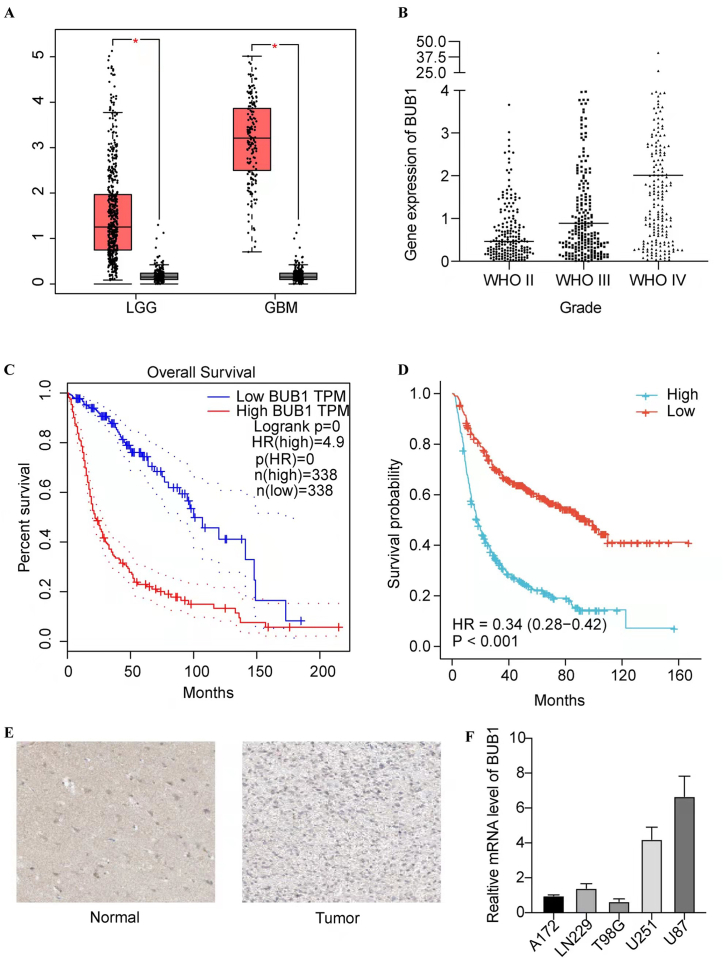
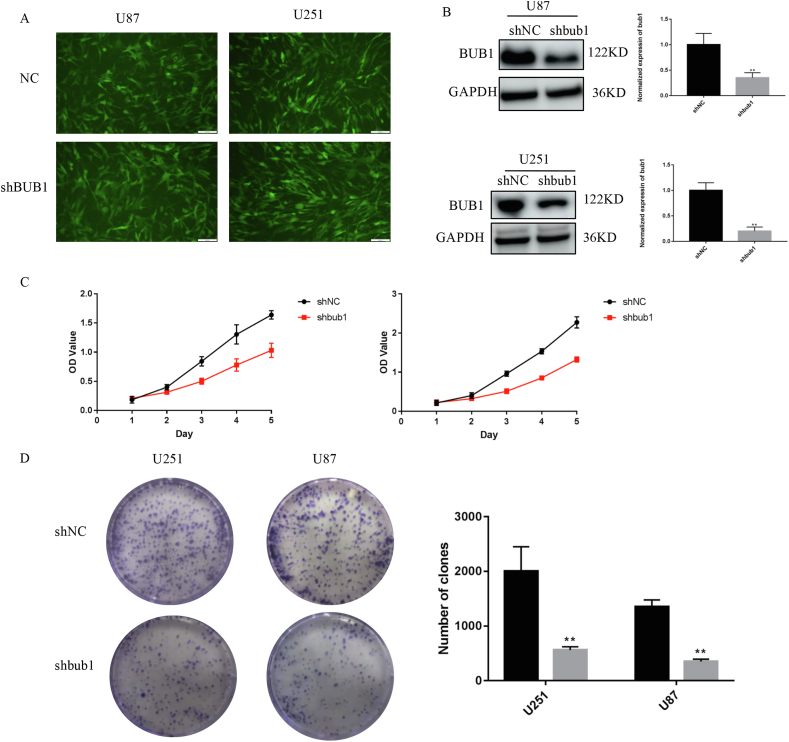
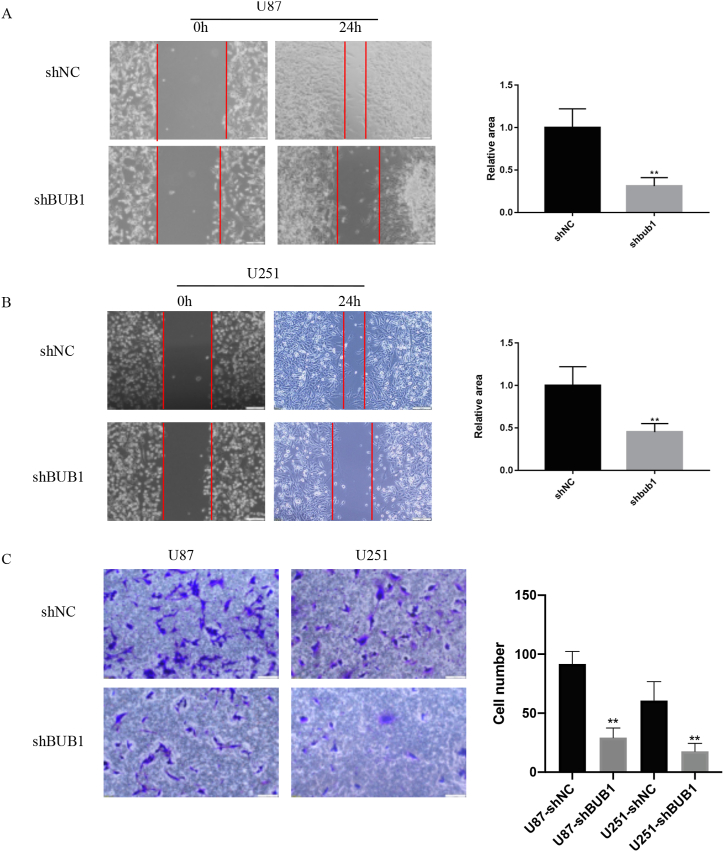
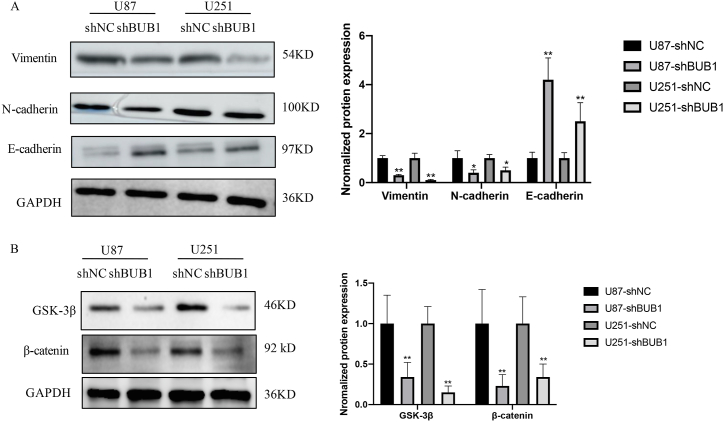
The pathogenesis and progression of GBM (glioblastoma), as one of the most frequently occurring malignancies of the central nervous system, are regulated by several genes. BUB1 (budding uninhibited by benzimidazoles 1) is a mitotic checkpoint that plays an important role in chromosome segregation as well as in various tumors. However, its role in glioma is unknown. The current study discovered prominently elevated BUB1 in glioma and a significant relationship between BUB1 expression, a high World Health Organization grade, and a poor prognosis in glioma patients. Moreover, BUB1 triggered EMT (epithelial-mesenchymal transition) apart from promoting glioma cell proliferation, migration, and infiltration. Besides, BUB1 promoted EMT by activating the Wnt/β-catenin axis. As implied by our study, BUB1 probably has the potential as a target for GBM management.
Overview
The claims and statistics of this paper haven’t been checked yet.
Run the check — free, no account needed. It reads the open-access text and checks the sources it cites.
Integrity signals
Registry
Cites
Statistics
Figures
Verification
Claims the paper makes
The claims and statistics of this paper haven’t been checked yet.
Run the check — free, no account needed. It reads the open-access text and checks the sources it cites.
Claims other papers make about this one
Each is checked against this paper’s own text: does it say what the citing paper says it does?
The source backs part of the claim, not all of it — or backs it for a different population, condition or comparison.
In the citing paper
“in the TGF-β-induced dysplastic oral keratinocyte (DOK) cell line, which models EMT, MBZ was shown to disrupt the cadherin equilibrium”
From Drug repurposing for cancer therapy (2024) · cites this paper as [162]
Experimental — accuracy not yet measuredThe check wasn’t confident either way, so it gives no verdict — never disputed.
In the citing paper
“In oral squamous cell carcinoma, MBZ was found to downregulate specific proteins and enzymes, including FAK, Rho-A, and Rac1 GTPase.”
From Drug repurposing for cancer therapy (2024) · cites this paper as [162]
Experimental — accuracy not yet measured
Self-check
Percentages, sums and reported differences re-computed from the paper’s own numbers.
The self-check needs the paper’s full text.
Citations
Cites
1 retracted
Colapietro, A., Yang, P., Rossetti, A., Mancini, A., Vitale, F., Martellucci, S., Conway, T. L., Chakraborty, S., Marampon, F., Mattei, V., et al. (2020) · Frontiers in Pharmacology · doi:10.3389/fphar.2020.552428 · Cited by 29
RetractedZhan, T., Rindtorff, N., & Boutros, M. (2017) · Oncogene · doi:10.1038/onc.2016.304 · Cited by 2,626
Targeting the Wnt/β-catenin signaling pathway in cancer
Zhang, Y., & Wang, X. (2020) · Journal of Hematology & Oncology · doi:10.1186/s13045-020-00990-3 · Cited by 1,431
Targeting EMT in cancer: opportunities for pharmacological intervention
Davis, F. M., Stewart, T. A., Thompson, E. W., & Monteith, G. R. (2014) · Trends in Pharmacological Sciences · doi:10.1016/j.tips.2014.06.006 · Cited by 369
BUB1 and BUBR1: multifaceted kinases of the cell cycle
Bolaños-García, V. M., & Blundell, T. L. (2010) · Trends in Biochemical Sciences · doi:10.1016/j.tibs.2010.08.004 · Cited by 221
FoxM1 and Wnt/β-Catenin Signaling in Glioma Stem Cells
Gong, A., & Huang, S. (2012) · Cancer Research · doi:10.1158/0008-5472.can-12-0953 · Cited by 208
High expression of CDK1 and BUB1 predicts poor prognosis of pancreatic ductal adenocarcinoma
Piao, J., Zhu, L., Sun, J. L., Li, N., Dong, B., Yang, Y., & Chen, L. (2019) · Gene · doi:10.1016/j.gene.2019.02.081 · Cited by 136
Zhong, W., Fu, X., Chen, G., Cai, Z., Wang, C., Liu, Z., Lin, Z. Y., Wu, Y., Liang, Y., Han, Z.-D., et al. (2016) · OncoTargets and Therapy · doi:10.2147/ott.s101994 · Cited by 116
Bub1 is required for maintaining cancer stem cells in breast cancer cell lines
Han, J. Y., Han, Y. K., Park, G., Kim, S., & Lee, C. G. (2015) · Scientific Reports · doi:10.1038/srep15993 · Cited by 79
Jiang, N., Liao, Y., Wang, M., Wang, Y., Wang, K., Guo, J., Wu, P., Zhong, B., Guo, T., & Wu, C. (2021) · Journal of Experimental & Clinical Cancer Research · doi:10.1186/s13046-021-02179-z · Cited by 75
Research works printed but not linked: 1
- 1886, The position and outlook better, Hospital (Lond, 67, 109
Cited by
Drug repurposing for cancer therapy
Xia, Y., Sun, M., Huang, H., & Jin, W.-L. (2024) · Signal Transduction and Targeted Therapy · doi:10.1038/s41392-024-01808-1 · Cited by 443
“162,163 Recent anecdotal evidence from two case reports has further supported the possibility of MBZ being repurposed as an anticancer drug by documenting its success in managing metastatic patients.”
BackgroundPu, X. (2025) · Genes & Diseases · doi:10.1016/j.gendis.2025.101711 · Cited by 20
Old drugs, new challenges: reassigning drugs for cancer therapies
Czechowicz, P., Więch, A., Sławski, J., Collawn, J. F., & Bartoszewski, R. (2025) · Cellular & Molecular Biology Letters · doi:10.1186/s11658-025-00710-0 · Cited by 19
Çakıroğlu, E., Eris, S., Öz, Ö., Karakülah, G., & Şentürk, Ş. (2025) · Cell Death and Disease · doi:10.1038/s41419-025-07587-z · Cited by 15
Sujina, A., Fahma, A., Subair, S., Dcunha, L., Gopalakrishnan, A. P., Ummar, S., Shivamurthy, P. B., Ramesh, P., & Raju, R. (2025) · The Protein Journal · doi:10.1007/s10930-025-10293-6 · Cited by 12
Metadata
- Authors
- Zhang, J., Wei, W., Zhong, Q., Feng, K., Yang, R., & Jiang, Q.
- Affiliations
- Nanchang University (CN)
- Corresponding author
- Zhang, Jinshi
- Feng, Kaiming
- Venue
- Heliyon
- Publisher
- Elsevier BV
- Published
- 2023-06
- Volume
- 9
- Issue
- 6
- Pages
- e16996
- ISSN
- 2405-8440 (ISSN-L)
- PMC
- PMC10277463
- OpenAlex
- W4380357871
- Cited by
- 12
- References
- 24
- Citations by year
- 2026: 3 · 2025: 6 · 2024: 2 · 2023: 1
- FWCI
- 2.08
- Type
- journal article
- Language
- en
- Open access
- gold
- doi.org
- Licence
- Locations
- Heliyon (publishedVersion, cc-by-nc-nd)
- PubMed Central (publishedVersion, cc-by-nc-nd)
- PubMed (publishedVersion)
- DOAJ (DOAJ: Directory of Open Access Journals) (submittedVersion, cc-by-sa)
- Funders
- National Natural Science Foundation of China (81860446)
- Natural Science Foundation of Jiangxi Province (20202BABL216046)
- Topics
- Health Sciences › Medicine › Oncology › Glioma Diagnosis and Treatment
- Life Sciences › Biochemistry, Genetics and Molecular Biology › Molecular Biology › Wnt/β-catenin signaling in development and cancer
- Life Sciences › Biochemistry, Genetics and Molecular Biology › Cancer Research › Cancer Mechanisms and Therapy
- Keywords
- BUB1, glioblastoma, glioma, epithelial-mesenchymal transition, Wnt/β-catenin signaling, cell proliferation, cell invasion, cell migration, spindle assembly checkpoint, tumor grade, prognosis, therapeutic target
About these checks
Registry, retraction, Cites and statistics results are computed, not judged, with one exception: a printed reference that no index lists is read once by a model before it counts as a citation error. Claims are extracted by a model and kept only when their quote appears verbatim in the text; each cited source is then checked, with a model’s help, for whether it says what the claim relies on. Those verdicts can be wrong — read the claim’s quote and the cited source before relying on one.
Statistics and arithmetic are recomputed, not judged.
Confidence bands are shown only for fields calibrated on our annotated test set. None is calibrated yet, so no band is shown.
What counts as a claim ›How we measure confidence ›How we check this ›
Are you an author, or do you see a problem with this page? Request a review
