

ABO blood group antigens and differential glycan expression: Perspective on the evolution of common human enzyme deficiencies
Open accessThe DOI matches its Crossref record; 317 of the 318 references it cites were found in a registry or an index; none of the 336 sources its claims cite is checked for support yet.
Abstract
Enzymes catalyze biochemical reactions and play critical roles in human health and disease. Enzyme variants and deficiencies can lead to variable expression of glycans, which can affect physiology, influence predilection for disease, and/or directly contribute to disease pathogenesis. Although certain well-characterized enzyme deficiencies result in overt disease, some of the most common enzyme deficiencies in humans form the basis of blood groups. These carbohydrate blood groups impact fundamental areas of clinical medicine, including the risk of infection and severity of infectious disease, bleeding risk, transfusion medicine, and tissue/organ transplantation. In this review, we examine the enzymes responsible for carbohydrate-based blood group antigen biosynthesis and their expression within the human population. We also consider the evolutionary selective pressures, e.g. malaria, that may account for the variation in carbohydrate structures and the implications of this biology for human disease.
Overview
CoChat Summary
TL;DR
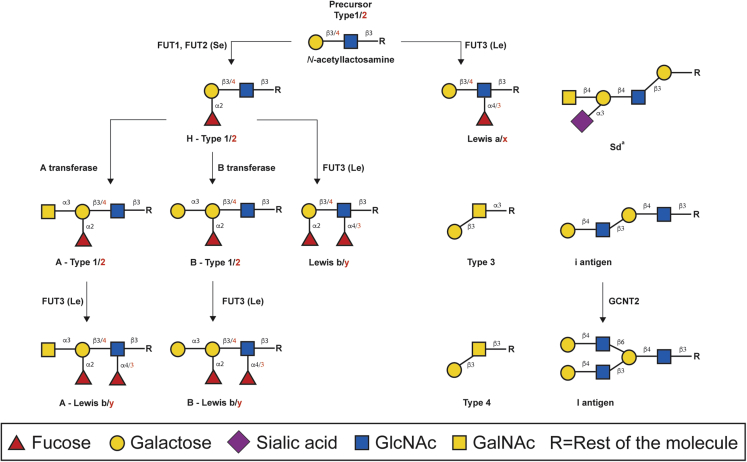
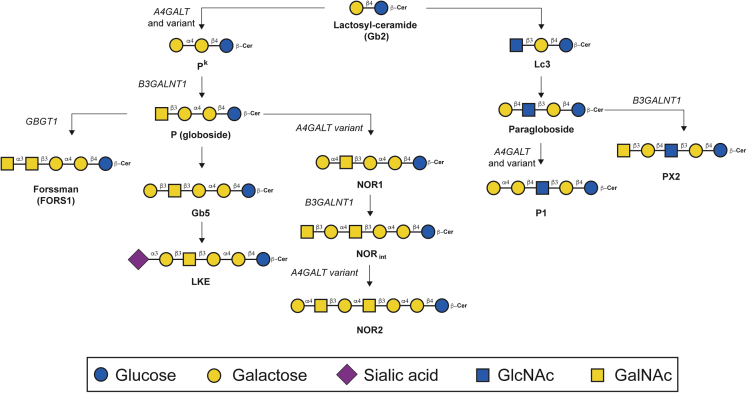
This review synthesizes carbohydrate-based blood group systems and common human enzyme deficiencies, emphasizing how ABO(H), Lewis, I, Globoside/P1PK, FORS, and SID antigens arise from glycosyltransferase variation and affect transfusion, transplantation, infection, and thrombosis. It argues that common enzyme deficiencies, especially blood group O and FUT2 non-secretor status, reflect evolutionary trade-offs with pathogens such as *Plasmodium falciparum* and cholera.
Key findings
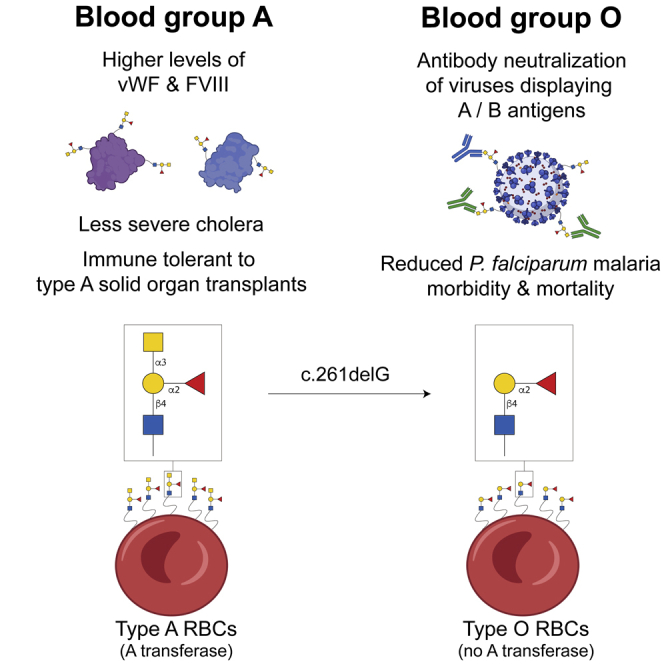
- The review covers eight carbohydrate-based blood group systems (H, ABO, Lewis, I, Globoside, P1PK, FORS, SID) and notes that blood group O results from deficiency of A and B glycosyltransferases; blood group O is estimated at ≥30% of the world population (≥2.4 billion), with regional prevalence from 29% in India to 80% in parts of Central and South America.
- Blood group O is associated with protection against severe *P. falciparum* malaria but increased severe cholera and 20%–30% lower von Willebrand factor and factor VIII levels (∼25% less vWF/FVIII); non-secretors (FUT2 deficiency, about 20%–25% globally) have resistance to norovirus, rotavirus, and *H. pylori*, with one cited case-control study reporting 98% protection against severe rotavirus gastroenteritis.
- Other common enzyme deficiencies reviewed include G6PD deficiency (∼500 million people, 6.3%), ALDH2 deficiency (∼8% of the world population), NAT2 slow acetylators (>50%), lactase deficiency (∼65% or 5.1 billion), CYP3A5 intermediate/poor metabolizers (>75%), caspase 12 deficiency (>95%), Forssman synthase deficiency (99.99%), and CMAH/GGTA1 deficiency (100%).
- ABO(H) antibodies are naturally occurring, can cause acute hemolytic transfusion reactions, hemolytic disease of the fetus/newborn, and graft rejection; ABO-incompatible transplantation often requires anti-ABO(H) titers ≤1:8, and enzymatic conversion of A RBCs to O (ECO-RBCs) remains limited by incomplete/inefficient reactions, agglutination, and cost.
Methods
- Design: narrative review; the authors state they examine the enzymes responsible for carbohydrate-based blood group antigen biosynthesis, their expression in the human population, and evolutionary selective pressures such as malaria.
- Data/sample: no primary cohort; evidence is drawn from cited literature, ISBT/ClinVar/OMIM allele tables, GWAS/meta-analyses, and prevalence studies, with tables summarizing blood group systems, selected rsIDs, phenotypes, and common enzyme deficiencies.
- Main analysis: qualitative synthesis of biosynthesis, anti-carbohydrate antibodies, prevalence, evolution/health implications, and a proposed perspective on common human enzyme deficiencies; no systematic search or meta-analysis is described.
Limitations
- Stated: the review does not cover all enzyme deficiencies affecting glycan structure; the authors could not evaluate all enzymes and could not always obtain estimated global prevalence for enzyme-deficiency phenotypes; they note a lack of consensus on the most common human enzyme deficiency.
- Stated: race is recognized as a social construct, and reported blood group distributions likely reflect ancestry and selection patterns but may not be attributable to race as defined in each cited study.
- Evident: as a narrative review, it relies on heterogeneous cited studies and does not perform systematic screening or quantitative pooling; some cited associations (e.g., ABO and COVID-19 severity) are described as conflicting or not definitively determined.
Model-written summary. Check it against the paper before relying on it.
Integrity signals
Registry
Cites
Statistics
Figures
Verification
Claims the paper makes
0 Valid · 5 Not valid · 232 Not checked · 52 Own results and interpretations
A conclusion the paper draws from its own results — it cites no other source for it, so there is none to check. The quote shows it is in the paper.
In the paper
“These carbohydrate blood groups impact fundamental areas of clinical medicine, including the risk of infection and severity of infectious disease, bleeding risk, transfusion medicine, and tissue/organ transplantation.”
§ ABO blood group antigens and differential glycan expression: Perspective on the evolution of common human enzyme deficiencies > Abstract
plainstates an association- Asserted: passes — The authors put it forward as true.
- Checkable: passes — It can be checked against evidence.
- Load-bearing: passes — The paper’s conclusions depend on it.
- Based: passes — The paper gives a reason why it holds.
A conclusion the paper draws from its own results — it cites no other source for it, so there is none to check. The quote shows it is in the paper.
In the paper
“These carbohydrate blood groups impact fundamental areas of clinical medicine, including the risk of infection and severity of infectious disease, bleeding risk, transfusion medicine, and tissue/organ transplantation.”
§ ABO blood group antigens and differential glycan expression: Perspective on the evolution of common human enzyme deficiencies > Abstract
plainstates a cause- Asserted: passes — The authors put it forward as true.
- Checkable: passes — It can be checked against evidence.
- Load-bearing: passes — The paper’s conclusions depend on it.
- Based: passes — The paper gives a reason why it holds.
A conclusion the paper draws from its own results — it cites no other source for it, so there is none to check. The quote shows it is in the paper.
In the paper
“Enzyme variants and deficiencies can lead to variable expression of glycans, which can affect physiology, influence predilection for disease, and/or directly contribute to disease pathogenesis.”
§ ABO blood group antigens and differential glycan expression: Perspective on the evolution of common human enzyme deficiencies > Abstract
plainstates a possible cause- Asserted: passes — The authors put it forward as true.
- Checkable: passes — It can be checked against evidence.
- Load-bearing: passes — The paper’s conclusions depend on it.
- Based: passes — The paper gives a reason why it holds.
A statement the paper makes itself — it cites no source for it, so there is none to check. The quote shows it is in the paper.
In the paper
“Enzyme variants and deficiencies can lead to variable expression of glycans, which can affect physiology, influence predilection for disease, and/or directly contribute to disease pathogenesis.”
§ ABO blood group antigens and differential glycan expression: Perspective on the evolution of common human enzyme deficiencies > Abstract
plainstates a cause- Asserted: passes — The authors put it forward as true.
- Checkable: passes — It can be checked against evidence.
- Load-bearing: passes — The paper’s conclusions depend on it.
- Based: passes — The paper gives a reason why it holds.
A conclusion the paper draws from its own results — it cites no other source for it, so there is none to check. The quote shows it is in the paper.
In the paper
“Enzyme variants and deficiencies can lead to variable expression of glycans, which can affect physiology, influence predilection for disease, and/or directly contribute to disease pathogenesis.”
§ ABO blood group antigens and differential glycan expression: Perspective on the evolution of common human enzyme deficiencies > Abstract
plainstates a cause- Asserted: passes — The authors put it forward as true.
- Checkable: passes — It can be checked against evidence.
- Load-bearing: passes — The paper’s conclusions depend on it.
- Based: passes — The paper gives a reason why it holds.
132 more claims
Create a free account to see all 289 claims and to verify the 288 references still open.
- Probably not a substantial claim. 90
- It may state two separate claims as one. 93
Self-check
Percentages, sums and reported differences re-computed from the paper’s own numbers.
Each contradiction between two passages listed here was confirmed by an independent check.
Rated major: it would touch a result — a value a result rests on, reported and recomputed p-values on opposite sides of the significance level, two passages that conflict with no sign which is right, or a cited work retracted before this paper was published.
In the paper
§ ABO blood group antigens and differential glycan expression: Perspective on the evolution of common human enzyme deficiencies > Common human enzyme deficiencies
“Forssman synthase deficiency (FORS1 antigen negative) | 0% | Pseudogene, until activating mutations discovered | Possible ↑ resistance to Shiga toxin | Possible ↑ susceptibility to E. coli”
§ ABO blood group antigens and differential glycan expression: Perspective on the evolution of common human enzyme deficiencies > FORS blood group system > Evolution and health
“P-fimbriated strains of E. coli can bind to FORS1, which may increase susceptibility to infection. In contrast, FORS1 expressing cells are less susceptible to Shiga toxin (Cohn et al., 2020; Hult and Olsson, 2017).”
Rated minor: it would not touch a result — a value no result rests on, a p-value that stays on the same side of the significance level, or a conflict that is clerical, resolved elsewhere in the paper, or outside its own findings.
In the paper
§ ABO blood group antigens and differential glycan expression: Perspective on the evolution of common human enzyme deficiencies > Introduction
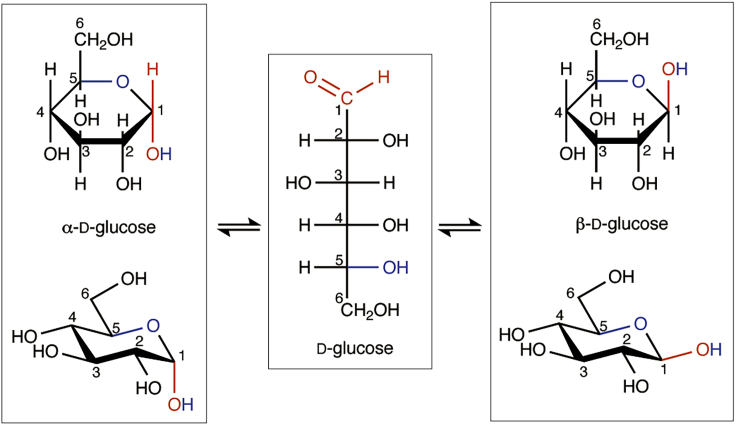
“The alpha anomer refers to the configuration where the hydroxyl attached to the anomeric carbon is on the opposite face of the ring compared with the substituent on the other carbon flanking the ring oxygen.”
§ ABO blood group antigens and differential glycan expression: Perspective on the evolution of common human enzyme deficiencies > Introduction
“In contrast, if these two substituents are on opposite faces of the ring, this is called the beta anomer.”
Citations
Cites
Wiederschain, G. Y. (2009) · Biochemistry (Moscow) · doi:10.1134/s0006297909090156 · Cited by 4,083
Varki, A. (2017) · Glycobiology · doi:10.1093/glycob/cww086 · Cited by 2,635 · cited 2×
“Glycosylation depends on the cell’s repertoire of glycosyltransferases, their localization in the cell, nucleotide sugar donor’s requisite to their synthesis, the final destination of the glycoprotein or lipid, as well as the actions of degradative glycosidases that trim glycans (Varki, 2017).”
BackgroundGenomewide Association Study of Severe Covid-19 with Respiratory Failure
The Severe Covid-19 GWAS Group (2020) · New England Journal of Medicine · doi:10.1056/nejmoa2020283 · Cited by 1,980
Glucose-6-phosphate dehydrogenase deficiency
Cappellini, M., & Fiorelli, G. (2008) · The Lancet · doi:10.1016/s0140-6736(08)60073-2 · Cited by 1,590
Estimation of the Warfarin Dose with Clinical and Pharmacogenetic Data
(2009) · New England Journal of Medicine · doi:10.1056/nejmoa0809329 · Cited by 1,577
Cetuximab-Induced Anaphylaxis and IgE Specific for Galactose-α-1,3-Galactose
Chung, C. H., Mirakhur, B., Chan, E., Le, Q.-T., Berlin, J., Morse, M., Murphy, B. A., Satinover, S. M., Hosen, J., Mauro, D., et al. (2008) · New England Journal of Medicine · doi:10.1056/nejmoa074943 · Cited by 1,521
Smedley, A., & Smedley, B. D. (2005) · American Psychologist · doi:10.1037/0003-066x.60.1.16 · Cited by 1,265 · cited 1×
“When describing blood group antigen distribution by race, we recognize that race itself can be a social, as opposed to a biological, construct (Smedley and Smedley, 2005).”
BackgroundCaspases in Cell Death, Inflammation, and Disease
Van Opdenbosch, N., & Lamkanfi, M. (2019) · Immunity · doi:10.1016/j.immuni.2019.05.020 · Cited by 1,220
Molecular genetic basis of the histo-blood group ABO system
Yamamoto, F.-I., Clausen, H., White, T., Marken, J., & Hakomori, S.-I. (1990) · Nature · doi:10.1038/345229a0 · Cited by 1,181
How Malaria Has Affected the Human Genome and What Human Genetics Can Teach Us about Malaria
Kwiatkowski, D. P. (2005) · The American Journal of Human Genetics · doi:10.1086/432519 · Cited by 1,104
Research works printed but not linked: 10
- F S Zur Kenntnis der Blutantigene des Shigabacillus Z. Immunitatsforsch. 82 1934
- Bernstein F. Zusammenfassende Beobachtungen uber die erblichen Blutstructuren des Menschen Z. Indukt. Abstammungs Vererbungsl. 37 1925 237
- Landsteiner K. Zur Kenntnis der antifermativen, lytischen und agglutinierenden Wirkungendes Blutserums und der Lymphe. Zentbl. Bakt. Parasitkde Abt. 27 1900 357 363
- NCBI NM_000511.6(FUT2):c.461G>A (p.Trp154Ter) https://www.ncbi.nlm.nih.gov/clinvar/RCV000013810/ 2008
- NCBI CMAHP cytidine monophospho-N-acetylneuraminic acid hydroxylase, pseudogene [ Homo sapiens (human) ] https://www.ncbi.nlm.nih.gov/gene/8418#gene-expression 2022
- NCBI NM_000690.4(ALDH2):c.1510G>A (p.Glu504Lys) https://www.ncbi.nlm.nih.gov/clinvar/variation/18390/?new_evidence=false 2022
- NCBI NM_017436.7(A4GALT):c.631C>G (p.Gln211Glu) https://www.ncbi.nlm.nih.gov/clinvar/RCV000032632/ 2022
- NCBI NM_020469.2(ABO):c.261delG (p.Thr88Profs) https://www.ncbi.nlm.nih.gov/clinvar/variation/17735/?oq=%22NM_020469.2(ABO):c.261delG%20(p.Thr88Profs)%22%5Bvarname%5D&m=NM_020469.2(ABO):c.261delG%20(p.Thr88Profs) 2022
- NCBI N.C.f.B.I. GGTA1 Glycoprotein Alpha-Galactosyltransferase 1 (Inactive) [ Homo sapiens (Human) ] 2022 https://www.ncbi.nlm.nih.gov/gene?Db=gene&Cmd=DetailsSearch&Term=2681
- Varki A. Esko J.D. Stanley P. Hart G.W. Aebi M. Mohnen D. Kinoshita T. Packer N.H. Prestegard J.H. Schnaar R.L. Essentials of Glycobiology 4th edition 2022
Cited by
Carbohydrate-active enzymes from Akkermansia muciniphila break down mucin O-glycans to completion
Bakshani, C. R., Ojuri, T. O., Pilgaard, B., Holck, J., McInnes, R. S., Kozak, R. P., Zakhour, M. I., Çakaj, S., Kerouedan, M., Newton, E., et al. (2025) · Nature Microbiology · doi:10.1038/s41564-024-01911-7 · Cited by 111
Biochemical and structural basis of sialic acid utilization by gut microbes
Bell, A., Severi, E., Owen, C. D., Latousakis, D., & Juge, N. (2023) · Journal of Biological Chemistry · doi:10.1016/j.jbc.2023.102989 · Cited by 62
Genetics of glycosylation in mammalian development and disease
Stanley, P. (2024) · Nature Reviews Genetics · doi:10.1038/s41576-024-00725-x · Cited by 55
Reading and Writing the Human Glycocode
de Haan, N., Nielsen, M. I., & Wandall, H. H. (2024) · Annual Review of Biochemistry · doi:10.1146/annurev-biochem-030122-044347 · Cited by 37
Crouch, L. I., Rodrigues, C. S., Bakshani, C. R., Tavares-Gomes, L., Gaifem, J., & Pinho, S. S. (2024) · Seminars in Immunology · doi:10.1016/j.smim.2024.101891 · Cited by 31
The role of glycosylation in clinical allergy and immunology
Hale, R. C., Morais, D., Chou, J. S., & Stowell, S. R. (2023) · Journal of Allergy and Clinical Immunology · doi:10.1016/j.jaci.2023.09.003 · Cited by 31
Self-citationGenomics of host–microbiome interactions in humans
Ferretti, P., Johnson, K. E., Priya, S., & Blekhman, R. (2025) · Nature Reviews Genetics · doi:10.1038/s41576-025-00849-8 · Cited by 28
Galectin-4 Antimicrobial Activity Primarily Occurs Through its C-Terminal Domain
Jan, H.-M., Wu, S., Stowell, C. J., Vallecillo-Zúniga, M. L., Paul, A., Patel, K., Muthusamy, S., Lin, H., Ayona, D., Jajosky, R. P., et al. (2024) · Molecular & Cellular Proteomics · doi:10.1016/j.mcpro.2024.100747 · Cited by 25
Self-citationFuture prospects for the clinical transfusion of pig red blood cells
Chornenkyy, Y., Yamamoto, T., Hara, H., Stowell, S. R., Ghiran, I. C., Robson, S. C., & Cooper, D. K. C. (2023) · Blood Reviews · doi:10.1016/j.blre.2023.101113 · Cited by 21
Self-citationABO blood groups and galectins: Implications in transfusion medicine and innate immunity
Arthur, C. M., Hollenhorst, M. A., Wu, S., Jajosky, R. P., Nakahara, H., Jan, H.-M., Zheng, L., Covington, M. L., Rakoff-Nahoum, S., Yeung, M. Y., et al. (2024) · Seminars in Immunology · doi:10.1016/j.smim.2024.101892 · Cited by 22
Self-citationWu, S., Jan, H.-M., Vallecillo-Zúniga, M. L., Rathgeber, M. F., Stowell, C. S., Murdock, K. L., Patel, K., Nakahara, H., Stowell, C. J., Nahm, M. H., et al. (2023) · Scientific Reports · doi:10.1038/s41598-023-27964-y · Cited by 17
Self-citationCD47 regulates antigen modulation and red blood cell clearance following an incompatible transfusion
Jajosky, R. P., Covington, M. L., Liu, J., Chai, L., Zerra, P. E., Chonat, S., Stowell, S. R., & Arthur, C. M. (2025) · Frontiers in Immunology · doi:10.3389/fimmu.2025.1548548 · Cited by 17
Self-citationFerro, F., Spelat, R., Pandit, A. S., Martín-Ventura, J. L., Rabinovich, G. A., & Contessotto, P. (2023) · Trends in Molecular Medicine · doi:10.1016/j.molmed.2023.11.013 · Cited by 14
Immunologic investigation of an allergic transfusion reaction suspected due to alpha‐gal syndrome
Jones, V. M., Nakahara, H., Choudhary, S. K., Dunbar, N. M., Szczepiorkowski, Z. M., Ratcliffe, N. R., Cervinski, M. A., Yanik, A. J., Fuller, M. C., Spence, B. C., et al. (2025) · Transfusion · doi:10.1111/trf.18405 · Cited by 12
Self-citationJajosky, R. P., Wu, S., Jajosky, P. G., & Stowell, S. R. (2023) · Tropical Medicine and Infectious Disease · doi:10.3390/tropicalmed8100478 · Cited by 12
Self-citationThe ongoing challenge of RBC alloimmunization in the management of patients with sickle cell disease
Chang, D. Y., Wankier, Z., Arthur, C. M., & Stowell, S. R. (2023) · La Presse Médicale · doi:10.1016/j.lpm.2023.104211 · Cited by 11
Self-citationNovel Click Coupling Chemistry to Explore Glycan Recognition
Jia, T., Mehta, A. Y., Tilton, C. A., Tulin, E. K. C., Pepi, L. E., Muerner, L., von Gunten, S., Heimburg‐Molinaro, J., Stowell, S. R., & Cummings, R. D. (2025) · ACS Central Science · doi:10.1021/acscentsci.4c02124 · Cited by 11
Self-citationCagnoni, A. J., Massaro, M., Cutine, A. M., Gimeno, A., Pérez‐Sáez, J. M., Cocco, M. N. M., Maller, S. M., Lella, S. D., Jiménez‐Barbero, J., Ardá, A., et al. (2024) · Journal of Biological Chemistry · doi:10.1016/j.jbc.2024.107573 · Cited by 11
Evolution and Diversity of Glycomolecules from Unicellular Organisms to Humans
Cummings, R. D. (2024) · BioCosmos · doi:10.2478/biocosmos-2024-0001 · Cited by 10
Self-citationLendabo, F., Srinivasan, V., & Rather, R. A. (2024) · BioMed Research International · doi:10.1155/2024/5353528 · Cited by 9
Lou, T., Sugrue, J. A., Patin, É., Quintana‐Murci, L., Duffy, D., & O’Farrelly, C. (2025) · Transfusion · doi:10.1111/trf.18342 · Cited by 8
Mountain, K. E., MacIntyre, D. A., Lee, Y., Tajadura‐Ortega, V., Dell, A., Haslam, S. M., Wu, G., Grassi, P., Feizi, T., Liu, Y., et al. (2025) · npj Biofilms and Microbiomes · doi:10.1038/s41522-025-00783-x · Cited by 8
Barreto, C. B., Neto, F. C. B., Bastos-Filho, C. J. A., Wu, Q., da Silva, M. D. C., & da Silva, F. S. B. (2025) · ACS Omega · doi:10.1021/acsomega.5c07898 · Cited by 8
Mechanisms of Formation of Antibodies against Blood Group Antigens That Do Not Exist in the Body
Aa, M., Savin, M. A., Zaitseva, A. V., Dimov, I. D., & Sesorova, I. S. (2023) · International Journal of Molecular Sciences · doi:10.3390/ijms242015044 · Cited by 8
ABO blood group-related mechanism of infection of SARS-CoV-2: an overview of systematic reviews
Franchini, M., Maggi, F., & Focosi, D. (2023) · Clinical Chemistry and Laboratory Medicine (CCLM) · doi:10.1515/cclm-2023-0825 · Cited by 8
Development of lamprey-derived antibodies against human blood group antigens
Kunz, P. B., Tulin, E. K. C., Mehta, A. Y., Jia, T., Heimburg‐Molinaro, J., Otto, V. I., Stowell, S. R., & Cummings, R. D. (2025) · Glycobiology · doi:10.1093/glycob/cwaf043 · Cited by 7
Self-citationBlood group O expression in normal tissues and tumors
Tulin, E. K. C., Muerner, L., McKitrick, T. R., Tilton, C. A., Pepi, L. E., Jia, T., Noël, M., Zheng, L., Stowell, S. R., von Gunten, S., et al. (2025) · FEBS Journal · doi:10.1111/febs.70172 · Cited by 7
Self-citationAltered Glycosylation of PSA in Prostate Cancer Tissue
Koistinen, H. K., Merivirta, R., Lehto, T. K., Lempiäinen, A., Erickson, A. M., Stenman, U., Rannikko, A. S., & Mirtti, T. K. (2025) · The Prostate · doi:10.1002/pros.70014 · Cited by 6
Orletskaia, V., & Olekhnovich, E. I. (2026) · Computational and Structural Biotechnology Journal · doi:10.34133/csbj.0065 · Cited by 6
Ferous, S., Siafakas, N., Boufidou, F., Patrinos, G. P., Tsakris, A., & Anastassopoulou, C. G. (2024) · Journal of Personalized Medicine · doi:10.3390/jpm14040346 · Cited by 6
A GWAS of angiotensin-converting enzyme inhibitor-induced angioedema in a South African population
Mugo, J. W., Day, C., Choudhury, A., Deetlefs, M., Freercks, R., Geraty, S., Panieri, A., Cotchobos, C., Ribeiro, M., Engelbrecht, A., et al. (2025) · Journal of Allergy and Clinical Immunology Global · doi:10.1016/j.jacig.2025.100464 · Cited by 6
Unraveling the mystery of blood groups and COVID-19
Arthur, C. M., Cummings, R. D., & Stowell, S. R. (2023) · Clinical Chemistry and Laboratory Medicine (CCLM) · doi:10.1515/cclm-2023-1195 · Cited by 6
Self-citationKinetic Dissection of the Reaction of Human GDP- l -Fucose Synthase
Smyshliaev, D. A., Pfeiffer, M., Oppermann, U. C. T., & Nidetzky, B. (2025) · ACS Catalysis · doi:10.1021/acscatal.5c02722 · Cited by 5
Integrated workflow for analysis of immune enriched spatial proteomic data with IMmuneCite
Barbetta, A., Bangerth, S., Lee, J. T. C., Rocque, B., Torres, E. T. R., Kohli, R., Akbari, O., & Emamaullee, J. A. (2025) · Scientific Reports · doi:10.1038/s41598-025-93060-y · Cited by 5
One-Step Detection of Vancomycin in Whole Blood Using the Lateral Flow Immunoassay
Jung, Y., Kim, S., Kim, M., Lee, Y. E., Shin, M., & Yang, S. H. (2024) · Biosensors · doi:10.3390/bios14030129 · Cited by 5
CD55 may be a new target for colorectal cancer treatment
Luo, Q., Mao, Y., Yu, R., Zhao, F., Niu, H., Shen, D., Tian, H., & Wang, L. (2025) · Scientific Reports · doi:10.1038/s41598-025-08491-4 · Cited by 4
Bandyopadhyay, A., Sarkar, D., Das, A., & Das, A. (2025) · Archives of Microbiology · doi:10.1007/s00203-025-04515-9 · Cited by 4
D’Alessandro, A. (2025) · Springer eBooks · doi:10.1007/978-3-031-19369-9_9-1 · Cited by 3
Beshr, G., Sikandar, A., Gläser, J., Fares, M., Sommer, R., Wagner, S., Koehnke, J., & Titz, A. (2024) · Journal of Biological Chemistry · doi:10.1016/j.jbc.2024.108151 · Cited by 3
Machine learning techniques to classify blood groups and Rh-factors
Mahmood, M. F. (2024) · AIP conference proceedings · doi:10.1063/5.0236272 · Cited by 2
Chakraborti, S., & Ghosh, S. (2024) · Forensic Science International · doi:10.1016/j.forsciint.2024.112284 · Cited by 2
Liu, M., Li, J., Yan, K., Zhang, K., Zhu, P., Tang, X., Yuan, D., Yang, Y., Gao, R., Yuan, J., et al. (2025) · Diabetology & Metabolic Syndrome · doi:10.1186/s13098-025-01716-6 · Cited by 2
Mehdi, A. A., Motedayyen, H., Harandi, M. F., Akbari, H., Hasan‐Abad, A. M., & Arbabi, M. (2025) · Parasites & Vectors · doi:10.1186/s13071-025-06900-1 · Cited by 2
Korir, L., Were, T., Mustafa, B., & Kimoloi, S. (2025) · African Journal of Empirical Research · doi:10.51867/ajernet.6.4.30 · Cited by 2
Jajosky, R. P., Li, W., Jajosky, A. N., Jajosky, P. G., & Stowell, S. R. (2025) · Epidemiologia · doi:10.3390/epidemiologia6040076 · Cited by 2
Self-citationEpidemiologic Study of Transfusion-Related Alpha-Gal Syndrome
Kaufman, R. M., Hoen, A. G., Khan, J., Knudson, C. M., Metcalf, R. A., Romero, A. E. M., Mo, A., Schäfer, R., Takanashi, M., Dunbar, N. M., et al. (2026) · JAMA Internal Medicine · doi:10.1001/jamainternmed.2026.3983 · Cited by 2
Sheikh, R. A., Naqvi, S., Al-Sulami, A. M., Bayamin, M., Samsahan, A., Baig, M. R., Al-Abbasi, F. A., Almalki, N. A. R., Asar, T. O., & Anwar, F. (2024) · CNS & Neurological Disorders - Drug Targets · doi:10.2174/0118715273306577240612053957 · Cited by 2
Insights into protein fucosylation in insects
Yang, Q., & Schutter, K. D. (2023) · Entomologia Generalis · doi:10.1127/entomologia/2023/2066 · Cited by 2
Li, N., Oh, J., Suh, J. H., Jin, S., Lee, D. H., Lee, Y., & Chung, J. H. (2024) · Frontiers in Immunology · doi:10.3389/fimmu.2024.1365430 · Cited by 2
ABO and RhD blood groups and their relationship with diseases: A retrospective study
Göktaş, O. (2024) · Pakistan Journal of Medical Sciences · doi:10.12669/pjms.40.4.8663 · Cited by 1
Postnatal Development of Blood Group Antigens and Antibodies in the First Year of Life
Gabaidze, S., Nagervadze, M., Akhvlediani, L., Bakhtadze, T., Mikadze, N., & Ungiadze, J. Y. (2024) · WSEAS TRANSACTIONS ON BIOLOGY AND BIOMEDICINE · doi:10.37394/23208.2025.22.10 · Cited by 1
Makhija, M., Jain, S., Jain, S., Kumar, S., & Bansal, A. (2025) · Scripta Medica · doi:10.5937/scriptamed56-57260 · Cited by 1
Glycan‐binding specificities of anti‐ ABO (H) antibodies and lectins
Hamm, P., Mehta, A. Y., Charon, K. M., Heimburg‐Molinaro, J., Tulin, E. K. C., Stowell, S. R., Yeung, M. Y., Lane, W. J., Cummings, R. D., & Hollenhorst, M. A. (2025) · Transfusion · doi:10.1111/trf.70027 · Cited by 1
Self-citationA concise synthesis of the A and B blood group antigenic determinants
Spyker, F., & Stubbs, K. A. (2026) · Carbohydrate Research · doi:10.1016/j.carres.2026.109825 · Cited by 1
Chulrik, W., Phaenui, C., Duemalee, H., Chuaichunu, N., Srijan, P., Sopaphol, P., Worratrairat, P., Kimseng, R., & Duangchan, T. (2026) · Scandinavian Journal of Infectious Diseases · doi:10.1080/23744235.2026.2660921 · Cited by 1
Cancer-associated alterations in O-GalNAc glycosylation
Pires, J., Rochat, E., Bagdonaite, I., Dabelsteen, S., & Wandall, H. H. (2026) · Glycobiology · doi:10.1093/glycob/cwag049 · Cited by 1
Point-of-care GlycoStrips detect serum and salivary antibodies to blood group antigens and pathogens
Jia, T., Mehta, A. Y., Charon, K. M., Noël, M., Singh, P., von Gunten, S., Roback, J. D., Heimburg‐Molinaro, J., Stowell, S. R., & Cummings, R. D. (2026) · Trends in biotechnology · doi:10.1016/j.tibtech.2026.06.019 · Cited by 1
Self-citationBlood groups and SARS-CoV-2 infection in Pinar del Río medical students
Valdés, C. A. M., Hernández, A. L., Falcón, A. P., García, M. G., Vitón-Castillo, A. A., & Castillo, O. O. (2023) · Salud Ciencia y Tecnología - Serie de Conferencias · doi:10.56294/sctconf2023490 · Cited by 1
Zinchenko, A., & Delevsky, Y. (2023) · Archives of Razi Institute · doi:10.32592/ari.2024.79.1.55 · Cited by 1
Grujić, J., Budakov-Obradović, Z., Klasnja, J., Dinić, R., Dolinaj, V., Cabezas‐Cruz, A., & Banović, P. (2024) · Microorganisms · doi:10.3390/microorganisms12050915 · Cited by 1
Harnessing the potential of red blood cells in immunotherapy
Jajosky, R. P., Zerra, P. E., Chonat, S., Stowell, S. R., & Arthur, C. M. (2024) · Human Immunology · doi:10.1016/j.humimm.2024.111084 · Cited by 1
Self-citationKumar, U., Singhal, S., Khan, A. A., Alanazi, A. M., Gurjar, P., & Khandia, R. (2025) · Journal of Biomolecular Structure and Dynamics · doi:10.1080/07391102.2025.2466710 · Cited by 1
Hatami, A., Kaviani, S., Mohammadali, F., & Mirzaeyan, F. (2025) · Indian Journal of Hematology and Blood Transfusion · doi:10.1007/s12288-025-02062-3 · Cited by 1
Lewis blood group antigens and ABH secretor status in patients with pemphigus
Lamprou, F., Sotiriadis, D., Lambropoulos, A. F., Lazaridou, E., & Patsatsi, A. (2024) · Journal of the European Academy of Dermatology and Venereology · doi:10.1111/jdv.20454
Revealing the Physiological Relationship Between Different Blood Groupings And Type II Diabetes
Uddin, S. F., Waheed, K., Chohan, H.-U.-R., & Ansari, S. (2024) · Advances in basic medical sciences. · doi:10.35845/abms.2024.2.336
Saw, P. E., & Song, E. (2025) · Springer eBooks · doi:10.1007/978-981-96-3041-7_10
Dabritz, H. A., Panditrao, M. V., Pandey, S., Dover, N., Barash, J. R., Khouri, J. M., & Read, J. S. (2025) · The Journal of Pediatrics Clinical Practice · doi:10.1016/j.jpedcp.2025.200152
Costa-Manuel, V., Sebastião, C. S., Hungulo, O., Cassinela, E. K., & Sacomboio, E. N. M. (2025) · Preprints.org · doi:10.20944/preprints202507.0501.v1
Li, T., Qiu, Z., Li, Y., Yang, Y., Qian, H., Fan, Y., Wu, Y., & Liu, W. (2025) · Journal of Chromatography B · doi:10.1016/j.jchromb.2025.124744
Harnessing Biomaterial-Mediated Single-Cell Nanoencapsulation for Enhanced Cellular Therapies
Hussain, Z., Dawit, H., Mehmood, S., Wang, L., & Pei, R. (2025) · Springer eBooks · doi:10.1007/978-3-031-93425-4_9
Retrospective evaluation of correlation of ABO blood groups among patients with head and neck cancer
Kotnoor, S. K., Hegde, S., Raghav, S., Khatun, A., Sharma, P., Saxena, S. K., Mehta, M., & Pathi, J. (2025) · Bioinformation · doi:10.6026/973206300213181
Zhang, J., Wang, Z., Lu, Y., & Wu, W. (2025) · Diagnostics · doi:10.3390/diagnostics15202568
Kim, S., Kang, J. Y., & Lee, J. (2025) · MicrobiologyOpen · doi:10.1002/mbo3.70169
Makarova, O. A., Filiptseva, E. E., Сусликова, М. И., Darenskaya, M. A., Tirskaya, O., Kazankova, E., Makarova, P., & Suslikova, T. A. (2025) · Бюллетень Восточно-Сибирского научного центра Сибирского отделения Российской академии медицинских наук · doi:10.29413/abs.2025-10.5.6
Impact of ABO and Rh Blood Groups Combined with Family History on Pediatric Leukemia Risk
Ahbail, Z. T., Khudhair, A. M., & Ibrahim, M. N. (2025) · Al-Iraqia Medical College Journal · doi:10.58564/aimcj2.3.2025.229
ABO Blood Groups, Lipids, and Coronary CT Imaging in A Japanese Single-Center Cohort
Tokue, H., Tokue, A., & Tsushima, Y. (2026) · Medical Sciences · doi:10.3390/medsci14010121
Zhang, T., Moore, S. C., Fu, S., Albanes, D., Liao, L. M., Loftfield, E., Playdon, M. C., Weinstein, S. J., Yu, K. F., & Stolzenberg‐Solomon, R. Z. (2026) · American Journal of Epidemiology · doi:10.1093/aje/kwag055
გაბაიძე, Შ. (2026) · Iverieli (National Parliamentary Library of Georgia)
Relationship Between ABO/Rh Blood Groups and Knee Osteoarthritis: A Retrospective Cohort Study
Gümüşsuyu, G., Saritaş, K., Koçtekin, B., Gürcan, S., & Köse, Ö. (2026) · Journal of Clinical Medicine · doi:10.3390/jcm15072656
Samorlu, A. S., & Saleem, M. S. (2026) · Health Science Reports · doi:10.1002/hsr2.72503
Jajosky, R. P., Adjodha, M., Berdan, E. L., Tauscher, C. D., Rupprecht, J. D., Dodge, N. R., Moldenhauer, S. K., Pritt, B. S., Ruby, K. N., & Juskewitch, J. E. (2026) · Transfusion · doi:10.1111/trf.70272
Self-citationAslan, O., Şahin, M., TOPÇU, R., Yüksek, M. A., Sezikli, İ., Perçem, A. K., Şahin, H. H. K., Yılmaz, B., & Rençber, E. (2026) · Journal of Health Sciences and Medicine · doi:10.32322/jhsm.1878165
de Moraes, F. C. A., Matheus, G. T. F. U., Rego, L. H. R. M., de Paiva, F. A., Burbano, R. M. R., & Hirata, M. H. (2026) · Biomarkers in Medicine · doi:10.1080/17520363.2026.2678430
Miola, M. P., Ricci, O., & de Mattos, L. C. (2026) · Transfusion · doi:10.1111/trf.70302
The dual role of lectins in cancer—immunotherapy tools and therapeutic targets
Dziewicka, M., & Graczyk‐Jarzynka, A. (2026) · FEBS Letters · doi:10.1002/1873-3468.70406
ABO blood groups and ageing-related outcomes: Insights from a narrative review
Balistreri, C. R., Salvo, A. D., Motisi, C., Carella, M., Gervasi, F., Camilli, C., & Aronica, T. S. (2026) · Mechanisms of Ageing and Development · doi:10.1016/j.mad.2026.112229
Lane, W. J. (2026) · Human Immunology · doi:10.1016/j.humimm.2026.111812
Association of ABO blood group and leptin level with moderate-high Framingham risk score
Malek, F. (2024) · Universiti Putra Malaysia Institutional Repository (Universiti Putra Malaysia)
Salmanian, S., Rodemerk, J., Al-Rubaiey, S., Ahmadzai, M., Timner, E., Dinger, T. F., Gembruch, O., Jabbarli, R., Dammann, P. R., Sure, U., et al. (2026) · Journal of neurosurgery · doi:10.3171/2026.2.jns252663
Gusarova, A. A., Trifonova, E. A., Korneeva, R. A., Бочарова, А. В., Babovskaya, A. A., Gavrilenko, M. M., Габидулина, Т. В., Zhilyakova, O. V., & Степанов, В. А. (2026) · Russian Journal of Genetics · doi:10.1134/s1022795426700444
Mouse Model of Hemolytic Disease of the Fetus and Newborn
Nakahara, H., Muthusamy, S., Hale, R. C., Hughes, B. D., & Stowell, S. R. (2026) · Methods in molecular biology · doi:10.1007/978-1-0716-5376-0_5
Self-citationAcute Incompatible Red Blood Cell Transfusion in Mice
Jajosky, R. P., Hughes, B. D., Cepeda, C. L., Muthusamy, S., Wittig, A. J. H., Li, W., Varadkar, S. P., Wu, S., Scott, W. O., Stowell, C. J., et al. (2026) · Methods in molecular biology · doi:10.1007/978-1-0716-5376-0_41
Self-citationAnemia and Transfusion in Preclinical Models of Neonatology
Vallecillo-Zúniga, M. L., Varadkar, S. P., Stowell, C. J., Li, W., Westhoff, L. L., Stowell, S. R., & Arthur, C. M. (2026) · Methods in molecular biology · doi:10.1007/978-1-0716-5376-0_39
Self-citationThe Immunology of Transfusion Medicine: Past, Present, and Future
Arthur, C. M., & Stowell, S. R. (2026) · Methods in molecular biology · doi:10.1007/978-1-0716-5376-0_1
Self-citationWestern Blot Detection of Blood Group A and B Antigens
Tiemeyer, K. H., Appah-Sampong, A. A., & Hollenhorst, M. A. (2026) · Methods in molecular biology · doi:10.1007/978-1-0716-5376-0_44
Self-citationMurine Models of Transfusion-Induced Red Blood Cell Alloimmunization
Varadkar, S. P., Ortiz, V., Alton, A. B., Hughes, B. D., Muthusamy, S., Wu, S., Scott, W. O., Li, W., Stowell, S. R., Arthur, C. M., et al. (2026) · Methods in molecular biology · doi:10.1007/978-1-0716-5376-0_27
Self-citationFlow Cytometric Examination of Galectin Binding to Red Blood Cells
Jan, H.-M., Lin, H., Paz, D., Lee, V. C., Hale, R. C., Sturgis, K., Stowell, C. J., Li, W., & Wu, S. (2026) · Methods in molecular biology · doi:10.1007/978-1-0716-5376-0_45
Self-citationUse of Microbial Microarrays to Define Antibody Specificity
Stowell, C. J., Ortiz, V., Cepeda, C. L., Lee, V. C., Scott, W. O., Arthur, C. M., Wu, S., & Jan, H.-M. (2026) · Methods in molecular biology · doi:10.1007/978-1-0716-5376-0_30
Self-citationExpression and Characterization of Blood Group Binding Lectins
Lin, H., Wu, S., Jan, H.-M., Paul, A., Ortiz, V., Winters, C. A., Stowell, C. J., Lee, V. C., & Arthur, C. M. (2026) · Methods in molecular biology · doi:10.1007/978-1-0716-5376-0_40
Self-citationEmerging paradigms in glycobiology
Cummings, R. D. (2026) · Glycobiology · doi:10.1093/glycob/cwag077
Self-citation
Metadata
- Authors
- Jajosky, R. P., Wu, S.-C., Zheng, L., Jajosky, A. N., Jajosky, P. G., Josephson, C. D., Hollenhorst, M. A., Sackstein, R., Cummings, R. D., Arthur, C. M., & Stowell, S. R.
- Affiliations
- Brigham and Women's Hospital (US)
- University of Rochester Medicine (US)
- Johns Hopkins University (US)
- Stanford Medicine (US)
- Florida International University (US)
- Beth Israel Deaconess Medical Center (US)
- Corresponding author
- Stowell, Sean R.
- ORCID
- Venue
- iScience
- Publisher
- Elsevier BV
- Published
- 2023-01
- Volume
- 26
- Issue
- 1
- Pages
- 105798
- ISSN
- 2589-0042 (ISSN-L)
- PMC
- PMC9860303
- OpenAlex
- W4311301885
- Cited by
- 110
- References
- 318
- Citations by year
- 2026: 39 · 2025: 35 · 2024: 23 · 2023: 13
- FWCI
- 3.08
- Type
- journal article
- Language
- en
- Open access
- gold
- doi.org
- Licence
- cc-by-nc-nd
- www.elsevier.com/tdm/userlicense/1.0/ (tdm)
- www.elsevier.com/legal/tdmrep-license (tdm)
- creativecommons.org/licenses/by-nc-nd/4.0/ (vor)
- Locations
- iScience (publishedVersion, cc-by-nc-nd)
- PubMed (publishedVersion)
- PubMed Central (publishedVersion, cc-by-nc-nd)
- DOAJ (DOAJ: Directory of Open Access Journals) (submittedVersion, cc-by-sa)
- Funders
- National Institutes of Health (DP5 OD019892, U01CA242109)
- Burroughs Wellcome Fund (R01 HL138714, R01 HL154034, R24GM137763)
- National Blood Foundation (1K99HL156029-01)
- Topics
- Health Sciences › Medicine › Hematology › Blood groups and transfusion
- Life Sciences › Biochemistry, Genetics and Molecular Biology › Molecular Biology › Glycosylation and Glycoproteins Research
- Physical Sciences › Chemistry › Organic Chemistry › Carbohydrate Chemistry and Synthesis
- Keywords
- ABO blood group system, blood group antigens, glycan expression, enzyme deficiency, glycosyltransferases, malaria, transfusion medicine, organ transplantation, infection risk
About these checks
Registry, retraction, Cites and statistics results are computed, not judged, with one exception: a printed reference that no index lists is read once by a model before it counts as a citation error. Claims are extracted by a model and kept only when their quote appears verbatim in the text; each cited source is then checked, with a model’s help, for whether it says what the claim relies on. Those verdicts can be wrong — read the claim’s quote and the cited source before relying on one.
A language model drew the claims from the paper on 2026-11-17, under version 3 of the claim definition (model deepseek-v4.1-flash, prompt extract-v3).
A second model labelled each claim on 2026-11-17 (model jev-1.13-20260917, definition revision gold-guideline-v0.2).
Statistics and arithmetic are recomputed, not judged.
Confidence bands are shown only for fields calibrated on our annotated test set. None is calibrated yet, so no band is shown.
What counts as a claim ›How we measure confidence ›How we check this ›
Are you an author, or do you see a problem with this page? Request a review
Data sources
Bibliographic data: Semantic Scholar, OpenAlex, Crossref.
Contains information from the Semantic Scholar Academic Graph Datasets, made available under the ODC Attribution License (ODC-BY 1.0).
Semantic Scholar’s data is described in: Kinney, R., et al. (2023). The Semantic Scholar Open Data Platform. arXiv:2301.10140.
