

ABO blood group antigens and differential glycan expression: Perspective on the evolution of common human enzyme deficiencies
Open accessThe DOI matches its Crossref record; 317 of the 318 references it cites were found in a registry or an index; none of the 336 sources its claims cite is checked for support yet.
Abstract
Enzymes catalyze biochemical reactions and play critical roles in human health and disease. Enzyme variants and deficiencies can lead to variable expression of glycans, which can affect physiology, influence predilection for disease, and/or directly contribute to disease pathogenesis. Although certain well-characterized enzyme deficiencies result in overt disease, some of the most common enzyme deficiencies in humans form the basis of blood groups. These carbohydrate blood groups impact fundamental areas of clinical medicine, including the risk of infection and severity of infectious disease, bleeding risk, transfusion medicine, and tissue/organ transplantation. In this review, we examine the enzymes responsible for carbohydrate-based blood group antigen biosynthesis and their expression within the human population. We also consider the evolutionary selective pressures, e.g. malaria, that may account for the variation in carbohydrate structures and the implications of this biology for human disease.
Overview
CoChat Summary
TL;DR
This review synthesizes carbohydrate-based blood group systems and common human enzyme deficiencies, emphasizing how ABO(H), Lewis, I, Globoside/P1PK, FORS, and SID antigens arise from glycosyltransferase variation and affect transfusion, transplantation, infection, and thrombosis. It argues that common enzyme deficiencies, especially blood group O and FUT2 non-secretor status, reflect evolutionary trade-offs with pathogens such as *Plasmodium falciparum* and cholera.
Key findings
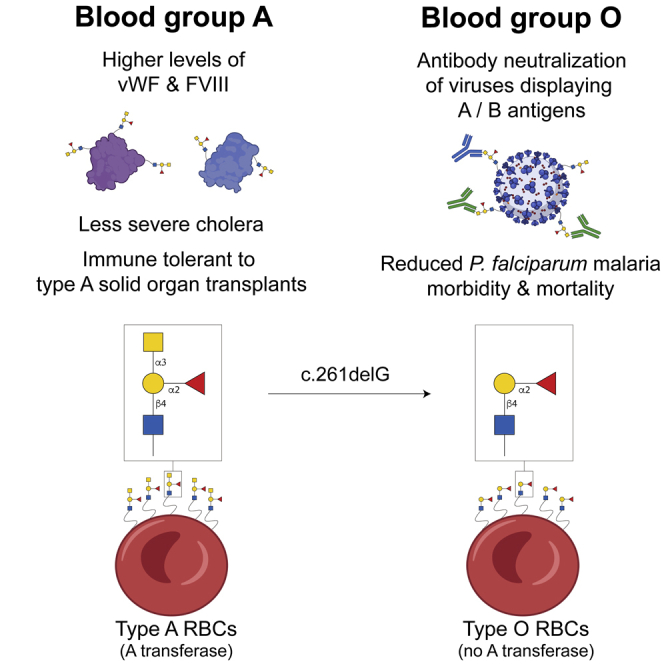
- The review covers eight carbohydrate-based blood group systems (H, ABO, Lewis, I, Globoside, P1PK, FORS, SID) and notes that blood group O results from deficiency of A and B glycosyltransferases; blood group O is estimated at ≥30% of the world population (≥2.4 billion), with regional prevalence from 29% in India to 80% in parts of Central and South America.
- Blood group O is associated with protection against severe *P. falciparum* malaria but increased severe cholera and 20%–30% lower von Willebrand factor and factor VIII levels (∼25% less vWF/FVIII); non-secretors (FUT2 deficiency, about 20%–25% globally) have resistance to norovirus, rotavirus, and *H. pylori*, with one cited case-control study reporting 98% protection against severe rotavirus gastroenteritis.
- Other common enzyme deficiencies reviewed include G6PD deficiency (∼500 million people, 6.3%), ALDH2 deficiency (∼8% of the world population), NAT2 slow acetylators (>50%), lactase deficiency (∼65% or 5.1 billion), CYP3A5 intermediate/poor metabolizers (>75%), caspase 12 deficiency (>95%), Forssman synthase deficiency (99.99%), and CMAH/GGTA1 deficiency (100%).
- ABO(H) antibodies are naturally occurring, can cause acute hemolytic transfusion reactions, hemolytic disease of the fetus/newborn, and graft rejection; ABO-incompatible transplantation often requires anti-ABO(H) titers ≤1:8, and enzymatic conversion of A RBCs to O (ECO-RBCs) remains limited by incomplete/inefficient reactions, agglutination, and cost.
Methods
- Design: narrative review; the authors state they examine the enzymes responsible for carbohydrate-based blood group antigen biosynthesis, their expression in the human population, and evolutionary selective pressures such as malaria.
- Data/sample: no primary cohort; evidence is drawn from cited literature, ISBT/ClinVar/OMIM allele tables, GWAS/meta-analyses, and prevalence studies, with tables summarizing blood group systems, selected rsIDs, phenotypes, and common enzyme deficiencies.
- Main analysis: qualitative synthesis of biosynthesis, anti-carbohydrate antibodies, prevalence, evolution/health implications, and a proposed perspective on common human enzyme deficiencies; no systematic search or meta-analysis is described.
Limitations
- Stated: the review does not cover all enzyme deficiencies affecting glycan structure; the authors could not evaluate all enzymes and could not always obtain estimated global prevalence for enzyme-deficiency phenotypes; they note a lack of consensus on the most common human enzyme deficiency.
- Stated: race is recognized as a social construct, and reported blood group distributions likely reflect ancestry and selection patterns but may not be attributable to race as defined in each cited study.
- Evident: as a narrative review, it relies on heterogeneous cited studies and does not perform systematic screening or quantitative pooling; some cited associations (e.g., ABO and COVID-19 severity) are described as conflicting or not definitively determined.
Model-written summary. Check it against the paper before relying on it.
Integrity signals
Registry
Cites
Statistics
Figures
Verification
Claims the paper makes
0 Valid · 5 Not valid · 232 Not checked · 52 Own results and interpretations
A conclusion the paper draws from its own results — it cites no other source for it, so there is none to check. The quote shows it is in the paper.
In the paper
“These carbohydrate blood groups impact fundamental areas of clinical medicine, including the risk of infection and severity of infectious disease, bleeding risk, transfusion medicine, and tissue/organ transplantation.”
§ ABO blood group antigens and differential glycan expression: Perspective on the evolution of common human enzyme deficiencies > Abstract
plainstates an association- Asserted: passes — The authors put it forward as true.
- Checkable: passes — It can be checked against evidence.
- Load-bearing: passes — The paper’s conclusions depend on it.
- Based: passes — The paper gives a reason why it holds.
A conclusion the paper draws from its own results — it cites no other source for it, so there is none to check. The quote shows it is in the paper.
In the paper
“These carbohydrate blood groups impact fundamental areas of clinical medicine, including the risk of infection and severity of infectious disease, bleeding risk, transfusion medicine, and tissue/organ transplantation.”
§ ABO blood group antigens and differential glycan expression: Perspective on the evolution of common human enzyme deficiencies > Abstract
plainstates a cause- Asserted: passes — The authors put it forward as true.
- Checkable: passes — It can be checked against evidence.
- Load-bearing: passes — The paper’s conclusions depend on it.
- Based: passes — The paper gives a reason why it holds.
A conclusion the paper draws from its own results — it cites no other source for it, so there is none to check. The quote shows it is in the paper.
In the paper
“Enzyme variants and deficiencies can lead to variable expression of glycans, which can affect physiology, influence predilection for disease, and/or directly contribute to disease pathogenesis.”
§ ABO blood group antigens and differential glycan expression: Perspective on the evolution of common human enzyme deficiencies > Abstract
plainstates a possible cause- Asserted: passes — The authors put it forward as true.
- Checkable: passes — It can be checked against evidence.
- Load-bearing: passes — The paper’s conclusions depend on it.
- Based: passes — The paper gives a reason why it holds.
A statement the paper makes itself — it cites no source for it, so there is none to check. The quote shows it is in the paper.
In the paper
“Enzyme variants and deficiencies can lead to variable expression of glycans, which can affect physiology, influence predilection for disease, and/or directly contribute to disease pathogenesis.”
§ ABO blood group antigens and differential glycan expression: Perspective on the evolution of common human enzyme deficiencies > Abstract
plainstates a cause- Asserted: passes — The authors put it forward as true.
- Checkable: passes — It can be checked against evidence.
- Load-bearing: passes — The paper’s conclusions depend on it.
- Based: passes — The paper gives a reason why it holds.
A conclusion the paper draws from its own results — it cites no other source for it, so there is none to check. The quote shows it is in the paper.
In the paper
“Enzyme variants and deficiencies can lead to variable expression of glycans, which can affect physiology, influence predilection for disease, and/or directly contribute to disease pathogenesis.”
§ ABO blood group antigens and differential glycan expression: Perspective on the evolution of common human enzyme deficiencies > Abstract
plainstates a cause- Asserted: passes — The authors put it forward as true.
- Checkable: passes — It can be checked against evidence.
- Load-bearing: passes — The paper’s conclusions depend on it.
- Based: passes — The paper gives a reason why it holds.
132 more claims
Create a free account to see all 289 claims and to verify the 288 references still open.
- Probably not a substantial claim. 90
- It may state two separate claims as one. 93
Self-check
Percentages, sums and reported differences re-computed from the paper’s own numbers.
Each contradiction between two passages listed here was confirmed by an independent check.
Rated major: it would touch a result — a value a result rests on, reported and recomputed p-values on opposite sides of the significance level, two passages that conflict with no sign which is right, or a cited work retracted before this paper was published.
In the paper
§ ABO blood group antigens and differential glycan expression: Perspective on the evolution of common human enzyme deficiencies > Common human enzyme deficiencies
“Forssman synthase deficiency (FORS1 antigen negative) | 0% | Pseudogene, until activating mutations discovered | Possible ↑ resistance to Shiga toxin | Possible ↑ susceptibility to E. coli”
§ ABO blood group antigens and differential glycan expression: Perspective on the evolution of common human enzyme deficiencies > FORS blood group system > Evolution and health
“P-fimbriated strains of E. coli can bind to FORS1, which may increase susceptibility to infection. In contrast, FORS1 expressing cells are less susceptible to Shiga toxin (Cohn et al., 2020; Hult and Olsson, 2017).”
Rated minor: it would not touch a result — a value no result rests on, a p-value that stays on the same side of the significance level, or a conflict that is clerical, resolved elsewhere in the paper, or outside its own findings.
In the paper
§ ABO blood group antigens and differential glycan expression: Perspective on the evolution of common human enzyme deficiencies > Introduction
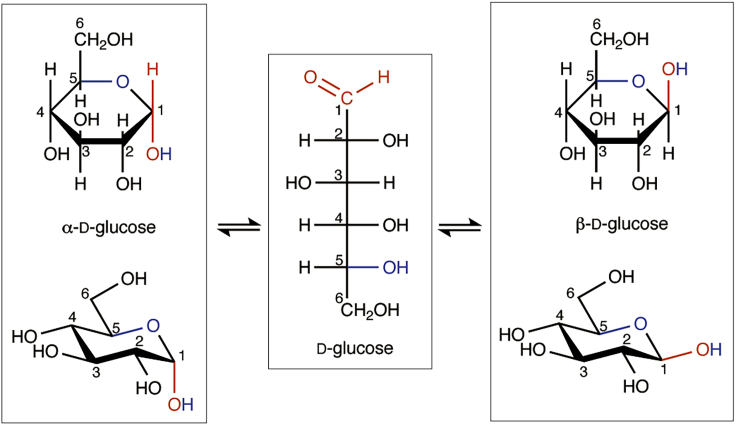
“The alpha anomer refers to the configuration where the hydroxyl attached to the anomeric carbon is on the opposite face of the ring compared with the substituent on the other carbon flanking the ring oxygen.”
§ ABO blood group antigens and differential glycan expression: Perspective on the evolution of common human enzyme deficiencies > Introduction
“In contrast, if these two substituents are on opposite faces of the ring, this is called the beta anomer.”
Citations
Cites
Wiederschain, G. Y. (2009) · Biochemistry (Moscow) · doi:10.1134/s0006297909090156 · Cited by 4,083
Varki, A. (2017) · Glycobiology · doi:10.1093/glycob/cww086 · Cited by 2,635 · cited 2×
“Glycosylation depends on the cell’s repertoire of glycosyltransferases, their localization in the cell, nucleotide sugar donor’s requisite to their synthesis, the final destination of the glycoprotein or lipid, as well as the actions of degradative glycosidases that trim glycans (Varki, 2017).”
BackgroundGenomewide Association Study of Severe Covid-19 with Respiratory Failure
The Severe Covid-19 GWAS Group (2020) · New England Journal of Medicine · doi:10.1056/nejmoa2020283 · Cited by 1,980
Glucose-6-phosphate dehydrogenase deficiency
Cappellini, M., & Fiorelli, G. (2008) · The Lancet · doi:10.1016/s0140-6736(08)60073-2 · Cited by 1,590
Estimation of the Warfarin Dose with Clinical and Pharmacogenetic Data
(2009) · New England Journal of Medicine · doi:10.1056/nejmoa0809329 · Cited by 1,577
Cetuximab-Induced Anaphylaxis and IgE Specific for Galactose-α-1,3-Galactose
Chung, C. H., Mirakhur, B., Chan, E., Le, Q.-T., Berlin, J., Morse, M., Murphy, B. A., Satinover, S. M., Hosen, J., Mauro, D., et al. (2008) · New England Journal of Medicine · doi:10.1056/nejmoa074943 · Cited by 1,521
Smedley, A., & Smedley, B. D. (2005) · American Psychologist · doi:10.1037/0003-066x.60.1.16 · Cited by 1,265 · cited 1×
“When describing blood group antigen distribution by race, we recognize that race itself can be a social, as opposed to a biological, construct (Smedley and Smedley, 2005).”
BackgroundCaspases in Cell Death, Inflammation, and Disease
Van Opdenbosch, N., & Lamkanfi, M. (2019) · Immunity · doi:10.1016/j.immuni.2019.05.020 · Cited by 1,220
Molecular genetic basis of the histo-blood group ABO system
Yamamoto, F.-I., Clausen, H., White, T., Marken, J., & Hakomori, S.-I. (1990) · Nature · doi:10.1038/345229a0 · Cited by 1,181
How Malaria Has Affected the Human Genome and What Human Genetics Can Teach Us about Malaria
Kwiatkowski, D. P. (2005) · The American Journal of Human Genetics · doi:10.1086/432519 · Cited by 1,104
Genetically Modified Porcine-to-Human Cardiac Xenotransplantation
Griffith, B. P., Goerlich, C. E., Singh, A. K., Rothblatt, M., Lau, C. L., Shah, A., Lorber, M., Grazioli, A., Saharia, K. K., Hong, S. N., et al. (2022) · New England Journal of Medicine · doi:10.1056/nejmoa2201422 · Cited by 732
Birdwell, K., Decker, B., Barbarino, J., Peterson, J., Stein, C., Sadee, W., Wang, D., Vinks, A., He, Y., Swen, J., et al. (2015) · Clinical Pharmacology & Therapeutics · doi:10.1002/cpt.113 · Cited by 730
Aragam, K. G., Jiang, T., Goel, A., Kanoni, S., Wolford, B. N., Atri, D. S., Weeks, E. M., Wang, M., Hindy, G., Zhou, W., et al. (2022) · Nature Genetics · doi:10.1038/s41588-022-01233-6 · Cited by 723
Nkhoma, E. T., Poole, C., Vannappagari, V., Hall, S. A., & Beutler, E. (2009) · Blood Cells, Molecules, and Diseases · doi:10.1016/j.bcmd.2008.12.005 · Cited by 711
Converging roles of caspases in inflammasome activation, cell death and innate immunity
Man, S. M., & Kanneganti, T.-D. (2016) · Nature Reviews Immunology · doi:10.1038/nri.2015.7 · Cited by 701
Blood Groups in Infection and Host Susceptibility
Cooling, L. (2015) · Clinical Microbiology Reviews · doi:10.1128/cmr.00109-14 · Cited by 632
Johannes, L., Jacob, R., & Leffler, H. (2018) · Journal of Cell Science · doi:10.1242/jcs.208884 · Cited by 618
Targeting Aldehyde Dehydrogenase 2: New Therapeutic Opportunities
Chen, C.-H., Ferreira, J. C. B., Gross, E. R., & Mochly-Rosen, D. (2014) · Physiological Reviews · doi:10.1152/physrev.00017.2013 · Cited by 614
Positive Selection of Natural Autoreactive B Cells
Hayakawa, K., Asano, M., Shinton, S. A., Gui, M., Allman, D., Stewart, C. L., Silver, J., & Hardy, R. R. (1999) · Science · doi:10.1126/science.285.5424.113 · Cited by 576
Reilly, M. P., Li, M., He, J., Ferguson, J. F., Stylianou, I. M., Mehta, N. N., Burnett, M. S., Devaney, J. M., Knouff, C. W., Thompson, J. R., et al. (2011) · The Lancet · doi:10.1016/s0140-6736(10)61996-4 · Cited by 536
Clausen, H., & Hakomori, S. (1989) · Vox Sanguinis · doi:10.1111/j.1423-0410.1989.tb03040.x · Cited by 504
Lactose digestion and the evolutionary genetics of lactase persistence
Ingram, C. J. E., Mulcare, C. A., Itan, Y., Thomas, M. G., & Swallow, D. M. (2009) · Human Genetics · doi:10.1007/s00439-008-0593-6 · Cited by 502
The repertoire of glycan determinants in the human glycome
Cummings, R. D. (2009) · Molecular BioSystems · doi:10.1039/b907931a · Cited by 487 · cited 1×
“Glycans are monosaccharide polymers that play an important role in human physiology and pathophysiology (Cummings, 2009).”
BackgroundSelf-citationNatural polyreactive IgA antibodies coat the intestinal microbiota
Bunker, J. J., Erickson, S. A., Flynn, T. M., Henry, C., Koval, J. C., Meisel, M., Jabri, B., Antonopoulos, D. A., Wilson, P. C., & Bendelac, A. (2017) · Science · doi:10.1126/science.aan6619 · Cited by 468
Differential modulation of endotoxin responsiveness by human caspase-12 polymorphisms
Saleh, M., Vaillancourt, J. P., Graham, R. K., Huyck, M., Srinivasula, S. M., Alnemri, E. S., Steinberg, M. H., Nolan, V., Baldwin, C. T., Hotchkiss, R. S., et al. (2004) · Nature · doi:10.1038/nature02451 · Cited by 422
Glucose-6-phosphate dehydrogenase deficiency
Luzzatto, L., Ally, M., & Notaro, R. (2020) · Blood · doi:10.1182/blood.2019000944 · Cited by 406
ABO Blood Group and the Risk of Pancreatic Cancer
Wolpin, B. M., Chan, A. T., Hartge, P., Chanock, S. J., Kraft, P., Hunter, D. J., Giovannucci, E. L., & Fuchs, C. S. (2009) · JNCI Journal of the National Cancer Institute · doi:10.1093/jnci/djp020 · Cited by 395
Fucosyltransferase 2 (FUT2) non-secretor status is associated with Crohn's disease
McGovern, D. P. B., Jones, M. R., Taylor, K. D., Marciante, K., Yan, X., Dubinsky, M., Ippoliti, A., Vasiliauskas, E., Berel, D., Derkowski, C., et al. (2010) · Human Molecular Genetics · doi:10.1093/hmg/ddq248 · Cited by 379
Platelet transfusion refractoriness
Hod, E. A., & Schwartz, J. E. (2008) · British Journal of Haematology · doi:10.1111/j.1365-2141.2008.07189.x · Cited by 367
On the Evolution of Lactase Persistence in Humans
Ségurel, L., & Bon, C. (2017) · Annual Review of Genomics and Human Genetics · doi:10.1146/annurev-genom-091416-035340 · Cited by 362
A worldwide correlation of lactase persistence phenotype and genotypes
Itan, Y., Jones, B. L., Ingram, C. J., Swallow, D. M., & Thomas, M. G. (2010) · BMC Evolutionary Biology · doi:10.1186/1471-2148-10-36 · Cited by 352
Chou, H.-H., Hayakawa, T., Diaz, S., Krings, M., Indriati, E., Leakey, M., Paabo, S., Satta, Y., Takahata, N., & Varki, A. (2002) · Proceedings of the National Academy of Sciences · doi:10.1073/pnas.182257399 · Cited by 349
The ABO blood group system revisited: a review and update
Storry, J. R., & Olsson, M. L. (2009) · Immunohematology · doi:10.21307/immunohematology-2019-231 · Cited by 348
The relationship between ABO histo‐blood group, factor VIII and von Willebrand factor
O'Donnell, J., & Laffan, M. A. (2001) · Transfusion Medicine · doi:10.1046/j.1365-3148.2001.00315.x · Cited by 347
Rowe, J. A., Handel, I. G., Thera, M. A., Deans, A.-M., Lyke, K. E., Koné, A., Diallo, D. A., Raza, A., Kai, O., Marsh, K., et al. (2007) · Proceedings of the National Academy of Sciences · doi:10.1073/pnas.0705390104 · Cited by 343
Glucose-6-Phosphate Dehydrogenase Deficiency
Yaish, H. M. (2012) · Textbook of Clinical Pediatrics · doi:10.1007/978-3-642-02202-9_320 · Cited by 326
Innate immune lectins kill bacteria expressing blood group antigen
Stowell, S. R., Arthur, C. M., Dias-Baruffi, M., Rodrigues, L. C., Gourdine, J.-P., Heimburg-Molinaro, J., Ju, T., Molinaro, R. J., Rivera-Marrero, C., Xia, B., et al. (2010) · Nature Medicine · doi:10.1038/nm.2103 · Cited by 324
Self-citationVarki, A. (2001) · American Journal of Physical Anthropology · doi:10.1002/ajpa.10018 · Cited by 324
The ABO blood group system and Plasmodium falciparum malaria
Cserti, C. M., & Dzik, W. H. (2007) · Blood · doi:10.1182/blood-2007-03-077602 · Cited by 320
Bacterial glycosidases for the production of universal red blood cells
Liu, Q. P., Sulzenbacher, G., Yuan, H., Bennett, E. P., Pietz, G., Saunders, K., Spence, J., Nudelman, E., Levery, S. B., White, T., et al. (2007) · Nature Biotechnology · doi:10.1038/nbt1298 · Cited by 296
Glycobiology of immune responses
Rabinovich, G. A., van Kooyk, Y., & Cobb, B. A. (2012) · Annals of the New York Academy of Sciences · doi:10.1111/j.1749-6632.2012.06492.x · Cited by 279
Uniquely human evolution of sialic acid genetics and biology
Varki, A. (2010) · Proceedings of the National Academy of Sciences · doi:10.1073/pnas.0914634107 · Cited by 278
BLOOD GROUP ACTIVITY OF GRAM-NEGATIVE BACTERIA
Springer, G. F., Williamson, P., & Brandes, W. C. (1961) · The Journal of Experimental Medicine · doi:10.1084/jem.113.6.1077 · Cited by 270
PREDISPOSITION FOR CHOLERA OF INDIVIDUALS WITH O BLOOD GROUP POSSIBLE EVOLUTIONARY SIGNIFICANCE
GLASS, R. I., HOLMGREN, J., HALEY, C. E., KHAN, M. R., SVENNERHOLM, A., STOLL, B. J., HOSSAIN, K. M. B., BLACK, R. E., YUNUS, M., & BARUA, D. (1985) · American Journal of Epidemiology · doi:10.1093/oxfordjournals.aje.a114050 · Cited by 267
Varki, A. P. (2001) · American Journal of Physical Anthropology · doi:10.1002/ajpa.10018.abs · Cited by 255
A Natural History of FUT2 Polymorphism in Humans
Ferrer-Admetlla, A., Sikora, M., Laayouni, H., Esteve, A., Roubinet, F., Blancher, A., Calafell, F., Bertranpetit, J., & Casals, F. (2009) · Molecular Biology and Evolution · doi:10.1093/molbev/msp108 · Cited by 247
Pipe, S. W., Montgomery, R. R., Pratt, K. P., Lenting, P. J., & Lillicrap, D. (2016) · Blood · doi:10.1182/blood-2016-04-713289 · Cited by 235
Risk of Gastric Cancer and Peptic Ulcers in Relation to ABO Blood Type: A Cohort Study
Edgren, G., Hjalgrim, H., Rostgaard, K., Norda, R., Wikman, A., Melbye, M., & Nyren, O. (2010) · American Journal of Epidemiology · doi:10.1093/aje/kwq299 · Cited by 234
Perspectives on Glycosylation and Its Congenital Disorders
Ng, B. G., & Freeze, H. H. (2018) · Trends in Genetics · doi:10.1016/j.tig.2018.03.002 · Cited by 228
Anti‐Gal: an abundant human natural antibody of multiple pathogeneses and clinical benefits
Galili, U. (2013) · Immunology · doi:10.1111/imm.12110 · Cited by 225
ALDH2 polymorphism and alcohol-related cancers in Asians: a public health perspective
Chang, J. S., Hsiao, J.-R., & Chen, C.-H. (2017) · Journal of Biomedical Science · doi:10.1186/s12929-017-0327-y · Cited by 223
Lewis Histo‐Blood Group System and Associated Secretory Phenotypes
Henry, S., Oriol, R., & Samuelsson, B. (1995) · Vox Sanguinis · doi:10.1111/j.1423-0410.1995.tb02591.x · Cited by 219
Microbial glycan microarrays define key features of host-microbial interactions
Stowell, S. R., Arthur, C. M., McBride, R., Berger, O., Razi, N., Heimburg-Molinaro, J., Rodrigues, L. C., Gourdine, J.-P., Noll, A. J., von Gunten, S., et al. (2014) · Nature Chemical Biology · doi:10.1038/nchembio.1525 · Cited by 219
Self-citationMultiple changes in sialic acid biology during human evolution
Varki, A. (2009) · Glycoconjugate Journal · doi:10.1007/s10719-008-9183-z · Cited by 219
Franchini, M., Capra, F., Targher, G., Montagnana, M., & Lippi, G. (2007) · Thrombosis Journal · doi:10.1186/1477-9560-5-14 · Cited by 215
The blood group antigen factsbook
Poole, J. (1997) · Trends in Biochemical Sciences · doi:10.1016/s0968-0004(97)84727-5 · Cited by 212
The repertoire of serum IgM in normal mice is largely independent of external antigenic contact
Haury, M., Sundblad, A., Grandien, A., Barreau, C., Coutinho, A., & Nobrega, A. (1997) · European Journal of Immunology · doi:10.1002/eji.1830270635 · Cited by 207
Horowitz, J. E., Kosmicki, J. A., Damask, A., Sharma, D., Roberts, G. H. L., Justice, A. E., Banerjee, N., Coignet, M. V., Yadav, A., Leader, J. B., et al. (2022) · Nature Genetics · doi:10.1038/s41588-021-01006-7 · Cited by 202
Hooijkaas, H., Benner, R., Pleasants, J. R., & Wostmann, B. S. (1984) · European Journal of Immunology · doi:10.1002/eji.1830141212 · Cited by 198
Involvement of a Non-Human Sialic Acid in Human Cancer
Samraj, A. N., Läubli, H., Varki, N., & Varki, A. (2014) · Frontiers in Oncology · doi:10.3389/fonc.2014.00033 · Cited by 196
The ABO blood group system: historical background
Watkins, W. M. (2001) · Transfusion Medicine · doi:10.1046/j.1365-3148.2001.00321.x · Cited by 187
Arylamine N‐acetyltransferases: from drug metabolism and pharmacogenetics to drug discovery
Sim, E., Abuhammad, A., & Ryan, A. (2014) · British Journal of Pharmacology · doi:10.1111/bph.12598 · Cited by 185
A first update on mapping the human genetic architecture of COVID-19
Initiative, C.-1. H. G., Initiative, C.-1. H. G., Leadership, Pathak, G. A., Karjalainen, J., Stevens, C., Neale, B. M., Daly, M., Ganna, A., Writing group, et al. (2022) · Nature · doi:10.1038/s41586-022-04826-7 · Cited by 181
Fucosidosis revisited: A review of 77 patients
Willems, P. J., Gatti, R., Darby, J. K., Romeo, G., Durand, P., Dumon, J. E., & O'Brien, J. S. (1991) · American Journal of Medical Genetics · doi:10.1002/ajmg.1320380125 · Cited by 177
The relationship between ABO blood group, von Willebrand factor, and primary hemostasis
Ward, S. E., O’Sullivan, J. M., & O’Donnell, J. S. (2020) · Blood · doi:10.1182/blood.2020005843 · Cited by 175
Positively Selected G6PD -Mahidol Mutation Reduces Plasmodium vivax Density in Southeast Asians
Louicharoen, C., Patin, E., Paul, R., Nuchprayoon, I., Witoonpanich, B., Peerapittayamongkol, C., Casademont, I., Sura, T., Laird, N. M., Singhasivanon, P., et al. (2009) · Science · doi:10.1126/science.1178849 · Cited by 171
Hoiland, R. L., Fergusson, N. A., Mitra, A. R., Griesdale, D. E. G., Devine, D. V., Stukas, S., Cooper, J., Thiara, S., Foster, D., Chen, L. Y. C., et al. (2020) · Blood Advances · doi:10.1182/bloodadvances.2020002623 · Cited by 170
Beyond immunohaematology: the role of the ABO blood group in human diseases.
Liumbruno, G. M., & Franchini, M. (2013) · PubMed · doi:10.2450/2013.0152-13 · Cited by 167
Common variants of FUT2 are associated with plasma vitamin B12 levels
Hazra, A., Kraft, P., Selhub, J., Giovannucci, E. L., Thomas, G., Hoover, R. N., Chanock, S. J., & Hunter, D. J. (2008) · Nature Genetics · doi:10.1038/ng.210 · Cited by 166
Spread of an Inactive Form of Caspase-12 in Humans Is Due to Recent Positive Selection
Xue, Y., Daly, A., Yngvadottir, B., Liu, M., Coop, G., Kim, Y., Sabeti, P., Chen, Y., Stalker, J., Huckle, E., et al. (2006) · The American Journal of Human Genetics · doi:10.1086/503116 · Cited by 163
Sabbagh, A., Darlu, P., Crouau-Roy, B., & Poloni, E. S. (2011) · PLoS ONE · doi:10.1371/journal.pone.0018507 · Cited by 161
Gene Interaction Resulting in Suppression of Blood Group Substance B
Levine, P., Robinson, E. A., CELANO, M. J., BRIGGS, O., & Falkinburg, L. W. (1955) · Blood · doi:10.1182/blood.v10.11.1100.1100 · Cited by 160
Forsgård, R. A. (2019) · The American Journal of Clinical Nutrition · doi:10.1093/ajcn/nqz104 · Cited by 160
Genetically Determined ABO Blood Group and its Associations With Health and Disease
Groot, H. E., Villegas Sierra, L. E., Said, M. A., Lipsic, E., Karper, J. C., & van der Harst, P. (2020) · Arteriosclerosis, Thrombosis, and Vascular Biology · doi:10.1161/atvbaha.119.313658 · Cited by 160
Jensen, A. R., Adams, Y., & Hviid, L. (2020) · Immunological Reviews · doi:10.1111/imr.12807 · Cited by 158
Wilson, J. M., Schuyler, A. J., Workman, L., Gupta, M., James, H. R., Posthumus, J., McGowan, E. C., Commins, S. P., & Platts-Mills, T. A. E. (2019) · The Journal of Allergy and Clinical Immunology: In Practice · doi:10.1016/j.jaip.2019.03.031 · Cited by 149
Josephson, C. D., Castillejo, M., Grima, K. M., & Hillyer, C. D. (2010) · Transfusion and Apheresis Science · doi:10.1016/j.transci.2009.10.013 · Cited by 147
Self-citationEvolving Mechanistic Insights into Galectin Functions
Arthur, C. M., Dias‐Baruffi, M., Cummings, R. D., & Stowell, S. R. (2014) · Methods in molecular biology · doi:10.1007/978-1-4939-1396-1_1 · Cited by 147
Self-citationAnguita-Ruiz, A., Aguilera, C. M., & Gil, Á. (2020) · Nutrients · doi:10.3390/nu12092689 · Cited by 144
Josephson, C. D., Mullis, N., Demark, C. V., & Hillyer, C. D. (2004) · Transfusion · doi:10.1111/j.1537-2995.2004.03290.x · Cited by 134
Self-citationHow I treat cold agglutinin disease
Berentsen, S. (2021) · Blood · doi:10.1182/blood.2019003809 · Cited by 134
A "NEW" BLOOD-GROUP CHARACTER RELATED TO THE ABO SYSTEM
Hirszfeld, L. (1952) · The Lancet · doi:10.1016/s0140-6736(52)92356-8 · Cited by 131
The SARS-CoV-2 receptor-binding domain preferentially recognizes blood group A
Wu, S., Arthur, C. M., Wang, J., Verkerke, H., Josephson, C. D., Kalman, D., Roback, J. D., Cummings, R. D., & Stowell, S. R. (2021) · Blood Advances · doi:10.1182/bloodadvances.2020003259 · Cited by 130
Self-citationLow Titer Group O Whole Blood in Emergency Situations
Strandenes, G., Berséus, O., Cap, A. P., Hervig, T. A., Reade, M. C., Prat, N. J., Sailliol, A., Gonzales, R., Simon, C. D., Ness, P. M., et al. (2014) · Shock · doi:10.1097/shk.0000000000000150 · Cited by 127
ABO blood group and COVID-19: a review on behalf of the ISBT COVID-19 Working Group
Goel, R., Bloch, E. M., Pirenne, F., Al‐Riyami, A. Z., Crowe, E., Dau, L., Land, K., Townsend, M., Jecko, T., Rahimi‐Levene, N., et al. (2021) · Vox Sanguinis · doi:10.1111/vox.13076 · Cited by 127
Self-citationPayne, D. C., Currier, R. L., Staat, M. A., Sahni, L. C., Selvarangan, R., Halasa, N. B., Englund, J. A., Weinberg, G. A., Boom, J. A., Szilagyi, P. G., et al. (2015) · JAMA Pediatrics · doi:10.1001/jamapediatrics.2015.2002 · Cited by 126
Stapleton, A., Nudelman, E., Clausen, H., Hakomori, S., & Stamm, W. E. (1992) · Journal of Clinical Investigation · doi:10.1172/jci115973 · Cited by 125
O’Donnell, J., Boulton, F. E., Manning, R. A., & Laffan, M. A. (2002) · Arteriosclerosis, Thrombosis, and Vascular Biology · doi:10.1161/hq0202.103997 · Cited by 125
The clinical implications of platelet transfusions associated with ABO or Rh(D) incompatibility
Lozano, M., & Cid, J. (2003) · Transfusion Medicine Reviews · doi:10.1053/tmrv.2003.50003 · Cited by 124
Dhar, C., Sasmal, A., & Varki, A. (2019) · Frontiers in Immunology · doi:10.3389/fimmu.2019.00807 · Cited by 123
Kimura, F., Sato, K., Kobayashi, S., Ikeda, T., Sao, H., Okamoto, S., Miyamura, K., Mori, S., Akiyama, H., Hirokawa, M., et al. (2008) · Haematologica · doi:10.3324/haematol.12933 · Cited by 120
Anti‐A and anti‐B: what are they and where do they come from?
Branch, D. R. (2015) · Transfusion · doi:10.1111/trf.13087 · Cited by 118
Donor glucose-6-phosphate dehydrogenase deficiency decreases blood quality for transfusion
Francis, R. O., D’Alessandro, A., Eisenberger, A., Soffing, M., Yeh, R., Coronel, E., Sheikh, A., Rapido, F., La Carpia, F., Reisz, J. A., et al. (2020) · Journal of Clinical Investigation · doi:10.1172/jci133530 · Cited by 118
Dumas, G., Habibi, A., Onimus, T., Merle, J., Razazi, K., Dessap, A. M., Galactéros, F., Michel, M., Frémeaux‐Bacchi, V., Pirenne, F., et al. (2016) · Blood · doi:10.1182/blood-2015-09-669770 · Cited by 117
The Development and Consequences of Red Blood Cell Alloimmunization
Arthur, C. M., & Stowell, S. R. (2022) · Annual Review of Pathology Mechanisms of Disease · doi:10.1146/annurev-pathol-042320-110411 · Cited by 115
Self-citationClinical Outcomes of ABO-Incompatible RBC Transfusions
Janatpour, K. A., Kalmin, N. D., Jensen, H. M., & Holland, P. V. (2008) · American Journal of Clinical Pathology · doi:10.1309/vxy1ulafuy6e6jt3 · Cited by 114
Role of siglecs and related glycan-binding proteins in immune responses and immunoregulation
Bochner, B. S., & Zimmermann, N. (2015) · Journal of Allergy and Clinical Immunology · doi:10.1016/j.jaci.2014.11.031 · Cited by 113
Absence of Neu5Gc and Presence of Anti-Neu5Gc Antibodies in Humans—An Evolutionary Perspective
Altman, M. O., & Gagneux, P. (2019) · Frontiers in Immunology · doi:10.3389/fimmu.2019.00789 · Cited by 112
Fung, M. K. Y., Downes, K. A., & Shulman, I. A. (2007) · Archives of Pathology & Laboratory Medicine · doi:10.5858/2007-131-909-topcap · Cited by 111
Correcting glucose-6-phosphate dehydrogenase deficiency with a small-molecule activator
Hwang, S., Mruk, K., Rahighi, S., Raub, A. G., Chen, C.-H., Dorn, L. E., Horikoshi, N., Wakatsuki, S., Chen, J. K., & Mochly-Rosen, D. (2018) · Nature Communications · doi:10.1038/s41467-018-06447-z · Cited by 111
Blood group A and B antigens are strongly expressed on platelets of some individuals
Curtis, B. R., Edwards, J. T., Hessner, M. J., Klein, J. P., & Aster, R. H. (2000) · Blood · doi:10.1182/blood.v96.4.1574 · Cited by 110
Yamamoto, F. (2004) · Immunohematology · doi:10.21307/immunohematology-2019-418 · Cited by 103
Karafin, M. S., Blagg, L. N., Tobian, A. A. R., King, K. E., Ness, P. M., & Savage, W. J. (2012) · Transfusion · doi:10.1111/j.1537-2995.2012.03574.x · Cited by 101
Senage, T., Paul, A., Le Tourneau, T., Fellah-Hebia, I., Vadori, M., Bashir, S., Galiñanes, M., Bottio, T., Gerosa, G., Evangelista, A., et al. (2022) · Nature Medicine · doi:10.1038/s41591-022-01682-w · Cited by 99
How I manage patients with cold agglutinin disease
Berentsen, S. (2018) · British Journal of Haematology · doi:10.1111/bjh.15109 · Cited by 98
Urschel, S., Larsen, I. M., Kirk, R., Flett, J., Burch, M., Shaw, N., Birnbaum, J., Netz, H., Pahl, E., Matthews, K. L., et al. (2013) · The Journal of Heart and Lung Transplantation · doi:10.1016/j.healun.2012.11.022 · Cited by 97
Parmar, A. S., Alakulppi, N., Paavola‐Sakki, P., Kurppa, K., Halme, L., Färkkilä, M., Turunen, U., Lappalainen, M., Kontula, K., Kaukinen, K., et al. (2012) · Tissue Antigens · doi:10.1111/tan.12016 · Cited by 96
Donor genetic and nongenetic factors affecting red blood cell transfusion effectiveness
Roubinian, N. H., Reese, S. E., Qiao, H., Plimier, C., Fang, F., Page, G. P., Cable, R. G., Custer, B., Gladwin, M. T., Goel, R., et al. (2022) · JCI Insight · doi:10.1172/jci.insight.152598 · Cited by 96
Fucosylation and protein glycosylation create functional receptors for cholera toxin
Wands, A. M., Fujita, A., McCombs, J. E., Cervin, J., Dedic, B., Rodriguez, A. C., Nischan, N., Bond, M. R., Mettlen, M., Trudgian, D. C., et al. (2015) · eLife · doi:10.7554/elife.09545 · Cited by 90
Ex vivo enzymatic treatment converts blood type A donor lungs into universal blood type lungs
Wang, A., Ribeiro, R. V. P., Ali, A., Brambate, E., Abdelnour‐Berchtold, E., Michaelsen, V. S., Zhang, Y., Rahfeld, P., Moon, H., Gokhale, H., et al. (2022) · Science Translational Medicine · doi:10.1126/scitranslmed.abm7190 · Cited by 90
Karl landsteiner and his major contributions to haematology
Schwarz, H. P., & Dorner, F. (2003) · British Journal of Haematology · doi:10.1046/j.1365-2141.2003.04295.x · Cited by 89
ABO and platelet transfusion therapy
Cooling, L. L. W. (2007) · Immunohematology · doi:10.21307/immunohematology-2019-314 · Cited by 87
New, J. S., Dizon, B. L. P., Fucile, C., Rosenberg, A. F., Kearney, J. F., & King, R. G. (2020) · Immunity · doi:10.1016/j.immuni.2020.06.006 · Cited by 87
Stowell, S. R., & Stowell, C. P. (2019) · Vox Sanguinis · doi:10.1111/vox.12786 · Cited by 86
Self-citationInhibition of Blood-Group Agglutinins by Substances Occurring in Plants
Springer, G. F., & Feeny, K. (1956) · The Journal of Immunology · doi:10.4049/jimmunol.76.6.399 · Cited by 85
Distinct human α(1, 3)-fucosyltransferases drive Lewis-X/sialyl Lewis-X assembly in human cells
Mondal, N., Dykstra, B., Lee, J., Ashline, D. J., Reinhold, V. N., Rossi, D. J., & Sackstein, R. (2018) · Journal of Biological Chemistry · doi:10.1074/jbc.ra117.000775 · Cited by 84
Self-citationBiologic roles of the ABH and Lewis histo‐blood group antigens Part I: infection and immunity
Stowell, C. P., & Stowell, S. R. (2019) · Vox Sanguinis · doi:10.1111/vox.12787 · Cited by 84
Self-citationClausen, H., Holmes, E. H., & Hakomori, S. (1986) · Journal of Biological Chemistry · doi:10.1016/s0021-9258(17)36104-5 · Cited by 80
Why Is N-Glycolylneuraminic Acid Rare in the Vertebrate Brain?
Davies, L. R. L., & Varki, A. (2013) · Topics in Current Chemistry · doi:10.1007/128_2013_419 · Cited by 80
Novel insights into the treatment of complement-mediated hemolytic anemias
Berentsen, S., Hill, A., Hill, Q. A., Tvedt, T. H. A., & Michel, M. (2019) · Therapeutic Advances in Hematology · doi:10.1177/2040620719873321 · Cited by 77
Toward universal donor blood: Enzymatic conversion of A and B to O type
Rahfeld, P., & Withers, S. G. (2020) · Journal of Biological Chemistry · doi:10.1074/jbc.rev119.008164 · Cited by 77
Antigen Density Dictates Immune Responsiveness following Red Blood Cell Transfusion
Arthur, C. M., Patel, S. R., Smith, N. H., Bennett, A. L., Kamili, N. A., Mener, A., Gerner‐Smidt, C., Sullivan, H. C., Hale, J. S., Wieland, A., et al. (2017) · The Journal of Immunology · doi:10.4049/jimmunol.1601736 · Cited by 76
Self-citationSegurel, L., Guarino-Vignon, P., Marchi, N., Lafosse, S., Laurent, R., Bon, C., Fabre, A., Hegay, T., & Heyer, E. (2020) · PLOS Biology · doi:10.1371/journal.pbio.3000742 · Cited by 76
Cardiac surgery and cold-reactive proteins
Agarwal, S. K., Ghosh, P., & Gupta, D. (1995) · The Annals of Thoracic Surgery · doi:10.1016/0003-4975(95)00501-b · Cited by 74
Evolutionary aspects of ABO blood group in humans
Franchini, M., & Bonfanti, C. (2015) · Clinica Chimica Acta · doi:10.1016/j.cca.2015.02.016 · Cited by 74
Panda, A. K., Panda, S. K., Sahu, A. N., Tripathy, R., Ravindran, B., & Das, B. K. (2011) · Malaria Journal · doi:10.1186/1475-2875-10-309 · Cited by 74
Bighignoli, B., Niini, T., Grahn, R. A., Pedersen, N. C., Millon, L. V., Polli, M., Longeri, M., & Lyons, L. A. (2007) · BMC Genetics · doi:10.1186/1471-2156-8-27 · Cited by 73
Chen, C.-H., Ferreira, J. C. B., Joshi, A. U., Stevens, M. C., Li, S.-J., Hsu, J. H.-M., Maclean, R., Ferreira, N. D., Cervantes, P. R., Martinez, D. D., et al. (2020) · eBioMedicine · doi:10.1016/j.ebiom.2020.102753 · Cited by 73
Yamamoto, M., Lin, X.-H., Kominato, Y., Hata, Y., Noda, R., Saitou, N., & Yamamoto, F. (2001) · Journal of Biological Chemistry · doi:10.1074/jbc.m010805200 · Cited by 71
Zerra, P. E., Patel, S. R., Jajosky, R. P., Arthur, C. M., McCoy, J. W., Allen, J. W. L., Chonat, S., Fasano, R. M., Roback, J. D., Josephson, C. D., et al. (2021) · Blood · doi:10.1182/blood.2020009376 · Cited by 71
Self-citationIdentification of a novel A4GALT exon reveals the genetic basis of the P1/P2 histo-blood groups
Thuresson, B., Westman, J. S., & Olsson, M. L. (2010) · Blood · doi:10.1182/blood-2010-08-301333 · Cited by 70
Caspase activation and inhibition
Green, D. R. (2022) · Cold Spring Harbor Perspectives in Biology · doi:10.1101/cshperspect.a041020 · Cited by 68
Complement serves as a switch between CD4+ T cell–independent and –dependent RBC antibody responses
Mener, A., Patel, S. R., Arthur, C. M., Chonat, S., Wieland, A., Santhanakrishnan, M., Liu, J., Maier, C. L., Jajosky, R. P., Girard‐Pierce, K. R., et al. (2018) · JCI Insight · doi:10.1172/jci.insight.121631 · Cited by 67
Self-citationAragam, K. G., Jiang, T., Goel, A., Kanoni, S., Wolford, B. N., Weeks, E. M., Wang, M., Hindy, G., Zhou, W., Grace, C., et al. (2021) · medRxiv · doi:10.1101/2021.05.24.21257377 · Cited by 67
Preece, A. F., Strahan, K. M., Devitt, J., Yamamoto, F.-I., & Gustafsson, K. (2002) · Blood · doi:10.1182/blood.v99.7.2477 · Cited by 66
Hemolysis from ABO Incompatibility
Simmons, D. P., & Savage, W. J. (2015) · Hematology/Oncology Clinics of North America · doi:10.1016/j.hoc.2015.01.003 · Cited by 66
Antigen Modulation Confers Protection to Red Blood Cells from Antibody through Fcγ Receptor Ligation
Stowell, S. R., Liepkalns, J. S., Hendrickson, J. E., Girard‐Pierce, K. R., Smith, N. H., Arthur, C. M., & Zimring, J. C. (2013) · The Journal of Immunology · doi:10.4049/jimmunol.1300885 · Cited by 66
Self-citationXenotransfusions, past and present
Roux, F. A., Saï, P., & Deschamps, J. (2007) · Xenotransplantation · doi:10.1111/j.1399-3089.2007.00404.x · Cited by 65
Hellbusch, C. C., Sperandio, M., Frommhold, D., Yakubenia, S., Wild, M. K., Popovici, D., Vestweber, D., Gröne, H.-J., von Figura, K., Lübke, T., et al. (2007) · Journal of Biological Chemistry · doi:10.1074/jbc.m700314200 · Cited by 62
Magalon, H., Patin, E., Austerlitz, F., Hegay, T., Aldashev, A., Quintana-Murci, L., & Heyer, E. (2008) · European Journal of Human Genetics · doi:10.1038/sj.ejhg.5201963 · Cited by 62
Sub-Saharan African coding sequence variation and haplotype diversity at the NAT2 gene
Patin, E., Harmant, C., Kidd, K. K., Kidd, J., Froment, A., Mehdi, S. Q., Sica, L., Heyer, E., & Quintana-Murci, L. (2006) · Human Mutation · doi:10.1002/humu.9438 · Cited by 62
Distribution of ABO and Rh (D) Blood groups in India: A systematic review
Patidar, G. K., & Dhiman, Y. (2020) · ISBT Science Series · doi:10.1111/voxs.12576 · Cited by 62
Stowell, S. R., Henry, K. L., Smith, N. H., Hudson, K. E., Halverson, G. R., Park, J. C., Bennett, A. M., Girard‐Pierce, K. R., Arthur, C. M., Bunting, S. T., et al. (2013) · Blood · doi:10.1182/blood-2013-03-488874 · Cited by 61
Self-citationCD8+ T cells mediate antibody-independent platelet clearance in mice
Arthur, C. M., Patel, S. R., Sullivan, H. C., Winkler, A. M., Tormey, C., Hendrickson, J. E., & Stowell, S. R. (2016) · Blood · doi:10.1182/blood-2015-10-673426 · Cited by 61
Self-citationJärvelä, I., Sabri Enattah, N., Kokkonen, J., Varilo, T., Savilahti, E., & Peltonen, L. (1998) · The American Journal of Human Genetics · doi:10.1086/302064 · Cited by 60
Anti-Neu5Gc and anti-non-Neu5Gc antibodies in healthy humans
Gao, B., Long, C., Lee, W., Zhang, Z., Gao, X., Landsittel, D., Ezzelarab, M., Ayares, D., Huang, Y., Cooper, D. K. C., et al. (2017) · PLOS ONE · doi:10.1371/journal.pone.0180768 · Cited by 58 · cited 1×
“Despite this, nearly all humans have anti-Neu5Gc IgM and IgG antibodies that can bind to pig aortic endothelial cells, which is relevant for xenotransplantation (Gao et al., 2017; Senage et al., 2022).”
BackgroundZimring, J. C., Cadwell, C. M., Chadwick, T. E., Spitalnik, S. L., Schirmer, D. A., Wu, T., Parkos, C. A., & Hillyer, C. D. (2007) · Blood · doi:10.1182/blood-2007-04-083097 · Cited by 58
Functions and therapeutic targets of Siglec-mediated infections, inflammations and cancers
Lin, C.-H., Yeh, Y.-C., & Yang, K. D. (2021) · Journal of the Formosan Medical Association · doi:10.1016/j.jfma.2019.10.019 · Cited by 57
Svensson, L., Hult, A. K., Stamps, R., Ångström, J., Teneberg, S., Storry, J. R., Jørgensen, R., Rydberg, L., Henry, S. M., & Olsson, M. L. (2013) · Blood · doi:10.1182/blood-2012-10-455055 · Cited by 56
Pras, E., Raz, J., Yahalom, V., Frydman, M., Garzozi, H. J., Pras, E., & Hejtmancik, J. F. (2004) · Investigative Opthalmology & Visual Science · doi:10.1167/iovs.03-1117 · Cited by 56
ABO-incompatible heart transplantation
Urschel, S., & West, L. J. (2016) · Current Opinion in Pediatrics · doi:10.1097/mop.0000000000000398 · Cited by 56
Accommodation in ABO ‐incompatible organ transplants
Barbosa, M. G. D. M., Cascalho, M., & Platt, J. L. (2018) · Xenotransplantation · doi:10.1111/xen.12418 · Cited by 56
Marginal Zone B Cells Induce Alloantibody Formation Following RBC Transfusion
Patel, S. R., Gibb, D. R., Girard‐Pierce, K. R., Zhou, X., Rodrigues, L. C., Arthur, C. M., Bennett, A. L., Jajosky, R. P., Fuller, M., Maier, C. L., et al. (2018) · Frontiers in Immunology · doi:10.3389/fimmu.2018.02516 · Cited by 56
Self-citationAssociation between ABO blood groups and Helicobacter pylori infection: a meta-analysis
Chakrani, Z., Robinson, K., & Taye, B. (2018) · Scientific Reports · doi:10.1038/s41598-018-36006-x · Cited by 56
Association of ABO blood group with bleeding severity in patients with bleeding of unknown cause
Mehic, D., Hofer, S., Jungbauer, C., Kaider, A., Haslacher, H., Eigenbauer, E., Rejtő, J., Schwartz, D., Jilma, B., Ay, C., et al. (2020) · Blood Advances · doi:10.1182/bloodadvances.2020002452 · Cited by 56
Shirey, R. S., Cai, W., Montgomery, R. A., Chhibber, V., Ness, P. M., & King, K. E. (2009) · Transfusion · doi:10.1111/j.1537-2995.2009.02478.x · Cited by 55
Kozaki, K., Egawa, H., Kasahara, M., Oike, F., Yoshizawa, A., Fukatsu, A., & Tanaka, K. (2005) · Therapeutic Apheresis and Dialysis · doi:10.1111/j.1744-9987.2005.00304.x · Cited by 54
Cytokine storm in a mouse model of IgG-mediated hemolytic transfusion reactions
Hod, E. A., Cadwell, C. M., Liepkalns, J. S., Zimring, J. C., Sokol, S. A., Schirmer, D. A., Jhang, J. S., & Spitalnik, S. L. (2008) · Blood · doi:10.1182/blood-2008-01-132092 · Cited by 54
Multifaceted role of glycosylation in transfusion medicine, platelets, and red blood cells
Lee‐Sundlov, M. M., Stowell, S. R., & Hoffmeister, K. M. (2020) · Journal of Thrombosis and Haemostasis · doi:10.1111/jth.14874 · Cited by 53
Self-citationJeyakanthan, M., Meloncelli, P. J., Zou, L., Lowary, T. L., Larsen, I. M., Maier, S., Tao, K., Rusch, J., Chinnock, R., Shaw, N., et al. (2015) · American Journal of Transplantation · doi:10.1111/ajt.13625 · Cited by 51
Liepkalns, J. S., Hod, E. A., Stowell, S. R., Cadwell, C. M., Spitalnik, S. L., & Zimring, J. C. (2012) · Transfusion · doi:10.1111/j.1537-2995.2012.03647.x · Cited by 50
Self-citationRecipient priming to one RBC alloantigen directly enhances subsequent alloimmunization in mice
Patel, S. R., Bennett, A. L., Girard‐Pierce, K. R., Maier, C. L., Chonat, S., Arthur, C. M., Zerra, P. E., Mener, A., & Stowell, S. R. (2018) · Blood Advances · doi:10.1182/bloodadvances.2017010124 · Cited by 49
Self-citationAntibody-mediated immune suppression by antigen modulation is antigen-specific
Maier, C. L., Mener, A., Patel, S. R., Jajosky, R. P., Bennett, A. L., Arthur, C. M., Hendrickson, J. E., & Stowell, S. R. (2018) · Blood Advances · doi:10.1182/bloodadvances.2018018408 · Cited by 49
Self-citationMener, A., Arthur, C. M., Patel, S. R., Liu, J., Hendrickson, J. E., & Stowell, S. R. (2018) · Frontiers in Immunology · doi:10.3389/fimmu.2018.00676 · Cited by 48
Self-citationBlenda, A. V., Kamili, N. A., Wu, S., Abel, W., Ayona, D., Gerner‐Smidt, C., Ho, A. D., Benian, G. M., Cummings, R. D., Arthur, C. M., et al. (2022) · Journal of Biological Chemistry · doi:10.1016/j.jbc.2022.101704 · Cited by 48
Self-citationCell Surface Carbohydrates Are Markers of Differentiation in Human Oral Epithelium
Dabelsteen, E., Mandel, U., & Clausen, H. (1991) · Critical Reviews in Oral Biology & Medicine · doi:10.1177/10454411910020040301 · Cited by 46
Fucosidosis-clinical manifestation, long-term outcomes, and genetic profile-review and case series
Stepien, K. M., Ciara, E., & Jezela-Stanek, A. (2020) · Genes · doi:10.3390/genes11111383 · Cited by 46
Evolution of the O alleles of the human ABO blood group gene
Roubinet, F., Despiau, S., Calafell, F., Jin, F., Bertanpetit, J., Saitou, N., & Blancher, A. (2004) · Transfusion · doi:10.1111/j.1537-2995.2004.03346.x · Cited by 45
Molecular genetics of adult‐type hypolactasia
Järvelä, I. E. (2005) · Annals of Medicine · doi:10.1080/07853890510007359 · Cited by 44
P1PK: The blood group system that changed its name and expanded
Hellberg, Å., Westman, J. S., Thuresson, B., & Olsson, M. L. (2013) · Immunohematology · doi:10.21307/immunohematology-2019-120 · Cited by 43
Wu, S., Ho, A. D., Kamili, N. A., Wang, J., Murdock, K. L., Cummings, R. D., Arthur, C. M., & Stowell, S. R. (2021) · Frontiers in Microbiology · doi:10.3389/fmicb.2021.731026 · Cited by 42
Self-citationHarris, S. B., Josephson, C. D., Kost, C. B., & Hillyer, C. D. (2007) · Transfusion · doi:10.1111/j.1537-2995.2007.01283.x · Cited by 41
Self-citationArthur, C. M., Chonat, S., Fasano, R. M., Yee, M. E. M., Josephson, C. D., Roback, J. D., & Stowell, S. R. (2019) · Transfusion Medicine Reviews · doi:10.1016/j.tmrv.2019.09.006 · Cited by 41
Self-citationBustamante, M., Standl, M., Bassat, Q., Vilor-Tejedor, N., Medina-Gomez, C., Bonilla, C., Ahluwalia, T. S., Bacelis, J., Bradfield, J. P., Tiesler, C. M. T., et al. (2016) · Human Molecular Genetics · doi:10.1093/hmg/ddw264 · Cited by 40
Okerblom, J. J., Schwarz, F., Olson, J., Fletes, W., Ali, S. R., Martin, P. T., Glass, C. K., Nizet, V., & Varki, A. (2017) · The Journal of Immunology · doi:10.4049/jimmunol.1601471 · Cited by 40
Evolution of sialic acids: implications in xenotransplant biology
Paul, A., & Padler‐Karavani, V. (2018) · Xenotransplantation · doi:10.1111/xen.12424 · Cited by 40
Galili, U. (2020) · Antibodies · doi:10.3390/antib9020025 · Cited by 40
Shortage of plasma-derived products: a looming crisis?
Covington, M. L., Voma, C., & Stowell, S. R. (2022) · Blood · doi:10.1182/blood.2021015370 · Cited by 40
Self-citationWu, S., Kamili, N. A., Dias‐Baruffi, M., Josephson, C. D., Rathgeber, M. F., Yeung, M. Y., Lane, W. J., Wang, J., Jan, H.-M., Rakoff-Nahoum, S., et al. (2022) · iScience · doi:10.1016/j.isci.2022.104482 · Cited by 40
Self-citationMouse models of IgG- and IgM-mediated hemolysis
Schirmer, D. A., Song, S., Baliff, J. P., Harbers, S. O., Clynes, R., Krop‐Watorek, A., Halverson, G. R., Czerwiński, M., & Spitalnik, S. L. (2006) · Blood · doi:10.1182/blood-2006-08-040139 · Cited by 39
Kuhlmann, F. M., Santhanam, S., Kumar, P., Luo, Q., Ciorba, M. A., & Fleckenstein, J. M. (2016) · The American Society of Tropical Medicine and Hygiene · doi:10.4269/ajtmh.16-0161 · Cited by 39
B cell repertoire in adult antigen‐free and conventional neonatal balb/c mice
Bos, N. A., Meeuwsen, C. G., Wijngaarden, P. V., & Benner, R. (1989) · European Journal of Immunology · doi:10.1002/eji.1830191009 · Cited by 39
Liu, J., Zhang, S., Wang, Q., Shen, H., Zhang, Y., & Liu, M. (2017) · BMJ Open · doi:10.1136/bmjopen-2017-018476 · Cited by 39
Zhao, C., Cooper, D. K. C., Dai, Y., Hara, H., Cai, Z., & Mou, L. (2018) · Xenotransplantation · doi:10.1111/xen.12386 · Cited by 39
Tomonari, A., Takahashi, S., Ooi, J., Tsukada, N., Konuma, T., Kobayashi, T., Sato, A., Iseki, T., Yamaguchi, T., Tojo, A., et al. (2007) · Bone Marrow Transplantation · doi:10.1038/sj.bmt.1705765 · Cited by 38
Ukita, M., Takahashi, A., Nunotani, T., Kihana, T., Watanabe, S., & Yamada, N. (1989) · Vox Sanguinis · doi:10.1159/000460958 · Cited by 37
Innate immunity against molecular mimicry: Examining galectin‐mediated antimicrobial activity
Arthur, C. M., Patel, S. R., Mener, A., Kamili, N. A., Fasano, R. M., Meyer, E., Winkler, A. M., Sola-Visner, M. C., Josephson, C. D., & Stowell, S. R. (2015) · BioEssays · doi:10.1002/bies.201500055 · Cited by 37
Self-citationGiampaoli, O., Conta, G., Calvani, R., & Miccheli, A. (2020) · Frontiers in Nutrition · doi:10.3389/fnut.2020.606171 · Cited by 37
A complete 1,3-galactosyltransferase gene is present in the human genome and partially transcribed
Lanteri, M., Giordanengo, V., Vidal, F., Gaudray, P., & Lefebvre, J.-C. (2002) · Glycobiology · doi:10.1093/glycob/cwf087 · Cited by 36
Mottram, L., Wiklund, G., Larson, G., Qadri, F., & Svennerholm, A.-M. (2017) · Scientific Reports · doi:10.1038/s41598-017-10854-5 · Cited by 36
Nonhuman glycans can regulate anti–factor VIII antibody formation in mice
Arthur, C. M., Zerra, P. E., Shin, S., Wang, J., Song, X., Doering, C. B., Lollar, P., Meeks, S. L., & Stowell, S. R. (2021) · Blood · doi:10.1182/blood.2020009210 · Cited by 36
Self-citationBlood group A 1 and A 2 revisited: an immunochemical analysis
Svensson, L., Rydberg, L., De Mattos, L. C., & Henry, S. M. (2009) · Vox Sanguinis · doi:10.1111/j.1423-0410.2008.01112.x · Cited by 35
Zhao, Y., & Wang, C. (2015) · BioMed Research International · doi:10.1155/2015/174050 · Cited by 35
Distribution of Lewis (FUT3)genotype and allele: frequencies in a biethnic United States population
B., C., J., P., V., S., D., C., T., M., K., B., K., H., G., H., & B., W. (2002) · Annals of Hematology · doi:10.1007/s00277-002-0508-x · Cited by 34
Congenital lactose intolerance is triggered by severe mutations on both alleles of the lactase gene
Diekmann, L., Pfeiffer, K., & Naim, H. Y. (2015) · BMC Gastroenterology · doi:10.1186/s12876-015-0261-y · Cited by 34
Wilpert, J., Geyer, M., Teschner, S., Schaefer, T., Pisarski, P., Schulz‐Huotari, C., Gropp, A., Wisniewski, U., Goebel, H., Gerke, P., et al. (2007) · Journal of Clinical Apheresis · doi:10.1002/jca.20153 · Cited by 34
Mener, A., Patel, S. R., Arthur, C. M., & Stowell, S. R. (2018) · Transfusion · doi:10.1111/trf.14939 · Cited by 34
Self-citationAldehyde dehydrogenase 2 in aplastic anemia, Fanconi anemia and hematopoietic stem cells
Van Wassenhove, L. D., Mochly-Rosen, D., & Weinberg, K. I. (2016) · Molecular Genetics and Metabolism · doi:10.1016/j.ymgme.2016.07.004 · Cited by 33
FUT2 secretor genotype and susceptibility to infections and chronic conditions in the ALSPAC cohort
Azad, M. B., Wade, K. H., & Timpson, N. J. (2018) · Wellcome Open Research · doi:10.12688/wellcomeopenres.14636.2 · Cited by 33
Galeev, A., Suwandi, A., Cepic, A., Basu, M., Baines, J. F., & Grassl, G. A. (2021) · International Journal of Medical Microbiology · doi:10.1016/j.ijmm.2021.151487 · Cited by 33
Research works printed but not linked: 10
- F S Zur Kenntnis der Blutantigene des Shigabacillus Z. Immunitatsforsch. 82 1934
- Bernstein F. Zusammenfassende Beobachtungen uber die erblichen Blutstructuren des Menschen Z. Indukt. Abstammungs Vererbungsl. 37 1925 237
- Landsteiner K. Zur Kenntnis der antifermativen, lytischen und agglutinierenden Wirkungendes Blutserums und der Lymphe. Zentbl. Bakt. Parasitkde Abt. 27 1900 357 363
- NCBI NM_000511.6(FUT2):c.461G>A (p.Trp154Ter) https://www.ncbi.nlm.nih.gov/clinvar/RCV000013810/ 2008
- NCBI CMAHP cytidine monophospho-N-acetylneuraminic acid hydroxylase, pseudogene [ Homo sapiens (human) ] https://www.ncbi.nlm.nih.gov/gene/8418#gene-expression 2022
- NCBI NM_000690.4(ALDH2):c.1510G>A (p.Glu504Lys) https://www.ncbi.nlm.nih.gov/clinvar/variation/18390/?new_evidence=false 2022
- NCBI NM_017436.7(A4GALT):c.631C>G (p.Gln211Glu) https://www.ncbi.nlm.nih.gov/clinvar/RCV000032632/ 2022
- NCBI NM_020469.2(ABO):c.261delG (p.Thr88Profs) https://www.ncbi.nlm.nih.gov/clinvar/variation/17735/?oq=%22NM_020469.2(ABO):c.261delG%20(p.Thr88Profs)%22%5Bvarname%5D&m=NM_020469.2(ABO):c.261delG%20(p.Thr88Profs) 2022
- NCBI N.C.f.B.I. GGTA1 Glycoprotein Alpha-Galactosyltransferase 1 (Inactive) [ Homo sapiens (Human) ] 2022 https://www.ncbi.nlm.nih.gov/gene?Db=gene&Cmd=DetailsSearch&Term=2681
- Varki A. Esko J.D. Stanley P. Hart G.W. Aebi M. Mohnen D. Kinoshita T. Packer N.H. Prestegard J.H. Schnaar R.L. Essentials of Glycobiology 4th edition 2022
Cited by
Carbohydrate-active enzymes from Akkermansia muciniphila break down mucin O-glycans to completion
Bakshani, C. R., Ojuri, T. O., Pilgaard, B., Holck, J., McInnes, R. S., Kozak, R. P., Zakhour, M. I., Çakaj, S., Kerouedan, M., Newton, E., et al. (2025) · Nature Microbiology · doi:10.1038/s41564-024-01911-7 · Cited by 111
Biochemical and structural basis of sialic acid utilization by gut microbes
Bell, A., Severi, E., Owen, C. D., Latousakis, D., & Juge, N. (2023) · Journal of Biological Chemistry · doi:10.1016/j.jbc.2023.102989 · Cited by 62
Genetics of glycosylation in mammalian development and disease
Stanley, P. (2024) · Nature Reviews Genetics · doi:10.1038/s41576-024-00725-x · Cited by 55
Reading and Writing the Human Glycocode
de Haan, N., Nielsen, M. I., & Wandall, H. H. (2024) · Annual Review of Biochemistry · doi:10.1146/annurev-biochem-030122-044347 · Cited by 37
Crouch, L. I., Rodrigues, C. S., Bakshani, C. R., Tavares-Gomes, L., Gaifem, J., & Pinho, S. S. (2024) · Seminars in Immunology · doi:10.1016/j.smim.2024.101891 · Cited by 31
Metadata
- Authors
- Jajosky, R. P., Wu, S.-C., Zheng, L., Jajosky, A. N., Jajosky, P. G., Josephson, C. D., Hollenhorst, M. A., Sackstein, R., Cummings, R. D., Arthur, C. M., & Stowell, S. R.
- Affiliations
- Brigham and Women's Hospital (US)
- University of Rochester Medicine (US)
- Johns Hopkins University (US)
- Stanford Medicine (US)
- Florida International University (US)
- Beth Israel Deaconess Medical Center (US)
- Corresponding author
- Stowell, Sean R.
- ORCID
- Venue
- iScience
- Publisher
- Elsevier BV
- Published
- 2023-01
- Volume
- 26
- Issue
- 1
- Pages
- 105798
- ISSN
- 2589-0042 (ISSN-L)
- PMC
- PMC9860303
- OpenAlex
- W4311301885
- Cited by
- 110
- References
- 318
- Citations by year
- 2026: 39 · 2025: 35 · 2024: 23 · 2023: 13
- FWCI
- 3.08
- Type
- journal article
- Language
- en
- Open access
- gold
- doi.org
- Licence
- cc-by-nc-nd
- www.elsevier.com/tdm/userlicense/1.0/ (tdm)
- www.elsevier.com/legal/tdmrep-license (tdm)
- creativecommons.org/licenses/by-nc-nd/4.0/ (vor)
- Locations
- iScience (publishedVersion, cc-by-nc-nd)
- PubMed (publishedVersion)
- PubMed Central (publishedVersion, cc-by-nc-nd)
- DOAJ (DOAJ: Directory of Open Access Journals) (submittedVersion, cc-by-sa)
- Funders
- National Institutes of Health (DP5 OD019892, U01CA242109)
- Burroughs Wellcome Fund (R01 HL138714, R01 HL154034, R24GM137763)
- National Blood Foundation (1K99HL156029-01)
- Topics
- Health Sciences › Medicine › Hematology › Blood groups and transfusion
- Life Sciences › Biochemistry, Genetics and Molecular Biology › Molecular Biology › Glycosylation and Glycoproteins Research
- Physical Sciences › Chemistry › Organic Chemistry › Carbohydrate Chemistry and Synthesis
- Keywords
- ABO blood group system, blood group antigens, glycan expression, enzyme deficiency, glycosyltransferases, malaria, transfusion medicine, organ transplantation, infection risk
About these checks
Registry, retraction, Cites and statistics results are computed, not judged, with one exception: a printed reference that no index lists is read once by a model before it counts as a citation error. Claims are extracted by a model and kept only when their quote appears verbatim in the text; each cited source is then checked, with a model’s help, for whether it says what the claim relies on. Those verdicts can be wrong — read the claim’s quote and the cited source before relying on one.
A language model drew the claims from the paper on 2026-11-17, under version 3 of the claim definition (model deepseek-v4.1-flash, prompt extract-v3).
A second model labelled each claim on 2026-11-17 (model jev-1.13-20260917, definition revision gold-guideline-v0.2).
Statistics and arithmetic are recomputed, not judged.
Confidence bands are shown only for fields calibrated on our annotated test set. None is calibrated yet, so no band is shown.
What counts as a claim ›How we measure confidence ›How we check this ›
Are you an author, or do you see a problem with this page? Request a review
Data sources
Bibliographic data: Semantic Scholar, OpenAlex, Crossref.
Contains information from the Semantic Scholar Academic Graph Datasets, made available under the ODC Attribution License (ODC-BY 1.0).
Semantic Scholar’s data is described in: Kinney, R., et al. (2023). The Semantic Scholar Open Data Platform. arXiv:2301.10140.
