

The DOI matches its Crossref record; 51 of the 51 references it cites were found in a registry or an index.
The aged rhesus macaque manifests Braak stage III/IV Alzheimer's‐like pathology
Open accessAbstract
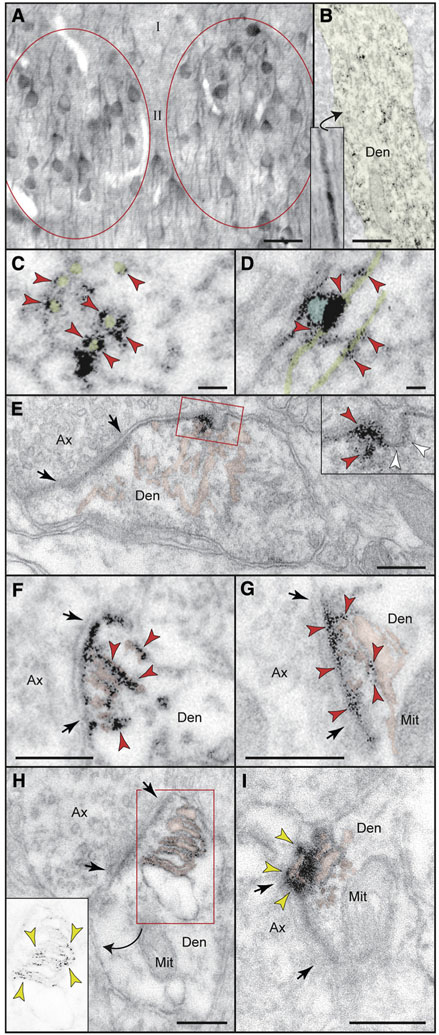
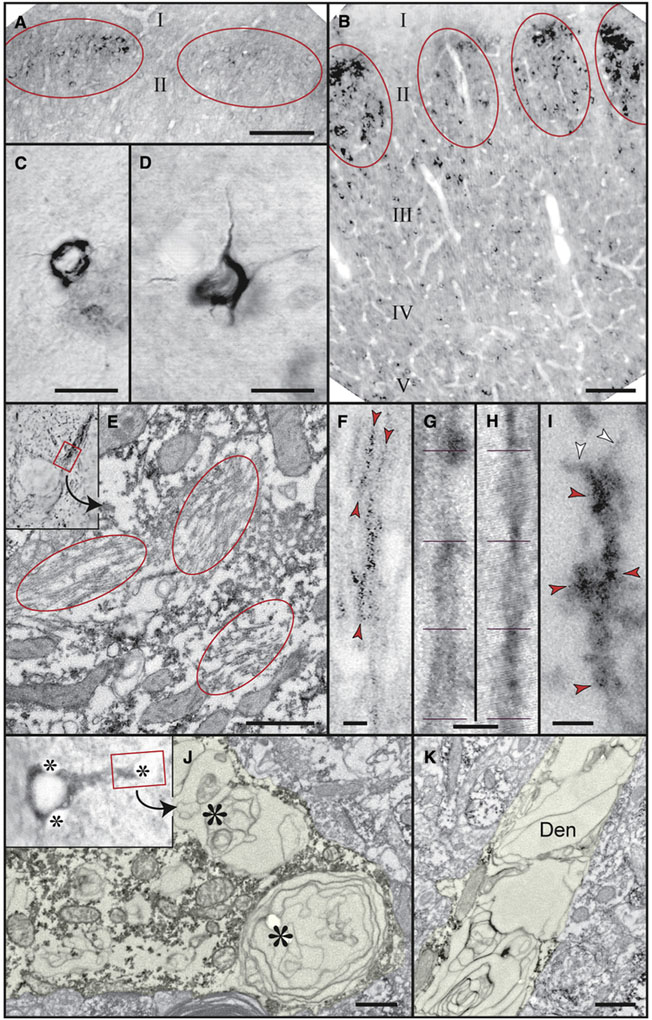
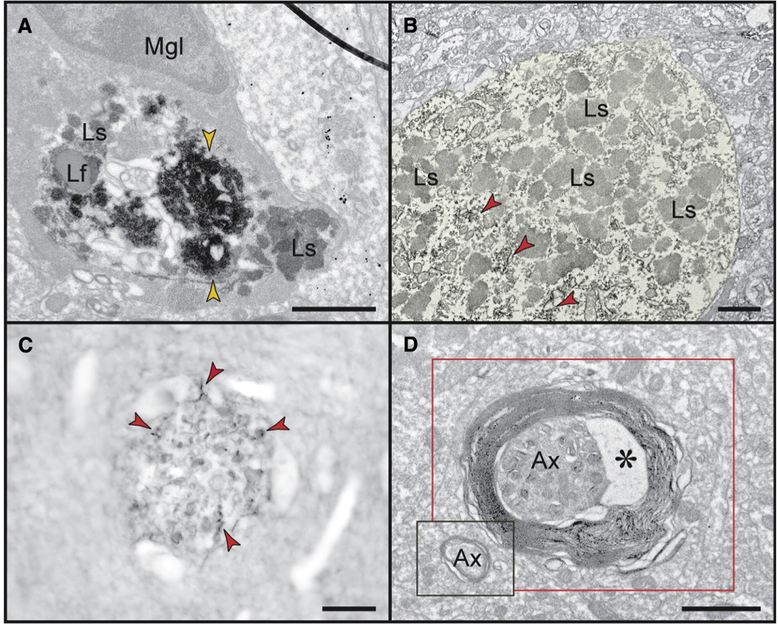
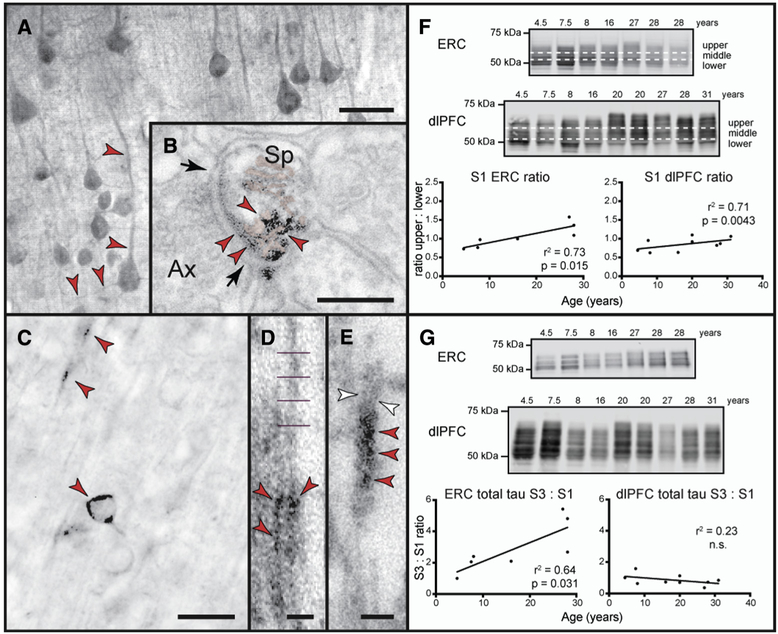
Introduction: An animal model of late‐onset Alzheimer's disease is needed to research what causes degeneration in the absence of dominant genetic insults and why the association cortex is particularly vulnerable to degeneration. Methods: We studied the progression of tau and amyloid cortical pathology in the aging rhesus macaque using immunoelectron microscopy and biochemical assays. Results: Aging macaques exhibited the same qualitative pattern and sequence of tau and amyloid cortical pathology as humans, reaching Braak stage III/IV. Pathology began in the young‐adult entorhinal cortex with protein kinase A‐phosphorylation of tau, progressing to fibrillation with paired helical filaments and mature tangles in oldest animals. Tau pathology in the dorsolateral prefrontal cortex paralleled but lagged behind the entorhinal cortex, not afflicting the primary visual cortex. Discussion: The aging rhesus macaque provides the long‐sought animal model for exploring the etiology of late‐onset Alzheimer's disease and for testing preventive strategies.
Overview
The claims and statistics of this paper haven’t been checked yet.
Run the check — free, no account needed. It reads the open-access text and checks the sources it cites.
Integrity signals
Registry
Cites
Statistics
Figures
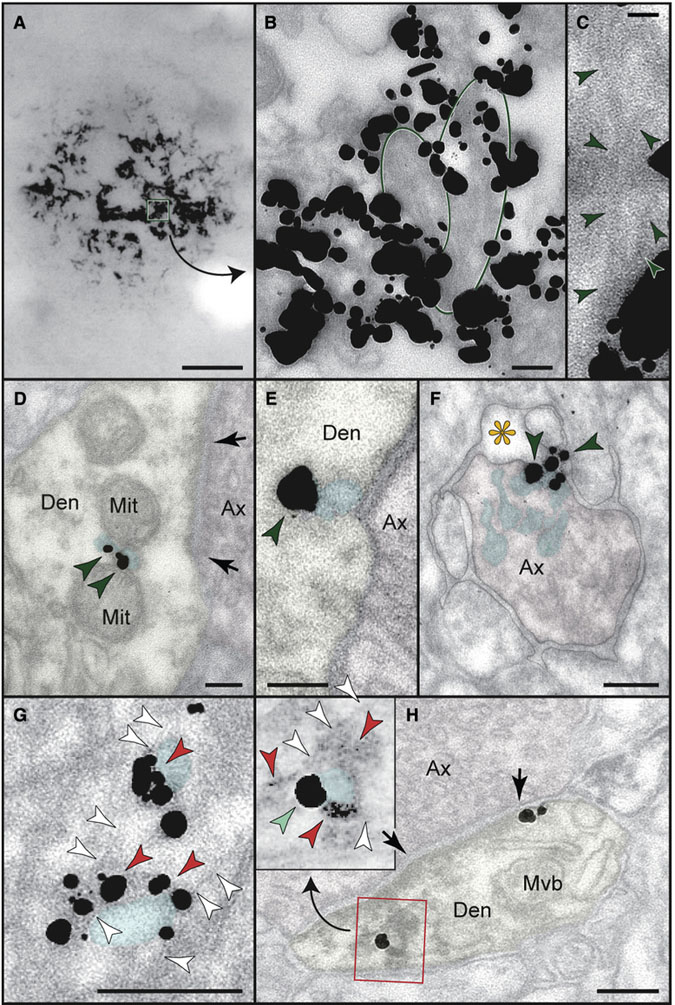
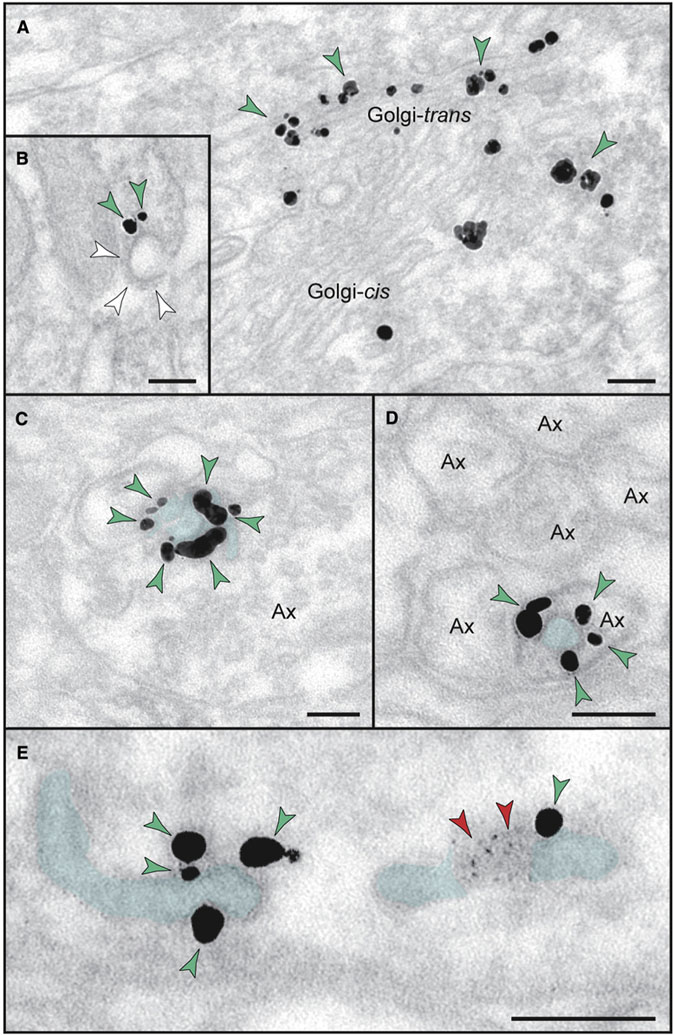
Verification
Claims the paper makes
The claims and statistics of this paper haven’t been checked yet.
Run the check — free, no account needed. It reads the open-access text and checks the sources it cites.
Claims other papers make about this one
Each is checked against this paper’s own text: does it say what the citing paper says it does?
In the citing paper
“Recent studies have indicated that adult rhesus monkeys can effectively model AD-related neurodegeneration in primate brain, and may represent a more appropriate model for AD [636, 637].”
From Molecular and cellular mechanisms underlying the pathogenesis of Alzheimer’s disease (2020) · cites this paper as [637]
Self-check
Percentages, sums and reported differences re-computed from the paper’s own numbers.
The self-check needs the paper’s full text.
Citations
Cites
Amyloid oligomers exacerbate tau pathology in a mouse model of tauopathy
Selenica, M.-L. B., Brownlow, M., Jimenez, J. P., Lee, D. C., Pena, G., Dickey, C. A., Gordon, M. N., & Morgan, D. (2013) · Neurodegenerative Diseases · doi:10.1159/000337230 · Cited by 10,359
Braak, H., Alafuzoff, I., Arzberger, T., Kretzschmar, H., & Del Tredici, K. (2006) · Acta Neuropathologica · doi:10.1007/s00401-006-0127-z · Cited by 3,172
Tau in physiology and pathology
Wang, Y., & Mandelkow, E. (2016) · Nature Reviews Neuroscience · doi:10.1038/nrn.2015.1 · Cited by 2,251
Stages of the Pathologic Process in Alzheimer Disease: Age Categories From 1 to 100 Years
Braak, H., Thal, D. R., Ghebremedhin, E., & Del Tredici, K. (2011) · Journal of Neuropathology & Experimental Neurology · doi:10.1097/nen.0b013e318232a379 · Cited by 2,194
Amyloid Precursor Protein Processing and Alzheimer's Disease
O'Brien, R. J., & Wong, P. C. (2011) · Annual Review of Neuroscience · doi:10.1146/annurev-neuro-061010-113613 · Cited by 2,061
Nelson, P. T., Alafuzoff, I., Bigio, E. H., Bouras, C., Braak, H., Cairns, N. J., Castellani, R. J., Crain, B. J., Davies, P., Tredici, K. D., et al. (2012) · Journal of Neuropathology & Experimental Neurology · doi:10.1097/nen.0b013e31825018f7 · Cited by 2,050 · cited 5×
“NFTs accumulate within degenerating neurons and correlate with cognitive deficits [4,5].”
BackgroundResultInfluentialIntracellular amyloid-β in Alzheimer's disease
LaFerla, F. M., Green, K. N., & Oddo, S. (2007) · Nature Reviews Neuroscience · doi:10.1038/nrn2168 · Cited by 1,942
Gene regulation and DNA damage in the ageing human brain
Lu, T., Pan, Y., Kao, S.-Y., Li, C., Kohane, I., Chan, J., & Yankner, B. A. (2004) · Nature · doi:10.1038/nature02661 · Cited by 1,874
Alzheimer's Disease and the Amyloid-β Peptide
Murphy, M. P., & LeVine, H. (2010) · Journal of Alzheimer's Disease · doi:10.3233/jad-2010-1221 · Cited by 1,750
Formation of Neurofibrillary Tangles in P301L Tau Transgenic Mice Induced by Aβ42 Fibrils
Götz, J., Chen, F., van Dorpe, J., & Nitsch, R. M. (2001) · Science · doi:10.1126/science.1062097 · Cited by 1,526
Cited by
Sorted by citations
Molecular and cellular mechanisms underlying the pathogenesis of Alzheimer’s disease
Guo, T., Zhang, D., Zeng, Y., Huang, T. Y., Xu, H., & Zhao, Y. (2020) · Molecular Neurodegeneration · doi:10.1186/s13024-020-00391-7 · Cited by 994
Synaptic degeneration in Alzheimer disease
Tzioras, M., McGeachan, R. I., Durrant, C. S., & Spires-Jones, T. L. (2023) · Nature Reviews Neurology · doi:10.1038/s41582-022-00749-z · Cited by 504
Hypothesis: Tau pathology is an initiating factor in sporadic Alzheimer's disease
Arnsten, A. F. T., Datta, D., Del Tredici, K., & Braak, H. (2021) · Alzheimer's & Dementia · doi:10.1002/alz.12192 · Cited by 361
Self-citationFranjic, D., Skarica, M., Ma, S., Arellano, J. I., Tebbenkamp, A. T. N., Choi, J., Xu, C., Li, Q., Morozov, Y. M., Andrijevic, D., et al. (2022) · Neuron · doi:10.1016/j.neuron.2021.10.036 · Cited by 308
Self-citationFernández-Calle, R., Konings, S. C., Frontiñán-Rubio, J., García-Revilla, J., Camprubí-Ferrer, L., Svensson, M., Martinson, I., Boza-Serrano, A., Venero, J. L., Nielsen, H. M., et al. (2022) · Molecular Neurodegeneration · doi:10.1186/s13024-022-00566-4 · Cited by 278
Metadata
- Authors
- Paspalas, C. D., Carlyle, B. C., Leslie, S., Preuss, T. M., Crimins, J. L., Huttner, A. J., van Dyck, C. H., Rosene, D. L., Nairn, A. C., & Arnsten, A. F. T.
- Affiliations
- Yale University (US)
- Emory University (US)
- Department of Neuroscience Yale School of Medicine New Haven CT USA
- Boston University (US)
- Corresponding author
- Paspalas, Constantinos D.
- Arnsten, Amy F.T.
- ORCID
- Venue
- Alzheimer's & Dementia
- Publisher
- Wiley
- Published
- 2017-12-11
- Volume
- 14
- Issue
- 5
- Pages
- 680-691
- ISSN
- 1552-5260 (ISSN-L)
- 1552-5279
- PMC
- PMC6178089
- OpenAlex
- W2772269246
- Cited by
- 140
- References
- 51
- Citations by year
- 2026: 14 · 2025: 22 · 2024: 21 · 2023: 20 · 2022: 11 · 2021: 27 · 2020: 13 · 2019: 8 · 2018: 4
- FWCI
- 5.06
- Type
- journal article
- Language
- en
- Open access
- hybrid
- doi.org
- Licence
- Locations
- Alzheimer s & Dementia (publishedVersion, cc-by-nc-nd)
- PubMed (publishedVersion)
- PubMed Central (acceptedVersion, cc-by-nc-nd)
- Funders
- National Institute on Aging
- National Institutes of Health (DP1AG047744, P50‐AG047270, RO1 AG043640)
- Yerkes National Primate Research Center, Emory University (OD P51OD11132)
- Topics
- Life Sciences › Neuroscience › Cellular and Molecular Neuroscience › Alzheimer's disease research and treatments
- Health Sciences › Medicine › Psychiatry and Mental health › Dementia and Cognitive Impairment Research
- Life Sciences › Neuroscience › Neurology › Neuroinflammation and Neurodegeneration Mechanisms
- Keywords
- Alzheimer's disease, rhesus monkeys
- MeSH terms
- Aging, Alzheimer Disease, Amyloid, Animals, Brain, Disease Models, Animal, Macaca mulatta, Phosphorylation, Microscopy, Immunoelectron, Neurofibrillary Tangles, tau Proteins, Prefrontal Cortex, Disease Progression, Entorhinal Cortex, Plaque, Amyloid
About these checks
Registry, retraction, Cites and statistics results are computed, not judged, with one exception: a printed reference that no index lists is read once by a model before it counts as a citation error. Claims are extracted by a model and kept only when their quote appears verbatim in the text; each cited source is then checked, with a model’s help, for whether it says what the claim relies on. Those verdicts can be wrong — read the claim’s quote and the cited source before relying on one.
Statistics and arithmetic are recomputed, not judged.
Confidence bands are shown only for fields calibrated on our annotated test set. None is calibrated yet, so no band is shown.
What counts as a claim ›How we measure confidence ›How we check this ›
Are you an author, or do you see a problem with this page? Request a review
