

The DOI matches its Crossref record; 1 of the 1 references it cites were found in a registry or an index.
Developing hydrophobic-hydrophilic protein structures by 3D food printing of sorghum and soy protein gels
Open accessAbstract
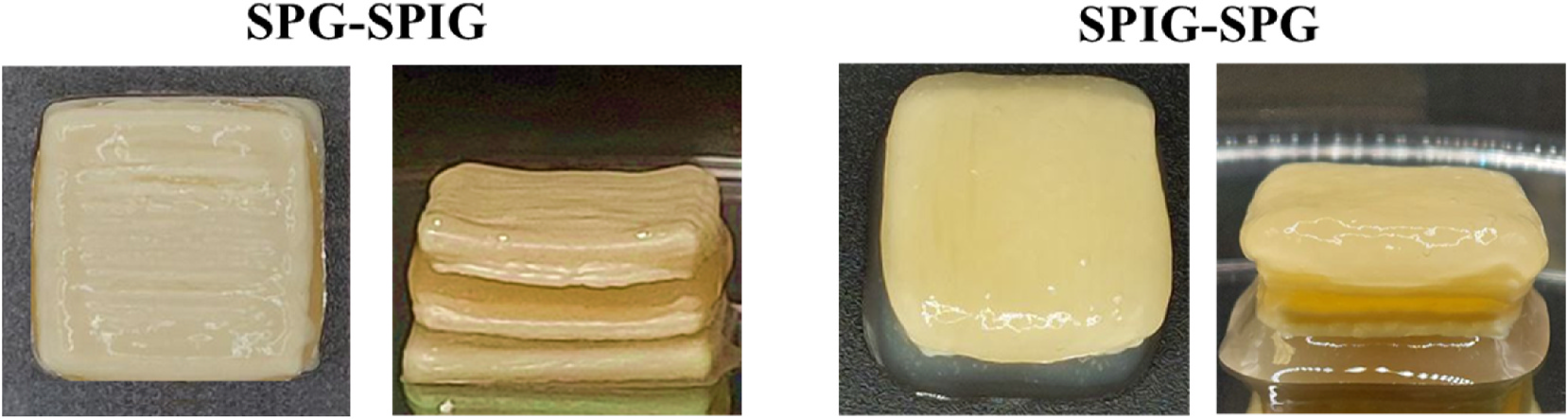
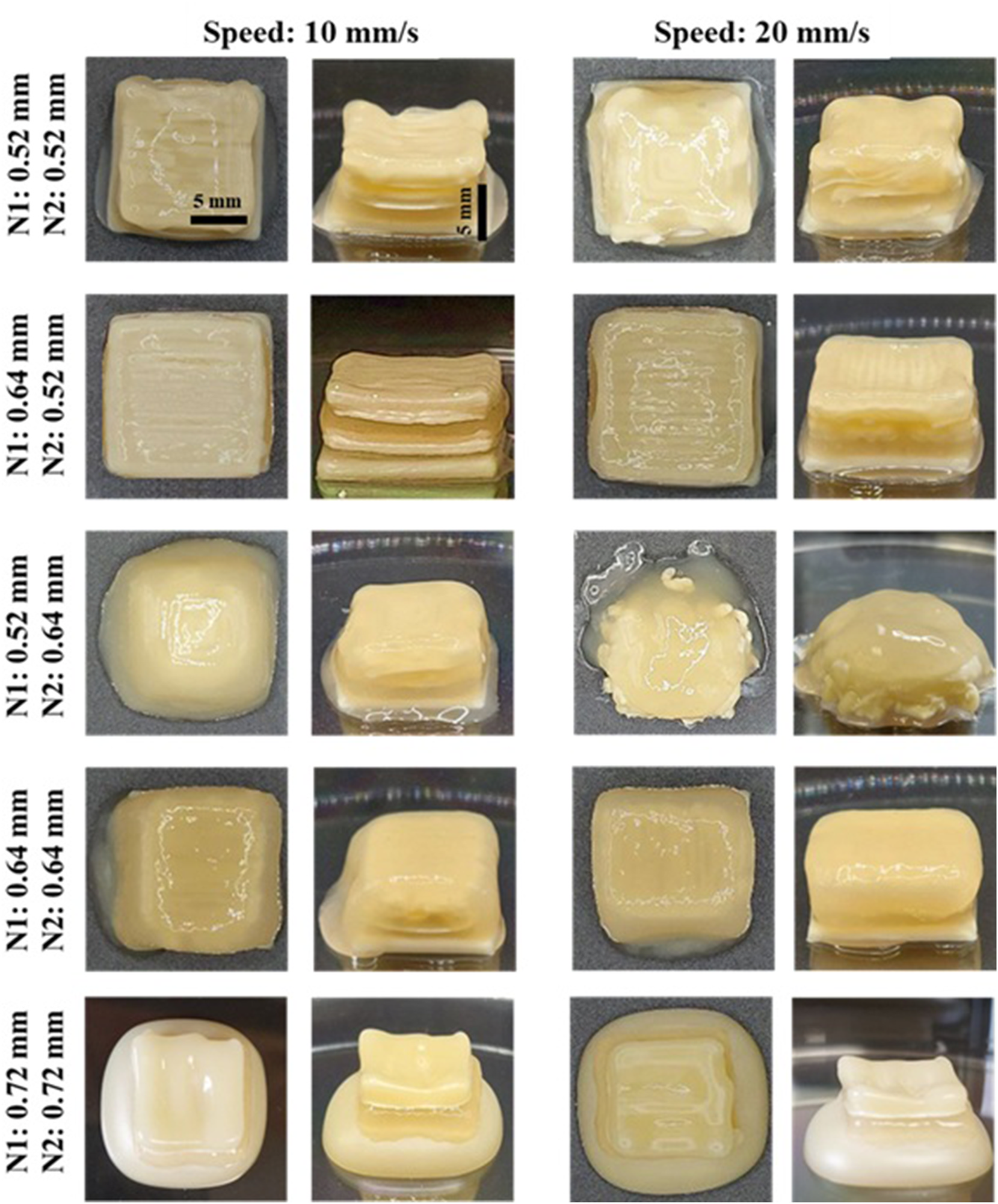
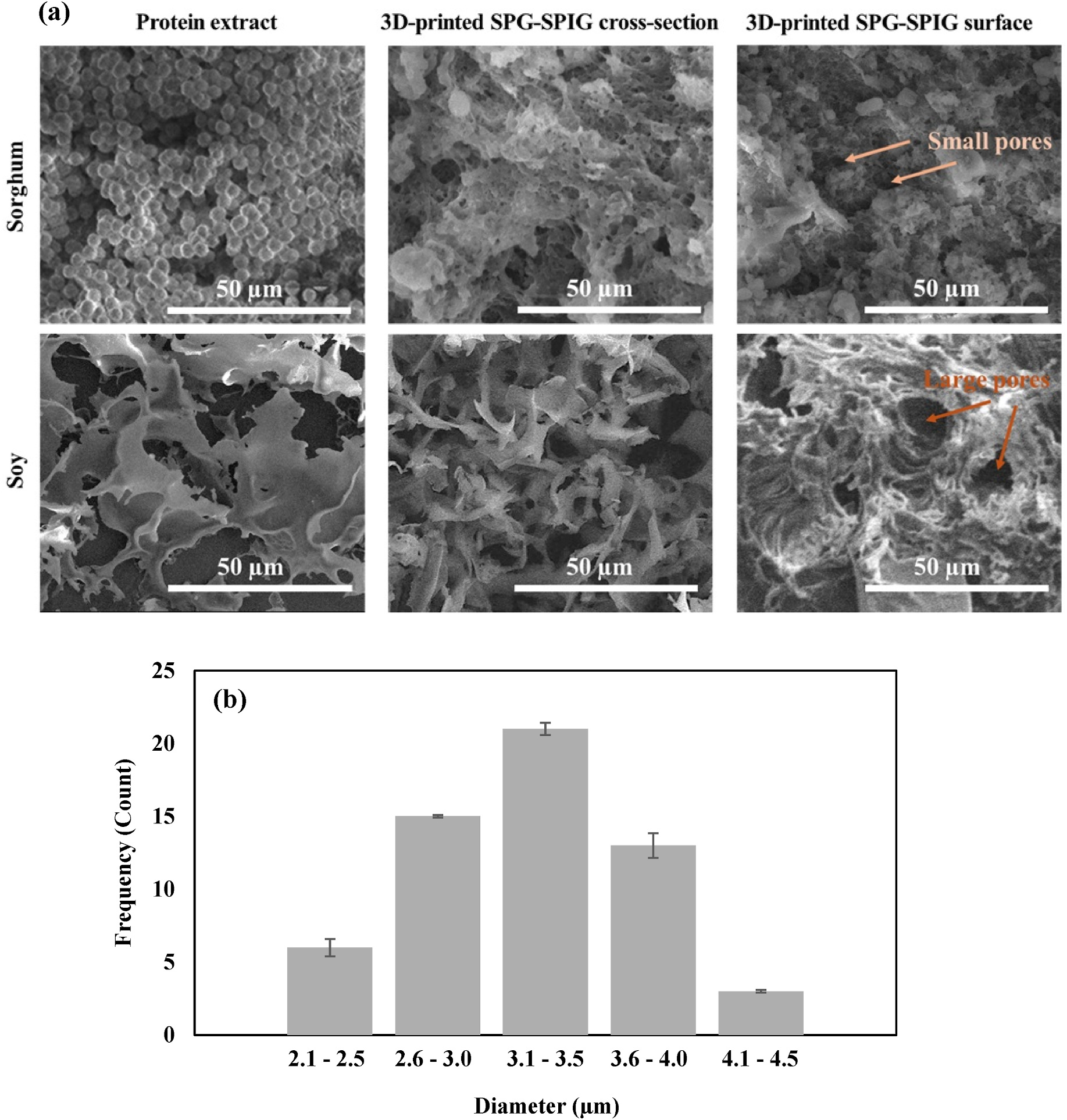
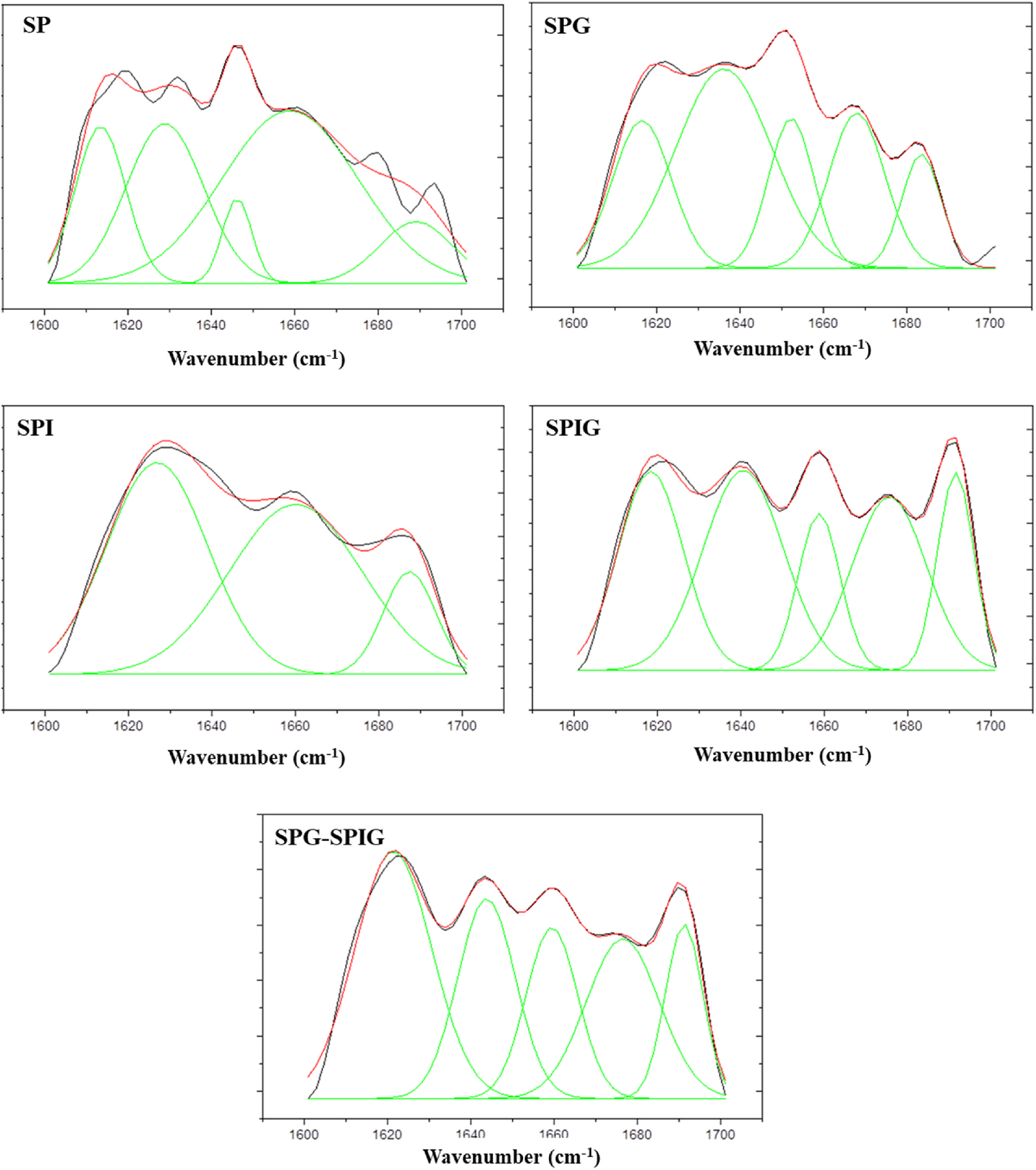
The goal of this study was to introduce the simultaneous use of hydrophobic-hydrophilic proteins bioinks for 3D food printing. Sorghum protein gel (SPG) at 25% w/w and soy protein isolate gel (SPIG) at 11% w/w were loaded into separate extruders. The effects of the first printed layer (SPG or SPIG), printing speed (10, 20 mm/s), and nozzle size (0.52, 0.64, 0.72 mm) on printability were evaluated. The textural properties, rheological characteristics, microstructure, crystallinities, and functional groups of the proteins were analyzed. Printing sorghum and soy proteins together helped balance essential amino acids, where lysine (94.7%) and histidine (48.0%) levels were improved in the 3D-printed sorghum protein formulation. The best printability and shape accuracy (˃95% match with the digital design) were achieved using SPG as the first layer, a 0.64 mm nozzle for SPG, a 0.52 mm nozzle for SPIG, and a printing speed of 10 mm/s. SEM images showed porous gel networks in the 3D-printed samples under optimized conditions. Chemical analysis indicated protein structure changes after gelation, and X-ray diffraction confirmed an amorphous structure in all samples. In conclusion, the findings emphasize the crucial role of process parameters in achieving the desired printability and structural integrity of SPG-SPIG. The novelty of this study lies in introducing a new bioink formulation with a balanced amino acid profile for food 3D printing, expanding the use of sorghum proteins. • This study explored simultaneous 3D printing of sorghum and soy protein gels. • Amino acid profiles showed sorghum and soy proteins were complementary. • Optimal conditions ensured high printability, confirmed by macro-microstructure. • Results highlight the potential use of hydrophobic-hydrophilic bioinks together.
Overview
The claims and statistics of this paper haven’t been checked yet.
Run the check — free, no account needed. It reads the open-access text and checks the sources it cites.
Integrity signals
Registry
Cites
Statistics
Figures
Verification
Claims the paper makes
The claims and statistics of this paper haven’t been checked yet.
Run the check — free, no account needed. It reads the open-access text and checks the sources it cites.
Claims other papers make about this one
Each is checked against this paper’s own text: does it say what the citing paper says it does?
The check wasn’t confident either way, so it gives no verdict — never disputed.
In the citing paper
“indicating that UAE enhanced the elasticity and structural stability of saline-alkali soybean protein gels (Barekat & Ubeyitogullari, 2025; Ren et al., 2024).”
From Heat-induced gelation of ultrasonically extracted saline-alkali-grown soybean protein: Correlation between protein conformation and gel functional behavior (2027) · cites this paper as Barekat & Ubeyitogullari, 2025
Experimental — accuracy not yet measured
Self-check
Percentages, sums and reported differences re-computed from the paper’s own numbers.
The self-check needs the paper’s full text.
Citations
Cites
Bom, S., Ribeiro, R., Ribeiro, H. M., Santos, C., & Marto, J. (2022) · International Journal of Pharmaceutics · doi:10.1016/j.ijpharm.2022.121506 · Cited by 230
Research works printed but not linked: 66
- Abedinia, 2017, Extraction and characterization of gelatin from the feet of Pekin duck (Anas platyrhynchos domestica) as affected by acid, alkaline, and enzyme pretreatment, Int. J. Biol. Macromol., 98, 10.1016/j.ijbiomac.2017.01.139 · DOI
- Ahmadzadeh, 2023, Effects of polyphenol-rich grape seed and green tea extracts on the physicochemical properties of 3D-printed edible soy protein films, Food Packag. Shelf Life, 40, 10.1016/j.fpsl.2023.101184 · DOI
- Ahmadzadeh, 2024, Lutein encapsulation into dual-layered starch/zein gels using 3D food printing: improved storage stability and in vitro bioaccessibility, Int. J. Biol. Macromol., 266, 10.1016/j.ijbiomac.2024.131305 · DOI
- Ahmadzadeh, 2023, Enhancing the stability of lutein by loading into dual-layered starch-ethyl cellulose gels using 3D food printing, Addit. Manuf., 69
- Ahmadzadeh, 2023, Generation of porous starch beads via a 3D food printer: the effects of amylose content and drying technique, Carbohydr. Polym., 301, 10.1016/j.carbpol.2022.120296 · DOI
- Ahmadzadeh, 2022, Fabrication of porous spherical beads from corn starch by using a 3D food printing system, Foods, 11, 10.3390/foods11070913 · DOI
- Ainis, 2023, Comparing the rheological and 3D printing behavior of pea and soy protein isolate pastes, Innov. Food Sci. Emerg. Technol., 84, 10.1016/j.ifset.2023.103307 · DOI
- Amado, 2024, Alginate and pH improve properties of soy protein-based films, Food Biophys., 19, 10.1007/s11483-023-09823-5 · DOI
- Barekat, 2025, Maximizing sorghum proteins printability: optimizing gel formulation and 3D-printing parameters to develop a novel bioink, Int. J. Biol. Macromol., 300, 10.1016/j.ijbiomac.2025.140245 · DOI
- Chang, 2014, Effect of gums on the rheological characteristics and microstructure of acid-induced SPI-gum mixed gels, Carbohydr. Polym., 108, 10.1016/j.carbpol.2014.02.089 · DOI
- Chen, 2019, Application of soy protein isolate and hydrocolloids based mixtures as promising food material in 3D food printing, J. Food Eng., 261, 10.1016/j.jfoodeng.2019.03.016 · DOI
- Chen, 2022, Effect of temperature on rheological, structural, and textural properties of soy protein isolate pastes for 3D food printing, J. Food Eng., 323, 10.1016/j.jfoodeng.2021.110917 · DOI
- Chen, 2013, FTIR spectroscopic characterization of soy proteins obtained through AOT reverse micelles, Food Hydrocoll., 31, 10.1016/j.foodhyd.2012.11.017 · DOI
- Cheng, 2024, Effect of insoluble dietary fiber on printing properties and molecular interactions of 3D-printed soy protein isolate-wheat gluten plant-based meats, Int. J. Biol. Macromol., 258, 10.1016/j.ijbiomac.2023.128803 · DOI
- Dang, 2023, Structural, functional properties of protein and characteristics of tofu from small-seeded soybeans grown in the Loess Plateau of China, Food Chem., X 18
- Derossi, 2020, Extending the 3D food printing tests at high speed. Material deposition and effect of non-printing movements on the final quality of printed structures, J. Food Eng., 275, 10.1016/j.jfoodeng.2019.109865 · DOI
- Dey, 2022, Physical and textural properties of functional edible protein films from soybean using an innovative 3D printing technology, J. Food Sci., 87, 4808, 10.1111/1750-3841.16349 · DOI
- dos Santos D'Almeida, 2024, Enhancing the nutritional value and of sorghum grains bred for northern Europe through processing: a perspective on phenolic bioaccessibility and protein digestibility, Food Chem.
- Duodu, 2001, FTIR and solid state 13C NMR spectroscopy of proteins of wet cooked and popped sorghum and maize, J. Cereal. Sci., 33, 261, 10.1006/jcrs.2000.0352 · DOI
- Duodu, 2003, Factors affecting sorghum protein digestibility, J. Cereal. Sci., 10.1016/S0733-5210(03)00016-X · DOI · Paper page
- Feng, 2019, Materials properties of printable edible inks and printing parameters optimization during 3D printing: a review, Crit. Rev. Food Sci. Nutr., 10.1080/10408398.2018.1481823 · DOI
- Ferreira, 2021, Characterization of cassava starch/soy protein isolate blends obtained by extrusion and thermocompression, Ind. Crops Prod., 160, 10.1016/j.indcrop.2020.113092 · DOI
- Gallo, 2024, Sorghum protein ingredients: production, compositional variability and enhancement of aqueous dispersibility through homogenization, Future Foods, 9, 10.1016/j.fufo.2024.100323 · DOI
- Glusac, 2018, Gel-like emulsions stabilized by tyrosinase-crosslinked potato and zein proteins, Food Hydrocoll., 82, 53, 10.1016/j.foodhyd.2018.03.046 · DOI
- Herrero, 2009, Elucidation of structural changes in soy protein isolate upon heating by Raman spectroscopy, Int. J. Food Sci. Technol., 44, 10.1111/j.1365-2621.2008.01880.x · DOI
- Khan, 2023, Variations in total protein and amino acids in the sequenced sorghum mutant library, Plants, 12, 10.3390/plants12081662 · DOI
- Kong, 2025, Novel heterogeneous 3D printing process of protein-polysaccharide gel containing orange juice sacs: optimization of material properties and printing parameters, Int. J. Biol. Macromol., 305, 10.1016/j.ijbiomac.2025.141277 · DOI
- Lenie, 2024, Development of a pH-responsive system based on starch and alginate-pectin hydrogels using coaxial 3D food printing, Food Hydrocoll., 153, 10.1016/j.foodhyd.2024.109989 · DOI
- Li, 2023, Relationship between soybean protein isolate and textural properties of texturized vegetable protein, Molecules, 28
- Li, 2020, Nutritional evaluation of whole soybean curd made from different soybean materials based on amino acid profiles, Food Qual. Saf., 4
- Liu, 2016, Self-assembly of zein microspheres with controllable particle size and narrow distribution using a novel built-in ultrasonic dialysis process, J. Chem. Eng., 284, 1094, 10.1016/j.cej.2015.09.067 · DOI
- Liu, 2019, 3D printing complex egg white protein objects: properties and optimization, Food Bioprocess Technol., 12, 267, 10.1007/s11947-018-2209-z · DOI
- Liu, 2011, Contribution of protein conformation and intermolecular bonds to fish and pork gelation properties, Food Hydrocoll., 25, 898, 10.1016/j.foodhyd.2010.08.016 · DOI
- Liu, 2023, Preparation and investigation of the processing characteristics of transglutaminase cross-linked soy protein isolate–whey protein polymer, Biomass Convers. Biorefin.
- Lv, 2023, Gel properties of soy protein isolate-potato protein-egg white composite gel: study on rheological properties, microstructure, and digestibility, Food Hydrocoll., 135, 10.1016/j.foodhyd.2022.108223 · DOI
- Mattice, 2020, Evaluating the use of zein in structuring plant-based products, Curr. Res. Food Sci., 3, 59, 10.1016/j.crfs.2020.03.004 · DOI
- Mu, 2021, Recent advances in 3D printing with protein-based inks, Prog. Polym. Sci., 10.1016/j.progpolymsci.2021.101375 · DOI
- Musigakun, 2007, Characteristics and functional properties of sorghum protein (kafirin), Nat. Sci.
- Nguyen, 2025, Optimizing printability of rice protein-based formulations using extrusion-based 3D food printing, Food Sci. Nutr., 13, 10.1002/fsn3.4713 · DOI
- Pan, 2022, 3D printing properties of Flammulina velutipes polysaccharide-soy protein complex hydrogels, J. Food Eng., 334, 10.1016/j.jfoodeng.2022.111170 · DOI
- Phuhongsung, 2020, Investigation on 3D printing ability of soybean protein isolate gels and correlations with their rheological and textural properties via LF-NMR spectroscopic characteristics, LWT, 122, 10.1016/j.lwt.2020.109019 · DOI
- Qiu, 2024, Modification of the texture of 3D printing soy protein isolate-based foods with proper nozzle sizes: a swallowing oriented strategy for dysphagia diet, Int. J. Biol. Macromol., 282, 10.1016/j.ijbiomac.2024.136694 · DOI
- Qiu, 2023, Construction of 3D printed meat analogs from plant-based proteins: improving the printing performance of soy protein- and gluten-based pastes facilitated by rice protein, Food Res. Int., 167, 10.1016/j.foodres.2023.112635 · DOI
- Riantiningtyas, 2021, 3D printing of a high protein yoghurt-based gel: effect of protein enrichment and gelatine on physical and sensory properties, Food Res. Int., 147, 10.1016/j.foodres.2021.110517 · DOI
- Sadaf, 2024, Effect of a novel drying method based on supercritical carbon dioxide on the physicochemical properties of sorghum proteins, RSC Adv., 14, 5851, 10.1039/D3RA07426A · DOI
- Sahu, 2021, In vitro antioxidant activity and enzyme inhibition properties of wheat whole grain, bran and flour defatted with hexane and supercritical fluid extraction, LWT, 146, 10.1016/j.lwt.2021.111376 · DOI
- Semwal, 2022, In situ thermal modification of kafirin using infrared radiations and microwaves, J. Sci. Food Agric., 102, 1903, 10.1002/jsfa.11527 · DOI
- Shah, 2021, Physicochemical characterisation of kafirins extracted from sorghum grain and dried distillers grain with solubles related to their biomaterial functionality, Sci. Rep., 11, 10.1038/s41598-021-94718-z · DOI
- Siacor, 2021, On the additive manufacturing (3D printing) of viscoelastic materials and flow behavior: from composites to food manufacturing, Addit. Manuf.
- Singh, 2024, The functionality and extraction of protein from sorghum, finger millet, and Kodo millet: a review, Int. J. Food Sci. Technol., 10.1111/ijfs.16747 · DOI
- Taylor, 2009, Formation of kafirin microparticles by phase separation from an organic acid and their characterisation, J. Cereal. Sci., 50, 99, 10.1016/j.jcs.2009.03.005 · DOI
- 2024, Export sorghum: the smart choice for feed grain solutions, United Sorghum Checkoff Program
- Wang, 2022, Increased sulfur-containing amino acid content and altered conformational characteristics of soybean proteins by rebalancing 11S and 7S compositions, Front. Plant Sci., 13
- Wang, 2024, Rheological and mechanical behavior of soy protein-polysaccharide composite paste for extrusion-based 3D food printing: effects of type and concentration of polysaccharides, Food Hydrocoll., 153, 10.1016/j.foodhyd.2024.109942 · DOI
- Wang, 2022, 3D printing of textured soft hybrid meat analogues, Foods, 11
- Wulandari, 2023, Amino acid profiling and structural characterization of sorghum protein concentrates using enzyme liquefaction, J. Food Meas. Charact., 17
- Xiao, 2024, Enzymatic production and physicochemical and functional properties of sorghum protein isolates, Int. J. Biol. Macromol., 283, 10.1016/j.ijbiomac.2024.137421 · DOI
- Xiao, 2020, Gel properties and formation mechanism of soy protein isolate gels improved by wheat bran cellulose, Food Chem., 324, 10.1016/j.foodchem.2020.126876 · DOI
- Xu, 2023, Rheological properties, gel properties and 3D printing performance of soy protein isolate gel inks added with different types of apricot polysaccharides, Int. J. Biol. Macromol., 242, 10.1016/j.ijbiomac.2023.124624 · DOI
- Yan, 2020, Diverse mechanical properties and microstructures of sorghum bran arabinoxylans/soy protein isolate mixed gels by duo-induction of peroxidase and calcium ions, Food Hydrocoll., 107, 10.1016/j.foodhyd.2020.105946 · DOI
- Yu, 2022, Development of soy protein isolate emulsion gels as extrusion-based 3D food printing inks: effect of polysaccharides incorporation, Food Hydrocoll., 131, 10.1016/j.foodhyd.2022.107824 · DOI
- Zhang, 2021, Recent advantage of interactions of protein-flavor in foods: perspective of theoretical models, protein properties and extrinsic factors, Trends Food Sci. Technol.
- Zhang, 2022, Advancements in 3D food printing: a comprehensive overview of properties and opportunities, Crit. Rev. Food Sci. Nutr.
- Zhang, 2020, Evaluation of the standardized ileal digestibility of amino acids of rapeseed meals varying in protein solubility for Pekin ducks, Poult. Sci., 99
- Zhao, 2015, XRD, SEM, and XPS analysis of soybean protein powders obtained through extraction involving reverse micelles, J. Am. Oil Chem. Soc., 92, 10.1007/s11746-015-2657-9 · DOI
- Zhao, 2025, Development of special nutritional balanced food 3D printing products based on the mixing of animals/plants materials: research progress, applications, and trends, Crit. Rev. Food Sci. Nutr.
Cited by
Sorted by citations
Han, X., Shan, B., Li, Y., Liu, J., Yang, J., & Li, D. (2027) · Food Hydrocolloids · doi:10.1016/j.foodhyd.2026.113483
Metadata
- Authors
- Barekat, S., & Ubeyitogullari, A.
- Affiliations
- University of Arkansas at Fayetteville (US)
- Corresponding author
- Ubeyitogullari, Ali
- Venue
- Journal of Food Engineering
- Publisher
- Elsevier BV
- Published
- 2025-11
- Volume
- 400
- Pages
- 112640
- ISSN
- 0260-8774 (ISSN-L)
- OpenAlex
- W4410020478
- Cited by
- 19
- References
- 1
- Citations by year
- 2026: 13 · 2025: 6
- FWCI
- 6.19
- Type
- journal article
- Language
- en
- Open access
- hybrid
- doi.org
- Licence
- Locations
- Journal of Food Engineering (publishedVersion, cc-by-nc-nd)
- Journal of the Arkansas Academy of Science (submittedVersion, cc-by-nc-nd)
- Funders
- National Institute of Food and Agriculture (1025907, 2023-67018-40747, NC1023)
- Arkansas Biosciences Institute
- United Sorghum Checkoff Program
- Topics
- Physical Sciences › Engineering › Industrial and Manufacturing Engineering › Additive Manufacturing and 3D Printing Technologies
- Life Sciences › Agricultural and Biological Sciences › Food Science › Proteins in Food Systems
- Physical Sciences › Engineering › Biomedical Engineering › 3D Printing in Biomedical Research
- Keywords
- 3D food printing, bioinks, soy protein isolate, printability, printing speed, nozzle size, essential amino acid profile, gel microstructure, protein crystallinity, extruder
About these checks
Registry, retraction, Cites and statistics results are computed, not judged, with one exception: a printed reference that no index lists is read once by a model before it counts as a citation error. Claims are extracted by a model and kept only when their quote appears verbatim in the text; each cited source is then checked, with a model’s help, for whether it says what the claim relies on. Those verdicts can be wrong — read the claim’s quote and the cited source before relying on one.
Statistics and arithmetic are recomputed, not judged.
Confidence bands are shown only for fields calibrated on our annotated test set. None is calibrated yet, so no band is shown.
What counts as a claim ›How we measure confidence ›How we check this ›
Are you an author, or do you see a problem with this page? Request a review
