

The DOI matches its Crossref record; 43 of the 43 references it cites were found in a registry or an index.
Attributable mortality of candidemia – Results from the ECMM Candida III multinational European Observational Cohort Study
Open accessAbstract
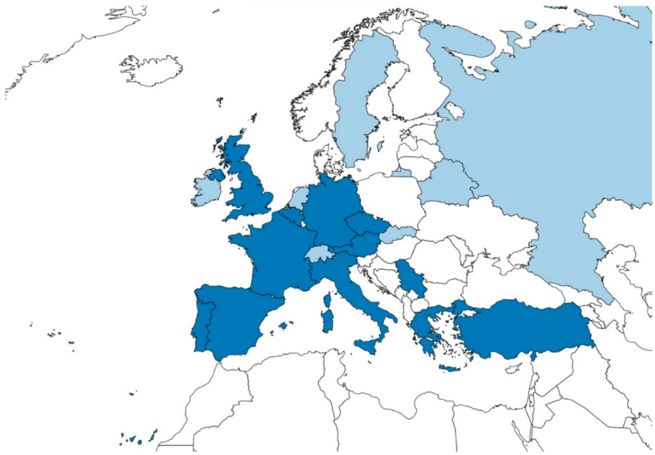
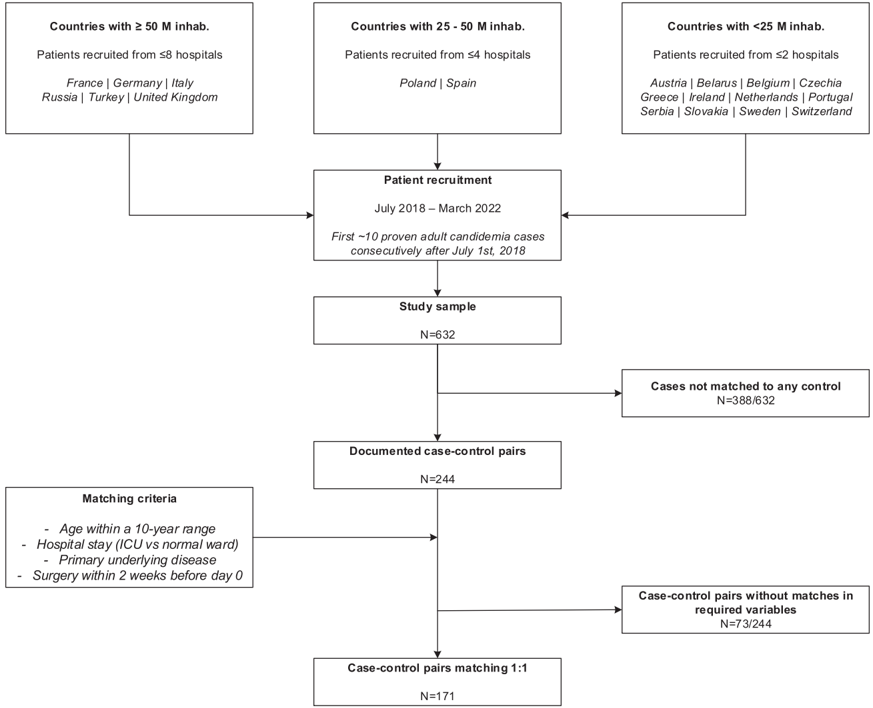
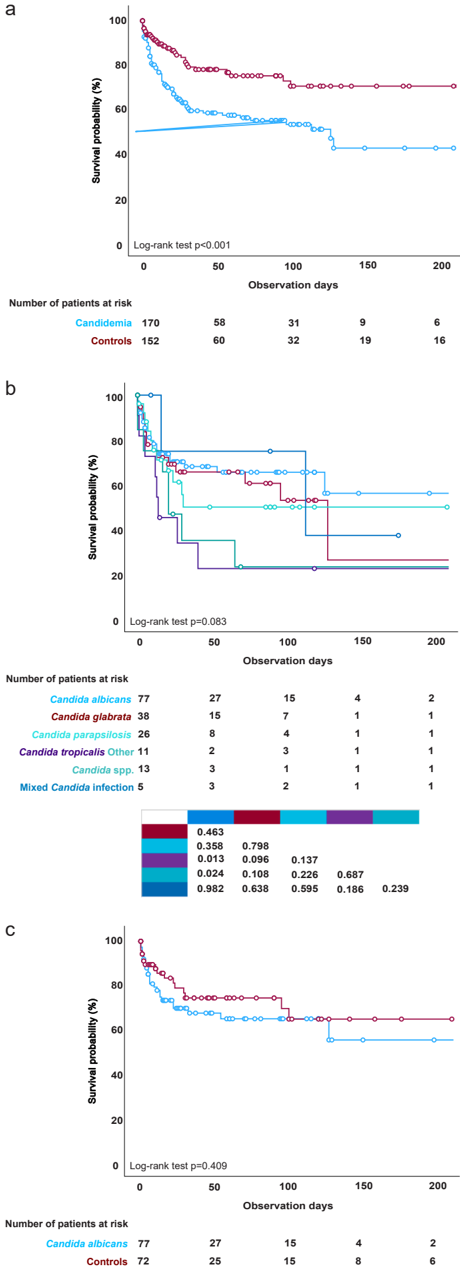
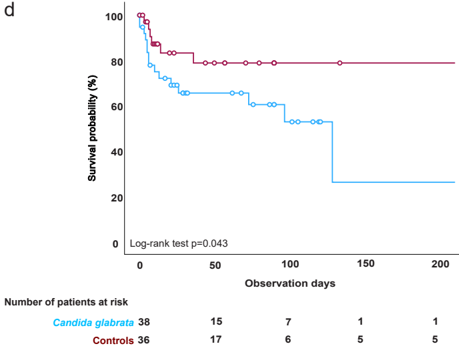
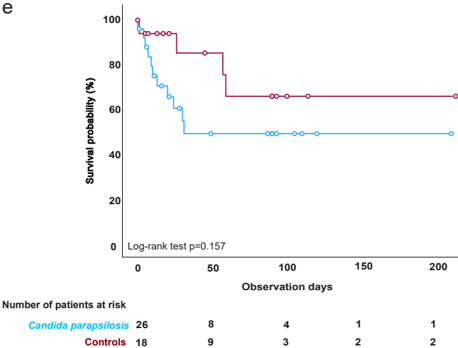
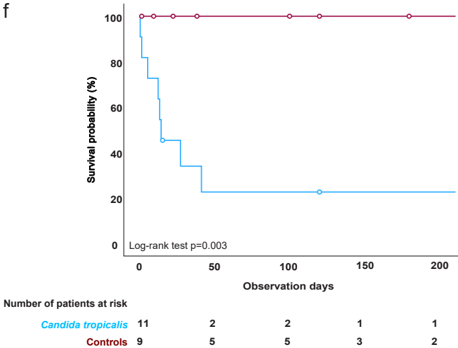
INTRODUCTION: Despite antifungal advancements, candidaemia still has a high mortality rate of up to 40%. The ECMM Candida III study in Europe investigated the changing epidemiology and outcomes of candidaemia for better understanding and management of these infections. METHODS: In this observational cohort study, participating hospitals enrolled the first ten consecutive adults with blood culture-proven candidemia. Collected data included patient demographics, risk factors, hospital stay duration (follow-up of 90 days), diagnostic procedures, causative Candida spp., management details, and outcome. Controls were included in a 1:1 fashion from the same hospitals. The matching process ensured similarity in age (10-year range), primary underlying disease, hospitalization in intensive care versus non-ICU ward, and major surgery within 2 weeks before candidemia between cases and controls. Overall and attributable mortality were described, and a survival probability for cases and controls was performed. RESULTS: One hundred seventy-one pairs consisting of patients with candidemia and matched controls from 28 institutions were included. In those with candidemia, overall mortality was 40.4%. Attributable mortality was 18.1% overall but differed between causative Candida species (7.7% for Candida albicans, 23.7% for Candida glabrata/Nakaseomyces glabratus, 7.7% for Candida parapsilosis and 63.6% for Candida tropicalis). Regarding risk factors, the presence of a central venous catheter, total parenteral nutrition and acute or chronic renal disease were significantly more common in cases versus controls. Duration of hospitalization, and especially that of ICU stay, was significantly longer in candidemia cases (20 (IQR 10-33) vs 15 days (IQR 7-28); p = 0.004). CONCLUSIONS: Although overall and attributable mortality in this subgroup analysis of matched case/control pairs remains high, the attributable mortality appears to have decreased in comparison to historical cohorts. This decrease may be driven by improved prognosis of Candida albicans and Candida parapsilosis candidemia; whereas candidemia due to other Candida spp. exhibits a much higher attributable mortality.
Overview
The claims and statistics of this paper haven’t been checked yet.
Run the check — free, no account needed. It reads the open-access text and checks the sources it cites.
Integrity signals
Registry
Cites
Statistics
Figures
Verification
Claims the paper makes
The claims and statistics of this paper haven’t been checked yet.
Run the check — free, no account needed. It reads the open-access text and checks the sources it cites.
Claims other papers make about this one
Each is checked against this paper’s own text: does it say what the citing paper says it does?
In the citing paper
“Compared with C. albicans, these species more frequently exhibit antifungal resistance and might be associated with higher mortality rates for patients with candidemia (12–14).”
From Population-Based Active Surveillance for Culture-Confirmed Candidemia — 10 Sites, United States, 2017–2021 (2025) · cites this paper as [14]
Self-check
Percentages, sums and reported differences re-computed from the paper’s own numbers.
The self-check needs the paper’s full text.
Citations
Cites
Multistate point-prevalence survey of health care-associated infections
Magill, S. S., Edwards, J. R., Bamberg, W., Beldavs, Z. G., Dumyati, G., Kainer, M. A., Lynfield, R., Maloney, M., McAllister-Hollod, L., Nadle, J., et al. (2014) · New England Journal of Medicine · doi:10.1056/nejmoa1306801 · Cited by 3,931
Attributable Mortality of Nosocomial Candidemia, Revisited
Gudlaugsson, O., Gillespie, S., Lee, K., Berg, J. V., Hu, J., Messer, S., Herwaldt, L., Pfaller, M., & Diekema, D. (2003) · Clinical Infectious Diseases · doi:10.1086/378745 · Cited by 1,140
Horn, D. L., Neofytos, D., Anaissie, E. J., Fishman, J. A., Steinbach, W. J., Olyaei, A. J., Marr, K. A., Pfaller, M. A., Chang, C., & Webster, K. M. (2009) · Clinical Infectious Diseases · doi:10.1086/599039 · Cited by 956
Chowdhary, A., Sharma, C., & Meis, J. F. (2017) · PLOS Pathogens · doi:10.1371/journal.ppat.1006290 · Cited by 750
Leroy, O., Gangneux, J., Montravers, P., Mira, J. P., Gouin, F., Sollet, J.-P., Carlet, J. M., Reynes, J., Rosenheim, M., Regnier, B., et al. (2009) · Critical Care Medicine · doi:10.1097/ccm.0b013e31819efac0 · Cited by 551
Self-citationChanges in the epidemiological landscape of invasive candidiasis
Lamoth, F., Lockhart, S. R., Berkow, E. L., & Calandra, T. (2018) · Journal of Antimicrobial Chemotherapy · doi:10.1093/jac/dkx444 · Cited by 547
Tortorano, A. M., Peman, J., Bernhardt, H., Klingspor, L., Kibbler, C. C., Faure, O., Biraghi, E., Canton, E., Zimmermann, K., Seaton, S., et al. (2004) · European Journal of Clinical Microbiology & Infectious Diseases · doi:10.1007/s10096-004-1103-y · Cited by 509
Morgan, J., Meltzer, M. I., Plikaytis, B. D., Sofair, A. N., Huie-White, S., Wilcox, S., Harrison, L. H., Seaberg, E. C., Hajjeh, R. A., & Teutsch, S. M. (2005) · Infection Control & Hospital Epidemiology · doi:10.1086/502581 · Cited by 437
ESCMID guideline for the diagnosis and management of Candida diseases 2012: diagnostic procedures.
Cuenca-Estrella, M., Verweij, P. E., Arendrup, M. C., Arikan-Akdagli, S., Bille, J., Donnelly, J. P., Jensen, H. E., Lass-Flörl, C., Richardson, M. D., Akova, M., et al. (2012) · Clinical Microbiology and Infection · doi:10.1111/1469-0691.12038 · Cited by 386
Self-citationRisk Factors for Hospital-Acquired Candidemia: A Matched Case-Control Study
Wey, S. B. (1989) · Archives of Internal Medicine · doi:10.1001/archinte.1989.00390100145030 · Cited by 369
Research works printed but not linked: 1
- Vena, 2024, Laboratory and clinical management capacity for invasive fungal infections: the Italian landscape, Infection, 52, 197, 10.1007/s15010-023-02084-x · DOI
Cited by
Sorted by citations
Jenkins, E. N., Gold, J. A. W., Benedict, K., Lockhart, S. R., Berkow, E. L., Dixon, T., Shack, S. L., Witt, L. S., Harrison, L. H., Seopaul, S., et al. (2025) · MMWR. Surveillance Summaries · doi:10.15585/mmwr.ss7404a1 · Cited by 43
“Compared with C. albicans , these species more frequently exhibit antifungal resistance and might be associated with higher mortality rates for patients with candidemia ( 12 – 14 ).”
Candidemia: An Update on Epidemiology, Risk Factors, Diagnosis, Susceptibility, and Treatment
Cabrera-Guerrero, J. P., García-Salazar, E., Hernández‐Silva, G., Herrera, A. C., Martínez-Herrera, E. O., Pinto‐Almazán, R., León, M. G. F.-D., & Castro-Fuentes, C. A. (2025) · Pathogens · doi:10.3390/pathogens14080806 · Cited by 44
Wolfgruber, S., Sedik, S., Klingspor, L., Tortorano, A. M., Gow, N. A. R., Lagrou, K., Gangneux, J., Maertens, J. A., Meis, J. F. G. M., Lass‐Flörl, C., et al. (2024) · Mycopathologia · doi:10.1007/s11046-024-00871-0 · Cited by 39
Self-citationPyrpasopoulou, A., Zarras, C., Mouloudi, E. K., Vakalis, G., Ftergioti, A., Kouroupis, D., Papathanasiou, A.-I., Iosifidis, Ε., Goumperi, S., Lampada, C., et al. (2025) · Pathogens · doi:10.3390/pathogens14020161 · Cited by 22
Self-citationTiseo, G., Vena, A., Bassetti, M., Bartalucci, C., Cerchiaro, M., Cesaretti, M., Marchese, A. E., Pilato, V. D., Escribano, P., Forniti, A., et al. (2025) · Journal of Infection · doi:10.1016/j.jinf.2025.106586 · Cited by 22
Self-citationTijani, N. A., Afolabi, A. O., Mutanule, F., Moorthy, S. G., & Makeri, D. (2025) · Discover Materials · doi:10.1007/s43939-025-00196-9 · Cited by 18
Stewart, A. G., Laupland, K. B., Edwards, F., Koo, S., Hammond, S. P., Harris, P. N. A., Paterson, D. L., Slavin, M. A., & Chen, S. C.-A. (2025) · Journal of Infection · doi:10.1016/j.jinf.2025.106513 · Cited by 20
Gülten, E., Çınar, G., Sarıcaoğlu, E. M., Kalkan, İ. A., Yılmaz, A. Z., Saldere, E. H., & Yörük, F. (2025) · Journal of Fungi · doi:10.3390/jof11080552 · Cited by 18
Towards shorter therapy for candidaemia: defining uncomplicated candidaemia in adults
Reinhold, I., Picardi, S., Liss, B., Seidel, D., Stemler, J., Koehler, P. A., Ruegamer, T., Sprute, R., & Cornely, O. A. (2025) · The Lancet Infectious Diseases · doi:10.1016/s1473-3099(25)00409-8 · Cited by 18
Self-citationSedik, S., Egger, M., Wolfgruber, S., Salmanton‐García, J., Bassetti, M., Mikulska, M., Özenci, V., Arıkan-Akdağlı, S., Akova, M., Gangneux, J., et al. (2025) · Journal of Infection · doi:10.1016/j.jinf.2025.106629 · Cited by 17
Self-citationThompson, G. R., Chastain, D. B., Ferraz, C., Alhayek, S., Salinas, J. L., Sillau, S., Stenehjem, E. A., & Henao‐Martínez, A. F. (2024) · Medical Mycology · doi:10.1093/mmy/myae122 · Cited by 17
Emerging antifungal resistance in Candida parapsilosis: the end of the innocence
Guinea, J., Escribano, P., Cadeau, M., Lombardi, L., & Morio, F. (2025) · npj Antimicrobials and Resistance · doi:10.1038/s44259-025-00173-5 · Cited by 15
Ullah, N., Muccio, M., Magnasco, L., Sepulcri, C., Giacobbe, D. R., Vena, A., Bassetti, M., & Mikulska, M. (2025) · Journal of Fungi · doi:10.3390/jof11020149 · Cited by 14
Self-citationManagement of Intra-Abdominal Candidiasis in Intensive Care Setting: A Narrative Review
Pais, M. M., Zaragoza, R., Martín‐Loeches, I., Gómez-Bertomeu, F., & Rodríguez, A. H. (2025) · Journal of Fungi · doi:10.3390/jof11050362 · Cited by 11
Naskar, S., Prajapati, A., & Kaur, R. (2025) · FEMS Yeast Research · doi:10.1093/femsyr/foaf025 · Cited by 14
Wu, Y., Zou, Y., Dai, Y., Lu, H., Zhang, W., Chang, W., Wang, Y., Nie, Z., Wang, Y., & Jiang, X. (2025) · PLOS Pathogens · doi:10.1371/journal.ppat.1013220 · Cited by 10
Yu, S. N., Hong, S. I., Park, J. W., Jeon, M. H., & Cho, O. (2025) · Journal of Fungi · doi:10.3390/jof11030217 · Cited by 11
Huang, S., Song, Y., Lv, G., Liu, J., Zhao, J., Wang, L.-L., & Xiang, M.-J. (2025) · Frontiers in Microbiology · doi:10.3389/fmicb.2025.1550894 · Cited by 10
Nickels, T. J., & Cunningham, K. W. (2025) · mSphere · doi:10.1128/msphere.00270-25 · Cited by 8
Cartón, J. D., de la Fuente, I., Sevillano, E., Jauregizar, N., Quindós, G., Eraso, E., & Guridi, A. (2025) · Journal of Fungi · doi:10.3390/jof11020133 · Cited by 9
Early-Onset Candidemia in Adult Intensive Care Units
Mouratidou, C., Tsakiri, K., Dourliou, V., Marneri, A. G., Stougianni, M., & Pavlidis, E. T. (2025) · Diagnostics · doi:10.3390/diagnostics15111402 · Cited by 9
Zhang, C., Wu, S., Chen, X., Yang, H., Feng, W., Yuan, T., & Wang, Y. (2024) · BMC Infectious Diseases · doi:10.1186/s12879-024-10128-2 · Cited by 8
Reizine, F., Henry, J., Desmedt, L., Camus, C., Coirier, V., Arrivé, F., Burban, E., Eustache, G., Belleville, T., Marc, A., et al. (2025) · Critical Care · doi:10.1186/s13054-025-05527-z · Cited by 7
Self-citationAthavale, J., Gopalakrishnan, R., Krishna, V., Sethuraman, N., Nambi, S., Sridharan, S., Balaguru, P., Balakrishnan, L., & Ramasubramanian, V. (2025) · Mycopathologia · doi:10.1007/s11046-025-00974-2 · Cited by 9
Lodise, T. P., Garey, K. W., Aram, J. A., Nathanson, B. H., & Redell, M. (2025) · Clinical Infectious Diseases · doi:10.1093/cid/ciaf472 · Cited by 7
Carlo, P. D., Serra, N., Collotta, O., Colomba, C., Firenze, A., Aprea, L., Distefano, S. A., Cortegiani, A., Giammanco, A., Fasciana, T., et al. (2025) · Antibiotics · doi:10.3390/antibiotics14050452 · Cited by 7
Park, B., Oh, E. H., Won, E. J., Kang, J.-S., Jin, D., Yoo, C., Park, J., Sung, H., & Kim, M. (2025) · Scientific Reports · doi:10.1038/s41598-025-90090-4 · Cited by 5
Bavaro, D. F., Diella, L., Angelis, A. D., Vanoni, M., Belati, A., Santis, L. D., Bussini, L., Montemurro, L., Papale, R., Ronga, L., et al. (2025) · International Journal of Infectious Diseases · doi:10.1016/j.ijid.2025.108046 · Cited by 6
Kumar, A., Kumar, A., Tyagi, A., Singh, R., & Charaya, M. U. (2026) · European Journal of Clinical Microbiology & Infectious Diseases · doi:10.1007/s10096-026-05577-3 · Cited by 5
Virulence Factors and Molecular Identification of Candida Species Causing Candidemia in Honduras
Chávez, J. F., Ortíz, B., López, R., Muñoz, C., Aguilar, K., Laínez-Arteaga, I., Galindo, C., Rivera, L. E., Ballesteros‐Monrreal, M. G., Montes, K., et al. (2025) · Journal of Fungi · doi:10.3390/jof11070470 · Cited by 4
Bartalucci, C., Salmanton-Garcia, J., Tiseo, G., Falcone, M., Muccio, M., Caldararo, L., Giacobbe, D. R., Bucci, L., Guinea, J., Mikulska, M., et al. (2026) · European Journal of Internal Medicine · doi:10.1016/j.ejim.2026.107039 · Cited by 4
Self-citationZhang, M., Zhao, Y., Cui, H., Huang, W., Xiong, K., Yang, S., Duan, Y., He, Y., Yang, L., Su, C., et al. (2025) · Proceedings of the National Academy of Sciences · doi:10.1073/pnas.2417721122 · Cited by 4
Thompson, G. R., Huang, H., Feng, S., Yu, Y., Soriano, À., Cornely, O. A., Kullberg, B. J., Pappas, P. G., Kollef, M. H., Vázquez, J. A., et al. (2025) · Open Forum Infectious Diseases · doi:10.1093/ofid/ofaf555 · Cited by 5
Self-citationLogan, C., Allebone-Salt, P. E., Mazzella, A., Hemsley, C. J., Goodman, A. L., Ward, C., Fife, A., Schelenz, S., Abdolrasouli, A., & Bicanic, T. A. (2026) · Journal of Infection · doi:10.1016/j.jinf.2026.106692 · Cited by 5
Self-citationJain, K., Shukla, N., Kaur, A., Kalita, B., Srivastava, S., Yadav, S., Rani, P., Kagra, P., Singh, A. K., Chaudhary, K., et al. (2026) · mBio · doi:10.1128/mbio.00235-26 · Cited by 4
do Carmo, P. H. F., Costa, M. F., Lage, A. C. P., Garcia, M. T., & Junqueira, J. C. (2025) · Biofouling · doi:10.1080/08927014.2025.2504026 · Cited by 4
Kartit, Z., Hulin, M., Hettler, D., Huguenin, A., Bonnet, M., & N’Guyen, Y. (2025) · Therapies · doi:10.1016/j.therap.2025.02.010 · Cited by 3
Chakraborty, S., Palanikumar, I., Gune, Y., Venkatesh, K. V., Raman, K., & Idicula‐Thomas, S. (2025) · Cell Communication and Signaling · doi:10.1186/s12964-025-02306-9 · Cited by 3
In Vitro Antifungal Activity of Gallic Acid-Coated Gold Nanorods against Candida albicans
do Carmo, P. H. F., Lage, A. C. P., da Silva, N. S., Rezende, M. D. A. R., Ferreira, G. F., Garcia, M. T., Mylonakis, E. E., & Junqueira, J. C. (2025) · ACS Applied Nano Materials · doi:10.1021/acsanm.5c03208 · Cited by 3
Cornely, O. A., Bassetti, M., García‐Vidal, C., Hoenigl, M., Maertens, J. A., Martín‐Loeches, I., Mira, J. P., & White, P. L. (2025) · Mycoses · doi:10.1111/myc.70135 · Cited by 3
Self-citationde Groot, C. C., Spruijtenburg, B., Severin, J. A., van Dijk, K., Buil, J. B., Verweij, P. E., de Jong, A. W., & Meijer, E. F. J. (2026) · Mycopathologia · doi:10.1007/s11046-025-01024-7 · Cited by 3
Potable water as a source of intermediate and borderline-resistant Aspergillus and Candida strains
Babič, M. N., & Gunde‐Cimerman, N. (2025) · Journal of Water and Health · doi:10.2166/wh.2025.300 · Cited by 4
Batista, C. S. P., Rivera, A., Alvarez Albarran, M. T., Rubio, M., Belen-Figas, I., Lopez-Querol, C., Miró, E., Navarro, F., & Sanchez-Reus, F. (2025) · Journal of Fungi · doi:10.3390/jof11110808 · Cited by 2
Optimal duration of antifungal therapy in candidemia
Bartalucci, C., Vena, A., & Bassetti, M. (2025) · Current Opinion in Critical Care · doi:10.1097/mcc.0000000000001308 · Cited by 2
Self-citationDraft genome sequences of two clinical isolates of Candida tropicalis from Iraq
AL-Nasrawi, W. S. H., Mohammed, B. T., & Lahuf, A. A. (2025) · Microbiology Resource Announcements · doi:10.1128/mra.01183-25 · Cited by 2
Incidence and Outcomes of Candida Bloodstream Infection in Solid Organ Transplant Recipients
Bitterman, R., Kus, J. V., Verma, G., Kopp, A., Husain, S., Kwong, J., & Hosseini-Moghaddam, S. M. (2026) · JAMA Network Open · doi:10.1001/jamanetworkopen.2026.1467 · Cited by 2
The Upcoming Antifungal Drugs in Clinical Development for the Treatment of Invasive Candidiasis
Zubovskaia, A., & Vázquez, J. A. (2026) · Infection and Drug Resistance · doi:10.2147/idr.s547511 · Cited by 2
Zhang, Y.-Q., Li, W.-J., Su, N., Wang, Y., & Gao, J.-J. (2026) · BMC Infectious Diseases · doi:10.1186/s12879-026-13326-2 · Cited by 2
Prion-based protein self-assembly tunes mutagenesis to enable rapid adaptation
Elgort, A. V., Jakobson, C. M., Chen, Y. R., Byers, J. S., Futia, R. A., Lozanoski, T. M., Harvey, Z. H., Xie, J. L., Garcia, D. M., & Jarosz, D. F. (2026) · Cell · doi:10.1016/j.cell.2026.05.018 · Cited by 2
Ueda, T., Kakeya, H., Yoshida, K., Hisato, A., Ukimura, A., Ogawa, T., Nakajima, K., Iijima, K., Nagao, M., Tsuchido, Y., et al. (2025) · JAC-Antimicrobial Resistance · doi:10.1093/jacamr/dlaf078 · Cited by 2
Lukash, U. V., Власова, А. В., Горев, В. В., Tiganova, O. A., Bystrova, A. A., Михайлович, К. М., Khasanova, K. A., Денисенко, Н. П., & Sychev, D. A. (2024) · Bulletin of Russian State Medical University · doi:10.24075/brsmu.2024.067 · Cited by 1
Structural Optimization of Antifungal Peptoids targeting Candida albicans
Tran, M., & Bicker, K. L. (2025) · ACS Medicinal Chemistry Letters · doi:10.1021/acsmedchemlett.5c00200 · Cited by 1
Dumbrava, O., Roșca, I., Ailincai, D., & Marin, L. B. (2025) · Polymers · doi:10.3390/polym17131869 · Cited by 1
Azzawi, M. A. D. A., Abdat, W., Alhamed, A., Alhothali, A. S. A., Alsheikh, R., Almajed, H. M., Alhamdi, S. I. S., Alshahrani, N. N. A., & Eltayeb, A. O. (2025) · Diagnostic Microbiology and Infectious Disease · doi:10.1016/j.diagmicrobio.2025.116994 · Cited by 1
Maseda, E., Peláez, T., Aguilar, G., Martín‐Loeches, I., Benítez-Cano, A., Rodríguez, A. H., Zaragoza, R., Guinea, J., Aldecoa, C., & Suárez-de-la-Rica, A. (2025) · Revista Española de Anestesiología y Reanimación · doi:10.1016/j.redar.2025.501916 · Cited by 1
Sarıcaoğlu, E. M., İnan-Hekimoğlu, M., Gülten, E., Kalkan, İ. A., Çınar, G., Yilmaz, A. Z., ÖCAL, D. N., Kar, İ., Memikoğlu, K. O., & Yörük, F. (2025) · Mycoses · doi:10.1111/myc.70119 · Cited by 1
Wei, D., Shen, Q., & Zhai, Q. (2025) · Pathogens · doi:10.3390/pathogens14111116 · Cited by 1
de Sousa, G. R., Marinho, J. L. D. C., de Figueiredo, P. T. R., Torres, J. P. A., Cordeiro, L. V., Scotti, L., Lima, E. D. O., Dantas, B. B., Pereira, F. D. O., Ferrari, J., et al. (2025) · Naunyn-Schmiedeberg s Archives of Pharmacology · doi:10.1007/s00210-025-04730-7 · Cited by 2
Cytrynbaum, E. G., & McClean, M. N. (2025) · Advanced Drug Delivery Reviews · doi:10.1016/j.addr.2025.115740 · Cited by 1
Spruijtenburg, B., Ünal, N., Bırıncı, A., Özarslan, M. A., Gümral, R., de Groot, T., Meis, J. F., Karakoyun, A. S., İlkit, M., & Meijer, E. F. J. (2025) · Mycopathologia · doi:10.1007/s11046-025-01027-4 · Cited by 2
Akazawa, H., Fukushima, S., Higuchi, T., Miyoshi, T., Nakano, Y., Iio, K., Akamatsu, Y., Haruki, Y., Iwamoto, Y., Tanaka, S., et al. (2025) · Open Forum Infectious Diseases · doi:10.1093/ofid/ofaf790 · Cited by 1
Mundhe, A. K., Premanand, A., & Baskaran, R. R. (2026) · In Silico Pharmacology · doi:10.1007/s40203-025-00480-9 · Cited by 1
Giammarino, A., Verdolini, L., Mussin, J. E., Radocchia, G., Rojas, F. D., Giusiano, G., & Angiolella, L. (2026) · Microorganisms · doi:10.3390/microorganisms14010188 · Cited by 1
Cuéllar‐Cruz, M., Maqueda-Cabrera, E. E., Siliqi, D., & Moreno, A. (2026) · ACS Omega · doi:10.1021/acsomega.5c11751 · Cited by 1
Jones, M. N., Nigo, M., Casarin, S., Kurian, J., Sanghvi, A., Hsu, E., Jones, S. L., Connor, A. A., Corry, D. B., Arias, C. A., et al. (2025) · Critical Care Medicine · doi:10.1097/ccm.0000000000006963 · Cited by 1
Marena, G. D., Carvalho, G. C., Magalhães, M. H. C., Figueiredo, J., Ramos, D. H., Nosanchuk, J. D., & Taborda, C. P. (2026) · Journal of Fungi · doi:10.3390/jof12030162 · Cited by 1
Scaglione, G., Colaneri, M., Offer, M., Montrucchio, G. G., Genovese, C., Viaggi, B., Dore, F., Tricella, G., Dalfino, L., Monti, G., et al. (2026) · Critical Care · doi:10.1186/s13054-026-05886-1 · Cited by 1
Self-citationIdentification of efflux inhibitors through a drug repurposing strategy in Candida albicans
Marques, D., Costa, S. S., & Rodrigues, L. (2026) · Frontiers in Cellular and Infection Microbiology · doi:10.3389/fcimb.2026.1798450 · Cited by 1
Candida in the ICU, Risk Management and Patient Safety
Nolla-Salas, M., & Ibáñez, J. (2026) · Microorganisms · doi:10.3390/microorganisms14061200 · Cited by 1
Yasuma-Mitobe, K., Liao, C., Németh, T., Byrne, K. P., Billips, A., Ramos, R. J. J. F., Salinas, C. N., Chan, E., Perissinoto, M., Adami-Sampson, S., et al. (2026) · Cell Host & Microbe · doi:10.1016/j.chom.2026.05.008 · Cited by 1
Opriş, R. V., Țoc, D. A., Baciu, A. M., Colosi, I. A., Neculicioiu, V. S., Onaciu, A., Moldovan, C. S., Vlase, A.-M., Costache, C. A., & Florea, A. (2026) · Current Issues in Molecular Biology · doi:10.3390/cimb48060634 · Cited by 1
Ekemen, C., Çeltik, Ü., Taşçı, E. K., Cebeci, K., Yaşar, M., Karauzum, S. E., Özenen, G. G., Özek, G., Karadaş, N., Ataseven, E., et al. (2026) · Journal of Fungi · doi:10.3390/jof12060445 · Cited by 1
Huang, H., Lu, P., Lin, Y.-C., Lin, C., Wang, Y.-L., Chen, T., Chang, K., & Lin, S. (2026) · Journal of Antimicrobial Chemotherapy · doi:10.1093/jac/dkag221 · Cited by 1
Candida bloodstream infection in older adults: sex as a pathway marker, not a mortality shortcut
Zhao, Z., & Shen, T. (2026) · European Journal of Internal Medicine · doi:10.1016/j.ejim.2026.107109 · Cited by 1
Mora, F. X., Ballaz, S., Castillo, I., Ramírez, H., & Fernández-Moreira, E. (2024) · Anti-Infective Agents · doi:10.2174/0122113525326372240828105906 · Cited by 1
Adaptive Variation in Mutagenesis Driven by Protein Self-AssemblyPreprint
Elgort, A. V., Jakobson, C. M., Byers, J. S., Futia, R. A., Chen, Y. R., Lozanoski, T. M., Harvey, Z. H., Xie, J. L., Garcia, D. M., & Jarosz, D. F. (2025) · SSRN Electronic Journal · doi:10.2139/ssrn.5177180 · Cited by 1
Wang, H., Xing, M., Ji, H., Cheng, Y., Hu, S., Wang, G., Zhou, S., Han, Y., Wang, C., Zha, L., et al. (2025) · medRxiv · doi:10.1101/2025.11.23.25340841 · Cited by 1
Yang, P., Qi, C., Du, S., Hu, X., Hua, Z., Yang, Y., Zhang, D., Ke, Y., Zhang, M., Liu, X., et al. (2026) · bioRxiv (Cold Spring Harbor Laboratory) · doi:10.64898/2026.02.07.704550 · Cited by 1
Marelli, C., Giacobbe, D. R., Limongelli, A., Guastavino, S., Campi, C., Piana, M., & Bassetti, M. (2025) · Journal of Chemotherapy · doi:10.1080/1120009x.2025.2492960
Self-citationFirst case of Candida glabrata endocarditis in Greenland
Petersen, C. H. (2025) · Ugeskrift for Læger · doi:10.61409/v10240750
Singh, R., Kakati, B., & Mittal, G. (2025) · Cureus · doi:10.7759/cureus.86241
Rezafungin: an opportunity to personalize the treatment of patients with candidemia
Honoré, P. M., Cornely, O. A., & Soriano, À. (2025) · Critical Care · doi:10.1186/s13054-025-05519-z
Self-citationSukted, J., Junsuntonpass, A., Homchan, A., Mongkolsuk, S., Pakotiprapha, D., & Matangkasombut, O. (2025) · Scientific Reports · doi:10.1038/s41598-025-12238-6
Zhang, Y., Han, Y., Guo, X., Li, L., Ye, X., Zhu, L., & Zhang, Y. (2025) · Research Square · doi:10.21203/rs.3.rs-6886661/v1
Mansoor, A., Krishnan, G., Zuniga-Moya, J. C., Papadopoulus, B., Spec, A., & George, I. A. (2025) · Open Forum Infectious Diseases · doi:10.1093/ofid/ofaf504
Maseda, E., Peláez, T., Aguilar, G., Martín‐Loeches, I., Benítez-Cano, A., Rodríguez, A. H., Zaragoza, R., Guinea, J., Aldecoa, C., & Suárez-de-la-Rica, A. (2025) · Revista Española de Anestesiología y Reanimación (English Edition) · doi:10.1016/j.redare.2025.501916
Keikhaei, N., Azarmina, H., Kharazmi, K., & Farrokhpour, M. (2025) · Journal of Current Biomedical Reports · doi:10.61882/jcbior.6.3.330
Leveraging Vulnerabilities in Copper Trafficking for Synergistic Antifungal Activity
Denning-Jannace, C. A., James, K. J., Ortiz, C. M., Sturrock, G. R., Robison, A. T. R., Vaccaro, F. A., Kuhn, S. A., Fitzgerald, M. C., & Franz, K. J. (2025) · ACS Chemical Biology · doi:10.1021/acschembio.5c00525
Chua, K. Y., Tan, K. T., Leong, W. H., & Gan, W. F. (2025) · Cureus · doi:10.7759/cureus.99011 · Cited by 1
Spera, A. M., Folliero, V., D’Amore, C., Santella, B., Salzano, F., Ascione, T., Dell’Annunziata, F., Serretiello, E., Franci, G., & Pagliano, P. (2026) · Journal of Personalized Medicine · doi:10.3390/jpm16010017
Bal, Z. Ş., Arslan, S. Y., Özenen, G. G., Turan, G., Cebeci, K., Çeltik, Ü., Avcu, G., Karadaş, N., Özek, G., Karakoyun, M., et al. (2026) · BMC Infectious Diseases · doi:10.1186/s12879-025-12443-8
Park, S. H., Park, S. M., Suh, J. W., Kim, J. Y., Sohn, J. W., & Yoon, Y. K. (2026) · Annals of Clinical Microbiology and Antimicrobials · doi:10.1186/s12941-026-00850-x
Özenen, G. G., Arslan, S. Y., Çetin, F. T., Gençeli, M., Çil, M. K., Cetin, S. I., Aykaç, K., Kızıl, H. B. Ç., Mardinoğlu, G., Çapar, M. Ç. A., et al. (2026) · The Pediatric Infectious Disease Journal · doi:10.1097/inf.0000000000005161
Jordan, V. S., Perera, M., Unsworth, A., Basile, K., Halliday, C., & Chen, S. C.-A. (2026) · Future Microbiology · doi:10.1080/17460913.2026.2634539
Shapeshifting fungi: How morphological transitions can influence pathogenesis
Paniccia, G., & Elya, C. (2026) · PLoS Pathogens · doi:10.1371/journal.ppat.1014035
Kessel, K., Forsblom, E., Järvinen, A., & Ala‐Houhala, M. (2026) · Scandinavian Journal of Infectious Diseases · doi:10.1080/23744235.2026.2644271
Gentry, C. A., Evans, C., Thind, S. K., & Williams, R. J. (2026) · Annals of Pharmacotherapy · doi:10.1177/10600280261429453
Antifungal activity of rezafungin in invasive candidiasis: From bench to bed
Quindós, G., García‐Vidal, C., Martin-Martitegui, X., & Zaragoza, R. (2026) · Revista Iberoamericana de Micología · doi:10.1016/j.riam.2026.02.001
Candidemia in a tertiary hospital in Southern Brazil
Wilot, L. C., Blan, B. D. S., Poester, V. R., Severo, C. B., Sanchotene, K. O., dos Santos, M. C., Trápaga, M. R., & Xavier, M. O. (2026) · Revista do Instituto de Medicina Tropical de São Paulo · doi:10.1590/s1678-9946202668027
Kopczyk, M. K., Mulroney, K. T., Weaire‐Buchanan, G., Paton, T. F., Salisbury, E., Ho, W. S., Gardam, D. J., Higgins, A., Carson, C. F., Inglis, T. J. J., et al. (2026) · Frontiers in Microbiology · doi:10.3389/fmicb.2026.1813126
Metadata
- Authors
- Salmanton-García, J., Cornely, O. A., Stemler, J., Barać, A., Steinmann, J., Siváková, A., Akalin, E. H., Arikan-Akdagli, S., Loughlin, L., Toscano, C., Narayanan, M., Rogers, B., Willinger, B., Akyol, D., Roilides, E., Lagrou, K., Mikulska, M., Denis, B., Ponscarme, D., Scharmann, U., Azap, A., Lockhart, D., Bicanic, T., Kron, F., Erben, N., Rautemaa-Richardson, R., Goodman, A. L., Garcia-Vidal, C., Lass-Flörl, C., Gangneux, J.-P., Taramasso, L., Ruiz, M., Schick, Y., Van Wijngaerden, E., Milacek, C., Giacobbe, D. R., Logan, C., Rooney, E., Gori, A., Akova, M., Bassetti, M., Hoenigl, M., & Koehler, P.
- Affiliations
- University of Cologne (DE)
- Paracelsus Medizinische Privatuniversität (DE)
- Masaryk University (CZ)
- Belfast Health and Social Care Trust (GB)
- Hospital de Egas Moniz (PT)
- Newcastle upon Tyne Hospitals NHS Foundation Trust (GB)
- University Hospitals of Leicester NHS Trust (GB)
- Medical University of Vienna (AT)
- Ege University (TR)
- Aristotle University of Thessaloniki (GR)
- KU Leuven (BE)
- Assistance Publique – Hôpitaux de Paris (FR)
- Hôpital Saint-Louis (FR)
- Essen University Hospital (DE)
- Ankara University (TR)
- University of Aberdeen (GB)
- National Health Service (GB)
- Eskişehir Osmangazi University (TR)
- Inserm (FR)
- Fondazione IRCCS Ca' Granda Ospedale Maggiore Policlinico (IT)
- Ospedale Policlinico San Martino (IT)
- Manchester University NHS Foundation Trust (GB)
- Hacettepe University (TR)
- Medical University of Graz (AT)
- Corresponding author
- Cornely, Oliver A.
- Hoenigl, Martin
- ORCID
- Salmanton-García, Jon
- Cornely, Oliver A.
- Stemler, Jannik
- Barać, Aleksandra
- Siváková, Alena
- Loughlin, Laura
- Toscano, Cristina
- Narayanan, Manjusha
- Rogers, Benedict
- Willinger, Birgit
- Akyol, Deniz
- Roilides, Emmanuel
- Lagrou, Katrien
- Denis, Blandine
- Azap, Alpay
- Lockhart, Deborah
- Bicanic, Tihana
- Kron, Florian
- Erben, Nurettin
- Rautemaa-Richardson, Riina
- Goodman, Anna L.
- Garcia-Vidal, Carolina
- Gangneux, Jean-Pierre
- Taramasso, Lucia
- Ruiz, Maite
- Milacek, Christopher
- Giacobbe, Daniele Roberto
- Logan, Clare
- Rooney, Emily
- Gori, Andrea
- Akova, Murat
- Bassetti, Matteo
- Hoenigl, Martin
- Koehler, Philipp
- Venue
- Journal of Infection
- Publisher
- Elsevier BV
- Published
- 2024-09
- Volume
- 89
- Issue
- 3
- Pages
- 106229
- ISSN
- 0163-4453 (ISSN-L)
- OpenAlex
- W4400673495
- Cited by
- 127
- References
- 43
- Citations by year
- 2026: 61 · 2025: 61 · 2024: 5
- FWCI
- 44.01
- Type
- journal article
- Language
- en
- Open access
- gold
- doi.org
- Licence
- Locations
- Journal of Infection (publishedVersion, cc-by)
- PubMed (publishedVersion)
- Lirias (KU Leuven) (submittedVersion, cc-by)
- St George's Online Research Archive (St George's University of London) (submittedVersion)
- Bursa Uludag University - AVESIS (submittedVersion)
- HAL (submittedVersion, cc-by)
- Archivio Istituzionale della Ricerca (Universita Degli Studi Di Milano) (submittedVersion, other-oa)
- Universitätsbibliographie, Universität Duisburg-Essen (submittedVersion)
- DIGITAL.CSIC (Spanish National Research Council (CSIC)) (submittedVersion, other-oa)
- CINECA IRIS Institutial Research Information System (University of Genoa) (submittedVersion)
- Newcastle University ePrints (Newcastle Univesity) (cc-by)
- Funders
- National Institute for Health and Care Research (NIHR 203308)
- Manchester Biomedical Research Centre (NIHR 203308)
- Medical Research Council (MC_UU_00004/05)
- Topics
- Health Sciences › Medicine › Infectious Diseases › Antifungal resistance and susceptibility
- Health Sciences › Medicine › Cardiology and Cardiovascular Medicine › Infective Endocarditis Diagnosis and Management
- Health Sciences › Medicine › Infectious Diseases › Fungal Infections and Studies
- Keywords
- candidemia, attributable mortality, Candida species, Candida albicans, Candida glabrata, Candida parapsilosis, Candida tropicalis, risk factors, central venous catheters, total parenteral nutrition, kidney disease, ICU length of stay, antifungal therapy
- MeSH terms
- Adult, Aged, Aged, 80 and over, Antifungal Agents, Candida, Europe, Female, Humans, Male, Middle Aged, Risk Factors, Cohort Studies, Case-Control Studies, Candidemia
About these checks
Registry, retraction, Cites and statistics results are computed, not judged, with one exception: a printed reference that no index lists is read once by a model before it counts as a citation error. Claims are extracted by a model and kept only when their quote appears verbatim in the text; each cited source is then checked, with a model’s help, for whether it says what the claim relies on. Those verdicts can be wrong — read the claim’s quote and the cited source before relying on one.
Statistics and arithmetic are recomputed, not judged.
Confidence bands are shown only for fields calibrated on our annotated test set. None is calibrated yet, so no band is shown.
What counts as a claim ›How we measure confidence ›How we check this ›
Are you an author, or do you see a problem with this page? Request a review
