

Multimodal assessment of the skin biomechanical properties during wound healing and hyaluronic acid response
Open accessThe DOI matches its Crossref record; 76 of the 76 references it cites were found in a registry or an index; none of the 66 sources its claims cite is checked for support yet.
Abstract
Various methods such as elastography or mechanical testing have been developed to quantify the mechanical properties of soft tissues, which are related to the tissue local pathophysiological conditions. This study is the first one to investigate the in vivo performances of the Impact-Based Analysis Method (IBAM) to characterize the biomechanical behavior of skin during physiological mechanisms. A murine model (12 Sprague-Dawley rats) was considered and various measurements of skin mechanical properties were conducted on different regions of interest over a 3-week period. The effects of wound healing after full-thickness excisional wound and an intradermal hyaluronic acid (HA) injection were monitored using IBAM, as well as two commercially available devices: Cutometer® and MyotonPro®. The indicators Δt (from IBAM), R0 and R5 (from Cutometer®) vary significantly as a function of wound healing time, which corresponds to a stiffening of healing tissue compared to healthy tissue. The indicator Δt and S (from MyotonPro®) are significantly different when HA was injected compared to healthy tissue, which also corresponds to less stiff tissue. Additionally, both IBAM and Cutometer® detect significant biomechanical variations in superficial soft tissue related to tissue growth in all measurement regions. This first in vivo use of IBAM shows that IBAM could assess significant variations related to wound healing or regeneration mechanisms following HA injection. This study paves the way for the development of a simple, low-cost and objective device. Future clinical studies or other animal models should be carried out to confirm these results.
Overview
CoChat Summary
TL;DR
This first in vivo study of IBAM used 12 Sprague-Dawley rats to compare IBAM, Cutometer, and MyotonPro for skin biomechanics during wound healing and after intradermal hyaluronic acid injection over 3 weeks. IBAM detected significant changes in both wound healing and HA response, while Cutometer detected wound healing/age effects and MyotonPro detected HA effects.
Key findings
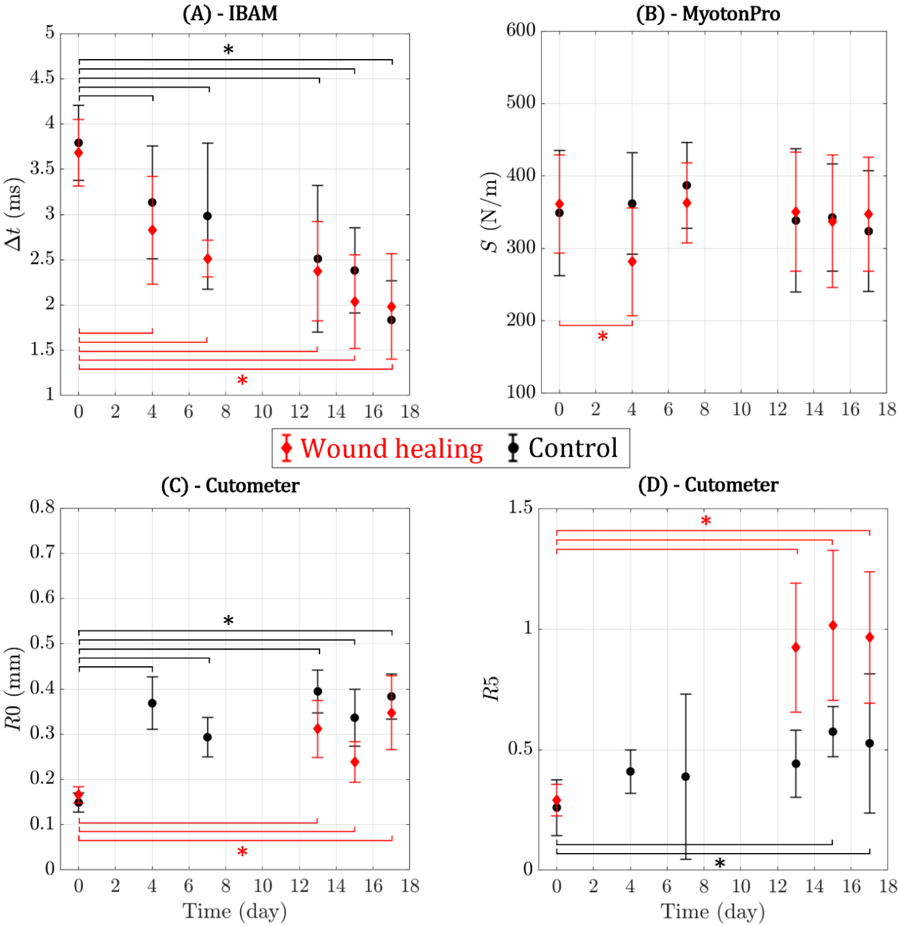
- Wound healing: IBAM’s Δt and Cutometer’s R0 and R5 varied significantly with healing time, corresponding to stiffening of healing tissue versus healthy tissue. R5 was significantly higher in the wound-healing group than control throughout D13–D17; Δt was lower in wound healing than control at D7 and D15 by hypothesis testing and at D4, D7, and D15 by confidence interval.
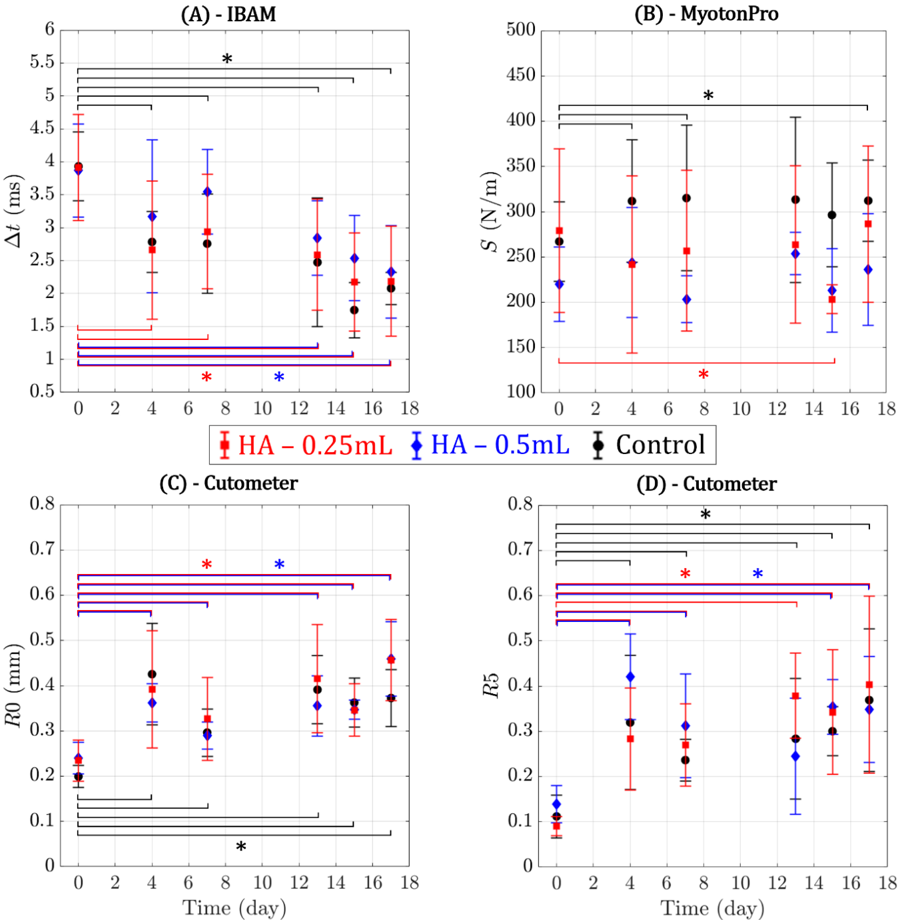
- Hyaluronic acid: IBAM’s Δt and MyotonPro’s S were significantly different after HA injection versus healthy tissue, corresponding to less stiff tissue. S was lower for HA-0.5 mL versus control after D4 by both HT and CI; Δt was higher for HA-0.5 mL versus control between D4 and D15 by CI, confirmed at D7 and D15 by HT.
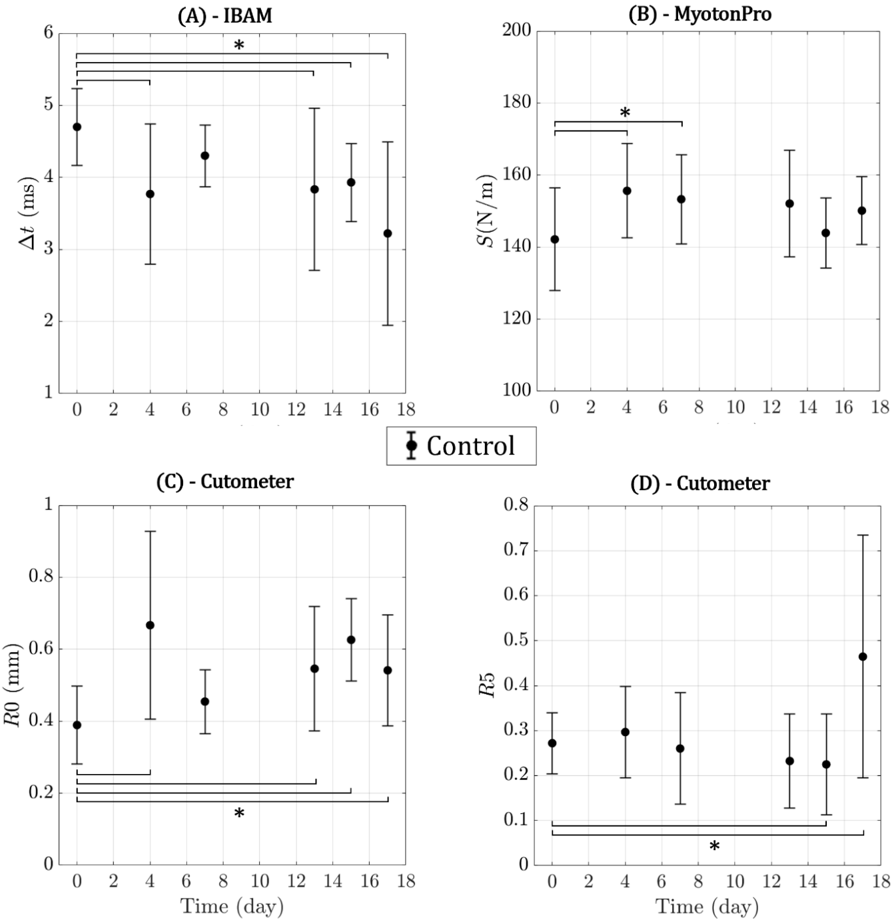
- IBAM and Cutometer detected significant biomechanical variations related to tissue growth in all measurement regions; MyotonPro’s S did not show a significant time effect despite small-to-large effect sizes.
- Repeatability/reproducibility: lowest repeatability was S (3.2%) and Δt (3.5%); S had the best reproducibility (6.2%), while Cutometer R5 had the worst (13.2% repeatability, 28.0% reproducibility).
Methods
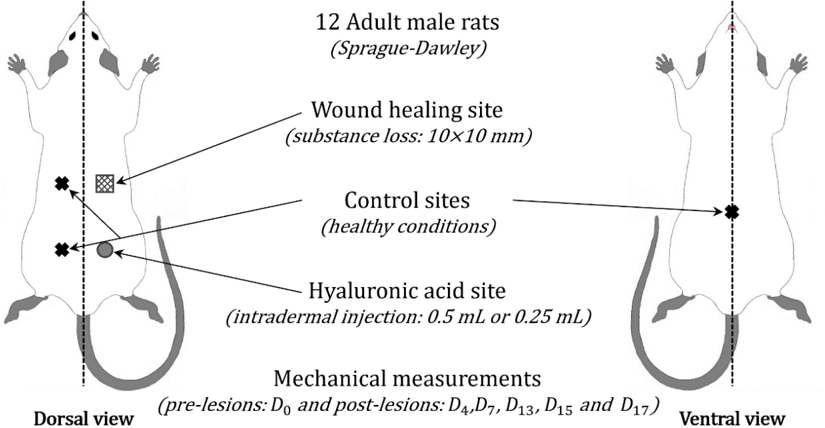
- Twelve adult male Sprague-Dawley rats, 6 weeks old at start, were studied over D0, D4, D7, D13, D15, and D17; one rat was lost after D7. Five regions were measured: right upper back full-thickness excisional wound (10×10 mm), left upper back control, right lower back HA injection (0.50 mL for 6 rats or 0.25 mL for 6 rats), left lower back control, and median ventral control.
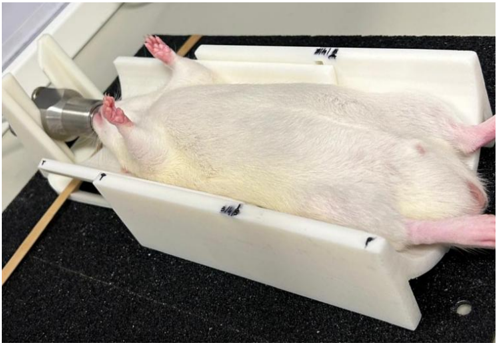
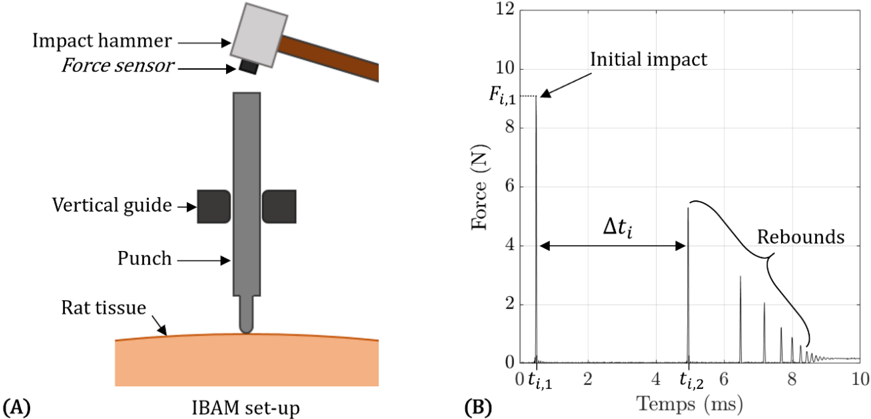
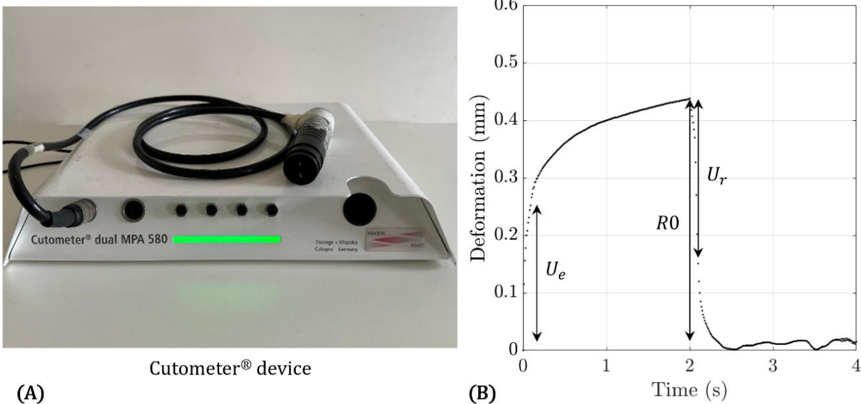
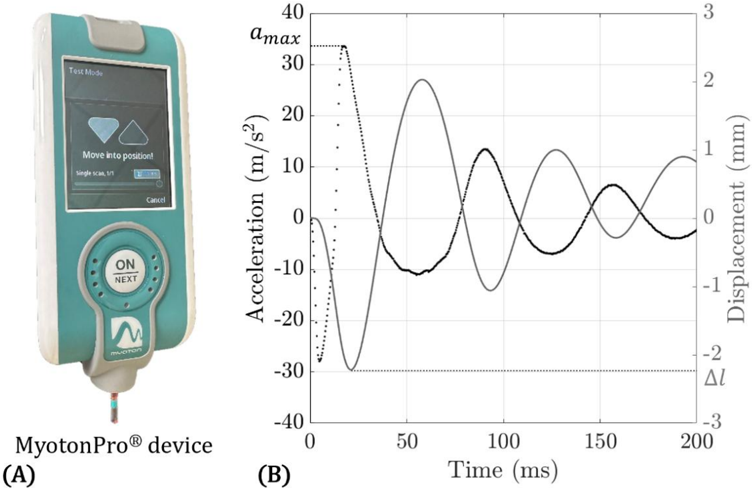
- Three non-invasive techniques were used: IBAM (3-gram hammer with force sensor; 4 mm aluminum punch with 2 mm hemisphere; Δt from first two force peaks, averaged over five impacts with first-peak force 8–10 N), Cutometer (R0 and R5; 2 mm probe, 450 mbar, three 2 s aspiration/2 s relaxation cycles), and MyotonPro (S; five repetitions).
- Analysis included z-score outlier detection (threshold 1.96), Shapiro-Wilk normality testing, Welch’s t-test or Wilcoxon rank-sum tests, one-way ANOVA or Kruskal-Wallis tests, comparisons versus D0, and comparisons between affected and control groups using hypothesis tests and 95% confidence intervals of the mean difference; significance was 5%, with effect sizes reported for non-significant tests.
Limitations
- Stated: the murine model differs from human skin (murine skin thickness <25 µm versus human >1 mm; panniculus carnosus), so porcine models may be more satisfactory; rat wound healing is faster than human, measurement frequency and duration could be increased, blood/scab prevented Cutometer measurements at D4/D7 wound sites, less invasive wound models were suggested, and device parameters could be modified (MyotonPro L-shape probe; Cutometer 6/8 mm probes).
- Stated: IBAM is still under development; punch geometry changed from 4 to 2 mm and to a half-sphere, and IBAM may primarily detect superficial changes and be less sensitive to medium- and long-term HA effects in the reticular dermis, so longer studies are needed.
- Evident from the text: the cohort was small and male-only (12 rats, one lost after D7), follow-up was only 3 weeks, and no human validation was performed; literature cited in the paper expects HA effects to last 6–12 months, so the study period may be too short to capture them.
Model-written summary. Check it against the paper before relying on it.
Integrity signals
Registry
Cites
Statistics
Figures
Verification
Claims the paper makes
0 Valid · 4 Not valid · 45 Not checked · 89 Own results and interpretations
A result the paper reports from its own data — it cites no other source for it, so there is none to check. The quote shows it is in the paper.
In the paper
“Additionally, both IBAM and Cutometer ® detect significant biomechanical variations in superficial soft tissue related to tissue growth in all measurement regions.”
plainstates an associationn = 12- Asserted: passes — The authors put it forward as true.
- Checkable: passes — It can be checked against evidence.
- Load-bearing: passes — The paper’s conclusions depend on it.
- Based: passes — The paper gives a reason why it holds.
A result the paper reports from its own data — it cites no other source for it, so there is none to check. The quote shows it is in the paper.
In the paper
“The indicators 𝛥𝑡 (from IBAM), 𝑅0 and 𝑅5 (from Cutometer ® ) vary significantly as a function of wound healing time”
plainstates an associationn = 12- Asserted: passes — The authors put it forward as true.
- Checkable: passes — It can be checked against evidence.
- Load-bearing: passes — The paper’s conclusions depend on it.
- Based: passes — The paper gives a reason why it holds.
A result the paper reports from its own data — it cites no other source for it, so there is none to check. The quote shows it is in the paper.
In the paper
“The indicator 𝛥𝑡 and 𝑆 (from MyotonPro ® ) are significantly different when HA was injected compared to healthy tissue”
plainstates an associationn = 12- Asserted: passes — The authors put it forward as true.
- Checkable: passes — It can be checked against evidence.
- Load-bearing: passes — The paper’s conclusions depend on it.
- Based: passes — The paper gives a reason why it holds.
- Rests on an assumption not shown here.
A result the paper reports from its own data — it cites no other source for it, so there is none to check. The quote shows it is in the paper.
In the paper
“For the 'wound healing' group and after 𝐷4 , 𝑅5 values are higher than the reference values at 𝐷0 , while for the 'control' group and after 𝐷15 , 𝑅5 values are higher than the reference values at 𝐷0 .”
plainstates an association- Asserted: passes — The authors put it forward as true.
- Checkable: passes — It can be checked against evidence.
- Load-bearing: unclear — It is unclear whether the paper’s conclusions depend on it.
- Based: passes — The paper gives a reason why it holds.
55 more claims
Create a free account to see all 138 claims and to verify the 54 references still open.
- It may state two separate claims as one. 31
- Probably not a substantial claim. 57
- The quote only partly states this claim. 1
Self-check
Percentages, sums and reported differences re-computed from the paper’s own numbers.
Each contradiction between two passages listed here was confirmed by an independent check.
Rated minor: it would not touch a result — a value no result rests on, a p-value that stays on the same side of the significance level, or a conflict that is clerical, resolved elsewhere in the paper, or outside its own findings.
In the paper
“the thickness of their back skin is multiplied by 2 (from 0.5 mm to 1.6 mm between 1 st and 4 th month)”
Reported 2 · recomputed 3.2
Rated minor: it would not touch a result — a value no result rests on, a p-value that stays on the same side of the significance level, or a conflict that is clerical, resolved elsewhere in the paper, or outside its own findings.
In the paper
§ 2.4 Data analysis
“For each of the 4 indicators derived from the three mechanical surface characterization techniques ( 𝛥𝑡 for IBAM, 𝑆 for MyotonPro ® and 𝑅0 and 𝑅5 for Cutometer ® ), a dataset of 12 values (one value per rat) was obtained for each experimental day and for each region of interest.”
§ 3.1 Wound healing process
“Note that for 𝐷4 and 𝐷7 , it was not possible to use the Cutometer on the 'wound healing' sites because of the presence of blood.”
Rated minor: it would not touch a result — a value no result rests on, a p-value that stays on the same side of the significance level, or a conflict that is clerical, resolved elsewhere in the paper, or outside its own findings.
In the paper
§ 2.4 Data analysis
“a dataset of 12 values (one value per rat) was obtained for each experimental day and for each region of interest.”
§ 3. Results
“Nevertheless, one rat was lost during the study period because it did not wake up after the measurements of 𝐷7 .”
Rated minor: it would not touch a result — a value no result rests on, a p-value that stays on the same side of the significance level, or a conflict that is clerical, resolved elsewhere in the paper, or outside its own findings.
In the paper
§ 4.3 Limitations and perspectives
“The skin thickness is significantly lower for murine models (less than 25 µm) compared to that of humans (higher than 1 mm)”
§ 4.2 Biomechanical characterization
“the thickness of their back skin is multiplied by 2 (from 0.5 mm to 1.6 mm between 1 st and 4 th month)”
Citations
Cites
An analysis of variance test for normality (complete samples)
SHAPIRO, S. S., & WILK, M. B. (1965) · Biometrika · doi:10.1093/biomet/52.3-4.591 · Cited by 23,480
Normality Tests for Statistical Analysis: A Guide for Non-Statisticians
Ghasemi, A., & Zahediasl, S. (2012) · International Journal of Endocrinology and Metabolism · doi:10.5812/ijem.3505 · Cited by 4,368
Anatomy, histology and immunohistochemistry of normal human skin.
Kanitakis, J. (2002) · PubMed · Cited by 1,059
Hyaluronic acid: A key molecule in skin aging
Papakonstantinou, E., Roth, M., & Karakiulakis, G. (2012) · Dermato-Endocrinology · doi:10.4161/derm.21923 · Cited by 1,031
Intrinsic and extrinsic factors in skin ageing: a review
Farage, M. A., Miller, K. W., Elsner, P., & Maibach, H. I. (2008) · International Journal of Cosmetic Science · doi:10.1111/j.1468-2494.2007.00415.x · Cited by 950
Robust statistics for outlier detection
Rousseeuw, P. J., & Hubert, M. (2011) · WIREs Data Mining and Knowledge Discovery · doi:10.1002/widm.2 · Cited by 792
Indentation Versus Tensile Measurements of Young's Modulus for Soft Biological Tissues
McKee, C. T., Last, J. A., Russell, P., & Murphy, C. J. (2011) · Tissue Engineering Part B: Reviews · doi:10.1089/ten.teb.2010.0520 · Cited by 708
Skin wound healing in humans and mice: Challenges in translational research
Zomer, H. D., & Trentin, A. G. (2018) · Journal of Dermatological Science · doi:10.1016/j.jdermsci.2017.12.009 · Cited by 534
Handbook of Non-Invasive Methods and the Skin
(2006) · CRC Press eBooks · doi:10.3109/9781420003307 · Cited by 460
Elastic properties of human skin: relation to age, sex, and anatomical region
Cua, A. B., Wilhelm, K. P., & Maibach, H. I. (1990) · Archives of Dermatological Research · doi:10.1007/bf00375720 · Cited by 382
Research works printed but not linked: 1
- Wallace HA, Basehore BM, Zito PM. Wound Healing Phases. 2023 Jun 12. In: StatPearls [Internet]. Treasure Island (FL): StatPearls Publishing; 2026 Jan -. PMID: 29262065.
Cited by
Still being checked.
Metadata
- Authors
- Bouffandeau, A., Poisbleau, D., Ouidja, M. O. I., Karasinski, P., Papy, D., Flouzat-Lachaniette, C.-H., Bosc, R., Hersant, B., Meningaud, J.-P., & Haiat, G.
- Affiliations
- Centre National de la Recherche Scientifique (FR)
- Inserm (FR)
- ORCID
- Venue
- Journal of the Mechanical Behavior of Biomedical Materials
- Publisher
- Elsevier BV
- Published
- 2026-08
- Volume
- 180
- Pages
- 107451
- ISSN
- 1878-0180 (ISSN-L)
- 1751-6161
- OpenAlex
- W7155879648
- Cited by
- 2
- References
- 76
- Citations by year
- 2026: 2
- FWCI
- 4.51
- Type
- journal article
- Language
- en
- Open access
- hybrid
- doi.org
- Licence
- cc-by
- www.elsevier.com/tdm/userlicense/1.0/ (tdm)
- www.elsevier.com/legal/tdmrep-license (tdm)
- creativecommons.org/licenses/by/4.0/ (vor)
- Locations
- Journal of the mechanical behavior of biomedical materials/Journal of mechanical behavior of biomedical materials (publishedVersion, cc-by)
- PubMed (publishedVersion)
- arXiv (submittedVersion)
- HAL (submittedVersion, cc-by)
- Funders
- H2020 European Research Council (101147066)
- Conseil National de la Recherche Scientifique
- European Research Council
- Horizon 2020
- French National Research Agency (ANR-24-LCV2-0009)
- Topics
- Health Sciences › Medicine › Radiology, Nuclear Medicine and Imaging › Ultrasound Imaging and Elastography
- Health Sciences › Medicine › Surgery › Wound Healing and Treatments
- Physical Sciences › Engineering › Biomedical Engineering › Elasticity and Material Modeling
- Keywords
- skin biomechanics, wound healing, hyaluronic acid injection, skin stiffness, Cutometer, MyotonPRO, full-thickness excisional wounds, tissue regeneration, multimodal assessment
- MeSH terms
- Animals, Biomechanical Phenomena, Hyaluronic Acid, Male, Materials Testing, Skin, Wound Healing, Rats, Sprague-Dawley, Rats, Mechanical Phenomena
About these checks
Registry, retraction, Cites and statistics results are computed, not judged, with one exception: a printed reference that no index lists is read once by a model before it counts as a citation error. Claims are extracted by a model and kept only when their quote appears verbatim in the text; each cited source is then checked, with a model’s help, for whether it says what the claim relies on. Those verdicts can be wrong — read the claim’s quote and the cited source before relying on one.
A language model drew the claims from the paper on 2026-11-26, under version 3 of the claim definition (model deepseek-v4.1-flash, prompt extract-v3).
A second model labelled each claim on 2026-11-26 (model jev-1.13-20260917, definition revision gold-guideline-v0.2).
Statistics and arithmetic are recomputed, not judged.
Confidence bands are shown only for fields calibrated on our annotated test set. None is calibrated yet, so no band is shown.
What counts as a claim ›How we measure confidence ›How we check this ›
Are you an author, or do you see a problem with this page? Request a review
How to cite
Cite CoChat for the checks on this page, and the paper for its own findings.
- This page
- CoChat. (2026). Citation check: Multimodal assessment of the skin biomechanical properties during wound healing and hyaluronic acid response. https://app.cochat.ai/papers/10.1016/j.jmbbm.2026.107451
- The paper
- Bouffandeau, A., Poisbleau, D., Ouidja, M. O. I., Karasinski, P., Papy, D., Flouzat-Lachaniette, C.-H., Bosc, R., Hersant, B., Meningaud, J.-P., & Haiat, G. (2026). Multimodal assessment of the skin biomechanical properties during wound healing and hyaluronic acid response. Journal of the Mechanical Behavior of Biomedical Materials. https://doi.org/10.1016/j.jmbbm.2026.107451
Data sources
Bibliographic data: Semantic Scholar, OpenAlex, Crossref.
Contains information from the Semantic Scholar Academic Graph Datasets, made available under the ODC Attribution License (ODC-BY 1.0).
Semantic Scholar’s data is described in: Kinney, R., et al. (2023). The Semantic Scholar Open Data Platform. arXiv:2301.10140.
