

The DOI matches its Crossref record; 22 of the 25 references it cites were found in a registry or an index; 21 of the 43 sources its claims cite were checked for support.
First and Second-Trimester Surgical Abortion Providers and Services in 2019: Results From the Canadian Abortion Provider Survey
Open accessAbstract
OBJECTIVE: Our objective was to explore the workforce and clinical care of first and second-trimester surgical abortion (FTSA, STSA) providers following the publication of the updated Society of Obstetricians and Gynaecologists of Canada (SOGC) surgical abortion guidelines. METHODS: We conducted a national, cross-sectional, online, self-administered survey of physicians who provided abortion care in 2019. This anonymized survey collected participant demographics, types of abortion services, and characteristics of FTSA and STSA clinical care. Through healthcare organizations using a modified Dillman technique, we recruited from July to December 2020. Descriptive statistics were generated by R Statistical Software. RESULTS: We present the data of 222 surgical abortion provider respondents, of whom 219 provided FTSA, 109 STSA, and 106 both. Respondents practiced in every Canadian province and territory. Most were obstetrician-gynaecologists (56.8%) and family physicians (36.0%). The majority of FTSA and STSA respondents were located in urban settings, 64.8% and 79.8%, respectively, and more than 80% practiced in hospitals. More than 1 in 4 respondents reported <5 years' experience with surgical abortion care and 93.2% followed SOGC guidelines. Noted guideline deviations included that prophylactic antibiotic use was not universal, and more than half of respondents used sharp curettage in addition to suction. Fewer than 5% of STSA respondents used mifepristone for cervical preparation. CONCLUSION: weeks.
Overview
AI snapshot
Written from the paper’s full text.
TL;DR
This national cross-sectional survey of 222 Canadian surgical abortion providers in 2019 describes a multidisciplinary, rejuvenating workforce, with most respondents following SOGC guidelines but notable deviations in cervical preparation, antibiotic prophylaxis, and sharp curettage use. Access remains concentrated in urban hospital settings, and second-trimester surgical abortion is provided by fewer respondents and less available at later gestational ages.
Key findings
Among 222 surgical abortion providers, 219 provided first-trimester surgical abortion (FTSA), 109 provided second-trimester surgical abortion (STSA), and 106 provided both; respondents practiced in every Canadian province and territory. Most were obstetrician-gynaecologists (56.8%) or family physicians (36.0%); more than 1 in 4 reported <5 years’ experience, and 93.2% reported following SOGC guidelines. Respondents reported 32,345 FTSAs and 2,181 STSAs in 2019, representing 66.7% and 4.5% of the 48,509 total surgical and medical abortions reported by survey respondents; primary care providers reported the majority of FTSAs (73.6%) and STSAs (48.6%). Guideline deviations included non-universal prophylactic antibiotic use, sharp curettage in addition to suction by over half of FTSA and STSA respondents, and mifepristone use for cervical preparation by fewer than 5% of STSA respondents.
Methods
National, cross-sectional, online, self-administered, anonymized survey of physicians who provided abortion care in Canada in 2019, recruited July–December 2020 through professional organizations and other sources using a modified Dillman technique. Of 465 clinician respondents reporting medical and/or surgical abortion, the analysis presents 222 surgical abortion providers; descriptive statistics were generated in R, with proportions or medians and interquartile ranges where appropriate. Fraud screening used a complex fraud detection algorithm; the study was approved by the BC Children’s and Women’s University of British Columbia Research Ethics Board.
Limitations
The paper states that representativeness cannot be determined because the true number of abortion providers in Canada is unknown, so no response rate could be calculated; clinical data are based on the 77.2% and 64.2% of respondents who started the FTSA and STSA clinical sections, with overrepresentation of maternal-fetal-medicine subspecialists. It also notes that 28% of FTSA and 41.3% of STSA respondents did not disclose their 2019 procedure numbers, contributing to underestimation of national surgical abortion totals, and that respondents may be more motivated and more guideline-aligned than nonrespondents. Evident from the text: the survey relied on self-report and a generic link invitation, which the authors addressed with fraud detection but which may still limit generalizability.
Model-written summary. Check it against the paper before relying on it.
Integrity signals
Registry
Cites
Statistics
Figures
Verification
Claims the paper makes
66 Own result · 10 Own method · 9 Partly supported · 9 Couldn’t confirm · 7 No full text of the sources · 6 Own interpretation · 5 Sources not found · 4 No basis given · 1 Supported · accuracy not yet measured
The cited sources support only part of this claim — read each source’s verdict below.
In the paper
“Our 2012 Canadian Abortion Provider Survey (CAPS) found the proportion of surgical abortions was 96.2%.”
§ First and Second-Trimester Surgical Abortion Providers and Services in 2019: Results From the Canadian Abortion Provider Survey > INTRODUCTION
What the sources say
- Not checked — no full text of the sourcecites [2]
- Partly supportedcites [3] sourceExperimental — accuracy not yet measured
The Introduction (page unavailable) says that abortion services in Canada before 2017 were surgical, and the References list a report of a 2012 national survey. Our copy does not give the claimed 96.2% figure, so it supports the general point but not the specific proportion. (LLM, conf=0.78)
plain- Asserted: passes — The authors put it forward as true.
- Checkable: passes — It can be checked against evidence.
- Load-bearing: passes — The paper’s conclusions depend on it.
- Based: passes — The paper gives a reason why it holds.
Every source the paper cites for this claim was checked and supports it.
In the paper
“Respondents reported clinical care that mostly followed SOGC guidelines.6”
§ First and Second-Trimester Surgical Abortion Providers and Services in 2019: Results From the Canadian Abortion Provider Survey > DISCUSSION
What the sources say
- Supportedcites [6] source
The Discussion (p. 9) explicitly states that the majority of respondents reported clinical care characteristics in line with SOGC guidelines. The Provider Sample Description (p. 6) also reports that 94.2% followed SOGC clinical care guidelines. (LLM, conf=0.95)
plain- Asserted: passes — The authors put it forward as true.
- Checkable: passes — It can be checked against evidence.
- Load-bearing: unclear — It is unclear whether the paper’s conclusions depend on it.
- Based: passes — The paper gives a reason why it holds.
- Supported
The cited sources support only part of this claim — read each source’s verdict below.
In the paper
“secondtrimester abortions after mifepristone implementation were 5.1% of all abortions”
§ First and Second-Trimester Surgical Abortion Providers and Services in 2019: Results From the Canadian Abortion Provider Survey > INTRODUCTION
What the sources say
- Partly supportedcites [7] sourceExperimental — accuracy not yet measured
The Results (Characteristics of provider practice) report that fewer than 5% of abortions in the 2019 national survey were second- or third-trimester services. The paper places that survey after mifepristone became available in Canada, but it does not report the claimed Ontario-specific figure of 5.1%. (LLM, conf=0.82)
plain- Asserted: passes — The authors put it forward as true.
- Checkable: passes — It can be checked against evidence.
- Load-bearing: unclear — It is unclear whether the paper’s conclusions depend on it.
- Based: passes — The paper gives a reason why it holds.
- Partly supported
The cited sources support only part of this claim — read each source’s verdict below.
In the paper
“the proportion of surgical abortions decreased from 97.8% before mifepristone to 68.6% after mifepristone had become available for medical abortion”
§ First and Second-Trimester Surgical Abortion Providers and Services in 2019: Results From the Canadian Abortion Provider Survey > INTRODUCTION
What the sources say
- Partly supportedcites [7] sourceExperimental — accuracy not yet measured
The Interpretation reports that first-trimester medical abortions rose from 3.8% in the authors’ 2012 survey to 27.7% in 2019, after mifepristone became available in Canada. That supports a shift toward medical abortion, but the paper does not give the claimed Ontario-specific decline in surgical abortions from 97.8% to 68.6%. (LLM, conf=0.78)
plaindirect- Asserted: passes — The authors put it forward as true.
- Checkable: passes — It can be checked against evidence.
- Load-bearing: unclear — It is unclear whether the paper’s conclusions depend on it.
- Based: passes — The paper gives a reason why it holds.
- Partly supported
The cited sources support only part of this claim — read each source’s verdict below.
In the paper
“they mostly practiced in high-volume specialized clinics concentrated in the largest urban areas”
§ First and Second-Trimester Surgical Abortion Providers and Services in 2019: Results From the Canadian Abortion Provider Survey > INTRODUCTION
What the sources say
- Partly supportedcites [3] sourceExperimental — accuracy not yet measured
The Introduction (page unavailable) says that before 2017, fewer than 300 doctors provided surgical abortion at roughly 100 facilities in urban cities near the Canada–US border, citing a 2012 national survey. That supports an urban concentration of services, but the paper does not say that providers mostly practiced in high-volume specialized clinics or that those clinics were in the largest urban areas. (LLM, conf=0.84)
plain- Asserted: passes — The authors put it forward as true.
- Checkable: passes — It can be checked against evidence.
- Load-bearing: passes — The paper’s conclusions depend on it.
- Based: passes — The paper gives a reason why it holds.
- Partly supported
The cited sources support only part of this claim — read each source’s verdict below.
In the paper
“Fewer than 300 physicians responded indicating they were providers of abortion care in Canada”
§ First and Second-Trimester Surgical Abortion Providers and Services in 2019: Results From the Canadian Abortion Provider Survey > INTRODUCTION
What the sources say
- Partly supportedcites [3] sourceExperimental — accuracy not yet measured
The Introduction states that before 2017, fewer than 300 doctors provided surgical abortion services in Canada, citing a 2012 national survey. It does not say that fewer than 300 physicians responded to that survey or identified themselves as providers in their responses. (LLM, conf=0.84)
plain- Asserted: passes — The authors put it forward as true.
- Checkable: passes — It can be checked against evidence.
- Load-bearing: unclear — It is unclear whether the paper’s conclusions depend on it.
- Based: passes — The paper gives a reason why it holds.
- Partly supported
The cited sources support only part of this claim — read each source’s verdict below.
In the paper
“while abortion access was limited in rural areas”
§ First and Second-Trimester Surgical Abortion Providers and Services in 2019: Results From the Canadian Abortion Provider Survey > INTRODUCTION
What the sources say
- Partly supportedcites [3] sourceExperimental — accuracy not yet measured
The Introduction (page unavailable) says that before 2017, abortion services were concentrated in urban facilities and patients outside large cities had to travel significant distances. This supports limited rural access, but the paper does not identify that finding as a result of the 2012 CAPS; it describes CAPS elsewhere as a provider-support platform. (LLM, conf=0.82)
plain- Asserted: passes — The authors put it forward as true.
- Checkable: passes — It can be checked against evidence.
- Load-bearing: unclear — It is unclear whether the paper’s conclusions depend on it.
- Based: passes — The paper gives a reason why it holds.
- Partly supported
The cited sources support only part of this claim — read each source’s verdict below.
In the paper
“the limited number of rural respondents possibly indicates a lack of rural access in some communities, especially for STSA.”
§ First and Second-Trimester Surgical Abortion Providers and Services in 2019: Results From the Canadian Abortion Provider Survey > DISCUSSION
What the sources say
- Partly supportedcites [16] sourceExperimental — accuracy not yet measured
The Discussion (page not provided) suggests that geographic location can affect access to post-viability termination of pregnancy. The Results (page not provided) say most respondents worked at tertiary or university-associated centres, but do not identify a limited number of rural respondents. The paper does not establish the claim’s particular inference about rural communities or STSA. (LLM, conf=0.78)
hedgedconditional- Asserted: passes — The authors put it forward as true.
- Checkable: passes — It can be checked against evidence.
- Load-bearing: unclear — It is unclear whether the paper’s conclusions depend on it.
- Based: passes — The paper gives a reason why it holds.
- Partly supported
The cited sources that could be checked couldn’t confirm or dispute this claim.
In the paper
“Mifepristone implementation for cervical preparation in the late second-trimester was very limited despite guideline recommendation to consider its use overnight in combination with osmotic dilators and/or buccal/sublingual/ vaginal misoprostol before STSA.6,23”
§ First and Second-Trimester Surgical Abortion Providers and Services in 2019: Results From the Canadian Abortion Provider Survey > DISCUSSION
What the sources say
- Could not verifycites [6] sourceExperimental — accuracy not yet measured
The Clinical Care Characteristics section (p. 7) reports widespread mifepristone use for first-trimester medication abortion, not cervical preparation for late second-trimester surgical abortion. Searches for late second-trimester cervical preparation, osmotic dilators, and overnight use found no passage addressing the claimed limited implementation or guideline recommendation. (LLM, conf=0.76)
- Could not verifycites [23] sourceExperimental — accuracy not yet measured
The Introduction and CHERRIES Checklist discuss reporting methods for Web surveys, not cervical preparation. Searches for mifepristone use in the late second trimester and for the stated osmotic-dilator/misoprostol recommendation found no passage addressing either implementation or the guideline. (LLM, conf=0.78)
plain- Asserted: passes — The authors put it forward as true.
- Checkable: passes — It can be checked against evidence.
- Load-bearing: passes — The paper’s conclusions depend on it.
- Based: passes — The paper gives a reason why it holds.
- Could not verify
The cited sources that could be checked couldn’t confirm or dispute this claim.
In the paper
“Our data as well as prior publications indicate heterogeneous use of feticidal injection.6,24,25”
§ First and Second-Trimester Surgical Abortion Providers and Services in 2019: Results From the Canadian Abortion Provider Survey > DISCUSSION
What the sources say
- Could not verifycites [6] sourceExperimental — accuracy not yet measured
The Clinical Care Characteristics section (p. 7) reports variation in first-trimester medication regimens and routes of misoprostol, not use of feticidal injection. Searches for “feticidal injection” and “feticide fetal demise injection varying use” found no passage addressing whether its use is heterogeneous. (LLM, conf=0.76)
- Not matchedcites [24]
Couldn’t be matched to a paper in Crossref, so it can’t be checked.
- Not matchedcites [25]
Couldn’t be matched to a paper in Crossref, so it can’t be checked.
hedged- Asserted: passes — The authors put it forward as true.
- Checkable: passes — It can be checked against evidence.
- Load-bearing: unclear — It is unclear whether the paper’s conclusions depend on it.
- Based: passes — The paper gives a reason why it holds.
- Could not verify
- Probably not a substantial claim. 20
- It may state two separate claims as one. 42
The cited sources support only part of this claim — read each source’s verdict below.
In the paper
“To maximize response rate, we employed a modified Dillman technique, which included recruitment partners emailing survey reminders 1, 2, and 4e6 weeks after the initial invitation.”
§ First and Second-Trimester Surgical Abortion Providers and Services in 2019: Results From the Canadian Abortion Provider Survey > Recruitment
What the sources say
- Partly supportedcites [12] sourceExperimental — accuracy not yet measured
The Survey distribution and collection section (page not provided) says the study used Dillman reminder techniques at weeks 1, 2, 4, and 6. It lists calls, faxes, and e-mails, but does not say recruitment partners emailed the reminders. (LLM, conf=0.86)
plaindirect- Asserted: passes — The authors put it forward as true.
- Checkable: passes — It can be checked against evidence.
- Load-bearing: fails — The paper’s conclusions may not depend on it.
- Based: passes — The paper gives a reason why it holds.
Probably not a substantial claim. The paper’s conclusions may not depend on it.
- Partly supported
The cited sources support only part of this claim — read each source’s verdict below.
In the paper
“some respondents did not report following guidelines as they did not routinely administer antibiotic prophylaxis or did not start prophylaxis at the time of osmotic dilator placement.6,22”
§ First and Second-Trimester Surgical Abortion Providers and Services in 2019: Results From the Canadian Abortion Provider Survey > DISCUSSION
What the sources say
- Partly supportedcites [6] sourceExperimental — accuracy not yet measured
Appendix A (p. 14) reports that 66.5% of respondents never used antibiotic prophylaxis and 30.5% used it based on risk, supporting the statement that some did not administer it routinely. The paper surveys first-trimester medication abortion; our copy does not report when prophylaxis was started relative to osmotic dilator placement or establish that these antibiotic practices departed from guidelines. (LLM, conf=0.86)
- Not checked — no full text of the sourcecites [22] source
plain- Asserted: passes — The authors put it forward as true.
- Checkable: passes — It can be checked against evidence.
- Load-bearing: unclear — It is unclear whether the paper’s conclusions depend on it.
- Based: passes — The paper gives a reason why it holds.
It may state two separate claims as one.
- Partly supported
The cited sources that could be checked couldn’t confirm or dispute this claim.
In the paper
“Other data confirm that STSA training and services are not available in all hospitals, limiting patients' reproductive options.18”
§ First and Second-Trimester Surgical Abortion Providers and Services in 2019: Results From the Canadian Abortion Provider Survey > DISCUSSION
What the sources say
- Could not verifycites [18] sourceExperimental — accuracy not yet measured
The Background discusses dilation and evacuation and its safety, while the clinical recommendations address cervical preparation. Searches for STSA training, hospital availability, and limits on patients’ reproductive options found no passage addressing those claims. (LLM, conf=0.75)
plaindirect- Asserted: passes — The authors put it forward as true.
- Checkable: passes — It can be checked against evidence.
- Load-bearing: unclear — It is unclear whether the paper’s conclusions depend on it.
- Based: passes — The paper gives a reason why it holds.
It may state two separate claims as one.
- Could not verify
The cited sources that could be checked couldn’t confirm or dispute this claim.
In the paper
“It states that it may be performed following discussion of both medical and psychosocial considerations.6”
§ First and Second-Trimester Surgical Abortion Providers and Services in 2019: Results From the Canadian Abortion Provider Survey > DISCUSSION
What the sources say
- Could not verifycites [6] sourceExperimental — accuracy not yet measured
The Discussion (p. 9) says respondents’ first-trimester medication-abortion care was generally in line with SOGC guidelines, but it does not describe a guideline on feticide. Searches for feticide and for discussion of medical and psychosocial considerations found no passage addressing the claimed recommendation. (LLM, conf=0.78)
hedged- Asserted: passes — The authors put it forward as true.
- Checkable: passes — It can be checked against evidence.
- Load-bearing: fails — The paper’s conclusions may not depend on it.
- Based: passes — The paper gives a reason why it holds.
Probably not a substantial claim. The paper’s conclusions may not depend on it.
- Could not verify
The cited sources that could be checked couldn’t confirm or dispute this claim.
In the paper
“The 2022 World Health Organization guideline further recommends against osmotic dilator use prior to 12 weeks and to rather use misoprostol or mifepristone.6,21,22”
§ First and Second-Trimester Surgical Abortion Providers and Services in 2019: Results From the Canadian Abortion Provider Survey > DISCUSSION
What the sources say
- Could not verifycites [6] sourceExperimental — accuracy not yet measured
The Clinical Care Characteristics section (p. 7) reports Canadian providers’ use of mifepristone–misoprostol, not a WHO recommendation. Searches for osmotic dilators and the 2022 WHO guideline found no passage addressing whether dilators are discouraged before 12 weeks or which medications the guideline recommends instead. (LLM, conf=0.76)
- Could not verifycites [21] sourceExperimental — accuracy not yet measured
The Introduction (page unavailable) mentions a WHO recommendation about considering fetal demise beyond 20 weeks, not cervical preparation before 12 weeks. The Methods describe mifepristone and misoprostol use in the study’s protocol for abortions beyond 20 weeks. Searches for osmotic dilators and the claimed pre-12-week recommendation found no supporting passage; the References list a 2015 WHO guidance document, not a 2022 guideline. (LLM, conf=0.78)
- Not checked — no full text of the sourcecites [22] source
plain- Asserted: passes — The authors put it forward as true.
- Checkable: passes — It can be checked against evidence.
- Load-bearing: fails — The paper’s conclusions may not depend on it.
- Based: passes — The paper gives a reason why it holds.
Probably not a substantial claim. The paper’s conclusions may not depend on it. It may state two separate claims as one.
- Could not verify
The cited sources that could be checked couldn’t confirm or dispute this claim.
In the paper
“a practice that guidelines recommend against, as it is associated with serious consequences on fertility.6,22,28”
§ First and Second-Trimester Surgical Abortion Providers and Services in 2019: Results From the Canadian Abortion Provider Survey > DISCUSSION
What the sources say
- Could not verifycites [6] sourceExperimental — accuracy not yet measured
Section 3.5 (p. 8) discusses uterine evacuation after medication abortion, and the Discussion (p. 9) mentions guideline-concordant care. Neither addresses sharp curettage following vacuum aspiration or its consequences for fertility. Searches for those terms found no passage supporting the attributed claim. (LLM, conf=0.75)
- Not checked — no full text of the sourcecites [22] source
- Not matchedcites [28]
Couldn’t be matched to a paper in Crossref, so it can’t be checked.
plaincorrelational- Asserted: passes — The authors put it forward as true.
- Checkable: passes — It can be checked against evidence.
- Load-bearing: fails — The paper’s conclusions may not depend on it.
- Based: passes — The paper gives a reason why it holds.
Probably not a substantial claim. The paper’s conclusions may not depend on it. It may state two separate claims as one.
- Could not verify
The cited sources that could be checked couldn’t confirm or dispute this claim.
In the paper
“is not recommended for FTSA as it is not effective in this GA range.6”
§ First and Second-Trimester Surgical Abortion Providers and Services in 2019: Results From the Canadian Abortion Provider Survey > DISCUSSION
What the sources say
- Could not verifycites [6] sourceExperimental — accuracy not yet measured
The Clinical Care Characteristics section (p. 7) describes medication-abortion regimens, but does not discuss oxytocin. Searches for oxytocin and its effectiveness in first-trimester surgical abortion found no passage addressing the recommendation or its rationale. (LLM, conf=0.74)
plain- Asserted: passes — The authors put it forward as true.
- Checkable: passes — It can be checked against evidence.
- Load-bearing: fails — The paper’s conclusions may not depend on it.
- Based: passes — The paper gives a reason why it holds.
Probably not a substantial claim. The paper’s conclusions may not depend on it. It may state two separate claims as one.
- Could not verify
The cited sources that could be checked couldn’t confirm or dispute this claim.
In the paper
“SOGC states that gross tissue examination of products costs less and can identify tissue even in very early abortions.6”
§ First and Second-Trimester Surgical Abortion Providers and Services in 2019: Results From the Canadian Abortion Provider Survey > DISCUSSION
What the sources say
- Could not verifycites [6] sourceExperimental — accuracy not yet measured
The Discussion (p. 9) says respondents’ care was generally in line with SOGC guidelines, but does not state what those guidelines say about gross tissue examination. The post-abortion assessment section (p. 8) describes other assessment methods; searches for gross tissue examination, cost, and identification in very early abortions found no passage addressing the claim. (LLM, conf=0.76)
plaindirect- Asserted: passes — The authors put it forward as true.
- Checkable: passes — It can be checked against evidence.
- Load-bearing: fails — The paper’s conclusions may not depend on it.
- Based: passes — The paper gives a reason why it holds.
Probably not a substantial claim. The paper’s conclusions may not depend on it. It may state two separate claims as one.
- Could not verify
The paper states this without a source or data behind it here, so there is nothing to check it against. The quote shows it is in the paper.
In the paper
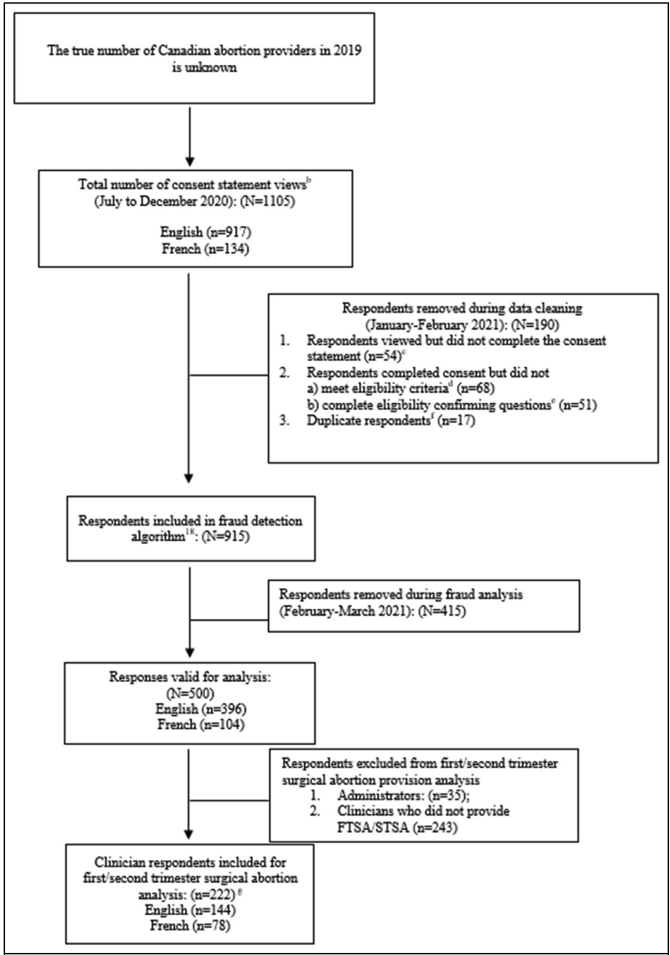
“The majority of respondents who exited the survey were general obstetriciangynaecologists (OB-GYNs) (FTSA 66.0% and STSA 55.0%) who provided multiple types of abortion care”
§ First and Second-Trimester Surgical Abortion Providers and Services in 2019: Results From the Canadian Abortion Provider Survey > Sample Description and Workforce
plaincorrelationaln = 222- Asserted: passes — The authors put it forward as true.
- Checkable: passes — It can be checked against evidence.
- Load-bearing: unclear — It is unclear whether the paper’s conclusions depend on it.
- Based: passes — The paper gives a reason why it holds.
It may state two separate claims as one.
A result the paper reports from its own data — it cites no other source for it, so there is none to check. The quote shows it is in the paper.
In the paper
“reported a median travel distance of 130 km (IQR 80.0e250.0)and 80 km (IQR 42.5e250.0).”
§ First and Second-Trimester Surgical Abortion Providers and Services in 2019: Results From the Canadian Abortion Provider Survey > Sample Description and Workforce
plain- Asserted: passes — The authors put it forward as true.
- Checkable: passes — It can be checked against evidence.
- Load-bearing: unclear — It is unclear whether the paper’s conclusions depend on it.
- Based: passes — The paper gives a reason why it holds.
It may state two separate claims as one.
A result the paper reports from its own data — it cites no other source for it, so there is none to check. The quote shows it is in the paper.
In the paper
“Among 222 respondents, 219 provided FTSA, 109 STSA, and 106 both.”
§ First and Second-Trimester Surgical Abortion Providers and Services in 2019: Results From the Canadian Abortion Provider Survey > Sample Description and Workforce
plainn = 222- Asserted: passes — The authors put it forward as true.
- Checkable: passes — It can be checked against evidence.
- Load-bearing: unclear — It is unclear whether the paper’s conclusions depend on it.
- Based: passes — The paper gives a reason why it holds.
It may state two separate claims as one.
A result the paper reports from its own data — it cites no other source for it, so there is none to check. The quote shows it is in the paper.
In the paper
“This represented 66.7% and 4.5%, respectively, of the 48,509 total surgical and medical abortions reported by our survey respondents.”
§ First and Second-Trimester Surgical Abortion Providers and Services in 2019: Results From the Canadian Abortion Provider Survey > Sample Description and Workforce
plain- Asserted: passes — The authors put it forward as true.
- Checkable: passes — It can be checked against evidence.
- Load-bearing: unclear — It is unclear whether the paper’s conclusions depend on it.
- Based: passes — The paper gives a reason why it holds.
It may state two separate claims as one.
A result the paper reports from its own data — it cites no other source for it, so there is none to check. The quote shows it is in the paper.
In the paper
“Of 465 clinician respondents who reported providing medical and/or surgical abortions in 2019, we present the data of 222 surgical abortion providers.”
§ First and Second-Trimester Surgical Abortion Providers and Services in 2019: Results From the Canadian Abortion Provider Survey > Sample Description and Workforce
plainn = 222- Asserted: passes — The authors put it forward as true.
- Checkable: passes — It can be checked against evidence.
- Load-bearing: fails — The paper’s conclusions may not depend on it.
- Based: passes — The paper gives a reason why it holds.
Probably not a substantial claim. The paper’s conclusions may not depend on it.
A result the paper reports from its own data — it cites no other source for it, so there is none to check. The quote shows it is in the paper.
In the paper
“Around two-thirds of respondents reported having received training during residency (70.5% and 61.0%).”
§ First and Second-Trimester Surgical Abortion Providers and Services in 2019: Results From the Canadian Abortion Provider Survey > Sample Description and Workforce
plainn = 222- Asserted: passes — The authors put it forward as true.
- Checkable: passes — It can be checked against evidence.
- Load-bearing: fails — The paper’s conclusions may not depend on it.
- Based: passes — The paper gives a reason why it holds.
Probably not a substantial claim. The paper’s conclusions may not depend on it.
A result the paper reports from its own data — it cites no other source for it, so there is none to check. The quote shows it is in the paper.
In the paper
“We found similar proportions of respondents exiting by geographic region, facility type, and rural versus urban status.”
§ First and Second-Trimester Surgical Abortion Providers and Services in 2019: Results From the Canadian Abortion Provider Survey > Sample Description and Workforce
plainn = 222- Asserted: passes — The authors put it forward as true.
- Checkable: passes — It can be checked against evidence.
- Load-bearing: fails — The paper’s conclusions may not depend on it.
- Based: passes — The paper gives a reason why it holds.
Probably not a substantial claim. The paper’s conclusions may not depend on it.
A result the paper reports from its own data — it cites no other source for it, so there is none to check. The quote shows it is in the paper.
In the paper
“urban (66.0% and 80.6%)”
§ First and Second-Trimester Surgical Abortion Providers and Services in 2019: Results From the Canadian Abortion Provider Survey > Sample Description and Workforce
plainn = 222- Asserted: passes — The authors put it forward as true.
- Checkable: passes — It can be checked against evidence.
- Load-bearing: fails — The paper’s conclusions may not depend on it.
- Based: passes — The paper gives a reason why it holds.
Probably not a substantial claim. The paper’s conclusions may not depend on it. It may state two separate claims as one.
A result the paper reports from its own data — it cites no other source for it, so there is none to check. The quote shows it is in the paper.
In the paper
“In total, 77% started the subsequent FTSA survey section and 64.2% the STSA survey section”
§ First and Second-Trimester Surgical Abortion Providers and Services in 2019: Results From the Canadian Abortion Provider Survey > Sample Description and Workforce
plainn = 222- Asserted: passes — The authors put it forward as true.
- Checkable: passes — It can be checked against evidence.
- Load-bearing: fails — The paper’s conclusions may not depend on it.
- Based: passes — The paper gives a reason why it holds.
Probably not a substantial claim. The paper’s conclusions may not depend on it. It may state two separate claims as one.
A result the paper reports from its own data — it cites no other source for it, so there is none to check. The quote shows it is in the paper.
In the paper
“The most common reason for the provision of STSA at a maximum GA was personal competency (66.7%), followed by personal preference (36.5%) and clinic/facility regulations (34.9%).”
§ First and Second-Trimester Surgical Abortion Providers and Services in 2019: Results From the Canadian Abortion Provider Survey > Clinical Care Characteristics of FTSA/STSA
plain- Asserted: passes — The authors put it forward as true.
- Checkable: passes — It can be checked against evidence.
- Load-bearing: unclear — It is unclear whether the paper’s conclusions depend on it.
- Based: passes — The paper gives a reason why it holds.
It may state two separate claims as one.
A result the paper reports from its own data — it cites no other source for it, so there is none to check. The quote shows it is in the paper.
In the paper
“Eleven percent of FTSA and 11.5% STSA respondents travelled to provide abortion care”
§ First and Second-Trimester Surgical Abortion Providers and Services in 2019: Results From the Canadian Abortion Provider Survey > Sample Description and Workforce
plain- Asserted: passes — The authors put it forward as true.
- Checkable: passes — It can be checked against evidence.
- Load-bearing: unclear — It is unclear whether the paper’s conclusions depend on it.
- Based: passes — The paper gives a reason why it holds.
It may state two separate claims as one.
A result the paper reports from its own data — it cites no other source for it, so there is none to check. The quote shows it is in the paper.
In the paper
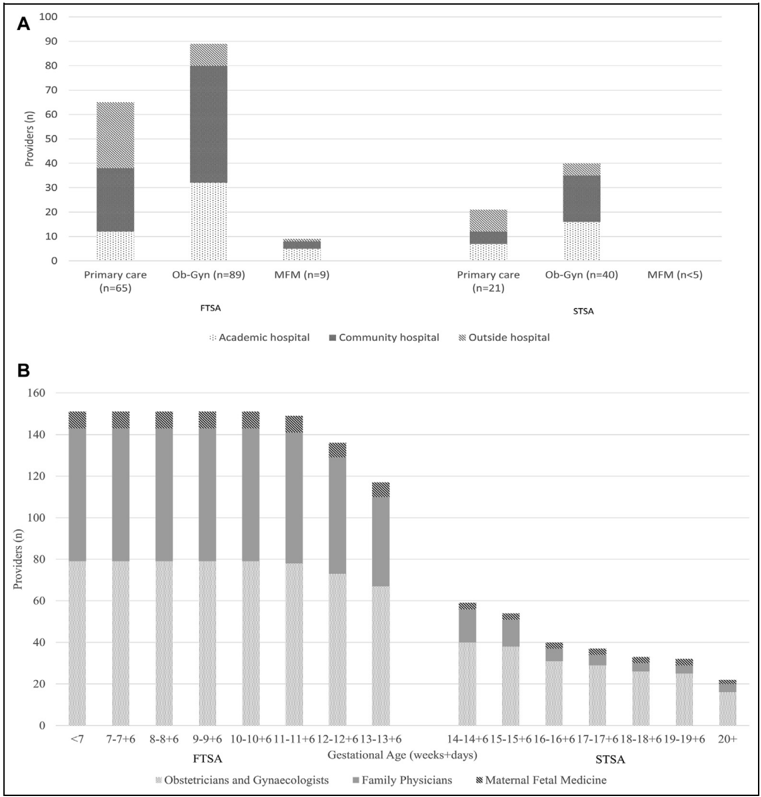
“Distribution among specialties was similar for STSA, with a shift toward hospital-based care, and academic hospitals.”
§ First and Second-Trimester Surgical Abortion Providers and Services in 2019: Results From the Canadian Abortion Provider Survey > Sample Description and Workforce
plain- Asserted: passes — The authors put it forward as true.
- Checkable: passes — It can be checked against evidence.
- Load-bearing: unclear — It is unclear whether the paper’s conclusions depend on it.
- Based: passes — The paper gives a reason why it holds.
It may state two separate claims as one.
A result the paper reports from its own data — it cites no other source for it, so there is none to check. The quote shows it is in the paper.
In the paper
“More than 90% and almost 80% provided FTSA and STSA, respectively, based on patient request”
§ First and Second-Trimester Surgical Abortion Providers and Services in 2019: Results From the Canadian Abortion Provider Survey > Clinical Care Characteristics of FTSA/STSA
plain- Asserted: passes — The authors put it forward as true.
- Checkable: passes — It can be checked against evidence.
- Load-bearing: unclear — It is unclear whether the paper’s conclusions depend on it.
- Based: passes — The paper gives a reason why it holds.
It may state two separate claims as one.
A result the paper reports from its own data — it cites no other source for it, so there is none to check. The quote shows it is in the paper.
In the paper
“Beyond 20 weeks, its use doubled but was still less than 10% (Supplementary Figures A3, A4, and A5).”
§ First and Second-Trimester Surgical Abortion Providers and Services in 2019: Results From the Canadian Abortion Provider Survey > CAPS: Canadian Abortion Provider Survey; FTSA: First-Trimester Surgical Abortion; STSA: Second-Trimester Surgical Abortion.
plaincorrelational- Asserted: passes — The authors put it forward as true.
- Checkable: passes — It can be checked against evidence.
- Load-bearing: unclear — It is unclear whether the paper’s conclusions depend on it.
- Based: passes — The paper gives a reason why it holds.
It may state two separate claims as one.
A result the paper reports from its own data — it cites no other source for it, so there is none to check. The quote shows it is in the paper.
In the paper
“Less than a quarter of FTSA respondents reported usually using deep sedation and general anesthesia (23.2% and 18.5% respectively) while more STSA respondents used them (28.6% and 38.1% respectively; Supplementary Table A3).”
§ First and Second-Trimester Surgical Abortion Providers and Services in 2019: Results From the Canadian Abortion Provider Survey > Procedural Practices
plaincorrelational- Asserted: passes — The authors put it forward as true.
- Checkable: passes — It can be checked against evidence.
- Load-bearing: unclear — It is unclear whether the paper’s conclusions depend on it.
- Based: passes — The paper gives a reason why it holds.
It may state two separate claims as one.
A result the paper reports from its own data — it cites no other source for it, so there is none to check. The quote shows it is in the paper.
In the paper
“All STSA and 93.1% FTSA respondents obtained a dating ultrasound for all their patients”
§ First and Second-Trimester Surgical Abortion Providers and Services in 2019: Results From the Canadian Abortion Provider Survey > Clinical Care Characteristics of FTSA/STSA
plain- Asserted: passes — The authors put it forward as true.
- Checkable: passes — It can be checked against evidence.
- Load-bearing: unclear — It is unclear whether the paper’s conclusions depend on it.
- Based: passes — The paper gives a reason why it holds.
It may state two separate claims as one.
A result the paper reports from its own data — it cites no other source for it, so there is none to check. The quote shows it is in the paper.
In the paper
“OB-GYNs most commonly used digoxin while MFMs used KCl.”
§ First and Second-Trimester Surgical Abortion Providers and Services in 2019: Results From the Canadian Abortion Provider Survey > CAPS: Canadian Abortion Provider Survey; FTSA: First-Trimester Surgical Abortion; STSA: Second-Trimester Surgical Abortion.
plaincorrelational- Asserted: passes — The authors put it forward as true.
- Checkable: passes — It can be checked against evidence.
- Load-bearing: unclear — It is unclear whether the paper’s conclusions depend on it.
- Based: passes — The paper gives a reason why it holds.
It may state two separate claims as one.
A result the paper reports from its own data — it cites no other source for it, so there is none to check. The quote shows it is in the paper.
In the paper
“A total of 45% of FTSA respondents reported ever using a manual uterine aspiration, up to a median GA of 8 6 weeks (IQR 7 6 to 9 6 ).”
§ First and Second-Trimester Surgical Abortion Providers and Services in 2019: Results From the Canadian Abortion Provider Survey > Procedural Practices
plain- Asserted: passes — The authors put it forward as true.
- Checkable: passes — It can be checked against evidence.
- Load-bearing: unclear — It is unclear whether the paper’s conclusions depend on it.
- Based: passes — The paper gives a reason why it holds.
It may state two separate claims as one.
A result the paper reports from its own data — it cites no other source for it, so there is none to check. The quote shows it is in the paper.
In the paper
“Most FTSA respondents routinely examined products of conception (65.5%) and sent it for pathology examination (72.3%).”
§ First and Second-Trimester Surgical Abortion Providers and Services in 2019: Results From the Canadian Abortion Provider Survey > Post-Procedural Practices
plain- Asserted: passes — The authors put it forward as true.
- Checkable: passes — It can be checked against evidence.
- Load-bearing: unclear — It is unclear whether the paper’s conclusions depend on it.
- Based: passes — The paper gives a reason why it holds.
It may state two separate claims as one.
A result the paper reports from its own data — it cites no other source for it, so there is none to check. The quote shows it is in the paper.
In the paper
“The majority of respondents who provided FTSA in the setting of a PUL examined the tissue immediately (78%), obtained serial quantitative serum human chorionic gonadotropin (78.6%), and sent the products for pathology (44%).”
§ First and Second-Trimester Surgical Abortion Providers and Services in 2019: Results From the Canadian Abortion Provider Survey > Post-Procedural Practices
plain- Asserted: passes — The authors put it forward as true.
- Checkable: passes — It can be checked against evidence.
- Load-bearing: unclear — It is unclear whether the paper’s conclusions depend on it.
- Based: passes — The paper gives a reason why it holds.
It may state two separate claims as one.
A result the paper reports from its own data — it cites no other source for it, so there is none to check. The quote shows it is in the paper.
In the paper
“Intravenous moderate sedation was used by 85.4% FTSA and 68.3% STSA respondents and usually included fentanyl and midazolam.”
§ First and Second-Trimester Surgical Abortion Providers and Services in 2019: Results From the Canadian Abortion Provider Survey > Procedural Practices
plain- Asserted: passes — The authors put it forward as true.
- Checkable: passes — It can be checked against evidence.
- Load-bearing: unclear — It is unclear whether the paper’s conclusions depend on it.
- Based: passes — The paper gives a reason why it holds.
It may state two separate claims as one.
A result the paper reports from its own data — it cites no other source for it, so there is none to check. The quote shows it is in the paper.
In the paper
“and perioperative non-steroidal anti-inflammatory drugs by 62.3% and 54.0%, respectively.”
§ First and Second-Trimester Surgical Abortion Providers and Services in 2019: Results From the Canadian Abortion Provider Survey > Procedural Practices
plain- Asserted: passes — The authors put it forward as true.
- Checkable: passes — It can be checked against evidence.
- Load-bearing: unclear — It is unclear whether the paper’s conclusions depend on it.
- Based: passes — The paper gives a reason why it holds.
It may state two separate claims as one.
A result the paper reports from its own data — it cites no other source for it, so there is none to check. The quote shows it is in the paper.
In the paper
“Québec was the region that reported the highest proportion of FTSAs (over 80%) and the lowest proportion of first-trimester medical abortion (12.5% of all their abortions compared to 27.8% to 40.7% in other regions).”
§ First and Second-Trimester Surgical Abortion Providers and Services in 2019: Results From the Canadian Abortion Provider Survey > DISCUSSION
plaincorrelational- Asserted: passes — The authors put it forward as true.
- Checkable: passes — It can be checked against evidence.
- Load-bearing: unclear — It is unclear whether the paper’s conclusions depend on it.
- Based: passes — The paper gives a reason why it holds.
It may state two separate claims as one.
In the paper
“Most of our 112 survey respondents who indicated they provided second-trimester medical abortion reported that FTSA was also provided in their facility (87.3%), while STSA was provided less frequently (61.3%).”
§ First and Second-Trimester Surgical Abortion Providers and Services in 2019: Results From the Canadian Abortion Provider Survey > DISCUSSION
What the sources say
- Not checked — no full text of the sourcecites [17] source
plainn = 112- Asserted: passes — The authors put it forward as true.
- Checkable: passes — It can be checked against evidence.
- Load-bearing: unclear — It is unclear whether the paper’s conclusions depend on it.
- Based: passes — The paper gives a reason why it holds.
It may state two separate claims as one.
The paper states this without a source or data behind it here, so there is nothing to check it against. The quote shows it is in the paper.
In the paper
“not all respondents offered FTSA and fewer offered STSA for patient request in the absence of other fetal or maternal indications.”
§ First and Second-Trimester Surgical Abortion Providers and Services in 2019: Results From the Canadian Abortion Provider Survey > DISCUSSION
plain- Asserted: passes — The authors put it forward as true.
- Checkable: passes — It can be checked against evidence.
- Load-bearing: passes — The paper’s conclusions depend on it.
- Based: passes — The paper gives a reason why it holds.
It may state two separate claims as one.
A result the paper reports from its own data — it cites no other source for it, so there is none to check. The quote shows it is in the paper.
In the paper
“Almost 40% of our FTSA respondents reported preparing the cervix as early as 7 6 weeks including some who used osmotic dilators”
§ First and Second-Trimester Surgical Abortion Providers and Services in 2019: Results From the Canadian Abortion Provider Survey > DISCUSSION
plain- Asserted: passes — The authors put it forward as true.
- Checkable: passes — It can be checked against evidence.
- Load-bearing: passes — The paper’s conclusions depend on it.
- Based: passes — The paper gives a reason why it holds.
It may state two separate claims as one.
In the paper
“We detected fraudulent survey respondents and applied a rigorous fraud detection algorithm.13”
§ First and Second-Trimester Surgical Abortion Providers and Services in 2019: Results From the Canadian Abortion Provider Survey > Limitations
What the sources say
- Not matchedcites [13]
Couldn’t be matched to a paper in Crossref, so it can’t be checked.
plain- Asserted: passes — The authors put it forward as true.
- Checkable: passes — It can be checked against evidence.
- Load-bearing: unclear — It is unclear whether the paper’s conclusions depend on it.
- Based: passes — The paper gives a reason why it holds.
It may state two separate claims as one.
- Not matched
What the paper did — it cites no source for this, so there is none to check. The quote shows it is in the paper.
In the paper
“The strength of our study is the national sample representing all provinces and territories.”
§ First and Second-Trimester Surgical Abortion Providers and Services in 2019: Results From the Canadian Abortion Provider Survey > Strengths
plain- Asserted: passes — The authors put it forward as true.
- Checkable: passes — It can be checked against evidence.
- Load-bearing: passes — The paper’s conclusions depend on it.
- Based: passes — The paper gives a reason why it holds.
Probably not a substantial claim.
What the paper did — it cites no source for this, so there is none to check. The quote shows it is in the paper.
In the paper
“we screened incoming responses for fraud using nonsensical answer combinations”
§ First and Second-Trimester Surgical Abortion Providers and Services in 2019: Results From the Canadian Abortion Provider Survey > Data Cleaning and Analysis
plain- Asserted: passes — The authors put it forward as true.
- Checkable: passes — It can be checked against evidence.
- Load-bearing: fails — The paper’s conclusions may not depend on it.
- Based: passes — The paper gives a reason why it holds.
Probably not a substantial claim. The paper’s conclusions may not depend on it.
In the paper
“evidence of a shift from surgical to medical abortions and increasing provision of medical abortion in rural areas is emerging”
§ First and Second-Trimester Surgical Abortion Providers and Services in 2019: Results From the Canadian Abortion Provider Survey > INTRODUCTION
What the sources say
- Not matchedcites 5,7e9
Couldn’t be matched to a paper in Crossref, so it can’t be checked.
hedgedcorrelational- Asserted: passes — The authors put it forward as true.
- Checkable: passes — It can be checked against evidence.
- Load-bearing: passes — The paper’s conclusions depend on it.
- Based: passes — The paper gives a reason why it holds.
It may state two separate claims as one.
- Not matched
In the paper
“we adapted and combined several validated fraud detection components into a complex fraud detection algorithm”
§ First and Second-Trimester Surgical Abortion Providers and Services in 2019: Results From the Canadian Abortion Provider Survey > Data Cleaning and Analysis
What the sources say
- Not matchedcites [13]
Couldn’t be matched to a paper in Crossref, so it can’t be checked.
plain- Asserted: passes — The authors put it forward as true.
- Checkable: passes — It can be checked against evidence.
- Load-bearing: fails — The paper’s conclusions may not depend on it.
- Based: passes — The paper gives a reason why it holds.
Probably not a substantial claim. The paper’s conclusions may not depend on it.
- Not matched
A conclusion the paper draws from its own results — it cites no other source for it, so there is none to check. The quote shows it is in the paper.
In the paper
“This might result in patients having to travel far to access abortion care; even more so as their GA increases.”
§ First and Second-Trimester Surgical Abortion Providers and Services in 2019: Results From the Canadian Abortion Provider Survey > DISCUSSION
hedgedconditional- Asserted: passes — The authors put it forward as true.
- Checkable: passes — It can be checked against evidence.
- Load-bearing: passes — The paper’s conclusions depend on it.
- Based: passes — The paper gives a reason why it holds.
It may state two separate claims as one.
A conclusion the paper draws from its own results — it cites no other source for it, so there is none to check. The quote shows it is in the paper.
In the paper
“Likely due to STSA requiring more complex care, STSA respondents were more commonly hospitalbased than FTSA respondents.”
§ First and Second-Trimester Surgical Abortion Providers and Services in 2019: Results From the Canadian Abortion Provider Survey > DISCUSSION
hedgedconditional- Asserted: passes — The authors put it forward as true.
- Checkable: passes — It can be checked against evidence.
- Load-bearing: fails — The paper’s conclusions may not depend on it.
- Based: fails — The paper may give no reason why it holds.
Probably not a substantial claim. The paper’s conclusions may not depend on it. The paper may give no reason why it holds. It may state two separate claims as one.
A claim is checked only against the cited paper’s full text, never its abstract, and none is available for its sources.
In the paper
“These restrictions on indications are consistent with other reports including an estimate of at least 150 people per year travelling from Canada to the United States to access abortion at greater than or equal to 21 weeks gestation.19,20”
§ First and Second-Trimester Surgical Abortion Providers and Services in 2019: Results From the Canadian Abortion Provider Survey > DISCUSSION
What the sources say
hedgedcorrelationaln = 150- Asserted: passes — The authors put it forward as true.
- Checkable: passes — It can be checked against evidence.
- Load-bearing: unclear — It is unclear whether the paper’s conclusions depend on it.
- Based: passes — The paper gives a reason why it holds.
It may state two separate claims as one.
In the paper
“In 2012, the majority of procedures were reported by PCPs, followed by OB-GYNs.15”
§ First and Second-Trimester Surgical Abortion Providers and Services in 2019: Results From the Canadian Abortion Provider Survey > DISCUSSION
What the sources say
- Not checked — no full text of the sourcecites [15] source
plain- Asserted: passes — The authors put it forward as true.
- Checkable: passes — It can be checked against evidence.
- Load-bearing: fails — The paper’s conclusions may not depend on it.
- Based: passes — The paper gives a reason why it holds.
Probably not a substantial claim. The paper’s conclusions may not depend on it. It may state two separate claims as one.
None of the sources cited for this claim could be matched to a paper in Crossref, so there is nothing to check it against.
In the paper
“Evidence supports efficacy, safety and acceptability of feticidal injections provided by multiple physician specialties, including those in training and using digoxin.26,27”
§ First and Second-Trimester Surgical Abortion Providers and Services in 2019: Results From the Canadian Abortion Provider Survey > DISCUSSION
What the sources say
- Not matchedcites [26]
Couldn’t be matched to a paper in Crossref, so it can’t be checked.
- Not matchedcites [27]
Couldn’t be matched to a paper in Crossref, so it can’t be checked.
plain- Asserted: passes — The authors put it forward as true.
- Checkable: passes — It can be checked against evidence.
- Load-bearing: fails — The paper’s conclusions may not depend on it.
- Based: passes — The paper gives a reason why it holds.
Probably not a substantial claim. The paper’s conclusions may not depend on it. It may state two separate claims as one.
- Not matched
A conclusion the paper draws from its own results — it cites no other source for it, so there is none to check. The quote shows it is in the paper.
In the paper
“Respondents reported personal competency as the most common reason for their GA limits, further highlighting the need for training opportunities to build capacity.”
§ First and Second-Trimester Surgical Abortion Providers and Services in 2019: Results From the Canadian Abortion Provider Survey > DISCUSSION
plain- Asserted: passes — The authors put it forward as true.
- Checkable: passes — It can be checked against evidence.
- Load-bearing: passes — The paper’s conclusions depend on it.
- Based: passes — The paper gives a reason why it holds.
It may state two separate claims as one.
What the paper did — it cites no source for this, so there is none to check. The quote shows it is in the paper.
In the paper
“Respondents might be more motivated abortion providers compared to nonrespondents, which might have been associated with providing care closer aligned to the guidelines compared to the average abortion provider.”
§ First and Second-Trimester Surgical Abortion Providers and Services in 2019: Results From the Canadian Abortion Provider Survey > Limitations
hedgedcorrelational- Asserted: passes — The authors put it forward as true.
- Checkable: fails — It may be too vague to check against evidence.
- Load-bearing: fails — The paper’s conclusions may not depend on it.
- Based: fails — The paper may give no reason why it holds.
Probably not a substantial claim. It may be too vague to check against evidence. The paper’s conclusions may not depend on it. The paper may give no reason why it holds. It may state two separate claims as one.
What the paper did — it cites no source for this, so there is none to check. The quote shows it is in the paper.
In the paper
“In total, 28% of FTSA and 41.3% of STSA respondents did not disclose the number of procedures they provided in 2019, which contributes to our underestimation of the total number of surgical abortions provided nationally.”
§ First and Second-Trimester Surgical Abortion Providers and Services in 2019: Results From the Canadian Abortion Provider Survey > Limitations
plaindirect- Asserted: passes — The authors put it forward as true.
- Checkable: passes — It can be checked against evidence.
- Load-bearing: unclear — It is unclear whether the paper’s conclusions depend on it.
- Based: passes — The paper gives a reason why it holds.
It may state two separate claims as one.
What the paper did — it cites no source for this, so there is none to check. The quote shows it is in the paper.
In the paper
“Of these respondents, 89.8% and 87.2% completed the FTSA or STSA sections.”
§ First and Second-Trimester Surgical Abortion Providers and Services in 2019: Results From the Canadian Abortion Provider Survey > Limitations
plain- Asserted: passes — The authors put it forward as true.
- Checkable: passes — It can be checked against evidence.
- Load-bearing: unclear — It is unclear whether the paper’s conclusions depend on it.
- Based: passes — The paper gives a reason why it holds.
It may state two separate claims as one.
A conclusion the paper draws from its own results — it cites no other source for it, so there is none to check. The quote shows it is in the paper.
In the paper
“The attrition was likely due to survey fatigue as more respondents who completed sections regarding multiple types of services did not start this additional section.”
§ First and Second-Trimester Surgical Abortion Providers and Services in 2019: Results From the Canadian Abortion Provider Survey > Limitations
hedgedconditional- Asserted: passes — The authors put it forward as true.
- Checkable: passes — It can be checked against evidence.
- Load-bearing: fails — The paper’s conclusions may not depend on it.
- Based: passes — The paper gives a reason why it holds.
Probably not a substantial claim. The paper’s conclusions may not depend on it.
What the paper did — it cites no source for this, so there is none to check. The quote shows it is in the paper.
In the paper
“We mitigated this with our broad recruitment strategy, and by interpreting our data focusing on internal consistency of the responses.”
§ First and Second-Trimester Surgical Abortion Providers and Services in 2019: Results From the Canadian Abortion Provider Survey > Limitations
plaindirect- Asserted: passes — The authors put it forward as true.
- Checkable: passes — It can be checked against evidence.
- Load-bearing: fails — The paper’s conclusions may not depend on it.
- Based: passes — The paper gives a reason why it holds.
Probably not a substantial claim. The paper’s conclusions may not depend on it. It may state two separate claims as one.
What the paper did — it cites no source for this, so there is none to check. The quote shows it is in the paper.
In the paper
“The clinical data is based on only the 77.2% and 64.2% of respondents who indicated they provided FTSA and STSA and started the subsequent clinical survey section, with an overrepresentation of MFMs.”
§ First and Second-Trimester Surgical Abortion Providers and Services in 2019: Results From the Canadian Abortion Provider Survey > Limitations
plain- Asserted: passes — The authors put it forward as true.
- Checkable: passes — It can be checked against evidence.
- Load-bearing: passes — The paper’s conclusions depend on it.
- Based: passes — The paper gives a reason why it holds.
It may state two separate claims as one.
The paper relies on this without support.
Canada does not comprehensively record the number of abortion providers.
“Canada does not comprehensively record the number of abortion providers.”
The paper relies on this without support.
The true number of abortion providers in Canada is unknown.
“The true number of abortion providers in Canada is unknown, due to the sensitive nature of this work and lack of systematic recording.”
The paper relies on this without support.
Data on the extent to which regulatory and guideline changes have impacted surgical abortion care in Canada is limited.
“Data on the extent to which these regulatory and guideline changes have impacted surgical abortion care in Canada is limited.”
The paper relies on this without support.
In Canada only physicians are authorized to perform surgical abortion.
“as in Canada only physicians are authorized to perform surgical abortion.”
The paper relies on this without support.
Canada does not have a law restricting the indications for which a person may access an abortion.
“While Canada does not have a law restricting the indications for which a person may access an abortion”
Self-check
Percentages, sums and reported differences re-computed from the paper’s own numbers.
Each contradiction between two passages listed here was confirmed by an independent check.
Rated minor: it would not touch a result — a value no result rests on, a p-value that stays on the same side of the significance level, or a conflict that is clerical, resolved elsewhere in the paper, or outside its own findings.
In the paper
§ First and Second-Trimester Surgical Abortion Providers and Services in 2019: Results From the Canadian Abortion Provider Survey > Abstract
“more than 80% practiced in hospitals”
§ First and Second-Trimester Surgical Abortion Providers and Services in 2019: Results From the Canadian Abortion Provider Survey > Sample Description and Workforce
“provided procedures in hospital-based facilities (77.3% and 78.5%)”
Citations
Cites
Eysenbach, G. (2004) · Journal of Medical Internet Research · doi:10.2196/jmir.6.3.e34 · Cited by 6,480
Mail and Internet Surveys: The Tailored Design Method
Chisnall, P. M. (2007) · Journal of Advertising Research · doi:10.2501/s0021849907070237 · Cited by 3,463
Population estimates, quarterly
Canada, S. (2019) · Statistics Canada Dissemination · doi:10.25318/1710000901-eng · Cited by 90
Abortion safety and use with normally prescribed mifepristone in Canada
Schummers, L., Darling, E. K., Dunn, S., McGrail, K., Gayowsky, A., Law, M. R., Laba, T.-L., Kaczorowski, J., & Norman, W. V. (2022) · New England Journal of Medicine · doi:10.1056/nejmsa2109779 · Cited by 71
Self-citationAbortion health services in Canada: Results of a 2012 national survey.
(2016) · Europe PMC (PubMed Central) · Cited by 64
Self-citationMunro, S., Guilbert, E., Wagner, M.-S., Wilcox, E. S., Devane, C., Dunn, S., Brooks, M., Soon, J. A., Mills, M., Leduc-Robert, G., et al. (2020) · The Annals of Family Medicine · doi:10.1370/afm.2562 · Cited by 61
Self-citationNo. 360-induced abortion: surgical abortion and second-trimester medical methods
Costescu, D., & Guilbert, É. (2018) · Journal of Obstetrics and Gynaecology Canada · doi:10.1016/j.jogc.2017.12.010 · Cited by 50
Self-citationCervical dilation before first-trimester surgical abortion (< 14 weeks' gestation)
Allen, R. H., & Goldberg, A. B. (2016) · Contraception · doi:10.1016/j.contraception.2015.12.001 · Cited by 50
Diedrich, J. T., Drey, E. A., & Newmann, S. J. (2020) · Contraception · doi:10.1016/j.contraception.2020.01.002 · Cited by 39
Second-trimester surgical abortion practices in the united states
White, K. O., Jones, H. E., Shorter, J., Norman, W. V., Guilbert, E., Lichtenberg, E. S., & Paul, M. (2018) · Contraception · doi:10.1016/j.contraception.2018.04.004 · Cited by 33
Self-citationFirst-trimester medical abortion practices in Canada: National survey.
Guilbert, É., Hayden, A. S., Jones, H. E., White, K. O., Lichtenberg, E. S., Paul, M. E., & Norman, W. V. (2016) · Europe PMC (PubMed Central) · Cited by 30
Self-citationIntra-amniotic digoxin for feticide between 21 and 30 weeks of gestation: a prospective study
Sharvit, M., Klein, Z., Silber, M., Pomeranz, M., Agizim, R., Schonman, R., & Fishman, A. (2019) · BJOG: An International Journal of Obstetrics & Gynaecology · doi:10.1111/1471-0528.15640 · Cited by 27
Maurice, P., Letourneau, A., Benachi, A., & Jouannic, J. (2019) · Prenatal Diagnosis · doi:10.1002/pd.5594 · Cited by 19
Abortion services and providers in Canada in 2019: results of a national survey
Renner, R. M., Ennis, M., Contandriopoulos, D., Guilbert, E., Dunn, S., Kaczorowski, J., Darling, E. K., Albert, A., Styffe, C., & Norman, W. V. (2022) · CMAJ Open · doi:10.9778/cmajo.20210232 · Cited by 16
Self-citationHull, D., Davies, G., & Armour, C. M. (2016) · Journal of Genetic Counseling · doi:10.1007/s10897-015-9907-8 · Cited by 16
Ennis, M., Renner, R., Guilbert, E., Norman, W. V., Pymar, H., Kean, L., Carson, A., Martin-Misener, R., & Dunn, S. (2022) · Contraception · doi:10.1016/j.contraception.2022.03.020 · Cited by 13
Self-citationTufa, T. H., Lavelanet, A. F., Belay, L., Seboka, B., & Bell, J. (2020) · BMJ Sexual & Reproductive Health · doi:10.1136/bmjsrh-2019-200396 · Cited by 11
Abortion training in Canadian obstetrics and gynecology residency programs
Liauw, J., Dineley, B., Gerster, K., Hill, N., & Costescu, D. (2016) · Contraception · doi:10.1016/j.contraception.2016.07.014 · Cited by 9
Self-citationRenner, R., Ennis, M., Guilbert, É., Roy, G., & Barrett, J. F. R. (2022) · Journal of Obstetrics and Gynaecology Canada · doi:10.1016/j.jogc.2022.01.016 · Cited by 8
Self-citationDevelopment and testing for a national survey: the Canadian abortion provider survey (caps)
Renner, R., Wagner, M.-S., Dunn, S., Guilbert, E., Munro, S., Grewal, S., & Norman, W. (2020) · Journal of Obstetrics and Gynaecology Canada · doi:10.1016/j.jogc.2020.02.095 · Cited by 7
Self-citationDevelopment of a fraud detection plan in a survey of canadian abortion providers.
Ennis, M., Norman, W. V., Kaczorowski, J. A., Dunn, S., Renner, R., Contandriopoulos, D., & Guilbert, É. (2022) · doi:10.1370/afm.20.s1.2642 · Cited by 5
Self-citationFirst-trimester surgical abortion practice in Canada in 2012
Renner, R.-M., Hu, V., Guilbert, É. R., Albert, A. Y. K., White, K. O., Jones, H. E., Guan, X., & Norman, W. V. (2023) · Canadian Family Physician · doi:10.46747/cfp.690136 · Cited by 3
Self-citationAbortion Safety and Use With Normally Prescribed Mifepristone in Canada
Schummers, L., Darling, E. K., Dunn, S., McGrail, K., Gayowsky, A., Law, M. R., Laba, T.-L., Kaczorowski, J., & Norman, W. V. (2022) · Obstetrical & Gynecological Survey · doi:10.1097/01.ogx.0000823960.82018.f7
Self-citation
Cited by
Sorted by citations
Stener-Victorin, E., Teede, H., Norman, R. J., Legro, R., Goodarzi, M. O., Dokras, A., Laven, J., Hoeger, K., & Piltonen, T. T. (2024) · Nature Reviews Disease Primers · doi:10.1038/s41572-024-00511-3 · Cited by 495
Lavoie-Lebel, É., Ennis, M., Renner, R., Munro, S. B., Leung, R., Chisholm, J., Dineley, B., Knutzen, L., Robertson, J. E., & Liauw, J. (2025) · Journal of Obstetrics and Gynaecology Canada · doi:10.1016/j.jogc.2025.102770 · Cited by 3
Self-citationThe role of doulas in abortion care in Canada: A qualitative study
Paynter, M. J., Heggie, C., McLeod, A., Castonguay, M., Fuller, M., & Norman, W. V. (2025) · PLoS ONE · doi:10.1371/journal.pone.0313918 · Cited by 4
“Although there are no legal restrictions on gestational duration, limits exist based on facility policy and provider preference and training and availability of abortion care in the second and third trimesters is limited [11].”
Self-citationActivity and access of surgical abortion in metropolitan France
Agostini, A., Pauly, V., Orléans, V., et al. (2025) · Journal of Gynecology Obstetrics and Human Reproduction · doi:10.1016/j.jogoh.2025.103023
Ennis, M., Lavoie-Lebel, É., Renner, R., Munro, S. B., Barone, C., Ilott, E., Chisholm, J., Dineley, B., Knutzen, L., Robertson, J. E., et al. (2026) · PLoS ONE · doi:10.1371/journal.pone.0349167
“Furthermore, there is variation in access to abortion training opportunities for health care providers, as well as inequities for patients in geographic distance to services and cost coverage for travel [6–10].”
Self-citation
Metadata
- Authors
- Renner, R., Ennis, M., Kean, L., Brooks, M., Dineley, B., Pymar, H., Norman, W. V., & Guilbert, E.
- Affiliations
- University of British Columbia (CA)
- Dalhousie University (CA)
- Corresponding author
- Renner, Regina
- Venue
- Journal of Obstetrics and Gynaecology Canada
- Publisher
- Elsevier BV
- Published
- 2023-12
- Volume
- 45
- Issue
- 12
- Pages
- 102188
- ISSN
- 1701-2163 (ISSN-L)
- OpenAlex
- W4385638894
- Semantic Scholar
- df235702abba501a995af267808b70d165d7c3f6
- Cited by
- 4
- References
- 25
- Citations by year
- 2026: 1 · 2025: 3
- FWCI
- 1.02
- Type
- journal article
- Language
- en
- Open access
- hybrid
- doi.org
- Licence
- Locations
- Journal of Obstetrics and Gynaecology Canada (publishedVersion, cc-by-nc-nd)
- PubMed (publishedVersion)
- LSHTM Research Online (London School of Hygiene and Tropical Medicine) (acceptedVersion)
- Funders
- Canadian Institutes of Health Research
- Topics
- Health Sciences › Medicine › Public Health, Environmental and Occupational Health › Reproductive Health and Contraception
- Health Sciences › Medicine › Obstetrics and Gynecology › Maternal and Perinatal Health Interventions
- Health Sciences › Medicine › Public Health, Environmental and Occupational Health › Ethics and bioethics in healthcare
- Keywords
- surgical abortion, first-trimester abortion, second-trimester abortion, abortion providers, clinical practice patterns, guideline adherence, antibiotic prophylaxis, sharp curettage, mifepristone, cervical preparation, general practitioners
- MeSH terms
- Abortion, Induced, Canada, Cross-Sectional Studies, Female, Humans, Pregnancy, Pregnancy Trimester, First, Pregnancy Trimester, Second, Mifepristone
About these checks
Registry, retraction, Cites and statistics results are computed, not judged, with one exception: a printed reference that no index lists is read once by a model before it counts as a citation error. Claims are extracted by a model and kept only when their quote appears verbatim in the text; each cited source is then checked, with a model’s help, for whether it says what the claim relies on. Those verdicts can be wrong — read the claim’s quote and the cited source before relying on one.
A language model drew the claims from the paper on 2026-10-10, under version 3 of the claim definition (model deepseek-v4.1-flash, prompt extract-v3).
A second model labelled each claim on 2026-10-10 (model jev-1.13-20260917, definition revision gold-guideline-v0.2).
Cited sources are checked with a language model’s help (gpt-6-sol).
Statistics and arithmetic are recomputed, not judged.
Confidence bands are shown only for fields calibrated on our annotated test set. None is calibrated yet, so no band is shown.
What counts as a claim ›How we measure confidence ›How we check this ›
Are you an author, or do you see a problem with this page? Request a review
