

The brain neurovascular epigenome and its association with dementia
Open accessThe DOI matches its Crossref record; 159 of the 159 references it cites were found in a registry or an index; none of the 161 sources its claims cite is checked for support yet.
Abstract
In briefZiegler et al. reveal distinct genetic and epigenetic mechanisms underlying Alzheimer's disease and cerebral small vessel disease within neurovascular cells, identifying immune-related AD risk and broad neurovascular involvement in SVD.They highlight novel regulatory pathways and potential therapeutic targets, advancing understanding of these comorbid conditions for future treatment strategies.
Overview
CoChat Summary
TL;DR
This study profiled active regulatory regions and transcription-factor binding across six human brain cell types, including neurovascular unit cells, to link Alzheimer’s disease (AD) and cerebral small vessel disease (SVD) GWAS risk to cell-type epigenomes. It reports AD heritability mainly in microglial enhancers, broader neurovascular/astrocytic involvement in SVD, largely distinct putative AD and SVD risk genes, and candidate repurposable drugs.
Key findings
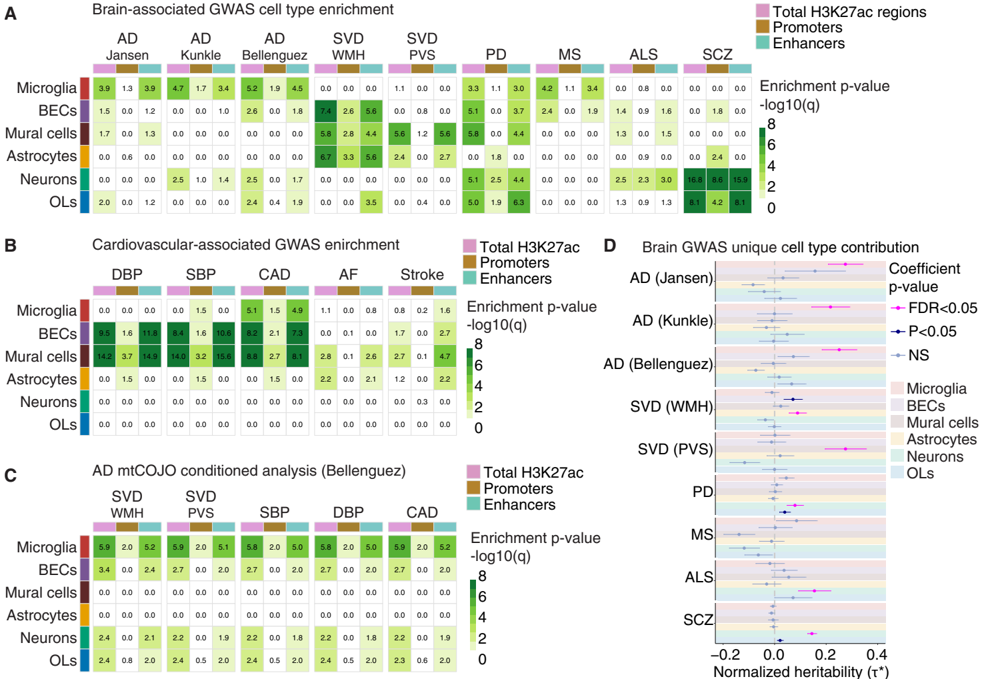
- AD genetic heritability was consistently enriched in myeloid/microglia enhancers across three AD GWASs, with modest enrichment in brain endothelial cells (BECs); SVD-WMH heritability was enriched in BECs, mural cells, and astrocytes, while SVD-PVS heritability was strongly enriched in mural cells.
- Unique cell-type heritability analyses linked AD to myeloid/microglia, SVD-WMH to astrocytes and nominally BECs, SVD-PVS to mural cells, DBP/SBP/CAD to BECs and mural cells, and stroke to mural cells.
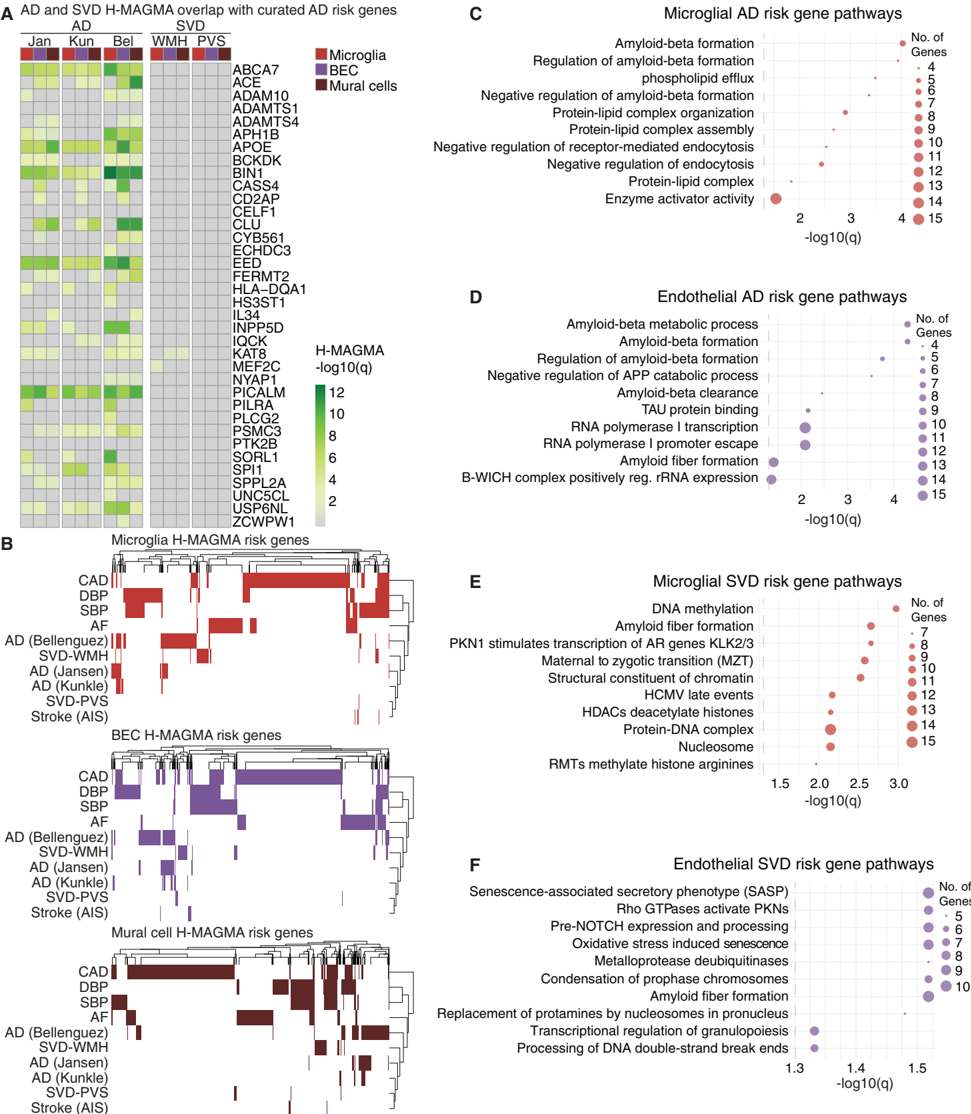
- H-MAGMA putative risk genes for AD and SVD showed minimal overlap in microglia, BECs, and mural cells; only two SVD risk genes (MEF2C in microglia and KAT8 in BECs/pericytes) overlapped previously curated AD risk genes.
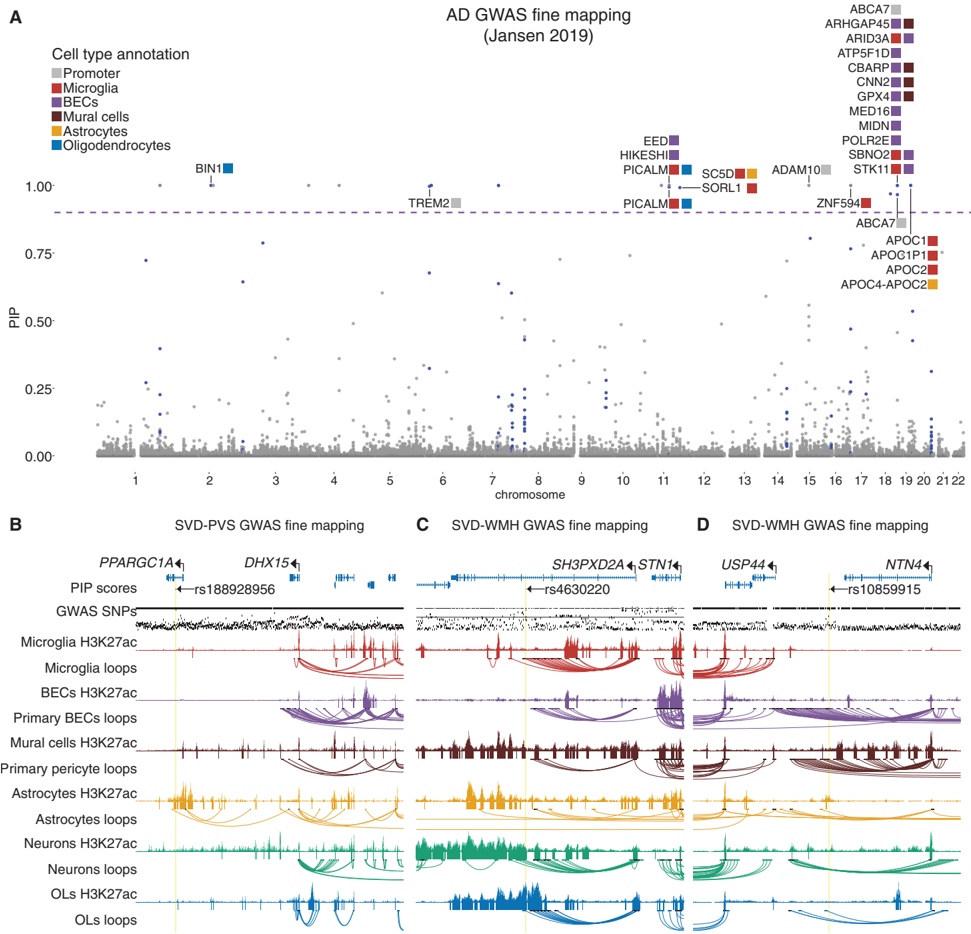
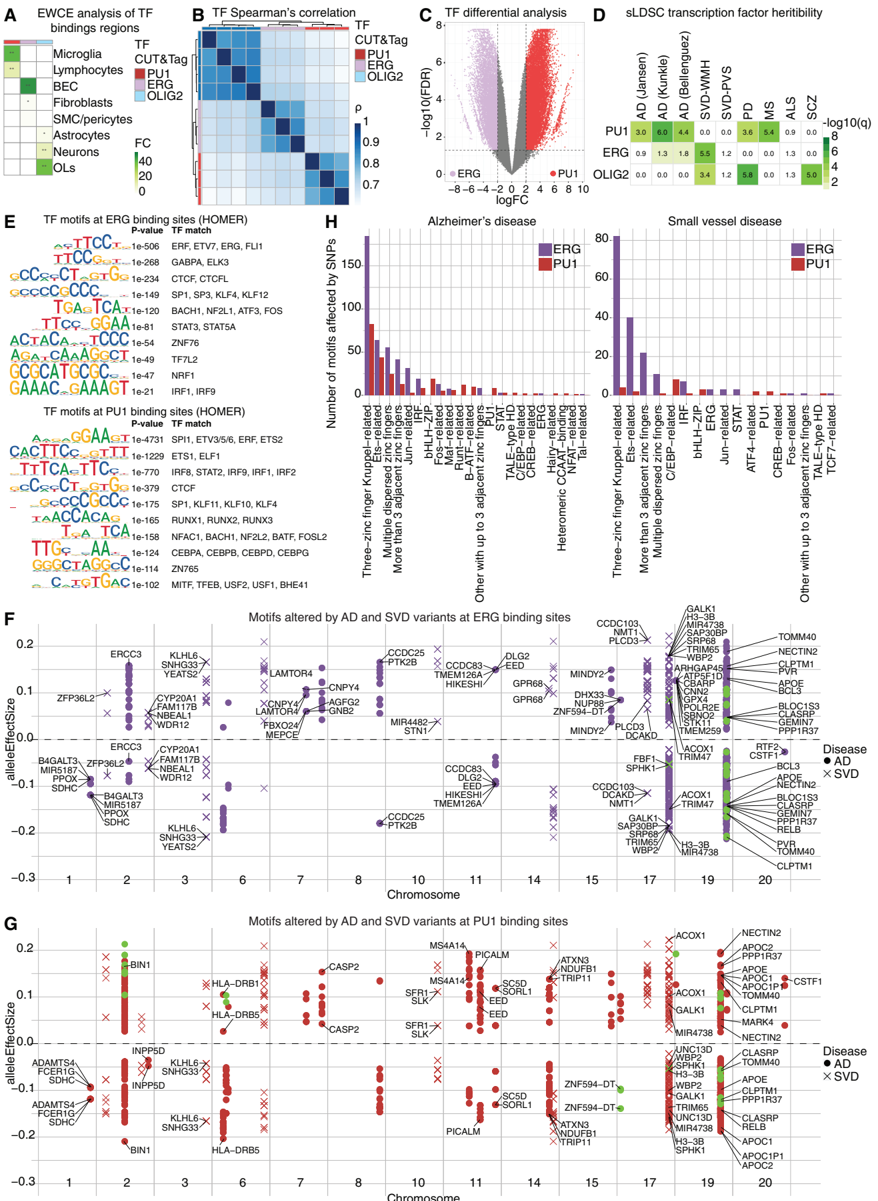
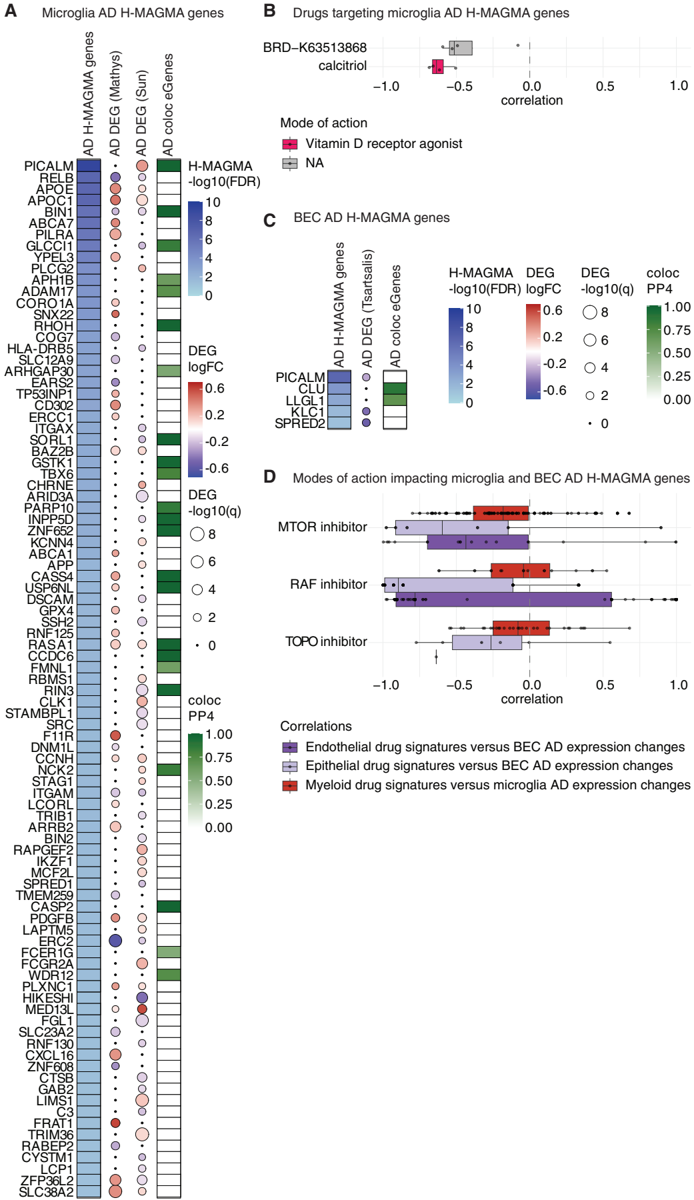
- Fine-mapping identified 53 AD SNPs with posterior inclusion probability >0.9; motifbreakR predicted 107 AD and 44 SVD variants alter ERG-binding motifs and 113 AD and 48 SVD variants alter PU1-binding motifs, mostly affecting collaborative partner motifs such as KLF and ETS-related families. Drug repurposing nominated BRD-K63513868 and calcitriol (VDR agonist) for microglial AD risk genes (median correlation < −0.5), and mTOR, RAF, topoisomerase, HDAC, and VEGFR/PDGFR modes of action across lineages.
Methods
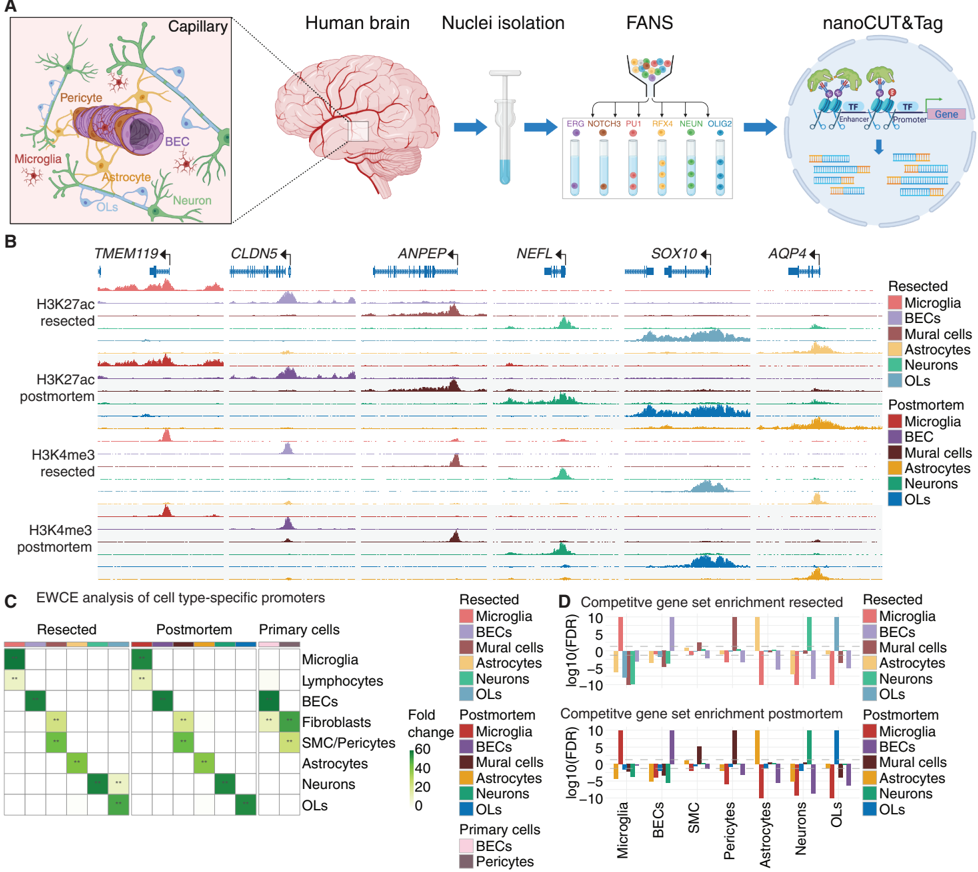
- Profiled H3K27ac and H3K4me3 by CUT&Tag after fluorescence-activated nuclei sorting of PU1+ myeloid/microglia, ERG+ BECs, NOTCH3+ mural cells, RFX4+ astrocytes, NEUN+ neurons, and OLIG2+ oligodendrocytes from resected pediatric epilepsy cortex (7 individuals aged 4–19) and post-mortem prefrontal cortex (6 non-dementia individuals, Braak 0–III, aged 75–85 in Results; 75–87 in STAR Methods).
- Generated enhancer-to-gene interactomes using PLAC-seq for microglia, neurons, and oligodendrocytes and pcHi-C for astrocytes, primary BECs, and primary pericytes; primary BEC/pericyte loops were filtered to overlap in vivo H3K27ac regions.
- Main analyses included sLDSC partitioned heritability, genetic correlation/mtCOJO, H-MAGMA, PolyFun+SuSiE fine-mapping, HOMER/TomTom/motifbreakR and DeepSTARR/TF-MoDISco motif analysis, and LINCS CMap drug repurposing.
Limitations
- Stated: aging-associated changes could be masked by differences in tissue collection and pathologies, and future studies need uniform age distributions; FANS lacks nuclei-enrichment strategies for some cell types (e.g., fibroblasts) and does not differentiate cellular heterogeneity, so single-cell approaches in disease models are needed; some GWASs included by-proxy cases that may contribute heterogeneity.
- Stated: capture-based Hi-C does not identify all chromatin interactions; not all GWAS variants are causal, partly mitigated by fine-mapping; some fine-mapped variants were linked to multiple target genes in more than one cell type; further work needs chromatin QTL analysis, massively parallel reporter assays, genome editing, and profiling of repressive chromatin modifications; H-MAGMA risk genes/pathways are computationally inferred and prioritized drugs need preclinical testing.
- Evident from text: vascular epigenomes relied on primary BECs and pericytes rather than in vivo nuclei because of low nuclei numbers for BECs and mural cells; primary BECs used were all male, and resected tissue came from epilepsy patients, which may limit generalizability.
Model-written summary. Check it against the paper before relying on it.
Integrity signals
Registry
Cites
Statistics
Figures
Verification
Claims the paper makes
0 Valid · 0 Not valid · 82 Not checked · 100 Own results and interpretations
None of the sources cited for this claim could be matched to a paper, so there is nothing to check it against.
In the paper
“NVU cell types showed modest AD heritability enrichment in BECs for two AD GWAS 24,25 (Figures 2A, S5A, and S5B).”
§ The brain neurovascular epigenome and its association with dementia > Vascular and immune cell types are associated with shared and unique genetic risk
What the sources say
- Not matchedcites [24]
The reference list we hold has no entry [24].
- Not matchedcites [25]
The reference list we hold has no entry [25].
plainstates an association- Asserted: passes — The authors put it forward as true.
- Checkable: passes — It can be checked against evidence.
- Load-bearing: passes — The paper’s conclusions depend on it.
- Based: passes — The paper gives a reason why it holds.
- Rests on 2 assumptions not shown here.
- Not matched
None of the sources cited for this claim could be matched to a paper, so there is nothing to check it against.
In the paper
“DBP, SBP, and CAD showed heritability enrichment associated with enhancers of BECs and mural cells (Figures 2B, S5C, and S5D).”
§ The brain neurovascular epigenome and its association with dementia > Vascular and immune cell types are associated with shared and unique genetic risk
What the sources say
- Not matchedcites [51]
The reference list we hold has no entry [51].
- Not matchedcites [52]
The reference list we hold has no entry [52].
plainstates an association- Asserted: passes — The authors put it forward as true.
- Checkable: passes — It can be checked against evidence.
- Load-bearing: passes — The paper’s conclusions depend on it.
- Based: passes — The paper gives a reason why it holds.
- Rests on 2 assumptions not shown here.
- Not matched
A result the paper reports from its own data — it cites no other source for it, so there is none to check. The quote shows it is in the paper.
In the paper
“Lastly, functional GSEA (fGSEA) of resected and post-mortem differentially acetylated promoters (Figure S4B) identified pathways similar to those previously shown to be enriched in the individual cell types (Figure S4C).”
§ The brain neurovascular epigenome and its association with dementia > Epigenomic profiling of the major brain and vascular cell types
plainstates an association- Asserted: passes — The authors put it forward as true.
- Checkable: passes — It can be checked against evidence.
- Load-bearing: unclear — It is unclear whether the paper’s conclusions depend on it.
- Based: passes — The paper gives a reason why it holds.
A result the paper reports from its own data — it cites no other source for it, so there is none to check. The quote shows it is in the paper.
In the paper
“Overall, cell-type genetic heritability for each GWAS was similar for resected, post-mortem, and consensus promoters and enhancers, indicating minimal effects of tissue source (Figures 2A, 2B, and S5A-S5D).”
§ The brain neurovascular epigenome and its association with dementia > Vascular and immune cell types are associated with shared and unique genetic risk
hedged- Asserted: passes — The authors put it forward as true.
- Checkable: passes — It can be checked against evidence.
- Load-bearing: passes — The paper’s conclusions depend on it.
- Based: passes — The paper gives a reason why it holds.
- Rests on 2 assumptions not shown here.
A result the paper reports from its own data — it cites no other source for it, so there is none to check. The quote shows it is in the paper.
In the paper
“Promoters active in NOTCH3 + nuclei showed a significant enrichment for gene expression signatures of mural cells and fibroblasts.”
§ The brain neurovascular epigenome and its association with dementia > Epigenomic profiling of the major brain and vascular cell types
plainstates an association- Asserted: passes — The authors put it forward as true.
- Checkable: passes — It can be checked against evidence.
- Load-bearing: passes — The paper’s conclusions depend on it.
- Based: passes — The paper gives a reason why it holds.
80 more claims
Create a free account to see all 182 claims and every source verdict.
- It may state two separate claims as one. 80
- Probably not a substantial claim. 32
Claims other papers make about this one
Each is checked against this paper’s own text: does it say what the citing paper says it does?
In the citing paper
“Convergent candidates such as EFNA4 and TLR1 emerged across omics layers [22], and Connectivity Map analyses nominated mTOR inhibitors such as rapamycin for further preclinical study [21].”
From AAIC 2026: Understanding dementia from the perspective of neurovascular pathology (2026) · cites this paper as [21]
In the citing paper
“Transcriptomic analyses placed AD risk genes in vascular cells while epigenomic analyses showed SVD variants highly enriched at endothelial, mural, and astrocytic cells, and AD variants mainly in microglia, with limited gene overlap [21].”
From AAIC 2026: Understanding dementia from the perspective of neurovascular pathology (2026) · cites this paper as [21]
Self-check
Percentages, sums and reported differences re-computed from the paper’s own numbers.
Each contradiction between two passages listed here was confirmed by an independent check.
Rated major: it would touch a result — a value a result rests on, reported and recomputed p-values on opposite sides of the significance level, two passages that conflict with no sign which is right, or a cited work retracted before this paper was published.
In the paper
§ The brain neurovascular epigenome and its association with dementia > Vascular and immune cell types are associated with shared and unique genetic risk
“consensus gene regulatory regions that were generated by intersecting resected and post-mortem promoters and enhancers for each cell type”
§ The brain neurovascular epigenome and its association with dementia > Additional information
“consensus promoters were generated by taking the union of resected and post-mortem promoters and merging regions that were separated by less than 31 base pairs using GenomicRanges.Regions distal to the TSS that did not overlap with H3K4me3 were annotated as enhancers.Resected and post-mortem enhancers were identified for each cell type, and consensus enhancers were generated by taking the union”
Rated minor: it would not touch a result — a value no result rests on, a p-value that stays on the same side of the significance level, or a conflict that is clerical, resolved elsewhere in the paper, or outside its own findings.
In the paper
§ The brain neurovascular epigenome and its association with dementia > Epigenomic profiling of the major brain and vascular cell types
“post-mortem prefrontal cortical samples were characterized from six non-dementia individuals (Braak 0-III) aged 75-85 (Table S1).”
§ The brain neurovascular epigenome and its association with dementia > Human samples
“Fresh frozen post-mortem prefrontal cortex (Brodmann Area 9 (BA9)) was obtained from Banner Sun Health Research Institute Brain and Body Donation Program of Sun City, Arizona, from 3 male and 3 female individuals aged 75-87 years.”
Citations
Cites
The Sequence Alignment/Map format and SAMtools
Li, H., Handsaker, B., Wysoker, A., Fennell, T., Ruan, J., Homer, N., Marth, G., Abecasis, G., Durbin, R., & 1000 Genome Project Data Processing Subgroup (2009) · Bioinformatics · doi:10.1093/bioinformatics/btp352 · Cited by 62,041
Fast gapped-read alignment with Bowtie 2
Langmead, B., & Salzberg, S. L. (2012) · Nature Methods · doi:10.1038/nmeth.1923 · Cited by 56,400
Subramanian, A., Tamayo, P., Mootha, V. K., Mukherjee, S., Ebert, B. L., Gillette, M. A., Paulovich, A., Pomeroy, S. L., Golub, T. R., Lander, E. S., et al. (2005) · Proceedings of the National Academy of Sciences · doi:10.1073/pnas.0506580102 · Cited by 53,625
Model-based Analysis of ChIP-Seq (MACS)
Zhang, Y., Liu, T., Meyer, C. A., Eeckhoute, J., Johnson, D. S., Bernstein, B. E., Nusbaum, C., Myers, R. M., Brown, M., Li, W., et al. (2008) · Genome Biology · doi:10.1186/gb-2008-9-9-r137 · Cited by 18,386
Heinz, S., Benner, C., Spann, N., Bertolino, E., Lin, Y. C., Laslo, P., Cheng, J. X., Murre, C., Singh, H., & Glass, C. K. (2010) · Molecular Cell · doi:10.1016/j.molcel.2010.05.004 · Cited by 13,382
From local explanations to global understanding with explainable AI for trees
Lundberg, S. M., Erion, G., Chen, H., DeGrave, A., Prutkin, J. M., Nair, B., Katz, R., Himmelfarb, J., Bansal, N., & Lee, S.-I. (2020) · Nature Machine Intelligence · doi:10.1038/s42256-019-0138-9 · Cited by 10,551
Iliff, J. J., Wang, M., Liao, Y., Plogg, B. A., Peng, W., Gundersen, G. A., Benveniste, H., Vates, G. E., Deane, R., Goldman, S. A., et al. (2012) · Science Translational Medicine · doi:10.1126/scitranslmed.3003748 · Cited by 5,824
LD Score regression distinguishes confounding from polygenicity in genome-wide association studies
Schizophrenia Working Group of the Psychiatric Genomics Consortium, Bulik-Sullivan, B. K., Loh, P.-R., Finucane, H. K., Ripke, S., Yang, J., Patterson, N., Daly, M. J., Price, A. L., & Neale, B. M. (2015) · Nature Genetics · doi:10.1038/ng.3211 · Cited by 5,559
ChIPseeker: an R/Bioconductor package for ChIP peak annotation, comparison and visualization
Yu, G., Wang, L.-G., & He, Q.-Y. (2015) · Bioinformatics · doi:10.1093/bioinformatics/btv145 · Cited by 4,362
Histone H3K27ac separates active from poised enhancers and predicts developmental state
Creyghton, M. P., Cheng, A. W., Welstead, G. G., Kooistra, T., Carey, B. W., Steine, E. J., Hanna, J., Lodato, M. A., Frampton, G. M., Sharp, P. A., et al. (2010) · Proceedings of the National Academy of Sciences · doi:10.1073/pnas.1016071107 · Cited by 4,302
Cited by
Kabbe, M., Agirre, E., Carlström, K. E., Dumral, Ö., Lor, Y. K., Pohl, F. B., Ruffin, N., van Bruggen, D., Meijer, M., Seeker, L. A., et al. (2026) · Nature Neuroscience · doi:10.1038/s41593-026-02208-0 · Cited by 14
Optimised fluorescence-activated nuclei sorting for epigenomic analysis of cortical cell types
Chioza, B. A., Policicchio, S. S. S., Burrage, J., Blake, G. E. T., Bamford, R. A., Franklin, A., Soanes, D. M., Wells, P. M., Babtie, A. C., Payan, M. F., et al. (2026) · PLoS ONE · doi:10.1371/journal.pone.0359643 · Cited by 7
The vascular contribution to dementia: World Stroke Organization scientific statement
Biessels, G. J., Debette, S., Elahi, F. M., Geranmayeh, F., Hansra, G. K., Hughes, T. M., Ihara, M., Isaacs, J. D., Jokinen, H., Nott, A., et al. (2026) · International Journal of Stroke · doi:10.1177/17474930261470506 · Cited by 5
Self-citationSchilder, B. M., Murphy, K. B., Dash, H., Zhang, Y., Gordon-Smith, R., Chapman, J., Otani, M., & Skene, N. (2026) · Genome Medicine · doi:10.1186/s13073-026-01692-0 · Cited by 5
Genetic drivers of progression in Alzheimer’s disease are distinct from disease risk
Cohen, C. E., Fernandez, S., Yaman, U., Ehyaei, A. R., Kodosaki, E., Askarova, A., Porter, T., O’Brien, E., Study, A. I. B. A. L., Initiative, A. D. N., et al. (2026) · Alzheimer's Research & Therapy · doi:10.1186/s13195-026-02036-1 · Cited by 3
Self-citationEpigenetic noise in the aging brain: tuning neuronal vulnerability to neurodegeneration
Yin, X., Zhang, H., Zhang, R., Xue, J., & Hou, Y. (2026) · Trends in Neurosciences · doi:10.1016/j.tins.2026.04.006 · Cited by 3
Boulger, S. L., Lerose, D., Adair, E., Papageorgopoulou, M., Zhao, Y., Avot, B., Thomas, M., Nibber, P., Klug, H., Fancy, N. N., et al. (2026) · bioRxiv (Cold Spring Harbor Laboratory) · doi:10.64898/2026.06.22.733753 · Cited by 2
Self-citationFriend or foe? Glial–vascular interactions in health and neurodegenerative disease
McQuaid, C., Sewell, M. D. E., & Montagne, A. (2026) · Pharmacological Reviews · doi:10.1016/j.pharmr.2026.100143 · Cited by 2
Beyond Bulk: Cell‐Type‐Resolved Epigenomics as the Path Forward in Alzheimer's Disease Research
Cañizares-Moscato, L., Ruiz-Iglesias, J., Isoler‐Alcaráz, J., & Palomer, E. (2026) · European Journal of Neuroscience · doi:10.1111/ejn.70683 · Cited by 1
Brain cell type nuclei enrichment without fixative for nanoCUT&Tag and other omics approachesPreprint
Ziegler, K. C., van Dalen, J. D., Bedwell, L., Transfeld, J. L., & Nott, A. (2026) · bioRxiv (Cold Spring Harbor Laboratory) · doi:10.64898/2026.03.31.715540 · Cited by 1
Self-citationAAIC 2026: Understanding dementia from the perspective of neurovascular pathology
Cai, Y., Hainsworth, A., Wallin, A., & Kalaria, R. (2026) · Cerebral Circulation - Cognition and Behavior · doi:10.1016/j.cccb.2026.100573
Sharma, K., Singh, B., Mastana, S. S., Singh, M., & Singh, P. (2026) · Neurology International · doi:10.3390/neurolint18060114
A large-scale single cell map of primary and conditional regulatory variation in the human brainPreprint
Lee, S., Hamdan, Z., Huntress, S. S., Yang, A., & Guo, M. H. (2026) · medRxiv · doi:10.64898/2026.05.30.26354534
Gergian, C., Urbanaviciute, P., Wells, P. M., Transfeld, J. L., Askarova, A., Yaa, R. M., Wu, Y., Ziegler, K. C., Nickl, C. K., Pasillas, M. P., et al. (2026) · bioRxiv (Cold Spring Harbor Laboratory) · doi:10.64898/2026.09.09.750356
Self-citationZhang, C., Fang, D., & Zhang, L. (2026) · Drug Design Development and Therapy · doi:10.2147/dddt.s619901
Xu, Q., Zhao, P., Tao, J., & Zheng, H. (2026) · medRxiv · doi:10.64898/2026.03.04.26347509
Gocmanac, I., Dash, H., Weinert, M., Nott, A., Nagaeva, E. I., & Skene, N. (2026) · bioRxiv (Cold Spring Harbor Laboratory) · doi:10.64898/2026.07.19.739421
Self-citation
Metadata
- Authors
- Ziegler, K. C., Askarova, A., Gergian, C., Yaa, R. M., van Dalen, J. D., Transfeld, J. L., Zoppi, F., Du, J., Clode, D., Rahbar, F., Graham, R. E., Sargurupremraj, M., Debette, S., Gonda, D. D., Levy, M. L., Chandran, S., Falk, S., Karow, M., Matthews, P. M., Coufal, N. G., & Nott, A.
- Affiliations
- UK Dementia Research Institute (GB)
- Friedrich-Alexander-Universität Erlangen-Nürnberg (DE)
- University of Toronto (CA)
- The University of Texas at San Antonio Health Science Center (US)
- Université de Bordeaux (FR)
- University of California San Diego (US)
- Rosalind Franklin Institute (GB)
- Corresponding author
- Nott, Alexi
- ORCID
- Venue
- Neuron
- Publisher
- Elsevier BV
- Published
- 2026-01
- Volume
- 114
- Issue
- 2
- Pages
- 268-286.e9
- ISSN
- 0896-6273 (ISSN-L)
- OpenAlex
- W4415703460
- Cited by
- 17
- References
- 152
- Citations by year
- 2026: 17
- FWCI
- 4.08
- Type
- journal article
- Language
- en
- Open access
- hybrid
- doi.org
- Licence
- cc-by
- www.elsevier.com/tdm/userlicense/1.0/ (tdm)
- www.elsevier.com/legal/tdmrep-license (tdm)
- creativecommons.org/licenses/by/4.0/ (vor)
- Locations
- Neuron (publishedVersion, cc-by)
- Edinburgh Research Explorer (University of Edinburgh) (publishedVersion, cc-by)
- PubMed (publishedVersion)
- HAL (submittedVersion, cc-by)
- Funders
- The Dunhill Medical Trust
- Alzheimer's Association
- Edmond J Safra Foundation
- UK Dementia Research Institute
- Topics
- Life Sciences › Neuroscience › Cellular and Molecular Neuroscience › Alzheimer's disease research and treatments
- Health Sciences › Medicine › Clinical Neurology › Cerebrovascular and genetic disorders
- Health Sciences › Medicine › Psychiatry and Mental health › Dementia and Cognitive Impairment Research
- Keywords
- cerebral small vessel disease, Alzheimer's disease, dementia, brain endothelial cells, neurovascular unit, epigenome, heritability, astrocytes, microglia, amyloid, phospholipids, senescence, transcription factors, vitamin D receptor agonists, mTOR, histone deacetylase, VEGFR inhibitors, therapeutic target
- MeSH terms
- Epigenome, Alzheimer Disease, Brain, Dementia, Humans, Microglia, Endothelial Cells, Cerebral Small Vessel Diseases
About these checks
Registry, retraction, Cites and statistics results are computed, not judged, with one exception: a printed reference that no index lists is read once by a model before it counts as a citation error. Claims are extracted by a model and kept only when their quote appears verbatim in the text; each cited source is then checked, with a model’s help, for whether it says what the claim relies on. Those verdicts can be wrong — read the claim’s quote and the cited source before relying on one.
A language model drew the claims from the paper on 2026-11-26, under version 3 of the claim definition (model deepseek-v4.1-flash, prompt extract-v3).
A second model labelled each claim on 2026-11-26 (model jev-1.13-20260917, definition revision gold-guideline-v0.2).
Statistics and arithmetic are recomputed, not judged.
Confidence bands are shown only for fields calibrated on our annotated test set. None is calibrated yet, so no band is shown.
What counts as a claim ›How we measure confidence ›How we check this ›
Are you an author, or do you see a problem with this page? Request a review
Data sources
Bibliographic data: Semantic Scholar, OpenAlex, Crossref.
Contains information from the Semantic Scholar Academic Graph Datasets, made available under the ODC Attribution License (ODC-BY 1.0).
Semantic Scholar’s data is described in: Kinney, R., et al. (2023). The Semantic Scholar Open Data Platform. arXiv:2301.10140.
