

The DOI matches its Crossref record; 62 of the 64 references it cites were found in a registry or an index.
Accurate multimodal probabilistic prediction of conversion to Alzheimer’s disease in patients with mild cognitive impairment
Open accessAbstract
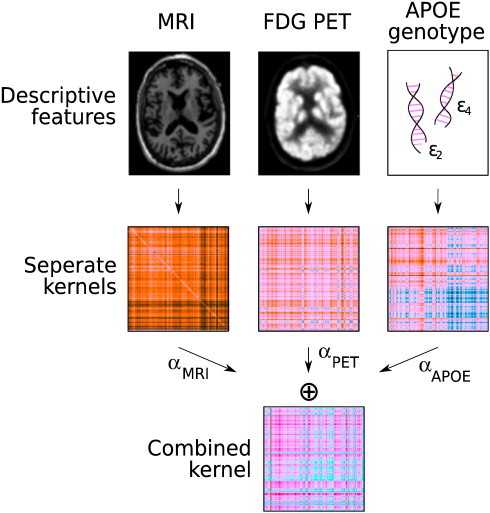
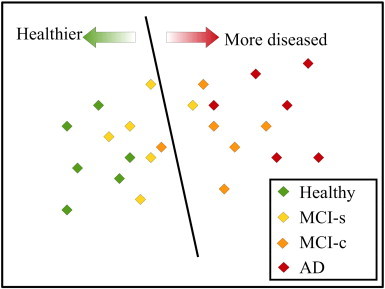
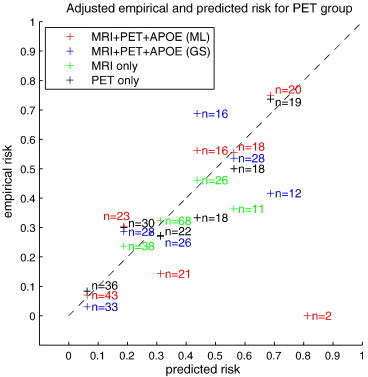
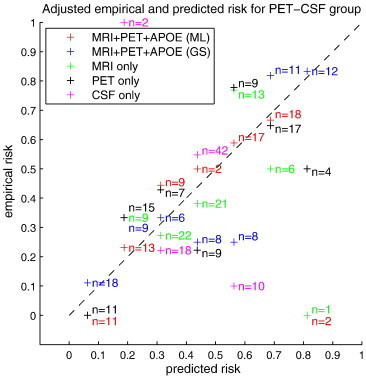
Accurately identifying the patients that have mild cognitive impairment (MCI) who will go on to develop Alzheimer's disease (AD) will become essential as new treatments will require identification of AD patients at earlier stages in the disease process. Most previous work in this area has centred around the same automated techniques used to diagnose AD patients from healthy controls, by coupling high dimensional brain image data or other relevant biomarker data to modern machine learning techniques. Such studies can now distinguish between AD patients and controls as accurately as an experienced clinician. Models trained on patients with AD and control subjects can also distinguish between MCI patients that will convert to AD within a given timeframe (MCI-c) and those that remain stable (MCI-s), although differences between these groups are smaller and thus, the corresponding accuracy is lower. The most common type of classifier used in these studies is the support vector machine, which gives categorical class decisions. In this paper, we introduce Gaussian process (GP) classification to the problem. This fully Bayesian method produces naturally probabilistic predictions, which we show correlate well with the actual chances of converting to AD within 3 years in a population of 96 MCI-s and 47 MCI-c subjects. Furthermore, we show that GPs can integrate multimodal data (in this study volumetric MRI, FDG-PET, cerebrospinal fluid, and APOE genotype with the classification process through the use of a mixed kernel). The GP approach aids combination of different data sources by learning parameters automatically from training data via type-II maximum likelihood, which we compare to a more conventional method based on cross validation and an SVM classifier. When the resulting probabilities from the GP are dichotomised to produce a binary classification, the results for predicting MCI conversion based on the combination of all three types of data show a balanced accuracy of 74%. This is a substantially higher accuracy than could be obtained using any individual modality or using a multikernel SVM, and is competitive with the highest accuracy yet achieved for predicting conversion within three years on the widely used ADNI dataset.
Overview
The claims and statistics of this paper haven’t been checked yet.
Run the check — free, no account needed. It reads the open-access text and checks the sources it cites.
Integrity signals
Registry
Cites
Statistics
Figures
Verification
Claims the paper makes
The claims and statistics of this paper haven’t been checked yet.
Run the check — free, no account needed. It reads the open-access text and checks the sources it cites.
Claims other papers make about this one
Each is checked against this paper’s own text: does it say what the citing paper says it does?
In the citing paper
“Although ML analysis of multi-omics is still in its embryonic stage, it has already been explored for a wide range of applications, as reported in recent reviews on brain diseases (Garali et al., 2018;Young et al., 2013), diabetes (Kavakiotis et al., 2017), cancers (Borad and LoRusso, 2017;Chaudhary et al., 2017;Wong et al., 2016) cardiovascular disease (Weng et al., 2017), medical imaging (Ericks”
From Using machine learning approaches for multi-omics data analysis: A review (2021) · cites this paper as Young et al., 2013
Self-check
Percentages, sums and reported differences re-computed from the paper’s own numbers.
The self-check needs the paper’s full text.
Citations
Cites
Book Review: Pattern Recognition and Machine Learning
Nasrabadi, N. M. (2007) · Journal of Electronic Imaging · doi:10.1117/1.2819119 · Cited by 22,066
Gaussian Processes for Machine Learning
Rasmussen, C. E., & Williams, C. K. I. (2005) · doi:10.7551/mitpress/3206.001.0001 · Cited by 11,705
Corder, E. H., Saunders, A. M., Strittmatter, W. J., Schmechel, D. E., Gaskell, P. C., Small, G. W., Roses, A. D., Haines, J. L., & Pericak-Vance, M. A. (1993) · Science · doi:10.1126/science.8346443 · Cited by 9,429
Mild Cognitive Impairment: Clinical Characterization and Outcome
Petersen, R. C., Smith, G. E., Waring, S. C., Ivnik, R. J., Tangalos, E. G., & Kokmen, E. (1999) · Archives of Neurology · doi:10.1001/archneur.56.3.303 · Cited by 8,980
Voxel-Based Morphometry—The Methods
Ashburner, J., & Friston, K. J. (2000) · NeuroImage · doi:10.1006/nimg.2000.0582 · Cited by 8,676
Global prevalence of dementia: a Delphi consensus study
Ferri, C. P., Prince, M. J., Brayne, C., Brodaty, H., Fratiglioni, L., Ganguli, M., Hall, K. S., Hasegawa, K., Hendrie, H. C., Huang, Y., et al. (2005) · The Lancet · doi:10.1016/s0140-6736(05)67889-0 · Cited by 5,336
Note on the Sampling Error of the Difference Between Correlated Proportions or Percentages
McNemar, Q. (1947) · Psychometrika · doi:10.1007/bf02295996 · Cited by 4,754
Pattern recognition and machine learning
(2007) · Choice Reviews Online · doi:10.5860/choice.44-5091 · Cited by 2,783
Circular analysis in systems neuroscience: the dangers of double dipping
Kriegeskorte, N., Simmons, W. K., Bellgowan, P. S. F., & Baker, C. I. (2009) · Nature Neuroscience · doi:10.1038/nn.2303 · Cited by 2,696
Staging of alzheimer's disease-related neurofibrillary changes
Braak, H., & Braak, E. (1995) · Neurobiology of Aging · doi:10.1016/0197-4580(95)00021-6 · Cited by 2,357
Cited by
Sorted by citations
Items 101–200 of 248
Grassi, M., Loewenstein, D., Caldirola, D., Schruers, K. R. J., Duara, R., & Perna, G. (2018) · International Psychogeriatrics · doi:10.1017/s1041610218001618 · Cited by 44
A multimodal machine learning model for predicting dementia conversion in Alzheimer’s disease
Lee, M., Kim, H. W., Choe, Y. S., Yang, H. S., Lee, J., Lee, H., Yong, J. H., Kim, D., Lee, M., Kang, D. W., et al. (2024) · Scientific Reports · doi:10.1038/s41598-024-60134-2 · Cited by 51
Ferreira, L. K., Rondina, J. M., Kubo, R., Ono, C. R., Leite, C. C., Smid, J., Bottino, C. M. C., Nitríni, R., Busatto, G. F., Duran, F., et al. (2017) · Brazilian Journal of Psychiatry · doi:10.1590/1516-4446-2016-2083 · Cited by 45
Multimodal Integration of Brain Images for MRI-Based Diagnosis in Schizophrenia
Salvador, R. M., Canales-Rodríguez, E. J., Guerrero‐Pedraza, A., Sarró, S., Tordesillas‐Gutiérrez, D., Maristany, T., Crespo‐Facorro, B., McKenna, P. J., & Pomarol‐Clotet, E. (2019) · Frontiers in Neuroscience · doi:10.3389/fnins.2019.01203 · Cited by 43
Denouements of machine learning and multimodal diagnostic classification of Alzheimer’s disease
Naik, B., Mehta, A., & Shah, M. (2020) · Visual Computing for Industry Biomedicine and Art · doi:10.1186/s42492-020-00062-w · Cited by 43
Lee, E., Hongtu Zhu, B., Kong, D., Wang, Y., Giovanello, K. S., Ibrahim, J. G., & Initiative, A. D. N. (2015) · The Annals of Applied Statistics · doi:10.1214/15-aoas879 · Cited by 42
Popuri, K., Balachandar, R., Alpert, K. I., Lu, D., Bhalla, M., Mackenzie, I. R., Hsiung, G. R., Wang, L., & Beg, M. F. (2018) · NeuroImage Clinical · doi:10.1016/j.nicl.2018.03.007 · Cited by 42
Zhang, F., Tian, S., Chen, S., Ma, Y., Li, X., & Guo, X. (2019) · Neuroscience · doi:10.1016/j.neuroscience.2019.05.014 · Cited by 44
A machine learning approach to screen for preclinical Alzheimer's disease
Gaubert, S., Houot, M., Raimondo, F., Ansart, M., Corsi, M., Naccache, L., Sitt, J. D., Habert, M., Dubois, B., Fallani, F. D. V., et al. (2021) · Neurobiology of Aging · doi:10.1016/j.neurobiolaging.2021.04.024 · Cited by 43
Munteanu, C. R., Fernandez-Lozano, C., Mato‐Abad, V., Fernández, S. P., Álvarez‐Linera, J., Hernandez-Tamames, J. A., & Pazos, A. (2015) · Expert Systems with Applications · doi:10.1016/j.eswa.2015.03.011 · Cited by 42
Bendfeldt, K., Taschler, B., Gaetano, L., Madoerin, P., Küster, P., Mueller‐Lenke, N., Amann, M., Vrenken, H., Wottschel, V., Barkhof, F., et al. (2018) · Brain Imaging and Behavior · doi:10.1007/s11682-018-9942-9 · Cited by 41
Protein-based amide proton transfer-weighted MR imaging of amnestic mild cognitive impairment
Zhang, Z., Zhang, W., Yao, J., Chen, X., Gao, F., Jiang, S., Chen, W., Zhou, J., & Wang, G. (2019) · NeuroImage Clinical · doi:10.1016/j.nicl.2019.102153 · Cited by 38
Dementia classification using MR imaging and clinical data with voting based machine learning models
Bharati, S., Podder, P., Thanh, D. N. H., & Prasath, V. B. S. (2022) · Multimedia Tools and Applications · doi:10.1007/s11042-022-12754-x · Cited by 43
Shang, L., Smith, J. A., & Zhou, X. (2020) · PLoS Genetics · doi:10.1371/journal.pgen.1008734 · Cited by 35
A Network-Based Perspective in Alzheimer's Disease: Current State and an Integrative Framework
Dragomir, A., Vrahatis, A. G., & Bezerianos, A. (2018) · IEEE Journal of Biomedical and Health Informatics · doi:10.1109/jbhi.2018.2863202 · Cited by 34
Chen, J., Initiative, A. D. N., Chen, G., Shu, H., Chen, G., Ward, B. D., Wang, Z., Liu, D., Antuono, P., Li, S., et al. (2019) · Aging · doi:10.18632/aging.101883 · Cited by 32
A multimodal neuroimaging classifier for alcohol dependence
Guggenmos, M., Schmack, K., Veer, I. M., Lett, T. A. P., Sekutowicz, M., Sebold, M., Garbusow, M., Sommer, C., Wïttchen, H., Zimmermann, U. S., et al. (2020) · Scientific Reports · doi:10.1038/s41598-019-56923-9 · Cited by 36
Zhou, P., Zeng, R., Yu, L., Feng, Y., Chen, C., Fang, L., Liu, Y., Huang, Y., Huang, Z., & Initiative, T. A. D. N. (2021) · Frontiers in Aging Neuroscience · doi:10.3389/fnagi.2021.764872 · Cited by 31
A fuzzy-based system reveals Alzheimer’s Disease onset in subjects with Mild Cognitive Impairment
Tangaro, S., Fanizzi, A., Amoroso, N., & Bellotti, R. (2017) · Physica Medica · doi:10.1016/j.ejmp.2017.04.027 · Cited by 32
Clinical impact of 18F-FDG-PET among memory clinic patients with uncertain diagnosis
Perini, G., Rodriguez‐Vieitez, E., Kadir, A., Sala, A., Savitcheva, I., & Nordberg, A. K. (2020) · European Journal of Nuclear Medicine and Molecular Imaging · doi:10.1007/s00259-020-04969-7 · Cited by 30
Vasta, R., Augimeri, A., Cerasa, A., Nigro, S. L., Gramigna, V., Nonnis, M., Rocca, F., Zito, G., Quattrone, A., & Neuroimaging, F. T. A. D. (2016) · Current Alzheimer Research · doi:10.2174/1567205013666160120151457 · Cited by 30
Tufail, A. B., Ullah, K., Khan, R. A., Shakir, M., Khan, M. A., Ullah, I., Ma, Y., & Ali, M. S. (2022) · Journal of Healthcare Engineering · doi:10.1155/2022/1302170 · Cited by 30
RetractedEarly Diagnosis of Alzheimer’s Disease Based on Convolutional Neural Networks
Mehmood, A., Abugabah, A., AlZubi, A. A., & Sanzogni, L. (2022) · Computer Systems Science and Engineering · doi:10.32604/csse.2022.018520 · Cited by 29
Tjandra, D., Migrino, R. Q., Giordani, B., & Wiens, J. (2020) · Alzheimer s & Dementia Translational Research & Clinical Interventions · doi:10.1002/trc2.12035 · Cited by 28
Predicting Alzheimer’s Disease Using Combined Imaging-Whole Genome SNP Data
Kong, D., Initiative, A. F. T. A. D. N., Giovanello, K. S., Wang, Y., Lin, W., Lee, E., Fan, Y., Murali Doraiswamy, P., & Zhu, H. (2015) · Journal of Alzheimer's Disease · doi:10.3233/jad-150164 · Cited by 26
Prediction of Upstaged Ductal Carcinoma In Situ Using Forced Labeling and Domain Adaptation
Hou, R., Mazurowski, M. A., Grimm, L. J., Marks, J. R., King, L. M., Maley, C. C., Hwang, E.-S. S., & Lo, J. Y.-C. (2019) · IEEE Transactions on Biomedical Engineering · doi:10.1109/tbme.2019.2940195 · Cited by 27
Predicting Conversion from MCI to AD Combining Multi-Modality Data and Based on Molecular Subtype
Li, H.-T., Yuan, S.-X., Wu, J.-S., Gu, Y., & Sun, X. (2021) · Brain Sciences · doi:10.3390/brainsci11060674 · Cited by 27
Single and Combined Neuroimaging Techniques for Alzheimer’s Disease Detection
Amini, M., Pedram, M. M., Moradi, A., Jamshidi, M., & Ouchani, M. (2021) · Computational Intelligence and Neuroscience · doi:10.1155/2021/9523039 · Cited by 30
Kumari, R., Nigam, A., & Pushkar, S. (2022) · Neural Computing and Applications · doi:10.1007/s00521-022-07076-w · Cited by 26
Multi-modal intermediate integrative methods in neuropsychiatric disorders: A review
Wang, Y., Tang, S., Ma, R., Zamit, I., Wei, Y., & Pan, Y. (2022) · Computational and Structural Biotechnology Journal · doi:10.1016/j.csbj.2022.11.008 · Cited by 28
Collazos-Huertas, D. F., Peña, D. A. C., & Castellanos-Dominguez, G. (2018) · International Journal of Neural Systems · doi:10.1142/s0129065718500429 · Cited by 26
[18F]THK5317 imaging as a tool for predicting prospective cognitive decline in Alzheimer’s disease
Chiotis, K., Savitcheva, I., Poulakis, K., Saint-Aubert, L., Wall, A., Antoni, G., & Nordberg, A. (2020) · Molecular Psychiatry · doi:10.1038/s41380-020-0815-4 · Cited by 21
AD-Diff: enhancing Alzheimer's disease prediction accuracy through multimodal fusion
Han, L. (2025) · Frontiers in Computational Neuroscience · doi:10.3389/fncom.2025.1484540 · Cited by 28
RetractedEpisodic Memory Decline and Healthy Aging ☆
Wang, W., Daselaar, S. M., & Cabeza, R. E. L. (2017) · Elsevier eBooks · doi:10.1016/b978-0-12-809324-5.21093-6 · Cited by 26
Challenges of Integrative Disease Modeling in Alzheimer's Disease
Khatami, S. G., Robinson, C., Birkenbihl, C., Domingo‐Fernándéz, D., Hoyt, C. T., & Hofmann‐Apitius, M. (2020) · Frontiers in Molecular Biosciences · doi:10.3389/fmolb.2019.00158 · Cited by 28
Lorenzi, M., Simpson, I., Mendelson, A., Vos, S. B., Cardoso, M. J., Marc Modat, A., Schott, J. M., & Sebastien Ourselin, A. (2016) · Scientific Reports · doi:10.1038/srep22161 · Cited by 24
Vermeulen, R. J., Andersson, V., Banken, J., Hannink, G., Govers, T. M., Rovers, M. M., & Rikkert, M. O. (2025) · Alzheimer s & Dementia · doi:10.1002/alz.70069 · Cited by 25
Nonlinear Graph Fusion for Multi-modal Classification of Alzheimer’s Disease
Tong, T., Gray, K. R., Gao, Q., Chen, L., & Rueckert, D. (2015) · Lecture notes in computer science · doi:10.1007/978-3-319-24888-2_10 · Cited by 22
Tan, X., Liu, Y., Li, Y., Wang, P., Zeng, X., Yan, F., & Li, X. (2018) · BioMedical Engineering OnLine · doi:10.1186/s12938-018-0489-1 · Cited by 23
Sato, K., Alzheimer’s Disease Neuroimaging Initiative, A. J. A. D. N. I., Mano, T., Ihara, R., Suzuki, K., Tomita, N., Arai, H., Ishii, K., Senda, M., Ito, K., et al. (2019) · Journal of Alzheimer s Disease · doi:10.3233/jad-181115 · Cited by 22
Donini, M., Monteiro, J. M., Pontil, M., Hahn, T., Fallgatter, A. J., Shawe-Taylor, J., & Mourão-Miranda, J. (2019) · NeuroImage · doi:10.1016/j.neuroimage.2019.01.053 · Cited by 19
Schütze, M., Costa, D. D. S., de Paula, J. J., Malloy‐Diniz, L. F., Malamut, C., Mamede, M. H., de Miranda, D. M., Brammer, M. J., & Romano‐Silva, M. A. (2018) · PLoS ONE · doi:10.1371/journal.pone.0203520 · Cited by 19
Samper‐Gonzàlez, J., Burgos, N., Fontanella, S., Bertin, H., Habert, M., Durrleman, S., Evgeniou, T., & Colliot, O. (2017) · HAL · Cited by 19
Gelir, F., Akan, T., Alp, S., Gecili, E., Bhuiyan, M. S., Disbrow, E. A., Conrad, S. A., Vanchiere, J. A., Kevil, C. G., (ADNI), T. A. D. N. I., et al. (2024) · Journal of Medical and Biological Engineering · doi:10.1007/s40846-024-00918-z · Cited by 21
The cortical thickness phenotype of individuals with DISC1 translocation resembles schizophrenia
Doyle, O., Bois, C., Thomson, P. A., Romaniuk, L., Whitcher, B. J., Williams, S., Turkheimer, F., Stefánsson, H., McIntosh, A. M., Mehta, M. A., et al. (2015) · Journal of Clinical Investigation · doi:10.1172/jci82636 · Cited by 18
Mazzeo, S., Lassi, M., Padiglioni, S., Vergani, A. A., Moschini, V., Scarpino, M., Giacomucci, G., Burali, R., Morinelli, C., Fabbiani, C., et al. (2023) · BMC Neurology · doi:10.1186/s12883-023-03347-8 · Cited by 19
Modeling longitudinal imaging biomarkers with parametric Bayesian multi‐task learning
Aksman, L., Scelsi, M. A., Marquand, A. F., Alexander, D. C., Sebastien Ourselin, A., Altmann, A., & for, A. D. N. I. (2019) · Human Brain Mapping · doi:10.1002/hbm.24682 · Cited by 18
Yuan, S., Li, H., Wu, J., & Sun, X. S. (2021) · IEEE Transactions on Computational Biology and Bioinformatics · doi:10.1109/tcbb.2021.3053061 · Cited by 18
Spasov, S., Passamonti, L., Duggento, A., Lió, P., & Toschi, N. (2018) · bioRxiv (Cold Spring Harbor Laboratory) · doi:10.1101/383687 · Cited by 20
Viswan, V., Shaffi, N., Malathy, E., Selvi, G. C., Kavitha, B. R., Abdesselam, A., Wang, S., Suganthan, P. N., Shezawi, I. A., & Mahmud, M. (2026) · Brain Informatics · doi:10.1186/s40708-025-00291-w · Cited by 17
Machine Learning in Neuroimaging: A New Approach to Understand Acupuncture for Neuroplasticity
Yin, T., Ma, P., Tian, Z., Xie, K., He, Z., Sun, R., & Zeng, F. (2020) · Neural Plasticity · doi:10.1155/2020/8871712 · Cited by 17
Liu, Y., Tang, K., Cai, W., Chen, A., Zhou, G., Li, L., & Liu, R. (2022) · Frontiers in Aging Neuroscience · doi:10.3389/fnagi.2022.918462 · Cited by 17
Nallapu, B. T., Initiative, T. A. D. N., Petersen, K. K., Lipton, R. B., Davatzikos, C. A., & Ezzati, A. (2024) · Journal of Alzheimer s Disease · doi:10.3233/jad-230620 · Cited by 17
Qi, W., Zhu, X., He, D., Wang, B., Cao, S., Dong, C., Li, Y., Chen, Y., Wang, B., Shi, Y., et al. (2024) · Journal of Medical Internet Research · doi:10.2196/57830 · Cited by 18
Kung, T.-H., Chao, T. C., Xie, Y.-R., Pai, M., Kuo, Y., & Lee, G. G. C. (2021) · Frontiers in Neuroscience · doi:10.3389/fnins.2021.584641 · Cited by 17
Moradi, M., & Demirel, H. (2023) · Signal Image and Video Processing · doi:10.1007/s11760-023-02878-4 · Cited by 16
Applications of machine learning to brain disorders
Scarpazza, C., Baecker, L., Vieira, S., & Mechelli, A. (2019) · Elsevier eBooks · doi:10.1016/b978-0-12-815739-8.00003-1 · Cited by 18
Learning in data-limited multimodal scenarios: Scandent decision forests and tree-based features
Hor, S., & Moradi, M. (2016) · Medical Image Analysis · doi:10.1016/j.media.2016.07.012 · Cited by 16
Liu, S., Cao, Y., Liu, J., Ding, X., Coyle, D., & Initiative, A. D. N. (2022) · International Journal of Machine Learning and Cybernetics · doi:10.1007/s13042-022-01570-2 · Cited by 16
Ota, K., Oishi, N., Ito, K., Fukuyama, H., and SEAD-J Study Group, & Initiative, A. D. N. (2016) · Journal of Alzheimer s Disease · doi:10.3233/jad-160145 · Cited by 17
Samper‐Gonzàlez, J., Burgos, N., Fontanella, S., Bertin, H., Habert, M., Durrleman, S., Evgeniou, T., Colliot, O., & Initiative, T. A. D. N. (2017) · Lecture notes in computer science · doi:10.1007/978-3-319-67389-9_7 · Cited by 15
Inzelberg, R., Massarwa, M., Schechtman, E., Strugatsky, R., Farrer, L. A., & Friedland, R. P. (2015) · Journal of Alzheimer s Disease · doi:10.3233/jad-142871 · Cited by 14
Feature Learning Using Stacked Autoencoder for Shared and Multimodal Fusion of Medical Images
Singh, V., Verma, N. K., Ul Islam, Z., & Cui, Y. (2019) · Advances in Intelligent Systems and Computing · doi:10.1007/978-981-13-1132-1_5 · Cited by 13
A Comparison of Strategies for Incorporating Nuisance Variables into Predictive Neuroimaging Models
Rao, A. W., Monteiro, J. M., Ashburner, J., Portugal, L. C. L., Fernandes, O., Oliveira, L., Pereira, M. G., & Mourão-Miranda, J. (2015) · International Workshop on Pattern Recognition in NeuroImaging · doi:10.1109/prni.2015.28 · Cited by 13
Brain Metabolism Changes in Patients Infected with HTLV-1
Schütze, M., Romanelli, L. C. F., Rosa, D. V., Carneiro‐Proietti, A. B. F., Nicolato, R., Romano‐Silva, M. A., Brammer, M. J., & de Miranda, D. M. (2017) · Frontiers in Molecular Neuroscience · doi:10.3389/fnmol.2017.00052 · Cited by 13
Fusing Heterogeneous Data for Alzheimer's Disease Classification
Sudhir, P. P., Tze-Yun, L., & Initiative, A. D. N. (2015) · Studies in Health Technology and Informatics · doi:10.3233/978-1-61499-564-7-731 · Cited by 13
Early prediction of long-term tactile object recognition performance after sensorimotor stroke
Abela, E., Missimer, J. H., Pastore‐Wapp, M., Krammer, W., Wiest, R., & Weder, B. (2019) · Cortex · doi:10.1016/j.cortex.2019.01.018 · Cited by 13
INTEGRATIVE MACHINE LEARNING APPROACHES FOR MULTI-OMICS DATA ANALYSIS IN CANCER RESEARCH
Shoaib, A. S. M., Nishat, N., Raasetti, M., & Arif, I. (2024) · GLOBAL MAINSTREAM JOURNAL · doi:10.62304/ijhm.v1i2.149 · Cited by 11
A Novel Metabolic Connectome Method to Predict Progression to Mild Cognitive Impairment
Wang, M., Yan, Z., Xiao, S., Zuo, C., & Jiang, J. (2020) · Behavioural Neurology · doi:10.1155/2020/2825037 · Cited by 11
Li, X., Qiu, Y., Zhou, J. H., & Xie, Z. (2021) · Current Genomics · doi:10.2174/1389202923666211216163049 · Cited by 11
Samper‐Gonzàlez, J., Burgos, N., Bottani, S., Habert, M., Evgeniou, T., Epelbaum, S., & Colliot, O. (2019) · SPIE Medical Imaging: Image Processing · doi:10.1117/12.2512430 · Cited by 11
A Survey of Different Machine Learning Models for Alzheimer Disease Prediction
Davuluri, R. (2020) · International Journal of Emerging Trends in Engineering Research · doi:10.30534/ijeter/2020/73872020 · Cited by 11
Ciarmiello, A., Giovannini, E., Pastorino, S., Ferrando, O., Foppiano, F., Mannironi, A., Tartaglione, A., Giovacchini, G., & Initiative, T. A. D. N. (2022) · Clinical Nuclear Medicine · doi:10.1097/rlu.0000000000004433 · Cited by 11
3D scattering transforms for disease classification in neuroimaging
Adel, T., Cohen, T., Caan, M. W. A., & Welling, M. (2017) · NeuroImage Clinical · doi:10.1016/j.nicl.2017.02.004 · Cited by 10
Statsenko, Y. A., Meribout, S., Habuza, T., Almansoori, T. M., Gorkom, K., Gelovani, J. G., & Ljubisavljević, M. (2023) · Frontiers in Aging Neuroscience · doi:10.3389/fnagi.2022.943566 · Cited by 10
A new method to predict anomaly in brain network based on graph deep learning
Mirakhorli, J., Amindavar, H. R., & Mirakhorli, M. (2020) · Reviews in the Neurosciences · doi:10.1515/revneuro-2019-0108 · Cited by 10
Tembhare, K., Sharma, T., Kasibhatla, S. M., Achalere, A., & Joshi, R. (2024) · Informatics in Medicine Unlocked · doi:10.1016/j.imu.2024.101507 · Cited by 10
Machine Learning for Alzheimer’s Disease and Related Dementias
Marc Modat, A., Cash, D. M., Canas, L. S., Bocchetta, M., & Sebastien Ourselin, A. (2023) · Neuromethods · doi:10.1007/978-1-0716-3195-9_25 · Cited by 8
The potential of genetic and gene expression analysis in the diagnosis of neuropsychiatric disorders
van de Leemput, J., Glatt, S. J., & Tsuang, M. T. (2016) · Expert Review of Molecular Diagnostics · doi:10.1586/14737159.2016.1171714 · Cited by 9
MOT: a Multi-Omics Transformer for multiclass classification tumour types predictionsPreprint
Osseni, M. A., Tossou, P., Laviolette, F., & Corbeil, J. (2022) · bioRxiv (Cold Spring Harbor Laboratory) · doi:10.1101/2022.11.14.516459 · Cited by 10
Prevention and diagnosis of neurodegenerative diseases using machine learning models
Olaniyan, O. T., Adetunji, C. O., Dare, A., Adeyomoye, O., Adeniyi, M. J., & Enoch, A. (2022) · Elsevier eBooks · doi:10.1016/b978-0-323-90277-9.00009-2 · Cited by 8
Apolipoprotein E ε-4 as a genetic determinant of Alzheimer’s disease heterogeneity
Kotze, M. J., Brand, T., Pretorius, J., van Rensburg, S. J., & Luckhoff, H. K. (2015) · Degenerative Neurological and Neuromuscular Disease · doi:10.2147/dnnd.s41721 · Cited by 8
Identification of Alzheimer’s Disease on the Basis of a Voxel-Wise Approach
Beheshti, I., Mahdipour, H., Matsuda, H., & Initiative, F. T. J.-A. D. N. (2019) · Applied Sciences · doi:10.3390/app9153063 · Cited by 7
Lu, X., Chen, J., Shu, H., Wang, Z., Shi, Y., Yuan, Y., Xie, C., Liao, W., Su, F., Shi, Y., et al. (2020) · CNS Neuroscience & Therapeutics · doi:10.1111/cns.13371 · Cited by 6
Liu, Z., Initiative, A. D. N., Maiti, T., & Bender, A. R. (2021) · Journal of Alzheimer s Disease · doi:10.3233/jad-201398 · Cited by 9
Shi, H., Ma, D., Nie, Y., Beg, M. F., Pei, J., & Cao, J. (2021) · Journal of medical imaging · doi:10.1117/1.jmi.8.2.024502 · Cited by 8
Mou, F. S., Ahmed, T., Huda, M. N., & Nandi, A. K. (2026) · Artificial Intelligence Review · doi:10.1007/s10462-025-11484-4 · Cited by 7
Exploring cognitive progression subtypes in the Framingham Heart Study
Ding, H., Wang, B., Hamel, A. P., Karjadi, C., Ang, T. F. A., Au, R., & Lin, H. (2024) · Alzheimer s & Dementia Diagnosis Assessment & Disease Monitoring · doi:10.1002/dad2.12574 · Cited by 3
Ma, S., Tang, M., Yu, K., Härdle, W. K., Wang, Z., Xiong, W., Zhang, X., Wang, K., Zhang, L., & Tian, M. (2024) · Journal of the Royal Statistical Society Series A (Statistics in Society) · doi:10.1093/jrsssa/qnae061 · Cited by 6
Current role of 18F-FDG-PET in the differential diagnosis of the main forms of dementia
Guillén, E. F., Rosales, J. J., Coscia, D. L., Grisanti, F., Riverol, M., & Arbizu, J. (2020) · Clinical and Translational Imaging · doi:10.1007/s40336-020-00366-0 · Cited by 6
Li, Y., Fang, Y., Wang, J., Zhang, H., & Hu, B. (2021) · BioMed Research International · doi:10.1155/2021/5531940 · Cited by 6
Li, Y., Fang, Y., Zhang, H., & Hu, B. (2019) · IEEE Access · doi:10.1109/access.2019.2936415 · Cited by 6
Sparse Multimodal Manifold-Regularized Transfer Learning for MCI Conversion Prediction
Cheng, B., Zhang, D., Jie, B., & Shen, D. G. (2013) · Lecture notes in computer science · doi:10.1007/978-3-319-02267-3_32 · Cited by 5
Ning, K., Bouchard-Cannon, P., Yu, J., Shenoi, S., Wang, L., Initiative, A. D. N., & Sarkar, J. (2024) · Brain Informatics · doi:10.1186/s40708-024-00218-x · Cited by 9
Grueso, S., & Viejo-Sobera, R. (2021) · doi:10.31234/osf.io/vur7e · Cited by 5
Survey on machine learning for MRI and PET fusion in alzheimer’s disease
Guelib, B., Bounab, R., Hermessi, H., Zarour, K., & Khlifa, N. (2025) · Multimedia Tools and Applications · doi:10.1007/s11042-025-20631-6 · Cited by 4
Multimodal Multi-label Transfer Learning for Early Diagnosis of Alzheimer’s Disease
Cheng, B., Liu, M., & Zhang, D. (2015) · Lecture notes in computer science · doi:10.1007/978-3-319-24888-2_29 · Cited by 4
Prediction of Mild Cognitive Impairment Conversion Using Auxiliary Information
Zhu, X. (2019) · International Joint Conference on Artificial Intelligence · doi:10.24963/ijcai.2019/622 · Cited by 4
Das, R., Chatterjee, A., & Roy, S. (2025) · Neuroscience · doi:10.1016/j.neuroscience.2025.10.021 · Cited by 3
Discovering Senile Dementia from Brain MRI Using Ra-DenseNet
Zhang, X., Yang, Y. Z., Li, T., Wang, H., & He, Z. (2019) · Lecture notes in computer science · doi:10.1007/978-3-030-16142-2_35 · Cited by 3
Metadata
- Authors
- Young, J., Modat, M., Cardoso, M. J., Mendelson, A., Cash, D., & Ourselin, S.
- Affiliations
- University College London (GB)
- Corresponding author
- Young, Jonathan
- Venue
- NeuroImage Clinical
- Publisher
- Elsevier BV
- Published
- 2013
- Volume
- 2
- Pages
- 735-745
- ISSN
- 2213-1582 (ISSN-L)
- PMC
- PMC3777690
- OpenAlex
- W1978763244
- Cited by
- 249
- References
- 64
- Citations by year
- 2026: 12 · 2025: 10 · 2024: 11 · 2023: 11 · 2022: 19 · 2021: 24 · 2020: 25 · 2019: 28 · 2018: 32 · 2017: 22 · 2016: 15 · 2015: 31 · 2014: 7 · 2013: 1
- FWCI
- 12.52
- Type
- journal article
- Language
- en
- Open access
- gold
- doi.org
- Licence
- Locations
- NeuroImage Clinical (publishedVersion, cc-by-nc-nd)
- Europe PMC (PubMed Central) (publishedVersion, cc-by-nc-nd)
- PubMed Central (publishedVersion, cc-by-nc-nd)
- PubMed (publishedVersion)
- UCL Discovery (University College London) (submittedVersion)
- Funders
- Engineering and Physical Sciences Research Council (EP/H046410/1)
- Topics
- Health Sciences › Medicine › Psychiatry and Mental health › Dementia and Cognitive Impairment Research
- Health Sciences › Health Professions › Health Information Management › Artificial Intelligence in Healthcare
- Life Sciences › Neuroscience › Cellular and Molecular Neuroscience › Alzheimer's disease research and treatments
- Keywords
- Alzheimer's disease, mild cognitive impairment, conversion prediction, Gaussian process classification, probabilistic forecasting, multimodal data integration, mixed kernel, volumetric MRI, FDG-PET, cerebrospinal fluid biomarkers, APOE genotype, support vector machine comparison, ADNI
About these checks
Registry, retraction, Cites and statistics results are computed, not judged, with one exception: a printed reference that no index lists is read once by a model before it counts as a citation error. Claims are extracted by a model and kept only when their quote appears verbatim in the text; each cited source is then checked, with a model’s help, for whether it says what the claim relies on. Those verdicts can be wrong — read the claim’s quote and the cited source before relying on one.
Statistics and arithmetic are recomputed, not judged.
Confidence bands are shown only for fields calibrated on our annotated test set. None is calibrated yet, so no band is shown.
What counts as a claim ›How we measure confidence ›How we check this ›
Are you an author, or do you see a problem with this page? Request a review
