

The DOI matches its Crossref record; 29 of the 29 references it cites were found in a registry or an index.
Aβ and Tau Toxicities in Alzheimer's Are Linked via Oxidative Stress-Induced P38 Activation: Protective Role of Vitamin E
Open accessAbstract
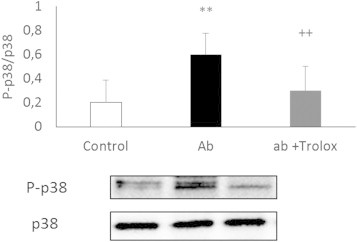
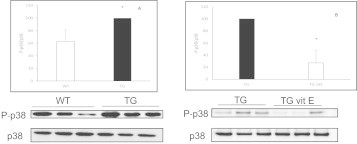
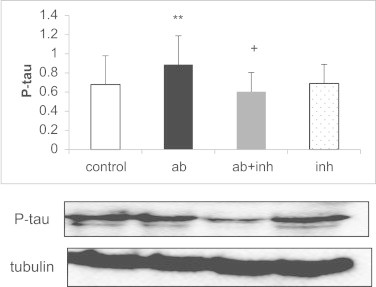
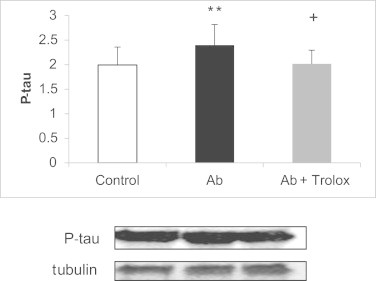
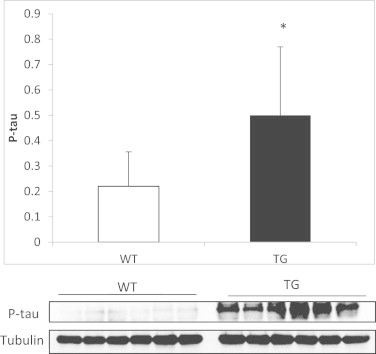
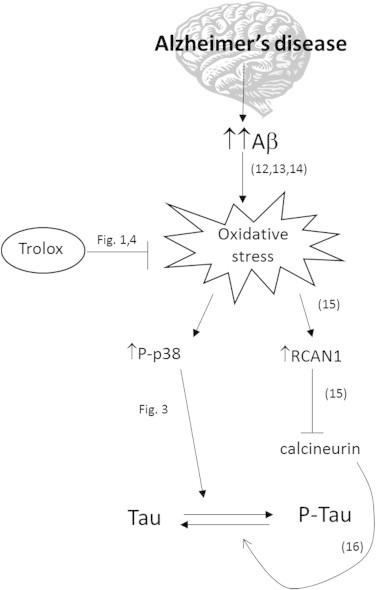
Oxidative stress is a hallmark of Alzheimer's disease (AD). We propose that rather than causing damage because of the action of free radicals, oxidative stress deranges signaling pathways leading to tau hyperphosphorylation, a hallmark of the disease. Indeed, incubation of neurons in culture with 5 µM beta-amyloid peptide (Aβ) causes an activation of p38 MAPK (p38) that leads to tau hyperphosphorylation. Inhibition of p38 prevents Aβ-induced tau phosphorylation. Aβ-induced effects are prevented when neurons are co-incubated with trolox (the water-soluble analog of vitamin E). We have confirmed these results in vivo, in APP/PS1 double transgenic mice of AD. We have found that APP/PS1 transgenic mice exhibit a high level of P-p38 in the hippocampus but not in cortex and this is prevented by feeding animals with a diet supplemented with vitamin E. Our results underpin the role of oxidative stress in the altered cell signaling in AD pathology and suggest that antioxidant prevention may be useful in AD therapeutics.
Overview
The claims and statistics of this paper haven’t been checked yet.
Run the check — free, no account needed. It reads the open-access text and checks the sources it cites.
Integrity signals
Registry
Cites
Statistics
Figures
Verification
Claims the paper makes
The claims and statistics of this paper haven’t been checked yet.
Run the check — free, no account needed. It reads the open-access text and checks the sources it cites.
Claims other papers make about this one
Each is checked against this paper’s own text: does it say what the citing paper says it does?
In the citing paper
“Importantly, it has been reported that the Aβ-induced oxidative stress leads to the activation of p38 MAPK and subsequent tau hyperphosphorylation (Giraldo et al., 2014).”
From Exploring the Therapeutic Potential of Phytochemicals in Alzheimer’s Disease: Focus on Polyphenols and Monoterpenes (2022) · cites this paper as Giraldo et al., 2014
Self-check
Percentages, sums and reported differences re-computed from the paper’s own numbers.
The self-check needs the paper’s full text.
Citations
Cites
Pharmacological interventions for somatoform disorders in adults
Kleinstäuber, M., Witthöft, M., Steffanowski, A., van Marwijk, H., Hiller, W., & Lambert, M. J. (2014) · Cochrane Database of Systematic Reviews · doi:10.1002/14651858.cd010628.pub2 · Cited by 11,369
Mitogen-Activated Protein (MAP) Kinase Pathways: Regulation and Physiological Functions*
Pearson, G. W., Robinson, F. L., Gibson, T. B., Xu, B.-E., Karandikar, M. S., Berman, K. S., & Cobb, M. H. (2001) · Endocrine Reviews · doi:10.1210/edrv.22.2.0428 · Cited by 4,111
A Controlled Trial of Selegiline, Alpha-Tocopherol, or Both as Treatment for Alzheimer's Disease
Sano, M., Ernesto, C., Thomas, R. G., Klauber, M. R., Schafer, K., Grundman, M., Woodbury, P., Growdon, J., Cotman, C. W., Pfeiffer, E., et al. (1997) · New England Journal of Medicine · doi:10.1056/nejm199704243361704 · Cited by 2,380
Pearson, R. C., Esiri, M. M., Hiorns, R. W., Wilcock, G. K., & Powell, T. P. (1985) · Proceedings of the National Academy of Sciences · doi:10.1073/pnas.82.13.4531 · Cited by 987 · cited 1×
“Some structures like the hippocampus are very heavily damaged whereas others, like the motor, somatic sensory, and primary visual areas are spared [17].”
BackgroundDysken, M. W., Sano, M., Asthana, S., Vertrees, J. E., Pallaki, M., Llorente, M., Love, S., Schellenberg, G. D., McCarten, J. R., Malphurs, J., et al. (2014) · JAMA · doi:10.1001/jama.2013.282834 · Cited by 628
Alzheimer's disease – do tauists and baptists finally shake hands?
Mudher, A. K., & Lovestone, S. (2002) · Trends in Neurosciences · doi:10.1016/s0166-2236(00)02031-2 · Cited by 523
Vitamin E for Alzheimer's dementia and mild cognitive impairment
Farina, N., Llewellyn, D. J., Isaac, M. G. E. K. N., & Tabet, N. (2017) · Cochrane Database of Systematic Reviews · doi:10.1002/14651858.cd002854.pub5 · Cited by 424
p38α MAP Kinase as a Sensor of Reactive Oxygen Species in Tumorigenesis
Dolado, I., Swat, A., Ajenjo, N., Vita, G. D., Cuadrado, A., & Nebreda, Á. R. (2007) · Cancer Cell · doi:10.1016/j.ccr.2006.12.013 · Cited by 422
Zhu, X., Rottkamp, C. A., Boux, H., Takeda, A., Perry, G., & Smith, M. A. (2000) · Journal of Neuropathology & Experimental Neurology · doi:10.1093/jnen/59.10.880 · Cited by 378
p38 Kinase Is Activated in the Alzheimer's Disease Brain
Hensley, K., Floyd, R. A., Zheng, N., Nael, R., Robinson, K. A., Nguyen, X., Pye, Q. N., Stewart, C. A., Geddes, J., Markesbery, W. R., et al. (1999) · Journal of Neurochemistry · doi:10.1046/j.1471-4159.1999.0722053.x · Cited by 373 · cited 1×
“In Alzheimer’s disease (AD), increased p38 MAPK activity in human brains was observed more than a decade ago [2].”
Background
Cited by
Sorted by citations
Items 201–277 of 277
Vitamin E: overview of history of discovery, mechanism of action, role and deficiency
Kowalska, A. (2024) · Prospects in Pharmaceutical Sciences · doi:10.56782/pps.256 · Cited by 6
“Vitamin E was observed to slow down the advancement of Alzheimer's disease in animal models by blocking the activation of the p38 signaling pathway, which stops tau hyperphosphorylation caused by amyloid beta (Aβ) [18].”
BackgroundHe, Q., An, L., Yue, Y., Cui, C., Wang, C., Xu, H., Guo, Y., & Zhao, X. (2025) · Frontiers in Nutrition · doi:10.3389/fnut.2025.1611162 · Cited by 6
“These connections between cardiac and cerebral health have received increasing attention, with research demonstrating that poor cardiovascular health may exert potential negative effects on cognitive deterioration (34).”
Nutraceuticals for Cognitive Dysfunction
Gupta, R. C., Doss, R. B., Srivastava, A., Lall, R., & Sinha, A. (2019) · Springer eBooks · doi:10.1007/978-3-030-04624-8_26 · Cited by 6
Chan, E. W. L., Yeo, E. T. Y., Wong, K. W. L., See, M. L., Wong, K. Y., Yap, J. K. Y., & Gan, S. Y. (2021) · Current Alzheimer Research · doi:10.2174/1567205018666210324124239 · Cited by 6
Ablinger, I., Dressel, K., Rott, T., Lauer, A. A., Tiemann, M., Batista, J. P., Taddey, T., Grimm, H. S., & Grimm, M. O. W. (2022) · Biomedicines · doi:10.3390/biomedicines10112922 · Cited by 5
Indirubin Inhibits TRAIL-Induced Activation of Death Receptor 5 in Jurkat Cells
Young, M. C., Vunnam, N., Rebbeck, R. T., Yuen, S. L., Thomas, D. D., & Sachs, J. N. (2023) · Natural Product Communications · doi:10.1177/1934578x221144580 · Cited by 4
“Donor-only (DR5ΔCD-GFP) was transfected at 2.5 ug.”
MethodInfluentialThe Role of Presenilin-1 in the Excitotoxicity of Ethanol Withdrawal
Jung, M. E., Metzger, D. B., & Das, H. K. (2016) · Journal of Pharmacology and Experimental Therapeutics · doi:10.1124/jpet.116.233361 · Cited by 5
“The overactivation of p38 has been shown in a mouse brain with mutant PS1 genes, suggesting PS1 and p38 association (Giraldo et al., 2014).”
BackgroundInhibitory effect of tartrate against phosphate-induced DJ-1 aggregation
Kim, M. S., Lee, S. M., Yun, S., Suh, P., Park, J., Cui, M., Choi, S., Cha, S., & Jin, W. (2017) · International Journal of Biological Macromolecules · doi:10.1016/j.ijbiomac.2017.10.022 · Cited by 5
Exploring nutraceutical approaches linking metabolic syndrome and cognitive impairment
Sonnino, R., Ciccarelli, G., Moffa, S., Soldovieri, L., Giuseppe, G. D., Brunetti, M., Cinti, F., Piazza, E. D., Gasbarrini, A., Nista, E. C., et al. (2025) · iScience · doi:10.1016/j.isci.2025.111848 · Cited by 4
“…as an antioxidant, respond positively to treatment, especially in terms of prevention of functional decline, while in the other subset of patients, who do not respond to treatment with this vitamin, there is no improvement in oxidant level, with a worsening in cognitive function 91,92 (Table 2).”
Artime-Naveda, F., Hevia, D., Alonso‐Arias, R., Martínez, C., Quirós-González, I., Cernuda‐Cernuda, R., Alvarez-Artime, A., Menéndez‐Valle, I., Sainz, R. M., & Mayo, J. C. (2025) · Heliyon · doi:10.1016/j.heliyon.2025.e41841 · Cited by 6
Thioredoxin-interacting protein: an emerging target for Alzheimer's disease
Patil, R., Parab, S. B., & Bhatt, L. K. (2025) · European Journal of Pharmacology · doi:10.1016/j.ejphar.2025.177806 · Cited by 4
Teng, Y., Yuan, Q., Wu, Y., Wu, S., Su, J., Zhang, P., & Zhang, Y. (2023) · Chemistry & Biodiversity · doi:10.1002/cbdv.202301075 · Cited by 4
Multifactorial Causation of Alzheimer’s Disease Due to COVID-19
Monllor, P., Kumar, P., Lloret, M.-Á., Ftara, A., Leon, J.-L., Lopez, B., Cervera‐Ferri, A., & Lloret, A. (2023) · Journal of Alzheimer s Disease · doi:10.3233/jad-230396 · Cited by 4
Vitamins and Cognition: A Nutrigenomics Perspective
Anitha, A., Viswambharan, V., Thanseem, I., Iype, M., Parakkal, R., Surendran, S. P., & Vasu, M. M. (2020) · Current Nutrition & Food Science · doi:10.2174/1573401316999200901180443 · Cited by 4
Effects of Wormwood Essential Oil on Rat with Alzheimer’s Disease
Kim, S., Kim, K., & Sin, C. (2023) · International Journal of Clinical and Experimental Physiology · doi:10.5530/ijcep.2023.10.2.11 · Cited by 3
Oxidative Stress Triggers a Pivotal Peptide Linked to Alzheimer’s Disease
Evans, N., Mahfooz, K., Garcia‐Ratés, S., & Greenfield, S. A. (2024) · International Journal of Molecular Sciences · doi:10.3390/ijms252212413 · Cited by 3
“…of amyloid beta and neurofibrillary tangles, which are hallmark features of AD, since it occurs prior to amyloid beta plaque formation and tau phosphorylation [5], and the prevention of oxidative stress with antioxidant supplementation precludes the amyloid-beta-induced phosphorylation of tau [6].”
Moyano, P., Flores, A., Sanjuan, J., García, J., Anadon, M., Plaza, J. C., Naval, M., Fernández, M. D. L. C., Guerra-Menéndez, L., & del Pino, J. (2024) · Food and Chemical Toxicology · doi:10.1016/j.fct.2024.114988 · Cited by 3
A Novel Steroid Derivative and a New Steroidal Saponin from Endophytic Fungus Xylaria sp
Li, W., Yang, X., Yang, Y., Zhao, L., Zhou, Q.-Y., Zhang, Z.-X., Zhou, H., Hu, M., Ruan, B.-H., & Ding, Z. (2017) · Natural Product Communications · doi:10.1177/1934578x1701200617 · Cited by 3
Kong, J., Wang, C., Duan, X., Shi, H., Xue, C., Wei, Z., Huang, Q., Zhang, T., & Wang, Y. (2022) · European Journal of Lipid Science and Technology · doi:10.1002/ejlt.202200049 · Cited by 3
Riffel, A. P. K., de Souza, J. A., Santos, M. D. C. Q., Kroth, A., da Silveira, E. M. S., Scheid, T., Dexheimer, G. M., Horst, A., Kolberg, C., Ribeiro, M. F. M., et al. (2020) · Nutrire · doi:10.1186/s41110-019-0113-6 · Cited by 3
Vermani, A., Kouznetsova, V. L., & Tsigelny, I. F. (2021) · Biointerface Research in Applied Chemistry · doi:10.33263/briac124.53845404 · Cited by 4
Antioxidant Nutraceuticals as Novel Neuroprotective Agents
Katiyar, P., Ghosh, S., Saini, S., Ghosh, C., Agrawal, H., Sircar, D., & Roy, P. (2022) · Wiley eBooks · doi:10.1002/9781119746843.ch8 · Cited by 4
Vitamin deficiencies and Alzheimer’s disease: evidence and implications for supplementation
Miteva, M. T., Laurenti, D., Mattioli, R., Risola, D. D., Mariano, A., & Mosca, L. N. (2026) · Frontiers in Nutrition · doi:10.3389/fnut.2026.1676497 · Cited by 2
Beyond 100 years of vitamin E and related molecules – Milestones and open challenges
Maria, W.-W., Jeffrey, A., Azzi, A., Bartolini, D., Birringer, M., Werner, B., Börmel, L., Consuelo, B., Cook‐Mills, J. M., Eggersdorfer, M. L., et al. (2026) · Molecular Aspects of Medicine · doi:10.1016/j.mam.2026.101477 · Cited by 2
Implications of Inflammation in Aging and Age-Related Diseases
Tan, B. L., & Norhaizan, M. E. (2021) · Springer eBooks · doi:10.1007/978-3-030-82859-2_5 · Cited by 2
Chief Role of Neuroinflammation and Oxidative Stress in Brain Disorders
Zafar, S. (2023) · Food bioactive ingredients · doi:10.1007/978-3-031-41188-5_5 · Cited by 2
Oxidative damage and brain atrophy in alcoholics
González‐Reimers, E., Quintero‐Platt, G., Fernández-Rodríguez, C. M., González‐Arnay, E., MartinGonzalez, C., & Pérez‐Hernández, O. (2015) · Oxidants and Antioxidants in Medical Science · doi:10.5455/oams.020615.rv.017 · Cited by 2
“Perhaps these mechanisms explain the protective effect against hippocampal apoptosis induced by a high cholesterol diet [114] against Alzheimer disease, as shown by Giraldo et al [115] both in in vitro studies and in transgenic mice, or the memory impairment observed with a high fat, high carbohydrate diet [116], amon…”
BackgroundTanprasertsuk, J., Scott, T. M., Johnson, M. A., Poon, L. W., Nelson, P. T., Davey, A., Woodard, J. L., Vishwanathan, R., Barbey, A. K., Barger, K., et al. (2021) · Journal of Aging Research and Lifestyle · doi:10.14283/jarlife.2021.2 · Cited by 2
“Our findings are supported by the effect of α-tocopherol supplementation on delaying or abolishing tau hyperphosphorylation previously observed in two in mouse models of AD (21,24), although NFT count was not assessed in these studies.”
BackgroundBenzal, J. D. G., Aiello, P., Moreno, D. A., García‐Viguera, C., & Villaño, D. (2021) · Elsevier eBooks · doi:10.1016/b978-0-323-85052-0.00004-0 · Cited by 2
Antioxidant Vitamins and Brain Dysfunction in Alcoholics
González‐Reimers, E., Quintero‐Platt, G., Martín-González, M. C., Romero-Acevedo, L., & Santolaria-Fernández, F. (2017) · Elsevier eBooks · doi:10.1016/b978-0-12-805373-7.00017-7 · Cited by 2
Alhasaniah, A. H., Ahmad, Z., Zeb, A., Mahnashi, M. H., Sadiq, A., & Ayaz, M. (2023) · Journal of Molecular Liquids · doi:10.1016/j.molliq.2023.123911 · Cited by 1
Eo, H., Kim, S. H., Ju, I. G., Lee, J. H., Oh, M. S., & Kim, Y. (2025) · Journal of Neuroimmune Pharmacology · doi:10.1007/s11481-025-10175-9 · Cited by 1
“Among the detrimental stimuli of tauopathy, elevated oxidative stress is a hallmark of AD brain (Giraldo et al. 2014 ).”
Gao, Q., Sun, J., Hei, B., Zhou, J., Wang, B., Wang, D., Hu, S., Liu, J., Wang, D., & Fan, J. (2026) · Experimental Neurology · doi:10.1016/j.expneurol.2026.115781 · Cited by 1
Sharmin, T., Doecke, J. D., Chatterjee, P., Pedrini, S., Sohrabi, H. R., Ashton, N. J., Zetterberg, H., Garg, M. L., Blennow, K., & Martins, R. N. (2026) · Journal of Neurochemistry · doi:10.1111/jnc.70436 · Cited by 1
“Furthermore, beyond many damaging effects via ROS generation, Aβ-induced oxidative stress dysregulates the p38 MAPK signalling pathway, ultimately resulting in tau hyperphosphorylation (Giraldo et al. 2014).”
Oxidative stress and inflammation in neurodegenerative disorders
Jomová, K., Alomar, S. Y., Valko, R., Nepovimová, E., Kuča, K., & Valko, M. (2026) · Archives of Toxicology · doi:10.1007/s00204-026-04518-5 · Cited by 1
Goyal, A., Gopika, S., & Agrawal, N. (2022) · Protein and Peptide Letters · doi:10.2174/0929866529666220622124253 · Cited by 1
Gawryś, A., Cholewa, M. M., Kromer, A., Wilk, J., Cichoń, K., Zapała, M. A., Łapaj, M., Chyćko, M., Środoń, A., & CZARNOTA, J. (2023) · Journal of Education Health and Sport · doi:10.12775/jehs.2023.46.01.015 · Cited by 1
“Wskazano również, że witamina E wykazuje właściwości ochronne przed hiperfosforylowanym białkiem tau [39,40].”
Oxidative Stress, Redox Homeostasis and NF-κB Signaling in Neurodegeneration
Anandhan, A., Hernández-Franco, P., & Franco, R. (2015) · ACS symposium series · doi:10.1021/bk-2015-1200.ch003 · Cited by 1
Curcumin against amyloid pathology in mental health and brain composition
Tooyama, I., Ibrahim, N. F., Durani, L. W., Hamezah, H. S., Damanhuri, M. H. A., Ngah, W. Z. W., Taguchi, H., & Yanagisawa, D. (2016) · Elsevier eBooks · doi:10.1016/b978-0-12-802972-5.00023-8 · Cited by 2
Wei, R., He, J., Chen, W., & Tam, K. Y. (2023) · Neuroscience Letters · doi:10.1016/j.neulet.2023.137166 · Cited by 2
Current and Prospective Treatments for Alzheimer's Disease (and Other Neurodegenerative Diseases)
Pedrini, S., Morici, M., & Martins, R. N. (2019) · Wiley eBooks · doi:10.1002/9781119356752.ch14 · Cited by 1
Vermani, A., Kouznetsova, V. L., & Tsigelny, I. F. (2021) · doi:10.33774/chemrxiv-2021-41kh8 · Cited by 1
MAPK/ERK Dysfunction in Neurodegenerative DiseasesPreprint
Albert‐Gascó, H., Ros‐Bernal, F., Castillo-Gómez, E., & Olucha-Bordonau, F. E. (2020) · doi:10.32545/encyclopedia202007.0001.v3 · Cited by 1
Impact of Nut Consumption on Cognition across the Lifespan
Nishi, S. K., Sala‐Vila, A., Júlvez, J., Sabaté, J., & Ros, E. (2024) · doi:10.32920/26520772.v1 · Cited by 1
Estratégias terapêuticas baseadas nos mecanismos fisiopatológicos conhecidos na Doença de Alzheimer
Janeiro, D. I. S. (2015) · Portuguese National Funding Agency for Science, Research and Technology (RCAAP Project by FCT)
Global Approaches to Understanding Protein Kinase Functions
Gorman, J. L., & Woodgett, J. R. (2015) · Wiley eBooks · doi:10.1002/9783527683031.ch1
Ono, R., Oguchi, T., Tsuji, M., OHASHI, H., GOHMA, T., Somei, M., Inagaki, M., & Kiuchi, Y. (2018) · The Showa University Journal of Medical Sciences · doi:10.15369/sujms.30.211
“The Aβ(1–42)-induced increase in reactive oxygen species generation was inhibited by propofol pretreatment, but remained unchanged following pretreatment with the p38MAPK inhibitor.”
BackgroundMethodInfluentialXiaoou, H., Zhou, J., & Liu, G. (2021) · European Journal of Neurology · doi:10.1111/ene.15063
Presentación del Coloquio Internacional GRESCH: "¿Chile de país modelado a país modelo?”
le Chili, G. D. S. (2008)
Vitamin E and Cognitive Functions: What Is the Interplay?
Azimi, M., & Atiq, M. A. (2022) · Nutritional neurosciences · doi:10.1007/978-981-16-6467-0_2
Oladele, J. O., Oladele, O. T., Adewole, T. S., Oyeleke, O. M., & Oladiji, A. T. (2022) · Advances in medical diagnosis, treatment, and care (AMDTC) book series · doi:10.4018/978-1-6684-5129-8.ch010 · Cited by 1
Kamal, N. N. (2022) · The Egyptian Journal of Community Medicine · doi:10.21608/ejcm.2022.131306.1217
Vitamin-Based Derivatives for the Management of Alzheimer’s Disease
Varma, T., Kamble, P., Kumari, M., Diwakar, V., & Garg, P. (2023) · Springer eBooks · doi:10.1007/978-981-99-6038-5_12
Ali, A., Kamil, A., Ahmad, S., Khan, S., Islam, Z. U., Ali, A., & Hayat, C. (2024) · SSRN Electronic Journal · doi:10.2139/ssrn.4816953
Advancing age, nutraceuticals, and neuroprotection
Woźniak, L. A. (2024) · Elsevier eBooks · doi:10.1016/b978-0-323-95735-9.00001-2
Impact of Nut Consumption on Cognition across the Lifespan
Nishi, S. K., Sala‐Vila, A., Júlvez, J., Sabaté, J., & Ros, E. (2024) · doi:10.32920/26520772
Bikri, S., Aboussaleh, Y., & Fouad, F. (2024) · Elsevier eBooks · doi:10.1016/b978-0-443-15702-8.00011-7
Samir, M., Abo-Dya, N. E., Elsherbiny, N. M., Metwally, K. A., Abouleisa, R., Mohamed, T., Farraj, K. A., Mohamed, M. E. M., Elbadawi, M. M., Elbastawesy, M. A. I., et al. (2025) · SSRN Electronic Journal · doi:10.2139/ssrn.5367585
Carotenoids and Memory Enhancement: A Therapeutic Link to Alzheimer’s Disease
Choudhary, S., Aggarwal, N., & Bansal, S. (2025) · Nutritional neurosciences · doi:10.1007/978-981-95-2736-6_12
Xie, J., Lan, Y., Zou, C., He, J., Huang, Q., Zeng, J., Pan, M., Mei, Y., Luo, J., & Zou, D. (2024) · Figshare · doi:10.6084/m9.figshare.26726576
Xie, J., Lan, Y., Zou, C., He, J., Huang, Q., Zeng, J., Pan, M., Mei, Y., Luo, J., & Zou, D. (2024) · Figshare · doi:10.6084/m9.figshare.25919010
Xie, J., Lan, Y., Zou, C., He, J., Huang, Q., Zeng, J., Pan, M., Mei, Y., Luo, J., & Zou, D. (2024) · Figshare · doi:10.6084/m9.figshare.26726582
Xie, J., Lan, Y., Zou, C., He, J., Huang, Q., Zeng, J., Pan, M., Mei, Y., Luo, J., & Zou, D. (2024) · Figshare · doi:10.6084/m9.figshare.26726585
Xie, J., Lan, Y., Zou, C., He, J., Huang, Q., Zeng, J., Pan, M., Mei, Y., Luo, J., & Zou, D. (2024) · Figshare · doi:10.6084/m9.figshare.26726573
Xie, J., Lan, Y., Zou, C., He, J., Huang, Q., Zeng, J., Pan, M., Mei, Y., Luo, J., & Zou, D. (2024) · Figshare · doi:10.6084/m9.figshare.26726570
Xie, J., Lan, Y., Zou, C., He, J., Huang, Q., Zeng, J., Pan, M., Mei, Y., Luo, J., & Zou, D. (2024) · Figshare · doi:10.6084/m9.figshare.26726564
Xie, J., Lan, Y., Zou, C., He, J., Huang, Q., Zeng, J., Pan, M., Mei, Y., Luo, J., & Zou, D. (2024) · Figshare · doi:10.6084/m9.figshare.25919073
Xie, J., Lan, Y., Zou, C., He, J., Huang, Q., Zeng, J., Pan, M., Mei, Y., Luo, J., & Zou, D. (2024) · Figshare · doi:10.6084/m9.figshare.26726567
Xie, J., Lan, Y., Zou, C., He, J., Huang, Q., Zeng, J., Pan, M., Mei, Y., Luo, J., & Zou, D. (2024) · Figshare · doi:10.6084/m9.figshare.26726579
Pharmacological Insights into Antioxidants for Oxidative Stress Management
Ghume, P., Khatri, D., & Kushwaha, S. (2026) · Oxidative stress in applied basic research and clinical practice · doi:10.1007/978-3-032-19837-2_15
Neurovascular coupling and energy substrate delivery in Alzheimer’s disease
Malviya, S., Saha, D., Kamble, A., Singh, D. R., Sundaram, S. M., & Devanathan, V. (2026) · International review of neurobiology · doi:10.1016/bs.irn.2026.05.001
Karmakar, V., Ghosh, A., Majie, A., Chatterjee, K., & Gorain, B. (2026) · Ageing Research Reviews · doi:10.1016/j.arr.2026.103262
Oria, R. S., Akpang, K. E., Ben, R. B., Aneke, V. O., Ushie, I. E., Uchenna, M. J., Ikong, G. B., Uket, J. I., Woko, C., & Ijomone, O. M. (2026) · Metabolic Brain Disease · doi:10.1007/s11011-026-01933-6
“…modulation partly mediates the tau-lowering effect, consistent with evidence that ERK signalling promotes tau phosphorylation, both directly and through regu - lation of GSK-3β and CDK5 (Khezri et al. 2023; Giraldo et al. 2014), though contributions from other kinase pathways cannot be excluded.”
Metadata
- Authors
- Giraldo, E., Lloret, A., Fuchsberger, T., & Viña, J.
- Affiliations
- Universitat de València (ES)
- Corresponding author
- Viña, J.
- Venue
- Redox Biology
- Publisher
- Elsevier BV
- Published
- 2014
- Volume
- 2
- Pages
- 873-877
- ISSN
- 2213-2317 (ISSN-L)
- PMC
- PMC4099506
- OpenAlex
- W2039173359
- Cited by
- 268
- References
- 28
- Citations by year
- 2026: 10 · 2025: 18 · 2024: 23 · 2023: 34 · 2022: 27 · 2021: 26 · 2020: 27 · 2019: 24 · 2018: 22 · 2017: 21 · 2016: 12 · 2015: 19 · 2014: 3
- FWCI
- 12.22
- Type
- journal article
- Language
- en
- Open access
- gold
- doi.org
- Licence
- Locations
- Redox Biology (publishedVersion, cc-by-nc-nd)
- PubMed Central (publishedVersion, cc-by-nc-nd)
- PubMed (publishedVersion)
- DOAJ (DOAJ: Directory of Open Access Journals) (submittedVersion)
- Funders
- Spanish Ministry of Education and Science (MEC) (SAF2010-19498)
- “Red Tematica de investigacion cooperativa en envejecimiento y fragilidad” (RETICEF) (ISCIII2006-RED13-027, ISCIII2012-RED-43-029)
- “Conselleria d’Educació, Cultura i Esport de la Generalitat Valenciana” (PROMETEO2010/074)
- “Fundació Gent Per Gent de la Comunitat Valenciana” (35NEURO)
- INCLIVA (RS2012-609)
- EU (CM1001, FRAILOMIC-HEALTH.2012.2.1.1-2)
- Topics
- Life Sciences › Neuroscience › Cellular and Molecular Neuroscience › Alzheimer's disease research and treatments
- Health Sciences › Medicine › Psychiatry and Mental health › Dementia and Cognitive Impairment Research
- Health Sciences › Medicine › Biochemistry (medical) › Antioxidant Activity and Oxidative Stress
- Keywords
- Alzheimer's disease, amyloid-beta, tau hyperphosphorylation, oxidative stress, p38 MAPK, vitamin E, Trolox, APP/PS1 mice, hippocampus, antioxidant therapy, neuronal signaling
- MeSH terms
- Alzheimer Disease, Animals, Cells, Cultured, Disease Models, Animal, Hippocampus, Male, Mice, Transgenic, Neurons, Phosphorylation, Vitamin E, Amyloid beta-Peptides, tau Proteins, Oxidative Stress, Protective Agents, p38 Mitogen-Activated Protein Kinases, Mice, Rats
About these checks
Registry, retraction, Cites and statistics results are computed, not judged, with one exception: a printed reference that no index lists is read once by a model before it counts as a citation error. Claims are extracted by a model and kept only when their quote appears verbatim in the text; each cited source is then checked, with a model’s help, for whether it says what the claim relies on. Those verdicts can be wrong — read the claim’s quote and the cited source before relying on one.
Statistics and arithmetic are recomputed, not judged.
Confidence bands are shown only for fields calibrated on our annotated test set. None is calibrated yet, so no band is shown.
What counts as a claim ›How we measure confidence ›How we check this ›
Are you an author, or do you see a problem with this page? Request a review
