

The DOI matches its Crossref record; 222 of the 230 references it cites were found in a registry or an index.
Exercise training modulates adipokine dysregulations in metabolic syndrome
Open accessAbstract
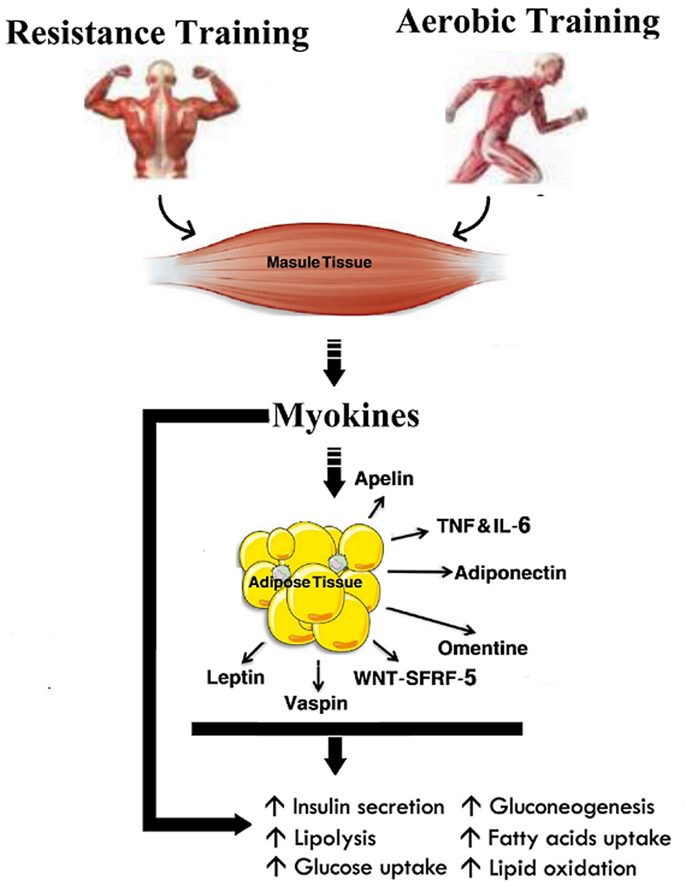
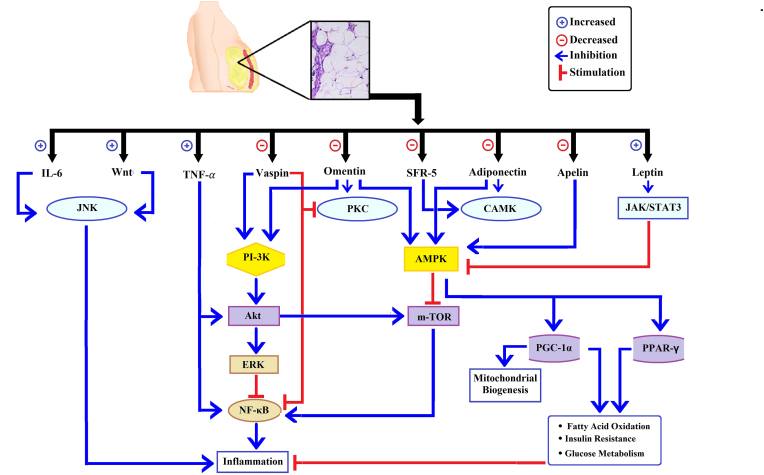
Metabolic syndrome (MetS) is a cluster of risk factors for various metabolic diseases, and it is characterized by central obesity, dyslipidemia, hypertension, and insulin resistance. The core component for MetS is adipose tissue, which releases adipokines and influences physical health. Adipokines consist of pro and anti-inflammatory cytokines and contribute to various physiological functions. Generally, a sedentary lifestyle promotes fat accumulation and secretion of pro-inflammatory adipokines. However, regular exercise has been known to exert various beneficial effects on metabolic and cognitive disorders. Although the mechanisms underlying exercise beneficial effects in MetS are not fully understood, changes in energy expenditure, fat accumulation, circulatory level of myokines, and adipokines might be involved. This review article focuses on some of the selected adipokines in MetS, and their responses to exercise training considering possible mechanisms.
Overview
The claims and statistics of this paper haven’t been checked yet.
Run the check — free, no account needed. It reads the open-access text and checks the sources it cites.
Integrity signals
Registry
Cites
Statistics
Figures
Verification
Claims the paper makes
The claims and statistics of this paper haven’t been checked yet.
Run the check — free, no account needed. It reads the open-access text and checks the sources it cites.
Claims other papers make about this one
Each is checked against this paper’s own text: does it say what the citing paper says it does?
The source backs part of the claim, not all of it — or backs it for a different population, condition or comparison.
In the citing paper
“Although improvements in fitness and reductions in adiposity were recorded after 8 weeks of training”
From Exercise-Induced Muscle–Fat Crosstalk: Molecular Mediators and Their Pharmacological Modulation for the Maintenance of Metabolic Flexibility in Aging (2025) · cites this paper as [76]
Experimental — accuracy not yet measuredThe check wasn’t confident either way, so it gives no verdict — never disputed.
In the citing paper
“the acute cytokine response remained comparable, reflecting a similar per-exercise immune reaction despite physiological adaptations”
From Exercise-Induced Muscle–Fat Crosstalk: Molecular Mediators and Their Pharmacological Modulation for the Maintenance of Metabolic Flexibility in Aging (2025) · cites this paper as [76]
Experimental — accuracy not yet measured
Self-check
Percentages, sums and reported differences re-computed from the paper’s own numbers.
The self-check needs the paper’s full text.
Citations
Cites
Health benefits of physical activity: the evidence
Warburton, D. E. R. (2006) · Canadian Medical Association Journal · doi:10.1503/cmaj.051351 · Cited by 8,007
Serum Immunoreactive-Leptin Concentrations in Normal-Weight and Obese Humans
Considine, R. V., Sinha, M. K., Heiman, M. L., Kriauciunas, A., Stephens, T. W., Nyce, M. R., Ohannesian, J. P., Marco, C. C., McKee, L. J., Bauer, T. L., et al. (1996) · New England Journal of Medicine · doi:10.1056/nejm199602013340503 · Cited by 6,326
Adipose Tissue as an Endocrine Organ
Kershaw, E. E., & Flier, J. S. (2004) · The Journal of Clinical Endocrinology & Metabolism · doi:10.1210/jc.2004-0395 · Cited by 5,522
European Guidelines for Obesity Management in Adults
Yumuk, V., Tsigos, C., Fried, M., Schindler, K., Busetto, L., Micic, D., & Toplak, H. (2015) · Obesity Facts · doi:10.1159/000442721 · Cited by 3,432
Adipocytokines: mediators linking adipose tissue, inflammation and immunity
Tilg, H., & Moschen, A. R. (2006) · Nature reviews. Immunology · doi:10.1038/nri1937 · Cited by 3,272
AMP-kinase regulates food intake by responding to hormonal and nutrient signals in the hypothalamus
Minokoshi, Y., Alquier, T., Furukawa, N., Kim, Y.-B., Lee, A., Xue, B., Mu, J., Foufelle, F., Ferré, P., Birnbaum, M. J., et al. (2004) · Nature · doi:10.1038/nature02440 · Cited by 1,637
Wnt signal transduction pathways
Komiya, Y., & Habas, R. (2008) · Organogenesis · doi:10.4161/org.4.2.5851 · Cited by 1,528
Yamauchi, T., Nio, Y., Maki, T., Kobayashi, M., Takazawa, T., Iwabu, M., Okada-Iwabu, M., Kawamoto, S., Kubota, N., Kubota, T., et al. (2007) · Nature Medicine · doi:10.1038/nm1557 · Cited by 1,396
The compelling link between physical activity and the body's defense system
Nieman, D. C., & Wentz, L. M. (2019) · Journal of Sport and Health Science · doi:10.1016/j.jshs.2018.09.009 · Cited by 1,340
Adipose Tissue Remodeling: Its Role in Energy Metabolism and Metabolic Disorders
Choe, S. S., Huh, J. Y., Hwang, I. J., Kim, J. I., & Kim, J. B. (2016) · Frontiers in Endocrinology · doi:10.3389/fendo.2016.00030 · Cited by 1,206
Research works printed but not linked: 4
- Banu, 2019, Adiponectin level in type 2 diabetes and its complication–A review, J Pharmaceut Sci Res, 11, 1172
- Ahsan, 2017, Pathophysiological role of leptin for human health: a review, Pakistan J Food Sci, 27, 46
- Rashid, 2018, Role of adipokines and free fatty acids in insulin resistance-a review, Int J Adv Res Sci Eng, 7, 2115
- Cavalcante, 2017, Aerobic but not resistance exercise can induce inflammatory pathways via toll-like 2 and 4: a systematic review, Sports Med Open, 3, 42, 10.1186/s40798-017-0111-2 · DOI
Cited by
Sorted by citations
Adipose–Muscle Crosstalk in Age-Related Metabolic Disorders: The Emerging Roles of Adipo-Myokines
Fang, P., She, Y., Yu, M., Min, W., Shang, W., & Zhang, Z. (2023) · Ageing Research Reviews · doi:10.1016/j.arr.2022.101829 · Cited by 62
Tero-Vescan, A., Degens, H., Matsakas, A., Ștefănescu, R., Ősz, B. E., & Slevin, M. (2025) · Pharmaceuticals · doi:10.3390/ph18081222 · Cited by 44
“Although improvements in fitness and reductions in adiposity were recorded after 8 weeks of training, the acute cytokine response remained comparable, reflecting a similar per-exercise immune reaction despite physiological adaptations [76].”
Saeidi, A., Saei, M. A., Mohammadi, B., Zarei, H. R. A., Vafaei, M., Mohammadi, A. S., Barati, M., Montazer, M., Razi, O., Kiyumi, M. H. A., et al. (2023) · Frontiers in Endocrinology · doi:10.3389/fendo.2023.1141796 · Cited by 33
Understanding the Role of Adipokines in Cardiometabolic Dysfunction: A Review of Current Knowledge
Datta, S., Koka, S., & Boini, K. M. (2025) · Biomolecules · doi:10.3390/biom15050612 · Cited by 33
Tang, M., Su, Q., Duan, Y., Fu, Y., Liang, M., Pan, Y., Yuan, J., Wang, M., Pang, X., Ma, J., et al. (2023) · Scientific Reports · doi:10.1038/s41598-023-47073-0 · Cited by 29
Advances in Adipose Tissue Biology
Corvera, S., Rajan, A., Townsend, K. L., Shamsi, F., Wu, J., Svensson, K. J., Zeltser, L. M., Collins, S., Reis, T., Tseng, Y., et al. (2025) · Endocrine Reviews · doi:10.1210/endrev/bnaf032 · Cited by 27
Calcaterra, V., & Zuccotti, G. (2022) · International Journal of Environmental Research and Public Health · doi:10.3390/ijerph19095046 · Cited by 22
Current knowledge and scientific trends in myokines and exercise research in the context of obesity
Letukienė, A., Hendrixson, V., & Ginevičienė, V. (2024) · Frontiers in Medicine · doi:10.3389/fmed.2024.1421962 · Cited by 16
Kazeminasab, F., Behzadnejad, N., Cerqueira, H. S. C., Santos, H. O., & Rosenkranz, S. K. (2024) · Frontiers in Nutrition · doi:10.3389/fnut.2024.1362731 · Cited by 17
Hekmatikar, A. H. A., Nelson, A. R., & Petersen, A. C. (2023) · BMC Cancer · doi:10.1186/s12885-023-11391-3 · Cited by 13
The Interplay Between Adipokines and Body Composition in Obesity and Metabolic Diseases
Zadgaonkar, U. (2025) · Cureus · doi:10.7759/cureus.78050 · Cited by 12
Lim, J. Y., & Kim, E. (2023) · Metabolites · doi:10.3390/metabo13090979 · Cited by 13
Zhang, B., Chen, Z., Hu, M., Yuan, F., Shi, Y., Tse, A. C. Y., Lo, S. K., Wong, S. H., & Sun, F. (2024) · Journal of Sports Sciences · doi:10.1080/02640414.2024.2363708 · Cited by 11
Rahim, H. A., Damirchi, A., & Babaei, P. (2024) · Scientific Reports · doi:10.1038/s41598-024-61842-5 · Cited by 11
Lis-Kuberka, J., Berghausen-Mazur, M., & Orczyk‐Pawiłowicz, M. (2024) · International Journal of Molecular Sciences · doi:10.3390/ijms26010040 · Cited by 11
Galván, B., del Castillo, L. A. E., Olivares, L. A. F., Mendias, E. Q., Torres-Rojo, F. I., Balderrama, C. V. V., & Hernández, N. C. (2025) · Journal of Functional Morphology and Kinesiology · doi:10.3390/jfmk10030244 · Cited by 12
Bayat, Z., Damirchi, A., Bibalan, M. H., & Babaei, P. (2023) · Journal of Menopausal Medicine · doi:10.6118/jmm.22037 · Cited by 8
Suzuki, K., Hekmatikar, A. H. A., Jalalian, S., Abbasi, S., Ahmadi, E., Kazemi, A., Ruhee, R. T., & Khoramipour, K. (2022) · International Journal of Environmental Research and Public Health · doi:10.3390/ijerph192315645 · Cited by 8
Hoseini, Z., Behpour, N., & Hoseini, R. (2025) · BMC Sports Science Medicine and Rehabilitation · doi:10.1186/s13102-025-01125-2 · Cited by 7
Suárez‐Cuenca, J. A., Díaz-Jiménez, D. E., Pineda-Juárez, J. A., Mendoza-Mota, A. G., Valencia-Aldana, O. D., Núñez-Angeles, S., Vera‐Gómez, E., Hernández‐Patricio, A., Magaña, P. L., Lara-Vargas, J. A., et al. (2025) · Nutrients · doi:10.3390/nu17020256 · Cited by 8
Lee, T., Lee, H.-I., Roh, H., & Cho, S.-Y. (2025) · Life · doi:10.3390/life15111752 · Cited by 11
Bayat, Z., Damirchi, A., Bibalan, M. H., & Babaei, P. (2023) · BMC Complementary Medicine and Therapies · doi:10.1186/s12906-023-04097-3 · Cited by 6
Rahman, Z., Ghuge, S., & Dandekar, M. P. (2023) · Metabolic Brain Disease · doi:10.1007/s11011-023-01259-7 · Cited by 6
Acute and Chronic Effects of Strength Training on Plasma Levels of Adipokines in Man
Barroso, L. S. S., de Faria, M. H. S., Souza-Gomes, A. F., de Barros, J. L. V. M., Kakehasi, A. M., Vieira, É. L. M., Silva, A. C. S. E., & Nunes-Silva, A. (2023) · International Journal of Sports Medicine · doi:10.1055/a-2079-1607 · Cited by 7
Hoseini, Z., Behpour, N., & Hoseini, R. (2025) · Scientific Reports · doi:10.1038/s41598-025-01757-x · Cited by 7
Penagini, F., Calcaterra, V., Dilillo, D., Vandoni, M., Gianolio, L., Gatti, A., Rendo, G., Giuriato, M., Cococcioni, L., SILVESTRI, A. D., et al. (2022) · Children · doi:10.3390/children9091399 · Cited by 5
Elowe, C. R., Stager, M., & Gerson, A. R. (2023) · Journal of Experimental Biology · doi:10.1242/jeb.246897 · Cited by 4
Singhal, S., CHAUHAN, K., Tripathi, A., & CHOUDHARY, R. (2024) · MAEDICA – a Journal of Clinical Medicine · doi:10.26574/maedica.2024.19.3.494 · Cited by 3
Zhang, W., Zou, L., & Chen, J. (2025) · Frontiers in Nutrition · doi:10.3389/fnut.2025.1600038 · Cited by 3
Feng, Y., Zhou, W., & Niu, Y. (2025) · iScience · doi:10.1016/j.isci.2025.113243 · Cited by 4
Farzanegi, P. (2025) · Physical Activity in Children · doi:10.61882/pach.2025.562733.1080 · Cited by 2
Yelizarova, O., Stankevych, T. V., Парац, А., Yelizarov, V., Puzanova, O. H., Lebedynets, N., & Hozak, S. V. (2026) · Conflict and Health · doi:10.1186/s13031-026-00762-9 · Cited by 5
Adipose tissue as a humoral–neuronal hub in metabolic regulation
Tsuji, T., & Tseng, Y. (2026) · Nature Reviews Endocrinology · doi:10.1038/s41574-026-01265-6 · Cited by 5
Exercise to reduce leptin on obesity
Suputra, P. A. (2023) · Scientific Journal of Sport and Performance · doi:10.55860/kchn3506 · Cited by 6
Effect of Exercise on Regulation of Adipokine and Sedentary Lifestyle Diseases: A Narrative Review
Inam, A. M. H., Iqbal, M. J., Khan, A., Khan, A. R., & Khan, M. M. (2023) · Indian Journal of Physical Therapy and Research · doi:10.4103/ijptr.ijptr_29_22 · Cited by 2
Criteria of metabolic syndrome teenagers at Islamic boarding schools East Java
Megawati, M., Susanto, H., & Taufiq, A. (2024) · BIO Web of Conferences · doi:10.1051/bioconf/202411701018 · Cited by 1
Zhou, X., Wu, J., Shen, Y., He, S., Guan, H., & Shen, L. (2025) · Journal of International Medical Research · doi:10.1177/03000605251318198 · Cited by 1
Ebrahimi, A., Azizi, M., Tahmasebi, W., & Hoseini, R. (2025) · Journal of Diabetes & Metabolic Disorders · doi:10.1007/s40200-025-01664-y · Cited by 1
Exercise Ameliorates Immunosenescence: From Mechanisms to Interventions
Xiao, H., & Ren, J. (2025) · Biology · doi:10.3390/biology15010058 · Cited by 1
Eslami, A., Ghayourvahdat, A., Muhammad, F. A., Albadr, R. J., Taher, W. M., Alwan, M., Jawad, M. J., Al-Nuaimi, A. M. A., & Azimizonuzi, H. (2026) · Applied Biochemistry and Biotechnology · doi:10.1007/s12010-025-05504-w · Cited by 1
Kocabaş, Ş., & Şanlıer, N. (2026) · Frontiers in Endocrinology · doi:10.3389/fendo.2026.1787458 · Cited by 1
Sudarsono, N. C., Paramita, B. L., Diczen, D., Nugroho, D., & Shabrina, M. (2023) · Journal Of The Indonesian Medical Association · doi:10.47830/jinma-vol.73.4-2023-977 · Cited by 2
Amirkhani, Z., Gholi, A. M., Asghari, S., Hakak, D., Pouryousef, M., Yahyaei, B., & Ziaolhagh, S. J. (2025) · BMC Complementary Medicine and Therapies · doi:10.1186/s12906-025-04756-7 · Cited by 1
Abbaspour, E., Karimzadhagh, S., Bayat, Z., Damirchi, A., Bibalan, M. H., & Babaei, P. (2024) · Research Square · doi:10.21203/rs.3.rs-4110400/v1 · Cited by 1
Andiana, O., Welis, W., Taufik, M. S., Widiastuti, W., Siregar, A. H., & Raharjo, S. (2022) · Journal of Basic and Clinical Physiology and Pharmacology · doi:10.1515/jbcpp-2022-0158
de Mendonça, M. (2023) · Digital Library of Theses and Dissertations (Universidade de São Paulo) · doi:10.11606/t.42.2023.tde-14122023-105911
Birolim, M. M., Souza, S. C. S., Rodrigues, R., da Silva, D. F., Martínez‐Vizcaíno, V., & Mesas, A. E. (2025) · Health Science Reports · doi:10.1002/hsr2.70487
Kim, D. H., Kim, E. S., Lee, J. S., & Yoon, S. J. (2025) · Journal of Exercise Science & Fitness · doi:10.1016/j.jesf.2025.11.002
Erbaş, Ü., Çolakoğlu, F. F., Karaman, M., & Savaş, S. (2026) · The Online Journal of Recreation and Sport · doi:10.22282/tojras.1644160
Babaei, P., Sadeghi-Noghlebari, F., Falahati, S., Damirchi, A., Yousefbeyk, F., Nabilpour, M., & Seifi-Asgshahr, F. (2026) · Research in Pharmaceutical Sciences · doi:10.4103/rps.rps_70_25
Rostami, A., Saeidi, A., Hejazi, K., ALNasser, M. N., Ayed, K., Almaqhawi, A., & Zouhal, H. (2026) · Exploration of Immunology · doi:10.37349/ei.2026.1003263
Chuang, S., & Chien, K. (2026) · Journal of Investigative Medicine · doi:10.1177/10815589261483685
Metadata
- Authors
- Babaei, P., & Hoseini, R.
- Affiliations
- Guilan University of Medical Sciences (IR)
- Razi University (IR)
- Corresponding author
- Babaei, Parvin
- Venue
- Sports Medicine and Health Science
- Publisher
- Elsevier BV
- Published
- 2022-03
- Volume
- 4
- Issue
- 1
- Pages
- 18-28
- ISSN
- 2666-3376 (ISSN-L)
- PMC
- PMC9219261
- OpenAlex
- W4205977718
- Cited by
- 52
- References
- 230
- Citations by year
- 2026: 8 · 2025: 18 · 2024: 8 · 2023: 13 · 2022: 5
- FWCI
- 1.75
- Type
- journal article
- Language
- en
- Open access
- diamond
- doi.org
- Licence
- Locations
- Sports Medicine and Health Science (publishedVersion, cc-by-nc-nd)
- PubMed Central (publishedVersion, cc-by-nc-nd)
- PubMed (publishedVersion)
- DOAJ (DOAJ: Directory of Open Access Journals) (submittedVersion, cc-by-sa)
- Topics
- Health Sciences › Medicine › Endocrinology, Diabetes and Metabolism › Adipokines, Inflammation, and Metabolic Diseases
- Health Sciences › Medicine › Physiology (medical) › Adipose Tissue and Metabolism
- Health Sciences › Medicine › Physiology (medical) › Exercise and Physiological Responses
- Keywords
- metabolic syndrome, exercise training, adipokines, adipose tissue, inflammation, insulin resistance, myokines, abdominal obesity, energy expenditure, fat deposition
About these checks
Registry, retraction, Cites and statistics results are computed, not judged, with one exception: a printed reference that no index lists is read once by a model before it counts as a citation error. Claims are extracted by a model and kept only when their quote appears verbatim in the text; each cited source is then checked, with a model’s help, for whether it says what the claim relies on. Those verdicts can be wrong — read the claim’s quote and the cited source before relying on one.
Statistics and arithmetic are recomputed, not judged.
Confidence bands are shown only for fields calibrated on our annotated test set. None is calibrated yet, so no band is shown.
What counts as a claim ›How we measure confidence ›How we check this ›
Are you an author, or do you see a problem with this page? Request a review
