

Blarcamesine for the treatment of Early Alzheimer's Disease: Results from the ANAVEX2-73-AD-004 Phase IIB/III trial
Open accessThe DOI matches its Crossref record; 40 of the 40 references it cites were found in a registry or an index; none of the 41 sources its claims cite is checked for support yet.
Abstract
BACKGROUND: There are no approved oral disease-modifying treatments for Alzheimer's disease (AD). OBJECTIVES: The objective of this study was to assess efficacy and safety of blarcamesine (ANAVEX®2-73), an orally available small-molecule activator of the sigma-1 receptor (SIGMAR1) in early AD through restoration of cellular homeostasis including autophagy enhancement. DESIGN: ANAVEX2-73-AD-004 was a randomized, double-blind, placebo-controlled, 48-week Phase IIb/III trial. SETTING: Multicenter - 52 medical research centers/hospitals in 5 countries. INTERVENTION: 508 participants with early AD (Stage 3) were randomized to receive either blarcamesine (n = 338) in medium dose group 30 mg or in high dose group 50 mg or placebo (n = 170) oral capsules once daily for 48 weeks. Participants in these groups were offered to enroll into the open-label-extension study ATTENTION-AD, which completed June 2024, ClinicalTrials.gov Identifier NCT04314934. MEASUREMENTS: The co-primary cognitive and functional outcomes were assessed as change in ADAS-Cog13 and ADCS-ADL from baseline to 48 weeks. The outcomes include the secondary outcome CDR-SB and biomarkers from the A/T/N spectrum, plasma Aβ42/40-ratio and global brain volume changes measured by MRI. All clinical endpoints were analyzed using mixed model for repeated measures (MMRM), plasma biomarker measurements were analyzed by Welch's t-test, and volumetric MRI scans were analyzed by general linear model. RESULTS: Among 462 randomized participants in the intent-to-treat population (mean age, 73.7 years; 225 [48.7%] women), 338 (73.2%) completed the trial. The co-primary outcome was met under the multiplicity control rule, since the differences in the least-squares mean (LSM) change from baseline to 48 weeks between the prespecified blarcamesine and placebo groups for ADAS-Cog13 was significant at a level of P < 0.025 and for CDR-SB was significant at a level of P < 0.025, while ADCS-ADL did not reach significance at Week 48 (ADAS-Cog13 difference of -2.027 [95% CI -3.522 to -0.533]; P = 0.008; CDR-SB difference of -0.483 [95% CI -0.853 to -0.114]; P = 0.010; ADCS-ADL difference of 0.775 [95%CI -0.874 to 2.423]; P = 0.357). Plasma Aβ42/40-ratio increased significantly with blarcamesine group vs. placebo, (P = 0.048) and whole brain volume loss was significantly decreased (P = 0.002). Participants in the full safety population with ≥1 serious treatment-emergent adverse events (TEAEs) occurred in 56 participants (16.7%) in the blarcamesine and 17 (10.1%) in the placebo group. Common TEAEs included dizziness, which was transient and mostly mild to moderate in severity. One death in the blarcamesine group and 1 in the placebo group were both not considered treatment related. CONCLUSIONS: Blarcamesine, demonstrating a safety profile with no associated neuroimaging adverse events, significantly slowed clinical progression by 36.3% at 48 weeks with blarcamesine group as well as the individual 30 mg (by 34.6%) and 50 mg (by 38.5%) blarcamesine groups vs. placebo on the prespecified primary cognitive endpoint ADAS-Cog13. The prespecified secondary endpoint CDR-SB, which is used as the sole primary endpoint in recent successful AD drug submissions, is significantly improved at Week 48 with blarcamesine relative to placebo. The findings are supported by biomarkers from the A/T/N spectrum, including plasma Aβ42/40-ratio and reduction of whole brain atrophy. Additionally, the prespecified SIGMAR1 gene variant subgroup analysis confirmed beneficial clinical effect of blarcamesine group through upstream SIGMAR1 activation - subjects with the common SIGMAR1 wild-type gene (excluding carriers of the mutated SIGMAR1 rs1800866 variant) experienced an even greater significant clinical benefit with slowed clinical progression by 49.8% at 48 weeks on the prespecified primary cognitive endpoint ADAS-Cog13. Oral once daily blarcamesine could represent a novel treatment in early AD and be complementary or alternative to anti-beta amyloid drugs.
Overview
CoChat Summary
TL;DR
In the ANAVEX2-73-AD-004 Phase IIb/III trial, oral blarcamesine in early Alzheimer’s disease significantly slowed decline on ADAS-Cog13 and CDR-SB at 48 weeks versus placebo, with supporting plasma Aβ42/40 and MRI brain-volume biomarker signals, but the co-primary ADCS-ADL endpoint did not reach significance. Blarcamesine was associated with more treatment-emergent adverse events and discontinuations, especially dizziness and confusional state, with no treatment-related deaths.
Key findings
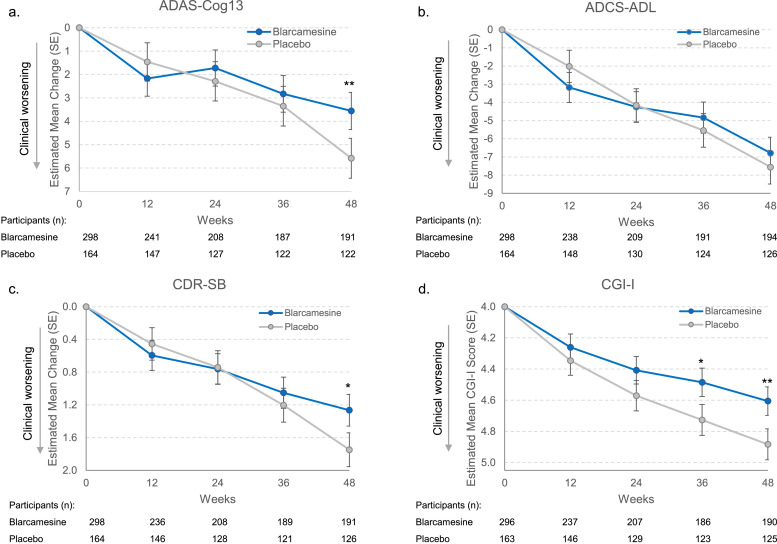
- On the primary cognitive endpoint ADAS-Cog13, blarcamesine versus placebo showed a least-squares mean difference of −2.027 (95% CI −3.522 to −0.533; P = 0.008), a 36.3% reduction in clinical decline at 48 weeks; the 30 mg group showed −1.934 (95% CI −3.639 to −0.228; P = 0.026; 34.6% less decline) and the 50 mg group −2.149 (95% CI −3.979 to −0.319; P = 0.021; 38.5% less decline).
- The co-primary ADCS-ADL did not reach significance (difference 0.775 [95% CI −0.874 to 2.423]; P = 0.357), while secondary CDR-SB was significantly improved (difference −0.483 [95% CI −0.853 to −0.114]; P = 0.010; 27.6% less decline) and exploratory CGI-I also improved (difference −0.278 [95% CI −0.466 to −0.089]; P = 0.004).
- Biomarker support included a significant increase in plasma Aβ42/40 ratio versus placebo (mean difference +0.013 [95% CI 0.000 to 0.026]; P = 0.048) and significantly decreased whole brain volume loss (P = 0.002); plasma Nf-L, p-Tau(181), and p-Tau(231) showed smaller increases with blarcamesine but were not statistically significant. In the prespecified SIGMAR1 rs1800866 subgroup, wild-type non-carriers had greater ADAS-Cog13 benefit (difference −2.317 [95% CI −4.182 to −0.453]; P = 0.015; 49.8% less decline), whereas carriers did not reach significance.
- Safety: serious TEAEs occurred in 16.7% of blarcamesine versus 10.1% of placebo participants; TEAEs led to treatment and study discontinuation in 32.2% versus 7.1%; common titration AEs were dizziness (35.8% vs 6.0%) and confusional state (14.3% vs 0.6%). One death occurred in each group, both considered not treatment related.
Methods
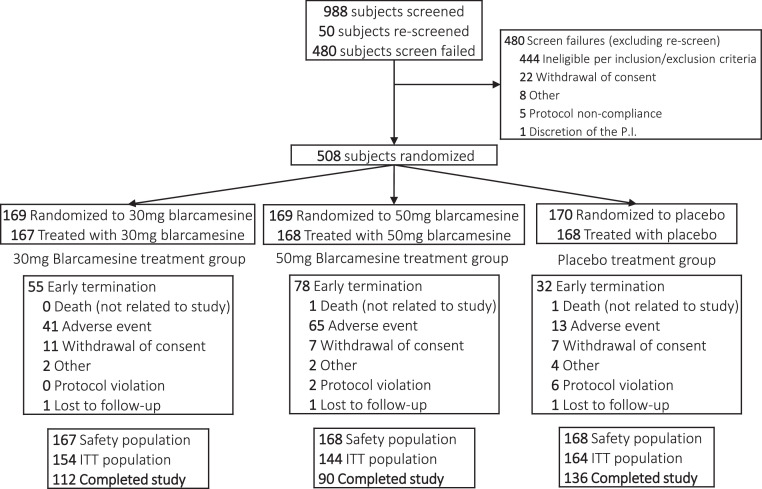
- Randomized, double-blind, placebo-controlled, 48-week Phase IIb/III trial at 52 sites in 5 countries; 508 participants with early AD were randomized 1:1:1 to oral blarcamesine 30 mg, 50 mg, or placebo once daily. The intent-to-treat population comprised 462 participants (blarcamesine n = 298; placebo n = 164), and the safety population comprised blarcamesine n = 335 and placebo n = 168.
- Eligible participants were aged 60–85 with NIA-AA criteria for early-stage mild dementia due to AD or MCI due to AD, MMSE 20–28, and FCSRT recall ≤17 or total recall <40; baseline mean age was 73.7 years and 225 (48.7%) were women.
- Co-primary outcomes were ADAS-Cog13 and ADCS-ADL; secondary outcome was CDR-SB; exploratory outcomes included CGI-I, plasma Aβ42/40, Nf-L, p-Tau(181), p-Tau(231), MRI volumetric measures, and SIGMAR1 rs1800866 genotype. Clinical endpoints used MMRM; plasma biomarkers used Welch’s t-test; MRI used a general linear model.
Limitations
- The paper states: variability in total blarcamesine doses received and/or duration of dosing; 48-week data limit long-term understanding, although a 96-week open-label extension followed; the studied population was primarily White (96.8%), limiting generalizability; the trial was conducted during the COVID-19 pandemic; and ADCS-ADL non-significance was attributed to low sensitivity of the scale in early AD and the relatively short study duration.
- Evident from the text: blarcamesine had a high TEAE burden and discontinuation rate (32.2% vs 7.1% for placebo), with early dropouts before Week 12 (40 blarcamesine vs 5 placebo), which may affect tolerability and interpretation; the flexible dose-titration design led the 30 mg and 50 mg assigned arms to reach similar average cumulative exposure, so assigned-dose comparisons may not reflect distinct dose effects.
Model-written summary. Check it against the paper before relying on it.
Integrity signals
Registry
Cites
Statistics
Figures
Verification
Claims the paper makes
0 Valid · 0 Not valid · 25 Not checked · 104 Own results and interpretations
A check of a cited source is scheduled, or we don’t hold its full text yet; the claim is checked once it runs.
In the paper
“Baseline AD status was further supported by the elevated baseline levels of plasma p-Tau (181) and p-Tau (231), which confirmed AD pathology for participants, consistent with abnormal CSF amyloid-beta status in previous studies [39].”
§ Blarcamesine for the treatment of Early Alzheimer's Disease: Results from the ANAVEX2-73-AD-004 Phase IIB/III trial > Results
What the sources say
- Not checked yetcites [39] Janelidze S. Bali D. Ashton N.J. Barthelemy N.R. Vanbrabant J. Stoops E. Head-to-head comparison of 10 plasma phospho-tau assays in prodromal Alzheimer's disease Brain 146 4 2023 1592 1601 36087307 PMC10115176 source
A check is scheduled.
plainstates an association- Asserted: passes — The authors put it forward as true.
- Checkable: passes — It can be checked against evidence.
- Load-bearing: unclear — It is unclear whether the paper’s conclusions depend on it.
- Based: passes — The paper gives a reason why it holds.
- Not checked yet
A result the paper reports from its own data — it cites no other source for it, so there is none to check. The quote shows it is in the paper.
In the paper
“For ADAS-Cog13, placebo patients need to improve by 3.3 points, or blarcamesine patient worsening 1.9 points, from the imputed data under MAR to overturn the result of the primary analysis under MAR assumption.”
§ Blarcamesine for the treatment of Early Alzheimer's Disease: Results from the ANAVEX2-73-AD-004 Phase IIB/III trial > Results
plain- Asserted: passes — The authors put it forward as true.
- Checkable: passes — It can be checked against evidence.
- Load-bearing: passes — The paper’s conclusions depend on it.
- Based: passes — The paper gives a reason why it holds.
- Rests on an assumption not shown here.
A result the paper reports from its own data — it cites no other source for it, so there is none to check. The quote shows it is in the paper.
In the paper
“In this Phase IIb/III randomized clinical trial, blarcamesine significantly slowed clinical progression at 48 weeks in the ITT population of participants with early AD for the cognitive primary endpoint ADAS-Cog13”
§ Blarcamesine for the treatment of Early Alzheimer's Disease: Results from the ANAVEX2-73-AD-004 Phase IIB/III trial > Discussion
plainstates a cause- Asserted: passes — The authors put it forward as true.
- Checkable: passes — It can be checked against evidence.
- Load-bearing: passes — The paper’s conclusions depend on it.
- Based: passes — The paper gives a reason why it holds.
- Rests on an assumption not shown here.
A result the paper reports from its own data — it cites no other source for it, so there is none to check. The quote shows it is in the paper.
In the paper
“No trend of serious or life-threatening adverse events was observed in the active treatment group.”
§ Blarcamesine for the treatment of Early Alzheimer's Disease: Results from the ANAVEX2-73-AD-004 Phase IIB/III trial > Results
plain- Asserted: passes — The authors put it forward as true.
- Checkable: passes — It can be checked against evidence.
- Load-bearing: unclear — It is unclear whether the paper’s conclusions depend on it.
- Based: passes — The paper gives a reason why it holds.
A result the paper reports from its own data — it cites no other source for it, so there is none to check. The quote shows it is in the paper.
In the paper
“and CDR-SB (blarcamesine group vs. placebo difference of −0.601 [95%CI −1.070 to −0.133], 33.7% less decline, P = 0.012)”
§ Blarcamesine for the treatment of Early Alzheimer's Disease: Results from the ANAVEX2-73-AD-004 Phase IIB/III trial > Results
plainstates a causen = 199 ·- Asserted: passes — The authors put it forward as true.
- Checkable: passes — It can be checked against evidence.
- Load-bearing: passes — The paper’s conclusions depend on it.
- Based: passes — The paper gives a reason why it holds.
70 more claims
Create a free account to see all 129 claims and to verify the 40 references still open.
- It may state two separate claims as one. 40
- Probably not a substantial claim. 22
Self-check
Percentages, sums and reported differences re-computed from the paper’s own numbers.
Each contradiction between two passages listed here was confirmed by an independent check.
Rated major: it would touch a result — a value a result rests on, reported and recomputed p-values on opposite sides of the significance level, two passages that conflict with no sign which is right, or a cited work retracted before this paper was published.
In the paper
§ Blarcamesine for the treatment of Early Alzheimer's Disease: Results from the ANAVEX2-73-AD-004 Phase IIB/III trial > Abstract > Results
“The co-primary outcome was met under the multiplicity control rule, since the differences in the least-squares mean (LSM) change from baseline to 48 weeks between the prespecified blarcamesine and placebo groups for ADAS-Cog13 was significant at a level of P < 0.025 and for CDR-SB was significant at a level of P < 0.025, while ADCS-ADL did not reach significance at Week 48”
§ Blarcamesine for the treatment of Early Alzheimer's Disease: Results from the ANAVEX2-73-AD-004 Phase IIB/III trial > Abstract > Measurements
“The co-primary cognitive and functional outcomes were assessed as change in ADAS-Cog13 and ADCS-ADL from baseline to 48 weeks.”
Rated minor: it would not touch a result — a value no result rests on, a p-value that stays on the same side of the significance level, or a conflict that is clerical, resolved elsewhere in the paper, or outside its own findings.
In the paper
“| Missing | 8 (5.2) | 8 (5.6) | 16 (4.0) | 12 (7.3) |”
§ Blarcamesine for the treatment of Early Alzheimer's Disease: Results from the ANAVEX2-73-AD-004 Phase IIB/III trial > Results
Reported 4 · recomputed 5.369128
Citations
Cites
U-Net: Convolutional Networks for Biomedical Image Segmentation
Ronneberger, O., Fischer, P., & Brox, T. (2015) · Lecture notes in computer science · doi:10.1007/978-3-319-24574-4_28 · Cited by 99,404
Folstein, M. F., Folstein, S. E., & McHugh, P. R. (1975) · Journal of Psychiatric Research · doi:10.1016/0022-3956(75)90026-6 · Cited by 88,282
McKhann, G. M., Knopman, D. S., Chertkow, H., Hyman, B. T., Jack, C. R., Kawas, C. H., Klunk, W. E., Koroshetz, W. J., Manly, J. J., Mayeux, R., et al. (2011) · Alzheimer's & Dementia · doi:10.1016/j.jalz.2011.03.005 · Cited by 18,657
Self-citationAlbert, M. S., DeKosky, S. T., Dickson, D., Dubois, B., Feldman, H. H., Fox, N. C., Gamst, A., Holtzman, D. M., Jagust, W. J., Petersen, R. C., et al. (2011) · Alzheimer's & Dementia · doi:10.1016/j.jalz.2011.03.008 · Cited by 10,152
A New Clinical Scale for the Staging of Dementia
Hughes, C. P., Berg, L., Danziger, W., Coben, L. A., & Martin, R. L. (1982) · British Journal of Psychiatry · doi:10.1192/bjp.140.6.566 · Cited by 7,056
Lecanemab in early Alzheimer's disease
van Dyck, C. H., Swanson, C. J., Aisen, P., Bateman, R. J., Chen, C., Gee, M., Kanekiyo, M., Li, D., Reyderman, L., Cohen, S., et al. (2023) · New England Journal of Medicine · doi:10.1056/nejmoa2212948 · Cited by 5,678
Self-citationNichols, E., Steinmetz, J. D., Vollset, S. E., Fukutaki, K., Chalek, J., Abd-Allah, F., Abdoli, A., Abualhasan, A., Abu-Gharbieh, E., Akram, T. T., et al. (2022) · The Lancet Public Health · doi:10.1016/s2468-2667(21)00249-8 · Cited by 5,575
Forecasting the global burden of Alzheimer's disease
Brookmeyer, R., Johnson, E., Ziegler‐Graham, K., & Arrighi, H. M. (2007) · Alzheimer's & Dementia · doi:10.1016/j.jalz.2007.04.381 · Cited by 3,370
2023 Alzheimer's disease facts and figures
(2023) · Alzheimer's & Dementia · doi:10.1002/alz.13016 · Cited by 3,212 · cited 2×
“AD constitutes an estimated 60–80% of all dementias [ 3 ].”
Donanemab in Early Symptomatic Alzheimer Disease: The TRAILBLAZER-ALZ 2 Randomized Clinical Trial
Sims, J. R., Zimmer, J. A., Evans, C. D., Lu, M., Ardayfio, P., Sparks, J., Wessels, A. M., Shcherbinin, S., Wang, H., Monkul Nery, E. S., et al. (2023) · JAMA · doi:10.1001/jama.2023.13239 · Cited by 2,932 · cited 2×
“The MMRM analysis method is the convention used for regulatory filings and was used as the primary analysis method in all recent regulatory decisions for aducanumab [5] and lecanemab [7] , as well as donanemab [6] with similar specifications.”
InfluentialSelf-citationJack, C. R., Albert, M. S., Knopman, D. S., McKhann, G. M., Sperling, R. A., Carrillo, M. C., Thies, B., & Phelps, C. H. (2011) · Alzheimer's & Dementia · doi:10.1016/j.jalz.2011.03.004 · Cited by 2,042
Phase 3 Trials of Solanezumab for Mild-to-Moderate Alzheimer's Disease
Doody, R. S., Thomas, R. G., Farlow, M., Iwatsubo, T., Vellas, B., Joffe, S., Kieburtz, K., Raman, R., Sun, X., Aisen, P. S., et al. (2014) · New England Journal of Medicine · doi:10.1056/nejmoa1312889 · Cited by 1,668 · cited 1×
“The overall mixed success of amyloid-targeting treatments [8– 11] and their potential for severe adverse events (AEs) [12,13] has high-lighted the need for safer effective treatments.”
Two Randomized Phase 3 Studies of Aducanumab in Early Alzheimer's Disease
Budd Haeberlein, S., Aisen, P. S., Barkhof, F., Chalkias, S., Chen, T., Cohen, S., Dent, G., Hansson, O., Harrison, K., von Hehn, C., et al. (2022) · The Journal of Prevention of Alzheimer's Disease · doi:10.14283/jpad.2022.30 · Cited by 1,367
Self-citationTrial of Solanezumab for Mild Dementia Due to Alzheimer’s Disease
Honig, L. S., Vellas, B., Woodward, M., Boada, M., Bullock, R., Borrie, M., Hager, K., Andreasen, N., Scarpini, E., Liu-Seifert, H., et al. (2018) · New England Journal of Medicine · doi:10.1056/nejmoa1705971 · Cited by 1,049
Self-citationThe amyloid hypothesis in Alzheimer disease: new insights from new therapeutics
Karran, E., & De Strooper, B. (2022) · Nature Reviews Drug Discovery · doi:10.1038/s41573-022-00391-w · Cited by 742 · cited 1×
“The overall mixed success of amyloid-targeting treatments [8– 11] and their potential for severe adverse events (AEs) [12,13] has high-lighted the need for safer effective treatments.”
Buschke, H. (1984) · Journal of Clinical Neuropsychology · doi:10.1080/01688638408401233 · Cited by 553
Nestor, S. M., Rupsingh, R., Borrie, M., Smith, M., Accomazzi, V., Wells, J. L., Fogarty, J., Bartha, R., & Initiative, T. A. D. N. (2008) · Brain · doi:10.1093/brain/awn146 · Cited by 543
Head-to-head comparison of 10 plasma phospho-tau assays in prodromal Alzheimer’s disease
Janelidze, S., Bali, D., Ashton, N. J., Barthélemy, N. R., Vanbrabant, J., Stoops, E., Vanmechelen, E., He, Y., Dolado, A. O., Triana-Baltzer, G., et al. (2023) · Brain · doi:10.1093/brain/awac333 · Cited by 522
A trial of gantenerumab or solanezumab in dominantly inherited Alzheimer’s disease
Salloway, S., Farlow, M., McDade, E., Clifford, D. B., Wang, G., Llibre-Guerra, J. J., Hitchcock, J. M., Mills, S. L., Santacruz, A. M., Aschenbrenner, A. J., et al. (2021) · Nature Medicine · doi:10.1038/s41591-021-01369-8 · Cited by 359
Self-citationO’Bryant, S. E., Lacritz, L. H., Hall, J., Waring, S. C., Chan, W., Khodr, Z. G., Massman, P. J., Hobson, V., & Cullum, C. M. (2010) · Archives of Neurology · doi:10.1001/archneurol.2010.115 · Cited by 294
Ostrowitzki, S., Bittner, T., Sink, K. M., Mackey, H., Rabe, C., Honig, L. S., Cassetta, E., Woodward, M., Boada, M., van Dyck, C. H., et al. (2022) · JAMA Neurology · doi:10.1001/jamaneurol.2022.2909 · Cited by 229
Self-citationAccelerated Brain Volume Loss Caused by Anti–β-Amyloid Drugs: A Systematic Review and Meta-analysis
Alves, F., Kalinowski, P., & Ayton, S. (2023) · Neurology · doi:10.1212/wnl.0000000000207156 · Cited by 212
Validation of Plasma Amyloid-β 42/40 for Detecting Alzheimer Disease Amyloid Plaques
Li, Y., Schindler, S. E., Bollinger, J. G., Ovod, V., Mawuenyega, K. G., Weiner, M. W., Shaw, L. M., Masters, C. L., Fowler, C. J., Trojanowski, J. Q., et al. (2022) · Neurology · doi:10.1212/wnl.0000000000013211 · Cited by 188
Lahmy, V., Meunier, J., Malmström, S., Naert, G., Givalois, L., Kim, S. H., Villard, V., Vamvakides, A., & Maurice, T. (2013) · Neuropsychopharmacology · doi:10.1038/npp.2013.70 · Cited by 159
Sigmar1’s Molecular, Cellular, and Biological Functions in Regulating Cellular Pathophysiology
Aishwarya, R., Abdullah, C. S., Morshed, M., Remex, N. S., & Bhuiyan, M. S. (2021) · Frontiers in Physiology · doi:10.3389/fphys.2021.705575 · Cited by 109
Goguadze, N., Zhuravliova, E., Morin, D., Mikeladze, D., & Maurice, T. (2019) · Neurotoxicity Research · doi:10.1007/s12640-017-9838-2 · Cited by 99
Sigma-1 Receptor-Modulated Neuroinflammation in Neurological Diseases
Jia, J., Cheng, J., Wang, C., & Zhen, X. (2018) · Frontiers in Cellular Neuroscience · doi:10.3389/fncel.2018.00314 · Cited by 97
Hampel, H., Williams, C., Etcheto, A., Goodsaid, F., Parmentier, F., Sallantin, J., Kaufmann, W. E., Missling, C. U., & Afshar, M. (2020) · Alzheimer's & Dementia: Translational Research & Clinical Interventions · doi:10.1002/trc2.12013 · Cited by 84 · cited 2×
“The results of the prespecified SIGMAR1 gene variant subgroup analysis reinforce the previously confirmed (from the earlier published Phase 2a AD study [18] ) mechanism of action for blarcamesine in AD, beneficial clinical effect through upstream SIGMAR1 activation.”
Self-citationChrist, M., Huesmann, H., Nagel, H., Kern, A., & Behl, C. (2019) · Cells · doi:10.3390/cells8030211 · Cited by 75
Lemos, R., Duro, D., Simoes, M. R., & Santana, I. (2014) · Archives of Clinical Neuropsychology · doi:10.1093/arclin/acu031 · Cited by 73
Wu, N.-H., Ye, Y., Wan, B.-B., Yu, Y.-D., Liu, C., & Chen, Q.-J. (2021) · Molecular Neurobiology · doi:10.1007/s12035-021-02524-5 · Cited by 55
Kaufmann, W. E., Sprouse, J., Rebowe, N., Hanania, T., Klamer, D., & Missling, C. U. (2019) · Pharmacology Biochemistry and Behavior · doi:10.1016/j.pbb.2019.172796 · Cited by 54
Self-citationTran, P., Thoprakarn, U., Gourieux, E., dos Santos, C. L., Cavedo, E., Guizard, N., Cotton, F., Krolak‐Salmon, P., Delmaire, C., Heidelberg, D., et al. (2022) · NeuroImage Clinical · doi:10.1016/j.nicl.2022.102940 · Cited by 54
Self-citationZhemkov, V., Geva, M., Hayden, M. R., & Bezprozvanny, I. (2021) · International Journal of Molecular Sciences · doi:10.3390/ijms22084082 · Cited by 48
SIGMAR1 Confers Innate Resilience against Neurodegeneration
Couly, S., Yasui, Y., & Su, T.-P. (2023) · International Journal of Molecular Sciences · doi:10.3390/ijms24097767 · Cited by 28
Cavedo, E., Tran, P., Thoprakarn, U., Martini, J., Movschin, A., Delmaire, C., Gariel, F., Heidelberg, D., Pyatigorskaya, N., Ströer, S., et al. (2022) · European Radiology · doi:10.1007/s00330-021-08385-9 · Cited by 18
3D Homology Model of Sigma1 Receptor
Laurini, E., Marson, D., Fermeglia, M., & Pricl, S. (2017) · Handbook of experimental pharmacology · doi:10.1007/164_2017_35 · Cited by 17
Function and clinical meaningfulness of treatments for mild Alzheimer's disease
Siemers, E., Holdridge, K. C., Sundell, K. L., & Liu‐Seifert, H. (2016) · Alzheimer's & Dementia: Diagnosis, Assessment & Disease Monitoring · doi:10.1016/j.dadm.2016.02.006 · Cited by 16
The broken Alzheimer’s disease genome
Gouveia Roque, C., Phatnani, H., & Hengst, U. (2024) · Cell Genomics · doi:10.1016/j.xgen.2024.100555 · Cited by 12
Teng, E., Li, Y., Manser, P. T., Pickthorn, K., Butcher, B. D., Blendstrup, M., Randolph, C., & Sikkes, S. A. M. (2023) · Alzheimer's & Dementia: Diagnosis, Assessment & Disease Monitoring · doi:10.1002/dad2.12452 · Cited by 9
Cited by
Pathological mechanisms and treatment progression of Alzheimer’s disease
Zhang, J., Kong, G., Yang, J., Pang, L., & Li, X. (2025) · European journal of medical research · doi:10.1186/s40001-025-02886-9 · Cited by 310
Liraglutide in mild to moderate Alzheimer’s disease: a phase 2b clinical trial
Edison, P., Femminella, G. D., Ritchie, C., Nowell, J., Holmes, C., Walker, Z., Ridha, B., Raza, S., Livingston, N. R., Frangou, E., et al. (2026) · Nature Medicine · doi:10.1038/s41591-025-04106-7 · Cited by 131
“The observed attenuation of gray matter loss and reduced temporal lobe atrophy in liraglutide-treated participants aligns with evidence from other therapeutic trials, including donepezil and blarcamesine, that have shown similar effects 25,26 .”
Harris, G. A., Hirschfeld, L. R., González, M. I., Pritchard, M. C., & May, P. C. (2025) · Alzheimer s Research & Therapy · doi:10.1186/s13195-025-01775-x · Cited by 46
Shen, X., Li, H., Zhang, B., Li, Y., & Zhu, Z. (2025) · Cells · doi:10.3390/cells14191506 · Cited by 37
Serrano‐Pozo, A., Escott‐Price, V., Grinberg, L. T., Pascoal, T. A., Suárez‐Calvet, M., Dubois, B., & Sperling, R. A. (2026) · The Lancet · doi:10.1016/s0140-6736(26)00198-4 · Cited by 23
Metadata
- Authors
- Macfarlane, S., Grimmer, T., Teo, K., O'Brien, T. J., Woodward, M., Grunfeld, J., Mander, A., Brodtmann, A., Brew, B. J., Morris, P., Short, C., Kurrle, S., Lai, R., Bharadwaj, S., Drysdale, P., Sturm, J., Lewis, S. J. G., Barton, D., Kalafatis, C., Sharif, S., Perry, R., Mannering, N., MacSweeney, J., Pearson, S., Evans, C., Krishna, V., Thompson, A., Munisamy, M., Bhatt, N., Asher, A., Connell, S., Lynch, J., Rutgers, S. M., Dautzenberg, P. L., Prins, N., Oschmann, P., Frölich, L., Tacik, P., Peters, O., Wiltfang, J., Henri-Bhargava, A., Smith, E., Pasternak, S., Frank, A., Chertkow, H., Ingram, J., Hsiung, G.-Y. R., Brittain, R., Tartaglia, C., Cohen, S., Villa, L. M., Gordon, E., Jubault, T., Guizard, N., Tucker, A., Kaufmann, W. E., Jin, K., Chezem, W. R., Missling, C. U., & Sabbagh, M. N.
- Affiliations
- HammondCare (AU)
- TUM Klinikum Rechts der Isar (DE)
- The Alfred Hospital (AU)
- The University of Melbourne (AU)
- The Royal Melbourne Hospital (AU)
- St Vincent's Hospital Sydney (AU)
- Queen Elizabeth Hospital (AU)
- Hornsby Ku-ring-gai Hospital (AU)
- KaRaMinds (AU)
- Delmont Private Hospital (AU)
- The University of Sydney (AU)
- King's College London (GB)
- Southern Health NHS Foundation Trust (GB)
- Imperial College Healthcare NHS Trust (GB)
- MAC Clinical Research (United Kingdom) (GB)
- Bayreuth Medical Center (DE)
- Central Institute of Mental Health (DE)
- University Hospital Bonn (DE)
- Charité – Universitätsmedizin Berlin (DE)
- University of Calgary (CA)
- Western University (CA)
- Bruyère (CA)
- Baycrest Academy for Research and Education (CA)
- University of British Columbia Hospital (CA)
- Anavex Life Sciences Corp. (United States) (US)
- Barrow Neurological Institute (US)
- Corresponding author
- Sabbagh, Marwan N
- ORCID
- Macfarlane, Stephen
- Grimmer, Timo
- Teo, Ken
- O'Brien, Terence J
- Grunfeld, Jennifer
- Brodtmann, Amy
- Brew, Bruce J.
- Kurrle, Susan
- Bharadwaj, Sneha
- Sturm, Jonathan
- Lewis, Simon J.G.
- Kalafatis, Chris
- Perry, Richard
- MacSweeney, J.Emer
- Pearson, Stephen
- Dautzenberg, Paul LJ
- Prins, Niels
- Oschmann, Patrick
- Tacik, Pawel
- Peters, Oliver
- Wiltfang, Jens
- Smith, Eric
- Pasternak, Stephen
- Frank, Andrew
- Chertkow, Howard
- Hsiung, Ging-Yuek Robin
- Cohen, Sharon
- Villa, Luca M
- Guizard, Nicolas
- Kaufmann, Walter E
- Jin, Kun
- Chezem, William R
- Missling, Christopher U
- Sabbagh, Marwan N
- Venue
- The Journal of Prevention of Alzheimer's Disease
- Publisher
- Elsevier BV
- Published
- 2025-01
- Volume
- 12
- Issue
- 1
- Pages
- 100016
- ISSN
- 2274-5807 (ISSN-L)
- PMC
- PMC12184016
- OpenAlex
- W4406235559
- Semantic Scholar
- eaae14964dfa0823b83a5b83b093a13d3d32893f
- Cited by
- 82
- References
- 40
- Citations by year
- 2026: 52 · 2025: 30
- FWCI
- 19.01
- Type
- journal article
- Language
- en
- Open access
- gold
- doi.org
- Licence
- cc-by
- www.elsevier.com/tdm/userlicense/1.0/ (tdm)
- www.elsevier.com/legal/tdmrep-license (tdm)
- creativecommons.org/licenses/by/4.0/ (vor)
- Locations
- The Journal of Prevention of Alzheimer s Disease (publishedVersion, cc-by)
- PubMed Central (publishedVersion, cc-by)
- Europe PMC (PubMed Central) (publishedVersion, cc-by)
- PubMed (publishedVersion)
- Minerva Access (University of Melbourne) (submittedVersion, cc-by)
- mediaTUM (Technical University of Munich) (submittedVersion)
- GoeScholar The Publication Server of the Georg-August-Universität Göttingen (Georg-August-Universität Göttingen) (submittedVersion)
- Funders
- Life Sciences, University of California, Los Angeles
- Topics
- Life Sciences › Neuroscience › Cellular and Molecular Neuroscience › Alzheimer's disease research and treatments
- Health Sciences › Medicine › Psychiatry and Mental health › Dementia and Cognitive Impairment Research
- Life Sciences › Pharmacology, Toxicology and Pharmaceutics › Pharmacology › Pharmacological Receptor Mechanisms and Effects
- Keywords
- early Alzheimer's disease, sigma-1 receptor, disease-modifying therapy, autophagy, cognitive decline, functional decline, CDR-SB, brain volume, amyloid PET, tau PET, cerebrospinal fluid biomarkers, oral small-molecule drug
- MeSH terms
- Sigma-1 Receptor, Aged, Aged, 80 and over, Alzheimer Disease, Brain, Double-Blind Method, Female, Humans, Magnetic Resonance Imaging, Male, Middle Aged, Amyloid beta-Peptides, Treatment Outcome, Receptors, sigma
About these checks
Registry, retraction, Cites and statistics results are computed, not judged, with one exception: a printed reference that no index lists is read once by a model before it counts as a citation error. Claims are extracted by a model and kept only when their quote appears verbatim in the text; each cited source is then checked, with a model’s help, for whether it says what the claim relies on. Those verdicts can be wrong — read the claim’s quote and the cited source before relying on one.
A language model drew the claims from the paper on 2026-11-27, under version 3 of the claim definition (model deepseek-v4.1-flash, prompt extract-v3).
A second model labelled each claim on 2026-11-27 (model jev-1.13-20260917, definition revision gold-guideline-v0.2).
Statistics and arithmetic are recomputed, not judged.
Confidence bands are shown only for fields calibrated on our annotated test set. None is calibrated yet, so no band is shown.
What counts as a claim ›How we measure confidence ›How we check this ›
Are you an author, or do you see a problem with this page? Request a review
Data sources
Bibliographic data: Semantic Scholar, OpenAlex, Crossref.
Contains information from the Semantic Scholar Academic Graph Datasets, made available under the ODC Attribution License (ODC-BY 1.0).
Semantic Scholar’s data is described in: Kinney, R., et al. (2023). The Semantic Scholar Open Data Platform. arXiv:2301.10140.
