

The DOI matches its Crossref record; 2 of the 2 references it cites were found in a registry or an index.
Laccase-based biosensors for detection of phenolic compounds
Overview
The claims and statistics of this paper haven’t been checked yet.
Run the check — free, no account needed. It reads the open-access text and checks the sources it cites.
Integrity signals
Registry
Cites
Statistics
Figures

Verification
Claims the paper makes
The claims and statistics of this paper haven’t been checked yet.
Run the check — free, no account needed. It reads the open-access text and checks the sources it cites.
Claims other papers make about this one
Each is checked against this paper’s own text: does it say what the citing paper says it does?
The source backs part of the claim, not all of it — or backs it for a different population, condition or comparison.
In the citing paper
“Specifically, they oxidize suitable redox mediators through a single-electron transfer mediated by the copper site, forming a free radical cation.”
From Toward the development of a molecular toolkit for the microbial remediation of per-and polyfluoroalkyl substances (2024) · cites this paper as [146]
Experimental — accuracy not yet measuredThe source backs part of the claim, not all of it — or backs it for a different population, condition or comparison.
In the citing paper
“Laccases catalyze the oxidation of various substrates via a single-electron transfer, involving a chemical mediator.”
From Toward the development of a molecular toolkit for the microbial remediation of per-and polyfluoroalkyl substances (2024) · cites this paper as [146]
Experimental — accuracy not yet measuredIn the citing paper
“This radical cation formed by mediator oxidation diffuses from the enzyme-active site and non-specifically oxidizes reduced compounds in the local environment.”
From Toward the development of a molecular toolkit for the microbial remediation of per-and polyfluoroalkyl substances (2024) · cites this paper as [146]
In the citing paper
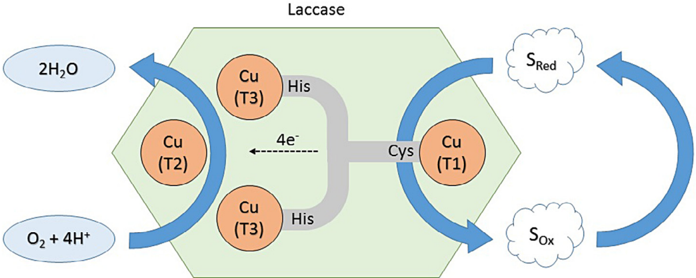
“Subsequently, an internal electron is transferred from the reduced T1 to the T2 and T3 copper sites, where the bound O2 molecule undergoes activation and reduction to water in the T2/T3 trinuclear domain (145, 146).”
From Toward the development of a molecular toolkit for the microbial remediation of per-and polyfluoroalkyl substances (2024) · cites this paper as [146]
Self-check
Percentages, sums and reported differences re-computed from the paper’s own numbers.
The self-check needs the paper’s full text.
Citations
Cites
Multicopper oxidases and oxygenases
Solomon, E. I., Sundaram, U. M., & Machonkin, T. E. (1996) · Chemical Reviews · doi:10.1021/cr950046o · Cited by 3,664
Piontek, K., Antorini, M., & Choinowski, T. (2002) · Journal of Biological Chemistry · doi:10.1074/jbc.m204571200 · Cited by 909
Research works printed but not linked: 139
- Gamella, 2006, Electrochemical estimation of the polyphenol index in wines using a laccase biosensor, J. Agric. Food Chem, 54, 7960, 10.1021/jf061451r · DOI
- Torrecilla, 2007, Quantification of phenolic compounds in olive oil mill wastewater by artificial neural network / laccase biosensor, J. Agric. Food Chem, 55, 7418, 10.1021/jf0703351 · DOI
- Kulys, 2007, Antioxidants determination with laccase, Talanta, 72, 526, 10.1016/j.talanta.2006.11.011 · DOI
- Annachhatre, 1996, Biodegradation of chlorinated phenolic compounds, Biotechnol. Adv, 14, 35, 10.1016/0734-9750(96)00002-X · DOI
- Baldrian, 2006, Fungal laccases – occurrence and properties, FEMS Microbiol. Rev, 30, 215, 10.1111/j.1574-4976.2005.00010.x · DOI
- Gao, 2008, Levels and spatial distribution of chlorophenols—2,4-dichlorophenol, 2,4,6-trichlorophenol, and pentachlorophenol in surface water of China, Chemosphere, 71, 1181, 10.1016/j.chemosphere.2007.10.018 · DOI
- Chang, 2009, The methods of identification, analysis, and removal of endocrine disrupting compounds (EDCs) in water, J. Hazard. Mater, 172, 1, 10.1016/j.jhazmat.2009.06.135 · DOI
- Cunha, 2013, Assessment of bisphenol A and bisphenol B in canned vegetables and fruits by gas chromatography–mass spectrometry after QuEChERS and dispersive liquid–liquid microextraction, Food Control, 33, 549, 10.1016/j.foodcont.2013.03.028 · DOI
- Ropero, 2008, Bisphenol-A disruption of the endocrine pancreas and blood glucose homeostasis, Int. J. Androl, 31, 194, 10.1111/j.1365-2605.2007.00832.x · DOI
- Gallego, 2011, Degradation and detoxification of chlorophenols in continuous-flow fixed-bed aerobic reactors, Clean (Weinh), 39, 774
- Marco, 1996, Environmental applications of analytical biosensors, Meas. Sci. Technol, 7, 1547, 10.1088/0957-0233/7/11/002 · DOI
- Cajthaml, 2009, Biodegradation of endocrine-disrupting compounds and suppression of estrogenic activity by ligninolytic fungi, Chemosphere, 75, 745, 10.1016/j.chemosphere.2009.01.034 · DOI
- Jaafar, 2005, The use of immobilized tyrosinase enzyme in sol-gel film for optical phenol detection, Sains Malays, 34, 91
- Jaafar, 2006, Immobilization of tyrosinase in chitosan film for an optical detection of phenol, Sens. Actuators B Chem, 114, 604, 10.1016/j.snb.2005.06.019 · DOI
- Jaafar, 2006, Stacked films immobilization of MBTH in nafion/sol-gel silicate and horseradish peroxidase in chitosan for the determination of phenolic compounds, Anal. Bioanal. Chem, 386, 1285, 10.1007/s00216-006-0786-6 · DOI
- Freire, 2002, Development of a laccase-based flow injection electrochemical biosensor for the determination of phenolic compounds and its application for monitoring remediation of Kraft E1 paper mill effluent, Anal. Chim. Acta, 463, 229, 10.1016/S0003-2670(02)00417-8 · DOI
- Munteanu, 1998, Bioelectrochemical monitoring of phenols and aromatic amines in flow injection using novel plant peroxidases, Anal. Chem, 70, 2596, 10.1021/ac980022s · DOI
- Bailey, 2004, Improved recovery of active recombinant laccase from maize seed, Appl. Microbiol. Biotechnol, 63, 390, 10.1007/s00253-003-1362-z · DOI
- Singh Arora, 2010, Ligninolytic fungal laccases and their biotechnological applications, Appl. Biochem. Biotechnol, 160, 1760, 10.1007/s12010-009-8676-y · DOI
- Morozova, 2007, Laccase-mediator systems and their applications: a review, Appl. Biochem. Microbiol, 43, 523, 10.1134/S0003683807050055 · DOI
- Omura, 1961, Studies on laccases of lacquer trees-comparison of laccases obtained from Rhus vernicifera and Rhus succedanea, J. Biochem, 50, 264, 10.1093/oxfordjournals.jbchem.a127442 · DOI
- Madhavi, 2009, Laccase: properties and applications, Bioresources, 4, 1694, 10.15376/biores.4.4.1694-1717 · DOI
- Chaubey, 2002, Review mediated biosensors, Biosens. Bioelectron, 7, 441, 10.1016/S0956-5663(01)00313-X · DOI · Paper page
- Durán, 2002, Applications of laccases and tyrosinases (phenoloxidases) immobilized on different supports: a review, Enzyme Microb. Technol, 31, 907, 10.1016/S0141-0229(02)00214-4 · DOI · Paper page
- Gromov, 1999, Azide binding to the trinuclear copper center in laccase and ascorbate oxidase, Eur. J. Biochem, 266, 820, 10.1046/j.1432-1327.1999.00898.x · DOI
- Cole, 1990, Spectroscopic and chemical studies of the laccase trinuclear copper active site: geometric and electronic structure, Am. Chem. Soc, 112, 9534, 10.1021/ja00182a013 · DOI
- Giardina, 2010, Laccases: a never-ending story, Cell. Mol. Life Sci, 67, 369, 10.1007/s00018-009-0169-1 · DOI · Paper page
- Shleev, 2004, Comparison of physico-chemical characteristics of four laccases from different basidiomycetes, Biochimie, 86, 693, 10.1016/j.biochi.2004.08.005 · DOI
- Giardina, 2010, Laccases: a story, never-ending, Cell. Mol. Life Sci, 67, 369, 10.1007/s00018-009-0169-1 · DOI · Paper page
- Shleev, 2005, Direct electron transfer between copper-containing proteins and electrodes, Biosens. Bioelectron, 20, 2517, 10.1016/j.bios.2004.10.003 · DOI
- Junghanns, 2005, Degradation of the xenoestrogen nonylphenol by aquatic fungi and their laccases, Microbiology, 151, 45, 10.1099/mic.0.27431-0 · DOI
- Almansa, 2004, Influence of structure on dye degradation with laccase mediator systems, Biocatal. Biotransformation, 22, 315, 10.1080/10242420400024508 · DOI
- Tan, 2009, Biofuel cell and phenolic biosensor based on acid-resistant laccase-glutaraldehyde functionalized chitosan-multiwalled carbon nanotubes nanocomposite film, Biosens. Bioelectron, 24, 2225, 10.1016/j.bios.2008.11.026 · DOI
- Jensen, 2012, A 1.76V hybrid Zn-O2 biofuel cell with a fungal laccase-carbon cloth biocathode, Electrochim. Acta, 62, 218, 10.1016/j.electacta.2011.12.026 · DOI
- Di Fusco, 2010, Laccase-based biosensor for the determination of polyphenol index in wine, Talanta, 81, 235, 10.1016/j.talanta.2009.11.063 · DOI
- Ghindilis, 1992, Lactase-based biosensor for determination of polyphenols: determination of catechols in tea, Biosens. Bioelectron, 7, 127, 10.1016/0956-5663(92)90017-H · DOI
- Tang, 2008, Catechol determination in compost bioremediation using a laccase sensor and artificial neural networks, Anal. Bioanal. Chem, 391, 679, 10.1007/s00216-008-2049-1 · DOI
- Quan, 2004, Amperometric detection of catechol and catecholamines by immobilized laccase from DeniLite, Electroanalysis, 16, 1576, 10.1002/elan.200302988 · DOI
- Ferreira, 2009, High performance liquid chromatography coupled to an optical fiber detector coated with laccase for screening catecholamines in plasma and urine, J. Chromatogr. A, 1216, 7049, 10.1016/j.chroma.2009.08.067 · DOI
- Arıca, 2009, Immobilization of laccase onto spacer-arm attached non-porous poly (GMA/EGDMA) beads: application for textile dye degradation, Bioresour. Technol, 100, 665, 10.1016/j.biortech.2008.07.038 · DOI
- Durán, 2002, Applications of laccases and tyrosinases ( phenoloxidases ) immobilized on different supports: a review, Enzyme Microb. Technol, 31, 907, 10.1016/S0141-0229(02)00214-4 · DOI · Paper page
- Liu, 2006, Facile preparation of amperometric laccase biosensor with multifunction based on the matrix of carbon nanotubes-chitosan composite, Biosens. Bioelectron, 21, 2195, 10.1016/j.bios.2005.11.014 · DOI
- Fernández-Fernández, 2013, Recent developments and applications of immobilized laccase, Biotechnol. Adv, 31, 1808, 10.1016/j.biotechadv.2012.02.013 · DOI · Paper page
- Chen, 2015, Facile fabrication of gold nanoparticle on zein ultrafine fibers and their application for catechol biosensor, Appl. Surf. Sci, 328, 444, 10.1016/j.apsusc.2014.12.070 · DOI
- Singh, 2008, Urea biosensors, Sens. Actuators B Chem, 134, 345, 10.1016/j.snb.2008.04.025 · DOI
- Arroyo, 1998, Inmovilización de enzimas. Fundamentos, métodos y aplicaciones, Ars Pharm, 39, 23
- Brady, 2009, Advances in enzyme immobilisation, Biotechnol. Lett, 31, 1639, 10.1007/s10529-009-0076-4 · DOI
- Bryjak, 2007, Laccase immobilization on co- polymer of butyl acrylate and ethylene glycol dimethacrylate, Biochem. Eng. J., 35, 325, 10.1016/j.bej.2007.01.031 · DOI
- Rochefort, 2008, Physical immobilization of laccase on an electrode by means of poly(ethyleneimine) microcapsules, J. Electroanal. Chem, 617, 53, 10.1016/j.jelechem.2008.01.027 · DOI
- Ibarra-Escutia, 2010, Amperometric biosensor based on a high resolution photopolymer deposited onto a screen-printed electrode for phenolic compounds monitoring in tea infusions, Talanta, 81, 1636, 10.1016/j.talanta.2010.03.017 · DOI
- Liu, 2007, Electrochemical catalysis and thermal stability characterization of laccase–carbon nanotubes-ionic liquid nanocomposite modified graphite electrode, Biosens. Bioelectron, 23, 35, 10.1016/j.bios.2007.03.009 · DOI
- Mena, 2005, Laccase biosensor based on N-succinimidyl-3-thiopropionate-functionalized gold electrodes, Electroanalysis, 17, 2147, 10.1002/elan.200503345 · DOI
- Moccelini, 2011, A novel support for laccase immobilization: cellulose acetate modified with ionic liquid and application in biosensor for methyldopa detection, Biosens. Bioelectron, 26, 3549, 10.1016/j.bios.2011.01.043 · DOI
- Dzyadevych, 2008, Amperometric enzyme biosensors: past, present and future, ITBM-RBM, 29, 171
- Rogers, 2001, Viscosity and binder composition effects on tyrosinase-based carbon paste electrode for detection of phenol and catechol, Talanta, 54, 1059, 10.1016/S0039-9140(01)00376-9 · DOI
- Rogers, 2006, Recent advances in biosensor techniques for environmental monitoring, Anal. Chim. Acta, 568, 222, 10.1016/j.aca.2005.12.067 · DOI
- Thévenot, 2001, Electrochemical biosensors: recommended definitions and classification, Biosens. Bioelectron, 16, 121, 10.1016/S0956-5663(01)00115-4 · DOI
- Chawla, 2012, An amperometric biosensor based on laccase immobilized onto nickel nanoparticles/carboxylated multiwalled carbon nanotubes/polyaniline modified gold electrode for determination of phenolic content in fruit juices, Biochem. Eng. J., 68, 76, 10.1016/j.bej.2012.07.008 · DOI
- Wang, 2012, Voltammetric detection of bisphenol a by a chitosan–graphene composite modified carbon ionic liquid electrode, Thin Solid Films, 520, 4459, 10.1016/j.tsf.2012.02.069 · DOI
- Fernandes, 2008, Biosensor based on laccase immobilized on microspheres of chitosan crosslinked with tripolyphosphate, Sens. Actuators B Chem, 133, 202, 10.1016/j.snb.2008.02.023 · DOI
- Santhiago, 2007, l-Cysteine determination in pharmaceutical formulations using a biosensor based on laccase from Aspergillus oryzae, Sens. Actuators B Chem, 128, 279, 10.1016/j.snb.2007.06.012 · DOI
- Gupta, 2003, Laccase biosensor on monolayer-modified gold electrode, Electroanalysis, 15, 1577, 10.1002/elan.200302724 · DOI
- Franzoi, 2009, Biosensor based on laccase and an ionic liquid for determination of rosmarinic acid in plant extracts, Talanta, 77, 1322, 10.1016/j.talanta.2008.09.010 · DOI
- Brondani, 2009, Biosensor based on platinum nanoparticles dispersed in ionic liquid and laccase for determination of adrenaline, Sens. Actuators B Chem, 140, 252, 10.1016/j.snb.2009.04.037 · DOI
- Zapp, 2011, Biomonitoring of methomyl pesticide by laccase inhibition on sensor containing platinum nanoparticles in ionic liquid phase supported in montmorillonite, Sens. Actuators B Chem, 155, 331, 10.1016/j.snb.2011.04.015 · DOI
- Franzoi, 2009, Biosensor for luteolin based on silver or gold nanoparticles in ionic liquid and laccase immobilized in chitosan modified with cyanuric chloride, Analyst, 134, 2320, 10.1039/b911952c · DOI
- Li, 2012, A disposable biosensor based on immobilization of laccase with silica spheres on the MWCNTs- doped screen-printed electrode, Chem. Cent. J., 6, 103, 10.1186/1752-153X-6-103 · DOI
- Oliveira, 2013, Biosensor based on multi-walled carbon nanotubes paste electrode modified with laccase for pirimicarb pesticide quantification, Talanta, 106, 137, 10.1016/j.talanta.2012.12.017 · DOI
- Franzoi, 2009, Development of biosensors containing laccase and imidazolium bis(trifluoromethylsulfonyl)imide ionic liquid for the determination of rutin, Anal. Chim. Acta, 639, 90, 10.1016/j.aca.2009.03.012 · DOI
- Jędrychowska, 2014, Electrochemical laccase sensor based on 3-methylthiophene/3-thiopheneacetic acid/bis(3,4-ethylenedioxythiophene)-N-nonylacridone as a new polymer support, J. Electroanal. Chem, 720-721, 64, 10.1016/j.jelechem.2014.03.017 · DOI
- Leite, 2003, Synergic effect studies of the bi-enzymatic system laccase-peroxidase in a voltammetric biosensor for catecholamines, Talanta, 59, 889, 10.1016/S0039-9140(02)00650-1 · DOI
- Jarosz-Wilkołazka, 2004, Use of laccase-modified electrode for amperometric detection of plant flavonoids, Enzyme Microb. Technol, 35, 238, 10.1016/j.enzmictec.2004.04.016 · DOI
- Timur, 2004, Thick film sensors based on laccases from different sources immobilized in polyaniline matrix, Sens. Actuators B Chem, 97, 132, 10.1016/j.snb.2003.07.018 · DOI
- Kushwah, 2011, Performance of nanopolyaniline-fungal enzyme based biosensor for water pollution, Adv. Mater. Lett, 2, 43, 10.5185/amlett.2010.8149 · DOI
- Chawla, 2011, Fabrication of polyphenol biosensor based on laccase immobilized on copper nanoparticles/chitosan/multiwalled carbon nanotubes/polyaniline-modified gold electrode, J. Biotechnol, 156, 39, 10.1016/j.jbiotec.2011.08.008 · DOI
- Rahman, 2008, Direct electrochemistry of laccase immobilized on Au nanoparticles encapsulated-dendrimer bonded conducting polymer: application for a catechin sensor, Anal. Chem, 80, 8020, 10.1021/ac801033s · DOI
- Vianello, 2004, A high sensitivity amperometric biosensor using a monomolecular layer of laccase as biorecognition element, Biosens. Bioelectron, 20, 315, 10.1016/j.bios.2004.01.022 · DOI
- Kulys, 2003, Amperometric biosensors based on recombinant laccases for phenols determination, Biosens. Bioelectron, 18, 319, 10.1016/S0956-5663(02)00172-0 · DOI
- Bauer, 1999, New enzyme sensors for morphine and codeine based on morphine dehydrogenase and laccase, Fresenius. J. Anal. Chem, 364, 179, 10.1007/s002160051320 · DOI
- Tang, 2006, A new amperometric method for rapid detection of Escherichia coli density using a self-assembled monolayer-based bienzyme biosensor, Anal. Chim. Acta, 562, 190, 10.1016/j.aca.2006.01.061 · DOI
- Diaconu, 2010, Laccase–MWCNT–chitosan biosensor – A new tool for total polyphenolic content evaluation from in vitro cultivated plants, Sens. Actuators B Chem, 145, 800, 10.1016/j.snb.2010.01.064 · DOI
- Leite, 2003, Determination of catecholamines in pharmaceutical formulations using a biosensor modified with a crude extract of fungi laccase (Pleurotus ostreatus), J. Braz. Chem. Soc, 14, 297, 10.1590/S0103-50532003000200018 · DOI
- Kushwah, 2011, Performance of nanopolyaniline-fungal enzyme based biosensor for water pollution, Adv. Mater. Lett, 2, 43, 10.5185/amlett.2010.8149 · DOI
- Lisdat, 1997, Catecholamine detection using enzymatic amplification, Biosens. Bioelectron, 12, 1199, 10.1016/S0956-5663(97)00098-5 · DOI
- Yaropolov, 1995, Flow-injection analysis of phenols at a graphite electrode modified with co-immobilised lactase and tyrosinase, Anal. Chim. Acta, 308, 137, 10.1016/0003-2670(94)00404-A · DOI
- Roy, 2005, Biosensor for the determination of phenols based on cross-linked enzyme crystals (CLEC) of laccase, Biosens. Bioelectron, 21, 206, 10.1016/j.bios.2004.08.024 · DOI
- Zhang, 2007, A hydroquinone biosensor using modified core-shell magnetic nanoparticles supported on carbon paste electrode, Biosens. Bioelectron, 22, 2121, 10.1016/j.bios.2006.09.030 · DOI
- Tortolini, 2010, Laccase–polyazetidine prepolymer–MWCNT integrated system: biochemical properties and application to analytical determinations in real samples, Microchem. J., 96, 301, 10.1016/j.microc.2010.05.004 · DOI
- Kochana, 2008, Tyrosinase/laccase bienzyme biosensor for amperometric determination of phenolic compounds, Microchem. J., 89, 171, 10.1016/j.microc.2008.02.004 · DOI
- Montereali, 2010, A disposable Laccase–Tyrosinase based biosensor for amperometric detection of phenolic compounds in must and wine, J. Mol. Catal. B Enzym, 64, 189, 10.1016/j.molcatb.2009.07.014 · DOI
- Quan, 2004, Characterization of an amperometric laccase electrode covalently immobilized on platinum surface, J. Electroanal. Chem, 561, 181, 10.1016/j.jelechem.2003.08.003 · DOI
- Ferry, 2005, Amperometric detection of catecholamine neurotransmitters using electrocatalytic substrate recycling at a laccase electrode, Electroanalysis, 17, 113, 10.1002/elan.200403069 · DOI
- Jarosz-Wilkołazka, 2005, Amperometric detection of mono- and diphenols at Cerrena unicolor laccase-modified graphite electrode: correlation between sensitivity and substrate structure, Talanta, 66, 1219, 10.1016/j.talanta.2005.01.026 · DOI
- Chawla, 2012, Amperometric determination of total phenolic content in wine by laccase immobilized onto silver nanoparticles/zinc oxide nanoparticles modified gold electrode, Anal. Biochem, 430, 16, 10.1016/j.ab.2012.07.025 · DOI
- Yaropolov, 2005, An amperometric biosensor based on laccase immobilized in polymer matrices for determining phenolic compounds 1, J. Anal. Chem, 60, 624, 10.1007/s10809-005-0138-2 · DOI
- Rawal, 2012, An amperometric biosensor based on laccase immobilized onto Fe3O4NPs/cMWCNT/PANI/Au electrode for determination of phenolic content in tea leaves extract, Enzyme Microb. Technol, 51, 179, 10.1016/j.enzmictec.2012.06.001 · DOI
- Portaccio, 2006, Biosensors for phenolic compounds: the catechol as a substrate model, J. Mol. Catal. B Enzym, 41, 97, 10.1016/j.molcatb.2006.05.002 · DOI
- Haghighi, 2003, Characterization of graphite electrodes modified with laccase from Trametes versicolor and their use for bioelectrochemical monitoring of phenolic compounds in flow injection analysis, Anal. Chim. Acta, 487, 3, 10.1016/S0003-2670(03)00077-1 · DOI
- ElKaoutit, 2008, A comparison of three amperometric phenoloxidase–Sonogel–Carbon based biosensors for determination of polyphenols in beers, Food Chem, 110, 1019, 10.1016/j.foodchem.2008.03.006 · DOI
- Freire, 2002, Electrochemical biosensor-based devices for continuous phenols monitoring in environmental matrices, J. Braz. Chem. Soc, 13, 456, 10.1590/S0103-50532002000400008 · DOI
- Xu, 2010, Development of amperometric laccase biosensor through immobilizing enzyme in copper-containing ordered mesoporous carbon (Cu-OMC)/chitosan matrix, Mater. Sci. Eng. C., 30, 722, 10.1016/j.msec.2010.03.006 · DOI
- Kushwah, 2010, Development of biosensor for phenol detection using agarose – guar gum based laccases extracted from Pleurotus ostreatus, J. Appl. Polym. Sci, 115, 1358, 10.1002/app.31265 · DOI
- Eremia, 2013, Disposable biosensor based on platinum nanoparticles-reduced graphene oxide-laccase biocomposite for the determination of total polyphenolic content, Talanta, 110, 164, 10.1016/j.talanta.2013.02.029 · DOI
- Odaci, 2006, Effects of mediators on the laccase biosensor response in paracetamol detection, Biotechnol. Appl. Biochem, 45, 23, 10.1042/BA20060034 · DOI
- Das, 2014, Highly sensitive and stable laccase based amperometric biosensor developed on nano-composite matrix for detecting pyrocatechol in environmental samples, Sens. Actuators B Chem, 192, 737, 10.1016/j.snb.2013.11.021 · DOI
- Cabaj, 2011, Hybrid phenol biosensor based on modified phenoloxidase electrode, Sens. Actuators B Chem, 157, 225, 10.1016/j.snb.2011.03.054 · DOI
- Fu, 2014, Laccase biosensor based on electrospun copper/carbon composite nanofibers for catechol detection, Sensors (Basel), 14, 3543, 10.3390/s140203543 · DOI
- Zhao, 2014, Laccase biosensor based on phytic acid modification of nanostructured SiO 2 surface for sensitive detection of dopamine, Langmuir, 30, 11131, 10.1021/la503104x · DOI
- Portaccio, 2013, Laccase biosensor based on screen-printed electrode modified with thionine–carbon black nanocomposite, for Bisphenol A detection, Electrochim. Acta, 109, 340, 10.1016/j.electacta.2013.07.129 · DOI
- Ya, 2011, Laccase biosensor using magnetic multiwalled carbon nanotubes and chitosan / silica hybrid membrane modified magnetic carbon paste electrode, J. Cent. South Univ. Technol, 18, 1849, 10.1007/s11771-011-0913-1 · DOI
- Litescu, 2010, Laccase-nafion based biosensor for the determination of polyphenolic secondary metabolites, Anal. Lett, 43, 1089, 10.1080/00032710903518518 · DOI
- Li, 2014, Novel phenolic biosensor based on a magnetic polydopamine- laccase-nickel nanoparticle loaded carbon nano fiber composite, ACS Appl. Mater. Interfaces, 6, 5144, 10.1021/am500375n · DOI
- Amatatongchai, 2013, Rapid screening method for assessing total phenolic content using simple flow injection system with laccase based- biosensor, Int. J. Electrochem. Sci, 8, 10526, 10.1016/S1452-3981(23)13128-2 · DOI
- Quan, 2004, Sensing characteristics of tyrosinase immobilized and tyrosinase, laccase co-immobilized platinum electrodes, Bull. Korean Chem. Soc, 25, 1195, 10.5012/bkcs.2004.25.8.1195 · DOI
- Ronkainen, 2010, Electrochemical biosensors, Chem. Soc. Rev, 39, 1747, 10.1039/b714449k · DOI
- Chivukula, 1995, Phenolic azo dye oxidation by laccase from Pyricularia oryzae, Appl. Environ. Microbiol, 61, 4374, 10.1128/AEM.61.12.4374-4377.1995 · DOI
- Zoppellaro, 2001, A novel mixed valence form of Rhus vernicifera laccase and its reaction with dioxygen to give a peroxide intermediate bound to the trinuclear center, J. Biochem, 129, 949, 10.1093/oxfordjournals.jbchem.a002942 · DOI
- Sanz, 2012, Autoindicating optical properties of laccase as the base of an optical biosensor film for phenol determination, Anal. Bioanal. Chem, 404, 351, 10.1007/s00216-012-6061-0 · DOI
- Setti, 1999, Laccase catalyzed-oxidative of 3-methyl 2- benzothiazolinone hydrazone and methoxyphenols, Enzyme Microb. Technol, 25, 285, 10.1016/S0141-0229(99)00059-9 · DOI
- Huang, 2008, A novel fiber optic biosensor for the determination of adrenaline based on immobilized laccase catalysis, Anal. Lett, 41, 1430, 10.1080/00032710802119525 · DOI
- Zhang, 2014, Sensitive chemiluminescence immunoassay for E. coli O157:H7 detection with signal dual-ampli fi cation using glucose oxidase and laccase, Anal. Chem, 86, 1115, 10.1021/ac4028774 · DOI
- Abdullah, 2007, An optical biosensor based on immobilization of laccase and MBTH in stacked films for the detection of catechol, Sensors (Basel), 7, 2238, 10.3390/s7102238 · DOI
- Silva, 2009, Optical fiber biosensor coupled to chromatographic separation for screening of dopamine, norepinephrine and epinephrine in human urine and plasma, Talanta, 80, 853, 10.1016/j.talanta.2009.08.003 · DOI
- Bai, 2014, Immobilized laccase on activated poly(vinyl alcohol) microspheres for enzyme thermistor application, Appl. Biochem. Biotechnol, 173, 1097, 10.1007/s12010-014-0913-3 · DOI
- Manzano-Agugliaro, 2013, Scientific production of renewable energies worldwide: an overview, Renew. Sustain. Energy Rev, 18, 134, 10.1016/j.rser.2012.10.020 · DOI
- Yin, 2013, 41Fifteen years of grey system theory research: a historical review and bibliometric analysis, Expert Syst. Appl, 40, 2767, 10.1016/j.eswa.2012.11.002 · DOI
- Zhi, 2012, Constructed wetlands, 1991–2011: a review of research development, current trends, and future directions, Sci. Total Environ, 441, 19, 10.1016/j.scitotenv.2012.09.064 · DOI
- Ho, 2012, Top-cited articles in chemical engineering in science citation index expanded: a bibliometric analysis, Chin. J. Chem. Eng, 20, 478, 10.1016/S1004-9541(11)60209-7 · DOI
- Shi, 2012, A bibliometric analysis of anaerobic digestion for butanol production research trends, Procedia Environ. Sci, 16, 152, 10.1016/j.proenv.2012.10.021 · DOI
- Wan, 2012, Bibliometric analysis of carbon dioxide reduction research trends during 1999–2009, Sep. Purif. Technol, 94, 87, 10.1016/j.seppur.2011.07.022 · DOI
- Pillania, 2012, Innovation research in India: a multidisciplinary literature review, Technol. Forecast. Soc. Change, 79, 716, 10.1016/j.techfore.2012.02.003 · DOI
- Romo-Fernández, 2012, World scientific production on renewable energy, sustainability and the environment, Energy Sustain. Dev, 16, 500, 10.1016/j.esd.2012.06.005 · DOI
- Chang, 2012, Characteristics and trends of research articles authored by researchers affiliated with institute of chemical engineering in Taiwan, J. Taiwan Inst. Chem. Eng, 43, 331, 10.1016/j.jtice.2011.12.006 · DOI
- Cruz, 2012, Trends in literature on new oilseed crops and related species: seeking evidence of increasing or waning interest, Ind. Crops Prod, 37, 141, 10.1016/j.indcrop.2011.11.029 · DOI
- Castro e Silva, 2011, A bibliometric account of the evolution of EE in the last two decades, Ecol. Econ, 70, 849, 10.1016/j.ecolecon.2010.11.016 · DOI
- Moya-Anegón, 2007, Coverage analysis of Scopus: a journal metric approach, Scientometrics, 73, 53, 10.1007/s11192-007-1681-4 · DOI
- Putzbach, 2013, Immobilization techniques in the fabrication of nanomaterial-based electrochemical biosensors: a review, Sensors (Basel), 13, 4811, 10.3390/s130404811 · DOI
- Claus, 2004, Laccases: structure, reactions, distribution, Micron, 35, 93, 10.1016/j.micron.2003.10.029 · DOI
- Lal, 1992, Integrated biosensors: promises and problems, Bioelectrochem. Bioenerg, 27, 121, 10.1016/0302-4598(92)87037-U · DOI
Cited by
Sorted by citations
A Brief History of Colour, the Environmental Impact of Synthetic Dyes and Removal by Using Laccases
Ardila-Leal, L. D., Poutou-Piñales, R. A., Pedroza-Rodríguez, A. M., & Quevedo-Hidalgo, B. E. (2021) · Molecules · doi:10.3390/molecules26133813 · Cited by 544
Hu, M., & Scott, C. (2024) · Applied and Environmental Microbiology · doi:10.1128/aem.00157-24 · Cited by 63
Metadata
- Authors
- Rodríguez-Delgado, M. M., Alemán-Nava, G. S., Rodríguez-Delgado, J. M., Dieck-Assad, G., Martínez-Chapa, S. O., Barceló, D., & Parra, R.
- Venue
- TrAC Trends in Analytical Chemistry
- Publisher
- Elsevier BV
- Published
- 2015-12
- Volume
- 74
- Pages
- 21-45
- ISSN
- 0165-9936
- Cited by
- 302
- References
- 2
- Language
- en
- Funders
- Consejo Nacional de Ciencia y Tecnología (386805)
About these checks
Registry, retraction, Cites and statistics results are computed, not judged, with one exception: a printed reference that no index lists is read once by a model before it counts as a citation error. Claims are extracted by a model and kept only when their quote appears verbatim in the text; each cited source is then checked, with a model’s help, for whether it says what the claim relies on. Those verdicts can be wrong — read the claim’s quote and the cited source before relying on one.
Statistics and arithmetic are recomputed, not judged.
Confidence bands are shown only for fields calibrated on our annotated test set. None is calibrated yet, so no band is shown.
What counts as a claim ›How we measure confidence ›How we check this ›
Are you an author, or do you see a problem with this page? Request a review
How to cite
Cite CoChat for the checks on this page, and the paper for its own findings.
- This page
- CoChat. (2026). Citation check: Laccase-based biosensors for detection of phenolic compounds. https://app.cochat.ai/papers/10.1016/j.trac.2015.05.008
- The paper
- Rodríguez-Delgado, M. M., Alemán-Nava, G. S., Rodríguez-Delgado, J. M., Dieck-Assad, G., Martínez-Chapa, S. O., Barceló, D., & Parra, R. (2015). Laccase-based biosensors for detection of phenolic compounds. TrAC Trends in Analytical Chemistry. https://doi.org/10.1016/j.trac.2015.05.008
