

The DOI matches its Crossref record; 68 of the 69 references it cites were found in a registry or an index.
A Comprehensive Immunologic Portrait of Triple-Negative Breast Cancer
Open accessPublished version of a preprint
Abstract
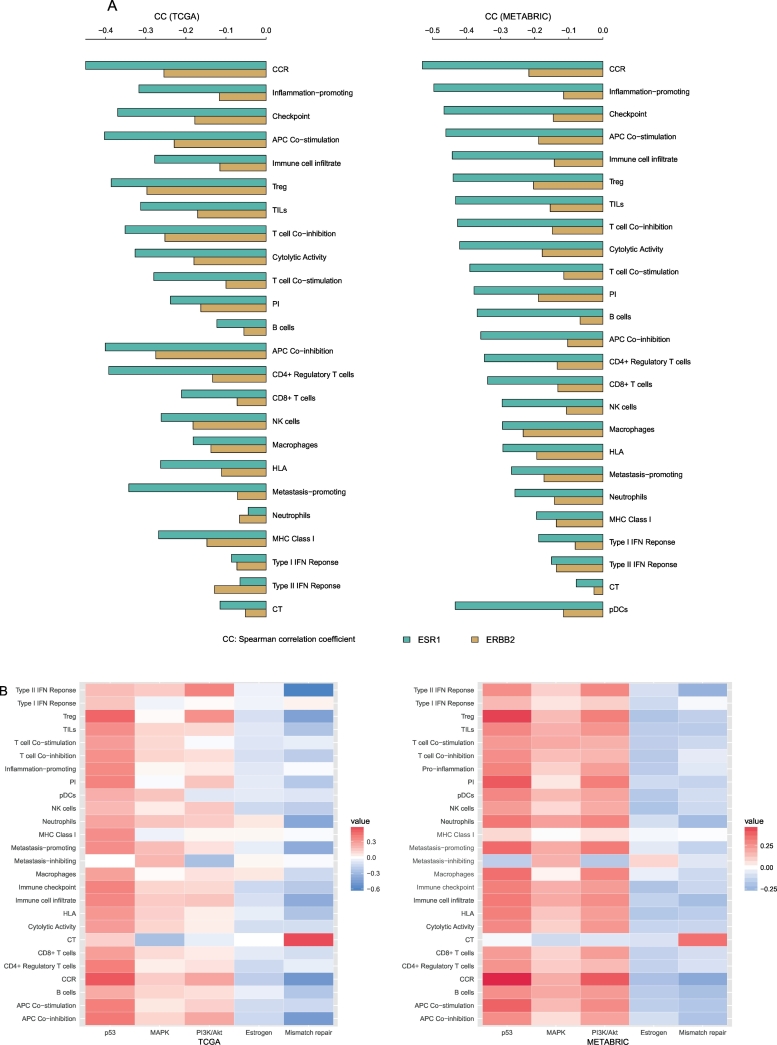
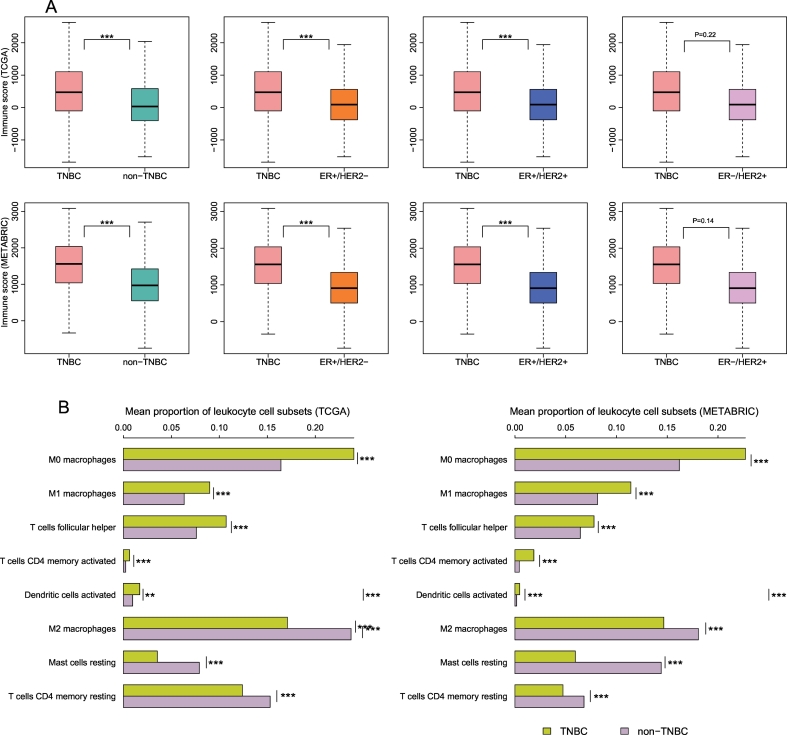
Abstract Background Triple-negative breast cancer (TNBC) is a high-risk malignancy due to its high capacity for invasion and lack of targeted therapy. Immunotherapy continues to demonstrate efficacy in a variety of cancers, and thus may be a promising strategy for TNBC given the limited therapeutic options currently available for TNBC. In this study, we performed a comprehensive portrait of immunologic landscape of TNBC based on 2 large-scale breast cancer genomic data. Methods We compared expression levels of immune-related genes and gene-sets among TNBC, non-TNBC, and normal tissue, and within TNBCs of different genotypic or phenotypic features. Moreover, we explored the association of immune-related genes or gene-sets expression and survival prognosis in TNBC patients. Results We found that almost all analyzed immune-related gene-sets had significantly higher expression levels in TNBC than non-TNBC. These highly expressed gene-sets in TNBC included 15 immune cell type and function, human leukocyte antigen (HLA), cancer testis (CT), tumor-infiltrating lymphocytes (TILs), immune cell infiltrate, regulatory T (Treg) cells, immune checkpoint, cytokine and cytokine receptor, metastasis-promoting, pro-inflammatory and parainflammation (PI) gene-sets. Moreover, TP53-mutated , TNBC had significantly higher expression levels of the immune checkpoint, Treg, PI, and CT gene-sets, and lower expression levels of the immune cell infiltrate gene-set than TP53 -wildtype TNBC. Furthermore, we found that elevated expression of most of the immune-related genes in TNBC was associated with the ER-status, while some were associated with both ER-and HER2-status. Elevated expression of the immune-related genes in TNBC was also associated with the high tumor mutation burden (TMB) in TNBC. Finally, elevated expression of the immune-related gene-sets was likely to be associated with better survival prognosis in TNBC. Conclusions Our findings suggest that TNBC is a breast cancer subtype with particularly strong immunogenicity, and therefore could be propitious to immunotherapeutic options.
Overview
The claims and statistics of this paper haven’t been checked yet.
Run the check — free, no account needed. It reads the open-access text and checks the sources it cites.
Integrity signals
Registry
Cites
Statistics
Figures
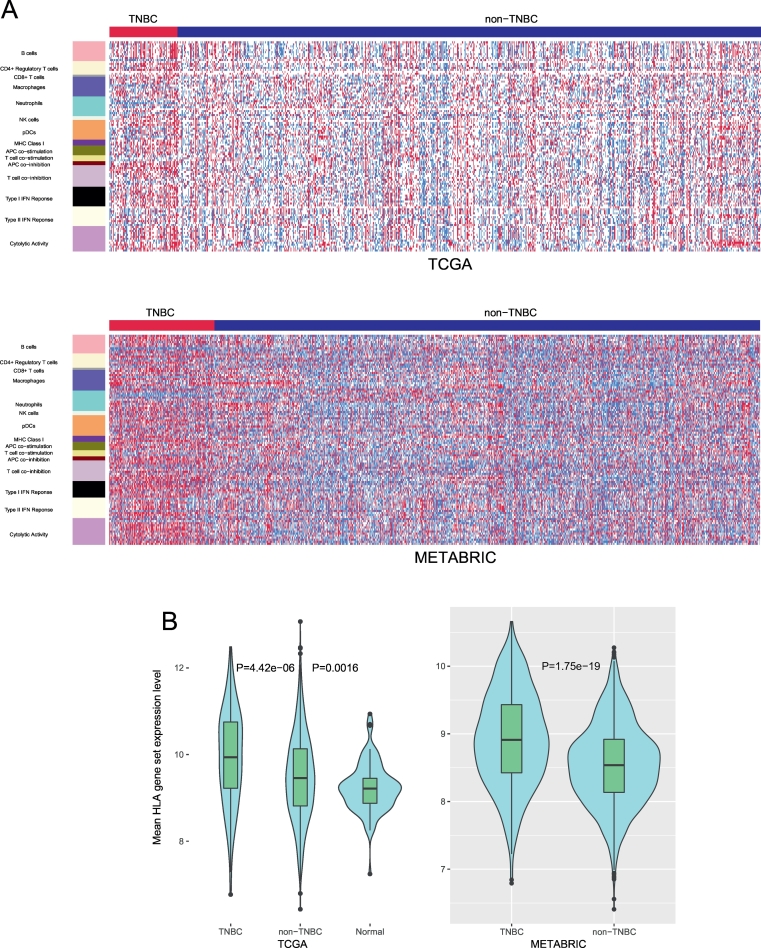
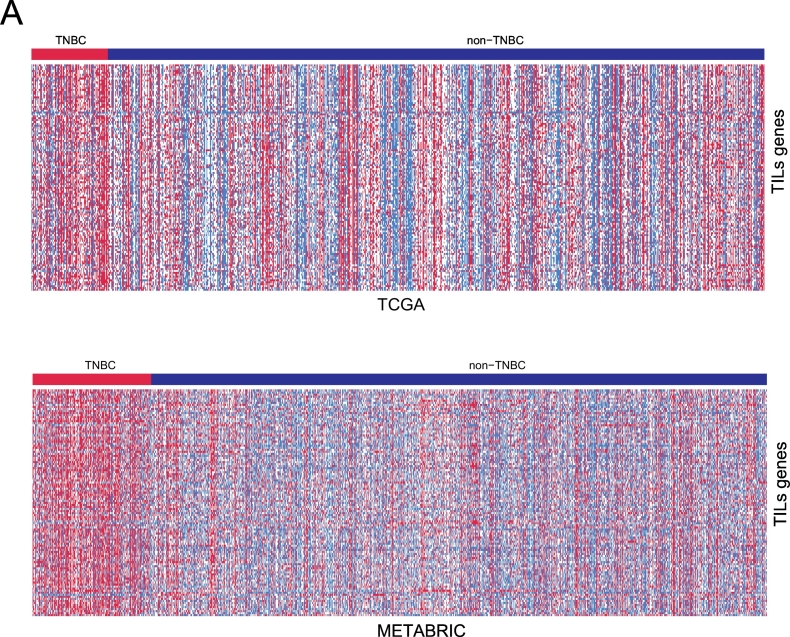
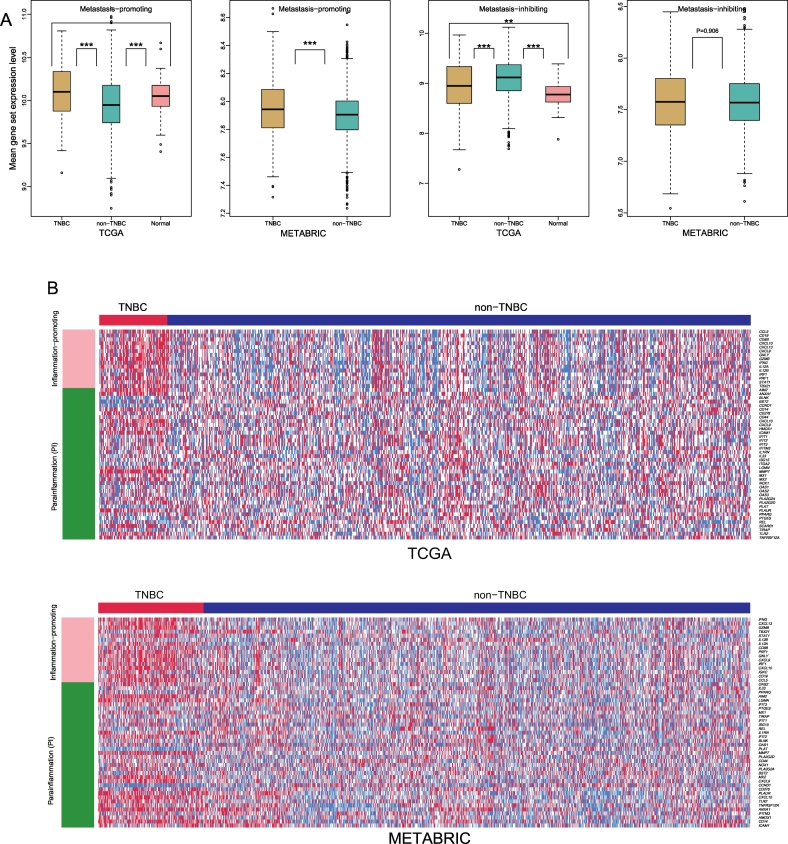
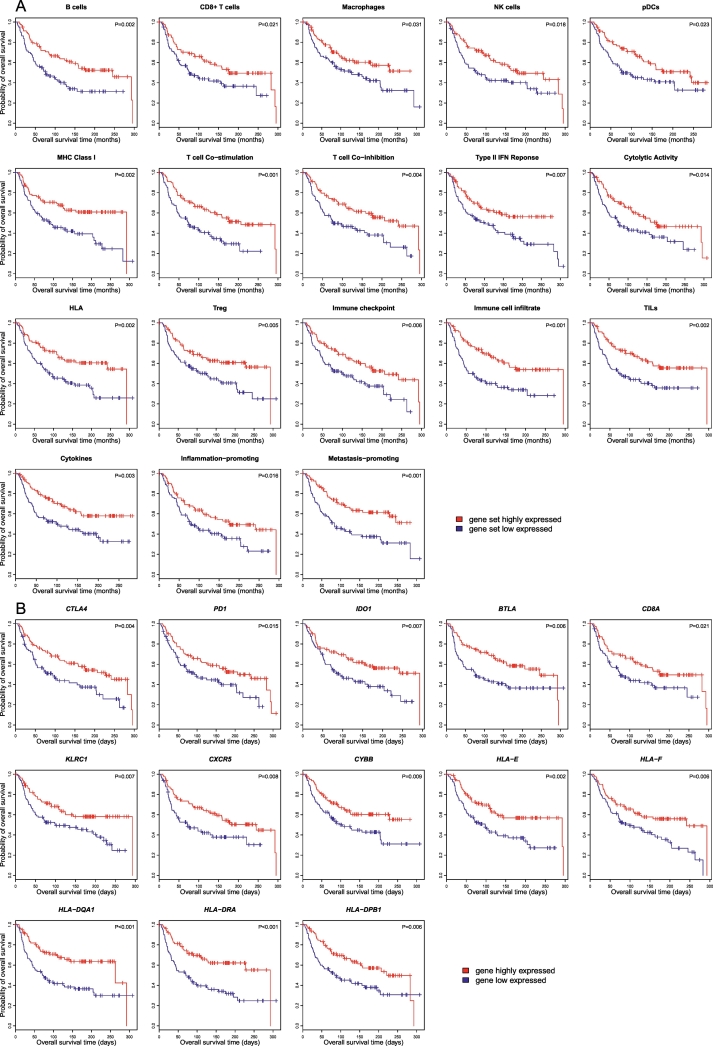
Verification
Claims the paper makes
The claims and statistics of this paper haven’t been checked yet.
Run the check — free, no account needed. It reads the open-access text and checks the sources it cites.
Claims other papers make about this one
Each is checked against this paper’s own text: does it say what the citing paper says it does?
In the citing paper
“Paradoxically, despite strong immunogenicity and a higher prevalence of tumor-infiltrating lymphocytes (TILs) in TNBC3, patients often progress to metastasis with poor clinical outcomes1.”
Self-check
Percentages, sums and reported differences re-computed from the paper’s own numbers.
The self-check needs the paper’s full text.
Citations
Cites
Controlling the False Discovery Rate: A Practical and Powerful Approach to Multiple Testing
Benjamini, Y., & Hochberg, Y. (1995) · Journal of the Royal Statistical Society Series B: Statistical Methodology · doi:10.1111/j.2517-6161.1995.tb02031.x · Cited by 109,482
Siegel, R. L., Miller, K. D., & Jemal, A. (2017) · CA: A Cancer Journal for Clinicians · doi:10.3322/caac.21387 · Cited by 14,712
Robust enumeration of cell subsets from tissue expression profiles
Newman, A. M., Liu, C. L., Green, M. R., Gentles, A. J., Feng, W., Xu, Y., Hoang, C. D., Diehn, M., & Alizadeh, A. A. (2015) · Nature Methods · doi:10.1038/nmeth.3337 · Cited by 13,224
Comprehensive molecular portraits of human breast tumours
The Cancer Genome Atlas Network (2012) · Nature · doi:10.1038/nature11412 · Cited by 12,129
Immunity, Inflammation, and Cancer
Grivennikov, S. I., Greten, F. R., & Karin, M. (2010) · Cell · doi:10.1016/j.cell.2010.01.025 · Cited by 10,755
Inferring tumour purity and stromal and immune cell admixture from expression data
Yoshihara, K., Shahmoradgoli, M., Martínez, E., Vegesna, R., Kim, H., Torres-Garcia, W., Treviño, V., Shen, H., Laird, P. W., Levine, D. A., et al. (2013) · Nature Communications · doi:10.1038/ncomms3612 · Cited by 9,778
PD-1 Blockade in Tumors with Mismatch-Repair Deficiency
Le, D. T., Uram, J. N., Wang, H., Bartlett, B. R., Kemberling, H., Eyring, A. D., Skora, A. D., Luber, B. S., Azad, N. S., Laheru, D., et al. (2015) · New England Journal of Medicine · doi:10.1056/nejmoa1500596 · Cited by 9,377
Combined Nivolumab and Ipilimumab or Monotherapy in Untreated Melanoma
Larkin, J., Chiarion-Sileni, V., Gonzalez, R., Grob, J. J., Cowey, C. L., Lao, C. D., Schadendorf, D., Dummer, R., Smylie, M., Rutkowski, P., et al. (2015) · New England Journal of Medicine · doi:10.1056/nejmoa1504030 · Cited by 8,157
Mutational landscape determines sensitivity to PD-1 blockade in non–small cell lung cancer
Rizvi, N. A., Hellmann, M. D., Snyder, A., Kvistborg, P., Makarov, V., Havel, J. J., Lee, W., Yuan, J., Wong, P., Ho, T. S., et al. (2015) · Science · doi:10.1126/science.aaa1348 · Cited by 7,802
Herbst, R. S., Baas, P., Kim, D.-W., Felip, E., Pérez-Gracia, J. L., Han, J.-Y., Molina, J., Kim, J.-H., Arvis, C. D., Ahn, M.-J., et al. (2016) · The Lancet · doi:10.1016/s0140-6736(15)01281-7 · Cited by 6,449
Cited by
Sorted by citations
Classification of triple-negative breast cancers based on Immunogenomic profiling
He, Y., Jiang, Z., Chen, C., & Wang, X. (2018) · Journal of Experimental & Clinical Cancer Research · doi:10.1186/s13046-018-1002-1 · Cited by 633
Self-citationTriple-Negative Breast Cancer: A Review of Conventional and Advanced Therapeutic Strategies
Salcedo, J. M. M., Oza, G., Sharma, A. K., Arriaga, L., Hernández, J. M. H., Rotello, V. M., & Tapia-Ramı́rez, J. (2020) · International Journal of Environmental Research and Public Health · doi:10.3390/ijerph17062078 · Cited by 348
The Great Immune Escape: Understanding the Divergent Immune Response in Breast Cancer Subtypes
Onkar, S., Carleton, N. M., Lucas, P. C., Bruno, T. C., Lee, A. V., Vignali, D. A. A., & Oesterreich, S. (2022) · Cancer Discovery · doi:10.1158/2159-8290.cd-22-0475 · Cited by 227
Liu, Q., Zhang, J., Guo, C., Wang, M., Wang, C., Yan, Y., Sun, L., Wang, D., Zhang, L., Yu, H., et al. (2024) · Cell · doi:10.1016/j.cell.2023.12.004 · Cited by 234
Ma, S., Zhao, Y., Lee, W. C., Ong, L.-T., Lee, P. L., Jiang, Z., Oguz, G., Niu, Z., Liu, M., Goh, J. Y., et al. (2022) · Nature Communications · doi:10.1038/s41467-022-31764-9 · Cited by 200
Self-citation
Metadata
- Authors
- Liu, Z., Li, M., Jiang, Z., & Wang, X.
- Affiliations
- China Pharmaceutical University (CN)
- Corresponding author
- Wang, Xiaosheng
- Venue
- Translational Oncology
- Publisher
- Elsevier BV
- Published
- 2018-04
- Volume
- 11
- Issue
- 2
- Pages
- 311-329
- ISSN
- 1936-5233 (ISSN-L)
- PMC
- PMC5884188
- OpenAlex
- W2766581433
- Cited by
- 275
- References
- 69
- Citations by year
- 2026: 14 · 2025: 25 · 2024: 22 · 2023: 39 · 2022: 45 · 2021: 51 · 2020: 46 · 2019: 24 · 2018: 9
- FWCI
- 9.98
- Type
- journal article
- Language
- en
- Open access
- gold
- doi.org
- Licence
- Locations
- Translational Oncology (publishedVersion, cc-by-nc-nd)
- bioRxiv (Cold Spring Harbor Laboratory) (acceptedVersion, cc-by-nc-nd)
- Europe PMC (PubMed Central) (publishedVersion, cc-by-nc-nd)
- PubMed Central (publishedVersion, cc-by-nc-nd)
- PubMed (publishedVersion)
- DOAJ (DOAJ: Directory of Open Access Journals) (submittedVersion)
- Funders
- China Pharmaceutical University (2632018YX01, 3150120001)
- Topics
- Life Sciences › Biochemistry, Genetics and Molecular Biology › Cancer Research › Breast Cancer Treatment Studies
- Health Sciences › Medicine › Oncology › Cancer Immunotherapy and Biomarkers
- Life Sciences › Immunology and Microbiology › Immunology › Immune cells in cancer
- Keywords
- triple-negative breast cancer, tumor immunogenicity, immune pathways, immunotherapy, breast cancer subtypes, survival prediction, genomic data analysis
About these checks
Registry, retraction, Cites and statistics results are computed, not judged, with one exception: a printed reference that no index lists is read once by a model before it counts as a citation error. Claims are extracted by a model and kept only when their quote appears verbatim in the text; each cited source is then checked, with a model’s help, for whether it says what the claim relies on. Those verdicts can be wrong — read the claim’s quote and the cited source before relying on one.
Statistics and arithmetic are recomputed, not judged.
Confidence bands are shown only for fields calibrated on our annotated test set. None is calibrated yet, so no band is shown.
What counts as a claim ›How we measure confidence ›How we check this ›
Are you an author, or do you see a problem with this page? Request a review
