

The DOI matches its Crossref record; 44 of the 47 references it cites were found in a registry or an index.
Alzheimer's disease drug development pipeline: 2017
Open accessAbstract
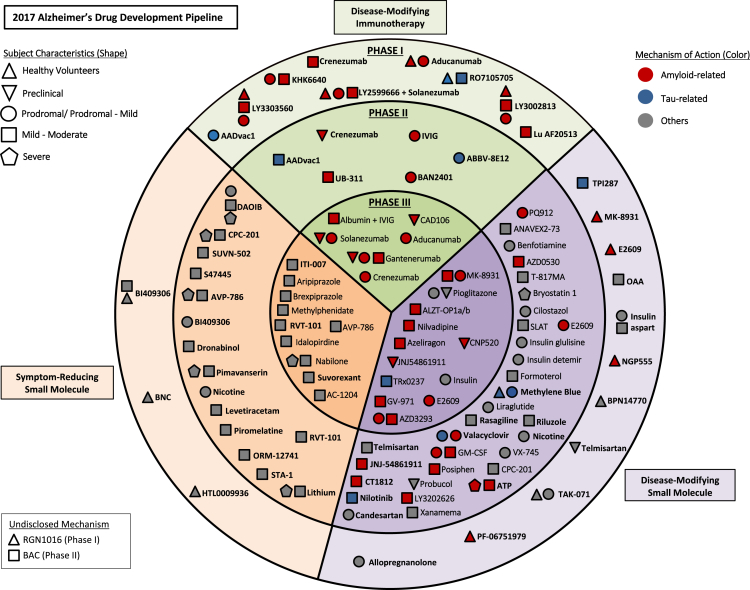
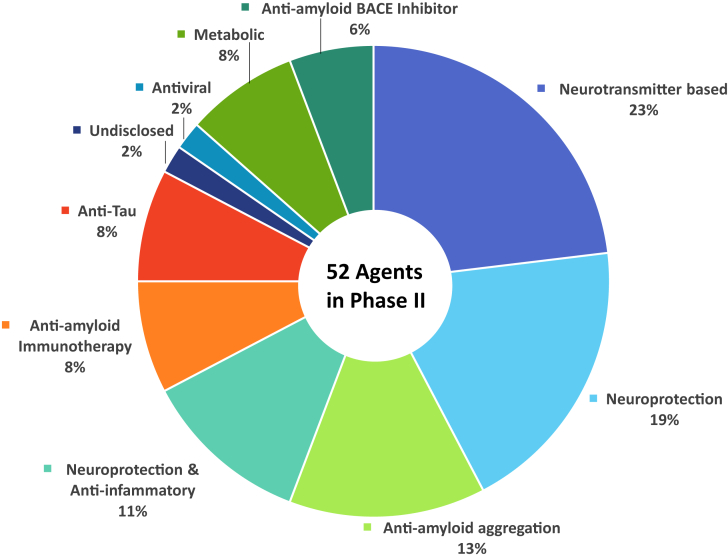
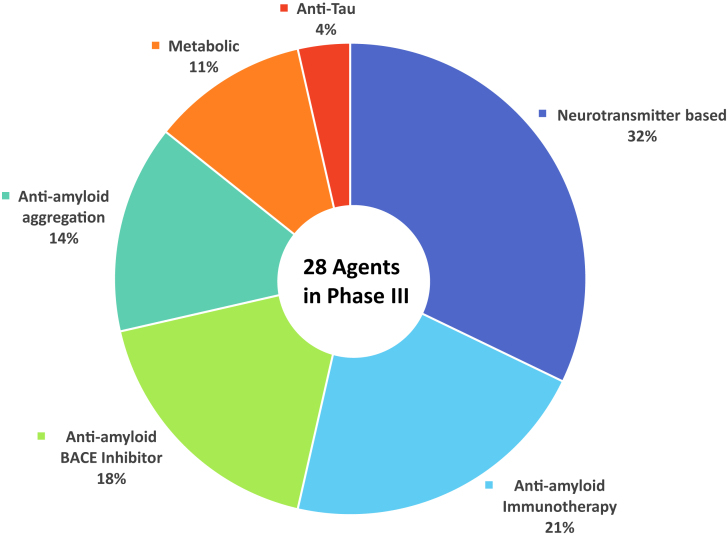
Introduction: There is an urgent need to develop new treatments for Alzheimer's disease (AD) and to understand the drug development process for new AD therapies. Methods: We assessed the agents in the AD pipeline as documented in clinicaltrials.gov for phase I, phase II, and phase III, accessed 1/5/2017. Results: There are 105 agents in the AD treatment development pipeline, of which 25 agents are in 29 trials in phase I, 52 agents are in 68 trials in phase II, and 28 agents are in 42 trials in phase III. Seventy percent of drugs in the AD pipeline are disease‐modifying therapies (DMTs). Fourteen percent are symptomatic cognitive enhancers, and 13% are symptomatic agents addressing neuropsychiatric and behavioral changes (2% have undisclosed mechanisms). Most trials are sponsored by the biopharmaceutical industry. Trials include patients with preclinical AD (cognitively normal with biomarker evidence of AD), prodromal AD (mild cognitive symptoms and biomarker evidence of AD), and AD dementia. Biomarkers are included in many drug development programs particularly those for DMTs. Thirteen of 46 phase II DMT trials have amyloid imaging as an entry criterion, and 10 of 28 phase III trials incorporate amyloid imaging for diagnosis and entry. A large number of participants are needed for AD clinical trials; in total, 54,073 participants are required for trials spanning preclinical AD to AD dementia. When compared with the 2016 pipeline, there are eight new agents in phase I, 16 in phase II, and five in phase III. Discussion: The AD drug development pipeline has 105 agents divided among phase I, phase II, and phase III. The trials include a wide range of clinical trial populations, many mechanisms of action, and require a substantial number of clinical trial participants. Biomarkers are increasingly used in patient identification and as outcome measures, particularly in trials of DMTs.
Overview
The claims and statistics of this paper haven’t been checked yet.
Run the check — free, no account needed. It reads the open-access text and checks the sources it cites.
Integrity signals
Registry
Cites
Statistics
Figures
Verification
Claims the paper makes
The claims and statistics of this paper haven’t been checked yet.
Run the check — free, no account needed. It reads the open-access text and checks the sources it cites.
Claims other papers make about this one
Each is checked against this paper’s own text: does it say what the citing paper says it does?
In the citing paper
“A number of additional pathogenic mechanisms have been described, possibly overlapping with Aβ plaques and NFT formation or induced by them, including inflammation, oxidative damage, iron deregulation, and cholesterol metabolism blood-brain barrier (BBB) dysfunction or α-synuclein toxicity.9-13”
From Current and Future Treatments in Alzheimer Disease: An Update (2020) · cites this paper as [12]
Self-check
Percentages, sums and reported differences re-computed from the paper’s own numbers.
The self-check needs the paper’s full text.
Citations
Cites
2016 Alzheimer's disease facts and figures
Alzheimer's Association (2016) · Alzheimer's & Dementia · doi:10.1016/j.jalz.2016.03.001 · Cited by 5,069
The antibody aducanumab reduces Aβ plaques in Alzheimer’s disease
Sevigny, J., Chiao, P., Bussière, T., Weinreb, P. H., Williams, L., Maier, M., Dunstan, R., Salloway, S., Chen, T., Ling, Y., et al. (2016) · Nature · doi:10.1038/nature19323 · Cited by 3,059 · cited 1×
“Aducanumab targets multiple Ab species, has had an encouraging phase I/II trial, and is continuing in phase III [35].”
BackgroundAlzheimer’s disease drug-development pipeline: Few candidates, frequent failures
Cummings, J. L., Morstorf, T., & Zhong, K. (2014) · Alzheimer's Research & Therapy · doi:10.1186/alzrt269 · Cited by 1,744 · cited 1×
“Although there are promising agents in the pipeline that could achieve this goal, it is clear that given the high rate of failure of AD drug development [38], the aim of having a repertoire of agents that could respond comprehensively and individually to a patient’s clinical circumstances within the 2025 timeframe is…”
BackgroundSelf-citation2015 Alzheimer's disease facts and figures
Alzheimer's Association (2015) · Alzheimer s & Dementia · doi:10.1016/j.jalz.2015.02.003 · Cited by 1,673
Lessons learned from the fate of AstraZeneca's drug pipeline: a five-dimensional framework
Cook, D., Brown, D., Alexander, R., March, R., Morgan, P., Satterthwaite, G., & Pangalos, M. N. (2014) · Nature Reviews Drug Discovery · doi:10.1038/nrd4309 · Cited by 1,344 · cited 1×
“Biomarkers can contribute substantially to drug development success [39].”
BackgroundClinical Trial Registration: A Statement from the International Committee of Medical Journal Editors
De Angelis, C., Drazen, J. M., Frizelle, F. A., Haug, C., Hoey, J., Horton, R., Kotzin, S., Laine, C., Marusic, A., Overbeke, A. J. P. M., et al. (2004) · New England Journal of Medicine · doi:10.1056/nejme048225 · Cited by 1,241
Sperling, R. A., Jack, C. R., Black, S. E., Frosch, M. P., Greenberg, S. M., Hyman, B. T., Scheltens, P., Carrillo, M. C., Thies, W., Bednar, M. M., et al. (2011) · Alzheimer's & Dementia · doi:10.1016/j.jalz.2011.05.2351 · Cited by 857
Lombardo, I., Ramaswamy, G., Piscitelli, S. C., & Friedhoff, L. T. (2015) · Alzheimer s & Dementia · doi:10.1016/j.jalz.2015.08.154 · Cited by 656
Weiner, M. W., Veitch, D. P., Aisen, P. S. S., Beckett, L. A., Cairns, N. J., Green, R. C., Harvey, D. J., Jack, C. R., Jagust, W. J., Morris, J. C., et al. (2016) · Alzheimer s & Dementia · doi:10.1016/j.jalz.2016.10.006 · Cited by 523
Drug development in Alzheimer’s disease: the path to 2025
Cummings, J., Aisen, P. S., DuBois, B., Frölich, L., Jack, C. R., Jones, R. W., Morris, J. C., Raskin, J., Dowsett, S. A., & Scheltens, P. (2016) · Alzheimer's Research & Therapy · doi:10.1186/s13195-016-0207-9 · Cited by 459 · cited 3×
“This means that under current circumstances, an agent must now be in phase II to possibly be approved by 2025 [5].”
BackgroundSelf-citation
Research works printed but not linked: 3
- Alzheimer's Association, 2015, Changing the Trajectory of Alzheimer's Disease: How a Treatment by 2025 Saves Lives and Dollars
- Tan S.B., 2009, Clinical Trials Handbook, 255
- Babic T., 2016, Improving screen fail and recruitment rates in Alzheimer's disease clinical trials, J Clin Stud, 8, 38
Cited by
Sorted by citations
Items 301–400 of 556
Uddin, M. S., Kabir, M. T., Mamun, A. A., Behl, T., Mansouri, R. A., Aloqbi, A. A., Perveen, A., Hafeez, A., & Ashraf, G. M. (2020) · Current Pharmaceutical Design · doi:10.2174/1381612826666200531151004 · Cited by 16
Ingham, D. J., Hillyer, K. M., McGuire, M. J., & Gamblin, T. C. (2022) · Biochemistry · doi:10.1021/acs.biochem.2c00111 · Cited by 13
Young, S. C. (2018) · Molecules · doi:10.3390/molecules23020296 · Cited by 14
Setbacks and promises for drugs against Alzheimer's disease
Rinaldi, A. C. (2018) · EMBO Reports · doi:10.15252/embr.201846714 · Cited by 14
“Cummings and colleagues noted that, in many cases, the recruitment period is longer than the treatment period, and failure of meeting the recruitment goal is not rare [8].”
BackgroundOyeleke, M. B., Oni, H. T., Arokoyo, O. L., & Owoyele, B. V. (2022) · Heliyon · doi:10.1016/j.heliyon.2022.e09255 · Cited by 12
Yu, H., Li, M., Pan, Q., Liu, Y., Zhang, Y., He, T., Yang, H., Xiao, Y., Weng, Y., Gao, Y., et al. (2022) · MedComm · doi:10.1002/mco2.180 · Cited by 11
“1,2 However, the current therapeutic studies by targeting A β plaques and tau have been challenged, 3 suggesting the involvement of complex mechanisms in AD.”
Caregiver Burden and Quality of Life Across Alzheimer’s Disease Severity Stages
Wester, V., Handels, R. L. H., Wolfs, C. A. G., & Kanters, T. A. (2023) · Alzheimer Disease & Associated Disorders · doi:10.1097/wad.0000000000000558 · Cited by 13
Funaki, K., Nakajima, S., Noda, Y., Wake, T., Ito, D., Yamagata, B., Yoshizaki, T., Kameyama, M., Nakahara, T., Murakami, K., et al. (2019) · Psychogeriatrics · doi:10.1111/psyg.12397 · Cited by 14
Exploring the zinc-related transcriptional landscape in Alzheimer’s disease
Shippy, D. C., & Ulland, T. K. (2022) · IBRO Neuroscience Reports · doi:10.1016/j.ibneur.2022.06.002 · Cited by 15
Gauthier, S. G., Ng, K. P., Pascoal, T. A., Zhang, H., & Rosa‐Neto, P. (2018) · Journal of Alzheimer s Disease · doi:10.3233/jad-179924 · Cited by 13
“Promising strategies to overcome these difficulties include sharing placebo groups, as currently done in the DIAN-TU RCTs, futility analysis, adaptive designs, patients, and volunteer registries.”
BackgroundInfluentialAllix, F., Gembus, V., Coquet, L., Hubert‐Roux, M., Chan, P., Truong, L., Sebban, M., Coadou, G., Oulyadi, H., Papamicaël, C. A., et al. (2018) · ACS Omega · doi:10.1021/acsomega.8b02121 · Cited by 13
Marine bacterial extracts as a new rich source of drugs against Alzheimer’s disease
Zhu, B., Li, Z., Qian, P., & Herrup, K. (2019) · Journal of Neurochemistry · doi:10.1111/jnc.14847 · Cited by 13
“Unfortunately, most have only shown weak therapeutic effects and all of them have failed in advanced clinical trials (Cummings et al. 2017; Cummings et al. 2018).”
BackgroundGulbranson, D. R., Ho, K., Yu, G.-Q., Yu, X., Das, M. M., Shao, E., Kim, D., Zhang, W. J., Choudhary, K., Thomas, R., et al. (2021) · eNeuro · doi:10.1523/eneuro.0089-21.2021 · Cited by 14
Wong, D. R., Conrad, J. C., Johnson, N. R., Ayers, J. I., Laeremans, A., Lee, J. C., Lee, J., Prusiner, S. B., Bandyopadhyay, S., Butte, A. J., et al. (2021) · Nature Machine Intelligence · doi:10.1038/s42256-022-00490-8 · Cited by 13
Cortical neurodegeneration caused by Psen1 mutations is independent of Aβ
Yan, K., Zhang, C., Kang, J., Montenegro, P., & Shen, J. (2024) · Proceedings of the National Academy of Sciences · doi:10.1073/pnas.2409343121 · Cited by 11
Liu, Z., Cheng, L., Cao, W., Shen, C., Qiu, Y., Li, C., Xiong, Y., Yang, S., Chen, Z., Yin, X., et al. (2024) · International Journal of Biological Macromolecules · doi:10.1016/j.ijbiomac.2024.135826 · Cited by 13
Santambrogio, A., Horne, R. I., Metrick, M. A., Gallagher, N. C. T., Brotzakis, Z. F., Rinauro, D. J., Vourkou, E., Papanikolopoulou, K., Skoulakis, E. M. C., Linse, S. S., et al. (2025) · Journal of the American Chemical Society · doi:10.1021/jacs.5c12812 · Cited by 12
Gay, M., Evrard, C., Descamps, F., Carato, P., Renault, N., Coevoet, M., Eddarkaoui, S., Baud, C., Larchanché, P.-E., Buée, L., et al. (2018) · European Journal of Medicinal Chemistry · doi:10.1016/j.ejmech.2018.08.092 · Cited by 14
“Therefore, alternative therapeutic options are urgently needed and over the past few years, much effort has been dedicated to the development of disease-modifying therapeutics [3].”
BackgroundLeite, J. P., & Gales, L. (2018) · FEBS Letters · doi:10.1002/1873-3468.13285 · Cited by 12
Narrative review: recent advances in doll therapy for Alzheimer’s disease
Cai, X., Zhou, L., Han, P., Deng, X., Zhu, H., Fang, F., & Zhang, Z. (2021) · Annals of Palliative Medicine · doi:10.21037/apm-21-853 · Cited by 12
Prakash, P., Gayathiri, E., Rahaman, M., Periyasami, G., Pandiaraj, S., Pratheep, T., Selvam, K., Chaudhari, S. Y., Thirumalaivasan, N., Thomas, J., et al. (2023) · South African Journal of Botany · doi:10.1016/j.sajb.2023.09.052 · Cited by 12
Jara-Moreno, D., Castro-Torres, R. D., Ettcheto, M., Auladell, C., Kogan, M. J., Folch, J., Verdaguer, E., Cano, A. C., Busquets, O., Delporte, C. L., et al. (2018) · Journal of Alzheimer s Disease · doi:10.3233/jad-180174 · Cited by 12
Zhou, W., Lian, W., Yan, R., Jia, H., Xu, L., Wang, L., Liu, A., & Du, G. (2019) · Acta Pharmacologica Sinica · doi:10.1038/s41401-019-0312-y · Cited by 12
Slade, B., Williams, B. J., Engelbrecht, R., & Ciorciari, J. (2025) · Journal of Alzheimer s Disease · doi:10.1177/13872877251327762 · Cited by 11
Putative pathological mechanisms of late-life depression and Alzheimer’s disease
Hasan, S. M. N., Clarke, C., Strand, T., & Bambico, F. R. (2023) · Brain Research · doi:10.1016/j.brainres.2023.148423 · Cited by 13
Oxidation at C-16 enhances butyrylcholinesterase inhibition in lupane triterpenoids
Castro, M. J., Richmond, V., Faraoni, M. B., & Murray, A. P. (2018) · Bioorganic Chemistry · doi:10.1016/j.bioorg.2018.05.012 · Cited by 11
Piemontese, L. (2018) · Neural Regeneration Research · doi:10.4103/1673-5374.241043 · Cited by 11
“Several of these drugs, such as pioglitazone or insulin itself, are already studied in clinical trials (Cummings et al., 2017) but we cannot yet predict if and when they can be used in AD therapy.”
Human-Derived Brain Models: Windows into Neuropsychiatric Disorders and Drug Therapies
Papariello, A. R., & Litwa, K. (2019) · Assay and Drug Development Technologies · doi:10.1089/adt.2019.922 · Cited by 11
Lye, S., Aust, C. E., Griffiths, L. R., & Fernandez, F. (2021) · Journal of the Neurological Sciences · doi:10.1016/j.jns.2021.117332 · Cited by 11
Sharif, N. A. (2022) · Neural Regeneration Research · doi:10.4103/1673-5374.343887 · Cited by 11
“, 2021), seem to have been tested in the AD patients, and no other PGreceptor-related targets appear under investigation (Cummings et al., 2017).”
BackgroundPast and Future of Drug Treatments for Alzheimer's Disease
Kim, S. Y. (2018) · 신경정신의학 · doi:10.4306/jknpa.2018.57.1.30 · Cited by 11
Photopharmacology in Alzheimer's Disease
Rodríguez‐Soacha, D. A., & Decker, M. W. (2018) · Advanced Therapeutics · doi:10.1002/adtp.201800037 · Cited by 11
Inflammation in Alzheimer’s disease: A friend or foe?
Chiroma, S. M., Baharuldin, M. T. H., Taib, C. N. M., Amom, Z., Jagadeesan, S., & Moklas, M. A. M. (2018) · Biomedical Research and Therapy · doi:10.15419/bmrat.v5i8.464 · Cited by 11
“The other pathological hallmark of AD is the presence of NFTs [10].”
BackgroundInfluentialWang, Y., Xia, J., Shen, M., Zhou, Y., Wu, Z., Shi, Y., Xu, J., Hou, L., Zhang, R., Qiu, Z., et al. (2019) · Frontiers in Aging Neuroscience · doi:10.3389/fnagi.2019.00003 · Cited by 11
“Currently, the main drug development pipelines focus on anti-amyloid, anti-tau, neuroprotective and neurotransmitter-based strategies (Cummings et al., 2017).”
BackgroundLiu, X., Wang, H., Bei, J., Zhao, J., Jiang, G., & Liu, X. (2021) · PubMed Central · Cited by 10
Kozin, S. A., Polshakov, V. I., Mezentsev, Y. V., Ivanov, A. S., Zhokhov, S. S., Yurinskaya, M. M., Винокуров, М. Г., Makarov, A. А., & Mitkevich, V. A. (2018) · Molecular Biology · doi:10.1134/s0026893318040106 · Cited by 11
Srinivasan, M., Lahiri, N. K., Thyagarajan, A., Witek, E., Hickman, D. L., & Lahiri, D. K. (2018) · Alzheimer s & Dementia Translational Research & Clinical Interventions · doi:10.1016/j.trci.2018.04.004 · Cited by 11
Barthelson, K., Pederson, S., Newman, M., Jiang, H., & Lardelli, M. T. (2021) · Journal of Alzheimer s Disease Reports · doi:10.3233/adr-200279 · Cited by 11
Jian, J.-M., Fan, D., Tian, D., Cheng, Y., Sun, P., Tan, C., Zeng, G., He, C.-Y., Wang, Y., Zhu, J., et al. (2022) · Neuroscience Bulletin · doi:10.1007/s12264-022-00869-y · Cited by 11
Hall, J. B., Akter, S., Rao, P. R., Kiselica, A. M., Ranum, R. M., Thomas, J. M., & Guess, T. M. (2024) · Alzheimer Disease & Associated Disorders · doi:10.1097/wad.0000000000000646 · Cited by 10
Who funds Alzheimer's disease drug development?
Cummings, J. L., Bauzon, J. S., & Lee, G. (2021) · Alzheimer s & Dementia Translational Research & Clinical Interventions · doi:10.1002/trc2.12185 · Cited by 9
Self-citationImpact of non‐binding FDA guidances on primary endpoint selection in Alzheimer's disease trials
Yu, J. C., Hlávka, J. P., Joe, E., RICHMOND, F. J. R., & Lakdawalla, D. (2022) · Alzheimer s & Dementia Translational Research & Clinical Interventions · doi:10.1002/trc2.12280 · Cited by 9
Bojić, T., Senćanski, M., Perović, V., Milićević, J. S., & Glišić, S. (2022) · Molecules · doi:10.3390/molecules27092626 · Cited by 10
“The importance of finding new dementia treatments was also recognized by the G7 meeting, where it was stated that new efficient medications need to be developed by 2025 [34,35].”
BackgroundArispe, N. J., & Maio, A. D. (2018) · Journal of Alzheimer s Disease · doi:10.3233/jad-180161 · Cited by 11
“In spite of this intense basic and clinical research progress, no effective cure or prevention has come to light so far [3].”
Ryan, M. M., Cox, C. G., Witbracht, M. G., Hoang, D. K., Gillen, D. L., & Grill, J. D. (2020) · Alzheimer Disease & Associated Disorders · doi:10.1097/wad.0000000000000421 · Cited by 9
Ugbaja, S. C., Lawal, M. M., & Kumalo, H. M. (2021) · Current Medicinal Chemistry · doi:10.2174/0929867328666210608145357 · Cited by 11
Maki, Y. (2021) · Journal of Primary Health Care · doi:10.1071/hc20115 · Cited by 11
Characterizing the Chemical Space of γ-Secretase Inhibitors and Modulators
Santiago, Á., Guzmán‐Ocampo, D. C., Aguayo‐Ortiz, R., & Domı́nguez, L. (2021) · ACS Chemical Neuroscience · doi:10.1021/acschemneuro.1c00313 · Cited by 10
de Campos, D. L., Queiroz, L. Y., Fontes-Júnior, E. A., Pinheiro, B. G., da Silva, J. K. R., Maia, C. D. S. F., & Maia, J. G. S. (2022) · Journal of Ethnopharmacology · doi:10.1016/j.jep.2022.116036 · Cited by 9
Alexopoulou, Z.-S., Köhler, S., Mallick, E., Tröger, J., Linz, N., Spruth, E. J., Fließbach, K., Bartels, C., Rostamzadeh, A., Glanz, W., et al. (2025) · Journal of Alzheimer s Disease · doi:10.1177/13872877251343296 · Cited by 9
Nielsen, T. R., Jørgensen, K., Delgado‐Álvarez, A., Franzen, S., Lozano-Ruiz, Á., Özden, M., Palisson, J., Mukadam, N., & Waldemar, G. (2025) · Journal of Alzheimer s Disease · doi:10.1177/13872877251351037 · Cited by 10
Malar, D. S., Verma, K., Prasanth, M. I., Tencomnao, T., & Brimson, J. M. (2024) · Scientific Reports · doi:10.1038/s41598-024-55013-9 · Cited by 9
Koychev, I. G., Young, S., Holve, H., Yehuda, M. B., & Gallacher, J. (2020) · BMJ Open · doi:10.1136/bmjopen-2020-040766 · Cited by 9
Hinchman, C. A., Cabral, D. F., Ciesla, M. R., Flothmann, M., Nunez, C., Rice, J., Loewenstein, D., Kitaigorodsky, M., Cahalin, L. P., Rundek, T., et al. (2022) · Frontiers in Rehabilitation Sciences · doi:10.3389/fresc.2022.923141 · Cited by 10
Lecanamab Ushers in a New Era of Anti‐Amyloid Therapy for Alzheimer's Disease
Musiek, E. S., McDade, E., & Holtzman, D. M. (2023) · Annals of Neurology · doi:10.1002/ana.26643 · Cited by 9
Translational Scoring of Candidate Treatments for Alzheimer’s Disease: A Systematic Approach
Cummings, J. L. (2020) · Dementia and Geriatric Cognitive Disorders · doi:10.1159/000507569 · Cited by 9
Self-citationAlzheimer’s Disease and Dementia
Lewis, P. A., & Spillane, J. E. (2018) · Elsevier eBooks · doi:10.1016/b978-0-12-811069-0.00002-1 · Cited by 9
Loss of estrogen unleashing neuro-inflammation increases the risk of Alzheimer’s disease in womenPreprint
Li, F., Oh, I. Y., Kumar, S., Eteleeb, A. M., Gupta, A., Buchser, W., Xiong, C., Cole, S. F., McDade, E., Karch, C. M. M., et al. (2022) · bioRxiv (Cold Spring Harbor Laboratory) · doi:10.1101/2022.09.19.508592 · Cited by 9
Aljàrari, R. M. (2023) · Brazilian Journal of Biology · doi:10.1590/1519-6984.272466 · Cited by 8
Nagaraj, K. (2025) · International Journal of Pharmaceutics · doi:10.1016/j.ijpharm.2025.125879 · Cited by 8
Grezenko, H., Rodoshi, Z. N., Mimms, C. S., Ahmed, M., Sabani, A., Hlaing, M. S., Batu, B. J., Hundesa, M. I., Ayalew, B. D., Shehryar, A., et al. (2024) · Cureus · doi:10.7759/cureus.58776 · Cited by 10
Interpreting cognitive decline in the face of cognitive reserve
Bialystok, E., Anderson, J. A. E., & Grundy, J. G. (2018) · Linguistic Approaches to Bilingualism · doi:10.1075/lab.18040.bia · Cited by 9
Park, L., Kouhanim, C., Lee, S., Mendoza, Z., Patrick, K. E., Gertsik, L., Aguilar, C., Gullaba, D., Semenova, S., & Jhee, S. S. (2019) · The Journal of Prevention of Alzheimer s Disease · doi:10.14283/jpad.2019.8 · Cited by 8
Effect of memantine on expression of Bace1-as and Bace1 genes in STZ-induced Alzheimeric rats
Azadfar, P., Noormohammadi, Z., Noroozıan, M., Eidi, A., & Mortazavi, P. (2020) · Molecular Biology Reports · doi:10.1007/s11033-020-05629-7 · Cited by 8
Isla, A. G., Balleza‐Tapia, H., & Fisahn, A. (2021) · Experimental Neurology · doi:10.1016/j.expneurol.2021.113743 · Cited by 9
“Great efforts have been made to discover an effective pharmacological strategy to counteract memory impairment in AD (Cummings et al., 2020; Cummings et al., 2019; Cummings et al., 2018; Cummings et al., 2017; Cummings et al., 2016).”
BackgroundGene Therapy in Alzheimer Disease—It May Be Feasible, but Will It Be Beneficial?
Honig, L. S. (2018) · JAMA Neurology · doi:10.1001/jamaneurol.2017.4029 · Cited by 8
Li, V. O., Han, Y., Kaistha, T., Zhang, Q., Downey, J., Gozes, I., & Lam, J. C. (2024) · doi:10.1101/2024.07.06.24309990 · Cited by 8
Targeting calciumopathy for neuroprotection: focus on calcium channels Cav1, Orai1 and P2X7
Torres-Rico, M., García-Calvo, V., Gironda-Martínez, A., Pascual-Guerra, J., Garcı́a, A. G., & Maneu, V. (2024) · Cell Calcium · doi:10.1016/j.ceca.2024.102928 · Cited by 8
“So, in 2017 over 100 drugs were undergoing CTs in AD patients [285,286].”
BackgroundKong, X., Ma, Z., Tang, R., Wang, X., Wei, K., Yang, G., Yang, Y., Zhao, Y., Zhang, D., Xie, C., et al. (2023) · Frontiers in Medicine · doi:10.3389/fmed.2023.1014113 · Cited by 8
Asadie, M., Miri, A., Badri, T., Nejad, J. H., & Gharechahi, J. (2024) · Journal of Molecular Neuroscience · doi:10.1007/s12031-024-02212-8 · Cited by 7
“According to a recent assessment, there are roughly 28 medications in the third clinical trial phase, 74 in the second trial phase, and 30 in the first clinical trial phase; however, the failure rate is significantly high owing to inadequate proof of effectiveness (Cummings et al. 2017, 2019).”
The economic case for scaling up health research and development: Lessons from the COVID-19 pandemic
Tortorice, D. L., Rappuoli, R., & Bloom, D. E. (2024) · Proceedings of the National Academy of Sciences · doi:10.1073/pnas.2321978121 · Cited by 7
The Function of Selenium in Central Nervous System: Lessons from MsrB1 Knockout Mouse Models
Shi, T., Song, J., You, G., Yang, Y., Liu, Q., & Li, N. (2021) · Molecules · doi:10.3390/molecules26051372 · Cited by 7
“The drugs that inhibit the production and aggregation of Aβ failed to achieve clinical success in curing AD [71,72].”
BackgroundProgressive Motor and Non-Motor Symptoms in Park7 Knockout Zebrafish
Chavali, L., Yddal, I., Bifulco, E., Mannsåker, S., Røise, D., Law, J. O., Frøyset, A. K., Grellscheid, S. N., & Fladmark, K. E. (2023) · International Journal of Molecular Sciences · doi:10.3390/ijms24076456 · Cited by 7
“Weight loss is among the non-motor symptoms associated to parkinsonism, and early weight loss predicts a poor outcome [24,25].”
BackgroundBraudeau, J., Souchet, B., Audrain, M., Billoir, B., Lecanu, L., & Tada, S. (2018) · Neural Regeneration Research · doi:10.4103/1673-5374.226389 · Cited by 8
Choi, Y., & Raymer, B. K. (2019) · Bioorganic & Medicinal Chemistry Letters · doi:10.1016/j.bmcl.2019.06.043 · Cited by 7
Fecal Microbiota Transplantation Decreases Amyloid Load and Improves Cognition in Alzheimer’sPreprint
Elangovan, S., Borody, T. J., & Holsinger, R. M. D. (2019) · bioRxiv (Cold Spring Harbor Laboratory) · doi:10.1101/687376 · Cited by 7
Combined Metabolic Activators Improves Cognitive Functions in Alzheimer's DiseasePreprint
Yuluğ, B., Altay, Ö., Li, X., Hanoğlu, L., Çankaya, Ş., Lam, S. C. C., Yang, H., Coşkun, E., İdil, E., Nogaylar, R., et al. (2021) · SSRN Electronic Journal · doi:10.2139/ssrn.3924201 · Cited by 7
Li, F., Eteleeb, A. M., Buchser, W., Wang, G., Xiong, C., Payne, P., McDade, E., Karch, C. M. M., Harari, O., & Cruchaga, C. (2021) · bioRxiv (Cold Spring Harbor Laboratory) · doi:10.1101/2021.08.30.458295 · Cited by 7
Path-based reasoning for biomedical knowledge graphs with BioPathNetPreprint
Hu, Y., Oleshko, S., Firmani, S., Zhu, Z., Cheng, H., Wörheide, M. A., Arnold, M., Colomé‐Tatché, M., Tang, J., Xhonneux, S., et al. (2024) · bioRxiv (Cold Spring Harbor Laboratory) · doi:10.1101/2024.06.17.599219 · Cited by 7
Liang, C.-C., Chen, P., Liu, N., & Lee, I. (2024) · Lab on a Chip · doi:10.1039/d3lc00507k · Cited by 6
Using dynamic microsimulation to project cognitive function in the elderly population
Wei, Y., Heun‐Johnson, H., & Tysinger, B. (2022) · PLoS ONE · doi:10.1371/journal.pone.0274417 · Cited by 6
Kour, D., Khajuria, P., Sharma, K., Sharma, A., Sharma, A., Ali, S. M., Wazir, P., Ramajayan, P., Sawant, S. D., Nandi, U., et al. (2025) · Frontiers in Pharmacology · doi:10.3389/fphar.2025.1525364 · Cited by 8
An Acquaintance with An Aging Society
Yamada, K. (2019) · Social Sciences · doi:10.3390/socsci8040110 · Cited by 7
Watanabe, M., Nakamura, Y., Yoshiyama, Y., Kagimura, T., Kawaguchi, H., Matsuzawa, H., Tachibana, Y., Nishimura, K., Kubota, N., Kobayashi, M., et al. (2019) · Alzheimer s & Dementia Translational Research & Clinical Interventions · doi:10.1016/j.trci.2019.07.004 · Cited by 6
“Success rate of development of drugs for AD has been reported to be low, with the lack of understanding of the natural progression of AD being one reason [4], and detailed analyses on the natural courses of AD may also lead to help determine procedures for future clinical studies for AD such as designs of clinical stu…”
BackgroundMolecular modeling of cardanol-derived AChE inhibitors
Silva, M. D. A., Sette, C. D. B., Kiametis, A. S., Romeiro, L. A. S., & Gargano, R. (2019) · Chemical Physics Letters · doi:10.1016/j.cplett.2019.07.019 · Cited by 6
Modulating innate immune activation states impacts the efficacy of specific Aβ immunotherapy
Levites, Y., Funk, C. C., Wang, X., Chakrabarty, P., McFarland, K. N., Bramblett, B., O’Neal, V., Liu, X., Ladd, T. B., Robinson, M., et al. (2021) · Molecular Neurodegeneration · doi:10.1186/s13024-021-00453-4 · Cited by 6
Kozin, S. A., Polshakov, V. I., Mezentsev, Y. V., Ivanov, A. S., Жохов, С. С., Юринская, М. М., Винокуров, М. Г., Makarov, A. А., & Mitkevich, V. A. (2018) · Molecular Biology · doi:10.1134/s0026898418040109 · Cited by 6
Buchholz, S., Bell, M. J., Kabbani, M. A. A., Kluge, L., Cagkmak, C., Klimek, J., & Zempel, H. (2022) · Research Square · doi:10.21203/rs.3.rs-2277268/v1 · Cited by 6
Self-Supervised Contrastive Learning to Predict Alzheimer’s Disease Progression with 3D Amyloid-PETPreprint
Kwak, M. G., Su, Y., Chen, K., Weidman, D. A., Wu, T., Lure, F. Y. M., & Li, J. (2023) · medRxiv · doi:10.1101/2023.04.20.23288886 · Cited by 6
Caneus, J., Autar, K., Akanda, N., Grillo, M., Long, C. J., Jackson, M., Lindquist, S., Guo, X., Morgan, D., & Hickman, J. J. (2024) · Scientific Reports · doi:10.1038/s41598-024-73869-9 · Cited by 6
Meng, X., Gong, Y., Xiao, F., Cao, Z., Zhuang, Z., Yi, X., Wang, J., Feng, R., Gong, C., & Ni, P. (2025) · Journal of Alzheimer s Disease · doi:10.1177/13872877251344188 · Cited by 6
Scherlo, M., Höveler, A., Mann, M., Gerwert, G., Güldenhaupt, J., Gerwert, K. B., Rudack, T., & Kötting, C. (2025) · Computational and Structural Biotechnology Journal · doi:10.1016/j.csbj.2025.10.018 · Cited by 5
Cardoso, R., Lemos, C., Oliveiros, B., Almeida, M. R., Baldeiras, I., Pereira, C., SANTOS, A. C. D. S., Duro, D., Vieira, D., Santana, I. J., et al. (2020) · Journal of Alzheimer s Disease · doi:10.3233/jad-200556 · Cited by 6
“When considering MCI as a prodromal state of AD (MCI due to AD) [3], it is of major importance to study the risk factors that predict which MCI patients will convert to AD, namely risk genes, as this group of patients represents a target for future disease modifying therapies [4].”
Sharma, A., Rudrawar, S., Sharma, A., Bharate, S. B., & Jadhav, H. R. (2024) · RSC Advances · doi:10.1039/d4ra04315d · Cited by 5
García‐Lluch, G., Marseglia, A., Royo, L. M., Pardo, J., García-Zamora, M., Baquero, M., Peña‐Bautista, C., Álvarez, L., Westman, E., & Cháfer‐Pericás, C. (2024) · Journal of Alzheimer s Disease · doi:10.1177/13872877241304995 · Cited by 5
Liang, S., Zeng, Y., Wu, J., Li, Z., Luo, H., & Wu, Z. (2018) · Chromatographia · doi:10.1007/s10337-018-3470-z · Cited by 5
The Amyloid Precursor Protein: More than Just Amyloid- Beta
Jevtic, S. D., & Provias, J. (2019) · Journal of Neurology and Experimental Neuroscience · doi:10.17756/jnen.2019-045 · Cited by 5
“Furthermore, over one hundred AD-targeted clinical trials have been initiated, but to date have failed to yield disease modifying therapy [8, 9].”
BackgroundEffects of Gentiana delavayi Flower Extract on APP Processing in APP/PS1 CHO Cells
Yang, M., Zhou, K., Li, F., Yang, H., Yin, M., Zhang, L.-H., & Wang, F. (2020) · Biological and Pharmaceutical Bulletin · doi:10.1248/bpb.b19-00720 · Cited by 5
“Ready for What?”: Timing and Speculation in Alzheimer’s Disease Drug Development
Brenman, N. F., & Milne, R. (2021) · Science Technology & Human Values · doi:10.1177/01622439211007196 · Cited by 5
“These companies were involved to differing extents in the development of the project and, indeed, in Alzheimer’s drug development overall (Cummings et al. 2017).”
BackgroundTolomeu, H. V., & Fraga, C. A. M. (2021) · CNS & Neurological Disorders - Drug Targets · doi:10.2174/1871527320666210820092220 · Cited by 5
Metadata
- Authors
- Cummings, J., Lee, G., Mortsdorf, T., Ritter, A., & Zhong, K.
- Affiliations
- Cleveland Clinic (US)
- Cleveland Clinic Lou Ruvo Center for Brain Health Las Vegas NV USA
- Touro University Nevada Henderson NV USA
- Corresponding author
- Cummings, Jeffrey
- Venue
- Alzheimer's & Dementia: Translational Research & Clinical Interventions
- Publisher
- Wiley
- Published
- 2017-05-24
- Volume
- 3
- Issue
- 3
- Pages
- 367-384
- ISSN
- 2352-8737 (ISSN-L)
- PMC
- PMC5651419
- OpenAlex
- W2617072792
- Cited by
- 549
- References
- 47
- Citations by year
- 2026: 14 · 2025: 53 · 2024: 48 · 2023: 52 · 2022: 67 · 2021: 59 · 2020: 53 · 2019: 91 · 2018: 103 · 2017: 7
- FWCI
- 52.02
- Type
- journal article
- Language
- en
- Open access
- gold
- doi.org
- Licence
- Locations
- Alzheimer s & Dementia Translational Research & Clinical Interventions (publishedVersion, cc-by-nc-nd)
- PubMed Central (publishedVersion, cc-by-nc-nd)
- PubMed (publishedVersion)
- Digital Scholarship - UNLV (University of Nevada Reno) (submittedVersion, cc-by-nc)
- Funders
- National Institute on Aging (R01AG084250 R56AG074001 U01AG073323 R01AG066707 R01AG076448 R01AG082118 RF1AG082211 R21AG083003 R35AG71476)
- National Institute of General Medical Sciences (NIA R25AG083721, NIA R35AG71476, P20GM109025)
- National Institute of Neurological Disorders and Stroke (RF1NS133812)
- Topics
- Life Sciences › Neuroscience › Cellular and Molecular Neuroscience › Alzheimer's disease research and treatments
- Health Sciences › Medicine › Psychiatry and Mental health › Dementia and Cognitive Impairment Research
- Health Sciences › Medicine › Pharmacology (medical) › Cholinesterase and Neurodegenerative Diseases
- Keywords
- Alzheimer's disease, drug development pipeline, clinical trials, disease-modifying therapy, prodromal Alzheimer's disease, preclinical Alzheimer's disease, amyloid imaging, biomarkers, clinical trial participants
About these checks
Registry, retraction, Cites and statistics results are computed, not judged, with one exception: a printed reference that no index lists is read once by a model before it counts as a citation error. Claims are extracted by a model and kept only when their quote appears verbatim in the text; each cited source is then checked, with a model’s help, for whether it says what the claim relies on. Those verdicts can be wrong — read the claim’s quote and the cited source before relying on one.
Statistics and arithmetic are recomputed, not judged.
Confidence bands are shown only for fields calibrated on our annotated test set. None is calibrated yet, so no band is shown.
What counts as a claim ›How we measure confidence ›How we check this ›
Are you an author, or do you see a problem with this page? Request a review
