

Altered brown fat thermoregulation and enhanced cold-induced thermogenesis in young, healthy, winter-swimming men
Open accessThe DOI matches its Crossref record; 69 of the 70 references it cites were found in a registry or an index; none of the 80 sources its claims cite is checked for support yet.
Abstract
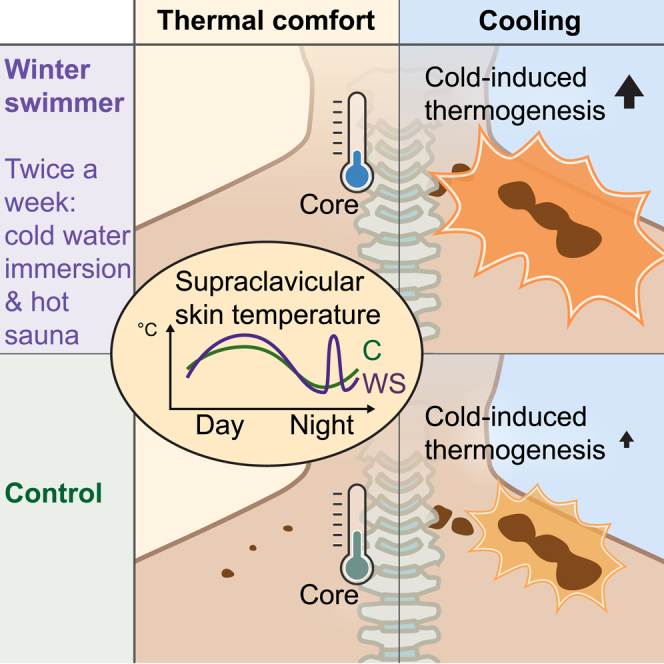
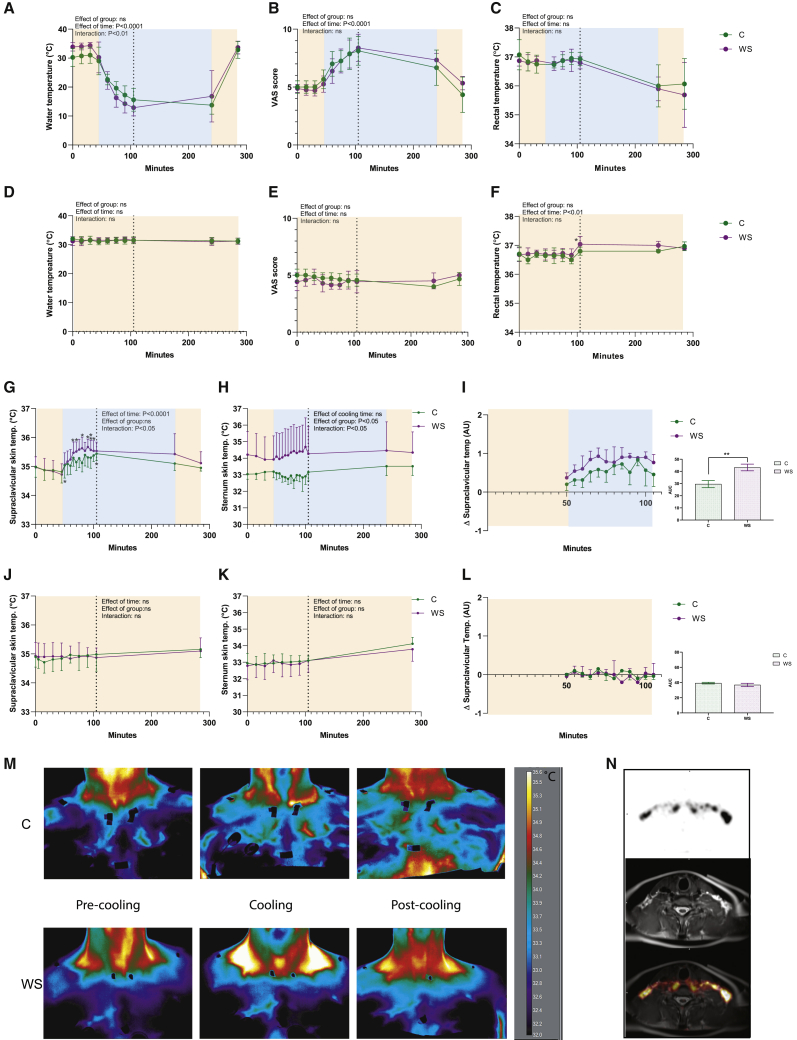
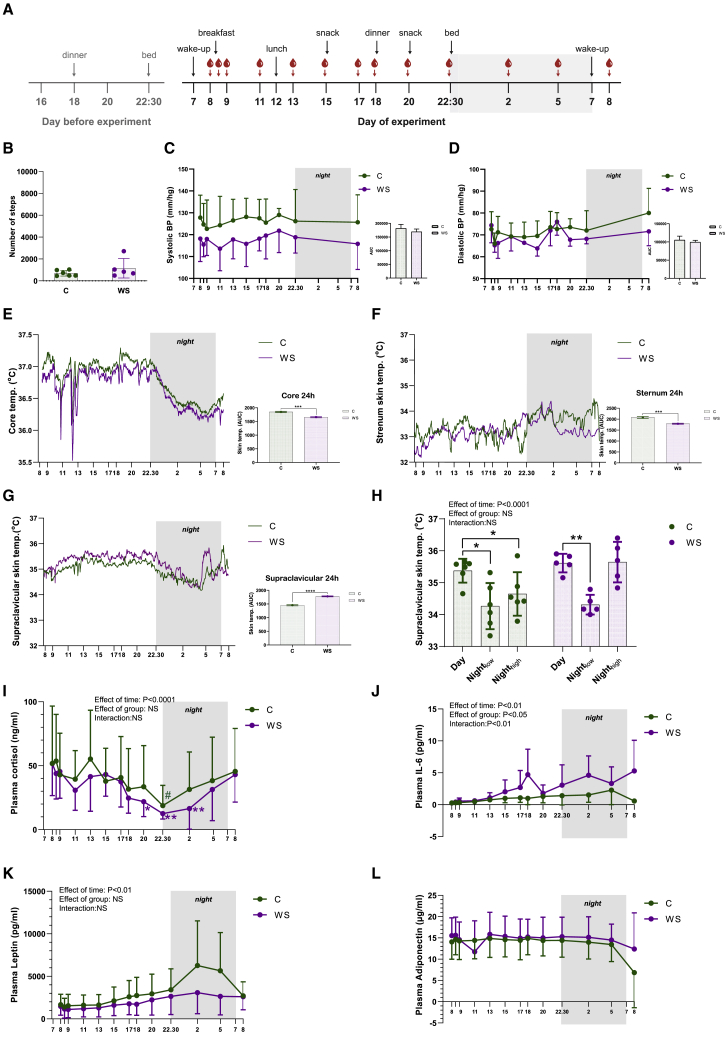
The Scandinavian winter-swimming culture combines brief dips in cold water with hot sauna sessions, with conceivable effects on body temperature. We study thermogenic brown adipose tissue (BAT) in experienced winter-swimming men performing this activity 2-3 times per week. Our data suggest a lower thermal comfort state in the winter swimmers compared with controls, with a lower core temperature and absence of BAT activity. In response to cold, we observe greater increases in cold-induced thermogenesis and supraclavicular skin temperature in the winter swimmers, whereas BAT glucose uptake and muscle activity increase similarly to those of the controls. All subjects demonstrate nocturnal reduction in supraclavicular skin temperature, whereas a distinct peak occurs at 4:30-5:30 a.m. in the winter swimmers. Our data leverage understanding of BAT in adult human thermoregulation, suggest both heat and cold acclimation in winter swimmers, and propose winter swimming as a potential strategy for increasing energy expenditure.
Overview
CoChat Summary
TL;DR
In young, healthy men, experienced winter swimmers had lower core temperature and no BAT glucose uptake at thermal comfort, but greater cold-induced thermogenesis and higher supraclavicular skin temperature during cooling than matched controls. The findings suggest both cold and heat acclimation in winter swimmers and raise winter swimming as a potential strategy to increase energy expenditure.
Key findings
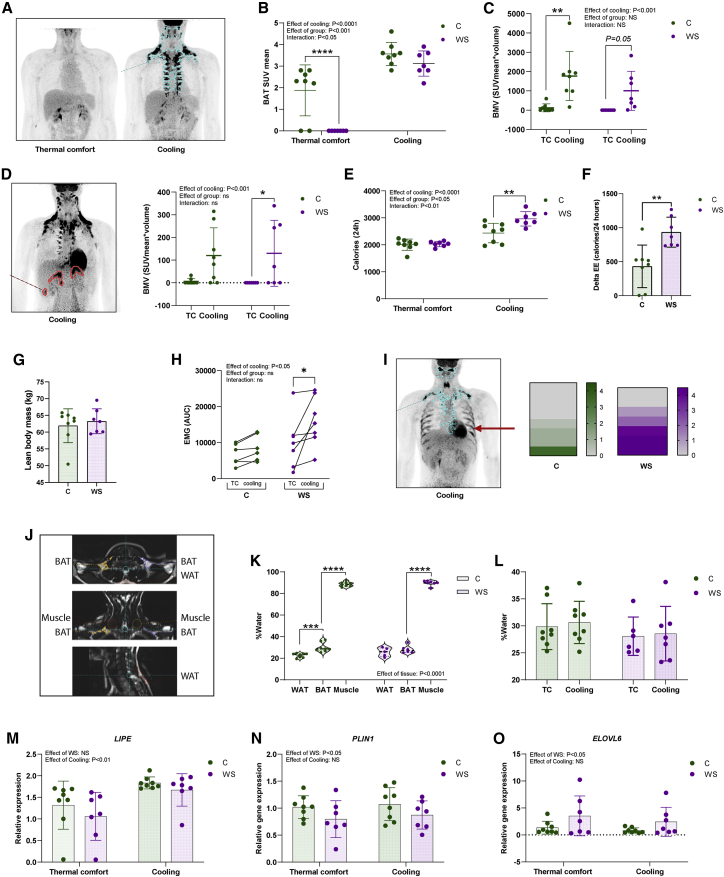
- At thermal comfort, most controls showed modest BAT FDG uptake, whereas winter swimmers had no uptake in any subject; during cooling, BAT SUVmean increased comparably in both groups.
- Resting energy expenditure during 30 min cooling was higher in winter swimmers (3,044 ± 337.2 kcal/24 h) than controls (2,560 ± 348.1 kcal/24 h; p = 0.01), with no group difference at thermal comfort (2,038 ± 96.0 vs 2,005 ± 209.6 kcal/24 h; p = 0.69). Cold-induced thermogenesis was substantially higher in winter swimmers; the text reports energy expenditure increased by 500–1,000 kcal/24 h, versus a previous estimate of ~20 kcal/24 h for human BAT.
- Winter swimmers had lower core temperature over 24 h and higher supraclavicular skin temperature; all subjects showed nocturnal reduction in supraclavicular skin temperature, but winter swimmers had a distinct peak at 4:30–5:30 a.m.
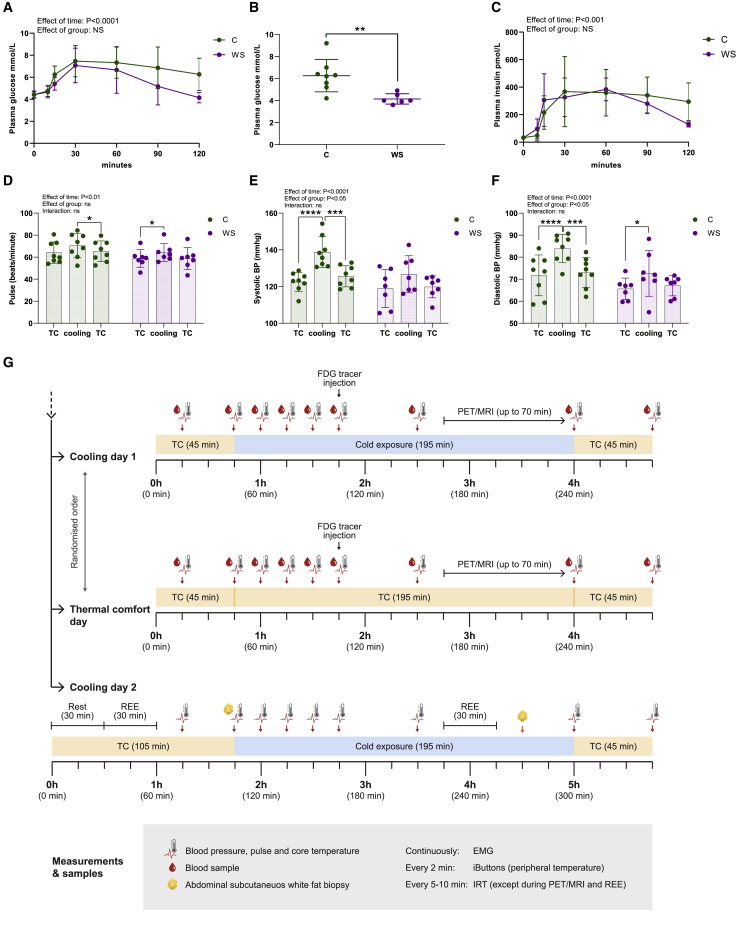
- Controls had higher total fat percentage (18.2 ± 4.3% vs 12.0 ± 4.6%, p = 0.01) and gynoid fat (23.3 ± 5.4% vs 16.6 ± 6.1%, p = 0.03); winter swimmers had lower plasma glucose at 120 min after glucose ingestion and lower thyroxine, alkaline phosphatase, and transferrin, with higher potassium.
Methods
- Randomized-order crossover design: a cooling test-day with PET/MRI, a thermal comfort test-day with PET/MRI, and a second cooling day 3–7 days later for resting energy expenditure and abdominal subcutaneous white adipose tissue biopsies; conducted in cold months in Denmark (March–May 2017 and October 2017–February 2018; diurnal study October 2017–January 2018).
- Participants were young healthy men aged 18–35 years with BMI 19–25 kg/m²: winter swimmers (n = 8; ≥2–3 cold-water sessions/week and at least second winter-swimming season) and controls (n = 8) matched for age, BMI, and VO2max; one BAT-negative winter swimmer was excluded, leaving n = 7 winter swimmers and n = 8 controls for main analyses; diurnal subset was n = 5 winter swimmers and n = 6 controls.
- Main measures included FDG-PET/MRI for BAT glucose uptake (primary outcome), infrared thermography and iButtons for skin temperature, indirect calorimetry for resting energy expenditure, EMG for muscle activity, DEXA, oral glucose tolerance test, cold pressor test, blood biomarkers, and adipose tissue qPCR; analyses used unpaired t tests, repeated-measures two-way ANOVA or mixed models, and Sidak post-tests, with p < 0.05 considered significant.
Limitations
- The paper states that causality cannot be concluded: winter swimming per se may not cause the observed differences, because people with a certain thermophenotype could be more prone to winter swimming; groups also differed in tissue fat percentage and 120-min plasma glucose, and unmeasured lifestyle habits could differ.
- The paper states low sample size risks type 1 and type 2 errors; four BAT-activity methods have limitations (PET measures glucose tracer uptake, not thermogenesis; MRI water percentage is indirect; IRT and iButtons are confounded by skin perfusion/insulation and require precise positioning); PET threshold 2.0 g/mL instead of recommended 1.2 g/mL may underestimate BAT; and PET/MRI overlay was not possible due to breathing artifacts.
- The paper states the diurnal study lacked sleep measurements, had short familiarization and similar eating/sleep schedules, non-constant room temperature, and no chronotype determination; only men were studied; VAS-based cooling/thermal comfort could be suboptimal given possible adaptation, though no group differences in thermal perception or water temperature were observed. Text-evident: main analyses exclude one BAT-negative winter swimmer, and the diurnal subset is small (n = 5 winter swimmers, n = 6 controls).
Model-written summary. Check it against the paper before relying on it.
Integrity signals
Registry
Cites
Statistics
Figures
Verification
Claims the paper makes
0 Valid · 2 Not valid · 64 Not checked · 190 Own results and interpretations
A result the paper reports from its own data — it cites no other source for it, so there is none to check. The quote shows it is in the paper.
In the paper
“In response to cold, we observe greater increases in cold-induced thermogenesis and supraclavicular skin temperature in the winter swimmers, whereas BAT glucose uptake and muscle activity increase similarly to those of the controls.”
§ Altered brown fat thermoregulation and enhanced cold-induced thermogenesis in young, healthy, winter-swimming men > Abstract
plain- Asserted: passes — The authors put it forward as true.
- Checkable: passes — It can be checked against evidence.
- Load-bearing: unclear — It is unclear whether the paper’s conclusions depend on it.
- Based: passes — The paper gives a reason why it holds.
A result the paper reports from its own data — it cites no other source for it, so there is none to check. The quote shows it is in the paper.
In the paper
“Our data suggest a lower thermal comfort state in the winter swimmers compared with controls, with a lower core temperature and absence of BAT activity.”
§ Altered brown fat thermoregulation and enhanced cold-induced thermogenesis in young, healthy, winter-swimming men > Abstract
hedgedstates an association- Asserted: passes — The authors put it forward as true.
- Checkable: passes — It can be checked against evidence.
- Load-bearing: passes — The paper’s conclusions depend on it.
- Based: passes — The paper gives a reason why it holds.
A result the paper reports from its own data — it cites no other source for it, so there is none to check. The quote shows it is in the paper.
In the paper
“In response to cold, we observe greater increases in cold-induced thermogenesis and supraclavicular skin temperature in the winter swimmers, whereas BAT glucose uptake and muscle activity increase similarly to those of the controls.”
- Also stated in: § Higher cold-induced thermogenesis in winter swimmers · plain
“All subjects regardless of group demonstrated comparable levels of BAT SUVmean in response to the cooling protocol (Figures 3A and 3B; Video S1).”
§ Altered brown fat thermoregulation and enhanced cold-induced thermogenesis in young, healthy, winter-swimming men > Abstract
plain- Asserted: passes — The authors put it forward as true.
- Checkable: passes — It can be checked against evidence.
- Load-bearing: unclear — It is unclear whether the paper’s conclusions depend on it.
- Based: passes — The paper gives a reason why it holds.
- Also stated in: § Higher cold-induced thermogenesis in winter swimmers · plain
A result the paper reports from its own data — it cites no other source for it, so there is none to check. The quote shows it is in the paper.
In the paper
“In response to cold, we observe greater increases in cold-induced thermogenesis and supraclavicular skin temperature in the winter swimmers, whereas BAT glucose uptake and muscle activity increase similarly to those of the controls.”
§ Altered brown fat thermoregulation and enhanced cold-induced thermogenesis in young, healthy, winter-swimming men > Abstract
plainstates a cause- Asserted: passes — The authors put it forward as true.
- Checkable: passes — It can be checked against evidence.
- Load-bearing: passes — The paper’s conclusions depend on it.
- Based: passes — The paper gives a reason why it holds.
A result the paper reports from its own data — it cites no other source for it, so there is none to check. The quote shows it is in the paper.
In the paper
“The winter swimmer group had lower plasma glucose levels at 120 min after glucose ingestion (Figure 1B), suggesting greater peripheral glucose disposal than in the control group.”
§ Altered brown fat thermoregulation and enhanced cold-induced thermogenesis in young, healthy, winter-swimming men > Results and discussion > Subject characterization and experimental setup
plainstates an association- Asserted: passes — The authors put it forward as true.
- Checkable: passes — It can be checked against evidence.
- Load-bearing: unclear — It is unclear whether the paper’s conclusions depend on it.
- Based: passes — The paper gives a reason why it holds.
81 more claims
Create a free account to see all 256 claims and to verify the 80 references still open.
- It may state two separate claims as one. 74
- Probably not a substantial claim. 137
- The quote only partly states this claim. 1
Self-check
Percentages, sums and reported differences re-computed from the paper’s own numbers.
Each contradiction between two passages listed here was confirmed by an independent check.
Rated minor: it would not touch a result — a value no result rests on, a p-value that stays on the same side of the significance level, or a conflict that is clerical, resolved elsewhere in the paper, or outside its own findings.
In the paper
§ Altered brown fat thermoregulation and enhanced cold-induced thermogenesis in young, healthy, winter-swimming men > STAR★Methods > Method details
“13 blood samples were taken during day and night:”
§ Altered brown fat thermoregulation and enhanced cold-induced thermogenesis in young, healthy, winter-swimming men > STAR★Methods > Method details
“At 8:00 a.m.(fasting), 8:30 a.m. (right after breakfast), 9:00 a.m., 11:00 a.m. (before lunch), 1:00 p.m. (after lunch), 3:00 p.m. (before a snack), 5:00 p.m., 18:00 p.m. (before dinner), 8:00 p.m. (before snack), 22:30 p.m. (before going to bed) and 2:00 a.m. and 5:00 a.m. while sleeping.”
Rated minor: it would not touch a result — a value no result rests on, a p-value that stays on the same side of the significance level, or a conflict that is clerical, resolved elsewhere in the paper, or outside its own findings.
In the paper
§ Altered brown fat thermoregulation and enhanced cold-induced thermogenesis in young, healthy, winter-swimming men > Results and discussion > A lower core temperature and a distinct diurnal rhythm of supraclavicular skin temperature in winter swimmers
“the experiment started the next morning at 7:00 a.m.”
§ Altered brown fat thermoregulation and enhanced cold-induced thermogenesis in young, healthy, winter-swimming men > STAR★Methods > Method details
“The second day, the experiments started at 7:00 p.m.:”
Rated minor: it would not touch a result — a value no result rests on, a p-value that stays on the same side of the significance level, or a conflict that is clerical, resolved elsewhere in the paper, or outside its own findings.
In the paper
§ Altered brown fat thermoregulation and enhanced cold-induced thermogenesis in young, healthy, winter-swimming men > Results and discussion > Limitations of study
“The third method, iButtons, also provides non-invasive recording of skin temperature, with the advantage of constant logging of skin temperature.”
§ Altered brown fat thermoregulation and enhanced cold-induced thermogenesis in young, healthy, winter-swimming men > Results and discussion > Limitations of study
“We used four methods for estimating BAT activity, all with different limitations. The PET scan measures the uptake of a glucose tracer, which is associated with increased BAT activity, but does not measure thermogenesis per se. MRI measures water percentage, an additionally indirect approach. IRT measures skin temperature;”
Rated minor: it would not touch a result — a value no result rests on, a p-value that stays on the same side of the significance level, or a conflict that is clerical, resolved elsewhere in the paper, or outside its own findings.
In the paper
§ Altered brown fat thermoregulation and enhanced cold-induced thermogenesis in young, healthy, winter-swimming men > Results and discussion > A lower core temperature and a distinct diurnal rhythm of supraclavicular skin temperature in winter swimmers
“Lights were out at 10:30 p.m. and the experiment started the next morning at 7:00 a.m.”
§ Altered brown fat thermoregulation and enhanced cold-induced thermogenesis in young, healthy, winter-swimming men > STAR★Methods > Method details
“Subjects were in bed and lights were out from 11:00 p.m. to 7:00 a.m.”
Citations
Cites
Brown Adipose Tissue: Function and Physiological Significance
CANNON, B., & NEDERGAARD, J. (2004) · Physiological Reviews · doi:10.1152/physrev.00015.2003 · Cited by 6,433 · cited 8×
“We have not done PET / CT but instead PET / MR and therefore do not have the opportunity to use HU to delimit BAT.”
InfluentialMechanisms of fatty acid-induced inhibition of glucose uptake.
Boden, G., Chen, X., Ruiz, J., White, J. V., & Rossetti, L. (1994) · Journal of Clinical Investigation · doi:10.1172/jci117252 · Cited by 3,705
Standards of medical care in diabetes 2010
American Diabetes Association (2010) · Diabetes Care · doi:10.2337/dc10-s011 · Cited by 3,470 · cited 1×
“Association, A.D.; American Diabetes Association (2010).”
Cold-Activated Brown Adipose Tissue in Healthy Men
van Marken Lichtenbelt, W. D., Vanhommerig, J. W., Smulders, N. M., Drossaerts, J. M. A. F. L., Kemerink, G. J., Bouvy, N. D., Schrauwen, P., & Teule, G. J. J. (2009) · New England Journal of Medicine · doi:10.1056/nejmoa0808718 · Cited by 3,452 · cited 1×
“8 Cell Reports Medicine 2, 100408, October 19, 2021 REE during cooling has been shown to positively correlate with BAT activity.(23) Here, we found that REE was higher in the winter swimmer group during cooling (Figure 3E), in concordance with the higher supraclavicular skin temperature observed in Figure 2.”
High Incidence of Metabolically Active Brown Adipose Tissue in Healthy Adult Humans
Saito, M., Okamatsu-Ogura, Y., Matsushita, M., Watanabe, K., Yoneshiro, T., Nio-Kobayashi, J., Iwanaga, T., Miyagawa, M., Kameya, T., Nakada, K., et al. (2009) · Diabetes · doi:10.2337/db09-0530 · Cited by 1,848
Unexpected evidence for active brown adipose tissue in adult humans
Nedergaard, J., Bengtsson, T., & Cannon, B. (2007) · American Journal of Physiology-Endocrinology and Metabolism · doi:10.1152/ajpendo.00691.2006 · Cited by 1,824 · cited 2×
“These observations are consistent with early detection of FDG uptake in clinical studies in which it was discussed that subjects could have been subjected to mild cold in relation to the scanning procedure.(2) It is also consistent with a more recent study demonstrating that glucose uptake, as well as lactate secretio…”
Twenty-four hour pattern of the episodic secretion of cortisol in normal subjects
WEITZMAN, E. D., FUKUSHIMA, D., NOGEIRE, C., ROFFWARG, H., GALLAGHER, T. F., & HELLMAN, L. (1971) · The Journal of Clinical Endocrinology & Metabolism · doi:10.1210/jcem-33-1-14 · Cited by 1,258 · cited 1×
“The sleep and awakening cycle is associated with the hypothalamic-pituitary-adrenal (HPA) axis via secretion of cortisol.(55) The stress hormone cortisol has its highest levels in the morning, and the levels thereafter gradually fall during the day.”
Brasaemle, D. L. (2007) · Journal of Lipid Research · doi:10.1194/jlr.r700014-jlr200 · Cited by 1,157
Activation of Human Brown Adipose Tissue by a β3-Adrenergic Receptor Agonist
Cypess, A. M., Weiner, L. S., Roberts-Toler, C., Elía, E. F., Kessler, S. H., Kahn, P. A., English, J., Chatman, K., Trauger, S. A., Doria, A., et al. (2015) · Cell Metabolism · doi:10.1016/j.cmet.2014.12.009 · Cited by 1,027
Brown Adipose Tissue Improves Whole-Body Glucose Homeostasis and Insulin Sensitivity in Humans
Chondronikola, M., Volpi, E., Børsheim, E., Porter, C., Annamalai, P., Enerbäck, S., Lidell, M. E., Saraf, M. K., Labbe, S. M., Hurren, N. M., et al. (2014) · Diabetes · doi:10.2337/db14-0746 · Cited by 746
Cited by
Brown Adipose Tissue—A Translational Perspective
Carpentier, A. C., Blondin, D. P., Haman, F., & Richard, D. (2023) · Endocrine Reviews · doi:10.1210/endrev/bnac015 · Cited by 198
Ziqubu, K., Dludla, P. V., Mthembu, S. X. H., Nkambule, B. B., Mabhida, S. E., Jack, B. U., Nyambuya, T. M., & Mazibuko-Mbeje, S. E. (2023) · Frontiers in Endocrinology · doi:10.3389/fendo.2023.1114767 · Cited by 117
BCAA-nitrogen flux in brown fat controls metabolic health independent of thermogenesis
Verkerke, A. R. P., Wang, D., Yoshida, N., Taxin, Z. H., Shi, X., Zheng, S., Li, Y., Auger, C., Oikawa, S., Yook, J.-S., et al. (2024) · Cell · doi:10.1016/j.cell.2024.03.030 · Cited by 115
Emerging debates and resolutions in brown adipose tissue research
Cypess, A. M., Cannon, B., Nedergaard, J., Kazak, L., Chang, D. C., Krakoff, J. A., Tseng, Y., Schéele, C., Boucher, J., Petrovič, N., et al. (2024) · Cell Metabolism · doi:10.1016/j.cmet.2024.11.002 · Cited by 101
Health effects of voluntary exposure to cold water – a continuing subject of debate
Espeland, D., de Weerd, L., & Mercer, J. B. (2022) · International Journal of Circumpolar Health · doi:10.1080/22423982.2022.2111789 · Cited by 95
Adipogenic and SWAT cells separate from a common progenitor in human brown and white adipose depots
Palani, N. P., Horváth, C., Timshel, P. N., Folkertsma, P., Grønning, A. G. B., Henriksen, T. I., Peijs, L., Hirschberg, V., Sun, W., Jespersen, N. Z., et al. (2023) · Nature Metabolism · doi:10.1038/s42255-023-00820-z · Cited by 69
Chen, W., Deng, Y., & Cao, B. (2022) · Journal of Building Engineering · doi:10.1016/j.jobe.2022.104723 · Cited by 51
Jurado‐Fasoli, L., Sánchez‐Delgado, G., Di, X., Yang, W., Köhler, I., Villarroya, F., Aguilera, C. M., Hankemeier, T., Ruiz, J. R., & Martínez‐Téllez, B. (2024) · Cell Reports Medicine · doi:10.1016/j.xcrm.2023.101387 · Cited by 33
Non-invasive mapping of brown adipose tissue activity with magnetic resonance imaging
Cai, Z., Zhong, Q., Feng, Y., Wang, Q., Zhang, Z., Wei, C., Yin, Z., Liang, C., Liew, C. W., Kazak, L., et al. (2024) · Nature Metabolism · doi:10.1038/s42255-024-01082-z · Cited by 32
Jiang, Y., Yue, R., Liu, G., Liu, J., Peng, B., Yang, M., Zhao, L., & Li, Z. (2022) · Critical Reviews in Food Science and Nutrition · doi:10.1080/10408398.2022.2153793 · Cited by 25
What puts the heat on thermogenic fat: metabolism of fuel substrates
Sponton, C. H., Júnior, J. C. D. L., & Leiria, L. O. (2022) · Trends in Endocrinology and Metabolism · doi:10.1016/j.tem.2022.05.003 · Cited by 23
Zhu, Y., Liu, W., & Qi, Z. (2023) · The Journal of Physiology · doi:10.1113/jp285269 · Cited by 23
Weighing in on the role of brown adipose tissue for treatment of obesity
Prapaharan, B., Lea, M. B. S., & Beaudry, J. L. (2024) · Journal of Pharmacy & Pharmaceutical Sciences · doi:10.3389/jpps.2024.13157 · Cited by 21
Martinović, A., Mantovani, M., Trpchevska, N., Novak, E., Milev, N. B., Bode, L., Ewald, C. Y., Bischof, E. Y., Reichmuth, T., Lapides, R. A., et al. (2024) · Frontiers in Aging · doi:10.3389/fragi.2024.1495029 · Cited by 22
Stojchevski, R., Chandrasekaran, P., Hadzi‐Petrushev, N., Mladenov, M. I., & Avtanski, D. B. (2024) · International Journal of Molecular Sciences · doi:10.3390/ijms25147849 · Cited by 20
van Beek, S. M. M., Hashim, D., Bengtsson, T., & Hoeks, J. (2023) · International Journal of Obesity · doi:10.1038/s41366-023-01270-z · Cited by 17
Endothelin 3/EDNRB signaling induces thermogenic differentiation of white adipose tissue
Wang, C., Tsuji, T., Wu, L.-H., Yang, C., Huang, T. L., Sato, M. M., Shamsi, F., & Tseng, Y. (2024) · Nature Communications · doi:10.1038/s41467-024-51579-0 · Cited by 16
Angiopoietin-like 4 governs diurnal lipoprotein lipase activity in brown adipose tissue
van Eenige, R., Panhuis, W. I. H., Schönke, M., Jouffe, C., Devilee, T. H., Siebeler, R., Streefland, T. C. M., Sips, H. C. M., Pronk, A. C. M., Vorderman, R. H. P., et al. (2022) · Molecular Metabolism · doi:10.1016/j.molmet.2022.101497 · Cited by 16
PGC‐1α Activation by Polyphenols: A Pathway to Thermogenesis
Vannuchi, N., & Pisani, L. P. (2025) · Molecular Nutrition & Food Research · doi:10.1002/mnfr.70072 · Cited by 15
Dumont, L., Richard, G. M., Espagnet, R., Frisch, F., Fortin, M., Samson, A., Bouchard, J., Fontaine, R., Croteau, É., Phoenix, S., et al. (2025) · Cell Metabolism · doi:10.1016/j.cmet.2025.06.010 · Cited by 14
Human brown adipose tissue function: insights from current in vivo techniques
Kwok, T. C., & Stimson, R. H. (2023) · Journal of Endocrinology · doi:10.1530/joe-23-0017 · Cited by 13
Shams, S., Amirinejad, M., Amani-Shalamzari, S., Rajabi, H., & Suzuki, K. (2023) · Comparative Biochemistry and Physiology Part B Biochemistry and Molecular Biology · doi:10.1016/j.cbpb.2023.110834 · Cited by 13
Effects of cold water exposure on stress, cardiovascular, and psychological variables
Briganti, G. L., Chesini, G., Tarditi, D., Serli, D., & Capodici, A. (2023) · Acta Physiologica · doi:10.1111/apha.14056 · Cited by 12
The Effects of Intermittent Cold Exposure on Adipose Tissue
Scott, M. C., & Fuller, S. E. (2023) · International Journal of Molecular Sciences · doi:10.3390/ijms25010046 · Cited by 11
Mortadi, A., Hafidi, E. M. E., Nasrellah, H., Mghaiouini, R., Chahid, A., Monkade, M., & Moznine, R. E. (2024) · Results in Engineering · doi:10.1016/j.rineng.2024.101911 · Cited by 11
Dynamic changes in the transcriptome of tRNA-derived small RNAs related with fat metabolism
Liao, T., Gan, M., Lei, Y., Wang, Y., Chen, L., Shen, L., & Zhu, L. (2023) · Scientific Data · doi:10.1038/s41597-023-02624-y · Cited by 11
The shades of grey in adipose tissue reprogramming
Qi, Y., & Hui, X. H. (2022) · Bioscience Reports · doi:10.1042/bsr20212358 · Cited by 10
Regulatory networks determining substrate utilization in brown adipocytes
Onogi, Y., & Ussar, S. (2022) · Trends in Endocrinology and Metabolism · doi:10.1016/j.tem.2022.04.001 · Cited by 10
Alashti, F. A., & Goliaei, B. (2025) · European Journal of Pharmacology · doi:10.1016/j.ejphar.2025.177651 · Cited by 9
Wang, Y., Liu, W. Y., Han, D., Qiao, Y., Sun, W., Wang, C., Qin, X., & Xu, J. (2025) · Frontiers in Physiology · doi:10.3389/fphys.2025.1609348 · Cited by 9
Aging attenuates diurnal lipid uptake by brown adipose tissue
Panhuis, W. I. H., Schönke, M., Siebeler, R., Afkir, S., Baelde, R., Pronk, A. C. M., Streefland, T. C. M., Sips, H. C. M., Lalai, R. A., Rensen, P. C. N., et al. (2022) · Aging · doi:10.18632/aging.204318 · Cited by 9
Zhang, Y., Zheng, P., Shi, J., Ma, Y., Chen, Z., Wang, T., & Jia, G. (2023) · The Science of The Total Environment · doi:10.1016/j.scitotenv.2023.163250 · Cited by 8
Drigny, J., Hingrand, C., Moysan, P., Collet, T., & Mauvieux, B. (2023) · International Journal of Sports Physiology and Performance · doi:10.1123/ijspp.2022-0192 · Cited by 7
Swimming in cold water increases the browning process by diminishing the Myostatin pathway
Rahmani, N., Motamedi, P., Amani-Shalamzari, S., Escobar, K. A., & Suzuki, K. (2024) · Molecular Biology Reports · doi:10.1007/s11033-024-09586-3 · Cited by 6
Influence of hydrotherapy on change in weight: a narrative review
Manju, M. Y., Shetty, G. B., Sujatha, K. J., & Shetty, P. (2024) · International Journal of Biometeorology · doi:10.1007/s00484-024-02823-1 · Cited by 5
18 F-FDG PET/CT technology for the assessment of brown adipose tissue: an updated review
Ricci, M., Feo, M. S. D., Granese, G. M., Frantellizzi, V., Carabellese, B., Lubrano, E., & Cimini, A. (2023) · Expert Review of Medical Devices · doi:10.1080/17434440.2023.2283618 · Cited by 5
Winter Bathing in Denmark: A Qualitative Case Study on Winter Bathing’s Impact on Mental Health
Østergaard, E. B., Petersen, A., van den Hengel, L., Jensen, A., Jensen, N., Sparre, P. W., & Dahlgaard, J. (2024) · Healthcare · doi:10.3390/healthcare12202076 · Cited by 6
Plucińska, K., Chen, Z., Xiang, R., Zaman, S., Lü, Y., Hurson, C., Peterson, C., Fredrickson, K., Farrell, L. A., Walker, J. M., et al. (2025) · bioRxiv (Cold Spring Harbor Laboratory) · doi:10.1101/2025.06.30.662436 · Cited by 5
Mitochondrial carrier SLC25A34 links clock, diet, and temperature control of adipocyte lipid cycling
Karavaeva, I. E., Basse, A. L., Trammell, S. A. J., Hussain, M. F., Markussen, L. K., Havelund, J. F., Isidor, M. S., Chatoff, A. G., Huacachino, A. A., Richter, H. J., et al. (2026) · Science · doi:10.1126/science.adz4797 · Cited by 4
Self-citationExploring the benefits of cold exposure in health and athletic performance - review of articles
Klimek, K., Bugla, K., Gabryel, Ł., Wikarek, A., Dołęga, J., Grabarczyk, M., Kosińska, P., Rybak, J., Magiera, B., & Grabarczyk, A. (2024) · Journal of Education Health and Sport · doi:10.12775/jehs.2024.55.004 · Cited by 5
Sievert, L. L., Shreyer, S., Witkowski, S., & Brown, D. E. (2024) · American Journal of Human Biology · doi:10.1002/ajhb.24148 · Cited by 3
‘Never turn your back on the Ocean’: Conversations with Fear on Yuin Sea Country
Farr, A., & Zurita, M. D. L. M. (2024) · Geoforum · doi:10.1016/j.geoforum.2024.104165 · Cited by 3
Braunsperger, A., Bauer, M., Brahim, C. B., Seep, L., Tischer, D., Peitzsch, M., Hasenauer, J., Figueroa, S. H., Worthmann, A., Heeren, J., et al. (2025) · Scientific Reports · doi:10.1038/s41598-025-85304-8 · Cited by 3
Andersen, E. S., Jespersen, N. Z., Henriksen, T. I., Lorentsen, K. M., Palani, N. P., Pedersen, B. K., Schéele, C., Nielsen, M. B., & Nielsen, S. L. (2025) · Scientific Reports · doi:10.1038/s41598-025-24183-5 · Cited by 2
Self-citationAdipose Tissue Homeostasis in Health and Disease
Cassidy, F. C. (2024) · IntechOpen eBooks · doi:10.5772/intechopen.12358 · Cited by 2
Discussion on the treatment of diabetic kidney disease based on the “gut–fat–kidney” axis
Yaping, H., Jia, D., Chen, W., Liu, J., Liu, C., & Shi, X. (2024) · International Urology and Nephrology · doi:10.1007/s11255-024-04283-3 · Cited by 2
Jensen, M., Almasi, C. E., Kjærgaard, B., Rasmussen, B. S., Haunstrup, T. M., Thomsen, S. U., Andersen, M. K., Hansen, T. F., Ellervik, C., Schéele, C., et al. (2025) · International Journal of Circumpolar Health · doi:10.1080/22423982.2025.2545662 · Cited by 2
Self-citationThe role of the transcription factor Nfe2l1 for skeletal muscle metabolism and function
Lemmer, I. L. (2024) · doi:10.5282/edoc.33629 · Cited by 2
Brown and Beige Adipose Tissue: From Activators to Physiological Relevance
Tischer, D., & Soriano‐Arroquia, A. (2025) · IntechOpen eBooks · doi:10.5772/intechopen.1009135 · Cited by 1
Development of the thermoregulatory mechanism – Raising the possibility that it is acquired at birth
Yu, Y., Koyama, Y., & Shimada, S. (2025) · Neuroscience · doi:10.1016/j.neuroscience.2025.04.044 · Cited by 1
Horioka, K., Tanaka, H., Hayakawa, A., Takahashi, Y., Druid, H., Pakanen, L., & Porvari, K. (2025) · International Journal of Legal Medicine · doi:10.1007/s00414-025-03550-x · Cited by 1
Tjærandsen, L. D., Wågan, F. A., Tjønndal, A., Dahl, D., Hjelseth, A., Horbel, C., Rogstad, E. T., Røsten, S., Sigvartsen, K. K., Skauge, M., et al. (2025) · doi:10.23865/cdf.263 · Cited by 1
Systematic review of clinical evidence for Kneipp medicine
Reisecker, N., Riegler, S., Safran, J., Diesner, M., Aumer, A., Pany, S., Zommer, P., & Sitte, H. H. (2026) · Wiener klinische Wochenschrift · doi:10.1007/s00508-026-02780-2 · Cited by 1
Braunsperger, A., Becker, L., Camargo, D., Radsak, S., Paintner, M., Kossenakis, D., Song, X., Kraus, A., Birnkammer, A., Mesmer, S., et al. (2026) · Journal of Clinical & Translational Endocrinology · doi:10.1016/j.jcte.2026.100455 · Cited by 1
WHAT IS THE IMPACT OF COLD WATER BATHING AND SWIMMING ON HUMAN HEALTH? LITERATURE REVIEW
Langa, J., Mitkowska, M., Obrębski, M., Wójcik, A., Kościan, J., Chwiejczak, J., Górny, A., Seroka, A., Rybicka, M., Młynarska, J., et al. (2024) · Issues of Rehabilitation Orthopaedics Neurophysiology and Sport Promotion – IRONS · doi:10.19271/irons-000198-2023-45 · Cited by 1
Introduction to Nordic Coastal Tourism
Dragin‐Jensen, C., Kwiatkowski, G., & Oklevik, O. (2024) · Springer eBooks · doi:10.1007/978-3-031-73187-7_1 · Cited by 1
Winterschwimmen – Strategie zur Fettverbrennung?
(2021) · DMW - Deutsche Medizinische Wochenschrift · doi:10.1055/a-1677-2292
Kaur, K. K., Allahbadia, G. N., & Singh, M. (2023) · Cell & Cellular Life Sciences Journal · doi:10.23880/cclsj-16000179
Xing, J. (2023) · Springer eBooks · doi:10.1007/978-3-031-44289-6_16
Sales, K. M. A. S. (2024) · Undergraduate Research in Natural and Clinical Science and Technology (URNCST) Journal · doi:10.26685/urncst.553
Winter Swimming and the Possibilities of Tourism Development in Poland
Ossowska, L., & Janiszewska, D. (2024) · Springer eBooks · doi:10.1007/978-3-031-73187-7_15
Castillo, B. V., Guajardo, H. I. R., Quiroga, E. G., & Ayala, B. A. A. (2025) · Estudios y Perspectivas Revista Científica y Académica · doi:10.61384/r.c.a..v4i4.804
Dzidek, A., Czerwińska‐Ledwig, O., Zuziak, R., Kryst, J., Morawiec, M., & Piotrowska, A. (2025) · Acta Balneologica · doi:10.36740/abal202502106
Zhao, C., Liu, W., Huang, X., Zheng, K., & Xu, D. (2025) · SSRN Electronic Journal · doi:10.2139/ssrn.5278735
Infrared Thermography in Water Sports
Vardasca, R., Seixas, A., Gabriel, J., & Vilas‐Boas, J. P. (2025) · Springer eBooks · doi:10.1007/978-3-031-93311-0_9
Chen, Y., Cheng, P., Wang, L., Chai, J.-X., Wang, J., & He, Q. (2025) · World Journal of Gastrointestinal Oncology · doi:10.4251/wjgo.v17.i9.108760
PHYSIOLOGICAL AND HEALTH EFFECTS OF WINTER SWIMMING: A COMPREHENSIVE MEDICAL REVIEW
Gryboś, K., Sepioło, W., Boniakowska, I., Kamińska, I., Wydra, M., Przerwa, J., Wąsik, J., Stachowicz, I., Gawron, E., Samborska, J., et al. (2025) · International Journal of Innovative Technologies in Social Science · doi:10.31435/ijitss.3(47).2025.3891
(2025) · Journal of Psychology and Neuroscience · doi:10.47485/2693-2490.1141
Intestinal bacteria trigger a hibernation-like state in homotherms via the gut-brain axis
Bao, Z., Guo, C., Chen, Y., Lei, T., Peng, H., Zhang, H., Zhang, X., Ban, Y., Qi, D., Feng, J., et al. (2025) · npj Biofilms and Microbiomes · doi:10.1038/s41522-025-00856-x · Cited by 1
Karjalainen, M. (2024) · UTUPub (University of Turku)
Xu, K., Bi, R., Zhu, X. Y., Zhang, Q. Y., Zhang, Y., Deng, L., Cao, Y., & Dong, G. (2026) · Boletin Latinoamericano y del Caribe de plantas Medicinales y Aromaticas · doi:10.37360/blacpma.26.25.2.14
Nielsen, T. H., Karlsen, N. W., Hoang, L. T. M., Dahlgaard, J., & Østergaard, E. B. (2026) · Healthcare · doi:10.3390/healthcare14060752
Mohammadi, B., & Dehghan, S. F. (2026) · Human Factors in Healthcare · doi:10.1016/j.hfh.2026.100138
Braunsperger, A., Tischer, D., Soriano‐Arroquia, A., Schönfelder, M., Georgiadi, A., & Wackerhage, H. (2026) · Sports Medicine - Open · doi:10.1186/s40798-026-01085-y
Wu, Y., Wang, H., Wang, M., Ren, P., & Zhang, S. (2026) · Ultrasonics · doi:10.1016/j.ultras.2026.108282
Kim, M. J., Jang, H., Kang, J. S., Chun, S.-W., Chung, S. G., Ju, S., Min, B., Kim, E., Kwak, J. Y., Kim, J.-W., et al. (2026) · Experimental & Molecular Medicine · doi:10.1038/s12276-026-01830-z
Deng, X., Shen, Y., Sun, Y. H., Lu, L., & Sun, C. (2026) · MedComm · doi:10.1002/mco2.70976
Wayne, D. (2023) · Nottingham ePrints (University of Nottingham)
Daringer, G., & Knechtle, B. (2026) · SSRN Electronic Journal · doi:10.2139/ssrn.7590254
Metadata
- Authors
- Søberg, S., Löfgren, J., Philipsen, F. E., Jensen, M., Hansen, A. E., Ahrens, E., Nystrup, K. B., Nielsen, R. D., Sølling, C., Wedell-Neergaard, A.-S., Berntsen, M., Loft, A., Kjær, A., Gerhart-Hines, Z., Johannesen, H. H., Pedersen, B. K., Karstoft, K., & Scheele, C.
- Affiliations
- University of Copenhagen (DK)
- Rigshospitalet (DK)
- ORCID
- Venue
- Cell Reports Medicine
- Publisher
- Elsevier BV
- Published
- 2021-10
- Volume
- 2
- Issue
- 10
- Pages
- 100408
- ISSN
- 2666-3791 (ISSN-L)
- PMC
- PMC8561167
- OpenAlex
- W3205221523
- Cited by
- 80
- References
- 70
- Citations by year
- 2026: 11 · 2025: 21 · 2024: 23 · 2023: 15 · 2022: 9 · 2021: 1
- FWCI
- 3.50
- Type
- journal article
- Language
- en
- Open access
- gold
- doi.org
- Licence
- cc-by-nc-nd
- www.elsevier.com/tdm/userlicense/1.0/ (tdm)
- www.elsevier.com/legal/tdmrep-license (tdm)
- creativecommons.org/licenses/by-nc-nd/4.0/ (vor)
- Locations
- Cell Reports Medicine (publishedVersion, cc-by-nc-nd)
- SSRN Electronic Journal (publishedVersion)
- Europe PMC (PubMed Central) (publishedVersion, other-oa)
- PubMed (publishedVersion)
- PubMed Central (publishedVersion, cc-by-nc-nd)
- Research at the University of Copenhagen (University of Copenhagen) (publishedVersion, cc-by-nc-nd)
- DOAJ (DOAJ: Directory of Open Access Journals) (submittedVersion, cc-by-sa)
- Funders
- European Research Council (639382)
- Novo Nordisk Foundation (NNF17OC0029918, NNF18CC0034900)
- Rigshospitalet (E-22793-05)
- Horizon 2020
- TrygFonden (101390, 20045)
- Horizon 2020 Framework Programme
- Gentofte Hospital
- Københavns Universitet
- Topics
- Health Sciences › Medicine › Physiology (medical) › Adipose Tissue and Metabolism
- Health Sciences › Medicine › Physiology (medical) › Thermoregulation and physiological responses
- Health Sciences › Medicine › Critical Care and Intensive Care Medicine › Thermal Regulation in Medicine
- Keywords
- brown adipose tissue, thermoregulation, cold-induced thermogenesis, winter swimming, cold acclimation, thermal comfort, core body temperature, muscle activity, energy expenditure, sauna, circadian rhythm
- MeSH terms
- Adult, Adipose Tissue, Brown, Circadian Rhythm, Cold Temperature, Hormones, Humans, Magnetic Resonance Imaging, Male, Perception, Seasons, Skin Temperature, Swimming, Thermography, Thermogenesis, Positron-Emission Tomography, Young Adult
About these checks
Registry, retraction, Cites and statistics results are computed, not judged, with one exception: a printed reference that no index lists is read once by a model before it counts as a citation error. Claims are extracted by a model and kept only when their quote appears verbatim in the text; each cited source is then checked, with a model’s help, for whether it says what the claim relies on. Those verdicts can be wrong — read the claim’s quote and the cited source before relying on one.
A language model drew the claims from the paper on 2026-11-18, under version 3 of the claim definition (model deepseek-v4.1-flash, prompt extract-v3).
A second model labelled each claim on 2026-11-18 (model jev-1.13-20260917, definition revision gold-guideline-v0.2).
Statistics and arithmetic are recomputed, not judged.
Confidence bands are shown only for fields calibrated on our annotated test set. None is calibrated yet, so no band is shown.
What counts as a claim ›How we measure confidence ›How we check this ›
Are you an author, or do you see a problem with this page? Request a review
Data sources
Bibliographic data: Semantic Scholar, OpenAlex, Crossref.
Contains information from the Semantic Scholar Academic Graph Datasets, made available under the ODC Attribution License (ODC-BY 1.0).
Semantic Scholar’s data is described in: Kinney, R., et al. (2023). The Semantic Scholar Open Data Platform. arXiv:2301.10140.
