

The functional neuroanatomy of mood disorders
Open accessThe DOI matches its Crossref record; 185 of the 185 references it cites were found in a registry or an index.
Abstract
Mood disorders may be associated with global and regional changes in cerebral blood flow and metabolism. The accumulated functional neuroimaging findings in mood disorders were reviewed in order to examine a proposed neuroanatomic model of pathophysiology. Global cerebral blood flow and glucose metabolism appear normal, but may be decreased in late-life depression. Regional cerebral blood flow and glucose metabolism deficits are present, and may be indicators of brain regions participating in neuroanatomic circuits involved in mood disorders. Decreased pre-frontal cortex blood flow and metabolism in depressed unipolar and bipolar patients are the most consistently replicated findings, and correlate with severity of illness. Basal ganglia abnormalities have been found in depressed unipolar and bipolar patients, involving decreased blood flow and metabolism. Temporal lobe abnormalities are present in bipolar disorder patients, and perhaps unipolar depression. There is conflicting evidence of abnormalities in other limbic regions. Cognitive impairment may correlate with decreased metabolism in frontal and cerebellar areas. The relationship between functional neuroimaging findings and clinical course, and therefore state and trait characteristics, has not been systematically investigated. Antidepressant medications, but not ECT, seem to reverse some of the identified functional brain changes in the depressed state. The structural, neurotransmitter and neuropathological correlates of these functional abnormalities are yet to be determined. Functional abnormalities in frontal, subcortical and limbic structures appear to be part of the pathophysiology of mood disorders.
Overview
The claims and statistics of this paper haven’t been checked yet.
Free: it reads the open-access text and checks the first 5 claims that cite a source we can check. Create a free account to check every claim.
Integrity signals
Registry
Cites
Statistics
Figures
Verification
Claims the paper makes
The claims and statistics of this paper haven’t been checked yet.
Free: it reads the open-access text and checks the first 5 claims that cite a source we can check. Create a free account to check every claim.
Claims other papers make about this one
Each is checked against this paper’s own text: does it say what the citing paper says it does?
The source backs part of the claim, not all of it — or backs it for a different population, condition or comparison.
In the citing paper
“Clinical imaging studies have confirmed the results of these studies, demonstrating robust structural and functional deficits in the PFC across a range of disorders including depression, bipolar disorder, anxiety, obsessive compulsive disorder (OCD), schizophrenia, PTSD, alcohol abuse disorder, and substance abuse disorder (84–103).”
From Psychedelics and Other Psychoplastogens for Treating Mental Illness. (2021) · cites this paper as [87]
Experimental — accuracy not yet measuredIn the citing paper
“Neuroimaging studies have consistently reported DLPFC hypoactivity at rest in unmedicated MDDs37, 38 but DLPFC hyperactivity during working memory tasks39.”
From Dysregulation of adult hippocampal neuroplasticity in major depression: Pathogenesis and therapeutic implications (2022) · cites this paper as [38]
Self-check
Percentages, sums and reported differences re-computed from the paper’s own numbers.
The self-check needs the paper’s full text.
Citations
Cites
Co-Planar Stereotaxic Atlas of the Human Brain
Talairach, J., & Tournoux, P. (1988) · Medical Entomology and Zoology · Cited by 11,798
Parallel organization of functionally segregated circuits linking basal ganglia and cortex
Alexander, G. E., DeLong, M. R., & Strick, P. L. (1986) · Annual Review of Neuroscience · doi:10.1146/annurev.ne.09.030186.002041 · Cited by 8,527
Co-planar stereotaxic atlas of the human brain
Laitinen, L. (1989) · Clinical Neurology and Neurosurgery · doi:10.1016/0303-8467(89)90128-5 · Cited by 7,565
Berti, A. (1992) · Neuropsychologia · doi:10.1016/0028-3932(92)90076-x · Cited by 4,162
Ogawa, S., Tank, D. W., Menon, R., Ellermann, J. M., Kim, S. G., Merkle, H., & Ugurbil, K. (1992) · Proceedings of the National Academy of Sciences · doi:10.1073/pnas.89.13.5951 · Cited by 3,681
Psychopharmacology: The Fourth Generation of Progress
Bloom, F. E., & Kupfer, D. J. (1995) · Medical Entomology and Zoology · Cited by 2,985
Alexander, G. E., Crutcher, M. D., & DeLong, M. R. (1990) · PubMed · Cited by 2,731
(1991) · Progress in Brain Research · doi:10.1016/s0079-6123(08)62678-3 · Cited by 1,961
Psychopharmacology: The Fourth Generation of Progress
Brophy, J. J. (1995) · JAMA: The Journal of the American Medical Association · doi:10.1001/jama.1995.03530220079046 · Cited by 1,582
Reduction of Prefrontal Cortex Glucose Metabolism Common to Three Types of Depression
Baxter, L. R. (1989) · Archives of General Psychiatry · doi:10.1001/archpsyc.1989.01810030049007 · Cited by 1,320
Research works printed but not linked: 8
- Cook, E. H., Jr, Metz, J,, Lebovitz, M., Cooper, M. D., Nathan, M., Semerdjian, S. A., Brown, T., & Leventhal, B. L. (1993). Fluoxetine and cerebral glucose metabolism. (abstract). Biological Psychiatry, 33, 86A-87A.
- Cummings, J. L. (I 993). The neuroanatomy of depression. Journal of Clinical Psychiatry, 54(Suppl. 11), 14-20.
- Dube, S., Dobkin, J. A., Bowler, K. A., Thase, M. E., & Kupfer, D. J. (1993). Cerebral perfusion changes with antidepressant response in major depression. (abstract). Biological Psychiatry, 33, 47A.
- Lerer, B., Krausz, Y., Bonne, O., Shapira, B., Karger, H., & Chisin, R. (1994). ECT, antidepressant response and cerebral blood flow in patients with major depression (abstract). Neuropsychopharmacology, 10, 567S.
- Mann, J. J., Malone, K. M., Diehl, D. J., Perel, J., Cooper, T. B., & Mintun, M. A. (1996). Demonstration in vivo of reduced serotonin responsivity in the brain of untreated depressed patients. American Journal of Psychiatry, 153, 174-182.
- Sackeim, H. A., Nobler, M. S., Prohovnik, I., Moeller, J. R., Devanand, D. P., & Prudic, J. (1994). Acute and short-term effects of ECT on regional cerebral blood flow--a marker of treatment adequacy? (abstract). Neuropsychopharmacology, 10, 569S.
- Sapolsky, R. M. & McEwen, B. S. (1990) Why dexamethasone resistance? Two possible neuroendocrine mech- anisms in the hypothalamic pituitary adrenal axis. In A. F. Schatzberg & C. B. Nemeroff (Eds), Psychology, pathophysiology and psychiatric implications. New York: Raven Press.
- Upadhyaya, A. K., Abou-Saleh, M. T., Wilson, K., Grime, S. J., & Critchley, M. (1990). A study of depression in old age using single-photon emission computerised tomography. British Journal of Po'chiato,, 157(Suppl). 9. 76-81. · DOI · Paper page
Cited by
Items 101–200 of 379
Neuron density and serotonin receptor binding in prefrontal cortex in suicide
Underwood, M. D., Kassir, S. A., Bakalian, M. J., Galfalvy, H., Mann, J. J., & Arango, V. (2012) · The International Journal of Neuropsychopharmacology · doi:10.1017/s1461145711000691 · Cited by 100
“A loss of neurons, or lower density of those neurons may reflect the chronic, recurrent course of the illness, and reports of less PFC grey matter and glucose utilization reported in MDD imaging studies (Soares & Mann, 1997a, b).”
ResultSelf-citationKito, S., Fujita, K., & Koga, Y. (2008) · Journal of Neuropsychiatry · doi:10.1176/appi.neuropsych.20.1.74 · Cited by 99
Sensorimotor modulation of mood and depression: An integrative review
Canbeyli, R. S. (2009) · Behavioural Brain Research · doi:10.1016/j.bbr.2009.11.002 · Cited by 113
The prefrontal–limbic network in depression: Modulation by hypothalamus, basal ganglia and midbrain
Bennett, M. R. (2011) · Progress in Neurobiology · doi:10.1016/j.pneurobio.2011.01.006 · Cited by 107
“, 1998; Krishnan, 1993) with smaller caudate nuclei volumes (Naismith et al., 2002; Krishnan et al., 1993; Stratowski et al., 2002; Soares and Mann, 1997; Bonelli et al., 2006; Goodwin, 1997).”
A longitudinal analysis of neurocognitive function in unipolar depression
Biringer, E., Mykletun, A., Sundet, K., Kroken, R., Stordal, K. I., & Lund, A. (2007) · Journal of Clinical and Experimental Neuropsychology · doi:10.1080/13803390601147686 · Cited by 95
“…Sauro, Jorgensen, & Pedlow, 2003) and structural (Shah, Ebmeier, Glabus, & Goodwin, 1998; Sheline, 2000; Sheline, Sanghavi, Mintun, & Gado, 1999; Soares & Mann, 1997) cerebral changes, it has been hypothesized that longer duration of depression leads to progressive worsening of neurocognitive…”
BackgroundGibbons, A. S., Scarr, E., McLean, C., Sundram, S., & Dean, B. (2009) · Journal of Affective Disorders · doi:10.1016/j.jad.2008.11.015 · Cited by 93
“We focused our studies on the frontal cortex, as this region has been shown to be affected by both mania and depression (Blumberg et al., 1999; Drevets et al., 1997; Soares and Mann, 1997).”
BackgroundMagnetic Resonance Findings in Bipolar Disorder
Brambilla, P., Glahn, D. C., Balestrieri, M., & Soares, J. C. (2005) · Psychiatric Clinics of North America · doi:10.1016/j.psc.2005.01.006 · Cited by 110
“Most fMRI experiments are based on blood oxygenation level–dependant (BOLD) methods, which measure regional cerebral hemodynamics (ie, blood flow and blood oxygenation) to make indirect inferences about neural activity [200].”
BackgroundSelf-citationSuicidal Behavior Is Associated with Reduced Corpus Callosum Area
Cyprien, F., Courtet, P., Malafosse, A., Maller, J. J., Meslin, C., Bonafé, A., Bars, E. L., de Champfleur, N. M., Ritchie, K. A., & Artéro, S. (2011) · Biological Psychiatry · doi:10.1016/j.biopsych.2011.02.035 · Cited by 94
“pre-frontal cortex, anterior cingulate, amygdala and hippocampus (20, 21).”
Matsuo, K., Rosenberg, D. R., Easter, P. C., MacMaster, F. P., Chen, H.-H., Nicoletti, M., Caetano, S. C., Hatch, J. P., & Soares, J. C. (2008) · Journal of Child and Adolescent Psychopharmacology · doi:10.1089/cap.2007.0026 · Cited by 89
“These connections are involved in the circuit that participates in controlling executive function, motivated behavior, and affect regulation (Alexander et al. 1986; Mega and Cummings 1994; Soares and Mann 1997).”
Self-citationKähkönen, S., Komssi, S., Wilenius, J., & Ilmoniemi, R. J. (2005) · Psychopharmacology · doi:10.1007/s00213-005-2197-3 · Cited by 96
Shao, L., Sun, X., Xu, L., Young, L. T., & Wang, J. (2005) · Life Sciences · doi:10.1016/j.lfs.2005.07.007 · Cited by 99
“Recent research suggests that bipolar disorder is associated with significant reduction in brain volume and cell number in cerebral cortical and limbic regions (Soares and Mann, 1997; Benes et al., 2001; Rajkowska et al., 2001).”
BackgroundInteraction of prefrontal cortical and hypothalamic systems in the pathogenesis of depression
Swaab, D. F., Fliers, E., Hoogendijk, W. J. G., Veltman, D. J., & Zhou, J. (2000) · Progress in brain research · doi:10.1016/s0079-6123(00)26025-1 · Cited by 88
Increased oxidative stress in submitochondrial particles after chronic amphetamine exposure
Frey, B. N., Valvassori, S. S., Gomes, K. M., Martins, M. R., Dal‐Pizzol, F., Kapczinski, F. P., & Quevedo, J. (2006) · Brain Research · doi:10.1016/j.brainres.2006.04.076 · Cited by 95
Hunter, A. M., Leuchter, A. F., Morgan, M. L., & Cook, I. A. (2006) · American Journal of Psychiatry · doi:10.1176/ajp.2006.163.8.1426 · Cited by 80
Illness duration and total brain gray matter in bipolar disorder: Evidence for neurodegeneration?
Frey, B. N., Zunta-Soares, G. B., Caetano, S. C., Nicoletti, M. A., Hatch, J. P., Brambilla, P., Mallinger, A. G., & Soares, J. C. (2008) · European Neuropsychopharmacology · doi:10.1016/j.euroneuro.2008.04.015 · Cited by 79
“Morphometric neuroimaging studies suggest that BD is associated with structural changes in brain regions that are thought to be involved with mood regulation, such as prefrontal cortex, limbic system (hippocampus and amygdala), thalamus, and basal ganglia (Soares and Mann, 1997; Strakowski et al., 2005).”
BackgroundSelf-citationWhen Euthymia Is Just Not Good Enough: The Neuropsychology of Bipolar Disorder
Olley, A., Malhi, G. S., Mitchell, P. B., Batchelor, J., Lagopoulos, J., & Austin, M.-P. V. (2005) · Journal of Nervous & Mental Disease · doi:10.1097/01.nmd.0000161684.35904.f4 · Cited by 78
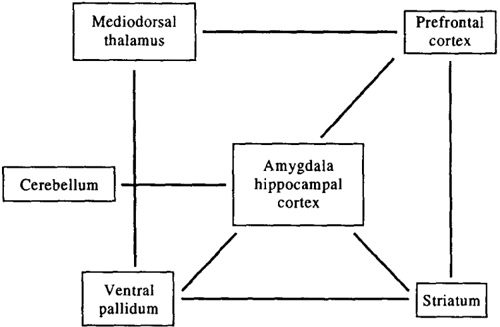
“The three primary interconnecting circuits that have been proposed to regulate mood are (1) the basal ganglia-thalamic-cortical circuit (connecting the striatum and globus pallidus to the thalamus, hypothalamus and the PFC); (2) the limbic-thalamic-cortical circuit (linking the amygdala, mediodorsal thalamic nucleus,…”
BackgroundDifferential DSM-III Psychiatric Disorder Prevalence Profiles in Dystonia and Parkinson's Disease
Lauterbach, E. C. (2004) · Journal of Neuropsychiatry · doi:10.1176/appi.neuropsych.16.1.29 · Cited by 78
Kakeda, S., Watanabe, K., Katsuki, A., Sugimoto, K., Igata, N., Ueda, I., Igata, R., Abe, O., Yoshimura, R., & Korogi, Y. (2018) · Scientific Reports · doi:10.1038/s41598-018-28300-5 · Cited by 78
Nobler, M. S., Luber, B. M., Moeller, J. R., Katzman, G. P., Prudic, J., Devanand, D. P., Dichter, G. S., & Sackeïm, H. A. (2000) · Journal of Ect · doi:10.1097/00124509-200009000-00002 · Cited by 75
“…a large number of studies of regional cerebral blood flow or glucose metabolism in the untreated, resting state in major depression have reported inverse relations with HRSD scores, particularly in frontal cortical regions (see Sackeim and Prohovnik, 1993, and Soares and Mann, 1997, for reviews).”
ResultContributions from brain imaging to the elucidation of pathophysiology of bipolar disorder
Soares, J. C. (2003) · The International Journal of Neuropsychopharmacology · doi:10.1017/s1461145703003390 · Cited by 82
“Increased glutamate levels could be neurotoxic, and such abnormality could possibly result in anatomical abnormalities in the prefrontal cortex reported in brain-imaging and post-mortem studies (Rajkowska et al., 2001 ; Soares and Mann, 1997b).”
BackgroundResultInfluentialSelf-citationAccuracy of an individualized MR-based head model for navigated brain stimulation.
Carducci, F., & Brusco, R. (2012) · Psychiatry Research · doi:10.1016/j.pscychresns.2011.12.013 · Cited by 73
“…1991; Wassermann et al., 1992; Jennum et al., 1994; Seyal et al., 1997; Harris et al., 2002) or on external anatomical landmarks (i.e., the vertex or the scalp sites of the International 10–20 system; Jasper, 1958; Seyal et al., 1992; Soares and Mann, 1997; Walsh et al., 1998; Herwig et al., 2003).”
BackgroundOlvera, R. L., Caetano, S. C., Fonseca, M., Nicoletti, M., Stanley, J. A., Chen, H. H., Hatch, J. P., Hunter, K., Pliszka, S. R., & Soares, J. C. (2007) · Journal of Child and Adolescent Psychopharmacology · doi:10.1089/cap.2007.0102 · Cited by 73
“S TUDIES WITH ADULT BIPOLAR (BP) patients have noted abnormalities in the structure and function of the prefrontal cortex (Soares and Mann 1997a; Soares and Mann 1997b; Drevets et al. 1999).”
Self-citationGrachev, I. D., Ramachandran, T. S., Thomas, P. S., Szeverenyi, N. M., & Fredrickson, B. E. (2003) · Journal of Neural Transmission · doi:10.1007/s00702-002-0781-9 · Cited by 80
“…frontal cortex (OFC), anterior cingulate cortex (ACC), hippocampus, amygdala and thalamus (Ito et al., 1996; Hornig et al., 1997; Reiman, 1997; Soares and Mann, 1997; Drevets, 1998; Galynker et al., 1998; Davidson et al., 1999; Grasby, 1999; Northoff et al., 2000; Camargo, 2001; Brody et al.,…”
InfluentialWalterfang, M., WOOD, A. G., Barton, S., Velakoulis, D., Chen, J., Reutens, D. C., Kempton, M. J., Haldane, M., Pantelis, C., & Frangou, S. (2009) · Progress in Neuro-Psychopharmacology and Biological Psychiatry · doi:10.1016/j.pnpbp.2009.05.019 · Cited by 75
“…ing Scale; YMRS, Young Mania magnetic resonance imaging; variance; BDNF, brain-derived l 2, John Cade Building, Royal 0; fax: +61 393428483. lterfang). ll rights reserved. hemispheres has been implicated in bipolar disorder (Soares and Mann, 1997), and may be mediated by altered callosal structure.”
BackgroundInfluentialThe role of microglia in neuropsychiatric disorders and suicide
Brisch, R., Wojtylak, S., Saniotis, A., Steiner, J., Gos, T., Kumaratilake, J., Henneberg, M., & Wolf, R. J. (2021) · European Archives of Psychiatry and Clinical Neuroscience · doi:10.1007/s00406-021-01334-z · Cited by 78
Reivich, M., Amsterdam, J. D., Brunswick, D. J., & Shiue, C. Y. (2004) · Journal of Affective Disorders · doi:10.1016/j.jad.2003.12.014 · Cited by 86
“Our finding of increased 5-HT transporter availability in the frontal and cingulate cortices of depressed patients could be the result of decreased synaptic levels of 5-HT (Soares and Mann, 1997).”
BackgroundHasey, G. (2001) · The Canadian Journal of Psychiatry · doi:10.1177/070674370104600804 · Cited by 69
Brambilla, P., Stanley, J. A., Sassi, R. B., Nicoletti, M., Mallinger, A. G., Keshavan, M. S., & Soares, J. C. (2004) · Neuropsychopharmacology · doi:10.1038/sj.npp.1300520 · Cited by 75
“The DLPFC was chosen as our target region as in recent years, structural, functional, and neurochemical brain imaging studies have implicated abnormalities in prefrontal cortex circuits in the pathophysiology of mood disorders (Brambilla et al, 2002b; Morice, 1990; Sax et al, 1999; Soares and Mann, 1997).”
BackgroundMethodSelf-citationVisceral afferent pathways to the thalamus and olfactory tubercle: behavioral implications
Ruggiero, D. A., Anwar, S., Kim, J., & Glickstein, S. B. (1998) · Brain Research · doi:10.1016/s0006-8993(98)00442-9 · Cited by 69
Martino, M., Magioncalda, P., Saiote, C., Conio, B., Escelsior, A., Rocchi, G., Piaggio, N., Marozzi, V., Huang, Z., Ferri, F., et al. (2016) · Acta Psychiatrica Scandinavica · doi:10.1111/acps.12596 · Cited by 73
Benjamin, S., McQuoid, D. R., Potter, G. G., Payne, M. E., MacFall, J. R., Steffens, D. C., & Taylor, W. D. (2010) · The American Journal of Geriatric Psychiatry · doi:10.1097/jgp.0b013e3181cabd2b · Cited by 66
“Neuroimaging studies have revealed structural (1) and functional (2) differences between depressed and normal populations.”
Oda, K., Okubo, Y., Ishida, R., Murata, Y., Ohta, K., Matsuda, T., Matsushima, E., Ichimiya, T., Suhara, T., Shibuya, H., et al. (2003) · Biological Psychiatry · doi:10.1016/s0006-3223(02)01548-2 · Cited by 66
Reznikov, L. R., Reagan, L. P., & Fadel, J. R. (2008) · Journal of Comparative Neurology · doi:10.1002/cne.21687 · Cited by 65
“…because of its connections with the striatum and prefrontal cortex (McDonald, 1991), two stressresponsive regions implicated in the etiology of various mood-related disorders (Kennedy et al., 1997; Soares and Mann, 1997; Drevets, 2000; Kristiansen and MeadorWoodruff, 2005; Epstein et al., 2006).”
BackgroundDittmann, S., Seemüller, F., Schwarz, M., Kleindienst, N., Stampfer, R., Zach, J., Born, C., Bernhard, B., Fast, K., Grunze, H., et al. (2007) · Bipolar Disorders · doi:10.1111/j.1399-5618.2007.00412.x · Cited by 65
Altered IMPA2 gene expression and calcium homeostasis in bipolar disorder
Yoon, I.-S., Li, P. P., Siu, K. W. M., Kennedy, J. L., Cooke, R. G., Parikh, S. V., & Warsh, J. J. (2001) · Molecular Psychiatry · doi:10.1038/sj.mp.4000901 · Cited by 65
“Temporal cortex IMPA2 and IMPA1 mRNA levels A variety of reports implicate temporal cortex as one of several particularly suspect brain regions showing abnormalities in measures of signal transduction processes, in morphometric investigations, and in vivo neuroimaging in BD”
BackgroundCao, J., Chen, J.-M., Kuang, L., Ai, M., Fang, W.-D., Gan, Y., Wang, W., Chen, X.-R., Xu, X.-M., Wang, H.-G., et al. (2015) · Psychiatry Research Neuroimaging · doi:10.1016/j.pscychresns.2014.10.011 · Cited by 64
Neo-striatal rCBF correlates of psychomotor slowing in patients with major depression
Hickie, I. B., Ward, P. B., Scott, E. M., Haindl, W., Walker, B., Dixon, J., & Turner, K. (1999) · Psychiatry Research Neuroimaging · doi:10.1016/s0925-4927(99)00038-4 · Cited by 73
Nelson, E. E., Vinton, D. T., Berghorst, L., Towbin, K. E., Hommer, R. E., Dickstein, D. P., Rich, B. A., Brotman, M. A., Pine, D. S., & Leibenluft, E. (2007) · Bipolar Disorders · doi:10.1111/j.1399-5618.2007.00419.x · Cited by 62
Neumann, S. A., Brown, S. M., Ferrell, R. E., Flory, J. D., Manuck, S. B., & Hariri, A. R. (2006) · Biological Psychiatry · doi:10.1016/j.biopsych.2006.03.059 · Cited by 63
Kinematical analysis of handwriting movements in depressed patients
Mergl, R., Juckel, G., Rihl, J., Henkel, V., Karner, M., Tigges, P., Schröter, A., & Hegerl, U. (2004) · Acta Psychiatrica Scandinavica · doi:10.1046/j.1600-0447.2003.00262.x · Cited by 60
“Statistically significant group differences were only detected for one variable: mean stroke duration, computed for drawing of circles with the dominant hand [F(2, 27) 1⁄4 3.”
BackgroundMethodFrye, M. A., Thomas, M. A., Yue, K. T. N., Binesh, N., Davanzo, P. A., Ventura, J., O’Neill, J., Guzé, B. H., Curran, J. G., & Mintz, J. (2007) · Psychiatry Research Neuroimaging · doi:10.1016/j.pscychresns.2006.11.003 · Cited by 59
Blasi, G., Bertolino, A., Brudaglio, F., Sciota, D., Altamura, M., Antonucci, N., Scarabino, T., Weinberger, D. R., & Nardini, M. (2004) · Psychiatry Research Neuroimaging · doi:10.1016/j.pscychresns.2003.11.002 · Cited by 68
Neuropsychological Disturbances and Cerebral Blood Flow in Bipolar Disorder
Benabarre, A., Vieta, E., Martínez‐Arán, A., García-García, M., Martín, F., Lomeña, F., Torrent, C., Sánchez‐Moreno, J., Colom, F., Reinares, M., et al. (2005) · Australian & New Zealand Journal of Psychiatry · doi:10.1080/j.1440-1614.2004.01558.x · Cited by 62
“The results of our study help to confirm current hypotheses that implicate functional anomalies in frontal-subcortical structures, the cerebellum and limbic system in bipolar disorder [6,21].”
BackgroundResultTo smell autoimmunity: Anti-P-ribosomal autoantibodies, depression, and the olfactory system
Shoenfeld, Y. (2007) · Journal of Autoimmunity · doi:10.1016/j.jaut.2007.02.012 · Cited by 62
Grachev, I. D., Thomas, P. S., & Ramachandran, T. S. (2002) · Brain and Cognition · doi:10.1006/brcg.2001.1489 · Cited by 58
Depressed adolescents demonstrate greater subgenual anterior cingulate activity
Yang, T. T., Simmons, A. N., Matthews, S. C., Tapert, S. F., Frank, G. K., Bischoff-Grethe, A., Lansing, A. E., Wu, J., Brown, G. G., & Paulus, M. P. (2009) · NeuroReport · doi:10.1097/wnr.0b013e3283262e10 · Cited by 58
Applications of functional magnetic resonance imaging in psychiatry
Mitterschiffthaler, M. T., Ettinger, U., Mehta, M. A., Mataix‐Cols, D., & Williams, S. C. R. (2006) · Journal of Magnetic Resonance Imaging · doi:10.1002/jmri.20590 · Cited by 58
Response of Cortical Metabolic Deficits to Serotonergic Challenge in Familial Mood Disorders
Kegeles, L. S., Malone, K. M., Slifstein, M., Ellis, S. P., Xanthopoulos, E., Keilp, J. G., Campbell, C., Oquendo, M., Van Heertum, R. L., & Mann, J. J. (2003) · American Journal of Psychiatry · doi:10.1176/appi.ajp.160.1.76 · Cited by 58
Self-citationNobler, M. S., Mann, J. J., & Sackeïm, H. A. (1999) · Brain Research Reviews · doi:10.1016/s0165-0173(99)00019-3 · Cited by 66
Self-citationMatsuo, K., Kouno, T., Hatch, J. P., Seino, K., Ohtani, T., Kato, N., & Kato, T. (2007) · Bipolar Disorders · doi:10.1111/j.1399-5618.2007.00473.x · Cited by 58
Concerto, C., Lanza, G., Cantone, M., Pennisi, M., Giordano, D., Spampinato, C., Ricceri, R., Pennisi, G., Aguglia, E., & Bella, R. (2013) · BMC Psychiatry · doi:10.1186/1471-244x-13-300 · Cited by 59
“Soares JC, Mann JJ: The functional neuroanatomy of mood disorders.”
ResultInfluentialRelation Between Frontal 3–7 Hz MEG Activity and the Efficacy of ECT in Major Depression
Heikman, P. K., Salmelin, R. H., Mäkelä, J. P., Hari, R., Katila, H., & Kuoppasalmi, K. I. (2001) · Journal of Ect · doi:10.1097/00124509-200106000-00009 · Cited by 54
“Functional abnormalities in the frontal, subcortical, and limbic structures are associated with mood disorders (1).”
BackgroundPintor, L., Baillés, E., Fernández-Egea, E., Sánchez‐Gistau, V., Torres, X., Carreño, M., Rumià, J., Matrai, S., Boget, T., Raspall, T., et al. (2007) · Seizure · doi:10.1016/j.seizure.2006.12.004 · Cited by 54
Left Medial Temporal Cytosolic Choline in Early Onset Depression
Kusumakar, V., MacMaster, F. P., Gates, L., Sparkes, S. J., & Khan, S. C. (2001) · The Canadian Journal of Psychiatry · doi:10.1177/070674370104601009 · Cited by 54
Tabarés‐Seisdedos, R., Balanzá‐Martínez, V., Salazar-Fraile, J., Selva‐Vera, G., Cercós, C. L., & Gómez-Beneyto, M. (2003) · Journal of Psychiatric Research · doi:10.1016/s0022-3956(03)00071-2 · Cited by 61
Wang, J.-F. (2007) · The Canadian Journal of Psychiatry · doi:10.1177/070674370705201202 · Cited by 52
Magioncalda, P., Martino, M., Conio, B., Piaggio, N., Teodorescu, R., Escelsior, A., Marozzi, V., Rocchi, G., Roccatagliata, L., Northoff, G., et al. (2015) · Journal of Affective Disorders · doi:10.1016/j.jad.2015.12.050 · Cited by 54
Shastry, B. S. (2005) · Neurochemistry International · doi:10.1016/j.neuint.2004.10.007 · Cited by 70
Ide, S., Kakeda, S., Watanabe, K., Yoshimura, R., Abe, O., Hayashi, K., Ueda, I., Kishi, T., Katsuki, A., Umene‐Nakano, W., et al. (2015) · Psychiatry Research Neuroimaging · doi:10.1016/j.pscychresns.2015.05.016 · Cited by 52
Christensen, B. K., & Bilder, R. M. (2000) · The Canadian Journal of Psychiatry · doi:10.1177/070674370004500303 · Cited by 50
The Invisible Disease: Making Sense of an Osteoporosis Diagnosis in Older Age
Weston, J. M., Norris, E. V., & Clark, E. (2011) · Qualitative Health Research · doi:10.1177/1049732311416825 · Cited by 56
Diffusion‐weighted magnetic resonance imaging of white matter in bipolar disorder: a pilot study
Regenold, W. T., D'Agostino, C. A., Ramesh, N., Hasnain, M., Roys, S., & Gullapalli, R. P. (2006) · Bipolar Disorders · doi:10.1111/j.1399-5618.2006.00281.x · Cited by 48
Rodríguez‐Landa, J. F., Contreras, C. M., & García-Ríos, R. I. (2009) · Behavioural Pharmacology · doi:10.1097/fbp.0b013e328331b9f2 · Cited by 48
“In humans or animals, no conclusive data have indicated any hemispheric dominance in motivational behavior (Ramı́rez-Sánchez and Alba-Aragüez, 1993; Soares and Mann, 1997a, b).”
Padberg, F., Kumpf, U., Mansmann, U., Palm, U., Plewnia, C., Langguth, B., Zwanzger, P., Fallgatter, A. J., Nolden, J., Burger, M., et al. (2017) · European Archives of Psychiatry and Clinical Neuroscience · doi:10.1007/s00406-017-0769-y · Cited by 57
MRI study of corpus callosum in children and adolescents with bipolar disorder
Yasar, A. S., Monkul, E. S., Sassi, R. B., Axelson, D., Brambilla, P., Nicoletti, M., Hatch, J. P., Keshavan, M. S., Ryan, N. D., Birmaher, B. B., et al. (2005) · Psychiatry Research Neuroimaging · doi:10.1016/j.pscychresns.2005.09.004 · Cited by 50
“, genu and splenium) that interconnect important association areas could be relevant to the pathophysiology of bipolar disorder as well as the cognitive disturbances seen in these patients (Soares and Mann, 1997).”
BackgroundSelf-citationDavis, K. L., Kwon, A., Cardenas, V. A., & Deicken, R. F. (2004) · Journal of Affective Disorders · doi:10.1016/j.jad.2004.03.010 · Cited by 57
Anatomic brain magnetic resonance imaging of the basal ganglia in pediatric bipolar disorder
Ahn, M. S., Breeze, J. L., Makris, N., Kennedy, D. N., Hodge, S. M., Herbert, M. R., Seidman, L. J., Biederman, J., Caviness, V. S., & Frazier, J. A. (2007) · Journal of Affective Disorders · doi:10.1016/j.jad.2007.04.015 · Cited by 49
Naudon, L., Yacoubi, M. E., Vaugeois, J., Leroux‐Nicollet, I., & Costentin, J. (2002) · Brain Research · doi:10.1016/s0006-8993(02)02548-9 · Cited by 55
Takami, H. E., Okamoto, Y., Yamashita, H., Okada, G., & Yamawaki, S. (2007) · American Journal of Geriatric Psychiatry · doi:10.1097/01.jgp.0b013e31802ea919 · Cited by 52
NARITA, H., ODAWARA, T., ISEKI, E., KOSAKA, K., & HIRAYASU, Y. (2004) · Psychiatry and Clinical Neurosciences · doi:10.1111/j.1440-1819.2004.01273.x · Cited by 47
Shibuya‐Tayoshi, S., Tayoshi, S., Sumitani, S., Ueno, S., Harada, M., & Ohmori, T. (2007) · Progress in Neuro-Psychopharmacology and Biological Psychiatry · doi:10.1016/j.pnpbp.2007.08.015 · Cited by 55
Is depression in Parkinson's Disease (PD) a specific entity?
EVEN, C., & Weintraub, D. A. (2011) · Journal of Affective Disorders · doi:10.1016/j.jad.2011.07.002 · Cited by 63
“Dopaminergic systems are thought to be involved in the pathophysiology of idiopathic depression (Bowden et al., 1997; Roy et al., 1985; Soares and Mann, 1997).”
BackgroundLithium increases nerve growth factor levels in the rat hippocampus in an animal model of mania
Frey, B. N., Andreazza, A. C., Rosa, A. R., Martins, M. R., Valvassori, S. S., Réus, G. Z., Hatch, J. P., Quevedo, J., & Kapczinski, F. (2006) · Behavioural Pharmacology · doi:10.1097/01.fbp.0000205013.59455.09 · Cited by 46
“Anatomical and functional neuroimaging findings have suggested that the interconnection between cortical and limbic structures, mainly the prefrontal cortex, amygdala and hippocampus, may be altered in mood-disordered subjects (Soares and Mann, 1997; Manji et al., 2001).”
BackgroundEyeblink conditioning anomalies in bipolar disorder suggest cerebellar dysfunction
Bolbecker, A. R., Mehta, C. S., Johannesen, J., Edwards, C. R., O’Donnell, B. F., Shekhar, A., Nürnberger, J. I., Steinmetz, J. E., & Hetrick, W. P. (2009) · Bipolar Disorders · doi:10.1111/j.1399-5618.2008.00642.x · Cited by 48
Neuroprotective effects of antidepressant and mood stabilizing drugs
Young, L. T. (2002) · Journal of Psychiatry and Neuroscience · doi:10.1139/jpn.0201 · Cited by 45
Naudon, L., Hotte, M., & Jay, T. M. (2007) · Psychopharmacology · doi:10.1007/s00213-006-0660-4 · Cited by 49
“This is particularly well established by functional neuroimaging techniques for the prefrontal cortex (PFC) and the hippocampus (Soares and Mann 1997; Drevets 1998; Rypma and D’Esposito 1999; Manoach et al. 2003; Park et al. 2003).”
BackgroundAspectos neuropsicológicos da depressão
Rozenthal, M., Laks, J., & Engelhardt, E. (2004) · Revista de Psiquiatria do Rio Grande do Sul · doi:10.1590/s0101-81082004000200010 · Cited by 43
Longe, O. A., Senior, C., & Rippon, G. (2009) · Journal of Cognitive Neuroscience · doi:10.1162/jocn.2009.21012 · Cited by 54
A systematic review of the clinical relevance of repetitive transcranial magnetic stimulation
Lepping, P., Schönfeldt‐Lecuona, C., Sambhi, R. S., Lanka, S. V. N., Lane, S., Whittington, R., Leucht, S., & Poole, R. (2014) · Acta Psychiatrica Scandinavica · doi:10.1111/acps.12276 · Cited by 44
Graff‐Guerrero, A., Gonzalez-Olvera, J. J., Mendoza, Y., Vaugier, V., & García-Reyna, J. C. (2003) · Journal of Affective Disorders · doi:10.1016/s0165-0327(03)00049-1 · Cited by 47
“The depressive syndrome has recently been studied using the cerebral imaging approach (Soares and Mann, 1997).”
MethodMinor, T. R., & Hunter, A. M. (2002) · Integrative Psychological and Behavioral Science · doi:10.1007/bf02688805 · Cited by 47
“The frontal cortex was chosen as the site of injection because this brain area is substantially altered in major depression (see Baxter, 1991; Soares & Mann, 1997 ).”
MethodOsoba, A., Hänggi, J., Li, M., Horn, D. I., Metzger, C. D., Eckert, U., Kaufmann, J., Zierhut, K. C., Steiner, J., Schiltz, K., et al. (2013) · Journal of Affective Disorders · doi:10.1016/j.jad.2012.12.026 · Cited by 45
“Functional neuroimaging techniques showed reductions in metabolism and blood flow within DMPFC and DLPFC (Baxter et al., 1989; Bench et al., 1993; Buchsbaum et al., 1997; Soares and Mann, 1997) so our findings may contribute to a number of intriguing models of abnormal functional integration of these regions in major…”
Thalamic volumes in patients with bipolar disorder
Radenbach, K., Flaig, V., Schneider-Axmann, T., Usher, J., Reith, W., Falkai, P., Gruber, O., & Scherk, H. (2010) · European Archives of Psychiatry and Clinical Neuroscience · doi:10.1007/s00406-010-0100-7 · Cited by 49
“The thalamus might, therefore, be a key structure linked to the aetiology of bipolar disorder [23].”
BackgroundGazdzinski, S. P., Durazzo, T. C., Jahng, G., Ezekiel, F., Banys, P., & Meyerhoff, D. J. (2006) · Alcoholism Clinical and Experimental Research · doi:10.1111/j.1530-0277.2006.00108.x · Cited by 47
“As major depression is associated with decreased prefrontal cortex perfusion (Drevets, 1999; Soares and Mann, 1997), we repeated all analyses excluding participants diagnosed with recurrent major depression and substance induced mood disorders.”
BackgroundCorpus Callosum Size and Shape in Established Bipolar Affective Disorder
Walterfang, M., Malhi, G. S., WOOD, A. G., Reutens, D. C., Chen, J., Barton, S., Yücel, M., Velakoulis, D., & Pantelis, C. (2009) · Australian & New Zealand Journal of Psychiatry · doi:10.1080/00048670903107534 · Cited by 46
“Impairments in these functions are frequently present at the onset of major mental disorders, including bipolar disorder, and impaired efficiency of information transfer between hemispheres has been suggested to underlie cognitive impairment in bipolar patients [4].”
BackgroundGray and white matter trajectories in patients with bipolar disorder
Sani, G., Chiapponi, C., Piras, F., Ambrosi, E., Simonetti, A., Danese, E., Janiri, D., Brugnoli, R., Filippis, S. D., Caltagirone, C., et al. (2016) · Bipolar Disorders · doi:10.1111/bdi.12359 · Cited by 43
“It is intriguing that all the cerebral areas showing a volume reduction are part of the two main brain networks involved in regulation of mood and emotions: the limbic-thalamic-cortical circuit, which includes part of the thalamus, the medial and ventrolateral prefrontal cortex, and the limbic-striatalpallidal-thalami…”
BackgroundSensorimotor Modulation of Mood and Depression: In Search of an Optimal Mode of Stimulation
Canbeyli, R. (2013) · Frontiers in Human Neuroscience · doi:10.3389/fnhum.2013.00428 · Cited by 42
“…(VMPFC and DPFC), anterior cingulate cortex (ACC), amygdala, hypothalamus, hippocampus, nucleus accumbens, and the basal ganglia (Mayberg, 1997; Soares and Mann, 1997; Ongur et al., 1998; Tekin and Cummings, 2002; Heimer, 2003; Phillips et al., 2003a,b; Heimer and Van Hoesen, 2006; Drevets et…”
BackgroundApplications of positron emission tomography in psychiatry
Parsey, R. V., & Mann, J. J. (2003) · Seminars in Nuclear Medicine · doi:10.1053/snuc.2003.127302 · Cited by 47
Self-citationStructural and functional brain changes in bipolar disorder: a selective review
Pearlson, G. D. (1999) · Schizophrenia Research · doi:10.1016/s0920-9964(99)00112-7 · Cited by 43
Padberg, F., Juckel, G., Präßl, A., Zwanzger, P., Mavrogiorgou, P., Hegerl, U., Hampel, H. J., & Möller, H. (2001) · Journal of Neuropsychiatry · doi:10.1176/jnp.13.2.206 · Cited by 51
Kanemoto, K., Kim, Y., Miyamoto, T., & Kawasaki, J. (2001) · Journal of Neuropsychiatry · doi:10.1176/jnp.13.2.243 · Cited by 42
The occurrence of cavum septi pellucidi enlargement is increased in bipolar disorder patients
Kim, M. J., Lyoo, I. K., Dager, S. R., Friedman, S. D., Chey, J., Hwang, J., Lee, Y., Dünner, D. L., & Renshaw, P. F. (2007) · Bipolar Disorders · doi:10.1111/j.1399-5618.2007.00442.x · Cited by 44
Deng, Z.-D., Lisanby, S. H., & Peterchev, A. V. (2013) · The Journal of ECT · doi:10.1097/yct.10.1097/yct.0b013e3182a4b4a7 · Cited by 41
New insights into the neurobiological mechanisms of major depressive disorders
Fakhoury, M. (2015) · General Hospital Psychiatry · doi:10.1016/j.genhosppsych.2015.01.005 · Cited by 53
“Furthermore, imaging studies have indicated a significant decrease in gray matter volume, blood flow and activity in the prefrontal cortex of patients affected with MDD [36,37].”
BackgroundGibbons, A. S., Brooks, L., Scarr, E., & Dean, B. (2012) · Journal of Affective Disorders · doi:10.1016/j.jad.2011.10.001 · Cited by 41
“…post-mortem CNS from subjects with MDD and BPD. Binding levels were measured in the dorsolateral prefrontal cortex (DLPFC) (Brodmanns Area [BA] 46) and the anterior cingulate (ACC) (BA 24), two regions high-lighted by neuroimaging studies as being affected in mood disorders (Soares and Mann, 1997).”
BackgroundMethodMergl, R. (2005) · Journal of Neurology, Neurosurgery & Psychiatry · doi:10.1136/jnnp.2004.037127 · Cited by 41
Functional Brain Circuits in Major Depression and Remission
Sackeïm, H. A. (2001) · Archives of General Psychiatry · doi:10.1001/archpsyc.58.7.649 · Cited by 42
Rajji, T. K., Bowie, C. R., Herrmann, N., Pollock, B. G., Lanctôt, K. L., Kumar, S., Flint, A. J., Mah, L., Fischer, C. E., Butters, M. A., et al. (2024) · JAMA Psychiatry · doi:10.1001/jamapsychiatry.2024.3241 · Cited by 55
Smıth, D. J., Whitham, E. A., & Ghaemi, S. N. (2012) · Handbook of clinical neurology · doi:10.1016/b978-0-444-52002-9.00015-2 · Cited by 69
Tian, S. Y., Wang, J., Bezchlibnyk, Y. B., & Young, L. T. (2006) · Neuroscience Letters · doi:10.1016/j.neulet.2006.10.031 · Cited by 45
Metadata
- Authors
- Soares, J. C., & Mann, J. J.
- Affiliations
- University of Pittsburgh (US)
- New York State Psychiatric Institute (US)
- Corresponding author
- Mann, J.John
- Venue
- Journal of Psychiatric Research
- Publisher
- Elsevier BV
- Published
- 1997-07
- Volume
- 31
- Issue
- 4
- Pages
- 393-432
- ISSN
- 0022-3956 (ISSN-L)
- OpenAlex
- W2046020459
- Semantic Scholar
- c982a4f99aea15bb688087a933bf917b42b283e1
- Cited by
- 379
- References
- 185
- Citations by year
- 2026: 2 · 2025: 4 · 2024: 5 · 2023: 5 · 2022: 5 · 2021: 7 · 2020: 1 · 2019: 2 · 2018: 6 · 2017: 1 · 2016: 7 · 2015: 5 · 2014: 12 · 2013: 11 · 2012: 18
- FWCI
- 1.37
- Type
- journal article
- Language
- en
- Open access
- hybrid
- doi.org
- Licence
- cc-by-nc-nd
- www.elsevier.com/tdm/userlicense/1.0/ (tdm)
- www.elsevier.com/legal/tdmrep-license (tdm)
- creativecommons.org/licenses/by-nc-nd/4.0/ (vor, 188 d)
- Locations
- Journal of Psychiatric Research (publishedVersion, cc-by-nc-nd)
- PubMed (publishedVersion)
- Funders
- National Institute of Mental Health (R01MH040695, MH46745, MH 40695)
- Topics
- Health Sciences › Medicine › Pharmacology (medical) › Treatment of Major Depression
- Life Sciences › Neuroscience › Cognitive Neuroscience › Neural and Behavioral Psychology Studies
- Health Sciences › Medicine › Psychiatry and Mental health › Bipolar Disorder and Treatment
- Keywords
- mood disorders, depression, bipolar disorder, regional cerebral blood flow, glucose metabolism, prefrontal cortex, basal ganglia, temporal lobe, limbic system, cognitive impairment, antidepressant effects, electroconvulsive therapy, geriatric depression
- MeSH terms
- Adult, Aged, Antidepressive Agents, Basal Ganglia, Frontal Lobe, Glucose, Humans, Middle Aged, Regional Blood Flow, Severity of Illness Index, Temporal Lobe, Mood Disorders
About these checks
Registry, retraction, Cites and statistics results are computed, not judged, with one exception: a printed reference that no index lists is read once by a model before it counts as a citation error. Claims are extracted by a model and kept only when their quote appears verbatim in the text; each cited source is then checked, with a model’s help, for whether it says what the claim relies on. Those verdicts can be wrong — read the claim’s quote and the cited source before relying on one.
Statistics and arithmetic are recomputed, not judged.
Confidence bands are shown only for fields calibrated on our annotated test set. None is calibrated yet, so no band is shown.
What counts as a claim ›How we measure confidence ›How we check this ›
Are you an author, or do you see a problem with this page? Request a review
Data sources
Bibliographic data: Semantic Scholar, OpenAlex, Crossref.
Contains information from the Semantic Scholar Academic Graph Datasets, made available under the ODC Attribution License (ODC-BY 1.0).
Semantic Scholar’s data is described in: Kinney, R., et al. (2023). The Semantic Scholar Open Data Platform. arXiv:2301.10140.
