

The functional neuroanatomy of mood disorders
Open accessThe DOI matches its Crossref record; 185 of the 185 references it cites were found in a registry or an index.
Abstract
Mood disorders may be associated with global and regional changes in cerebral blood flow and metabolism. The accumulated functional neuroimaging findings in mood disorders were reviewed in order to examine a proposed neuroanatomic model of pathophysiology. Global cerebral blood flow and glucose metabolism appear normal, but may be decreased in late-life depression. Regional cerebral blood flow and glucose metabolism deficits are present, and may be indicators of brain regions participating in neuroanatomic circuits involved in mood disorders. Decreased pre-frontal cortex blood flow and metabolism in depressed unipolar and bipolar patients are the most consistently replicated findings, and correlate with severity of illness. Basal ganglia abnormalities have been found in depressed unipolar and bipolar patients, involving decreased blood flow and metabolism. Temporal lobe abnormalities are present in bipolar disorder patients, and perhaps unipolar depression. There is conflicting evidence of abnormalities in other limbic regions. Cognitive impairment may correlate with decreased metabolism in frontal and cerebellar areas. The relationship between functional neuroimaging findings and clinical course, and therefore state and trait characteristics, has not been systematically investigated. Antidepressant medications, but not ECT, seem to reverse some of the identified functional brain changes in the depressed state. The structural, neurotransmitter and neuropathological correlates of these functional abnormalities are yet to be determined. Functional abnormalities in frontal, subcortical and limbic structures appear to be part of the pathophysiology of mood disorders.
Overview
The claims and statistics of this paper haven’t been checked yet.
Free: it reads the open-access text and checks the first 5 claims that cite a source we can check. Create a free account to check every claim.
Integrity signals
Registry
Cites
Statistics
Figures
Verification
Claims the paper makes
The claims and statistics of this paper haven’t been checked yet.
Free: it reads the open-access text and checks the first 5 claims that cite a source we can check. Create a free account to check every claim.
Claims other papers make about this one
Each is checked against this paper’s own text: does it say what the citing paper says it does?
The source backs part of the claim, not all of it — or backs it for a different population, condition or comparison.
In the citing paper
“Clinical imaging studies have confirmed the results of these studies, demonstrating robust structural and functional deficits in the PFC across a range of disorders including depression, bipolar disorder, anxiety, obsessive compulsive disorder (OCD), schizophrenia, PTSD, alcohol abuse disorder, and substance abuse disorder (84–103).”
From Psychedelics and Other Psychoplastogens for Treating Mental Illness. (2021) · cites this paper as [87]
Experimental — accuracy not yet measuredIn the citing paper
“Neuroimaging studies have consistently reported DLPFC hypoactivity at rest in unmedicated MDDs37, 38 but DLPFC hyperactivity during working memory tasks39.”
From Dysregulation of adult hippocampal neuroplasticity in major depression: Pathogenesis and therapeutic implications (2022) · cites this paper as [38]
Self-check
Percentages, sums and reported differences re-computed from the paper’s own numbers.
The self-check needs the paper’s full text.
Citations
Cites
Co-Planar Stereotaxic Atlas of the Human Brain
Talairach, J., & Tournoux, P. (1988) · Medical Entomology and Zoology · Cited by 11,798
Parallel organization of functionally segregated circuits linking basal ganglia and cortex
Alexander, G. E., DeLong, M. R., & Strick, P. L. (1986) · Annual Review of Neuroscience · doi:10.1146/annurev.ne.09.030186.002041 · Cited by 8,527
Co-planar stereotaxic atlas of the human brain
Laitinen, L. (1989) · Clinical Neurology and Neurosurgery · doi:10.1016/0303-8467(89)90128-5 · Cited by 7,565
Berti, A. (1992) · Neuropsychologia · doi:10.1016/0028-3932(92)90076-x · Cited by 4,162
Ogawa, S., Tank, D. W., Menon, R., Ellermann, J. M., Kim, S. G., Merkle, H., & Ugurbil, K. (1992) · Proceedings of the National Academy of Sciences · doi:10.1073/pnas.89.13.5951 · Cited by 3,681
Psychopharmacology: The Fourth Generation of Progress
Bloom, F. E., & Kupfer, D. J. (1995) · Medical Entomology and Zoology · Cited by 2,985
Alexander, G. E., Crutcher, M. D., & DeLong, M. R. (1990) · PubMed · Cited by 2,731
(1991) · Progress in Brain Research · doi:10.1016/s0079-6123(08)62678-3 · Cited by 1,961
Psychopharmacology: The Fourth Generation of Progress
Brophy, J. J. (1995) · JAMA: The Journal of the American Medical Association · doi:10.1001/jama.1995.03530220079046 · Cited by 1,582
Reduction of Prefrontal Cortex Glucose Metabolism Common to Three Types of Depression
Baxter, L. R. (1989) · Archives of General Psychiatry · doi:10.1001/archpsyc.1989.01810030049007 · Cited by 1,320
Research works printed but not linked: 8
- Cook, E. H., Jr, Metz, J,, Lebovitz, M., Cooper, M. D., Nathan, M., Semerdjian, S. A., Brown, T., & Leventhal, B. L. (1993). Fluoxetine and cerebral glucose metabolism. (abstract). Biological Psychiatry, 33, 86A-87A.
- Cummings, J. L. (I 993). The neuroanatomy of depression. Journal of Clinical Psychiatry, 54(Suppl. 11), 14-20.
- Dube, S., Dobkin, J. A., Bowler, K. A., Thase, M. E., & Kupfer, D. J. (1993). Cerebral perfusion changes with antidepressant response in major depression. (abstract). Biological Psychiatry, 33, 47A.
- Lerer, B., Krausz, Y., Bonne, O., Shapira, B., Karger, H., & Chisin, R. (1994). ECT, antidepressant response and cerebral blood flow in patients with major depression (abstract). Neuropsychopharmacology, 10, 567S.
- Mann, J. J., Malone, K. M., Diehl, D. J., Perel, J., Cooper, T. B., & Mintun, M. A. (1996). Demonstration in vivo of reduced serotonin responsivity in the brain of untreated depressed patients. American Journal of Psychiatry, 153, 174-182.
- Sackeim, H. A., Nobler, M. S., Prohovnik, I., Moeller, J. R., Devanand, D. P., & Prudic, J. (1994). Acute and short-term effects of ECT on regional cerebral blood flow--a marker of treatment adequacy? (abstract). Neuropsychopharmacology, 10, 569S.
- Sapolsky, R. M. & McEwen, B. S. (1990) Why dexamethasone resistance? Two possible neuroendocrine mech- anisms in the hypothalamic pituitary adrenal axis. In A. F. Schatzberg & C. B. Nemeroff (Eds), Psychology, pathophysiology and psychiatric implications. New York: Raven Press.
- Upadhyaya, A. K., Abou-Saleh, M. T., Wilson, K., Grime, S. J., & Critchley, M. (1990). A study of depression in old age using single-photon emission computerised tomography. British Journal of Po'chiato,, 157(Suppl). 9. 76-81. · DOI · Paper page
Cited by
Items 201–300 of 379
Greater striatal dopamine transporter density may be associated with major depressive episode
Amsterdam, J. D., Newberg, A. B., Soeller, I., & Shults, J. (2012) · Journal of Affective Disorders · doi:10.1016/j.jad.2012.03.007 · Cited by 41
“A large number of single photon emission computed tomography (SPECT) and positron emission tomography (PET) studies were reviewed by Soares and Mann (1997) and generally found reduced regional cerebral blood flow and reduced glucose metabolism, respectively, in the basal ganglia in depressed…”
Miró, J., Huguet, A., & Jensen, M. P. (2014) · Pain Medicine · doi:10.1111/pme.12316 · Cited by 37
Ray, S., Nizamie, S. H., Akhtar, S., Praharaj, S. K., Mishra, B. R., & Zia-ul-Haq, M. (2010) · Journal of Affective Disorders · doi:10.1016/j.jad.2010.06.027 · Cited by 41
“regions, as well as the subgenual prefrontal and anterior cingulate cortex (Soares and Mann, 1997).”
BackgroundNeuroimaging Approaches in Mood Disorders: Technique and Clinical Implications
Konarski, J. Z., McIntyre, R. S., Soczynska, J. K., & Kennedy, S. H. (2007) · Annals of Clinical Psychiatry · doi:10.1080/10401230701653435 · Cited by 37
Nin, M. S., Salles, F., de Azeredo, L. A., Frazon, A., Gomez, R., & Barros, H. (2008) · Journal of Psychopharmacology · doi:10.1177/0269881107081525 · Cited by 41
Molecular targets of lithium action
Corbella, B., & Vieta, E. (2003) · Acta Neuropsychiatrica · doi:10.1046/j.1601-5215.2003.00049.x · Cited by 45
“It was found (289) that chronic lithium treatment significantly increased the levels of TH in all three brain areas that have been implicated in the pathophysiology of mood disorders – the frontal cortex, hippocampus and striatum (49,294).”
BackgroundBraun, C. M. J., Daigneault, R., Gaudelet, S., & Guimond, A. (2008) · Comprehensive Psychiatry · doi:10.1016/j.comppsych.2008.02.001 · Cited by 40
“Numerous functional imaging studies of the resting brain in depression have also typically not found clear hemispheric asymmetries [21,22], or when they have, the majority report left hemisphere hypometabolism and/or right hemisphere hypermetabolism [23].”
BackgroundRodríguez‐Casado, A., Alvarez, I., Tolédano, A., de Miguel, E., & Carmona, P. (2007) · Biopolymers · doi:10.1002/bip.20753 · Cited by 35
Repetitive Transcranial Magnetic Stimulation Target Location Methods for Depression
Zhang, M., Wang, R., Luo, X., Zhang, S., Zhong, X., Ning, Y., & Zhang, B. (2021) · Frontiers in Neuroscience · doi:10.3389/fnins.2021.695423 · Cited by 41
Association of limbic system-associated membrane protein (LSAMP) to male completed suicide
Must, A., Tasa, G., Lang, A., Vasar, E., Kõks, S., Maron, E., & Väli, M. M. (2008) · BMC Medical Genetics · doi:10.1186/1471-2350-9-34 · Cited by 45
“However, a majority of studies suggests a functional deficiency in the neural systems for emotional regulation and memory as possible substrate for the observed gene-environment interaction [6-9].”
BackgroundBasal ganglia volumetric studies in affective disorder: what did we learn in the last 15 years?
Bonelli, R. M., Kapfhammer, H., Pillay, S. S., & Yurgelun-Todd, D. A. (2005) · Journal of Neural Transmission · doi:10.1007/s00702-005-0372-7 · Cited by 43
Maître, T. W. L., Xia, S., Maître, E. L., Dun, X., Lu, J., Theodorsson, E., Ögren, S. O., Hökfelt, T., & Xu, Q. (2011) · Neuroscience · doi:10.1016/j.neuroscience.2011.05.015 · Cited by 37
“Dysfunction within and/or between structures in this circuit may underlie disturbances in affective behavior and other cognitive aspects of depressive symptoms in humans (Soares and Mann, 1997).”
Long‐term Use of Atypical Antipsychotics in Bipolar Disorder
Ehret, M. J., & Levin, G. M. (2006) · Pharmacotherapy The Journal of Human Pharmacology and Drug Therapy · doi:10.1592/phco.26.8.1134 · Cited by 36
“On reviewing data from positron emission tomography studies, abnormalities in the functioning of the basal ganglia, prefrontal cortex, and temporal lobes of the brain during periods of depression and mania have been identified.(34) Other recent studies with positron emission tomography have demonstrated that the downr…”
BackgroundInitiation and supervisory processes in schizophrenia and depression
Lafont, V., Medecin, I., Robert, P. H., Beaulieu, F.-E., Kazès, M., Danion, J., Pringuey, D., & DARCOURT, G. (1998) · Schizophrenia Research · doi:10.1016/s0920-9964(98)00084-x · Cited by 35
Elevated Brain Glutamate Levels in Bipolar Disorder and Pyruvate Carboxylase-Mediated Anaplerosis
Shen, J., & Tomar, J. S. (2021) · Frontiers in Psychiatry · doi:10.3389/fpsyt.2021.640977 · Cited by 39
Berney, A., Leyton, M., Gravel, P., Sibon, I., Sookman, D., Rosa‐Neto, P., Dikšić, M., Nakai, A., Pinard, G., Todorov, C., et al. (2011) · Archives of General Psychiatry · doi:10.1001/archgenpsychiatry.2011.16 · Cited by 35
Cerebral Blood Flow and Metabolism in Late-Life Depression and Dementia
Nobler, M. S., Pelton, G. H., & Sackeïm, H. A. (1999) · Journal of Geriatric Psychiatry and Neurology · doi:10.1177/089198879901200305 · Cited by 36
Naudon, L., & Jay, T. M. (2005) · Neuroscience · doi:10.1016/j.neuroscience.2004.09.009 · Cited by 32
Joe, A., Tielmann, T., Bucerius, J. A., Reinhardt, M. J., PALMEDO, H., Maier, W., Biersack, H., & Zobel, A. W. (2006) · PubMed · Cited by 34
Parkinson’s disease and affective disorder: The temporal relationship
Nilsson, F. M. (2012) · Open Journal of Psychiatry · doi:10.4236/ojpsych.2012.22014 · Cited by 32
“CT-scans, MRI and functional brain imaging like PET, have in lesion-and-deficit studies supported an association between lesions disrupting frontostriatal or paralimbic pathways and depressed mood [10,116].”
BackgroundResultInfluentialFichna, J., Sibaev, A., Sałaga, M., Sobczak, M., & Storr, M. (2013) · Neurogastroenterology & Motility · doi:10.1111/nmo.12158 · Cited by 31
Radžiūnas, A., Deltuva, V. P., Tamašauskas, A., Gleiznienė, R., Pranckevičienė, A., Šurkienė, D., & Bunevičius, A. (2018) · Brain Imaging and Behavior · doi:10.1007/s11682-018-9971-4 · Cited by 30
Depression, antidepressants, and peripheral blood components.
Fišar, Z., & Raboch, J. (2008) · PubMed · Cited by 38
Emilien, G., Septien, L., Brisard, C., Corruble, E., & Bourin, M. (2007) · Progress in Neuro-Psychopharmacology and Biological Psychiatry · doi:10.1016/j.pnpbp.2007.03.005 · Cited by 46
Kang, Y., Shin, D., Kim, A., You, S., Kim, B., Han, K., & Ham, B. (2023) · Journal of Affective Disorders · doi:10.1016/j.jad.2023.12.071 · Cited by 31
Biochemical markers of mood: a proton magnetic resonance spectroscopy study of normal human brain
Jung, R. E., Yeo, R. A., Love, T., Petropoulos, H., Sibbitt, W. L., & Brooks, W. M. (2002) · Biological Psychiatry · doi:10.1016/s0006-3223(01)01224-0 · Cited by 33
Jang, C., Kang, M., Cho, J. H., Lee, S. B., Kim, H., Park, S., Lee, J., Park, S. K., Hong, M., Shin, M. K., et al. (2004) · Archives of Pharmacal Research · doi:10.1007/bf02975433 · Cited by 29
Frey, B. N., Rosa‐Neto, P., Lubarsky, S., & Dikšić, M. (2008) · NeuroImage · doi:10.1016/j.neuroimage.2008.05.009 · Cited by 33
“…a priori brain regions that have been implicated inmood regulation: anterior cingulate cortex (ACC), hippocampus, amygdala, anterior insula, thalamus, hypothalamus and midbrain raphe nuclei (Cannon et al., 2007; Fisher et al., 2006; Mayberg et al., 1999; Phan et al., 2002; Soares and Mann, 1997).”
Zheng, M., Da, H., Pan, X., Bian, Y., Li, X., Xiao, Q., Qiu, M., Xiang, N., Dongmei, Z., Wei, Q., et al. (2023) · Journal of Affective Disorders · doi:10.1016/j.jad.2023.01.115 · Cited by 37
Frey, B. N., Folgierini, M., Nicoletti, M., Machado‐Vieira, R., Stanley, J. A., Soares, J. C., & Kapczinski, F. P. (2005) · Human Psychopharmacology Clinical and Experimental · doi:10.1002/hup.671 · Cited by 29
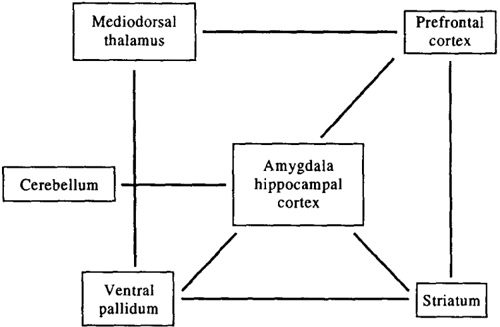
“…neuroimaging studies have suggested that mood disorders could result from dysfunction in cortical-thalamic-limbic circuits, including the prefrontal and temporal cortex, amygdala, hippocampus, thalamus, cerebellum and their interconnections (Soares and Mann, 1997; Strakowski et al., 2000).”
BackgroundResultSelf-citationGene and Expression Analyses Reveal Enhanced Expression of Pericentrin 2 (PCNT2) in Bipolar Disorder
Anitha, A., Nakamura, K., Yamada, K., Iwayama, Y., Toyota, T., Takei, N., Iwata, Y., Suzuki, K., Sekine, Y., Matsuzaki, H., et al. (2007) · Biological Psychiatry · doi:10.1016/j.biopsych.2007.07.010 · Cited by 33
Bewertung von Geruchsreizen bei depressiv Erkrankten
Thomas, H. J., Fries, W., & Distel, H. (2002) · Der Nervenarzt · doi:10.1007/s115-002-8150-9 · Cited by 31
Maayan, L., Paykina, N., Fried, J., Strauss, T., Gugga, S. S., & Greenhill, L. (2009) · Journal of Child and Adolescent Psychopharmacology · doi:10.1089/cap.2008.053 · Cited by 26
“THE PREFRONTAL CORTEX IS POSTULATED to participate in the regulation of impulses, emotion and cognition in mood disorders (Soares and Mann 1997).”
Toteja, N., Guvenek‐Cokol, P. E., Ikuta, T., Kafantaris, V., Peters, B. D., Burdick, K. E., John, M., Malhotra, A. K., & Szeszko, P. R. (2014) · Bipolar Disorders · doi:10.1111/bdi.12278 · Cited by 28
“9 (4) [7–21] – – – – Depression score, mean (SD) [range) 14.”
Nin, M. S., Ferri, M. K., Pereira, N. D. S. C., de Souza, M. F., de Azeredo, L. A., Agnes, G., Gomez, R., & Barros, H. M. T. (2012) · Pharmacology Biochemistry and Behavior · doi:10.1016/j.pbb.2012.09.002 · Cited by 26
Legge, A. W. (2015) · Music Therapy Perspectives · doi:10.1093/mtp/miv025 · Cited by 34
Differential effects of chronic antidepressant treatments on μ- and δ-opioid receptors in rat brain
Vilpoux, C., Carpentier, C., Leroux‐Nicollet, I., Naudon, L., & Costentin, J. (2002) · European Journal of Pharmacology · doi:10.1016/s0014-2999(02)01585-6 · Cited by 27
Watanabe, A., Hasegawa, S., Nishi, K., Nguyen, K. Q., & Dikšić, M. (2005) · Brain Research Bulletin · doi:10.1016/j.brainresbull.2005.11.008 · Cited by 25
Single photon emission tomography with 99m Tc-HMPAO in Arab patients with depression
Abou‐Saleh, M. T., Al-Suhaili, A. R., Karim, L., Prais, V., & Hamdi, E. (1999) · Journal of Affective Disorders · doi:10.1016/s0165-0327(98)00209-2 · Cited by 28
Serotonin transporter binding in major depressive disorder: impact of serotonin system anatomy
Bartlett, E. A., Zanderigo, F., Shieh, D., Miller, J. M., Hurley, P., Rubin‐Falcone, H., Oquendo, M. A., Sublette, M. E., Ogden, R. T., & Mann, J. J. (2022) · Molecular Psychiatry · doi:10.1038/s41380-022-01578-8 · Cited by 33
“Two main anatomic circuits involved in mood regulation have been proposed, the limbic-thalamic-cortical and limbic-striatalpallidal-thalamic-cortical circuits [18].”
BackgroundSelf-citationAteşçi, F. Ç., Özdel, O. İ., Yüksel, D., Karadağ, F., Kıraç, S., Oğuzhanoğlu, K. N., Gulfizar, V., & Akdağ, B. (2007) · European Archives of Psychiatry and Clinical Neuroscience · doi:10.1007/s00406-007-0766-7 · Cited by 28
Mania as the first manifestation of Wilson’s disease
Machado, A. C., Deguti, M. M., Caixeta, L. F., Spitz, M., Lucato, L. T., & Barbosa, E. R. (2008) · Bipolar Disorders · doi:10.1111/j.1399-5618.2007.00531.x · Cited by 24
Mariotti, V., Melissari, E., Amar, S., Conte, A., Belmaker, R. H., Agam, G., & Pellegrini, S. (2010) · Experimental Biology and Medicine · doi:10.1258/ebm.2009.009225 · Cited by 24
A SPECT HMPAO study of regional cerebral blood flow in depressed adolescents and normal controls
Kowatch, R. A., Devous, M. D., Harvey, D. C., Mayes, T. L., Trivedi, M. H., Emslie, G. J., & Weinberg, W. A. (1999) · Progress in Neuro-Psychopharmacology and Biological Psychiatry · doi:10.1016/s0278-5846(99)00023-8 · Cited by 25
Zhang, H., Frith, S. A., Wilkins, J., & O’Donnell, J. M. (2001) · Psychopharmacology · doi:10.1007/s002130100889 · Cited by 26
An MRI-based approach for the measurement of the dorsolateral prefrontal cortex in humans
Sanches, M., Caetano, S., Nicoletti, M., Monkul, E. S., Chen, H. H., Hatch, J. P., Yeh, P.-H., Mullis, R. L., Keshavan, M. S., Rajowska, G., et al. (2009) · Psychiatry Research Neuroimaging · doi:10.1016/j.pscychresns.2009.02.007 · Cited by 23
“Functional studies found decreased blood flow and metabolism in this region among unipolar patients (Drevets, 2000; Soares and Mann, 1997; Soares, 2003).”
BackgroundSelf-citationCholine in Pediatric Depression
MacMaster, F. P., & Kusumakar, V. (2020) · McGill Journal of Medicine · doi:10.26443/mjm.v9i1.605 · Cited by 27
“This is an interesting finding given that the prefrontal cortex has been repeatedly implicated in metabolic neuroimaging studies in mood disorders (16,17).”
BackgroundBehavioral Activation and Brain Network Changes in Depression
Jung, M., & Han, K. (2024) · Journal of Clinical Neurology · doi:10.3988/jcn.2024.0148 · Cited by 28
Gedächtnisdiagnostik mit der Wechsler Memory Scale – Fourth Edition
Lepach, A. C., & Petermann, F. (2012) · Zeitschrift für Neuropsychologie · doi:10.1024/1016-264x/a000070 · Cited by 27
Sato, H., Skelin, I., & Dikšić, M. (2010) · Brain Research · doi:10.1016/j.brainres.2010.05.054 · Cited by 23
Heart Rate Variability Predicts Cognitive Reactivity to a Sad Mood Provocation
Beevers, C. G., Ellis, A. J., & Reid, R. M. (2010) · Cognitive Therapy and Research · doi:10.1007/s10608-010-9324-0 · Cited by 33
“…in metabolism and blood flow within dorsomedial and dorsolateral prefrontal cortices (Baxter et al. 1989; Bench et al. 1993; Buchsbaum et al. 1986; Soares and Mann 1997), increased blood flow within the amygdala (Drevets 2003), thalamus (Drevets et al. 1992), and ventral limbic regions (Mayberg…”
BackgroundResultNeuro‐occupation and the management of chronic pain through mindfulness meditation
Walloch, C. L. (1998) · Occupational Therapy International · doi:10.1002/oti.78 · Cited by 20
Rajkumar, R., & Dawe, G. S. (2018) · Journal of Chemical Neuroanatomy · doi:10.1016/j.jchemneu.2018.04.001 · Cited by 21
Affective disorders in neurological diseases: a case register‐based study
Nilsson, F. M., Kessing, L. V., Sørensen, T. M., Andersen, P. K., & Bolwig, T. G. (2003) · Acta Psychiatrica Scandinavica · doi:10.1034/j.1600-0447.2003.00104.x · Cited by 19
“Neuroimaging studies of the brain in patients suffering from affective disorders have shown structural changes (52, 53) and dysfunctions in a variety of brain regions (54, 55).”
BackgroundKanemaru, K., Nishi, K., Hasegawa, S., & Dikšić, M. (2009) · Neurochemistry International · doi:10.1016/j.neuint.2009.01.005 · Cited by 18
“This selection of apriori regions was based on the current literature on the functional brain correlates of mood, cognitive, and autonomic dysregulations that characterize major depression (Baxter et al. 1989; Soares and Mann, 1997; Bremner et al. 1997; Mayberg, 2003).”
BackgroundPompili, M., Serafini, G., Innamorati, M., Serra, G., Forte, A. M., Lester, D., Ducci, G., Girardi, P., & Tatarelli, R. (2010) · PubMed · Cited by 16
Simonetti, A., Saxena, K., Koukopoulos, A. E., Janiri, D., Lijffijt, M., Swann, A. C., Kotzalidis, G. D., & Sani, G. (2021) · The World Journal of Biological Psychiatry · doi:10.1080/15622975.2021.1935317 · Cited by 16
Woldehawariat, G., Martinez, P. E., Hauser, P., Hoover, D. M., Drevets, W., & McMahon, F. J. (2014) · PLoS ONE · doi:10.1371/journal.pone.0099980 · Cited by 18
“In mood disorders, CC abnormalities have been implicated in some of the cognitive and other symptoms that occur in bipolar disorder [7,17]; possibly reflecting compromised efficiency of information transfer between cerebral hemispheres [18].”
BackgroundAltered Neurochemical Ingredient of Hippocampus in Patients with Bipolar Depression
Atmaca, M., & Yıldırım, H. (2012) · Depression Research and Treatment · doi:10.1155/2012/485249 · Cited by 18
“Furthermore, there is extensive literature from functional imaging and postmortem studies in support of DLPFC dysfunction in bipolar disorder [23, 24].”
BackgroundChapter 10 rTMS as treatment strategy in psychiatric disorders – neurobiological concepts
Keck, M. E. (2003) · Supplements to Clinical neurophysiology · doi:10.1016/s1567-424x(09)70213-2 · Cited by 20
van Donkelaar, E. L., Ferrington, L., Blokland, A., Steinbusch, H. W. M., Prickaerts, J., & Kelly, P. A. T. (2009) · Neuroscience · doi:10.1016/j.neuroscience.2009.06.063 · Cited by 18
Early somatosensory processing in individuals at risk for developing psychoses
Hagenmuller, F., Heekeren, K., Theodoridou, A., Walitza, S., Haker, H., Rössler, W., & Kawohl, W. (2014) · Frontiers in Behavioral Neuroscience · doi:10.3389/fnbeh.2014.00308 · Cited by 14
“ORIGINAL RESEARCH ARTICLE published: 11 September 2014 doi: 10.3389/fnbeh.2014.00308 Early somatosensory processing in individuals at risk for developing psychoses”
BackgroundInfluentialMood disorders – review of structural MRI studies
Monkul, E. S., Malhi, G. S., & Soares, J. C. (2003) · Acta Neuropsychiatrica · doi:10.1046/j.1601-5215.2003.00052.x · Cited by 18
“A neuroanatomic model of mood regulation comprising the prefrontal cortex, amygdala–hippocampus complex, thalamus, basal ganglia, and connections among these areas has been proposed (2).”
BackgroundSelf-citationCan brain-imaging studies provide a ‘mood stabilizer signature?’
Soares, J. C. (2002) · Molecular Psychiatry · doi:10.1038/sj.mp.4001020 · Cited by 16
Self-citationClinical, Research and Treatment Approaches to Affective Disorders
Juruena, M. F. (2012) · InTech eBooks · doi:10.5772/1482 · Cited by 14
Chen, H.-H., Rosenberg, D. R., MacMaster, F. P., Easter, P. C., Caetano, S. C., Nicoletti, M., Hatch, J. P., Nery, F. G., & Soares, J. C. (2008) · Journal of Child and Adolescent Psychopharmacology · doi:10.1089/cap.2007.053 · Cited by 14
“T HE PREFRONTAL CORTEX IS POSTULATED to participate in the regulation of impulses, emotion and cognition in mood disorders (Soares and Mann 1997).”
Self-citationYadav, J., Sharma, S. K., Singh, L., Singh, T., & Chauhan, D. (2013) · International Research Journal of Pharmacy · doi:10.7897/2230-8407.04608 · Cited by 14
Delvecchio, G., Ciappolino, V., Perlini, C., Barillari, M., Ruggeri, M., Altamura, A. C., Bellani, M., & Brambilla, P. (2018) · European Archives of Psychiatry and Clinical Neuroscience · doi:10.1007/s00406-018-0887-1 · Cited by 13
Circuits Regulating Pleasure and Happiness: A Focus on Addiction, Beyond the Ventral Striatum
LOONEN, A. J. M., Schellekens, A., & Ivanova, S. А. (2016) · InTech eBooks · doi:10.5772/62707 · Cited by 14
“Anatomical studies have shown that the volume of the infralimbic sgACC is reduced in certain depressed groups [28].”
BackgroundNeuropsychiatric aspects of Parkinson disease psychopharmacology: Insights from circuit dynamics
Butala, A., Shepard, M. D., & Pontone, G. M. (2019) · Handbook of clinical neurology · doi:10.1016/b978-0-444-64012-3.00007-1 · Cited by 15
Nurture: The Fundamental Significance of Relationship as a Paradigm for Mental Health Nursing
Raingruber, B. J. (2003) · Perspectives In Psychiatric Care · doi:10.1111/j.1744-6163.2003.00104.x · Cited by 17
Ferdous, J., Qais, F. A., Ali, F., Palit, D., Hasan, I., & Kawsar, S. M. A. (2024) · Chemical Physics Impact · doi:10.1016/j.chphi.2024.100753 · Cited by 12
Kim, S., Kim, S., Khalid, A., Jeong, Y., Jeong, B., Lee, S., Jung, K., Chu, K., Lee, S. K., & Jeon, D. (2016) · PLoS ONE · doi:10.1371/journal.pone.0145374 · Cited by 16
Mood and Neurobehavioral Correlates of Cerebellar Lesions
Lauterbach, E. C., Harris, J. B., & Bina, W. F. (2010) · Cognitive and Behavioral Neurology · doi:10.1097/wnn.0b013e3181cfb541 · Cited by 13
“It is possible that the lesions in our patients ablate CB Purkinje cell inhibition of glutamatergic projections from the deep CB nuclei (DCN) to the thalamic nuclei projecting to the temporal lobe, consistent with enhanced ventral mood-related cortical activity observed in functional imaging studies of major depressio…”
BackgroundResultInfluentialEmotional Processing, P50 Sensory Gating, and Social Functioning in Bipolar Disorder
Vuillier, L., Hermens, D. F., Chitty, K. M., Wang, C., Kaur, M., Ward, P. B., Degabriele, R., Hickie, I. B., & Lagopoulos, J. (2014) · Clinical EEG and Neuroscience · doi:10.1177/1550059414523417 · Cited by 13
“Specifically, disgust is processed by the anterior insula and caudate, which both have connections with the frontal and subcortical structures that regulate mood.(1,21) Accordingly, evidence suggests that subjects with BD display both state and trait abnormalities in facial recognition of this emotion,(1,22,23) and th…”
BackgroundHorowitz‐Kraus, T., Woodburn, M., Rajagopal, A., Versace, A., Kowatch, R. A., Bertocci, M. A., Bebko, G. M., Almeida, J., Perlman, S. B., Travis, M. J., et al. (2018) · NeuroImage Clinical · doi:10.1016/j.nicl.2018.02.034 · Cited by 13
“In individuals with mood disorders, MRI has shown abnormal brain activity and structure in the limbic system and prefrontal cortex, areas related to the disorder's core characteristics of deficits in emotional regulation and executive functions (EFs) (Cerullo et al., 2012; Pavuluri et al., 2008; Soares and Mann, 1997;…”
BackgroundIn vivo proton magnetic resonance spectroscopic examination of benzodiazepine action in humans
Yıldız, A., Gökmen, N., Küçükgüçlü, S., Yurt, A., Olson, D. P., Rouse, E. D., Moore, C. M., Dıcle, O., & Renshaw, P. F. (2010) · Psychiatry Research Neuroimaging · doi:10.1016/j.pscychresns.2010.07.004 · Cited by 14
“We examined the anterior cingulate cortex (ACC), right basal ganglia, right frontal lobe, and right hippocampus because earlier H MRS studies of bipolar and schizoaffective disorders have reported changes suggestive of neuronal dysfunction in these brain regions (Strakowski et al., 1994; Soares and Mann, 1997; Yildiz-…”
ResultCasteràs, D. P., Cano, M., Navarra‐Ventura, G., Serra-Blasco, M., Vicent-Gil, M., Solé, B., Montejo, L., Torrent, C., Martínez‐Arán, A., Harrison, B. J., et al. (2022) · Journal of Affective Disorders · doi:10.1016/j.jad.2022.09.152 · Cited by 11
The placebo response in pain and depression in search of a common pathway
Wernicke, J., & Ossanna, M. J. (2010) · Frontiers in Bioscience-Scholar · doi:10.2741/s49 · Cited by 10
“Antidepressant medications, but not ECT (electroconvulsive therapy), seem to reverse some of the identified functional brain changes in the depressed state” (42).”
BackgroundClinical translation of neuroimaging research in mood disorders.
Konarski, J. Z., McIntyre, R. S., Soczynska, J. K., Bottas, A., & Kennedy, S. H. (2006) · PubMed Central · Cited by 11
342. Anatomical MRI study of basal ganglia in bipolar disorder patients
Brambilla, P., Harenski, K. A., Nicoletti, M., Mallinger, A. G., Frank, E., Kupfer, D. J., Keshavan, M. S., & Soares, J. C. (2000) · Biological Psychiatry · doi:10.1016/s0006-3223(00)00606-5 · Cited by 9
Self-citationFocal Prefrontal Seizures Induced by Bilateral ECT
Boylan, L. S., Devanand, D. P., Lisanby, S. H., Nobler, M. S., Prudic, J., & Sackeïm, H. A. (2001) · Journal of Ect · doi:10.1097/00124509-200109000-00005 · Cited by 12
“The Journal of ECT 17(3):175–179 © 2001 Lippincott Williams & Wilkins, Inc.”
BackgroundSaxena, K., Simonetti, A., Verrico, C. D., Janiri, D., Nicola, M. D., Catinari, A., Kurian, S. R., Saxena, J. E., Mwangi, B., & Soares, J. C. (2022) · Current Neuropharmacology · doi:10.2174/1570159x21666221014120332 · Cited by 8
“However, research on neuromarkers and their neurocognitive correlates focused mainly on prefrontal or fronto-limbic areas [18-20], whereas less attention has been given to areas external to the fronto-limbic circuitry.”
BackgroundSelf-citationNeurological Research on Music Therapy for Mental Health: A Summary of Imaging and Research Methods
Hunt, A. M., & Legge, A. W. (2015) · Music Therapy Perspectives · doi:10.1093/mtp/miv024 · Cited by 16
Cost-Effectiveness Analysis of Complementary and Alternative Medicine in Treating Anxiety Disorders
Kutch, M. (2016) · Alternative & Integrative Medicine · doi:10.4172/2327-5162.1000218 · Cited by 7
Emerging therapeutic targets in bipolar mood disorder
Soares, J. C., & Sassi, R. B. (2001) · Expert Opinion on Therapeutic Targets · doi:10.1517/14728222.5.5.587 · Cited by 8
Self-citationMood Disorders and the Globus Pallidus
Lauterbach, E. C. (2003) · Humana Press eBooks · doi:10.1385/1-59259-326-7:305 · Cited by 8
Palego, L., Giromella, A., Mazzoni, M. R., Marazziti, D., Naccarato, A. G., Giannaccini, G., Cassano, G. B., & Lucacchini, A. (2000) · Neuroscience Letters · doi:10.1016/s0304-3940(99)00952-0 · Cited by 7
Ressonância magnética estrutural nos transtornos afetivos
Sassi, R. B., & Soares, J. C. (2001) · Brazilian Journal of Psychiatry · doi:10.1590/s1516-44462001000500005 · Cited by 16
Self-citationRegulation of molecular chaperone GRP78 by mood stabilizing drugs
Wang, J.-F., & Young, L. T. (2004) · Clinical Neuroscience Research · doi:10.1016/j.cnr.2004.09.007 · Cited by 9
Neuroimaging Studies of Mood Disorders
Walsh, N. D., & Drevets, W. C. (2003) · CRC Press eBooks · doi:10.3109/9780203508343-6 · Cited by 7
Wang, R., & Xu, Y. D. (2012) · InTech eBooks · doi:10.5772/27531 · Cited by 6
“Evidence is accumulating that dysfunction in the brain serotonergic system relates to mood and behavior disorders (Soares and Mann, 1997).”
BackgroundGreater Availability of Brain Dopamine Transporters in Major Depression Shown by
Brunswick, D. J., Amsterdam, J. D., Mozley, D. P., & Newberg, A. B. (2003) · Cited by 5
Neurobiologia do transtorno de humor bipolar e tomada de decisão na abordagem psicofarmacológica
Machado‐Vieira, R., Schwartzhaupt, A. W., Frey, B. N., Lenadro, J. J., Ceresér, K. M. M., da Silveira, L. N., Zanatta, L. M., Garcia, P. F., Pollet, P., Braga, V. F., et al. (2003) · Revista de Psiquiatria do Rio Grande do Sul · doi:10.1590/s0101-81082003000400010 · Cited by 15
Brain imaging abnormalities in bipolar disorder
Sanches, M., & Soares, J. C. (2016) · Cambridge University Press eBooks · doi:10.1017/cbo9781107477278.010 · Cited by 6
Self-citationBiologic basis of bipolar disorder in children and adolescents
Kloos, A. L., Weller, E. B., & Weller, R. A. (2008) · Current Psychiatry Reports · doi:10.1007/s11920-008-0018-1 · Cited by 5
“The cingulate gyrus is highly connected to the limbic system and may have a role in modulating mood [ 15 ].”
BackgroundErickson, S. L., Gandhi, A. R., Asafu-Adjei, J. K., Sampson, A. R., Miner, L. H., Blakely, R., & Sesack, S. R. (2011) · The International Journal of Neuropsychopharmacology · doi:10.1017/s1461145710001525 · Cited by 6
Structural Brain Abnormalities in Bipolar Disorder
Matsuo, K., Sanches, M., Brambilla, P., & Soares, J. C. (2012) · Oxford University Press eBooks · doi:10.1093/med/9780199797608.003.0022 · Cited by 5
Self-citationSubhas, N., Ang, J. K., Tan, K., & Ahmad, S. N. A. (2022) · International Journal of Psychiatry in Clinical Practice · doi:10.1080/13651501.2022.2149415 · Cited by 5
“Severely depressed patients with significant psychomotor slowing and cognitive deficits have shown to have reduced cerebral activity in the pre-frontal cortex, the limbic system and the neostriatum (Hickie et al., 1999; Soares & Mann, 1997).”
BackgroundFan, S., Asch, R., Davis, M. T., DellaGioia, N., Cool, R., Blumberg, H. P., & Esterlis, I. (2024) · Chronic Stress · doi:10.1177/24705470231225320 · Cited by 9
“9,10 While these models rely on evidence that has stemmed primarily from functional magnetic resonance imaging (fMRI) studies, results from studies examining white matter integrity have shown far more extensive alterations in BD and MDD. 7,8 The most recent meta and mega-analytic fi ndings revealed…”
Background
Metadata
- Authors
- Soares, J. C., & Mann, J. J.
- Affiliations
- University of Pittsburgh (US)
- New York State Psychiatric Institute (US)
- Corresponding author
- Mann, J.John
- Venue
- Journal of Psychiatric Research
- Publisher
- Elsevier BV
- Published
- 1997-07
- Volume
- 31
- Issue
- 4
- Pages
- 393-432
- ISSN
- 0022-3956 (ISSN-L)
- OpenAlex
- W2046020459
- Semantic Scholar
- c982a4f99aea15bb688087a933bf917b42b283e1
- Cited by
- 379
- References
- 185
- Citations by year
- 2026: 2 · 2025: 4 · 2024: 5 · 2023: 5 · 2022: 5 · 2021: 7 · 2020: 1 · 2019: 2 · 2018: 6 · 2017: 1 · 2016: 7 · 2015: 5 · 2014: 12 · 2013: 11 · 2012: 18
- FWCI
- 1.37
- Type
- journal article
- Language
- en
- Open access
- hybrid
- doi.org
- Licence
- cc-by-nc-nd
- www.elsevier.com/tdm/userlicense/1.0/ (tdm)
- www.elsevier.com/legal/tdmrep-license (tdm)
- creativecommons.org/licenses/by-nc-nd/4.0/ (vor, 188 d)
- Locations
- Journal of Psychiatric Research (publishedVersion, cc-by-nc-nd)
- PubMed (publishedVersion)
- Funders
- National Institute of Mental Health (R01MH040695, MH46745, MH 40695)
- Topics
- Health Sciences › Medicine › Pharmacology (medical) › Treatment of Major Depression
- Life Sciences › Neuroscience › Cognitive Neuroscience › Neural and Behavioral Psychology Studies
- Health Sciences › Medicine › Psychiatry and Mental health › Bipolar Disorder and Treatment
- Keywords
- mood disorders, depression, bipolar disorder, regional cerebral blood flow, glucose metabolism, prefrontal cortex, basal ganglia, temporal lobe, limbic system, cognitive impairment, antidepressant effects, electroconvulsive therapy, geriatric depression
- MeSH terms
- Adult, Aged, Antidepressive Agents, Basal Ganglia, Frontal Lobe, Glucose, Humans, Middle Aged, Regional Blood Flow, Severity of Illness Index, Temporal Lobe, Mood Disorders
About these checks
Registry, retraction, Cites and statistics results are computed, not judged, with one exception: a printed reference that no index lists is read once by a model before it counts as a citation error. Claims are extracted by a model and kept only when their quote appears verbatim in the text; each cited source is then checked, with a model’s help, for whether it says what the claim relies on. Those verdicts can be wrong — read the claim’s quote and the cited source before relying on one.
Statistics and arithmetic are recomputed, not judged.
Confidence bands are shown only for fields calibrated on our annotated test set. None is calibrated yet, so no band is shown.
What counts as a claim ›How we measure confidence ›How we check this ›
Are you an author, or do you see a problem with this page? Request a review
Data sources
Bibliographic data: Semantic Scholar, OpenAlex, Crossref.
Contains information from the Semantic Scholar Academic Graph Datasets, made available under the ODC Attribution License (ODC-BY 1.0).
Semantic Scholar’s data is described in: Kinney, R., et al. (2023). The Semantic Scholar Open Data Platform. arXiv:2301.10140.
