

A two-decade comparison of prevalence of dementia in individuals aged 65 years and older from three geographical areas of England: results of the Cognitive Function and Ageing Study I and II
Open accessThe DOI matches its Crossref record; 39 of the 40 references it cites were found in a registry or an index.
Abstract
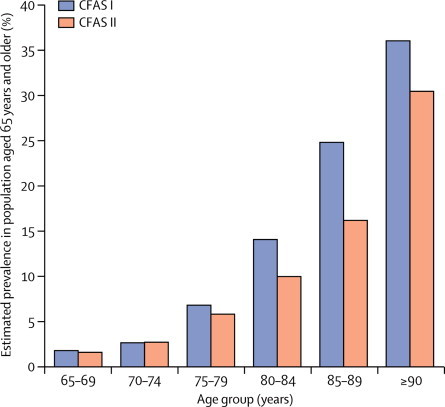
BACKGROUND: The prevalence of dementia is of interest worldwide. Contemporary estimates are needed to plan for future care provision, but much evidence is decades old. We aimed to investigate whether the prevalence of dementia had changed in the past two decades by repeating the same approach and diagnostic methods as used in the Medical Research Council Cognitive Function and Ageing Study (MRC CFAS) in three of the original study areas in England. METHODS: Between 1989 and 1994, MRC CFAS investigators did baseline interviews in populations aged 65 years and older in six geographically defined areas in England and Wales. A two stage process, with screening followed by diagnostic assessment, was used to obtain data for algorithmic diagnoses (geriatric mental state-automated geriatric examination for computer assisted taxonomy), which were then used to estimate dementia prevalence. Data from three of these areas--Cambridgeshire, Newcastle, and Nottingham--were selected for CFAS I. Between 2008 and 2011, new fieldwork was done in the same three areas for the CFAS II study. For both CFAS I and II, each area needed to include 2500 individuals aged 65 years and older to provide power for geographical and generational comparison. Sampling was stratified according to age group (65-74 years vs ≥75 years). CFAS II used identical sampling, approach, and diagnostic methods to CFAS I, except that screening and assessement were combined into one stage. Prevalence estimates were calculated using inverse probability weighting methods to adjust for sampling design and non-response. Full likelihood Bayesian models were used to investigate informative non-response. FINDINGS: 7635 people aged 65 years or older were interviewed in CFAS I (9602 approached, 80% response) in Cambridgeshire, Newcastle, and Nottingham, with 1457 being diagnostically assessed. In the same geographical areas, the CFAS II investigators interviewed 7796 individuals (14,242 approached, 242 with limited frailty information, 56% response). Using CFAS I age and sex specific estimates of prevalence in individuals aged 65 years or older, standardised to the 2011 population, 8·3% (884,000) of this population would be expected to have dementia in 2011. However, CFAS II shows that the prevalence is lower (6·5%; 670,000), a decrease of 1·8% (odds ratio for CFAS II vs CFAS I 0·7, 95% CI 0·6-0·9, p=0·003). Sensitivity analyses suggest that these estimates are robust to the change in response. INTERPRETATION: This study provides further evidence that a cohort effect exists in dementia prevalence. Later-born populations have a lower risk of prevalent dementia than those born earlier in the past century. FUNDING: UK Medical Research Council.
Overview
The claims and statistics of this paper haven’t been checked yet.
Free: it reads the open-access text and checks the first 5 claims that cite a source we can check. Create a free account to check every claim.
Integrity signals
Registry
Cites
Statistics
Figures
Verification
Claims the paper makes
The claims and statistics of this paper haven’t been checked yet.
Free: it reads the open-access text and checks the first 5 claims that cite a source we can check. Create a free account to check every claim.
Claims other papers make about this one
Each is checked against this paper’s own text: does it say what the citing paper says it does?
In the citing paper
“A study in the UK population suggests that the prevalence of dementia may be decreasing, a finding interpreted to reflect the beneficial effects of controlling blood pressure and other risk factors (Matthews et al., 2013).”
From The Pathobiology of Vascular Dementia (2013) · cites this paper as Matthews et al., 2013
Self-check
Percentages, sums and reported differences re-computed from the paper’s own numbers.
The self-check needs the paper’s full text.
Citations
Cites
Global prevalence of dementia: a Delphi consensus study
Ferri, C. P., Prince, M., Brayne, C., Brodaty, H., Fratiglioni, L., Ganguli, M., Hall, K., Hasegawa, K., Hendrie, H., Huang, Y., et al. (2005) · The Lancet · doi:10.1016/s0140-6736(05)67889-0 · Cited by 5,332
Self-citationThe global prevalence of dementia: a systematic review and metaanalysis.
Prince, M., Bryce, R., Albanese, E., Wimo, A., Ribeiro, W., & Ferri, C. P. (2013) · Alzheimer's & Dementia · doi:10.1016/j.jalz.2012.11.007 · Cited by 4,941
Participation Rates in Epidemiologic Studies
Galea, S., & Tracy, M. (2007) · Annals of Epidemiology · doi:10.1016/j.annepidem.2007.03.013 · Cited by 1,877
Health and Deprivation: Inequality and the North
Townsend, P. D., Phillimore, P., & Beattie, A. (1987) · DOAJ (DOAJ: Directory of Open Access Journals) · Cited by 1,473
Marmot, M. G., Allen, J., Goldblatt, P., Boyce, T., McNeish, D., Grady, M., & Geddes, I. (2010) · Europe PMC (PubMed Central) · Cited by 1,404
The worldwide economic impact of dementia 2010
Wimo, A., Jönsson, L., Bond, J., Prince, M., Winblad, B., & International, A. D. (2013) · Alzheimer's & Dementia · doi:10.1016/j.jalz.2012.11.006 · Cited by 1,141
Self-citationMeng, X., & D’Arcy, C. (2012) · PLoS ONE · doi:10.1371/journal.pone.0038268 · Cited by 876
Rates and risk factors for dementia and Alzheimer’s disease: Results from EURODEM pooled analyses
Launer, L. J., Andersen, K., Dewey, M. E., Letenneur, L., Ott, A., Amaducci, L. A., Brayne, C., Copeland, J. R. M., Dartigues, J.-F., Kragh-Sorensen, P., et al. (1999) · Neurology · doi:10.1212/wnl.52.1.78 · Cited by 758
Self-citationCopeland, J. R. M., Dewey, M. E., & Griffiths-Jones, H. M. (1986) · Psychological Medicine · doi:10.1017/s0033291700057779 · Cited by 750
Health and deprivation. Inequality and the North
Mackenbach, J. P. (1988) · Health Policy · doi:10.1016/0168-8510(88)90006-1 · Cited by 661
Cited by
Items 101–200 of 1,000
Heart failure and Alzheimer′s disease
Cermakova, P., Eriksdotter, M., Lund, L. H., Winblad, B., Religa, P., & Religa, D. (2015) · Journal of Internal Medicine · doi:10.1111/joim.12287 · Cited by 163
McCleery, J., Abraham, R. P., Denton, D. A., Rutjes, A. W., Chong, L.-Y., Al-Assaf, A. S., Griffith, D. J., Rafeeq, S., Yaman, H., Malik, M. A., et al. (2018) · Cochrane Database of Systematic Reviews · doi:10.1002/14651858.cd011905.pub2 · Cited by 162
“Matthews 2013 Matthews FE, Arthur A, Barnes LE, Bond J, Jagger C, Robinson L, et al. A two-decade comparison of prevalence of dementia in individuals aged 65 years and older from three geographical areas of England: results of the Cognitive Function and Ageing Study I and II.”
Poor cognitive ageing: Vulnerabilities, mechanisms and the impact of nutritional interventions
Miquel, S., Champ, C., Day, J., Aarts, E., Bahr, B. A., Bakker, M., Bánáti, D., Calabrese, V., Cederholm, T., Cryan, J., et al. (2018) · Ageing Research Reviews · doi:10.1016/j.arr.2017.12.004 · Cited by 162
“As Matthews et al. (2013) argue, whether prevalence rates will continue to rise, ‘ will probably depend on whether further improvements in primary prevention and e ff ective health care for disorders that increase the risk of dementia can be achieved, including addressing inequalities ’ (Matthews et…”
InfluentialVos, S. J. B., van Boxtel, M. P. J., Schiepers, O. J. G., Deckers, K., de Vugt, M., Carrière, I., Dartigues, J.-F., Peres, K., Artero, S., Ritchie, K., et al. (2017) · Journal of Alzheimer’s Disease · doi:10.3233/jad-161208 · Cited by 161
Kenning, C., Daker-White, G., Blakemore, A., Panagioti, M., & Waheed, W. (2017) · BMC Psychiatry · doi:10.1186/s12888-017-1474-0 · Cited by 157
The costs of dementia in England
Wittenberg, R., Knapp, M., Hu, B., Comas‐Herrera, A., King, D., Rehill, A., Shi, C., Banerjee, S., Patel, A., Jagger, C., et al. (2019) · International Journal of Geriatric Psychiatry · doi:10.1002/gps.5113 · Cited by 156
Self-citationDementia in low-income and middle-income countries: Different realities mandate tailored solutions
Ferri, C. P., & Jacob, K. S. (2017) · PLOS Medicine · doi:10.1371/journal.pmed.1002271 · Cited by 154
Is Alzheimer’s Disease Risk Modifiable?
Serrano-Pozo, A., & Growdon, J. H. (2019) · Journal of Alzheimer's Disease · doi:10.3233/jad181028 · Cited by 154
Long Non-coding RNA BACE1-AS May Serve as an Alzheimer’s Disease Blood-Based Biomarker
Fotuhi, S. N., Khalaj‐Kondori, M., Feizi, M. A. H., & Talebi, M. (2019) · Journal of Molecular Neuroscience · doi:10.1007/s12031-019-01364-2 · Cited by 151
English Longitudinal Study of Aging: Can Internet/E-mail Use Reduce Cognitive Decline?
Xavier, A. J., d'Orsi, E., de Oliveira, C. M., Orrell, M., Demakakos, P., Biddulph, J. P., & Marmot, M. G. (2014) · The Journals of Gerontology Series A: Biological Sciences and Medical Sciences · doi:10.1093/gerona/glu105 · Cited by 150
Enteral tube feeding for people with severe dementia
Davies, N., Barrado‐Martín, Y., Vickerstaff, V., Rait, G., Fukui, A., Candy, B., Smith, C. H., Manthorpe, J., Moore, K. J., & Sampson, E. L. (2021) · Cochrane Database of Systematic Reviews · doi:10.1002/14651858.cd013503.pub2 · Cited by 148
Quinn, T. J., Rowan, M. T., Coyte, A., Clark, A., Musgrave, S. D., Metcalf, A. K., Day, D. J., Bachmann, M. O., Warburton, E. A., Potter, J. F., et al. (2017) · Frontiers in Neurology · doi:10.3389/fneur.2017.00275 · Cited by 148
A Social Model of Loneliness: The Roles of Disability, Social Resources, and Cognitive Impairment
Burholt, V., Windle, G., Morgan, D., & CFAS Wales team (2016) · The Gerontologist · doi:10.1093/geront/gnw125 · Cited by 146
Trends in Disease Burden in Germany
Plass, D., Vos, T., Hornberg, C., Scheidt-Nave, C., Zeeb, H., & Krämer, A. (2014) · Deutsches Ärzteblatt international · doi:10.3238/arztebl.2014.0629 · Cited by 145
Kandiah, N., Ong, P. A., Yuda, T., Ng, L., Mamun, K., Merchant, R. A., Chen, C., Dominguez, J., Marasigan, S., Ampil, E., et al. (2019) · CNS Neuroscience & Therapeutics · doi:10.1111/cns.13095 · Cited by 143
Sansano-Nadal, O., Giné-Garriga, M., Brach, J. S., Wert, D. M., Jerez-Roig, J., Guerra-Balic, M., Oviedo, G., Fortuño, J., Gómara-Toldrà, N., Soto-Bagaria, L., et al. (2019) · International Journal of Environmental Research and Public Health · doi:10.3390/ijerph16142527 · Cited by 142
Effect of meditation on cognitive functions in context of aging and neurodegenerative diseases.
Marciniak, R., Sheardova, K., Čermáková, P., Hudeček, D., Šumec, R., & Hort, J. (2014) · Frontiers in Behavioral Neuroscience · doi:10.3389/fnbeh.2014.00017 · Cited by 142
“From a neuropsychological point of view the effect of this method is explained as the activation of the brain areas associated with attention and exclusive functions (frontal area, cingulate cortex), which takes places during the meditation (Newberg et al., 2010a).”
InfluentialCognitive and social lifestyle: links with neuropathology and cognition in late life
Bennett, D. A., Arnold, S. E., Valenzuela, M. J., Brayne, C., & Schneider, J. A. (2014) · Acta Neuropathologica · doi:10.1007/s00401-013-1226-2 · Cited by 142
Self-citationMontreal cognitive assessment (MoCA): Normative data for old and very old Czech adults
Kopeček, M., Štěpánková, H., Lukavský, J., Řípová, D., Nikolai, T., & Bezdíček, O. (2016) · Applied Neuropsychology Adult · doi:10.1080/23279095.2015.1065261 · Cited by 140
Wu, Y., Prina, M. A., Jones, A., Barnes, L., Matthews, F. E., & Brayne, C. (2015) · Age and Ageing · doi:10.1093/ageing/afv137 · Cited by 140
Self-citationHearing Impairment and Incident Dementia: Findings from the English Longitudinal Study of Ageing
Davies, H. R., Cadar, D., Herbert, A., Orrell, M., & Steptoe, A. (2017) · Journal of the American Geriatrics Society · doi:10.1111/jgs.14986 · Cited by 139
Donegan, K., Fox, N., Black, N., Livingston, G., Banerjee, S., & Burns, A. (2017) · The Lancet Public Health · doi:10.1016/s2468-2667(17)30031-2 · Cited by 139
Bacigalupo, I., Mayer, F., Lacorte, E., Di Pucchio, A., Marzolini, F., Canevelli, M., Di Fiandra, T., & Vanacore, N. (2018) · Journal of Alzheimer's Disease · doi:10.3233/jad-180416 · Cited by 139
Stress, Meditation, and Alzheimer’s Disease Prevention: Where The Evidence Stands
Khalsa, D. S. (2015) · Journal of Alzheimer’s Disease · doi:10.3233/jad-142766 · Cited by 137
Ponjoan, A., Garre‐Olmo, J., Blanch, J., Fages, E., Alves‐Cabratosa, L., Martí‐Lluch, R., Comas‐Cufí, M., Parramon, D., García-Gil, M., & Ramos, R. (2019) · Clinical Epidemiology · doi:10.2147/clep.s186590 · Cited by 137
Mukadam, N., Wolters, F. J., Walsh, S., Wallace, L., Brayne, C., Matthews, F. E., Sacuiu, S., Skoog, I., Seshadri, S., Beiser, A., et al. (2024) · The Lancet Public Health · doi:10.1016/s2468-2667(24)00120-8 · Cited by 136
Self-citationO'Brien, N., Heaven, B., Teal, G., Evans, E. H., Cleland, C., Moffatt, S., Sniehotta, F. F., White, M., Mathers, J. C., & Moynihan, P. (2016) · Journal of Medical Internet Research · doi:10.2196/jmir.5790 · Cited by 135
“Despite recent evidence that today’s older adults are healthier than they were 10-20 years ago [39], with a globally ageing population and the accompanying increase in the prevalence of chronic ill health and morbidity [40], maintaining a healthy lifestyle into later years is vital for individual…”
Dardiotis, E., Kosmidis, M. H., Yannakoulia, M., Hadjigeorgiou, G. M., & Scarmeas, N. (2014) · Neuroepidemiology · doi:10.1159/000362723 · Cited by 134
Drew, L. (2018) · Nature · doi:10.1038/d41586-018-05718-5 · Cited by 133
Montreal Cognitive Assessment for the detection of dementia
Davis, D. H., Creavin, S. T., Yip, J. L., Noel-Storr, A. H., Brayne, C., & Cullum, S. (2021) · Cochrane Database of Systematic Reviews · doi:10.1002/14651858.cd010775.pub3 · Cited by 132
Self-citationModifiable Risk Factors in Alzheimer Disease and Related Dementias: A Review
Litke, R. R., Garcharna, L. C., Jiwani, S., & Neugroschl, J. A. (2021) · Clinical Therapeutics · doi:10.1016/j.clinthera.2021.05.006 · Cited by 132
Kelly, S., Lafortune, L., Hart, N. J., Cowan, K., Fenton, M., & Brayne, C. (2015) · Age and Ageing · doi:10.1093/ageing/afv143 · Cited by 131
Self-citationPublic knowledge and beliefs about dementia risk reduction: a national survey of Australians
Smith, B. J., Ali, S., & Quach, H. (2014) · BMC Public Health · doi:10.1186/1471-2458-14-661 · Cited by 129
“Recent epidemiological studies which have reported a decline in the prevalence of dementia among the elderly, compared with earlier cohorts, suggest that reductions in risk factors at the population level and improvements in standards of living and health care can lower the burden of disease due to this condition [19,…”
Harrison, J. K., Fearon, P., Noel-Storr, A. H., McShane, R., Stott, D. J., & Quinn, T. J. (2015) · Cochrane Database of Systematic Reviews · doi:10.1002/14651858.cd010772.pub2 · Cited by 128
Dance movement therapy for dementia
Karkou, V., & Meekums, B. (2017) · Cochrane Database of Systematic Reviews · doi:10.1002/14651858.cd011022.pub2 · Cited by 128
Review: Impact of Helicobacter pylori on Alzheimer's disease: What do we know so far?
Doulberis, M., Kotronis, G., Thomann, R., Polyzos, S. A., Boziki, M., Gialamprinou, D., Deretzi, G., Katsinelos, P., & Kountouras, J. (2018) · Helicobacter · doi:10.1111/hel.12454 · Cited by 127
Aging without Dementia is Achievable: Current Evidence from Epidemiological Research
Qiu, C., & Fratiglioni, L. (2018) · Journal of Alzheimer’s Disease · doi:10.3233/jad-171037 · Cited by 126
Richardson, S. J., Davis, D. H. J., Stephan, B. C. M., Robinson, L., Brayne, C., Barnes, L. E., Taylor, J.-P., Parker, S. G., & Allan, L. M. (2021) · Age and Ageing · doi:10.1093/ageing/afaa244 · Cited by 125
Self-citationIncidence of Dementia over Three Decades in the Framingham Heart Study
Satizabal, C., Beiser, A., & Seshadri, S. (2016) · New England Journal of Medicine · doi:10.1056/nejmc1604823 · Cited by 124
Childhood Lead Exposure and Adult Neurodegenerative Disease
Reuben, A. (2018) · Journal of Alzheimer’s Disease · doi:10.3233/jad-180267 · Cited by 124
Gao, L., Maidment, I., Matthews, F. E., Robinson, L., Brayne, C., & on behalf of the Medical Research Council Cognitive Function and Ageing Study (2018) · Age and Ageing · doi:10.1093/ageing/afx158 · Cited by 123
Self-citationOn the central role of mitochondria dysfunction and oxidative stress in Alzheimer’s disease
Tobore, T. O. (2019) · Neurological Sciences · doi:10.1007/s10072-019-03863-x · Cited by 122
Perneczky, R., Kempermann, G., Korczyn, A. D., Matthews, F. E., Ikram, M. A., Scarmeas, N., Chételat, G., Stern, Y., & Ewers, M. (2019) · BMC Medicine · doi:10.1186/s12916-019-1283-z · Cited by 120
Self-citation2026 Alzheimer's disease facts and figures
Alzheimer's, T. S. O. A. D. A. A. W. S. C. I. T. B. I., neurons, T. B. N. A. E. A. A. H. A. B. H. B. O., long, E. W., connections, B. E. T. E. E. I. N. T. F. C. W. O. N. A. S., synapses, C., memories, I. F. I. T. B. O. C. T. A. R. B. O. N. A. T. U. B. A. N. T. B. C. T. O. S. T. A. S. T. T. R. T. T. B. T. S. F. T. C. B. O., thoughts, sensations, emotions, & skills., M. A. (2026) · Alzheimer s & Dementia · doi:10.1002/alz.71345 · Cited by 126
Rogers, N. T., Steptoe, A., & Cadar, D. (2017) · Scientific Reports · doi:10.1038/s41598-017-16104-y · Cited by 118
Trends in dementia incidence: Evolution over a 10‐year period in France
Grasset, L., Brayne, C., Joly, P., Jacqmin‐Gadda, H., Peres, K., Foubert‐Samier, A., Dartigues, J., & Helmer, C. (2016) · Alzheimer's & Dementia · doi:10.1016/j.jalz.2015.11.001 · Cited by 118
Self-citationVitamin D in dementia prevention
Annweiler, C. (2016) · Annals of the New York Academy of Sciences · doi:10.1111/nyas.13058 · Cited by 118
Bowen, M., Edgar, D. F., Hancock, B., Haque, S. M., Shah, R., Buchanan, S., Iliffe, S., Maskell, S., Pickett, J., Taylor, J., et al. (2016) · Health Services and Delivery Research · doi:10.3310/hsdr04210 · Cited by 117
Quinn, T. J., Fearon, P., Noel-Storr, A. H., Young, C., McShane, R., & Stott, D. J. (2014) · Cochrane Database of Systematic Reviews · doi:10.1002/14651858.cd010079.pub2 · Cited by 116
Vascular dementia: From pathobiology to emerging perspectives
Morgan, A. E., & Auley, M. T. M. (2024) · Ageing Research Reviews · doi:10.1016/j.arr.2024.102278 · Cited by 116
Lesuis, S. L., Hoeijmakers, L., Korosi, A., de Rooij, S. R., Swaab, D. F., Kessels, H. W., Lucassen, P. J., & Krugers, H. J. (2018) · Alzheimer's Research & Therapy · doi:10.1186/s13195-018-0422-7 · Cited by 115
Wu, Y., Prina, M. A., Jones, A., Matthews, F. E., & Brayne, C. (2017) · American Journal of Preventive Medicine · doi:10.1016/j.amepre.2016.11.020 · Cited by 115
Self-citationRibeiro, F., Teixeira-Santos, A. C., Caramelli, P., & Leist, A. K. (2022) · Ageing Research Reviews · doi:10.1016/j.arr.2022.101703 · Cited by 114
“Given that high-income countries present a decrease in number of dementia prevalence lately (Langa et al., 2017; Matthews et al., 2013; Satizabal et al., 2016), we qualitatively investigated secular trends in LAC.”
Kuller, L. H., Lopez, O. L., Mackey, R. H., Rosano, C., Edmundowicz, D., Becker, J. T., & Newman, A. B. (2016) · Journal of the American College of Cardiology · doi:10.1016/j.jacc.2015.12.034 · Cited by 114
Alzheimer's disease: The next frontier—Special Report 2017
Karlawish, J., Jack, C. R., Rocca, W. A., Snyder, H. M., & Carrillo, M. C. (2017) · Alzheimer's & Dementia · doi:10.1016/j.jalz.2017.02.006 · Cited by 113
Robine, J., Jagger, C., Crimmins, E. M., Saito, Y., & Oyen, H. J. V. (2020) · International handbooks of population · doi:10.1007/978-3-030-37668-0_2 · Cited by 112
Self-citationThe changing health needs of the UK population
McKee, M., Dunnell, K., Anderson, M., Brayne, C., Charlesworth, A., Johnston-Webber, C., Knapp, M. R. J., McGuire, A. J., Newton, J. N., Taylor, D. G., et al. (2021) · The Lancet · doi:10.1016/s0140-6736(21)00229-4 · Cited by 110
Self-citationPorter, B., Arthur, A. J., & Savva, G. M. (2019) · BMJ Open · doi:10.1136/bmjopen-2018-026171 · Cited by 110
Self-citationA Primary Care Agenda for Brain Health: A Scientific Statement From the American Heart Association
Lazar, R. M., Howard, V. J., Kernan, W. N., Aparicio, H. J., Levine, D. A., Viera, A. J., Jordan, L. C., Nyenhuis, D. L., Possin, K. L., Sorond, F. A., et al. (2021) · Stroke · doi:10.1161/str.0000000000000367 · Cited by 109
Advances in the prevention of Alzheimer's Disease
Sindi, S., Mangialasche, F., & Kivipelto, M. (2015) · F1000Prime Reports · doi:10.12703/p7-50 · Cited by 109
Sarant, J. Z., Harris, D., Busby, P. A., Maruff, P. T., Schembri, A. J., Dowell, R. C., & Briggs, R. (2019) · Frontiers in Neuroscience · doi:10.3389/fnins.2019.00789 · Cited by 109
Remembering the forgotten non-communicable diseases
Lopez, A. D., Williams, T. N., Levin, A., Tonelli, M., Singh, J. A., Burney, P. G., Rehm, J., Volkow, N. D., Koob, G., & Ferri, C. P. (2014) · BMC Medicine · doi:10.1186/s12916-014-0200-8 · Cited by 108
Quality end-of-life care for dementia: What have family carers told us so far? A narrative synthesis
Davies, N., Maio, L., Rait, G., & Iliffe, S. (2014) · Palliative Medicine · doi:10.1177/0269216314526766 · Cited by 108
From lifespan to healthspan: the role of nutrition in healthy ageing
Wickramasinghe, K. K., Mathers, J. C., Wopereis, S., Marsman, D. S., & Griffiths, J. C. (2020) · Journal of Nutritional Science · doi:10.1017/jns.2020.26 · Cited by 110
Forbes, S. C., Holroyd-Leduc, J. M., Poulin, M. J., & Hogan, D. B. (2015) · Canadian Geriatrics Journal · doi:10.5770/cgj.18.189 · Cited by 106
Projections of demand for healthcare in Ireland, 2015-2030: First report from the Hippocrates Model
ESRI, Wren, M., Keegan, C., Walsh, B., ESRI, Bergin, A., Eighan, J., Brick, A., Connolly, S., ESRI, et al. (2017) · doi:10.26504/rs67 · Cited by 106
Secular Trends in Dementia Prevalence and Incidence Worldwide: A Systematic Review
Stephan, B. C. M., Birdi, R., Tang, E. Y. H., Cosco, T. D., Donini, L. M., Licher, S., Ikram, M. A., Siervo, M., & Robinson, L. (2018) · Journal of Alzheimer's Disease · doi:10.3233/jad-180375 · Cited by 105
Self-citationModifying the consistency of food and fluids for swallowing difficulties in dementia
Flynn, É., Smith, C. H., Walsh, C., & Walshe, M. (2018) · Cochrane Database of Systematic Reviews · doi:10.1002/14651858.cd011077.pub2 · Cited by 105
Kuo, C.-Y., Stachiv, I., & Nikolai, T. (2020) · International Journal of Environmental Research and Public Health · doi:10.3390/ijerph17207475 · Cited by 104
Association of Motoric Cognitive Risk Syndrome With Brain Volumes: Results From the GAIT Study.
Beauchet, O., Allali, G., Annweiler, C., & Verghese, J. (2016) · The journals of gerontology. Series A, Biological sciences and medical sciences · doi:10.1093/gerona/glw012 · Cited by 88
Gao, M., Kuang, W., Qiu, P., Wang, H., Lv, X., & Yang, M. (2017) · Age and Ageing · doi:10.1093/ageing/afx038 · Cited by 101
Ritchie, C. W., Terrera, G. M., & Quinn, T. J. (2015) · Alzheimer's Research & Therapy · doi:10.1186/s13195-015-0113-6 · Cited by 101
Lamb, S. E., Mistry, D., Alleyne, S., Atherton, N., Brown, D., Copsey, B., Dosanjh, S., Finnegan, S., Fordham, B., Griffiths, F., et al. (2018) · Health Technology Assessment · doi:10.3310/hta22280 · Cited by 98
“Applications for commercial reproduction should be addressed to: NIHR Journals Library, National Institute for Health Research, Evaluation, Trials and Studies Coordinating Centre, Alpha House, University of Southampton Science Park, Southampton SO16 7NS, UK. v”
InfluentialMeijer, E., Casanova, M., Kim, H., Nozal, A. L., & Lee, J. (2022) · The Lancet Regional Health - Europe · doi:10.1016/j.lanepe.2022.100445 · Cited by 98
Gerstorf, D., Hülür, G., Drewelies, J., Eibich, P., Duezel, S., Demuth, I., Ghisletta, P., Steinhagen-Thiessen, E., Wagner, G. G., & Lindenberger, U. (2015) · Psychology and Aging · doi:10.1037/pag0000016 · Cited by 97
Hudomiet, P., Hurd, M. D., & Rohwedder, S. (2018) · The Journals of Gerontology: Series B · doi:10.1093/geronb/gbx169 · Cited by 96
Davies, N., Mathew, R., Wilcock, J., Manthorpe, J., Sampson, E. L., Lamahewa, K., & Iliffe, S. (2016) · BMC Palliative Care · doi:10.1186/s12904-016-0146-z · Cited by 95
Creer, S., Enderby, P., Judge, S., & John, A. S. (2016) · International Journal of Language & Communication Disorders · doi:10.1111/1460-6984.12235 · Cited by 94
Dagres, N., Chao, T.-F., Fenelon, G., Aguinaga, L., Benhayon, D., Benjamin, E. J., Bunch, T. J., Chen, L. Y., Chen, S.-A., Darrieux, F., et al. (2018) · EP Europace · doi:10.1093/europace/euy046 · Cited by 94
World Alzheimer Report 2013:Journey of Caring: An analysis of long-term care for dementia
Prince, M. J., Prina, M., & Guerchet, M. (2013) · Research Portal (King's College London) · Cited by 94
Lautenschlager, N. T., Cox, K. L., & Ellis, K. A. (2019) · Phlebolymphology · doi:10.31887/dcns.2019.21.1/nlautenschlager · Cited by 91
Respiratory Disease and Lower Pulmonary Function as Risk Factors for Dementia
Russ, T. C., Kivimäki, M., & Batty, G. D. (2020) · CHEST Journal · doi:10.1016/j.chest.2019.12.012 · Cited by 90
Do Lifestyle Activities Protect Against Cognitive Decline in Aging? A Review
Christie, G. J., Hamilton, T., Manor, B., Farb, N. A. S., Farzan, F., Sixsmith, A. J., Temprado, J.-J., & Moreno, S. (2017) · Frontiers in Aging Neuroscience · doi:10.3389/fnagi.2017.00381 · Cited by 93
Dagres, N., Chao, T., Fenelon, G., Aguinaga, L., Benhayon, D. A., Benjamin, E. J., Bunch, T. J., Chen, L. Y., Chen, S., Darrieux, F., et al. (2018) · Journal of Arrhythmia · doi:10.1002/joa3.12050 · Cited by 90
Brayne, C., & Moffitt, T. E. (2022) · Nature Aging · doi:10.1038/s43587-022-00277-x · Cited by 89
Self-citationSantabárbara, J., Lipnicki, D. M., Olaya, B., Villagrasa, B., Bueno‐Notivol, J., Nuez, L., López‐Antón, R., & Gracia‐García, P. (2020) · Journal of Clinical Medicine · doi:10.3390/jcm9061791 · Cited by 90
Grossi, C. M., Richardson, K., Savva, G. M., Fox, C., Arthur, A. J., Loke, Y. K., Steel, N., Brayne, C., Matthews, F. E., Robinson, L. A., et al. (2020) · BMC Geriatrics · doi:10.1186/s12877-020-01657-x · Cited by 89
Self-citationVision Impairment and Risk of Dementia: Findings from the English Longitudinal Study of Ageing
Davies‐Kershaw, H. R., Hackett, R. A., Cadar, D., Herbert, A., Orrell, M., & Steptoe, A. (2018) · Journal of the American Geriatrics Society · doi:10.1111/jgs.15456 · Cited by 88
Much more medicine for the oldest old: trends in UK electronic clinical records
Melzer, D. R., Tavakoly, B., Winder, R. E., Masoli, J. A. H., Henley, W., Blè, A., & Richards, S. H. (2014) · Age and Ageing · doi:10.1093/ageing/afu113 · Cited by 88
Barker, R., Hanratty, B., Kingston, A., Ramsay, S. E., & Matthews, F. E. (2020) · Age and Ageing · doi:10.1093/ageing/afaa227 · Cited by 88
Self-citationFuture projections of the prevalence of dementia in Japan: results from the Toyama Dementia Survey
Nakahori, N., Sekine, M., Yamada, M., Tatsuse, T., Kido, H., & Suzuki, M. (2021) · BMC Geriatrics · doi:10.1186/s12877-021-02540-z · Cited by 87
Dementia incidence trend over 1992-2014 in the Netherlands: Analysis of primary care data
van Bussel, E. F., Richard, E., Arts, D. L., Nooyens, A. C. J., Coloma, P. M., de Waal, M. W. M., van den Akker, M., Biermans, M. C. J., Nielen, M. M. J., van Boven, K., et al. (2017) · PLoS Medicine · doi:10.1371/journal.pmed.1002235 · Cited by 86
Self-citationLesuis, S. L., Weggen, S., Baches, S., Lucassen, P. J., & Krugers, H. J. (2018) · Translational Psychiatry · doi:10.1038/s41398-018-0101-2 · Cited by 85
Whitty, E., Mansour, H., Aguirre, E., Palomo, M., Charlesworth, G., Ramjee, S., Poppe, M., Brodaty, H., Kales, H. C., Morgan-Trimmer, S., et al. (2020) · Ageing Research Reviews · doi:10.1016/j.arr.2020.101113 · Cited by 84
Observational cohort study: deprivation and access to anti-dementia drugs in the UK
Cooper, C., Lodwick, R., Walters, K., Raine, R., Manthorpe, J., Iliffe, S., & Petersen, I. (2016) · Age and Ageing · doi:10.1093/ageing/afv154 · Cited by 84
Trends in inequalities in the prevalence of dementia in the United States
Hudomiet, P., Hurd, M. D., & Rohwedder, S. (2022) · Proceedings of the National Academy of Sciences · doi:10.1073/pnas.2212205119 · Cited by 83
Skoog, I., Börjesson-Hanson, A., Kern, S., Johansson, L., Falk, H., Sigström, R., & Östling, S. (2017) · Scientific Reports · doi:10.1038/s41598-017-05022-8 · Cited by 83
Trends in the Risk of Cognitive Impairment in the United States, 1996–2014
Hale, J. M., Schneider, D. C., Gampe, J., Mehta, N. K., & Myrskylä, M. (2020) · Epidemiology · doi:10.1097/ede.0000000000001219 · Cited by 83
Older age at retirement is associated with decreased risk of dementia
Dufouil, C., Pereira, E., Chêne, G., Glymour, M. M., Alpérovitch, A., Saubusse, É., Risse‐Fleury, M., Heuls, B., Salord, J., Brieu, M., et al. (2014) · European Journal of Epidemiology · doi:10.1007/s10654-014-9906-3 · Cited by 83
Cerebral Haemodynamics: Effects of Systemic Arterial Pulsatile Function and Hypertension
Avolio, A. P., Kim, M., Adji, A. I., Gangoda, S. V. S., Avadhanam, B., Tan, I., & Butlin, M. (2018) · Current Hypertension Reports · doi:10.1007/s11906-018-0822-x · Cited by 83
Metadata
- Authors
- Matthews, F. E., Arthur, A., Barnes, L. E., Bond, J., Jagger, C., Robinson, L., & Brayne, C.
- Affiliations
- University of Cambridge (GB)
- University of East Anglia (GB)
- Newcastle University (GB)
- Corresponding author
- Brayne, Carol
- Venue
- The Lancet
- Publisher
- Elsevier BV
- Published
- 2013-10
- Volume
- 382
- Issue
- 9902
- Pages
- 1405-1412
- ISSN
- 0099-5355 (ISSN-L)
- 0140-6736
- PMC
- PMC3906607
- OpenAlex
- W2102315975
- Semantic Scholar
- 2e6f35b50f133a6ece9eba71c4114df43c37054d
- Cited by
- 1,155
- References
- 40
- Citations by year
- 2026: 15 · 2025: 34 · 2024: 33 · 2023: 47 · 2022: 51 · 2021: 76 · 2020: 104 · 2019: 98 · 2018: 218 · 2017: 97 · 2016: 102 · 2015: 157 · 2014: 99 · 2013: 23
- FWCI
- 88.34
- Type
- journal article
- Language
- en
- Open access
- hybrid
- doi.org
- Licence
- cc-by
- www.elsevier.com/tdm/userlicense/1.0/ (tdm)
- creativecommons.org/licenses/by/3.0/ (vor)
- Locations
- The Lancet (publishedVersion, cc-by)
- Europe PMC (PubMed Central) (publishedVersion, cc-by)
- PubMed Central (publishedVersion, cc-by)
- PubMed (publishedVersion)
- Repository@Hull (Worktribe) (University of Hull) (submittedVersion, cc-by)
- UEA Digital Repository (University of East Anglia) (submittedVersion)
- Newcastle University ePrints (Newcastle Univesity)
- Funders
- UK Medical Research Council (G0601022)
- MRC (U105292687)
- Topics
- Health Sciences › Medicine › Psychiatry and Mental health › Dementia and Cognitive Impairment Research
- Health Sciences › Medicine › Public Health, Environmental and Occupational Health › Aging, Health, and Disability
- Health Sciences › Medicine › Psychiatry and Mental health › Mental Health Treatment and Access
- Keywords
- dementia prevalence, older adults, cognitive function, Geriatric Mental State, dementia screening, nonresponse adjustment, inverse probability weighting, dementia care planning, England, Cambridgeshire, Newcastle, Nottingham, MRC Cognitive Function and Ageing Study
- MeSH terms
- Aged, Aged, 80 and over, Dementia, England, Female, Humans, Male, Residence Characteristics, Cohort Studies, Cohort Effect, Prevalence, Age Distribution, Sex Distribution
About these checks
Registry, retraction, Cites and statistics results are computed, not judged, with one exception: a printed reference that no index lists is read once by a model before it counts as a citation error. Claims are extracted by a model and kept only when their quote appears verbatim in the text; each cited source is then checked, with a model’s help, for whether it says what the claim relies on. Those verdicts can be wrong — read the claim’s quote and the cited source before relying on one.
Statistics and arithmetic are recomputed, not judged.
Confidence bands are shown only for fields calibrated on our annotated test set. None is calibrated yet, so no band is shown.
What counts as a claim ›How we measure confidence ›How we check this ›
Are you an author, or do you see a problem with this page? Request a review
Data sources
Bibliographic data: Semantic Scholar, OpenAlex, Crossref.
Contains information from the Semantic Scholar Academic Graph Datasets, made available under the ODC Attribution License (ODC-BY 1.0).
Semantic Scholar’s data is described in: Kinney, R., et al. (2023). The Semantic Scholar Open Data Platform. arXiv:2301.10140.
