

The DOI matches its Crossref record; 141 of the 141 references it cites were found in a registry or an index.
Schizophrenia
Open accessAbstract
Schizophrenia is a complex, heterogeneous behavioural and cognitive syndrome that seems to originate from disruption of brain development caused by genetic or environmental factors, or both. Dysfunction of dopaminergic neurotransmission contributes to the genesis of psychotic symptoms, but evidence also points to a widespread and variable involvement of other brain areas and circuits. Disturbances of synaptic function might underlie abnormalities of neuronal connectivity that possibly involves interneurons, but the precise nature, location, and timing of these events are uncertain. At present, treatment mainly consists of antipsychotic drugs combined with psychological therapies, social support, and rehabilitation, but a pressing need for more effective treatments and delivery of services exists. Advances in genomics, epidemiology, and neuroscience have led to great progress in understanding the disorder, and the opportunities for further scientific breakthrough are numerous--but so are the challenges.
Overview
The claims and statistics of this paper haven’t been checked yet.
Run the check — free, no account needed. It reads the open-access text and checks the sources it cites.
Integrity signals
Registry
Cites
Statistics
Figures
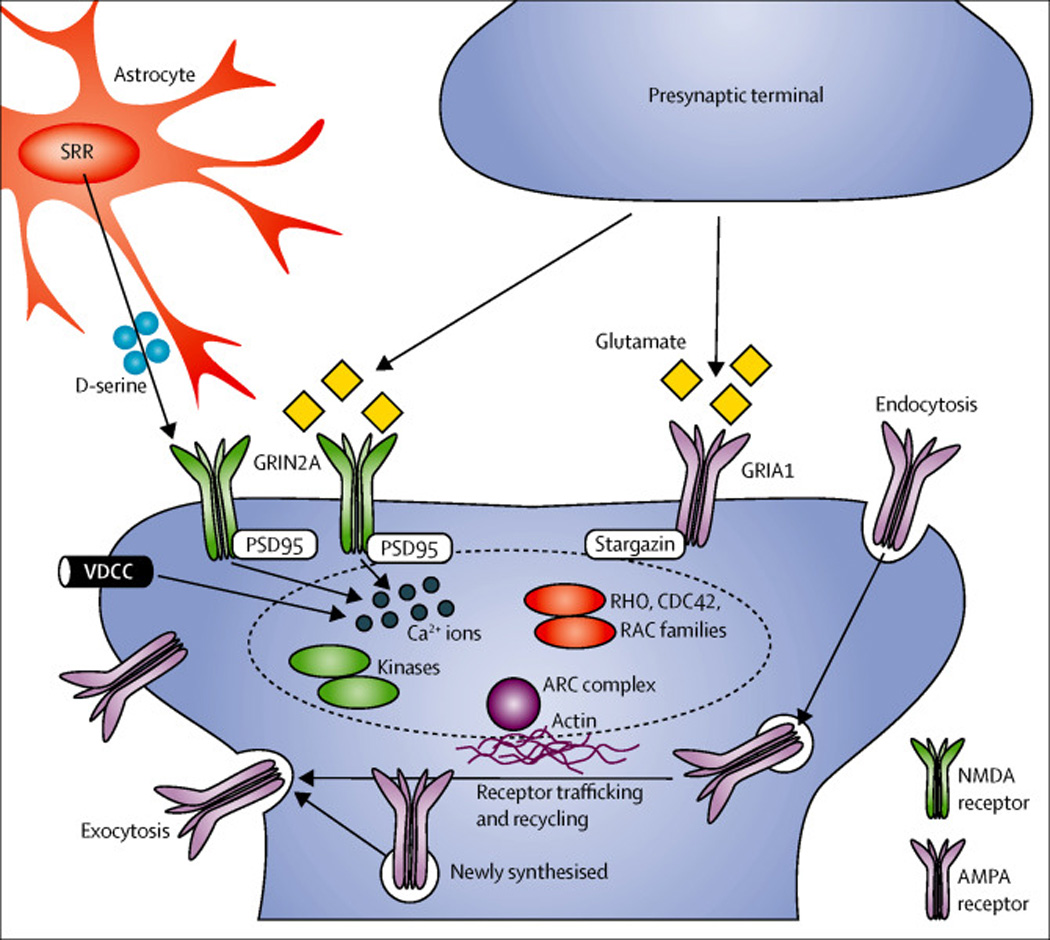
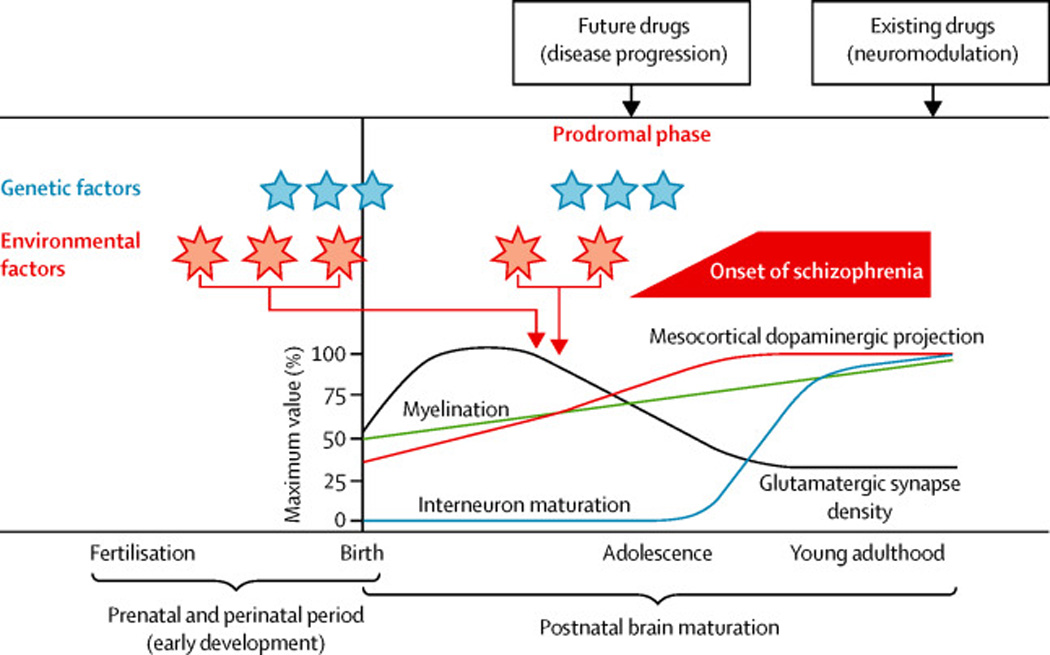
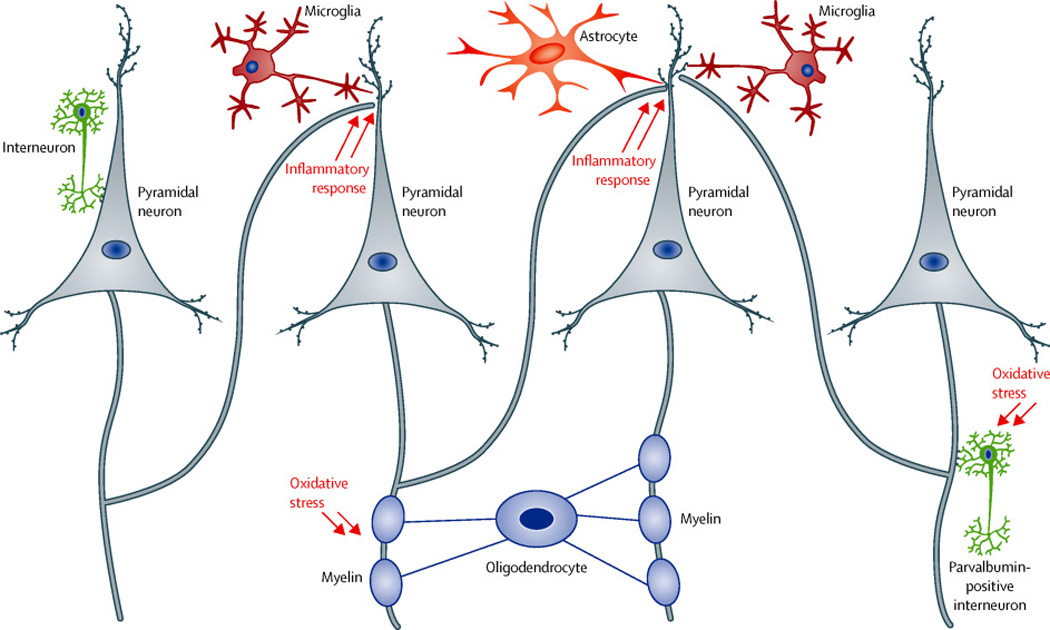
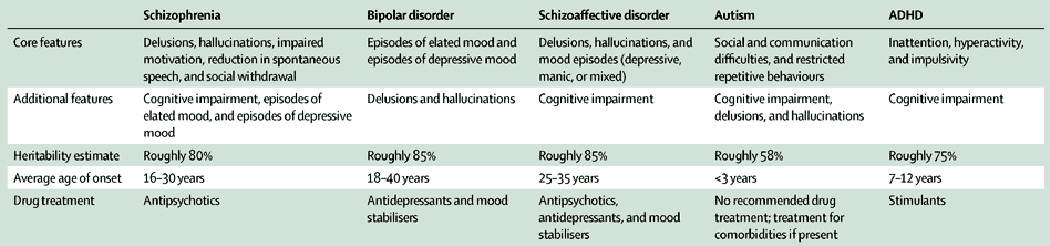
Verification
Claims the paper makes
The claims and statistics of this paper haven’t been checked yet.
Run the check — free, no account needed. It reads the open-access text and checks the sources it cites.
Claims other papers make about this one
Each is checked against this paper’s own text: does it say what the citing paper says it does?
In the citing paper
“This suggests that abnormal neuronal function in schizophrenia is not confined to a small number of brain structures, which in turn might explain its diverse psychopathology, association with a broad range of cognitive impairments, and lack of regional specificity in neuroimaging measures1.”
From Mapping genomic loci implicates genes and synaptic biology in schizophrenia (2022) · cites this paper as [1]
Self-check
Percentages, sums and reported differences re-computed from the paper’s own numbers.
The self-check needs the paper’s full text.
Citations
Cites
Biological insights from 108 schizophrenia-associated genetic loci
Schizophrenia Working Group of the Psychiatric Genomics Consortium (2014) · Nature · doi:10.1038/nature13595 · Cited by 7,577
Davey Smith, G., & Ebrahim, S. (2003) · International Journal of Epidemiology · doi:10.1093/ije/dyg070 · Cited by 5,882
Synaptic Pruning by Microglia Is Necessary for Normal Brain Development
Paolicelli, R. C., Bolasco, G., Pagani, F., Maggi, L., Scianni, M., Panzanelli, P., Giustetto, M., Ferreira, T. A., Guiducci, E., Dumas, L., et al. (2011) · Science · doi:10.1126/science.1202529 · Cited by 4,244
Microglia Sculpt Postnatal Neural Circuits in an Activity and Complement-Dependent Manner
Schafer, D. P., Lehrman, E. K., Kautzman, A. G., Koyama, R., Mardinly, A. R., Yamasaki, R., Ransohoff, R. M., Greenberg, M. E., Barres, B. A., & Stevens, B. (2012) · Neuron · doi:10.1016/j.neuron.2012.03.026 · Cited by 4,089
Wang, H., Yang, H., Shivalila, C. S., Dawlaty, M. M., Cheng, A. W., Zhang, F., & Jaenisch, R. (2013) · Cell · doi:10.1016/j.cell.2013.04.025 · Cited by 3,495
Leucht, S., Cipriani, A., Spineli, L., Mavridis, D., Örey, D., Richter, F., Samara, M., Barbui, C., Engel, R. R., Geddes, J. R., et al. (2013) · The Lancet · doi:10.1016/s0140-6736(13)60733-3 · Cited by 2,561
Varese, F., Smeets, F., Drukker, M., Lieverse, R., Lataster, T., Viechtbauer, W., Read, J., van Os, J., & Bentall, R. P. (2012) · Schizophrenia Bulletin · doi:10.1093/schbul/sbs050 · Cited by 2,436
Schizophrenia as a Complex Trait: Evidence From a Meta-analysis of Twin Studies
Sullivan, P. F., Kendler, K. S., & Neale, M. C. (2003) · Archives of General Psychiatry · doi:10.1001/archpsyc.60.12.1187 · Cited by 2,356
van Os, J., Linscott, R. J., Myin-Germeys, I., Delespaul, P., & Krabbendam, L. (2009) · Psychological Medicine · doi:10.1017/s0033291708003814 · Cited by 2,343
Schizophrenia: A Concise Overview of Incidence, Prevalence, and Mortality
McGrath, J., Saha, S., Chant, D., & Welham, J. (2008) · Epidemiologic Reviews · doi:10.1093/epirev/mxn001 · Cited by 2,280
Cited by
Sorted by citations
Items 601–700 of 1,000
Biased Profile of Xanomeline at the Recombinant Human M4 Muscarinic Acetylcholine Receptor
McDonald, J. K., van der Westhuizen, E. T., Pham, V., Thompson, G. V., Felder, C. C., Paul, S. M., Thal, D. M., Christopoulos, A., & Valant, C. (2022) · ACS Chemical Neuroscience · doi:10.1021/acschemneuro.1c00827 · Cited by 17
Neuronal oscillations: early biomarkers of psychiatric disease?
Günther, A., & Hanganu‐Opatz, I. L. (2022) · Frontiers in Behavioral Neuroscience · doi:10.3389/fnbeh.2022.1038981 · Cited by 20
Singer, P., & Yee, B. K. (2023) · Frontiers in Cellular Neuroscience · doi:10.3389/fncel.2023.1120532 · Cited by 17
Ceylan, M. F., Hesapçıoğlu, S. T., Yüksekkaya, S. K., Erçin, G., Yavas, C. P., Neşeli̇oğlu, S., & Erel, Ö. (2023) · Journal of Psychiatric Research · doi:10.1016/j.jpsychires.2023.03.027 · Cited by 18
Shamabadi, A., Noor, S. F., Fallahpour, B., Basti, F. A., Ardakani, M. R. K., & Akhondzadeh, S. (2023) · Psychopharmacology · doi:10.1007/s00213-023-06458-9 · Cited by 18
Dong, D., Wang, Y., Zhou, F., Chang, X., Qiu, J., Feng, T., He, Q., Lei, X., & Chen, H. (2023) · Schizophrenia Bulletin · doi:10.1093/schbul/sbad179 · Cited by 17
Álvarez-Herrera, S., Rosel-Vales, M., Pérez‐Sánchez, G., Becerril‐Villanueva, E., Flores-Medina, Y., Maldonado-García, J. L., Saracco-Álvarez, R. A., Escamilla-Orozco, R. I., & Pavón, L. (2024) · Pharmaceuticals · doi:10.3390/ph17020167 · Cited by 17
Pei, H., Jiang, S., Liu, M., Ye, G., Qin, Y. F., Liu, Y., Duan, M., Yao, D., & Luo, C. (2024) · International Journal of Neural Systems · doi:10.1142/s012906572450031x · Cited by 17
Lu, Z.-A., Ploner, A., Birgegård, A., Adan, R. A. H., Alfredsson, L. S., Ando, T., Andreassen, O. A., Baker, J. H., Bergen, A. W., Berrettini, W. H., et al. (2024) · Schizophrenia Bulletin · doi:10.1093/schbul/sbae087 · Cited by 17
RIT2: responsible and susceptible gene for neurological and psychiatric disorders
Daneshmandpour, Y., Darvish, H., & Emamalizadeh, B. (2018) · Molecular Genetics and Genomics · doi:10.1007/s00438-018-1451-4 · Cited by 15
Association between ADORA2A gene polymorphisms and schizophrenia in the North Chinese Han population
Miao, J., Liu, L., Yan, C., Zhu, X., Fan, M., Yu, P., Ji, K., Huang, Y., Wang, Y., & Zhu, G. (2019) · Neuropsychiatric Disease and Treatment · doi:10.2147/ndt.s205014 · Cited by 17
Xiong, J., Zhan, J., Luo, T., Chen, H., Wan, Q., Wang, Y., Wei, B., & Yang, Y. (2020) · Frontiers in Neuroscience · doi:10.3389/fnins.2020.00610 · Cited by 17
Lee, S.-C., Liu, C.-C., Kuo, C., Hsueh, I., & Hsieh, C.-L. (2020) · Journal of Affective Disorders · doi:10.1016/j.jad.2020.07.003 · Cited by 16
Sun, Z., Gu, L.-H., Ma, D., Wang, M., Yang, C., Zhang, L., Li, X., Zhang, J., & Li, L. (2021) · Brain Research Bulletin · doi:10.1016/j.brainresbull.2021.06.007 · Cited by 17
Volatile organic compounds from exhaled breath in schizophrenia
Jiang, C., Dobrowolny, H., Gescher, D. M., Meyer-Lotz, G., Steiner, J. H., Hoeschen, C., & Frodl, T. (2022) · The World Journal of Biological Psychiatry · doi:10.1080/15622975.2022.2040052 · Cited by 17
Saris, I. M. J., Aghajani, M., Jongs, N., Reus, L. M., van der Wee, N. J. A., Bilderbeck, A. C., Rossum, I. W.-V., Arango, C., de la Torre‐Luque, A., Malik, A., et al. (2022) · PLoS ONE · doi:10.1371/journal.pone.0263769 · Cited by 17
Innovative Versorgungsmodelle für Menschen mit schizophrenen Erkrankungen
Lambert, M., Kraft, V., Rohenkohl, A. C., Ruppelt, F., Schröter, R., Lüdecke, D., Linschmann, B., Eich, S., Tlach, L., Lion, D., et al. (2019) · Bundesgesundheitsblatt - Gesundheitsforschung - Gesundheitsschutz · doi:10.1007/s00103-018-2868-y · Cited by 17
Chen, X., Liu, H., Gan, J., Wang, X., Yu, G., Li, T., Liang, X., Yu, B., & Xiao, L. (2020) · Frontiers in Psychiatry · doi:10.3389/fpsyt.2019.00984 · Cited by 17
Anti-stress Properties of Atypical Antipsychotics
Sanson, A., & Riva, M. A. (2020) · Pharmaceuticals · doi:10.3390/ph13100322 · Cited by 17
Zhao, G., Sun, Y., Zhang, Y., Lu, T., Lu, Z., Kang, Z., Schneider‐Thoma, J., Xie, W., Yang, Y., Guo, J., et al. (2025) · American Journal of Psychiatry · doi:10.1176/appi.ajp.20250111 · Cited by 16
de Almeida, I. D. F. P., Braga, C. D. M., de Oliveira, T. F. R., de Santana, C. N., Marques, R. C., & Machado, L. (2020) · Brazilian Journal of Psychiatry · doi:10.1590/1516-4446-2020-1164 · Cited by 16
Wang, T., Li, P., Meng, X., Zhang, J., Liu, Q., Jia, C., Meng, N., Zhu, K., Lv, D., Sun, L., et al. (2021) · Clinica Chimica Acta · doi:10.1016/j.cca.2021.11.028 · Cited by 17
Yin, W., Han, D., Khudyakov, P., Behrje, R., Posener, J. A., Laurenza, A., & Arkilo, D. (2022) · British Journal of Clinical Pharmacology · doi:10.1111/bcp.15305 · Cited by 15
Santo, F. D., Fonseca‐Pedrero, E., García‐Portilla, M. P., González-Blanco, L., Sáiz, P. A., Galderisi, S., Giordano, G. M., & Bobes, J. (2022) · European Psychiatry · doi:10.1192/j.eurpsy.2022.25 · Cited by 18
Marchi, M., Elkrief, L., Alkema, A., van Gastel, W. A., Schubart, C. D., van Eijk, K. R., Luykx, J. J., Branje, S., Mastrotheodoros, S., Galeazzi, G. M., et al. (2022) · Translational Psychiatry · doi:10.1038/s41398-022-01975-1 · Cited by 16
Liang, Y., Wu, M., Zou, Y., Wan, X., Liu, Y., & Liu, X. (2023) · Frontiers in Public Health · doi:10.3389/fpubh.2023.1097098 · Cited by 18
Dissociation between neuroanatomical and symptomatic subtypes in schizophrenia
Chai, C., Ding, H., Du, X., Xie, Y., Man, W., Zhang, Y., Ji, Y., Liang, M., Zhang, B., Ning, Y., et al. (2023) · European Psychiatry · doi:10.1192/j.eurpsy.2023.2446 · Cited by 16
Air pollutants, genetic susceptibility and the risk of schizophrenia: large prospective study
Liu, R., Li, D.-K., Ma, Y., Tang, L., Chen, R.-Q., & Tian, Y.-H. (2024) · British Journal of Psychiatry · doi:10.1192/bjp.2024.118 · Cited by 19
Faulty RNA splicing: consequences and therapeutic opportunities in brain and muscle disorders
Pagliarini, V., Rosa, P. L., & Sette, C. (2017) · Human Genetics · doi:10.1007/s00439-017-1802-y · Cited by 16
Cieślik, P., Woźniak, M., Tokarski, K., Kusek, M., Pilc, A., Płoska, A., Radulska, A., Pelikant‐Małecka, I., Żołnowska, B., Slawinski, J. J., et al. (2018) · Behavioural Brain Research · doi:10.1016/j.bbr.2018.09.019 · Cited by 16
van Gastel, J., Leysen, H., Santos‐Otte, P., Hendrickx, J. O., Azmi, A., Martin, B., & Maudsley, S. R. (2019) · Aging · doi:10.18632/aging.102528 · Cited by 16
Waddington, J. L., Zhen, X., & O’Tuathaigh, C. M. P. (2020) · Frontiers in Pharmacology · doi:10.3389/fphar.2019.01638 · Cited by 16
Is there a role of gut microbiota in mental health?
Lange, K. W., Lange, K. M., Nakamura, Y. K., & Kanaya, S. (2020) · Journal of Food Bioactives · doi:10.31665/jfb.2020.9213 · Cited by 17
Li, K., Li, Y., Wang, J., Huo, Y., Huang, D., Li, S., Liu, J., Li, X., Liu, R., Chen, X., et al. (2020) · Journal of genetics and genomics/Journal of Genetics and Genomics · doi:10.1016/j.jgg.2020.04.001 · Cited by 17
PET Imaging of Synaptic Vesicle Protein 2A
Finnema, S. J., Li, S., Cai, Z., Naganawa, M., Chen, M.-K., Matuskey, D., Nabulsi, N., Esterlis, I., Holmes, S. E., Radhakrishnan, R., et al. (2020) · Springer eBooks · doi:10.1007/978-3-030-53176-8_29 · Cited by 17
Stem cell-based models and therapies: a key approach into schizophrenia treatment
Larijani, B. A., Roudsari, P. P., Hadavandkhani, M., Alavi-Moghadam, S., Rezaei–Tavirani, M., Goodarzi, P., Sayahpour, F. A., Mohamadi-Jahani, F., & Arjmand, B. (2021) · Cell and Tissue Banking · doi:10.1007/s10561-020-09888-3 · Cited by 16
Huang, B., Li, S., Sun, B., Lyu, H., Xu, W., Jiao, J., Pan, F., Hu, J., Chen, J., Chen, Y., et al. (2021) · BMC Psychiatry · doi:10.1186/s12888-020-03029-6 · Cited by 17
Vucurovic, K., Caillies, S., & Kaladjian, A. (2021) · Frontiers in Psychiatry · doi:10.3389/fpsyt.2021.634015 · Cited by 16
Aging biological markers in a cohort of antipsychotic-naïve first-episode psychosis patients
Talarico, F., Xavier, G., Ota, V., Spíndola, L., Maurya, P. K., Tempaku, P. F., Moretti, P. N. S., Gadelha, A., Noto, M. N., Noto, C. D. S., et al. (2021) · Psychoneuroendocrinology · doi:10.1016/j.psyneuen.2021.105350 · Cited by 16
Zhou, M., Zhuo, L., Ji, R., Gao, Y., Yao, H., Feng, R., Zhang, L., Huang, G., & Huang, X. (2021) · Brain Imaging and Behavior · doi:10.1007/s11682-021-00505-9 · Cited by 16
Involvement of cerebellar and subcortical connector hubs in schizophrenia
Yamamoto, M., Bagarinao, E., Shimamoto, M., Iidaka, T., & Ozaki, N. (2022) · NeuroImage Clinical · doi:10.1016/j.nicl.2022.103140 · Cited by 16
Radley, J., Barlow, J., & Johns, L. (2022) · British Journal of Clinical Psychology · doi:10.1111/bjc.12389 · Cited by 16
Matsumoto, Y., Niwa, M., Mouri, A., Noda, Y., Fukushima, T., Ozaki, N., & Nabeshima, T. (2017) · Psychopharmacology · doi:10.1007/s00213-017-4704-8 · Cited by 15
Translational Significance of Selective Estrogen Receptor Modulators in Psychiatric Disorders
Khan, M. M. (2018) · International Journal of Endocrinology · doi:10.1155/2018/9516592 · Cited by 16
Sensory-targeted cognitive training for schizophrenia
Dondé, C., Mondino, M., Brunelin, J., & Haesebaert, F. (2019) · Expert Review of Neurotherapeutics · doi:10.1080/14737175.2019.1581609 · Cited by 16
Modafinil for people with schizophrenia or related disorders
Ortiz‐Orendain, J., Covarrubias-Castillo, S. A., Vázquez‐Álvarez, A. O., Castiello, S., Quiñones, G. E. A., Seegers, M., & Colunga‐Lozano, L. E. (2019) · Cochrane Database of Systematic Reviews · doi:10.1002/14651858.cd008661.pub2 · Cited by 16
Vita, A., Barlati, S., Peri, L. M. D., Deste, G., & Sacchetti, E. (2016) · The Lancet · doi:10.1016/s0140-6736(16)31674-9 · Cited by 16
Huang, X., Bao, C., Lv, Q., Zhao, J., Hu, G., Wu, H., Li, Z., & Yi, Z. (2020) · Journal of Psychopharmacology · doi:10.1177/0269881120959617 · Cited by 15
Ahmed, M., Best, L. M., Pereira, C. F., Boileau, I., & Kloiber, S. M. (2022) · Neuroscience & Biobehavioral Reviews · doi:10.1016/j.neubiorev.2022.104680 · Cited by 14
The effects of mango leaf extract during adolescence and adulthood in a rat model of schizophrenia
Garcia-Partida, J. A., Torres-Sánchez, S., MacDowell, K. S., Fernández-Ponce, M. T., Casas, L., Mantell, C., Soto‐Montenegro, M. L., Romero‐Miguel, D., Lamanna‐Rama, N., Leza, J. C., et al. (2022) · Frontiers in Pharmacology · doi:10.3389/fphar.2022.886514 · Cited by 18
Ultrarare Coding Variants and Cognitive Function in Schizophrenia
Creeth, H., Rees, E., Legge, S. E., Dennison, C. A., Holmans, P., Walters, J., O’Donovan, M. C., & Owen, M. J. (2022) · JAMA Psychiatry · doi:10.1001/jamapsychiatry.2022.2289 · Cited by 16
Self-citationThe emerging role of long non-coding RNAs in schizophrenia
Wu, G., Du, X., Li, Z., Du, Y., Lv, J., Li, X., Xu, Y., & Liu, S. (2022) · Frontiers in Psychiatry · doi:10.3389/fpsyt.2022.995956 · Cited by 17
Kisaretova, P. E., Tsybko, A. S., Bondar, N. P., & Reshetnikov, V. V. (2023) · Biomedicines · doi:10.3390/biomedicines11020289 · Cited by 15
Senner, F., Hiendl, L., Bengesser, S., Adorjan, K., Anghelescu, I., Baune, B. T., Budde, M., Dannlowski, U., Dietrich, D. E., Falkai, P., et al. (2023) · Translational Psychiatry · doi:10.1038/s41398-023-02373-x · Cited by 15
Ha, M., Park, S. H., Park, I., Kim, T., Lee, J., Kim, M., & Kwon, J. S. (2023) · Schizophrenia · doi:10.1038/s41537-023-00375-8 · Cited by 15
Molecular insights into orphan G protein‐coupled receptors relevant to schizophrenia
Lü, Y., Hatzipantelis, C. J., Langmead, C. J., & Stewart, G. D. (2023) · British Journal of Pharmacology · doi:10.1111/bph.16221 · Cited by 15
Zhou, Y. X., Xia, X., Zhao, X., Yang, R., Wu, Y., Liu, J., Lyu, X., Li, Z., Zhang, G., & Du, X. (2023) · BMC Psychiatry · doi:10.1186/s12888-023-05112-0 · Cited by 18
TLR/mTOR inflammatory signaling pathway: novel insight for the treatment of schizophrenia
Lashgari, N., Roudsari, N. M., Shamsnia, H. S., Shayan, M., Momtaz, S., & Abdolghaffari, A. H. (2023) · Canadian Journal of Physiology and Pharmacology · doi:10.1139/cjpp-2023-0107 · Cited by 15
Social isolation and cognitive function in patients with schizophrenia: A two years follow-up study
Yu, B., Sun, Z., Li, S., Chien, I., Ku, P., & Chen, L. (2024) · Schizophrenia Research · doi:10.1016/j.schres.2024.03.035 · Cited by 18
Tsimpili, H., & Zoidis, G. (2025) · Pharmaceuticals · doi:10.3390/ph18030369 · Cited by 15
Bechi, M., Agostoni, G., Buonocore, M., Gritti, D., Mascia, M., Spangaro, M., Bianchi, L., Cocchi, F., Guglielmino, C., Bosia, M., et al. (2019) · Schizophrenia Research Cognition · doi:10.1016/j.scog.2019.100164 · Cited by 15
Ashbrook, D. G., Cahill, S., & Hager, R. (2019) · Frontiers in Behavioral Neuroscience · doi:10.3389/fnbeh.2019.00266 · Cited by 16
Manchia, M., Paribello, P., Arzedi, C., Bocchetta, A., Caria, P., Cocco, C., Congiu, D., Cossu, E., Dettori, T., Frau, D. V., et al. (2020) · BMJ Open · doi:10.1136/bmjopen-2019-032513 · Cited by 15
SNX29, a new susceptibility gene shared with major mental disorders in Han Chinese population
Chen, J., Zhao, Y., Khan, R. A. W., Li, Z., Zhou, J., Shen, J., Xiang, S.-Y., Li, N.-N., Wen, Z.-J., Jian, X.-M., et al. (2020) · The World Journal of Biological Psychiatry · doi:10.1080/15622975.2020.1845793 · Cited by 15
Park, R., Kim, S., & Kim, E. (2020) · Psychiatry Investigation · doi:10.30773/pi.2020.0306 · Cited by 15
Machingura, T., Lloyd, C., Murphy, K. A., Goulder, S., Shum, D., & Green, H. J. (2021) · British Journal of Occupational Therapy · doi:10.1177/0308022620988470 · Cited by 15
Okamoto, N., Yoshino, K., Kitagawa, S., Fujii, R., Hamada, S., Ikenouchi, A., Konishi, Y., Ueda, N., Eto, Y., Tsutsumi, Y., et al. (2021) · Frontiers in Psychiatry · doi:10.3389/fpsyt.2021.653802 · Cited by 15
Haining, K., Brunner, G., Gajwani, R., Groß, J., Gumley, A. I., Lawrie, S. M., Schwannauer, M., Schultze‐Lutter, F., & Uhlhaas, P. J. (2021) · Schizophrenia Research · doi:10.1016/j.schres.2021.02.019 · Cited by 16
Radley, J., Barlow, J., & Johns, L. (2021) · BMC Health Services Research · doi:10.1186/s12913-021-06416-1 · Cited by 19
Chen, Y., Zhao, Z., Fen, L., Wang, L., Lin, Z., & Yue, W. (2021) · Frontiers in Genetics · doi:10.3389/fgene.2021.647246 · Cited by 16
Interindividual variability of functional connectome in schizophrenia
Santo-Angles, A., Salvador, R. M., Gomar, J. J., Guerrero‐Pedraza, A., Ramiro, N., Tristany, J., Teixidó, C., Ortiz‐Gil, J., Aguirre, C., Bosque, C., et al. (2021) · Schizophrenia Research · doi:10.1016/j.schres.2021.07.010 · Cited by 16
Li, C., Shi, Z., Ji, J., Niu, G., & Liu, Z. (2021) · Neuropsychiatric Disease and Treatment · doi:10.2147/ndt.s322005 · Cited by 15
Gao, Y., Liu, X., Pan, M., Zeng, D., Zhou, X., Tsunoda, M., Zhang, Y., Xi, X., Wang, R., Hu, W., et al. (2022) · Journal of Psychiatric Research · doi:10.1016/j.jpsychires.2022.10.072 · Cited by 16
Maciukiewicz, M., Gorbovskaya, I., Tiwari, A. K., Zai, C. C. H., Freeman, N., Meltzer, H. Y., Kennedy, J. L., & Müller, D. J. (2018) · Journal of Neural Transmission · doi:10.1007/s00702-018-1921-1 · Cited by 15
Beggiato, S., Notarangelo, F. M., Sathyasaikumar, K. V., Giorgini, F., & Schwarcz, R. M. (2018) · Journal of Psychopharmacology · doi:10.1177/0269881118805492 · Cited by 15
Drug discovery in psychopharmacology: from 2D models to cerebral organoids
Rossetti, A. C., Koch, P., & Ladewig, J. (2019) · Dialogues in Clinical Neuroscience · doi:10.31887/dcns.2019.21.2/jladewig · Cited by 15
Novel Approaches for Identifying the Molecular Background of Schizophrenia
Golov, A. K., Kondratyev, N. V., Kostyuk, G. P., & Golimbet, A. V. E. (2020) · Cells · doi:10.3390/cells9010246 · Cited by 15
Faugère, M., Maakaron, É., Achour, V., Verney, P., Andrieu-Haller, C., Obadia, J., Fond, G. B., Lançon, C., & Korchia, T. (2025) · Nutrients · doi:10.3390/nu17071167 · Cited by 14
Oxidative Stress-Mediated Neuroinflammation in the Pathophysiology of Schizophrenia
Trubalski, M., Markiewicz-Gospodarek, A., Żerebiec, M., Poleszak, J., Szczotka, M., Markiewicz, R., Łoza, B., & Szymańczyk, S. (2025) · International Journal of Molecular Sciences · doi:10.3390/ijms262211139 · Cited by 17
RNA Editing Deficiency in Neurodegeneration
Lorenzini, I., Moore, S. R., & Sattler, R. (2018) · Advances in neurobiology · doi:10.1007/978-3-319-89689-2_3 · Cited by 14
Tang, C., Ji, Y., Li, Q., Yao, Z., Cheng, J., He, Y., Liu, X., Pan, R., Wei, Q., Yi, W., et al. (2021) · Environmental Science and Pollution Research · doi:10.1007/s11356-021-15371-7 · Cited by 14
Khan, U., Rahman, M. H., Khan, M. S., Hossain, M. S., & Billah, M. M. (2022) · Brain Research · doi:10.1016/j.brainres.2022.147889 · Cited by 14
Kody, E., & Diwadkar, V. A. (2022) · Journal of Psychiatric Research · doi:10.1016/j.jpsychires.2022.10.055 · Cited by 16
Zhao, Q., Wang, W., Fan, H., Li, D., Li, Y., Zhao, Y., Tian, Z.-X., Wang, Z., Tan, Y., & Tan, S. (2022) · Schizophrenia Research · doi:10.1016/j.schres.2022.11.013 · Cited by 14
Li, S., Liu, R., Sun, B., Wei, N., Shen, Z., Xu, Y., & Huang, M. (2022) · Brain Sciences · doi:10.3390/brainsci12111572 · Cited by 14
Bharadhwaj, V. S., Mubeen, S., Sargsyan, A., Jose, G. M., Geißler, S., Hofmann‐Apitius, M., Domingo‐Fernándéz, D., & Kodamullil, A. T. (2022) · Progress in Neuro-Psychopharmacology and Biological Psychiatry · doi:10.1016/j.pnpbp.2022.110688 · Cited by 14
Shanarova, N., Пронина, М. В., Lipkovich, M., Ponomarev, V. A., Müller, A. F., & Kropotov, J. D. (2023) · Diagnostics · doi:10.3390/diagnostics13030509 · Cited by 16
Oliva, H. N. P., Monteiro-Júnior, R. S., Oliva, I. O., & Powers, A. R. (2023) · Progress in Neuro-Psychopharmacology and Biological Psychiatry · doi:10.1016/j.pnpbp.2023.110771 · Cited by 14
Hjell, G., Rokicki, J., Szabó, A., Holst, R., Tesli, N., Bell, C., Fischer-Vieler, T., Werner, M. C. F., Lunding, S. H., Ormerod, M. B. E. G., et al. (2023) · BMC Psychiatry · doi:10.1186/s12888-023-05154-4 · Cited by 14
Zhao, C., Habtewold, T. D., Naderi, E., Liemburg, E. J., GROUP Investigators, Bruggeman, R., & Alizadeh, B. Z. (2023) · European Psychiatry · doi:10.1192/j.eurpsy.2023.2477 · Cited by 14
Plasma miRNAs as potential biomarkers for schizophrenia in a Jordanian cohort
Shboul, M., Domi, A. B., Zahra, A., Khasawneh, A. G., & Darweesh, R. F. (2024) · Non-coding RNA Research · doi:10.1016/j.ncrna.2024.01.018 · Cited by 14
González-Blanco, L., Santo, F. D., García‐Portilla, M. P., Alfonso, M., Hernández, C., Sánchez-Autet, M., Anmella, G., Amoretti, S., Safont, G., Martín‐Hernández, D., et al. (2024) · European Psychiatry · doi:10.1192/j.eurpsy.2024.1765 · Cited by 15
Olivares-Berjaga, D., Martínez-Pinteño, A., Rodríguez, N., Mas, S., Morén, C., Parellada, E., & Gassó, P. (2025) · Translational Psychiatry · doi:10.1038/s41398-024-03194-2 · Cited by 12
Luo, C., Wang, X., Mao, X., Huang, H., Liu, Y., Zhao, J., Zhou, H., Liu, Z., & Li, X. (2020) · Psychopharmacology · doi:10.1007/s00213-020-05524-w · Cited by 14
Song, C., Kang, X., Yang, F., Du, W., Zhang, J., Liu, L., Kang, J., Jia, N., Yue, H., Fan, L., et al. (2021) · Reviews in the Neurosciences · doi:10.1515/revneuro-2020-0134 · Cited by 15
Interleukin-18 signaling system links to agitation in severe mental disorders
Hjell, G., Szabó, A., Mørch-Johnsen, L. E., Holst, R., Tesli, N., Bell, C., Fischer-Vieler, T., Werner, M. C. F., Lunding, S. H., Ormerod, M. B. E. G., et al. (2022) · Psychoneuroendocrinology · doi:10.1016/j.psyneuen.2022.105721 · Cited by 14
Establishment of an assistive diagnostic model for schizophrenia with oxidative stress biomarkers
Wang, S., Yuan, X., Pang, L., Song, P., Jia, R., & Song, X. (2023) · Frontiers in Pharmacology · doi:10.3389/fphar.2023.1158254 · Cited by 14
Adraoui, F. W., Douw, L., Martens, G. J. M., & Maas, D. A. (2023) · International Journal of Molecular Sciences · doi:10.3390/ijms24097680 · Cited by 14
Rohde, C., Polcwiartek, C., Asztalos, M., & Nielsen, J. (2017) · Schizophrenia Bulletin · doi:10.1093/schbul/sbx043 · Cited by 14
Schizophrenia: synthetic strategies and recent advances in drug design
Azmanova, M., Pitto‐Barry, A., & Barry, N. P. E. (2018) · MedChemComm · doi:10.1039/c7md00448f · Cited by 15
Metadata
- Authors
- Owen, M. J., Sawa, A., & Mortensen, P. B.
- Affiliations
- Cardiff University (GB)
- Johns Hopkins University (US)
- Aarhus University (DK)
- Corresponding author
- Owen, Michael J
- Venue
- The Lancet
- Publisher
- Elsevier BV
- Published
- 2016-07
- Volume
- 388
- Issue
- 10039
- Pages
- 86-97
- ISSN
- 0099-5355 (ISSN-L)
- 0140-6736
- PMC
- PMC4940219
- OpenAlex
- W4211145950
- Cited by
- 1,870
- References
- 141
- Citations by year
- 2026: 182 · 2025: 188 · 2024: 214 · 2023: 198 · 2022: 259 · 2021: 226 · 2020: 173 · 2019: 143 · 2018: 152 · 2017: 97 · 2016: 37
- FWCI
- 20.55
- Type
- journal article
- Language
- en
- Open access
- green
- www.ncbi.nlm.nih.gov
- Licence
- cc-by-nc-nd
- www.elsevier.com/tdm/userlicense/1.0/ (tdm)
- Locations
- The Lancet (publishedVersion)
- PubMed (publishedVersion)
- PubMed Central (acceptedVersion, cc-by-nc-nd)
- ORCA Online Research @Cardiff (Cardiff University) (submittedVersion)
- Funders
- Wellcome Trust
- Lundbeckfonden (R155-2014-1724)
- Medical Research Council (MR/L010305/1)
- National Institute of Mental Health (R21MH085226, MH‐105660, MH084018, MH085226, RC1MH088753, MH 092443, MH‑088753, P20MH084018, R01MH069853, R01MH105660, MH-094268, P50MH094268, MH069853, R01MH092443)
- National Institute on Drug Abuse (DA-040127, R21DA040127)
- Topics
- Health Sciences › Medicine › Psychiatry and Mental health › Schizophrenia research and treatment
- Social Sciences › Arts and Humanities › Philosophy › Mental Health and Psychiatry
- Life Sciences › Neuroscience › Cellular and Molecular Neuroscience › Neurotransmitter Receptor Influence on Behavior
- Keywords
- schizophrenia, brain development, genetic factors, environmental factors, dopamine signaling, psychotic symptoms, synaptic dysfunction, neuronal connectivity, interneurons, antipsychotic drugs, psychotherapy, social support, rehabilitation, genomics
- MeSH terms
- Brain, Cognition Disorders, Environmental Exposure, Humans, Psychotherapy, Schizophrenia, Schizophrenic Psychology, Social Support, Social Work, Antipsychotic Agents
About these checks
Registry, retraction, Cites and statistics results are computed, not judged, with one exception: a printed reference that no index lists is read once by a model before it counts as a citation error. Claims are extracted by a model and kept only when their quote appears verbatim in the text; each cited source is then checked, with a model’s help, for whether it says what the claim relies on. Those verdicts can be wrong — read the claim’s quote and the cited source before relying on one.
Statistics and arithmetic are recomputed, not judged.
Confidence bands are shown only for fields calibrated on our annotated test set. None is calibrated yet, so no band is shown.
What counts as a claim ›How we measure confidence ›How we check this ›
Are you an author, or do you see a problem with this page? Request a review
