

Counselling for Alcohol Problems (CAP), a lay counsellor-delivered brief psychological treatment for harmful drinking in men, in primary care in India: a randomised controlled trial
Open accessThe DOI matches its Crossref record; 46 of the 46 references it cites were found in a registry or an index.
Abstract
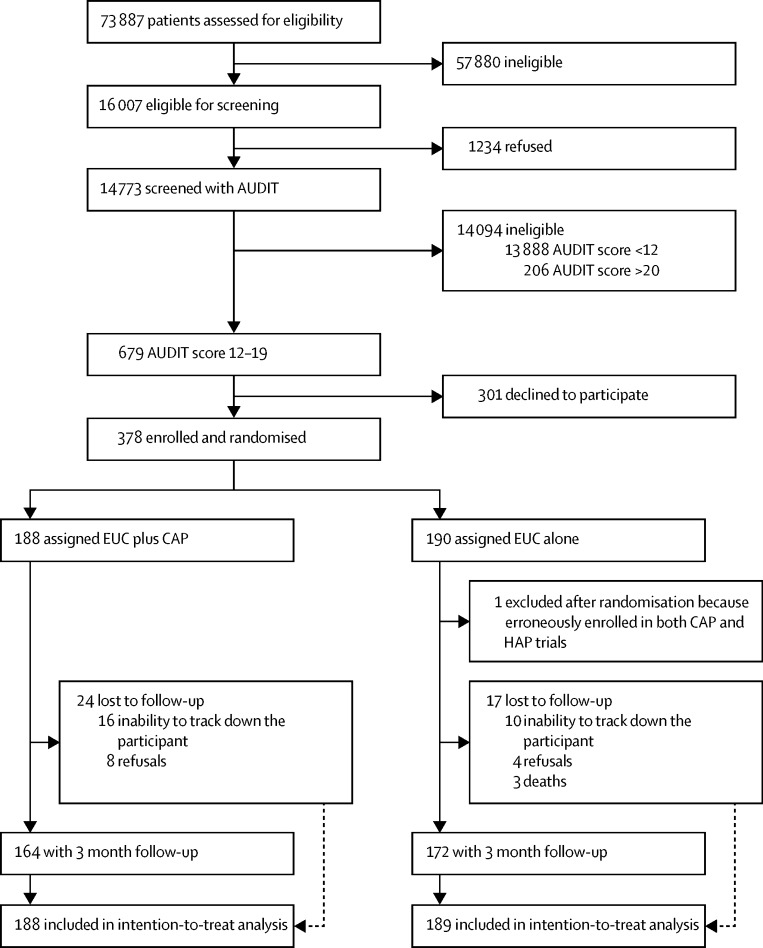
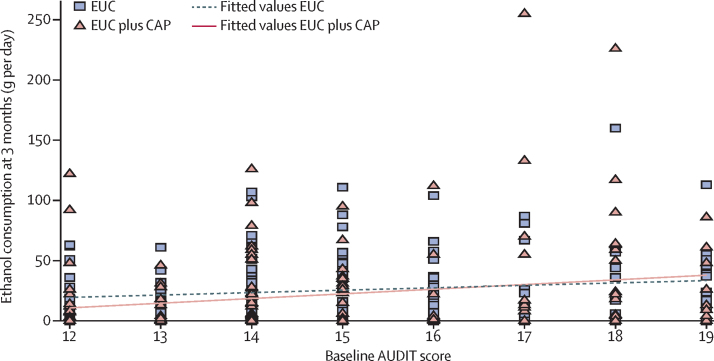
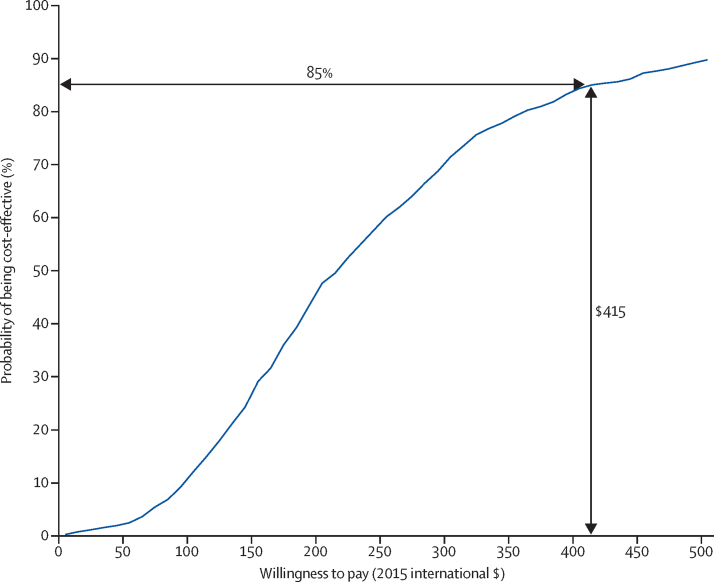
BACKGROUND: Although structured psychological treatments are recommended as first-line interventions for harmful drinking, only a small fraction of people globally receive these treatments because of poor access in routine primary care. We assessed the effectiveness and cost-effectiveness of Counselling for Alcohol Problems (CAP), a brief psychological treatment delivered by lay counsellors to patients with harmful drinking attending routine primary health-care settings. METHODS: In this randomised controlled trial, we recruited male harmful drinkers defined by an Alcohol Use Disorders Identification Test (AUDIT) score of 12-19 who were aged 18-65 years from ten primary health centres in Goa, India. We excluded patients who needed emergency medical treatment or inpatient admission, who were unable to communicate clearly, and who were intoxicated at the time of screening. Participants were randomly allocated (1:1) by trained health assistants based at the primary health centres to enhanced usual care (EUC) alone or EUC combined with CAP, in randomly sized blocks of four to six, stratified by primary health centre, and allocation was concealed with use of sequential numbered opaque envelopes. Physicians providing EUC and those assessing outcomes were masked. Primary outcomes were remission (AUDIT score of <8) and mean daily alcohol consumed in the past 14 days, at 3 months. Secondary outcomes were the effect of drinking, disability score, days unable to work, suicide attempts, intimate partner violence, and resource use and costs of illness. Analyses were on an intention-to-treat basis. We used logistic regression analysis for remission and zero-inflated negative binomial regression analysis for alcohol consumption. We assessed serious adverse events in the per-protocol population. This trial is registered with the ISCRTN registry, number ISRCTN76465238. FINDINGS: Between Oct 28, 2013, and July 29, 2015, we enrolled and randomly allocated 377 participants (188 [50%] to the EUC plus CAP group and 190 [50%] to the EUC alone group [one of whom was subsequently excluded because of a protocol violation]), of whom 336 (89%) completed the 3 month primary outcome assessment (164 [87%] in the EUC plus CAP group and 172 [91%] in the EUC alone group). The proportion with remission (59 [36%] of 164 in the EUC plus CAP group vs 44 [26%] of 172 in the EUC alone group; adjusted prevalence ratio 1·50 [95% CI 1·09-2·07]; p=0·01) and the proportion abstinent in the past 14 days (68 [42%] vs 31 [18%]; adjusted odds ratio 3·00 [1·76-5·13]; p<0·0001) were significantly higher in the EUC plus CAP group than in the EUC alone group, but we noted no effect on mean daily alcohol consumed in the past 14 days among those who reported drinking in this period (37·0 g [SD 44·2] vs 31·0 g [27·8]; count ratio 1·08 [0·79-1·49]; p=0·62). We noted an effect on the percentage of days abstinent in the past 14 days (adjusted mean difference [AMD] 16·0% [8·1-24·1]; p<0·0001), but no effect on the percentage of days of heavy drinking (AMD -0·4% [-5·7 to 4·9]; p=0·88), the effect of drinking (Short Inventory of Problems score AMD-0·03 [-1·93 to 1·86]; p=0.97), disability score (WHO Disability Assessment Schedule score AMD 0·62 [-0·62 to 1·87]; p=0·32), days unable to work (no days unable to work adjusted odds ratio 1·02 [0·61-1·69]; p=0.95), suicide attempts (adjusted prevalence ratio 1·8 [-2·4 to 6·0]; p=0·25), and intimate partner violence (adjusted prevalence ratio 3·0 [-10·4 to 4·4]; p=0·57). The incremental cost per additional remission was $217 (95% CI 50-1073), with an 85% chance of being cost-effective in the study setting. We noted no significant difference in the number of serious adverse events between the two groups (six [4%] in the EUC plus CAP group vs 13 [8%] in the EUC alone group; p=0·11). INTERPRETATION: CAP delivered by lay counsellors plus EUC was better than EUC alone was for harmful drinkers in routine primary health-care settings, and might be cost-effective. CAP could be a key strategy to reduce the treatment gap for alcohol use disorders, one of the leading causes of the global burden among men worldwide. FUNDING: Wellcome Trust.
Overview
The claims and statistics of this paper haven’t been checked yet.
Free: it reads the open-access text and checks the first 5 claims that cite a source we can check. Create a free account to check every claim.
Integrity signals
Registry
Cites
Statistics
Figures
Verification
Claims the paper makes
The claims and statistics of this paper haven’t been checked yet.
Free: it reads the open-access text and checks the first 5 claims that cite a source we can check. Create a free account to check every claim.
Claims other papers make about this one
Each is checked against this paper’s own text: does it say what the citing paper says it does?
The source backs part of the claim, not all of it — or backs it for a different population, condition or comparison.
In the citing paper
“In one of the first randomized controlled trials of brief motivational interviewing in any LMIC, a brief treatment delivered by lay counsellors to harmful drinkers in India led to positive and sustained effects on remission and abstinence, and was also demonstrated to be cost-saving from a health systems’ perspective [67, 68].”
From Brief interventions for alcohol use disorders in low- and middle-income countries: barriers and potential solutions (2022) · cites this paper as [68]
Experimental — accuracy not yet measuredThe cited source says what the claim attributes to it.
In the citing paper
“There is a growing evidence on the effectiveness of non-specialist health workers, including lay counsellors, in delivering frontline psychological interventions for a range of disorders including alcohol use disorders in LMICs.”
From Brief interventions for alcohol use disorders in low- and middle-income countries: barriers and potential solutions (2022) · cites this paper as [68]
The cited source says what the claim attributes to it.
In the citing paper
“effectiveness of lay-counsellor delivered and primary-care based models for treatment of harmful drinking [67, 68]”
From Brief interventions for alcohol use disorders in low- and middle-income countries: barriers and potential solutions (2022) · cites this paper as [68]
Self-check
Percentages, sums and reported differences re-computed from the paper’s own numbers.
The self-check needs the paper’s full text.
Citations
Cites
SAUNDERS, J. B., AASLAND, O. G., BABOR, T. F., DE LA FUENTE, J. R., & GRANT, M. (1993) · Addiction · doi:10.1111/j.1360-0443.1993.tb02093.x · Cited by 13,597
Whiteford, H. A., Degenhardt, L., Rehm, J., Baxter, A. J., Ferrari, A. J., Erskine, H. E., Charlson, F. J., Norman, R. E., Flaxman, A. D., Johns, N., et al. (2013) · The Lancet · doi:10.1016/s0140-6736(13)61611-6 · Cited by 6,006
Motivational Interviewing: Helping People Change
Tober, G. (2013) · Alcohol and Alcoholism · doi:10.1093/alcalc/agt010 · Cited by 4,268
(2013) · Cited by 2,393
Toward a theory of motivational interviewing
Miller, W. R., & Rose, G. S. (2009) · American Psychologist · doi:10.1037/a0016830 · Cited by 1,603
Sterne, J. A. C. (2001) · BMJ · doi:10.1136/bmj.322.7280.226 · Cited by 1,466
Allocation concealment in randomised trials: defending against deciphering
Schulz, K. F., & Grimes, D. A. (2002) · The Lancet · doi:10.1016/s0140-6736(02)07750-4 · Cited by 923
Patel, V., Chisholm, D., Parikh, R., Charlson, F. J., Degenhardt, L., Dua, T., Ferrari, A. J., Hyman, S., Laxminarayan, R., Levin, C., et al. (2016) · The Lancet · doi:10.1016/s0140-6736(15)00390-6 · Cited by 889
Self-citationOnukwugha, E., Yong, C., Hussain, A., Seal, B., & Mullins, C. D. (2014) · BMC Medical Research Methodology · doi:10.1186/1471-2288-14-1 · Cited by 589
Matching Alcoholism Treatments to Client Heterogeneity: Project MATCH Three‐Year Drinking Outcomes
Project MATCH Research Group (1998) · Alcoholism: Clinical and Experimental Research · doi:10.1111/j.1530-0277.1998.tb03912.x · Cited by 578
Research works printed but not linked: 1
- WHO mhGAP intervention guide for mental, neurological and substance use disorders in non-specialized health settings: Mental Health Gap Action Programme (mhGAP) 2010 World Health Organization Geneva 23741783
Cited by
Effectiveness of brief alcohol interventions in primary care populations
Kaner, E. F., Beyer, F. R., Muirhead, C., Campbell, F., Pienaar, E. D., Bertholet, N., Daeppen, J. B., Saunders, J. B., & Burnand, B. (2018) · Cochrane Database of Systematic Reviews · doi:10.1002/14651858.cd004148.pub4 · Cited by 1,665
Patel, V., Weobong, B., Weiss, H. A., Anand, A., Bhat, B., Katti, B., Dimidjian, S., Araya, R., Hollon, S. D., King, M., et al. (2017) · The Lancet · doi:10.1016/s0140-6736(16)31589-6 · Cited by 448
Self-citationDiagnosis and Treatment of Alcohol-Associated Liver Disease: A Review
Singal, A. K., & Mathurin, P. (2021) · JAMA · doi:10.1001/jama.2021.7683 · Cited by 398
ACG Clinical Guideline: Alcohol-Associated Liver Disease
Jophlin, L. L., Singal, A. K., Bataller, R., Wong, R. J., Sauer, B. G., Terrault, N. A., & Shah, V. H. (2024) · American Journal of Gastroenterology · doi:10.14309/ajg.0000000000002572 · Cited by 292
Kazdin, A. E. (2019) · Journal of Child Psychology and Psychiatry · doi:10.1111/jcpp.12937 · Cited by 274
Raviola, G., Naslund, J. A., Smith, S. L., & Patel, V. (2019) · Current Psychiatry Reports · doi:10.1007/s11920-019-1028-x · Cited by 258
Self-citationvan Ginneken, N., Chin, W. Y., Lim, Y. C., Ussif, A., Singh, R., Shahmalak, U., Purgato, M., Rojas-García, A., Uphoff, E., McMullen, S., et al. (2021) · Cochrane Database of Systematic Reviews · doi:10.1002/14651858.cd009149.pub3 · Cited by 188
Knipe, D., Williams, A. J., Hannam-Swain, S., Upton, S., Brown, K., Bandara, P., Chang, S.-S., & Kapur, N. (2019) · PLOS Medicine · doi:10.1371/journal.pmed.1002905 · Cited by 174
Chronic pain and mental health: integrated solutions for global problems
Kohrt, B. A., Griffith, J. L., & Patel, V. (2018) · Pain · doi:10.1097/j.pain.0000000000001296 · Cited by 161
Self-citationBeattie, T. S., Smilenova, B., Krishnaratne, S., & Mazzuca, A. (2020) · PLoS Medicine · doi:10.1371/journal.pmed.1003297 · Cited by 151
“Low-cost, brief psychological interventions to treat harmful alcohol use could also be adapted to FSW settings [95].”
BackgroundKohrt, B. A., Jordans, M. J. D., Turner, E. L., Sikkema, K. J., Luitel, N. P., Rai, S., Singla, D. R., Lamichhane, J., Lund, C., & Patel, V. (2018) · Pilot and Feasibility Studies · doi:10.1186/s40814-018-0234-3 · Cited by 141
“PRIME aims to improve the coverage of treatment for priority mental disorders by implementing and evaluating a comprehensive mental healthcare package, integrated into primary healthcare in five LMICs (Nepal, India, South Africa, Ethiopia, and Uganda) [60–66].”
BackgroundSelf-citationMental health interventions by lay counsellors: a systematic review and meta-analysis
Connolly, S. M., Vanchu-Orosco, M., Warner, J., Seidi, P. A.-M., Edwards, J., Boath, E., & Irgens, A. C. (2021) · Bulletin of the World Health Organization · doi:10.2471/blt.20.269050 · Cited by 120
Nadkarni, A., Garber, A., Costa, S., Wood, S., Kumar, S., MacKinnon, N., Ibrahim, M., Velleman, R. D. B., Bhatia, U., Fernandes, G., et al. (2019) · Drug and Alcohol Dependence · doi:10.1016/j.drugalcdep.2019.04.031 · Cited by 98
Self-citationJordans, M. J. D., Luitel, N. P., Garman, E., Kohrt, B. A., Rathod, S. D., Shrestha, P., Komproe, I. H., Lund, C., & Patel, V. (2019) · British Journal of Psychiatry · doi:10.1192/bjp.2018.300 · Cited by 89
Self-citationBedi, R. P. (2018) · Archives of Scientific Psychology · doi:10.1037/arc0000047 · Cited by 87
Nadkarni, A., Weiss, H. A., Weobong, B., McDaid, D., Singla, D. R., Park, A.-L., Bhat, B., Katti, B., McCambridge, J., Murthy, P., et al. (2017) · PLOS Medicine · doi:10.1371/journal.pmed.1002386 · Cited by 80
“Further information on data collection methods is provided elsewhere [14,15].”
BackgroundMethodResultInfluentialSelf-citationCubillos, L., Bartels, S. M., Torrey, W. C., Naslund, J. A., Uribe-Restrepo, J. M., Gaviola, C., Castro, S., John, D. T., Williams, M. J., Cepeda, M., et al. (2020) · BJPsych Bulletin · doi:10.1192/bjb.2020.35 · Cited by 73
Michelson, D., Malik, K., Krishna, M., Sharma, R., Mathur, S., Bhat, B., Parikh, R., Roy, K., Joshi, A., Sahu, R., et al. (2020) · Behaviour Research and Therapy · doi:10.1016/j.brat.2019.103439 · Cited by 68
Self-citationPedersen, G. A., Lakshmin, P., Schafer, A., Watts, S., Carswell, K., Willhoite, A., Ottman, K. E., Hof, E. V., & Kohrt, B. A. (2020) · Journal of Behavioral and Cognitive Therapy · doi:10.1016/j.jbct.2020.06.001 · Cited by 67
Parikh, R., Michelson, D., Sapru, M., Sahu, R., Singh, A., Cuijpers, P., & Patel, V. (2019) · Global Mental Health · doi:10.1017/gmh.2019.16 · Cited by 65
Self-citationPeer support for mental illness in India: an underutilised resource
Pathare, S., Kalha, J., & Krishnamoorthy, S. (2018) · Epidemiology and Psychiatric Sciences · doi:10.1017/s2045796018000161 · Cited by 64
Verhey, I. J., Ryan, G. K., Scherer, N., & Magidson, J. F. (2020) · International Journal of Mental Health Systems · doi:10.1186/s13033-020-00372-9 · Cited by 63
“Acceptability Five studies reported that acceptable interventions contained beneficial information and skills for the service user and the community [2, 3, 11, 12, 24, 31].”
BackgroundInfluentialOttman, K. E., Kohrt, B. A., Pedersen, G. A., & Schafer, A. (2019) · Behaviour Research and Therapy · doi:10.1016/j.brat.2019.103531 · Cited by 63
Shidhaye, R., Baron, E., Murhar, V., Rathod, S., Khan, A., Singh, A., Shrivastava, S., Muke, S., Shrivastava, R., Lund, C., et al. (2019) · BMJ Global Health · doi:10.1136/bmjgh-2018-001344 · Cited by 61
Self-citationHatcher, A. M., Page, S., van Eck, L. A., Pearson, I., Fielding-Miller, R. K., Mazars, C., & Stöckl, H. (2022) · PLOS Global Public Health · doi:10.1371/journal.pgph.0000479 · Cited by 61
Tol, W. A., Murray, S. M., Lund, C., Bolton, P., Murray, L. K., Davies, T., Haushofer, J., Orkin, K., Witte, M., Salama, L., et al. (2019) · BMC Women's Health · doi:10.1186/s12905-019-0728-z · Cited by 60
“[47, 48] studied the benefits of a motivational interviewing-based intervention with male problem drinkers in primary care in Goa, India, and found benefits at 12 months for remission (adjusted prevalence ratio 1.”
BackgroundInfluentialSelf-citationMyers, B., Lombard, C. J., Lund, C., Joska, J. A., Levitt, N., Naledi, T., Petersen Williams, P., van der Westhuizen, C., Cuijpers, P., Stein, D. J., et al. (2022) · The Lancet · doi:10.1016/s0140-6736(22)01641-5 · Cited by 56
Closing the treatment gap for alcohol use disorders in low- and middle-income countries
Nadkarni, A., Gandhi, Y., Bhatia, U., & Velleman, R. (2023) · Cambridge Prisms: Global Mental Health · doi:10.1017/gmh.2022.57 · Cited by 46
“…therapy (CBT) delivered to participants in a range of settings such as hospitals, emergency departments, primary care, and specialist clinics for patients with HIV or tuberculosis (Nattala et al., 2010; Shin et al., 2013; Daengthoen et al., 2014; Nadkarni et al., 2017b; Papas et al., 2021).”
BackgroundSelf-citationPadmanathan, P., Hall, K., Moran, P., Jones, H. E., Gunnell, D., Carlisle, V., Lingford-Hughes, A., & Hickman, M. (2020) · Comprehensive Psychiatry · doi:10.1016/j.comppsych.2019.152135 · Cited by 41
Staton, C. A., Vissoci, J. R. N., El-Gabri, D., Adewumi, K., Concepcion, T., Elliott, S. A., Evans, D. R., Galson, S. W., Pate, C. T., Reynolds, L. M., et al. (2022) · PLOS Medicine · doi:10.1371/journal.pmed.1003961 · Cited by 41
“Some studies focused more on the intervention delivery, specifically nurse or layperson [67,70,71,75] or computer-based interventions [30,34,35,41].”
BackgroundResultInfluentialLund, C., Orkin, K., Witte, M., Walker, J., Davies, T., Haushofer, J., Murray, S. M., Bass, J., Murray, L. K., Tol, W. A., et al. (2024) · National Bureau of Economic Research · doi:10.3386/w32423 · Cited by 41
Self-citationDepression and physical noncommunicable diseases: The need for an integrated approach
Balhara, Y. S., Anwar, N., & Kuppili, P. (2017) · WHO South-East Asia Journal of Public Health · doi:10.4103/2224-3151.206158 · Cited by 41
Go, V. F., Hutton, H. E., Ha, T. V., Chander, G., Latkin, C. A., Mai, N. V. T., Quynh, B. X., Nguyen, V., Sripaipan, T., Lancaster, K. E., et al. (2020) · JAMA Network Open · doi:10.1001/jamanetworkopen.2020.17115 · Cited by 40
Witt, K., Chitty, K. M., Wardhani, R., Värnik, A., Leo, D. D., & Kõlves, K. (2021) · Drug and Alcohol Dependence · doi:10.1016/j.drugalcdep.2021.108885 · Cited by 39
Kumar, S., Schess, J., Velleman, R. D. B., & Nadkarni, A. (2022) · Drug and Alcohol Review · doi:10.1111/dar.13438 · Cited by 39
Self-citationPreusse, M., Neuner, F., & Ertl, V. (2020) · Frontiers in Psychiatry · doi:10.3389/fpsyt.2020.00768 · Cited by 38
“(89) (1) Remission (AUDIT score of <8) (1) AUDIT (2–4) TLFB (5) SIP FU: 3 months (post-enrollment) • CAP (TG) was associated with a sign.”
BackgroundInfluentialPatel, P., Kaiser, B. N., Meade, C. S., Giusto, A. M., Ayuku, D., & Puffer, E. S. (2019) · International Journal of Drug Policy · doi:10.1016/j.drugpo.2019.10.003 · Cited by 37
Bond, L., Simmons, E. C., & Sabbath, E. L. (2022) · SSM - Population Health · doi:10.1016/j.ssmph.2022.101249 · Cited by 36
Magidson, J. F., Kleinman, M. B., Bradley, V. D., Anvari, M. S., Abidogun, T. M., Belcher, A. M., Greenblatt, A. D., Dean, D., Hines, A. C., Seitz‐Brown, C. J., et al. (2022) · International Journal of Drug Policy · doi:10.1016/j.drugpo.2022.103813 · Cited by 36
The digital mental health revolution: Transforming care through innovation and scale-up
Roland, J., Lawrance, E. L., Insel, T., & Christensen, H. (2020) · Spiral (Imperial College London) · doi:10.25561/88813 · Cited by 37
Rathod, S. D., Luitel, N. P., & Jordans, M. J. D. (2018) · Cambridge Prisms Global Mental Health · doi:10.1017/gmh.2018.28 · Cited by 30
Ghosh, A., Morgan, N., Calvey, T., Scheibein, F., Angelakis, I., Panagioti, M., Ferri, M., & Krupchanka, D. (2024) · The American Journal of Drug and Alcohol Abuse · doi:10.1080/00952990.2024.2350056 · Cited by 29
Shidhaye, R. R., Murhar, V., Muke, S. S., Shrivastava, R., Khan, A., Singh, A., & Breuer, E. (2019) · BJPsych Open · doi:10.1192/bjo.2019.53 · Cited by 29
Nadkarni, A., Bhatia, U., Bedendo, A., de Paula, T. C. S., de Andrade Tostes, J. G., Segura-Garcia, L., Tiburcio, M., & Andréasson, S. (2022) · International Journal of Mental Health Systems · doi:10.1186/s13033-022-00548-5 · Cited by 28
“the Alcohol Use Disorders Identification Test) [79], and effectiveness of lay-counsellor delivered and primary-care based models for treatment of harmful drinking [67, 68].”
BackgroundSelf-citationApplying lessons from task sharing in global mental health to the opioid crisis.
Magidson, J. F., Jack, H. E., Regenauer, K. S., & MYERS, B. J. (2019) · Journal of Consulting and Clinical Psychology · doi:10.1037/ccp0000434 · Cited by 28
Chorpita, B. F., Daleiden, E. L., Malik, K., Gellatly, R., Boustani, M. M., Michelson, D., Knudsen, K., Mathur, S., & Patel, V. H. (2020) · Behaviour Research and Therapy · doi:10.1016/j.brat.2020.103698 · Cited by 28
Self-citationAlcohol use disorder research in India: An update
Narasimha, V. L., Mukherjee, D., Arya, S., & Parmar, A. (2024) · Indian Journal of Psychiatry · doi:10.4103/indianjpsychiatry.indianjpsychiatry_758_23 · Cited by 26
Parikh, R., Michelson, D., Malik, K., Shinde, S., Weiss, H. A., Hoogendoorn, A., Ruwaard, J., Krishna, M., Sharma, R., Bhat, B., et al. (2019) · Trials · doi:10.1186/s13063-019-3573-3 · Cited by 26
Self-citationMadhombiro, M., Dube, B., Dube, M., Zunza, M., Chibanda, D., Rusakaniko, S., & Seedat, S. (2019) · Addiction Science & Clinical Practice · doi:10.1186/s13722-019-0143-7 · Cited by 25
Adapting empirically supported treatments in the era of integrated care: A roadmap for success.
Strosahl, K. D., & Robinson, P. J. (2018) · Clinical Psychology Science and Practice · doi:10.1111/cpsp.12246 · Cited by 24
Gao, J., Cao, J., Guo, T., & Xiao, Y. (2018) · Medicine · doi:10.1097/md.0000000000013566 · Cited by 24
Nadkarni, A., Bhatia, U., Velleman, R. D. B., Orford, J., Velleman, G., Church, S., Sawal, S., & Pednekar, S. (2017) · Drugs Education Prevention and Policy · doi:10.1080/09687637.2017.1394983 · Cited by 23
Self-citationNadkarni, A., Weiss, H. A., Velleman, R., McCambridge, J., McDaid, D., Park, A., Murthy, P., Weobong, B., Bhat, B., & Patel, V. (2019) · Addiction · doi:10.1111/add.14630 · Cited by 22
Self-citationOveruse of Health Care in the Emergency Services in Chile
Alvial, X., Rojas, A., Carrasco, R., Durán, C., & Fernández‐Campusano, C. (2021) · International Journal of Environmental Research and Public Health · doi:10.3390/ijerph18063082 · Cited by 22
Understanding the costs and economic impact of mental disorders in South Asia: A systematic review
McDaid, D., Vidyasagaran, A. L., Nasir, M., Walker, S., Wright, J. M., Muliyala, K. P., Thekkumkara, S. N., Huque, R., Faisal, M. R., Benkalkar, S., et al. (2024) · Asian Journal of Psychiatry · doi:10.1016/j.ajp.2024.104239 · Cited by 22
Self-citationGiusto, A. M., Green, E. P., Simmons, R., Ayuku, D., Patel, P., & Puffer, E. S. (2020) · Journal of Consulting and Clinical Psychology · doi:10.1037/ccp0000559 · Cited by 21
Ndulue, O. I., & Naslund, J. A. (2024) · Psychiatry Research Communications · doi:10.1016/j.psycom.2024.100183 · Cited by 22
DeHond, A., Brady, F., & Kalokhe, A. S. (2022) · Trauma Violence & Abuse · doi:10.1177/15248380221097441 · Cited by 21
Giusto, A. M., Johnson, S. L., Lovero, K. L., Wainberg, M. L., Rono, W., Ayuku, D., & Puffer, E. S. (2021) · International Journal of Drug Policy · doi:10.1016/j.drugpo.2021.103291 · Cited by 21
Leading the charge toward a world without depression: perinatal depression can be prevented
Muñoz, R. F., Le, H., Barrera, A. Z., & Pineda, B. S. (2021) · Archives of Women s Mental Health · doi:10.1007/s00737-021-01160-1 · Cited by 20
Kazdin, A. E. (2018) · Perspectives on Psychological Science · doi:10.1177/1745691618767880 · Cited by 19
Prabhu, S., McFall, A. M., Mehta, S. H., Srikrishnan, A. K., Kumar, M. S., Anand, S., Shanmugam, S., Celentano, D. D., Lucas, G. M., & Solomon, S. S. (2019) · Clinical Infectious Diseases · doi:10.1093/cid/ciz175 · Cited by 19
Mental Health Care Models in Low- and Middle-Income Countries
Nadkarni, A., Hanlon, C., & Patel, V. (2024) · Springer eBooks · doi:10.1007/978-3-030-51366-5_156 · Cited by 18
Self-citationMutyambizi-Mafunda, V., MYERS, B. J., Sorsdahl, K. R., Chanakira, E., Lund, C., & Cleary, S. (2022) · Health Policy and Planning · doi:10.1093/heapol/czac069 · Cited by 17
Anderson, P., O'Donnell, A. J., Kaner, E., Gual, A., Schulte, B., Gómez, A. P., de Vries, H., Rey, G. N., & Rehm, J. T. (2017) · F1000Research · doi:10.12688/f1000research.11173.3 · Cited by 17
Singla, D. R., Hollon, S. D., Velleman, R. D. B., Weobong, B., Nadkarni, A., Fairburn, C. G., Bhat, B., Gurav, M., Anand, A., McCambridge, J., et al. (2019) · Psychological Medicine · doi:10.1017/s0033291718003963 · Cited by 17
Self-citationMental Health Care Models in Low-and Middle-Income Countries
Nadkarni, A., Hanlon, C., & Patel, V. (2023) · Springer eBooks · doi:10.1007/978-3-030-42825-9_156-1 · Cited by 17
Self-citationKo, W., Jeong, H., Yim, H. W., & Lee, S. (2025) · Journal of Affective Disorders · doi:10.1016/j.jad.2025.01.012 · Cited by 17
Takahashi, R., Wilunda, C., Magutah, K., Mwaura-Tenambergen, W., Atwoli, L., & Perngparn, U. (2018) · Alcohol and Alcoholism · doi:10.1093/alcalc/agx083 · Cited by 16
Paltzer, J., Moberg, D. P., Burns, M., & Brown, R. L. (2019) · Medical Care · doi:10.1097/mlr.0000000000001162 · Cited by 16
Lucht, M., Quellmalz, A., Mende, M., Broda, A., Schmiedeknecht, A., Brosteanu, O., Höppner‐Buchmann, J., Langosch, J., Stuppe, M., Schomerus, G., et al. (2021) · Addiction · doi:10.1111/add.15313 · Cited by 16
Hassan, A. A., Ibrahim, A. M., & Nadkarni, A. (2024) · Drug and Alcohol Dependence · doi:10.1016/j.drugalcdep.2024.111093 · Cited by 16
Self-citationThe Cost-Effectiveness of Community Health Workers in Primary Health Care: A Systematic Review
Iseghem, T. V., Vroonen, L., de Beeck, E. O., Meertens, A., Masquillier, C., Wouters, E., & Verhaeghe, N. (2025) · Value in Health · doi:10.1016/j.jval.2025.09.004 · Cited by 16
Bhatia, U., Bhat, B., George, S., & Nadkarni, A. (2019) · Asian Journal of Psychiatry · doi:10.1016/j.ajp.2019.03.021 · Cited by 16
Self-citationDesign of a brief psychological intervention for youth who self-harm: a formative study in India
Aggarwal, S., Patton, G. C., Berk, M., & Patel, V. (2020) · Evidence-Based Mental Health · doi:10.1136/ebmental-2020-300188 · Cited by 16
Self-citationAldridge, L. R., Garman, E. C., Luitel, N. P., & Jordans, M. J. D. (2020) · PLoS ONE · doi:10.1371/journal.pone.0231158 · Cited by 15
Bellad, R., Mahantshetti, N. S., Charantimath, U., Ma, T., Washio, Y., Short, V. L., Chang, K., Lalakia, P., Jaeger, F. J., Kelly, P. J., et al. (2023) · International Breastfeeding Journal · doi:10.1186/s13006-023-00546-4 · Cited by 15
Gowri, S. M., Antonisamy, B., Vasan, S. K., Keerthi, S., & Andréasson, S. (2024) · International Journal of Mental Health Systems · doi:10.1186/s13033-024-00650-w · Cited by 15
Optimizing the delivery of interventions for harmful alcohol use in primary healthcare: an update
Segura, L., Anderson, P., & Gual, A. (2018) · Current Opinion in Psychiatry · doi:10.1097/yco.0000000000000435 · Cited by 14
Beksinska, A., Shah, P., Kungu, M., Kabuti, R., Babu, H., Jama, Z., Panneh, M., Nyariki, E., Nyabuto, C., Okumu, M., et al. (2022) · Cambridge Prisms Global Mental Health · doi:10.1017/gmh.2022.44 · Cited by 14
Self-citation“I will not step back”: A Qualitative Study of Lay Mental Health Workers’ Experiences in India
Wood, S., Seevak, E., Bhatia, U., McBain, R. K., & Nadkarni, A. (2021) · Administration and Policy in Mental Health and Mental Health Services Research · doi:10.1007/s10488-020-01102-6 · Cited by 14
Self-citationKanzler, K. E., Kunik, M. E., & Aycock, C. A. (2024) · Families Systems & Health · doi:10.1037/fsh0000886 · Cited by 14
Khatri, R., Rimal, P., Ekstrand, M. L., Sapkota, S., Sigdel, K., Sharma, D., Shrestha, J., Shrestha, S., & Acharya, B. (2024) · PLOS Global Public Health · doi:10.1371/journal.pgph.0002911 · Cited by 13
Mootz, J. J., Fennig, M., Giusto, A. M., Mumey, A., Greene, M. C., & Wainberg, M. L. (2023) · Cambridge Prisms Global Mental Health · doi:10.1017/gmh.2023.62 · Cited by 13
Zewdu, S., Hanlon, C., Fekadu, A., Medhin, G., & Teferra, S. (2022) · Journal of Substance Abuse Treatment · doi:10.1016/j.jsat.2021.108636 · Cited by 12
Nadkarni, A., Gandhi, Y., Fernandes, L., Mirchandani, K., Kamat, S., Weiss, H. A., Singla, D. R., Velleman, R. D. B., Lu, C., Bhatia, U., et al. (2024) · Trials · doi:10.1186/s13063-024-08236-0 · Cited by 12
Self-citationCommunity perspectives on cardiovascular disease control in rural Ghana: A qualitative study
Patil, B., Maddox, I. H., Aborigo, R., Squires, A. P., Awuni, D., Horowitz, C. R., Oduro, A. R., Phillips, J. F., Jones, K. R., & Heller, D. J. (2023) · PLoS ONE · doi:10.1371/journal.pone.0280358 · Cited by 12
Jordans, M. J. D., Garman, E. C., Luitel, N. P., Kohrt, B. A., Lund, C., Patel, V., & Tomlinson, M. (2020) · BMC Psychiatry · doi:10.1186/s12888-020-02832-5 · Cited by 12
Self-citationGiusto, A. M., Mootz, J. J., Korir, M., Jaguga, F., Mellins, C. A., Wainberg, M. L., & Puffer, E. S. (2021) · SSM - Mental Health · doi:10.1016/j.ssmmh.2021.100019 · Cited by 12
Prevention of alcohol-related suicide: a rapid review
Giesbrecht, N., Farkouh, E. K., Pavalaghanthan, H., & Orpana, H. (2022) · Drugs Education Prevention and Policy · doi:10.1080/09687637.2022.2114877 · Cited by 12
Greene, M. C., Kane, J., Alto, M., Giusto, A., Lovero, K., Stockton, M., McClendon, J., Nicholson, T., Wainberg, M. L., Johnson, R. M., et al. (2023) · Cochrane Database of Systematic Reviews · doi:10.1002/14651858.cd013350.pub2 · Cited by 11
Synowski, J., Weiss, H. A., Velleman, R. D. B., Patel, V., & Nadkarni, A. (2021) · Drug and Alcohol Dependence · doi:10.1016/j.drugalcdep.2021.108961 · Cited by 11
Self-citationPsychotherapy adaptation in aging populations
Groenewald, E., Joska, J. A., & Araya, R. (2019) · Elsevier eBooks · doi:10.1016/b978-0-12-814932-4.00015-x · Cited by 11
Alcohol Consumption and Suicidal Behavior: Current Research Evidence and Potential for Prevention
Kõlves, K., Crossin, R., & Witt, K. (2022) · Springer eBooks · doi:10.1007/978-3-030-67928-6_61-1 · Cited by 11
Nadkarni, A., Fernandes, D., Bhatia, U., Velleman, R. D. B., D’souza, E., D’souza, J., Pacheco, G. M., & Sambari, S. (2022) · Public Health Nutrition · doi:10.1017/s1368980022000313 · Cited by 11
Self-citationNadkarni, A., Velleman, R. D. B., Bhatia, U., Fernandes, G., D’Souza, E., & Murthy, P. (2019) · Alcohol · doi:10.1016/j.alcohol.2019.08.006 · Cited by 11
Self-citationAnderson, P., O'Donnell, A. J., Kaner, E., Gual, A., Schulte, B., Gómez, A. P., de Vries, H., Rey, G. N., & Rehm, J. T. (2017) · F1000Research · doi:10.12688/f1000research.11173.1 · Cited by 11
Murthy, P. (2018) · Indian Journal of Psychiatry · doi:10.4103/psychiatry.indianjpsychiatry_35_18 · Cited by 11
Self-citationResearch on psychotherapy in India: A systematic review
Selvapandiyan, J., Das, A., & Singh, G. (2024) · Indian Journal of Psychiatry · doi:10.4103/indianjpsychiatry.indianjpsychiatry_682_23 · Cited by 10
Dhillon, P. K., & Das, S. (2024) · Preventive Medicine Research & Reviews · doi:10.4103/pmrr.pmrr_56_23 · Cited by 10
Metadata
- Authors
- Nadkarni, A., Weobong, B., Weiss, H. A., McCambridge, J., Bhat, B., Katti, B., Murthy, P., King, M., McDaid, D., Park, A.-L., Wilson, G. T., Kirkwood, B., Fairburn, C. G., Velleman, R., & Patel, V.
- Affiliations
- London School of Hygiene & Tropical Medicine (GB)
- University of York (GB)
- Sangath (IN)
- National Institute of Mental Health and Neurosciences (IN)
- University College London (GB)
- London School of Economics and Political Science (GB)
- Rutgers, The State University of New Jersey (US)
- University of Oxford (GB)
- Corresponding author
- Patel, Vikram
- ORCID
- Venue
- The Lancet
- Publisher
- Elsevier BV
- Published
- 2017-01
- Volume
- 389
- Issue
- 10065
- Pages
- 186-195
- ISSN
- 0099-5355 (ISSN-L)
- 0140-6736
- PMC
- PMC5236065
- OpenAlex
- W2566737694
- Cited by
- 187
- References
- 46
- Citations by year
- 2026: 10 · 2025: 25 · 2024: 21 · 2023: 17 · 2022: 19 · 2021: 19 · 2020: 17 · 2019: 26 · 2018: 16 · 2017: 14
- FWCI
- 18.32
- Type
- journal article
- Language
- en
- Open access
- hybrid
- doi.org
- Licence
- cc-by
- www.elsevier.com/tdm/userlicense/1.0/ (tdm)
- creativecommons.org/licenses/by/4.0/ (vor)
- Locations
- The Lancet (publishedVersion, cc-by)
- PubMed Central (publishedVersion, cc-by)
- PubMed (publishedVersion)
- LSHTM Research Online (London School of Hygiene and Tropical Medicine) (acceptedVersion)
- London School of Economics and Political Science Research Online (London School of Economics and Political Science) (submittedVersion)
- White Rose Research Online (University of Leeds, The University of Sheffield, University of York) (submittedVersion)
- UCL Discovery (University College London) (submittedVersion)
- Greater South Information System
- Funders
- Wellcome Trust Senior Research Fellowship grant to VP (091834)
- Topics
- Health Sciences › Medicine › Epidemiology › Substance Abuse Treatment and Outcomes
- Health Sciences › Medicine › Psychiatry and Mental health › Mental Health Treatment and Access
- Health Sciences › Medicine › Pathology and Forensic Medicine › Alcohol Consumption and Health Effects
- Keywords
- hazardous drinking, alcoholism, lay counselors, primary care, men, alcohol consumption, cost-effectiveness, India, Goa, healthcare assistants, alcohol screening, auditing, disability, suicide attempts, intimate partner violence, resource utilization (health care), access to treatment, harm reduction
- MeSH terms
- Counselors, Adolescent, Adult, Aged, Alcohol Drinking, Alcoholism, Clinical Protocols, Cost-Benefit Analysis, Counseling, Humans, India, Male, Middle Aged, Primary Health Care, Psychotherapy, Treatment Outcome
About these checks
Registry, retraction, Cites and statistics results are computed, not judged, with one exception: a printed reference that no index lists is read once by a model before it counts as a citation error. Claims are extracted by a model and kept only when their quote appears verbatim in the text; each cited source is then checked, with a model’s help, for whether it says what the claim relies on. Those verdicts can be wrong — read the claim’s quote and the cited source before relying on one.
Statistics and arithmetic are recomputed, not judged.
Confidence bands are shown only for fields calibrated on our annotated test set. None is calibrated yet, so no band is shown.
What counts as a claim ›How we measure confidence ›How we check this ›
Are you an author, or do you see a problem with this page? Request a review
Data sources
Bibliographic data: Semantic Scholar, OpenAlex, Crossref.
Contains information from the Semantic Scholar Academic Graph Datasets, made available under the ODC Attribution License (ODC-BY 1.0).
Semantic Scholar’s data is described in: Kinney, R., et al. (2023). The Semantic Scholar Open Data Platform. arXiv:2301.10140.
