

Improving access to psychological therapies in England
Open accessThe DOI matches its Crossref record; 14 of the 14 references it cites were found in a registry or an index.
Abstract
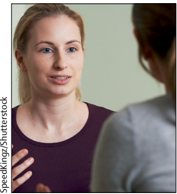
Most people with mental illness worldwide receive no treatment at all.1Wang PS Aguilar-Gaxiola S Alonso J et al.Use of mental health services for anxiety, mood, and substance disorders in 17 countries in the WHO world mental health surveys.Lancet. 2007; 370: 841-850Summary Full Text Full Text PDF PubMed Scopus (1049) Google Scholar The number benefiting from effective treatment is even fewer—eg, as low as one in six people with major depression receive effective care in high-income countries, and one in 27 people in low-income or middle-income countries.2Thornicroft G Chatterji S Evans-Lacko S et al.Undertreatment of people with major depressive disorder in 21 countries.Br J Psychiatry. 2017; 210: 119-124Crossref PubMed Scopus (427) Google Scholar For mild-to-moderate depression, the treatments of choice are psychological therapies.3WHOmhGAP intervention guide for mental, neurological and substance use disorders in non-specialized health settings: mental health Gap Action Programme (mhGAP); version 2.0. World Health Organization, Geneva2016Google Scholar, 4Singla DR Kohrt BA Murray LK Anand A Chorpita BF Patel V Psychological treatments for the world: lessons from low and middle income countries.Annu Rev Clin Psychol. 2017; 13: 149-181Crossref PubMed Scopus (329) Google Scholar Are there any examples of a health-care system successfully scaling up evidence-based practice for such common mental disorders? Yes: evidence is emerging that the Improving Access to Psychological Therapies (IAPT) programme in England fits this bill as reported by David M Clark and colleagues in The Lancet.5Clark DM Canvin L Green J Layard R Pilling S Janecka M Transparency about the outcomes of mental health services (IAPT approach): an analysis of public data.Lancet. 2017; (published online Dec 7.)http://dx.doi.org/10.1016/S0140-6736(17)32133-5Summary Full Text Full Text PDF Scopus (153) Google Scholar Launched in 2008, the IAPT programme provides psychological treatment centres across the country and these centres offer individual or group therapies—largely cognitive-behavioural treatment (CBT) approaches—to people with anxiety or depressive diagnoses.6Clark DM Layard R Smithies R Richards DA Suckling R Wright B Improving access to psychological therapy: initial evaluation of two UK demonstration sites.Behav Res Ther. 2009; 47: 910-920Crossref PubMed Scopus (413) Google Scholar Initial assessment, often by phone, determines whether a client is suitable for IAPT, needs low-intensity or high-intensity therapy, or needs to be referred to specialist mental health services. The programme is unusual because of several features. First, standardised and manualised evidence-based intervention protocols are used, with intensive clinical supervision. Second, routine outcome monitoring occurs at each clinical session with the results fed back to staff and clients. Third, treatment is free at the point of care with the service funded by the tax-based National Health Service, with 209 teams distributed across the country (with an investment of £400 million from 2011 to 2015).7Department of HealthWaiting times for talking therapies.https://www.gov.uk/government/news/waiting-times-for-talking-therapiesDate: Aug 2, 2011Google Scholar Fourth, clients might receive both psychological and pharmacological treatment at the same time. Finally, the IAPT programme aims to achieve quantified access and recovery rates. The scale of the programme is remarkable, with the latest data showing that about 950 000 people a year access IAPT for an initial assessment and advice, of whom more than 537 000 receive a course of therapy.8Baker C Mental health problems: statistics on prevalence and services. House of Commons Library. Briefing paper Number 6988.http://researchbriefings.parliament.uk/ResearchBriefing/Summary/SN06988Date: Jan 18, 2017Google Scholar Clark and colleagues' study5Clark DM Canvin L Green J Layard R Pilling S Janecka M Transparency about the outcomes of mental health services (IAPT approach): an analysis of public data.Lancet. 2017; (published online Dec 7.)http://dx.doi.org/10.1016/S0140-6736(17)32133-5Summary Full Text Full Text PDF Scopus (153) Google Scholar reports how service-level characteristics, such as the waiting times at individual IAPT teams, affect the outcomes of care and they show that better outcomes are not only associated with practitioner-level factors but also that service-level characteristics influence outcomes. With the IAPT programme, clients with clinical diagnoses had positive effects, treatment sessions increased, and some teams were able to accept more referrals. Conversely, outcomes were worse when waiting times were longer and when fewer therapy sessions were attended. However, much more is still needed. The original prospectus for IAPT relied heavily on delivering a strong return on investment from reductions in “presenteeism and absenteeism”,9Layard R Clark DM Why more psychological therapy would cost nothing.Fron
Overview
The claims and statistics of this paper haven’t been checked yet.
Free: it reads the open-access text and checks the first 5 claims that cite a source we can check. Create a free account to check every claim.
Integrity signals
Registry
Cites
Statistics
Figures
Verification
Claims the paper makes
The claims and statistics of this paper haven’t been checked yet.
Free: it reads the open-access text and checks the first 5 claims that cite a source we can check. Create a free account to check every claim.
Claims other papers make about this one
Each is checked against this paper’s own text: does it say what the citing paper says it does?
The check wasn’t confident either way, so it gives no verdict — never disputed.
In the citing paper
“Multiple studies (in addition to those in Mexico and Berkeley) found that SSB taxes lead to moderate reductions in consumption, which could support positive downstream health outcomes.249”
From The legal determinants of health: harnessing the power of law for global health and sustainable development (2019) · cites this paper as [249]
Experimental — accuracy not yet measuredThe check wasn’t confident either way, so it gives no verdict — never disputed.
In the citing paper
“WHO supports adoption of SSB taxes as a strategy to help combat non-communicable diseases, particularly obesity and diabetes, citing evidence that an SSB tax that increases consumer prices by 20% can lead to an approximate 20% reduction in consumption.249”
From The legal determinants of health: harnessing the power of law for global health and sustainable development (2019) · cites this paper as [249]
Experimental — accuracy not yet measuredThe check wasn’t confident either way, so it gives no verdict — never disputed.
In the citing paper
“For example, WHO cites estimates that an SSB tax of ¥1 (US$0·16) per litre in China would generate an estimated ¥73·6 billion (US$11·8 billion) in revenue.249”
From The legal determinants of health: harnessing the power of law for global health and sustainable development (2019) · cites this paper as [249]
Experimental — accuracy not yet measuredThe check wasn’t confident either way, so it gives no verdict — never disputed.
In the citing paper
“WHO cites estimates that, over 10 years, a tax on sugary drinks of 1 cent per ounce in the USA would result in more than US$17 billion in health-care cost savings.249”
From The legal determinants of health: harnessing the power of law for global health and sustainable development (2019) · cites this paper as [249]
Experimental — accuracy not yet measuredIn the citing paper
“This increase in access has helped narrow the treatment gap by improving treatment rates for adults with anxiety or depression from 24% in 2007 to 37% in 2014.294, 296”
From The legal determinants of health: harnessing the power of law for global health and sustainable development (2019) · cites this paper as [294]
Self-check
Percentages, sums and reported differences re-computed from the paper’s own numbers.
The self-check needs the paper’s full text.
Citations
Cites
Clement, S., Schauman, O., Graham, T., Maggioni, F., Evans-Lacko, S., Bezborodovs, N., Morgan, C., Rüsch, N., Brown, J. S. L., & Thornicroft, G. (2015) · Psychological Medicine · doi:10.1017/s0033291714000129 · Cited by 3,152
Self-citationWang, P. S., Aguilar-Gaxiola, S., Alonso, J., Angermeyer, M. C., Borges, G., Bromet, E. J., Bruffaerts, R., de Girolamo, G., de Graaf, R., Gureje, O., et al. (2007) · The Lancet · doi:10.1016/s0140-6736(07)61414-7 · Cited by 1,655
Undertreatment of people with major depressive disorder in 21 countries
Thornicroft, G., Chatterji, S., Evans-Lacko, S., Gruber, M., Sampson, N., Aguilar-Gaxiola, S., Al-Hamzawi, A., Alonso, J., Andrade, L., Borges, G., et al. (2017) · British Journal of Psychiatry · doi:10.1192/bjp.bp.116.188078 · Cited by 1,121
Self-citationPsychological Treatments for the World: Lessons from Low- and Middle-Income Countries
Singla, D. R., Kohrt, B. A., Murray, L. K., Anand, A., Chorpita, B. F., & Patel, V. (2017) · Annual Review of Clinical Psychology · doi:10.1146/annurev-clinpsy-032816-045217 · Cited by 913
(2016) · City Research Online (City University London) · Cited by 747
Improving access to psychological therapy: initial evaluation of two UK demonstration sites
Clark, D. M., Layard, R., Smithies, R., Richards, D. A., Suckling, R., & Wright, B. (2009) · Behaviour Research and Therapy · doi:10.1016/j.brat.2009.07.010 · Cited by 599
Jorm, A. F., Patten, S. B., Brugha, T. S., & Mojtabai, R. (2017) · World Psychiatry · doi:10.1002/wps.20388 · Cited by 556
Clark, D. M., Canvin, L., Green, J., Layard, R., Pilling, S., & Janecka, M. (2018) · The Lancet · doi:10.1016/s0140-6736(17)32133-5 · Cited by 294
Radhakrishnan, M., Hammond, G., Jones, P. B., Watson, A., McMillan-Shields, F., & Lafortune, L. (2013) · Behaviour Research and Therapy · doi:10.1016/j.brat.2012.10.001 · Cited by 69
Why More Psychological Therapy Would Cost Nothing
Layard, R., & Clark, D. M. (2015) · Frontiers in Psychology · doi:10.3389/fpsyg.2015.01713 · Cited by 60
Cited by
Gostin, L. O., Monahan, J. T., Kaldor, J., DeBartolo, M., Friedman, E. A., Gottschalk, K., Kim, S. C., Alwan, A., Binagwaho, A., Burci, G. L., et al. (2019) · The Lancet · doi:10.1016/s0140-6736(19)30233-8 · Cited by 338
“294 The UK invested £400 million in the programme from 2011 to 2015, and data indicate that about 950 000 people per year access IAPT for an initial assessment, of whom more than 537 000 receive therapy.”
BackgroundMacbeth, A. E., Holmes, S., Harries, M. J., Chiu, W. S., Tziotzios, C., de Lusignan, S., Messenger, A. G., & Thompson, A. R. (2022) · British Journal of Dermatology · doi:10.1111/bjd.21055 · Cited by 106
Chibanda, D. (2018) · International Review of Psychiatry · doi:10.1080/09540261.2018.1564648 · Cited by 24
Lawn, S., Huang, N., Zabeen, S., Smith, D., Battersby, M., Redpath, P., Glover, F., Venning, A., Cameron, J., & Fairweather‐Schmidt, A. K. (2019) · BMC Psychiatry · doi:10.1186/s12888-018-1987-1 · Cited by 21
Antidepressants overuse in primary care: Prescription trends between 2010 and 2019 in Catalonia
Anmella, G., Sanabra, M., Primé‐Tous, M., Segú, X., Solanes, A., Ruíz, V., Morilla, I., Fontanet, A. A., Sant, E., Murgui, S., et al. (2022) · Revista de Psiquiatría y Salud Mental · doi:10.1016/j.rpsm.2022.12.001 · Cited by 21
Bastiampillai, T. J., Allison, S. C., Harford, P., Perry, S. W., & Wong, M. (2019) · The Lancet Psychiatry · doi:10.1016/s2215-0366(19)30040-9 · Cited by 15
Gandré, C., Rosenberg, S. P., Coldefy, M., & Or, Z. (2019) · Health Policy · doi:10.1016/j.healthpol.2019.08.006 · Cited by 14
Knapstad, M., Sæther, S. M. M., Hensing, G. K. E., & Smith, O. R. F. (2020) · BMC Health Services Research · doi:10.1186/s12913-020-4932-1 · Cited by 14
“Nevertheless, as stated by Thornicroft (2018), there still is little direct evidence that the IAPT program in facts meet the goal of reducing presenteeism and absenteeism [47].”
BackgroundMartinez, A. B., Calsado, C., Lau, J. Y. F., & Brown, J. S. L. (2022) · SSM - Qualitative Research in Health · doi:10.1016/j.ssmqr.2022.100125 · Cited by 17
Long-term outcomes of Prompt Mental Health Care: A randomized controlled trial
Sæther, S. M. M., Knapstad, M., Grey, N., Rognerud, M. A., & Smith, O. R. F. (2020) · Behaviour Research and Therapy · doi:10.1016/j.brat.2020.103758 · Cited by 14
Stadnick, N. A., Aarons, G. A., Blake, L., Brookman-Frazee, L. I., Dourgnon, P., Engell, T., Jusot, F., Lau, A. S., Prieur, C., Skar, A. S., et al. (2020) · BMC Proceedings · doi:10.1186/s12919-020-00184-2 · Cited by 11
Wabnitz, P., Löhr, M., Schulz, M., Nienaber, A., Oppermann, G., Sauter, D., Schreiber, W., Gouzoulis‐Mayfrank, E., Claus, S., Hohl-Radke, F., et al. (2019) · Psychiatrische Praxis · doi:10.1055/a-0801-3847 · Cited by 11
Enhancing mental health services: Overcoming challenges and improving quality
Lebedyn, Z., Zozulya, K., Moroz, O., Фролова, А. В., Bandera, S., Stetsko, D., Parovozova, K., Kirakosyan, G., Rak, R., Bondarenko, S., et al. (2024) · International Journal of Science and Research Archive · doi:10.30574/ijsra.2024.13.2.2420 · Cited by 11
Fonseca, M. B., MacKenna, B., Mehrkar, A., Collaborative, T. O., Walters, C. E., Hickman, G., Pearson, J., Fisher, L., Inglesby, P., Bacon, S., et al. (2023) · JMIR Public Health and Surveillance · doi:10.2196/46485 · Cited by 7
“…tests such as the General Anxiety Disorder-7 questionnaire or the Patient Health Questionnaire-9 that can be later reviewed by health professionals, online self-referral routes, and online modes of delivery for talking therapies [47,48] can be supported by, or made interoperable with, an OC system.”
BackgroundIdaiani, S., Fikaris, M. F., Chairunnisa, G., Fajri, M., Anselmi, L., Gibson, J., Irmansyah, Keliat, B. A., Kusumaningtyas, I. A. M. A., Maharani, A., et al. (2025) · BMC Public Health · doi:10.1186/s12889-025-23434-4 · Cited by 7
“The UK’s Improving Access to Psychological Therapies (IAPT) program provides free, evidence-based psychological treatments [37, 38].”
Psychometric properties of global mental health literacy measures
Fulcher, E., & Pote, H. L. (2021) · Mental Health Review Journal · doi:10.1108/mhrj-04-2020-0022 · Cited by 6
Coelho, J. C. F., Sampaio, F., Sequeira, C., Fortuño, M. L., & Roldán-Merino, J. F. (2020) · Perspectives In Psychiatric Care · doi:10.1111/ppc.12536 · Cited by 7
EL PROBLEMA DE LA DEMARCACIÓN. CIENCIA, PSICOLOGÍA Y PSICOTERAPIA
Hermida, J. R. F., & de Oviedo, U. (2020) · Papeles del Psicólogo - Psychologist Papers · doi:10.23923/pap.psicol2020.2941 · Cited by 3
“Por ejemplo, en el campo de la depresión, sólo una de cada seis personas en los países con altos ingresos, y una de cada veintisiete, en los de bajos y medios ingresos, obtienen un tratamiento efectivo basado en estándares mínimos de calidad (Thornicroft, 2017; Thornicroft et al., 2017).”
BackgroundReaching the Unreached: Insights on Psychological Interventions Beyond the Clinic-Walls
Mehrotra, S. (2020) · Indian Journal of Psychological Medicine · doi:10.4103/ijpsym.ijpsym_220_19 · Cited by 3
“Notwithstanding the evidence on the effectiveness of psychological interventions, the available literature across the globe suggests that these interventions are not accessible to a large proportion of individuals who are likely to benefit from them([4,5]) Need for multipronged approaches has been discussed to increas…”
BackgroundImprove access to quality primary care for patients with anxiety or depression
Kendrick, T. (2018) · The Lancet · doi:10.1016/s0140-6736(18)31888-9 · Cited by 2
Maladie chronique et empathie : psychothérapie ou placebothérapie ?
Braillon, A., Grenon, Q., & Taiebi, F. (2019) · La Revue de Médecine Interne · doi:10.1016/j.revmed.2019.01.002 · Cited by 2
Antidepressants are not safe during pregnancy and in women of child‐bearing age
Braillon, A., Bewley, S., Blumsohn, A., Naudet, F., Montastruc, J., & Lexchin, J. (2021) · British Journal of Clinical Pharmacology · doi:10.1111/bcp.15142 · Cited by 2
Placebo therapy for cancer-related pain: an alternative to psychotherapy or health misinformation?
Braillon, A., Ross, N., Fisken, R. A., Ernst, E. K., & Colquhoun, D. (2019) · Supportive Care in Cancer · doi:10.1007/s00520-019-05010-w · Cited by 1
Yoo, D.-H., Jo, S.-G., Yoo, J., & Jee, Y. (2024) · Isokinetics and Exercise Science · doi:10.1177/09593020241296403 · Cited by 1
“42 However, it is also a widely accepted view that psychological disorders can lead to faster physical responses and adaptations when interventions incorporate elements that are friendly and somewhat engaging.”
Prescription en cancérologie : homéopathie ou psychothérapies et substituts nicotiniques ?
Braillon, A., & Taiebi, F. (2018) · Bulletin du Cancer · doi:10.1016/j.bulcan.2018.05.013 · Cited by 1
Braillon, A., & Taiebi, F. (2019) · La Presse Médicale · doi:10.1016/j.lpm.2019.02.003
Expectation-based medicine in French palliative care centers: is Lyon representative?
Braillon, A. (2020) · Supportive Care in Cancer · doi:10.1007/s00520-020-05350-y
“mandatory (and most costly) health care scheme enduringly fails to reimburse psychotherapy, in contrast to other countries such as Belgium or Quebec, which moved forward in 2018 by implementing the “Improving Access to Psychological Therapies programme” from England [7, 8].”
ResultJo, S.-G., Yoo, D.-H., & Jee, Y. (2024) · Journal of Exercise Rehabilitation · doi:10.12965/jer.2448512.256
“Indeed, posttraumatic stress and anxiety are common among patients and are associated with significant impairment (Koenen et al., 2017), which often leads to lower treatment success rates (Thornicroft, 2018).”
BackgroundMarkussen, H. V., Aasdahl, L., Viksveen, P., & Rise, M. B. (2024) · PLoS ONE · doi:10.1371/journal.pone.0312513
The Sound of Welsh Patagonia: Performance, Subjectivity, and Music in Y Wladfa, Patagonia, Argentina
Trotter, L. E. (2025) · University of Wales Press eBooks · doi:10.16922/soundwelshpatagonia
Barcons, C. (2020) · LA Referencia (Red Federada de Repositorios Institucionales de Publicaciones Científicas)
Edmeade, L. (2024) · White Rose eTheses Online (University of Leeds, The University of Sheffield, University of York)
Nature and the mind: Towards nature-based mental health care and prevention
Vivaldi, G., Chukwusa, E., Bridge, N., Smythe, M., Bakolis, I., Page, L., Thompson, R., White, M., & Mechelli, A. (2026) · PLOS mental health. · doi:10.1371/journal.pmen.0000647
Metadata
- Authors
- Thornicroft, G.
- Affiliations
- King's College London (GB)
- Corresponding author
- Thornicroft, Graham
- ORCID
- Thornicroft, Graham
- Venue
- The Lancet
- Publisher
- Elsevier BV
- Published
- 2018-02
- Volume
- 391
- Issue
- 10121
- Pages
- 636-637
- ISSN
- 0099-5355 (ISSN-L)
- 0140-6736
- OpenAlex
- W2772601629
- Semantic Scholar
- 61e699d28e8799d109564deab2cd65e884b387cb
- Cited by
- 29
- References
- 14
- Citations by year
- 2025: 2 · 2024: 3 · 2023: 1 · 2022: 3 · 2021: 2 · 2020: 6 · 2019: 9 · 2018: 3
- FWCI
- 7.05
- Type
- journal article
- Language
- en
- Open access
- hybrid
- doi.org
- Licence
- cc-by-nc-nd
- www.elsevier.com/tdm/userlicense/1.0/ (tdm)
- creativecommons.org/licenses/by-nc-nd/4.0/ (vor)
- Locations
- The Lancet (publishedVersion, cc-by-nc-nd)
- PubMed (publishedVersion)
- Research Portal (King's College London) (publishedVersion, cc-by-nc-nd)
- Funders
- Medical Research Council (MR/R023697/1)
- Topics
- Health Sciences › Medicine › Psychiatry and Mental health › Mental Health Treatment and Access
- Social Sciences › Psychology › Clinical Psychology › Psychotherapy Techniques and Applications
- Social Sciences › Psychology › Clinical Psychology › Psychiatric care and mental health services
- Keywords
- Improving Access to Psychological Therapies, psychotherapy, access to mental health care, cognitive behavioral therapy, depression, anxiety disorders, public mental health services, mental health professionals
- MeSH terms
- Anxiety Disorders, England, Health Services Accessibility, Humans, Psychotherapy
About these checks
Registry, retraction, Cites and statistics results are computed, not judged, with one exception: a printed reference that no index lists is read once by a model before it counts as a citation error. Claims are extracted by a model and kept only when their quote appears verbatim in the text; each cited source is then checked, with a model’s help, for whether it says what the claim relies on. Those verdicts can be wrong — read the claim’s quote and the cited source before relying on one.
Statistics and arithmetic are recomputed, not judged.
Confidence bands are shown only for fields calibrated on our annotated test set. None is calibrated yet, so no band is shown.
What counts as a claim ›How we measure confidence ›How we check this ›
Are you an author, or do you see a problem with this page? Request a review
Data sources
Bibliographic data: Semantic Scholar, OpenAlex, Crossref.
Contains information from the Semantic Scholar Academic Graph Datasets, made available under the ODC Attribution License (ODC-BY 1.0).
Semantic Scholar’s data is described in: Kinney, R., et al. (2023). The Semantic Scholar Open Data Platform. arXiv:2301.10140.
