

Long-term and recent trends in hypertension awareness, treatment, and control in 12 high-income countries: an analysis of 123 nationally representative surveys
Open accessThe DOI matches its Crossref record; 37 of the 37 references it cites were found in a registry or an index.
Abstract
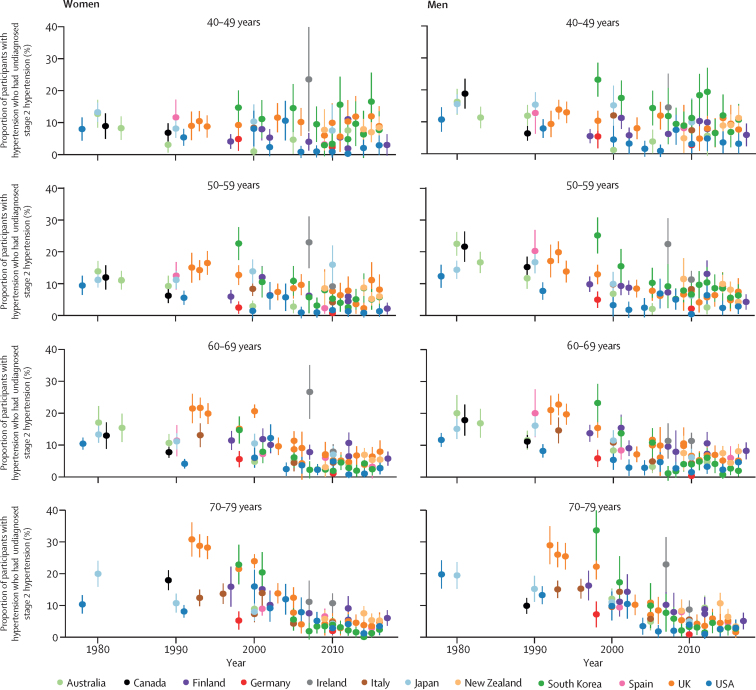
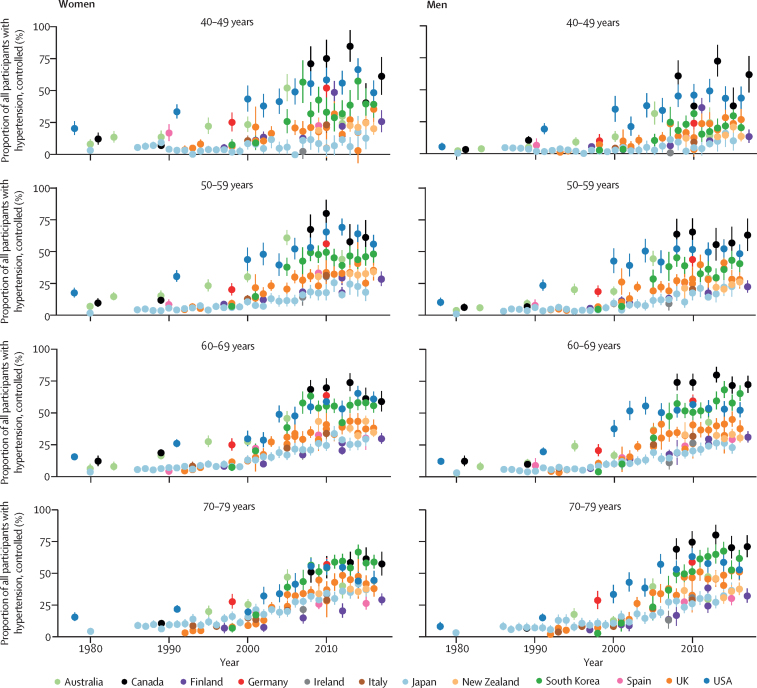
BACKGROUND: Antihypertensive medicines are effective in reducing adverse cardiovascular events. Our aim was to compare hypertension awareness, treatment, and control, and how they have changed over time, in high-income countries. METHODS: We used data from people aged 40-79 years who participated in 123 national health examination surveys from 1976 to 2017 in 12 high-income countries: Australia, Canada, Finland, Germany, Ireland, Italy, Japan, New Zealand, South Korea, Spain, the UK, and the USA. We calculated the proportion of participants with hypertension, which was defined as systolic blood pressure of 140 mm Hg or more, or diastolic blood pressure of 90 mm Hg or more, or being on pharmacological treatment for hypertension, who were aware of their condition, who were treated, and whose hypertension was controlled (ie, lower than 140/90 mm Hg). FINDINGS: Data from 526 336 participants were used in these analyses. In their most recent surveys, Canada, South Korea, Australia, and the UK had the lowest prevalence of hypertension, and Finland the highest. In the 1980s and early 1990s, treatment rates were at most 40% and control rates were less than 25% in most countries and age and sex groups. Over the time period assessed, hypertension awareness and treatment increased and control rate improved in all 12 countries, with South Korea and Germany experiencing the largest improvements. Most of the observed increase occurred in the 1990s and early-mid 2000s, having plateaued since in most countries. In their most recent surveys, Canada, Germany, South Korea, and the USA had the highest rates of awareness, treatment, and control, whereas Finland, Ireland, Japan, and Spain had the lowest. Even in the best performing countries, treatment coverage was at most 80% and control rates were less than 70%. INTERPRETATION: Hypertension awareness, treatment, and control have improved substantially in high-income countries since the 1980s and 1990s. However, control rates have plateaued in the past decade, at levels lower than those in high-quality hypertension programmes. There is substantial variation across countries in the rates of hypertension awareness, treatment, and control. FUNDING: Wellcome Trust and WHO.
Overview
The claims and statistics of this paper haven’t been checked yet.
Free: it reads the open-access text and checks the first 5 claims that cite a source we can check. Create a free account to check every claim.
Integrity signals
Registry
Cites
Statistics
Figures
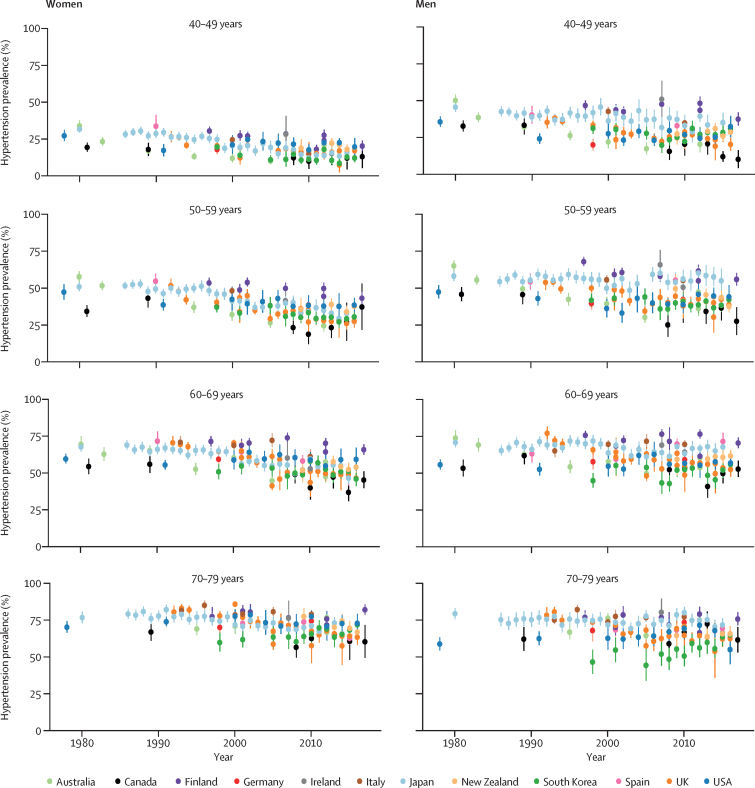
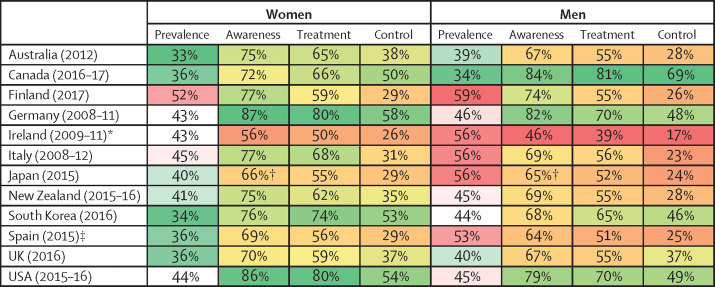
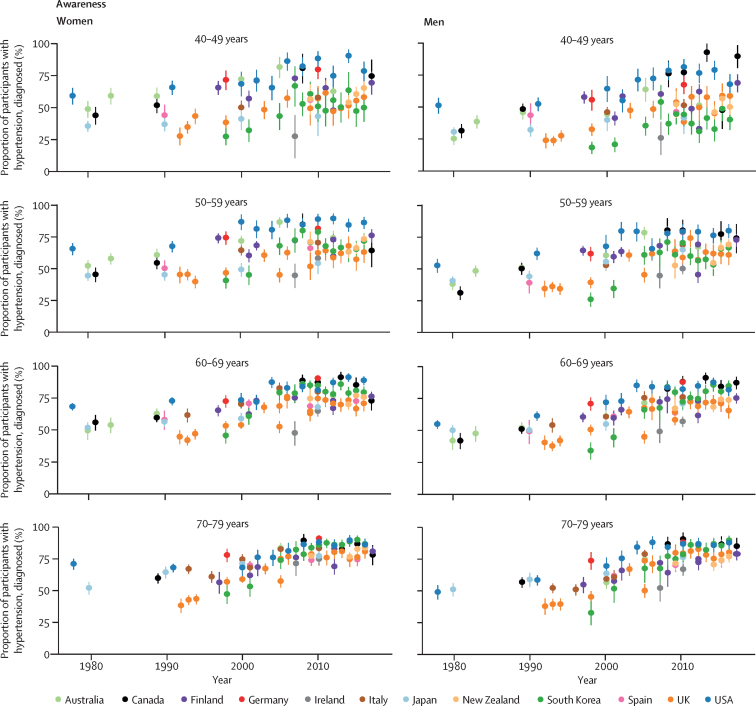
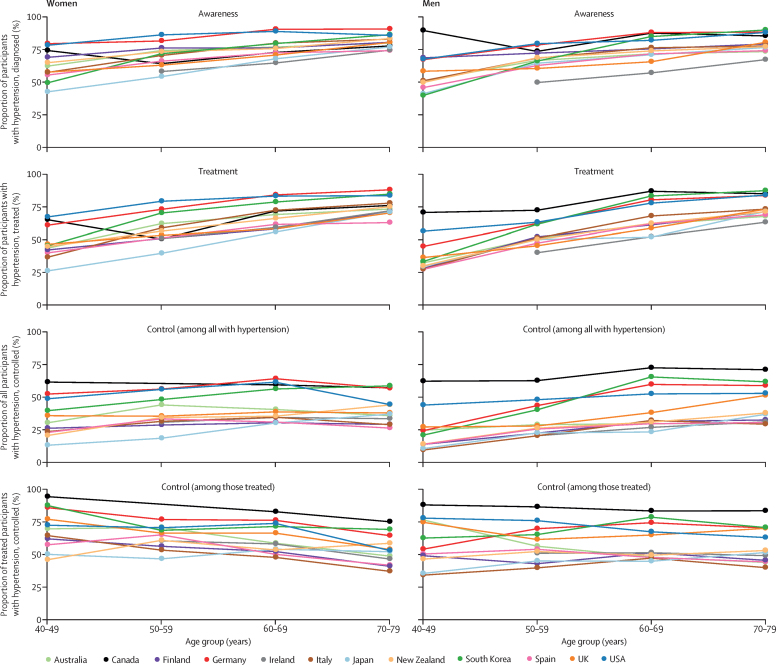
Verification
Claims the paper makes
The claims and statistics of this paper haven’t been checked yet.
Free: it reads the open-access text and checks the first 5 claims that cite a source we can check. Create a free account to check every claim.
Claims other papers make about this one
Each is checked against this paper’s own text: does it say what the citing paper says it does?
The source backs part of the claim, not all of it — or backs it for a different population, condition or comparison.
In the citing paper
“Contemporary data from over 100 countries 66,67 suggest that on average, less than 50% of adults with hypertension receive BP-lowering medication”
From 2020 International Society of Hypertension Global Hypertension Practice Guidelines (2020) · cites this paper as [67]
Experimental — accuracy not yet measured
Self-check
Percentages, sums and reported differences re-computed from the paper’s own numbers.
The self-check needs the paper’s full text.
Citations
Cites
Whelton, P. K., Carey, R. M., Aronow, W. S., Casey, D. E., Collins, K. J., Dennison Himmelfarb, C., DePalma, S. M., Gidding, S., Jamerson, K. A., Jones, D. W., et al. (2018) · Hypertension · doi:10.1161/hyp.0000000000000065 · Cited by 7,391
Ettehad, D., Emdin, C. A., Kiran, A., Anderson, S. G., Callender, T., Emberson, J., Chalmers, J., Rodgers, A., & Rahimi, K. (2016) · The Lancet · doi:10.1016/s0140-6736(15)01225-8 · Cited by 3,755
Mills, K. T., Bundy, J. D., Kelly, T. N., Reed, J. E., Kearney, P. M., Reynolds, K., Chen, J., & He, J. (2016) · Circulation · doi:10.1161/circulationaha.115.018912 · Cited by 3,531
Williams, B., Mancia, G., Spiering, W., Agabiti Rosei, E., Azizi, M., Burnier, M., Clement, D. L., Coca, A., de Simone, G., Dominiczak, A., et al. (2018) · Journal of Hypertension · doi:10.1097/hjh.0000000000001940 · Cited by 2,885
Zhou, B., Bentham, J., Di Cesare, M., Bixby, H., Danaei, G., Cowan, M. J., Paciorek, C. J., Singh, G., Hajifathalian, K., Bennett, J. E., et al. (2017) · The Lancet · doi:10.1016/s0140-6736(16)31919-5 · Cited by 2,579
Self-citationChow, C. K. (2013) · JAMA · doi:10.1001/jama.2013.184182 · Cited by 1,991
Cheol Seong, S., Kim, Y.-Y., Khang, Y.-H., Heon Park, J., Kang, H.-J., Lee, H., Do, C.-H., Song, J.-S., Hyon Bang, J., Ha, S., et al. (2016) · International Journal of Epidemiology · doi:10.1093/ije/dyw253 · Cited by 1,277
Self-citationWing, L. M. H., Reid, C. M., Ryan, P., Beilin, L. J., Brown, M. A., Jennings, G. L. R., Johnston, C. I., McNeil, J. J., Macdonald, G. J., Marley, J. E., et al. (2003) · New England Journal of Medicine · doi:10.1056/nejmoa021716 · Cited by 1,130
Self-citationHypertension Treatment and Control in Five European Countries, Canada, and the United States
Wolf-Maier, K., Cooper, R. S., Kramer, H., Banegas, J. R., Giampaoli, S., Joffres, M. R., Poulter, N., Primatesta, P., Stegmayr, B., & Thamm, M. (2004) · Hypertension · doi:10.1161/01.hyp.0000103630.72812.10 · Cited by 1,083
Self-citationThe Japanese Society of Hypertension Guidelines for the Management of Hypertension (JSH 2014)
(2014) · Hypertension Research · doi:10.1038/hr.2014.20 · Cited by 1,049
Research works printed but not linked: 1
- National Institute for Health and Clinical Excellence Hypertension: the clinical management of primary hypertension in adults: update of Clinical Guidelines 18 and 34. Clinical Guideline 127 2011 Royal College of Physicians London 22855971
Cited by
Items 301–400 of 543
The year in cardiology: cardiovascular prevention. The year in cardiology 2019.
Ray, K. K., Laufs, U., Cosentino, F., Lobo, M. D., & Landmesser, U. (2020) · SA Heart · doi:10.24170/17-1-4022 · Cited by 5
An advanced LAN model based on optimized feature algorithm: Towards hypertension interpretability
Agham, N. D., & Chaskar, U. M. (2021) · Biomedical Signal Processing and Control · doi:10.1016/j.bspc.2021.102760 · Cited by 4
The effects of smartphone apps expected in self-management for hypertension management
Nozato, Y., & Yamamoto, K. I. (2023) · Hypertension Research · doi:10.1038/s41440-023-01516-3 · Cited by 4
“They may struggle to maintain treatment motivation, make behavioral modi fi cations, and particularly in Japan, hypertension control rates have been notably suboptimal [1].”
Leopold, L., van Valkengoed, I. G. M., & Engelhardt, H. (2023) · Social Science & Medicine · doi:10.1016/j.socscimed.2023.116134 · Cited by 5
Brandt, E. J., Beavers, C. J., Fu, Z., Spatz, E. S., Jones, P. G., Arnold, S. V., & Desai, N. R. (2025) · Journal of Clinical Hypertension · doi:10.1111/jch.70030 · Cited by 3
“…in achieving treatment targets or use of antihypertensives that Our findings are also similar to an analysis of 123 National Health ExaminationSurveysthatfoundaplateauordeclineinBPcontrol from 2005 to 2019 when examining the sub-group of the majority of 12 high-income countries studied [9].”
Priti, Kumar, R., Keshri, K., & Gupta, A. K. (2025) · BMC Public Health · doi:10.1186/s12889-025-23590-7 · Cited by 3
Narula, J., Butler, J., Chothia, M., Bannerjee, D., Jarraya, F., Ulasi, I., & Luyckx, V. A. (2025) · African Journal of Nephrology · doi:10.21804/28-1-7360 · Cited by 3
McGarvey, C., Scarlett, S., Briggs, R., McCrory, C., McEvoy, J. W., Kenny, R. A., & Sexton, D. J. (2025) · Open Heart · doi:10.1136/openhrt-2025-003744 · Cited by 3
“29 This study applies the ESC hypertension guidelines to adults aged ≥ 50 years participating in a nationally-representative longitudinal study of ageing, thereby providing crucial context for guideline implementation among older adults.”
InfluentialMertens, P. R., Kanaan, M. R., Abou-Watfa, A. A., Bender, S. T., Wiech, T., Gröne, H., & Scurt, F. G. (2025) · BMC Nephrology · doi:10.1186/s12882-025-04617-y · Cited by 4
Soliman, N., & Soliman, A. T. (2026) · Discover Public Health · doi:10.1186/s12982-026-01366-7 · Cited by 11
“At the population level, policy-driven approaches, including salt reduction cam-paigns and food reformulation, have demonstrated success in several countries [13].”
Alshahrani, N. Z., Alarifi, A. M., Humieda, A. H., Alomary, S. A., Elimam, M., Aldossary, M. S., Alshangiti, A. M., Alamri, S. S., Shukri, A. K., Aloufi, W. J., et al. (2026) · Frontiers in Cardiovascular Medicine · doi:10.3389/fcvm.2026.1752357 · Cited by 7
Peacock, E., Muntner, P., Craig, L. S., Silver, J. H., Mills, K. T., Chen, J., Shi, L., Whelton, P. K., He, J., & Krousel-Wood, M. A. (2023) · Medical Clinics of North America · doi:10.1016/j.mcna.2023.06.008 · Cited by 3
Griné, M., Guerreiro, C., Costa, F. M., Menezes, M. N., Ladeiras‐Lopes, R., Ferreira, D., & Santos, M. O. (2024) · Revista Portuguesa de Cardiologia · doi:10.1016/j.repc.2024.08.009 · Cited by 5
Implications of Inaccurate Blood Pressure Measurement on Hypertension Prevalence
Leung, A. A. C., Hiremath, S. S., Williams, J. V. A., & Tsuyuki, R. T. (2024) · CJC Open · doi:10.1016/j.cjco.2024.10.011 · Cited by 5
Kong, J., Kim, S., Son, Y., Kim, S., Jang, W., Yim, Y., Kim, H. J., Jo, H., Park, J., Lee, K., et al. (2025) · Clinical Hypertension · doi:10.5646/ch.2025.31.e3 · Cited by 4
Ntaganda, E., El‐Khatib, Z., Mugeni, R., Nsengiyumva, B., Musanabaganwa, C., Gafirita, J., Uwinkindi, F., & Kalisa, R. (2025) · Journal of Epidemiology and Global Health · doi:10.1007/s44197-025-00356-3 · Cited by 3
Coca, A., Borghi, C., Stergiou, G. S., Ly, N. F., Lee, C. S., Tricotel, A., Castelo‐Branco, A., Khan, I., Blacher, J., & Abdel-Moneim, M. (2025) · Journal of Hypertension · doi:10.1097/hjh.0000000000004002 · Cited by 4
“A similar study from the NCD-RisC summarizing data from 12 high-income countries from 2008 to 2017 reported the rates of treatment and control as 45–75% and 22–60%, respectively [5].”
Hailu, G., Yigezu, M., Gutema, H., Melkamu, L., Kebede, N., Assefa, E., & Hordofa, A. (2025) · PLoS ONE · doi:10.1371/journal.pone.0317869 · Cited by 3
Raza, A., Kaleem, M., Shaikh, M. A. A., Mansoor, F., Ansab, M., Turkmani, M. M., & Khan, U. (2025) · Journal of Clinical Hypertension · doi:10.1111/jch.70064 · Cited by 5
“This contrasts the results reported by Siddiqi et al., where older men in the general US population exhibited higher mortality rates due to HF alone [42].”
InfluentialKobayashi, K., Sotozawa, M., Chin, K., Shimura, H., Chiba, K., Ito, S., Tsuge, T., Sakai, H., Furuki, T., Matsuzaki, A., et al. (2025) · Hypertension Research · doi:10.1038/s41440-025-02236-6 · Cited by 3
“Regarding a sensitivity analysis, baseline characteristics before and after PS-IPW method are shown in Supplementary Table 3.”
InfluentialYang, Y., Na, X., Cai, S., Wu, C.-H., Han, S., Yu, K., & Zhao, A. (2025) · American Journal of Preventive Cardiology · doi:10.1016/j.ajpc.2025.101045 · Cited by 5
“Additionally, since the 1980s and 1990s, high-income countries have made significant advances in recognizing, treating, and controlling hypertension [148], which may have diminished the relative impact of these simple lifestyle interventions.”
Azad, M. A. K., Sufian, M. A., Alsadder, L., Zaman, S., Hamzi, W., Ali, A. M., Hossain, M. Z., & Hamzi, B. (2025) · International Journal of Cardiology Cardiovascular Risk and Prevention · doi:10.1016/j.ijcrp.2025.200472 · Cited by 4
Heikkilä, J., Jahnukainen, T., Holmberg, C., & Taskinen, S. (2020) · Urology · doi:10.1016/j.urology.2020.11.045 · Cited by 3
Feldman, R. D., Padwal, R. S., & Tobe, S. W. (2021) · Canadian Journal of Cardiology · doi:10.1016/j.cjca.2021.02.008 · Cited by 3
Estrada, D., Soriano, R. M., Jordán, A. I., Fernández, C., Camafort, M., & Sierra, C. (2022) · Medicina Clínica (English Edition) · doi:10.1016/j.medcle.2021.04.030 · Cited by 3
Lee, H., Huang, C., Leu, H., & Lin, Y. (2022) · Journal of Clinical Hypertension · doi:10.1111/jch.14521 · Cited by 3
“All patientswere enrolled if they met the following criteria: (1) age ≥ 20 years, (2) clinically diagnosedhypertension, and (3) receivedeither generic nifedipine (Nifedipine SRFC,ChunghwaYumingHealthcareCo.”
MethodZatońska, K., Basiak-Rasała, A., Połtyn–Zaradna, K., Gaweł-Dąbrowska, D., Wołyniec, M., Karczewski, M., & Szuba, A. (2023) · Frontiers in Public Health · doi:10.3389/fpubh.2023.1167515 · Cited by 7
“Although in the late 1990’s and early 2000’s, there has been an improvement in global treatment and control of HT, the control rates have plateaued in the last decade at lower levels than expected (17).”
BackgroundMorrissey, E. C., Murphy, A. W., Murphy, P. J., O'Grady, L., Byrne, M., Casey, M., Dolan, E., Duane, S., Durand, H., Gillespie, P., et al. (2023) · HRB Open Research · doi:10.12688/hrbopenres.13661.1 · Cited by 3
Analyse de l'hypertension en France : pour une analyse intersectionnelle de la cascade de soins
Silberzan, L., Kelly‐Irving, M., & Bajos, N. (2023) · Revue d Épidémiologie et de Santé Publique · doi:10.1016/j.respe.2023.102159 · Cited by 6
“:3) eme mondialement r (cid:1) epandu [1,2].”
BackgroundInfluentialRadio Frequency-Based Renal Denervation: A Story of Simplicity?
Götzinger, F., Kunz, M., Lauder, L., Mahfoud, F., & Böhm, M. (2023) · Future Cardiology · doi:10.2217/fca-2023-0059 · Cited by 4
Arterial hypertension: the current state in Russia and in the world. Review. Part II
Ismailova, M. A., Afanasyeva, A. D., Garbuzova, E. V., & Ragino, Y. I. (2024) · Arterial’naya Gipertenziya (Arterial Hypertension) · doi:10.18705/1607-419x-2024-2447 · Cited by 5
Overweight and Risk of Noncommunicable Diseases in Adulthood: An Analysis of NHANES IV 2015–2016
Pereira, D. B. D. S., de Oliveira, M. H., & Conde, W. L. (2021) · Journal of the American Nutrition Association · doi:10.1080/07315724.2021.1891586 · Cited by 3
Al-Riyami, H., AlShezawi, I. A., Al-Mashari, S., Al-Riyami, A. B., Al-Lawati, H., Al-Hadi, H. A., Panakkal, B. J., Mohammed, S., Shaikh, M. M., Beaney, T. E., et al. (2021) · Journal of Human Hypertension · doi:10.1038/s41371-021-00616-2 · Cited by 4
Marchal, S., Hof, A. W. J. V. ’., Bilo, H. J. G., Deijns, S. J., Heeg, J. E., Schoenmakers, M., Schouwink, M., Schwantje, O., Bots, M. L., Hoes, A. W., et al. (2021) · BJGP Open · doi:10.3399/bjgpo.2020.0099 · Cited by 3
Shehab, A., Bhagavathula, A. S., & Alhajri, N. (2021) · Blood Pressure Monitoring · doi:10.1097/mbp.0000000000000539 · Cited by 3
Eschenhagen, T., & Weil, J. (2022) · Springer eBooks · doi:10.1007/978-3-662-66303-5_6 · Cited by 3
Dalal, J. J., Guha, S., Reddy, Y. V. C., Ponde, C. K., Shrivastava, S., Badani, R. S., Joshi, S., Pande, A., Kumar, V., Bhalla, N., et al. (2023) · Journal of the Association of Physicians of India · doi:10.59556/japi.71.0407 · Cited by 3
Jafar, T. H., Tan, N. C., Shirore, R. M., Ramakrishnan, C., Yoon, S., Chen, C., & Aravindhan, A. (2024) · Patient Preference and Adherence · doi:10.2147/ppa.s469855 · Cited by 2
Chemical adherence testing in the clinical management of hypertension: a scoping review
Rabbitt, L., Curneen, J. M. G., Dennedy, M. C., & Molloy, G. J. (2024) · Frontiers in Pharmacology · doi:10.3389/fphar.2024.1452464 · Cited by 5
Adherence to Hypertension Medication in Older People: Empirical Research Quantitative
Huang, M., Zhu, L.-J., Chen, Y., Wang, A., Wang, J., Zhang, W., Wang, Y., Jin, Y., & Yao, Y. (2025) · Current Vascular Pharmacology · doi:10.2174/0115701611298963241218113618 · Cited by 4
Prevalence, numbers and mortality risk of hypertensive patients with depressive symptom in China
Li, S., Xu, T., Wen, H., & Guo, Y. (2025) · BMC Cardiovascular Disorders · doi:10.1186/s12872-025-04536-8 · Cited by 3
“Globally, hypertension was a significant cause of premature death, with an estimated 8.5 million deaths worldwide in 2015 due to systolic blood pressure > 115 mmHg, 88% of these occurred in low-and middle-income countries [2, 24, 25].”
InfluentialFarina, M. P., Kim, J. K., & Crimmins, E. M. (2025) · Demography · doi:10.1215/00703370-12175545 · Cited by 4
Lian, D., Suo, Y., Gai, R. T., Li, N., Ren, Y., Xiao, D., Zhao, J., Zhang, M., Liu, S., & Chen, Y. (2025) · Health Economics Review · doi:10.1186/s13561-025-00669-w · Cited by 3
Watson, K. E., Thomas, I. M., Patey, A. M., Robertshaw, S., Moffat, K., Tsuyuki, R. T., & Grimshaw, J. (2025) · CJC Open · doi:10.1016/j.cjco.2025.07.016 · Cited by 2
Wang, Y., Li, J., Bilal, H., Yu, X., & Sun, L. (2025) · Health Science Reports · doi:10.1002/hsr2.71244 · Cited by 2
“Across 21 GBD regions, the majority showed declines in mortality and DALYs, with Central Europe (younger) and Australasia (older) leading — a testament to high ‐ income regions' healthcare advancements [26].”
Virdis, A., Tocci, G., Muiesan, M. L., Desideri, G., Viazzi, F. C., Albini, F. L., Sarzani, R., Gallo, G., Grassi, G. M., & Volpe, M. (2025) · High Blood Pressure & Cardiovascular Prevention · doi:10.1007/s40292-025-00761-6 · Cited by 3
Value of Multiomics Over Clinical Risk Factors in Hypertension Prediction
Vuori, M. A., Ruuskanen, M. O., Jousilahti, P., Salomaa, V. V., Yeo, L.-F., Kauko, A., Vaura, F. C., Havulinna, A. S., Liu, Y., Méric, G., et al. (2025) · Hypertension · doi:10.1161/hypertensionaha.125.25358 · Cited by 3
“45 As demonstrated by our sensitivity analysis, model discrimination can be slightly increased by using only International Classification of Diseases , Tenth Revision codes and drug reimbursement rights, instead of combining these data with antihypertensive drug purchases, when defining…”
Self-citationManaging hypertension and cardiovascular risk in resource-limited settings
Gupta, R. (2026) · Current Opinion in Nephrology & Hypertension · doi:10.1097/mnh.0000000000001161 · Cited by 2
Ye, J., Bronstein, S., & Chen, H. C. (2026) · American Journal of Preventive Cardiology · doi:10.1016/j.ajpc.2026.101579 · Cited by 5
“National and local practice guidelines in HICs, such as the United States' 2017 ACC/AHA guidelines ( ≥ 130/80 mmHg threshold) and the European Society of Hypertension ( ≥ 140/90 mmHg), illustrate how evidence is translated differently across settings [9,16].”
InfluentialFermín‐Martínez, C. A., Núñez-Luna, A., Guerra, E. C., Ramírez‐García, D., Perezalonso-Espinosa, J., Zarco-Morales, K. P., León-Álvarez, M., Ponce-Acosta, C., la Maza-Bustindui, N. S. D., Vargas‐Vázquez, A., et al. (2026) · Hypertension · doi:10.1161/hypertensionaha.125.25807 · Cited by 3
Ballena-Caicedo, J., & Vera-Ponce, V. J. (2026) · Frontiers in Public Health · doi:10.3389/fpubh.2026.1830773 · Cited by 2
Brisis, Y. D. D., Jain, L., Bennett, J. E., Zhou, B., Gregg, E. W., Barradas‐Pires, A., Carrillo-Larco, R. M., Galeazzi, A., Deo, F., O'Driscoll, O. N., et al. (2026) · The Lancet · doi:10.1016/s0140-6736(26)00758-0 · Cited by 3
“E u r op e P M C F und e r s A u t ho r M a nu s c r i p t s studies had standardised their lipid measurement, which minimises the effects of method changes (appendix pp 9–11).”
Self-citationYeh, C., Sung, F., Muo, C., Yen, P.-S., & Hsu, C. Y. (2023) · Journal of Personalized Medicine · doi:10.3390/jpm13010114 · Cited by 3
Koleva, G. V., Hristova, I., Georgieva, D., & Yotov, Y. T. (2023) · Journal of Vascular Nursing · doi:10.1016/j.jvn.2023.05.009 · Cited by 2
Zhu, Y., Li, J., Zhang, Y., Zhang, W., Doherty, M., Yang, Z., Cui, Y., Zeng, C., Lei, G., Yang, T., et al. (2023) · RMD Open · doi:10.1136/rmdopen-2023-003683 · Cited by 4
“27 This approach could adjust for hand-specific confounder (ie, history of hand injury) to minimise misclassification of confounder measurement and, in general, improve the precision of the effect estimate when compared with a person-based analysis.”
ResultVerdonck, C., Daele, E. V., Willems, R. P., Borgermans, L. A. D., & Boeckxstaens, P. (2023) · BMC Health Services Research · doi:10.1186/s12913-023-10441-7 · Cited by 2
“However, literature indicates a notably higher emphasis on pharmacological primary cardiovascular prevention compared to pharmacologically preventing index fractures [6, 7].”
BackgroundDawood, H., Yende‐Zuma, N., Singh, U., Moodley, M. C., Ramruthan, J., & Naidoo, K. (2024) · PLoS ONE · doi:10.1371/journal.pone.0297224 · Cited by 2
Shaw, L., Briscoe, S., Nunns, M., Lawal, H. M., Meléndez‐Torres, G. J., Turner, M., Garside, R., & Coon, J. T. (2024) · BMJ Open · doi:10.1136/bmjopen-2023-072502 · Cited by 3
McCallum, L., Lip, S. Z. L., Rostron, M., Hanna, R., Salimin, N. B. P. M., Nichol, S. E. F., & Padmanabhan, S. (2024) · Open Heart · doi:10.1136/openhrt-2023-002535 · Cited by 2
Bamidele, F. I., Bello, C. B., Akinwale, O. D., & Falana, M. S. (2024) · Journal of Integrative Nursing · doi:10.4103/jin.jin_151_23 · Cited by 2
Terada, M., Okuhara, T., Nishiie, Y., Kiuchi, T., & Murakami, K. (2024) · Health Promotion International · doi:10.1093/heapro/daae073 · Cited by 3
“Moreover, considering the concern that only ~ 50% of the Japanese population with hypertension receives pharmacological treatment (Hirawa et al. , 2019; Zhou et al. , 2019, 2021), it is essential to combat and debunk the misinformation negating the effectiveness of blood pressure medications.”
BackgroundMedication Adherence Among Older People With Hypertension in Southeast Asia: A Scoping Review
Ramadhanty, A. F., Irwan, A. M., & Setyawati, A. (2024) · Journal of Education and Community Health · doi:10.34172/jech.2986 · Cited by 3
Shen, A., Wu, M., Guo, Z., Ali, F., Wu, J., Chen, H., Cheng, Y., Lian, D., Peng, J., Yu, M., et al. (2025) · Scientific Reports · doi:10.1038/s41598-025-01022-1 · Cited by 5
Volschenk, C., van Vuren, E. J., Wentzel, A., & Kruger, R. (2025) · Hypertension Research · doi:10.1038/s41440-025-02309-6 · Cited by 4
“Previous literature indicates that BP tends to rise linearly with chronological age [43] until plateau in late life [44].”
Selected Abstracts from Pharmacology 2021
Stott, J., Lonsdale, D., Page, C., Preece, M., Threapleton, C., Greenwood, I., & Baker, E. H. (2021) · British Journal of Clinical Pharmacology · doi:10.1111/bcp.15025 · Cited by 2
A Review on Hypertension: Practice and Diagnosis
Islam, M., Chaudhuri, I., Islam, M. S., & Kamrujjaman, M. (2023) · Journal of Biology and Life Science · doi:10.5296/jbls.v14i2.20848 · Cited by 6
Medication persistence and adherence: A key approach to improve hypertension management
Cho, H.-W., Kang, S., & Kim, C. (2020) · European Journal of Preventive Cardiology · doi:10.1177/2047487320905191 · Cited by 2
Assessment of Anti-Hypertensive Drug Adherence by Serial Aldosterone-To-Renin Ratio Measurement
Buffolo, F., Sconfienza, E., Burrello, J., Losano, I., Mengozzi, G., Priolo, G., Avataneo, V., D’Avolio, A., Veglio, F., Rabbia, F., et al. (2021) · Frontiers in Pharmacology · doi:10.3389/fphar.2021.668843 · Cited by 4
“Questionnaires tend to overestimate patients adherence (Prado et al., 2007; Pandey et al., 2015) and are preferentially used in clinical studies (Burnier and Egan, 2019).”
BackgroundExpanding role for single‐pill combination drug therapy in the initial treatment of hypertension?
Li, Y., Narisawa, M., Huang, Z., Meng, X., Wang, H., Jin, X., Shen, X., & Cheng, X. W. (2021) · Journal of Clinical Hypertension · doi:10.1111/jch.14378 · Cited by 1
Gender Heterogeneity in Self-Reported HypertensionPreprint
Bonsang, É., Caroli, È., & Garrouste, C. (2021) · SSRN Electronic Journal · doi:10.1016/j.ehb.2021.101071 · Cited by 5
Sudiartawan, I. P., & Adnyana, I. M. D. M. (2022) · Science Midwifery · doi:10.35335/midwifery.v10i4.715 · Cited by 17
“Furthermore, this study was dominated by respondents who consumed drugs reaching 6-8 years, indicating that hypertension drugs have low effectiveness in lowering the blood pressure of hypertension sufferers (Zhou et al., 2019).”
Backgroundvon Falckenstein, J. V., Freuer, D., Peters, A., Heier, M., Linseisen, J., & Meisinger, C. (2023) · Thrombosis Journal · doi:10.1186/s12959-023-00451-0 · Cited by 2
“Thus, persons with hypertension are at increased risk of cardiovascular diseases, such as coronary heart disease (CHD), heart attack, heart failure, kidney failure, stroke and arterial occlusive disease [4, 5].”
BackgroundAbe, T., Okuyama, K., Kamada, M., Kitayuguchi, J., Hamano, T., Waki, H., Nabika, T., Isomura, M., & Sundquist, K. (2023) · Scandinavian Journal of Medicine and Science in Sports · doi:10.1111/sms.14386 · Cited by 3
Morrissey, E. C., Harney, O., Hogan, M., Murphy, P. J., O’Grady, L., Byrne, M., Casey, M., Duane, S., Durand, H., Hayes, P., et al. (2024) · Health Psychology and Behavioral Medicine · doi:10.1080/21642850.2024.2404038 · Cited by 3
“International comparisons have shown that Ireland has relatively high levels of inadequately managed blood pressure (BP) (Zhou et al., 2019).”
Update Hypertonie: Ab wann und wie behandeln?
Kintscher, U. (2020) · CME · doi:10.1007/s11298-020-7973-1 · Cited by 2
Risk-Benefit Assessment of Intense Blood Pressure Lowering
Jordan, J., Tank, J., & Reuter, H. (2019) · Hypertension · doi:10.1161/hypertensionaha.119.13835 · Cited by 2
“Indeed, in many patients with arterial hypertension, blood pressure is not sufficiently controlled.(7)”
BackgroundEffective coverage of diabetes and hypertension in Thailand: challenges and recommendationsPreprint
Rajatanavin, N., Witthayapipopsakul, W., Vongmongkol, V., Saengruang, N., Wanwong, Y., Marshall, A. I., Patcharanarumol, W., & Tangcharoensathien, V. (2021) · medRxiv · doi:10.1101/2021.11.25.21266867 · Cited by 2
Seo, M.-J., Ahn, S. G., Lee, Y., & Kim, J.-K. (2021) · doi:10.2196/preprints.31024 · Cited by 2
Lifestyle and lifespan—opportunities for intervention
Kenny, R. A. (2022) · Age and Ageing · doi:10.1093/ageing/afac110 · Cited by 2
Bos, P., Wouters, E., Danhieux, K., van Olmen, J., Remmen, R., Klipstein‐Grobusch, K., Boateng, D., & Buffel, V. (2024) · Research Square · doi:10.21203/rs.3.rs-2946455/v2 · Cited by 2
PTSD, Comorbidities, Gender, and Increased Risk of Cardiovascular Disease in a Large Military CohortPreprint
Krantz, D. S., Gabbay, F. H., Belleau, E. A., Aliaga, P. A., Wynn, G. H., Stein, M. B., Ursano, R. J., & Naifeh, J. A. (2024) · medRxiv · doi:10.1101/2024.04.13.24305769 · Cited by 2
Estrada, D., Soriano, R. M., Jordán, A. I., Fernández, C., Camafort, M., & Sierra, C. (2021) · Medicina Clínica · doi:10.1016/j.medcli.2021.04.032 · Cited by 1
Trend in Blood Pressure Control Post Antihypertensive Drug Initiation in the U.S.
Paul, S. K., Dibato, J. E., Shaw, J. E., & Montvida, O. (2021) · American Journal of Preventive Medicine · doi:10.1016/j.amepre.2021.10.015 · Cited by 1
Self-citationMohammed, A. H., Hassan, B. A. R., Suhaimi, A. M., Blebil, A. Q., Dujaili, J. A., & Wayyes, A. M. (2022) · Iraqi Journal of Pharmaceutical Sciences · doi:10.31351/vol31iss1pp233-240 · Cited by 1
“It is typically observed that as one grows older, they are more likely to take their health matters seriously than when they were younger ((10)).”
BackgroundCall to action—the urgent need for a heart health plan in New Zealand
Mann, J. I., Devlin, G., Tukuitonga, C., Grey, C., Richards, M., Rolleston, A. K., Doughty, R. N., & Legget, M. E. (2023) · New Zealand Medical Journal · doi:10.26635/6965.6283 · Cited by 1
Self-citationHarbi, A. S., Soh, K. G., Yubbu, P., & Soh, K. G. (2024) · F1000Research · doi:10.12688/f1000research.151834.1 · Cited by 1
Kostev, K., Krieg, S., & Jacob, L. (2024) · Frontiers in Cardiovascular Medicine · doi:10.3389/fcvm.2024.1390902 · Cited by 1
Bressman, E., Fanaroff, A. C., Mahraj, K., Norton, L. A., Coratti, S., Farraday, D., Mrad, C. G., Avery, M., Arshad, A., John, A., et al. (2025) · BMJ Open Quality · doi:10.1136/bmjoq-2024-003146 · Cited by 1
Kteich, K., Karam, M. R., Zoghbi, M., & Aoun, M. (2025) · PLoS ONE · doi:10.1371/journal.pone.0324743 · Cited by 1
“[11].”
Khalid, N., Munshi, H., Ahmad, A., Abdullah, M., Afzal, M. A., Qadir, S., Shamoon, Y. F., Vasudev, R., & Shamoon, F. E. (2025) · Journal of Clinical Medicine · doi:10.3390/jcm14124216 · Cited by 1
“Several previous studies based on GBD data have assessed trends in cardiovascular diseases, including hypertensive heart disease, often reporting global prevalence and mortality patterns [4,5].”
Hypertension in Syrian refugees: prevalence, awareness, and access to care in Denmark and Lebanon
Al‐Rousan, T., Naja, W., Wejse, C. M., Kaki, D. A., Aoun, M. P., Lange, S., Alshawabkeh, L. I., Alhamad, R., Kadri, N., & Eiset, A. H. (2025) · Frontiers in Public Health · doi:10.3389/fpubh.2025.1486806 · Cited by 1
Buffel, V., Bos, P., Chham, S., Chhim, S., Danhieux, K., Ku, G. M., van Olmen, J., Zavrnik, Č., Klemenc–Ketiš, Z., & Wouters, E. (2025) · International Journal of Integrated Care · doi:10.5334/ijic.8921 · Cited by 2
Sahle, B. W., Magliano, D. J., Renzaho, A. M. N., Reid, C. M., Nelson, M. R., Nolte, S., & Ofori‐Asenso, R. (2025) · Hypertension Research · doi:10.1038/s41440-025-02362-1 · Cited by 1
“An analysis of nationally representative surveys from 12 high-income countries found that Australia is lagging in hypertension control rates compared to other high-income countries [11].”
Self-citationSilberzan, L., Wiernik, E., Bajos, N., & Kelly‐Irving, M. (2025) · BMJ Open · doi:10.1136/bmjopen-2024-097800 · Cited by 3
Mostaza, J. M., Camafort, M., Rodriguez, S. S., Gasol, C. V., Wonenburguer, J. C. Y., Alcubilla, M. C., Escobar, C., Bujía, M. L. F., Trébol, F. G., Gracia, M., et al. (2025) · Clínica e Investigación en Arteriosclerosis (English Edition) · doi:10.1016/j.arteri.2025.500830 · Cited by 3
Plan and operations of the 10th Korea National Health and Nutrition Examination Survey (2025–2027)
Kim, S.-J., Park, S., Kim, S., Park, S., Kim, Y., Choi, Y., Yun, S., & Oh, K. (2026) · Epidemiology and Health · doi:10.4178/epih.e2026001 · Cited by 1
Self-citationZhang, J., Guan, C., Wu, D., Chen, Z., Liu, G., Nie, Y., Shokouhimehr, M., He, F., & Liu, Z. (2026) · Measurement Science and Technology · doi:10.1088/1361-6501/ae3cb4 · Cited by 3
“Cardiovascular diseases (CVDs), including coronary heart disease [1, 2], hypertension [3–5], heart failure [6, 7], and atherosclerosis [8, 9], are the primary causes of mortality, resulting in about 17 million deaths annually, which is 31% of the total world death toll.”
Rabiaza, A., Massenet, M., Legrand, F., Kuhn, F., Duver, S., Legallois, D., Dolladille, C., Alexandre, J., Bas, F. L., Delpech, R., et al. (2026) · BMC Family Practice · doi:10.1186/s12875-026-03193-w · Cited by 1
“Global hypertension prevalence remains relatively unchanged across different ages and sexes, while awareness and management have improved in many nations [5].”
van Doorn, D., Richardson, N., Blake, C. M., McNamara, J. G., & Meredith, D. (2026) · Journal of Agromedicine · doi:10.1080/1059924x.2026.2622655 · Cited by 1
Attributable Risk of Hypertension for Cardiovascular Disease
Mace, H. P., & Clark, D. (2026) · Current Hypertension Reports · doi:10.1007/s11906-026-01363-w · Cited by 2
Metadata
- Authors
- Zhou, B., Danaei, G., Stevens, G. A., Bixby, H., Taddei, C., Carrillo-Larco, R. M., Solomon, B., Riley, L. M., Di Cesare, M., Iurilli, M. L. C., Rodriguez-Martinez, A., Zhu, A., Hajifathalian, K., Amuzu, A., Banegas, J. R., Bennett, J. E., Cameron, C., Cho, Y., Clarke, J., Craig, C. L., Cruz, J. J., Gates, L., Giampaoli, S., Gregg, E. W., Hardy, R., Hayes, A. J., Ikeda, N., Jackson, R. T., Jennings, G., Joffres, M., Khang, Y.-H., Koskinen, S., Kuh, D., Kujala, U. M., Laatikainen, T., Lehtimäki, T., Lopez-Garcia, E., Lundqvist, A., Maggi, S., Magliano, D. J., Mann, J. I., McLean, R. M., McLean, S. B., Miller, J. C., Morgan, K., Neuhauser, H. K., Niiranen, T. J., Noale, M., Oh, K., Palmieri, L., Panza, F., Parnell, W. R., Peltonen, M., Raitakari, O., Rodríguez-Artalejo, F., Roy, J. G., Salomaa, V., Sarganas, G., Servais, J., Shaw, J. E., Shibuya, K., Solfrizzi, V., Stavreski, B., Tan, E. J., Turley, M. L., Vanuzzo, D., Viikari-Juntura, E., Weerasekera, D., & Ezzati, M.
- Affiliations
- Imperial College London (GB)
- Corresponding author
- Ezzati, Majid
- ORCID
- Zhou, Bin
- Danaei, Goodarz
- Stevens, Gretchen A
- Bixby, Honor
- Carrillo-Larco, Rodrigo M
- Solomon, Bethlehem
- Riley, Leanne M
- Banegas, José R
- Bennett, James E
- Cruz, Juan J
- Gregg, Edward W
- Hardy, Rebecca
- Ikeda, Nayu
- Jackson, Rod T
- Jennings, Garry
- Khang, Young-Ho
- Kuh, Diana
- Kujala, Urho M
- Laatikainen, Tiina
- Lehtimäki, Terho
- Maggi, Stefania
- Magliano, Dianna J
- Mann, Jim I
- McLean, Rachael M
- Miller, Jody C
- Neuhauser, Hannelore K
- Niiranen, Teemu J
- Noale, Marianna
- Oh, Kyungwon
- Palmieri, Luigi
- Panza, Francesco
- Peltonen, Markku
- Raitakari, Olli
- Salomaa, Veikko
- Sarganas, Giselle
- Shaw, Jonathan E
- Shibuya, Kenji
- Solfrizzi, Vincenzo
- Stavreski, Bill
- Tan, Eng Joo
- Vanuzzo, Diego
- Ezzati, Majid
- Venue
- The Lancet
- Publisher
- Elsevier BV
- Published
- 2019-08
- Volume
- 394
- Issue
- 10199
- Pages
- 639-651
- ISSN
- 0099-5355 (ISSN-L)
- 0140-6736
- PMC
- PMC6717084
- OpenAlex
- W2961144637
- Semantic Scholar
- aa0cd26217ee2a7c21db2b67b7681e5e32e4d4e4
- Cited by
- 544
- References
- 37
- Citations by year
- 2026: 53 · 2025: 72 · 2024: 75 · 2023: 84 · 2022: 63 · 2021: 104 · 2020: 84 · 2019: 9
- FWCI
- 11.78
- Type
- journal article
- Language
- en
- Open access
- hybrid
- doi.org
- Licence
- cc-by
- www.elsevier.com/tdm/userlicense/1.0/ (tdm)
- www.elsevier.com/legal/tdmrep-license (tdm)
- creativecommons.org/licenses/by/4.0/ (vor)
- Locations
- The Lancet (publishedVersion, cc-by)
- PubMed Central (publishedVersion, cc-by)
- PubMed (publishedVersion)
- LA Referencia (Red Federada de Repositorios Institucionales de Publicaciones Científicas) (publishedVersion)
- St George's Online Research Archive (St George's University of London) (acceptedVersion)
- Middlesex University Research Repository (Middlesex University Of London) (submittedVersion)
- Minerva Access (University of Melbourne) (submittedVersion, cc-by)
- Jyväskylä University Digital Archive (University of Jyväskylä) (submittedVersion, cc-by)
- Biblos-e Archivo (Universidad Autónoma de Madrid) (submittedVersion, public-domain)
- UTUPub (University of Turku) (submittedVersion)
- UCL Discovery (University College London) (submittedVersion)
- Figshare (submittedVersion, cc-by)
- Hispana (submittedVersion)
- Institutional Repositories DataBase (IRDB) (submittedVersion, cc-by)
- CINECA IRIS Institutional Research Information System (University of Bari Aldo Moro) (submittedVersion, other-oa)
- Seoul National University Open Repository (Seoul National University) (submittedVersion)
- Spiral (Imperial College London) (submittedVersion, other-oa)
- Tampere University Institutional Repository (Tampere University) (submittedVersion, cc-by)
- STM:n Hallinnonalan avoin julkaisuarkisto (Julkari) (submittedVersion)
- Lenus, The Irish Health Repository (Dr Steevens Hospital Library) (submittedVersion, cc-by)
- Funders
- Eli Lilly and Company
- Pfizer
- AstraZeneca
- GlaxoSmithKline
- Sanofi
- Foundation for Cardiovascular Research
- Wellcome Trust (214185/Z/18/Z)
- Health Research Board (TILDA-2017-1)
- Diabetes Australia
- Kidney Health Australia
- Ministry of Health, New Zealand
- Ministry of Education, Culture, Sports, Science and Technology
- Ministry of Health, Labour and Welfare
- Novo Nordisk
- Sydäntutkimussäätiö
- Servier
- Japan Society for the Promotion of Science (18H03063)
- Topics
- Health Sciences › Medicine › Cardiology and Cardiovascular Medicine › Blood Pressure and Hypertension Studies
- Health Sciences › Nursing › Nutrition and Dietetics › Sodium Intake and Health
- Health Sciences › Medicine › Public Health, Environmental and Occupational Health › Health Promotion and Cardiovascular Prevention
- Keywords
- hypertension, hypertension awareness, antihypertensive therapy, blood pressure control, antihypertensive drugs, hypertension prevalence, temporal trends, country variation, high-income countries, cardiovascular disease prevention
- MeSH terms
- Adult, Aged, Antihypertensive Agents, Blood Pressure, Female, Health Surveys, Humans, Hypertension, Health Knowledge, Attitudes, Practice, Male, Middle Aged, Prevalence, Age Distribution, Sex Distribution, Developed Countries
About these checks
Registry, retraction, Cites and statistics results are computed, not judged, with one exception: a printed reference that no index lists is read once by a model before it counts as a citation error. Claims are extracted by a model and kept only when their quote appears verbatim in the text; each cited source is then checked, with a model’s help, for whether it says what the claim relies on. Those verdicts can be wrong — read the claim’s quote and the cited source before relying on one.
Statistics and arithmetic are recomputed, not judged.
Confidence bands are shown only for fields calibrated on our annotated test set. None is calibrated yet, so no band is shown.
What counts as a claim ›How we measure confidence ›How we check this ›
Are you an author, or do you see a problem with this page? Request a review
Data sources
Bibliographic data: Semantic Scholar, OpenAlex, Crossref.
Contains information from the Semantic Scholar Academic Graph Datasets, made available under the ODC Attribution License (ODC-BY 1.0).
Semantic Scholar’s data is described in: Kinney, R., et al. (2023). The Semantic Scholar Open Data Platform. arXiv:2301.10140.
