

Global burden of bacterial antimicrobial resistance in 2019: a systematic analysis
Open accessThe DOI matches its Crossref record; 48 of the 48 references it cites were found in a registry or an index; 2 of the 44 sources its claims cite were checked for support.
Abstract
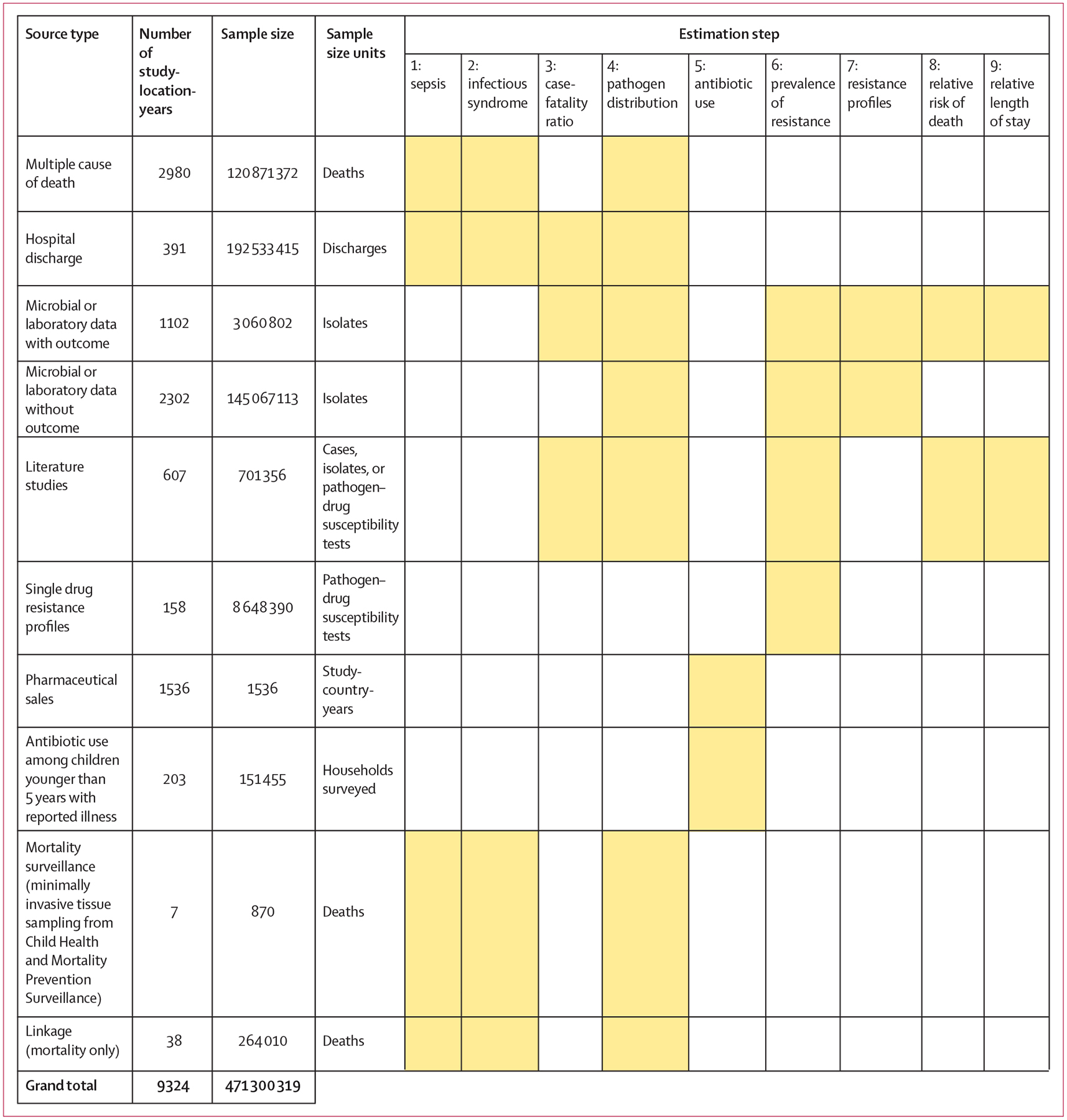
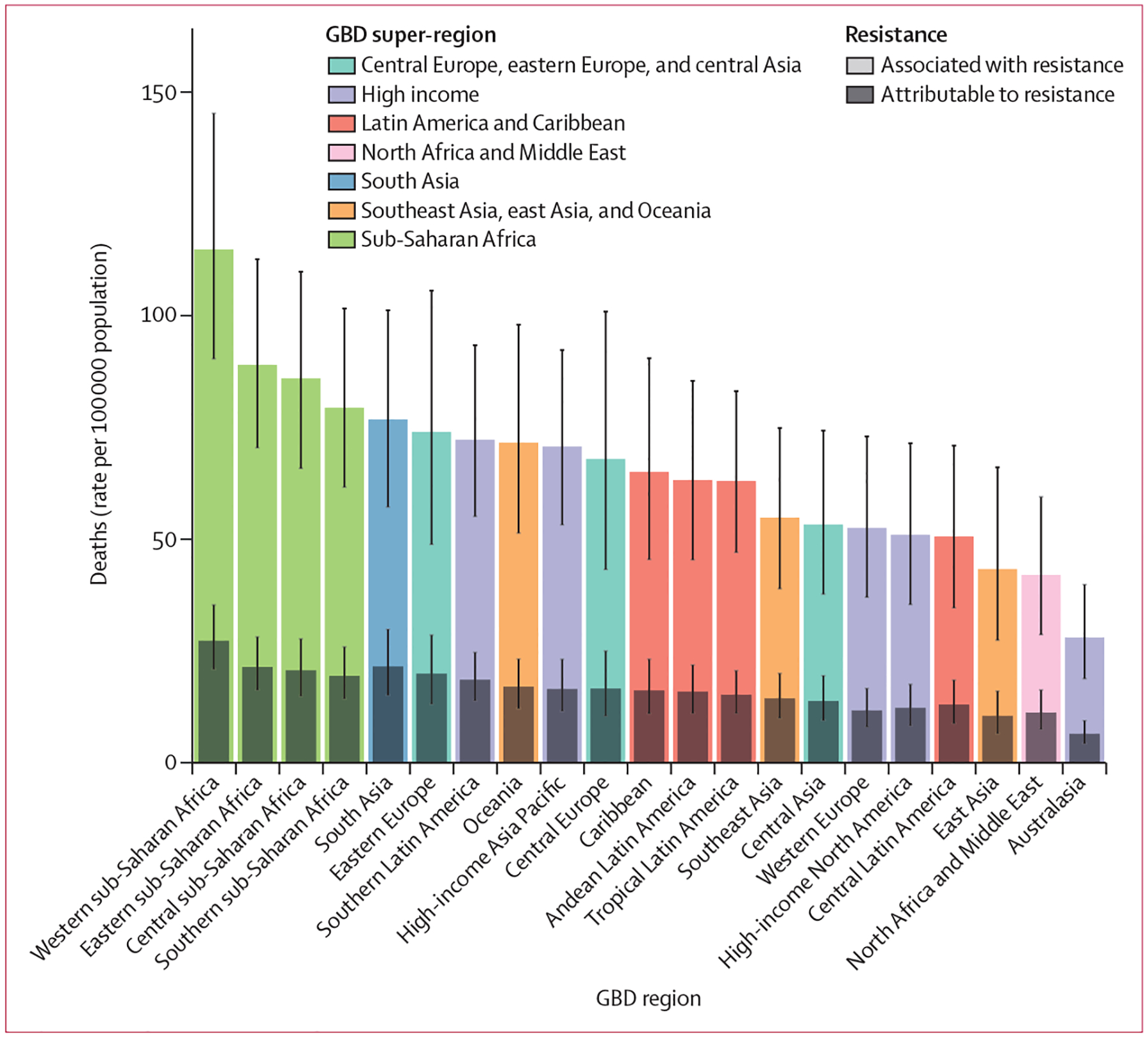
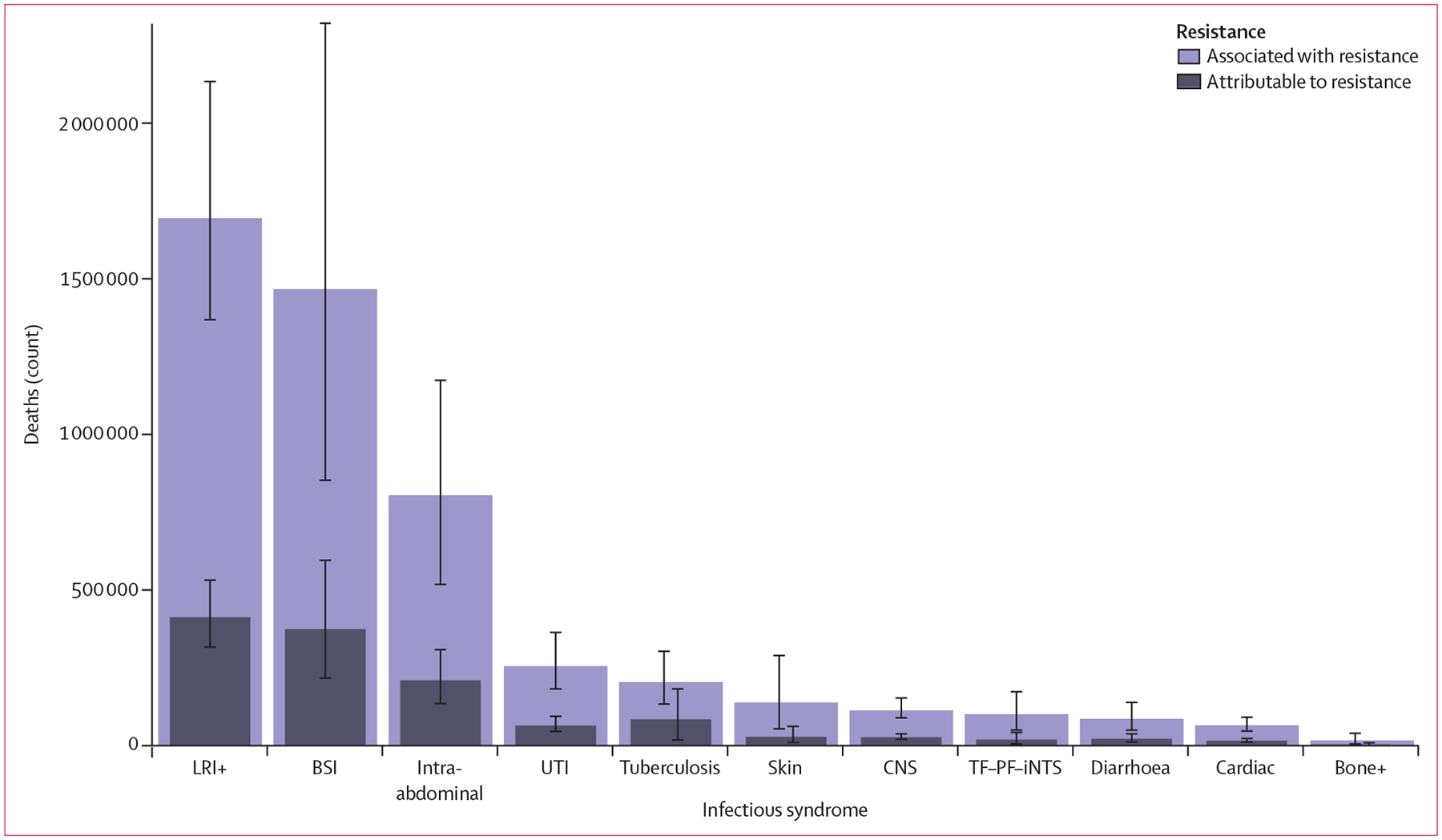
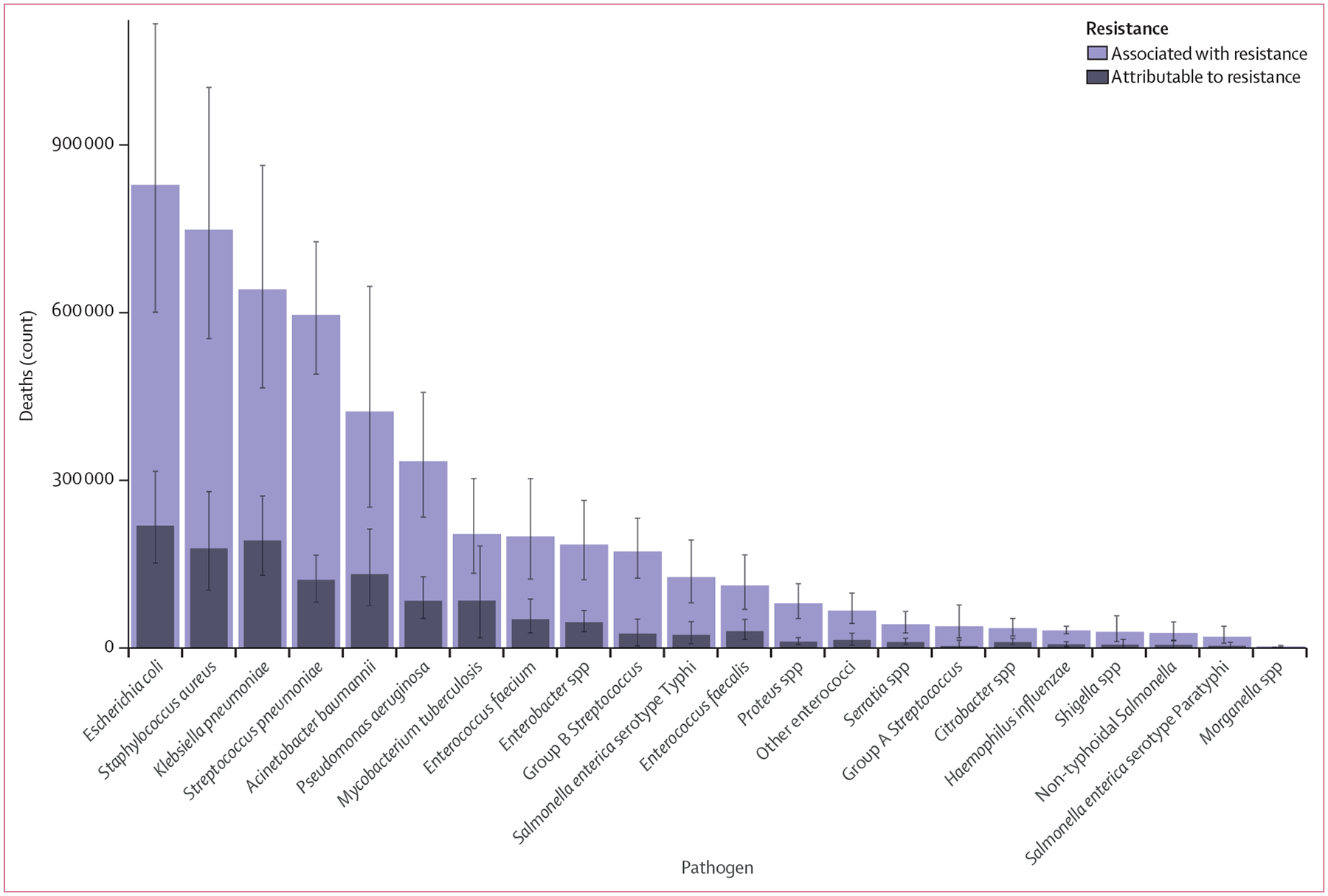
BACKGROUND: Antimicrobial resistance (AMR) poses a major threat to human health around the world. Previous publications have estimated the effect of AMR on incidence, deaths, hospital length of stay, and health-care costs for specific pathogen-drug combinations in select locations. To our knowledge, this study presents the most comprehensive estimates of AMR burden to date. METHODS: We estimated deaths and disability-adjusted life-years (DALYs) attributable to and associated with bacterial AMR for 23 pathogens and 88 pathogen-drug combinations in 204 countries and territories in 2019. We obtained data from systematic literature reviews, hospital systems, surveillance systems, and other sources, covering 471 million individual records or isolates and 7585 study-location-years. We used predictive statistical modelling to produce estimates of AMR burden for all locations, including for locations with no data. Our approach can be divided into five broad components: number of deaths where infection played a role, proportion of infectious deaths attributable to a given infectious syndrome, proportion of infectious syndrome deaths attributable to a given pathogen, the percentage of a given pathogen resistant to an antibiotic of interest, and the excess risk of death or duration of an infection associated with this resistance. Using these components, we estimated disease burden based on two counterfactuals: deaths attributable to AMR (based on an alternative scenario in which all drug-resistant infections were replaced by drug-susceptible infections), and deaths associated with AMR (based on an alternative scenario in which all drug-resistant infections were replaced by no infection). We generated 95% uncertainty intervals (UIs) for final estimates as the 25th and 975th ordered values across 1000 posterior draws, and models were cross-validated for out-of-sample predictive validity. We present final estimates aggregated to the global and regional level. FINDINGS: On the basis of our predictive statistical models, there were an estimated 4·95 million (3·62-6·57) deaths associated with bacterial AMR in 2019, including 1·27 million (95% UI 0·911-1·71) deaths attributable to bacterial AMR. At the regional level, we estimated the all-age death rate attributable to resistance to be highest in western sub-Saharan Africa, at 27·3 deaths per 100 000 (20·9-35·3), and lowest in Australasia, at 6·5 deaths (4·3-9·4) per 100 000. Lower respiratory infections accounted for more than 1·5 million deaths associated with resistance in 2019, making it the most burdensome infectious syndrome. The six leading pathogens for deaths associated with resistance (Escherichia coli, followed by Staphylococcus aureus, Klebsiella pneumoniae, Streptococcus pneumoniae, Acinetobacter baumannii, and Pseudomonas aeruginosa) were responsible for 929 000 (660 000-1 270 000) deaths attributable to AMR and 3·57 million (2·62-4·78) deaths associated with AMR in 2019. One pathogen-drug combination, meticillin-resistant S aureus, caused more than 100 000 deaths attributable to AMR in 2019, while six more each caused 50 000-100 000 deaths: multidrug-resistant excluding extensively drug-resistant tuberculosis, third-generation cephalosporin-resistant E coli, carbapenem-resistant A baumannii, fluoroquinolone-resistant E coli, carbapenem-resistant K pneumoniae, and third-generation cephalosporin-resistant K pneumoniae. INTERPRETATION: To our knowledge, this study provides the first comprehensive assessment of the global burden of AMR, as well as an evaluation of the availability of data. AMR is a leading cause of death around the world, with the highest burdens in low-resource settings. Understanding the burden of AMR and the leading pathogen-drug combinations contributing to it is crucial to making informed and location-specific policy decisions, particularly about infection prevention and control programmes, access to essential antibiotics, and research and development of new vaccines and antibiotics. There are serious data gaps in many low-income settings, emphasising the need to expand microbiology laboratory capacity and data collection systems to improve our understanding of this important human health threat. FUNDING: Bill & Melinda Gates Foundation, Wellcome Trust, and Department of Health and Social Care using UK aid funding managed by the Fleming Fund.
Overview
CoChat Summary
TL;DR
This systematic analysis estimates that bacterial antimicrobial resistance was associated with 4·95 million deaths and directly attributable to 1·27 million deaths globally in 2019. The highest attributable death rates were in western sub-Saharan Africa, and the burden was dominated by a small set of pathogens and pathogen–drug combinations.
Key findings
- In 2019, there were an estimated 4·95 million (95% UI 3·62–6·57) deaths associated with bacterial AMR, including 1·27 million (95% UI 0·911–1·71) deaths attributable to bacterial AMR.
- The all-age death rate attributable to resistance was highest in western sub-Saharan Africa at 27·3 deaths per 100 000 (20·9–35·3) and lowest in Australasia at 6·5 deaths per 100 000 (4·3–9·4).
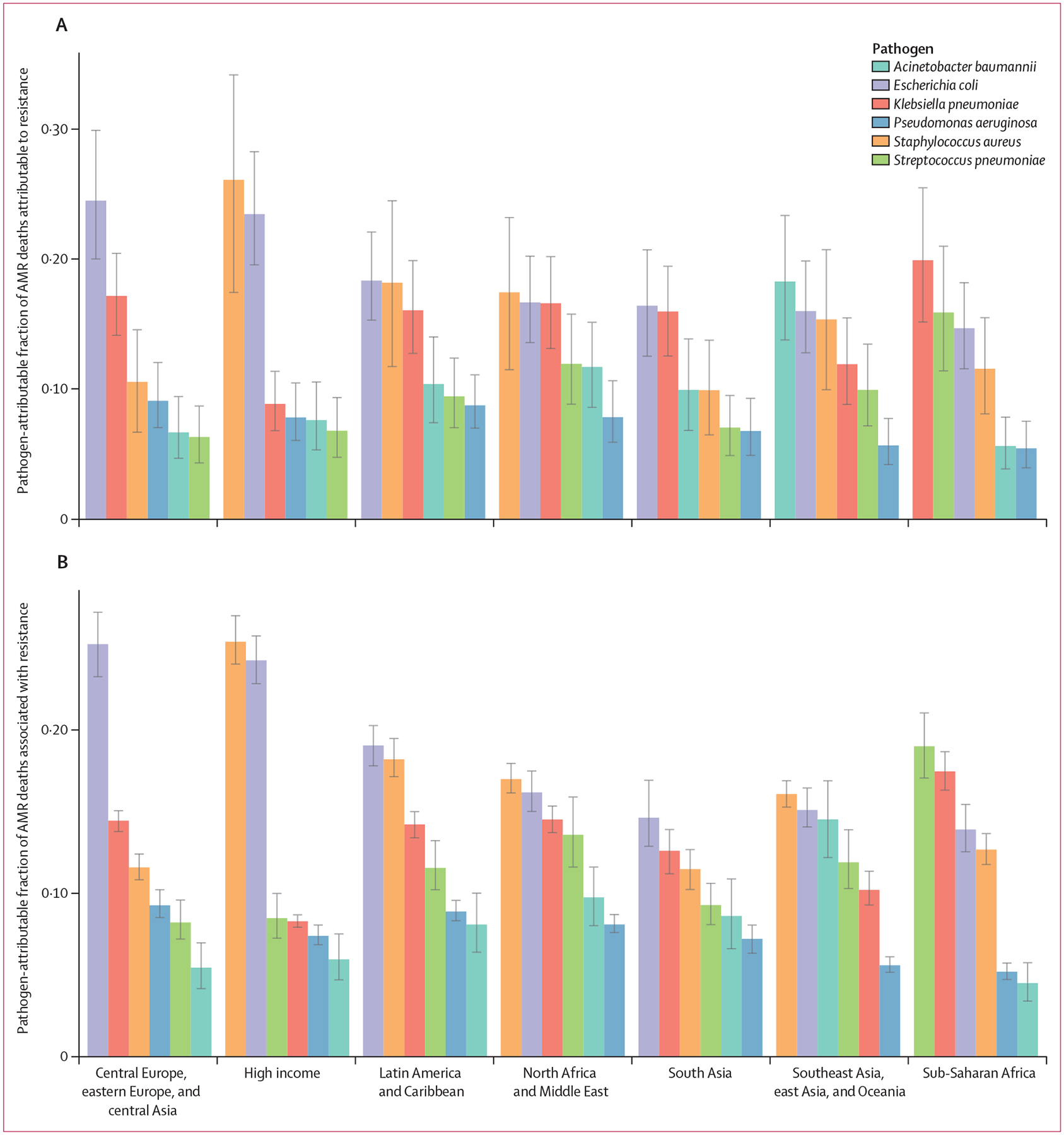
- Six leading pathogens—Escherichia coli, Staphylococcus aureus, Klebsiella pneumoniae, Streptococcus pneumoniae, Acinetobacter baumannii, and Pseudomonas aeruginosa—were responsible for 929 000 (660 000–1 270 000) deaths attributable to AMR and 3·57 million (2·62–4·78) deaths associated with AMR.
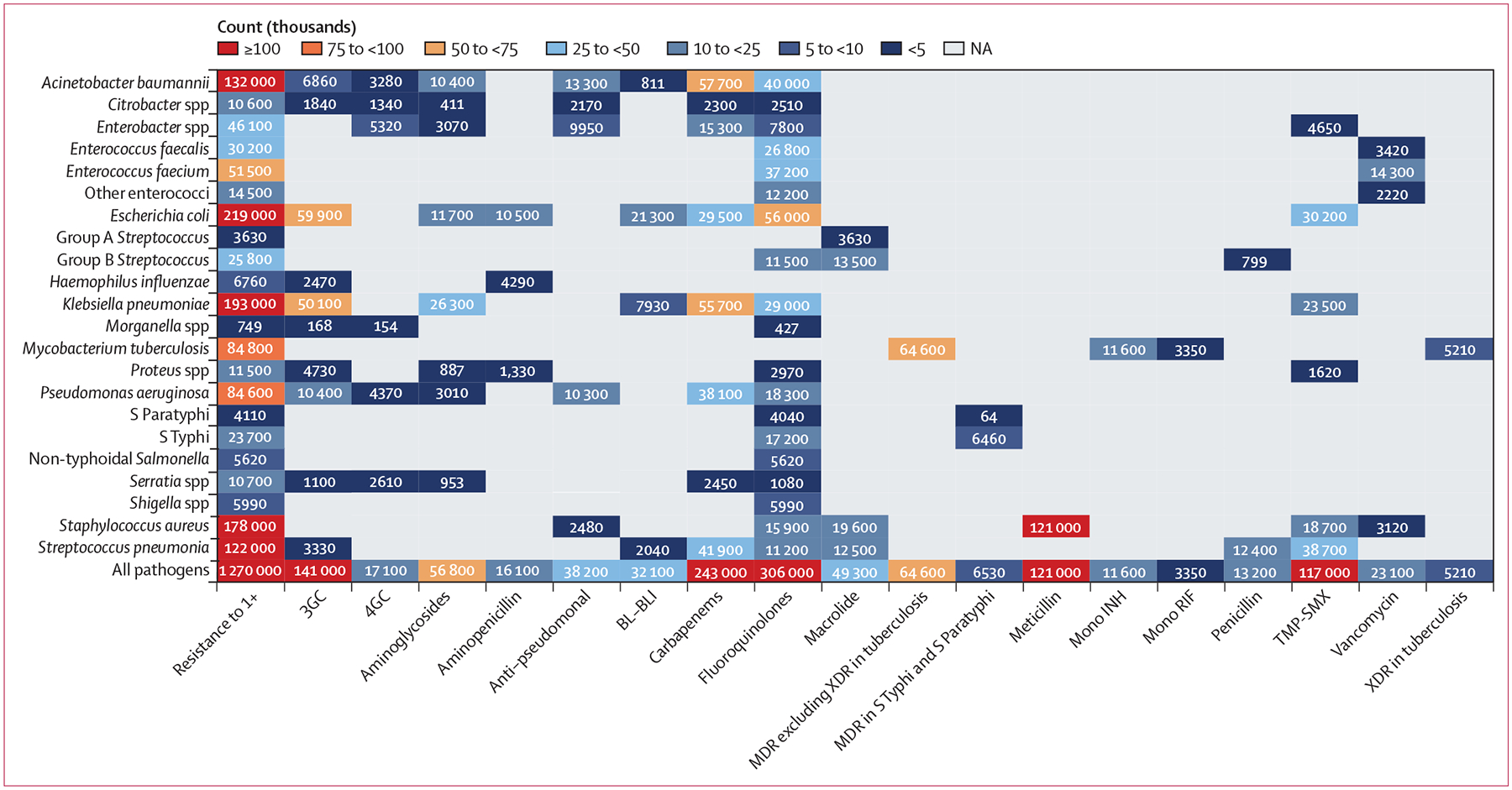
- Meticillin-resistant S aureus was the only pathogen–drug combination with more than 100 000 attributable deaths; six more combinations each caused 50 000–100 000 attributable deaths, including MDR excluding XDR tuberculosis, third-generation cephalosporin-resistant E coli, carbapenem-resistant A baumannii, fluoroquinolone-resistant E coli, carbapenem-resistant K pneumoniae, and third-generation cephalosporin-resistant K pneumoniae.
Methods
- The study estimated deaths and DALYs attributable to and associated with bacterial AMR for 23 pathogens and 88 pathogen–drug combinations in 204 countries and territories in 2019.
- Input data came from systematic literature reviews, hospital systems, surveillance systems, and other sources, covering 471 million individual records or isolates and 7585 study-location-years; predictive statistical modelling was used to produce estimates for all locations, including those with no data.
- The approach used five broad modelling components and two counterfactuals: deaths attributable to AMR (drug-resistant infections replaced by drug-susceptible infections) and deaths associated with AMR (drug-resistant infections replaced by no infection); 95% uncertainty intervals were generated from the 25th and 975th of 1000 posterior draws, with out-of-sample cross-validation.
Limitations
- The paper states that the most important limitation was sparse data from many LMICs on pathogen distribution by infectious syndrome, prevalence of resistance for key pathogen–drug combinations, and deaths involving infection, plus severe scarcity of data linking laboratory results to outcomes; 19 of 204 countries and territories had no data for any modelling component.
- The paper states that it assumed the relative risk for each pathogen–drug combination and the correlation structure of resistance between drugs were the same in every location, age, and infectious syndrome, which might underestimate AMR burden in LMICs; it also assumed MDR relative risk equal to the highest individual drug relative risk, likely underestimating MDR relative risk.
- The paper notes potential bias from combining and standardising heterogeneous data, possible misclassification of community-acquired versus hospital-acquired infections, lack of a universal laboratory standard for resistance versus susceptibility, and selection bias in passive microbial surveillance data; the text also makes evident that these data gaps and assumptions limit comparability and precision.
Model-written summary. Check it against the paper before relying on it.
Integrity signals
Registry
Cites
Statistics
Figures
Verification
Claims the paper makes
0 Valid · 2 Not valid · 24 Not checked · 66 Own results and interpretations
The cited sources that could be checked couldn’t confirm or dispute this claim.
In the paper
“Compared with all underlying causes of death in GBD 2019, AMR would have been the third leading GBD Level 3 cause of death in 2019, on the basis of the counterfactual of no infection; only ischaemic heart disease and stroke accounted for more deaths that year.”
§ Global burden of bacterial antimicrobial resistance in 2019: a systematic analysis > Discussion
What the sources say
- Could not verifycites [14] Vos T, Lim SS, Abbafati C, Global burden of 369 diseases and injuries in 204 countries and territories, 1990–2019: a systematic analysis for the Global Burden of Disease Study 2019. Lancet 2020; 396: 1204– 22. 33069326 PMC7567026 sourceExperimental — accuracy not yet measured
Our copy of the GBD 2019 diseases-and-injuries Article reports Level 3 cause rankings for 2019 (Abstract > Findings; Results > Global trends, e.g. 'Ischaemic heart disease and stroke were ranked first and second' for older age groups and figure 2's leading 25 Level 3 causes of DALYs), but no passage addresses antimicrobial resistance or a counterfactual of no infection, and no death-count ranking placing AMR third appears. Searches for 'antimicrobial resistance AMR counterfactual of no infection attributable deaths', 'counterfactual of no infection', and 'leading Level 3 causes of death 2019 ischaemic heart disease stroke ranking' returned only DALY-ranking, methods (Data processing, cause levels) and reference-list passages. The claim therefore cannot be checked against this source; our copy neither states nor contradicts it, and it names no alternative work for the AMR counterfactual result. (LLM, conf=0.70)
hedged- Asserted: passes — The authors put it forward as true.
- Checkable: passes — It can be checked against evidence.
- Load-bearing: passes — The paper’s conclusions depend on it.
- Based: passes — The paper gives a reason why it holds.
- Rests on 4 assumptions not shown here.
- Could not verify
The cited sources that could be checked couldn’t confirm or dispute this claim.
In the paper
“To account for bias in resistance data provided by tertiary care facilities, we adjusted tertiary rates of resistance by crosswalking them to data from non-tertiary and mixed facilities using MR-BRT as described in the appendix (pp 45–48).31”
§ Global burden of bacterial antimicrobial resistance in 2019: a systematic analysis > Methods > Estimation steps five to seven: prevalence of resistance by pathogen
What the sources say
- Could not verifycites [31] Murray CJL, Aravkin AY, Zheng P, Global burden of 87 risk factors in 204 countries and territories, 1990–2019: a systematic analysis for the Global Burden of Disease Study 2019. Lancet 2020; 396: 1223– 49. 33069327 PMC7566194 sourceExperimental — accuracy not yet measured
Our copy of the GBD 2019 87-risk-factors paper contains no passage on antimicrobial resistance data, tertiary vs non-tertiary/mixed facility sources, crosswalking, or MR-BRT; searches for 'tertiary crosswalk antimicrobial drug resistance', 'MR-BRT meta-regression Bayesian robust triangulation', and 'bias adjustment source type hospital surveillance' returned only generic exposure-modelling text (Methods, 'Estimation of the distribution of exposure for each risk by age-sex-location-year') and the Limitations discussion of non-reference-method bias corrections for exposure measurement. The closest content — 'Corrections for non-reference method exposure measurements have been revised using network or related meta-regression' (Abstract) and 'we implemented more explicit corrections for bias associated with non-reference methods of exposure measurement' (Discussion > Limitations) — concerns risk-exposure measurement modes, not resistance rates from tertiary care facilities, so it neither supports nor contradicts the specific attribution. (LLM, conf=0.72)
plainstates a cause- Asserted: passes — The authors put it forward as true.
- Checkable: passes — It can be checked against evidence.
- Load-bearing: passes — The paper’s conclusions depend on it.
- Based: passes — The paper gives a reason why it holds.
- Could not verify
A result the paper reports from its own data — it cites no other source for it, so there is none to check. The quote shows it is in the paper.
In the paper
“our analysis showed that AMR all-age death rates were highest in some LMICs”
§ Global burden of bacterial antimicrobial resistance in 2019: a systematic analysis > Discussion
plainstates an association- Asserted: passes — The authors put it forward as true.
- Checkable: passes — It can be checked against evidence.
- Load-bearing: passes — The paper’s conclusions depend on it.
- Based: passes — The paper gives a reason why it holds.
- Rests on 4 assumptions not shown here.
A result the paper reports from its own data — it cites no other source for it, so there is none to check. The quote shows it is in the paper.
In the paper
“In 2019, meticillin-resistant S aureus was the one pathogen–drug combination in our analysis with more than 100 000 deaths and 3·5 million DALYs attributable to resistance (figure 6; appendix pp 121–22, 129).”
§ Global burden of bacterial antimicrobial resistance in 2019: a systematic analysis > Results
plainstates a cause- Asserted: passes — The authors put it forward as true.
- Checkable: passes — It can be checked against evidence.
- Load-bearing: unclear — It is unclear whether the paper’s conclusions depend on it.
- Based: passes — The paper gives a reason why it holds.
A result the paper reports from its own data — it cites no other source for it, so there is none to check. The quote shows it is in the paper.
In the paper
“Six more pathogens were each responsible for between 100 000 and 250 000 deaths associated with AMR: M tuberculosis, Enterococcus faecium, Enterobacter spp, Streptococcus agalactiae (group B Streptococcus), S Typhi, and Enterococcus faecalis.”
§ Global burden of bacterial antimicrobial resistance in 2019: a systematic analysis > Results
plainstates an association- Asserted: passes — The authors put it forward as true.
- Checkable: passes — It can be checked against evidence.
- Load-bearing: unclear — It is unclear whether the paper’s conclusions depend on it.
- Based: passes — The paper gives a reason why it holds.
29 more claims
Create a free account to see all 92 claims and to verify the 31 references still open.
- Probably not a substantial claim. 26
- It may state two separate claims as one. 41
Claims other papers make about this one
Each is checked against this paper’s own text: does it say what the citing paper says it does?
The cited source doesn’t support the claim as written.
In the citing paper
“making antibiotic resistance the leading cause of death around the world (Murray et al., 2022).”
From Review of emerging contaminants in green stormwater infrastructure: antibiotic resistance genes, microplastics, tire wear particles, PFAS, and temperature (2024) · cites this paper as Murray et al., 2022
Checked by a reasoning model — may be wrong.
Experimental — accuracy not yet measuredThe source backs part of the claim, not all of it — or backs it for a different population, condition or comparison.
In the citing paper
“unnecessary broad-spectrum exposure contributes to selection pressure for antimicrobial resistance, one of the leading global threats to health (2).”
From Day-4 antipseudomonal and anti-MRSA de-escalation was not associated with higher mortality in critically ill patients with sepsis (2026) · cites this paper as [2]
Experimental — accuracy not yet measuredThe source backs part of the claim, not all of it — or backs it for a different population, condition or comparison.
In the citing paper
“Resistance develops when microorganisms become less susceptible or unresponsive to agents previously effective for treatment, leading to therapeutic failure, prolonged disease, and increased morbidity and mortality 12-14 .”
From Outpatient Antibiotic Prescribing and Stewardship in South India: AnalysisUsing WHO/INRUD Indicators and AWaRe Classification (2026) · cites this paper as [14]
Experimental — accuracy not yet measuredThe source backs part of the claim, not all of it — or backs it for a different population, condition or comparison.
In the citing paper
“In 2019, sub-Saharan Africa (SSA) had the highest mortality rate (23.5 deaths per 100,000) attributable to AMR compared to other regions.”
From Antimicrobial Resistance Rates and Surveillance in Sub-Saharan Africa: Where Are We Now? (2022) · cites this paper as [8]
Experimental — accuracy not yet measuredThe source backs part of the claim, not all of it — or backs it for a different population, condition or comparison.
In the citing paper
“Globally, Western SSA had the highest death rate attributable to AMR, 27.3 deaths per 100,000, followed by Eastern, Central, and Southern SSA (Table 1).”
From Antimicrobial Resistance Rates and Surveillance in Sub-Saharan Africa: Where Are We Now? (2022) · cites this paper as [8]
Experimental — accuracy not yet measured
12 more claims about this paper
Create a free account to see every claim other papers make about this one.
Citations
Cites
The third international consensus definitions for sepsis and septic shock (Sepsis-3).
Singer, M., Deutschman, C. S., Seymour, C. W., Shankar-Hari, M., Annane, D., Bauer, M., Bellomo, R., Bernard, G. R., Chiche, J.-D., Coopersmith, C. M., et al. (2016) · JAMA · doi:10.1001/jama.2016.0287 · Cited by 28,250 · cited 3×
“…of death that are themselves infectious, all deaths were assigned to their single corresponding infectious syndrome (eg, the GBD cause “lower respiratory infections” was assigned to the infectious syndrome “lower respiratory infections and all related infections in the thorax”; appendix pp 21–23).”
Vos, T., Lim, S. S., Abbafati, C., Abbas, K. M., Abbasi, M., Abbasifard, M., Abbasi-Kangevari, M., Abbastabar, H., Abd-Allah, F., Abdelalim, A., et al. (2020) · The Lancet · doi:10.1016/s0140-6736(20)30925-9 · Cited by 19,358 · cited 8×
“14 Given the strong relationship between antibiotic consumption levels and the proliferation of resistance, we modelled antibiotic consumption at the national level to use as a covariate in the stacked ensemble model of prevalence of resistance.”
InfluentialSelf-citationMurray, C. J. L., Aravkin, A. Y., Zheng, P., Abbafati, C., Abbas, K. M., Abbasi-Kangevari, M., Abd-Allah, F., Abdelalim, A., Abdollahi, M., Abdollahpour, I., et al. (2020) · The Lancet · doi:10.1016/s0140-6736(20)30752-2 · Cited by 9,854 · cited 3×
“22 We describe data inputs for each of ten estimation steps in greater detail in the following subsections and in the appendix (pp 17–18, 31, 34–35, 44, 54).”
Self-citationAngus, D. C., Linde-Zwirble, W. T., Lidicker, J., Clermont, G., Carcillo, J., & Pinsky, M. R. (2001) · Critical Care Medicine · doi:10.1097/00003246-200107000-00002 · Cited by 8,503 · cited 1×
“In the appendix, we present the equivalent AMR findings for DALYs instead of deaths (pp 124–29), as well”
Rudd, K. E., Johnson, S. C., Agesa, K. M., Shackelford, K. A., Tsoi, D., Kievlan, D. R., Colombara, D. V., Ikuta, K. S., Kissoon, N., Finfer, S., et al. (2020) · The Lancet · doi:10.1016/s0140-6736(19)32989-7 · Cited by 7,971 · cited 3×
“For datasets where isolates could not be uniquely identified across pathogen–drug combinations, such as some antimicrobial resistance surveillance systems, some isolates might be double counted.”
Self-citationThe epidemiology of sepsis in the United States from 1979 through 2000
Martin, G. S., Mannino, D. M., Eaton, S., & Moss, M. (2003) · New England Journal of Medicine · doi:10.1056/nejmoa022139 · Cited by 5,841
Antibiotic resistance threats in the United States, 2019
(U.S.), C. F. D. C. A. P. (2019) · doi:10.15620/cdc:82532 · Cited by 5,782 · cited 1×
“In the appendix, we present the equivalent AMR findings for DALYs instead of deaths (pp 124–29), as well”
Antibiotic resistance-the need for global solutions
Laxminarayan, R., Duse, A., Wattal, C., Zaidi, A. K. M., Wertheim, H. F. L., Sumpradit, N., Vlieghe, E., Hara, G. L., Gould, I. M., Goossens, H., et al. (2013) · The Lancet Infectious Diseases · doi:10.1016/s1473-3099(13)70318-9 · Cited by 4,439 · cited 1×
“In the appendix, we present the equivalent AMR findings for DALYs instead of deaths (pp 124–29), as well”
Antimicrobial resistance: a global multifaceted phenomenon
Prestinaci, F., Pezzotti, P., & Pantosti, A. (2015) · Pathogens and Global Health · doi:10.1179/2047773215y.0000000030 · Cited by 3,296
Cassini, A., Högberg, L. D., Plachouras, D., Quattrocchi, A., Hoxha, A., Simonsen, G. S., Colomb-Cotinat, M., Kretzschmar, M. E., Devleesschauwer, B., Cecchini, M., et al. (2019) · The Lancet Infectious Diseases · doi:10.1016/s1473-3099(18)30605-4 · Cited by 2,945 · cited 2×
“In the appendix, we present the equivalent AMR findings for DALYs instead of deaths (pp 124–29), as well”
Self-citation
Research works printed but not linked: 2
- O’Neill J. Antimicrobial resistance: tackling a crisis for the health and wealth of nations. London: Review on Antimicrobial Resistance, 2014.
- National Office for Animal Health. NOAH response to final O’Neill AMR review report July 2016. Middlesex: National Office for Animal Health, 2016.
Cited by
Items 14,701–14,800 of 20,460
Dekker, M., Vis, C., van Nassau, F., Nilsen, P., van Mansfeld, R., & Jongerden, I. P. (2026) · Implementation Science Communications · doi:10.1186/s43058-026-00942-x
Sun, Y., Yang, J., Zhao, Z., Liu, S., Li, M., & Yu, Q. (2025) · Asian Journal of Pharmaceutical Sciences · doi:10.1016/j.ajps.2025.101094
Gut microbiome and bacterial resistance to antibiotics: Reservoir or defence?
Vuković, D. (2025) · Medicinski podmladak · doi:10.5937/mp76-60542
Li, Y., Luo, J., Guo, Z., Qiu, H., Zhang, Y., & Zheng, Z. (2024) · Ecological Frontiers · doi:10.1016/j.ecofro.2024.08.008
Ozturk, B., Anwar, S., Javed, K. M. A. A., Chong, Y. J., Butt, G. F., Low, L., Said, D. G., Dua, H. S., Barua, A., Aralikatti, A., et al. (2026) · Frontiers in Medicine · doi:10.3389/fmed.2026.1835834
Modeling Mutation-Driven Emergence of Drug-Resistance: A Case Study of SARS-CoV-2
Shi, C., VILCHES, T. N., Li, A., Wu, J., & Moghadas, S. M. (2023) · Fields Institute communications · doi:10.1007/978-3-031-40805-2_7
Mohajer, M. A., Slusky, D., Nix, D. E., Allel, K., Shay, S. L., & Nicodemo, C. (2026) · Open Forum Infectious Diseases · doi:10.1093/ofid/ofag455
Huang, S., Lu, W., Hong, Y. X., Zhu, J., Liu, Y., & Su, Z. (2026) · Frontiers in Cellular and Infection Microbiology · doi:10.3389/fcimb.2026.1730665
Swiatek, L.-S., Surmann, K., Eger, E., Müller, J. U., Salazar, M. G., Guenther, S., Werner, G., Hübner, N., Bohnert, J. A., Becker, K., et al. (2023) · bioRxiv (Cold Spring Harbor Laboratory) · doi:10.1101/2023.12.22.573023
Evaluation of a rhenium glycosylated complex as sonosensitizer for inactivation of E. coli in vitro
Jha, A., Mistry, N., Jagaanal, A., Das, M., Kerai, R., Bhatia, D. D., Gupta, I., & Shekhar, H. (2024) · IEEE South Asian Ultrasonics Symposium (SAUS) · doi:10.1109/saus61785.2024.10563699
Merging Multi-OMICs with Proteome Integral Solubility Alteration Unveils Antibiotic Mode of ActionPreprint
Maity, R., Zhang, X., Liberati, F. R., Rossi, C. S., Cutruzzolà, F., Rinaldo, S., Gaetani, M., Aínsa, J. A., & Sancho, J. (2024) · eLife · doi:10.7554/elife.96343.2
Maity, R., Zhang, X., Liberati, F. R., Rossi, C. S., Cutruzzolà, F., Rinaldo, S., Gaetani, M., Aínsa, J. A., & Sancho, J. (2024) · eLife · doi:10.7554/elife.96343.2.sa0
Kang, L., Ma, R., Zhao, X.-B., Han, Y., Shi, Y.-P., & Ha, W. (2026) · ACS Applied Materials & Interfaces · doi:10.1021/acsami.5c23737
Probiotics in Preoperative Primary Cleft Treatment
Roode, G. J. (2025) · Journal of Dental Health and Oral Research · doi:10.46889/jdhor.2025.6103
Semret, M., Ajibola, O., Barbé, B., Campbell, J. R., Ondoa, P., Affolabi, D., Ronat, J., Corsini, R., Jacobs, J. A., Buhler, C., et al. (2026) · The Lancet Microbe · doi:10.1016/j.lanmic.2026.101444
Self-citationKarmacharya, A., Pokhrel, S., Sharma, D., Khadka, C., Pradhan, N., & Phuyal, N. (2026) · Medical Journal of Eastern Nepal · doi:10.3126/mjen.v5i01.96385
Interprofessional Collaboration in the Management of Complex Infectious Disease Cases
Baudoin, C. D., LeBrun, M., & McAtee, C. (2026) · Critical Care Nursing Clinics of North America · doi:10.1016/j.cnc.2026.04.011
Singhal, C., Shamsi, S., Gupta, S., & Chaudhuri, S. (2026) · Electrochimica Acta · doi:10.1016/j.electacta.2026.149008
Nighot, V., Suryawanshi, A. D., -, T. J. M., & -, D. S. P. (2023) · International Journal For Multidisciplinary Research · doi:10.36948/ijfmr.2023.v05i06.10480
The role of globalization in accelerating antimicrobial resistance
Singh, A. K., Pallod, A., & Kadam, A. K. (2026) · Elsevier eBooks · doi:10.1016/b978-0-443-27781-8.00020-8
Massir, I. N., Yacouba, A., Tapha, O., Hamidou, O., Ousmane, A., Moussa, H., Souleymane, B., Laminou, I. M., Doutchi, M., & SAIDOU, M. (2026) · F1000Research · doi:10.12688/f1000research.190011.1
Treeck, K. E. V., Liu, J. D., Sherman, K., Tabashsum, Z., Angeles-Solano, M., Lifschin, Z. J., Dayton, P. A., Rowe, S. E., & Papadopoulou, V. (2026) · Ultrasound in Medicine & Biology · doi:10.1016/j.ultrasmedbio.2026.08.012
Exploring the Oral Resistome: From Metagenomics to Precision Oral Health
Correia, L. N., Correia, A., & Bessa, L. J. (2026) · Microorganisms · doi:10.3390/microorganisms14092033
van Leeuwen, T., Majzoub, M. E., Zhou, Y., Kaakoush, N. O., Zetterlund, P. B., & Chandrawati, R. (2026) · Colloids and Surfaces A Physicochemical and Engineering Aspects · doi:10.1016/j.colsurfa.2026.140689
Rani, K., Harikota, H., Mohapatra, S. K., Tripathi, S., Sharma, S., Sharma, A. K., Poornima, S., Rattan, A., & Raj, V. S. (2024) · Research Square · doi:10.21203/rs.3.rs-4783295/v1
Ortenberg, E. A., & Khabibrakhmanova, D. F. (2024) · Journal of Volgograd State Medical University · doi:10.19163/1994-9480-2024-21-2-36-43
Tasci, V., Taydaş, O., Ozer, I., Özdemır, M., Topaloğlu, Ö. F., Durmuş, M. A., Tamer, M. F., Mustak, U., Tekin, A. F., Şentürk, A., et al. (2026) · Life · doi:10.3390/life16091569
Culture-based studies of intestinal lactobacilli in young people and centenarians
Smidt, I., Rööp, T., Mändar, R., Štšepetova, J., Kõljalg, S., Kilk, K., Soidla, I., Ainsaar, M., Kolk, H., & Sepp, E. (2026) · Frontiers in Microbiology · doi:10.3389/fmicb.2026.1746411
Medicinal Plants in Poultry During Post‐Antibiotic Era in One‐Health Approach: An Extensive Review
Talebi, A., & Savari, A. (2026) · Veterinary Medicine and Science · doi:10.1002/vms3.71119
The effect of sample type and location on industrial workplace sink and hand dryer microbiomes
Thompson, T. P., Rice, C., Athanasakis, E., Mawhinney, J., Gilmore, B., Fitzgerald, P., Skvortsov, T., & Kelly, S. A. (2025) · BMC Microbiology · doi:10.1186/s12866-025-04054-9
Musundi, S., Kimani, R. W., Waweru, H., Wakaba, P., Mbogo, D., Essuman, S., Onyambu, F., Kanoi, B. N., & Gitaka, J. (2026) · bioRxiv (Cold Spring Harbor Laboratory) · doi:10.64898/2026.04.13.718279
32nd Annual GP2A Medicinal Chemistry Conference
Hélesbeux, J., McCarthy, F. O., Silva, M. M., Leitão, A. J., Burke, A. J., Salvador, J. A. R., Moreira, R., Sousa, E., Moreira, V. M., & Marchand, P. (2025) · Drugs and Drug Candidates · doi:10.3390/ddc4010002
Campus, C., Serri, C., Roldo, M., Giunchedi, P., Gavini, E., & Rassu, G. (2026) · International Journal of Pharmaceutics · doi:10.1016/j.ijpharm.2026.127471
Morin, B., Tripathi, V., Woischnig, A.-K., Erdmann, J., Iizuka, A., Baumhoer, D., Rentsch, K., Sauteur, L., Bartoszek, E. M., Keller, P. M., et al. (2026) · bioRxiv (Cold Spring Harbor Laboratory) · doi:10.64898/2026.06.03.728378
Multidrugs Resistance: Concepts, Mechanisms, and Recent Advances
Acharya, D., Satapathy, S., Patra, S., Jha, G., Sahoo, S., & Gayatri, T. (2024) · Springer eBooks · doi:10.1007/978-981-97-9634-2_10
Alhadrami, H. A., Fouad, A. G., Amaeze, N., Sayed, A. M., Rateb, M. E., & Naguib, D. M. (2025) · Frontiers in Nanotechnology · doi:10.3389/fnano.2025.1599272
Díaz-Formoso, L., Contente, D., Feito, J., la Fuente, J. D., Hernández, P. E., Borrero, J., Muñoz-Atienza, E., & Cintas, L. M. (2026) · Frontiers in Marine Science · doi:10.3389/fmars.2026.1926628
Acharya, P., Nepal, P., Subedee, A., Pandit, P. P., Joshi, S., Perumal, A., Nirala, S. K., Shrestha, N., Gurung, S., & Acharya, Y. (2026) · Contemporary Clinical Trials Communications · doi:10.1016/j.conctc.2026.101672
Nikmaram, A., Meidani, Z., Maham, M., Karami, A., Bakhtyiary, H., Pourmemari, M., Gong, Y., & Nabovati, E. (2026) · Antimicrobial Resistance and Infection Control · doi:10.21203/rs.3.rs-10540067/v1
Elshenawy, R. A., Cernaliu, A., Abe, O. M., Dsouza, R., & Chowdhury, S. M. (2026) · Clinical Microbiology and Infection · doi:10.1016/j.cmi.2026.09.020
Bacterial Resistance: What Is the Epidemiological Scenario?
Livermore, D. M. (2024) · Springer eBooks · doi:10.1007/978-3-319-92366-6_2
Belmont, C., Inamdar, P. P., Shariff‐Marco, S., Gul, A., Huang, A. J., Chambers, H. F. “., & Raphael, E. (2025) · BMC Infectious Diseases · doi:10.1186/s12879-025-11734-4
Maqbool, M., Sherry, N. L., Kwong, J. C., Howden, B. P., Gorrie, C. L., Ingle, D. J., & The Controlling Superbugs Study Group (2026) · Microbial Genomics · doi:10.1099/mgen.0.001554
Bajarias, A. J., Lara, F. D. G. D., Godinez, M., Trangia, M., & Ybañez, A. (2026) · Discover Food · doi:10.1007/s44187-026-01197-0
Akpan, M. I., Jackson, I. L., Eshiet, U. I., & Akpan, M. (2026) · Antimicrobial Stewardship & Healthcare Epidemiology · doi:10.1017/ash.2026.10773
López, M. J., & Galeano, S. J. (2024) · Medicina · doi:10.56050/01205498.2380
Animal Movements and Food as Driving Factors for the Spread of Antimicrobial Resistance
ter Kuile, B. H., Economou, V. K., Dolejská, M., & Haenni, M. (2025) · Springer eBooks · doi:10.1007/978-3-032-04598-0_4
Wang, X., Li, H., Sun, P., Li, L., Tang, S., & Wang, T. (2026) · Chinese Chemical Letters · doi:10.1016/j.cclet.2026.112648
Seafood resistome across trophic levels: Tissue patterns, drivers, and potential dietary exposure
Dong, C., Sun, L., Liu, Z., Sun, C., Pan, D., Zhu, L., & Hu, B. (2026) · Journal of Hazardous Materials · doi:10.1016/j.jhazmat.2026.141959
Gao, Y., Chen, Y., Li, W., Zhang, R., Zhang, C., Shan, S., & Qian, X. (2026) · Research Square · doi:10.21203/rs.3.rs-10410258/v1
Osbelt, L., Eger, E., Homeier‐Bachmann, T., Schwabe, M., Wende, M., Hammerschmidt, B., Vernunft, A., Sivapornnukul, P., Neumann‐Schaal, M., Guenther, S., et al. (2026) · Frontiers in Microbiology · doi:10.3389/fmicb.2025.1695208
Bakkeren, E. (2026) · Science · doi:10.1126/science.aej2365
Mobile genetic elements and antibiotic resistance in ESKAPE pathogens
Chaudhari, M., Basu, J., Kashyap, J., Dash, J., & Deb, S. (2026) · Elsevier eBooks · doi:10.1016/b978-0-443-26726-0.00001-3
From resistance mechanisms to therapy: Antimicrobial resistance in Gram-negative bacteria
Lee, M. (2026) · The Journal of Microbiology · doi:10.71150/jm.2604017
Chen, Z., Gao, F.-Z., Li, P., Bai, H., He, L.-Y., Liu, Y.-S., & Ying, G. (2026) · Environment International · doi:10.1016/j.envint.2026.110525
Kubiak, A., Palmisano, G., & Puma, G. L. (2026) · Chemical Engineering Journal · doi:10.1016/j.cej.2026.181716
Unger, I., Abdel‐Glil, M. Y., Lox, J., Schmoock, G., Neubauer, H., Schwarz, Š., & Seyboldt, C. (2026) · Antibiotics · doi:10.3390/antibiotics15050495
Practical Steps Toward Antimicrobial Stewardship for the General Practitioner
Cazer, C. L., & Safi, A. G. (2026) · Veterinary Clinics of North America Small Animal Practice · doi:10.1016/j.cvsm.2026.05.003
Soil as a source and sink for antimicrobial resistance
Solaiman, Z., Bolan, S., Sharma, S., Mukherjee, S., Mathew, S., Thakur, R., Bhargava, P. C., Hou, R., Singh, E., Chaurasia, D., et al. (2025) · Advances in agronomy · doi:10.1016/bs.agron.2025.10.004
Frade-Pérez, M. D., Pérez‐Serrano, R. M., Cornelio-Martínez, S., González‐Dávalos, L., Venegas, Y. R., Flores-Gasca, E., Varela‐Echavarría, A., & Izaguirre, M. O. M. (2026) · Pets · doi:10.3390/pets3010015
Rossel, C. A. J., van Alphen, L. B., Heddema, E. R., & Savelkoul, P. H. M. (2026) · PLoS ONE · doi:10.1371/journal.pone.0355393
Otu, A. A., Onwusaka, O., Udoh, U. A., Ugbe, U. M.-J., Effa, E., Inyang, J., Ebenso, B., Abdi, F., & Walley, J. (2026) · Research Square · doi:10.21203/rs.3.rs-10576983/v1
Farooqui, S., Shyma, Z., Aisha, H., Nashiya, F., & Sajan Francis, P. (2023) · International Journal of Pharmaceutical Sciences Review and Research · doi:10.47583/ijpsrr.2023.v83i01.003
Shi, Z., Wan, Z., Tan, G., Xi, J., Cui, M., Hou, Y., Ma, Z., Sun, N., Zhu, Y., Li, M., et al. (2026) · International Journal of Nanomedicine · doi:10.2147/ijn.s592819
Karunaratne, M., Athapattu, P. L., Jayawardena, M. N., Gunasekera, C., Arachchi, D. A., Karunanayake, L., Jayatilleke, K., Samarakoon, S., Wickramasinghe, K., Wijewickrama, A., et al. (2026) · The Lancet Regional Health - Southeast Asia · doi:10.1016/j.lansea.2026.100826
Babayan, A. M., Kusznierewicz, B., Litewski, S., Mróz, M., Ginovyan, M. M., Bartoszek, A., & Sahakyan, N. Z. (2026) · Scientific Reports · doi:10.1038/s41598-026-73048-y
Zhu, X., He, W., Hu, Y., Zhang, T., Cheng, Y., Cheng, P., Li, Z. Y., Qin, X., Dong, Q., & Xiao, L. (2026) · Food Research International · doi:10.1016/j.foodres.2026.120014
Antibiotic Susceptibility Testing from Unprocessed Urine at the Point of Visit
Wang, J., Xin, L., Li, Z., Lu, X., Lian, J., Zheng, J., & Chen, W. (2026) · Journal of Analysis and Testing · doi:10.1007/s41664-026-00425-x
Antibiotic Susceptibility Pattern of E. coli Isolates from Cases of Pediatric Meningitis
Moussa, R. A.-A., AL-Khafaji, J. K. T., & Noor, M. (2025) · Medical Journal of Babylon · doi:10.4103/mjbl.mjbl_353_24
Furlan, J. P. R. (2022) · Digital Library of Theses and Dissertations (Universidade de São Paulo) · doi:10.11606/t.60.2022.tde-18082022-162738
One Health Perspectives for Addressing Antimicrobial Resistance
Kaur, K., Barathe, P., Reddy, S. M. L., Mathur, V., & Kumar, V. (2024) · Springer eBooks · doi:10.1007/978-981-99-7261-6_1
Dawam, W., Edris, S. N., Osman, A., Elsheikh, M., Hamad, A. M. A., Sitohy, M. Z., & Sabeq, I. I. (2024) · npj Science of Food · doi:10.1038/s41538-024-00337-z
Abdullahi, I. N., Lozano, C., & Torres, C. (2025) · Elsevier eBooks · doi:10.1016/b978-0-443-33351-4.00013-1
Gopalakrishnan, M., Sumathi, K. V., Velegatla, S. V., Muthu, Y., Sankar, P., & Hemalatha, K. (2025) · Environmental Science and Pollution Research · doi:10.1007/s11356-025-36869-4
Lopes, L. D. S., Silva, K. A., Correa, T. D. S., Campos-da-Paz, M., Martin, J. G. P., Gonçalves, A. A. M., Belo, V. S., Gontijo, T. S., & Galdino, A. S. (2025) · Current Molecular Medicine · doi:10.2174/0115665240372278250630073325
Bacterial antimicrobial resistance in routine retail and hospital food samples in Ireland, 2024
Pinto, P., Gibson, A., Flanagan, P. R., Teoh, T. K., & Carroll, A. M. (2026) · The Microbe · doi:10.1016/j.microb.2026.100729
Ohemu, G. P., Rodríguez-Mori, H., Schmidt, M., & Awosile, B. B. (2026) · Antimicrobial Stewardship & Healthcare Epidemiology · doi:10.1017/ash.2026.10750
Khan, N. N., Jiang, J., Islam, M., Quon, H., Muenich, R. L., Rudko, N., Kamanmalek, S., Rice, J., Garner, E., Westerhoff, P. K., et al. (2026) · Environmental Pollution · doi:10.1016/j.envpol.2026.128588
Pillai, M., Sharma, S., Khanal, S., & Kumar, D. (2026) · Elsevier eBooks · doi:10.1016/b978-0-443-27781-8.00001-4
Deng, H., Yonghong, W., Yan, M., & Wei, L. (2026) · Journal of International Medical Research · doi:10.1177/03000605261458669
Al-Hasan, M. H., Haidar, M., & Mousawi, F. (2026) · Elsevier eBooks · doi:10.1016/b978-0-443-40634-8.00035-0
Detection of Airborne Acinetobacter baumannii Carbapenem-Resistant Strains in Hospital Settings
Calia, C., Oliva, M., Portincasa, P., Barbieri, P., Chironna, M., de Gennaro, G., Scrascia, M., Ciaula, A. D., Angelo, M., & Pazzani, C. (2026) · International Journal of Environmental Research and Public Health · doi:10.3390/ijerph23101292
Męcik, M., Stefaniak, K., Harnisz, M., Czatzkowska, M., Felis, E., Bajkacz, S., Sawicki, J., Krawczyk, K., Paukszto, Ł., & Korzeniewska, E. (2026) · Journal of Hazardous Materials · doi:10.1016/j.jhazmat.2026.143526
Krishnamoorthy, S., Sasidharan, S. S., Thara, M. V., & Nambi, I. M. (2026) · Journal of Environmental Health Science and Engineering · doi:10.1007/s40201-026-01004-z
From discovery to preparedness: reframing antimicrobial resistance as a global governance challenge
Nguyen, Q. K., Mayne, J., & Taylor-Robinson, A. (2026) · Frontiers in Public Health · doi:10.3389/fpubh.2026.1965508
Chakraborty, D., Roy, T., & Gangopadhyay, P. (2025) · Cureus · doi:10.7759/cureus.83661
Jawad, K. S., Haque, S., Hossain, M. E., & Ashraf, M. (2026) · Asia Pacific Journal of Medical Innovations · doi:10.70818/apjmi.v03i02.053
Li, Z., Yin, J., Li, K., Zhong, L.-L., Feng, S., Tian, G., Xu, L., & Bai, C. (2026) · Journal of Medicinal Chemistry · doi:10.1021/acs.jmedchem.6c01721
de Cundinamarca, U. C. M., López, H. S. Á., Sánchez, A. K. N., de Cundinamarca, U. C. M., Panduro, M. H. R., & de Cundinamarca, U. C. M. (2025) · Hechos Microbiológicos · doi:10.17533/udea.hm.v15n2a02
Tryptophanase Regulatory Mechanisms in Escherichia coli
Kelly, E. (2024) · Apollo (University of Cambridge) · doi:10.17863/cam.112440
Fischer, M., SQUALLI, L., ZABAR, C., & François, M. (2026) · Journal of Evaluation in Clinical Practice · doi:10.1111/jep.70675
Atalla, A. G., & Abdelmalek, S. (2026) · Environmental Sciences Europe · doi:10.1186/s12302-026-01476-8
Delpy, L., Astbury, C. C., Aenishaenslin, C., Ruckert, A., Penney, T. L., Wiktorowicz, M. E., Ciss, M., Benkő, R., & Bordier, M. (2024) · Figshare · doi:10.6084/m9.figshare.26122597
Delpy, L., Astbury, C. C., Aenishaenslin, C., Ruckert, A., Penney, T. L., Wiktorowicz, M. E., Ciss, M., Benkő, R., & Bordier, M. (2024) · Figshare · doi:10.6084/m9.figshare.26122833
Delpy, L., Astbury, C. C., Aenishaenslin, C., Ruckert, A., Penney, T. L., Wiktorowicz, M. E., Ciss, M., Benkő, R., & Bordier, M. (2024) · Figshare · doi:10.6084/m9.figshare.26739975
Delpy, L., Astbury, C. C., Aenishaenslin, C., Ruckert, A., Penney, T. L., Wiktorowicz, M. E., Ciss, M., Benkő, R., & Bordier, M. (2024) · Figshare · doi:10.6084/m9.figshare.26739972
Peghin, M., & Grossi, P. (2025) · Current Opinion in Infectious Diseases · doi:10.1097/qco.0000000000001149
Metadata
- Authors
- Murray, C. J. L., Ikuta, K. S., Sharara, F., Swetschinski, L., Robles Aguilar, G., Gray, A., Han, C., Bisignano, C., Rao, P., Wool, E., Johnson, S. C., Browne, A. J., Chipeta, M. G., Fell, F., Hackett, S., Haines-Woodhouse, G., Kashef Hamadani, B. H., Kumaran, E. A. P., McManigal, B., Achalapong, S., Agarwal, R., Akech, S., Albertson, S., Amuasi, J., Andrews, J., Aravkin, A., Ashley, E., Babin, F.-X., Bailey, F., Baker, S., Basnyat, B., Bekker, A., Bender, R., Berkley, J. A., Bethou, A., Bielicki, J., Boonkasidecha, S., Bukosia, J., Carvalheiro, C., Castañeda-Orjuela, C., Chansamouth, V., Chaurasia, S., Chiurchiù, S., Chowdhury, F., Clotaire Donatien, R., Cook, A. J., Cooper, B., Cressey, T. R., Criollo-Mora, E., Cunningham, M., Darboe, S., Day, N. P. J., De Luca, M., Dokova, K., Dramowski, A., Dunachie, S. J., Duong Bich, T., Eckmanns, T., Eibach, D., Emami, A., Feasey, N., Fisher-Pearson, N., Forrest, K., Garcia, C., Garrett, D., Gastmeier, P., Giref, A. Z., Greer, R. C., Gupta, V., Haller, S., Haselbeck, A., Hay, S. I., Holm, M., Hopkins, S., Hsia, Y., Iregbu, K. C., Jacobs, J., Jarovsky, D., Javanmardi, F., Jenney, A. W. J., Khorana, M., Khusuwan, S., Kissoon, N., Kobeissi, E., Kostyanev, T., Krapp, F., Krumkamp, R., Kumar, A., Kyu, H. H., Lim, C., Lim, K., Limmathurotsakul, D., Loftus, M. J., Lunn, M., Ma, J., Manoharan, A., Marks, F., May, J., Mayxay, M., Mturi, N., Munera-Huertas, T., Musicha, P., Musila, L. A., Mussi-Pinhata, M. M., Naidu, R. N., Nakamura, T., Nanavati, R., Nangia, S., Newton, P., Ngoun, C., Novotney, A., Nwakanma, D., Obiero, C. W., Ochoa, T. J., Olivas-Martinez, A., Olliaro, P., Ooko, E., Ortiz-Brizuela, E., Ounchanum, P., Pak, G. D., Paredes, J. L., Peleg, A. Y., Perrone, C., Phe, T., Phommasone, K., Plakkal, N., Ponce-de-Leon, A., Raad, M., Ramdin, T., Rattanavong, S., Riddell, A., Roberts, T., Robotham, J. V., Roca, A., Rosenthal, V. D., Rudd, K. E., Russell, N., Sader, H. S., Saengchan, W., Schnall, J., Scott, J. A. G., Seekaew, S., Sharland, M., Shivamallappa, M., Sifuentes-Osornio, J., Simpson, A. J., Steenkeste, N., Stewardson, A. J., Stoeva, T., Tasak, N., Thaiprakong, A., Thwaites, G., Tigoi, C., Turner, C., Turner, P., van Doorn, H. R., Velaphi, S., Vongpradith, A., Vongsouvath, M., Vu, H., Walsh, T., Walson, J. L., Waner, S., Wangrangsimakul, T., Wannapinij, P., Wozniak, T., Young Sharma, T. E. M. W., Yu, K. C., Zheng, P., Sartorius, B., Lopez, A. D., Stergachis, A., Moore, C., Dolecek, C., & Naghavi, M.
- Affiliations
- Kenya Medical Research Institute (KE)
- Kwame Nkrumah University of Science and Technology (GH)
- Stanford University (US)
- University of Oxford (GB)
- University of Washington (US)
- ORCID
- Murray, Christopher J L
- Ikuta, Kevin Shunji
- Wool, Eve
- Johnson, Sarah C
- Chipeta, Michael Give
- Hackett, Sean
- Kumaran, Emmanuelle A P
- Agarwal, Ramesh
- Akech, Samuel
- Amuasi, John
- Andrews, Jason
- Ashley, Elizabeth
- Bailey, Freddie
- Baker, Stephen
- Basnyat, Buddha
- Bekker, Adrie
- Bender, Rose
- Berkley, James A
- Bielicki, Julia
- Boonkasidecha, Suppawat
- Carvalheiro, Cristina
- Castañeda-Orjuela, Carlos
- Chansamouth, Vilada
- Chaurasia, Suman
- Chiurchiù, Sara
- Chowdhury, Fazle
- Cook, Aislinn J
- Cooper, Ben
- Cressey, Tim R
- Cunningham, Matthew
- Darboe, Saffiatou
- Day, Nicholas P J
- Dokova, Klara
- Dramowski, Angela
- Dunachie, Susanna J
- Eckmanns, Tim
- Eibach, Daniel
- Emami, Amir
- Feasey, Nicholas
- Fisher-Pearson, Natasha
- Garrett, Denise
- Gastmeier, Petra
- Greer, Rachel Claire
- Gupta, Vikas
- Haller, Sebastian
- Haselbeck, Andrea
- Hay, Simon I
- Holm, Marianne
- Hopkins, Susan
- Hsia, Yingfen
- Iregbu, Kenneth C
- Jacobs, Jan
- Jarovsky, Daniel
- Javanmardi, Fatemeh
- Jenney, Adam W J
- Khorana, Meera
- Khusuwan, Suwimon
- Kissoon, Niranjan
- Kobeissi, Elsa
- Kostyanev, Tomislav
- Krapp, Fiorella
- Krumkamp, Ralf
- Kumar, Ajay
- Kyu, Hmwe Hmwe
- Lim, Cherry
- Limmathurotsakul, Direk
- Loftus, Michael James
- Ma, Jianing
- Manoharan, Anand
- Marks, Florian
- May, Jürgen
- Mayxay, Mayfong
- Mturi, Neema
- Musicha, Patrick
- Naidu, Ravi Narayan
- Nakamura, Tomoka
- Nangia, Sushma
- Newton, Paul
- Novotney, Amanda
- Nwakanma, Davis
- Obiero, Christina W
- Ochoa, Theresa J
- Olliaro, Piero
- Ounchanum, Pradthana
- Peleg, Anton Yariv
- Perrone, Carlo
- Phommasone, Koukeo
- Plakkal, Nishad
- Ramdin, Tanusha
- Rattanavong, Sayaphet
- Riddell, Amy
- Roberts, Tamalee
- Robotham, Julie Victoria
- Roca, Anna
- Rudd, Kristina E
- Russell, Neal
- Sader, Helio S
- Schnall, Jesse
- Scott, John Anthony Gerard
- Sharland, Mike
- Simpson, Andrew J
- Stewardson, Andrew James
- Thwaites, Guy
- Tigoi, Caroline
- Turner, Claudia
- Turner, Paul
- van Doorn, H Rogier
- Velaphi, Sithembiso
- Vongsouvath, Manivanh
- Walson, Judd L
- Wangrangsimakul, Tri
- Wozniak, Teresa
- Yu, Kalvin C
- Sartorius, Benn
- Stergachis, Andy
- Moore, Catrin
- Dolecek, Christiane
- Naghavi, Mohsen
- Venue
- The Lancet
- Publisher
- Elsevier BV
- Published
- 2022-02
- Volume
- 399
- Issue
- 10325
- Pages
- 629-655
- ISSN
- 0099-5355 (ISSN-L)
- 0140-6736
- PMC
- PMC8841637
- OpenAlex
- W4206677002
- Semantic Scholar
- 60e8ee78a019a8e30e9f4bad58716fbe5ec535e9
- Cited by
- 16,316
- References
- 48
- Citations by year
- 2026: 3459 · 2025: 4006 · 2024: 4174 · 2023: 3176 · 2022: 1481
- FWCI
- 181.82
- Type
- journal article
- Language
- en
- Update notices
- erratum (2022-10-01)
- Open access
- hybrid
- doi.org
- Licence
- cc-by
- www.elsevier.com/tdm/userlicense/1.0/ (tdm)
- www.elsevier.com/legal/tdmrep-license (tdm)
- creativecommons.org/licenses/by/4.0/ (vor)
- Locations
- The Lancet (publishedVersion, cc-by)
- PubMed Central (publishedVersion, cc-by)
- PubMed (publishedVersion)
- LSTM Online Archive (Liverpool School of Tropical Medicine) (acceptedVersion)
- St George's Online Research Archive (St George's University of London) (acceptedVersion)
- LSHTM Research Online (London School of Hygiene and Tropical Medicine) (acceptedVersion)
- Publication server of the Robert Koch Institute (Robert Kock Institute) (submittedVersion, cc-by)
- Lirias (KU Leuven) (submittedVersion, cc-by)
- Pure Amsterdam UMC (submittedVersion, cc-by)
- Minerva Access (University of Melbourne) (submittedVersion, cc-by)
- Edinburgh Research Explorer (University of Edinburgh) (submittedVersion, cc-by)
- Universidad Peruana Cayetano Heredia Institutional Repository (submittedVersion, cc-by-nc-nd)
- Funders
- Bill and Melinda Gates Foundation (OPP1176062)
- Wellcome Trust (A126042)
- Topics
- Health Sciences › Medicine › Infectious Diseases › Antibiotic Use and Resistance
- Health Sciences › Medicine › Microbiology (medical) › Antibiotic Resistance in Bacteria
- Health Sciences › Medicine › Infectious Diseases › Antimicrobial Resistance in Staphylococcus
- Keywords
- antimicrobial resistance, bacterial infection, global burden of disease, attributable mortality, disability-adjusted life years, antibiotic resistance, infectious disease mortality, counterfactual scenarios, length of hospital stay, health care costs, uncertainty intervals, cross-validation, sub-Saharan Africa, Australasia, Western Sub-Saharan Africa
- MeSH terms
- Global Burden of Disease, Anti-Bacterial Agents, Bacterial Infections, Humans, Global Health, Models, Statistical, Drug Resistance, Bacterial
About these checks
Registry, retraction, Cites and statistics results are computed, not judged, with one exception: a printed reference that no index lists is read once by a model before it counts as a citation error. Claims are extracted by a model and kept only when their quote appears verbatim in the text; each cited source is then checked, with a model’s help, for whether it says what the claim relies on. Those verdicts can be wrong — read the claim’s quote and the cited source before relying on one.
The claim verdicts this report counts are experimental: their accuracy is not yet measured.
A language model drew the claims from the paper on 2026-11-22, under version 3 of the claim definition (model deepseek-v4.1-flash, prompt extract-v3).
A second model labelled each claim on 2026-11-22 (model jev-1.13-20260917, definition revision gold-guideline-v0.2).
Cited sources are checked with a language model’s help (qwen3.8-omni-flash).
Statistics and arithmetic are recomputed, not judged.
Confidence bands are shown only for fields calibrated on our annotated test set. None is calibrated yet, so no band is shown.
What counts as a claim ›How we measure confidence ›How we check this ›
Are you an author, or do you see a problem with this page? Request a review
Data sources
Bibliographic data: Semantic Scholar, OpenAlex, Crossref.
Contains information from the Semantic Scholar Academic Graph Datasets, made available under the ODC Attribution License (ODC-BY 1.0).
Semantic Scholar’s data is described in: Kinney, R., et al. (2023). The Semantic Scholar Open Data Platform. arXiv:2301.10140.
