

Global burden of bacterial antimicrobial resistance in 2019: a systematic analysis
Open accessThe DOI matches its Crossref record; 48 of the 48 references it cites were found in a registry or an index; 2 of the 44 sources its claims cite were checked for support.
Abstract
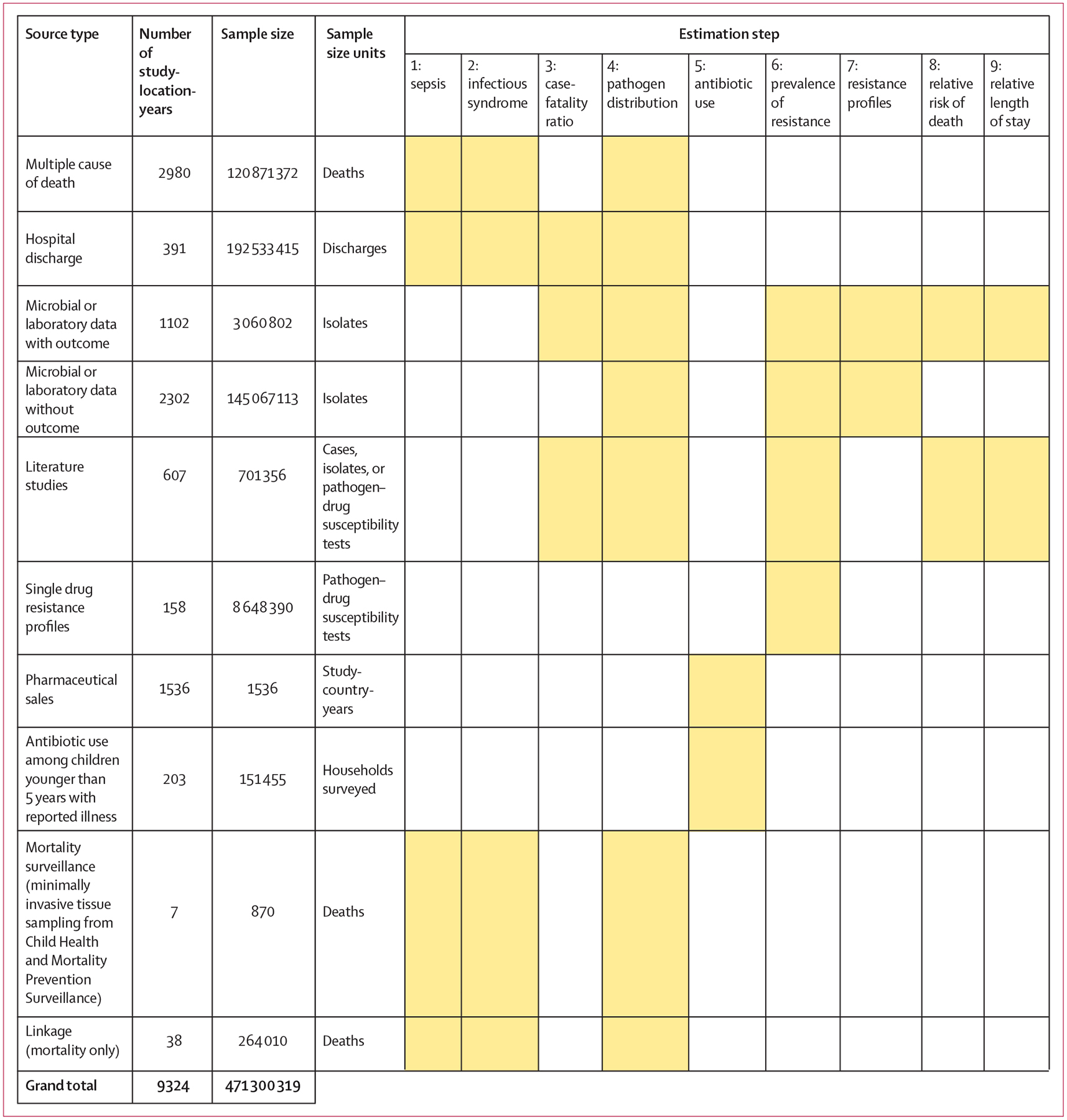
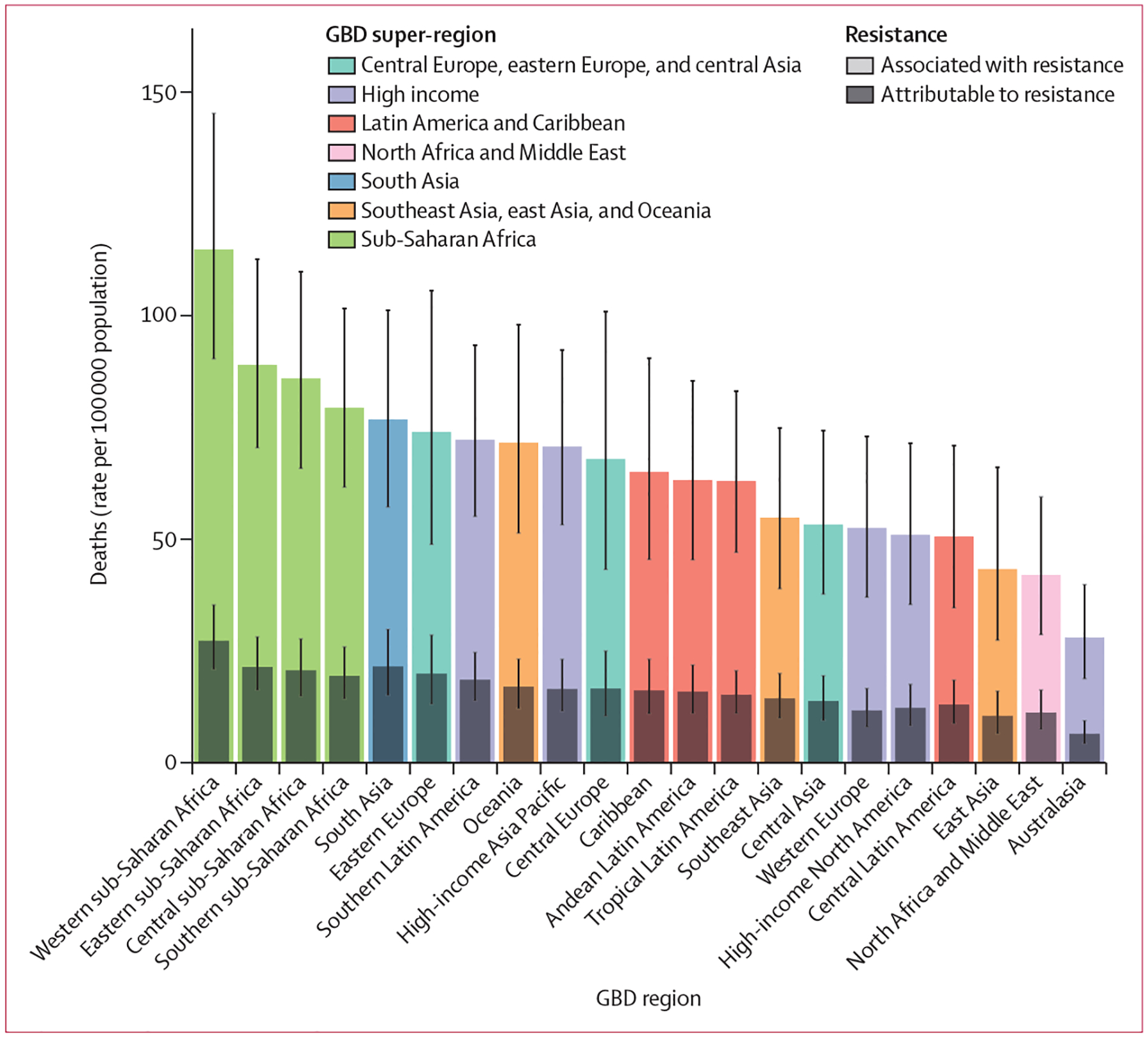
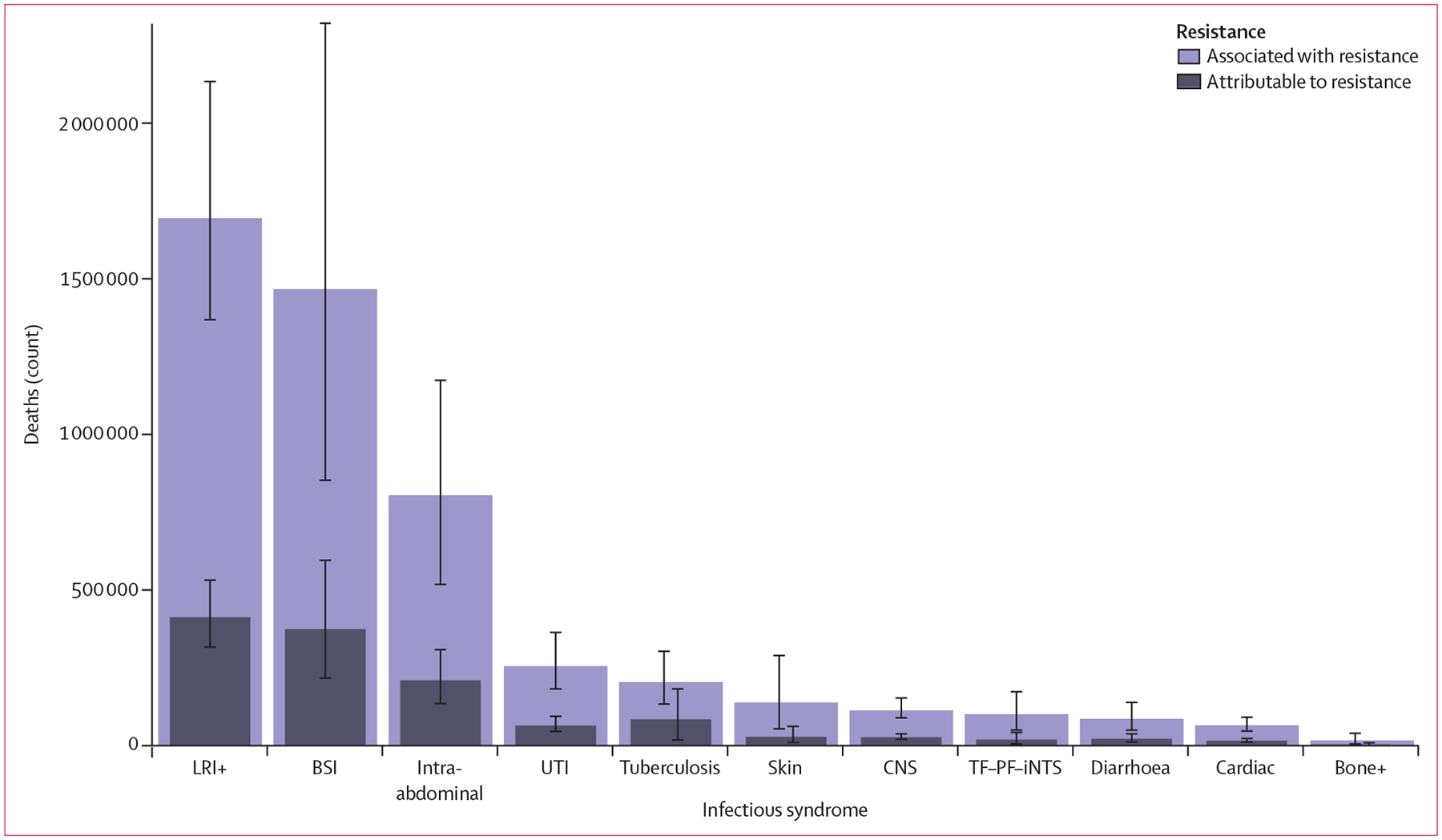
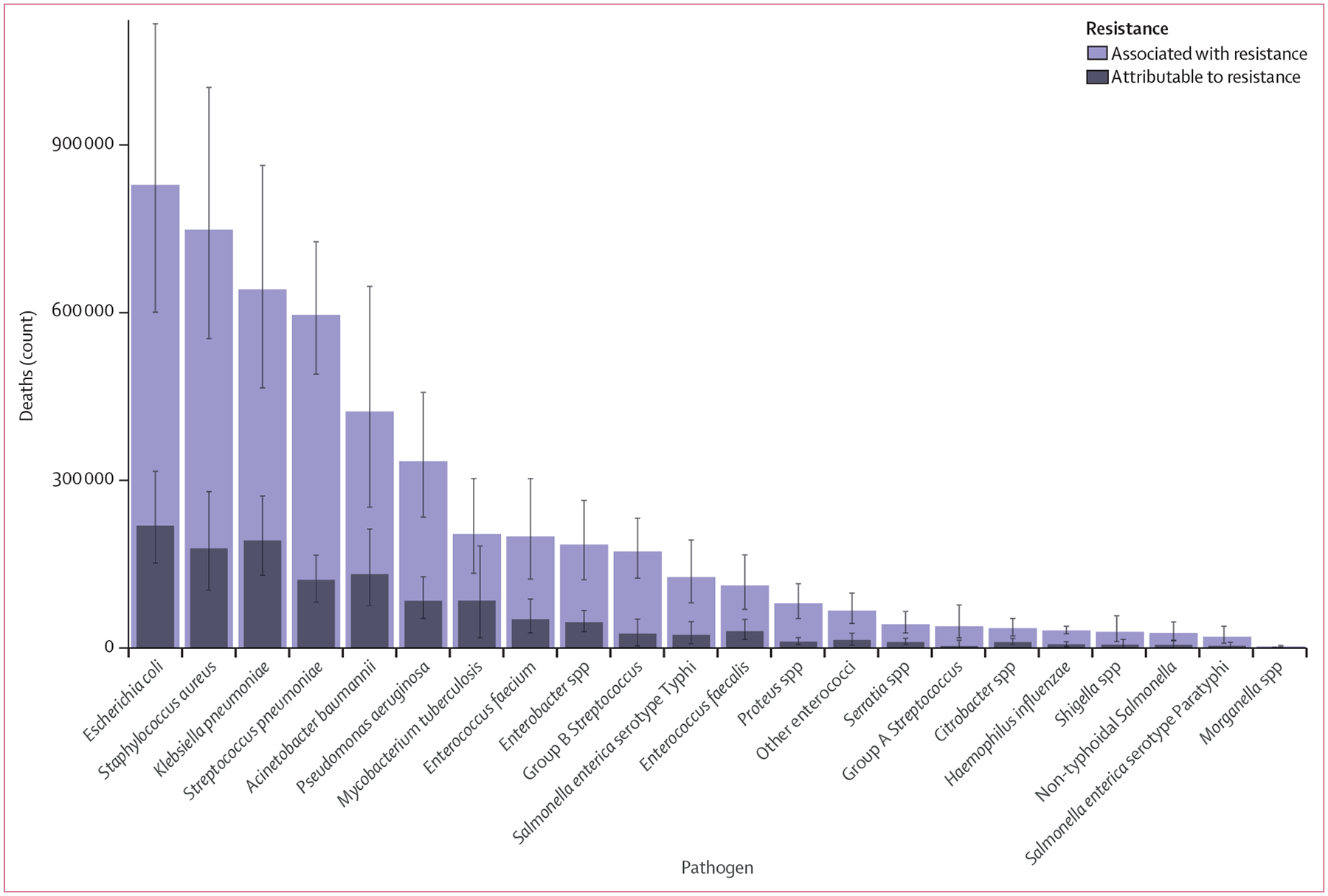
BACKGROUND: Antimicrobial resistance (AMR) poses a major threat to human health around the world. Previous publications have estimated the effect of AMR on incidence, deaths, hospital length of stay, and health-care costs for specific pathogen-drug combinations in select locations. To our knowledge, this study presents the most comprehensive estimates of AMR burden to date. METHODS: We estimated deaths and disability-adjusted life-years (DALYs) attributable to and associated with bacterial AMR for 23 pathogens and 88 pathogen-drug combinations in 204 countries and territories in 2019. We obtained data from systematic literature reviews, hospital systems, surveillance systems, and other sources, covering 471 million individual records or isolates and 7585 study-location-years. We used predictive statistical modelling to produce estimates of AMR burden for all locations, including for locations with no data. Our approach can be divided into five broad components: number of deaths where infection played a role, proportion of infectious deaths attributable to a given infectious syndrome, proportion of infectious syndrome deaths attributable to a given pathogen, the percentage of a given pathogen resistant to an antibiotic of interest, and the excess risk of death or duration of an infection associated with this resistance. Using these components, we estimated disease burden based on two counterfactuals: deaths attributable to AMR (based on an alternative scenario in which all drug-resistant infections were replaced by drug-susceptible infections), and deaths associated with AMR (based on an alternative scenario in which all drug-resistant infections were replaced by no infection). We generated 95% uncertainty intervals (UIs) for final estimates as the 25th and 975th ordered values across 1000 posterior draws, and models were cross-validated for out-of-sample predictive validity. We present final estimates aggregated to the global and regional level. FINDINGS: On the basis of our predictive statistical models, there were an estimated 4·95 million (3·62-6·57) deaths associated with bacterial AMR in 2019, including 1·27 million (95% UI 0·911-1·71) deaths attributable to bacterial AMR. At the regional level, we estimated the all-age death rate attributable to resistance to be highest in western sub-Saharan Africa, at 27·3 deaths per 100 000 (20·9-35·3), and lowest in Australasia, at 6·5 deaths (4·3-9·4) per 100 000. Lower respiratory infections accounted for more than 1·5 million deaths associated with resistance in 2019, making it the most burdensome infectious syndrome. The six leading pathogens for deaths associated with resistance (Escherichia coli, followed by Staphylococcus aureus, Klebsiella pneumoniae, Streptococcus pneumoniae, Acinetobacter baumannii, and Pseudomonas aeruginosa) were responsible for 929 000 (660 000-1 270 000) deaths attributable to AMR and 3·57 million (2·62-4·78) deaths associated with AMR in 2019. One pathogen-drug combination, meticillin-resistant S aureus, caused more than 100 000 deaths attributable to AMR in 2019, while six more each caused 50 000-100 000 deaths: multidrug-resistant excluding extensively drug-resistant tuberculosis, third-generation cephalosporin-resistant E coli, carbapenem-resistant A baumannii, fluoroquinolone-resistant E coli, carbapenem-resistant K pneumoniae, and third-generation cephalosporin-resistant K pneumoniae. INTERPRETATION: To our knowledge, this study provides the first comprehensive assessment of the global burden of AMR, as well as an evaluation of the availability of data. AMR is a leading cause of death around the world, with the highest burdens in low-resource settings. Understanding the burden of AMR and the leading pathogen-drug combinations contributing to it is crucial to making informed and location-specific policy decisions, particularly about infection prevention and control programmes, access to essential antibiotics, and research and development of new vaccines and antibiotics. There are serious data gaps in many low-income settings, emphasising the need to expand microbiology laboratory capacity and data collection systems to improve our understanding of this important human health threat. FUNDING: Bill & Melinda Gates Foundation, Wellcome Trust, and Department of Health and Social Care using UK aid funding managed by the Fleming Fund.
Overview
CoChat Summary
TL;DR
This systematic analysis estimates that bacterial antimicrobial resistance was associated with 4·95 million deaths and directly attributable to 1·27 million deaths globally in 2019. The highest attributable death rates were in western sub-Saharan Africa, and the burden was dominated by a small set of pathogens and pathogen–drug combinations.
Key findings
- In 2019, there were an estimated 4·95 million (95% UI 3·62–6·57) deaths associated with bacterial AMR, including 1·27 million (95% UI 0·911–1·71) deaths attributable to bacterial AMR.
- The all-age death rate attributable to resistance was highest in western sub-Saharan Africa at 27·3 deaths per 100 000 (20·9–35·3) and lowest in Australasia at 6·5 deaths per 100 000 (4·3–9·4).
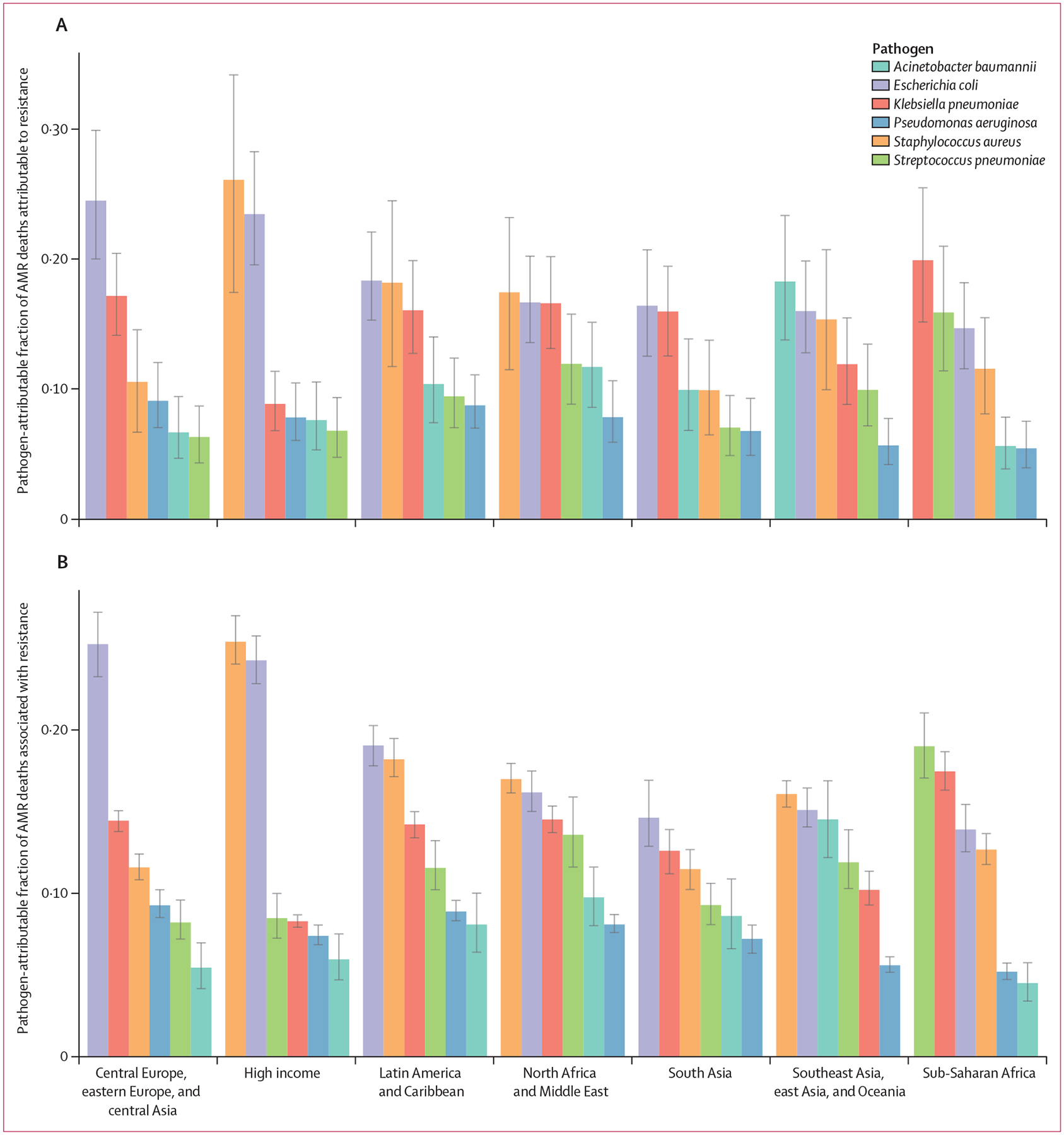
- Six leading pathogens—Escherichia coli, Staphylococcus aureus, Klebsiella pneumoniae, Streptococcus pneumoniae, Acinetobacter baumannii, and Pseudomonas aeruginosa—were responsible for 929 000 (660 000–1 270 000) deaths attributable to AMR and 3·57 million (2·62–4·78) deaths associated with AMR.
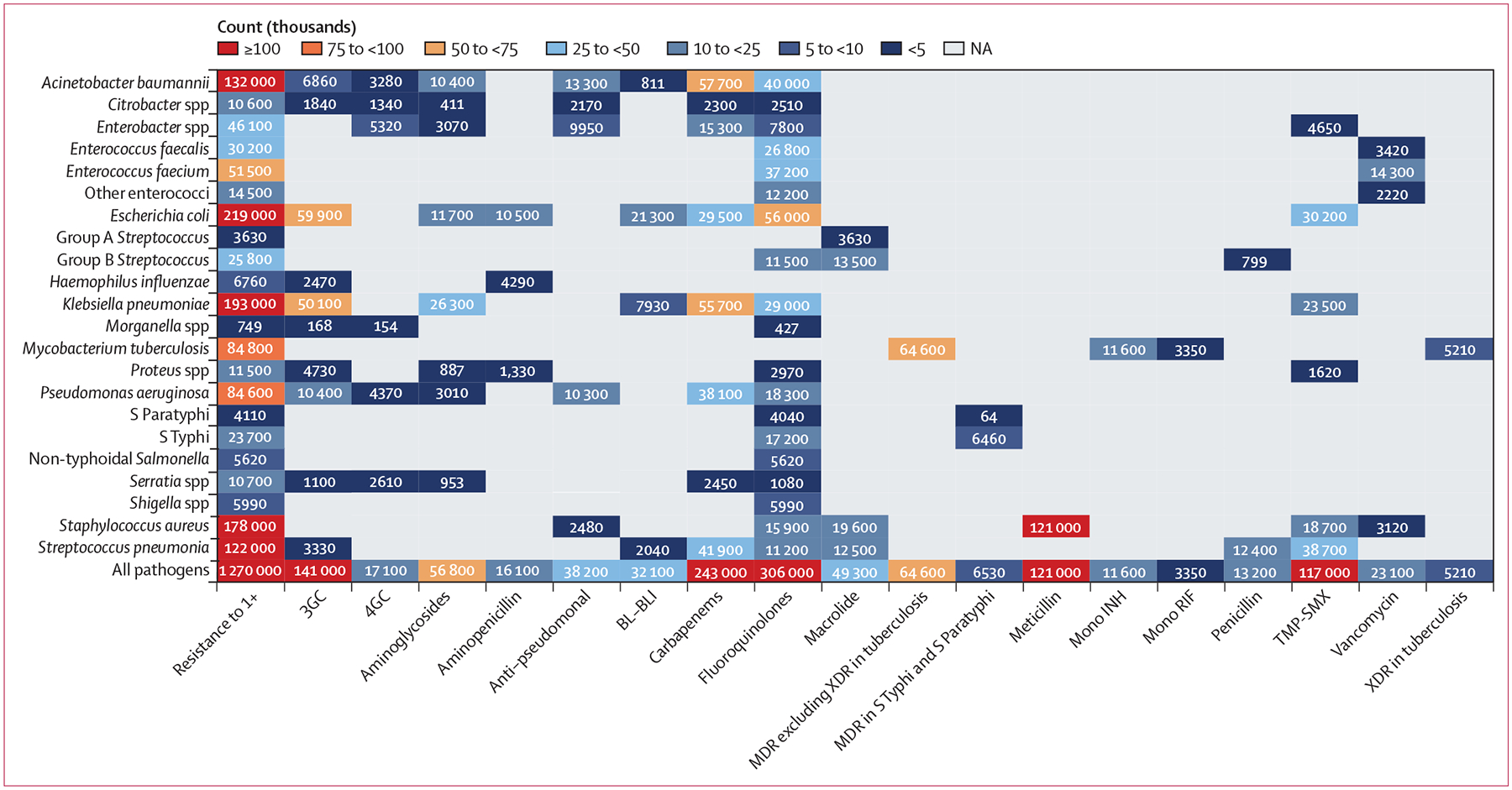
- Meticillin-resistant S aureus was the only pathogen–drug combination with more than 100 000 attributable deaths; six more combinations each caused 50 000–100 000 attributable deaths, including MDR excluding XDR tuberculosis, third-generation cephalosporin-resistant E coli, carbapenem-resistant A baumannii, fluoroquinolone-resistant E coli, carbapenem-resistant K pneumoniae, and third-generation cephalosporin-resistant K pneumoniae.
Methods
- The study estimated deaths and DALYs attributable to and associated with bacterial AMR for 23 pathogens and 88 pathogen–drug combinations in 204 countries and territories in 2019.
- Input data came from systematic literature reviews, hospital systems, surveillance systems, and other sources, covering 471 million individual records or isolates and 7585 study-location-years; predictive statistical modelling was used to produce estimates for all locations, including those with no data.
- The approach used five broad modelling components and two counterfactuals: deaths attributable to AMR (drug-resistant infections replaced by drug-susceptible infections) and deaths associated with AMR (drug-resistant infections replaced by no infection); 95% uncertainty intervals were generated from the 25th and 975th of 1000 posterior draws, with out-of-sample cross-validation.
Limitations
- The paper states that the most important limitation was sparse data from many LMICs on pathogen distribution by infectious syndrome, prevalence of resistance for key pathogen–drug combinations, and deaths involving infection, plus severe scarcity of data linking laboratory results to outcomes; 19 of 204 countries and territories had no data for any modelling component.
- The paper states that it assumed the relative risk for each pathogen–drug combination and the correlation structure of resistance between drugs were the same in every location, age, and infectious syndrome, which might underestimate AMR burden in LMICs; it also assumed MDR relative risk equal to the highest individual drug relative risk, likely underestimating MDR relative risk.
- The paper notes potential bias from combining and standardising heterogeneous data, possible misclassification of community-acquired versus hospital-acquired infections, lack of a universal laboratory standard for resistance versus susceptibility, and selection bias in passive microbial surveillance data; the text also makes evident that these data gaps and assumptions limit comparability and precision.
Model-written summary. Check it against the paper before relying on it.
Integrity signals
Registry
Cites
Statistics
Figures
Verification
Claims the paper makes
0 Valid · 2 Not valid · 24 Not checked · 66 Own results and interpretations
The cited sources that could be checked couldn’t confirm or dispute this claim.
In the paper
“Compared with all underlying causes of death in GBD 2019, AMR would have been the third leading GBD Level 3 cause of death in 2019, on the basis of the counterfactual of no infection; only ischaemic heart disease and stroke accounted for more deaths that year.”
§ Global burden of bacterial antimicrobial resistance in 2019: a systematic analysis > Discussion
What the sources say
- Could not verifycites [14] Vos T, Lim SS, Abbafati C, Global burden of 369 diseases and injuries in 204 countries and territories, 1990–2019: a systematic analysis for the Global Burden of Disease Study 2019. Lancet 2020; 396: 1204– 22. 33069326 PMC7567026 sourceExperimental — accuracy not yet measured
Our copy of the GBD 2019 diseases-and-injuries Article reports Level 3 cause rankings for 2019 (Abstract > Findings; Results > Global trends, e.g. 'Ischaemic heart disease and stroke were ranked first and second' for older age groups and figure 2's leading 25 Level 3 causes of DALYs), but no passage addresses antimicrobial resistance or a counterfactual of no infection, and no death-count ranking placing AMR third appears. Searches for 'antimicrobial resistance AMR counterfactual of no infection attributable deaths', 'counterfactual of no infection', and 'leading Level 3 causes of death 2019 ischaemic heart disease stroke ranking' returned only DALY-ranking, methods (Data processing, cause levels) and reference-list passages. The claim therefore cannot be checked against this source; our copy neither states nor contradicts it, and it names no alternative work for the AMR counterfactual result. (LLM, conf=0.70)
hedged- Asserted: passes — The authors put it forward as true.
- Checkable: passes — It can be checked against evidence.
- Load-bearing: passes — The paper’s conclusions depend on it.
- Based: passes — The paper gives a reason why it holds.
- Rests on 4 assumptions not shown here.
- Could not verify
The cited sources that could be checked couldn’t confirm or dispute this claim.
In the paper
“To account for bias in resistance data provided by tertiary care facilities, we adjusted tertiary rates of resistance by crosswalking them to data from non-tertiary and mixed facilities using MR-BRT as described in the appendix (pp 45–48).31”
§ Global burden of bacterial antimicrobial resistance in 2019: a systematic analysis > Methods > Estimation steps five to seven: prevalence of resistance by pathogen
What the sources say
- Could not verifycites [31] Murray CJL, Aravkin AY, Zheng P, Global burden of 87 risk factors in 204 countries and territories, 1990–2019: a systematic analysis for the Global Burden of Disease Study 2019. Lancet 2020; 396: 1223– 49. 33069327 PMC7566194 sourceExperimental — accuracy not yet measured
Our copy of the GBD 2019 87-risk-factors paper contains no passage on antimicrobial resistance data, tertiary vs non-tertiary/mixed facility sources, crosswalking, or MR-BRT; searches for 'tertiary crosswalk antimicrobial drug resistance', 'MR-BRT meta-regression Bayesian robust triangulation', and 'bias adjustment source type hospital surveillance' returned only generic exposure-modelling text (Methods, 'Estimation of the distribution of exposure for each risk by age-sex-location-year') and the Limitations discussion of non-reference-method bias corrections for exposure measurement. The closest content — 'Corrections for non-reference method exposure measurements have been revised using network or related meta-regression' (Abstract) and 'we implemented more explicit corrections for bias associated with non-reference methods of exposure measurement' (Discussion > Limitations) — concerns risk-exposure measurement modes, not resistance rates from tertiary care facilities, so it neither supports nor contradicts the specific attribution. (LLM, conf=0.72)
plainstates a cause- Asserted: passes — The authors put it forward as true.
- Checkable: passes — It can be checked against evidence.
- Load-bearing: passes — The paper’s conclusions depend on it.
- Based: passes — The paper gives a reason why it holds.
- Could not verify
A result the paper reports from its own data — it cites no other source for it, so there is none to check. The quote shows it is in the paper.
In the paper
“our analysis showed that AMR all-age death rates were highest in some LMICs”
§ Global burden of bacterial antimicrobial resistance in 2019: a systematic analysis > Discussion
plainstates an association- Asserted: passes — The authors put it forward as true.
- Checkable: passes — It can be checked against evidence.
- Load-bearing: passes — The paper’s conclusions depend on it.
- Based: passes — The paper gives a reason why it holds.
- Rests on 4 assumptions not shown here.
A result the paper reports from its own data — it cites no other source for it, so there is none to check. The quote shows it is in the paper.
In the paper
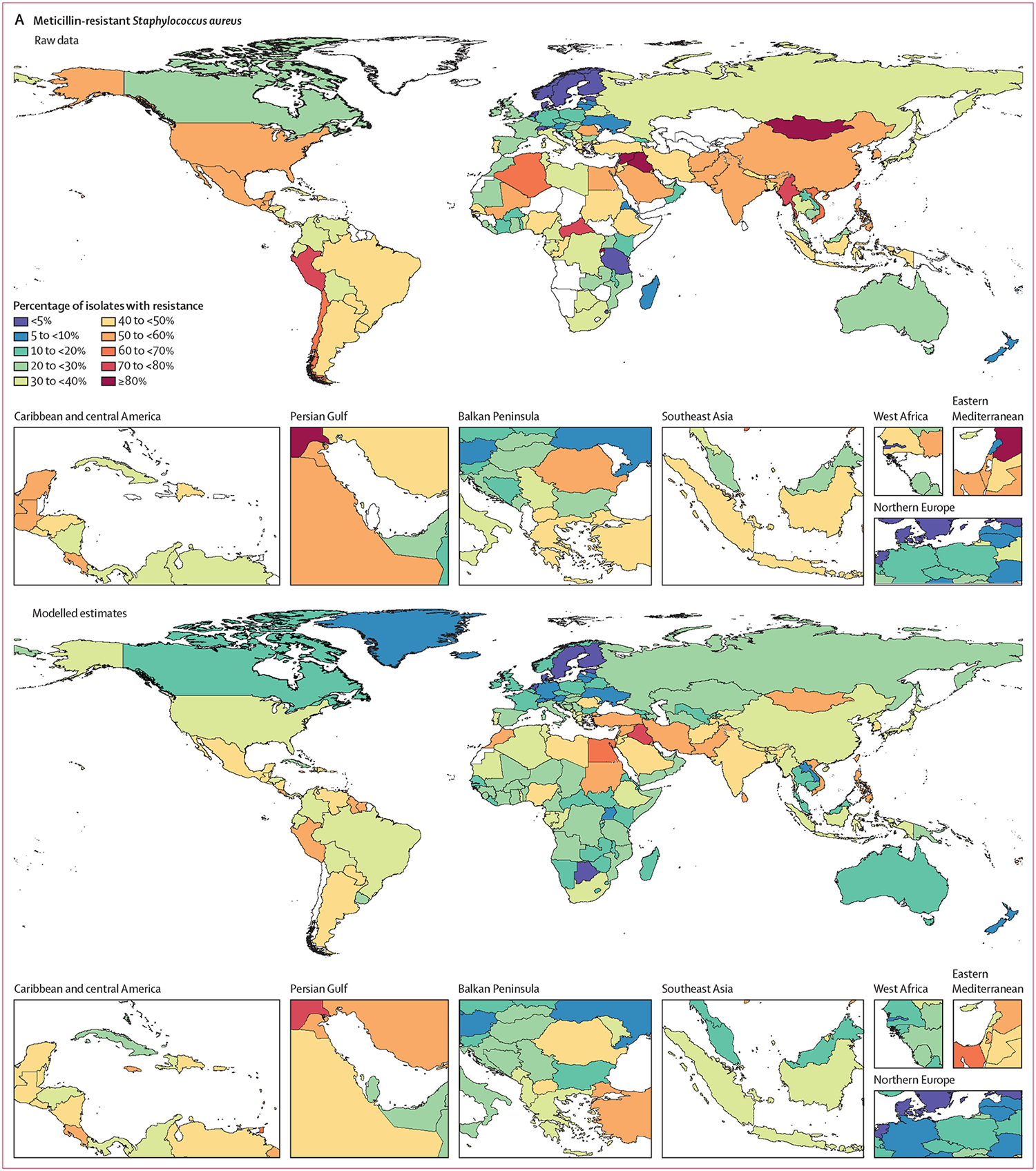
“In 2019, meticillin-resistant S aureus was the one pathogen–drug combination in our analysis with more than 100 000 deaths and 3·5 million DALYs attributable to resistance (figure 6; appendix pp 121–22, 129).”
§ Global burden of bacterial antimicrobial resistance in 2019: a systematic analysis > Results
plainstates a cause- Asserted: passes — The authors put it forward as true.
- Checkable: passes — It can be checked against evidence.
- Load-bearing: unclear — It is unclear whether the paper’s conclusions depend on it.
- Based: passes — The paper gives a reason why it holds.
A result the paper reports from its own data — it cites no other source for it, so there is none to check. The quote shows it is in the paper.
In the paper
“Six more pathogens were each responsible for between 100 000 and 250 000 deaths associated with AMR: M tuberculosis, Enterococcus faecium, Enterobacter spp, Streptococcus agalactiae (group B Streptococcus), S Typhi, and Enterococcus faecalis.”
§ Global burden of bacterial antimicrobial resistance in 2019: a systematic analysis > Results
plainstates an association- Asserted: passes — The authors put it forward as true.
- Checkable: passes — It can be checked against evidence.
- Load-bearing: unclear — It is unclear whether the paper’s conclusions depend on it.
- Based: passes — The paper gives a reason why it holds.
29 more claims
Create a free account to see all 92 claims and to verify the 31 references still open.
- Probably not a substantial claim. 26
- It may state two separate claims as one. 41
Claims other papers make about this one
Each is checked against this paper’s own text: does it say what the citing paper says it does?
The cited source doesn’t support the claim as written.
In the citing paper
“making antibiotic resistance the leading cause of death around the world (Murray et al., 2022).”
From Review of emerging contaminants in green stormwater infrastructure: antibiotic resistance genes, microplastics, tire wear particles, PFAS, and temperature (2024) · cites this paper as Murray et al., 2022
Checked by a reasoning model — may be wrong.
Experimental — accuracy not yet measuredThe source backs part of the claim, not all of it — or backs it for a different population, condition or comparison.
In the citing paper
“unnecessary broad-spectrum exposure contributes to selection pressure for antimicrobial resistance, one of the leading global threats to health (2).”
From Day-4 antipseudomonal and anti-MRSA de-escalation was not associated with higher mortality in critically ill patients with sepsis (2026) · cites this paper as [2]
Experimental — accuracy not yet measuredThe source backs part of the claim, not all of it — or backs it for a different population, condition or comparison.
In the citing paper
“Resistance develops when microorganisms become less susceptible or unresponsive to agents previously effective for treatment, leading to therapeutic failure, prolonged disease, and increased morbidity and mortality 12-14 .”
From Outpatient Antibiotic Prescribing and Stewardship in South India: AnalysisUsing WHO/INRUD Indicators and AWaRe Classification (2026) · cites this paper as [14]
Experimental — accuracy not yet measuredThe source backs part of the claim, not all of it — or backs it for a different population, condition or comparison.
In the citing paper
“In 2019, sub-Saharan Africa (SSA) had the highest mortality rate (23.5 deaths per 100,000) attributable to AMR compared to other regions.”
From Antimicrobial Resistance Rates and Surveillance in Sub-Saharan Africa: Where Are We Now? (2022) · cites this paper as [8]
Experimental — accuracy not yet measuredThe source backs part of the claim, not all of it — or backs it for a different population, condition or comparison.
In the citing paper
“Globally, Western SSA had the highest death rate attributable to AMR, 27.3 deaths per 100,000, followed by Eastern, Central, and Southern SSA (Table 1).”
From Antimicrobial Resistance Rates and Surveillance in Sub-Saharan Africa: Where Are We Now? (2022) · cites this paper as [8]
Experimental — accuracy not yet measured
12 more claims about this paper
Create a free account to see every claim other papers make about this one.
Citations
Cites
The third international consensus definitions for sepsis and septic shock (Sepsis-3).
Singer, M., Deutschman, C. S., Seymour, C. W., Shankar-Hari, M., Annane, D., Bauer, M., Bellomo, R., Bernard, G. R., Chiche, J.-D., Coopersmith, C. M., et al. (2016) · JAMA · doi:10.1001/jama.2016.0287 · Cited by 28,250 · cited 3×
“…of death that are themselves infectious, all deaths were assigned to their single corresponding infectious syndrome (eg, the GBD cause “lower respiratory infections” was assigned to the infectious syndrome “lower respiratory infections and all related infections in the thorax”; appendix pp 21–23).”
Vos, T., Lim, S. S., Abbafati, C., Abbas, K. M., Abbasi, M., Abbasifard, M., Abbasi-Kangevari, M., Abbastabar, H., Abd-Allah, F., Abdelalim, A., et al. (2020) · The Lancet · doi:10.1016/s0140-6736(20)30925-9 · Cited by 19,358 · cited 8×
“14 Given the strong relationship between antibiotic consumption levels and the proliferation of resistance, we modelled antibiotic consumption at the national level to use as a covariate in the stacked ensemble model of prevalence of resistance.”
InfluentialSelf-citationMurray, C. J. L., Aravkin, A. Y., Zheng, P., Abbafati, C., Abbas, K. M., Abbasi-Kangevari, M., Abd-Allah, F., Abdelalim, A., Abdollahi, M., Abdollahpour, I., et al. (2020) · The Lancet · doi:10.1016/s0140-6736(20)30752-2 · Cited by 9,854 · cited 3×
“22 We describe data inputs for each of ten estimation steps in greater detail in the following subsections and in the appendix (pp 17–18, 31, 34–35, 44, 54).”
Self-citationAngus, D. C., Linde-Zwirble, W. T., Lidicker, J., Clermont, G., Carcillo, J., & Pinsky, M. R. (2001) · Critical Care Medicine · doi:10.1097/00003246-200107000-00002 · Cited by 8,503 · cited 1×
“In the appendix, we present the equivalent AMR findings for DALYs instead of deaths (pp 124–29), as well”
Rudd, K. E., Johnson, S. C., Agesa, K. M., Shackelford, K. A., Tsoi, D., Kievlan, D. R., Colombara, D. V., Ikuta, K. S., Kissoon, N., Finfer, S., et al. (2020) · The Lancet · doi:10.1016/s0140-6736(19)32989-7 · Cited by 7,971 · cited 3×
“For datasets where isolates could not be uniquely identified across pathogen–drug combinations, such as some antimicrobial resistance surveillance systems, some isolates might be double counted.”
Self-citationThe epidemiology of sepsis in the United States from 1979 through 2000
Martin, G. S., Mannino, D. M., Eaton, S., & Moss, M. (2003) · New England Journal of Medicine · doi:10.1056/nejmoa022139 · Cited by 5,841
Antibiotic resistance threats in the United States, 2019
(U.S.), C. F. D. C. A. P. (2019) · doi:10.15620/cdc:82532 · Cited by 5,782 · cited 1×
“In the appendix, we present the equivalent AMR findings for DALYs instead of deaths (pp 124–29), as well”
Antibiotic resistance-the need for global solutions
Laxminarayan, R., Duse, A., Wattal, C., Zaidi, A. K. M., Wertheim, H. F. L., Sumpradit, N., Vlieghe, E., Hara, G. L., Gould, I. M., Goossens, H., et al. (2013) · The Lancet Infectious Diseases · doi:10.1016/s1473-3099(13)70318-9 · Cited by 4,439 · cited 1×
“In the appendix, we present the equivalent AMR findings for DALYs instead of deaths (pp 124–29), as well”
Antimicrobial resistance: a global multifaceted phenomenon
Prestinaci, F., Pezzotti, P., & Pantosti, A. (2015) · Pathogens and Global Health · doi:10.1179/2047773215y.0000000030 · Cited by 3,296
Cassini, A., Högberg, L. D., Plachouras, D., Quattrocchi, A., Hoxha, A., Simonsen, G. S., Colomb-Cotinat, M., Kretzschmar, M. E., Devleesschauwer, B., Cecchini, M., et al. (2019) · The Lancet Infectious Diseases · doi:10.1016/s1473-3099(18)30605-4 · Cited by 2,945 · cited 2×
“In the appendix, we present the equivalent AMR findings for DALYs instead of deaths (pp 124–29), as well”
Self-citation
Research works printed but not linked: 2
- O’Neill J. Antimicrobial resistance: tackling a crisis for the health and wealth of nations. London: Review on Antimicrobial Resistance, 2014.
- National Office for Animal Health. NOAH response to final O’Neill AMR review report July 2016. Middlesex: National Office for Animal Health, 2016.
Cited by
Shea, B. J., Reeves, B. C., Wells, G., Thuku, M., Hamel, C., Moran, J., Moher, D., Tugwell, P., Welch, V., Kristjansson, E., et al. (2017) · BMJ · doi:10.1136/bmj.j4008 · Cited by 10,636
Naghavi, M., Vollset, S. E., Ikuta, K. S., Swetschinski, L. R., Gray, A. P., Wool, E. E., Robles Aguilar, G., Mestrovic, T., Smith, G., Han, C., et al. (2024) · The Lancet · doi:10.1016/s0140-6736(24)01867-1 · Cited by 5,601
“The detailed methods of that study are published elsewhere 6 and are summarised here, along with important methodological improvements.”
InfluentialSelf-citationAlcock, B. P., Huynh, W., Chalil, R., Smith, K. W., Raphenya, A. R., Wlodarski, M. A., Edalatmand, A., Petkau, A., Syed, S. A., Tsang, K. K., et al. (2023) · Nucleic Acids Research · doi:10.1093/nar/gkac920 · Cited by 2,441
Self-citationAntimicrobial Resistance: A Growing Serious Threat for Global Public Health
Salam, M. A., Al-Amin, M. Y., Salam, M. T., Pawar, J., Akhter, N., Rabaan, A. A., & Alqumber, M. A. A. (2023) · doi:10.20944/preprints202305.0555.v1 · Cited by 2,411
Antimicrobial Resistance: A Growing Serious Threat for Global Public Health
Salam, M. A., Al-Amin, M. Y., Salam, M. T., Pawar, J. S., Akhter, N., Rabaan, A. A., & Alqumber, M. A. A. (2023) · Healthcare · doi:10.3390/healthcare11131946 · Cited by 2,338
Ikuta, K. S., Swetschinski, L. R., Robles Aguilar, G., Sharara, F., Mestrovic, T., Gray, A. P., Davis Weaver, N., Wool, E. E., Han, C., Gershberg Hayoon, A., et al. (2022) · The Lancet · doi:10.1016/s0140-6736(22)02185-7 · Cited by 2,235
Self-citationAntimicrobial resistance: Impacts, challenges, and future prospects
Ahmed, S. K., Hussein, S., Qurbani, K., Ibrahim, R. H., Fareeq, A., Mahmood, K. A., & Mohamed, M. G. (2024) · Journal of Medicine, Surgery, and Public Health · doi:10.1016/j.glmedi.2024.100081 · Cited by 1,213
Tamma, P. D., Heil, E. L., Justo, J. A., Mathers, A. J., Satlin, M. J., & Bonomo, R. A. (2024) · Clinical Infectious Diseases · doi:10.1093/cid/ciae403 · Cited by 1,191
Findings from the Global Burden of Disease Study 2021
Murray, C. J. L. (2024) · The Lancet · doi:10.1016/s0140-6736(24)00769-4 · Cited by 1,057
Self-citationVollset, S. E., Ababneh, H. S., Abate, Y. H., Abbafati, C., Abbasgholizadeh, R., Abbasian, M., Abbastabar, H., Abd Al Magied, A. H. A., Abd ElHafeez, S., Abdelkader, A., et al. (2024) · The Lancet · doi:10.1016/s0140-6736(24)00685-8 · Cited by 1,025
Antimicrobial Resistance (AMR)
Tang, K. W. K., Millar, B. C., & Moore, J. E. (2023) · British Journal of Biomedical Science · doi:10.3389/bjbs.2023.11387 · Cited by 1,009
Antibiotic resistance: The challenges and some emerging strategies for tackling a global menace
Chinemerem Nwobodo, D., Ugwu, M. C., Oliseloke Anie, C., Al‐Ouqaili, M. T. S., Chinedu Ikem, J., Victor Chigozie, U., & Saki, M. (2022) · Journal of Clinical Laboratory Analysis · doi:10.1002/jcla.24655 · Cited by 985
Sati, H., Carrara, E., Savoldi, A., Hansen, P., Garlasco, J., Campagnaro, E., Boccia, S., Castillo-Polo, J. A., Magrini, E., Garcia-Vello, P., et al. (2025) · The Lancet Infectious Diseases · doi:10.1016/s1473-3099(25)00118-5 · Cited by 882
Self-citationESKAPE pathogens: antimicrobial resistance, epidemiology, clinical impact and therapeutics
Miller, W. R., & Arias, C. A. (2024) · Nature Reviews Microbiology · doi:10.1038/s41579-024-01054-w · Cited by 862
Phage therapy: From biological mechanisms to future directions
Strathdee, S. A., Hatfull, G. F., Mutalik, V. K., & Schooley, R. T. (2023) · Cell · doi:10.1016/j.cell.2022.11.017 · Cited by 817
Tamma, P. D., Aitken, S. L., Bonomo, R. A., Mathers, A. J., van Duin, D., & Clancy, C. J. (2023) · Clinical Infectious Diseases · doi:10.1093/cid/ciad428 · Cited by 740
Antimicrobial peptides for combating drug-resistant bacterial infections
Xuan, J., Feng, W., Wang, J., Wang, R., Zhang, B., Bo, L., Chen, Z.-S., Yang, H., & Sun, L. (2023) · Drug Resistance Updates · doi:10.1016/j.drup.2023.100954 · Cited by 665
The past, present, and future of antibiotics
Cook, M. A., & Wright, G. D. (2022) · Science Translational Medicine · doi:10.1126/scitranslmed.abo7793 · Cited by 652
Metals to combat antimicrobial resistance
Frei, A., Verderosa, A. D., Elliott, A. G., Zuegg, J., & Blaskovich, M. A. T. (2023) · Nature Reviews Chemistry · doi:10.1038/s41570-023-00463-4 · Cited by 638
Antimicrobial resistance: a concise update
Ho, C. S., Wong, C. T. H., Aung, T. T., Lakshminarayanan, R., Mehta, J. S., Rauz, S., McNally, A., Kintses, B., Peacock, S. J., de la Fuente-Nunez, C., et al. (2025) · The Lancet Microbe · doi:10.1016/j.lanmic.2024.07.010 · Cited by 634
Bender, R. G., Sirota, S. B., Swetschinski, L. R., Dominguez, R.-M. V., Novotney, A., Wool, E. E., Ikuta, K. S., Vongpradith, A., Rogowski, E. L. B., Doxey, M., et al. (2024) · The Lancet Infectious Diseases · doi:10.1016/s1473-3099(24)00176-2 · Cited by 596
“27 Mortality and morbidity are estimated for the following causes of LRI: Acinetobacter baumannii , Chlamydia spp, Enterobacter spp, Escherichia coli , fungi, group B streptococcus, H influenzae , influenza viruses, Klebsiella pneumoniae , Legionella spp, Mycoplasma spp, polymicrobial infections,…”
InfluentialSelf-citationProgress in Alternative Strategies to Combat Antimicrobial Resistance: Focus on Antibiotics
Murugaiyan, J., Kumar, P. A., Rao, G. S., Iskandar, K., Hawser, S., Hays, J. P., Mohsen, Y., Adukkadukkam, S., Awuah, W. A., Jose, R. A. M., et al. (2022) · Antibiotics · doi:10.3390/antibiotics11020200 · Cited by 567
“(MRSA) was responsible for half a million deaths, while the six pathogens Escherichia coli, Staphylococcus aureus, Klebsiella pneumoniae, Streptococcus pneumoniae, Acinetobacter baumannii, and Pseudomonas aeruginosa were attributed to between 50,000 and 100,000 deaths [5].”
BackgroundAntimicrobial Susceptibility Testing: A Comprehensive Review of Currently Used Methods
Gajic, I., Kabic, J., Kekic, D., Jovicevic, M., Milenkovic, M., Mitic Culafic, D., Trudic, A., Ranin, L., & Opavski, N. (2022) · Antibiotics · doi:10.3390/antibiotics11040427 · Cited by 557
“…leading mortality-causing pathogens— Escherichia coli , Staphylococcus aureus , Klebsiella pneumoniae , Streptococcus pneumoniae , Acinetobacter baumannii , and Pseudomonas aeruginosa —were responsible for 929,000 deaths attributable to AMR and 3.57 million deaths associated with AMR in 2019 [3].”
BackgroundInfluentialAntibacterial Nanomaterials: Mechanisms, Impacts on Antimicrobial Resistance and Design Principles
Xie, M., Gao, M., Yun, Y., Malmsten, M., Rotello, V. M., Zboril, R., Akhavan, O., Kraskouski, A., Amalraj, J., Cai, X., et al. (2023) · Angewandte Chemie International Edition · doi:10.1002/anie.202217345 · Cited by 491
The EAT–Lancet Commission on healthy, sustainable, and just food systems
Rockström, J., Thilsted, S. H., Willett, W. C., Gordon, L. J., Herrero, M., Hicks, C. C., Mason-D'Croz, D., Rao, N., Springmann, M., Wright, E. C., et al. (2025) · The Lancet · doi:10.1016/s0140-6736(25)01201-2 · Cited by 475
The scope of the antimicrobial resistance challenge
Okeke, I. N., de Kraker, M. E. A., Van Boeckel, T. P., Kumar, C. K., Schmitt, H., Gales, A. C., Bertagnolio, S., Sharland, M., & Laxminarayan, R. (2024) · The Lancet · doi:10.1016/s0140-6736(24)00876-6 · Cited by 474
Self-citationPirnay, J.-P., Djebara, S., Steurs, G., Griselain, J., Cochez, C., De Soir, S., Glonti, T., Spiessens, A., Vanden Berghe, E., Green, S., et al. (2024) · Nature Microbiology · doi:10.1038/s41564-024-01705-x · Cited by 474
Self-citationAntibiotic perturbations to the gut microbiome
Fishbein, S. R. S., Mahmud, B., & Dantas, G. (2023) · Nature Reviews Microbiology · doi:10.1038/s41579-023-00933-y · Cited by 440
Global trends in antibiotic consumption during 2016–2023 and future projections through 2030
Klein, E. Y., Impalli, I., Poleon, S., Denoel, P., Cipriano, M., Van Boeckel, T. P., Pecetta, S., Bloom, D. E., & Nandi, A. (2024) · Proceedings of the National Academy of Sciences · doi:10.1073/pnas.2411919121 · Cited by 436
“Estimates of the burden of resistance suggest that nearly 5 million deaths were associated with bacterial resistance to antibiotics in 2019 ( 1 ).”
Microbiome diversity protects against pathogens by nutrient blocking
Spragge, F., Bakkeren, E., Jahn, M. T., B. N. Araujo, E., Pearson, C. F., Wang, X., Pankhurst, L., Cunrath, O., & Foster, K. R. (2023) · Science · doi:10.1126/science.adj3502 · Cited by 435
“AMR E. coli strains are a major current target for alternatives to antibiotics because members of this species have recently been found to be responsible for the most AMR-associated deaths of any bacterial species ( 41 ).”
BackgroundDiscovery of antimicrobial peptides in the global microbiome with machine learning
Santos-Júnior, C. D., Torres, M. D. T., Duan, Y., Rodríguez del Río, Á., Schmidt, T. S. B., Chong, H., Fullam, A., Kuhn, M., Zhu, C., Houseman, A., et al. (2024) · Cell · doi:10.1016/j.cell.2024.05.013 · Cited by 419
Antimicrobial Resistance: Addressing a Global Threat to Humanity
Walsh, T. R., Gales, A. C., Laxminarayan, R., & Dodd, P. C. (2023) · PLOS Medicine · doi:10.1371/journal.pmed.1004264 · Cited by 403
Self-citationUrinary Tract Infections: The Current Scenario and Future Prospects
Mancuso, G., Midiri, A., Gerace, E., Marra, M., Zummo, S., & Biondo, C. (2023) · Pathogens · doi:10.3390/pathogens12040623 · Cited by 396
Quaternary Ammonium Compounds: A Chemical Class of Emerging Concern
Arnold, W. A., Blum, A., Branyan, J., Bruton, T. A., Carignan, C. C., Cortopassi, G., Datta, S., DeWitt, J., Doherty, A.-C., Halden, R. U., et al. (2023) · Environmental Science & Technology · doi:10.1021/acs.est.2c08244 · Cited by 391
Mestrovic, T., Robles Aguilar, G., Swetschinski, L. R., Ikuta, K. S., Gray, A. P., Davis Weaver, N., Han, C., Wool, E. E., Gershberg Hayoon, A., Hay, S. I., et al. (2022) · The Lancet Public Health · doi:10.1016/s2468-2667(22)00225-0 · Cited by 384
Self-citationPlasmids, a molecular cornerstone of antimicrobial resistance in the One Health era
Castañeda-Barba, S., Top, E. M., & Stalder, T. (2024) · Nature Reviews Microbiology · doi:10.1038/s41579-023-00926-x · Cited by 379
Chen, S., Zhu, P., Mao, L., Wu, W., Lin, H., Xu, D., Lu, X., & Shi, J. (2023) · Advanced Materials · doi:10.1002/adma.202208256 · Cited by 363
Sartorius, B., Gray, A. P., Davis Weaver, N., Robles Aguilar, G., Swetschinski, L. R., Ikuta, K. S., Mestrovic, T., Chung, E., Wool, E. E., Han, C., et al. (2024) · The Lancet Global Health · doi:10.1016/s2214-109x(23)00539-9 · Cited by 354
Self-citationRole of Efflux Pumps on Antimicrobial Resistance in Pseudomonas aeruginosa
Lorusso, A. B., Carrara, J. A., Barroso, C. D. N., Tuon, F. F., & Faoro, H. (2022) · International Journal of Molecular Sciences · doi:10.3390/ijms232415779 · Cited by 347
Wolf, J., Johnston, R. B., Ambelu, A., Arnold, B. F., Bain, R., Brauer, M., Brown, J., Caruso, B. A., Clasen, T., Colford, J. M., et al. (2023) · The Lancet · doi:10.1016/s0140-6736(23)00458-0 · Cited by 343
Genomic surveillance for antimicrobial resistance — a One Health perspective
Djordjevic, S. P., Jarocki, V. M., Seemann, T., Cummins, M. L., Watt, A. E., Drigo, B., Wyrsch, E. R., Reid, C. J., Donner, E., & Howden, B. P. (2024) · Nature Reviews Genetics · doi:10.1038/s41576-023-00649-y · Cited by 342
Elfadadny, A., Ragab, R. F., AlHarbi, M., Badshah, F., Ibáñez-Arancibia, E., Farag, A., Hendawy, A. O., De los Ríos-Escalante, P. R., Aboubakr, M., Zakai, S. A., et al. (2024) · Frontiers in Microbiology · doi:10.3389/fmicb.2024.1374466 · Cited by 340
“Bacteremia caused by P. aeruginosa carries a poor prognosis, rapidly progressive course, and high mortality rate (Murray et al., 2022).”
BackgroundEuropean Association of Urology Guidelines on Urological Infections: Summary of the 2024 Guidelines
Kranz, J., Bartoletti, R., Bruyère, F., Cai, T., Geerlings, S., Köves, B., Schubert, S., Pilatz, A., Veeratterapillay, R., Wagenlehner, F. M. E., et al. (2024) · European Urology · doi:10.1016/j.eururo.2024.03.035 · Cited by 340
“Antimicrobial resistance has emerged as a significant global health concern, particularly for complicated UTIs including pyelonephritis, with antibiotic resistance increasingly encountered in daily clinical practice, which poses challenges for effective treatment [4].”
Abdallah, E. M., Alhatlani, B. Y., de Paula Menezes, R., & Martins, C. H. G. (2023) · Plants · doi:10.3390/plants12173077 · Cited by 327
The overlooked pandemic of antimicrobial resistance
Laxminarayan, R. (2022) · The Lancet · doi:10.1016/s0140-6736(22)00087-3 · Cited by 325
Kaye, K. S., Shorr, A. F., Wunderink, R. G., Du, B., Poirier, G. E., Rana, K., Miller, A., Lewis, D., O'Donnell, J., Chen, L., et al. (2023) · The Lancet Infectious Diseases · doi:10.1016/s1473-3099(23)00184-6 · Cited by 315
Ribosome biogenesis in disease: new players and therapeutic targets
Jiao, L., Liu, Y., Yu, X.-Y., Pan, X., Zhang, Y., Tu, J., Song, Y.-H., & Li, Y. (2023) · Signal Transduction and Targeted Therapy · doi:10.1038/s41392-022-01285-4 · Cited by 313
Naghavi, M., Mestrovic, T., Gray, A., Gershberg Hayoon, A., Swetschinski, L. R., Robles Aguilar, G., Davis Weaver, N., Ikuta, K. S., Chung, E., Wool, E. E., et al. (2024) · The Lancet Infectious Diseases · doi:10.1016/s1473-3099(24)00158-0 · Cited by 311
“9,21 Despite the substantial burden imposed by severe and often drug-resistant S aureus infections, the absence of an effective vaccine remains an important challenge as previous vaccine candidates have failed to generate any lasting immune response.”
Self-citationCo-selection for antibiotic resistance by environmental contaminants
Murray, L. M., Hayes, A., Snape, J., Kasprzyk-Hordern, B., Gaze, W. H., & Murray, A. K. (2024) · npj Antimicrobials and Resistance · doi:10.1038/s44259-024-00026-7 · Cited by 310
Ma, J., Song, X., Li, M., Yu, Z., Cheng, W., Yu, Z., Zhang, W., Zhang, Y., Shen, A., Sun, H., et al. (2023) · Microbiological Research · doi:10.1016/j.micres.2022.127249 · Cited by 308
Self-citationLateral flow test engineering and lessons learned from COVID-19
Budd, J., Miller, B. S., Weckman, N. E., Cherkaoui, D., Huang, D., Decruz, A. T., Fongwen, N., Han, G.-R., Broto, M., Estcourt, C. S., et al. (2023) · Nature Reviews Bioengineering · doi:10.1038/s44222-022-00007-3 · Cited by 308
Jaros, S. W., Florek, M., Bażanów, B., Panek, J. J., Krogul-Sobczak, A., Oliveira, M. C., Król, J., Śliwińska-Hill, U., Nesterov, D. S., Kirillov, A. M., et al. (2024) · ACS Applied Materials & Interfaces · doi:10.1021/acsami.3c15606 · Cited by 305
Genomic analysis of sewage from 101 countries reveals global landscape of antimicrobial resistance
Munk, P., Brinch, C., Møller, F. D., Petersen, T. N., Hendriksen, R. S., Seyfarth, A. M., Kjeldgaard, J. S., Svendsen, C. A., van Bunnik, B., Berglund, F., et al. (2022) · Nature Communications · doi:10.1038/s41467-022-34312-7 · Cited by 304
“Europe and North America appeared very homogenous in terms of total ARG load, which could be expected due to their similarity in World Bank Data that the model was built on.”
InfluentialEndale, H., Mathewos, M., & Abdeta, D. (2023) · Infection and Drug Resistance · doi:10.2147/idr.s428837 · Cited by 296
“8 Although antibiotic resistance is seen as a result of antibiotic use, the interaction between these two factors is not a linear relationship.”
BackgroundClinical Impact of Staphylococcus aureus Skin and Soft Tissue Infections
Linz, M. S., Mattappallil, A., Finkel, D., & Parker, D. (2023) · Antibiotics · doi:10.3390/antibiotics12030557 · Cited by 293
“5 million disability-adjusted life years [37].”
Liu, Y.-N., Zhang, Y.-F., Xu, Q., Qiu, Y., Lu, Q.-B., Wang, T., Zhang, X.-A., Lin, S.-H., Lv, C.-L., Jiang, B.-G., et al. (2023) · The Lancet Microbe · doi:10.1016/s2666-5247(23)00031-9 · Cited by 291
“8 This knowledge could have an effect on refining empirical antibiotic management guidelines for patients with CAP of different ages.”
Self-citationEngineered phage with antibacterial CRISPR–Cas selectively reduce E. coli burden in mice
Gencay, Y. E., Jasinskytė, D., Robert, C., Semsey, S., Martínez, V., Petersen, A. Ø., Brunner, K., de Santiago Torio, A., Salazar, A., Turcu, I. C., et al. (2024) · Nature Biotechnology · doi:10.1038/s41587-023-01759-y · Cited by 282
“The use of traditional antibiotics has led to significant bacterial resistance development, and the number of deaths attributable to bacterial anti-microbial resistance in 2019 has been estimated to be 1.27 million, with E. coli being the leading pathogen 45 .”
InfluentialAntimicrobial Peptides—Mechanisms of Action, Antimicrobial Effects and Clinical Applications
Talapko, J., Meštrović, T., Juzbašić, M., Tomas, M., Erić, S., Horvat Aleksijević, L., Bekić, S., Schwarz, D., Matić, S., Neuberg, M., et al. (2022) · Antibiotics · doi:10.3390/antibiotics11101417 · Cited by 281
“All this influenced the increase in treatment costs due to the use of more expensive therapies [5].”
BackgroundInfluentialHalawa, E. M., Fadel, M., Al-Rabia, M. W., Behairy, A., Nouh, N. A., Abdo, M., Olga, R., Fericean, L., Atwa, A. M., El-Nablaway, M., et al. (2024) · Frontiers in Pharmacology · doi:10.3389/fphar.2023.1305294 · Cited by 280
Gillieatt, B. F., & Coleman, N. V. (2024) · FEMS Microbiology Reviews · doi:10.1093/femsre/fuae017 · Cited by 277
“T his is becoming a leading cause of mortality, associated with 4.95 million deaths globally in 2019 and projected to become 10 million deaths annually in 2050 (Murray et al. 2022 ).”
BackgroundInfluentialAlternative therapeutic strategies to treat antibiotic-resistant pathogens
MacNair, C. R., Rutherford, S. T., & Tan, M.-W. (2024) · Nature Reviews Microbiology · doi:10.1038/s41579-023-00993-0 · Cited by 276
“Already in 2019, antibiotic resistance directly contributed to over a million deaths 1 .”
Machine learning for antimicrobial peptide identification and design
Wan, F., Wong, F., Collins, J. J., & de la Fuente-Nunez, C. (2024) · Nature Reviews Bioengineering · doi:10.1038/s44222-024-00152-x · Cited by 273
“However, as they capture more connectivity information, graph representations are often more memory-consuming than sequence-based representations, and thus are more computationally costly.”
BackgroundAjulo, S., & Awosile, B. (2024) · PLOS ONE · doi:10.1371/journal.pone.0297921 · Cited by 267
Global biogeography and projection of soil antibiotic resistance genes
Zheng, D., Yin, G., Liu, M., Hou, L., Yang, Y., Van Boeckel, T. P., Zheng, Y., & Li, Y. (2022) · Science Advances · doi:10.1126/sciadv.abq8015 · Cited by 266
Ma, Z., Zuo, T., Frey, N., & Rangrez, A. Y. (2024) · Signal Transduction and Targeted Therapy · doi:10.1038/s41392-024-01946-6 · Cited by 259
“196 This antibiotic-related susceptibility explains the widespread harm caused by antibiotic abuse in recent years, 197,198 as commensal microbial colonization appears to provide the body with an additional defense mechanism.”
BackgroundKim, J. I., Maguire, F., Tsang, K. K., Gouliouris, T., Peacock, S. J., McAllister, T. A., McArthur, A. G., & Beiko, R. G. (2022) · Clinical Microbiology Reviews · doi:10.1128/cmr.00179-21 · Cited by 256
Antibiotic failure: Beyond antimicrobial resistance
de la Fuente-Nunez, C., Cesaro, A., & Hancock, R. E. W. (2023) · Drug Resistance Updates · doi:10.1016/j.drup.2023.101012 · Cited by 254
Tabah, A., Buetti, N., Staiquly, Q., Ruckly, S., Akova, M., Aslan, A. T., Leone, M., Conway Morris, A., Bassetti, M., Arvaniti, K., et al. (2023) · Intensive Care Medicine · doi:10.1007/s00134-022-06944-2 · Cited by 251
“Indeed, antimicrobial resistance is associated with delays to adequate antimicrobial therapy, increased mortality, resource utilisation and costs [2, 9, 10].”
BackgroundVFDB 2025: an integrated resource for exploring anti-virulence compounds
Zhou, S., Liu, B., Zheng, D., Chen, L., & Yang, J. (2025) · Nucleic Acids Research · doi:10.1093/nar/gkae968 · Cited by 250
Antimicrobial peptides: Opportunities and challenges in overcoming resistance
Bucataru, C., & Ciobanasu, C. (2024) · Microbiological Research · doi:10.1016/j.micres.2024.127822 · Cited by 250
Hu, F., Pan, Y., Li, H., Han, R., Liu, X., Ma, R., Wu, Y., Lun, H., Qin, X., Li, J., et al. (2024) · Nature Microbiology · doi:10.1038/s41564-024-01612-1 · Cited by 247
Antimicrobial Resistance Rates and Surveillance in Sub-Saharan Africa: Where Are We Now?
Kariuki, S., Kering, K., Wairimu, C., Onsare, R., & Mbae, C. (2022) · Infection and Drug Resistance · doi:10.2147/idr.s342753 · Cited by 245
“aeruginosa accounting for 38,100 deaths globally.(151) The prevalence of carbapenem-resistant P.”
BackgroundInorganic–organic hybrid nanomaterials for photothermal antibacterial therapy
Qi, X., Xiang, Y., Cai, E., Ge, X., Chen, X., Zhang, W., Li, Z., & Shen, J. (2023) · Coordination Chemistry Reviews · doi:10.1016/j.ccr.2023.215426 · Cited by 243
Drug-resistant tuberculosis: a persistent global health concern
Farhat, M., Cox, H., Ghanem, M., Denkinger, C. M., Rodrigues, C., Abd El Aziz, M. S., Enkh-Amgalan, H., Vambe, D., Ugarte-Gil, C., Furin, J., et al. (2024) · Nature Reviews Microbiology · doi:10.1038/s41579-024-01025-1 · Cited by 242
A bottom-up view of antimicrobial resistance transmission in developing countries
Ikhimiukor, O. O., Odih, E. E., Donado-Godoy, P., & Okeke, I. N. (2022) · Nature Microbiology · doi:10.1038/s41564-022-01124-w · Cited by 241
Antibiotics in the clinical pipeline as of December 2022
Butler, M. S., Henderson, I. R., Capon, R. J., & Blaskovich, M. A. T. (2023) · The Journal of Antibiotics · doi:10.1038/s41429-023-00629-8 · Cited by 239
“The high percentage of G-ve candidates being developed mirrors the clinical need and the recent focus of most funding schemes; however, the addition of G + ve activity to the 2022/23 CARB-X funding calls re fl ects the high mortality observed for global G + ve resistant infections in 2019 [1].”
BackgroundInfluentialButler, J., Handy, R. D., Upton, M., & Besinis, A. (2023) · ACS Nano · doi:10.1021/acsnano.2c12488 · Cited by 238
Yuan, Q., Qu, S., Li, R., Huo, Z.-Y., Gao, Y., & Luo, Y. (2023) · Science of The Total Environment · doi:10.1016/j.scitotenv.2022.159092 · Cited by 237
Belay, W. Y., Getachew, M., Tegegne, B. A., Teffera, Z. H., Dagne, A., Zeleke, T. K., Abebe, R. B., Gedif, A. A., Fenta, A., Yirdaw, G., et al. (2024) · Frontiers in Pharmacology · doi:10.3389/fphar.2024.1444781 · Cited by 234
Allel, K., Day, L., Hamilton, A., Lin, L., Furuya-Kanamori, L., Moore, C. E., Van Boeckel, T., Laxminarayan, R., & Yakob, L. (2023) · The Lancet Planetary Health · doi:10.1016/s2542-5196(23)00026-8 · Cited by 232
Self-citationCharani, E., Mendelson, M., Pallett, S. J. C., Ahmad, R., Mpundu, M., Mbamalu, O., Bonaconsa, C., Nampoothiri, V., Singh, S., Peiffer-Smadja, N., et al. (2023) · The Lancet Global Health · doi:10.1016/s2214-109x(23)00019-0 · Cited by 228
Self-citationNovel antimicrobial agents for combating antibiotic-resistant bacteria
Chang, R. Y. K., Nang, S. C., Chan, H.-K., & Li, J. (2022) · Advanced Drug Delivery Reviews · doi:10.1016/j.addr.2022.114378 · Cited by 227
Two centuries of vaccination: historical and conceptual approach and future perspectives
Montero, D. A., Vidal, R. M., Velasco, J., Carreño, L. J., Torres, J. P., O., M. A. B., Tovar-Rosero, Y.-Y., Oñate, A. A., & O’Ryan, M. (2024) · Frontiers in Public Health · doi:10.3389/fpubh.2023.1326154 · Cited by 227
Present status and future directions of intracanal medicaments
Ordinola‐Zapata, R., Noblett, W., Perez‐Ron, A., Ye, Z., & Vera, J. (2022) · International Endodontic Journal · doi:10.1111/iej.13731 · Cited by 227
The IUPHAR/BPS Guide to PHARMACOLOGY in 2024
Harding, S. D., Armstrong, J. F., Faccenda, E., Southan, C., Alexander, S. P. H., Davenport, A. P., Spedding, M., & Davies, J. A. (2024) · Nucleic Acids Research · doi:10.1093/nar/gkad944 · Cited by 226
WHO global research priorities for antimicrobial resistance in human health
Bertagnolio, S., Dobreva, Z., Centner, C. M., Olaru, I. D., Donà, D., Burzo, S., Huttner, B. D., Chaillon, A., Gebreselassie, N., Wi, T., et al. (2024) · The Lancet Microbe · doi:10.1016/s2666-5247(24)00134-4 · Cited by 223
“1,2 Large data gaps in the prevalence and burden of disease hinder reliable estimates of AMR, particularly in settings with inadequate laboratory capacity and data collection systems.”
BackgroundSelf-citationThe spread of antibiotic resistance to humans and potential protection strategies
Ding, D., Wang, B., Zhang, X., Zhang, J., Zhang, H., Liu, X., Gao, Z., & Yu, Z. (2023) · Ecotoxicology and Environmental Safety · doi:10.1016/j.ecoenv.2023.114734 · Cited by 223
Vinayagam, V., Palani, K. N., Ganesh, S., Rajesh, S., Akula, V. V., Avoodaiappan, R., Kushwaha, O. S., & Pugazhendhi, A. (2024) · Environmental Research · doi:10.1016/j.envres.2023.117500 · Cited by 222
Lewnard, J. A., Charani, E., Gleason, A., Hsu, L. Y., Khan, W. A., Karkey, A., Chandler, C. I. R., Mashe, T., Khan, E. A., Bulabula, A. N. H., et al. (2024) · The Lancet · doi:10.1016/s0140-6736(24)00862-6 · Cited by 220
Abebe, A., & Birhanu, A. (2023) · Infection and Drug Resistance · doi:10.2147/idr.s428103 · Cited by 220
Nandi, A., Pecetta, S., & Bloom, D. E. (2023) · eClinicalMedicine · doi:10.1016/j.eclinm.2023.101848 · Cited by 220
Ranjbar, R., & Alam, M. (2024) · Evidence Based Nursing · doi:10.1136/ebnurs-2022-103540 · Cited by 219
Wunrow, H. Y., Bender, R. G., Vongpradith, A., Sirota, S. B., Swetschinski, L. R., Novotney, A., Gray, A. P., Ikuta, K. S., Sharara, F., Wool, E. E., et al. (2023) · The Lancet Neurology · doi:10.1016/s1474-4422(23)00195-3 · Cited by 219
“Next, incidence proportions were estimated with multinomial estimation 16 as part of a network analysis model, which allows for the inclusion of data sources that are considered partial observations (ie, which do not contain all ten pathogen groups modelled in the study).”
InfluentialSelf-citationTackling the outer membrane: facilitating compound entry into Gram-negative bacterial pathogens
Saxena, D., Maitra, R., Bormon, R., Czekanska, M., Meiers, J., Titz, A., Verma, S., & Chopra, S. (2023) · npj Antimicrobials and Resistance · doi:10.1038/s44259-023-00016-1 · Cited by 217
Kyu, H. H., Vongpradith, A., Dominguez, R.-M. V., Ma, J., Albertson, S. B., Novotney, A., Khalil, I. A., Troeger, C. E., Doxey, M. C., Ledesma, J. R., et al. (2025) · The Lancet Infectious Diseases · doi:10.1016/s1473-3099(24)00691-1 · Cited by 217
Self-citationLöffler, P., Escher, B. I., Baduel, C., Virta, M. P., & Lai, F. Y. (2023) · Environmental Science & Technology · doi:10.1021/acs.est.2c09854 · Cited by 215
Antimicrobial Resistance in Aquaculture: Risk Mitigation within the One Health Context
Milijašević, M., Vesković-Moračanin, S. M., Milijašević, J. B., Petrović, J., & Nastasijević, I. (2024) · Foods · doi:10.3390/foods13152448 · Cited by 214
“…was observed that 4.95 million AMR-associated deaths occurred in 2019 and the six leading pathogens for deaths associated with AMR were identified: Escherichia coli , Staphylococcus aureus , Klebsiella pneumoniae , Streptococcus pneumoniae , Acinetobacter baumannii , and Pseudomonas aeruginosa [4].”
BackgroundInfluentialGlobal, regional, and national sepsis incidence and mortality, 1990–2021: a systematic analysis
Gray, A. P., Chung, E., Hsu, R. L., Araki, D. T., Gershberg Hayoon, A., Davis Weaver, N., Swetschinski, L. R., Wool, E. E., Han, C., Mestrovic, T., et al. (2025) · The Lancet Global Health · doi:10.1016/s2214-109x(25)00356-0 · Cited by 213
Self-citationThe Mechanism of Bacterial Resistance and Potential Bacteriostatic Strategies
Zhang, F., & Cheng, W. (2022) · Antibiotics · doi:10.3390/antibiotics11091215 · Cited by 213
Metadata
- Authors
- Murray, C. J. L., Ikuta, K. S., Sharara, F., Swetschinski, L., Robles Aguilar, G., Gray, A., Han, C., Bisignano, C., Rao, P., Wool, E., Johnson, S. C., Browne, A. J., Chipeta, M. G., Fell, F., Hackett, S., Haines-Woodhouse, G., Kashef Hamadani, B. H., Kumaran, E. A. P., McManigal, B., Achalapong, S., Agarwal, R., Akech, S., Albertson, S., Amuasi, J., Andrews, J., Aravkin, A., Ashley, E., Babin, F.-X., Bailey, F., Baker, S., Basnyat, B., Bekker, A., Bender, R., Berkley, J. A., Bethou, A., Bielicki, J., Boonkasidecha, S., Bukosia, J., Carvalheiro, C., Castañeda-Orjuela, C., Chansamouth, V., Chaurasia, S., Chiurchiù, S., Chowdhury, F., Clotaire Donatien, R., Cook, A. J., Cooper, B., Cressey, T. R., Criollo-Mora, E., Cunningham, M., Darboe, S., Day, N. P. J., De Luca, M., Dokova, K., Dramowski, A., Dunachie, S. J., Duong Bich, T., Eckmanns, T., Eibach, D., Emami, A., Feasey, N., Fisher-Pearson, N., Forrest, K., Garcia, C., Garrett, D., Gastmeier, P., Giref, A. Z., Greer, R. C., Gupta, V., Haller, S., Haselbeck, A., Hay, S. I., Holm, M., Hopkins, S., Hsia, Y., Iregbu, K. C., Jacobs, J., Jarovsky, D., Javanmardi, F., Jenney, A. W. J., Khorana, M., Khusuwan, S., Kissoon, N., Kobeissi, E., Kostyanev, T., Krapp, F., Krumkamp, R., Kumar, A., Kyu, H. H., Lim, C., Lim, K., Limmathurotsakul, D., Loftus, M. J., Lunn, M., Ma, J., Manoharan, A., Marks, F., May, J., Mayxay, M., Mturi, N., Munera-Huertas, T., Musicha, P., Musila, L. A., Mussi-Pinhata, M. M., Naidu, R. N., Nakamura, T., Nanavati, R., Nangia, S., Newton, P., Ngoun, C., Novotney, A., Nwakanma, D., Obiero, C. W., Ochoa, T. J., Olivas-Martinez, A., Olliaro, P., Ooko, E., Ortiz-Brizuela, E., Ounchanum, P., Pak, G. D., Paredes, J. L., Peleg, A. Y., Perrone, C., Phe, T., Phommasone, K., Plakkal, N., Ponce-de-Leon, A., Raad, M., Ramdin, T., Rattanavong, S., Riddell, A., Roberts, T., Robotham, J. V., Roca, A., Rosenthal, V. D., Rudd, K. E., Russell, N., Sader, H. S., Saengchan, W., Schnall, J., Scott, J. A. G., Seekaew, S., Sharland, M., Shivamallappa, M., Sifuentes-Osornio, J., Simpson, A. J., Steenkeste, N., Stewardson, A. J., Stoeva, T., Tasak, N., Thaiprakong, A., Thwaites, G., Tigoi, C., Turner, C., Turner, P., van Doorn, H. R., Velaphi, S., Vongpradith, A., Vongsouvath, M., Vu, H., Walsh, T., Walson, J. L., Waner, S., Wangrangsimakul, T., Wannapinij, P., Wozniak, T., Young Sharma, T. E. M. W., Yu, K. C., Zheng, P., Sartorius, B., Lopez, A. D., Stergachis, A., Moore, C., Dolecek, C., & Naghavi, M.
- Affiliations
- Kenya Medical Research Institute (KE)
- Kwame Nkrumah University of Science and Technology (GH)
- Stanford University (US)
- University of Oxford (GB)
- University of Washington (US)
- ORCID
- Murray, Christopher J L
- Ikuta, Kevin Shunji
- Wool, Eve
- Johnson, Sarah C
- Chipeta, Michael Give
- Hackett, Sean
- Kumaran, Emmanuelle A P
- Agarwal, Ramesh
- Akech, Samuel
- Amuasi, John
- Andrews, Jason
- Ashley, Elizabeth
- Bailey, Freddie
- Baker, Stephen
- Basnyat, Buddha
- Bekker, Adrie
- Bender, Rose
- Berkley, James A
- Bielicki, Julia
- Boonkasidecha, Suppawat
- Carvalheiro, Cristina
- Castañeda-Orjuela, Carlos
- Chansamouth, Vilada
- Chaurasia, Suman
- Chiurchiù, Sara
- Chowdhury, Fazle
- Cook, Aislinn J
- Cooper, Ben
- Cressey, Tim R
- Cunningham, Matthew
- Darboe, Saffiatou
- Day, Nicholas P J
- Dokova, Klara
- Dramowski, Angela
- Dunachie, Susanna J
- Eckmanns, Tim
- Eibach, Daniel
- Emami, Amir
- Feasey, Nicholas
- Fisher-Pearson, Natasha
- Garrett, Denise
- Gastmeier, Petra
- Greer, Rachel Claire
- Gupta, Vikas
- Haller, Sebastian
- Haselbeck, Andrea
- Hay, Simon I
- Holm, Marianne
- Hopkins, Susan
- Hsia, Yingfen
- Iregbu, Kenneth C
- Jacobs, Jan
- Jarovsky, Daniel
- Javanmardi, Fatemeh
- Jenney, Adam W J
- Khorana, Meera
- Khusuwan, Suwimon
- Kissoon, Niranjan
- Kobeissi, Elsa
- Kostyanev, Tomislav
- Krapp, Fiorella
- Krumkamp, Ralf
- Kumar, Ajay
- Kyu, Hmwe Hmwe
- Lim, Cherry
- Limmathurotsakul, Direk
- Loftus, Michael James
- Ma, Jianing
- Manoharan, Anand
- Marks, Florian
- May, Jürgen
- Mayxay, Mayfong
- Mturi, Neema
- Musicha, Patrick
- Naidu, Ravi Narayan
- Nakamura, Tomoka
- Nangia, Sushma
- Newton, Paul
- Novotney, Amanda
- Nwakanma, Davis
- Obiero, Christina W
- Ochoa, Theresa J
- Olliaro, Piero
- Ounchanum, Pradthana
- Peleg, Anton Yariv
- Perrone, Carlo
- Phommasone, Koukeo
- Plakkal, Nishad
- Ramdin, Tanusha
- Rattanavong, Sayaphet
- Riddell, Amy
- Roberts, Tamalee
- Robotham, Julie Victoria
- Roca, Anna
- Rudd, Kristina E
- Russell, Neal
- Sader, Helio S
- Schnall, Jesse
- Scott, John Anthony Gerard
- Sharland, Mike
- Simpson, Andrew J
- Stewardson, Andrew James
- Thwaites, Guy
- Tigoi, Caroline
- Turner, Claudia
- Turner, Paul
- van Doorn, H Rogier
- Velaphi, Sithembiso
- Vongsouvath, Manivanh
- Walson, Judd L
- Wangrangsimakul, Tri
- Wozniak, Teresa
- Yu, Kalvin C
- Sartorius, Benn
- Stergachis, Andy
- Moore, Catrin
- Dolecek, Christiane
- Naghavi, Mohsen
- Venue
- The Lancet
- Publisher
- Elsevier BV
- Published
- 2022-02
- Volume
- 399
- Issue
- 10325
- Pages
- 629-655
- ISSN
- 0099-5355 (ISSN-L)
- 0140-6736
- PMC
- PMC8841637
- OpenAlex
- W4206677002
- Semantic Scholar
- 60e8ee78a019a8e30e9f4bad58716fbe5ec535e9
- Cited by
- 16,316
- References
- 48
- Citations by year
- 2026: 3459 · 2025: 4006 · 2024: 4174 · 2023: 3176 · 2022: 1481
- FWCI
- 181.82
- Type
- journal article
- Language
- en
- Update notices
- erratum (2022-10-01)
- Open access
- hybrid
- doi.org
- Licence
- cc-by
- www.elsevier.com/tdm/userlicense/1.0/ (tdm)
- www.elsevier.com/legal/tdmrep-license (tdm)
- creativecommons.org/licenses/by/4.0/ (vor)
- Locations
- The Lancet (publishedVersion, cc-by)
- PubMed Central (publishedVersion, cc-by)
- PubMed (publishedVersion)
- LSTM Online Archive (Liverpool School of Tropical Medicine) (acceptedVersion)
- St George's Online Research Archive (St George's University of London) (acceptedVersion)
- LSHTM Research Online (London School of Hygiene and Tropical Medicine) (acceptedVersion)
- Publication server of the Robert Koch Institute (Robert Kock Institute) (submittedVersion, cc-by)
- Lirias (KU Leuven) (submittedVersion, cc-by)
- Pure Amsterdam UMC (submittedVersion, cc-by)
- Minerva Access (University of Melbourne) (submittedVersion, cc-by)
- Edinburgh Research Explorer (University of Edinburgh) (submittedVersion, cc-by)
- Universidad Peruana Cayetano Heredia Institutional Repository (submittedVersion, cc-by-nc-nd)
- Funders
- Bill and Melinda Gates Foundation (OPP1176062)
- Wellcome Trust (A126042)
- Topics
- Health Sciences › Medicine › Infectious Diseases › Antibiotic Use and Resistance
- Health Sciences › Medicine › Microbiology (medical) › Antibiotic Resistance in Bacteria
- Health Sciences › Medicine › Infectious Diseases › Antimicrobial Resistance in Staphylococcus
- Keywords
- antimicrobial resistance, bacterial infection, global burden of disease, attributable mortality, disability-adjusted life years, antibiotic resistance, infectious disease mortality, counterfactual scenarios, length of hospital stay, health care costs, uncertainty intervals, cross-validation, sub-Saharan Africa, Australasia, Western Sub-Saharan Africa
- MeSH terms
- Global Burden of Disease, Anti-Bacterial Agents, Bacterial Infections, Humans, Global Health, Models, Statistical, Drug Resistance, Bacterial
About these checks
Registry, retraction, Cites and statistics results are computed, not judged, with one exception: a printed reference that no index lists is read once by a model before it counts as a citation error. Claims are extracted by a model and kept only when their quote appears verbatim in the text; each cited source is then checked, with a model’s help, for whether it says what the claim relies on. Those verdicts can be wrong — read the claim’s quote and the cited source before relying on one.
The claim verdicts this report counts are experimental: their accuracy is not yet measured.
A language model drew the claims from the paper on 2026-11-22, under version 3 of the claim definition (model deepseek-v4.1-flash, prompt extract-v3).
A second model labelled each claim on 2026-11-22 (model jev-1.13-20260917, definition revision gold-guideline-v0.2).
Cited sources are checked with a language model’s help (qwen3.8-omni-flash).
Statistics and arithmetic are recomputed, not judged.
Confidence bands are shown only for fields calibrated on our annotated test set. None is calibrated yet, so no band is shown.
What counts as a claim ›How we measure confidence ›How we check this ›
Are you an author, or do you see a problem with this page? Request a review
Data sources
Bibliographic data: Semantic Scholar, OpenAlex, Crossref.
Contains information from the Semantic Scholar Academic Graph Datasets, made available under the ODC Attribution License (ODC-BY 1.0).
Semantic Scholar’s data is described in: Kinney, R., et al. (2023). The Semantic Scholar Open Data Platform. arXiv:2301.10140.
