

Estimating excess mortality due to the COVID-19 pandemic: a systematic analysis of COVID-19-related mortality, 2020–21
Open accessThe DOI matches its Crossref record; 32 of the 32 references it cites were found in a registry or an index; 14 of the 18 sources its claims cite were checked for support.
Abstract
BACKGROUND: Mortality statistics are fundamental to public health decision making. Mortality varies by time and location, and its measurement is affected by well known biases that have been exacerbated during the COVID-19 pandemic. This paper aims to estimate excess mortality from the COVID-19 pandemic in 191 countries and territories, and 252 subnational units for selected countries, from Jan 1, 2020, to Dec 31, 2021. METHODS: All-cause mortality reports were collected for 74 countries and territories and 266 subnational locations (including 31 locations in low-income and middle-income countries) that had reported either weekly or monthly deaths from all causes during the pandemic in 2020 and 2021, and for up to 11 year previously. In addition, we obtained excess mortality data for 12 states in India. Excess mortality over time was calculated as observed mortality, after excluding data from periods affected by late registration and anomalies such as heat waves, minus expected mortality. Six models were used to estimate expected mortality; final estimates of expected mortality were based on an ensemble of these models. Ensemble weights were based on root mean squared errors derived from an out-of-sample predictive validity test. As mortality records are incomplete worldwide, we built a statistical model that predicted the excess mortality rate for locations and periods where all-cause mortality data were not available. We used least absolute shrinkage and selection operator (LASSO) regression as a variable selection mechanism and selected 15 covariates, including both covariates pertaining to the COVID-19 pandemic, such as seroprevalence, and to background population health metrics, such as the Healthcare Access and Quality Index, with direction of effects on excess mortality concordant with a meta-analysis by the US Centers for Disease Control and Prevention. With the selected best model, we ran a prediction process using 100 draws for each covariate and 100 draws of estimated coefficients and residuals, estimated from the regressions run at the draw level using draw-level input data on both excess mortality and covariates. Mean values and 95% uncertainty intervals were then generated at national, regional, and global levels. Out-of-sample predictive validity testing was done on the basis of our final model specification. FINDINGS: Although reported COVID-19 deaths between Jan 1, 2020, and Dec 31, 2021, totalled 5·94 million worldwide, we estimate that 18·2 million (95% uncertainty interval 17·1-19·6) people died worldwide because of the COVID-19 pandemic (as measured by excess mortality) over that period. The global all-age rate of excess mortality due to the COVID-19 pandemic was 120·3 deaths (113·1-129·3) per 100 000 of the population, and excess mortality rate exceeded 300 deaths per 100 000 of the population in 21 countries. The number of excess deaths due to COVID-19 was largest in the regions of south Asia, north Africa and the Middle East, and eastern Europe. At the country level, the highest numbers of cumulative excess deaths due to COVID-19 were estimated in India (4·07 million [3·71-4·36]), the USA (1·13 million [1·08-1·18]), Russia (1·07 million [1·06-1·08]), Mexico (798 000 [741 000-867 000]), Brazil (792 000 [730 000-847 000]), Indonesia (736 000 [594 000-955 000]), and Pakistan (664 000 [498 000-847 000]). Among these countries, the excess mortality rate was highest in Russia (374·6 deaths [369·7-378·4] per 100 000) and Mexico (325·1 [301·6-353·3] per 100 000), and was similar in Brazil (186·9 [172·2-199·8] per 100 000) and the USA (179·3 [170·7-187·5] per 100 000). INTERPRETATION: The full impact of the pandemic has been much greater than what is indicated by reported deaths due to COVID-19 alone. Strengthening death registration systems around the world, long understood to be crucial to global public health strategy, is necessary for improved monitoring of this pandemic and future pandemics. In addition, further research is warranted to help distinguish the proportion of excess mortality that was directly caused by SARS-CoV-2 infection and the changes in causes of death as an indirect consequence of the pandemic. FUNDING: Bill & Melinda Gates Foundation, J Stanton, T Gillespie, and J and E Nordstrom.
Overview
CoChat Summary
## TL;DR
This study estimates that the COVID-19 pandemic caused 18·2 million excess deaths worldwide from Jan 1, 2020 to Dec 31, 2021, far above the 5·94 million reported COVID-19 deaths. The burden was highly uneven across countries and regions, with especially high excess mortality in south Asia, north Africa and the Middle East, and eastern Europe.
## Key findings
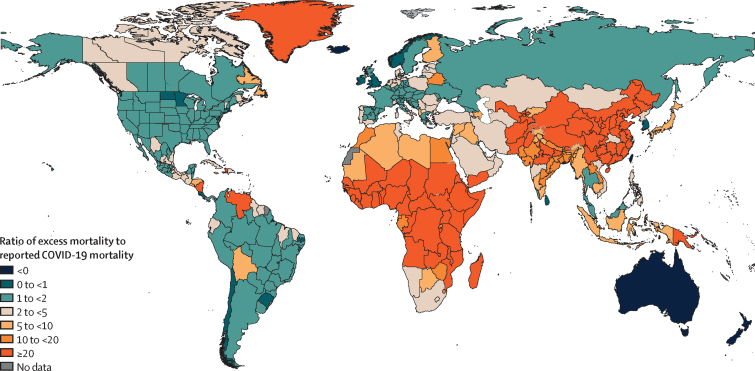
- Worldwide, the authors estimated 18·2 million excess deaths due to the pandemic (95% UI 17·1–19·6), about 3·07 times the 5·94 million reported COVID-19 deaths.
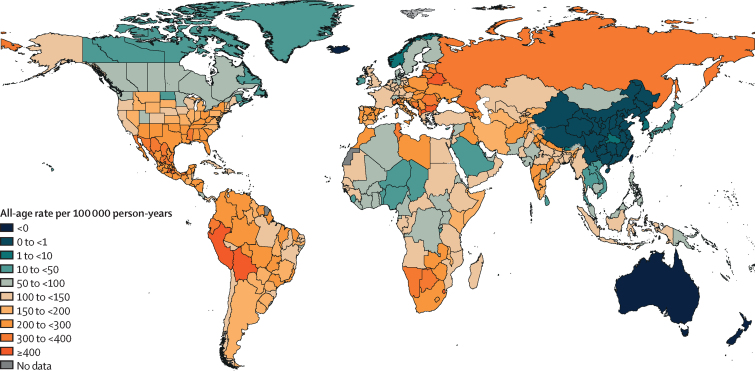
- The global all-age excess mortality rate was 120·3 deaths per 100 000 population (113·1–129·3), and it exceeded 300 per 100 000 in 21 countries.
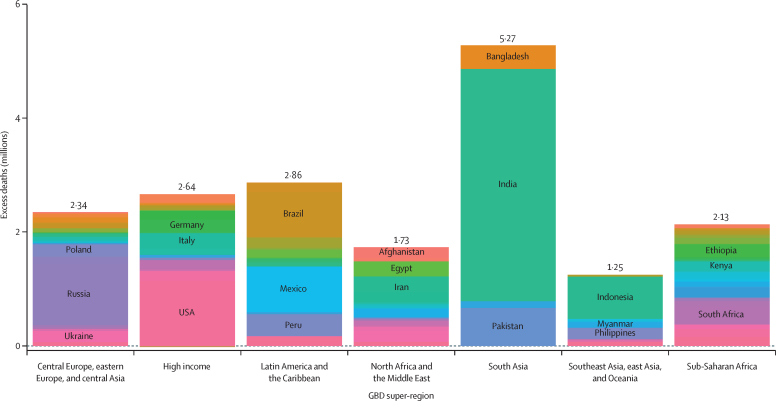
- The largest cumulative excess death counts were estimated in India (4·07 million [3·71–4·36]), the USA (1·13 million [1·08–1·18]), and Russia (1·07 million [1·06–1·08]); these seven countries accounted for more than half of global excess deaths.
- Among those high-burden countries, excess mortality rates were highest in Russia (374·6 per 100 000 [369·7–378·4]) and Mexico (325·1 [301·6–353·3]); Bolivia had the highest country-level excess mortality rate overall at 734·9 per 100 000 (594·1–879·2).
## Methods
- Systematic analysis of excess mortality for Jan 1, 2020 to Dec 31, 2021 across 191 countries and territories and 252 subnational units for selected countries.
- The study used all-cause mortality data from 74 countries and territories and 266 subnational locations, plus empirical excess mortality data for 12 states in India and provinces of South Africa.
- Excess mortality was estimated by correcting reported mortality for late registration, anomalies such as heat waves, and under-registration, then subtracting ensemble-model predictions of expected mortality; for places without time-detailed all-cause mortality, a statistical model using 15 selected covariates predicted excess mortality.
- The authors used six models in an ensemble for expected mortality, LASSO regression for covariate selection, and out-of-sample predictive validity testing; they propagated uncertainty with 100 draws.
## Limitations
- The paper states that different modeling strategies were needed depending on data availability, and that direct measurement would be preferable to modelled excess mortality for places without all-cause mortality data.
- The authors state they excluded the most recent weeks and months in 2021 because late registration can take 20 weeks or longer, and they note there is subjectivity in choosing the exclusion window.
- The paper states that it estimated cumulative excess mortality rather than weekly or monthly excess mortality because reporting lags could make time-detailed ratios unstable.
- Evident from the text: excess mortality is not decomposed into direct SARS-CoV-2 deaths versus indirect pandemic effects, and the authors say available cause-of-death data were too sparse to do this robustly.
Model-written summary. Check it against the paper before relying on it.
Integrity signals
Registry
Cites
Statistics
Figures
Verification
Claims the paper makes
4 Valid · 8 Not valid · 2 Not checked · 121 Own results and interpretations
The cited sources support only part of this claim — read each source’s verdict below.
In the paper
“the magnitude and distribution of many other causes of death might have changed because of social, economic, and behavioural responses to the pandemic, including strict lockdowns”
§ Estimating excess mortality due to the COVID-19 pandemic: a systematic analysis of COVID-19-related mortality, 2020–21 > Introduction
What the sources say
- Partly supportedcites [11] Mungmunpuntipantip R Wiwanitkit V The COVID-19 pandemic and traffic accidents S Afr Med J 111 2021 13227 33944735 sourceExperimental — accuracy not yet measured
The Introduction and Discussion link pandemic-related behavior changes and lockdowns to changes in injury patterns, and the Conclusions report fewer trauma hospitalizations. The paper studies hospitalized injuries, however, not the magnitude or distribution of causes of death generally; that extension is not supported by our copy. (LLM, conf=0.86)
- Partly supportedcites [12] Rozenfeld M Peleg K Givon A COVID-19 changed the injury patterns of hospitalized patients Prehosp Disaster Med 36 2021 251 259 33641689 PMC7985901 sourceExperimental — accuracy not yet measured
The Discussion (page unavailable) links pandemic restrictions to changes in traumatic injury patterns and reports higher mortality among trauma patients. The paper does not establish changes in the magnitude or distribution of causes of death broadly, or assess social and economic responses beyond the restrictions discussed. (LLM, conf=0.85)
- Partly supportedcites [13] Salottolo K Caiafa R Mueller J Multicenter study of US trauma centers examining the effect of the COVID-19 pandemic on injury causes, diagnoses and procedures Trauma Surg Acute Care Open 6 2021 e000655 PMC8023757 33884307 sourceExperimental — accuracy not yet measured
The Discussion (page unavailable) reports a modeled increase in avoidable cancer deaths from diagnosis delays associated with lockdown, and the Introduction (page unavailable) notes increased mortality from causes not fully attributable to COVID-19 in Northern Italy. These passages support the possibility of changes in some non-COVID mortality, but they do not address the distribution of many causes of death or establish economic responses as a factor. (LLM, conf=0.83)
hedgedstates a possible cause- Asserted: passes — The authors put it forward as true.
- Checkable: passes — It can be checked against evidence.
- Load-bearing: passes — The paper’s conclusions depend on it.
- Based: passes — The paper gives a reason why it holds.
- Partly supported
The cited sources support only part of this claim — read each source’s verdict below.
In the paper
“reported deaths represent only a partial count of total death tolls from the COVID-19 pandemic”
- Also stated in: § Introduction · plain
“Official statistics on reported COVID-19 deaths provide only a partial picture of the true burden of mortality.”
§ Estimating excess mortality due to the COVID-19 pandemic: a systematic analysis of COVID-19-related mortality, 2020–21 > Introduction
What the sources say
- Partly supportedcites [1] Friedman J Liu P Troeger CE Predictive performance of international COVID-19 mortality forecasting models Nat Commun 12 2021 2609 PMC8110547 33972512 sourceExperimental — accuracy not yet measured
The Methods (Model comparison framework; page not provided) identify Ecuador and Peru as settings with marked under-registration of COVID-19 deaths, supporting the point for those locations. The paper does not establish that reported deaths are only a partial count of the pandemic’s total death toll generally. (LLM, conf=0.85)
plain- Asserted: passes — The authors put it forward as true.
- Checkable: passes — It can be checked against evidence.
- Load-bearing: passes — The paper’s conclusions depend on it.
- Based: passes — The paper gives a reason why it holds.
- Also stated in: § Introduction · plain
The cited sources support only part of this claim — read each source’s verdict below.
In the paper
“early in the pandemic, before tests were widely available, many deaths due to COVID-19 among older individuals in high-income countries, particularly in long-term care facilities, are unlikely to have been attributed to COVID-19”
§ Estimating excess mortality due to the COVID-19 pandemic: a systematic analysis of COVID-19-related mortality, 2020–21 > Introduction
What the sources say
- Could not verifycites [2] Li Y Fang F He M Factors associated with nursing homes' late participation in COVID-19 reporting J Am Geriatr Soc 68 2020 2468 2469 32894775 sourceExperimental — accuracy not yet measured
Our copy of Li, Fang & He (2020) is a US-only research letter on factors associated with nursing homes' late participation in CMS COVID-19 reporting: the INTRODUCTION (p.1) describes the April 19, 2020 CMS mandate and grace period, and the RESULTS (p.1) report that 1,770 of 15,418 nursing homes (11.5%) had not reported by May 31, 2020, with odds ratios for size, chain affiliation, star rating, age and race composition. The DISCUSSION (p.1-2) attributes non-participation to resource/IT barriers and notes older adults' higher risk of critical disease (ref 6) and racial disparities in reporting (refs 7-9). Nothing in our copy addresses test availability early in the pandemic, deaths not being attributed to COVID-19, or high-income countries outside the US; I searched for 'deaths not attributed / testing not widely available', 'limited testing capacity, undercounted deaths in long-term care', and 'high-income countries, cause-of-death attribution' and obtained only the reporting-participation passages above. Non-reporting of CMS data is a different mechanism from cause-of-death misattribution, so the source neither supports nor contradicts the claim. (LLM, conf=0.72)
- Could not verifycites [3] Li R Pei S Chen B Substantial undocumented infection facilitates the rapid dissemination of novel coronavirus (SARS-CoV-2) Science 368 2020 489 493 32179701 PMC7164387 sourceExperimental — accuracy not yet measured
The Outlook reports undocumented infections in China before 23 January 2020, not deaths that went unattributed to COVID-19. Searches for deaths, older people, and long-term care found no passage addressing the claim about mortality attribution in high-income countries. (LLM, conf=0.78)
- Partly supportedcites [4] Lau H Khosrawipour T Kocbach P Ichii H Bania J Khosrawipour V Evaluating the massive underreporting and undertesting of COVID-19 cases in multiple global epicenters Pulmonology 27 2021 110 115 32540223 PMC7275155 sourceExperimental — accuracy not yet measured
The Discussion (page unavailable) reports retrospective corrections of COVID-19 death counts and unexplained rises in deaths recorded as non-COVID-19, often with unspecified pneumonia listed as the cause. This supports concern about missed attribution early in the pandemic, but the paper does not identify those deaths as COVID-19 deaths or establish that they occurred particularly among older people or long-term care residents. (LLM, conf=0.85)
hedgedstates a possible cause- Asserted: passes — The authors put it forward as true.
- Checkable: passes — It can be checked against evidence.
- Load-bearing: passes — The paper’s conclusions depend on it.
- Based: passes — The paper gives a reason why it holds.
- Could not verify
The cited sources support only part of this claim — read each source’s verdict below.
In the paper
“the reliability of reported deaths varies greatly between locations and over time”
§ Estimating excess mortality due to the COVID-19 pandemic: a systematic analysis of COVID-19-related mortality, 2020–21 > Introduction
What the sources say
- Partly supportedcites [1] Friedman J Liu P Troeger CE Predictive performance of international COVID-19 mortality forecasting models Nat Commun 12 2021 2609 PMC8110547 33972512 sourceExperimental — accuracy not yet measured
The Discussion says data quality varies substantially between countries, supporting the claim about locations. The Methods note day-to-day fluctuations in death reporting, but do not establish that the reliability of reported deaths varies greatly over time. (LLM, conf=0.82)
plainstates an association- Asserted: passes — The authors put it forward as true.
- Checkable: passes — It can be checked against evidence.
- Load-bearing: passes — The paper’s conclusions depend on it.
- Based: passes — The paper gives a reason why it holds.
- Partly supported
The cited sources that could be checked couldn’t confirm or dispute this claim.
In the paper
“as under-reporting of deaths is common in most vital registration systems, especially those from outside the high-income group of countries”
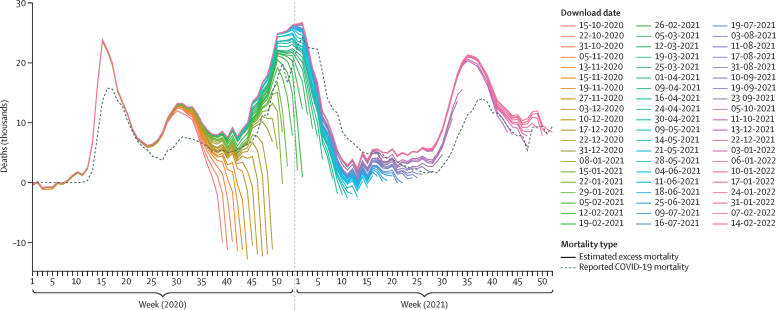
§ Estimating excess mortality due to the COVID-19 pandemic: a systematic analysis of COVID-19-related mortality, 2020–21 > Methods > Database of all-cause mortality We searched government websites, compendia developed by the World Mortality Database,18 the Human Mortality Database, and the European Statistical Office, and identified 74 countries and territories and an additional 266 subnational locations where either weekly or monthly all-cause mortality data were reported for periods in 2020 and 2021, and for up to 11 years previously (appendix pp 4–8, 47). These locations included 31 locations in low-income and middle-income countries. In addition to the time-detailed all-cause mortality data that are publicly available for the estimation of excess mortality, we also included empirical assessments of excess mortality for the nine provinces of South Africa (in addition to all-cause mortality data at the national level) and 12 states of India (in lieu of state-level all-cause mortality data). The Medical Research Council of South Africa used the data from both the civil registration system and the Rapid Mortality Surveillance Report to produce timely excess mortality estimates at the national and provincial levels (all nine provinces). For India, empirical assessment of excess mortality for 12 states used data from the civil registration system. For different months during the first and second waves of the COVID-19 epidemic in the 12 states in India, total numbers of deaths for those states during the corresponding months were made available (appendix pp 7–8). Using the mean reported deaths during the same periods in years 2018 and 2019, we were able to generate excess mortality rates for those Indian states after accounting for under-registration of mortality by the civil registration system at the state level. We identified three types of data issues. First, all-cause mortality from weekly or monthly reporting often has considerable lags in reporting (appendix pp 51–84). Figure 1 shows the effect of lags in reporting of all-cause mortality on excess mortality for the vital registration system in the USA; it takes approximately 20 weeks for data in the USA to be nearly complete. We systematically reviewed input vital registration data and trimmed periods that were likely to be subject to late registration for all locations in the analysis. As these data have been made public only recently, we had limited information by which to identify the precise lag time in late registration; this was particularly true for locations where data are made available more sporadically and by month. We therefore took a conservative approach and excluded data from more recent weeks and months in 2021 in our calculation of excess mortality. Second, in many European countries, registered deaths spiked in late July and early August (calendar weeks 31–33) of 2020, which was a period when reported COVID-19 deaths were extremely low as reported in our online tool. This period coincided with a heat wave; such spikes in all-cause mortality have been observed in Europe during similar timeframes in previous years.19, 20, 21 Because our model cannot separate excess mortality due to COVID-19 from excess deaths occurring during a heat wave, we excluded these weeks of data for all countries in western Europe (classified according to the Global Burden of Diseases, Injuries, and Risk Factors Study [GBD] location groupings) from subsequent analyses to avoid potentially exaggerating the impact of COVID-19 on all-cause mortality during 2020.
What the sources say
- Could not verifycites [22] Vos T Lim SS Abbafati C Global burden of 369 diseases and injuries in 204 countries and territories, 1990–2019: a systematic analysis for the Global Burden of Disease Study 2019 Lancet 396 2020 1204 1222 33069326 PMC7567026 sourceExperimental — accuracy not yet measured
The paper’s main text (page not provided) discusses fewer cancer diagnoses and incomplete initial case registration in the Netherlands, not under-reporting of deaths in vital registration systems. Searches for the claimed wording and for death-registration undercounts in lower-income countries found no passage addressing that claim. (LLM, conf=0.78)
plainstates an association- Asserted: passes — The authors put it forward as true.
- Checkable: passes — It can be checked against evidence.
- Load-bearing: passes — The paper’s conclusions depend on it.
- Based: passes — The paper gives a reason why it holds.
- Could not verify
91 more claims · 2 with their cited sources checked
Create a free account to see all 135 claims and every source verdict.
- Probably not a substantial claim. 13
- It may state two separate claims as one. 29
Claims other papers make about this one
Each is checked against this paper’s own text: does it say what the citing paper says it does?
The source backs part of the claim, not all of it — or backs it for a different population, condition or comparison.
In the citing paper
“As previously predicted,3 COVID-19 shifted baseline patterns of mortality for diseases and injuries that were affected by physical-distancing measures and other government-mandated restrictions.”
From Global burden of 288 causes of death and life expectancy decomposition in 204 countries and territories and 811 subnational locations, 1990–2021: a systematic analysis for the Global Burden of Disease Study 2021 (2024) · cites this paper as [3]
Experimental — accuracy not yet measuredThe source backs part of the claim, not all of it — or backs it for a different population, condition or comparison.
In the citing paper
“Due to use of face masks, physical distancing, and other non-pharmaceutical interventions deployed during the COVID-19 pandemic, we found evidence that the burden of some other infectious diseases (eg, influenza and respiratory syncytial virus) in some locations was reduced, the effects of which were incorporated into our excess mortality estimations.23”
From Global incidence, prevalence, years lived with disability (YLDs), disability-adjusted life-years (DALYs), and healthy life expectancy (HALE) for 371 diseases and injuries in 204 countries and territories and 811 subnational locations, 1990–2021: a systematic analysis for the Global Burden of Disease Study 2021 (2024) · cites this paper as [23]
Experimental — accuracy not yet measuredThe source backs part of the claim, not all of it — or backs it for a different population, condition or comparison.
In the citing paper
“First, data on COVID-19 outcomes (eg, cases, deaths, hospital admissions, and seroprevalence) were of highly variable quality and completeness, which required novel methods for standardisation.23, 25, 26”
From Global incidence, prevalence, years lived with disability (YLDs), disability-adjusted life-years (DALYs), and healthy life expectancy (HALE) for 371 diseases and injuries in 204 countries and territories and 811 subnational locations, 1990–2021: a systematic analysis for the Global Burden of Disease Study 2021 (2024) · cites this paper as [23]
Experimental — accuracy not yet measuredThe cited source says what the claim attributes to it.
In the citing paper
“Our overall estimates are similar to those from complementary approaches [2, 28–32].”
From Estimates of pandemic excess mortality in India based on civil registration data (2022) · cites this paper as [31]
In the citing paper
“Correctly accounting for deaths and their causes during acute emergencies carries important societal ramifications9–12.”
From Attributed causes of excess mortality during the COVID-19 pandemic in a south Indian city (2023) · cites this paper as [9]
2 more claims about this paper
Create a free account to see every claim other papers make about this one.
Self-check
Percentages, sums and reported differences re-computed from the paper’s own numbers.
Each contradiction between two passages listed here was confirmed by an independent check.
Rated minor: it would not touch a result — a value no result rests on, a p-value that stays on the same side of the significance level, or a conflict that is clerical, resolved elsewhere in the paper, or outside its own findings.
In the paper
§ Estimating excess mortality due to the COVID-19 pandemic: a systematic analysis of COVID-19-related mortality, 2020–21 > Results
“The global all-age rate of excess mortality due to the COVID-19 pandemic was 120·3 deaths (113·1–129·3) per 100 000 of the population.”
§ Estimating excess mortality due to the COVID-19 pandemic: a systematic analysis of COVID-19-related mortality, 2020–21 > Results
“Conversely, Arunachal Pradesh, Telangana, Sikkim, Rajasthan, Gujarat, Uttar Pradesh, Jharkhand, West Bengal, and Goa had excess mortality rates that were lower than the global average of 120·6 per 100 000 (although 95% UIs overlap).”
Citations
Cites
Vos, T., Lim, S. S., Abbafati, C., Abbas, K. M., Abbasi, M., Abbasifard, M., Abbasi-Kangevari, M., Abbastabar, H., Abd-Allah, F., Abdelalim, A., et al. (2020) · The Lancet · doi:10.1016/s0140-6736(20)30925-9 · Cited by 19,358
Self-citationLi, R., Pei, S., Chen, B., Song, Y., Zhang, T., Yang, W., & Shaman, J. (2020) · Science · doi:10.1126/science.abb3221 · Cited by 3,633
Death toll exceeded 70,000 in Europe during the summer of 2003
Robine, J.-M., Cheung, S. L. K., Le Roy, S., Van Oyen, H., Griffiths, C., Michel, J.-P., & Herrmann, F. R. (2007) · Comptes Rendus. Biologies · doi:10.1016/j.crvi.2007.12.001 · Cited by 2,127
Guidelines for accurate and transparent health estimates reporting: the GATHER statement
Stevens, G. A., Alkema, L., Black, R. E., Boerma, J. T., Collins, G. S., Ezzati, M., Grove, J. T., Hogan, D. R., Hogan, M. C., Horton, R., et al. (2016) · The Lancet · doi:10.1016/s0140-6736(16)30388-9 · Cited by 1,798
Self-citationSuicide risk and prevention during the COVID-19 pandemic
Gunnell, D., Appleby, L., Arensman, E., Hawton, K., John, A., Kapur, N., Khan, M., O'Connor, R. C., Pirkis, J., Appleby, L., et al. (2020) · The Lancet Psychiatry · doi:10.1016/s2215-0366(20)30171-1 · Cited by 1,513 · cited 1×
“29 There is convincing evidence that rates of anxiety and depression increased during the pandemic period, which might lead to increases in deaths from suicide; 30,31 however, to date, evidence of increased suicide mortality is scarce apart from in Japan, where reported suicide deaths increased”
Fullman, N., Yearwood, J., Abay, S. M., Abbafati, C., Abd-Allah, F., Abdela, J., Abdelalim, A., Abebe, Z., Abebo, T. A., Aboyans, V., et al. (2018) · The Lancet · doi:10.1016/s0140-6736(18)30994-2 · Cited by 1,013
Self-citationKarlinsky, A., & Kobak, D. (2021) · eLife · doi:10.7554/elife.69336 · Cited by 772
Fewer cancer diagnoses during the COVID-19 epidemic in the Netherlands
Dinmohamed, A. G., Visser, O., Verhoeven, R. H. A., Louwman, M. W. J., van Nederveen, F. H., Willems, S. M., Merkx, M. A. W., Lemmens, V. E. P. P., Nagtegaal, I. D., & Siesling, S. (2020) · The Lancet Oncology · doi:10.1016/s1470-2045(20)30265-5 · Cited by 699 · cited 1×
“Some excess mortality might be attributable to reductions in health-care use across a number of causes; 14,15,24,25 however, the effect of reduced health-care use on health outcomes is difficult to prove.”
Causey, K., Fullman, N., Sorensen, R. J. D., Galles, N. C., Zheng, P., Aravkin, A., Danovaro-Holliday, M. C., Martinez-Piedra, R., Sodha, S. V., Velandia-González, M. P., et al. (2021) · The Lancet · doi:10.1016/s0140-6736(21)01337-4 · Cited by 450 · cited 1×
“Many mechanisms have been proposed, including reduced vaccination rates 26 and reduced births in hospitals.”
Self-citationMortality Related to Air Pollution with the Moscow Heat Wave and Wildfire of 2010
Shaposhnikov, D., Revich, B., Bellander, T., Bedada, G. B., Bottai, M., Kharkova, T., Kvasha, E., Lezina, E., Lind, T., Semutnikova, E., et al. (2014) · Epidemiology · doi:10.1097/ede.0000000000000090 · Cited by 429
Cited by
Items 101–200 of 1,734
Iron homeostasis and neurodegeneration in the ageing brain: Insight into ferroptosis pathways
Alrouji, M., Anwar, S., Venkatesan, K., Shahwan, M. J., Hassan, M. I., Islam, A., & Shamsi, A. (2024) · Ageing Research Reviews · doi:10.1016/j.arr.2024.102575 · Cited by 49
Arrestier, R., Bastard, P., Belmondo, T., Voiriot, G., Urbina, T., Luyt, C. E., Gervais, A., Bizien, L., Ségaux, L., Ahmed, M. B., et al. (2022) · Annals of Intensive Care · doi:10.1186/s13613-022-01095-5 · Cited by 45
Levine, A. C., Park, A., Adhikari, A., et al. (2023) · PLOS Global Public Health · doi:10.1371/journal.pgph.0002341 · Cited by 40
“In the Sub-Saharan African region, South Africa and Kenya had some of the highest estimated excess deaths in the region, with 302,000 and 171,000 deaths respectively, both of which were more than 30 times higher than the number of deaths reported [1].”
BackgroundInfluentialLovell, J. F., Baik, Y. O., Choi, S. K., Lee, C., Lee, J., Miura, K., Huang, W., Park, Y.-S., Woo, S., Seo, S. H., et al. (2022) · BMC Medicine · doi:10.1186/s12916-022-02661-1 · Cited by 41
“Background Severe acute respiratory syndrome coronavirus 2 (SARS-CoV-2) is the etiological agent of the coronavirus disease 2019 (COVID-19) pandemic that triggered an estimated 18 million deaths in 2020 and 2021 based on excess morality [1] and has re-emerged in waves of new variants [2].”
Mongin, D., Bürgisser, N., Laurie, G., Schimmel, G., Vu, D., Cullati, S., Covid-SMC Study Group, Mora, L. D. S., Després, L., Dudouit, R., et al. (2023) · Nature Communications · doi:10.1038/s41467-023-41109-9 · Cited by 42
“It is estimated to have caused 18 million deaths as of end of 2021 2 .”
Lopes, S., de Sousa, A. B., Delalibera, M., Namukwaya, E., Cohen, J., & Gomes, B. (2024) · EClinicalMedicine · doi:10.1016/j.eclinm.2023.102399 · Cited by 43
Consensus and Controversial Aspects of Vitamin D and COVID-19
Bilezikian, J. P., Binkley, N., Luca, H. F. D., Fassio, A., Formenti, A. M., Fuleihan, G. E., Heijboer, A. C., & Giustina, A. (2022) · The Journal of Clinical Endocrinology & Metabolism · doi:10.1210/clinem/dgac719 · Cited by 47
Soliman, M. S. A., Fatnassi, T., Elgammal, I., & Figueiredo, R. (2023) · Big Data and Cognitive Computing · doi:10.3390/bdcc7010012 · Cited by 50
Integrating cancer into crisis: a global vision for action from WHO and partners
Casolino, R., Sullivan, R. J., Jobanputra, K., Abdel–Wahab, M., Grbic, M., Hammad, N., Kutluk, T., Melnitchouk, N., Mueller, A., Ortiz, R., et al. (2024) · The Lancet Oncology · doi:10.1016/s1470-2045(24)00522-9 · Cited by 47
Kobo, O. M., Abramov, D., Fudim, M., Sharma, G. V., Bang, V., Deshpande, A., Wadhera, R. K., & Mamas, M. A. (2022) · European Heart Journal - Quality of Care and Clinical Outcomes · doi:10.1093/ehjqcco/qcac080 · Cited by 44
Flaws and uncertainties in pandemic global excess death calculations
Ioannidis, J. P. A., Zonta, F., & Levitt, M. (2023) · European Journal of Clinical Investigation · doi:10.1111/eci.14008 · Cited by 43
Performance of Antigen Detection Tests for SARS-CoV-2: A Systematic Review and Meta-Analysis
Tapari, A., Braliou, G. G., Papaefthimiou, M., Mavriki, H., Kontou, P. I., Nikolopoulos, G. K., & Bagos, P. G. (2022) · Diagnostics · doi:10.3390/diagnostics12061388 · Cited by 38
Agyepong, I. A., Spicer, N., Ooms, G., Jahn, A., Bärnighausen, T., Beiersmann, C., Amoakoh, H. B., Fink, G., Guo, Y., Hennig, L., et al. (2023) · The Lancet · doi:10.1016/s0140-6736(22)01930-4 · Cited by 49
Excess mortality and the COVID-19 pandemic: causes of death and social inequalities
Oh, J., Min, J., Kang, C., Kim, E., Lee, J. P., Kim, H., & Lee, W. (2022) · BMC Public Health · doi:10.1186/s12889-022-14785-3 · Cited by 43
Direct and indirect effects of the COVID-19 pandemic on mortality in Switzerland
Riou, J., Hauser, A., Fesser, A., Althaus, C. L., Egger, M., & Konstantinoudis, G. (2023) · Nature Communications · doi:10.1038/s41467-022-35770-9 · Cited by 44
Novel Ionizable Lipid Nanoparticles for SARS‐CoV‐2 Omicron mRNA Delivery
Long, J., Yu, C., Zhang, H., Cao, Y., Sang, Y., Lü, H., Zhang, Z., Wang, X., Wang, H., Song, G., et al. (2023) · Advanced Healthcare Materials · doi:10.1002/adhm.202202590 · Cited by 39
Self-citationOh, J. S., Kim, S., Yim, Y., Kim, M. S., Collaborators, G. 2. S. U., Shin, J. I., Jabbar, A. A., Aalruz, H., Abbasian, M., Magied, A. H. A. A. A., et al. (2026) · Nature Medicine · doi:10.1038/s41591-025-04077-9 · Cited by 85
“To investigate temporal trends before (2010–2019) and during (2020– 2023) the pandemic, we calculated the AAPC for each disease 44,45 .”
Chen, Z., Peng, Y., Wu, X., Pang, B., Yang, F., Zheng, W., Liu, C.-X., & Zhang, J. (2022) · Frontiers in Public Health · doi:10.3389/fpubh.2022.923485 · Cited by 44
Antonio‐Villa, N. E., Bello‐Chavolla, O. Y., Fermín‐Martínez, C. A., Aburto, J. M., Fernández‐Chirino, L., Ramírez‐García, D., Pisanty-Alatorre, J., González-Díaz, A., Vargas‐Vázquez, A., Barquera, S., et al. (2022) · International Journal of Epidemiology · doi:10.1093/ije/dyac184 · Cited by 36
“Over 6 million deaths attributable to COVID-19 have been reported globally since the onset of the pandemic in early 2020.(1) Beyond this devastating death toll, there is increasing recognition of the widespread disruption of the pandemic on healthcare services, with a far-reaching impact on the care of non-COVID-19 co…”
BackgroundSu, Z., Cheshmehzangi, A., Bentley, B. L., McDonnell, D., Šegalo, S., Aḥmad, J., Chen, H., Terjesen, L. A., Lopez, E., Wagers, S. M., et al. (2022) · Systematic Reviews · doi:10.1186/s13643-022-02150-9 · Cited by 44
Haakenstad, A., Bintz, C., Knight, M., Bienhoff, K., Chacón‐Torrico, H., Curioso, W. H., Dieleman, J. L., Gage, A. D., Gakidou, E. E., Hay, S. I., et al. (2023) · The Lancet Global Health · doi:10.1016/s2214-109x(23)00330-3 · Cited by 42
Self-citationEstimates of excess mortality for the five Nordic countries during the COVID-19 pandemic 2020−2021
Kepp, K. P., Björk, J., Kontis, V., Parks, R. M., Bæk, K. T., Emilsson, L., & Lallukka, T. M. (2022) · International Journal of Epidemiology · doi:10.1093/ije/dyac204 · Cited by 38
The Lancet Commission on 21st-Century Global Health Threats
Kanem, N., Murray, C. J. L., & Horton, R. C. (2022) · The Lancet · doi:10.1016/s0140-6736(22)02576-4 · Cited by 47
Self-citationJeong, Y., & Min, J. (2023) · Journal of Korean Medical Science · doi:10.3346/jkms.2023.38.e43 · Cited by 62
Ríos-Blancas, M. J., Pando‐Robles, V., Razo, C., Cárcamo, C., Mendoza, W., Pacheco‐Barrios, K., Miranda, J. J., Lansingh, V. C., Demie, T. G., Saha, M., et al. (2023) · Frontiers in Public Health · doi:10.3389/fpubh.2023.1189861 · Cited by 37
Self-citationACE2-EGFR-MAPK signaling contributes to SARS-CoV-2 infection
Engler, M., Albers, D., von Maltitz, P., Groß, R. M., Münch, J., & Cirstea, I. C. (2023) · Life Science Alliance · doi:10.26508/lsa.202201880 · Cited by 40
“Ever since the first case was reported in 2019 in Wuhan (China) (Zhou et al, 2020), coronavirus disease-19 (COVID-19) causedmillions of deaths worldwide and still presents a global challenge (Wang et al, 2022).”
BackgroundOlivieri, F., Sabbatinelli, J., Bonfigli, A. R., Sarzani, R., Giordano, P., Cherubini, A., Antonicelli, R., Rosati, Y., Prete, S. D., Rosa, M. D., et al. (2022) · Mechanisms of Ageing and Development · doi:10.1016/j.mad.2022.111674 · Cited by 42
“…the routine laboratory biomarkers at hospital admission for COVID-19, suggesting that the most severe forms of COVID-19 were associated with peripheral lymphocyte and neutrophil subsets alteration (Al Balushi et al., 2021; Cai et al., 2021b; Lu et al., 2021; Reusch et al., 2021; Wang et al., 2020).”
Khlat, M., Ghosn, W., Guillot, M., Vandentorren, S., Delpierre, C., du Loû, A. D., Fouillet, A., Ghosn, W., Guillot, M., Lefèvre, T., et al. (2022) · Social Science & Medicine · doi:10.1016/j.socscimed.2022.115160 · Cited by 36
Different COVID-19 outcomes among systemic rheumatic diseases: a nation-wide cohort study
Bournia, V.-K., Fragoulis, G., Mitrou, P., Mathioudakis, K., Tsolakidis, A., Konstantonis, G. D., Tseti, I. K., Vourli, G., Tektonidou, M. G., Paraskevis, D. N., et al. (2022) · Rheumatology · doi:10.1093/rheumatology/keac422 · Cited by 37
Xin, Z., He, Q., Wang, S., Han, X., Fu, Z., Xu, X., & Zhao, X. (2022) · Applied Sciences · doi:10.3390/app12157910 · Cited by 38
Gloeckl, R., Leitl, D., Schneeberger, T., Jarosch, I., & Koczulla, A. R. (2023) · European Archives of Psychiatry and Clinical Neuroscience · doi:10.1007/s00406-023-01631-9 · Cited by 41
Liu, X., Xiong, W., Ye, M., Lu, T., Yuan, K., Chang, S., Han, Y., Wang, Y., Lü, L., & Bao, Y. (2023) · Signal Transduction and Targeted Therapy · doi:10.1038/s41392-023-01669-0 · Cited by 35
“168 Therefore, it is imperative to investigate early markers for the COVID-19 clinical outcomes forecast, and certain miRNAs exhibit potential in this domain.”
BackgroundSafety, efficacy, and immunogenicity of the NVX-CoV2373 vaccine
Underwood, E., Dunkle, L. M., Madhi, S. A., Gay, C. L., Heath, P. T., Kotloff, K. L., Smith, K., Chau, G., Galbiati, S., McGarry, A., et al. (2023) · Expert Review of Vaccines · doi:10.1080/14760584.2023.2218913 · Cited by 36
“The actual death toll is likely much higher, as models addressing excess mortality metrics estimate 15– 20 million lives lost [2,3].”
BackgroundIwashyna, T. J., Seelye, S. M., Berkowitz, T. S. Z., Pura, J. A., Bohnert, A. S. B., Bowling, C. B., Boyko, E. J., Hynes, D. M., Ioannou, G. N., Maciejewski, M. L., et al. (2023) · JAMA Internal Medicine · doi:10.1001/jamainternmed.2023.3587 · Cited by 32
Kofanov, D., Kozlov, V., Libman, A., & Zakharov, N. (2020) · British Journal of Political Science · doi:10.1017/s0007123422000527 · Cited by 39
Han, B., Lv, Y., Moser, D., Zhou, X., Woehrle, T., Han, L., Osterman, A., Rudelius, M., Choukèr, A., & Lei, P. (2023) · EBioMedicine · doi:10.1016/j.ebiom.2023.104869 · Cited by 39
Weeratunga, P. N., Denney, L., Bull, J. A., Repapi, E., Sergeant, M. J., Etherington, R. E., Vuppusetty, C., Turner, G. D. H., Clelland, C., Woo, J., et al. (2023) · Nature Communications · doi:10.1038/s41467-023-42421-0 · Cited by 33
Inhalable neutralizing antibodies – promising approach to combating respiratory viral infections
Chow, M. Y. T., Pan, H. W., Seow, H. C., & Lam, J. K. W. (2022) · Trends in Pharmacological Sciences · doi:10.1016/j.tips.2022.11.006 · Cited by 33
Impact of the first wave of the COVID-19 pandemic on non-COVID inpatient care in southern Spain
Gasch-Illescas, A., Calle-Serrano, M., Vallejo‐Vaz, A. J., Praena‐Fernández, J. M., Guerrero, J. A. S., Calderón, E. J., Pollán, M., & Medrano, F. J. (2023) · Scientific Reports · doi:10.1038/s41598-023-28831-6 · Cited by 34
Rzymski, P., Pokorska‐Śpiewak, M., Jackowska, T., Kuchar, E. P., Nitsch-Osuch, A. S., Pawłowska, M., Babicki, M., Jaroszewicz, J., Szenborn, L., Wysocki, J., et al. (2023) · Vaccines · doi:10.3390/vaccines11091502 · Cited by 32
Digital health systems strengthening in Africa for rapid response to COVID-19
de Wit, T. F. R., Janssens, W., Antwi, M. A., Milimo, E., Mutegi, N., Marwa, H., Ndili, N., Owino, W., Waiyaiya, E., Rojas, D. C. G., et al. (2022) · Frontiers in Health Services · doi:10.3389/frhs.2022.987828 · Cited by 41
Nakamaru, R., Kohsaka, S., Shiraishi, Y., Kohno, T., Goda, A., Nagatomo, Y., Kitamura, M., Nakano, S., Takei, M., Mizuno, A., et al. (2023) · Journal of the American Heart Association · doi:10.1161/jaha.123.031179 · Cited by 35
“37 Fourth, we could not assess the prevalence of iron deficiency, an important clinical factor in HF.”
BackgroundPourasghari, H., Tavolinejad, H., Soleimanpour, S., Abdi, Z., Arabloo, J., Bragazzi, N. L., Behzadifar, M., Rashedi, S., Omidi, N., Ayoubian, A., et al. (2022) · IJC Heart & Vasculature · doi:10.1016/j.ijcha.2022.101058 · Cited by 38
“The full impact of the pandemic has been much greater than what is indicated by reported deaths due to COVID-19 alone[3,69].”
Allendes, F., Díaz, H. S., Ortíz, F. C., Marcus, N. J., Quintanilla, R. A., Inestrosa, N. C., & Río, R. D. (2023) · Frontiers in Medicine · doi:10.3389/fmed.2022.1095249 · Cited by 39
SARS-CoV-2 infection as a potential risk factor for the development of cancer
Ogarek, N., Oboza, P., Olszanecka‐Glinianowicz, M., & Kocełak, P. (2023) · Frontiers in Molecular Biosciences · doi:10.3389/fmolb.2023.1260776 · Cited by 31
Vitamin D and COVID‐19—Revisited
Subramanian, S., Griffin, G. E., Hewison, M., Hopkin, J. M., Kenny, R. A., Laird, E. J., Quinton, R., THICKETT, D. R., & Rhodes, J. M. (2022) · Journal of Internal Medicine · doi:10.1111/joim.13536 · Cited by 29
Advances and applications of dextran-based nanomaterials targeting inflammatory respiratory diseases
Prasher, P., Sharma, M., Singh, S. K., Haghi, M., MacLoughlin, R. J., Chellappan, D. K., Gupta, G., Paudel, K. R., Hansbro, P. M., Oliver, B. G. G., et al. (2022) · Journal of Drug Delivery Science and Technology · doi:10.1016/j.jddst.2022.103598 · Cited by 32
Global estimates of excess deaths from COVID-19
Acosta, E. (2022) · Nature · doi:10.1038/d41586-022-04138-w · Cited by 27
The global challenges of the long COVID-19 in adults and children
Rodriguez-Morales, A. J., Lopez-Echeverri, M. C., Perez-Raga, M. F., Quintero-Romero, V., Valencia-Gallego, V., Galindo-Herrera, N., López-Alzate, S., Sánchez-Vinasco, J. D., Gutiérrez-Vargas, J. J., Mayta‐Tristán, P., et al. (2023) · Travel Medicine and Infectious Disease · doi:10.1016/j.tmaid.2023.102606 · Cited by 43
Unmasking the COVID-19 pandemic prevention gains: excess mortality reversal in 2022
Walkowiak, M. P., Domaradzki, J., & Walkowiak, D. (2023) · Public Health · doi:10.1016/j.puhe.2023.08.004 · Cited by 28
Learning losses during the COVID-19 pandemic: Evidence from Mexico
Alasino, E., Ramírez, M. J., Romero, M., Schady, N., & Uribe, D. (2023) · Economics of Education Review · doi:10.1016/j.econedurev.2023.102492 · Cited by 40
RNA Viruses, Pandemics and Anticipatory Preparedness
García-Blanco, M. A., Ooi, E. E., & Sessions, O. M. (2022) · Viruses · doi:10.3390/v14102176 · Cited by 28
“5 million have died from this respiratory disease in this pandemic worldwide, and the death toll keeps climbing [13]; the impact of COVID‐19 on death rates is likely greater if excess mortality from an over‐stressed healthcare infrastructure is also considered [16].”
BackgroundEmergence and spread of two SARS-CoV-2 variants of interest in Nigeria
Olawoye, I. B., Oluniyi, P. E., Oguzie, J. U., Uwanibe, J. N., Kayode, A. T., Olumade, T. J., Ajogbasile, F. V., Parker, E., Eromon, P., Abechi, P., et al. (2023) · Nature Communications · doi:10.1038/s41467-023-36449-5 · Cited by 31
Portela, M. C., Martins, M. S., Lima, S. M. L., de Andrade, C. L. T., & Pereira, C. C. D. A. (2023) · International Journal for Equity in Health · doi:10.1186/s12939-023-02037-8 · Cited by 37
Assessing resilience of a health system is difficult but necessary to prepare for the next crisis
Sagan, A., Thomas, S., Webb, E., & McKee, M. (2023) · BMJ · doi:10.1136/bmj-2022-073721 · Cited by 41
Vidal-Pérez, R., Brandao, M., Pazderník, M., Kresoja, K., Carpenito, M., Maeda, S., Casado-Arroyo, R., Muscoli, S., Pöss, J., Fontes‐Carvalho, R., et al. (2022) · World Journal of Clinical Cases · doi:10.12998/wjcc.v10.i27.9556 · Cited by 30
Scharf, L., Axelsson, H., Emmanouilidi, A., Mathew, N. R., Sheward, D. J., Leach, S., Isakson, P., Smirnov, I. V., Marklund, E., Miron, N., et al. (2023) · JCI Insight · doi:10.1172/jci.insight.165299 · Cited by 31
Fong, C. H.-Y., Zhang, X., Chen, L., Poon, R. W., Chan, B. P.-C., Zhao, Y., Wong, C. K. H., Chan, K., Yuen, K., Hung, I. F., et al. (2023) · EBioMedicine · doi:10.1016/j.ebiom.2023.104446 · Cited by 28
The 100 Days Mission—2022 Global Pandemic Preparedness Summit
Gouglas, D., Christodoulou, M., & Hatchett, R. J. (2023) · Emerging infectious diseases · doi:10.3201/eid2903.221142 · Cited by 27
SARS-CoV-2 infection impairs NK cell functions via activation of the LLT1-CD161 axis
Lenart, M., Górecka, M., Bochenek, M., Barreto-Durán, E., Szczepański, A., Gałuszka-Bulaga, A., Mazur-Panasiuk, N., Węglarczyk, K., Siwiec-Koźlik, A., Korkosz, M., et al. (2023) · Frontiers in Immunology · doi:10.3389/fimmu.2023.1123155 · Cited by 29
Matveeva, O. V., & Shabalina, S. A. (2023) · Frontiers in Immunology · doi:10.3389/fimmu.2023.1151311 · Cited by 31
Mitsui, Y., Suzuki, T., Kuniyoshi, K., Inamo, J., Yamaguchi, K., Komuro, M., Watanabe, J., Edamoto, M., Li, S., Kouno, T., et al. (2023) · Immunity · doi:10.1016/j.immuni.2023.06.013 · Cited by 27
Chemaitelly, H. S., Ayoub, H. H., Faust, J. S., Coyle, P. V., Tang, P., Hasan, M. R., Yassine, H. M., Al-Khatib, H. A., Thani, A. A. A., Kanaani, Z. A., et al. (2023) · BMJ Public Health · doi:10.1136/bmjph-2023-000479 · Cited by 27
Inequalities in regional excess mortality and life expectancy during the COVID-19 pandemic in Europe
Hajdu, T., Krekó, J., & Tóth, C. G. (2024) · Scientific Reports · doi:10.1038/s41598-024-54366-5 · Cited by 35
Chen, T., Ding, L., Zhao, M., Song, S., Hou, J., Li, X., Li, M., Yin, K., Li, X., & Wang, Z. (2024) · Chinese Medicine · doi:10.1186/s13020-024-00918-w · Cited by 36
Interstitial Lung Fibrosis Following COVID-19 Pneumonia
Lazăr, M., Barbu, E. C., Chițu, C. E., Tilişcan, C., Stratan, L. M., Aramă, Ș. S., Aramă, V., & Ion, D. A. (2022) · Diagnostics · doi:10.3390/diagnostics12082028 · Cited by 35
“Affected pulmonary lobes (n, median, Q1, Q3) 5 [4, 5] 2.”
Muñoz‐Rivas, N., Aibar, J., Gabara-Xancó, C., Trueba-Vicente, Á., Urbelz-Pérez, A., del Olmo, V. G., Rodríguez, P. D., Rivera-Gallego, A., Bosch‐Nicolau, P., Pérez‐Pinar, M., et al. (2022) · Journal of Clinical Medicine · doi:10.3390/jcm11195632 · Cited by 29
The multiple roles of nsp6 in the molecular pathogenesis of SARS-CoV-2
Bills, C. J., Xie, X., & Shi, P. (2023) · Antiviral Research · doi:10.1016/j.antiviral.2023.105590 · Cited by 30
“The COVID-19 pandemic has ravaged the world and caused unprecedented social and economic damages in the past century (Collaborators, 2022; Lopez-Leon et al., 2021; Rose, 2021).”
Rossetti, M., Srisomwat, C., Urban, M., Rosati, G., Maroli, G., Akbay, H. G. Y., Chailapakul, O., & Merkoçi, A. (2024) · Biosensors and Bioelectronics · doi:10.1016/j.bios.2024.116079 · Cited by 28
A microfluidic biosensor architecture for the rapid detection of COVID-19
Muhsin, S. A.-A., He, Y., Al‐Amidie, M., Sergovia, K., Abdullah, A. A., Wang, Y., Alkorjia, O., Hulsey, R. A., Hunter, G. L., Erdal, Z. K., et al. (2023) · Analytica Chimica Acta · doi:10.1016/j.aca.2023.341378 · Cited by 28
Xu, F., Xie, Y., Yu, W., & Wang, Z. (2026) · Frontiers in Microbiology · doi:10.3389/fmicb.2026.1734749 · Cited by 50
Alicandro, G., Remuzzi, G., Centanni, S., Gerli, A. G., & Vecchia, C. L. (2022) · La Medicina del Lavoro · doi:10.23749/mdl.v113i2.13108 · Cited by 27
“They are however substantially lower than the estimate of 259,000 excess deaths in 2020-2021estimated by the Covid-19 Excess Mortality Collaborators (CEMC) using a Bayesian model [17].”
BackgroundAntibody-mediated immunity to SARS-CoV-2 spike
Errico, J. M., Adams, L. J., & Fremont, D. H. (2022) · Advances in immunology · doi:10.1016/bs.ai.2022.07.001 · Cited by 26
Mezzadri, A. (2022) · Development and Change · doi:10.1111/dech.12736 · Cited by 35
COVID-19 Vaccination in Migrants and Refugees: Lessons Learnt and Good Practices
Immordino, P., Graci, D., Casuccio, A., et al. (2022) · Vaccines · doi:10.3390/vaccines10111965 · Cited by 25
Mehri, A., Ghorbani, S. S., Farhadi-Babadi, K., Rahimi, E., Barati, Z., Taherpour, N., Izadi, N., Shahbazi, F., Mokhayeri, Y., Seifi, A., et al. (2023) · Journal of Intensive Care Medicine · doi:10.1177/08850666231166344 · Cited by 28
“This study aims to investigate the risk factors associated with severity and death from COVID-19 through a systematic review and meta-analysis of the published documents in Iran.”
BackgroundInfluentialJyske, T. M., Liimatainen, J., Tienaho, J., et al. (2023) · Frontiers in Bioengineering and Biotechnology · doi:10.3389/fbioe.2023.1171908 · Cited by 25
“Six million direct deaths (between 1 Jan 2020, and 31 Dec 2021), and more than 18 million people have died as measured by the excess mortality deaths worldwide (Wang et al., 2022).”
BackgroundStudent close contact behavior and COVID-19 transmission in China's classrooms
Guo, Y., Dou, Z., Zhang, N., Liu, X., Su, B., Li, Y., & Zhang, Y. (2023) · PNAS Nexus · doi:10.1093/pnasnexus/pgad142 · Cited by 34
Long COVID: a new word for naming fibromyalgia?
Xavier Mariette, A. (2023) · Annals of the Rheumatic Diseases · doi:10.1136/ard-2023-224848 · Cited by 24
Vo, A. T., Patton, T., Peacock, A., Larney, S., & Bórquez, A. (2022) · International Journal of Environmental Research and Public Health · doi:10.3390/ijerph19148883 · Cited by 30
“US rates of both opioid and stimulant use are among the highest worldwide [2] and the COVID-19 mortality burden has been staggering compared to other high-income countries [3,4].”
BackgroundStevaert, A., Groaz, E., & Naesens, L. M. J. (2022) · Current Opinion in Virology · doi:10.1016/j.coviro.2022.101279 · Cited by 34
Beneficial and Detrimental Effects of Cytokines during Influenza and COVID-19
Chang, D., Cruz, C. S. D., & Sharma, L. (2024) · Viruses · doi:10.3390/v16020308 · Cited by 35
“The morbidity and mortality by respiratory viruses can reach extraordinary levels, as seen in the current COVID-19 pandemic and during the 1918 influenza pandemic [5,6].”
BackgroundYarandi, R. B., Biglarian, A., Karlstad, J. L., Moe, C. F., Bakhshi, E., Khodaei-Ardakani, M.-R., & Behboudi‐Gandevani, S. (2025) · PLoS ONE · doi:10.1371/journal.pone.0312351 · Cited by 38
Eikelboom, J. W., Jolly, S. S., Belley‐Côté, E. P., Whitlock, R. P., Rangarajan, S., Xu, L., Heenan, L., Bangdiwala, S. I., Tarhuni, W. M., Hassany, M., et al. (2022) · The Lancet Respiratory Medicine · doi:10.1016/s2213-2600(22)00299-5 · Cited by 28
Marti, M., Zürcher, K., Enane, L. A., et al. (2022) · Journal of the International AIDS Society · doi:10.1002/jia2.26018 · Cited by 24
COVID-19 mortality rate determinants in selected Eastern European countries
Sobczak, M., & Pawliczak, R. (2022) · BMC Public Health · doi:10.1186/s12889-022-14567-x · Cited by 31
de Andrade, C. C., Silva, A. T. P., Vasconcelos, L. R. S., Oliveira, P. R. S., de Souza, C. D. F., Armstrong, A. D. C., & do Carmo, R. F. (2022) · Viruses · doi:10.3390/v14112557 · Cited by 27
Drain, P. K., Dalmat, R. R., Hao, L., Bemer, M. J., Budiawan, E., Morton, J. F., Ireton, R. C., Hsiang, T.-Y., Marfatia, Z., Prabhu, R., et al. (2023) · Journal of Clinical Virology · doi:10.1016/j.jcv.2023.105420 · Cited by 33
“5 million deaths from coronavirus disease (COVID-19) have been reported to the World Health Organization (WHO),(1) and these numbers may be underestimated.(2,3) Implementation of diagnostic testing for acute SARS-CoV-2 infection has been critical to identify COVID-19 cases, reduce transmission, and inform public healt…”
Pallari, C. T., Achilleos, S., Quattrocchi, A., Gabel, J., Critselis, E., Athanasiadou, M., Haghighi, M. R. R., Papatheodorou, S., Liu, T., Artemiou, A., et al. (2024) · BMJ Global Health · doi:10.1136/bmjgh-2023-013018 · Cited by 24
“41 COVID-19 Excess Mortality Collaborators (2022) have also identified Italy, Greece, Norway, Spain, Sweden and the USA as having a high excess of all-cause deaths.”
BackgroundAttributed causes of excess mortality during the COVID-19 pandemic in a south Indian city
Lewnard, J. A., B, C. M., Kang, G., & Laxminarayan, R. (2023) · Nature Communications · doi:10.1038/s41467-023-39322-7 · Cited by 23
Dulal, D., Maraey, A. M., Elsharnoby, H. R., Chacko, P., & Grubb, B. P. (2025) · European Heart Journal - Quality of Care and Clinical Outcomes · doi:10.1093/ehjqcco/qcae111 · Cited by 34
Public Health Management of the COVID-19 Pandemic in Australia: The Role of the Morrison Government
Duckett, S. J. (2022) · International Journal of Environmental Research and Public Health · doi:10.3390/ijerph191610400 · Cited by 25
“Despite this, state-directed public health measures—including movement restrictions—meant that infection numbers and rates were low by world standards [3], as were deaths [6].”
BackgroundDenford, J. S., Dawson, G. S., Desouza, K. C., & Manoharan, A. (2022) · Public Management Review · doi:10.1080/14719037.2022.2124535 · Cited by 31
“However, it is estimated based on excess deaths that the true toll of the pandemic was 18.2 million deaths (Wang et al. 2022).”
BackgroundInfluentialCOVID-19 and athletes: Endurance sport and activity resilience study—CAESAR study
Śliż, D., Wiecha, S., Ulaszewska, K., Gąsior, J. S., Lewandowski, M., Kasiak, P. S., & Mamcarz, A. (2022) · Frontiers in Physiology · doi:10.3389/fphys.2022.1078763 · Cited by 24
“2 million people died as a result of the pandemic between 2020 and 2021 and numerous deaths were due to coronavirus disease 2019 (COVID-19) (Wang et al., 2022).”
BackgroundIntegrating The US Public Health And Medical Care Systems To Improve Health Crisis Response
Bourdeaux, M. E., Sasdi, A., Oza, S., & Kerry, V. B. (2023) · Health Affairs · doi:10.1377/hlthaff.2022.01255 · Cited by 23
Incorporating social vulnerability in infectious disease mathematical modelling: a scoping review
Naidoo, M., Shephard, W., Kambewe, I., Mtshali, N., Cope, S., Rubio, F. A., & Rasella, D. (2024) · BMC Medicine · doi:10.1186/s12916-024-03333-y · Cited by 28
“Most recently, the COVID-19 pandemic resulted in an estimated 18 million deaths worldwide in just the first year [4].”
Backgroundvan Huizen, M., ter Horst, J. R. B. , Gruyter, H. L. M. D., Geurink, P. P., van Noort, G. J. V. D. H., Knaap, R. C. M., Nelemans, T., Ogando, N. S., Leijs, A. A., Urakova, N., et al. (2024) · PLoS Pathogens · doi:10.1371/journal.ppat.1012100 · Cited by 21
Organizing Expertise During a Crisis. France and Sweden in the Fight Against Covid-19
Borraz, O., & Jacobsson, B. (2023) · Journal of Organizational Sociology · doi:10.1515/joso-2023-0009 · Cited by 26
The Demographic Causes of European Sub-National Population Declines
Newsham, N., & Rowe, F. (2025) · European Journal of Population / Revue européenne de Démographie · doi:10.1007/s10680-025-09730-0 · Cited by 36
“Furthermore, our data predates the COVID-19 pandemic, in which considerable disruption to demographic occurrences have occurred (see Sobotka et al., 2022; Wang et al., 2022; González-Leonardo et al., 2022).”
An effective pandemic treaty requires accountability
Faviero, G. F., Stocking, B., Hoffman, S. J., et al. (2022) · The Lancet Public Health · doi:10.1016/s2468-2667(22)00192-x · Cited by 22
Metadata
- Authors
- Wang, H., Paulson, K. R., Pease, S. A., Watson, S., Comfort, H., Zheng, P., Aravkin, A. Y., Bisignano, C., Barber, R. M., Alam, T., Fuller, J. E., May, E. A., Jones, D. P., Frisch, M. E., Abbafati, C., Adolph, C., Allorant, A., Amlag, J. O., Bang-Jensen, B., Bertolacci, G. J., Bloom, S. S., Carter, A., Castro, E., Chakrabarti, S., Chattopadhyay, J., Cogen, R. M., Collins, J. K., Cooperrider, K., Dai, X., Dangel, W. J., Daoud, F., Dapper, C., Deen, A., Duncan, B. B., Erickson, M., Ewald, S. B., Fedosseeva, T., Ferrari, A. J., Frostad, J. J., Fullman, N., Gallagher, J., Gamkrelidze, A., Guo, G., He, J., Helak, M., Henry, N. J., Hulland, E. N., Huntley, B. M., Kereselidze, M., Lazzar-Atwood, A., LeGrand, K. E., Lindstrom, A., Linebarger, E., Lotufo, P. A., Lozano, R., Magistro, B., Malta, D. C., Månsson, J., Mantilla Herrera, A. M., Marinho, F., Mirkuzie, A. H., Misganaw, A. T., Monasta, L., Naik, P., Nomura, S., O'Brien, E. G., O'Halloran, J. K., Olana, L. T., Ostroff, S. M., Penberthy, L., Reiner Jr, R. C., Reinke, G., Ribeiro, A. L. P., Santomauro, D. F., Schmidt, M. I., Shaw, D. H., Sheena, B. S., Sholokhov, A., Skhvitaridze, N., Sorensen, R. J. D., Spurlock, E. E., Syailendrawati, R., Topor-Madry, R., Troeger, C. E., Walcott, R., Walker, A., Wiysonge, C. S., Worku, N. A., Zigler, B., Pigott, D. M., Naghavi, M., Mokdad, A. H., Lim, S. S., Hay, S. I., Gakidou, E., & Murray, C. J. L.
- Affiliations
- University of Washington (US)
- ORCID
- Venue
- The Lancet
- Publisher
- Elsevier BV
- Published
- 2022-04
- Volume
- 399
- Issue
- 10334
- Pages
- 1513-1536
- ISSN
- 0099-5355 (ISSN-L)
- 0140-6736
- PMC
- PMC8912932
- OpenAlex
- W4220867566
- Cited by
- 2,069
- References
- 32
- Citations by year
- 2026: 161 · 2025: 258 · 2024: 473 · 2023: 787 · 2022: 385
- FWCI
- 50.89
- Type
- journal article
- Language
- en
- Update notices
- erratum (2022-04-16)
- Open access
- hybrid
- doi.org
- Licence
- cc-by
- www.elsevier.com/tdm/userlicense/1.0/ (tdm)
- www.elsevier.com/legal/tdmrep-license (tdm)
- creativecommons.org/licenses/by/4.0/ (vor)
- Locations
- The Lancet (publishedVersion, cc-by)
- PubMed Central (publishedVersion, cc-by)
- PubMed (publishedVersion)
- ePrints Soton (University of Southampton) (acceptedVersion)
- LSHTM Research Online (London School of Hygiene and Tropical Medicine) (acceptedVersion)
- IRIS Research product catalog (Sapienza University of Rome) (submittedVersion, other-oa)
- Funders
- National Science Foundation (2031096)
- Bill and Melinda Gates Foundation
- South African Medical Research Council
- Ministry of Education, Culture, Sports, Science and Technology (/2016)
- Coordenação de Aperfeiçoamento de Pessoal de Nível Superior (88887, 88887.507149/2020-00, 2020-00)
- Conselho Nacional de Desenvolvimento Científico e Tecnológico (465518/2014‐1, 310679, 310679/2016‐8, 310679/2016-8 and 465518/2014-1, 2014-1, 2016‐8, PPM-00428-17, 2020-00, -8 and)
- Medical Research Council
- National Health and Medical Research Council (1121516, 310679, 2031096)
- Topics
- Physical Sciences › Mathematics › Modeling and Simulation › COVID-19 epidemiological studies
- Health Sciences › Medicine › Oncology › COVID-19 and healthcare impacts
- Social Sciences › Demography › Insurance, Mortality, Demography, Risk Management
- Keywords
- excess mortality, COVID-19 pandemic, all-cause mortality, underreporting of deaths, LASSO, mortality prediction, seroprevalence, healthcare access and quality, India, low- and middle-income countries, uncertainty intervals
- MeSH terms
- COVID-19, SARS-CoV-2, Humans, Mortality, Global Health, Seroepidemiologic Studies, Pandemics
About these checks
Registry, retraction, Cites and statistics results are computed, not judged, with one exception: a printed reference that no index lists is read once by a model before it counts as a citation error. Claims are extracted by a model and kept only when their quote appears verbatim in the text; each cited source is then checked, with a model’s help, for whether it says what the claim relies on. Those verdicts can be wrong — read the claim’s quote and the cited source before relying on one.
The claim verdicts this report counts are experimental: their accuracy is not yet measured.
A language model drew the claims from the paper on 2026-10-10, under version 3 of the claim definition (model deepseek-v4.1-flash, prompt extract-v3).
A second model labelled each claim on 2026-10-10 (model jev-1.13-20260917, definition revision gold-guideline-v0.2).
Cited sources are checked with a language model’s help (gpt-6-sol and qwen3.8-omni-flash).
Statistics and arithmetic are recomputed, not judged.
Confidence bands are shown only for fields calibrated on our annotated test set. None is calibrated yet, so no band is shown.
What counts as a claim ›How we measure confidence ›How we check this ›
Are you an author, or do you see a problem with this page? Request a review
Data sources
Bibliographic data: Semantic Scholar, OpenAlex, Crossref.
Contains information from the Semantic Scholar Academic Graph Datasets, made available under the ODC Attribution License (ODC-BY 1.0).
Semantic Scholar’s data is described in: Kinney, R., et al. (2023). The Semantic Scholar Open Data Platform. arXiv:2301.10140.
