

Variation in the COVID-19 infection-fatality ratio by age, time, and geography during the pre-vaccine era: a systematic analysis
Open accessThe DOI matches its Crossref record; 36 of the 36 references it cites were found in a registry or an index.
Abstract
BACKGROUND: The infection-fatality ratio (IFR) is a metric that quantifies the likelihood of an individual dying once infected with a pathogen. Understanding the determinants of IFR variation for COVID-19, the disease caused by the SARS-CoV-2 virus, has direct implications for mitigation efforts with respect to clinical practice, non-pharmaceutical interventions, and the prioritisation of risk groups for targeted vaccine delivery. The IFR is also a crucial parameter in COVID-19 dynamic transmission models, providing a way to convert a population's mortality rate into an estimate of infections. METHODS: We estimated age-specific and all-age IFR by matching seroprevalence surveys to total COVID-19 mortality rates in a population. The term total COVID-19 mortality refers to an estimate of the total number of deaths directly attributable to COVID-19. After applying exclusion criteria to 5131 seroprevalence surveys, the IFR analyses were informed by 2073 all-age surveys and 718 age-specific surveys (3012 age-specific observations). When seroprevalence was reported by age group, we split total COVID-19 mortality into corresponding age groups using a Bayesian hierarchical model to characterise the non-linear age pattern of reported deaths for a given location. To remove the impact of vaccines on the estimated IFR age pattern, we excluded age-specific observations of seroprevalence and deaths that occurred after vaccines were introduced in a location. We estimated age-specific IFR with a non-linear meta-regression and used the resulting age pattern to standardise all-age IFR observations to the global age distribution. All IFR observations were adjusted for baseline and waning antibody-test sensitivity. We then modelled age-standardised IFR as a function of time, geography, and an ensemble of 100 of the top-performing covariate sets. The covariates included seven clinical predictors (eg, age-standardised obesity prevalence) and two measures of health system performance. Final estimates for 190 countries and territories, as well as subnational locations in 11 countries and territories, were obtained by predicting age-standardised IFR conditional on covariates and reversing the age standardisation. FINDINGS: We report IFR estimates for April 15, 2020, to January 1, 2021, the period before the introduction of vaccines and widespread evolution of variants. We found substantial heterogeneity in the IFR by age, location, and time. Age-specific IFR estimates form a J shape, with the lowest IFR occurring at age 7 years (0·0023%, 95% uncertainty interval [UI] 0·0015-0·0039) and increasing exponentially through ages 30 years (0·0573%, 0·0418-0·0870), 60 years (1·0035%, 0·7002-1·5727), and 90 years (20·3292%, 14·6888-28·9754). The countries with the highest IFR on July 15, 2020, were Portugal (2·085%, 0·946-4·395), Monaco (1·778%, 1·265-2·915), Japan (1·750%, 1·302-2·690), Spain (1·710%, 0·991-2·718), and Greece (1·637%, 1·155-2·678). All-age IFR varied by a factor of more than 30 among 190 countries and territories. After age standardisation, the countries with the highest IFR on July 15, 2020, were Peru (0·911%, 0·636-1·538), Portugal (0·850%, 0·386-1·793), Oman (0·762%, 0·381-1·399), Spain (0·751%, 0·435-1·193), and Mexico (0·717%, 0·426-1·404). Subnational locations with high IFRs also included hotspots in the UK and southern and eastern states of the USA. Sub-Saharan African countries and Asian countries generally had the lowest all-age and age-standardised IFRs. Population age structure accounted for 74% of logit-scale variation in IFRs estimated for 39 in-sample countries on July 15, 2020. A post-hoc analysis showed that high rates of transmission in the care home population might account for higher IFRs in some locations. Among all countries and territories, we found that the median IFR decreased from 0·466% (interquartile range 0·223-0·840) to 0·314% (0·143-0·551) between April 15, 2020, and Jan 1, 2021. INTERPRETATION: Estimating the IFR for global populations helps to identify relative vulnerabilities to COVID-19. Information about how IFR varies by age, time, and location informs clinical practice and non-pharmaceutical interventions like physical distancing measures, and underpins vaccine risk stratification. IFR and mortality risk form a J shape with respect to age, which previous research, such as that by Glynn and Moss in 2020, has identified to be a common pattern among infectious diseases. Understanding the experience of a population with COVID-19 mortality requires consideration for local factors; IFRs varied by a factor of more than 30 among 190 countries and territories in this analysis. In particular, the presence of elevated age-standardised IFRs in countries with well resourced health-care systems indicates that factors beyond health-care capacity are important. Potential extenuating circumstances include outbreaks among care home residents, variable burdens of severe cases, and the population prevalen
Overview
The claims and statistics of this paper haven’t been checked yet.
Free: it reads the open-access text and checks the first 5 claims that cite a source we can check. Create a free account to check every claim.
Integrity signals
Registry
Cites
Statistics
Figures
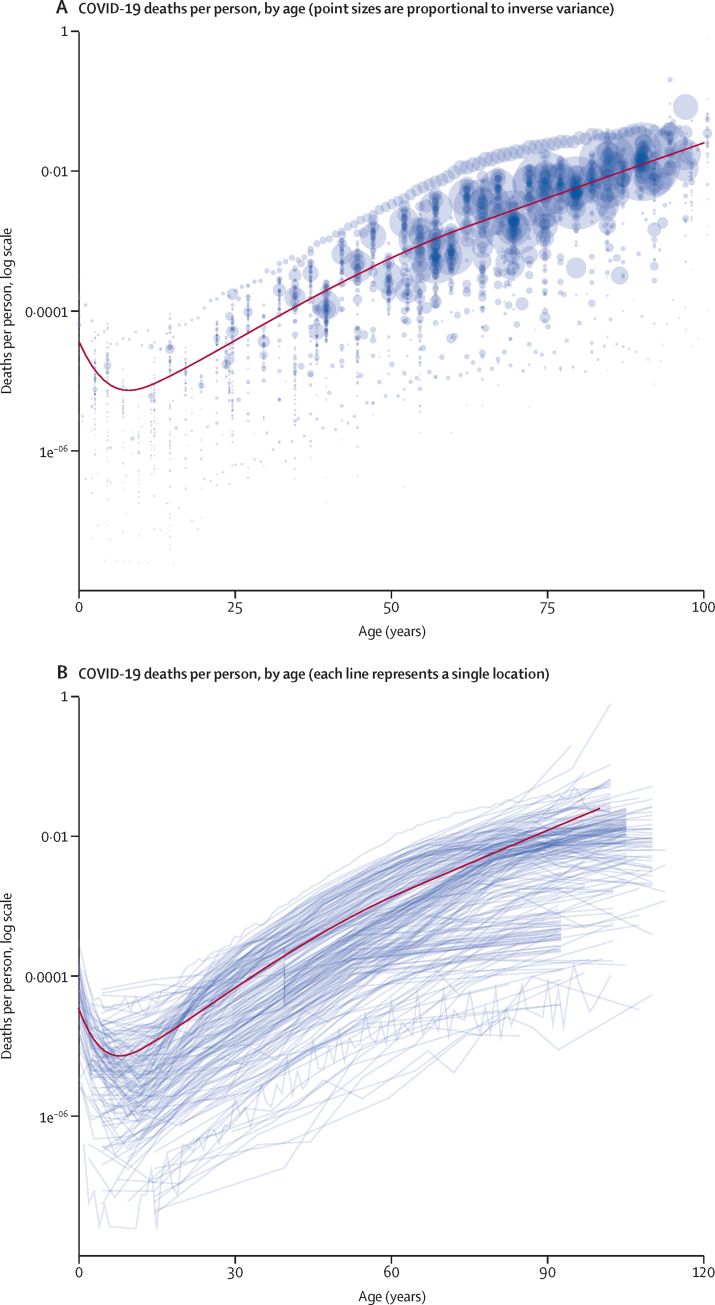
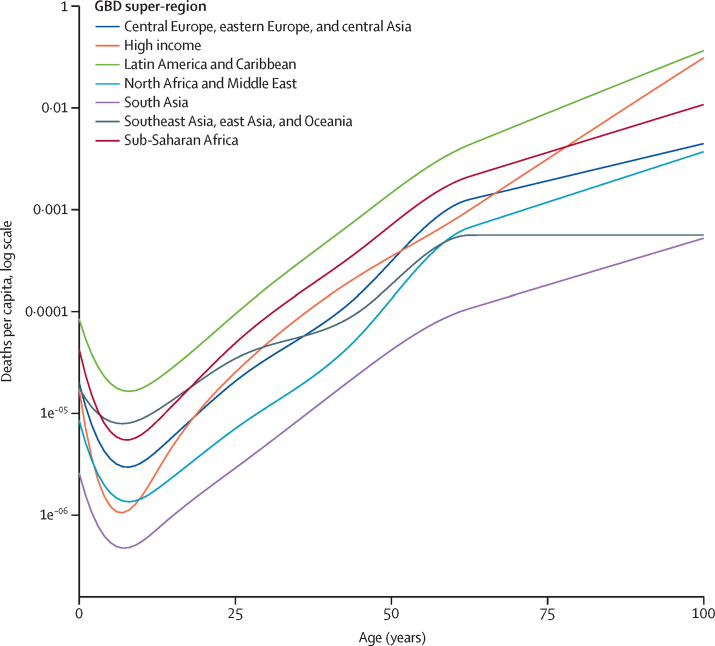
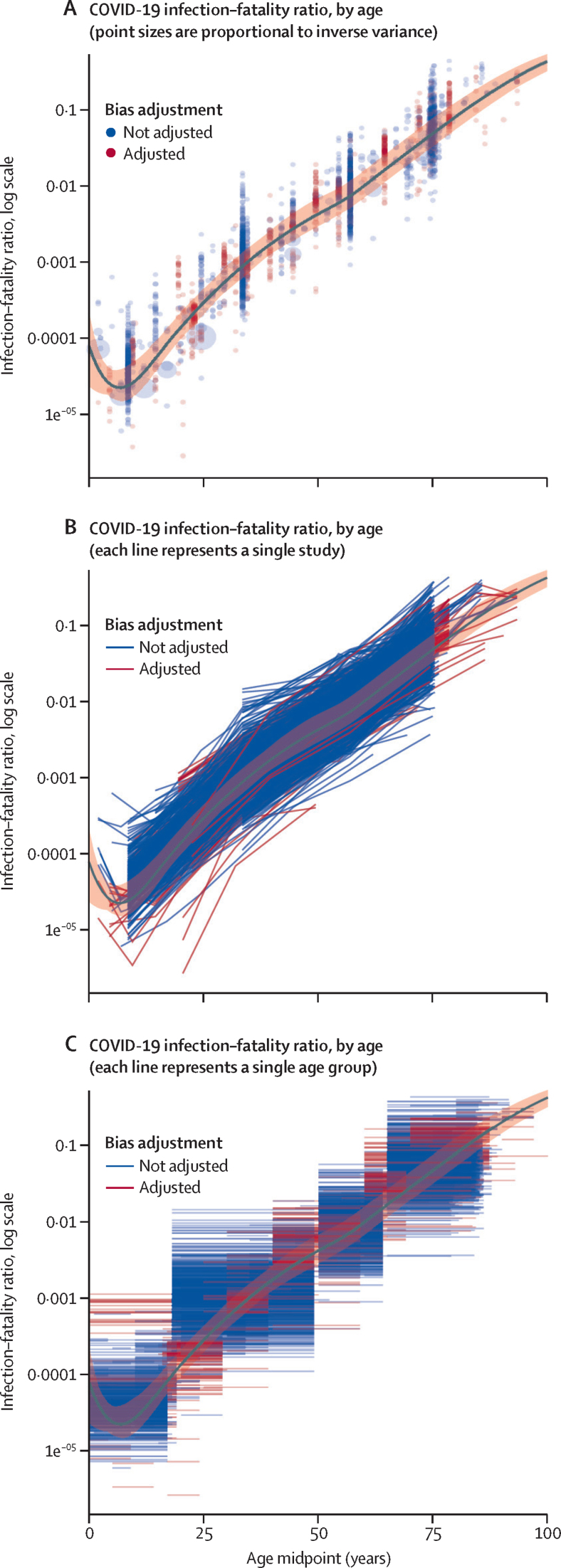
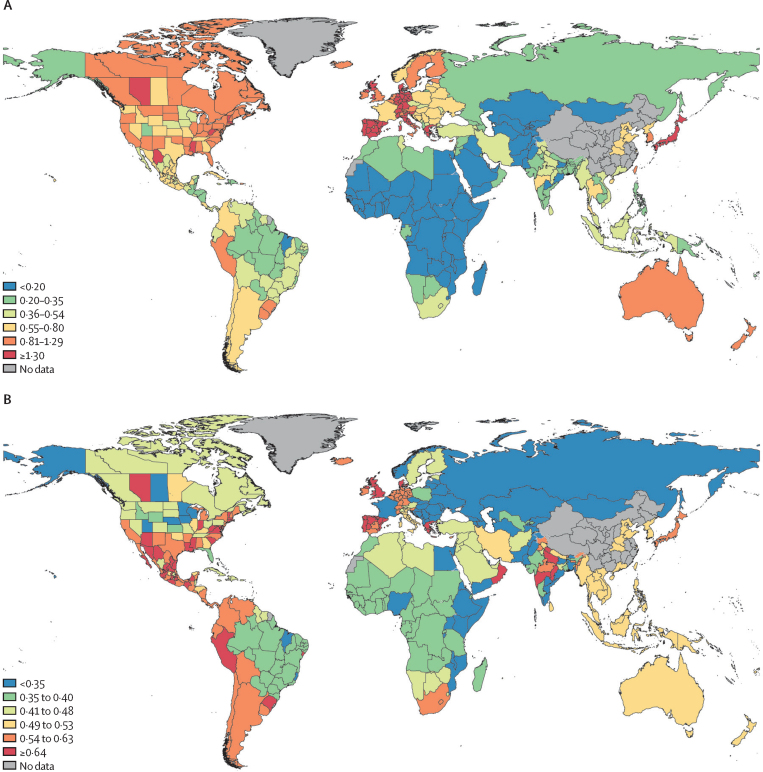
Verification
Claims the paper makes
The claims and statistics of this paper haven’t been checked yet.
Free: it reads the open-access text and checks the first 5 claims that cite a source we can check. Create a free account to check every claim.
Claims other papers make about this one
Each is checked against this paper’s own text: does it say what the citing paper says it does?
The source backs part of the claim, not all of it — or backs it for a different population, condition or comparison.
In the citing paper
“First, data on COVID-19 outcomes (eg, cases, deaths, hospital admissions, and seroprevalence) were of highly variable quality and completeness, which required novel methods for standardisation.23, 25, 26”
From Global incidence, prevalence, years lived with disability (YLDs), disability-adjusted life-years (DALYs), and healthy life expectancy (HALE) for 371 diseases and injuries in 204 countries and territories and 811 subnational locations, 1990–2021: a systematic analysis for the Global Burden of Disease Study 2021 (2024) · cites this paper as [26]
Experimental — accuracy not yet measuredThe cited source says what the claim attributes to it.
In the citing paper
“Using the 718 seroprevalence surveys with age-specific detail, the COVID-19 Forecasting Team40 estimated the age pattern of the IFR.”
From Estimating global, regional, and national daily and cumulative infections with SARS-CoV-2 through Nov 14, 2021: a statistical analysis (2022) · cites this paper as [40]
The cited source says what the claim attributes to it.
In the citing paper
“Age standardisation has been shown to explain a considerable portion of this variation,40 but substantial differences remain in the available data.”
From Estimating global, regional, and national daily and cumulative infections with SARS-CoV-2 through Nov 14, 2021: a statistical analysis (2022) · cites this paper as [40]
The check wasn’t confident either way, so it gives no verdict — never disputed.
In the citing paper
“Conversely, increases in mortality rates in populations aged 25 years and older were observed on a scale not seen in the previous 70 years.30”
From Global age-sex-specific mortality, life expectancy, and population estimates in 204 countries and territories and 811 subnational locations, 1950–2021, and the impact of the COVID-19 pandemic: a comprehensive demographic analysis for the Global Burden of Disease Study 2021 (2024) · cites this paper as [30]
Experimental — accuracy not yet measuredIn the citing paper
“older individuals with co-infection, particularly those who were undiagnosed with tuberculosis at the beginning of the pandemic, might have died from COVID-19.”
Self-check
Percentages, sums and reported differences re-computed from the paper’s own numbers.
The self-check needs the paper’s full text.
Citations
Cites
Vos, T., Lim, S. S., Abbafati, C., Abbas, K. M., Abbasi, M., Abbasifard, M., Abbasi-Kangevari, M., Abbastabar, H., Abd-Allah, F., Abdelalim, A., et al. (2020) · The Lancet · doi:10.1016/s0140-6736(20)30925-9 · Cited by 19,358
Dexamethasone in Hospitalized Patients with Covid-19
The RECOVERY Collaborative Group (2021) · New England Journal of Medicine · doi:10.1056/nejmoa2021436 · Cited by 11,477
Wang, H., Paulson, K. R., Pease, S. A., Watson, S., Comfort, H., Zheng, P., Aravkin, A. Y., Bisignano, C., Barber, R. M., Alam, T., et al. (2022) · The Lancet · doi:10.1016/s0140-6736(21)02796-3 · Cited by 2,069
Wang, H., Abbas, K. M., Abbasifard, M., Abbasi-Kangevari, M., Abbastabar, H., Abd-Allah, F., Abdelalim, A., Abolhassani, H., Abreu, L. G., Abrigo, M. R. M., et al. (2020) · The Lancet · doi:10.1016/s0140-6736(20)30977-6 · Cited by 1,971
Guidelines for accurate and transparent health estimates reporting: the GATHER statement
Stevens, G. A., Alkema, L., Black, R. E., Boerma, J. T., Collins, G. S., Ezzati, M., Grove, J. T., Hogan, D. R., Hogan, M. C., Horton, R., et al. (2016) · The Lancet · doi:10.1016/s0140-6736(16)30388-9 · Cited by 1,798
Age-specific mortality and immunity patterns of SARS-CoV-2
O’Driscoll, M., Ribeiro Dos Santos, G., Wang, L., Cummings, D. A. T., Azman, A. S., Paireau, J., Fontanet, A., Cauchemez, S., & Salje, H. (2021) · Nature · doi:10.1038/s41586-020-2918-0 · Cited by 1,210 · cited 2×
“O’Driscoll and colleagues 13 used a non-linear estimation method; they found that the age effects of mortality and IFR are both J shaped, with the lowest risk occurring among children aged 5–9 years.”
GBD 2010: design, definitions, and metrics
Murray, C. J., Ezzati, M., Flaxman, A. D., Lim, S., Lozano, R., Michaud, C., Naghavi, M., Salomon, J. A., Shibuya, K., Vos, T., et al. (2012) · The Lancet · doi:10.1016/s0140-6736(12)61899-6 · Cited by 1,103
Fullman, N., Yearwood, J., Abay, S. M., Abbafati, C., Abd-Allah, F., Abdela, J., Abdelalim, A., Abebe, Z., Abebo, T. A., Aboyans, V., et al. (2018) · The Lancet · doi:10.1016/s0140-6736(18)30994-2 · Cited by 1,013
Levin, A. T., Hanage, W. P., Owusu-Boaitey, N., Cochran, K. B., Walsh, S. P., & Meyerowitz-Katz, G. (2020) · European Journal of Epidemiology · doi:10.1007/s10654-020-00698-1 · Cited by 844 · cited 1×
“Using a log-linear model, Levin and colleagues 12 estimated that the IFR is 0·001% at age 5 years and 8·4% at age 80 years, which means that the IFR was more than 8000 times greater at age 80 years than at age 5 years.”
Diagnostic accuracy of serological tests for covid-19: systematic review and meta-analysis
Lisboa Bastos, M., Tavaziva, G., Abidi, S. K., Campbell, J. R., Haraoui, L.-P., Johnston, J. C., Lan, Z., Law, S., MacLean, E., Trajman, A., et al. (2020) · BMJ · doi:10.1136/bmj.m2516 · Cited by 832
Research works printed but not linked: 2
- National Institutes of Health Overview of COVID-19. COVID-19 treatment guidelines https://www.covid19treatmentguidelines.nih.gov/overview/ 2021 34003615
- Centers for Disease Control and Prevention Transmission of SARS-CoV-2 in K-12 schools https://www.cdc.gov/coronavirus/2019-ncov/science/science-briefs/transmission_k_12_schools.html Feb 11, 2020 34009772
Cited by
Items 101–200 of 306
Feng, Z. (2023) · Spatial and Spatio-temporal Epidemiology · doi:10.1016/j.sste.2023.100579 · Cited by 8
“The COVID-19 pandemic that is caused by a novel coronavirus (SARs-COV-2), has claimed over six million lives worldwide with an estimated case fatality of 0.6–1.2% (WHO, 2022; Sorensen et al., 2022).”
BackgroundInfluentialLibra, A., Ciancio, N., Sambataro, G., Sciacca, E., Muscato, G., Marıno, A., Vancheri, C., & Spicuzza, L. (2023) · Viruses · doi:10.3390/v15102101 · Cited by 8
“SARS-CoV-2-related pneumonia is associated with hypoxemic respiratory failure, the severity of which varies across different populations and through the different waves of the pandemic [2].”
BackgroundCharacteristics of Children Ages 1–17 Who Died of COVID-19 in 2020–2022 in the United States
Dykstra, H. K., Pilkey, D., Tautges, J., Schnitzer, P. G., Collier, A., & Kinsman, S. B. (2024) · PEDIATRICS · doi:10.1542/peds.2024-067043k · Cited by 7
Spreading dynamics in networks under context-dependent behavior
Burgio, G., Gómez, S., & Arenas, À. (2023) · Physical review. E · doi:10.1103/physreve.107.064304 · Cited by 12
Modifying impact of environmental factors on the course of an epidemic process
Зайцева, Н. В., Popova, A. Y., Kleyn, S. V., Kiryanov, D. A., Chigvintsev, V. М., & Glukhikh, M. V. (2022) · Hygiene and Sanitation · doi:10.47470/0016-9900-2022-101-11-1274-1282 · Cited by 12
López, P., Bravo, L. C., Buntinx, E., Borja-Tabora, C., Velásquez, H., Rodriguez-Arenales, E. J., Rodríguez, C., Carlos, J., Montellano, M. E. B., Alberto, E. R., et al. (2023) · Human Vaccines & Immunotherapeutics · doi:10.1080/21645515.2023.2206359 · Cited by 7
Rapid response modeling of SARS-CoV-2 transmission
Zelner, J., & Eisenberg, M. C. (2022) · Science · doi:10.1126/science.abp9498 · Cited by 9
Li, Y., Li, M., Yang, L., Bressington, D. T., Leung, S. F., Xie, Y. J., Qin, J., Molassiotis, A., & Leung, A. Y. M. (2023) · Vaccines · doi:10.3390/vaccines11081388 · Cited by 6
“In contrast, those with lower vaccine doses will be more reluctant to accept regular vaccines, which favors a higher risk of infection and severe outcomes for lack of vaccine defense [51,52].”
BackgroundSummers, J. A., Kvalsvig, A., Telfar-Barnard, L., Bennett, J., Harwood, M. L. N., Wilson, N., & Baker, M. G. (2023) · Emerging infectious diseases · doi:10.3201/eid2909.221265 · Cited by 7
Kakugawa, T., Mimura, Y., Mimura‐Kimura, Y., Doi, K., Ohteru, Y., Kakugawa, H., Oishi, K., Kakugawa, M., Hirano, T., & Matsunaga, K. (2024) · Immunity & Ageing · doi:10.1186/s12979-024-00444-1 · Cited by 6
Airline safety: Still getting better?
Barnett, A. I., & Torra, J. R. (2024) · Journal of Air Transport Management · doi:10.1016/j.jairtraman.2024.102641 · Cited by 7
Chaufan, C., Hemsing, N., Heredia, C., & McDonald, J. L. (2024) · COVID · doi:10.3390/covid4090101 · Cited by 11
“…mortality among young adults in the pre-vaccine era was exceedingly low (under 0.02% or about 140 times lower than for adults 70 years and older [96,97]), hardly warranting the unprecedented policy response; that individuals with comorbidities or from disadvantaged social and economic…”
InfluentialHelminth infections affect host immune responses to viral infections and vaccines
Diego, J. G.-B., Desai, P., Yeung, S. T., Damani‐Yokota, P., Khanna, K. M., Diamond, M. S., & Schotsaert, M. (2025) · FEMS Microbiology Reviews · doi:10.1093/femsre/fuaf036 · Cited by 11
Powell, J. E., Orttung, R. W., Topkok, S. A., Akselrod, H., Little, J. M., & Wilcox, P. (2022) · State and Local Government Review · doi:10.1177/0160323x221136504 · Cited by 7
Zhang, C., Guo, T., Zhang, L., Gu, A., Ye, J., Lin, M., Chu, M., Zhu, F., & Zhu, L. (2023) · China CDC Weekly · doi:10.46234/ccdcw2023.074 · Cited by 6
Changes in Psychotropic Drug Blood Levels After SARS-CoV-2 Vaccination: A Two-Center Cohort Study
Kuzin, M., Gardin, F., Götschi, M., Xepapadakos, F., Kawohl, W., Seifritz, E., Trauzeddel, A., Paulzen, M., & Schoretsanitis, G. (2023) · Therapeutic Drug Monitoring · doi:10.1097/ftd.0000000000001118 · Cited by 6
Cheong, H. H., Sio, F. I., Chan, C. C., Neng, S. I., Sam, I. P., Cheang, T., Tou, W. I., Hong, L., Cheong, T. F., Lao, E. P. L., et al. (2023) · Health Science Reports · doi:10.1002/hsr2.1361 · Cited by 7
Respiratory viral infections in the elderly: From the perspective of the aging immune system
Zhang, X., Xu, J., Wang, Y., Li, H., Yu, J., Shang, X., Shang, L., Hou, B., Zhang, X., & Cao, B. (2023) · The Innovation Medicine · doi:10.59717/j.xinn-med.2023.100022 · Cited by 6
Potamias, G., Gkoublia, P., & Kanterakis, A. (2023) · Frontiers in Immunology · doi:10.3389/fimmu.2023.1251067 · Cited by 6
Banholzer, N., Schmutz, R., Middelkoop, K., Hella, J., Egger, M., Wood, R., & Fenner, L. (2024) · PLOS Global Public Health · doi:10.1371/journal.pgph.0002800 · Cited by 9
Global Estimates of COVID‐19 Morbidity and Mortality: A Cohort Study and Mathematical Model Analysis
Ayoub, H. H., Chemaitelly, H. S., & Abu-Raddad, L. J. (2025) · Influenza and Other Respiratory Viruses · doi:10.1111/irv.70154 · Cited by 7
“These estimates are substantially lower than those reported early in the pandemic but are largely consistent with our early pandemic estimate [3] and with late-pandemic figures [56–58].”
Global epidemiology of amyotrophic lateral sclerosis: a systematic review and meta-analysis
Liu, R., Su, W., Duan, Q., Wen, X., He, S.-Y., Zhang, N., Cao, B., & Chen, Y. (2026) · Journal of Neurology Neurosurgery & Psychiatry · doi:10.1136/jnnp-2026-338675 · Cited by 9
“39 Furthermore, pandemic-related mobility restrictions and saturation of hospital departments during the pandemic created a funnel effect, which, coupled with the public reluctance to seek medical care due to fear, resulted in multi-level diagnostic delays.”
Metapopulation dynamics of SARS-CoV-2 transmission in a small-scale Amazonian society
Kraft, T. S., Seabright, E., Alami, S., Jenness, S. M., Hooper, P. L., Beheim, B., Davis, H. E., Cummings, D. K., Rodríguez, D. E., Cayuba, M. G., et al. (2023) · PLoS Biology · doi:10.1371/journal.pbio.3002108 · Cited by 5
Yang, Y., Lin, Y., Wang, F., Wang, S. J., Wang, J., Tong, F., & Gong, Q. H. (2025) · BMC Psychiatry · doi:10.1186/s12888-025-06525-9 · Cited by 9
The Role of APRI, FIB-4, and SAD-60 Scores as Predictors of Mortality in COVID-19 Patients
Çopur, B., Sürme, S., Tunçer, G., & Bayramlar, O. F. (2023) · Infectious Diseases and Clinical Microbiology · doi:10.36519/idcm.2023.233 · Cited by 6
Phogole, B., & Yessoufou, K. (2023) · Sustainability · doi:10.3390/su151914508 · Cited by 5
Real-world data analysis of post-COVID-19 condition risk in older patients
Liu, T., Huang, P., Wu, J., Chuang, M., Hsu, W., Tsai, Y., Tsai, M.-H., & Lai, C. (2023) · Age and Ageing · doi:10.1093/ageing/afad204 · Cited by 5
Garenne, M., & Stiegler, N. (2024) · PLoS ONE · doi:10.1371/journal.pone.0294870 · Cited by 5
Murakami, M., & Nomura, S. (2022) · International Journal of Disaster Risk Reduction · doi:10.1016/j.ijdrr.2022.103471 · Cited by 5
Estimating SARS-CoV-2 infection probabilities with serological data and a Bayesian mixture model
Glémain, B., de Lamballerie, X. N., Zins, M., Severi, G., Touvier, M., Deleuze, J., SAPRIS-SERO study group, Carrat, F., Ancel, P., Charles, M.-A. A., et al. (2024) · Scientific Reports · doi:10.1038/s41598-024-60060-3 · Cited by 8
Pezzullo, A. M., Axfors, C., Contopoulos‐Ioannidis, D. G., Apostolatos, A., & Ioannidis, J. P. A. (2022) · medRxiv · doi:10.1101/2022.10.11.22280963 · Cited by 5
Glémain, B., ASSAAD, K., Ghosn, W., Moulaire, P., de Lamballerie, X. N., Zins, M., Severi, G., Touvier, M., Deleuze, J., SAPRIS-SERO study group, et al. (2025) · Scientific Reports · doi:10.1038/s41598-025-99078-6 · Cited by 7
“However, IFR varied strongly between countries (by a factor of more than 30 in 13 ), even after accounting for the age of the infected individuals 15,16 .”
InfluentialSakurai, Y., Fujioka, Y., Maishi, N., Takeda, R., Ohba, Y., Sasaki, M., Teshirogi, T., Ito, W., Hida, Y., Matsuda, A., et al. (2025) · Proceedings of the National Academy of Sciences · doi:10.1073/pnas.2502724122 · Cited by 5
“Using the mouse - adapted SARS - CoV - 2 strain MA - P10, we previously reported that the infected mice exhibit vascular endothelial pathology ( 19 , 20 ).”
Deleterious variants in the autophagy-related gene RB1CC1/FIP200 impair immunity to SARS-CoV-2
Hu, L., van der Sluis, R. M., Castelino, K. B., Zhang, B., Ronit, A., Zillinger, T., Werner, M., Jørgensen, S. E., Hansen, A. L., Pedersen, A., et al. (2025) · Nature Communications · doi:10.1038/s41467-025-65308-8 · Cited by 4
“The principal epidemiological risk factor is age, with a risk of death doubling every 5 years from childhood onwards 4,15 .”
Inferring the true number of SARS-CoV-2 infections in Japan
McKenzie, L., Shoukat, A., Wong, K., Itahashi, K., Yasuda, E., Demarsh, A., & Khan, K. (2022) · Journal of Infection and Chemotherapy · doi:10.1016/j.jiac.2022.08.002 · Cited by 4
Srivastava, P. K., Klomhaus, A. M., Tehrani, D. M., Fonarow, G. C., Ziaeian, B., Desai, P. S., Rafique, A. M., de Lemos, J. A., Parikh, R. V., & Yang, E. H. (2023) · Mayo Clinic Proceedings Innovations Quality & Outcomes · doi:10.1016/j.mayocpiqo.2023.07.004 · Cited by 6
Increased intrapulmonary shunt and alveolar dead space post-COVID-19
Farrow, C. E., Robles, R. A., Prisk, G. K., Harbut, P., Malhotra, A., Amis, T. C., Wagner, P. D., & Kairaitis, K. (2023) · Journal of Applied Physiology · doi:10.1152/japplphysiol.00267.2023 · Cited by 4
Unraveling the impact of the COVID-19 pandemic on the mortality trends in Belgium between 2020–2022
Natalia, Y. A., Verbeeck, J., Faes, C., Neyens, T., & Molenberghs, G. (2024) · BMC Public Health · doi:10.1186/s12889-024-20415-x · Cited by 12
“An alternative measure to assess the severity of an infection is the infection fatality ratio (IFR), which describes the probability of an individual dying from pathogen-related disease complications once infected with a pathogen [5].”
BackgroundWu, L., Shen, J., Jiang, Y., Shen, X., Wang, P., Nie, X., Kang, W., Liu, J., & Chen, W. (2023) · Frontiers in Aging Neuroscience · doi:10.3389/fnagi.2023.1138418 · Cited by 4
COVID-19 outcomes in patients with a history of immune-mediated glomerular diseases
Gauckler, P., Kesenheimer, J. S., Geetha, D., Odler, B., Eller, K., Laboux, T., Alberici, F., Zappa, M., Chebotareva, N., Moiseev, S. V., et al. (2023) · Frontiers in Immunology · doi:10.3389/fimmu.2023.1228457 · Cited by 5
Understanding of COVID-19 from infection–fatality ratio
Gu, X., & Cao, B. (2022) · The Lancet · doi:10.1016/s0140-6736(22)00281-1 · Cited by 6
Chang, K., Fang, H.-Y., Leu, S., Chen, W., Kao, K., & Hu, H. (2024) · Journal of the Formosan Medical Association · doi:10.1016/j.jfma.2024.11.016 · Cited by 3
Severity of COVID-19 in Hospitalized Immunocompromised Children Across Canada
Chiara, C. D., Schober, T., Farrar, D. S., Bettinger, J. A., Drouin, O., Embree, J. E., Halperin, S. A., Hepburn, C. M., Jadavji, T., Kazmi, K., et al. (2025) · The Pediatric Infectious Disease Journal · doi:10.1097/inf.0000000000004856 · Cited by 4
Grewelle, R. E., & Leo, G. A. D. (2025) · Journal of Infection and Public Health · doi:10.1016/j.jiph.2025.102856 · Cited by 6
Quesada-Caballero, M., Carmona-García, A., Chami-Peña, S., Albendín‐García, L., Membrive-Jiménez, C., Romero‐Béjar, J. L., & la Fuente, G. A. C. (2023) · Medicina · doi:10.3390/medicina59071200 · Cited by 4
Artificial Neural Network Prediction of COVID-19 Daily Infection Count
Jiang, N., Kolozsvary, C., & Li, Y. (2024) · Bulletin of Mathematical Biology · doi:10.1007/s11538-024-01275-3 · Cited by 4
“In this paper, we use two well-recognized studies published in [7] and [17] to calibrate our baseline IFR.”
InfluentialSandlund, J., Duriseti, R. S., Ladhani, S. N., Stuart, K., Noble, J., & Høeg, T. B. (2024) · Paediatric Respiratory Reviews · doi:10.1016/j.prrv.2024.08.003 · Cited by 5
Chakraborty, C., Bhattacharya, M., Chatterjee, S., Lee, S., Bhattacharya, P., Ohimain, E. I., Wen, Z., Das, A., Rai, A., Abdelhameed, A. S., et al. (2025) · Folia Microbiologica · doi:10.1007/s12223-025-01299-9 · Cited by 7
How similar is covid-19 to the flu?
Stokel-Walker, C., & journalist, F. (2022) · BMJ · doi:10.1136/bmj.o2625 · Cited by 3
Oláiz, G., Bertozzi, S., Juárez-Flores, A., Borja‐Aburto, V. H., Anda, F. J. V.-D., Ascencio-Montiel, I. D. J., & Gutiérrez, J. P. (2023) · Frontiers in Public Health · doi:10.3389/fpubh.2023.1102498 · Cited by 3
Branch‐Elliman, W., Fisher, L., & Doron, S. (2023) · Antimicrobial Stewardship & Healthcare Epidemiology · doi:10.1017/ash.2023.154 · Cited by 3
Barzegar, M., Sindarreh, S., Manteghinejad, A., Mirmosayyeb, O., Mazaheri, S., Rahimi, M., Javanmard, S. H., Shaygannejad, V., & Nasirian, M. (2023) · Multiple Sclerosis and Related Disorders · doi:10.1016/j.msard.2023.104947 · Cited by 4
Garchitorena, A., Rasoloharimanana, L. T., Rakotonanahary, R. J. L., Evans, M., Miller, A. C., Finnegan, K. E., Cordier, L., Cowley, G., Razafinjato, B., Randriamanambintsoa, M., et al. (2023) · International Journal of Epidemiology · doi:10.1093/ije/dyad135 · Cited by 3
COVID-19 in Patients with Chronic Lymphocytic Leukemia: What Have We Learned?
Harel, R., & Itchaki, G. (2023) · Acta Haematologica · doi:10.1159/000534540 · Cited by 4
Hladek, M. D., Wilson, D. H., Shofner, S. J., Gross, A. L., Buta, B. J., Bandeen‐Roche, K., & Schoenborn, N. L. (2023) · Journal of Gerontological Nursing · doi:10.3928/00989134-20231108-04 · Cited by 4
Chaufan, C., Manwell, L. A., Gabbay, B., Heredia, C., & Daniels, C. (2023) · AIMS Public Health · doi:10.3934/publichealth.2023059 · Cited by 7
“…well-established that children, adolescents and young adults are at much lower risk of severe disease, hospitalization and death than older adults [22,23] and that persons with comorbidities are at significantly higher risk than those without them [24,25] (We assume official statistics on…”
BackgroundGenomic surveillance reveals dynamic shifts in the connectivity of COVID-19 epidemicsPreprint
Matteson, N. L., Hassler, G. W., Kurzban, E., Schwab, M. A., Perkins, S. A., Gangavarapu, K., Levy, J. I., Parker, E., Pride, D. T., Hakim, A., et al. (2023) · medRxiv · doi:10.1101/2023.03.14.23287217 · Cited by 3
Comparative single-cell analysis reveals IFN-γ as a driver of respiratory sequelae post COVID-19Preprint
Li, C., Qian, W. G., Wei, X., Narasimhan, H., Wu, Y., Arish, M., Cheon, I. S., Sharifi, K., Kern, R. M., Vassallo, R., et al. (2023) · bioRxiv (Cold Spring Harbor Laboratory) · doi:10.1101/2023.10.03.560739 · Cited by 3
Estimating the contribution of age-structure to the COVID-19 epidemic in England
Hinch, R., Panovska‐Griffiths, J., & Fraser, C. (2025) · Journal of Theoretical Biology · doi:10.1016/j.jtbi.2025.112177 · Cited by 2
Chipana-Ramos, C., Monroy, Y., Zamudio-Rodriguez, L., Villanueva-Sardon, L., Carrasco, A. G. M., Chacón, R. D., & Ita-Balta, Y. (2026) · Epidemiologia · doi:10.3390/epidemiologia7020057 · Cited by 2
Vickers, D., Hardie, J., Eberspaecher, S., Chaufan, C., & Pelech, S. (2023) · Frontiers in Public Health · doi:10.3389/fpubh.2023.1173673 · Cited by 4
Home Oxygen After Hospitalization for COVID-19: Results From the Multi-Center OXFORD Study
Freedman, M., Kim, Y. J., Kaur, R., Jain, B., Adegunsoye, A., Chung, Y.-C., DeLisa, J. A., Gardner, J., Gordon, H. S., Greenberg, J. A., et al. (2024) · Respiratory Care · doi:10.4187/respcare.11436 · Cited by 2
The Short and Long of COVID-19
Simpson, S. A., Hershman, M., Nachiappan, A. C., Raptis, C. A., & Hammer, M. M. (2024) · Clinics in Chest Medicine · doi:10.1016/j.ccm.2024.02.010 · Cited by 2
Brafman, Y. Y. (2024) · doi:10.1093/oso/9780197767931.001.0001 · Cited by 2
Quantifying the risk of spillover reduction programs for human health
Nuismer, S. L., Basinski, A. J., Schreiner, C. L., Eskew, E. A., Fichet-Calvet, É., & Remien, C. H. (2024) · PLoS Computational Biology · doi:10.1371/journal.pcbi.1012358 · Cited by 2
“This has been demonstrated for Lassa virus [35, 37], SARS-CoV-2 [38], and a wide range of other bacterial and viral pathogens [18].”
Assessing the Value of a Human Life in Heat-Related Mortality: Lessons from COVID-19 in Belgium
Ridder, K. D. (2024) · Climate · doi:10.3390/cli12090129 · Cited by 2
Cavasin, D., Zanini, U., Montelisciani, L., Valsecchi, M. G., Fabbri, L., Antolini, L., & Luppi, F. (2024) · Monaldi Archives for Chest Disease · doi:10.4081/monaldi.2024.3070 · Cited by 2
Multiphasic stochastic epidemic models
Barmpounakis, P., & Demiris, N. (2024) · Journal of the Royal Statistical Society Series C (Applied Statistics) · doi:10.1093/jrsssc/qlae064 · Cited by 7
Perone, G. (2025) · Eurasian economic review : · doi:10.1007/s40822-025-00310-5 · Cited by 2
“The beneficial effect of median age on COVID-19 mortality corroborated the hypothesis that an older population was more susceptible to experiencing severe symptoms (Isath et al., 2023; Krause & Smolle, 2022; Sasson, 2021; Sorensen et al., 2022).”
Mansour, S., Alahmadi, M., Mahmoud, A., Al-Shamli, K. A. S., Alhabsi, M., & Ali, W. (2025) · Scientific Reports · doi:10.1038/s41598-025-92753-8 · Cited by 3
Chen, S., Creswell, R., Hounsell, R., Cantrell, L., Bajaj, S., Dahal, P., Tsui, J. L.-H., Kolade, O., Amswych, M., Naidoo, R., et al. (2025) · BMJ Public Health · doi:10.1136/bmjph-2024-001376 · Cited by 2
Morgenstern, C., Rawson, T., Hinsley, W. R., Perez‐Guzman, P. N., Bhatt, S., & Ferguson, N. M. (2025) · Science Advances · doi:10.1126/sciadv.adu8678 · Cited by 2
Seibel, R. L., Tildesley, M. J., & Hill, E. M. (2025) · Royal Society Open Science · doi:10.1098/rsos.241964 · Cited by 6
Izecksohn, M. M. V., Leite, I. D. C., Daumas, R. P., & Rodrigues, R. E. S. (2025) · Ciência & Saúde Coletiva · doi:10.1590/1413-81232025307.19502024 · Cited by 3
Ogden, N. H., Turgeon, P., Fazil, A., Clark, J., Gabriele-Rivet, V., Tam, T. W. S., & Ng, V. (2022) · Relevé des maladies transmissibles au Canada · doi:10.14745/ccdr.v48i78a01f · Cited by 5
Song, Q., Qian, G., Mi, Y., Zhu, J., & Cao, C. (2022) · Environmental Research · doi:10.1016/j.envres.2022.114229 · Cited by 3
“…report of confirmed cases and deaths that can be strongly affected by testing capacity and reporting policies, as well as by the time shift between infection and the occurrence of resulting mortality (Thomas and Marks, 2021), because IFR often varies substantially between locations (Team, 2022).”
InfluentialMartín, V., Ruiz‐García, A., Vitelli‐Storelli, F., Serrano-Cumplido, A., Barquilla-García, A., Micó-Pérez, R. M., Olmo-Quintana, V., Calderón-Montero, A., & Segura‐Fragoso, A. (2023) · Medicina de Familia SEMERGEN · doi:10.1016/j.semerg.2023.102026 · Cited by 2
COVID-19 and microbiome diversity in sub-Saharan Africa
Damme, W. V., Wamai, R. G., Assefa, Y. A., Liesenborghs, L., & Ngoyi, D. M. (2022) · The Lancet · doi:10.1016/s0140-6736(22)01333-2 · Cited by 2
Chaufan, C., & Hemsing, N. (2023) · SocArXiv (OSF Preprints) · doi:10.31235/osf.io/gdbj3 · Cited by 4
Bonavia, W., Tiruvoipati, R., Reddy, M. P., Pilcher, D. V., & Subramaniam, A. (2023) · medRxiv · doi:10.1101/2023.07.17.23292714 · Cited by 2
Influencia de la obesidad en la severidad de la infección por SARS-CoV-2
Ruiz, S. P. R., & Pelaez, C. E. A. (2023) · Revista Virtual de la Sociedad Paraguaya de Medicina Interna · doi:10.18004/rvspmi/2312-3893/2023.10.01.98 · Cited by 2
“Follow the Science” in COVID-19 Policy: A Scoping Review
Greenmyer, J. R. (2024) · HEC Forum · doi:10.1007/s10730-024-09521-w · Cited by 4
COVID-19 infections among Iraqi school students: Severity, types, and symptoms
Hantoosh, S. M. (2023) · Journal of Medicine and Life · doi:10.25122/jml-2023-0256 · Cited by 1
Kayano, T., Sasanami, M., & Nishiura, H. (2024) · Vaccine X · doi:10.1016/j.jvacx.2024.100547 · Cited by 4
Cerri, J., Musto, C., Ferretti, M., Delogu, M., Bertolino, S., Martinoli, A., Bisi, F., Preatoni, D. G., Tattoni, C., & Apollonio, M. (2024) · PLoS ONE · doi:10.1371/journal.pone.0309017 · Cited by 2
“Moreover, many countries repeatedly enforced restrictions to human mobility, whenever they experienced peaks in SARS-CoV2 incidence and deaths from COVID-19, and some even halted the hunting season (e.g., Portugal [22]).”
BackgroundLi, R., Song, Y., Li, M., Qu, H., & Jiang, G. (2024) · Mathematics and Computers in Simulation · doi:10.1016/j.matcom.2024.10.042 · Cited by 1
Pugh, S., Levin, A., Meyerowitz‐Katz, G., Soman, S., Owusu‐Boaitey, N., Zwi, A. B., Malani, A., Wilson, A., & Fosdick, B. K. (2024) · Statistics in Medicine · doi:10.1002/sim.10259 · Cited by 4
Laake, J. H., Hagen, M., Aavitsland, P., Buanes, E. A., Fjone, K. S., Kvåle, R., Olsen, B. F., & Hofsø, K. (2025) · Acta Anaesthesiologica Scandinavica · doi:10.1111/aas.70027 · Cited by 2
Olayiwola, M. O., Tijani, K. R., Ogunniran, M. O., Yunus, A. O., Oluwafemi, E. A., Abanikannda, M. O., Alaje, A. I., & Adedeji, J. A. (2025) · Vacunas (English Edition) · doi:10.1016/j.vacune.2025.500458 · Cited by 1
Chaufan, C., & Hemsing, N. (2025) · Open Health · doi:10.1515/ohe-2025-0079 · Cited by 1
COVID-19, infection fatality rate (IFR) implied by the serology, antibody, testing in New York City
Wilson, L. (2025) · Infectious Disease Modelling · doi:10.1016/j.idm.2025.10.004 · Cited by 5
Gül, N. N., Taheri, S., de Leeuw, S., & Kian, R. (2025) · Social Science & Medicine · doi:10.1016/j.socscimed.2025.118918 · Cited by 1
Trends in Sepsis-Associated Respiratory Disease Mortality in the United States, 1999 to 2023
Ghaffar, Q. B. A., Omar, K. O., Khan, Z., Adil, T., Siddiqui, M. A., Kasi, A. B. U., & Khawaja, I. S. (2026) · Journal of Intensive Care Medicine · doi:10.1177/08850666261443312 · Cited by 1
Bao, Y., Zhou, X., Chen, L., Feng, K., Guo, W., Huang, T., & Cai, Y. (2026) · Life · doi:10.3390/life16050771 · Cited by 2
“As a result, our understanding of disease pathogenesis across geographically diverse populations remains incomplete [7,8].”
Measuring the Effect of COVID-19 Pandemic on Mortality: Review and Prospect - China, 2021.
Lin, J., Huang, G., Wei, Y., & Pei, L. (2022) · PubMed Central · doi:10.46234/ccdcw2022.110 · Cited by 1
COVID-19 models and expectations – Learning from the pandemic
Ioannidis, J. P. A., & Powis, S. H. (2022) · Advances in Biological Regulation · doi:10.1016/j.jbior.2022.100922 · Cited by 1
Health progression for Covid-19 survivors hospitalized in geriatric clinics in Sweden
Kananen, L., Hong, X., Annetorp, M., Mak, J. K. L., Jylhävä, J., Eriksdotter, M., Hägg, S., & Religa, D. (2023) · PLoS ONE · doi:10.1371/journal.pone.0283344 · Cited by 1
Population-level differences in COVID-19 prevalence, severity, and clinical outcome
Dasgupta, I., Saini, S., Khan, M. A., & Chaudhary, K. (2023) · Elsevier eBooks · doi:10.1016/b978-0-443-18769-8.00008-8 · Cited by 6
Cheng, R., Li, Y., Liu, Z., Zhou, A., Li, Z., Ma, L., & Liu, Y. (2023) · Lupus Science & Medicine · doi:10.1136/lupus-2023-000975 · Cited by 1
The Role of Children in the Transmission of SARS-CoV-2, a Shifting Paradigm
Arguedas, A. G., Swerdlow, D. L., & Curcio, D. (2023) · Infectious Diseases in Clinical Practice · doi:10.1097/ipc.0000000000001297 · Cited by 2
Metadata
- Authors
- †
- Corresponding author
- †
- Venue
- The Lancet
- Publisher
- Elsevier BV
- Published
- 2022-04
- Volume
- 399
- Issue
- 10334
- Pages
- 1469-1488
- ISSN
- 0099-5355 (ISSN-L)
- 0140-6736
- PMC
- PMC8871594
- OpenAlex
- W4214561105
- Cited by
- 306
- References
- 35
- Citations by year
- 2026: 18 · 2025: 45 · 2024: 81 · 2023: 105 · 2022: 56
- FWCI
- 42.80
- Type
- journal article
- Language
- en
- Update notices
- erratum (2022-04-16)
- Open access
- hybrid
- doi.org
- Licence
- cc-by
- www.elsevier.com/tdm/userlicense/1.0/ (tdm)
- www.elsevier.com/legal/tdmrep-license (tdm)
- creativecommons.org/licenses/by/4.0/ (vor)
- Locations
- The Lancet (publishedVersion, cc-by)
- PubMed Central (publishedVersion, cc-by)
- PubMed (publishedVersion)
- IRIS Research product catalog (Sapienza University of Rome) (submittedVersion, cc-by-nc-nd)
- Funders
- National Science Foundation (2031096)
- Bill and Melinda Gates Foundation
- Queensland Health
- Coordenação de Aperfeiçoamento de Pessoal de Nível Superior (88887, 88887.507149/2020-00, 2020-00)
- Queensland Government
- Medical Research Council
- National Health and Medical Research Council (1121516, 310679, 2031096)
- Topics
- Physical Sciences › Mathematics › Modeling and Simulation › COVID-19 epidemiological studies
- Health Sciences › Medicine › Infectious Diseases › SARS-CoV-2 and COVID-19 Research
- Health Sciences › Medicine › Infectious Diseases › COVID-19 Clinical Research Studies
- Keywords
- COVID-19 pandemic, infection fatality rate, serological survey, COVID-19 mortality, pre-vaccine era, obesity, health system performance, SARS-CoV-2, waning immunity, non-pharmaceutical interventions
- MeSH terms
- Global Burden of Disease, COVID-19, SARS-CoV-2, Adult, Bayes Theorem, Child, Geography, Humans, Vaccines, Global Health, Seroepidemiologic Studies
About these checks
Registry, retraction, Cites and statistics results are computed, not judged, with one exception: a printed reference that no index lists is read once by a model before it counts as a citation error. Claims are extracted by a model and kept only when their quote appears verbatim in the text; each cited source is then checked, with a model’s help, for whether it says what the claim relies on. Those verdicts can be wrong — read the claim’s quote and the cited source before relying on one.
Statistics and arithmetic are recomputed, not judged.
Confidence bands are shown only for fields calibrated on our annotated test set. None is calibrated yet, so no band is shown.
What counts as a claim ›How we measure confidence ›How we check this ›
Are you an author, or do you see a problem with this page? Request a review
Data sources
Bibliographic data: Semantic Scholar, OpenAlex, Crossref.
Contains information from the Semantic Scholar Academic Graph Datasets, made available under the ODC Attribution License (ODC-BY 1.0).
Semantic Scholar’s data is described in: Kinney, R., et al. (2023). The Semantic Scholar Open Data Platform. arXiv:2301.10140.
