

Variation in the COVID-19 infection-fatality ratio by age, time, and geography during the pre-vaccine era: a systematic analysis
Open accessThe DOI matches its Crossref record; 36 of the 36 references it cites were found in a registry or an index.
Abstract
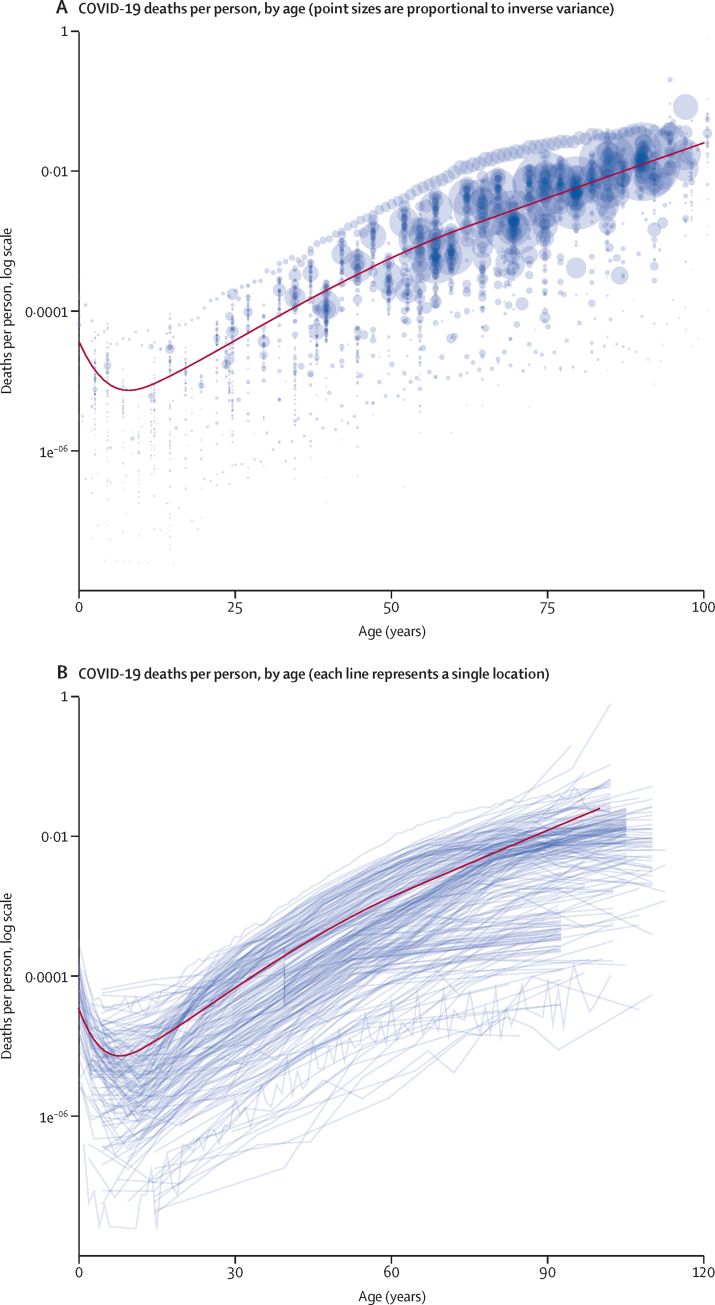
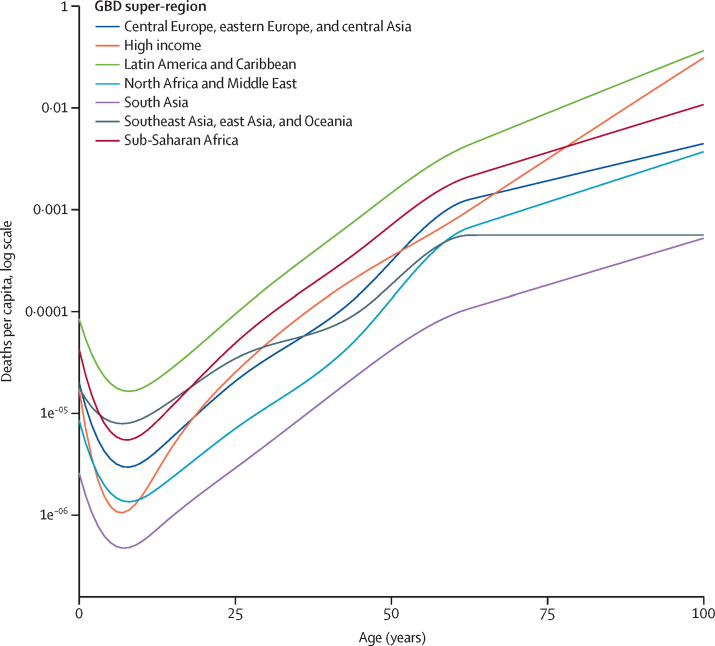
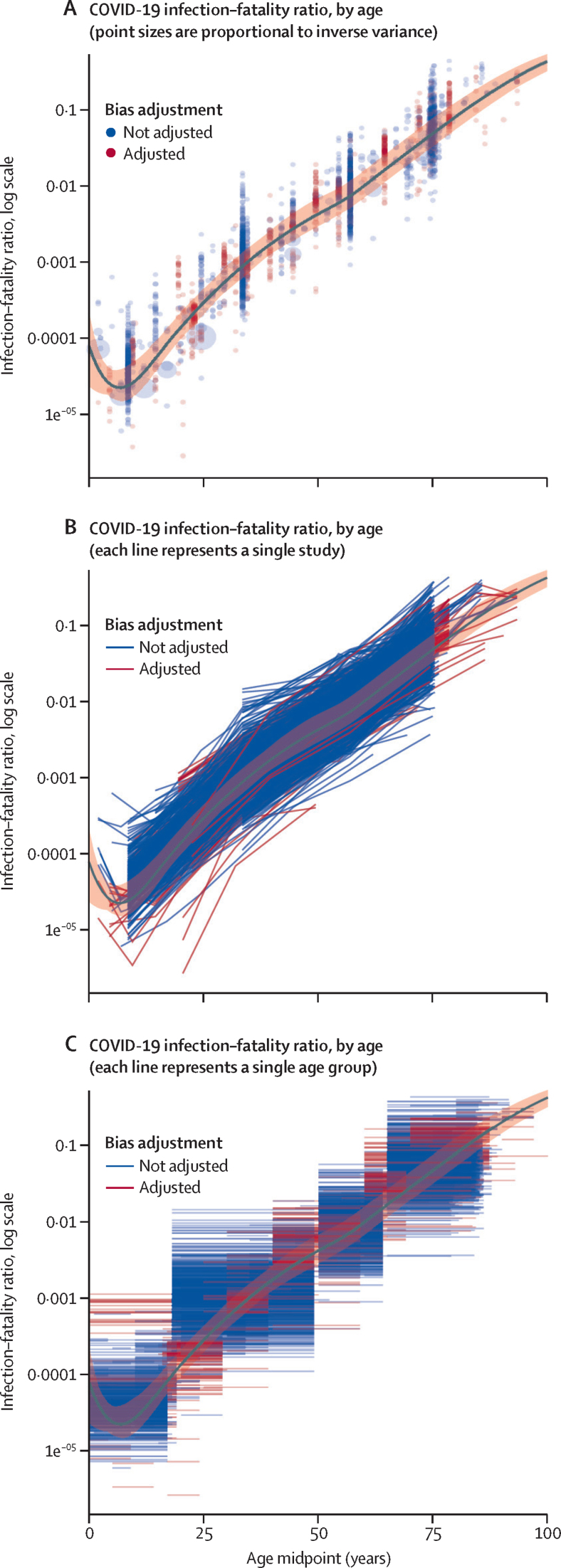
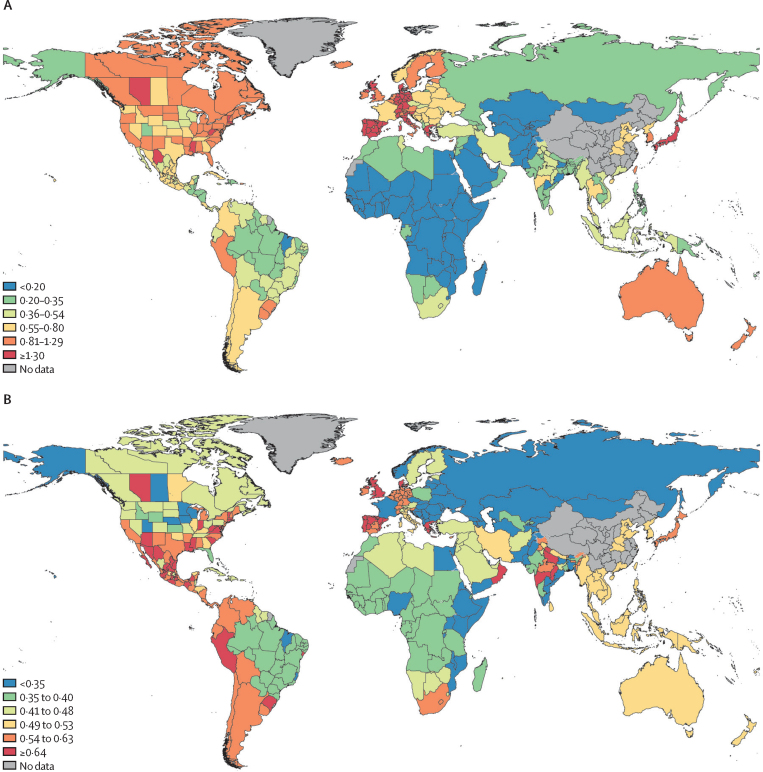
BACKGROUND: The infection-fatality ratio (IFR) is a metric that quantifies the likelihood of an individual dying once infected with a pathogen. Understanding the determinants of IFR variation for COVID-19, the disease caused by the SARS-CoV-2 virus, has direct implications for mitigation efforts with respect to clinical practice, non-pharmaceutical interventions, and the prioritisation of risk groups for targeted vaccine delivery. The IFR is also a crucial parameter in COVID-19 dynamic transmission models, providing a way to convert a population's mortality rate into an estimate of infections. METHODS: We estimated age-specific and all-age IFR by matching seroprevalence surveys to total COVID-19 mortality rates in a population. The term total COVID-19 mortality refers to an estimate of the total number of deaths directly attributable to COVID-19. After applying exclusion criteria to 5131 seroprevalence surveys, the IFR analyses were informed by 2073 all-age surveys and 718 age-specific surveys (3012 age-specific observations). When seroprevalence was reported by age group, we split total COVID-19 mortality into corresponding age groups using a Bayesian hierarchical model to characterise the non-linear age pattern of reported deaths for a given location. To remove the impact of vaccines on the estimated IFR age pattern, we excluded age-specific observations of seroprevalence and deaths that occurred after vaccines were introduced in a location. We estimated age-specific IFR with a non-linear meta-regression and used the resulting age pattern to standardise all-age IFR observations to the global age distribution. All IFR observations were adjusted for baseline and waning antibody-test sensitivity. We then modelled age-standardised IFR as a function of time, geography, and an ensemble of 100 of the top-performing covariate sets. The covariates included seven clinical predictors (eg, age-standardised obesity prevalence) and two measures of health system performance. Final estimates for 190 countries and territories, as well as subnational locations in 11 countries and territories, were obtained by predicting age-standardised IFR conditional on covariates and reversing the age standardisation. FINDINGS: We report IFR estimates for April 15, 2020, to January 1, 2021, the period before the introduction of vaccines and widespread evolution of variants. We found substantial heterogeneity in the IFR by age, location, and time. Age-specific IFR estimates form a J shape, with the lowest IFR occurring at age 7 years (0·0023%, 95% uncertainty interval [UI] 0·0015-0·0039) and increasing exponentially through ages 30 years (0·0573%, 0·0418-0·0870), 60 years (1·0035%, 0·7002-1·5727), and 90 years (20·3292%, 14·6888-28·9754). The countries with the highest IFR on July 15, 2020, were Portugal (2·085%, 0·946-4·395), Monaco (1·778%, 1·265-2·915), Japan (1·750%, 1·302-2·690), Spain (1·710%, 0·991-2·718), and Greece (1·637%, 1·155-2·678). All-age IFR varied by a factor of more than 30 among 190 countries and territories. After age standardisation, the countries with the highest IFR on July 15, 2020, were Peru (0·911%, 0·636-1·538), Portugal (0·850%, 0·386-1·793), Oman (0·762%, 0·381-1·399), Spain (0·751%, 0·435-1·193), and Mexico (0·717%, 0·426-1·404). Subnational locations with high IFRs also included hotspots in the UK and southern and eastern states of the USA. Sub-Saharan African countries and Asian countries generally had the lowest all-age and age-standardised IFRs. Population age structure accounted for 74% of logit-scale variation in IFRs estimated for 39 in-sample countries on July 15, 2020. A post-hoc analysis showed that high rates of transmission in the care home population might account for higher IFRs in some locations. Among all countries and territories, we found that the median IFR decreased from 0·466% (interquartile range 0·223-0·840) to 0·314% (0·143-0·551) between April 15, 2020, and Jan 1, 2021. INTERPRETATION: Estimating the IFR for global populations helps to identify relative vulnerabilities to COVID-19. Information about how IFR varies by age, time, and location informs clinical practice and non-pharmaceutical interventions like physical distancing measures, and underpins vaccine risk stratification. IFR and mortality risk form a J shape with respect to age, which previous research, such as that by Glynn and Moss in 2020, has identified to be a common pattern among infectious diseases. Understanding the experience of a population with COVID-19 mortality requires consideration for local factors; IFRs varied by a factor of more than 30 among 190 countries and territories in this analysis. In particular, the presence of elevated age-standardised IFRs in countries with well resourced health-care systems indicates that factors beyond health-care capacity are important. Potential extenuating circumstances include outbreaks among care home residents, variable burdens of severe cases, and the population prevalen
Overview
The claims and statistics of this paper haven’t been checked yet.
Free: it reads the open-access text and checks the first 5 claims that cite a source we can check. Create a free account to check every claim.
Integrity signals
Registry
Cites
Statistics
Figures
Verification
Claims the paper makes
The claims and statistics of this paper haven’t been checked yet.
Free: it reads the open-access text and checks the first 5 claims that cite a source we can check. Create a free account to check every claim.
Claims other papers make about this one
Each is checked against this paper’s own text: does it say what the citing paper says it does?
The source backs part of the claim, not all of it — or backs it for a different population, condition or comparison.
In the citing paper
“First, data on COVID-19 outcomes (eg, cases, deaths, hospital admissions, and seroprevalence) were of highly variable quality and completeness, which required novel methods for standardisation.23, 25, 26”
From Global incidence, prevalence, years lived with disability (YLDs), disability-adjusted life-years (DALYs), and healthy life expectancy (HALE) for 371 diseases and injuries in 204 countries and territories and 811 subnational locations, 1990–2021: a systematic analysis for the Global Burden of Disease Study 2021 (2024) · cites this paper as [26]
Experimental — accuracy not yet measuredThe cited source says what the claim attributes to it.
In the citing paper
“Using the 718 seroprevalence surveys with age-specific detail, the COVID-19 Forecasting Team40 estimated the age pattern of the IFR.”
From Estimating global, regional, and national daily and cumulative infections with SARS-CoV-2 through Nov 14, 2021: a statistical analysis (2022) · cites this paper as [40]
The cited source says what the claim attributes to it.
In the citing paper
“Age standardisation has been shown to explain a considerable portion of this variation,40 but substantial differences remain in the available data.”
From Estimating global, regional, and national daily and cumulative infections with SARS-CoV-2 through Nov 14, 2021: a statistical analysis (2022) · cites this paper as [40]
The check wasn’t confident either way, so it gives no verdict — never disputed.
In the citing paper
“Conversely, increases in mortality rates in populations aged 25 years and older were observed on a scale not seen in the previous 70 years.30”
From Global age-sex-specific mortality, life expectancy, and population estimates in 204 countries and territories and 811 subnational locations, 1950–2021, and the impact of the COVID-19 pandemic: a comprehensive demographic analysis for the Global Burden of Disease Study 2021 (2024) · cites this paper as [30]
Experimental — accuracy not yet measuredIn the citing paper
“older individuals with co-infection, particularly those who were undiagnosed with tuberculosis at the beginning of the pandemic, might have died from COVID-19.”
Self-check
Percentages, sums and reported differences re-computed from the paper’s own numbers.
The self-check needs the paper’s full text.
Citations
Cites
Vos, T., Lim, S. S., Abbafati, C., Abbas, K. M., Abbasi, M., Abbasifard, M., Abbasi-Kangevari, M., Abbastabar, H., Abd-Allah, F., Abdelalim, A., et al. (2020) · The Lancet · doi:10.1016/s0140-6736(20)30925-9 · Cited by 19,358
Dexamethasone in Hospitalized Patients with Covid-19
The RECOVERY Collaborative Group (2021) · New England Journal of Medicine · doi:10.1056/nejmoa2021436 · Cited by 11,477
Wang, H., Paulson, K. R., Pease, S. A., Watson, S., Comfort, H., Zheng, P., Aravkin, A. Y., Bisignano, C., Barber, R. M., Alam, T., et al. (2022) · The Lancet · doi:10.1016/s0140-6736(21)02796-3 · Cited by 2,069
Wang, H., Abbas, K. M., Abbasifard, M., Abbasi-Kangevari, M., Abbastabar, H., Abd-Allah, F., Abdelalim, A., Abolhassani, H., Abreu, L. G., Abrigo, M. R. M., et al. (2020) · The Lancet · doi:10.1016/s0140-6736(20)30977-6 · Cited by 1,971
Guidelines for accurate and transparent health estimates reporting: the GATHER statement
Stevens, G. A., Alkema, L., Black, R. E., Boerma, J. T., Collins, G. S., Ezzati, M., Grove, J. T., Hogan, D. R., Hogan, M. C., Horton, R., et al. (2016) · The Lancet · doi:10.1016/s0140-6736(16)30388-9 · Cited by 1,798
Age-specific mortality and immunity patterns of SARS-CoV-2
O’Driscoll, M., Ribeiro Dos Santos, G., Wang, L., Cummings, D. A. T., Azman, A. S., Paireau, J., Fontanet, A., Cauchemez, S., & Salje, H. (2021) · Nature · doi:10.1038/s41586-020-2918-0 · Cited by 1,210 · cited 2×
“O’Driscoll and colleagues 13 used a non-linear estimation method; they found that the age effects of mortality and IFR are both J shaped, with the lowest risk occurring among children aged 5–9 years.”
GBD 2010: design, definitions, and metrics
Murray, C. J., Ezzati, M., Flaxman, A. D., Lim, S., Lozano, R., Michaud, C., Naghavi, M., Salomon, J. A., Shibuya, K., Vos, T., et al. (2012) · The Lancet · doi:10.1016/s0140-6736(12)61899-6 · Cited by 1,103
Fullman, N., Yearwood, J., Abay, S. M., Abbafati, C., Abd-Allah, F., Abdela, J., Abdelalim, A., Abebe, Z., Abebo, T. A., Aboyans, V., et al. (2018) · The Lancet · doi:10.1016/s0140-6736(18)30994-2 · Cited by 1,013
Levin, A. T., Hanage, W. P., Owusu-Boaitey, N., Cochran, K. B., Walsh, S. P., & Meyerowitz-Katz, G. (2020) · European Journal of Epidemiology · doi:10.1007/s10654-020-00698-1 · Cited by 844 · cited 1×
“Using a log-linear model, Levin and colleagues 12 estimated that the IFR is 0·001% at age 5 years and 8·4% at age 80 years, which means that the IFR was more than 8000 times greater at age 80 years than at age 5 years.”
Diagnostic accuracy of serological tests for covid-19: systematic review and meta-analysis
Lisboa Bastos, M., Tavaziva, G., Abidi, S. K., Campbell, J. R., Haraoui, L.-P., Johnston, J. C., Lan, Z., Law, S., MacLean, E., Trajman, A., et al. (2020) · BMJ · doi:10.1136/bmj.m2516 · Cited by 832
Research works printed but not linked: 2
- National Institutes of Health Overview of COVID-19. COVID-19 treatment guidelines https://www.covid19treatmentguidelines.nih.gov/overview/ 2021 34003615
- Centers for Disease Control and Prevention Transmission of SARS-CoV-2 in K-12 schools https://www.cdc.gov/coronavirus/2019-ncov/science/science-briefs/transmission_k_12_schools.html Feb 11, 2020 34009772
Cited by
Items 201–300 of 306
Modelling lifespan reduction in an exogenous damage model of generic disease
Tobin, R., Pridham, G., & Rutenberg, A. D. (2023) · Scientific Reports · doi:10.1038/s41598-023-43005-0 · Cited by 1
Segala, F. V., Patti, G., Olal, L., Vita, E. D., Olung, N., Papagni, R., Amone, J., Totaro, V., Onapa, E., Novara, R., et al. (2023) · American Journal of Tropical Medicine and Hygiene · doi:10.4269/ajtmh.23-0464 · Cited by 1
Yupanqui, C. R. I., de la Cruz, R. G., Vargas, Y. H., Guevara, R., Chamba, P. A. A., Perez, R. R. B., & Pareja, P. P. P. (2024) · Pharmacognosy Journal · doi:10.5530/pj.2023.15.192 · Cited by 1
Sila, T., Surasombatpattana, S., Rajborirug, S., Laochareonsuk, W., Choochuen, P., Kongkamol, C., Ingviya, T., Prompat, N., Mahasirimongkol, S., Sangkhathat, S., et al. (2024) · Scientific Reports · doi:10.1038/s41598-024-56646-6 · Cited by 2
“With respect to the fatality rate, we found that the rate increased with age, consistent with previous results 30 ; however, the rate was not significantly different between males and females in our setting (Table 1).”
ResultPark, J., Joo, H., Kim, D., Mase, S., Christensen, D., & Maskery, B. A. (2024) · PLoS ONE · doi:10.1371/journal.pone.0302199 · Cited by 1
“We estimated the number of SARS-CoV-2 infections in the United States by back-calculating the number of infections from reported deaths using estimates of the COVID-19 infection fatality ratio (IFR) that varied across different periods (Table 1 and S1 File in S1 Data) [47–51].”
MethodMonoclonal antibodies against SARS-CoV-2 to prevent COVID-19 worsening in a large multicenter cohort
Soria, A., Graziano, F., Ghilardi, G. I., Lapadula, G., Gasperina, D. D., Benatti, S. V., Quirós-Roldán, E., Milesi, M., Bai, F., Merli, M., et al. (2024) · Heliyon · doi:10.1016/j.heliyon.2024.e36102 · Cited by 1
The Short and Long of COVID-19
Simpson, S. A., Hershman, M., Nachiappan, A. C., Raptis, C. A., & Hammer, M. M. (2024) · Rheumatic Disease Clinics of North America · doi:10.1016/j.rdc.2024.09.004 · Cited by 2
Kolovos, P., Davies, C. E., Kholmurodova, F., Irish, G. L., Kulkarni, H., Polkinghorne, K. R., Dendle, C., Pilmore, A., Potter, D., Roberts, M. B., et al. (2025) · Internal Medicine Journal · doi:10.1111/imj.16628 · Cited by 1
“18,19 Additionally, we noted the presence of diabetes as being an independent risk factor for increased risk of mortality.”
Basic, D., Czepiel, D., Hoek, H. W., Martínez, A. M., McCormack, C. A., Susser, E., Mascayano, F., Moro, M. F., Carta, M. G., Martínez‐Alés, G., et al. (2025) · Cambridge Prisms Global Mental Health · doi:10.1017/gmh.2025.10067 · Cited by 1
Roggero, P. F., Calistri, A., & Palù, G. (2022) · Computational and Structural Biotechnology Journal · doi:10.1016/j.csbj.2022.10.037 · Cited by 1
Are we coming out from the COVID ‐19 pandemic?
Leung, C. C., & Lee, A. C. (2022) · Respirology · doi:10.1111/resp.14403
Rieske, P. (2023) · Alergologia Polska - Polish Journal of Allergology · doi:10.5114/pja.2023.125766 · Cited by 1
Hickey, J., & Rancourt, D. G. (2023) · PLoS ONE · doi:10.1371/journal.pone.0293556 · Cited by 4
Impact of public health and social measures for COVID-19 control on infectious disease epidemiology
(2024) · Frontiers research topics · doi:10.3389/978-2-8325-4895-0 · Cited by 1
COVID-19 and microbiome diversity in sub-Saharan Africa – Author's reply
Sorensen, R. J. D. (2022) · The Lancet · doi:10.1016/s0140-6736(22)01340-x · Cited by 1
Evaluating the use of social contact data to produce age-specific forecasts of SARS-CoV-2 incidencePreprint
Munday, J. D., Abbott, S., Meakin, S. R., & Funk, S. (2022) · medRxiv · doi:10.1101/2022.12.02.22282935 · Cited by 1
Age-specific severity of SARS-CoV-2 in February 2020 – June 2021 in the NetherlandsPreprint
de Boer, P. T., van de Kassteele, J., Vos, E. R. A., van Asten, L., Dongelmans, D. A., van Gageldonk‐Lafeber, A. B., den Hartog, G., Hofhuis, A., van der Klis, F. R. M., de Lange, D. W., et al. (2023) · medRxiv · doi:10.1101/2023.02.09.23285703 · Cited by 1
Vikström, L., Fjällström, P., Gwon, Y., Sheward, D., Wigren-Bystrom, J., Evander, M., Bladh, O., Widerstroem, M., Molnár, C., Rasmussen, G., et al. (2023) · medRxiv · doi:10.1101/2023.02.16.23286009
Asymptomatic SARS-CoV-2 infections tend to occur less frequently in developed nationsPreprint
Chowdhury, S., Tiwari, A., James, A., Chatterjee, B., & Dixit, N. M. (2023) · medRxiv · doi:10.1101/2023.12.14.23299954 · Cited by 1
Disentangling the relationship between cancer mortality and COVID-19 in the USPreprint
Hansen, C., Viboud, C. G., & Simonsen, L. (2024) · eLife · doi:10.7554/elife.93758.2 · Cited by 2
Challenges in Estimating Time-Varying Epidemic Severity Rates from Aggregate DataPreprint
Goldwasser, J., Hu, A. J., Bilinski, A., McDonald, D. J., & Tibshirani, R. J. (2024) · medRxiv · doi:10.1101/2024.12.27.24319518 · Cited by 1
“For example, the case-fatality rate (CFR) and infection-fatality rate (IFR) are commonly used to assess the deadliness of an epidemic (Garske et al., 2009; Russell et al., 2020b; Challen et al., 2021; Luo et al., 2021; COVID-19 Forecasting Team, 2022).”
On How, and Why, and When, We Grow OldPreprint
Citti, L., Lasky-Su, J. A., & Michaelson, J. S. (2022) · bioRxiv (Cold Spring Harbor Laboratory) · doi:10.1101/2022.05.29.493895
Nguyen, N. T. H., Ou, T.-Y., Huy, L. Đ., Shih, C., Chang, Y.-M., Phuc, P. T., & Huang, C. (2022) · doi:10.2196/preprints.40263
Vaccinazione anti-Covid nei bambini: esitazione e dialogo
Tommasini, A. (2022) · Medico e Bambino · doi:10.53126/meb41376
Heald-Sargent, T. A. (2022) · JAMA Network Open · doi:10.1001/jamanetworkopen.2022.18801
Ben-Nun, M., Riley, P., Turtle, J., & Riley, S. (2022) · PLoS Computational Biology · doi:10.1371/journal.pcbi.1010375
Death as a metric for outcome: Dusk between day and night
Laupland, K. B. (2022) · Journal of the Association of Medical Microbiology and Infectious Disease Canada · doi:10.3138/jammi-2022-06-09 · Cited by 1
Clinical and Epidemiological Presentation of COVID-19 among Children in Conflict Setting
Iang, M. D., Hassan, O. E. H., McGowan, M., Basaleem, H. O., Al-Sakkaf, K. A., Jahn, A., & Dureab, F. A. (2022) · Children · doi:10.3390/children9111712
“Children under five years old are at higher risk of mortality compared to children 10–14 and 15–19 years of age [52].”
BackgroundCounting Cases and Deaths by Age Tells Us About COVID-19’s Infectious and Lethal ComponentsPreprint
Michaelson, J. S. (2023) · medRxiv · doi:10.1101/2023.01.05.23284239 · Cited by 2
(2022) · Advances in Neurology and Neuroscience · doi:10.33140/an.05.03.07
Holla, A. (2023) · World Bank, Washington, DC eBooks · doi:10.1596/978-1-4648-1901-8_ch1
The politics and ethics of academia in the Covid-19 era: A view from CanadaPreprint
Chaufan, C., & Hemsing, N. (2023) · doi:10.31235/osf.io/hvxpc
Estimation of COVID-19 fatality associated with different SARS-CoV-2 variants
Pota, M., Pota, A., & Esposito, M. (2023) · Elsevier eBooks · doi:10.1016/b978-0-323-90531-2.00013-8
[Factors associated with the risk of hospitalization and death related to SARS-CoV-2 infection.]
Castell, M. C. D. D., García-López, E., González-González, J., Gregori, J. Á., Mohedano‐Moriano, A., & Criado‐Álvarez, J. J. (2023) · PubMed Central · Cited by 1
SARS-CoV-2 Spread Under the Controlled-Distancing Model of Rio Grande do Sul, BrazilPreprint
Rohweder, R., Schüler‐Faccini, L., & Ferraz, G. (2023) · medRxiv · doi:10.1101/2023.06.09.23291044
Khedhiri, S. (2023) · Journal of Evidence-Based Medicine · doi:10.1111/jebm.12538
Pandemic Vaccination Strategies: Global OptimizationPreprint
Thompson, J., Benitez‐Paez, F., & Guerrero, O. A. (2023) · medRxiv · doi:10.1101/2023.06.13.23291327
Sosa, J. V. C., Caycho, B. M. G., Lozano, O. A. C., & Huancahuire‐Vega, S. (2022) · Heliyon · doi:10.1016/j.heliyon.2023.e17576
Borruto, F., Comparetto, C., Dupré, F., & Robino, C. (2023) · World Journal of Medical Microbiology · doi:10.31586/wjmm.2023.715
The COVID-19 pandemic – lessons (un)learned – the aftermath
Rieske, P., & Pawliczak, R. (2023) · Alergologia Polska - Polish Journal of Allergology · doi:10.5114/pja.2023.131713
Crystal Ball Gazing: The Failure of Lockdowns, Restrictions, and the Pretext to the Covid-19 Vaccine
Briggs, D., Telford, L., Lloyd, A., & Ellis, A. (2023) · Springer eBooks · doi:10.1007/978-3-031-41866-2_2
Epidemiology of post-COVID syndrome
Maric, G. D., Jovanović, A., & Pekmezovic, T. D. (2023) · Medicinski podmladak · doi:10.5937/mp74-47686
Holdenrieder, S., Ferreira, C. E. D. S., Izopet, J., Theel, E. S., & Wieser, A. (2023) · Frontiers in Public Health · doi:10.3389/fpubh.2023.1290402
Disentangling the relationship between cancer mortality and COVID-19 in the USPreprint
Hansen, C., Viboud, C. G., & Simonsen, L. (2024) · medRxiv · doi:10.1101/2024.01.02.24300715
Soiland, T. (2024) · Oxford University Press eBooks · doi:10.1093/oxfordhb/9780197639108.013.47
Disentangling the relationship between cancer mortality and COVID-19Preprint
Hansen, C., Viboud, C. G., & Simonsen, L. (2024) · eLife · doi:10.7554/elife.93758.1
Matuozzo, D., Talouarn, E., Marchal, A., Zhang, P., Manry, J., Seeleuthner, Y., Zhang, Y., Bolze, A., Chaldebas, M., Milisavljevic, B., et al. (2023) · Figshare · doi:10.6084/m9.figshare.22622332
Current Progress in Genomic and Genetic Research on Human Viral Diseases
(2024) · Frontiers research topics · doi:10.3389/978-2-8325-4833-2 · Cited by 1
Kakugawa, T., Mimura, Y., Mimura‐Kimura, Y., Doi, K., Ohteru, Y., Kakugawa, H., Oishi, K., Kakugawa, M., Hirano, T., & Matsunaga, K. (2024) · Research Square · doi:10.21203/rs.3.rs-4015330/v1
Sun, Y., Liu, W., Zhang, G., & Shi, P. (2024) · GeoHealth · doi:10.1029/2024gh001025 · Cited by 2
Brafman, Y. Y. (2024) · doi:10.1093/oso/9780197767931.003.0008
Brafman, Y. Y. (2024) · doi:10.1093/oso/9780197767931.003.0005
Brafman, Y. Y. (2024) · doi:10.1093/oso/9780197767931.003.0001
Brafman, Y. Y. (2024) · doi:10.1093/oso/9780197767931.003.0003
Brafman, Y. Y. (2024) · doi:10.1093/oso/9780197767931.002.0005
Brafman, Y. Y. (2024) · doi:10.1093/oso/9780197767931.003.0006
Brafman, Y. Y. (2024) · doi:10.1093/oso/9780197767931.003.0007
Brafman, Y. Y. (2024) · doi:10.1093/oso/9780197767931.003.0002
Brafman, Y. Y. (2024) · doi:10.1093/oso/9780197767931.002.0004
Brafman, Y. Y. (2024) · doi:10.1093/oso/9780197767931.003.0004
COVID-19 and older adult food practices: A social determinants of health perspective
Francis, S. L., Rudolph, C. S., & Schultz, S. (2024) · Elsevier eBooks · doi:10.1016/b978-0-323-95648-2.00023-x
Hansen, C. L., Viboud, C. G., & Simonsen, L. (2024) · eLife · doi:10.7554/elife.93758.2.sa1
Author response: Disentangling the relationship between cancer mortality and COVID-19 in the US
Hansen, C., Viboud, C. G., & Simonsen, L. (2024) · eLife · doi:10.7554/elife.93758.2.sa0
Does hospital overload increase the risk of death when infected by SARS-CoV-2?Preprint
Glémain, B., ASSAAD, K., Ghosn, W., Moulaire, P., de Lamballerie, X. N., Zins, M., Severi, G., Touvier, M., Deleuze, J., SAPRIS-SERO study group, et al. (2024) · medRxiv · doi:10.1101/2024.08.26.24312569
“To overcome the limitations of the cases-based approach, several studies used serolog-20 ical data and estimated infection fatality rates (IFRs) [11–14].”
BackgroundMethodResultInfluentialBonavia, W., Ling, R. R., Tiruvoipati, R., Reddy, M. P., Pilcher, D. V., & Subramaniam, A. (2024) · Australian Critical Care · doi:10.1016/j.aucc.2024.09.013
Yao, Y., Yang, Y., Wu, Q., Liu, M., Bao, W., Wang, Q., Cheng, M., Chen, Y., Cai, Y., Zhang, M., et al. (2025) · European journal of medical research · doi:10.1186/s40001-024-02240-5 · Cited by 1
Rohweder, R., Schüler‐Faccini, L., & Ferraz, G. (2025) · Health Security · doi:10.1089/hs.2023.0191
“32 We nonetheless re fi t-ted our model to data collected until October 26, before the earliest possible date of P.1 emergence in RS.”
InfluentialKim, S., Park, S. H., Choi, S., Lee, W., Choi, S., Han, S., Han, S., & Lee, D. (2025) · Human Vaccines & Immunotherapeutics · doi:10.1080/21645515.2025.2467554 · Cited by 2
Patriarchy Has Produced the Patriacene: Can Gender Challenge Its Persistence?
Spring, Ú. O. (2025) · The anthropocene: Politik - economics - society - science · doi:10.1007/978-3-031-71807-6_10 · Cited by 1
Do genetic variants of the Y chromosome affect mortality from COVID-19
Lenning, O. B., Myhre, R., Vadla, M. S., Omdal, R., Martínez‐Jarreta, B., Moreno, Á. G., de Blas, I., & Braut, G. S. (2025) · Scandinavian Journal of Public Health · doi:10.1177/14034948251333236
“…of South east Asia is dominated by Y-0 (Figure 2 (yellow)) and Africa is dominated by Y-e (red), where COVID-19 mortality mainly still appears low even if, for example, different age compositions, life expectancy, different quality of registration, makes a valid comparison difficult [4, 12, 13].”
Braeye, T., Pauw, R. D., Geebelen, L., Abrams, S., Desombere, I., Hens, N., Hammami, N., Roelants, M., & Herzog, S. A. (2025) · medRxiv · doi:10.1101/2025.07.02.25330709
Nicholl, C. G., Wilson, K. J., & D'Souza, S. (2025) · doi:10.1002/9781394397976.ch13
Rahman, S., Mili, S. L., Islam, M., Shanta, N. F., Musharraf, M., & Morshed, S. S. (2025) · International Journal of Contemporary Pediatrics · doi:10.18203/2349-3291.ijcp20252208
Izecksohn, M. M. V., Leite, I. D. C., Daumas, R. P., & Rodrigues, R. E. S. (2025) · Ciência & Saúde Coletiva · doi:10.1590/1413-81232025307.19502024en
Anronikov, S., Meikle, C., Milligan, E. C., Chen, H. M., Mukherjee, N., Bjornson, Z. B., Gaudilliere, B. L., Jiang, S., Permar, S. R., Rompay, K. K. A. V., et al. (2025) · Frontiers in Immunology · doi:10.3389/fimmu.2025.1599408
Lam, I. C. H., Zhou, J., Liu, W., Man, K. K. C., Zhang, Q., Luo, H., Wong, C. K. H., Chui, C. S. L., Lai, F. T. T., Li, X., et al. (2025) · QJM · doi:10.1093/qjmed/hcaf218
Wu, L.-E., Wei, J.-Y., Lin, Z.-H., Li, H., & Huang, C.-L. (2025) · BMC Pediatrics · doi:10.1186/s12887-025-06182-7
“The global infection–fatality ratio of SARS-CoV-2 shows a J-shape curve with age, with the lowest infection–fatality ratio occurring at 7 years of age [14].”
Can, O. M. U. R. (2025) · Journal of Clinical Medical Research · doi:10.46889/jcmr.2025.6308
Nakamura, I., Koizumi, Y., Araoka, H., Hata, H., Miki, T., Tanaka, Y., Kobayashi, C., & Kawakami, K. (2025) · PLoS ONE · doi:10.1371/journal.pone.0335439
“Established risk factors, including advanced age, male sex, and high BMI, were confirmed in this study [3,4,6,19,21,22,24].”
Opposing Effects of National Economic Performance on COVID-19 Mortality
Neuwirth, C., & Elixhauser, M. (2025) · Systems · doi:10.3390/systems13110971
“…to explain variability in COVID-19 mortality, governmental response stringency [4] or population density (e.g., [7,8]) showed only short-term or inconsistent effects, whereas predictors such as population age [9], temperature, UV-radiation [10] or vaccination rates [11] proved to be significant.”
Malathi, H., Sachdeva, A., Parmar, Y., Sarkar, A., Dash, D. K., & Gosavi, A. G. (2025) · Multidisciplinary Reviews · doi:10.31893/multirev.2025ss0209
“These groups experienced technological constraints, cultural shame and reduced mental health literacy (Sorensen et al., 2022).”
Matuozzo, D., Talouarn, E., Marchal, A., Zhang, P., Manry, J., Seeleuthner, Y., Zhang, Y., Bolze, A., Chaldebas, M., Milisavljevic, B., et al. (2023) · Figshare · doi:10.6084/m9.figshare.22622326
Kakugawa, T., Mimura, Y., Mimura‐Kimura, Y., Doi, K., Ohteru, Y., Kakugawa, H., Oishi, K., Kakugawa, M., Hirano, T., & Matsunaga, K. (2024) · Figshare · doi:10.6084/m9.figshare.26085092
Kakugawa, T., Mimura, Y., Mimura‐Kimura, Y., Doi, K., Ohteru, Y., Kakugawa, H., Oishi, K., Kakugawa, M., Hirano, T., & Matsunaga, K. (2024) · Figshare · doi:10.6084/m9.figshare.26085193
Duong, S., Burtniak, J., Gretchen, A., Mai, A., Klassen, P., Wei, Y., Loeppky, C., Shaw, S. Y., Bullard, J., Caeseele, P. G. V., et al. (2023) · Figshare · doi:10.6084/m9.figshare.24751292
Ghafari, M., Hosseinpour, S., Rezaee-Zavareh, M. S., Dascalu, S., Rostamian, S., Aramesh, K., Madani, K., & Kordasti, S. (2024) · Figshare · doi:10.6084/m9.figshare.26638929
Ledesma, J. R., Papanicolas, I., Stoto, M. A., Chrysanthopoulou, S. A., Isaac, C. R., Lurie, M. N., & Nuzzo, J. B. (2024) · Figshare · doi:10.6084/m9.figshare.26734443
SARS-CoV-2 outbreaks in long-term care facilities during the Omicron era in Québec, Canada
Doggui, R., Ouakki, M., Boulais, A., Deceuninck, G., Gilca, R., Racine, E. B., Lacroix, C., & Fortin, É. (2025) · Scientific Reports · doi:10.1038/s41598-025-32967-y
Molecular signature of COVID-19 prior to its exacerbation by multi-omics surveyPreprint
Suzuki, T., Kita, Y., Yanagida, K., Maeda, K., Hashidate‐Yoshida, T., Nakanishi, H., Ohto‐Nakanishi, T., Terada-Hirashima, J., Tsujimoto, Y., Hojo, M., et al. (2025) · bioRxiv (Cold Spring Harbor Laboratory) · doi:10.64898/2025.12.27.696524
Olobatuyi, K., Ma, J., Brown, P., & Cowen, L. L. E. (2026) · Infectious Disease Modelling · doi:10.1016/j.idm.2025.12.016
“We also estimated the probability of death in Northern region for comparison to be 0.008 (95 %CrI:0.0002, 0.034) which also agrees with Parker et al. (2021); Ioannidis (2020); Pezzullo et al. (2023); Sorensen et al. (2022).”
InfluentialBraeye, T., Pauw, R. D., Geebelen, L., Abrams, S. A., Desombere, I., Hens, N., Hammami, N., Roelants, M., Muylaert, A., & Herzog, S. A. (2026) · Archives of Public Health · doi:10.1186/s13690-026-01860-z
“Our IHR and IFR and their evolution over time are in accordance with results from meta-analyses which like-wise reported a decrease over 2020 [26, 56, 57].”
Seroepidemiology of emerging viruses in Bolivia
Jordan, L. I. (2023) · theses.fr (ABES) · doi:10.70675/1070f335z49aaz4d85zb796z713dd35bc6fc
Ríos, O. G. V., Contreras, R. M., Zuta-Arriola, N., Mejía, M. L. F., Mancha, V., Paredes-Román, C., Paredes-Román, H., Porras-Roque, M., Luque-Ramos, L., Sarapura, E. Z., et al. (2026) · COVID · doi:10.3390/covid6040070
Niewiadomski, P., Ortega‐Ortega, M., & Łyszczarz, B. (2026) · The European Journal of Health Economics · doi:10.1007/s10198-026-01916-5
Agreement between seroprevalence- and model-based estimates of COVID-19 burden
Owusu‐Boaitey, N., Böttcher, L., Meyerowitz‐Katz, G., Howard, J., Gorski, D. H., Besançon, L., & Барчук, А. А. (2026) · Global Health Action · doi:10.1080/16549716.2026.2683286 · Cited by 1
“A ll o t h e r s t u d i e s a r e m e t a - a n a l y s e s o f c r o ss - n a t i o n a l s e r o p r e v a l e n c e r e s u l t s [ 6 , 16 , 27 , 32 , 36 , 38 , 42 , 43 ] .”
Technical efficiency and resilience of health systems in Japan during the COVID-19 pandemic
Hashimoto, A., Hashimoto, H., Kawaguchi, H., & Ibuka, Y. (2026) · Social Science & Medicine · doi:10.1016/j.socscimed.2026.119522
Moutet, L., Leclerc, Q. J., Layan, M., Bouziad, K. A., Dab, W., Henriot, P., Hodbert, E., Louati, N., Maurin, A., Thonon, F., et al. (2026) · Peer Community Journal · doi:10.24072/pcjournal.741
How Many Veteran COVID‐19 Cases Were There during the Pandemic?
Widanagamaachchi, W., Callahan, A. R., Willson, T. M., Barbeau, B., Lewis, J. E., Dalton, C. D., Stevens, V. W., Samore, M., Chaiyakunapruk, N., & Jones, M. M. (2026) · Journal of Medical Virology · doi:10.1002/jmv.71040
“Additionally, we used the systematic analysis on COVID‐19 infection–fatality ratios (IFRs) presented by Sorensen et al. [17] for computing the age‐ adjusted IFR values of each COVID‐19 wave.”
Metadata
- Authors
- †
- Corresponding author
- †
- Venue
- The Lancet
- Publisher
- Elsevier BV
- Published
- 2022-04
- Volume
- 399
- Issue
- 10334
- Pages
- 1469-1488
- ISSN
- 0099-5355 (ISSN-L)
- 0140-6736
- PMC
- PMC8871594
- OpenAlex
- W4214561105
- Semantic Scholar
- 1f3ca4dadd3ca715a8d5bdc5094d47bc19924ff2
- Cited by
- 306
- References
- 35
- Citations by year
- 2026: 18 · 2025: 45 · 2024: 81 · 2023: 105 · 2022: 56
- FWCI
- 42.80
- Type
- journal article
- Language
- en
- Update notices
- erratum (2022-04-16)
- Open access
- hybrid
- doi.org
- Licence
- cc-by
- www.elsevier.com/tdm/userlicense/1.0/ (tdm)
- www.elsevier.com/legal/tdmrep-license (tdm)
- creativecommons.org/licenses/by/4.0/ (vor)
- Locations
- The Lancet (publishedVersion, cc-by)
- PubMed Central (publishedVersion, cc-by)
- PubMed (publishedVersion)
- IRIS Research product catalog (Sapienza University of Rome) (submittedVersion, cc-by-nc-nd)
- Funders
- National Science Foundation (2031096)
- Bill and Melinda Gates Foundation
- Queensland Health
- Coordenação de Aperfeiçoamento de Pessoal de Nível Superior (88887, 88887.507149/2020-00, 2020-00)
- Queensland Government
- Medical Research Council
- National Health and Medical Research Council (1121516, 310679, 2031096)
- Topics
- Physical Sciences › Mathematics › Modeling and Simulation › COVID-19 epidemiological studies
- Health Sciences › Medicine › Infectious Diseases › SARS-CoV-2 and COVID-19 Research
- Health Sciences › Medicine › Infectious Diseases › COVID-19 Clinical Research Studies
- Keywords
- COVID-19 pandemic, infection fatality rate, serological survey, COVID-19 mortality, pre-vaccine era, obesity, health system performance, SARS-CoV-2, waning immunity, non-pharmaceutical interventions
- MeSH terms
- Global Burden of Disease, COVID-19, SARS-CoV-2, Adult, Bayes Theorem, Child, Geography, Humans, Vaccines, Global Health, Seroepidemiologic Studies
About these checks
Registry, retraction, Cites and statistics results are computed, not judged, with one exception: a printed reference that no index lists is read once by a model before it counts as a citation error. Claims are extracted by a model and kept only when their quote appears verbatim in the text; each cited source is then checked, with a model’s help, for whether it says what the claim relies on. Those verdicts can be wrong — read the claim’s quote and the cited source before relying on one.
Statistics and arithmetic are recomputed, not judged.
Confidence bands are shown only for fields calibrated on our annotated test set. None is calibrated yet, so no band is shown.
What counts as a claim ›How we measure confidence ›How we check this ›
Are you an author, or do you see a problem with this page? Request a review
Data sources
Bibliographic data: Semantic Scholar, OpenAlex, Crossref.
Contains information from the Semantic Scholar Academic Graph Datasets, made available under the ODC Attribution License (ODC-BY 1.0).
Semantic Scholar’s data is described in: Kinney, R., et al. (2023). The Semantic Scholar Open Data Platform. arXiv:2301.10140.
