

Baseline startle amplitude and prepulse inhibition in Vietnam veterans with posttraumatic stress disorder
Open accessThe DOI matches its Crossref record; 39 of the 39 references it cites were found in a registry or an index.
Abstract
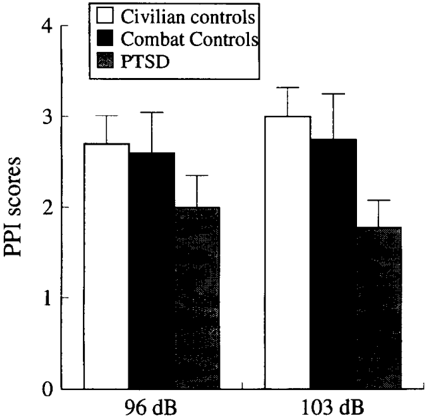
Although an exaggerated startle response is a symptom of posttraumatic stress disorder (PTSD), empirical support for elevated baseline startle in PTSD has been weak. The present study investigated the eyeblink component of the acoustic startle reflex and prepulse inhibition (PPI) in 21 unmedicated Vietnam veterans with PTSD and in 17 civilian and 10 combat veteran comparison subjects. Patients with PTSD exhibited normal acoustic startle amplitude, but showed a significant reduction in PPI relative to the civilian subjects. There was only a trend toward a reduction in PPI in the PTSD group compared with the combat control group. The study does not support the hypothesis of exaggerated baseline startle in Vietnam veterans with PTSD but suggests abnormal startle modulation by a prepulse (i.e., PPI). Discrepancies between studies concerning the amplitude of startle in PTSD are discussed.
Overview
The claims and statistics of this paper haven’t been checked yet.
Free: it reads the open-access text and checks the first 5 claims that cite a source we can check. Create a free account to check every claim.
Integrity signals
Registry
Cites
Statistics
Figures
Verification
Claims the paper makes
The claims and statistics of this paper haven’t been checked yet.
Free: it reads the open-access text and checks the first 5 claims that cite a source we can check. Create a free account to check every claim.
Claims other papers make about this one
Each is checked against this paper’s own text: does it say what the citing paper says it does?
The cited source says what the claim attributes to it.
In the citing paper
“Similar results have been reported in PTSD (Grillon et al, 1996; Morgan et al, 1995a, b).”
From Phasic vs Sustained Fear in Rats and Humans: Role of the Extended Amygdala in Fear vs Anxiety (2010) · cites this paper as Grillon et al, 1996
Self-check
Percentages, sums and reported differences re-computed from the paper’s own numbers.
The self-check needs the paper’s full text.
Citations
Cites
(1970) · Cited by 24,983
Differential contribution of amygdala and hippocampus to cued and contextual fear conditioning.
Phillips, R. G., & LeDoux, J. E. (1992) · Behavioral Neuroscience · doi:10.1037/0735-7044.106.2.274 · Cited by 3,292 · cited 1×
“We have suggested elsewhere that exaggerated startle in Vietnam veterans with PTSD is a reflection of their increased sensitivity to an unfamiliar and/or threatening environment and may involve deficits at the level of the hippocampus (Caine et al., 1992; Morgan et al., 1995a) because this structure has been shown to…”
BackgroundDSM-IV: Diagnostic and Statistical Manual of Mental Disorders
Bell, C. C. (1994) · JAMA: The Journal of the American Medical Association · doi:10.1001/jama.1994.03520100096046 · Cited by 2,610
Modality-Specific Retrograde Amnesia of Fear
Kim, J. J., & Fanselow, M. S. (1992) · Science · doi:10.1126/science.1585183 · Cited by 2,483
Emotion, attention, and the startle reflex
Lang, P. J., Bradley, M. M., & Cuthbert, B. N. (1990) · Psychological Review · doi:10.1037/0033-295x.97.3.377 · Cited by 2,205 · cited 1×
“It is well known that startle can be elevated when presented in association with emotionally significant stimuli ( Lang et al., 1990 ).”
BackgroundThe amygdala: Neurobiological aspects of emotion, memory, and mental dysfunction.
Aggleton, J. P. (1992) · Wiley-Liss eBooks · Cited by 1,536
Keane, T. M., Caddell, J. M., & Taylor, K. L. (1988) · Journal of Consulting and Clinical Psychology · doi:10.1037//0022-006x.56.1.85 · Cited by 1,323 · cited 1×
“Each veteran subject (PTSD and combat control) was also given the Mississippi Scale for Combat-Related PTSD to assess the intensity of the PTSD symptoms ( Keane et al., 1988 ) and the Combat Exposure Scale (CES) to evaluate the level of combat exposure (Lund et al., 1984) (Table 1). The scores on the Mississippi Scale…”
MethodInfluentialSensorimotor Gating and Schizophrenia: Human and Animal Model Studies
Braff, D. L. (1990) · Archives of General Psychiatry · doi:10.1001/archpsyc.1990.01810140081011 · Cited by 1,309
The amygdala: Neurobiological aspects of emotion, memory and mental dysfunction
Scheel-Krüger, J. (1993) · Journal of Chemical Neuroanatomy · doi:10.1016/0891-0618(93)90037-5 · Cited by 1,267
Prestimulus Effects on Human Startle Reflex in Normals and Schizophrenics
Braff, D., Stone, C., Callaway, E., Geyer, M., Glick, I., & Bali, L. (1978) · Psychophysiology · doi:10.1111/j.1469-8986.1978.tb01390.x · Cited by 1,170 · cited 1×
“PPI deficits in schizophrenic patients ( Braff et al., 1978, 1992; Grillon et al., 19921, obsessive-compulsive patients (Swerdlow et al., 19931, and individuals at-risk for schizophrenia (Simons and Giardina, 1992) have been interpreted according to this view.”
Background
Research works printed but not linked: 6
- 1. American Psychiatric Association. (1994) DSh4-N: Diagnosric and Statistical Manual of Mental Disorder. 4th edn. Ameri- can Psychiatric Press, Washington, DC.
- 7. Cuthbert, B.N., Drobes, D.J., Patrick, C.J. and Lang, P.J. (1994) Autonomic and startle responding during affective imagery among anxious patients (abstract). Psychophysi- ology 31, s35.
- 10. Davis, M., Gewirtz, J.C., McNish, K.A. and Kim, M. (2995) The role of the amygdala and bed nucleus of the stria terminalis (BNSTI in the acquisition of fear potentiated startle using both explicit and contextual cues. Sot Neurosci Abst 21, 1224.
- 36. Southwick, S.M., Morgan, A., Nagy, L.M., Bremner, D., Nicolaou, A., Johnson, D.R., Rosenheck, R. and Chamey, D.S. (1993) Trauma-related symptoms in veterans of Oper- ation Desert Storm: An interim report. Am J Psychiatry 150, 1525-1528.
- 37. Spielberger, C.D. (1983) Manual for the State-Trait Amiety Inuentoty. Consulting Psychologist Press, Palo Alto, CA.
- 38. Spitzer, R.L., Williams, J.B., Gibbon, M. and First, M.B. (1990) Structured Clinical Interview for DSM-III-R. Ameri- can Psychiatric Press, Washington, DC.
Cited by
Items 101–200 of 221
The Nightmares of Sleep Apnea: Nightmare Frequency Declines with Increasing Apnea Hypopnea Index
Pagel, J. F., & Kwiatkowski, C. F. (2010) · Journal of Clinical Sleep Medicine · doi:10.5664/jcsm.27713 · Cited by 42
Alsene, K. M., Carasso, B. S., Connors, E. E., & Bakshi, V. P. (2006) · Neuropsychopharmacology · doi:10.1038/sj.npp.1300989 · Cited by 44
“…attention-deficit-hyperactivity disorder (ADHD), schizophrenia, and post-traumatic stress disorder (PTSD); interestingly, with ADHD, this PPI disruption is seen only with attended-to prepulses (Braff et al, 2001; Castellanos et al, 1996; Grillon et al, 1996; Hawk et al, 2003; Ornitz et al, 1992).”
Rat strain-dependent effects of repeated stress on the acoustic startle response
Conti, L. H., & Printz, M. P. (2003) · Behavioural Brain Research · doi:10.1016/s0166-4328(03)00061-5 · Cited by 41
Petryshen, T. L., Kirby, A. W., Hammer, R. P., Purcell, S., O'Leary, S. B., Singer, J. B., Hill, A. E., Nadeau, J. H., Daly, M. J., & Sklar, P. B. (2005) · Genetics · doi:10.1534/genetics.105.045658 · Cited by 39
“…Hawk et al. 2003), acute manic bipolar disorder (Perry et al. 2001), and other neurological and psychiatric disorders (Swerdlow et al. 1995, 2001b; Grillon et al. 1996; Gomez-Wong et al. 1998; Pouretemad et al. 1998; Ornitz et al. 1999) provide impetus to investigate the human syntenic loci of…”
BackgroundShock-induced hyperalgesia: IV. Generality.
Meagher, M. W., Ferguson, A. R., Crown, E. D., McLemore, S., King, T. E., Sieve, A. N., & Grau, J. W. (2001) · Journal of Experimental Psychology: Animal Behavior Processes · doi:10.1037//0097-7403.27.3.219 · Cited by 33
Santos‐Carrasco, D., & la Casa, L. G. D. (2023) · BMC Psychology · doi:10.1186/s40359-023-01253-9 · Cited by 36
“The reviewed studies have proposed different potential cognitive factors associated with PPI deficit such as re-experiencing and experiential avoidance [85, 111, 113], obsessive-compulsive symptoms severity [123, 126, 128, 130], inability to disengage attention [104], hypervigilance [105], and cognitive deficits relat…”
BackgroundAdamcio, B., Havemann‐Reinecke, U., & Ehrenreich, H. (2009) · Behavioural Brain Research · doi:10.1016/j.bbr.2009.05.030 · Cited by 35
Sex-related differences in prepulse inhibition of startle in irritable bowel syndrome (IBS)
Kilpatrick, L. A., Ornitz, E. M., Ibrahimovic, H., Treanor, M., Craske, M. G., Nazarian, M., Labus, J. S., Mayer, E. A., & Naliboff, B. D. (2010) · Biological Psychology · doi:10.1016/j.biopsycho.2010.02.012 · Cited by 33
“…have now shown deficits in PPI in patients with other psychiatric disorders (reviewed in Braff et al., 2001), notably anxiety disorders including panic disorder (Ludewig et al., 2002) and post-traumatic stress disorder (Grillon et al., 1996) and obsessive compulsive disorder (Hoenig et al., 2005).”
BackgroundWestacott, L. J., Humby, T., Haan, N., Brain, S. A., Bush, E., Toneva, M., Baloc, A.-I., Moon, A. L., Reddaway, J., Owen, M. J., et al. (2021) · Brain Behavior and Immunity · doi:10.1016/j.bbi.2021.09.005 · Cited by 32
Diniz, J. B., Miguel, E. C., de Oliveira, A. R., Reimer, A. E., Brandão, M. L., de Mathis, M. A., Batistuzzo, M. C., Costa, D. L. C., & Hoexter, M. Q. (2012) · Brazilian Journal of Psychiatry · doi:10.1016/s1516-4446(12)70056-9 · Cited by 35
Hantsoo, L. V., Golden, C. E. M., Kornfield, S. L., Grillon, C., & Epperson, C. N. (2018) · Current Psychiatry Reports · doi:10.1007/s11920-018-0906-y · Cited by 33
Self-citationAnger and aggression problems in veterans are associated with an increased acoustic startle reflex
Heesink, L., Kleber, R. J., Häfner, M., van Bedaf, L., Eekhout, I. E., & Geuze, E. (2016) · Biological Psychology · doi:10.1016/j.biopsycho.2016.12.004 · Cited by 31
“Due to distraction by for example thoughts or intrusions, the prepulse might lead to less inhibition compared to controls (Grillon et al. 1996).”
ResultReviewing the epigenetics of schizophrenia
Cromby, J., Chung, E. M. L., Papadopoulos, D., & Talbot, C. J. (2016) · Journal of Mental Health · doi:10.1080/09638237.2016.1207229 · Cited by 32
“Moreover, impaired PPI is also associated with anxiety disorders (Pynoos et al., 1999), obsessive-compulsive disorder (Hoenig et al., 2005), schizotypal personality disorder (Cadenhead et al., 1993) and post-traumatic stress disorder (Grillon et al., 1996).”
BackgroundYamamoto, S., Morinobu, S., Iwamoto, Y., Ueda, Y., Takei, S., Fujita, Y., & Yamawaki, S. (2010) · Journal of Psychiatric Research · doi:10.1016/j.jpsychires.2010.03.013 · Cited by 33
“Some patients with PTSD exhibit reduced PPI (Grillon et al., 1996), suggesting that co-administration of”
BackgroundLeri, F., & Franklin, K. B. J. (1998) · Brain Research · doi:10.1016/s0006-8993(98)00762-8 · Cited by 32
The origin of smiling, laughing, and crying: The defensive mimic theory
Graziano, M. S. A. (2022) · Evolutionary Human Sciences · doi:10.1017/ehs.2022.5 · Cited by 31
“As a result, the magnitude of the startle varies enormously depending on circumstances (Davis, 1984; Ehrlichman et al., 1995; Grillon, 2008; Grillon et al., 1991, 1996; Koch, 1999; Lang et al., 1990; McTeague & Lang, 2012).”
BackgroundMartínez‐Gras, I., Rubio, G., del Manzano, B. Á., Rodríguez–Jiménez, R., Garcia-Sanchez, F., Bagney, A., Leza, J. C., & Borrell, J. I. (2009) · Schizophrenia Research · doi:10.1016/j.schres.2009.09.035 · Cited by 34
“Several studies have shown patients with anxiety disorders to have impairments of PPI (Swerdlow et al., 1993, 1997; Hoenig et al., 2005; Ludewig et al., 2002b, 2005; Butler et al., 1990; Grillon et al., 1996, 1998; Morgan et al., 1996, 1997; Ornitz and Pynoos, 1989; Lipschitz et al., 2005).”
BackgroundSutherland, J. E., & Conti, L. H. (2010) · Neuropharmacology · doi:10.1016/j.neuropharm.2010.12.022 · Cited by 31
“Patients with a variety of psychiatric disorders, including schizophrenia (Braff et al., 1978; Braff et al., 1992), obsessive-compulsive disorder (Swerdlow et al., 1993), and post-traumatic stress disorder (Grillon et al., 1996) show less PPI than control subjects.”
BackgroundGresack, J. E., & Risbrough, V. B. (2010) · The International Journal of Neuropsychopharmacology · doi:10.1017/s1461145710001409 · Cited by 32
“Startle reactivity and inhibition of startle are altered in certain anxiety disorders, including posttraumatic stress disorder (PTSD) (Grillon et al. 1996, 1998 ; Grillon, 2008 ; Pole et al. 2009).”
InfluentialWang, H., Bai, Y., Chen, Y.-C., Zhang, R., Wang, H., Zhang, Y., Gan, J.-L., Peng, Z., & Tan, Q. (2015) · PLoS ONE · doi:10.1371/journal.pone.0117189 · Cited by 31
“Increasing evidence indicates that PPI dysfunction positively correlates with PTSD [9,10,11].”
BackgroundKask, K., Bäckström, T. C., Gulinello, M. E., & Poromaa, I. S. (2007) · Psychoneuroendocrinology · doi:10.1016/j.psyneuen.2007.10.005 · Cited by 32
“Deficits in PPI are associated with dysphoric states and anxiety disorders (Grillon et al., 1996; Ludewig et al., 2002; Pissiota et al., 2003; Hoenig et al., 2005).”
BackgroundIson, J. R., & Allen, P. D. (2007) · Behavioural Brain Research · doi:10.1016/j.bbr.2007.07.014 · Cited by 28
“…coefficients between the ACT scores and either the ASR control baseline or PPI at GD of 10 or 15 ms, for the young mice (male, PPI R2 = 0.002, ASR R2 = 0.004; female, PPI R2 = 0.01, ASR R2 = 0.03) or for the old mice (male, PPI R2 = 0.01, ASR R2 = 0.04; female, PPI R2 = 0.003, ASR R2 = 0.003).”
BackgroundInfluentialvan den Buuse, M., Martin, S., Brosda, J., Leck, K. J., Matthaei, K. I., & Hendry, I. A. (2005) · Psychopharmacology · doi:10.1007/s00213-005-0181-6 · Cited by 30
“PPI is disrupted in a number of mental illnesses, such as schizophrenia (Braff et al. 1995; Geyer and Markou 1995), post-traumatic stress disorder (Grillon et al. 1996), Huntington’s disease (Swerdlow et al. 1995), Tourette’s syndrome (Castellanos et al. 1996) and obsessive–compulsive disorder…”
Kilpatrick, L. A., Ornitz, E. M., Ibrahimovic, H., Hubbard, C. S., Rodríguez, L. V., Mayer, E. A., & Naliboff, B. D. (2010) · The Journal of Urology · doi:10.1016/j.juro.2010.04.083 · Cited by 29
Ginsberg, J. P., Ayers, E., Burriss, L., & Powell, D. A. (2007) · Journal of Anxiety Disorders · doi:10.1016/j.janxdis.2007.08.009 · Cited by 28
Sensorimotor gating and anxiety: Prepulse inhibition following acute exercise
Duley, A. R., Hillman, C. H., Coombes, S. A., & Janelle, C. M. (2007) · International Journal of Psychophysiology · doi:10.1016/j.ijpsycho.2007.01.006 · Cited by 30
Vrana, S. R., Calhoun, P. S., McClernon, F. J., Dennis, M. F., Lee, S. T., & Beckham, J. C. (2013) · Psychopharmacology · doi:10.1007/s00213-013-3181-y · Cited by 29
“…is mixed, with findings of larger (Butler et al. 1990; Grillon et al. 1998a; Holstein et al. 2010), smaller (Ornitz and Pynoos 1989), or equivalent (Grillon et al. 1996; Jovanovic et al. 2009; Lipschitz et al. 2005) startle responses in people with PTSD compared to control groups and a significant…”
BackgroundSinha, S., Avcu, P., Spiegler, K. M., Komaravolu, S., Kim, K., Cominski, T. P., Servatius, R. J., & Pang, K. C. H. (2017) · Brain Behavior and Immunity · doi:10.1016/j.bbi.2017.01.006 · Cited by 27
Franklin, J. C., Bowker, K. B., & Blumenthal, T. D. (2008) · Personality and Individual Differences · doi:10.1016/j.paid.2008.11.004 · Cited by 27
“…increased trait anxiety in a normative sample (Duley et al., 2007), to extend the findings of decreased PPI in PTSD patients to a normative sample (Grillon et al., 1996, 1998; Ornitz & Pynoos, 1989), and to explore the relationship between PPI and traits of the three Cluster C personality…”
BackgroundResultInfluentialSutherland, J. E., Burian, L. C., Covault, J., & Conti, L. H. (2010) · Pharmacology Biochemistry and Behavior · doi:10.1016/j.pbb.2010.08.003 · Cited by 28
“, 1993), and post-traumatic stress disorder (Grillon et al., 1996).”
BackgroundGait and Conditioned Fear Impairments in a Mouse Model of Comorbid TBI and PTSD
Wickham, P. T., Jones, C. E., Kaiser, M. E., Gardner, N. A., & Lim, M. M. (2018) · Behavioural Neurology · doi:10.1155/2018/6037015 · Cited by 25
“Our findings are consistent with another study of veterans with PTSD [32], which found no change in acoustic startle response relative to controls.”
ResultMeteran, H., Vindbjerg, E., Uldall, S. W., Glenthoj, B. Y., Carlsson, J. M., & Oranje, B. (2018) · Psychological Medicine · doi:10.1017/s003329171800123x · Cited by 26
“…al ., 2004; Gjini et al ., 2013), but reports on PPI are less consistent with some studies indicating a reduction of PPI (Ornitz and Pynoos, 1989; Grillon et al ., 1996; Echiverri-Cohen et al ., 2016; Pineles et al ., 2016), while the majority do not (Butler et al ., 1990; Morgan et al ., 1997;…”
Tejeda, H. A., Chefer, V. I., Zapata, A. G., & Shippenberg, T. S. (2010) · Psychopharmacology · doi:10.1007/s00213-010-1799-6 · Cited by 27
“In humans, diminished sensory gating occurs in response to acute stress (Ermutlu et al. 2005) and is observed in patients with posttraumatic stress disorder (Grillon et al. 1996; Ornitz and Pynoos 1989).”
The auditory startle response in post-traumatic stress disorder
Siegelaar, S. E., Olff, M., Bour, L. J., Veelo, D. P., Zwinderman, A. H., Bruggen, G. V., de Vries, G., Raabe, S., Cupido, C. M., Koelman, J. H. T. M., et al. (2006) · Experimental Brain Research · doi:10.1007/s00221-006-0413-y · Cited by 30
“Enlarged EMG amplitudes in the OO muscle have been described in some groups of PTSD patients, but contradictory results have been published (Metzger et al. 1999; Orr et al. 1997, 2002; Shalev et al. 1992, 2000; Grillon et al. 1996).”
ResultAmodeo, L. R., Greenfield, V. Y., Humphrey, D. E., Varela, V., Pipkin, J. A., Eaton, S. E., Johnson, J. D., Plant, C. P., Harmony, Z. R., Wang, L., et al. (2015) · Psychopharmacology · doi:10.1007/s00213-015-4003-1 · Cited by 29
“…is positively correlated with anxiety-like behaviors in both animals and humans (Frankland et al. 1997; Davis 1998; McMillan et al. 2012) and is a core symptom in PTSD (Grillon et al. 1996), the ability of paroxetine to augment startle is consistent with its lack of efficacy in adolescent humans.”
InfluentialBehavioral Correlates of Anxiety
Risbrough, V. B. (2009) · Current topics in behavioral neurosciences · doi:10.1007/7854_2009_11 · Cited by 25
“Ability to inhibit startle reactivity in the form of prepulse inhibition may also be disrupted in PTSD subjects (Grillon et al. 1998c; Grillon et al. 1996), although these data need to be replicated in larger samples.”
Serova, L. I., Lauková, M., Alaluf, L. G., & Sabban, E. L. (2014) · Journal of Neurochemistry · doi:10.1111/jnc.12847 · Cited by 22
“We have recently demonstrated that MC4R antagonist, HS014, in wide range of doses can prevent development of behavioral symptoms co-morbid with PTSD induced by a single prolonged stress (SPS), as an animal model of PTSD with high face validity and core etiological factors of the disease (Yehuda and Antelman 1993; Gril…”
BackgroundRole of dopamine D1 and D2 receptors in CRF-induced disruption of sensorimotor gating
Vinkers, C. H., Risbrough, V. B., Geyer, M. A., Caldwell, S., Low, M. J., & Hauger, R. L. (2007) · Pharmacology Biochemistry and Behavior · doi:10.1016/j.pbb.2007.01.018 · Cited by 22
“…disorders including schizophrenia, obsessive compulsive disorder (OCD) and Huntington's disease exhibit disrupted PPI, as do panic disorder and possibly post traumatic stress disorder (PTSD) subjects (Braff et al., 2001; Grillon et al., 1998, 1996; Ludewig et al., 2002; Swerdlow et al., 2001).”
BackgroundReduced Acoustic Startle Response and Prepulse Inhibition in the Tg4-42 Model of Alzheimer’s Disease
Sichler, M. E., Löw, M. J., Schleicher, E. M., Bayer, T. A., & Bouter, Y. (2019) · Journal of Alzheimer s Disease Reports · doi:10.3233/adr-190132 · Cited by 20
Hall, K. A. A., DeLane, S. E., Anderson, G. M., Lago, T. R., Shor, R., Wang, W., Rasmusson, A. M., & Pineles, S. L. (2021) · Psychopharmacology · doi:10.1007/s00213-021-05785-z · Cited by 20
McMillan, K. A., Asmundson, G. J. G., Zvolensky, M. J., & Carleton, R. N. (2012) · Emotion · doi:10.1037/a0029108 · Cited by 21
Gorka, S. M. (2019) · Drug and Alcohol Dependence · doi:10.1016/j.drugalcdep.2019.107727 · Cited by 19
“Abnormalities in other components of the startle reflex, particularly decreased pre-pulse inhibition (PPI) of startle, have also been linked to trauma exposure (Grillon et al., 1996) and vulnerability for alcohol problems (Grillon et al.”
BackgroundPsychophysiology in the Study of Psychological Trauma: Where Are We Now and Where Do We Need to Be?
Acheson, D. T., Geyer, M. A., & Risbrough, V. B. (2014) · Current topics in behavioral neurosciences · doi:10.1007/7854_2014_346 · Cited by 23
“However, PPI associations with PTSD are inconsistent, with some studies showing significantly reduced PPI in PTSD patients (Ornitz and Pynoos 1989; Grillon et al. 1996, 1998), while others detected no differences or only marginal differences (Butler et al. 1990; Morgan et al. 1997; Lipschitz et al.…”
ResultAcoustic startle response in rats predicts inter-individual variation in fear extinction
Russo, A. S., & Parsons, R. G. (2017) · Neurobiology of Learning and Memory · doi:10.1016/j.nlm.2017.01.008 · Cited by 21
Jiang, L., Liu, C., Tong, J., Mao, R., Chen, D., Wang, H., Huang, J., & Li, L. (2014) · PLoS ONE · doi:10.1371/journal.pone.0089147 · Cited by 18
Vesicular monoamine transporter 2 mediates fear behavior in mice
Branco, R. C., Burkett, J. P., Black, C. A., Winokur, E. J., Ellsworth, W., Dhamsania, R. K., Lohr, K. M., Schroeder, J. P., Weinshenker, D., Jovanović, T., et al. (2020) · Genes Brain & Behavior · doi:10.1111/gbb.12634 · Cited by 17
“between threat and safety cues, impaired inhibition of fear to safety signals, deficits in fear habituation, heightened fear expression during habituation and exaggerated startle responses.(34,39,53,54) These fear phenotypes may be behavioral indices of amygdala hyperactivity, which has been frequently reported in PTS…”
BackgroundDiagnosis and management of posttraumatic stress disorder in returning veterans.
Reeves, R. R. (2007) · PubMed · Cited by 16
The dihydropyrimidine dehydrogenase gene contributes to heritable differences in sleep in mice
Keenan, B. T., Galante, R. J., Lian, J., Zhang, L., Guo, X., Veatch, O. J., Chesler, E. J., O’Brien, W. T., Svenson, K. L., Churchill, G. A., et al. (2021) · Current Biology · doi:10.1016/j.cub.2021.09.049 · Cited by 16
An analysis of inhibitory functioning in individuals with chronic posttraumatic stress disorder
Echiverri-Cohen, A. M., Zoellner, L. A., Ho, W., & Husain, J. (2015) · Journal of Anxiety Disorders · doi:10.1016/j.janxdis.2015.12.002 · Cited by 17
Startle Responses in Motor Vehicle Accident Survivors: A Pilot Study
Karl, A., Malta, L. S., Alexander, J., & Blanchard, E. B. (2004) · Applied Psychophysiology and Biofeedback · doi:10.1023/b:apbi.0000039060.57276.aa · Cited by 17
“Research on exaggerated startle responses in PTSD has been less consistent, with reports of increased responses (Shalev, Peri, Orr, Bonne, & Pitman 1997) and negative findings as well ( Grillon, Morgan, Southwick, Davis, & Charney, 1996 ).”
ResultAcheson, D. T., Baker, D. G., Nievergelt, C. M., Yurgil, K. A., Geyer, M. A., & Risbrough, V. B. (2022) · Neuropsychopharmacology · doi:10.1038/s41386-022-01460-9 · Cited by 15
le Sommer, J., Low, A.-M., Jepsen, J. R. M., Fagerlund, B., Vangkilde, S., Habekost, T., Glenthoj, B. Y., & Oranje, B. (2021) · European Neuropsychopharmacology · doi:10.1016/j.euroneuro.2021.02.004 · Cited by 15
Ishii, D., Matsuzawa, D., Fujita, Y., Sutoh, C., Ohtsuka, H., Matsuda, S., Kanahara, N., Hashimoto, K., Iyo, M., & Shimizu, E. (2009) · Progress in Neuro-Psychopharmacology and Biological Psychiatry · doi:10.1016/j.pnpbp.2009.10.023 · Cited by 17
“Interestingly, PPI deficits were also reported in patients with anxiety disorders, including posttraumatic stress disorder (PTSD) (Grillon et al., 1996), panic disorder (Ludewig et al, 2002) and obsessive–compulsive disorder (Hoenig et al., 2005).”
BackgroundInfluentialThe role of PKC signaling in CRF-induced modulation of startle
Tóth, M., Gresack, J. E., Hauger, R. L., Halberstadt, A. L., & Risbrough, V. B. (2013) · Psychopharmacology · doi:10.1007/s00213-013-3114-9 · Cited by 15
“PTSD subjects exhibit increased fear learning and startle hyperreactivity (Grillon and Baas 2003; Grillon et al. 2009; Jovanovic et al. 2009; Glover et al. 2011) as well as elevated CRF levels in cerebrospinal fluid (Bremner et al. 1997; Baker et al. 1999; Sautter et al. 2003).”
InfluentialDisrupted startle modulation in animal models for affective disorders
Bijlsma, E. Y., Oosting, R. S., Olivier, B., & Groenink, L. (2009) · Behavioural Brain Research · doi:10.1016/j.bbr.2009.12.007 · Cited by 16
The blink reflex and its modulation – Part 2: Pathophysiology and clinical utility
Gündüz, A., Valls‐Solé, J., Serranová, T., Coppola, G., Köfler, M., & Jääskeläinen, S. K. (2024) · Clinical Neurophysiology · doi:10.1016/j.clinph.2024.02.006 · Cited by 16
Kigar, S. L., Cuarenta, A., Zuniga, C. L., Chang, L., Auger, A. P., & Bakshi, V. P. (2024) · Frontiers in Molecular Neuroscience · doi:10.3389/fnmol.2024.1322273 · Cited by 16
“As such, predator exposure offers an ethologically valid model for examining trauma-like stress in rodents with translational utility in studying substrates of PTSD (Zoladz and Diamond, 2016).”
BackgroundInfluentialKoppold, A., Kastrinogiannis, A., Kuhn, M., & Lonsdorf, T. B. (2023) · Psychophysiology · doi:10.1111/psyp.14253 · Cited by 18
Personality Correlates of Prepulse Inhibition of the Startle Reflex at Three Lead Intervals
Corr, P. J., Tynan, A., & Kumari, V. (2002) · Journal of Psychophysiology · doi:10.1027//0269-8803.16.2.82 · Cited by 14
Stressing out! Effects of acute stress on prepulse inhibition and working memory
Santos‐Carrasco, D., & la Casa, L. G. D. (2024) · Psychophysiology · doi:10.1111/psyp.14599 · Cited by 14
Defizite der sensomotorischen Filterleistung bei psychiatrischen Erkrankungen
Quednow, B. B. (2008) · Zeitschrift für Neuropsychologie · doi:10.1024/1016-264x.19.3.139 · Cited by 15
Prepulse inhibition in fawn-hooded rats: increased sensitivity to 5-HT1A receptor stimulation
Martin, S., Lawrence, A. J., & van den Buuse, M. (2004) · European Neuropsychopharmacology · doi:10.1016/j.euroneuro.2003.10.008 · Cited by 13
“, 2001), post-traumatic stress disorder (Grillon et al., 1996), Huntington’s disease (Swerdlow et al.”
Zitnik, G. A., Clark, B. D., & Waterhouse, B. D. (2014) · Brain Research · doi:10.1016/j.brainres.2014.02.048 · Cited by 12
“…stressor exposure or in conjunction with chronic stress disorders associated with dysregulation of the CRF system (Clark et al., 1986; Ermutlu et al., 2005; Grillon and Davis, 1997; Liu et al., 2011; Miyazato et al., 2000; Sutherland and Conti, 2011; Bakshi et al., 2012; Grillon et al., 1996).”
Dubovický, M., Paton, S. J., Morris, M. J., Mach, M., & Lucot, J. B. (2007) · Journal of Applied Toxicology · doi:10.1002/jat.1210 · Cited by 11
“It is enhanced in human patients suffering from anxiety disorder (Grillon et al., 1996) or while viewing aversive pictures (Patrick et al.”
BackgroundDissociative identity disorder and prepulse inhibition of the acoustic startle reflex
Dale, K. Y., Flaten, M. A., Elden, X. C. K., & Holte, A. (2008) · Neuropsychiatric Disease and Treatment · doi:10.2147/ndt.s3006 · Cited by 12
Chen, X., Wang, C., Li, Y., & Sui, N. (2018) · International Journal of Psychophysiology · doi:10.1016/j.ijpsycho.2018.08.011 · Cited by 11
Waguespack, H. F., Aguilar, B. L., Málková, L., & Forcelli, P. A. (2020) · Frontiers in Behavioral Neuroscience · doi:10.3389/fnbeh.2020.610702 · Cited by 10
Neumann, D. M., Hammond, F. M., Norton, J. H., & Blumenthal, T. D. (2011) · Journal of Head Trauma Rehabilitation · doi:10.1097/htr.0b013e3181f8d52d · Cited by 11
Spencer, H. F., Boese, M., Berman, R. Y., Radford, K. D., & Choi, K. H. (2023) · Bioengineering · doi:10.3390/bioengineering10080941 · Cited by 9
“As PPI (a measure of sensory gating) deficits have been implicated in some psychiatric disorders, particularly related to fear behaviors [60], it is important to note that we did not see any significant differences between the sham and injured animals.”
BackgroundFranklin, J. C., Heilbron, N., Guerry, J. D., Bowker, K. B., & Blumenthal, T. D. (2009) · Personality and Individual Differences · doi:10.1016/j.paid.2009.04.016 · Cited by 8
“, 2003), and in a group of veterans diagnosed with PTSD, half of whom had a history of AD (Grillon et al., 1996).”
BackgroundLow baseline startle in anorexia nervosa patients
Bellodi, L., Martoni, R. M., Galimberti, E., & Cavallini, M. C. (2012) · Progress in Neuro-Psychopharmacology and Biological Psychiatry · doi:10.1016/j.pnpbp.2012.08.007 · Cited by 8
Leri, F., & Franklin, K. B. J. (2000) · Behavioural Brain Research · doi:10.1016/s0166-4328(00)00282-5 · Cited by 8
Reduction in prepulse inhibition following acute stress in male and female wistar rats
Santos‐Carrasco, D., Cintado, M. Á., & la Casa, L. G. D. (2025) · Physiology & Behavior · doi:10.1016/j.physbeh.2025.115007 · Cited by 8
“More specifically, chronic stress reduces PPI, as observed in patients with post-traumatic stress disorder [23,24], while the effects of acute stress have shown less consistent and even contradictory results [25 – 29].”
Kołomańska, P., Wyszogrodzka, E., Rok-Bujko, P., Krząścik, P., Kostowski, W., Zaniewska, M., Filip, M., & Stefański, R. (2011) · Pharmacological Reports · doi:10.1016/s1734-1140(11)70626-0 · Cited by 7
“Impaired sensorimotor gating, as reflected by altered PPI, has been reported to lead to thought disorders and cognitive dysfunctions [3, 6, 17, 37], such as schizophrenia [4, 25, 53], obsessive-compulsive disorder [47], Huntington’s disease [49], nocturnal enuresis and attention deficit hyperactivity disorder [35], To…”
BackgroundAuditory affective processing, musicality, and the development of misophonic reactions
Mednicoff, S. D., Barashy, S., Gonzales, D., Benning, S. D., Snyder, J. S., & Hannon, E. E. (2022) · Frontiers in Neuroscience · doi:10.3389/fnins.2022.924806 · Cited by 8
The Neuropharmacology of Nightmares
Pagel, J. F. (2006) · Springer eBooks · doi:10.1007/0-387-27682-3_27 · Cited by 10
Acoustic Startle in Individuals With Posttraumatic Stress Disorder
Morgan, C. A., & Grillon, C. (1998) · Psychiatric Annals · doi:10.3928/0048-5713-19980801-06 · Cited by 7
Self-citationStartle Deficits in Women with Sexual Assault‐Related PTSD
Morgan, C. A., Grillon, C., Lübin, H., & Southwick, S. M. (1997) · Annals of the New York Academy of Sciences · doi:10.1111/j.1749-6632.1997.tb48312.x · Cited by 7
Self-citationRajbhandari, A. K., & Bakshi, V. P. (2020) · Neuropharmacology · doi:10.1016/j.neuropharm.2020.108090 · Cited by 6
“As such, PTSD patients display an enhanced arousal threshold for even a mild stimulus, while schizophrenic patients suffer from cognitive fragmentation, symptoms that can be attributed to deficient sensorimotor gating (Grillon et al., 1990; Braff, 1993).”
BackgroundInfluentialPosttraumatic Stress Disorder and Smoking Cessation in Veteran Smokers
Collie, C. F., Clancy, C. P., Yeatts, B. P., & Beckham, J. C. (2006) · Journal of Trauma Practice · doi:10.1300/j189v03n04_03 · Cited by 6
Exploring Chronic Fatigue Syndrome in Adolescents
van de Putte, E. M. (2006) · Utrecht University Repository (Utrecht University) · Cited by 10
Effects of early maternal care on anxiety and threat learning in adolescent nonhuman primates
Morin, E. L., Siebert, E. R., Howell, B., Higgins, M. K., Jovanović, T., Kazama, A. M., & Sánchez, M. M. (2024) · Developmental Cognitive Neuroscience · doi:10.1016/j.dcn.2024.101480 · Cited by 6
“…(measured as exaggerated amplitude of the acoustic startle response), consistent with reports in human adults (Jovanovic et al., 2009; Klauke et al., 2012; Metzger et al., 1999) especially in individuals with anxiety disorders, such as PTSD or panic disorder (Grillon, 2008; Grillon et al., 1996).”
Kponee, K. Z., Grashow, R. G., Coull, B. A., Téllez‐Rojo, M. M., Schnaas, L., Hernández-Chávez, M. D. C., Sánchez, B. N., Peterson, K. E., Hu, H., Hernández‐Ávila, M., et al. (2019) · Biological Psychology · doi:10.1016/j.biopsycho.2019.03.003 · Cited by 6
Memory and trauma: examining disruptions in implicit, explicit and autobiographical memory
Combs, M. D., & DePrince, A. P. (2010) · Cambridge University Press eBooks · doi:10.1017/cbo9780511777042.025 · Cited by 6
Posttraumatic Stress Disorder: Genetic and Environmental Risk Factors
Schork, N. J., Baker, D. G., & Risbrough, V. B. (2008) · CRC Press eBooks · doi:10.1201/9781420071788.ch8 · Cited by 7
Zoladz, P. R. (2008) · Digital Commons - University of South Florida (University of South Florida) · Cited by 7
Comprehensive Summaries of Uppsala Dissertations from the Faculty of Social Sciences 127
Pissiota, A. (2003) · Cited by 5
Jennings, M. E. (2003) · Cited by 6
Kızıltan, M. E., Öztürk, O., & Gündüz, A. (2018) · Neurophysiologie Clinique · doi:10.1016/j.neucli.2018.03.002 · Cited by 4
Gowen, C. L., Khwaounjoo, P., & Çakmak, Y. Ö. (2020) · Sensors · doi:10.3390/s20215996 · Cited by 4
Yamakawa, G. R., Freeman, J., Harris, S., Sgro, M., Vlassopoulos, E., Li, C. N., Roman‐Juan, J., Noel, M. E., Salberg, S., & Mychasiuk, R. (2025) · Neurobiology of Stress · doi:10.1016/j.ynstr.2025.100767 · Cited by 3
An ace in the hole? Opportunities and limits of using mice to understand schizophrenia neurobiology
Villarin, J. M., & Kellendonk, C. (2025) · Molecular Psychiatry · doi:10.1038/s41380-025-03060-7 · Cited by 2
Norden‐Krichmar, T. M., Gizer, I. R., Phillips, E., Wilhelmsen, K. C., Schork, N. J., & Ehlers, C. L. (2015) · Twin Research and Human Genetics · doi:10.1017/thg.2015.77 · Cited by 3
“…aspects of frontal lobe dysfunction should also have startle deficits, such as anxiety disorders (De Pascalis et al., 2013), schizophrenia (De Koning et al., 2014; Swerdlow et al., 2014), post-traumatic stress disorder (Grillon et al., 1996), and alcoholism (Ehlers et al., 2011; Marin et al., 2012).”
Human emotional expression and the peripersonal margin of safety
Graziano, M. S. A. (2021) · Oxford University Press eBooks · doi:10.1093/oso/9780198851738.003.0018 · Cited by 3
“People who suffer from anxiety disorders have measurably enhanced defensive reactions (Grillon, 2008; Grillon et al., 1996; McTeague and Lang, 2012).”
BackgroundMidbrain Glutamatergic Neurons Modulate the Acoustic Startle Reflex and Prepulse Inhibition in Mice
Martinetti, L. E., Correll, E. A., Cuadra, A. E., Castellano, G., & Fénelon, K. (2026) · Journal of Neuroscience · doi:10.1523/jneurosci.1313-25.2026 · Cited by 1
Tratamiento de las pesadillas en el trastorno por estrés postraumático: farmacoterapia
Cortés, H. M., & Cortés, L. M. L. (2009) · Revista Colombiana de Psiquiatría · Cited by 1
Type of Trauma Exposure Impacts Neural Reactivity to Errors
Jones, E. E., Kreutzer, K. A., Manzler, C. A., Evans, E. G., & Gorka, S. M. (2023) · Journal of Psychophysiology · doi:10.1027/0269-8803/a000318 · Cited by 1
Metabotropic Glutamate Receptors in Anxiety Disorder
Xu, J., & Zhu, Y. (2023) · IntechOpen eBooks · doi:10.5772/intechopen.1002630 · Cited by 2
Prepulse inhibition of the acoustic startle reflex: Comparing low and high trait anxious individuals
Sturm, K. (2014) · Cited by 1
Investigating differential expression in PTSD patients versus controls: An RNA-Seq study
Dicks, L. (2017) · SUNScholar (Stellenbosch University) · Cited by 1
Metadata
- Authors
- Grillon, C., Morgan, C. A., Southwick, S. M., Davis, M., & Charney, D. S.
- Affiliations
- United States Department of Veterans Affairs (US)
- Yale University (US)
- Corresponding author
- Grillon, Christian
- Venue
- Psychiatry Research
- Publisher
- Elsevier BV
- Published
- 1996-10
- Volume
- 64
- Issue
- 3
- Pages
- 169-178
- ISSN
- 0165-1781 (ISSN-L)
- OpenAlex
- W2031260481
- Semantic Scholar
- 1cb2296461819e145ee99f0e1789192acb79b58d
- Cited by
- 221
- References
- 39
- Citations by year
- 2026: 2 · 2025: 5 · 2024: 6 · 2023: 6 · 2022: 4 · 2021: 7 · 2020: 6 · 2019: 5 · 2018: 8 · 2017: 5 · 2016: 6 · 2015: 7 · 2014: 8 · 2013: 10 · 2012: 8
- FWCI
- 9.47
- Type
- journal article
- Language
- en
- Open access
- hybrid
- doi.org
- Licence
- cc-by-nc-nd
- www.elsevier.com/tdm/userlicense/1.0/ (tdm)
- www.elsevier.com/legal/tdmrep-license (tdm)
- creativecommons.org/licenses/by-nc-nd/4.0/ (vor, 899 d)
- Locations
- Psychiatry Research (publishedVersion, cc-by-nc-nd)
- PubMed (publishedVersion)
- Funders
- National Institutes of Health (5r29mh050720-05)
- National Center for PTSD, U.S. Department of Veterans Affairs
- National Institute of Mental Health (1 R29 MH-50720, MH-50720)
- Topics
- Social Sciences › Psychology › Clinical Psychology › Posttraumatic Stress Disorder Research
- Health Sciences › Medicine › Clinical Neurology › Traumatic Brain Injury Research
- Social Sciences › Psychology › Clinical Psychology › Psychoanalysis and Psychopathology Research
- Keywords
- post-traumatic stress disorder, acoustic startle response, prepulse inhibition, Vietnam War veterans, combat veterans, startle modulation, civilian comparison
- MeSH terms
- Acoustic Stimulation, Adult, Arousal, Blinking, Combat Disorders, Habituation, Psychophysiologic, Humans, Inhibition, Psychological, Male, Middle Aged, Personality Inventory, Reflex, Startle, Veterans, Vietnam
About these checks
Registry, retraction, Cites and statistics results are computed, not judged, with one exception: a printed reference that no index lists is read once by a model before it counts as a citation error. Claims are extracted by a model and kept only when their quote appears verbatim in the text; each cited source is then checked, with a model’s help, for whether it says what the claim relies on. Those verdicts can be wrong — read the claim’s quote and the cited source before relying on one.
Statistics and arithmetic are recomputed, not judged.
Confidence bands are shown only for fields calibrated on our annotated test set. None is calibrated yet, so no band is shown.
What counts as a claim ›How we measure confidence ›How we check this ›
Are you an author, or do you see a problem with this page? Request a review
Data sources
Bibliographic data: Semantic Scholar, OpenAlex, Crossref.
Contains information from the Semantic Scholar Academic Graph Datasets, made available under the ODC Attribution License (ODC-BY 1.0).
Semantic Scholar’s data is described in: Kinney, R., et al. (2023). The Semantic Scholar Open Data Platform. arXiv:2301.10140.
