

Systemic chemotherapy with or without cetuximab in patients with resectable colorectal liver metastasis (New EPOC): long-term results of a multicentre, randomised, controlled, phase 3 trial
Open accessThe DOI matches its Crossref record; 25 of the 25 references it cites were found in a registry or an index.
Abstract
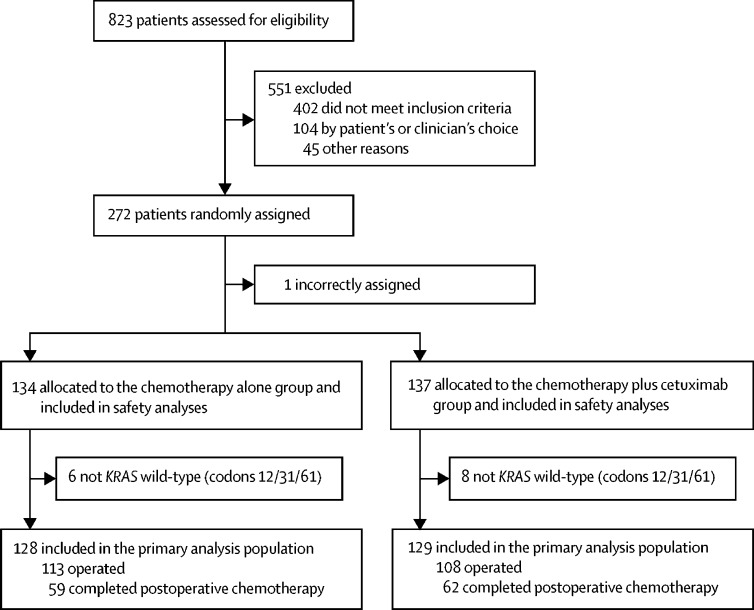
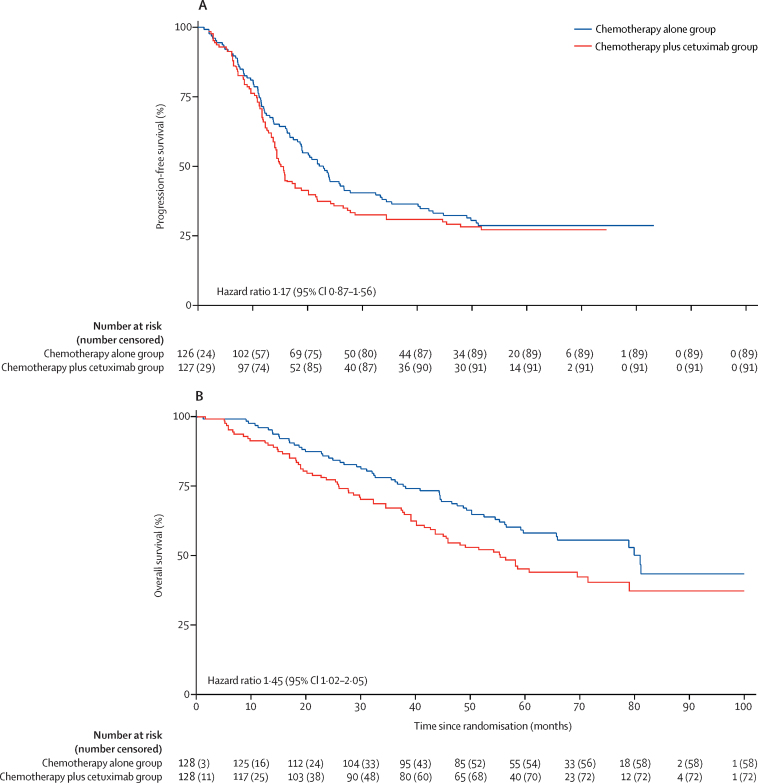
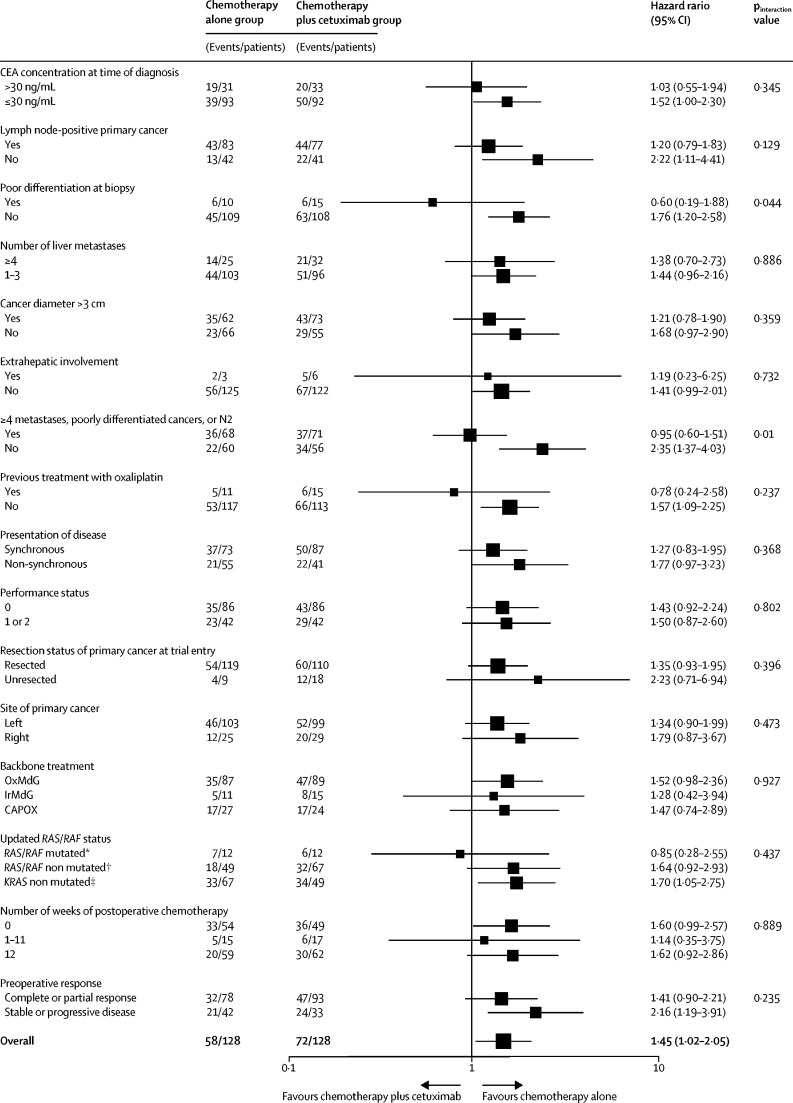
Background The interim analysis of the multicentre New EPOC trial in patients with resectable colorectal liver metastasis showed a significant reduction in progression-free survival in patients allocated to cetuximab plus chemotherapy compared with those given chemotherapy alone. The focus of the present analysis was to assess the effect on overall survival. Methods New EPOC was a multicentre, open-label, randomised, controlled, phase 3 trial. Adult patients (aged ≥18 years) with KRAS wild-type (codons 12, 13, and 61) resectable or suboptimally resectable colorectal liver metastases and a WHO performance status of 0–2 were randomly assigned (1:1) to receive chemotherapy with or without cetuximab before and after liver resection. Randomisation was done centrally with minimisation factors of surgical centre, poor prognosis cancer, and previous adjuvant treatment with oxaliplatin. Chemotherapy consisted of oxaliplatin 85 mg/m 2 administered intravenously over 2 h, l -folinic acid (175 mg flat dose administered intravenously over 2 h) or d , l -folinic acid (350 mg flat dose administered intravenously over 2 h), and fluorouracil bolus 400 mg/m 2 administered intravenously over 5 min, followed by a 46 h infusion of fluorouracil 2400 mg/m 2 repeated every 2 weeks (regimen one), or oxaliplatin 130 mg/m 2 administered intravenously over 2 h and oral capecitabine 1000 mg/m 2 twice daily on days 1–14 repeated every 3 weeks (regimen two). Patients who had received adjuvant oxaliplatin could receive irinotecan 180 mg/m 2 intravenously over 30 min with fluorouracil instead of oxaliplatin (regimen three). Cetuximab was given intravenously, 500 mg/m 2 every 2 weeks with regimen one and three or a loading dose of 400 mg/m 2 followed by a weekly infusion of 250 mg/m 2 with regimen two. The primary endpoint of progression-free survival was published previously. Secondary endpoints were overall survival, preoperative response, pathological resection status, and safety. Trial recruitment was halted prematurely on the advice of the Trial Steering Committee on Nov 1, 2012. All analyses (except safety) were done on the intention-to-treat population. Safety analyses included all randomly assigned patients. This trial is registered with ISRCTN, number 22944367. Findings Between Feb 26, 2007, and Oct 12, 2012, 257 eligible patients were randomly assigned to chemotherapy with cetuximab (n=129) or without cetuximab (n=128). This analysis was carried out 5 years after the last patient was recruited, as defined in the protocol, at a median follow-up of 66·7 months (IQR 58·0–77·5). Median progression-free survival was 22·2 months (95% CI 18·3–26·8) in the chemotherapy alone group and 15·5 months (13·8–19·0) in the chemotherapy plus cetuximab group (hazard ratio [HR] 1·17, 95% CI 0·87–1·56; p=0·304). Median overall survival was 81·0 months (59·6 to not reached) in the chemotherapy alone group and 55·4 months (43·5–71·5) in the chemotherapy plus cetuximab group (HR 1·45, 1·02–2·05; p=0·036). There was no significant difference in the secondary outcomes of preoperative response or pathological resection status between groups. Five deaths might have been treatment-related (one in the chemotherapy alone group and four in the chemotherapy plus cetuximab group). The most common grade 3–4 adverse events reported were: neutrophil count decreased (26 [19%] of 134 in the chemotherapy alone group vs 21 [15%] of 137 in the chemotherapy plus cetuximab group), diarrhoea (13 [10%] vs 14 [10%]), skin rash (one [1%] vs 22 [16%]), thromboembolic events (ten [7%] vs 11 [8%]), lethargy (ten [7%] vs nine [7%]), oral mucositis (three [2%] vs 14 [10%]), vomiting (seven [5%] vs seven [5%]), peripheral neuropathy (eight [6%] vs five [4%]), and pain (six [4%] vs six [4%]). Interpretation Although the addition of cetuximab to chemotherapy improves the overall survival in some studies in patients with advanced, inoperable metastatic disease, its use in the perioperative setting in patients with operable disease confers a significant disadvantage in terms of overall survival. Cetuximab should not be used in this setting. Funding Cancer Research UK.
Overview
The claims and statistics of this paper haven’t been checked yet.
Free: it reads the open-access text and checks the first 5 claims that cite a source we can check. Create a free account to check every claim.
Integrity signals
Registry
Cites
Statistics
Figures
Verification
Claims the paper makes
The claims and statistics of this paper haven’t been checked yet.
Free: it reads the open-access text and checks the first 5 claims that cite a source we can check. Create a free account to check every claim.
Claims other papers make about this one
Each is checked against this paper’s own text: does it say what the citing paper says it does?
The cited source says what the claim attributes to it.
In the citing paper
“the median overall survival was 81.0 months in the chemotherapy group and 55.4 months in the cetuximab plus chemotherapy group.”
From Update on Targeted Therapy and Immunotherapy for Metastatic Colorectal Cancer (2024) · cites this paper as [20]
Self-check
Percentages, sums and reported differences re-computed from the paper’s own numbers.
The self-check needs the paper’s full text.
Citations
Cites
Cetuximab and Chemotherapy as Initial Treatment for Metastatic Colorectal Cancer
Van Cutsem, E., Köhne, C.-H., Hitre, E., Zaluski, J., Chang Chien, C.-R., Makhson, A., D'Haens, G., Pintér, T., Lim, R., Bodoky, G., et al. (2009) · New England Journal of Medicine · doi:10.1056/nejmoa0805019 · Cited by 3,877
Panitumumab–FOLFOX4 Treatment and RAS Mutations in Colorectal Cancer
Douillard, J.-Y., Oliner, K. S., Siena, S., Tabernero, J., Burkes, R., Barugel, M., Humblet, Y., Bodoky, G., Cunningham, D., Jassem, J., et al. (2013) · New England Journal of Medicine · doi:10.1056/nejmoa1305275 · Cited by 2,263
Self-citationNordlinger, B., Sorbye, H., Glimelius, B., Poston, G. J., Schlag, P. M., Rougier, P., Bechstein, W. O., Primrose, J. N., Walpole, E. T., Finch-Jones, M., et al. (2008) · The Lancet · doi:10.1016/s0140-6736(08)60455-9 · Cited by 1,937
Self-citationVan Cutsem, E., Köhne, C.-H., Láng, I., Folprecht, G., Nowacki, M. P., Cascinu, S., Shchepotin, I., Maurel, J., Cunningham, D., Tejpar, S., et al. (2011) · Journal of Clinical Oncology · doi:10.1200/jco.2010.33.5091 · Cited by 1,882
Self-citationDouillard, J.-Y., Siena, S., Cassidy, J., Tabernero, J., Burkes, R., Barugel, M., Humblet, Y., Bodoky, G., Cunningham, D., Jassem, J., et al. (2010) · Journal of Clinical Oncology · doi:10.1200/jco.2009.27.4860 · Cited by 1,809
Self-citationKhambata-Ford, S., Garrett, C. R., Meropol, N. J., Basik, M., Harbison, C. T., Wu, S., Wong, T. W., Huang, X., Takimoto, C. H., Godwin, A. K., et al. (2007) · Journal of Clinical Oncology · doi:10.1200/jco.2006.10.5437 · Cited by 1,125
Maughan, T. S., Adams, R. A., Smith, C. G., Meade, A. M., Seymour, M. T., Wilson, R. H., Idziaszczyk, S., Harris, R., Fisher, D., Kenny, S. L., et al. (2011) · The Lancet · doi:10.1016/s0140-6736(11)60613-2 · Cited by 960
Self-citationArnold, D., Lueza, B., Douillard, J.-Y., Peeters, M., Lenz, H.-J., Venook, A., Heinemann, V., Van Cutsem, E., Pignon, J.-P., Tabernero, J., et al. (2017) · Annals of Oncology · doi:10.1093/annonc/mdx175 · Cited by 838
Bokemeyer, C., Bondarenko, I., Hartmann, J. T., de Braud, F., Schuch, G., Zubel, A., Celik, I., Schlichting, M., & Koralewski, P. (2011) · Annals of Oncology · doi:10.1093/annonc/mdq632 · Cited by 775
Taylor, A., Primrose, Langeberg, W., Kelsh, Mowat, F., Alexander, D., Choti, M., Poston, G., & Kanas, G. (2012) · Clinical Epidemiology · doi:10.2147/clep.s34285 · Cited by 657
Self-citation
Cited by
Cervantes, A., Adam, R., Roselló, S., Arnold, D., Normanno, N., Taïeb, J., Seligmann, J., De Baere, T., Osterlund, P., Yoshino, T., et al. (2023) · Annals of Oncology · doi:10.1016/j.annonc.2022.10.003 · Cited by 1,796
Huang, R., & Zhou, P.-K. (2021) · Signal Transduction and Targeted Therapy · doi:10.1038/s41392-021-00648-7 · Cited by 907
Colorectal liver metastasis: molecular mechanism and interventional therapy
Zhou, H., Liu, Z., Wang, Y., Wen, X., Amador, E. H., Yuan, L., Ran, X., Xiong, L., Ran, Y., Chen, W., et al. (2022) · Signal Transduction and Targeted Therapy · doi:10.1038/s41392-022-00922-2 · Cited by 298
Watanabe, J., Muro, K., Shitara, K., Yamazaki, K., Shiozawa, M., Ohori, H., Takashima, A., Yokota, M., Makiyama, A., Akazawa, N., et al. (2023) · JAMA · doi:10.1001/jama.2023.4428 · Cited by 280
Multi-stage mechanisms of tumor metastasis and therapeutic strategies
Liu, Z., Chen, J., Ren, Y., Liu, S., Ba, Y., Zuo, A., Luo, P., Cheng, Q., Xu, H., & Han, X. (2024) · Signal Transduction and Targeted Therapy · doi:10.1038/s41392-024-01955-5 · Cited by 184
Tie, J., Wang, Y., Cohen, J., Li, L., Hong, W., Christie, M., Wong, H. L., Kosmider, S., Wong, R., Thomson, B., et al. (2021) · PLOS Medicine · doi:10.1371/journal.pmed.1003620 · Cited by 180
Ashrafizadeh, M., Mirzaei, S., Hashemi, F., Zarrabi, A., Zabolian, A., Saleki, H., Sharifzadeh, S. O., Soleymani, L., Daneshi, S., Hushmandi, K., et al. (2021) · Biomedicine & Pharmacotherapy · doi:10.1016/j.biopha.2021.111824 · Cited by 181
RetractedLi, Z., Xu, W., Yang, J., Wang, J., Wang, J., Zhu, G., Li, D., Ding, J., & Sun, T. (2022) · Advanced Materials · doi:10.1002/adma.202200449 · Cited by 178
Update on Targeted Therapy and Immunotherapy for Metastatic Colorectal Cancer
Underwood, P. W., Ruff, S. M., & Pawlik, T. M. (2024) · Cells · doi:10.3390/cells13030245 · Cited by 130
“The results of the recent EPOC trial serve to caution its use in patients with operable liver metastases [20].”
BackgroundSystemic treatment for metastatic colorectal cancer
Leowattana, W., Leowattana, P., & Leowattana, T. (2023) · World Journal of Gastroenterology · doi:10.3748/wjg.v29.i10.1569 · Cited by 138
Laparoscopic Versus Open Hemihepatectomy: The ORANGE II PLUS Multicenter Randomized Controlled Trial
Fichtinger, R. S., Aldrighetti, L. A., Hilal, M. A., TROISI, R. I., Sutcliffe, R. P., Besselink, M. G., Aroori, S., Menon, K. V., Edwin, B., D’Hondt, M., et al. (2024) · Journal of Clinical Oncology · doi:10.1200/jco.23.01019 · Cited by 109
Self-citationKurth, I., Yamaguchi, N., Andreu-Agulló, C., Tian, H. S., Sridhar, S., Takeda, S., Gonsalves, F. C., Loo, J. M., Barlas, A., Manova-Todorova, K. O., et al. (2021) · Science Advances · doi:10.1126/sciadv.abi7511 · Cited by 99
Targeted Therapy for Colorectal Cancer
Sakata, S., & Larson, D. W. (2022) · Surgical Oncology Clinics of North America · doi:10.1016/j.soc.2021.11.006 · Cited by 95
γδ T cell dichotomy with opposing cytotoxic and wound healing functions in human solid tumors
Harmon, C., Zaborowski, A. M., Moore, H., Louis, P. S., Slattery, K., Duquette, D., Scanlan, J., Kane, H., Kunkemoeller, B. H., McIntyre, C., et al. (2023) · Nature Cancer · doi:10.1038/s43018-023-00589-w · Cited by 89
Jones, R. P., Pugh, S. A., Graham, J., Primrose, J. M., & Barriuso, J. (2021) · European Journal of Cancer · doi:10.1016/j.ejca.2020.11.025 · Cited by 74
Self-citationNeoadjuvant chemotherapy for colorectal liver metastases: A contemporary review of the literature
Guo, M. Z., Jin, N. Y., Pawlik, T. M., & Cloyd, J. M. (2021) · World Journal of Gastrointestinal Oncology · doi:10.4251/wjgo.v13.i9.1043 · Cited by 62
The Role of Neoadjuvant Chemotherapy in Locally Advanced Colon Cancer
Body, A. L., Prenen, H., Latham, S., Lam, M., Tipping-Smith, S., Raghunath, A., & Segelov, E. (2021) · Cancer Management and Research · doi:10.2147/cmar.s262870 · Cited by 61
“where there was a deleterious effect of cetuximab in patients with resectable liver metastases.(70,71) Anti-”
BackgroundTotal neoadjuvant therapy in rectal cancer: the evidence and expectations
Boublíková, L., Novakova, A., Simsa, J., & Lohynská, R. (2023) · Critical Reviews in Oncology/Hematology · doi:10.1016/j.critrevonc.2023.104196 · Cited by 64
Treatment strategies and drug resistance mechanisms in adenocarcinoma of different organs
Peng, X., Wang, S., Cao, Y. Q., Liu, B., Zheng, F., Guo, W., Huang, J.-H., Zhao, Z., Yang, Z., Lin, X., et al. (2023) · Drug Resistance Updates · doi:10.1016/j.drup.2023.101002 · Cited by 62
Ackermans, L. L. G. C., Volmer, L., Wee, L., Brecheisen, R., González, P. S., Seiffert, A. P., Aguilera, E. J. G., Dekker, A. L. A. J., Bosch, J. A. T., Damink, S. W. M. O., et al. (2021) · Sensors · doi:10.3390/s21062083 · Cited by 56
“Two cohorts of patients with colorectal liver metastases were selected in the UK [22].”
BackgroundMolecular Targets for the Treatment of Metastatic Colorectal Cancer
Cohen, R., Pudlarz, T., Delattre, J.-F., Colle, R., & André, T. (2020) · Cancers · doi:10.3390/cancers12092350 · Cited by 58
“This study showed a detrimental effect of cetuximab, both on disease free survival (DFS) and overall survival (OS), when added to chemotherapy [16].”
BackgroundAndreou, A., Gloor, S., Inglin, J., Martinelli, C. D. P., Banz, V. M., Lachenmayer, A., Kim‐Fuchs, C., Candinas, D., & Beldi, G. (2021) · Surgical Oncology · doi:10.1016/j.suronc.2021.101631 · Cited by 39
EORTC consensus recommendations on the optimal management of colorectal cancer liver metastases
Bregni, G., Adams, R., Bale, R. J., Bali, M. A., Bargellini, I., Blomqvist, L., Brown, G., Cremolini, C., Demetter, P., Denecke, T., et al. (2025) · Cancer Treatment Reviews · doi:10.1016/j.ctrv.2025.102926 · Cited by 41
“…ablation of initially unresectable/non-ablatable CRCLM following downsizing by < 4 months of systemic chemotherapy, systemic chemotherapy should be continued for a total duration of 6 months (including preoperative/preablative and postoperative/postablative treatment) (LoA: 87 %; LoE: 5) [8,25,27].”
Self-citationMartínez, M. C. R., Modrego, A., Espinosa-Olarte, P., Salvia, A. L., & García‐Carbonero, R. (2022) · Current Treatment Options in Oncology · doi:10.1007/s11864-022-01008-5 · Cited by 39
Katipally, R. R., Martinez, C. A., Pugh, S. A., Bridgewater, J. A., Primrose, J. M., Domingo, E., Maughan, T., Talamonti, M., Posner, M. C., Weichselbaum, R. R., et al. (2023) · JAMA Oncology · doi:10.1001/jamaoncol.2023.2535 · Cited by 38
Self-citationColorectal Cancer Liver Metastases
Aykut, B., & Lidsky, M. E. (2022) · Surgical Oncology Clinics of North America · doi:10.1016/j.soc.2022.07.009 · Cited by 33
Ryu, H. S., Kim, J., Park, Y. R., Cho, E., Choo, J. M., Kim, J., Baek, S. J., & Kwak, J. (2023) · Cancers · doi:10.3390/cancers15245791 · Cited by 37
“With advancements in surgical treatments and anticancer drugs for recurrent disease, the treatment outcomes have been improving [43–48].”
BackgroundKawaguchi, Y., & Vauthey, J. (2020) · Annals of Surgical Oncology · doi:10.1245/s10434-020-08777-z · Cited by 32
Surgical Management of Colorectal Cancer Liver Metastases
Padmanabhan, C., Nussbaum, D. P., & D'Angelica, M. I. (2020) · Surgical Oncology Clinics of North America · doi:10.1016/j.soc.2020.09.002 · Cited by 34
Koh, D., Ba‐Ssalamah, A., Brancatelli, G., Fananapazir, G., Fiel, M. I., Goshima, S., Ju, S., Kartalis, N., Kudo, M., Lee, J. M., et al. (2021) · European Radiology · doi:10.1007/s00330-020-07637-4 · Cited by 32
“Pre-operative chemotherapy is commonly used in patients with resectable liver metastatic disease to improve survival [21, 22], although the benefit of this intervention remains equivocal [23, 24].”
BackgroundQu, R., Zhang, Y., Kim, B., Zeng, G., Wang, P., Shaoyong, W., Huang, Y., Guo, W., Chen, Y., Wang, P., et al. (2025) · Cell Metabolism · doi:10.1016/j.cmet.2025.06.002 · Cited by 33
Limited Liver or Lung Colorectal Cancer Metastases. Systemic Treatment, Surgery, Ablation or SBRT
Mollà, M., Fernández-Plana, J., Albiol, S., Fondevila, C., Vollmer, I., Cases, C., García‐Criado, Á., Capdevila, J., Conill, C., Fundora, Y., et al. (2021) · Journal of Clinical Medicine · doi:10.3390/jcm10102131 · Cited by 30
Gong, J., Hendifar, A. E., Gangi, A., Zaghiyan, K. N., Atkins, K. M., Nasseri, Y. Y., Murrell, Z. A., Figueiredo, J. C., Salvy, S., Haile, R. W., et al. (2021) · Cancers · doi:10.3390/cancers13184547 · Cited by 30
“In a subset of patients with metastatic colorectal cancer (mCRC), particularly having limited burden oligometastases within the liver or lung, systemic chemotherapy along with metastasectomy or ablative therapy carries the potential for durable long-term survival [4,9,12].”
BackgroundLi, Y., Xu, J., Hu, X., Chen, Y., Liu, F., Chen, Y. F., Ma, X., Dong, Q., Sun, L., Mo, S., et al. (2024) · International Journal of Surgery · doi:10.1097/js9.0000000000001236 · Cited by 32
“However, 40 – 75% of patients still relapse within 2 years after resection [3 – 5] , with limited bene fi t from perioperative chemotherapy [6 – 9] .”
BackgroundGermani, M. M., Borelli, B., Boraschi, P., Antoniotti, C., Ugolini, C., Urbani, L., Morelli, L., Fontanini, G., Masi, G., Cremolini, C., et al. (2022) · Cancer Treatment Reviews · doi:10.1016/j.ctrv.2022.102382 · Cited by 29
Perioperative Chemotherapy for Liver Metastasis of Colorectal Cancer
Chan, G. H. J., & Chee, C. E. (2020) · Cancers · doi:10.3390/cancers12123535 · Cited by 25
“Primrose, 2014 [33] Bridgewater, 2020 [34] 257 Chemotherapy 1 + Cetuximab 70% mPFS: 15.”
BackgroundO’Rourke, C. J., Salati, M., Rae, C. J., Carpino, G., Leslie, H., Pea, A., Prete, M. G., Bonetti, L. R., Amato, F., Montal, R., et al. (2023) · Gut · doi:10.1136/gutjnl-2023-330748 · Cited by 30
Self-citationComprehensive Imaging Characterization of Colorectal Liver Metastases
Maclean, D., Tsakok, M., Gleeson, F. V., Breen, D. J., Goldin, R. D., Primrose, J. M., Harris, A. L., & Franklin, J. M. (2021) · Frontiers in Oncology · doi:10.3389/fonc.2021.730854 · Cited by 23
Self-citationMiR-323a regulates ErbB3/EGFR and blocks gefitinib resistance acquisition in colorectal cancer
Zhang, Y., Liang, S., Xiao, B., Hu, J., Pang, Y., Liu, Y., Yang, J., Ao, J., Wei, L., & Luo, X. (2022) · Cell Death and Disease · doi:10.1038/s41419-022-04709-9 · Cited by 23
“Recent reports have shown that the addition of cetuximab to perioperative chemotherapy significantly reduces progression-free survival in patients with resectable liver metastases from colorectal cancer [45, 46].”
BackgroundMultimodal Management of Colorectal Liver Metastases: State of the Art
Filoni, E., Musci, V., Rito, A. D., Inchingolo, R., Memeo, R., & Mannavola, F. (2024) · Oncology Reviews · doi:10.3389/or.2023.11799 · Cited by 27
Modern therapeutic approaches for hepatic tumors: progress, limitations, and future directions
Sadrinasab, S., Saket, S., Pourmohammadi, N., Khosravi, F., & Fakhr, M. S. (2025) · Discover Oncology · doi:10.1007/s12672-025-02773-z · Cited by 30
“In biliary tract malignancies, the randomized phase III BILCAP study found that capecitabine, when given for six months, enhanced three-year overall survival (63% vs. 53%, HR 0.81, p = 0.028) [135].”
InfluentialColorectal Cancer, Liver Metastases and Biotherapies
Osei‐Bordom, D., Kamarajah, S. K., & Christou, N. (2021) · Biomedicines · doi:10.3390/biomedicines9080894 · Cited by 27
“unresectable CRLM who were converted to resectable to allow surgical intervention to achieve a complete resection (R0) [22].”
BackgroundTailored Systemic Therapy for Colorectal Cancer Liver Metastases
Czauderna, C., Luley, K. B., von Bubnoff, N. C. C., & Marquardt, J. U. (2021) · International Journal of Molecular Sciences · doi:10.3390/ijms222111780 · Cited by 23
Contemporary Surgical Management of Colorectal Liver Metastases
Chandra, P., & Sacks, G. D. (2024) · Cancers · doi:10.3390/cancers16050941 · Cited by 24
“A long-term update of the trial with a median follow-up of 66.7 months demonstrated a median OS of 81.0 vs. 55.4 months in the control and cetuximab arms, respectively (HR 1.45, 95% CI 1.02–2.05, p = 0.036) [85].”
BackgroundInfluentialOno, K., Abe, T., Oshita, A., Sumi, Y., Yano, T., Okuda, H., Kurayoshi, M., Kobayashi, T., Ohdan, H., Noriyuki, T., et al. (2021) · World Journal of Surgical Oncology · doi:10.1186/s12957-021-02210-9 · Cited by 20
Surgical Management of Colorectal Cancer Liver Metastases
Padmanabhan, C., Nussbaum, D. P., & D'Angelica, M. I. (2024) · Hematology/Oncology Clinics of North America · doi:10.1016/j.hoc.2024.08.011 · Cited by 19
Liver regeneration biology: Implications for liver tumour therapies
Hadjittofi, C., Feretis, M., Martin, J. L., Harper, S., & Huguet, E. (2021) · World Journal of Clinical Oncology · doi:10.5306/wjco.v12.i12.1101 · Cited by 19
Colorectal liver metastases: state-of-the-art management and surgical approaches
Newhook, T. E., & Vauthey, J. (2022) · Langenbeck s Archives of Surgery · doi:10.1007/s00423-022-02496-7 · Cited by 20
“The New EPOC trial sought to evaluate the addition of anti-epidermal growth factor receptor (EGFR) antibody cetuximab to oxaliplatin-containing perioperative chemotherapy for patients undergoing resection of CLM, and later amended to include only patients without tumor KRAS mutations (wild-type) [13, 22].”
MethodSonbol, M. B., Siddiqi, R. L., Usón, P. L. S., Pathak, S., Firwana, B., Botrus, G., Almader‐Douglas, D., Ahn, D. H., Borad, M. J., Starr, J. S., et al. (2022) · The Oncologist · doi:10.1093/oncolo/oyac212 · Cited by 20
Optimizing Treatment Strategy for Oligometastases/Oligo-Recurrence of Colorectal Cancer
Yokoi, R., Tajima, J. Y., Fukada, M., Hayashi, H., Kuno, M., Asai, R., Sato, Y., Yasufuku, I., Kiyama, S., Tanaka, Y., et al. (2023) · Cancers · doi:10.3390/cancers16010142 · Cited by 20
“A subsequent analysis reported that the addition of cetuximab in the perioperative setting conferred a significant disadvantage in terms of OS (55.4 versus 81.0 months; HR = 1.45 (95% CI: 1.02–2.05); p = 0.036) [179].”
BackgroundInfluentialTumor Biomarker Testing for Metastatic Colorectal Cancer: a Canadian Consensus Practice Guideline
Yu, I. S., Aubin, F., Goodwin, R. A., Loree, J. M., Mather, C. A., Sheffield, B. S., Snow, S. L., & Gill, S. (2022) · Therapeutic Advances in Medical Oncology · doi:10.1177/17588359221111705 · Cited by 18
Kazi, M. K., Patkar, S., Patel, P., Kunte, A. R., Desouza, A. L., Saklani, A. P., & Goel, M. (2022) · Annals of Hepato-Biliary-Pancreatic Surgery · doi:10.14701/ahbps.22-043 · Cited by 17
“With perioperative chemotherapy in CRLM being questioned by recent randomized trials [20,21], a larger proportion of patients are expected to be eligible for upfront simultaneous resections.”
Yohanathan, L., Chopra, A., Simo, K. A., Clancy, T. E., Khithani, A. S., Anaya, D. A., Maegawa, F. B., Sheikh, M. R., Raoof, M., Jacobs, M. R., et al. (2024) · HPB · doi:10.1016/j.hpb.2024.12.006 · Cited by 16
Karaoğlan, B. B., Öz, D. K., Araz, M., Akyol, C., & Utkan, G. (2024) · Current Oncology Reports · doi:10.1007/s11912-024-01548-z · Cited by 19
“The analysis, conducted five years after recruitment cessation, demonstrated a median overall survival of 81.0 months in the chemotherapy alone group versus 55.4 months in the chemotherapy plus cetuximab group [39].”
MethodInfluentialKhelwatty, S. A., Puvanenthiran, S., Essapen, S., Bagwan, I., Seddon, A. M., & Modjtahedi, H. (2021) · Cancers · doi:10.3390/cancers13040638 · Cited by 17
Self-citationChen, F., Wang, Y., Liu, W., & Xing, B. (2022) · Frontiers in Oncology · doi:10.3389/fonc.2022.973418 · Cited by 16
“Organizing clinical trials involving both surgery and chemotherapy is complex, and few RCTs have been completed (8, 19, 37).”
BackgroundKanemitsu, Y., Shimizu, Y., Mizusawa, J., Inaba, Y., Tsukamoto, S., Takashima, A., Ohue, M., Komori, K., Shiomi, A., Shiozawa, M., et al. (2026) · Journal of Clinical Oncology · doi:10.1200/jco-25-01231 · Cited by 28
Cheng, X., Zhao, F., Chen, D., & Liu, F. (2024) · World Journal of Gastroenterology · doi:10.3748/wjg.v30.i7.663 · Cited by 16
Su, Y., Tsai, K., Chiu, T., Lin, Y., Lee, K., Lu, C., Chen, H., Wu, C., & Hsu, H. (2021) · Cancers · doi:10.3390/cancers13205080 · Cited by 19
“Some patients have the chance to achieve a durable survival by integrating radical surgery, chemotherapy, and targeting therapy including anti-epidermal growth factor receptor (anti-EGFR) or anti-vascular epidermal growth factor (VEGF) antibody [6].”
BackgroundPROPPER, D. J., Gao, F., Saunders, M. P., Sarker, D., Hartley, J. A., Spanswick, V. J., Lowe, H. L., Hackett, L. D., Ng, T., Barber, P. R., et al. (2022) · British Journal of Cancer · doi:10.1038/s41416-022-02015-x · Cited by 15
“There is evidence that in some indications the combination of oxaliplatin with cetuximab could be deleterious with regard to overall survival (OS) [12].”
BackgroundArdito, F., Razionale, F., Salvatore, L., Cenci, T., Vellone, M., Basso, M., Panettieri, E., Calegari, M. A., Tortora, G., Martini, M., et al. (2021) · Cancers · doi:10.3390/cancers13092148 · Cited by 15
“This last topic is of particular interest, since some reports suggest the possibility of a detrimental effect of anti-EGFR therapies when a mutation is detected or in the adjuvant setting even in wild-type patients [37].”
BackgroundSinicrope, F. A., Segovia, D., Sharma, N., Alberts, S. R., Hardin, A. I., Rich, T. A., & Shi, Q. (2026) · Journal of Clinical Oncology · doi:10.1200/jco-25-02086 · Cited by 23
Bernardi, L., Roesel, R., Aghayan, D. L., Majno-Hurst, P. E., Dosso, S. D., & Cristaudi, A. (2024) · Cancer Treatment Reviews · doi:10.1016/j.ctrv.2024.102696 · Cited by 14
Neuroendocrine Carcinoma of the Anus and Rectum: Patient Characteristics and Treatment Options
Ueberroth, B. E., Liu, A. J., Starr, J. S., Hobday, T. J., Ashman, J. B., Mishra, N., Bekaii‐Saab, T., Halfdanarson, T. R., & Sonbol, M. B. (2020) · Clinical Colorectal Cancer · doi:10.1016/j.clcc.2020.12.001 · Cited by 15
Perioperative Systemic Chemotherapy for Colorectal Liver Metastasis: Recent Updates
Lee, H. Y., & Woo, I. S. (2021) · Cancers · doi:10.3390/cancers13184590 · Cited by 15
“Any RAS-mutated CRC including KRAS and NRAS or BRAFmutated CRC does not respond to EGFR inhibition, and thus those tests are currently mandatory before anti-EGFR therapy.”
BackgroundMethodInfluentialPrecision Medicine for Metastatic Colorectal Cancer: Where Do We Stand?
Underwood, P. W., & Pawlik, T. M. (2024) · Cancers · doi:10.3390/cancers16223870 · Cited by 15
Li, S., Li, T., Wang, X., Rahmatulla, A., Zhao, Y., Zhang, X., Liu, Y., & Chen, Y. (2025) · Journal of drug targeting · doi:10.1080/1061186x.2025.2514564 · Cited by 15
“…cytotoxic chemotherapy and biologic agents targeting vascular endothelial growth factor (veGF) and epidermal growth factor receptor (eGFR). conventional chemotherapy agents for cc treatment are 5-fluorouracil (5-FU), oxaliplatin (OXA), capecitabine (cAP), irinotecan and fluorouracil/tipiracil [51].”
Canadian Guidelines on the Management of Colorectal Peritoneal Metastases
Brind’Amour, A., Dubé, P., Tremblay, J. F., Soucisse, M., Mack, L. A., Bouchard‐Fortier, A., McCart, J. A., Govindarajan, A., Bischof, D. A., Haase, E., et al. (2020) · Current Oncology · doi:10.3747/co.27.6919 · Cited by 13
Vogel, A., Ochsenreither, S., Zager, J. S., Wacker, F. K., & Saborowski, A. L. (2022) · Cancer Treatment Reviews · doi:10.1016/j.ctrv.2022.102501 · Cited by 12
Turner, K. M., Delman, A. M., Wima, K., Quillin, R. C., Shah, S. A., Ahmad, S. A., Patel, S. H., & Wilson, G. C. (2022) · The American Journal of Surgery · doi:10.1016/j.amjsurg.2022.08.007 · Cited by 11
EGFR antibodies in resectable metastatic colorectal liver metastasis: more harm than benefit?
Gholami, S., & Grothey, A. F. (2020) · The Lancet Oncology · doi:10.1016/s1470-2045(20)30003-6 · Cited by 11
“2 The authors offer the expression of the microRNA miR-31–3p in primary colorectal cancer of patients with metastatic disease treated with cetuximab or panitumumab as a potential explanation for resistance to EGFR inhibition and disease progression.”
BackgroundChallenges and Opportunities for Precision Surgery for Colorectal Liver Metastases
O'Connell, R. M., & Hoti, E. (2024) · Cancers · doi:10.3390/cancers16132379 · Cited by 14
Liang, L., Liu, M., Sun, X., Yuan, Y., Peng, K., Rashid, K., Yu, Y., Cui, Y., Chen, Y., & Liu, T. (2021) · Cancer Cell International · doi:10.1186/s12935-021-01829-8 · Cited by 12
Jacome, A. A. D. A., Oliveira, F. A. D. S. D. S., Lino, F., & Lima, J. P. D. S. N. (2021) · Clinical Colorectal Cancer · doi:10.1016/j.clcc.2021.05.006 · Cited by 10
Repeat Resection for Advanced Colorectal Liver Metastases—Does it have the Potential for Cure?
Takeda, Y., Mise, Y., Ito, H., Ono, Y., Sato, T., Inoue, Y., Takahashi, Y., & Saiura, A. (2022) · World Journal of Surgery · doi:10.1007/s00268-022-06616-8 · Cited by 10
Time to halt perioperative chemotherapy for resectable colorectal liver metastasis?
Søreide, K. (2021) · British journal of surgery · doi:10.1093/bjs/znab425 · Cited by 10
Lepage, C., Phelip, J.-M., Cany, L., Barbier, E., Manfrédi, S., Deguiral, P., Laly, M., Baconnier, M., Jary, M., Latrive, J. P., et al. (2025) · Annals of Oncology · doi:10.1016/j.annonc.2025.09.004 · Cited by 12
Ueno, M., Komeda, K., Kosaka, H., Nakai, T., Nomi, T., Iida, H., Tanaka, S., Ikoma, H., Matsuda, K., Hirokawa, F., et al. (2021) · International Journal of Surgery · doi:10.1016/j.ijsu.2021.106106 · Cited by 9
Raffele, E. D., Mirarchi, M., Cuicchi, D., Lecce, F., Casadei, R., Ricci, C., Selva, S., & Minni, F. (2020) · World Journal of Gastroenterology · doi:10.3748/wjg.v26.i42.6529 · Cited by 9
Granieri, S., Cotsoglou, C., Bonomi, A. M., Salvatore, L., Filippi, R., Nigro, O., Gelsomino, F., Zurlo, I. V., Depetris, I., Giampieri, R., et al. (2022) · Cancers · doi:10.3390/cancers14225513 · Cited by 10
“demonstrated by the results of the New EPOC trial, in mCRC patients with resectable liver disease, the standard of care should be chemotherapy without monoclonal antibodies [23].”
ResultTotal Neoadjuvant Chemotherapy in Rectal Cancer: Current Facts and Future Strategies
Beppu, N., Ikeda, M., Kataoka, K., Kimura, K., Ikeuchi, H., Uchino, M., Nakamoto, Y., Okamoto, R., & Yanagi, H. (2023) · Journal of the Anus Rectum and Colon · doi:10.23922/jarc.2022-060 · Cited by 8
“Thus, cetuximab should not be used in this setting (Table 2c) [15].”
BackgroundLv, Y., Wang, W., Liu, Y., Yi, B., Chu, T., Feng, Z., Liu, J. H., Wan, X., & Wang, Y. (2023) · Clinical & Experimental Metastasis · doi:10.1007/s10585-023-10218-6 · Cited by 10
Behrenbruch, C., Prabhakaran, S., Udayasiri, D. K., Hollande, F., Michael, M., Hayes, I., Heriot, A. G., Knowles, B., & Thomson, B. N. J. (2021) · ANZ Journal of Surgery · doi:10.1111/ans.16613 · Cited by 8
“the only chance of cure for these patients, with a 5-year OS of up to 50%.(4) The liver is the most common site of colorectal metasta-”
BackgroundMoslim, M. A., & Jeyarajah, D. R. (2021) · Journal of Gastrointestinal Oncology · doi:10.21037/jgo-21-96 · Cited by 8
“The administration of neoadjuvant cetuximab plus chemotherapy in patients with operable CRLMs rendered worse survival in the multicenter, open-label, randomized, phase III New EPOC trial (17).”
MethodWang, Y., Yin, Z., Gao, L., Ma, B., Shi, J., & Chen, H. (2023) · International Journal of Nanomedicine · doi:10.2147/ijn.s402821 · Cited by 9
“Large randomized clinical trials have revealed that peri-operative chemotherapy or targeted therapeutics would not improve overall survival otherwise increasing drug-related side effects in patients with resectable colorectal liver metastasis.(16,20,21) Accordingly, conventional therapeutics were associated with consi…”
BackgroundHolch, J. W., Ohnmacht, A. J., Stintzing, S., Heinrich, K., Weiss, L., Probst, V., Stahler, A., von Weikersthal, L. F., Decker, T. W., Kiani, A., et al. (2025) · European Journal of Cancer · doi:10.1016/j.ejca.2025.115388 · Cited by 7
Menon, K. V., Vijayashanker, A., Murphy, J., Line, P., Isaac, J., Adair, A., Prasad, R. K., Thorburn, D., Adair, A., Parker, I., et al. (2023) · HPB · doi:10.1016/j.hpb.2023.02.011 · Cited by 7
Quenching thirst with poison? Paradoxical effect of anticancer drugs
Chai, K., Wang, C., Zhou, J., Mu, W., Gao, M., Fan, Z., & Lv, G. (2023) · Pharmacological Research · doi:10.1016/j.phrs.2023.106987 · Cited by 11
Pollini, T., Tran, T. B., Wong, P., Adam, M. A., Alseidi, A. A., Corvera, C. U., Hirose, K., Nakakura, E. K., Warren, R. S., Maker, V. K., et al. (2024) · Journal of Gastrointestinal Surgery · doi:10.1016/j.gassur.2023.12.026 · Cited by 7
Ashouri, Y., Hsu, C., Riall, T. S., Konstantinidis, I. T., & Maegawa, F. B. (2022) · Digestive Diseases and Sciences · doi:10.1007/s10620-021-07333-3 · Cited by 7
“The survival benefits of preoperative chemotherapy in CRC patients with liver metastases are well established [3, 4].”
BackgroundRashad, N., Abdulla, M., Farouk, M., Elkerm, Y., Salem, S. E., Yehia, M., Saad, A. S., Aziz, A. H. A., Refaat, G., Awad, I., et al. (2022) · Cancer Management and Research · doi:10.2147/cmar.s340030 · Cited by 7
“The role of biologics (Anti-EGFR, Anti-VEGF) patients with resectable metastases is not proven with even detrimental effects in some trials,(43) thus it is not recommended as a part of peri-operative or adjuvant treatment.(44) The definition of “potentially resectable” metastatic disease is based mainly on consensus r…”
BackgroundWang, Y., Li, X., Huang, T., Wang, D., He, Y., Wei, M., Chen, Y., Zheng, M., Shi, Y., & Zhang, J. (2023) · World Journal of Surgical Oncology · doi:10.1186/s12957-023-03222-3 · Cited by 8
Nishioka, Y., Kawaguchi, Y., Kothari, A. N., Odisio, B. C., & Vauthey, J. (2021) · Journal of Gastrointestinal Surgery · doi:10.1007/s11605-021-04962-x · Cited by 7
Matsumura, M., Hasegawa, K., Oba, M., Yamaguchi, K., Uetake, H., Yoshino, T., Morita, S., Takahashi, K., Unno, M., Shimada, Y., et al. (2022) · Langenbeck s Archives of Surgery · doi:10.1007/s00423-022-02434-7 · Cited by 9
“On the other hand, for patients with resectable CLM, the NEW EPOC trial showed that perioperative chemotherapy with an oxaliplatin or irinotecan-based regimen plus cetuximab was significantly associated with worse OS than perioperative chemotherapy alone [17, 26].”
Chan, A. K. C., & Siriwardena, A. K. (2024) · Surgery Open Science · doi:10.1016/j.sopen.2024.10.009 · Cited by 6
“The role of chemotherapy (with or without biologic agents) for patients with limited metachronous liver metastases has been evaluated in two large, randomized trials [5,6].”
Self-citationPavel, M.-C., Ramírez‐Maldonado, E., Pueyo-Périz, E. M., Memba, R., Merino, S., Geoghegan, J., & Jorba, R. (2023) · International Journal of Molecular Sciences · doi:10.3390/ijms24021127 · Cited by 6
“The New EPOC trial, comparing 272 K-RAS wild-type upfront resectable metastases treated with FOLFOX with or without cetuximab, showed that the addition of cetuximab was associated with significantly worse PFS [50,51].”
MethodTakamoto, T., Nara, S., Ban, D., Mizui, T., Murase, Y., Esaki, M., Shimada, K., Hashimoto, T., & Makuuchi, M. (2023) · World Journal of Surgery · doi:10.1007/s00268-023-07133-y · Cited by 6
Chen, Y., Zheng, Y., Wu, J., Ye, R., Jia, H., Zhou, Z., Chen, W., Xu, L., Zhang, Y., & Zheng, M. (2025) · Therapeutic Advances in Medical Oncology · doi:10.1177/17588359251328457 · Cited by 8
“Adverse events associated with chemotherapy combined with Bev have been previously discussed, 36 which was consistent with our findings.”
Kawaguchi, Y., Bellis, M. D., Panettieri, E., Duwe, G., & Vauthey, J. (2020) · Surgical Oncology Clinics of North America · doi:10.1016/j.soc.2020.08.009 · Cited by 6
Bae, H. W., Kim, H. S., Yang, S. Y., Kim, H. S., Shin, S. J., Chang, J. S., Koom, W. S., & Kim, N. K. (2021) · European Journal of Surgical Oncology · doi:10.1016/j.ejso.2021.05.018 · Cited by 6
Metadata
- Authors
- Bridgewater, J. A., Pugh, S. A., Maishman, T., Eminton, Z., Mellor, J., Whitehead, A., Stanton, L., Radford, M., Corkhill, A., Griffiths, G. O., Falk, S., Valle, J. W., O'Reilly, D., Siriwardena, A. K., Hornbuckle, J., Rees, M., Iveson, T. J., Hickish, T., Garden, O. J., Cunningham, D., Maughan, T. S., Primrose, J. N., Shablack, A., O'Callaghan, A., Moody, (. A., Allen, A., Brewster, A., Brown, A., Mayer, A., Davidson, B., Ton, C., Wilson, C., Lowdell, C., Rees, C., Baughan, C., Barlow, C., Purcell, C., Smith, D., Tsang, D., Brown, E., Walker, G., Malik, H., Cameron, I., Nolan, L., Hall, M., Tomlinson, M., Hill, M., Peterson, M., Finch-Jones, M., Kumar, N., Karanjia, N., Ali, N., Heaton, N., Ton, N. C., Ross, P., Praseedom, R., Thomas, R., Clive, S., Slater, S., Smith, S., Mudan, S., Bhattacharya, S., Essapen, S., Raouf, S., Fenwick, S., Cleator, S., Diamond, T., & Potter, V.
- Affiliations
- University College London (GB)
- University of Southampton (GB)
- University of Manchester (GB)
- Manchester Royal Infirmary (GB)
- Sheffield Teaching Hospitals NHS Foundation Trust (GB)
- Basingstoke and North Hampshire Hospital (GB)
- University Hospital Southampton NHS Foundation Trust (GB)
- Bournemouth University (GB)
- University of Edinburgh (GB)
- Royal Marsden Hospital (GB)
- Corresponding author
- Bridgewater, John A
- ORCID
- Bridgewater, John A
- Maishman, Tom
- Eminton, Zina
- Whitehead, Amy
- Stanton, Louise
- Radford, Michael
- Griffiths, Gareth O
- Falk, Stephen
- Valle, Juan W
- O'Reilly, Derek
- Siriwardena, Ajith K
- Iveson, Timothy J
- Hickish, Tamas
- Cunningham, David
- O'Callaghan, Ann
- Davidson, Brian
- Barlow, Clare
- Smith, David
- Brown, Ewan
- Malik, Hassan
- Hall, Marcia
- Hill, Mark
- Kumar, Nagappan
- Karanjia, Nariman
- Ali, Nasim
- Heaton, Nigel
- Ross, Paul
- Praseedom, Raaj
- Thomas, Robert
- Clive, Sally
- Slater, Sarah
- Mudan, Satvinder
- Essapen, Sharadah
- Raouf, Sherif
- Fenwick, Stephen
- Cleator, Susan
- Diamond, Tom
- Potter, Vanessa
- Venue
- The Lancet Oncology
- Publisher
- Elsevier BV
- Published
- 2020-03
- Volume
- 21
- Issue
- 3
- Pages
- 398-411
- ISSN
- 1470-2045 (ISSN-L)
- PMC
- PMC7052737
- OpenAlex
- W3003259023
- Cited by
- 255
- References
- 25
- Citations by year
- 2026: 30 · 2025: 35 · 2024: 34 · 2023: 33 · 2022: 42 · 2021: 56 · 2020: 25
- FWCI
- 14.09
- Type
- journal article
- Language
- en
- Open access
- hybrid
- doi.org
- Licence
- cc-by-nc-nd
- www.elsevier.com/tdm/userlicense/1.0/ (tdm)
- www.elsevier.com/legal/tdmrep-license (tdm)
- creativecommons.org/licenses/by-nc-nd/4.0/ (vor)
- Locations
- The Lancet Oncology (publishedVersion, cc-by-nc-nd)
- PubMed Central (publishedVersion, cc-by-nc-nd)
- PubMed (publishedVersion)
- Research Explorer (The University of Manchester) (publishedVersion, cc-by-nc-nd)
- Bournemouth University Research Online (Bournemouth University) (acceptedVersion)
- ePrints Soton (University of Southampton) (acceptedVersion)
- UCL Discovery (University College London) (submittedVersion)
- Edinburgh Research Explorer (University of Edinburgh) (submittedVersion, cc-by-nc-nd)
- Funders
- NIHR Maudsley Biomedical Research Centre
- Merck KGaA
- Cancer Research UK (C317/A7275)
- Royal Marsden NHS Foundation Trust
- Institute of Cancer Research
- Manchester Biomedical Research Centre
- Topics
- Health Sciences › Medicine › Oncology › Colorectal Cancer Treatments and Studies
- Health Sciences › Medicine › Oncology › Colorectal Cancer Surgical Treatments
- Health Sciences › Medicine › Surgery › Intraperitoneal and Appendiceal Malignancies
- Keywords
- colorectal liver metastases, cetuximab, systemic chemotherapy, oxaliplatin, FOLFOX, capecitabine, irinotecan, KRAS wild-type, hepatectomy, adjuvant therapy, overall survival, progression-free survival, EGFR inhibition, prognostic factors, prognostic score
- MeSH terms
- Cetuximab, Capecitabine, Irinotecan, Oxaliplatin, Aged, Antineoplastic Combined Chemotherapy Protocols, Leucovorin, Female, Fluorouracil, Follow-Up Studies, Humans, Liver Neoplasms, Male, Middle Aged, Neoplasm Recurrence, Local, Prognosis, Colorectal Neoplasms, Survival Rate
About these checks
Registry, retraction, Cites and statistics results are computed, not judged, with one exception: a printed reference that no index lists is read once by a model before it counts as a citation error. Claims are extracted by a model and kept only when their quote appears verbatim in the text; each cited source is then checked, with a model’s help, for whether it says what the claim relies on. Those verdicts can be wrong — read the claim’s quote and the cited source before relying on one.
Statistics and arithmetic are recomputed, not judged.
Confidence bands are shown only for fields calibrated on our annotated test set. None is calibrated yet, so no band is shown.
What counts as a claim ›How we measure confidence ›How we check this ›
Are you an author, or do you see a problem with this page? Request a review
Data sources
Bibliographic data: Semantic Scholar, OpenAlex, Crossref.
Contains information from the Semantic Scholar Academic Graph Datasets, made available under the ODC Attribution License (ODC-BY 1.0).
Semantic Scholar’s data is described in: Kinney, R., et al. (2023). The Semantic Scholar Open Data Platform. arXiv:2301.10140.
