

Maternal immunisation with trivalent inactivated influenza vaccine for prevention of influenza in infants in Mali: a prospective, active-controlled, observer-blind, randomised phase 4 trial
Open accessThe DOI matches its Crossref record; 29 of the 29 references it cites were found in a registry or an index.
Abstract
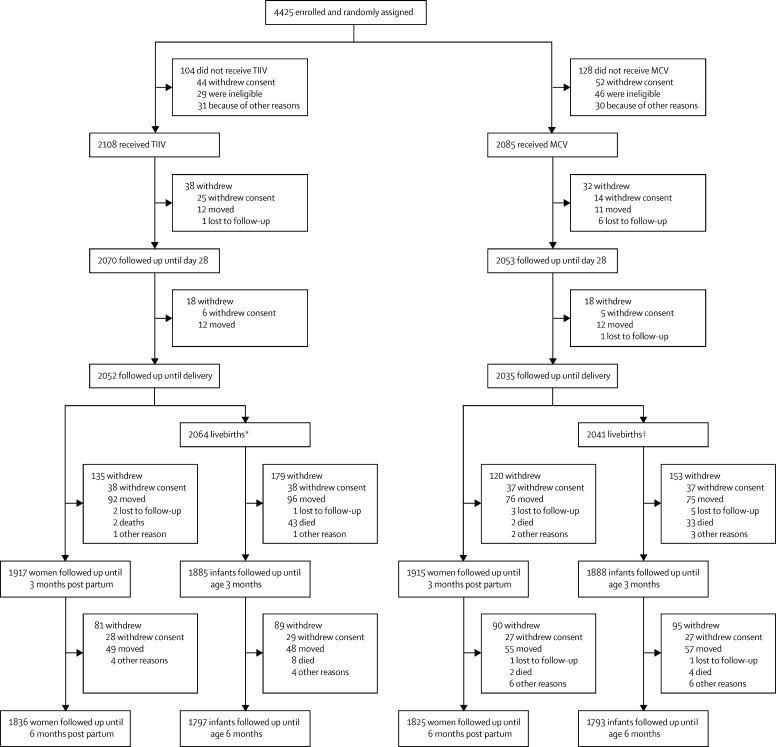
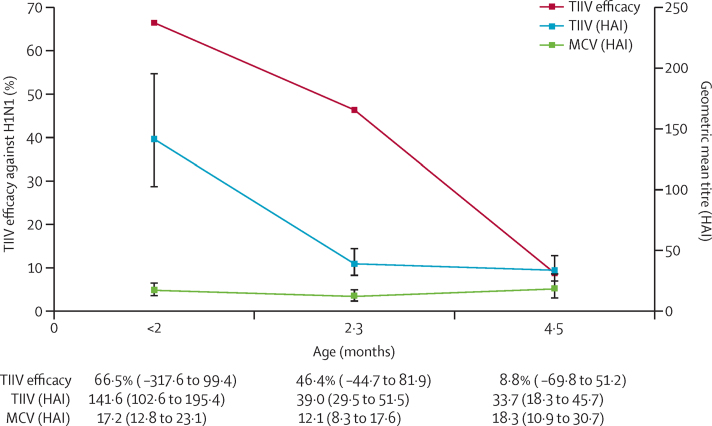
BACKGROUND: Despite the heightened risk of serious influenza during infancy, vaccination is not recommended in infants younger than 6 months. We aimed to assess the safety, immunogenicity, and efficacy of maternal immunisation with trivalent inactivated influenza vaccine for protection of infants against a first episode of laboratory-confirmed influenza. METHODS: We did this prospective, active-controlled, observer-blind, randomised phase 4 trial at six referral centres and community health centres in Bamako, Mali. Third-trimester pregnant women (≥28 weeks' gestation) were randomly assigned (1:1), via a computer-generated, centre-specific list with alternate block sizes of six or 12, to receive either trivalent inactivated influenza vaccine or quadrivalent meningococcal vaccine. Study personnel administering vaccines were not masked to treatment allocation, but allocation was concealed from clinicians, laboratory personnel, and participants. Infants were visited weekly until age 6 months to detect influenza-like illness; laboratory-confirmed influenza diagnosed with RT-PCR. We assessed two coprimary objectives: vaccine efficacy against laboratory-confirmed influenza in infants born to women immunised any time prepartum (intention-to-treat population), and vaccine efficacy in infants born to women immunised at least 14 days prepartum (per-protocol population). The primary outcome was the occurrence of a first case of laboratory-confirmed influenza by age 6 months. This trial is registered with ClinicalTrials.gov, number NCT01430689. FINDINGS: We did this trial from Sept 12, 2011, to Jan 28, 2014. Between Sept 12, 2011, and April 18, 2013, we randomly assigned 4193 women to receive trivalent inactivated influenza vaccine (n=2108) or quadrivalent meningococcal vaccine (n=2085). There were 4105 livebirths; 1797 (87%) of 2064 infants in the trivalent inactivated influenza vaccine group and 1793 (88%) of 2041 infants in the quadrivalent meningococcal vaccine group were followed up until age 6 months. We recorded 5279 influenza-like illness episodes in 2789 (68%) infants, of which 131 (2%) episodes were laboratory-confirmed influenza. 129 (98%) cases of laboratory-confirmed influenza were first episodes (n=77 in the quadrivalent meningococcal vaccine group vs n=52 in the trivalent inactivated influenza vaccine group). In the intention-to-treat population, overall infant vaccine efficacy was 33·1% (95% CI 3·7-53·9); in the per-protocol population, vaccine efficacy was 37·3% (7·6-57·8). Vaccine efficacy remained robust during the first 4 months of follow-up (67·9% [95% CI 35·1-85·3] by intention to treat and 70·2% [35·7-87·6] by per protocol), before diminishing during the fifth month (57·3% [30·6-74·4] and 60·7 [33·8-77·5], respectively). Adverse event rates in women and infants were similar among groups. Pain at the injection site was more common in women given quadrivalent meningococcal vaccine than in those given trivalent inactivated influenza vaccine (n=253 vs n=132; p<0·0001), although 354 [92%] reactions were mild. Obstetrical and non-obstetrical serious adverse events were reported in 60 (3%) women in the quadrivalent meningococcal vaccine group and 61 (3%) women in the trivalent inactivated influenza vaccine group. Presumed neonatal infection was more common in infants in the trivalent inactivated influenza vaccine group than in those in the quadrivalent meningococcal vaccine group (n=60 vs n=37; p=0·02). No serious adverse events were related to vaccination. INTERPRETATION: Vaccination of pregnant women with trivalent inactivated influenza vaccine in Mali-a poorly resourced country with high infant mortality-was technically and logistically feasible and protected infants from laboratory-confirmed influenza for 4 months. With adequate financing to procure the vaccine, implementation will parallel the access to antenatal care and immunisation coverage of pregnant women with tetanus toxoid. FUNDING: Bill & Melinda Gates Foundation.
Overview
The claims and statistics of this paper haven’t been checked yet.
Free: it reads the open-access text and checks the first 5 claims that cite a source we can check. Create a free account to check every claim.
Integrity signals
Registry
Cites
Statistics
Figures
Verification
Claims the paper makes
The claims and statistics of this paper haven’t been checked yet.
Free: it reads the open-access text and checks the first 5 claims that cite a source we can check. Create a free account to check every claim.
Claims other papers make about this one
Each is checked against this paper’s own text: does it say what the citing paper says it does?
The source backs part of the claim, not all of it — or backs it for a different population, condition or comparison.
In the citing paper
“Maternal vaccination is a highly effective approach to protect infants from infection.”
From Factors Affecting the FcRn-Mediated Transplacental Transfer of Antibodies and Implications for Vaccination in Pregnancy (2017) · cites this paper as [17]
Experimental — accuracy not yet measuredThe source backs part of the claim, not all of it — or backs it for a different population, condition or comparison.
In the citing paper
“infants of influenza vaccinated mothers were 45–63% less likely to have episodes of proven influenza illness in early infancy (4–6 months of age).”
From Factors Affecting the FcRn-Mediated Transplacental Transfer of Antibodies and Implications for Vaccination in Pregnancy (2017) · cites this paper as [17]
Experimental — accuracy not yet measured
Self-check
Percentages, sums and reported differences re-computed from the paper’s own numbers.
The self-check needs the paper’s full text.
Citations
Cites
Lozano, R., Naghavi, M., Foreman, K., Lim, S., Shibuya, K., Aboyans, V., Abraham, J., Adair, T., Aggarwal, R., Ahn, S. Y., et al. (2012) · The Lancet · doi:10.1016/s0140-6736(12)61728-0 · Cited by 14,070
New Ballard Score, expanded to include extremely premature infants
Ballard, J. L., Khoury, J. C., Wedig, K., Wang, L., Eilers-Walsman, B. L., & Lipp, R. (1991) · The Journal of Pediatrics · doi:10.1016/s0022-3476(05)82056-6 · Cited by 1,961
Effectiveness of maternal influenza immunization in mothers and infants
Zaman, K., Roy, E., Arifeen, S. E., Rahman, M., Raqib, R., Wilson, E., Omer, S. B., Shahid, N. S., Breiman, R. F., & Steinhoff, M. C. (2008) · New England Journal of Medicine · doi:10.1056/nejmoa0708630 · Cited by 1,227
Vaccines against influenza WHO position paper – November 2012.
(2012) · PubMed · Cited by 1,122
Nair, H., Brooks, W. A., Katz, M., Roca, A., Berkley, J. A., Madhi, S. A., Simmerman, J. M., Gordon, A., Sato, M., Howie, S., et al. (2011) · The Lancet · doi:10.1016/s0140-6736(11)61051-9 · Cited by 1,006
Severe 2009 H1N1 Influenza in Pregnant and Postpartum Women in California
Louie, J. K., Acosta, M., Jamieson, D. J., & Honein, M. A. (2010) · New England Journal of Medicine · doi:10.1056/nejmoa0910444 · Cited by 647
Influenza vaccination of pregnant women and protection of their infants
Madhi, S. A., Cutland, C. L., Kuwanda, L., Weinberg, A., Hugo, A., Jones, S., Adrian, P. V., van Niekerk, N., Treurnicht, F., Ortiz, J. R., et al. (2014) · New England Journal of Medicine · doi:10.1056/nejmoa1401480 · Cited by 556
Effects of influenza on pregnant women and infants
Rasmussen, S. A., Jamieson, D. J., & Uyeki, T. M. (2012) · American Journal of Obstetrics and Gynecology · doi:10.1016/j.ajog.2012.06.068 · Cited by 431
Roper, M. H., Vandelaer, J. H., & Gasse, F. L. (2007) · The Lancet · doi:10.1016/s0140-6736(07)61261-6 · Cited by 310
Perinatal outcomes after maternal 2009/H1N1 infection: national cohort study
Pierce, M., Kurinczuk, J. J., Spark, P., Brocklehurst, P., Knight, M., & UKOSS, O. B. O. (2011) · BMJ · doi:10.1136/bmj.d3214 · Cited by 280
Cited by
Items 101–200 of 252
for the Pregnancy and Influenza Multinational Epidemiologic (PRIME) Study Working Group*, Dawood, F. S., Hunt, D. R., Patel, A., Kittikraisak, W., Tinoco, Y. O., Kurhe, K., Soto, G. M., Hombroek, D., Garg, S., et al. (2018) · Reproductive Health · doi:10.1186/s12978-018-0600-x · Cited by 22
Alessandrini, V., Anselem, O., Girault, A., Mandelbrot, L., Luton, D., Launay, O., & Goffinet, F. (2019) · PLoS ONE · doi:10.1371/journal.pone.0220705 · Cited by 22
Alexander‐Miller, M. A. (2020) · Frontiers in Immunology · doi:10.3389/fimmu.2020.568651 · Cited by 22
“Another study reported that while∼40% of infants had protective antibody levels at birth, by 3months this had declined drastically, with only 10% retaining protective levels (108).”
BackgroundEudailey, J., Dennis, M. L., Parker, M. E., Phillips, B., Huffman, T., Bay, C. P., Hudgens, M. G., Wiseman, R. W., Pollara, J., Fouda, G. G., et al. (2018) · mSphere · doi:10.1128/msphere.00505-17 · Cited by 19
Protection of the Newborn Through Vaccination in Pregnancy
Abu-Raya, B., & Maertens, K. (2021) · NeoReviews · doi:10.1542/neo.22-1-e25 · Cited by 20
Recommendations for Prevention and Control of Influenza in Children, 2021–2022
Maldonado, Y., O’Leary, S. T., Ardura, M. I., Banerjee, R., Bryant, K. A., Campbell, J. D., Caserta, M. T., John, C. C., Gerber, J. S., Kourtis, A. P., et al. (2021) · PEDIATRICS · doi:10.1542/peds.2021-053744 · Cited by 22
Cho, H., Frivold, C. J., & Chu, H. Y. (2024) · The Journal of Infectious Diseases · doi:10.1093/infdis/jiae509 · Cited by 18
Armitage, E. P., Camara, J., Bah, S., Forster, A. S., Clarke, E., Kampmann, B., & de Silva, T. I. (2018) · Vaccine · doi:10.1016/j.vaccine.2018.02.037 · Cited by 18
“Gaining a better understanding of these factors can help guide future influenza vaccination strategies, including maternal influenza immunisation, shown to be beneficial to both mothers and infants in recent studies from South Africa and Mali [15,16].”
BackgroundLoubet, P., Nguyen, C., Burnet, E., & Launay, O. (2019) · PLoS ONE · doi:10.1371/journal.pone.0215251 · Cited by 18
The Importance of Vaccinating Children and Pregnant Women against Influenza Virus Infection
Misra, R. S., & Nayak, J. L. (2019) · Pathogens · doi:10.3390/pathogens8040265 · Cited by 20
Dawood, F. S., Garg, S., Fink, R. V., Russell, M. L., Regan, A. K., Katz, M. A., Booth, S., Chung, H., Klein, N. P., Kwong, J. C., et al. (2019) · The Journal of Infectious Diseases · doi:10.1093/infdis/jiz670 · Cited by 18
Effectiveness of quadrivalent influenza vaccine in pregnant women and infants, 2018–2019
Maltezou, H. C., Asimakopoulos, G., Stavrou, S., Daskalakis, G. J., Koutroumanis, P., Sindos, M., Theodora, M. K., Katerelos, P., Kostis, E., Gavrili, S., et al. (2020) · Vaccine · doi:10.1016/j.vaccine.2020.04.060 · Cited by 18
Recommendations for Prevention and Control of Influenza in Children, 2025–2026: Technical Report
O’Leary, S. T., Campbell, J. D., Ardura, M. I., Bryant, K. A., Caserta, M. T., Espinosa, C. M., Frenck, R. W., Healy, C. M., John, C. C., Milstone, A. M., et al. (2025) · PEDIATRICS · doi:10.1542/peds.2025-073622 · Cited by 17
Vaccination of HIV-infected pregnant women: implications for protection of their young infants
Dangor, Z., Nunes, M. C., Kwatra, G., Lala, S. G., & Madhi, S. A. (2017) · Tropical Diseases Travel Medicine and Vaccines · doi:10.1186/s40794-016-0044-7 · Cited by 21
“Two other randomized-controlled trials evaluated the efficacy of trivalent influenza vaccine in pregnant women against influenza infection in the women and their infants until six months of age; however, the only study that measured vaccine efficacy in HIV-infected women was conducted in South Africa [35, 52, 53].”
ResultJarju, S., Greenhalgh, K., Wathuo, M., Banda, M., Camara, B., Mendy, S., Sowe, G., Dahaba, P. O., Jammeh, L., Bajinka, Y., et al. (2020) · The Pediatric Infectious Disease Journal · doi:10.1097/inf.0000000000002761 · Cited by 20
Rodríguez-Blanco, N., Vegara-López, I., Aleo-Giner, L., & Tuells, J. (2020) · Revista Española de Quimioterapia · doi:10.37201/req/064.2020 · Cited by 17
“La inmunidad a través de la placenta (sobre todo en el tercer trimestre) y de la leche materna [51] sugiere que se podría permitir a las mujeres infectadas el amamantamiento, manteniendo medidas de protección como higiene de manos y mascarilla facial [52].”
BackgroundTapia, M. D., Sylla, M., Driscoll, A. J., Touré, A., Kourouma, N., Sissoko, S., Tamboura, B., Diakité, A. A., Panchalingam, S., Keita, A. M., et al. (2021) · The Pediatric Infectious Disease Journal · doi:10.1097/inf.0000000000002767 · Cited by 17
“However, in the Malian setting, persistence of maternal antibody is likely to be short-lived(22,23) and wanes after the first 4 months of life.(23) Because RSV remains 1 of the top 3 causes of severe pneumonia in children beyond 4 months of age, infant vaccination might be a useful adjunct for continued protection aga…”
BackgroundSelf-citationProtecting the Offspring, the Gift of Maternal Immunization: Current Status and Future Perspectives
Lagousi, T., Gkentzi, D., Geropeppa, M., Tsagkli, P., & Spoulou, V. I. (2022) · Vaccines · doi:10.3390/vaccines10111953 · Cited by 19
Bethancourt, C.-N. R., Wang, T. L., & Bocchini, J. A. (2017) · Current Opinion in Pediatrics · doi:10.1097/mop.0000000000000553 · Cited by 18
The waning of maternal measles antibodies: A multi-country maternal-infant seroprevalence study
Tiley, K. S., Overbeek, H. T. H.-V., Basnet, S., van Binnendijk, R. S., Clarke, E., Cose, S., Dang, D. A., Hoang, H. T. T., Holder, B. S., Idoko, O. T., et al. (2025) · Journal of Infection · doi:10.1016/j.jinf.2025.106531 · Cited by 16
Self-citationLefebvre, M., Grossi, O., Chalopin, M., Ferré, C., Prel, E., Coutherut, J., Briend-Godet, V., Biron, C., & Raffi, F. (2019) · Médecine et Maladies Infectieuses · doi:10.1016/j.medmal.2019.09.001 · Cited by 21
Walker, J. L., Zhao, H., Dabrera, G., Andrews, N. J., Thomas, S., Tsang, C., Ellis, J., Donati, M., & Pebody, R. G. (2019) · The Journal of Infectious Diseases · doi:10.1093/infdis/jiz310 · Cited by 18
Chu, H. Y., Newman, K. L., Englund, J. A., Cho, S., Bull, C., Lacombe, K., Carlin, K. E., BULKOW, L. R., Rudolph, K. M., DeByle, C. K., et al. (2020) · Journal of the Pediatric Infectious Diseases Society · doi:10.1093/jpids/piaa040 · Cited by 16
Mazagatos, C., Godoy, P., Muñoz‐Almagro, C., Pozo, F., Larrauri, A., García, V. G., Hernández, B. L., García, M., Huerta-González, I., Durán, J. G., et al. (2020) · Vaccine · doi:10.1016/j.vaccine.2020.07.014 · Cited by 16
Hansen, J. R., Zhang, L., Klein, N. P., Robertson, C. A., Decker, M. D., Greenberg, D. P., Bassily, E. L., & Baxter, R. P. (2017) · Vaccine · doi:10.1016/j.vaccine.2017.09.032 · Cited by 16
“Other reviews of exposure with MenACWY-D in pregnancy have also not identified safety concerns [4,5].”
BackgroundPetousis‐Harris, H., Jiang, Y., Yu, L. H., Watson, D. G., Walls, T., Turner, N. M., Howe, A. S., & Griffin, J. (2019) · Vaccines · doi:10.3390/vaccines7040147 · Cited by 17
“Evidence for the effectiveness of maternal influenza vaccination in preventing influenza for the first months of life has also supported the move to a maternal vaccination approach [7].”
BackgroundFell, D. B., Russell, M. L., Fung, S. G., Swayze, S., Chung, H., Buchan, S. A., Roda, W. C., Smolarchuk, C., Wilson, K. R., Crowcroft, N. S., et al. (2023) · The Journal of Infectious Diseases · doi:10.1093/infdis/jiad539 · Cited by 16
“Vaccine efficacy of influenza immunization during pregnancy against laboratory-confirmed influenza infection among infants 6 months of age pooled across 3 randomized controlled trials (RCTs) conducted in South Africa [9], Mali [10], and Nepal [11] was 35% (95% confidence interval [CI], 19%– 47”
BackgroundZhou, S., Greene, C. M., Song, Y., Zhang, R., Rodewald, L. E., Feng, S., & Millman, A. J. (2019) · Human Vaccines & Immunotherapeutics · doi:10.1080/21645515.2019.1664230 · Cited by 15
“3% until age 3 months, with an efficacy that remained robust through the fifth month.(39) No serious adverse events related to vaccination were reported.”
BackgroundExperience and challenges on influenza and pertussis vaccination in pregnant women
Madhi, S. A., & Nunes, M. C. (2018) · Human Vaccines & Immunotherapeutics · doi:10.1080/21645515.2018.1483810 · Cited by 18
“This effect was, however, not observed in either South Africa (n D 2116 women) or Mali(n D 4193 women); albeit neither study being specifically powered to evaluate secondary endpoints of fetal outcomes.(23,24) In addi-”
ResultChristian, L. M., Hery, C. M. B., Mitchell, A. M., Karlsson, E. A., Porter, K. M., Schultz‐Cherry, S., & Ramilo, O. (2017) · Vaccine · doi:10.1016/j.vaccine.2017.05.050 · Cited by 15
Cowling, B. J., Perera, R. A. P. M., Fang, V. J., Chu, D. K. W., Hui, P. W., Yeung, A. P. C., Peiris, M. J. S., Wong, W. H. S., Chan, E. L. Y., & Chiu, S. S. S. (2019) · Clinical Infectious Diseases · doi:10.1093/cid/ciz1058 · Cited by 16
Bishop, K., McMorrow, M., Meiring, S. T., Walaza, S., Rossi, L., Mhlanga, S., Tempia, S., Mathunjwa, A., Kleynhans, J., Appiah, G. D., et al. (2021) · BMC Health Services Research · doi:10.1186/s12913-021-06962-8 · Cited by 14
Cost-effectiveness of maternal influenza immunization in Bamako, Mali: A decision analysis
Orenstein, E. W., Orenstein, L. A. V., Diarra, K., Djitèye, M., Sidibé, D., Haidara, F. C., Doumbia, M. F., Diallo, F., Coulibaly, F., Keita, A. M., et al. (2017) · PLoS ONE · doi:10.1371/journal.pone.0171499 · Cited by 17
“5% Triangular [14] Costs Influenza vaccine (per pregnant woman) $1 $0.”
BackgroundMethodSelf-citationZerbo, O., Ray, G. T., Zhang, L., Goddard, K., FIREMAN, B. H., Adams, A. S., Omer, S. B., Kulldorff, M., & Klein, N. P. (2020) · American Journal of Epidemiology · doi:10.1093/aje/kwaa165 · Cited by 13
Fell, D. B., Wilson, K. R., Ducharme, R., Hawken, S., Sprague, A. E., Kwong, J. C., Smith, G. N., Wen, S. W., & WALKER, M. C. (2016) · PLoS ONE · doi:10.1371/journal.pone.0160342 · Cited by 15
“While maternally-derived infant immunity to influenza is expected to wane during the postnatal period [12,44], possible residual effects from antenatal exposure of the fetal immune system to influenza vaccine on future immunological responses [45] have not been assessed and represent an important direction for future…”
BackgroundResultInfluentialMadhi, S. A., Nunes, M. C., Weinberg, A., Kuwanda, L., Hugo, A., Jones, S., van Niekerk, N., Ortiz, J. R., Neuzil, K. M., Klugman, K. P., et al. (2017) · Clinical Infectious Diseases · doi:10.1093/cid/cix241 · Cited by 14
Influenza vaccine use to protect healthy children: A debated topic
Principi, N., & Esposito, S. (2017) · Vaccine · doi:10.1016/j.vaccine.2017.09.016 · Cited by 16
Järvinen, K. M., Wang, J., Seppo, A., & Zand, M. S. (2018) · F1000Research · doi:10.12688/f1000research.16717.2 · Cited by 13
McMorrow, M., Emukule, G. O., Obor, D., Nyawanda, B. O., Otieno, N. A., Makokha, C., Mott, J. A., Bresee, J., & Reed, C. (2017) · PLoS ONE · doi:10.1371/journal.pone.0189623 · Cited by 14
Self-citationBiggerstaff, M., Cohen, C., Reed, C., Tempia, S., McMorrow, M., Walaza, S., Moyes, J., Treurnicht, F. K., Cohen, A. L., Hutchinson, P., et al. (2019) · Vaccine · doi:10.1016/j.vaccine.2019.09.059 · Cited by 13
Recommendations for Prevention and Control of Influenza in Children, 2024–2025: Technical Report
O’Leary, S. T., Campbell, J. D., Ardura, M. I., Bryant, K. A., Caserta, M. T., Espinosa, C. M., Frenck, R. W., Healy, C. M., John, C. C., Kourtis, A. P., et al. (2024) · PEDIATRICS · doi:10.1542/peds.2024-068508 · Cited by 14
Kerr, S. M., Bennekom, C. M. V., Mitchell, A. A., & System, V. A. M. I. P. S. (2016) · MMWR Morbidity and Mortality Weekly Report · doi:10.15585/mmwr.mm6548a3 · Cited by 12
McRae, J. E., Blyth, C. C., Cheng, A. C., Quinn, H., Wood, N., & Macartney, K. K. (2022) · Vaccine · doi:10.1016/j.vaccine.2022.03.042 · Cited by 12
Loubet, P., Anselem, O., & Launay, O. (2018) · Expert Review of Vaccines · doi:10.1080/14760584.2018.1471988 · Cited by 13
“in Mali, efficacy was 70 · 3% (42 · 2–85 · 8) in 4193 pregnant women that receive either trivalent inactivated influenza vaccine or quadrivalent meningococcal vaccine [51].”
BackgroundVaccination of pregnant women against influenza: what is the optimal timing?
Maltezou, H. C., & Rodolakis, A. (2021) · Human Vaccines & Immunotherapeutics · doi:10.1080/21645515.2021.1889934 · Cited by 14
“2% in the first four months of age and diminished in the fifth and sixth months of age.(44) Similarly, in a trial conducted in 2011–2012 in South Africa, the IVE was estimated at 85.”
BackgroundEffectiveness of interventions to improve vaccine efficacy: a systematic review and meta-analysis
Aviraj, K. S., Wasnik, A., Gupta, L., Ranjan, A., & Suresh, H. (2025) · Systematic Reviews · doi:10.1186/s13643-025-02856-6 · Cited by 12
Influenza Vaccination During Pregnancy and Infant Influenza in the First 6 Months of Life
Zerbo, O., Modaressi, S., Goddard, K., FIREMAN, B. H., & Klein, N. P. (2025) · Obstetrics and Gynecology · doi:10.1097/aog.0000000000005986 · Cited by 11
Nunes, M. C., Walaza, S., Meiring, S. T., Zar, H. J., Reubenson, G., McMorrow, M., Tempia, S., Rossi, L., Itzikowitz, R., Bishop, K., et al. (2022) · Open Forum Infectious Diseases · doi:10.1093/ofid/ofac552 · Cited by 11
“Vaccine efficacy was higher if the analyses were restricted to the first 8 weeks (86%) or 4 months (68%) of life [2, 6].”
BackgroundTolerability of trivalent inactivated influenza vaccine among pregnant women, 2015
Asavapiriyanont, S., Kittikraisak, W., Suntarattiwong, P., Ditsungnoen, D., Kaoiean, S., Phadungkiatwattana, P., Srisantiroj, N., Chotpitayasunondh, T., Dawood, F. S., & Lindblade, K. A. (2018) · BMC Pregnancy and Childbirth · doi:10.1186/s12884-018-1712-6 · Cited by 11
Kaoiean, S., Kittikraisak, W., Suntarattiwong, P., Ditsungnoen, D., Phadungkiatwattana, P., Srisantiroj, N., Asavapiriyanont, S., Chotpitayasunondh, T., Dawood, F. S., & Lindblade, K. A. (2019) · Influenza and Other Respiratory Viruses · doi:10.1111/irv.12674 · Cited by 14
Cao, R. G., Christian, L. M., Xu, Z., Jaramillo, L., Smith, B., Karlsson, E. A., Schultz‐Cherry, S., Mejías, A., & Ramilo, O. (2021) · The Journal of Infectious Diseases · doi:10.1093/infdis/jiab345 · Cited by 11
Measles susceptibility in maternal-infant dyads—Bamako, Mali
Dixon, M. G., Tapia, M. D., Wannemuehler, K. A., Luce, R., Papania, M. J., Sow, S. O., Levine, M. M., & Pasetti, M. F. (2022) · Vaccine · doi:10.1016/j.vaccine.2022.01.012 · Cited by 11
“Serum samples were obtained longitudinally from mothers and infants at birth, and at three and six months that were consented for future use [27].”
Self-citationNg, S., SABORÍO, S. I., Kuan, G., Gresh, L., Sánchez, N., Ojeda, S., Harris, E., Balmaseda, Á., & Gordon, A. (2017) · Vaccine · doi:10.1016/j.vaccine.2017.09.036 · Cited by 11
Kozuki, N., Katz, J., Englund, J. A., Steinhoff, M. C., Khatry, S. K., Shrestha, L., Kuypers, J. M., Mullany, L. C., Chu, H. Y., LeClerq, S. C., et al. (2017) · International Journal of Gynecology & Obstetrics · doi:10.1002/ijgo.12341 · Cited by 14
Incidence rates of influenza illness during pregnancy in Suzhou, China, 2015–2018
Chen, L., Zhou, S., Bao, L., Millman, A. J., Zhang, Z., Wang, Y., Tan, Y., Song, Y., Cui, P., Pang, Y., et al. (2021) · Influenza and Other Respiratory Viruses · doi:10.1111/irv.12888 · Cited by 10
Trushakova, S. V., Кистенева, Л. Б., Guglieri-López, B., Мукашева, Е. А., Kruzhkova, I., Mira‐Iglesias, A., Геннадьевич, К. К., Morozova, E., Kolobukhina, L. V., Puig‐Barberà, J., et al. (2019) · BMC Pregnancy and Childbirth · doi:10.1186/s12884-019-2192-z · Cited by 10
Simões, E. A. F., Nunes, M. C., Carosone‐Link, P., Madimabe, R., Ortiz, J. R., Neuzil, K. M., Klugman, K. P., Cutland, C., & Madhi, S. A. (2019) · Vaccine · doi:10.1016/j.vaccine.2019.07.024 · Cited by 12
“Recognizing the potential beneficial effect of antenatal maternal influenza immunization, The Bill & Melinda Gates Foundation funded three large randomized placebo-controlled trials, in Mali [17], Nepal [18] and South Africa [1,19].”
BackgroundResultInfluentialBoudreau, C. M., Burke, J. S., Shuey, K. D., Wolf, C. R., Katz, J., Tielsch, J. M., Khatry, S. K., LeClerq, S. C., Englund, J. A., Chu, H. Y., et al. (2022) · Cell Reports · doi:10.1016/j.celrep.2022.110337 · Cited by 10
“Influenza vaccination during pregnancy has been linked to elevated vaccine-specific antibody concentrations in the cord blood that persist in the neonate for at least 2 months post-partum (Englund et al., 1993; Tapia et al., 2016; Zhong et al., 2019).”
BackgroundInfluentialTiming of influenza vaccination during pregnancy
Olson, S. M., Sahni, L. C., Boom, J. A., Dawood, F. S., Muñoz, F. M., & Ellington, S. (2024) · American Journal of Obstetrics & Gynecology MFM · doi:10.1016/j.ajogmf.2024.101427 · Cited by 9
Preventing Influenza Virus Infection and Severe Influenza Among Pregnant People and Infants
Olson, S. M., Dawood, F. S., Grohskopf, L. A., & Ellington, S. (2024) · Journal of Women s Health · doi:10.1089/jwh.2024.0893 · Cited by 9
“18,19,21 Several other observational studies, some conducted in the United States and some internationally, have 1592 OLSON ET AL.”
Hansen, K. P., Benn, C. S., Aamand, T., Buus, M., da Silva, I., Aaby, P., Fisker, A. B., & Thysen, S. M. (2021) · Vaccines · doi:10.3390/vaccines9121452 · Cited by 10
“The outcome was extracted from the texts [25], tables [27], and appendices [24,26].”
BackgroundMethodResultInfluentialLaufer, R. S., Baral, R., Buchwald, A. G., Campbell, J. D., Coulibaly, F., Diallo, F., Doumbia, M. F., Driscoll, A. J., Galvani, A. P., Keita, A. M., et al. (2023) · PLOS Global Public Health · doi:10.1371/journal.pgph.0001432 · Cited by 10
Self-citationAmin, A. B., Nunes, M. C., Tapia, M. D., Madhi, S. A., Cutland, C., Wairagkar, N. S., & Omer, S. B. (2020) · Vaccine · doi:10.1016/j.vaccine.2020.07.020 · Cited by 9
Self-citationSerological Responses to Influenza Vaccination during Pregnancy
Vazquez-Pagan, A. G., & Schultz‐Cherry, S. (2021) · Microorganisms · doi:10.3390/microorganisms9112305 · Cited by 9
“While maternal influenza vaccination confers protection to mothers and their infants from laboratory-confirmed influenza, there is scarce information on whether the protection varies by gestational age [21,25,26,85].”
BackgroundResultInfluentialBuchwald, A. G., Tamboura, B., Haidara, F. C., Coulibaly, F., Doumbia, M. F., Diallo, F., Boudová, S., Keita, A. M., Sow, S. O., Kotloff, K. L., et al. (2018) · American Journal of Tropical Medicine and Hygiene · doi:10.4269/ajtmh.18-0450 · Cited by 8
“16,29,30 This study adds additional evidence of a bene fi t of maternal vaccination.”
Self-citationOrtiz, J. R., & Neuzil, K. M. (2019) · Expert Review of Vaccines · doi:10.1080/14760584.2019.1635462 · Cited by 8
Measurement of birth outcomes in analyses of the impact of maternal influenza vaccination
Rolfes, M. A. R., Vonglokham, P., Khanthamaly, V., Chitry, B., Pholsena, V., Chitranondh, V., Mirza, S. A., Moen, A. C., Bresee, J., Xeuatvongsa, A., et al. (2019) · Influenza and Other Respiratory Viruses · doi:10.1111/irv.12673 · Cited by 9
Self-citationMaternal tetanus, diphtheria, and acellular pertussis (Tdap) and influenza immunization: an overview
Brillo, E., Tosto, V., Giardina, I., & Buonomo, E. (2019) · The Journal of Maternal-Fetal & Neonatal Medicine · doi:10.1080/14767058.2019.1680633 · Cited by 10
Maternal immunisation to improve the health of HIV-exposed infants
Bengtson, A. M., Sanfilippo, A. M., Hughes, B. L., & Savitz, D. A. (2018) · The Lancet Infectious Diseases · doi:10.1016/s1473-3099(18)30545-0 · Cited by 10
McMorrow, M., Rossi, L., Meiring, S. T., Bishop, K., Itzikowitz, R., Isaacs, W., Stellenboom, F., Walaza, S., Hellferscee, O., Treurnicht, F. K., et al. (2021) · Influenza and Other Respiratory Viruses · doi:10.1111/irv.12836 · Cited by 9
Omer, S. B., & Jamieson, D. J. (2017) · Elsevier eBooks · doi:10.1016/b978-0-323-35761-6.00036-5 · Cited by 7
Influenza vaccination in pregnancy — current data on safety and effectiveness
Nitsch-Osuch, A. S., Bomba-Opon, D. A., & Jasik, M. (2020) · Ginekologia Polska · doi:10.5603/gp.a2020.0105 · Cited by 7
“actively controlled blinded study on a group of 4,193 pregnant women in the third trimester was conducted in Mali from September 2011 to April 2013 [31].”
BackgroundMethodInfluentialGiles, M., Gunatilaka, A., Cole, S. R., & Kollmann, T. R. (2023) · International Journal of Gynecology & Obstetrics · doi:10.1002/ijgo.14795 · Cited by 7
Influenza vaccination for all pregnant women? So far the less biased evidence does not favour it
Donzelli, A. (2019) · Human Vaccines & Immunotherapeutics · doi:10.1080/21645515.2019.1568161 · Cited by 7
“”.(22) However, this statement is very questionable, since randomisation should ensure the best comparability between the study groups and control of the confounding factors.”
BackgroundInfluentialSiu, W., Sinilaité, A., & Papenburg, J. (2024) · Canada Communicable Disease Report · doi:10.14745/ccdr.v50i34a01 · Cited by 6
Maternal Immunizations: Past, Present, and Future
Rick, A.-M., & Beigi, R. H. (2024) · Clinical Obstetrics & Gynecology · doi:10.1097/grf.0000000000000882 · Cited by 6
Katz, J., Englund, J. A., Steinhoff, M. C., Khatry, S. K., Shrestha, L., Kuypers, J. M., Mullany, L. C., Chu, H. Y., LeClerq, S. C., Kozuki, N., et al. (2017) · Vaccine · doi:10.1016/j.vaccine.2017.09.095 · Cited by 6
Clark, D. R., Omer, S. B., Tapia, M. D., Nunes, M. C., Cutland, C., Tielsch, J. M., Wairagkar, N. S., Madhi, S. A., & for BMGF Supported Maternal Influenza Immunization Trials Investigators Group (2020) · The Pediatric Infectious Disease Journal · doi:10.1097/inf.0000000000002629 · Cited by 6
“Published by Wolters Kluwer Health, Inc. disease during the same week, which may explain why there were few deaths in the MCV arm in weeks with low or any influenza circulation.17 A recent analysis of this trial has shown that maternal MCV was successful in transferring protective antibodies to infants.18 Although thi…”
BackgroundSelf-citationLöwensteyn, Y. N., Nair, H., Nunes, M. C., van Roessel, I. M. A. A., Vernooij, F. S., Willemsen, J. E., Bont, L., Mazur, N. I., Thorburn, K., Nunes, M. C., et al. (2021) · EClinicalMedicine · doi:10.1016/j.eclinm.2021.100945 · Cited by 6
Self-citationZasztowt‐Sternicka, M., Jagielska, A. M., Rząd, M., Szymusik, I., Hallmann, E., Brydak, L. B., & Nitsch-Osuch, A. S. (2025) · Vaccine · doi:10.1016/j.vaccine.2025.127047 · Cited by 5
Shigella humoral immunity during the first 2 years of life in children from endemic areas
Ndungo, E., Bhaumik, U., Liang, Y., Chen, W. H., Travassos, M. A., Tapia, M. D., Kotloff, K. L., Levine, M. M., & Pasetti, M. F. (2025) · mBio · doi:10.1128/mbio.00555-25 · Cited by 5
“An IgA standard was generated by pooling equal volumes of breast milk from 80 mothers from the same Malawi cohort.”
Self-citationCo-administration of vaccines in pregnancy: unique challenges and knowledge gaps
Abu-Raya, B., Giles, M., & Kollmann, T. R. (2025) · Vaccine · doi:10.1016/j.vaccine.2025.127309 · Cited by 5
Janagaraj, P. D., Gurusamy, P. S. R., & Webby, R. (2019) · Communicable Diseases Intelligence · doi:10.33321/cdi.2019.43.49 · Cited by 5
Current Perspectives on Maternal Influenza Immunization
Regan, A. K., Håberg, S. E., & Fell, D. B. (2019) · Current Tropical Medicine Reports · doi:10.1007/s40475-019-00188-9 · Cited by 5
Muñoz, F. M., Beigi, R. H., Posavad, C. M., Kelly, C. W., Badell, M. L., Bunge, K. E., Mulligan, M. J., Parameswaran, L., Richardson, B. A., Olson‐Chen, C., et al. (2024) · The Pediatric Infectious Disease Journal · doi:10.1097/inf.0000000000004510 · Cited by 4
“26,27 Similarly, in a multicenter study, Dawood et al 17 showed that by 3 and 6 months of age, 28% and 74% of infants, respectively, of vaccinated participants had no detectable nAb to D614G-like viruses after 2 doses of mRNA COVID-19 vaccination during pregnancy.”
Self-citationFindlow, H., Tapia, M. D., Sow, S. O., Haidara, F. C., Coulibaly, F., Keita, A. M., Diallo, F., Doumbia, M. F., Traore, A., Schluterman, N. H., et al. (2019) · Vaccine · doi:10.1016/j.vaccine.2019.03.045 · Cited by 4
“A recent post-licensure clinical trial of the safety, immunogenicity and efficacy of maternal influenza immunization for prevention of influenza in infants younger than 6 months has recently been conducted [6].”
BackgroundMethodInfluentialSelf-citationKittikraisak, W., Phadungkiatwattana, P., Ditsungnoen, D., Kaoiean, S., Macareo, L. R., Rungrojcharoenkit, K., Srisantiroj, N., Chotpitayasunondh, T., Dawood, F. S., Mott, J. A., et al. (2020) · Vaccine · doi:10.1016/j.vaccine.2020.11.032 · Cited by 4
Influenza Vaccination of Pregnant Women and Serious Adverse Events in the Offspring
Donzelli, A. (2019) · International Journal of Environmental Research and Public Health · doi:10.3390/ijerph16224347 · Cited by 4
“Two other RCTs were in low-income countries [20,28], where the expected benefits were greater.”
BackgroundMethodInfluentialSaini, J., Ellingson, M. K., Beigi, R. H., MacDonald, N. E., Top, K. A., Carroll, S., & Omer, S. B. (2021) · Human Vaccines & Immunotherapeutics · doi:10.1080/21645515.2021.1942714 · Cited by 4
Lopatynsky-Reyes, E. Z., Chacón‐Cruz, E., Greenberg, M. E., Clemens, R. L., & Clemens, S. A. C. (2023) · Vaccines · doi:10.3390/vaccines11081383 · Cited by 4
Influenza vaccination in pregnancy: careful assessment confirms safety concerns for the offspring
Donzelli, A. (2019) · Human Vaccines & Immunotherapeutics · doi:10.1080/21645515.2019.1605818 · Cited by 4
Gilmore, A. C., Liang, Y., Galbreath, I. M., Hobbs, L., LaRocco, A. M., Ludeman, E. M., Fitzpatrick, M. C., Friedman, L., Warshawsky, B. F., Kwong, J. C., et al. (2026) · Clinical Infectious Diseases · doi:10.1093/cid/ciag138 · Cited by 3
Makan, N., Madhi, S. A., & Dangor, Z. (2024) · Seminars in Respiratory and Critical Care Medicine · doi:10.1055/a-2471-6906 · Cited by 4
“96,99,101 More recently, a retrospective cohort study of 34,701 pregnant women in Western Australia reported that a seasonal trivalent vaccine in pregnant women was associated with 81% reduction of in fl uenza-associated emergency department visits (adjusted hazards ratio, aHR: 0.19, 95% CI: 0.05 –…”
InfluentialInfluenza immunization during pregnancy: toward a balanced assessment of safety evidence
Fell, D. B., Omer, S. B., & Edwards, K. M. (2019) · Human Vaccines & Immunotherapeutics · doi:10.1080/21645515.2019.1599679 · Cited by 3
Wesley, M. G., Tinoco, Y. O., Patel, A., Suntarattiwong, P., Hunt, D. R., Sinthuwattanawibool, C., Soto, G. M., Kittikraisak, W., Das, P. K., Arriola, C. S., et al. (2020) · Clinical Infectious Diseases · doi:10.1093/cid/ciaa1697 · Cited by 3
“A limitation of this study is that it was conducted across 2 influenza seasons in which the prevalence of influenza in the study population was relatively low although consistent with prevalence among unvaccinated women in several recent influenza vaccine trials [8–10].”
The Usage of Influenza Vaccine to Prevent Seasonal Influenza during Pandemic COVID-19
Levani, Y., & Paramita, A. L. (2021) · MAGNA MEDICA Berkala Ilmiah Kedokteran dan Kesehatan · doi:10.26714/magnamed.8.2.2021.93-101 · Cited by 5
Vacunación universal contra el virus de la influenza: consenso de expertos en México
Santos, G. M., Betancourt-Cravioto, M., Espinosa-Rosales, F. J., Rivas-Ruíz, R., Guerrero-Almeida, M. C., Guerrero-Almeida, M. D. L., Porras, M. H., Macías, A. E., Macías-Parra, M., Moreno‐Espinosa, S., et al. (2021) · Gaceta Médica de México · doi:10.24875/gmm.21000378 · Cited by 3
Cost-effectiveness analysis of seasonal influenza vaccination during pregnancy: A systematic review
Ostad-Ahmadi, Z., Boccalini, S., Daemi, A., & Ahari, A. M. (2023) · Travel Medicine and Infectious Disease · doi:10.1016/j.tmaid.2023.102632 · Cited by 3
Travel-Associated Infections and Diseases
Halsey, E. S. (2025) · Oxford University Press eBooks · doi:10.1093/oso/9780197788547.003.0004 · Cited by 3
Maternal influenza immunisation in resource-limited settings
Launay, O., & Tsatsaris, V. (2016) · The Lancet Infectious Diseases · doi:10.1016/s1473-3099(16)30121-9 · Cited by 3
Metadata
- Authors
- Tapia, M. D., Sow, S. O., Tamboura, B., Tégueté, I., Pasetti, M. F., Kodio, M., Onwuchekwa, U., Tennant, S. M., Blackwelder, W. C., Coulibaly, F., Traoré, A., Keita, A. M., Haidara, F. C., Diallo, F., Doumbia, M., Sanogo, D., DeMatt, E., Schluterman, N. H., Buchwald, A., Kotloff, K. L., Chen, W. H., Orenstein, E. W., Orenstein, L. A. V., Villanueva, J., Bresee, J., Treanor, J., & Levine, M. M.
- Affiliations
- University of Maryland, Baltimore (US)
- Centre Pour le Développement des Vaccins-Mali (ML)
- United States Department of Veterans Affairs (US)
- Children's Hospital of Philadelphia (US)
- Emory University (US)
- Centers for Disease Control and Prevention (US)
- University of Rochester Medicine (US)
- Corresponding author
- Levine, Myron M
- ORCID
- Tapia, Milagritos D
- Sow, Samba O
- Tamboura, Boubou
- Pasetti, Marcela F
- Tennant, Sharon M
- Blackwelder, William C
- Traoré, Awa
- Keita, Adama Mamby
- Haidara, Fadima Cheick
- Diallo, Fatoumata
- Doumbia, Moussa
- Buchwald, Andrea
- Kotloff, Karen L
- Chen, Wilbur H
- Orenstein, Evan W
- Orenstein, Lauren A V
- Villanueva, Julie
- Bresee, Joseph
- Levine, Myron M
- Venue
- The Lancet Infectious Diseases
- Publisher
- Elsevier BV
- Published
- 2016-09
- Volume
- 16
- Issue
- 9
- Pages
- 1026-1035
- ISSN
- 1473-3099 (ISSN-L)
- PMC
- PMC4985566
- OpenAlex
- W2414404462
- Cited by
- 245
- References
- 29
- Citations by year
- 2026: 7 · 2025: 13 · 2024: 15 · 2023: 13 · 2022: 13 · 2021: 27 · 2020: 31 · 2019: 56 · 2018: 30 · 2017: 34 · 2016: 5
- FWCI
- 39.08
- Type
- journal article
- Language
- en
- Open access
- hybrid
- doi.org
- Licence
- cc-by
- www.elsevier.com/tdm/userlicense/1.0/ (tdm)
- www.elsevier.com/legal/tdmrep-license (tdm)
- creativecommons.org/licenses/by/4.0/ (vor)
- Locations
- The Lancet Infectious Diseases (publishedVersion, cc-by)
- PubMed Central (publishedVersion, cc-by)
- PubMed (publishedVersion)
- Funders
- Bill & Melinda Gates Foundation (OPP1002744)
- Topics
- Health Sciences › Medicine › Epidemiology › Influenza Virus Research Studies
- Health Sciences › Medicine › Epidemiology › Respiratory viral infections research
- Life Sciences › Immunology and Microbiology › Microbiology › Bacterial Infections and Vaccines
- Keywords
- maternal immunization, trivalent inactivated influenza vaccine, quadrivalent meningococcal vaccine, vaccine efficacy, vaccine safety, immunogenicity, influenza-like illness, infants under 6 months, Mali, pregnant women, cross-protective immunity, seroconversion, seroconversion rate
- MeSH terms
- Adjuvants, Immunologic, Adult, Female, Humans, Immunization, Immunization Schedule, Infant, Infant, Newborn, Influenza, Human, Influenza Vaccines, Mali, Prospective Studies, Vaccination, Meningococcal Vaccines
About these checks
Registry, retraction, Cites and statistics results are computed, not judged, with one exception: a printed reference that no index lists is read once by a model before it counts as a citation error. Claims are extracted by a model and kept only when their quote appears verbatim in the text; each cited source is then checked, with a model’s help, for whether it says what the claim relies on. Those verdicts can be wrong — read the claim’s quote and the cited source before relying on one.
Statistics and arithmetic are recomputed, not judged.
Confidence bands are shown only for fields calibrated on our annotated test set. None is calibrated yet, so no band is shown.
What counts as a claim ›How we measure confidence ›How we check this ›
Are you an author, or do you see a problem with this page? Request a review
Data sources
Bibliographic data: Semantic Scholar, OpenAlex, Crossref.
Contains information from the Semantic Scholar Academic Graph Datasets, made available under the ODC Attribution License (ODC-BY 1.0).
Semantic Scholar’s data is described in: Kinney, R., et al. (2023). The Semantic Scholar Open Data Platform. arXiv:2301.10140.
