

Women and children living in areas of armed conflict in Africa: a geospatial analysis of mortality and orphanhood
Open accessThe DOI matches its Crossref record; 36 of the 38 references it cites were found in a registry or an index.
Abstract
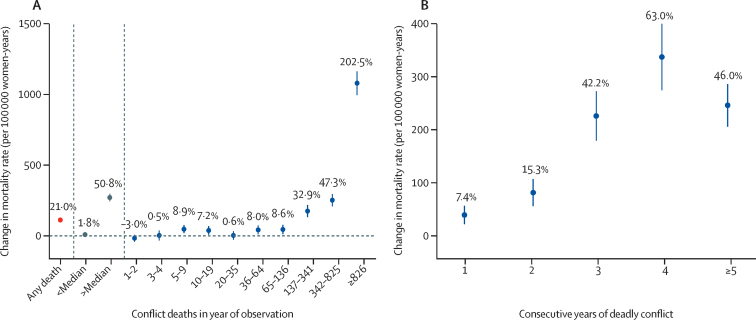
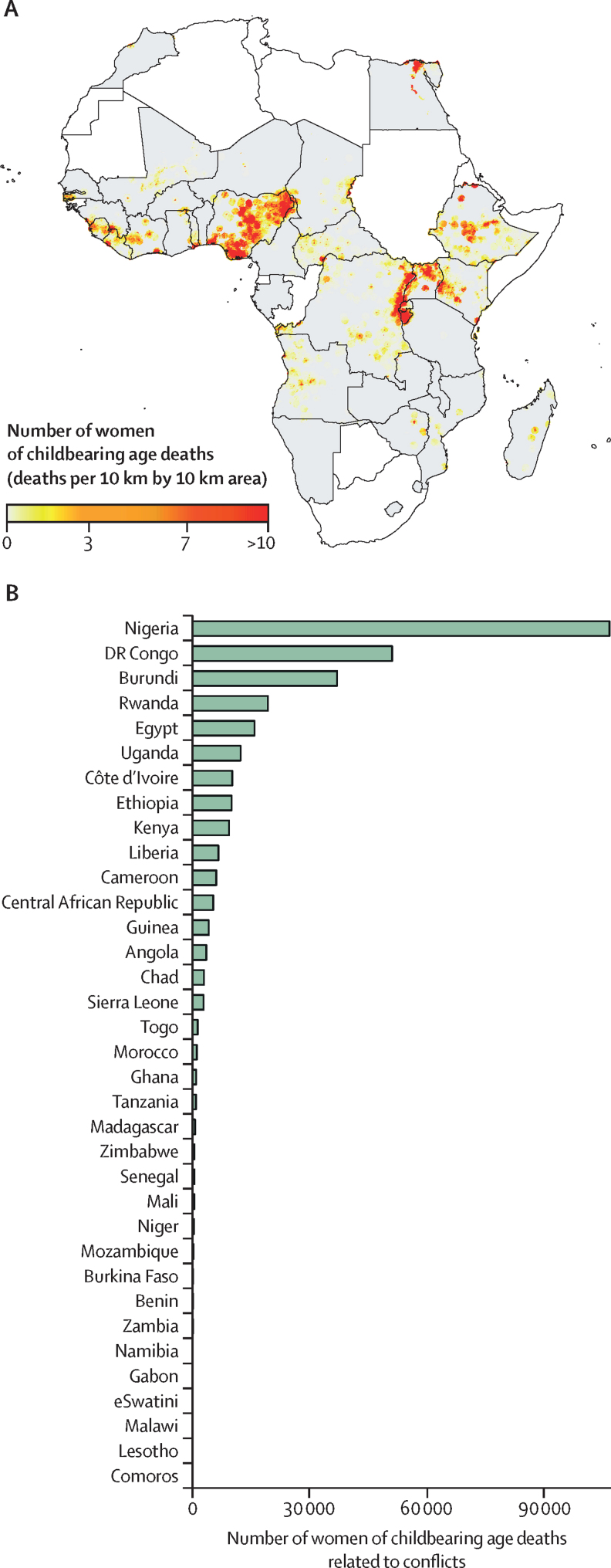
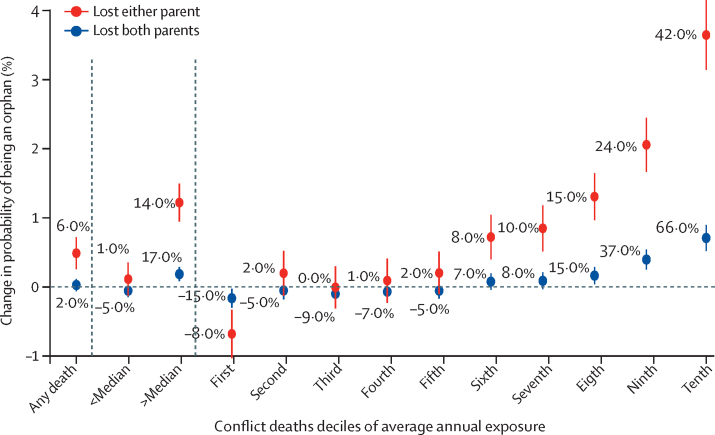
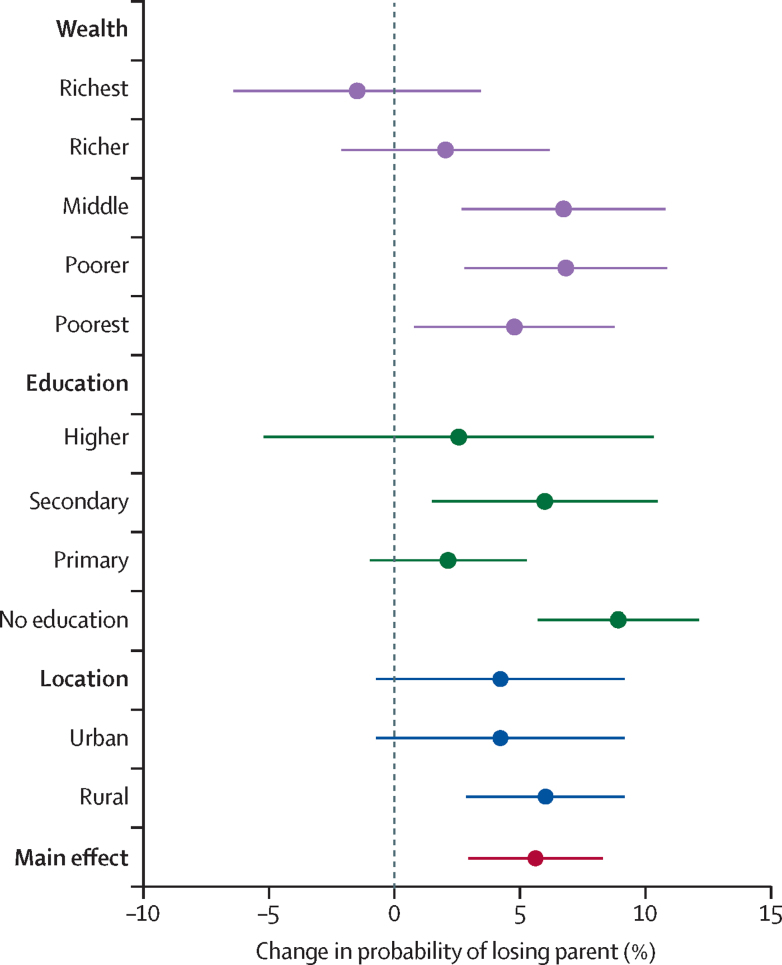
BACKGROUND: The population effects of armed conflict on non-combatant vulnerable populations are incompletely understood. We aimed to study the effects of conflict on mortality among women of childbearing age (15-49 years) and on orphanhood among children younger than 15 years in Africa. METHODS: We tested the extent to which mortality among women aged 15-49 years, and orphanhood among children younger than 15 years, increased in response to nearby armed conflict in Africa. Data on location, timing, and intensity of armed conflicts were obtained from the Uppsala Conflict Data Program, and data on the location, timing, and outcomes of women and children from Demographic and Health Surveys done in 35 African countries from 1990 to 2016. Mortality among women was obtained from sibling survival data. We used cluster-area fixed-effects regression models to compare survival of women during periods of nearby conflict (within 50 km) to survival of women in the same area during times without conflict. We used similar methods to examine the extent to which children living near armed conflicts are at increased risk of becoming orphans. We examined the effects of varying conflict intensity using number of direct battle deaths and duration of consecutive conflict exposure. FINDINGS: We analysed data on 1 629 352 women (19 286 387 person-years), of which 103 011 (6·3%) died (534·1 deaths per 100 000 women-years), and 2 354 041 children younger than 15 years, of which 204 276 (8·7%) had lost a parent. On average, conflict within 50 km increased women's mortality by 112 deaths per 100 000 person-years (95% CI 97-128; a 21% increase above baseline), and the probability that a child has lost at least one parent by 6·0% (95% CI 3-8). This effect was driven by high-intensity conflicts: exposure to the highest (tenth) decile conflict in terms of conflict-related deaths increased the probability of female mortality by 202% (187-218) and increased the likelihood of orphanhood by 42% compared with a conflict-free period. Among the conflict-attributed deaths, 10% were due to maternal mortality. INTERPRETATION: African women of childbearing age are at a substantially increased risk of death from nearby high-intensity armed conflicts. Children exposed to conflict are analogously at increased risk of becoming orphans. This work fills gaps in literature on the harmful effects of armed conflict on non-combatants and highlights the need for humanitarian interventions to protect vulnerable populations. FUNDING: Bill & Melinda Gates Foundation to the BRANCH Consortium.
Overview
The claims and statistics of this paper haven’t been checked yet.
Free: it reads the open-access text and checks the first 5 claims that cite a source we can check. Create a free account to check every claim.
Integrity signals
Registry
Cites
Statistics
Figures
Verification
Claims the paper makes
The claims and statistics of this paper haven’t been checked yet.
Free: it reads the open-access text and checks the first 5 claims that cite a source we can check. Create a free account to check every claim.
Claims other papers make about this one
Each is checked against this paper’s own text: does it say what the citing paper says it does?
The source backs part of the claim, not all of it — or backs it for a different population, condition or comparison.
In the citing paper
“Wagner et al. (2019) find that high-intensity armed conflict increased the mortality of female non-combatants in Africa by 202%.”
From COVID-19 and armed conflict (2021) · cites this paper as Wagner et al. (2019)
Experimental — accuracy not yet measuredThe source backs part of the claim, not all of it — or backs it for a different population, condition or comparison.
In the citing paper
“We know that fragile states and areas with armed conflict have higher levels of collateral mortality (especially for mothers and children) [74, 75] and that with adequate support, CHW programming is possible even when health facility functioning is compromised.”
From Community health workers at the dawn of a new era: 11. CHWs leading the way to “Health for All” (2021) · cites this paper as [75]
Experimental — accuracy not yet measured
Self-check
Percentages, sums and reported differences re-computed from the paper’s own numbers.
The self-check needs the paper’s full text.
Citations
Cites
(2001) · RePEc: Research Papers in Economics · Cited by 27,577
The better angels of our nature: why violence has declined
(2012) · Choice Reviews Online · doi:10.5860/choice.49-5144 · Cited by 2,405
Division, U. P. (1991) · Cited by 1,434
When Should You Adjust Standard Errors for Clustering?
Abadie, A., Athey, S., Imbens, G., & Wooldridge, J. (2017) · National Bureau of Economic Research · doi:10.3386/w24003 · Cited by 1,360
Introducing the UCDP Georeferenced Event Dataset
Sundberg, R., & Melander, E. (2013) · Journal of Peace Research · doi:10.1177/0022343313484347 · Cited by 1,238
Demographic and health surveys: a profile
Corsi, D. J., Neuman, M., Finlay, J. E., & Subramanian, S. (2012) · International Journal of Epidemiology · doi:10.1093/ije/dys184 · Cited by 1,178
The better angels of our nature: why violence has declined
Maxwell, B. (2013) · Journal of Moral Education · doi:10.1080/03057240.2012.723941 · Cited by 1,154
Armed conflict as a public health problem
Murray, C. J. L. (2002) · BMJ · doi:10.1136/bmj.324.7333.346 · Cited by 485
Mortality in the Democratic Republic of Congo: a nationwide survey
Coghlan, B., Brennan, R. J., Ngoy, P., Dofara, D., Otto, B., Clements, M., & Stewart, T. (2006) · The Lancet · doi:10.1016/s0140-6736(06)67923-3 · Cited by 459
Monasch, R., & Boerma, J. T. (2004) · AIDS · doi:10.1097/00002030-200406002-00007 · Cited by 395
Cited by
The effects of armed conflict on the health of women and children
Bendavid, E., Boerma, T., Akseer, N., Langer, A., Malembaka, E. B., Okiro, E. A., Wise, P. H., Heft-Neal, S., Black, R. E., Bhutta, Z. A., et al. (2021) · The Lancet · doi:10.1016/s0140-6736(21)00131-8 · Cited by 466
Self-citationJawad, M., Hone, T., Vamos, E. P., Cetorelli, V., & Millett, C. J. (2021) · PLoS Medicine · doi:10.1371/journal.pmed.1003810 · Cited by 163
The impacts of armed conflict on human development: A review of the literature
Vesco, P., Baliki, G., Brück, T., Döring, S., Eriksson, A., Fjelde, H., Guha‐Sapir, D., Hall, J., Knutsen, C. H., Leis, M., et al. (2024) · World Development · doi:10.1016/j.worlddev.2024.106806 · Cited by 174
Community health workers at the dawn of a new era: 11. CHWs leading the way to “Health for All”
Perry, H. B., Chowdhury, M., Were, M., LeBan, K., Crigler, L., Lewin, S., Musoke, D., Kok, M., Scott, K., Ballard, M., et al. (2021) · Health Research Policy and Systems · doi:10.1186/s12961-021-00755-5 · Cited by 129
Jawad, M., Hone, T., Vamos, E. P., Roderick, P., Sullivan, R. J., & Millett, C. J. (2020) · BMC Medicine · doi:10.1186/s12916-020-01708-5 · Cited by 140
Delivering maternal and neonatal health interventions in conflict settings: a systematic review
Munyuzangabo, M., Gaffey, M. F., Khalifa, D. S., Als, D., Ataullahjan, A., Kamali, M., Jain, R. P., Meteke, S., Radhakrishnan, A., Shah, S., et al. (2021) · BMJ Global Health · doi:10.1136/bmjgh-2020-003750 · Cited by 91
Self-citationIde, T. (2021) · World Development · doi:10.1016/j.worlddev.2020.105355 · Cited by 85
Vaccination strategies for measles control and elimination: time to strengthen local initiatives
Cutts, F. T., Ferrari, M. J., Krause, L. K., Tatem, A. J., & Mosser, J. F. (2021) · BMC Medicine · doi:10.1186/s12916-020-01843-z · Cited by 93
“[19]), conflicts resulting in fatalities in the 2 years prior to the period of study were aggregated”
BackgroundThe political and security dimensions of the humanitarian health response to violent conflict
Wise, P. H., Shiel, A., Southard, N., Bendavid, E., Welsh, J. M., Stedman, S. J., Fazal, T. M., Felbab‐Brown, V., Polatty, D. P., IV, Waldman, R. J., et al. (2021) · The Lancet · doi:10.1016/s0140-6736(21)00130-6 · Cited by 75
Self-citationHealth in conflict and post-conflict settings: reproductive, maternal and child health in Colombia
Ramos-Jaraba, S. M., Toro, N. Q., Sierra, M. O., Sánchez, L. R., Jiménez, M. A. G., Salazar-Barrientos, M. Y., Bedoya, E. B., Álvarez, G. A. V., Langer, A., Gausman, J., et al. (2020) · Conflict and Health · doi:10.1186/s13031-020-00273-1 · Cited by 70
Als, D., Meteke, S., Stefopulos, M., Gaffey, M. F., Kamali, M., Munyuzangabo, M., Shah, S., Jain, R., Radhakrishnan, A., Siddiqui, F. J., et al. (2020) · BMJ Global Health · doi:10.1136/bmjgh-2019-002064 · Cited by 69
Self-citationHomer, C. S., Turkmani, S., Wilson, A. N., Vogel, J. P., Shah, M. G., Fogstad, H., & Langlois, E. V. (2022) · BMJ Global Health · doi:10.1136/bmjgh-2021-006872 · Cited by 48
Improving access to emergency obstetric care in low- and middle-income countries
Chauke, L. (2024) · Best Practice & Research Clinical Obstetrics & Gynaecology · doi:10.1016/j.bpobgyn.2024.102572 · Cited by 54
Gaffey, M. F., Waldman, R. J., Blanchet, K., Amsalu, R., Capobianco, E., Ho, L. S., Khara, T., García, D. M., Aboubaker, S., Ashorn, P., et al. (2021) · The Lancet · doi:10.1016/s0140-6736(21)00133-1 · Cited by 50
Self-citationAmberg, F., Chansa, C., Niangaly, H., Sankoh, O. A., & Allegri, M. D. (2023) · The Lancet Global Health · doi:10.1016/s2214-109x(23)00152-3 · Cited by 56
War is a public health emergency
Goto, R., Guerrero, A. P. S., Speranza, M., Fung, D. S. S., Paul, C., & Skokauskas, N. (2022) · The Lancet · doi:10.1016/s0140-6736(22)00479-2 · Cited by 43
Rammohan, A., Mavisakalyan, A., Vu, L., & Goli, S. (2021) · PLoS Medicine · doi:10.1371/journal.pmed.1003690 · Cited by 40
Malembaka, E. B., Altare, C., Bigirinama, R. N., Bisimwa, G. B., Banywesize, R., Tabbal, N., & Boerma, T. (2021) · BMC Health Services Research · doi:10.1186/s12913-021-06143-7 · Cited by 41
Self-citationAdeyanju, G. C., Schrage, P., Jalo, R. I., Abreu, L., & Schaub, M. (2025) · PLoS ONE · doi:10.1371/journal.pone.0317094 · Cited by 34
“Meanwhile, the Uppsala Conflict Data Program (UCDP) sees armed conflict as a contested incompatibility related to government and/or territory, wherein the use of armed force between the military forces of two parties, with at least one being a government of a state, has resulted in at least 25…”
RetractedConflict violence reduction and pregnancy outcomes: A regression discontinuity design in Colombia
Buitrago, G., & Moreno‐Serra, R. (2021) · PLoS Medicine · doi:10.1371/journal.pmed.1003684 · Cited by 31
Meteke, S., Stefopulos, M., Als, D., Gaffey, M. F., Kamali, M., Siddiqui, F. J., Munyuzangabo, M., Jain, R., Shah, S., Radhakrishnan, A., et al. (2020) · BMJ Global Health · doi:10.1136/bmjgh-2019-001967 · Cited by 31
Self-citationSweileh, W. M. (2020) · International Journal of Mental Health Systems · doi:10.1186/s13033-020-00402-6 · Cited by 27
David, S., & Eriksson, A. (2025) · Conflict and Health · doi:10.1186/s13031-025-00654-4 · Cited by 28
“Those vulnerable pre-conflict are likely even more vulnerable during conflict [2, 3, 5, 6].”
The wedding bells of war: The influence of armed conflict on child marriages in West Africa
DiGiuseppe, M. R., & Haer, R. (2023) · Journal of Peace Research · doi:10.1177/00223433221080056 · Cited by 31
“For instance, Corno, Hildebrandt & Voena (2020) have applied it to the marriage market and Wagner et al. (2019) have used this model to examine the mortality and orphanhood rates due to armed conflict.”
BackgroundTsadik, M., Teka, H., Gebremichael, M. W., Gebretnsae, H., Yemane, A., Fisseha, G., Gebregzabher, T., Buruh, G., Gebreslassie, F., Tekie, M., et al. (2024) · BMC Public Health · doi:10.1186/s12889-024-20314-1 · Cited by 27
“All these mechanisms led to poor access to healthcare and its negative consequences such as death, as indicated elsewhere [38].”
BackgroundSubnational variations in the quality of household survey data in sub-Saharan Africa
Seidler, V., Utazi, C. E., Finaret, A. B., Luckeneder, S., Zens, G., Bondarenko, M., Smith, A. W., Bradley, S. E. K., Tatem, A. J., & Webb, P. (2025) · Nature Communications · doi:10.1038/s41467-025-58776-5 · Cited by 25
Mizerero, S. A., Wilunda, C., Musumari, P. M., Ono‐Kihara, M., Mubungu, G. L., Kihara, M., & Nakayama, T. (2021) · Conflict and Health · doi:10.1186/s13031-021-00395-0 · Cited by 21
Mamkhezri, J., Razzaghi, S., Khezri, M., & Heshmati, A. (2022) · Frontiers in Public Health · doi:10.3389/fpubh.2022.865903 · Cited by 19
Santamaría-García, H., Baez, S., Aponte-Canencio, D. M., Pasciarello, G. O., Donnelly-Kehoe, P. A., Maggiotti, G., Matallana, D., Hesse, E., Neely, A., Zapata, J. G., et al. (2021) · Patterns · doi:10.1016/j.patter.2020.100176 · Cited by 18
“Violence is a ubiquitous human phenomenon that has a dramatic impact on the global economy, health, and the stability of countries.(4) Research has identified several factors related to the use of violence in civil war settings,(5) including social-contextual (social,(6) political,(7) and cultural)(8) and individual m…”
BackgroundBasha, S., Socarras, A., Akhter, M. W., Hamze, M., Albaik, A., Hussein, I., Tarakji, A. H., Hamadeh, M., Loutfi, R., Kewara, M., et al. (2022) · BMJ Global Health · doi:10.1136/bmjgh-2021-008001 · Cited by 18
“This puts women and girls at risk of rape, known to be used as a weapon in war, 54 forced early marriage and sexual exploitation.”
BackgroundZhang, T., He, Q., Richardson, S., & Tang, K. (2023) · BMJ Global Health · doi:10.1136/bmjgh-2023-012023 · Cited by 18
Meierrieks, D., & Schaub, M. (2023) · Health Economics · doi:10.1002/hec.4757 · Cited by 19
Global inequities in adverse pregnancy outcomes: what can we do?
Roberts, J. M., Abímbọ́lá, Ṣ., Bale, T. L., BARROS, A., Bhutta, Z. A., Browne, J. L., Celi, A. C., Dube, P., Graves, C. R., Hollestelle, M. J., et al. (2024) · AJOG Global Reports · doi:10.1016/j.xagr.2024.100385 · Cited by 17
Self-citationBagade, T., Chojenta, C., Harris, M. L., Oldmeadow, C. J., & Loxton, D. J. (2022) · Maternal and Child Health Journal · doi:10.1007/s10995-021-03315-z · Cited by 16
Schaub, M. (2024) · Social Science & Medicine · doi:10.1016/j.socscimed.2024.117252 · Cited by 17
Schlüter, B.-S., Masquelier, B., & Jamaluddine, Z. (2025) · Population Health Metrics · doi:10.1186/s12963-025-00369-x · Cited by 13
“Estimates of child deaths caused by conflicts and changes in the risk of becoming an orphan can help document the scale of a conflict from the perspective of children and enhance our understanding of the implications of a crisis for the affected populations [12–15].”
Civilian death and injury from airstrikes: evidence from the war in Tigray, Ethiopia
Gebregziabher, M., Asgedom, A. A., Abraha, H. E., Teka, H., Etsedingl, A., Berihu, T., Redae, G. H., Gebreselassie, N. M., Medhanyie, A. A., Godefay, H., et al. (2025) · Population Health Metrics · doi:10.1186/s12963-025-00373-1 · Cited by 13
“In Africa, previous studies indicate that women are at an increased risk of death due to nearby high-intensity armed conflicts [48].”
Gaffey, M. F., Ataullahjan, A., Das, J. K., Mirzazada, S., Tounkara, M., Dalmar, A., & Bhutta, Z. A. (2020) · Conflict and Health · doi:10.1186/s13031-020-00315-8 · Cited by 13
Self-citationLetaief, M., Leatherman, S. T., Tawfik, L., Alboksmaty, A., Neilson, M., & Horemans, D. (2021) · Eastern Mediterranean Health Journal · doi:10.26719/2021.27.2.167 · Cited by 16
“All populations suffer in war, but women and children were priority groups identified by our respondents, which is supported by figures of their reported high death rates during emergencies (18,19).”
Bhutta, Z. A., Mitra, A., Salman, A., Akbari, F., Dalil, S., Jehan, F., Chowdhury, M., Jayasinghe, S., Menon, P., Nundy, S., et al. (2021) · BMJ · doi:10.1136/bmj-2021-067384 · Cited by 13
Self-citationLuo, Z., Shen, Y., Xu, X., Li, J., & Wang, X. (2025) · BMJ Public Health · doi:10.1136/bmjph-2024-001912 · Cited by 12
Analysis of mobile clinic deployments in conflict zones
González, R. S., Cherkesly, M., Crainic, T. G., & Rancourt, M. (2024) · Journal of Humanitarian Logistics and Supply Chain Management · doi:10.1108/jhlscm-07-2022-0080 · Cited by 13
“Wagner et al. (2019) observed an increase in maternal mortality that is directly correlated to the intensity of the con fl ict.”
BackgroundParham, G. P., Mathieu, K. M., YouYou, T. G., Hicks, M. L., Henry‐Tillman, R., Mutombo, A. B., Anaclet, M. M., Sylvain, M. K., Pinder, L. F., Hicks, M. M., et al. (2021) · ecancermedicalscience · doi:10.3332/ecancer.2021.1233 · Cited by 11
The impact of tropical cyclone exposure on infant mortality in low- and middle-income countries
Wang, Z., Jing, R., Heft‐Neal, S., Clark‐Ginsberg, A., Guha‐Sapir, D., Bendavid, E., & Wagner, Z. (2025) · Science Advances · doi:10.1126/sciadv.adt9640 · Cited by 11
“However, these same DHS data have been used to successfully measure the effect of a wide range of interventions on infant mortality using similar methods and are the main source for national vital statistics in many countries ( 21 , 30 , 31 ).”
Self-citationMakali, S. L., Malembaka, E. B., Lambert, A.-S., Karemere, H. B., Eboma, C. M., Mwembo, A. T.-A.-N., Ssali, S. B., Bisimwa, G. B., Donnen, P., & Macq, J. (2021) · Conflict and Health · doi:10.1186/s13031-021-00387-0 · Cited by 10
New ways to measure the effects of armed conflict in civilian population
Kadir, A., García, D. M., & Romero, F. (2019) · The Lancet Global Health · doi:10.1016/s2214-109x(19)30452-8 · Cited by 10
Klein, E. K., Bond, L., McLean, K. E., Feika, M., Bah, A. J., & Betancourt, T. S. (2023) · SSM - Qualitative Research in Health · doi:10.1016/j.ssmqr.2023.100227 · Cited by 9
“Throughout the continent, rising rates of disease, such as HIV/AIDs and Ebola, and armed con fl icts, have led to an increase in single-parent households and orphan care from non-biological caregivers (Bryant & Beard, 2016; Wagner et al., 2019).”
Neville, S. E., Okunoren, O., & Crea, T. M. (2023) · JAACAP Open · doi:10.1016/j.jaacop.2023.05.002 · Cited by 9
Anderson, S., & Sviatschi, M. M. (2025) · Economic Policy · doi:10.1093/epolic/eiaf010 · Cited by 12
Schaub, M., Adeyanju, G. C., Abulfathi, A. A., Bello, M. M., Kasserra, L., Kwaku, A. A., Jalo, M. I., Mahmud, A., Schrage, P., Jalo, R. I., et al. (2025) · BMJ Global Health · doi:10.1136/bmjgh-2025-019494 · Cited by 9
Analysis of medical support and health of children in Ukraine during the war
Marushko, R. V., & Дудіна, О. О. (2024) · Modern pediatrics Ukraine · doi:10.15574/sp.2024.8(144).614 · Cited by 7
Factors Influencing Women’s Health in Conflict Zones in Africa
Mlambo, C., Mvuyana, B. Y. C., & Sithole, V. L. (2024) · Women · doi:10.3390/women4020016 · Cited by 7
“Women’s health issues in conflict situations are typically unaccounted for, which makes them a vulnerable group in practices of conflict [26].”
BackgroundAhmed, S., Prieto, J. R., Sánchez‐Páez, D. A., Masquelier, B., Pullum, T., & Reniers, G. (2024) · Demographic Research · doi:10.4054/demres.2024.51.37 · Cited by 8
Excess Child Mortality Associated With Colombia’s Armed Conflict, 1998-2019
Moe, C. A., Villaveces, A., Montoya, P., & Rowhani‐Rahbar, A. (2024) · JAMA Network Open · doi:10.1001/jamanetworkopen.2024.8510 · Cited by 7
Mwene-Batu, P. L., Ndokabilya, E., Lembebu, J. C., Ngaboyeka, G. A., Mary, M., Tappis, H., Dramaix, M., Chimanuka, C., Chiribagula, C. Z., Bigirinama, R. N., et al. (2024) · BMC Public Health · doi:10.1186/s12889-024-19804-z · Cited by 11
“The effects of the conflict on women’s health and well-being are profound; the DRC is said to be one of the worst conflict zones for women and children in the world [4, 5].”
BackgroundMuhrbeck, M., Osman, Z., von Schreeb, J., Wladis, A., & Andersson, P. (2021) · BMC Emergency Medicine · doi:10.1186/s12873-021-00488-2 · Cited by 7
A commitment to support the world's most vulnerable women, children, and adolescents
Clark, H. (2021) · The Lancet · doi:10.1016/s0140-6736(21)00137-9 · Cited by 7
Parham, G. P., Mathieu, K. M., YouYou, T. G., Hicks, M. L., Henry‐Tillman, R., Mutombo, A. B., Anaclet, M. M., Sylvain, M. K., Sylvain, K., Pinder, L. F., et al. (2021) · ecancermedicalscience · doi:10.3332/ecancer.2021.1231 · Cited by 6
Ilina-Stohniienko, V., & Malets, M. (2022) · Futurity Medicine. · doi:10.57125/fem.2022.09.30.04 · Cited by 8
“The destructive character of armed warfare creates persistent barriers to the development and prosperity of human civilisation [1-2].”
BackgroundMalik, M. A., Akhtar, S. N., Albsoul, R. A., & Alshyyab, M. A. (2021) · PLoS ONE · doi:10.1371/journal.pone.0257080 · Cited by 6
“Children are directly exposed to health risks through conflict with under-five aged at most [19].”
BackgroundCastillo, V. S., & Cano, C. A. G. (2024) · Jurídicas CUC · doi:10.17981/juridcuc.20.1.2024.08 · Cited by 5
Conflict and investment: A review across health, fertility, education, and economic activity
Maio, M. D., & Sunde, U. (2025) · Economic Policy · doi:10.1093/epolic/eiaf006 · Cited by 9
Chatterjee, P., Chen, J. T., Yousafzai, A. K., Kawachi, I. I., & Subramanian, S. V. (2023) · Conflict and Health · doi:10.1186/s13031-023-00519-8 · Cited by 5
“’s [43, 44] identification strategy in African countries to restrict our analysis to conflict exposed areas, while exploiting temporal variations in children’s indirect conflict exposure.”
BackgroundGeospatial analysis: a new frontier in humanitarian health research?
Jabbour, S., & Attal, B. (2020) · The Lancet Global Health · doi:10.1016/s2214-109x(20)30390-9 · Cited by 4
Bosnian Paternal War Orphans: Mental Health in Postwar Time
Kravić, N., Pajević, I., Hasanovic, M. I., Karahasanović, N., Voracek, M., Baca‐García, E., & Dervic, K. (2023) · The Journal of Nervous and Mental Disease · doi:10.1097/nmd.0000000000001651 · Cited by 5
Singh, T., Tushir, B., Mittal, S., & Kaur, H. (2024) · Springer eBooks · doi:10.1007/978-981-92-1288-0_145 · Cited by 4
Moutwakil, A., Kumar, A., Li, A. T., Huang, C. J., Nelson, B. D., Woodward, A. L., Amsalu, R., Darmstadt, G. L., & Mediratta, R. P. (2026) · BMJ Global Health · doi:10.1136/bmjgh-2025-018964 · Cited by 3
Young Children in War-Time: Making Sense of Palestine-Israel Conflict Impact on Instagram
Larasati, Y. G., Fernando, H., Fitri, W., Wuysang, J. M., Hardianti, F., & Akbar, R. A. (2025) · Italian Sociological Review · doi:10.13136/isr.v16i1.977 · Cited by 3
Fighting Covid-19 amidst civil conflict: Micro-level evidence from Burkina Faso
Sepahvand, M. H., & Verwimp, P. (2023) · World Development · doi:10.1016/j.worlddev.2023.106343 · Cited by 4
A new method for estimating recent adult mortality from summary sibling histories
Masquelier, B., Menashe‐Oren, A., Reniers, G., & Timæus, I. M. (2024) · Population Health Metrics · doi:10.1186/s12963-024-00350-0 · Cited by 3
“Full SSH have been used to monitor mortality increases due to HIV/AIDS [4, 5], to measure the effectiveness of health programmes [6], or, to study excess mortality associated with violence [7–9].”
Health of Infants, Children and Adolescents: Life Course Perspectives on Global Health
Muttalib, F., Sohail, A., & Bhutta, Z. A. (2021) · Springer eBooks · doi:10.1007/978-3-030-05325-3_45-1 · Cited by 4
Self-citationArmed Conflict and Pregnancy Termination: Evidence from Burkina Faso
Luetke, M. C., Grace, K. L., Yu, J., & Gunther, M. (2024) · Spatial Demography · doi:10.1007/s40980-024-00129-9 · Cited by 2
“…weight (Keasley et al., 2017; Le & Nguyen, 2020; Mansour & Rees, 2012; Torche & Shwed, 2015), pregnancy complications (Keasley et al., 2017; Urdal & Che, 2013), and high rates of maternal mortality (Kotsadam & Østby, 2019; Urdal & Che, 2013; Wagner et al., 2019; World Health Organization, 2019).”
Ghafoori, N., & Yolchi, J. (2026) · International Peacekeeping · doi:10.1080/13533312.2026.2638298 · Cited by 2
Cancer and Armed Conflict: Crossing Realities
Kamalyan, A., Margaryan, Y., Arakelyan, J., Safaryan, L., Tamamyan, G., & Arakelyan, S. (2022) · Journal of Clinical Oncology · doi:10.1200/jco.22.00663 · Cited by 2
Alipanga, B., & Luberenga, I. (2023) · Journal of Loss and Trauma · doi:10.1080/15325024.2023.2264762 · Cited by 2
“The consequences of exposing young people to war and armed conflicts are many, and include, amongst others, adverse medical, psychological and economic problems (e.g., Bendavid et al., 2021; Wagner et al., 2019; Kadir et al., 2019, B € urgin et al., 2022).”
Satellite monitoring of war urban damage with a temporal knowledge-guided deep learning schemePreprint
Zhang, L., Hou, Z., Qu, Y., Shi, Q., Yu, Q., Zhao, Y., Tang, H., Wang, Y., Li, X., Li, Y., et al. (2023) · Research Square · doi:10.21203/rs.3.rs-2799404/v1 · Cited by 2
Causes of death among women of reproductive age during the war in Tigray, Ethiopia
Abraha, H. E., Teka, H., Yemane, A., Ebrahim, M. M., Tsadik, M., Fisseha, G., Berhe, B., Ayele, B. G., Gebrekurstos, G., Gebreslassie, T. G., et al. (2024) · PLoS ONE · doi:10.1371/journal.pone.0299650 · Cited by 1
Exploring adolescent fertility inequality in Southern Africa
Shoko, M. (2024) · South African Journal of Child Health · doi:10.7196/sajch.2024.v18i2.1130 · Cited by 1
“[26] Additionally, factors such as armed conflicts, [14] the more recent impact of the COVID-19 epidemic [16] and orphanhood resulting from cancer-related mortality [13] all play a role in shaping the landscape of orphanhood within the subregion.”
BackgroundConflict, Climate, and Child Health: Evidence from Sub‐Saharan Africa
Thiede, B. C., James, N. F., Jackson, J. E., & Sauda, S. S. (2026) · Population and Development Review · doi:10.1111/padr.70067 · Cited by 2
Bitew, W. B., & Tizazu, S. A. (2025) · Medicine Conflict & Survival · doi:10.1080/13623699.2025.2497425 · Cited by 2
Impact of Terrorist Violence on Child Health in Burkina Faso: Unpacking Potential Mechanisms
Nikiema, R. A., & Kafando, W. A. (2025) · Sustainable Development · doi:10.1002/sd.70066 · Cited by 1
Impact of the Israeli Occupation on Palestinian Women Health, Narrative Review
Ali, D. O., Shaheen, A. A., & Badrasawi, M. (2025) · Palestinian medical and pharmaceutical journal/Palestinian medical & pharmaceutical journal · doi:10.59049/2790-0231.11.3.2499 · Cited by 1
Etafa, W., Abdana, F., Bobo, E., Mekonen, W. M., Daka, D. T., Fite, M. B., Shibiru, T., Negeri, A., Leta, G., & Temesgen, D. (2025) · PLoS ONE · doi:10.1371/journal.pone.0336300 · Cited by 2
Zang, Z., Yu, L., Li, S., Xu, X., Zhou, H. P., Yue, Q., & Li, Y. (2025) · BMJ Open · doi:10.1136/bmjopen-2025-102980 · Cited by 1
Attacks on healthcare: what information is needed to understand their impact? – a Delphi study
Afzal, M. H., & Jafar, A. J. N. (2020) · Medicine Conflict & Survival · doi:10.1080/13623699.2020.1745999 · Cited by 1
“…which collates global events data on organized violence using secondary data sources including global newswires, NGOs and international organizations like the United Nations (UCDP 2020), were used by Wagner et al. (2019) to describe mortality and orphanhood in areas of armed conflict in Africa.”
MethodThe Born Equal Theory of Change
Onditi, F., & Odera, J. (2021) · Springer eBooks · doi:10.1007/978-3-030-71095-8_2 · Cited by 1
Muhrbeck, M. (2021) · Linköping University medical dissertations · doi:10.3384/diss.diva-180779 · Cited by 2
No excuses - improving child public health outcomes in humanitarian settings requires reliable data
Kadir, A., Stevens, A. J., Wise, P. H., & Muloiwa, R. (2025) · PLOS Global Public Health · doi:10.1371/journal.pgph.0004231 · Cited by 1
“It is encouraging to see new methods developed to better understand the risks, needs, and priorities of hard-to-reach populations in places affected by crises, such as mapping conflict intensity to Demographic and Health Survey data [15].”
Self-citationCrago, A.-L. (2020) · TSpace (University of Toronto) · Cited by 1
WITHDRAWN: Spatial Effects of Internal and External Conflicts on Regional Maternal MortalityPreprint
Khezri, M., Razzaghi, S., & Khezri, S. (2021) · Research Square · doi:10.21203/rs.3.rs-266280/v1
“Wagner et al. (2019) analyzed the population effects of armed conflicts on non-combatant vulnerable populations, especially on pregnant women’s ages (15-49 years) and orphanhood among children younger than 15 years of age in thirty-five African countries.”
BackgroundHealth of Infants, Children, and Adolescents: Life Course Perspectives on Global Health
Muttalib, F., Sohail, A., & Bhutta, Z. A. (2021) · Springer eBooks · doi:10.1007/978-3-030-45009-0_45
Self-citationMuhrbeck, M., Osman, Z., von Schreeb, J., Wladis, A., & Andersson, P. (2020) · Research Square · doi:10.21203/rs.3.rs-117530/v1
WITHDRAWN: Peace, Conflicts, and the Covid-19: A Meta-Analysis at Global LevelPreprint
Azadi, H., Ghazali, S., & Pour, M. (2023) · Research Square · doi:10.21203/rs.3.rs-2483921/v1
WITHDRAWN: Peace, Conflicts, and the Covid-19: A Meta-Analysis at Global LevelPreprint
(2023) · Research Square · doi:10.21203/rs.3.rs-2483921/v2
The long reach of war's costs: building the evidence for action
Bendavid, E. (2023) · The Lancet Global Health · doi:10.1016/s2214-109x(23)00176-6
Self-citationYumlu, S., & Koç, İ. (2024) · Sosyal Politika Çalışmaları Dergisi · doi:10.21560/spcd.vi.1346737
Garenne, M. (2024) · International Health Trends and Perspectives · doi:10.32920/ihtp.v4i3.2102
Wilke, N. G., Medefind, J., & Howard, A. R. H. (2025) · Child & Family Social Work · doi:10.1111/cfs.13315
Lee, H. E., Asiimire, D., Atwiine, J., Namanya, B., Nsengiyumva, R., Darbes, L. A., & Mwesigwa, F. S. (2025) · Journal of Pregnancy · doi:10.1155/jp/9050315
“Additionally, a study on mortality among women in con fl ict-a ff ected areas across 35 African countries revealed a 21% increase in female mortality, with 10% of these deaths attributable to pregnancy and childbirth [13].”
Effective care for mothers and babies during humanitarian crises
Cocoman, O., Tappis, H., Scudder, E., Ruysen, H., Patterson, J. M., Prabhu, S. M., Kitamura, T., Fair, M., Abdullah, M., Siddeeg, K., et al. (2025) · Bulletin of the World Health Organization · doi:10.2471/blt.25.295391
Metadata
- Authors
- Wagner, Z., Heft-Neal, S., Wise, P. H., Black, R. E., Burke, M., Boerma, T., Bhutta, Z. A., & Bendavid, E.
- Affiliations
- RAND Corporation (US)
- Stanford Medicine (US)
- Johns Hopkins University (US)
- Stanford University (US)
- University of Manitoba (CA)
- Aga Khan University (PK)
- Corresponding author
- Bendavid, Eran
- ORCID
- Venue
- The Lancet Global Health
- Publisher
- Elsevier BV
- Published
- 2019-12
- Volume
- 7
- Issue
- 12
- Pages
- e1622-e1631
- ISSN
- 2214-109X (ISSN-L)
- PMC
- PMC7024993
- OpenAlex
- W2981435675
- Semantic Scholar
- 0b7be28d87aa7b879ee25e7904a6b8a6e3bb084b
- Cited by
- 116
- References
- 38
- Citations by year
- 2026: 13 · 2025: 18 · 2024: 18 · 2023: 13 · 2022: 8 · 2021: 24 · 2020: 21 · 2019: 1
- FWCI
- 18.41
- Type
- journal article
- Language
- en
- Open access
- gold
- doi.org
- Licence
- cc-by
- www.elsevier.com/tdm/userlicense/1.0/ (tdm)
- www.elsevier.com/legal/tdmrep-license (tdm)
- creativecommons.org/licenses/by/4.0/ (vor)
- Locations
- The Lancet Global Health (publishedVersion, cc-by)
- PubMed Central (publishedVersion, cc-by)
- PubMed (publishedVersion)
- eCommons - AKU (Aga Khan University) (submittedVersion)
- DOAJ (DOAJ: Directory of Open Access Journals) (submittedVersion)
- Funders
- University of Southern California
- Hospital for Sick Children
- National Institutes of Health
- Topics
- Health Sciences › Health Professions › General Health Professions › Health and Conflict Studies
- Social Sciences › Gender Studies › Gender, Security, and Conflict
- Social Sciences › Sociology and Political Science › Political Conflict and Governance
- Keywords
- armed conflict, female mortality, maternal mortality, conflict-related deaths, conflict intensity, Africa, gender differences in mortality, maternal and child health, internally displaced persons
- MeSH terms
- Armed Conflicts, Adolescent, Adult, Africa, Child, Child, Preschool, Female, Humans, Infant, Infant, Newborn, Male, Maternal Mortality, Middle Aged, Residence Characteristics, Child, Orphaned, Young Adult, Spatial Analysis
About these checks
Registry, retraction, Cites and statistics results are computed, not judged, with one exception: a printed reference that no index lists is read once by a model before it counts as a citation error. Claims are extracted by a model and kept only when their quote appears verbatim in the text; each cited source is then checked, with a model’s help, for whether it says what the claim relies on. Those verdicts can be wrong — read the claim’s quote and the cited source before relying on one.
Statistics and arithmetic are recomputed, not judged.
Confidence bands are shown only for fields calibrated on our annotated test set. None is calibrated yet, so no band is shown.
What counts as a claim ›How we measure confidence ›How we check this ›
Are you an author, or do you see a problem with this page? Request a review
Data sources
Bibliographic data: Semantic Scholar, OpenAlex, Crossref.
Contains information from the Semantic Scholar Academic Graph Datasets, made available under the ODC Attribution License (ODC-BY 1.0).
Semantic Scholar’s data is described in: Kinney, R., et al. (2023). The Semantic Scholar Open Data Platform. arXiv:2301.10140.
