

The DOI matches its Crossref record; 96 of the 96 references it cites were found in a registry or an index.
Prevalence of HIV, hepatitis B, and hepatitis C in people with severe mental illness: a systematic review and meta-analysis
Open accessAbstract
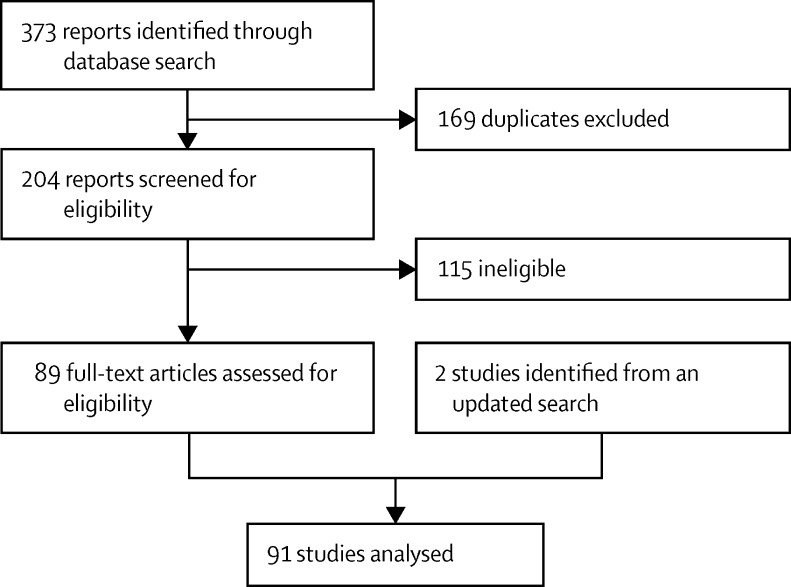
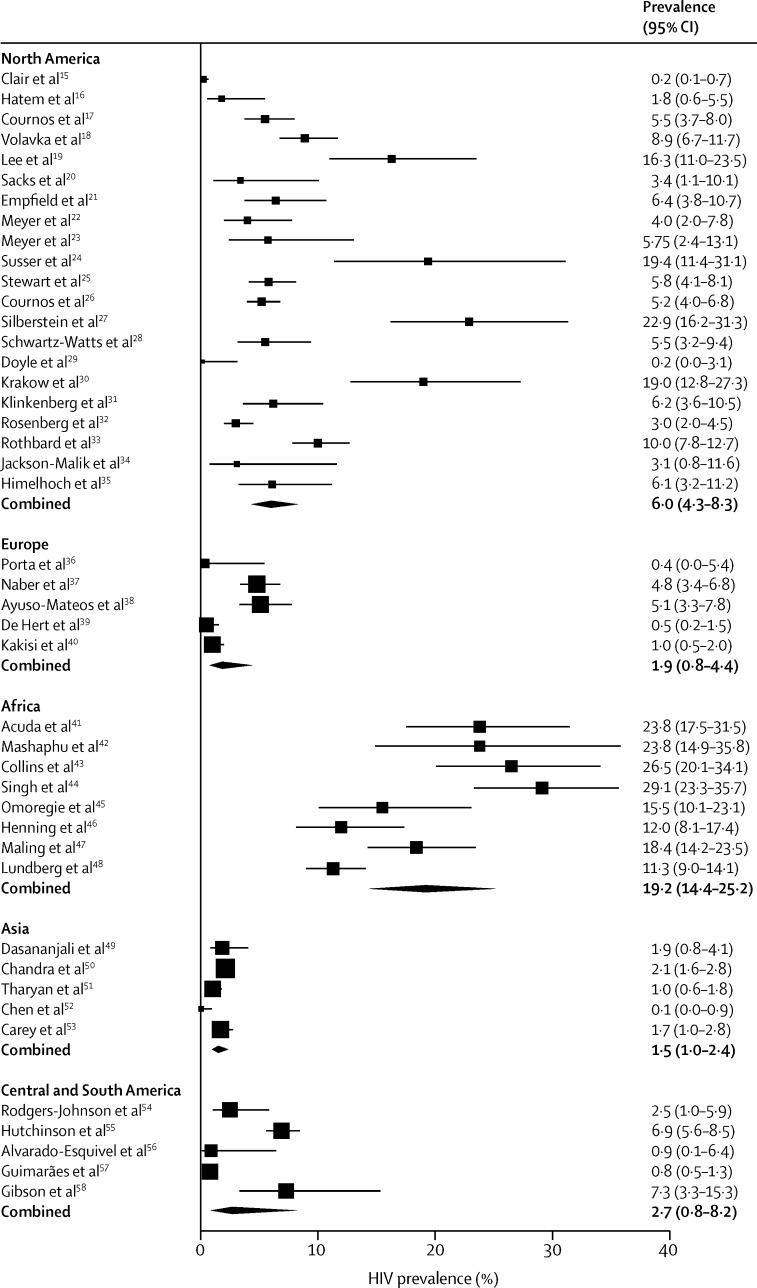
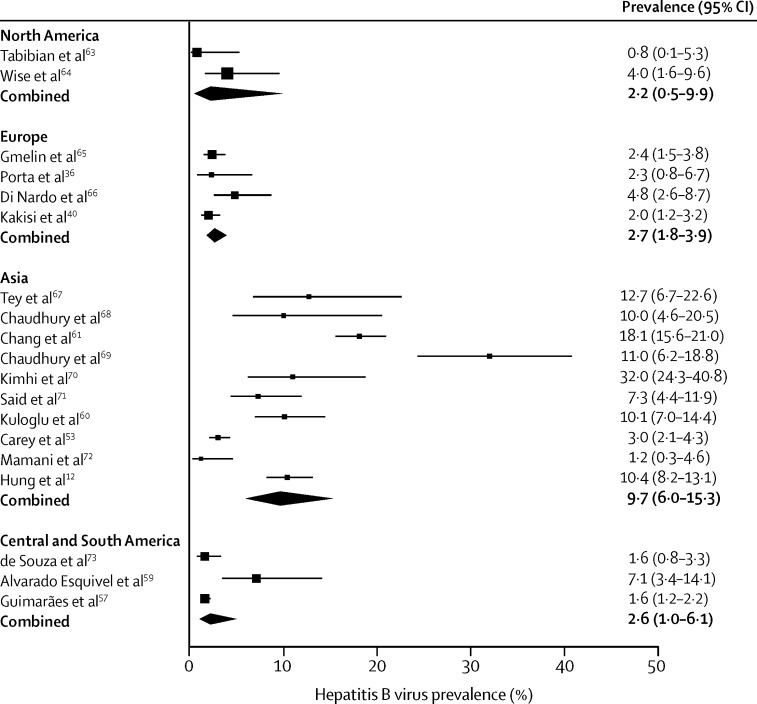
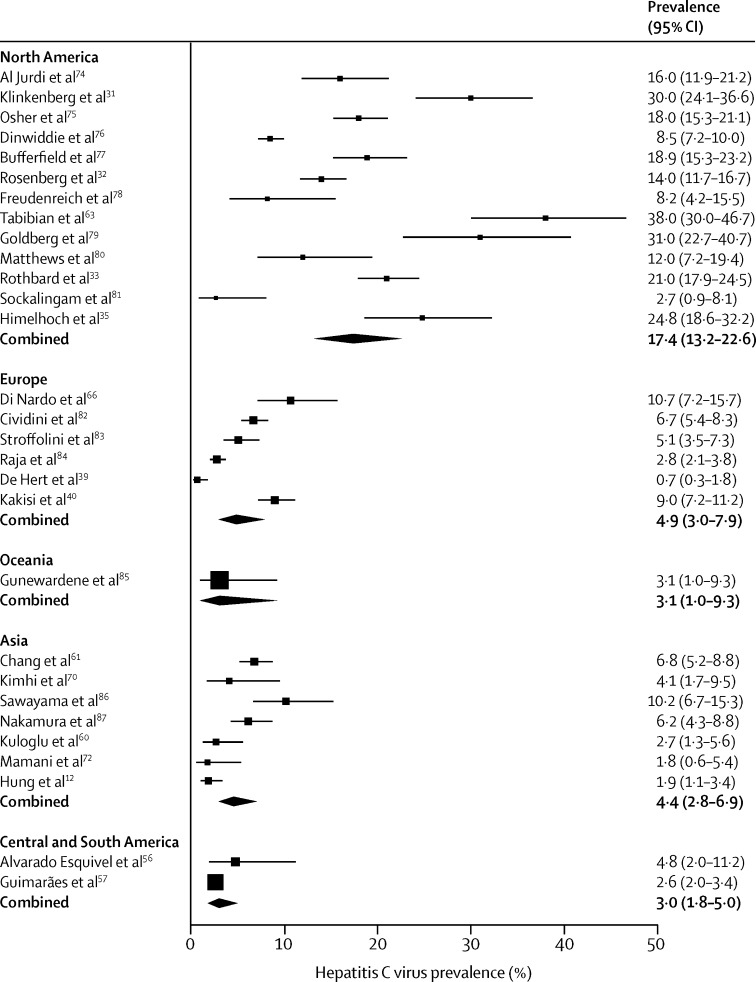
BACKGROUND: Although people with serious mental illnesses have a high risk of contracting blood-borne viral infections, sexual health has largely been neglected by researchers and policy makers involved in mental health. Failure to address this shortcoming could increase morbidity and mortality as a result of undetected and untreated infection. We did a systematic review and meta-analysis to estimate the prevalence of blood-borne viral infection in people with serious mental illness. METHOD: We searched the Cochrane Library, Medline, Embase, PsycInfo, CINAHL, and DARE for studies of the prevalence of HIV, hepatitis B virus, and hepatitis C virus in people with serious mental illness, published between Jan 1, 1980, and Jan 1, 2015. We group prevalence data by region and by virus and estimated pooled prevalence. We did a sensitivity analysis of the effect of study quality on prevalence. FINDINGS: After removal of duplicates, we found 373 abstracts, 91 of which met our eligibility criteria. The prevalences of blood-borne viral infections in people with serious mental illness were higher than in the general population in places with low prevalence of blood-borne viruses, such as the USA and Europe, and on par with the general population in regions with high prevalence of blood-borne viruses (Africa for HIV and southeast Asia for hepatitis B virus and hepatitis C virus). Pooled prevalence of HIV in people with serious mental illness in the USA was 6·0% (95% CI 4·3-8·3). Sensitivity analysis showed that quality scores did not significantly affect prevalence. INTERPRETATION: People with serious mental illness are at risk of blood-borne viral infections. However, because of methodological limitations of the studies the prevalence might be overestimated. Serious mental illness is unlikely to be a sole risk factor and risk of blood-borne viral infection is probably multifactorial and associated with low socioeconomic status, drug and alcohol misuse, ethnic origin, and sex. Health providers should routinely discuss sexual health and risks for blood-borne viruses (including risks related to drug misuse) with people who have serious mental illness, as well as offering testing and treatment for those at risk. FUNDING: Wellcome Trust.
Overview
The claims and statistics of this paper haven’t been checked yet.
Run the check — free, no account needed. It reads the open-access text and checks the sources it cites.
Integrity signals
Registry
Cites
Statistics
Figures
Verification
Claims the paper makes
The claims and statistics of this paper haven’t been checked yet.
Run the check — free, no account needed. It reads the open-access text and checks the sources it cites.
Claims other papers make about this one
Each is checked against this paper’s own text: does it say what the citing paper says it does?
In the citing paper
“In the area of oral health, there is also evidence of decreased access to appropriate care in a range of psychiatric diagnoses including depression, anxiety, substance use disorder and severe mental illness.113,114”
From The Lancet Psychiatry Commission: a blueprint for protecting physical health in people with mental illness (2019) · cites this paper as [113]
Self-check
Percentages, sums and reported differences re-computed from the paper’s own numbers.
The self-check needs the paper’s full text.
Citations
Cites
Tiollais, P., & Buendia, M. (1991) · Scientific American · doi:10.1038/scientificamerican0491-116 · Cited by 830
Seckinelgin, H. (2016) · Social aspects of HIV · doi:10.1007/978-3-319-46013-0_3 · Cited by 622
Prevalence of HIV, hepatitis B, and hepatitis C in people with severe mental illness
(2001) · American Journal of Public Health · doi:10.2105/ajph.91.1.31 · Cited by 589
Weaver, T., Madden, P., Charles, V., Stimson, G., Renton, A., Tyrer, P., Barnes, T., Bench, C., Middleton, H., Wright, N., et al. (2003) · British Journal of Psychiatry · doi:10.1192/bjp.183.4.304 · Cited by 386
The Global Prevalence of Schizophrenia
Bhugra, D. (2005) · PLoS Medicine · doi:10.1371/journal.pmed.0020151 · Cited by 284
Domestic violence and severe psychiatric disorders: prevalence and interventions
Howard, L. M., Trevillion, K., Khalifeh, H., Woodall, A., Agnew-Davies, R., & Feder, G. S. (2009) · Psychological Medicine · doi:10.1017/s0033291709991589 · Cited by 262
Wong, W. C., Cheung, C. S., & Hart, G. J. (2008) · Emerging Themes in Epidemiology · doi:10.1186/1742-7622-5-23 · Cited by 257
Risk for human immunodeficiency virus (HIV) infection among persons with severe mental illnesses
Carey, M. P., Carey, K. B., & Kalichman, S. C. (1997) · Clinical Psychology Review · doi:10.1016/s0272-7358(97)00019-6 · Cited by 246
HIV seroprevalence among patients admitted to two psychiatric hospitals
Cournos, F., Empfield, M., Horwath, E., McKinnon, K. M., Meyer, I. H., Schrage, H., Currie, C., & Agosin, B. (1991) · American Journal of Psychiatry · doi:10.1176/ajp.148.9.1225 · Cited by 241
Prevalence of HIV infection among psychiatric patients in a New York City men's shelter.
Susser, E., Valência, E., & Conover, S. (1993) · American Journal of Public Health · doi:10.2105/ajph.83.4.568 · Cited by 171
Research works printed but not linked: 1
- Kuloglu, 2006, Hepatitis B and hepatitis C virus infection in institutionalized schizophrenia and other psychotic disorders patients in eastern Turkey, Neurol Psychiatry Brain Res, 13, 159
Cited by
Sorted by citations
Firth, J., Siddiqi, N., Koyanagi, A., Siskind, D., Rosenbaum, S., Galletly, C., Allan, S., Caneo, C., Carney, R., Carvalho, A. F., et al. (2019) · The Lancet Psychiatry · doi:10.1016/s2215-0366(19)30132-4 · Cited by 1,531
Inflammatory Biomarkers and Risk of Schizophrenia
Hartwig, F. P., Borges, M. C., Horta, B. L., Bowden, J., & Smith, G. D. (2017) · JAMA Psychiatry · doi:10.1001/jamapsychiatry.2017.3191 · Cited by 301
Noncommunicable diseases among HIV-infected persons in low-income and middle-income countries
Patel, P., Rose, C. E., Collins, P. Y., Nuche‐Berenguer, B., Sahasrabuddhe, V. V., Peprah, E. K., Vorkoper, S., Pastakia, S. D., Rausch, D. M., & Levitt, N. S. (2018) · AIDS · doi:10.1097/qad.0000000000001888 · Cited by 270
Roncero, C., Buch-Vicente, B., Martín-Sánchez, Á. M., Álvarez-Navares, A. I., Andrés-Olivera, P., Gamonal-Limcaoco, S., Lozano-López, M. T., Aguilar, L., Sánchez-Casado, F., & García-Ullán, L. (2022) · Gastroenterología y Hepatología · doi:10.1016/j.gastrohep.2022.06.005 · Cited by 230
Public mental health: required actions to address implementation failure in the context of COVID-19
Campion, J., Javed, A., Lund, C., Sartorius, N., Saxena, S., Marmot, M., Allan, J., & Udomratn, P. (2022) · The Lancet Psychiatry · doi:10.1016/s2215-0366(21)00199-1 · Cited by 177
Metadata
- Authors
- Hughes, E., Bassi, S., Gilbody, S., Bland, M., & Martin, F.
- Affiliations
- University of Huddersfield (GB)
- University of York (GB)
- Corresponding author
- Hughes, Elizabeth
- Venue
- The Lancet Psychiatry
- Publisher
- Elsevier BV
- Published
- 2016-01
- Volume
- 3
- Issue
- 1
- Pages
- 40-48
- ISSN
- 2215-0366 (ISSN-L)
- PMC
- PMC4703902
- OpenAlex
- W2178523807
- Cited by
- 272
- References
- 96
- Citations by year
- 2026: 13 · 2025: 25 · 2024: 25 · 2023: 28 · 2022: 37 · 2021: 44 · 2020: 28 · 2019: 29 · 2018: 16 · 2017: 16 · 2016: 11
- FWCI
- 2.18
- Type
- journal article
- Language
- en
- Open access
- hybrid
- doi.org
- Locations
- The Lancet Psychiatry (publishedVersion, cc-by)
- Europe PMC (PubMed Central) (publishedVersion, cc-by)
- PubMed Central (publishedVersion, cc-by)
- PubMed (publishedVersion)
- University of Huddersfield Repository (University of Huddersfield) (submittedVersion)
- Edinburgh Napier Research Repository (Edinburgh Napier University) (submittedVersion, cc-by)
- Huddersfield Research Portal (University of Huddersfield) (submittedVersion, cc-by)
- Funders
- Wellcome Trust (reference 097829)
- Topics
- Health Sciences › Medicine › Infectious Diseases › HIV/AIDS Research and Interventions
- Health Sciences › Medicine › Epidemiology › HIV, Drug Use, Sexual Risk
- Health Sciences › Medicine › Hepatology › Hepatitis C virus research
- Keywords
- HIV, hepatitis B virus, hepatitis C virus, blood-borne viral infections, severe mental illness, prevalence, sexual health, substance abuse, drug abuse, alcohol abuse, socioeconomic status, risk factors
- MeSH terms
- Mental Disorders, Hepatitis B, Hepatitis C, Humans, Severity of Illness Index, HIV Infections, Prevalence
About these checks
Registry, retraction, Cites and statistics results are computed, not judged, with one exception: a printed reference that no index lists is read once by a model before it counts as a citation error. Claims are extracted by a model and kept only when their quote appears verbatim in the text; each cited source is then checked, with a model’s help, for whether it says what the claim relies on. Those verdicts can be wrong — read the claim’s quote and the cited source before relying on one.
Statistics and arithmetic are recomputed, not judged.
Confidence bands are shown only for fields calibrated on our annotated test set. None is calibrated yet, so no band is shown.
What counts as a claim ›How we measure confidence ›How we check this ›
Are you an author, or do you see a problem with this page? Request a review
