

Methylphenidate and the risk of psychosis in adolescents and young adults: a population-based cohort study
Open accessThe DOI matches its Crossref record; 23 of the 23 references it cites were found in a registry or an index.
Abstract
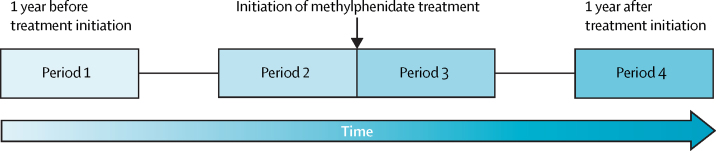
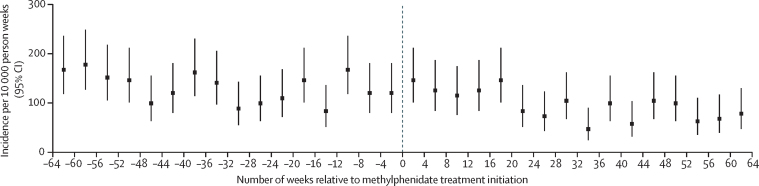
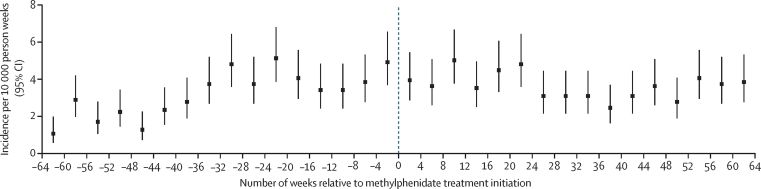
BACKGROUND: There is a clinical concern that prescribing methylphenidate, the most common pharmacological treatment for attention-deficit hyperactivity disorder (ADHD), might increase the risk of psychotic events, particularly in young people with a history of psychosis. We aimed to determine whether the risk of psychotic events increases immediately after initiation of methylphenidate treatment or, in the longer term, 1 year after treatment initiation in adolescents and young adults with and without a previously diagnosed psychotic disorder. METHODS: In this cohort study, we used population-based observational data from the Swedish Prescribed Drug Register, the National Patient Register, and the Total Population Register, three population-based registers containing data on all individuals in Sweden, to attain data on sex, birth, death, migration, medication use, and psychotic events for all eligible participants. We screened individuals on these registers to identify those receiving methylphenidate treatment, and who were aged 12-30 years at the start of treatment, for their inclusion in the study. We used a within-individual design to compare the incidence of psychotic events in these individuals during the 12-week periods immediately before and after methylphenidate initiation. Longer term risk was assessed by comparing the incidence of psychotic events 12 weeks before methylphenidate initiation and during a 12-week period one calendar year before the initiation of methylphenidate with the incidence of these events during the 12-week period one calendar year after methylphenidate initiation. We estimated the incidence rate ratios (IRR) and 95% CIs of psychotic events after the initation of methylphenidate treatment, relative to the events before treatment, which were defined as any hospital visit (inpatient admission or outpatient attendance, based on data from the National Patient Register) because of psychosis, using the International Classification of Diseases version 10 definition. Analyses were stratified by whether the individual had a history of psychosis. FINDINGS: We searched the Swedish Prescribed Drug Register to find eligible individuals who had received methylphenidate between Jan 1, 2007 and June 30, 2012. 61 814 individuals were screened, of whom 23 898 (38·7%) individuals were assessed and 37 916 (61·3%) were excluded from the study because they were outside of the age criteria at the start of treatment, they had immigrated, emigrated, or died during the study period, or because they were administered other ADHD medications. The median age at methylphenidate initiation was 17 years, and a history of psychosis was reported in 479 (2·0%) participants. The IRR of psychotic events in the 12-week period after initiation of methylphenidate treatment relative to that in the 12-week period before treatment start was 1·04 (95% CI 0·80-1·34) in adolescents and young adults without a history of psychosis and 0·95 (0·69-1·30) among those with a history of psychosis. INTERPRETATION: Contrary to clinical concerns, we found no evidence that initiation of methylphenidate treatment increases the risk of psychotic events in adolescents and young adults, including in those individuals with a history of psychosis. Our study should reassure clinicians considering initiating methylphenidate treatment for ADHD in adolescents and young adults, and it challenges the widely held view in clinical practice that methylphenidate should be avoided, or its use restricted, in individuals with a history of psychosis. FUNDING: Swedish Research Council, National Institute of Mental Health, UK National Institute of Health Research Nottingham Biomedical Research Centre.
Overview
The claims and statistics of this paper haven’t been checked yet.
Free: it reads the open-access text and checks the first 5 claims that cite a source we can check. Create a free account to check every claim.
Integrity signals
Registry
Cites
Statistics
Figures
Verification
Claims the paper makes
The claims and statistics of this paper haven’t been checked yet.
Free: it reads the open-access text and checks the first 5 claims that cite a source we can check. Create a free account to check every claim.
Claims other papers make about this one
Each is checked against this paper’s own text: does it say what the citing paper says it does?
The source backs part of the claim, not all of it — or backs it for a different population, condition or comparison.
In the citing paper
“A Swedish registry study of over 23,000 adolescents and young adults treated with methylphenidate for ADHD found no evidence for an association between psychosis and methylphenidate treatment. A year after initiation of methylphenidate treatment, the incidence of psychotic events was 36% lower in in those with a history of psychosis and 18% lower in those without a history of psychosis relative to”
From The World Federation of ADHD International Consensus Statement: 208 Evidence-based conclusions about the disorder (2021) · cites this paper as Hollis et al., 2019
Experimental — accuracy not yet measuredThe cited source says what the claim attributes to it.
In the citing paper
“A year after initiation of methylphenidate treatment, the incidence of psychotic events was 36% lower in in those with a history of psychosis and 18% lower in those without a history of psychosis relative to the period immediately before the beginning of treatment (Hollis et al., 2019).”
From The World Federation of ADHD International Consensus Statement: 208 Evidence-based conclusions about the disorder (2021) · cites this paper as Hollis et al., 2019
The cited source says what the claim attributes to it.
In the citing paper
“A year after initiation of methylphenidate treatment, the incidence of psychotic events was 36% lower in in those with a history of psychosis and 18% lower in those without a history of psychosis relative to the period immediately before the beginning of treatment (Hollis et al., 2019).”
From The World Federation of ADHD International Consensus Statement: 208 Evidence-based conclusions about the disorder (2021) · cites this paper as Hollis et al., 2019
Self-check
Percentages, sums and reported differences re-computed from the paper’s own numbers.
The self-check needs the paper’s full text.
Citations
Cites
External review and validation of the Swedish national inpatient register
Ludvigsson, J. F., Andersson, E., Ekbom, A., Feychting, M., Kim, J.-L., Reuterwall, C., Heurgren, M., & Olausson, P. O. (2011) · BMC Public Health · doi:10.1186/1471-2458-11-450 · Cited by 5,055
The Swedish personal identity number: possibilities and pitfalls in healthcare and medical research
Ludvigsson, J. F., Otterblad-Olausson, P., Pettersson, B. U., & Ekbom, A. (2009) · European Journal of Epidemiology · doi:10.1007/s10654-009-9350-y · Cited by 2,403
Kim-Cohen, J., Caspi, A., Moffitt, T. E., Harrington, H., Milne, B. J., & Poulton, R. (2003) · Archives of General Psychiatry · doi:10.1001/archpsyc.60.7.709 · Cited by 2,025
Wettermark, B., Hammar, N., MichaelFored, C., Leimanis, A., Otterblad Olausson, P., Bergman, U., Persson, I., Sundström, A., Westerholm, B., & Rosén, M. (2007) · Pharmacoepidemiology and Drug Safety · doi:10.1002/pds.1294 · Cited by 1,887
Cortese, S., Adamo, N., Del Giovane, C., Mohr-Jensen, C., Hayes, A. J., Carucci, S., Atkinson, L. Z., Tessari, L., Banaschewski, T., Coghill, D., et al. (2018) · The Lancet Psychiatry · doi:10.1016/s2215-0366(18)30269-4 · Cited by 1,716
Self-citationRegisters of the Swedish total population and their use in medical research
Ludvigsson, J. F., Almqvist, C., Bonamy, A.-K. E., Ljung, R., Michaëlsson, K., Neovius, M., Stephansson, O., & Ye, W. (2016) · European Journal of Epidemiology · doi:10.1007/s10654-016-0117-y · Cited by 1,674
Howes, O. D., Kambeitz, J., Kim, E., Stahl, D., Slifstein, M., Abi-Dargham, A., & Kapur, S. (2012) · Archives of General Psychiatry · doi:10.1001/archgenpsychiatry.2012.169 · Cited by 967
Stimulants: Therapeutic Actions in ADHD
Arnsten, A. F. T. (2006) · Neuropsychopharmacology · doi:10.1038/sj.npp.1301164 · Cited by 473
European guidelines on managing adverse effects of medication for ADHD
(for the European Guidelines Group), Graham, J., Banaschewski, T., Buitelaar, J., Coghill, D., Danckaerts, M., Dittmann, R. W., Döpfner, M., Hamilton, R., Hollis, C., et al. (2011) · European Child & Adolescent Psychiatry · doi:10.1007/s00787-010-0140-6 · Cited by 374
Self-citationMethylphenidate for children and adolescents with attention deficit hyperactivity disorder (ADHD)
Storebø, O. J., Ramstad, E., Krogh, H. B., Nilausen, T. D., Skoog, M., Holmskov, M., Rosendal, S., Groth, C., Magnusson, F. L., Moreira-Maia, C. R., et al. (2015) · Cochrane Database of Systematic Reviews · doi:10.1002/14651858.cd009885.pub2 · Cited by 347
Research works printed but not linked: 1
- National Institute for Health and Care Excellence Attention deficit hyperactivity disorder: diagnosis and management (NICE guideline NG87) https://www.nice.org.uk/guidance/ng87 2018 29634174
Cited by
Faraone, S. V., Banaschewski, T., Coghill, D., Zheng, Y., Biederman, J., Bellgrove, M. A., Newcorn, J. H., Gignac, M., Al Saud, N. M., Manor, I., et al. (2021) · Neuroscience & Biobehavioral Reviews · doi:10.1016/j.neubiorev.2021.01.022 · Cited by 1,545
“A year after initiation of methylphenidate treatment, the incidence of psychotic events was 36 % lower in those with a history of psychosis and 18 % lower in those without a history of psychosis relative to the period immediately before the beginning of treatment (Hollis et al., 2019).”
Self-citationMcIntyre, R. S., Berk, M., Brietzke, E., Goldstein, B. I., López-Jaramillo, C., Kessing, L. V., Malhi, G. S., Nierenberg, A. A., Rosenblat, J. D., Majeed, A., et al. (2020) · The Lancet · doi:10.1016/s0140-6736(20)31544-0 · Cited by 1,047
Evidence-based pharmacological treatment options for ADHD in children and adolescents
Mechler, K., Banaschewski, T., Hohmann, S., & Häge, A. (2022) · Pharmacology & Therapeutics · doi:10.1016/j.pharmthera.2021.107940 · Cited by 293
Nourredine, M., Gering, A., Fourneret, P., Rolland, B., Falissard, B., Cucherat, M., Geoffray, M., & Jurek, L. (2021) · JAMA Psychiatry · doi:10.1001/jamapsychiatry.2020.4799 · Cited by 122
Rodrigues, R., Lai, M., Beswick, A., Gorman, D. A., Anagnostou, E., Szatmari, P., Anderson, K. K., & Ameis, S. H. (2021) · Journal of Child Psychology and Psychiatry · doi:10.1111/jcpp.13305 · Cited by 98
Man, K. K. C., Häge, A., Banaschewski, T., Inglis, S. K., Buitelaar, J. K., Carucci, S., Danckaerts, M., Dittmann, R., Falissard, B., Garas, P., et al. (2023) · The Lancet Psychiatry · doi:10.1016/s2215-0366(23)00042-1 · Cited by 99
Self-citationRisk of Incident Psychosis and Mania With Prescription Amphetamines
Moran, L. V., Skinner, J. P., Shinn, A. K., Nielsen, K., Rao, V., Taylor, S. T., Cohen, T. R., Erkol, C., Merchant, J. T., Mujica, C. A., et al. (2024) · American Journal of Psychiatry · doi:10.1176/appi.ajp.20230329 · Cited by 45
Twitter Analysis of the Nonmedical Use and Side Effects of Methylphenidate: Machine Learning Study
Kim, M. G., Kim, J., Kim, S. C., & Jeong, J. (2020) · Journal of Medical Internet Research · doi:10.2196/16466 · Cited by 41
“Sometimes methylphenidate can cause hallucinations and delusions [14,15].”
BackgroundAttention-Deficit/Hyperactivity Disorder Medications and Work Disability and Mental Health Outcomes
Taipale, H. T., Bergström, J., Gémes, K., Tanskanen, A., Ekselius, L., Mittendorfer‐Rutz, E., & Helgesson, M. (2024) · JAMA Network Open · doi:10.1001/jamanetworkopen.2024.2859 · Cited by 40
Methylphenidate and short-term cardiovascular risk
Garcia-Argibay, M., Bürkner, P.-C., Lichtenstein, P., Zhang, L., D’Onofrio, B. M., Andell, P., Chang, Z., Cortese, S., & Larsson, H. (2024) · JAMA Network Open · doi:10.1001/jamanetworkopen.2024.1349 · Cited by 31
Self-citationKrebs, M. D., Themudo, G. E., Benros, M. E., Mors, O. N., Børglum, A. D., HOUGAARD, D. M., Mortensen, P. B., Nordentoft, M., Gandal, M. J., Fan, C. C., et al. (2021) · Nature Communications · doi:10.1038/s41467-021-26903-7 · Cited by 27
Reeve, S., & Bell, V. (2022) · European Child & Adolescent Psychiatry · doi:10.1007/s00787-022-01966-z · Cited by 22
de Pablo, G. S., Aymerich, C., Chart‐Pascual, J. P., Solmi, M., Torres-Cortes, J., Abdelhafez, N., Catalán, A., Corbeil, O., Adamo, N., Shaw, P., et al. (2025) · JAMA Psychiatry · doi:10.1001/jamapsychiatry.2025.2311 · Cited by 21
Psychosis with use of amphetamine drugs, methylphenidate and atomoxetine in adolescent and adults
Hamard, J., Rousseau, V., Durrieu, G., Garcia, P., Yrondi, A., Sommet, A., Revet, A., & Montastruc, F. (2024) · BMJ Mental Health · doi:10.1136/bmjment-2023-300876 · Cited by 18
Comorbidity of Narcolepsy and Psychotic Disorders: A Nationwide Population-Based Study in Taiwan
Yeh, J., Shyu, Y., Lee, S.-Y., Yuan, S., Yang, C., Yang, K., Lee, T., Sun, C., & Wang, L. (2020) · Frontiers in Psychiatry · doi:10.3389/fpsyt.2020.00205 · Cited by 17
Sánchez‐Gistau, V., García-Manzanares, N., Cabezas, Á., Solé, M., Algora, M., & Vilella, E. (2020) · European Neuropsychopharmacology · doi:10.1016/j.euroneuro.2020.05.010 · Cited by 19
Prescription Stimulants and the Risk of Psychosis: A Systematic Review of Observational Studies
Gallagher, K. E., Funaro, M. C., & Woods, S. W. (2022) · Journal of Clinical Psychopharmacology · doi:10.1097/jcp.0000000000001552 · Cited by 17
“Two of the highest quality included studies provide strong evidence for this hypothesis, in that the incidence of psychosis actually increased before PS exposure rather than during or after.(11,16) Several included studies would have been unable by design to detect such an association because they excluded subjects di…”
MethodResultKoren, G., & Korn, L. (2021) · Journal of Clinical Psychopharmacology · doi:10.1097/jcp.0000000000001336 · Cited by 17
Jutla, A., Califano, A., Dishy, G. A., Hesson, H., Kennedy, L., Lundgren, B., Pia, T., Veenstra-VanderWeele, J. M., Brucato, G., & Girgis, R. R. (2020) · Schizophrenia Research · doi:10.1016/j.schres.2020.10.008 · Cited by 12
Quinn, P. D., Chang, Z., Bair, M. J., Rickert, M. E., Gibbons, R. D., Kroenke, K., & D'Onofrio, B. M. (2021) · Pain · doi:10.1097/j.pain.0000000000002415 · Cited by 11
Self-citationRestless Sleep Disorder and the Role of Iron in Other Sleep-Related Movement Disorders and ADHD
Cameli, N., Beatrice, A., Cinnante, E. M. C., Gullace, C., Lentini, G., Occhipinti, S., Ferri, R., & Bruni, O. (2023) · Clinical and Translational Neuroscience · doi:10.3390/ctn7030018 · Cited by 11
“The worldwide prevalence of ADHD among children and adolescents is estimated to be approximately 2–7% [96,97], and up to 25–50% of this population reports sleep-related disorders [98,99].”
BackgroundCorbeil, O., Brodeur, S., Courteau, J., Béchard, L., Huot‐Lavoie, M., Angelopoulos, E., Stefano, S. D., Marrone, E., Vanasse, A., Fleury, M., et al. (2023) · The British Journal of Psychiatry · doi:10.1192/bjp.2023.149 · Cited by 10
“14,15 Recent data by Hollis et al (2019) suggest that, contrary to general beliefs associated with its use, methylphenidate was not linked with an increased risk of psychotic events in adolescents and young adults with a history of psychosis.”
ResultÖhlund, L., Ott, M., Lundqvist, R., Sandlund, M., Renberg, E. S., & Werneke, U. (2020) · Therapeutic Advances in Psychopharmacology · doi:10.1177/2045125320947502 · Cited by 12
Guðbrandsdóttir, R. K., Sigurðsson, E., Albertsson, Þ. Í., Jónsdóttir, H., & Ingimarsson, O. (2025) · BMJ Mental Health · doi:10.1136/bmjment-2024-301521 · Cited by 10
“16 It must also be noted in this context that longitudinal studies have indicated that a childhood diagnosis of ADHD is a risk factor for a diagnosis of psychosis in adult life.”
ADHD medication treatment and risk of psychosis
Hechtman, L. T. (2019) · The Lancet Psychiatry · doi:10.1016/s2215-0366(19)30248-2 · Cited by 9
Association of psychiatric comorbidities with the risk of transport accidents in ADHD and MPH
Liu, Y., Chen, V. C., Yang, Y., Chen, Y., & Gossop, M. (2021) · Epidemiology and Psychiatric Sciences · doi:10.1017/s2045796021000032 · Cited by 9
“We defined the effective period of MPH exposure as 0–90 days after the prescription of the drug (Man et al., 2017; Hollis et al., 2019).”
An updated safety review of the current drugs for managing ADHD in children
Ryst, E., & Childress, A. C. (2023) · Expert Opinion on Drug Safety · doi:10.1080/14740338.2023.2271392 · Cited by 9
“Two recent, large, population-based cohort studies of MPH have found no increased risk of psychotic events with MPH treatment in children, adolescents and young adults [164,165].”
BackgroundDetermining unmet need: clinical relevance of suspected neurodivergence in first-episode psychosis
Nikolić, N., Sculthorpe, C., Stock, J., Stevens, D., & Eccles, J. (2024) · BJPsych Bulletin · doi:10.1192/bjb.2024.64 · Cited by 7
Cortese, S., Garcia‐Argibay, M., Oliver, D., Chang, Z., Farhat, L. C., Bloch, M. H., de Pablo, G. S., Larsson, H., Solmi, M., Correll, C. U., et al. (2025) · The Lancet Psychiatry · doi:10.1016/s2215-0366(25)00248-2 · Cited by 8
Self-citationGeneral practice database on mortality in adults on methylphenidate: cohort study
Stricker, B. H. C., Cheung, K., & Verhamme, K. M. C. (2022) · BMJ Open · doi:10.1136/bmjopen-2021-057303 · Cited by 10
Pasha, K., Paul, S., Abbas, M. S., Nassar, S. T., Tasha, T., Desai, A. V., Bajgain, A., Ali, A., Dutta, C., & Elshaikh, A. O. (2023) · Cureus · doi:10.7759/cureus.34299 · Cited by 13
“MPH, a psychostimulant, acts as an indirect dopamine (DA) agonist and enhances neuronal signaling by inducing significant increases in extracellular levels of neurotransmitters in the synaptic cleft of the PFC and is, therefore, considered the first-line treatment for ADHD [8].”
BackgroundStimulant Medication Use and Risk of Psychotic Experiences
O’Hare, K., Byrne, J. F., Ramsay, H., Romaniuk, L., McGrath, J., Keating, D., Migone, M., O’Connor, K., Coss, N., Cannon, M. D., et al. (2025) · PEDIATRICS · doi:10.1542/peds.2024-069142 · Cited by 7
dos Santos, S. L. F., & Gondim, A. P. S. (2023) · Brazilian Journal of Pharmaceutical Sciences · doi:10.1590/s2175-97902023e21441 · Cited by 6
Shin, H., Yuniar, C. T., Oh, S., Purja, S., Park, S.-R., Lee, H., & Kim, E. Y. (2023) · Journal of Medical Internet Research · doi:10.2196/45146 · Cited by 8
“Moreover, 2 studies demonstrated that psychiatric problems are still considered clinical concerns during methylphenidate consumption [38,40].”
Drug-induced delusion: A comprehensive overview of the WHO pharmacovigilance database
Balcerac, A., Baldacci, A., Romier, A., Annette, S., Lemarchand, B., Bihan, K., & Bottemanne, H. (2023) · Psychiatry Research · doi:10.1016/j.psychres.2023.115365 · Cited by 5
Long term safety of ADHD medication in patients with schizophrenia spectrum disorders
Luykx, J. J., Corbeil, O., Kärkkäinen, O. K., Tanskanen, A. J., Mittendorfer‐Rutz, E., Tiihonen, J., & Taipale, H. T. (2025) · Molecular Psychiatry · doi:10.1038/s41380-025-03080-3 · Cited by 5
TDAH dans l’enfance et trouble psychotique à l’âge adulte : quel lien ?
Gering, A., Fourneret, P., Poulet, E., Geoffray, M., & Jurek, L. (2021) · L Encéphale · doi:10.1016/j.encep.2021.01.008 · Cited by 5
OROS-methylphenidate to reduce ADHD symptoms in male prisoners aged 16–25 years: a RCT
Asherson, P. J., Johansson, L., Holland, R., Bedding, M., Forrester, A., Giannulli, L., Ginsberg, Y., Howitt, S., Kretzschmar, I., Lawrie, S. M., et al. (2022) · Efficacy and Mechanism Evaluation · doi:10.3310/thei8200 · Cited by 6
Practice Pearls for Stimulant Treatment of Attention-Deficit/Hyperactivity Disorder in Youth.
Stutzman, D. L., & Dopheide, J. A. (2024) · PubMed Central · doi:10.5863/1551-6776-29.3.215 · Cited by 8
Miola, A., Ercis, M., Pazdernik, V., Salgado, M. F., Ortiz‐Orendain, J., Gardea‐Resendez, M., Gruhlke, P. M., Michel, I. M., Bostwick, J. M., McKean, A. J. S., et al. (2024) · European Neuropsychopharmacology · doi:10.1016/j.euroneuro.2024.07.015 · Cited by 4
Basel, D., Mosheva, M., Maeder, J., Schneider, M., Shani, S., Weinberger, R., Eliez, S., & Gothelf, D. (2021) · European Child & Adolescent Psychiatry · doi:10.1007/s00787-021-01780-z · Cited by 4
“Our findings that stimulant treatment does not seem to increase the risk for psychosis are consistent with recent publications in the general population [22, 23].”
Meyer, M., Walter, M., Borgwardt, S., Scheidegger, A., Lang, E., & Köck, P. (2021) · Frontiers in Psychiatry · doi:10.3389/fpsyt.2021.712110 · Cited by 4
Ricci, V., Barresi, M., Salvo, G. D., & Maina, G. (2026) · Early Intervention in Psychiatry · doi:10.1111/eip.70123 · Cited by 3
“Higher quality studies were given greater weight in evidence synthesis, particularly the large epidemiological studies (Hollis et al. 2019; Moran et al. 2019) which informed our primary conclusions regarding pharmacological safety.”
Methylphenidate Treatment and Risk of Psychotic Disorder
Healy, C., O’Hare, K., Lång, U., Metsälä, J., Pulakka, A., McGrath, J., Migone, M., Keating, D., Romaniuk, L., Gyllenberg, D., et al. (2026) · JAMA Psychiatry · doi:10.1001/jamapsychiatry.2026.0152 · Cited by 5
Correll, C. U., Starling, B. R., & Huß, M. (2021) · CNS Spectrums · doi:10.1017/s1092852921000341 · Cited by 4
Attention Deficit Hyperactivity Disorder in Adults: From Research to Clinical Practice
Asherson, P. J., Balázs, J., Bitter, I., Carpentier, P. J., Jaeschke, R., Mohr, P., Ramos‐Quiroga, J. A., Rossi, P. D., Semerci, B., & Kooij, J. J. S. (2024) · Cambridge University Press eBooks · doi:10.1017/9781009067287.010 · Cited by 4
Methylphenidate-induced psychosis in a young antipsychotic-naïve female patient
Walichniewicz, P., & Lew‐Starowicz, M. (2021) · Wiedza Medyczna · doi:10.36553/wm.74 · Cited by 3
An, Y., Song, Y., & Kang, U. G. (2022) · 신경정신의학 · doi:10.4306/jknpa.2022.61.2.45 · Cited by 3
Walitza, S., Smigielski, L., & Gerlach, M. (2023) · Springer eBooks · doi:10.1007/978-3-662-65267-1_8 · Cited by 2
Bach, P., Franck, J., Hällgren, J., Widing, H., Gissler, M., & Westman, J. (2026) · Translational Psychiatry · doi:10.1038/s41398-026-03998-4 · Cited by 2
Ffa, H. L., Cipriano, A. M. V., Coan, F. F., Fernandes, I. M. B., Assunção, I. L., Gonçalves, L. G. L., Ferreira, Y. H. D. S., Chaves, C. G., Assunção, C. A. L., & Silva, R. P. (2022) · E-Acadêmica · doi:10.52076/eacad-v3i2.189 · Cited by 2
Stevenson, J. (2023) · Springer eBooks · doi:10.1007/978-3-031-45787-6_9 · Cited by 1
Jangra, D., Tejwani, R., Ahluwalia, Y., Sarkar, S., & Balhara, Y. P. S. (2026) · Journal of Addiction Medicine · doi:10.1097/adm.0000000000001656 · Cited by 2
Making use of N-of-1 trials to treat ADHD in people with psychosis: a hypothetical case
Dalton, K., Joober, R., Karama, S., & Palaniyappan, L. K. (2024) · Journal of Psychiatry and Neuroscience · doi:10.1503/jpn.240010 · Cited by 1
Psychosis Induced by Methylphenidate Misuse
Chaung, C.-H., Yeh, Y., Chen, C., & Kuo, S.-C. (2025) · American Journal of Therapeutics · doi:10.1097/mjt.0000000000001959 · Cited by 1
Chang, S.-Y., & Kim, Y. (2020) · Brain & Neurorehabilitation · doi:10.12786/bn.2020.13.e21
“In this regard, a recent population-based cohort study reported that there was no convincing evidence that initiation of methylphenidate treatment increases the immediate (12 weeks) and long-term (1 year) risk of psychotic events in adolescents and young adults with attention-deficit hyperactivity disorder [10].”
BackgroundGutiérrez, F. O., Padilla-Mena, P. L., Martinez-Uresti, A. R., Padilla-Valadez, C. M., & Contreras-Cárdenas, J. (2022) · International Journal of Medical Science and Clinical Research Studies · doi:10.47191/ijmscrs/v2-i4-03
Kim, J., Kim, S. C., Jeong, J., & Kim, M. G. (2019) · doi:10.2196/preprints.16466
Zarchev, M. G., Bouter, D. C., & Mil, N. H. G. (2023) · Acta Psychiatrica Scandinavica · doi:10.1111/acps.13630
Risques du méthylphénidate au long cours
Jurek, L., Cortese, S., & Nourredine, M. (2024) · Annales Médico-psychologiques revue psychiatrique · doi:10.1016/j.amp.2024.08.027
de Moura, R. B., da Costa, A. E. L., de Sá, C. C. R., Andrade, C. L. V., Loiola, K. S., & SOUSA, M. C. C. D. (2024) · Research Society and Development · doi:10.33448/rsd-v13i11.47416
Attention Deficit Hyperactivity Disorder
Haur, A. L. M., & Le, L. C. J. (2025) · Springer eBooks · doi:10.1007/978-981-97-7640-5_84
Loi, S., Joshee, P., Ottridge, R. S., Woolley, R. L., Gkini, E., Asherson, P. J., Young, A. H., Al‐Janabi, H., Broome, M. R., Roberts, A., et al. (2025) · Trials · doi:10.1186/s13063-025-09214-w
“However, a large population cohort study concluded that there was no increased risk of psychotic events at 1 year after Methylphenidate initiation, even in people with a history of psychosis [20].”
Challenging Case: Complex Developmental Care and Management in a Child With a Chromosomal Deletion
Poudel, I., Lipton, L. R., Tucker, E. Z., & Augustyn, M. C. (2026) · Journal of Developmental & Behavioral Pediatrics · doi:10.1097/dbp.0000000000001454
Chrétien, B., Blouet, C., Alexandre, J., Jardri, R., Nishida, K., Desaunay, P., & Guenolé, F. (2026) · Journal of Child and Adolescent Psychopharmacology · doi:10.1177/10445463261416450
“Recent studies using causal inference methods, including target trial emulation (O ’ Hare et al., 2025) and cohort (Hollis et al., 2019) designs, did not fi nd evidence of a relationship between MPH and psychotic experiences or events.”
Bach, P., Franck, J., Hällgren, J., Widing, H., Gissler, M., & Westman, J. (2026) · The Lancet Regional Health - Europe · doi:10.1016/j.lanepe.2026.101658
Ayadi, N. E. H., Ayoub, R., Abid, H. B., Ajmi, M., & guedria, A. (2026) · La Tunisie Médicale · doi:10.62438/tunismed.v104i05.6710
Attention deficit hyperactivity disorder: transition to psychotic disorders
Thapar, A., Dennison, C. A., Kandeğer, A., & Owen, M. J. (2026) · Molecular Psychiatry · doi:10.1038/s41380-026-03926-4
Jeon, Y., Kim, J., Kim, J. A., Won, H., Jeong, N., Oh, S., & Choi, N. (2026) · Journal of Korean Medical Science · doi:10.3346/jkms.2027.42.e65
Metadata
- Authors
- Hollis, C., Chen, Q., Chang, Z., Quinn, P. D., Viktorin, A., Lichtenstein, P., D'Onofrio, B., Landén, M., & Larsson, H.
- Affiliations
- University of Nottingham (GB)
- Karolinska Institutet (SE)
- Indiana University Bloomington (US)
- Örebro University (SE)
- Corresponding author
- Hollis, Chris
- ORCID
- Venue
- The Lancet Psychiatry
- Publisher
- Elsevier BV
- Published
- 2019-08
- Volume
- 6
- Issue
- 8
- Pages
- 651-658
- ISSN
- 2215-0366 (ISSN-L)
- PMC
- PMC6646837
- OpenAlex
- W2949919329
- Semantic Scholar
- 72b1b5e327ef7d466bcaa99b62316fb24df328b3
- Cited by
- 65
- References
- 23
- Citations by year
- 2026: 7 · 2025: 8 · 2024: 11 · 2023: 11 · 2022: 6 · 2021: 12 · 2020: 8 · 2019: 2
- FWCI
- 5.58
- Type
- journal article
- Language
- en
- Open access
- hybrid
- doi.org
- Licence
- cc-by
- www.elsevier.com/tdm/userlicense/1.0/ (tdm)
- www.elsevier.com/legal/tdmrep-license (tdm)
- creativecommons.org/licenses/by/4.0/ (vor)
- Locations
- The Lancet Psychiatry (publishedVersion, cc-by)
- PubMed Central (publishedVersion, cc-by)
- PubMed (publishedVersion)
- Repository@Nottingham (University of Nottingham) (publishedVersion, cc-by)
- IUScholarWorks Open (Indiana University) (submittedVersion)
- Funders
- National Institute for Health and Care Research
- Hjärnfonden (K20146–2X-146471–25–1)
- Karolinska Institutet
- National Institutes of Health (R00DA040727)
- Vetenskapsrådet (20132–280)
- NIHR Nottingham Biomedical Research Centre
- National Institute on Drug Abuse
- National Institute of Mental Health (1R01MH102221)
- Topics
- Health Sciences › Medicine › Psychiatry and Mental health › Attention Deficit Hyperactivity Disorder
- Health Sciences › Medicine › Psychiatry and Mental health › Schizophrenia research and treatment
- Health Sciences › Medicine › Pediatrics, Perinatology and Child Health › Pharmaceutical studies and practices
- Keywords
- methylphenidate, psychosis, attention deficit hyperactivity disorder, adolescents, young adults, incidence rate ratio, Sweden, ADHD medication
- MeSH terms
- Adolescent, Adult, Attention Deficit Disorder with Hyperactivity, Female, Humans, Male, Methylphenidate, Psychoses, Substance-Induced, Sweden, Cohort Studies, Incidence, Young Adult, Pharmacovigilance
About these checks
Registry, retraction, Cites and statistics results are computed, not judged, with one exception: a printed reference that no index lists is read once by a model before it counts as a citation error. Claims are extracted by a model and kept only when their quote appears verbatim in the text; each cited source is then checked, with a model’s help, for whether it says what the claim relies on. Those verdicts can be wrong — read the claim’s quote and the cited source before relying on one.
Statistics and arithmetic are recomputed, not judged.
Confidence bands are shown only for fields calibrated on our annotated test set. None is calibrated yet, so no band is shown.
What counts as a claim ›How we measure confidence ›How we check this ›
Are you an author, or do you see a problem with this page? Request a review
Data sources
Bibliographic data: Semantic Scholar, OpenAlex, Crossref.
Contains information from the Semantic Scholar Academic Graph Datasets, made available under the ODC Attribution License (ODC-BY 1.0).
Semantic Scholar’s data is described in: Kinney, R., et al. (2023). The Semantic Scholar Open Data Platform. arXiv:2301.10140.
