

Service coverage for major depressive disorder: estimated rates of minimally adequate treatment for 204 countries and territories in 2021
Open accessThe DOI matches its Crossref record; 22 of the 22 references it cites were found in a registry or an index.
Abstract
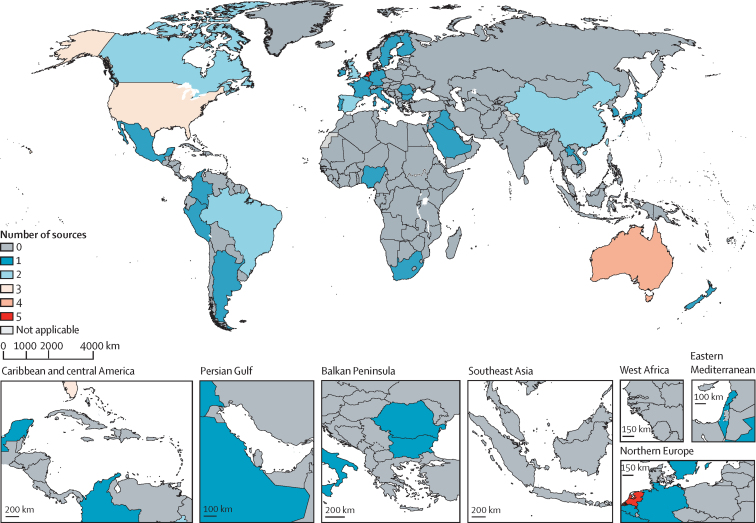
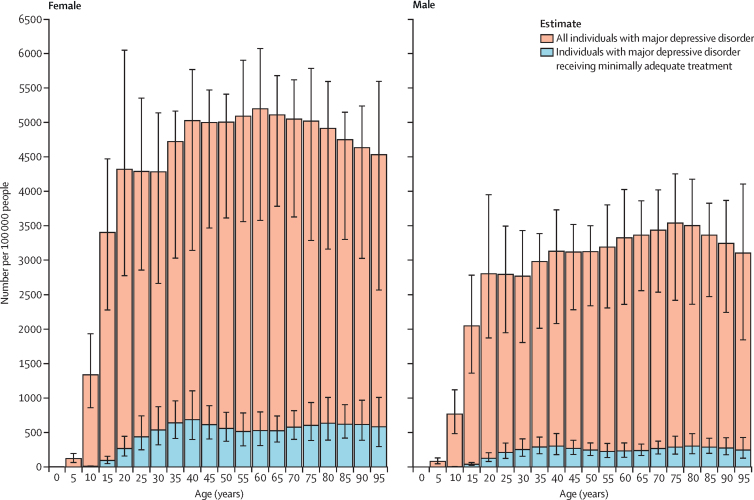
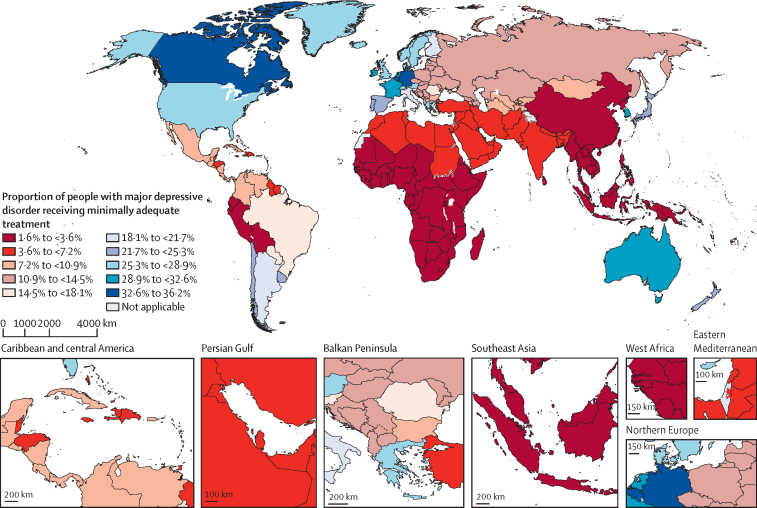
BACKGROUND: Access to effective treatment for major depressive disorder remains limited and difficult to track across place and time. We analysed the available data on minimally adequate treatment (MAT) for major depressive disorder globally with the aim of providing a useful metric against which to monitor national responses to the growing public health burden imposed by major depressive disorder. METHODS: MAT was defined as pharmacotherapy (1 month of medication, plus four visits to a medical doctor) or psychotherapy (eight visits with any professional). From existing reviews, we identified mental health surveys that assessed major depressive disorder within the general population as well as health service uptake by individuals with major depressive disorder. Data by ethnicity were not available. Estimates of MAT, antidepressant use, or use of any mental health service were extracted. The latter two estimates were adjusted to reflect likely MAT rates via a network meta-analysis. Adjusted MAT estimates were analysed via a Bayesian meta-regression using the Disease Modelling Meta-Regression (DisMod-MR 2.1) tool. This analysis estimated MAT coverage among people with major depressive disorder by age, sex, location, and year. Final MAT estimates were standardised by age and sex against the existing age and sex distribution of people with major depressive disorder globally. People with lived experience were involved in the design, preparation, interpretation, and writing of this manuscript. FINDINGS: The analysed dataset included 145 estimates from 32 studies, covering 31 countries, 14 regions, and six super-regions. The proportion of people with major depressive disorder receiving MAT globally in 2021 was 9·1% (95% uncertainty interval 7·2-11·6), with 10·2% (8·2-13·1) of females and 7·2% (5·7-9·3) of males with major depressive disorder receiving MAT. MAT coverage was highest in high-income locations (27·0% [21·7-34·4]), with Australasia having the highest rate (29·2% [21·4-40·8]). MAT coverage was lowest in sub-Saharan Africa (2·0% [1·5-2·6]), within which western sub-Saharan Africa (1·8% [1·4-2·5]) had the lowest coverage. Seven countries (Australia, Belgium, Canada, Germany, the Netherlands, South Korea, and Sweden) were estimated to have MAT coverage exceeding 30%, while 90 countries were estimated to have coverage lower than 5%. INTERPRETATION: Despite many gaps in the available data, estimates show that, globally, most individuals with major depressive disorder do not receive MAT. Services must improve to reach a global coverage that better meets the mental health needs of those with major depressive disorder. Urgent attention should be given to the scale-up of effective intervention strategies, especially in low-income and middle-income countries, as well as further research into better quality treatment options for major depressive disorder. We present a means by which the MAT gap for major depressive disorder can be quantified, to monitor and inform action by governments and international partners. FUNDING: Queensland Health and the Bill & Melinda Gates Foundation.
Overview
The claims and statistics of this paper haven’t been checked yet.
Free: it reads the open-access text and checks the first 5 claims that cite a source we can check. Create a free account to check every claim.
Integrity signals
Registry
Cites
Statistics
Figures
Verification
Claims the paper makes
The claims and statistics of this paper haven’t been checked yet.
Free: it reads the open-access text and checks the first 5 claims that cite a source we can check. Create a free account to check every claim.
Claims other papers make about this one
Each is checked against this paper’s own text: does it say what the citing paper says it does?
The cited source says what the claim attributes to it.
In the citing paper
“In a previous analysis, we estimated that only 9•1% (7•2-11•6) of individuals with major depressive disorder globally in 2021 received minimally adequate treatment.”
From Updated trends in the global prevalence and burden of mental disorders, 1990–2023: a systematic analysis for the Global Burden of Disease Study 2023 (2026) · cites this paper as [35]
The cited source says what the claim attributes to it.
In the citing paper
“Of the 204 countries and territories included in GBD, only seven (Australia, Belgium, Canada, Germany, the Netherlands, South Korea, and Sweden) reached minimally adequate treatment rates surpassing 30%, and 90 countries had coverage lower than 5%.35”
From Updated trends in the global prevalence and burden of mental disorders, 1990–2023: a systematic analysis for the Global Burden of Disease Study 2023 (2026) · cites this paper as [35]
Self-check
Percentages, sums and reported differences re-computed from the paper’s own numbers.
The self-check needs the paper’s full text.
Citations
Cites
Santomauro, D. F., Mantilla Herrera, A. M., Shadid, J., Zheng, P., Ashbaugh, C., Pigott, D. M., Abbafati, C., Adolph, C., Amlag, J. O., Aravkin, A. Y., et al. (2021) · The Lancet · doi:10.1016/s0140-6736(21)02143-7 · Cited by 5,444
Self-citationFerrari, A. J., Santomauro, D. F., Aali, A., Abate, Y. H., Abbafati, C., Abbastabar, H., Abd ElHafeez, S., Abdelmasseh, M., Abd-Elsalam, S., Abdollahi, A., et al. (2024) · The Lancet · doi:10.1016/s0140-6736(24)00757-8 · Cited by 5,112
Self-citationThe Lancet Commission on global mental health and sustainable development
Patel, V., Saxena, S., Lund, C., Thornicroft, G., Baingana, F., Bolton, P., Chisholm, D., Collins, P. Y., Cooper, J. L., Eaton, J., et al. (2018) · The Lancet · doi:10.1016/s0140-6736(18)31612-x · Cited by 3,692
Self-citationWang, P. S., Aguilar-Gaxiola, S., Alonso, J., Angermeyer, M. C., Borges, G., Bromet, E. J., Bruffaerts, R., de Girolamo, G., de Graaf, R., Gureje, O., et al. (2007) · The Lancet · doi:10.1016/s0140-6736(07)61414-7 · Cited by 1,655 · cited 1×
“The majority of included studies adhered to the definition of MAT presented by Wang and colleagues 5 derived from evidence-based guidelines 6–8, 12 recommending either pharmacotherapy”
Scaling-up treatment of depression and anxiety: a global return on investment analysis
Chisholm, D., Sweeny, K., Sheehan, P., Rasmussen, B., Smit, F., Cuijpers, P., & Saxena, S. (2016) · The Lancet Psychiatry · doi:10.1016/s2215-0366(16)30024-4 · Cited by 1,451 · cited 1×
“21 Similar analyses investigating lifelong impacts of addressing anxiety, depression, bipolar disorder, and suicide in young people aged 10–19 years across 36 countries estimated a return of US$24 in health and economic benefits to the economy over 80 years, for each $1 spent on the required…”
Self-citationBarriers to mental health treatment: results from the WHO World Mental Health surveys
Andrade, L. H., Alonso, J., Mneimneh, Z., Wells, J. E., Al-Hamzawi, A., Borges, G., Bromet, E., Bruffaerts, R., de Girolamo, G., de Graaf, R., et al. (2014) · Psychological Medicine · doi:10.1017/s0033291713001943 · Cited by 1,289 · cited 2×
“2,10 WHO’s Comprehensive Mental Health Action Plan 2013–30 includes a target that service coverage for depression be increased by at least 50% by 2030 .”
Fullman, N., Yearwood, J., Abay, S. M., Abbafati, C., Abd-Allah, F., Abdela, J., Abdelalim, A., Abebe, Z., Abebo, T. A., Aboyans, V., et al. (2018) · The Lancet · doi:10.1016/s0140-6736(18)30994-2 · Cited by 1,013 · cited 2×
“16 This reliance on the HAQI probably masked some of the true variation in MAT across locations because there would still be variation in mental health service availability across countries with similar HAQI scores depending on the country-specific policy and funding priorities.”
Lehman, A. F., Steinwachs, D. M., & The Co-Investigators of the PORT Project (1998) · Schizophrenia Bulletin · doi:10.1093/oxfordjournals.schbul.a033302 · Cited by 910
Scale up services for mental disorders: a call for action
(2007) · The Lancet · doi:10.1016/s0140-6736(07)61242-2 · Cited by 835 · cited 1×
“24 We estimated MAT rates in 2021, when the impact of the COVID-19 pandemic should not be overlooked.”
Self-citation
Research works printed but not linked: 3
- American Psychiatric Association Practice guidelines for treatment of psychiatric disorders: compendium 2006 American Psychiatric Association Press Arlington, TX
- Flaxman A Vos T Murray C An integrative metaregression framework for descriptive epidemiology 1st edn 2015 University of Washington Press Seattle, WA
- National Institute for Health and Care Excellence Depression in adults: treatment and management https://www.nice.org.uk/Guidance/ng222 2022 35977056
Cited by
Zhang, Z., Chen, X., Wu, S., Chen, X., Wang, X., Liu, C., Zeng, N., Liu, Y., Huo, T., Liu, X., et al. (2025) · Journal of Affective Disorders · doi:10.1016/j.jad.2025.120299 · Cited by 120
Santomauro, D. F., Miller, P. A., Shadid, J., Wulf Hanson, S., Vo, A., Roy, D. J., Hagins, H., Mantilla Herrera, A. M., Scott, J. G., Erskine, H. E., et al. (2026) · The Lancet · doi:10.1016/s0140-6736(26)00519-2 · Cited by 83
Self-citationReal-world use of large language models for mental health in 2024
Stade, E. C., Tait, Z., Campione, S. T., Stirman, S. W., & Eichstaedt, J. C. (2026) · npj Digital Medicine · doi:10.1038/s41746-026-02842-9 · Cited by 38
Mental health service coverage and gaps among adults in Europe: a systematic review
Barbui, C., Alonso, J., Chisholm, D., Evans-Lacko, S. E., Keynejad, R. C., Lazëri, L., Miah, N., Valuckienė, Ž., & Gastaldon, C. (2025) · The Lancet Regional Health - Europe · doi:10.1016/j.lanepe.2025.101458 · Cited by 25
Self-citationRecent advances and perspectives of small molecule fluorescent probes imaging in depression research
Zhu, H., Ma, Z., Wang, X., Ji, L., & Zhu, B. (2025) · Coordination Chemistry Reviews · doi:10.1016/j.ccr.2025.216963 · Cited by 25
Lee, E. B., Jeong, J., Hong, S., Lee, S., Kong, J., Lee, H., & Yon, D. K. (2025) · Psychiatry Investigation · doi:10.30773/pi.2025.0211 · Cited by 23
The application of AI-assisted music therapy tools in mental health interventions
Wei, Q., & He, W. (2026) · Frontiers in Psychology · doi:10.3389/fpsyg.2026.1741463 · Cited by 16
Watkins, D., Danforth, K., Ahmed, S., Chisholm, D., Cieza, A., Iunes, R. F., Kumar, A., Kutzin, J., Luong, J., Meessen, B., et al. (2025) · The Lancet Global Health · doi:10.1016/s2214-109x(25)00347-x · Cited by 12
Self-citationHallab, A., O’Bryant, S. E., Yaffe, K. S., Toga, A. W., Rissman, R. A., Johnson, L. A., Braskie, M. N., King, K. S., Hall, J. R., Petersen, M. E., et al. (2025) · International Journal of Cardiology Cardiovascular Risk and Prevention · doi:10.1016/j.ijcrp.2025.200510 · Cited by 8
Antidepressant drug use in Europe: past consumption, prescribing patterns and forecast until 2030
Bindel, L. J., & Seifert, R. (2026) · International Journal of Clinical Pharmacy · doi:10.1007/s11096-025-02078-9 · Cited by 7
Zhang, J., Sun, J., Xu, Y., Jing, H., Zhang, L., & Chen, W. (2025) · BMC Public Health · doi:10.1186/s12889-025-24336-1 · Cited by 6
Atagün, M. İ. (2025) · Psychiatry and Clinical Neurosciences Reports · doi:10.1002/pcn5.70221 · Cited by 5
The PADRIS-PRESTO cohort: A comprehensive population-based study on mental health in Catalonia
Prisco, M. D., Oliva, V., Fico, G., Mas, A., Valenzuela‐Pascual, C., Montejo, L., Bort, M., Sommerhoff, C., Bortolozzi, A. A., Miquel-Rio, L., et al. (2025) · European Psychiatry · doi:10.1192/j.eurpsy.2025.10103 · Cited by 5
Pozuelo, J. R., Vigo, D., Kazdin, A. E., Harris, M., Stein, D. J., Viana, M. C., Hwang, I. H., Kessler, T. L., Manoukian, S. M., Sampson, N. A., et al. (2025) · International Journal of Mental Health Systems · doi:10.1186/s13033-025-00686-6 · Cited by 5
Mikkonen, K., Lintula, S. J., Rosenström, T. H., Lahti, J. M. T., Helminen, E.-E., Saarni, S. I., & Saarni, S. E. (2026) · Journal of Affective Disorders · doi:10.1016/j.jad.2026.121225 · Cited by 5
Yang, H., Chang, F., Muroi, F., Liu, Z., Zhang, W., & Cai, J. (2026) · Psychotherapy and Psychosomatics · doi:10.1159/000552072 · Cited by 4
Mylläri, S., Saarni, S. E., Joffe, G., Ritola, V., Stenberg, J., & Rosenström, T. H. (2025) · Psychotherapy Research · doi:10.1080/10503307.2025.2473921 · Cited by 4
Zheng, G., Duan, K., Yang, Q., Wang, H., Li, X., Zhang, C., Wu, Z., & Liu, X. (2026) · Analytical Chemistry · doi:10.1021/acs.analchem.5c06992 · Cited by 4
Wang, X., Gao, M., Song, J., Li, M., Chen, Y., Lv, Y., Jia, W., & Wan, B. (2025) · Genes · doi:10.3390/genes16020162 · Cited by 3
Fan, X., Qiao, X., Wu, Q., & Han, T. (2025) · Brain and Behavior · doi:10.1002/brb3.70877 · Cited by 3
Zhou, W., He, J., Wu, L., Wang, L., Wu, K., Li, Z., Chen, G., Li, D., Yang, Y., & Dai, J. (2026) · Frontiers in Psychiatry · doi:10.3389/fpsyt.2026.1702808 · Cited by 2
Santos, B. D. S., Roza, T. H., & Passos, I. C. (2026) · Journal of Affective Disorders · doi:10.1016/j.jad.2026.122123 · Cited by 2
Neufeld, S. (2024) · The Lancet Psychiatry · doi:10.1016/s2215-0366(24)00373-0 · Cited by 2
Alshahrani, M., Siervo, M., Burley, C. V., Burton, E., Pereira, G. F., Guan, Z., MYERS, B. J., Tully, P. J., Stephan, B. C. M., & Dunne, J. (2026) · Archives of Gerontology and Geriatrics · doi:10.1016/j.archger.2026.106309 · Cited by 2
Dumpala, S. H., Dikaios, K., Langley, R., Lowery, A., Oore, S., & Uher, R. (2026) · Journal of Affective Disorders · doi:10.1016/j.jad.2026.121958 · Cited by 2
Sustainable financing for mental health and noncommunicable diseases: what’s at stake?
Chisholm, D., Watkins, D., & Qamruddin, J. N. (2025) · BJPsych Open · doi:10.1192/bjo.2025.10800 · Cited by 2
Self-citationLin, Y., Liyanage, B. N., Shi, C., Zhu, Z., Sun, Y. W., Sun, Y., Zhang, Z., Yang, J., Xu, C., Liao, Y., et al. (2026) · Nature Communications · doi:10.1038/s41467-026-74122-9 · Cited by 2
Helminen, E.-E., Saarni, S. E., Mikkonen, K., Mattila, M. K., Rosenström, T. H., Karukivi, M., Isometsä, E. T., Stenberg, J., Ekelund, J., & Saarni, S. I. (2026) · BMC Psychiatry · doi:10.1186/s12888-026-07962-w · Cited by 1
Plattonen, A., Mylläri, S., Saarni, S. E., & Rosenström, T. H. (2026) · British Journal of Clinical Psychology · doi:10.1111/bjc.70036 · Cited by 1
Ni, M. Y., Leung, C. M. C., Wan, T. T. W., Campion, J., Gill, N., Galea, S., & Ip, E. C. (2026) · The Lancet Psychiatry · doi:10.1016/s2215-0366(25)00336-0 · Cited by 1
Cheng, X., Li, X., Zhao, J., Wang, L., & Shi, X. (2025) · Frontiers in Psychiatry · doi:10.3389/fpsyt.2025.1611258 · Cited by 1
Hierarchical Dynamics Aggregation Network for Speech-Based Depression Detection
Zhou, L., Li, L., Lan, R., Liu, Z., Luo, X., & Hu, B. (2026) · IEEE Transactions on Affective Computing · doi:10.1109/taffc.2026.3684889 · Cited by 1
王洪斌, Chen, C., Tian, Z., Yan, Z., Zeng, X., Ai, Q., Lin, M., Liu, X., Yang, S., 陈乃宏, et al. (2026) · Phytomedicine · doi:10.1016/j.phymed.2026.158608 · Cited by 1
Connolly, E., Moylett, S., Monroe, D. C., Scarlett, S., McCrory, C., Kenny, R. A., & Herring, M. P. (2025) · Journal of Affective Disorders · doi:10.1016/j.jad.2025.120822 · Cited by 1
Browning, M. H. E. M., McAnirlin, O., Miller, W., Beard, H., Breed, M. W., Rubalcava, S. E., Engelman, C., Hatami, N., Jaggi, A., Maynard, A., et al. (2026) · Frontiers in Bird Science · doi:10.3389/fbirs.2026.1871909 · Cited by 1
Naslund, J. A., Tugnawat, D. K., Anand, A., Cooper, Z., Dimidjian, S., Fairburn, C. G., Hedt‐Gauthier, B., Hollon, S. D., Joshi, U., Khan, A., et al. (2026) · Nature Mental Health · doi:10.1038/s44220-026-00693-7 · Cited by 1
EFFECTIVENESS OF THRESHOLD-LEVEL VAGUS NERVE STIMULATION IN MODULATING PSYCHOEMOTIONAL STATES
Gachshenko, Y., Zhadigerova, A., Vysokov, N. V., Kuzembayeva, Y., Ferreira, J. M. A., Palamar, B. I., & Тукаєв, С. (2026) · Clinical and Preventive Medicine · doi:10.31612/2616-4868.2.2026.04 · Cited by 1
Measuring mental disorder burden for action
Nordentoft, M., & Krantz, M. F. (2026) · The Lancet · doi:10.1016/s0140-6736(26)00818-4 · Cited by 1
Nacker, D., Kalus, L., Seth, A. K., Stone, J. M., Chis-Ciure, R., Lawson, G., Simpson, J., Sander, J. W., Bremner, S., Jones, C. I., et al. (2026) · Journal of Affective Disorders · doi:10.64898/2026.06.17.26355864
McGuinness, A. J., Cleminson, J. R., O'Neil, A. E., Marx, W., Rocks, T., Lassale, C. M., Lane, M. M., Orr, R., Lugon, G., Jacka, F. N., et al. (2025) · medRxiv · doi:10.1101/2025.10.30.25339197
Angarita‐Osorio, N., García-Estela, A., Terraneo, L., Pazmiño, N. N., Haro, N., Pozo, Ó. J., & Colom, F. (2026) · JMIR Research Protocols · doi:10.2196/99700
Kunovszki, P., Bálint, L., Rihmer, Z., Kapitány, B., Leleszi, A., Lazáry, J., Fehér, L., Horváth, A., Ezsi, R., Kapitány‐Fövény, M., et al. (2026) · Orvosi Hetilap · doi:10.1556/650.2026.33472
Benefit packages design based on the optimization of depression burden: Evidence from urban China
Niu, B., Zhang, Y., Chen, Y., 刘婷婷, & Liu, J. (2026) · Journal of Management Science and Engineering · doi:10.1016/j.jmse.2026.06.003
Gashi, A., Strippoli, M. F., Szücs, A., Vandel, P., von Gunten, A., Preisig, M., & Schuster, J. (2026) · Journal of Affective Disorders · doi:10.1016/j.jad.2026.121765
Biney, R. P., Mensah, I. B., Wortsi, A., Acheampong, S. O., Asante-Kwatia, E., Edu-Buandoh, E. E. A., Ameyow, S., Asamoah-Agyarko, M., & Boateng, E. A. (2026) · Scientific African · doi:10.1016/j.sciaf.2026.e03639
Khanal, G., Selvamani, Y., & Sapkota, P. (2026) · Brain and Behavior · doi:10.1002/brb3.71551
Osugo, M., & Howes, O. D. (2026) · Schizophrenia Bulletin · doi:10.1093/schbul/sbag017
Chen, M., Shang, X., Lang, X. E., Liu, J., & Zhang, X. (2026) · Frontiers in Psychiatry · doi:10.3389/fpsyt.2026.1916151
Titov, N., Dagnall, A., Fisher, A., Nielssen, O. B., Kayrouz, R., Jones, M., Hadjistavropoulos, H. D., Rock, D. J., Staples, L., & Dear, B. F. (2026) · Behaviour Research and Therapy · doi:10.1016/j.brat.2026.105100
Rodríguez-López, A., Ibrahim, E. C., Gorgievski, V., Martín, M., Robledo, P., Maldonado, R. J., Tzavara, E. T., & Álvarez-Pérez, B. (2026) · Translational Psychiatry · doi:10.64898/2026.01.14.699270
Liu, Q., He, R., Miao, Y., Ren, Y., Lin, Y., & Kang, J. (2026) · Journal of Adolescent Health · doi:10.1016/j.jadohealth.2026.06.008
Lei, T., Wang, N., Wang, R., He, Y., Liu, X., & Zhou, X. (2026) · BMC Psychiatry · doi:10.1186/s12888-026-08657-y
Li, C., Hongtao, L. U., Zhou, Q., Qu, Y., Cai, M., Shi, W., Zhang, Y., Miao, G., Tang, Y., Shen, H., et al. (2026) · Biological Trace Element Research · doi:10.1007/s12011-026-05063-z
Fang, H., Zhu, G., Chen, J., & Zou, T. (2026) · Frontiers in Psychiatry · doi:10.3389/fpsyt.2026.1814473
Jin, S., Li, C., Sun, N., & Zheng, X. (2026) · Nutrition Reviews · doi:10.1093/nutrit/nuag117
Omigbodun, F. T. (2026) · Journal of Medicine Surgery and Public Health · doi:10.1016/j.glmedi.2026.100258
Seynaeve, M., Schneider, L., Roullier, I., Lazenby, K., Lilley, C., Lobo, S., Ermakova, A. O., Wells, H., Cleare, A. J., & Rucker, J. (2026) · Frontiers in Psychiatry · doi:10.3389/fpsyt.2026.1682810
Yang, Y., Kong, J., Chen, J., Yang, Y., Liu, J., Hu, R., Zhang, D., & Liu, Z. (2026) · General Psychiatry · doi:10.1002/gps3.70034
Mikkonen, K., Hannukkala, M. S., Lahti, J. M. T., Saarni, S. I., & Saarni, S. E. (2026) · Implementation Science Communications · doi:10.1186/s43058-026-00951-w
Wen, X., Hou, C., Yao, Y., Ma, Y., Bao, M., & Zhou, Z. (2026) · Therapeutic Drug Monitoring · doi:10.1097/ftd.0000000000001510
Wondim, G. M., Mekonnen, W., Arsenault, C., Mebratie, A. D., Kruk, M. E., & Mariam, D. H. (2026) · BMJ Open · doi:10.1136/bmjopen-2026-120181
Twelve-Month Use of Mental Health Services: Results from the World Mental Health Türkiye Survey
Kılıç, C., Uluğ, Ö. Ş., Bağcaz, A., Kaymak, S. U., Zhang, A., Ak, S., Ulusoy, M., Kamışlı, S., Karadağ, Ö., Koçak, E. E., et al. (2026) · Turkish Journal of Psychiatry · doi:10.5080/u27931
Attitudes of Primary Healthcare Physicians Toward Depression in Oman
Al-Balushi, M., Al-Hinai, A., Gharbal, A., Lawati, N. A., & Al-Raisi, S. (2025) · Epidemiology and Health System Journal · doi:10.34172/ehsj.26353
de Filippis, R., & Foysal, A. A. (2025) · OALib · doi:10.4236/oalib.1113958
Solomon, A. E., Nwankwo, B. C., Emma-Echiegu, N., Onuoha, O. O., & Okereke, O. J. (2025) · Nigerian Journal of Social Psychology
From Dialogue to Diagnostic Hypotheses: Evaluating LLM Agents for Psychiatric AssessmentPreprint
Mohammadi, M., Shamsabadi, F. A., Mohseni, Z., Safdarian, A., Malek, M., Moradi, H., & Faili, H. (2026) · arXiv (Cornell University) · doi:10.48550/arxiv.2610.07473
Whiteford, V. (2026) · cIRcle (University of British Columbia) · doi:10.14288/1.0451771
Karolaakso, T., Mikkonen, K., Tantarimäki, T., & Saarni, S. I. (2025) · Finnish Journal of eHealth and eWelfare · doi:10.23996/fjhw.157407
Soluciones naturalmente enriquecedoras: un enfoque integrador para el tratamiento de la depresión
Arroyo-Zúñiga, D., Murillo, I. P., & Sáenz, J. C. B. (2026) · Revista Costarricense de Psicología · doi:10.22544/rcps.v45i01.01
Suicidal behavior in resistant depression. Part I: Prevalence, clinical picture, burden
Lyubov, E. B., & Zotov, P. B. (2024) · Суицидология · doi:10.32878/suiciderus.24-15-04(57)-51-66
Carlesso, F. (2026) · Aurum Editora eBooks · doi:10.63330/livroautoral712026-004
Guo, Z., Gao, W., Yu, Y., Zhu, Y., Guo, L., & Dewancker, B. J. (2026) · Forests · doi:10.3390/f17111295
Resistance Exercise Training for Depressive Symptoms: A Meta-Analysis and Meta-Regression Analysis
O'Sullivan, D., Rice, J. M., Meyer, J. D., Smith, S., Gordon, B. R., McDowell, C., Sherwin, I., Lyons, M., & Herring, M. P. (2026) · JAMA Network Open · doi:10.1001/jamanetworkopen.2026.44254
Park, J., Hong, S., Kim, H., Yeo, D., Kong, J., Lee, Y., Yim, Y., Kim, J., Park, J., Kim, S., et al. (2026) · Journal of Psychiatric Research · doi:10.1016/j.jpsychires.2026.11.007
Liu, Y., Guo, Z., Zhu, L., Diao, C., Liu, W., & Junfeng, Y. (2026) · Research Square · doi:10.21203/rs.3.rs-11615260/v1
Huang, B., Ning, Y., Li, X., & Han, M. (2026) · Journal of Public Health and Preventive Medicine · doi:10.64904/fpm2026.01.005
de Filippis, R., & Foysal, A. A. (2026) · OALib · doi:10.4236/oalib.1114442
Metadata
- Authors
- Santomauro, D. F., Vos, T., Whiteford, H. A., Chisholm, D., Saxena, S., & Ferrari, A. J.
- Affiliations
- The University of Queensland (AU)
- University of Washington (US)
- World Health Organization (CH)
- Harvard University (US)
- Corresponding author
- Santomauro, Damian F
- Venue
- The Lancet Psychiatry
- Publisher
- Elsevier BV
- Published
- 2024-12
- Volume
- 11
- Issue
- 12
- Pages
- 1012-1021
- ISSN
- 2215-0366 (ISSN-L)
- PMC
- PMC11579305
- OpenAlex
- W4404514335
- Cited by
- 57
- References
- 21
- Citations by year
- 2026: 39 · 2025: 17 · 2024: 1
- FWCI
- 26.95
- Type
- journal article
- Language
- en
- Update notices
- erratum (2025-01-01)
- Open access
- hybrid
- doi.org
- Licence
- cc-by
- www.elsevier.com/tdm/userlicense/1.0/ (tdm)
- www.elsevier.com/legal/tdmrep-license (tdm)
- creativecommons.org/licenses/by/3.0/igo/ (vor)
- Locations
- The Lancet Psychiatry (publishedVersion, cc-by)
- PubMed Central (publishedVersion, cc-by)
- PubMed (publishedVersion)
- Funders
- Bill & Melinda Gates Foundation
- Queensland Health
- Queensland Government
- Tasmanian Department of Health
- World Health Organization
- Topics
- Health Sciences › Medicine › Psychiatry and Mental health › Mental Health Treatment and Access
- Health Sciences › Medicine › Pharmacology (medical) › Treatment of Major Depression
- Social Sciences › Psychology › Applied Psychology › Digital Mental Health Interventions
- Keywords
- major depressive disorder, treatment coverage, antidepressant use, psychotherapy, mental health service utilization, global mental health, sub-Saharan Africa, sex differences in treatment, high-income countries, low-income countries, Bayesian meta-regression, lived experience of mental illness, mental health professionals, mental health funding
- MeSH terms
- Adolescent, Adult, Aged, Antidepressive Agents, Bayes Theorem, Major Depressive Disorder, Female, Health Services Accessibility, Humans, Male, Mental Health Services, Middle Aged, Psychotherapy, Global Health, Young Adult
About these checks
Registry, retraction, Cites and statistics results are computed, not judged, with one exception: a printed reference that no index lists is read once by a model before it counts as a citation error. Claims are extracted by a model and kept only when their quote appears verbatim in the text; each cited source is then checked, with a model’s help, for whether it says what the claim relies on. Those verdicts can be wrong — read the claim’s quote and the cited source before relying on one.
Statistics and arithmetic are recomputed, not judged.
Confidence bands are shown only for fields calibrated on our annotated test set. None is calibrated yet, so no band is shown.
What counts as a claim ›How we measure confidence ›How we check this ›
Are you an author, or do you see a problem with this page? Request a review
Data sources
Bibliographic data: Semantic Scholar, OpenAlex, Crossref.
Contains information from the Semantic Scholar Academic Graph Datasets, made available under the ODC Attribution License (ODC-BY 1.0).
Semantic Scholar’s data is described in: Kinney, R., et al. (2023). The Semantic Scholar Open Data Platform. arXiv:2301.10140.
